Design06 mins. read
iPhone Duo: precision engineering and a fluid canvas flip Apple's iconic smartphone
by Pranjal MaheshwariSep 14, 2026



by Chahna TankPublished on : Aug 20, 2026
I want to get a dumbphone. Or, at least that is what my algorithm is trying to tell me as I watch reel after reel on my ‘smart’ phone about why I need to make my phone dumber to reduce my screen time. Ironic, really.
Peculiarly worded as it may be, ‘dumbphone’ is an umbrella term for a category of devices that offer a slower alternative to hypermodern, all-doing smartphones. The idea is hardly novel: familiar feature phones—the good old buttoned blocks—have always remained in the market, even as cheaper and more varied smartphones have so wholly taken over. What is new, perhaps, is the renewed interest in them and the growing range of smart devices now being designed around the idea of doing less.
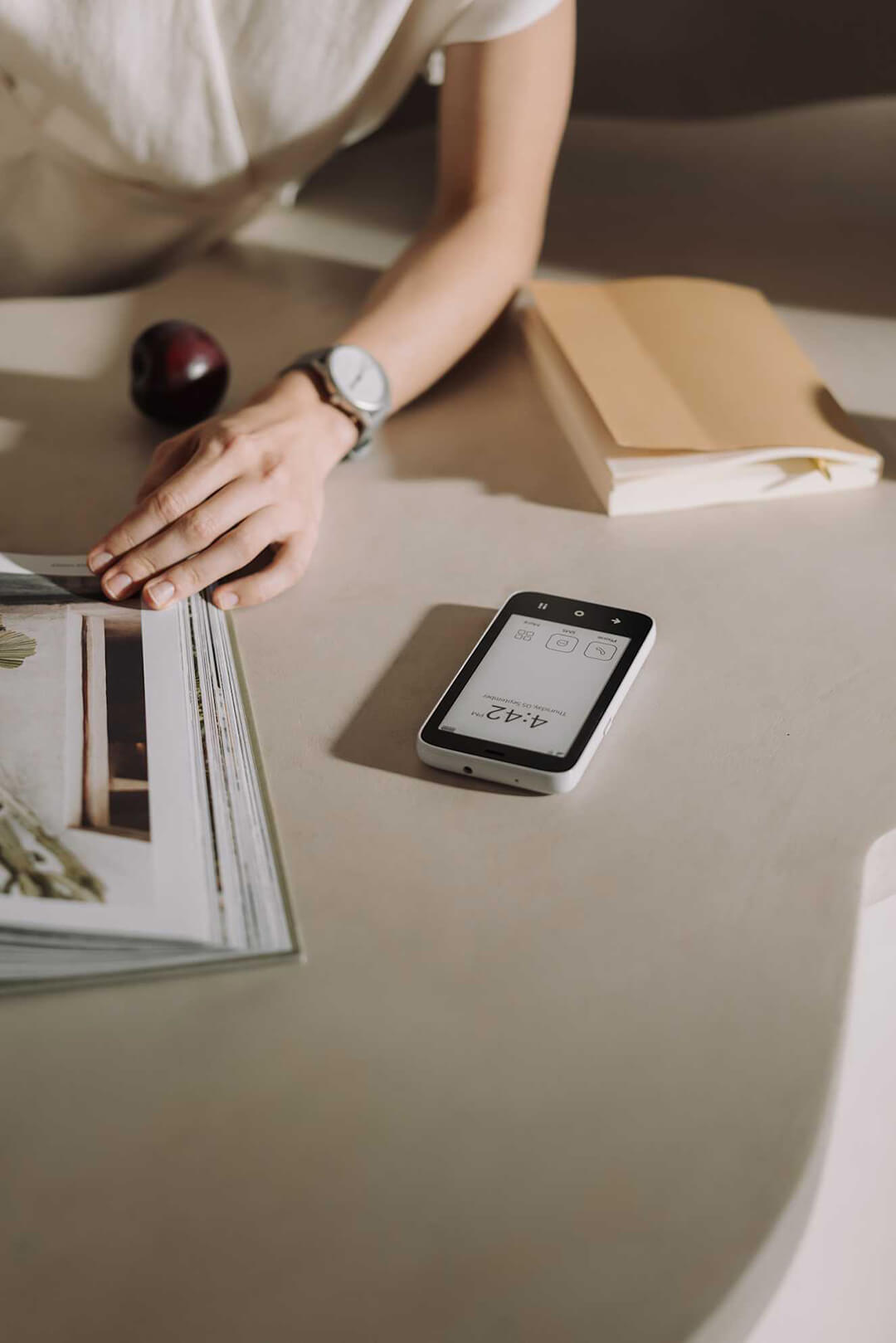
There are troves of these devices out there now, from omnipresent but resilient feature phones to newer touchscreen and e-ink ones, all with varying levels of functionality, each more meticulously ‘designed’ than the other. While some let you do little more than call, text and play simple games, others come with built-in GPS, payment interfaces and even music apps to make it more convenient to exist in today’s increasingly digital life. The distinction here, if it’s to be considered remarkable, is the inclusion of features that allow for outward interfacing, acknowledging the increasing digital clutter outside the user’s agency, while doubling up on the need to digitally declutter the self.
They increasingly occupy a strange middle ground: somewhere between a smartphone and a feature phone, stripped of social media and the endless barrage of apps that populate—and have come to define—what we expect from our phones in the first place, as well as our social second bodies.
This begs the question: Do I actually need a dumbphone? Or should I simply delete the apps from the phone I already have?

This need for dumbphones, or their resurgence, seems to be part of a larger impulse gaining momentum these days—a desire to return to ‘simpler times’, to the objects of yore. While this return implies a decidedly conservative outlook in political leanings, the desire for a return to technology that was simpler, slower and decidedly analogue is in the wake of growing suspicion towards contemporary technology that inversely fuels the former.
Film cameras have found a new audience; mechanical watches have renewed their appeal in a world where a smartwatch can tell you almost everything you need to know; people are returning to paper, physical books and vinyl records. All this is, perhaps, born out of a reaction to a world where everything now comes with a subscription, requires an app, collects our data, is constantly trying to sell us something, charges us for continued access rather than letting us own anything outright and costs us the most precious thing we have: our time and attention.
The allure of dumbphones lies in their promise to give us some of that back: an escape from the internet and the algorithms that constantly and incessantly feed us content, eating our time and attention in return. Perhaps that is what makes them so tempting—the possibility of having a phone without having to be constantly available to every addictive thing it offers; to use a phone simply to stay connected beyond socials. A utilitarian paring down, a voluntary minimalism, but in usage and offerings, if you will.
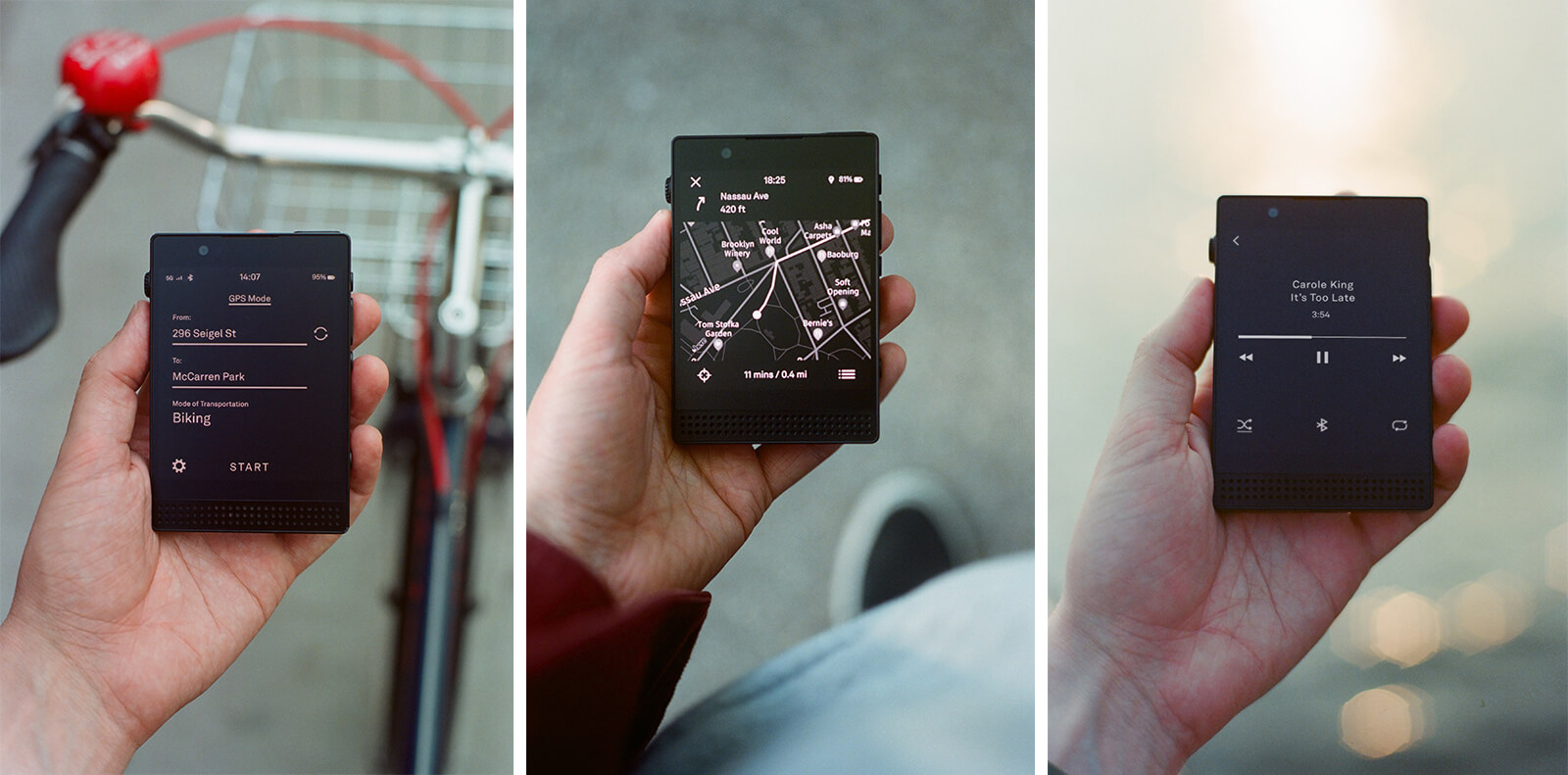
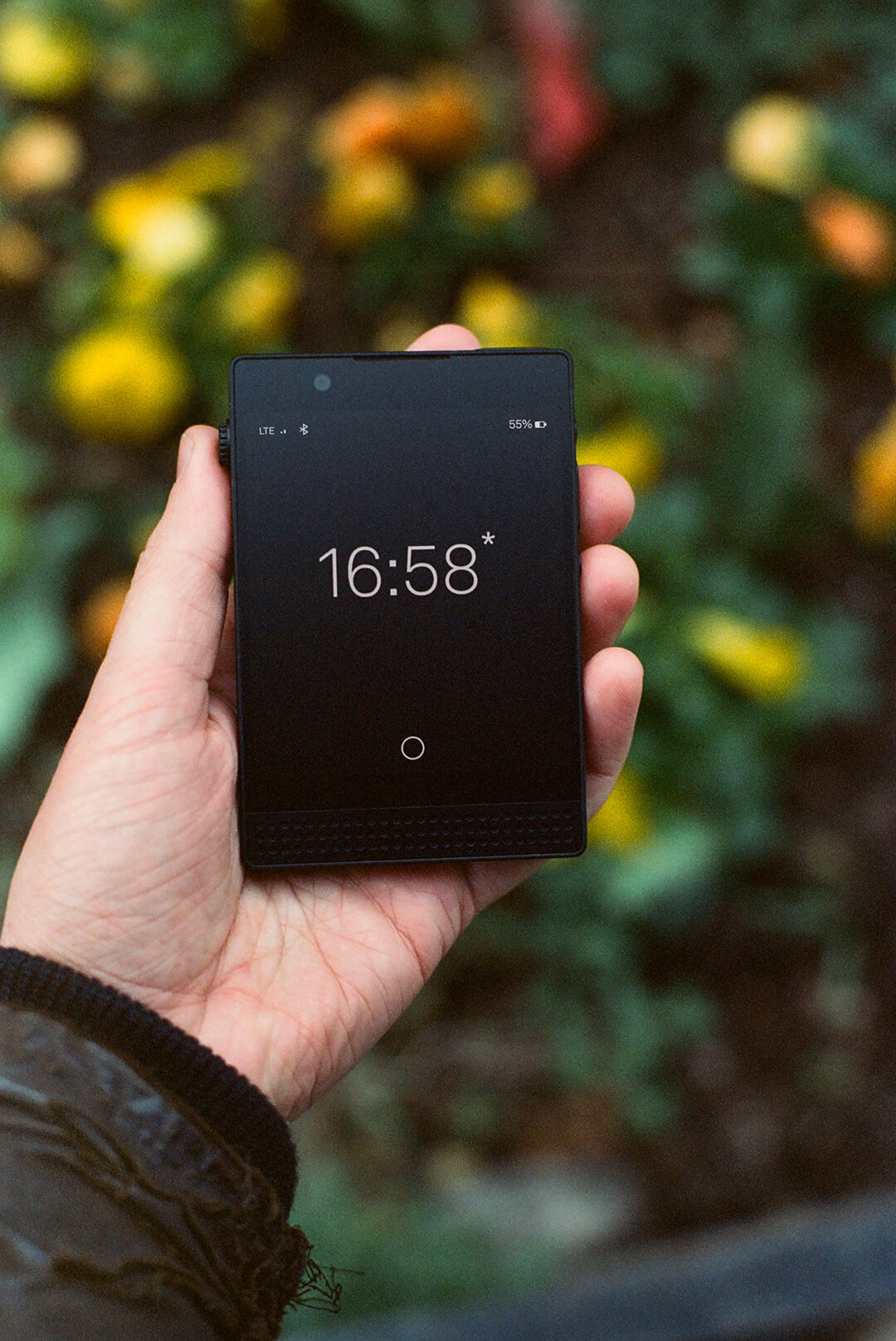
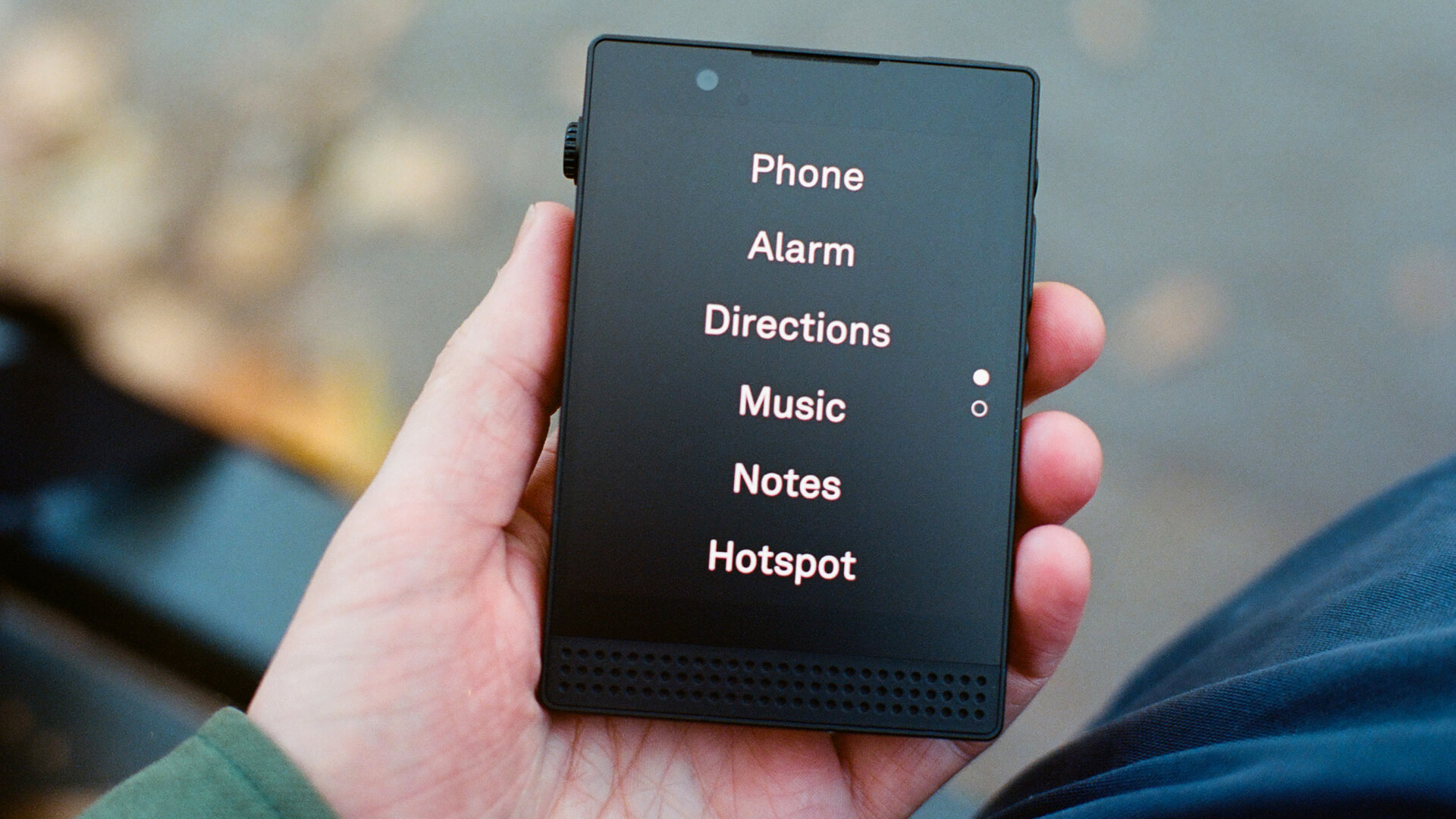
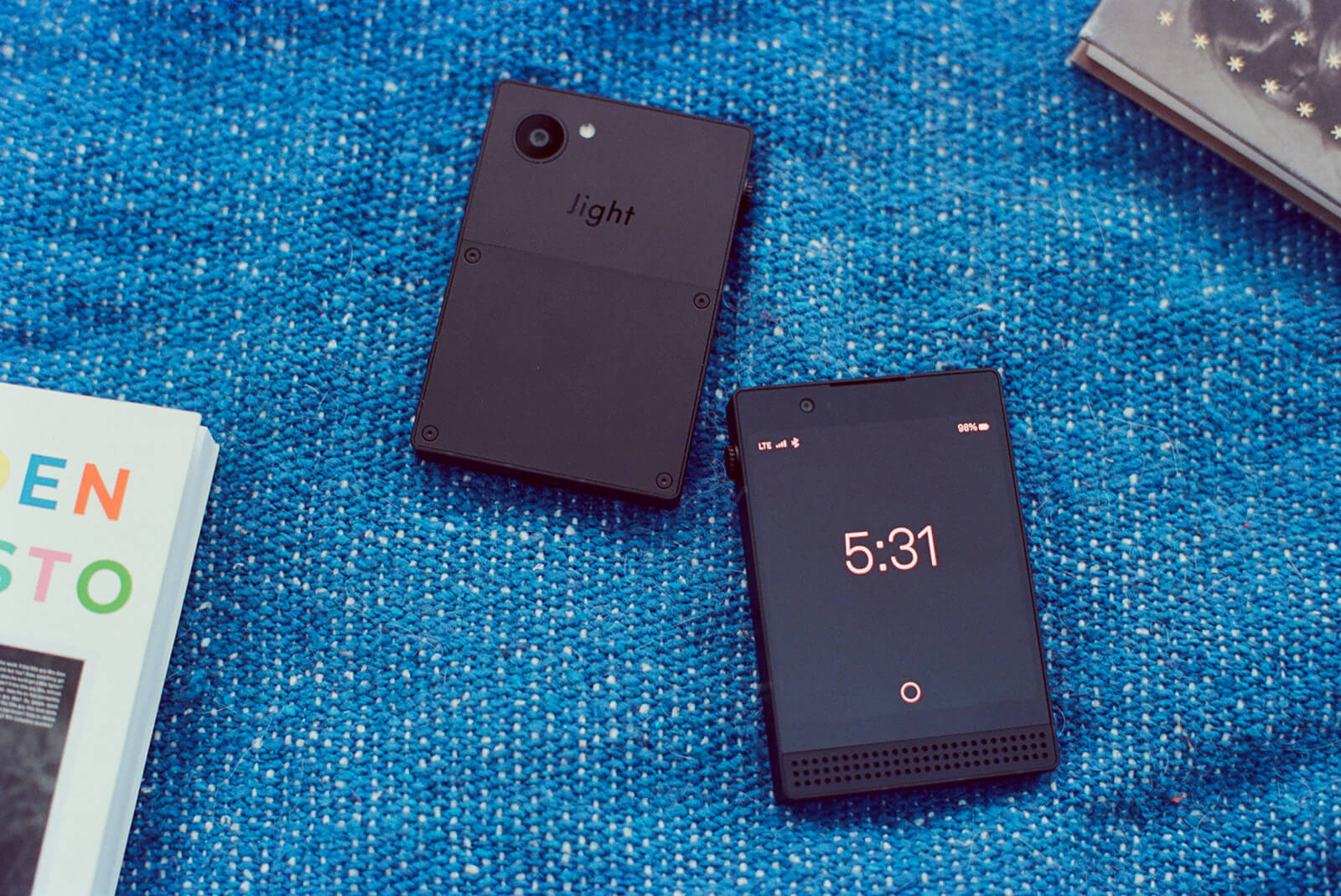
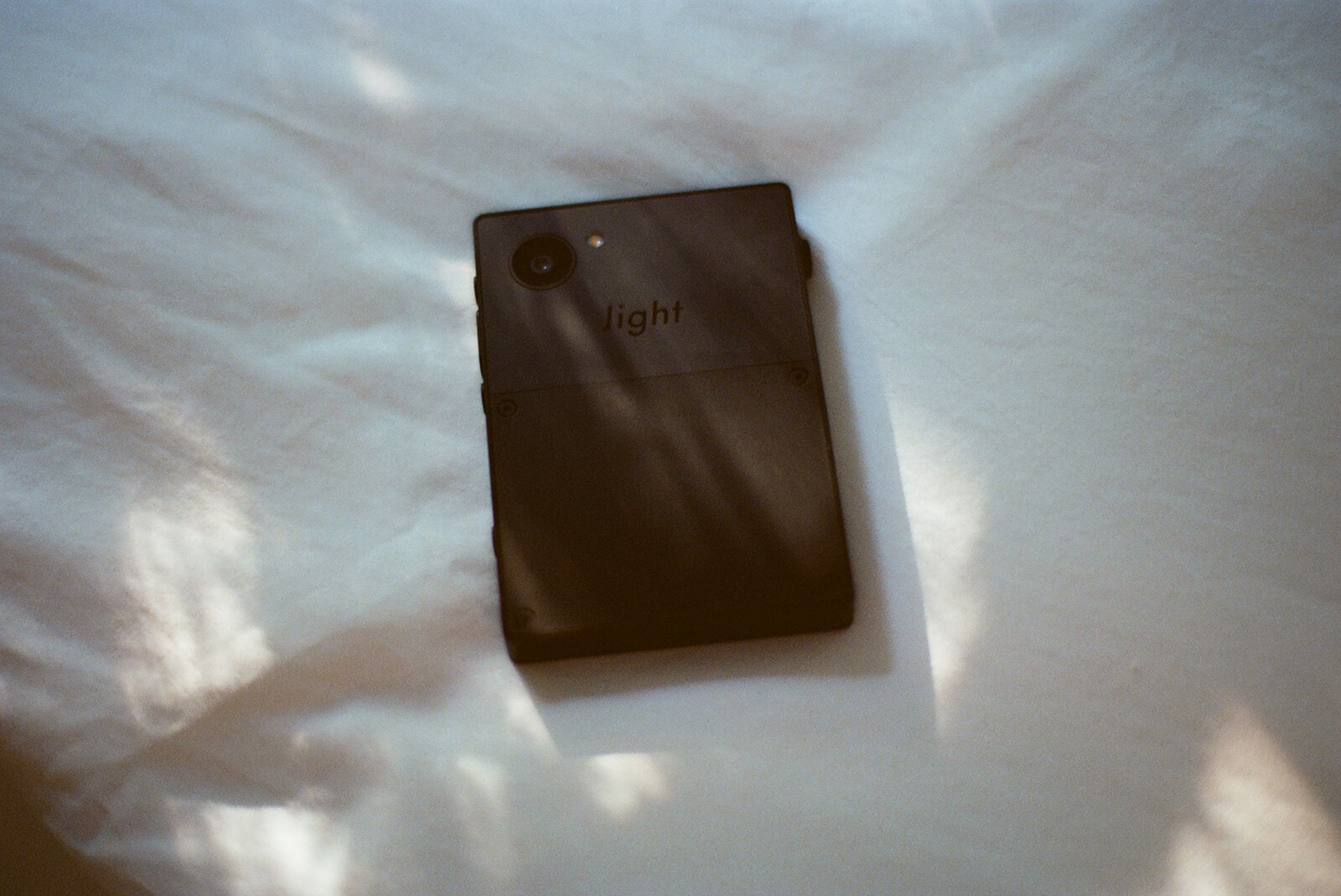
The first one in a now illustrious list that caught my attention was the Light phone, promising almost everything I speculate I might need from a dumbphone—calendar, calls, messages, a speaker, a camera, USB-C and even directions—all of it built into its own minimally designed LightOS—a distinct aesthetic for dumbphones, but still a marked evolution from the pixels of feature phones. Light has been designing dumbphones to be used as little as possible since 2017, stripping away the apps and feeds that keep us coming back to our smartphones while retaining a set of ‘useful’ tools. The Light Phone III, featuring a small, tactile metal body, a physical scroll wheel and a black-and-white AMOLED display, feels like a culmination of this language.
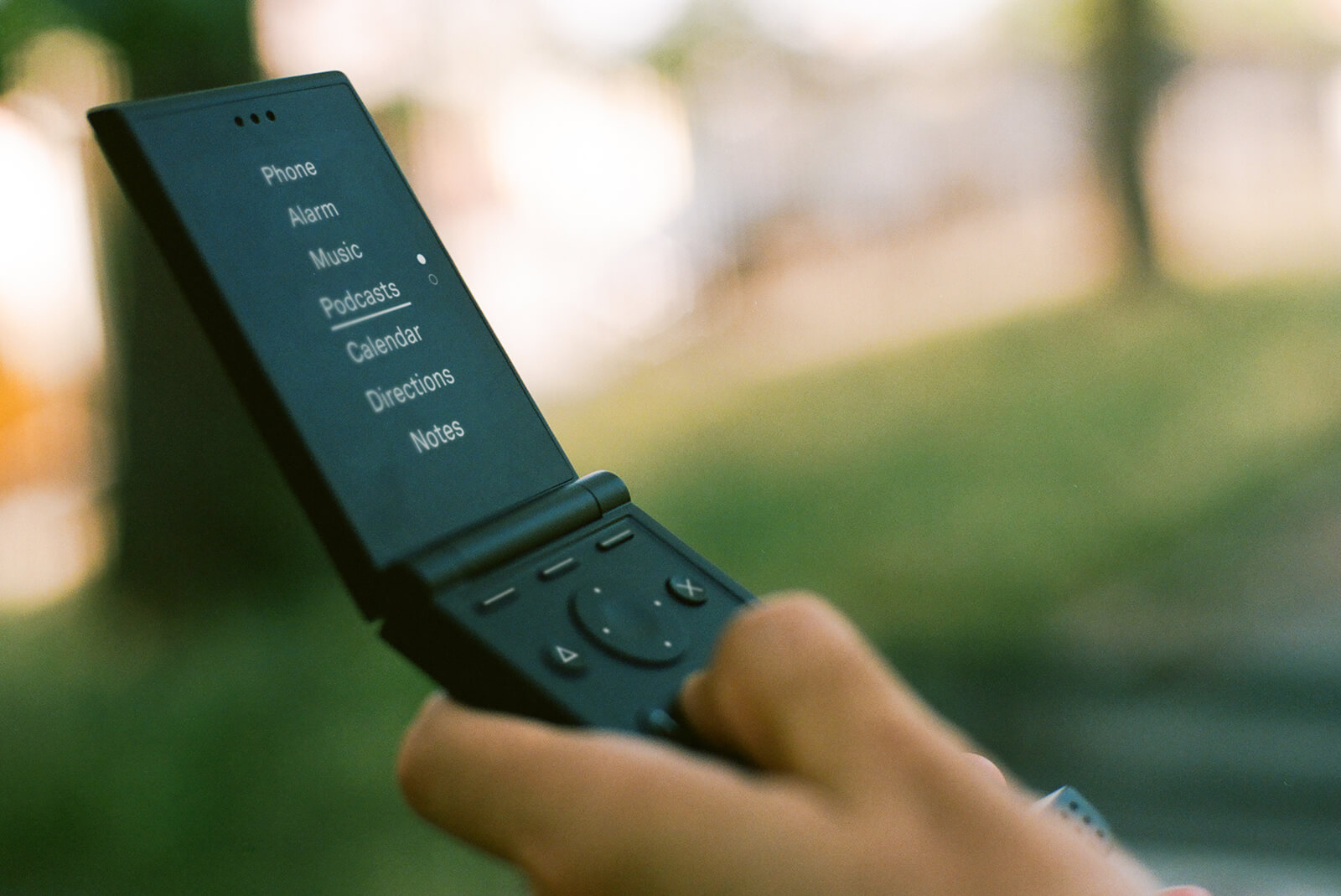
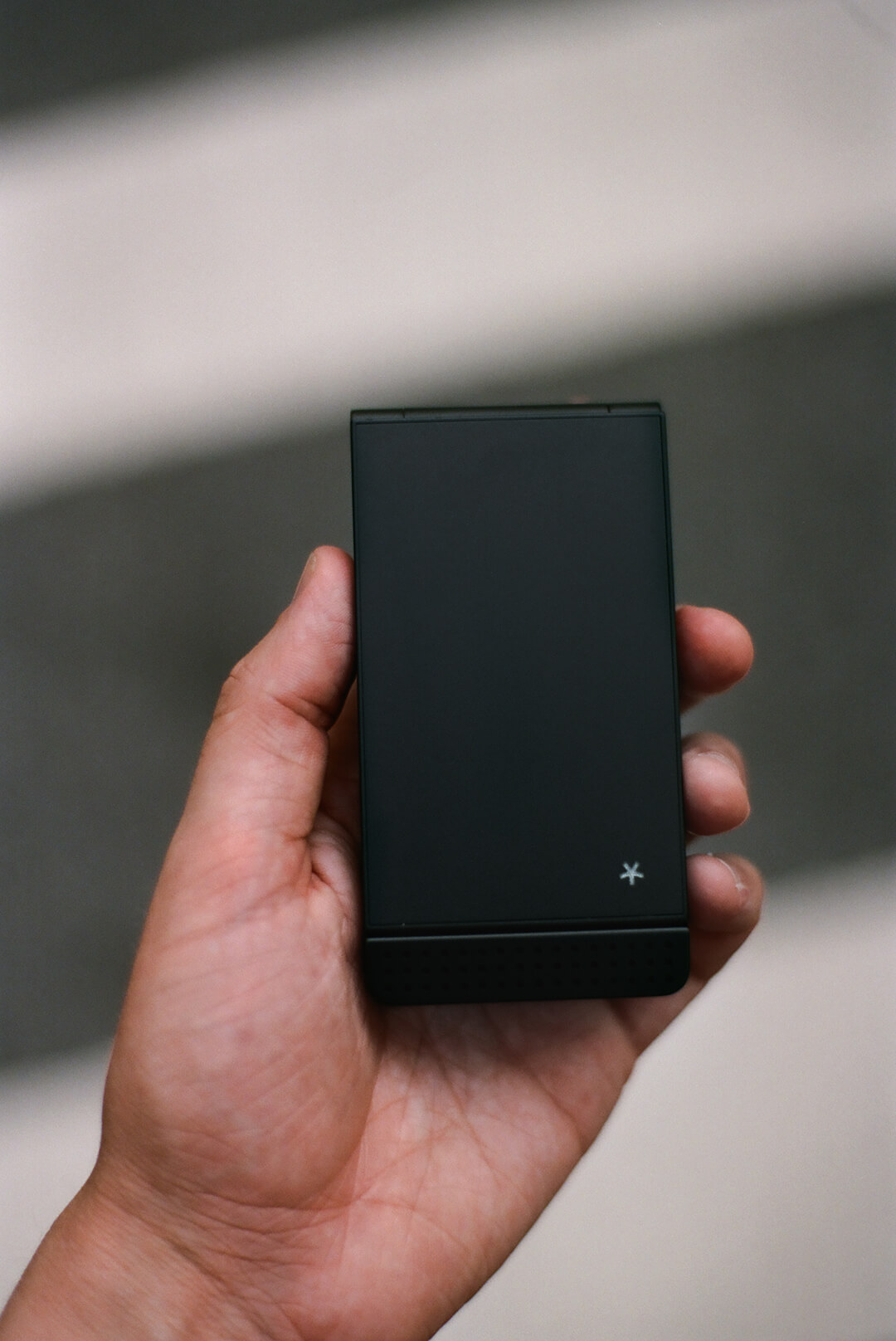
Underneath that pared-back exterior, though, is an undeniably modern phone: it runs on 5G, has 128GB of storage, GPS, Bluetooth, Wi-Fi, a camera and even eSIM support. Light’s upcoming Light Flip takes the same philosophy and puts it into an old-fashioned clamshell form, complete with physical buttons and no touchscreen. Yet, it retains conveniences such as a camera, navigation and music, along with a replaceable battery. Not that dumb.
Punkt, a Swiss design-led consumer technology company, has also been exploring a similar idea for years, with an even stronger emphasis on industrial design. They have been designing a small range of minimalist technology beyond phones, including home essentials and personal electronics, with the idea of promoting this minimalism as a holistic lifestyle. Their MP02 phone, designed by renowned product designer Jasper Morrison, is a tactile, restrained phone with physical backlit keys, a soft-touch rear pad and a monochrome display. Among other design choices, the exclusion of colour from the phones’ interfaces is a recurring one, as if lower fidelity in design were to equate to an absence of colour altogether. Conversely, a number of these dumbphones are available in pop and pastel colour options.
Though similar to Light Phones in providing basic functionality, Punkt stands out because of its Pigeon messaging system that uses the Signal Protocol to allow encrypted calls and messages. It can even act as a 4G hotspot, connecting a laptop or tablet to the internet for when you actually need to get online. It doesn't ask you to disconnect; it simply lets you decide when you want to connect, with the internet becoming something you can access through rather than on the phone.
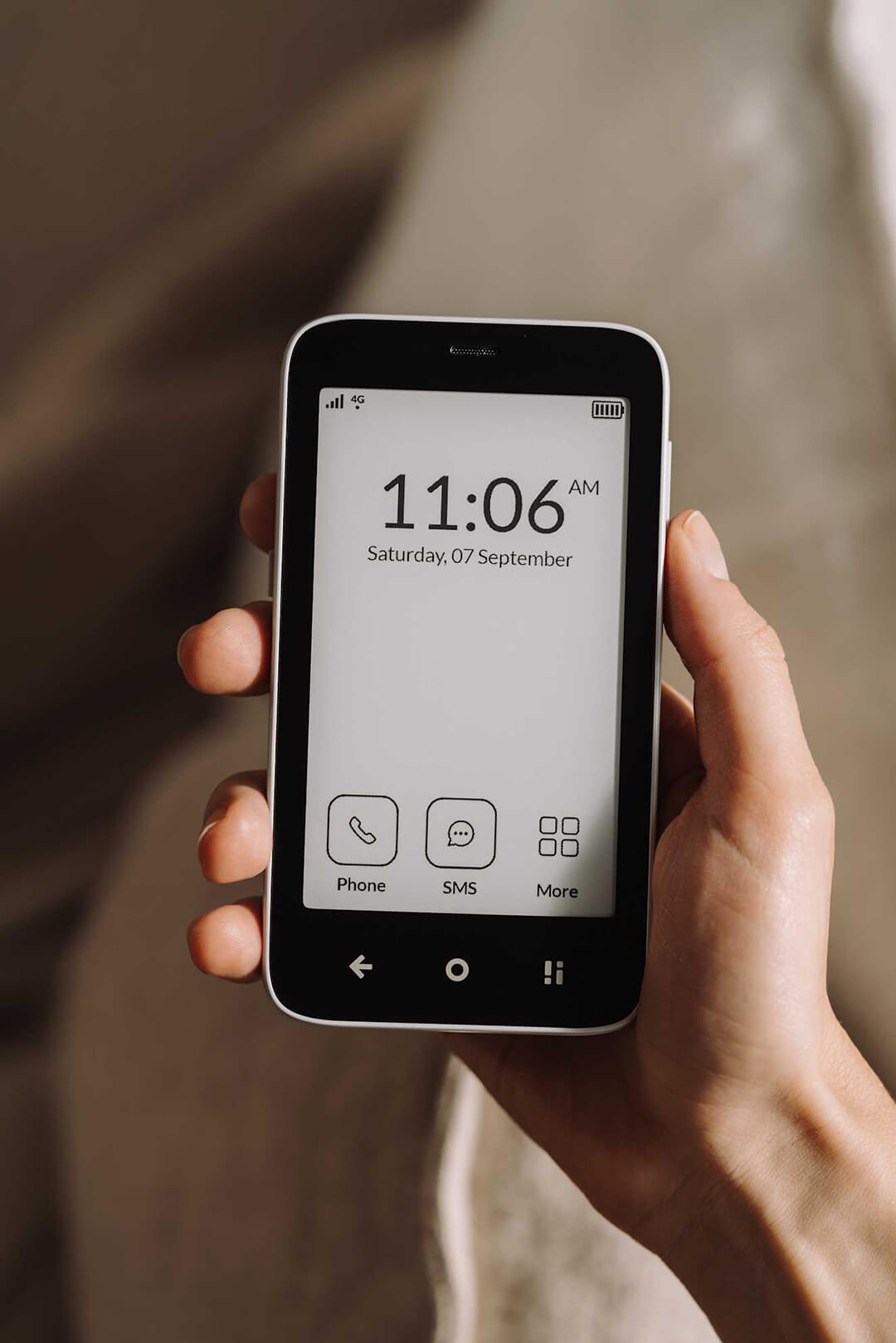
Then there are phones that are designed on the same principles as e-readers, albeit with a little more functionality. Mudita’s Kompakt, for example, with its 4.3-inch E Ink display, replaces the bright, luminous screen we have come to expect from smartphones with something more paper-like and easier on the eyes. The Kompakt seems to be less interested in making a phone that does less than in changing how we interact with one—using the screen itself to introduce a little more friction into something that has otherwise become almost effortless. Yet again though, it is hardly limited in what it can do: it offers offline maps and navigation, music, an e-book reader, a camera and even wireless charging. It also has a dedicated Offline+ button that disconnects the phone from cellular networks and disables its microphones, offering a physical way to step away from being ‘connected’.
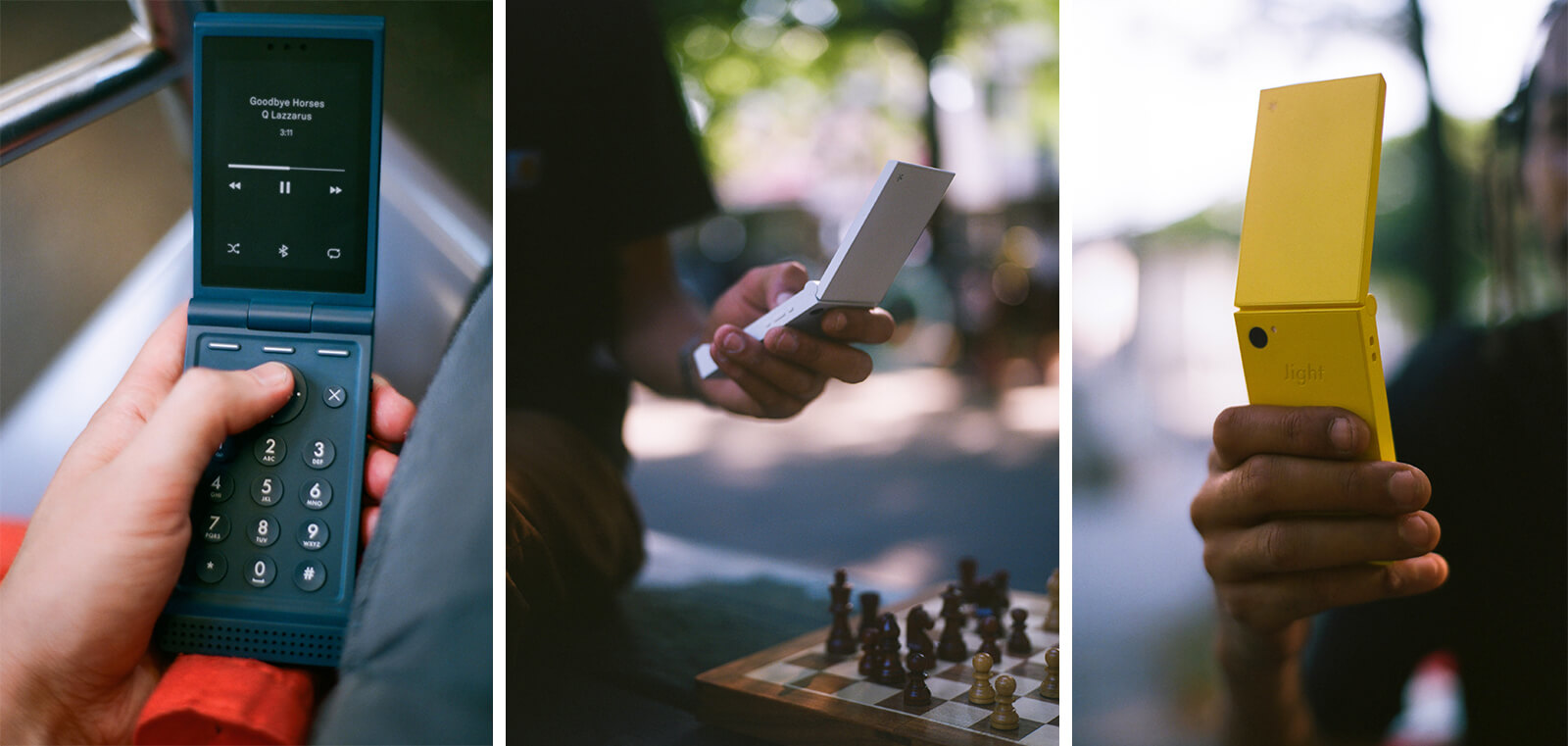
Across paring back the build and the interface, isolating design habits and re-engineering around them, it appears strange to call these phones dumb, when they are anything but. They are thoughtfully designed, sophisticatedly finished and, in some cases, cost more than the phones they are ostensibly trying to replace. Trying to make a phone that does less has invariably created a newly marketable—if not entirely new—language of technological minimalism, and that comes with its own distinct aesthetic, tending to the hyper-curated, Scandinavian furniture-owning, succulents-in-the-kitchen, Perfection-coded crowd of perennially online millennials.
Dumbphones are sleek, small, colourful on the outside and deliberately pleasant to use—objects that feel designed (read: exclusive, expensive) rather than merely functional. Their proliferation raises the question of who, exactly, this new technology is being designed for, and whether the supposedly neutral desire to use our phone less is targeted towards a very specific kind of consumer; for there is something inherently privileged about the desire to be offline. For some, a smartphone is no longer simply a device for communication or entertainment; it is how they work, navigate, pay, access important services and participate in everyday life.
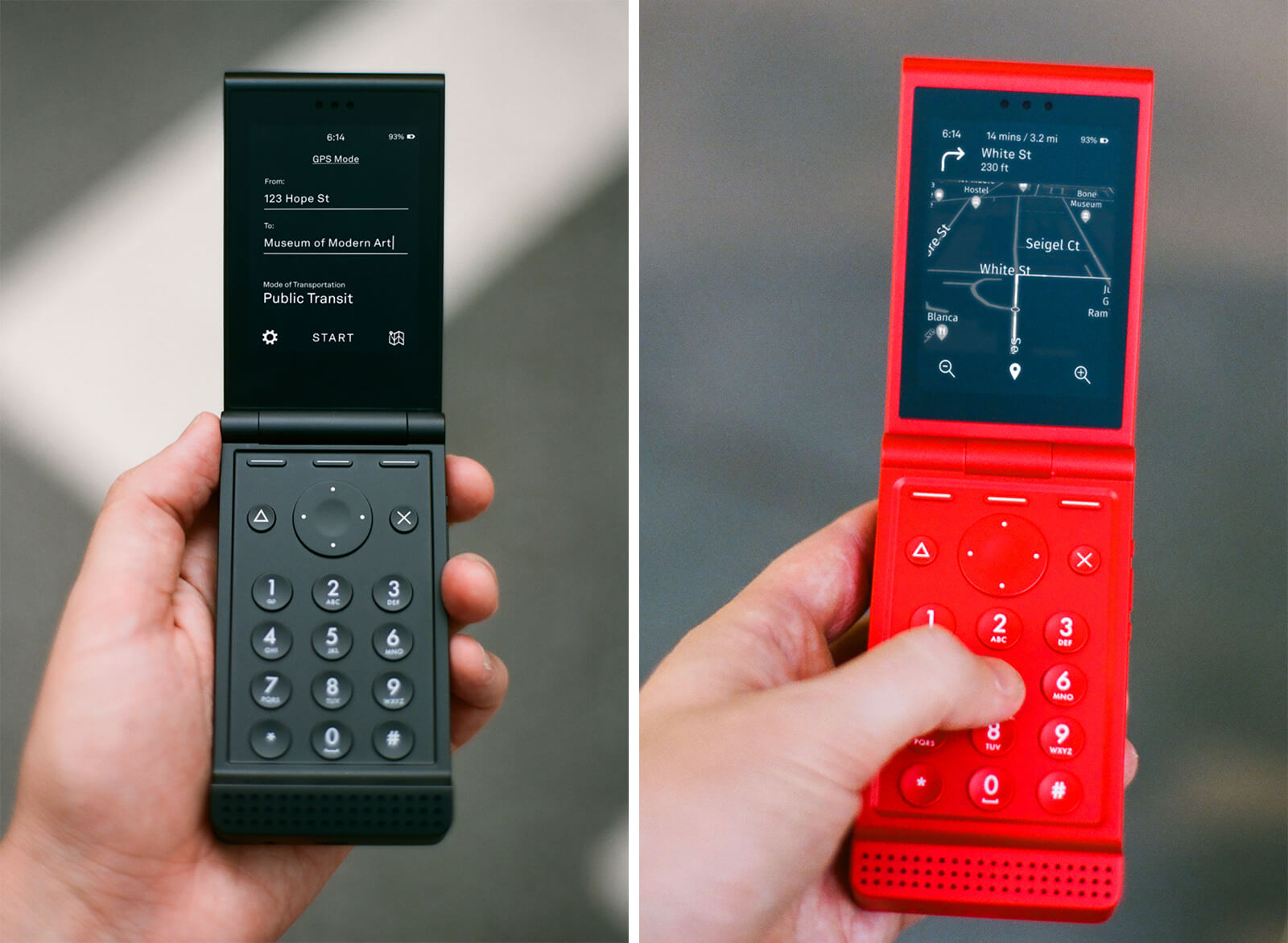
It is important to point out that this adaptation to digital technology and a ‘hybrid’ way of being forewent the idea of deliberation or choice too—much like any other watershed technological intervention deemed to be the new normal. Hop on the bandwagon, or be left behind. Choosing to step away from all of that is similarly not equally possible for everyone, especially on those grounds. The dumbphone, then, is less a universal solution to our dependence on technology than a product for those who have enough flexibility in their lives to opt out of it. And, not to mention, enough money, considering most of these accessories for slower lifestyles retail at anywhere north of 300 USD.
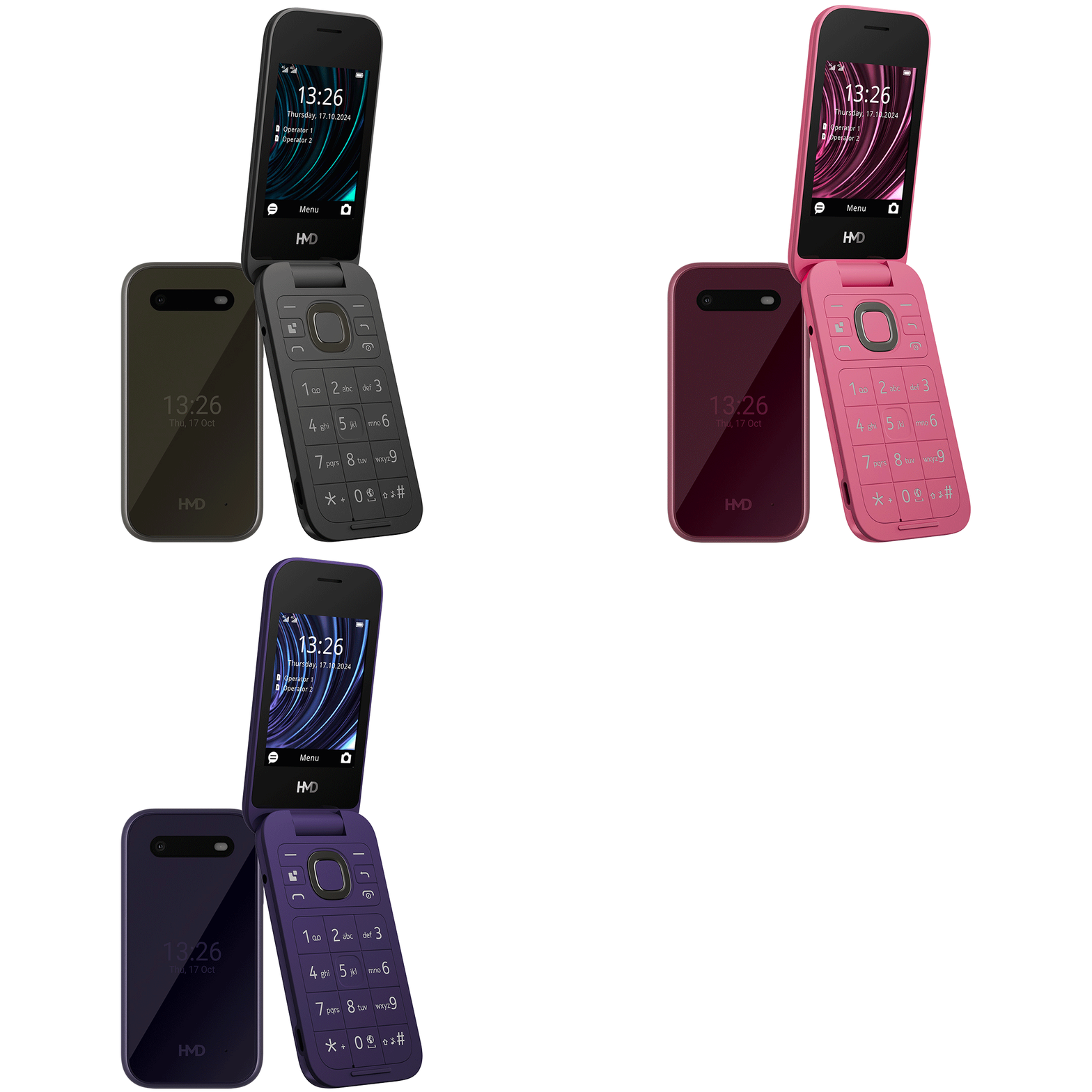
On the other end of this spectrum of ‘digital detox devices’ are the Nokia feature phones made by Finnish manufacturer HMD, which occupy a much more affordable space on it. These feature phones fit comfortably within the category of dumbphones, in that they are designed for minimal functionality as well, like calls, messages and long battery life, with some newer models offering things like 4G, UPI and mobile internet. It is, however, the aesthetic of slower living that they seem to be missing, inevitably tying them down in the desirability matrix.
Some of HMD's newer Nokia feature phones announced this year (Nokia 200 4G, 210 4G, 215 4G 2nd Edition and 235 4G 2nd Edition), ironically, come integrated with AI, accessible via voice through a button placed smack in the middle. There is something especially comical about this Trojan-horse of an offering wrapped in nostalgic bait. Just as people discernibly start turning to simpler phones to escape the relentless addition of technologies, AI too has already begun making its way into their design. Even the dumbphone, it seems, is being asked to get smarter.
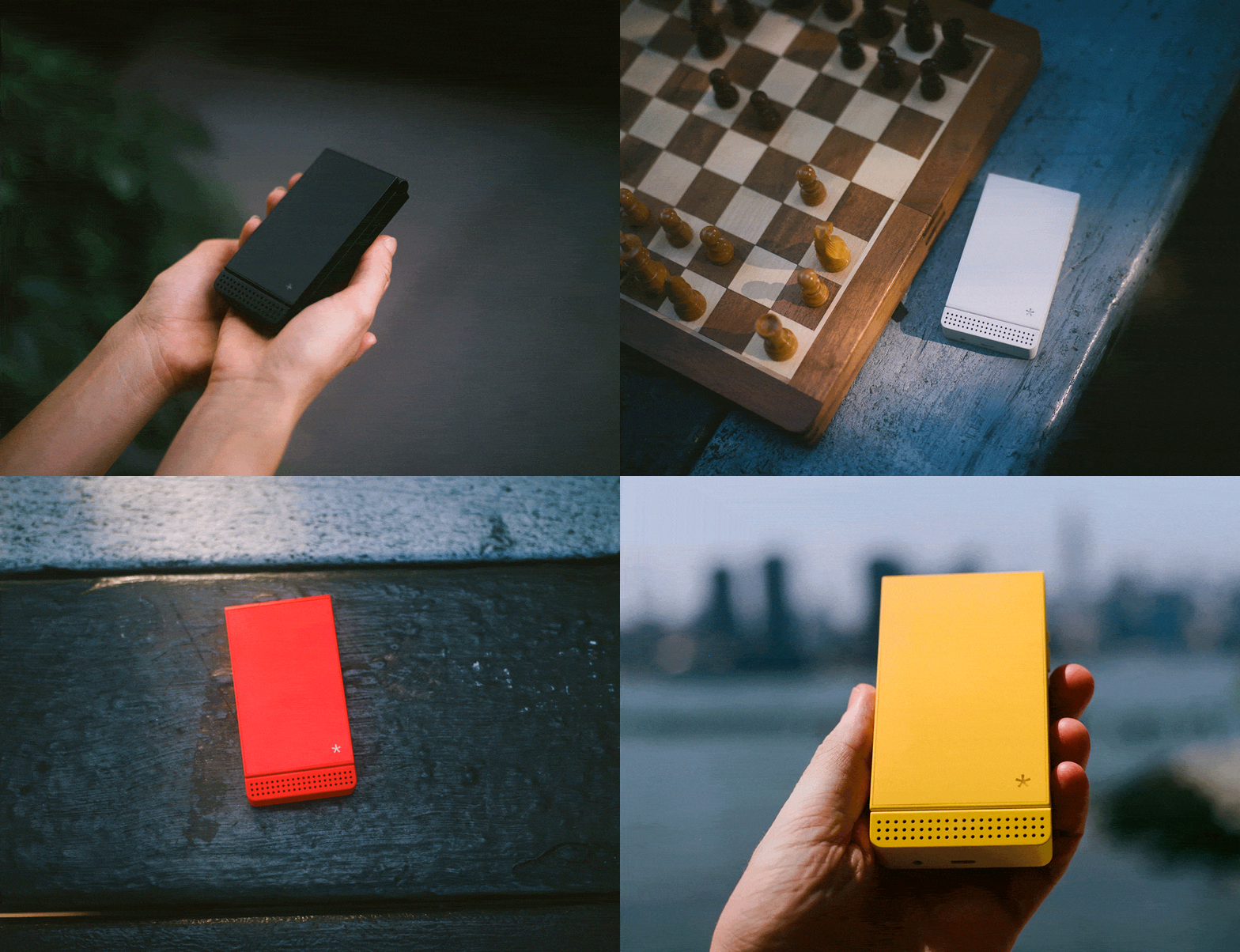
And that indeed sums up the contradiction about wanting a dumbphone. They are both a tool for resisting digital dependence and a product of the very digital infrastructure they seek to escape, ‘designed’ not to appear like it. Still, the appeal is wholly understandable. I could (and have tried to) delete social media apps from my phone. I could turn off notifications. I could set time limits on apps. But I could also simply just get (and have gotten) everything back in a moment of boredom or lapse. A dumbphone introduces friction in this unequal barter. It doesn't ask to resist the temptation; it simply seeks to remove the temptation altogether while still fostering desirability as a well-designed object. Perhaps that is what makes it so compelling, and leaves me where I started: wondering whether I really need a dumbphone. Perhaps I don't. But then again, if I have to exercise extraordinary willpower every time I pick up a device designed to keep me looking at it, perhaps there is something to be said for an object designed to let me look away.
The views and opinions expressed here are those of the author(s) and do not necessarily reflect the official position of STIR or its editors.

by Jincy Iype Oct 15, 2026
STIR explores craft, material intelligence and people shaping Indian design through dialogues with Design Democracy’s co-founders and the curators of its special exhibitions.
by Pranjal Maheshwari Oct 13, 2026
Through furniture, art and films, the showcase at the Ian Potter Centre in Melbourne advocates for biophilic material cultures as an antidote to planetary degradation.
by Pranjal Maheshwari Oct 12, 2026
The exhibition reimagines the 20th-century Scottsville residence of the American sculptor and his partner, ceramicist Nancy Jurs, curated by their daughter Alison Castle.
by Mrinmayee Bhoot Oct 08, 2026
The game designer discusses their work and its manipulation of scale, scientific data and non-human perspectives to create speculative futures in conversation with STIR.

make your fridays matter with a well-read weekend
Enter your details to sign in
Don’t have an account?
Sign upOr you can sign in with
a single account for all
STIR platforms
All your bookmarks will be available across all your devices.
Stay STIRred
Already have an account?
Sign inOr you can sign up with
Verification link sent to check your inbox or spam folder to complete sign up process
Tap on things that interests you.
Select the Conversation Category you would like to watch
Please enter your details and click submit.
Enter the 6-digit code sent at


Are dumbphones in the face of smarter algorithms our technological salvation?
by Chahna Tank | Published on : Aug 20, 2026


 Sign in with Google
 Sign in with email
What do you think?