Design06 mins. read
Experiential chronicling: STIR reflects on impactful visits that widened perspectives
by Jincy IypeDec 31, 2024



by Chahna TankPublished on : Jan 23, 2026
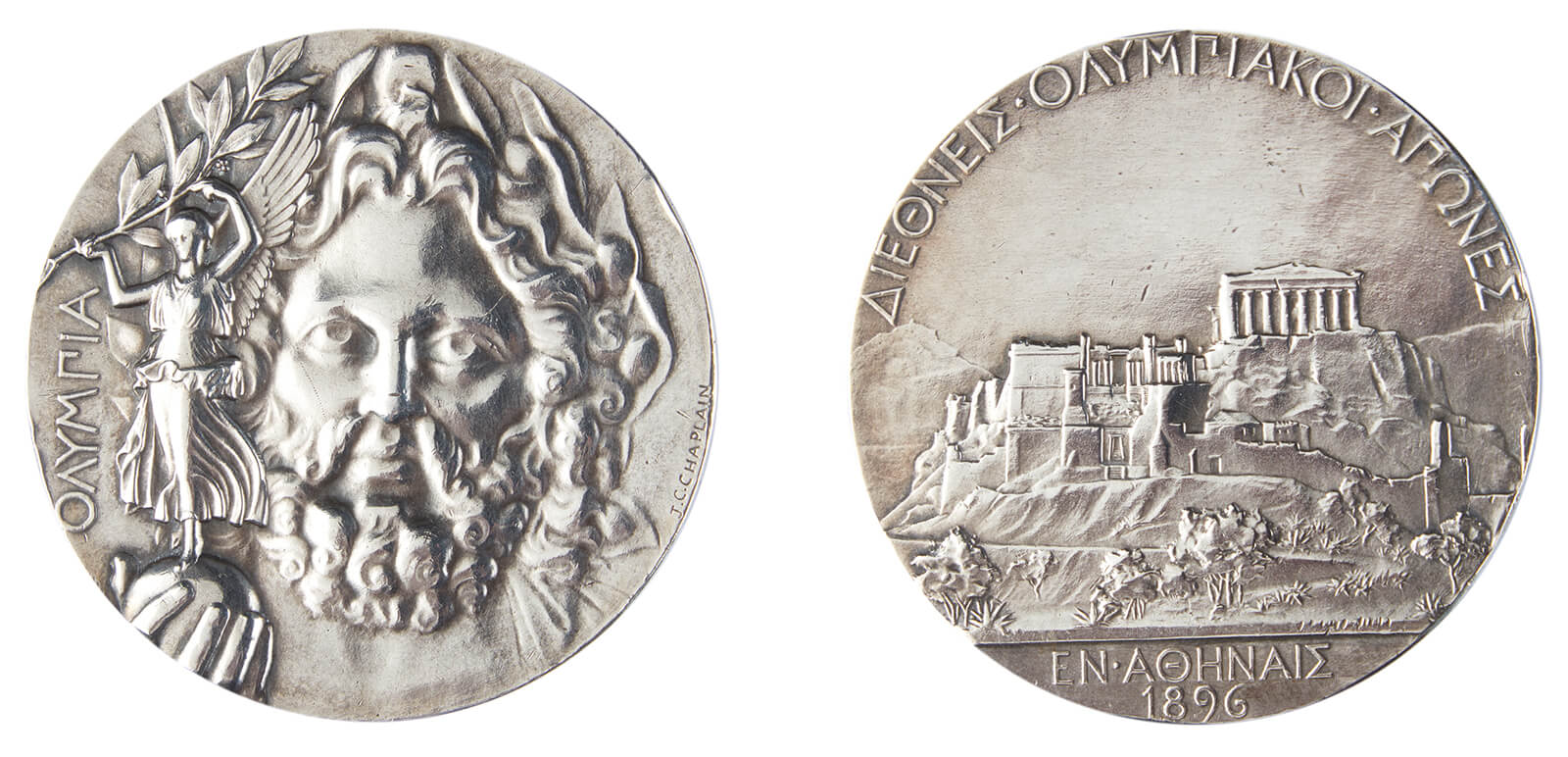
Olympic medals today have come a long way since the olive wreaths that were bestowed on victors in ancient Greece. These kotinos—fragile crowns cut from the wild olive trees of Olympia, markers of honour and glory—seemingly only held semantic value at the time, a symbolic acknowledgement of athletic prowess, no more. The disc-like, shiny form that we recognise today—part jewellery, part design artefact—is a far more recent invention. Since their emergence at the first modern Olympic Games in Athens in 1896, Olympic medals have evolved into objects through which ideas of victory, identity and cultural values are made visible. At those inaugural Games, winners received a silver medal with an olive branch and runners-up a bronze medal with a laurel branch. Crafted by the French engraver Jules-Clément Chaplain, the first medal design was undeniably classical—Zeus’ head on the obverse (front) holding a globe crowned by Nike, the winged goddess of victory, and the Acropolis engraved on the reverse—invoking ancient iconography that sought to root a somewhat modern games ceremony in an ancient past, bound by quasi-religious undertones.
To trace the evolution of Olympic medal design, then, is not to merely chart its stylistic lineage but to ask how this small 'object' has accrued outsized meanings. For all the weight and symbolism placed on them, it is surprising to see how restrained their origins were and interesting to observe the many directions these design went in, regardless.
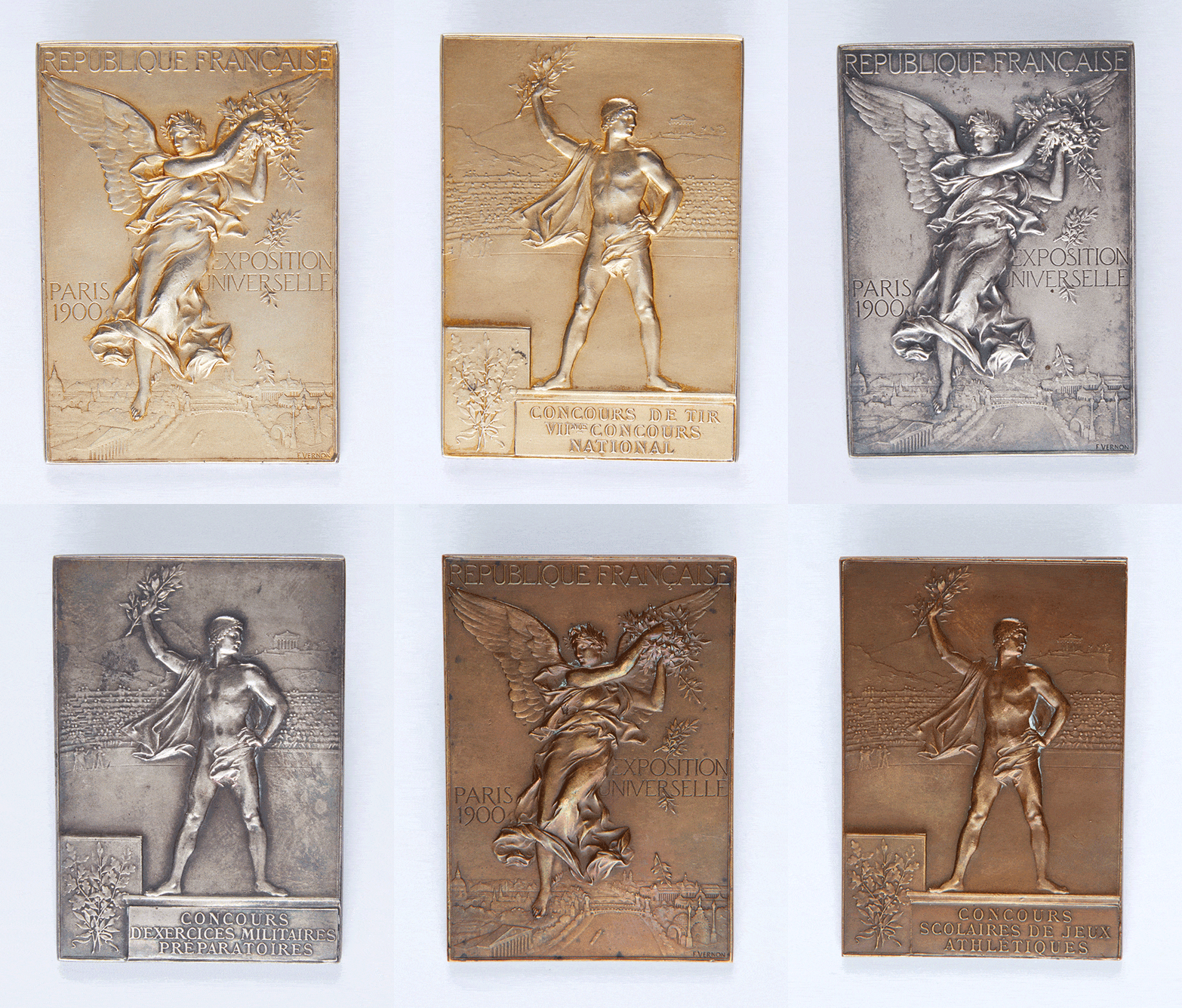
After the 1896 games, the next iteration, held in Paris in 1900, was the first—and only—to feature a rectangular medal design, with gilt silver, silver and bronze medals awarded to the top winners. Both Athens and Paris entrusted the Monnaie de Paris (Paris Mint)—which also minted French currency—to mint the medals, thereby positioning them as objects of prestige and value, akin to currency itself; they were received but not yet worn or pinned on the body. After Paris, the tradition of host cities taking responsibility for producing them was also cemented, albeit for a short period of time.
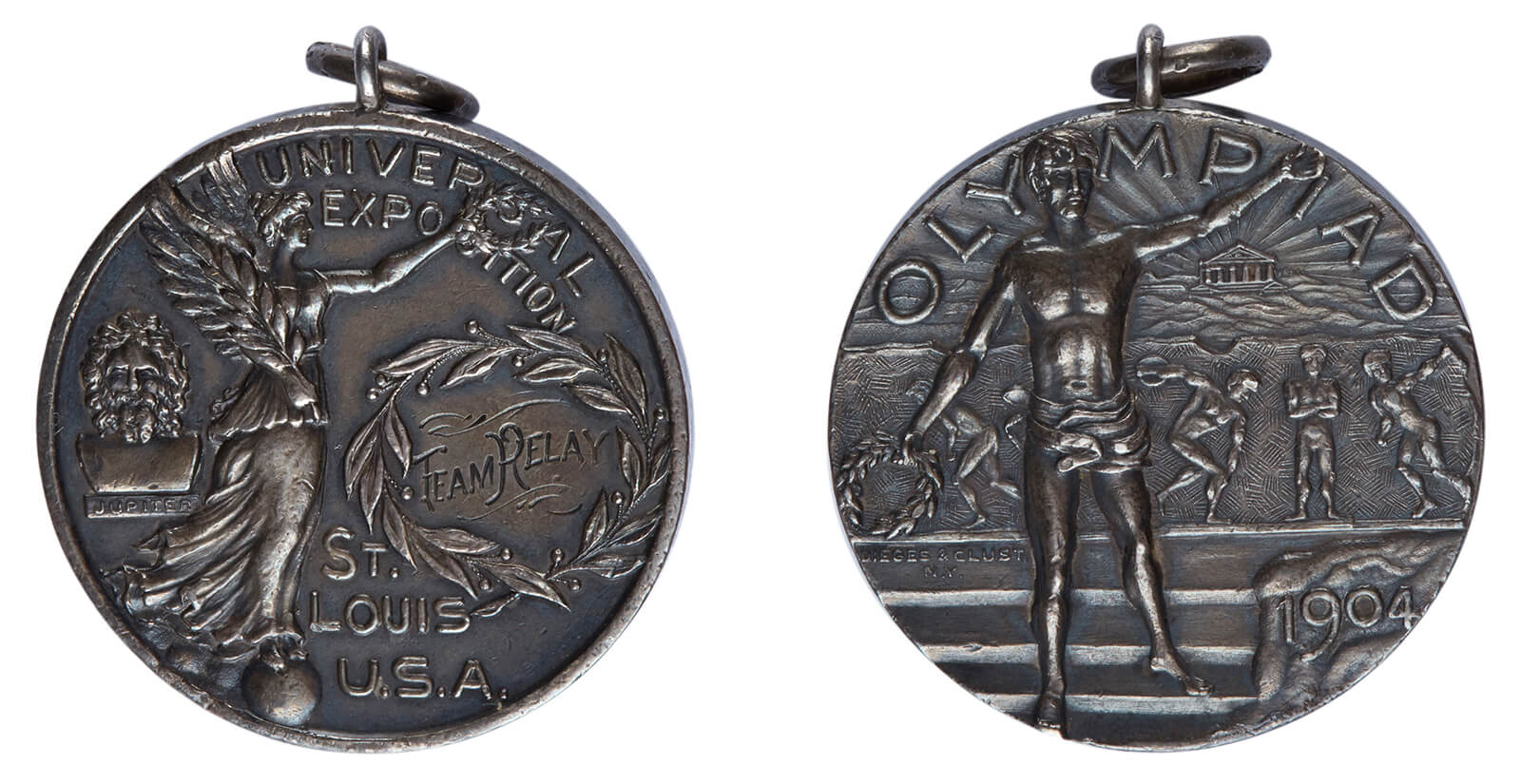
It wasn’t until the next games in 1904 in St. Louis that the medal hierarchy we know today—gold, silver and bronze medals for the top winners—was officially established. For this brief period, the host city's respective freedom to design its own medals led to some experimental designs with local motifs and iconography on the reverse. Medals thus became a way for host cities to assert their history and values on a global stage. London in 1908 placed the patron saint of England, St. George, on its medal; Stockholm in 1912 honoured the founder of the Swedish gym system, Pehr Henrik Ling; in the 1920 edition, Antwerp commemorated a local legend, Silvius Brabo; and in 1924, Paris assembled a collage of sporting motifs.
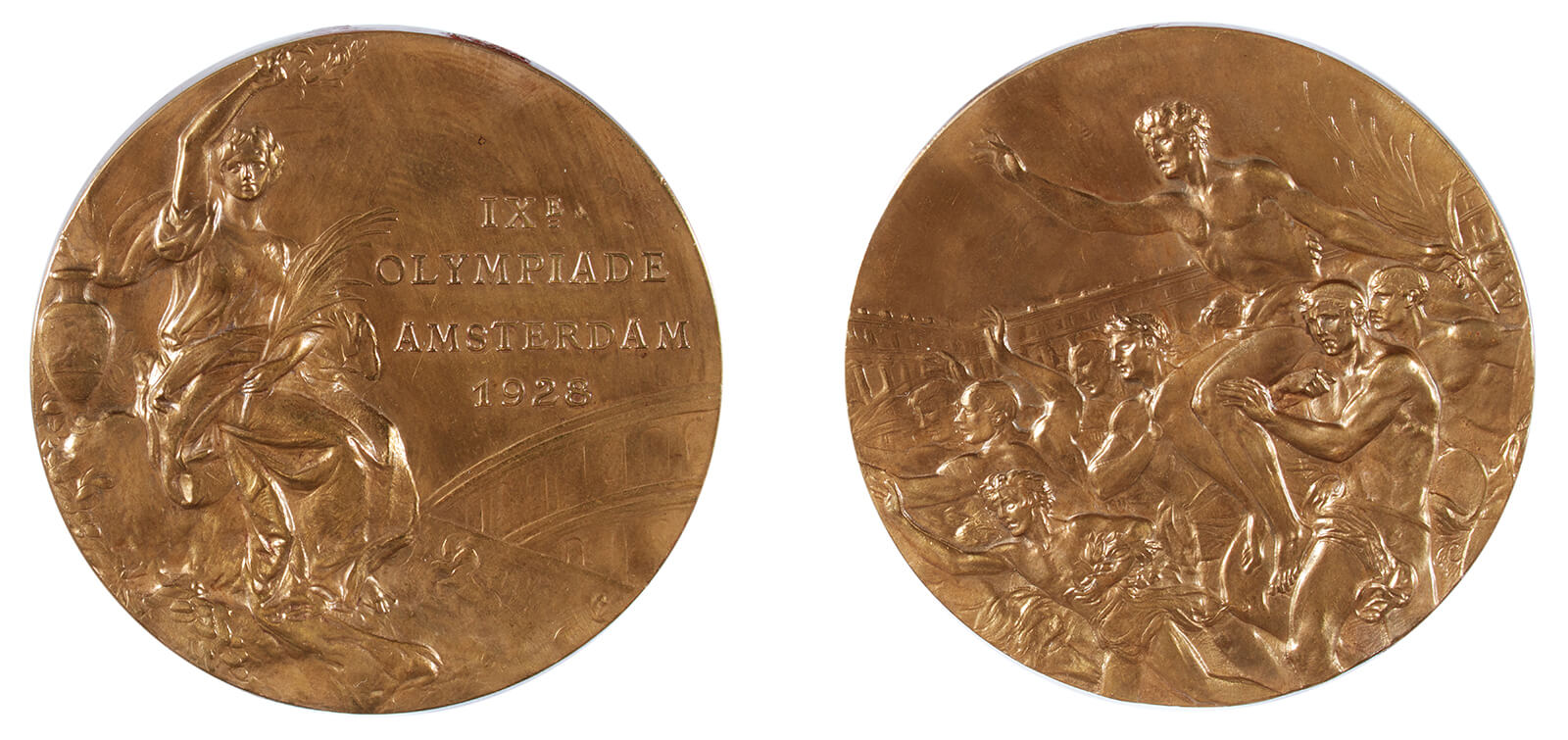
This period of creative latitude, however, proved short-lived. In 1921, the International Olympic Committee (IOC) launched a competition for sculptors to design the medals for the Summer Olympic Games to bring some uniformity to medal design, presumably to wrest control and to set a standard for future editions—something globally recognisable and respected, instead of locally identified. The winner, Italian painter and sculptor Giuseppe Cassioli’s Trionfo design, unveiled at the 1928 Amsterdam Games, would become the visual identity for Olympic medals for more than four decades. On Trionfo, Nike appeared once again, this time with the Roman Colosseum behind her, while the reverse depicted a crowd carrying a triumphant athlete hoisted by a cheering crowd.
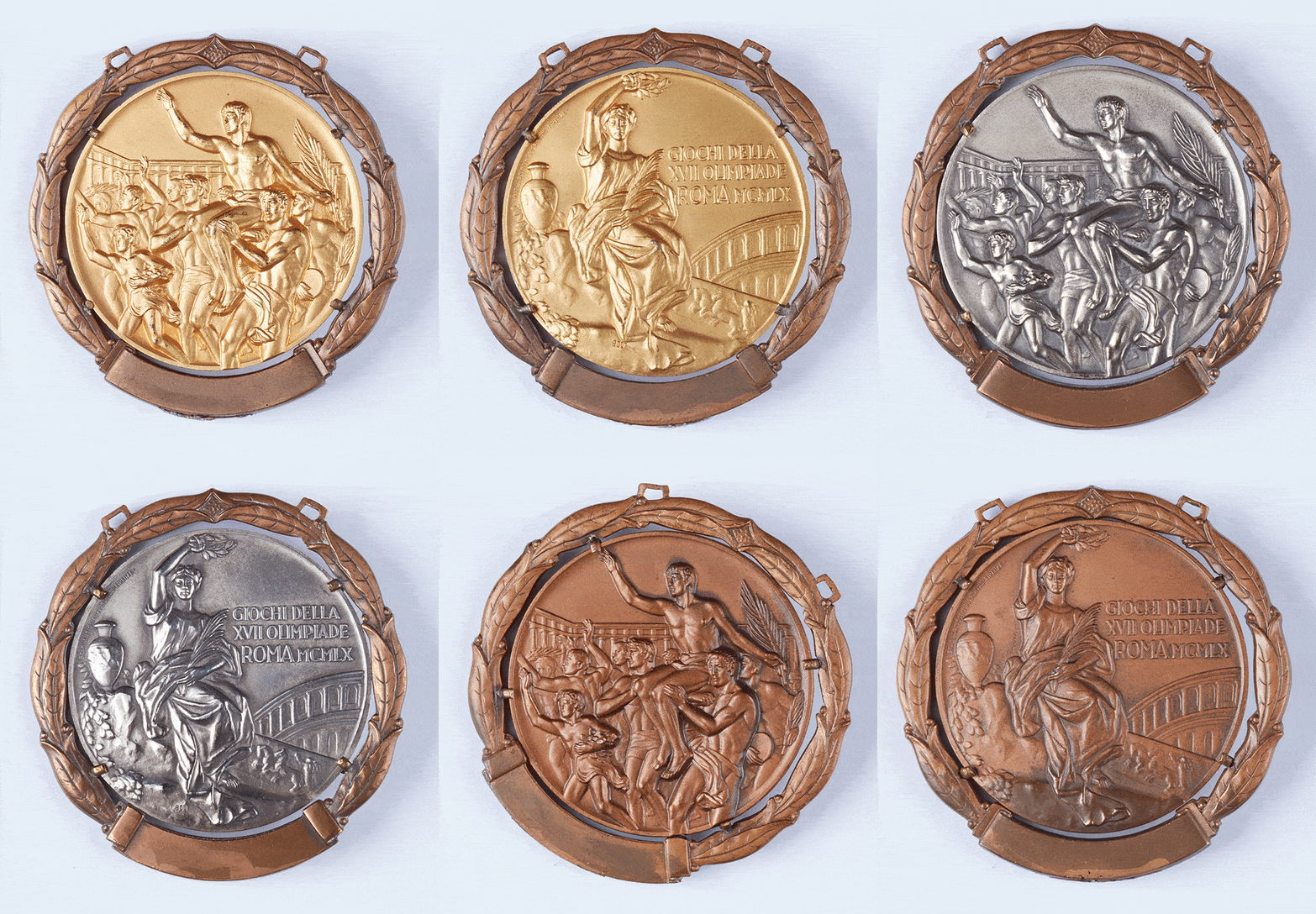
Cassioli’s design then became a template for summer medals. The result was a kind of creative straightjacket: for over 40 years, these designs remained remarkably similar, with few opportunities for hosts to inject originality. During this time, conversely, the global design language evolved—from Art Deco to Bauhaus to even postmodernist interpretations—while the Olympic medals’ design remained frozen in an idealised classical past. Even minor changes, like in the 1960 games in Rome, where the design was inverted (obverse and reverse were flipped), were rare exceptions with too little to note. That same year, though, for the first time, the medal was placed around the athlete’s neck—transforming them into something worn and adorned, and invariably, displayed.
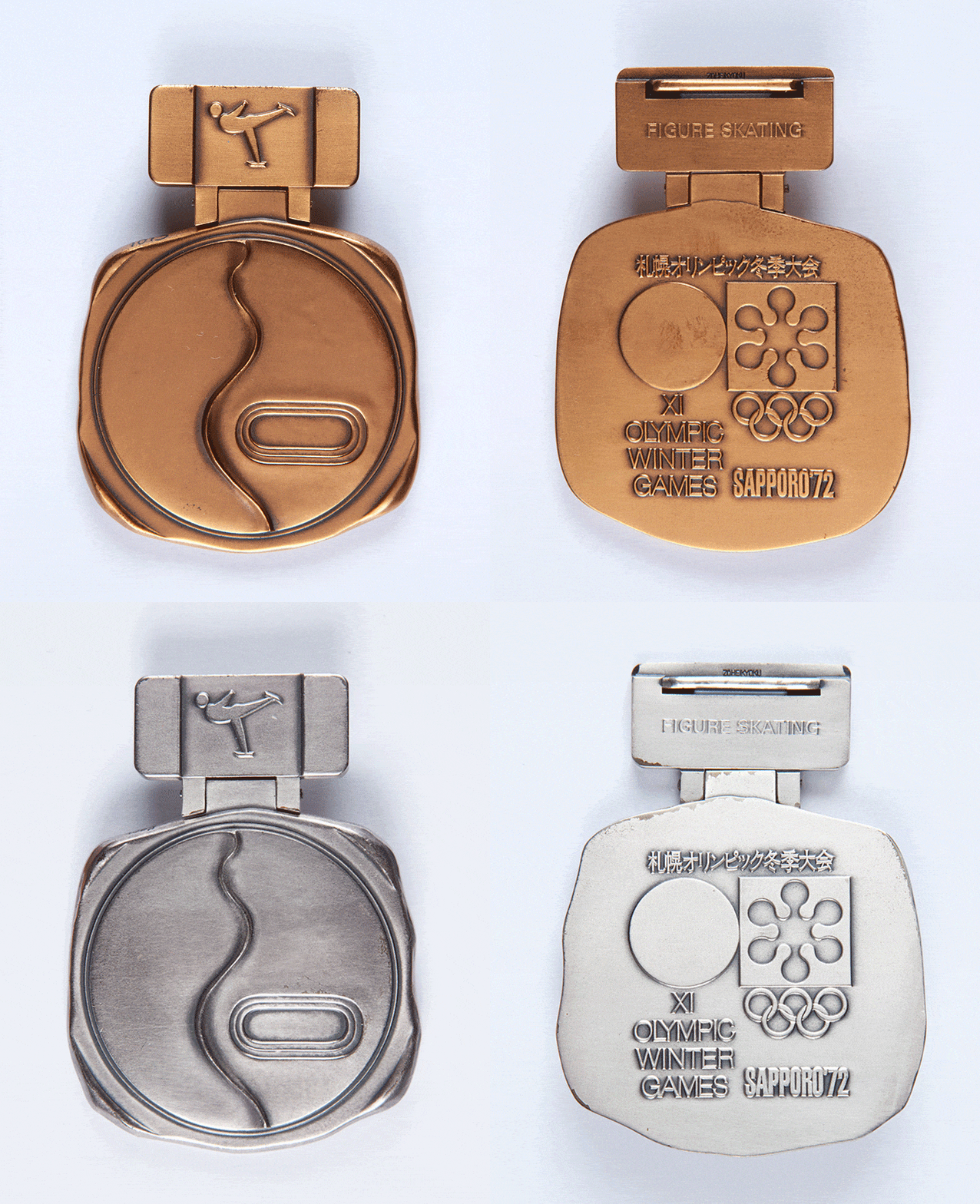
While the medal designs for the Summer Games were bound by tradition and regulation, Winter Olympic medals evolved along a far freer trajectory in contrast. With no inherited iconography to obey—no goddesses, no temples, nor prescribed compositions—Winter medals exercised complete freedom over form, material and imagery. The inaugural Winter Games in Chamonix in 1924 featured a medal designed by Raoul Bernard with nothing but a 14-line inscription on the reverse. It appeared during a time when modernist ideas of clarity and order were beginning to seep into global design language. Decades later, the 1972 Sapporo games introduced the first irregular-shaped medal, designed by sculptor Yagi Kazumi and graphic designer Ikko Tanaka, spearheading a new design sensibility that would lead to more experimental designs in subsequent games.
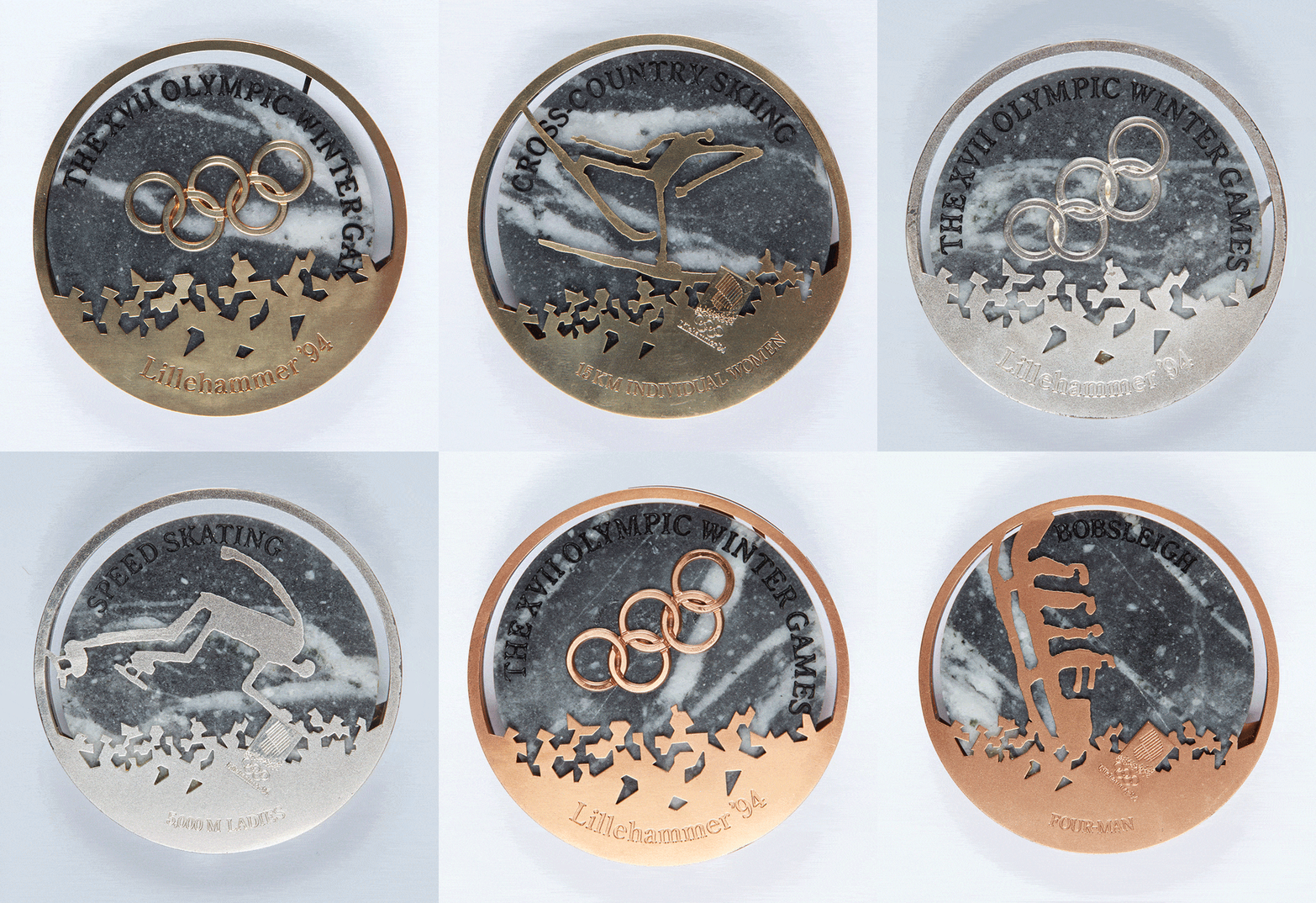
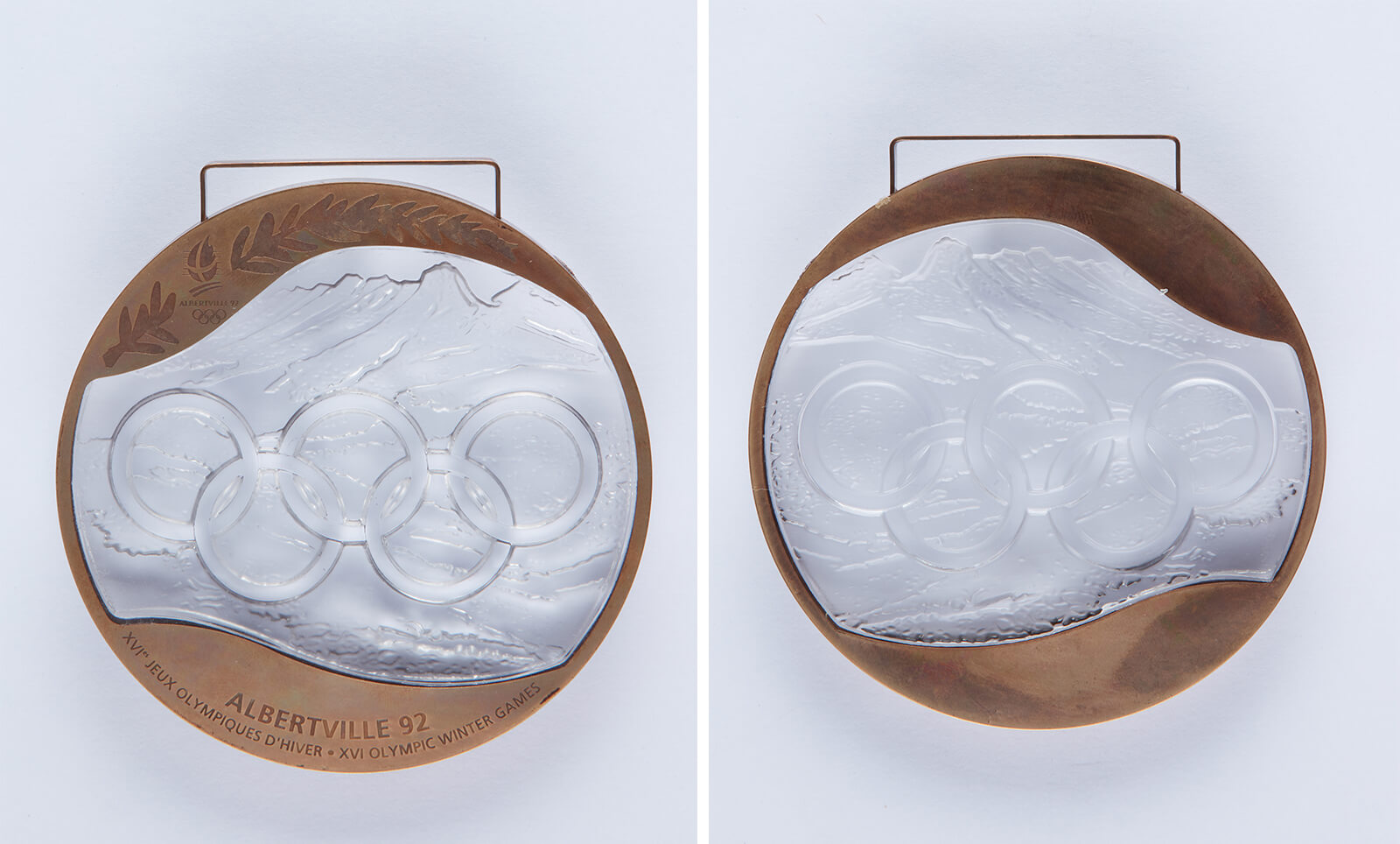
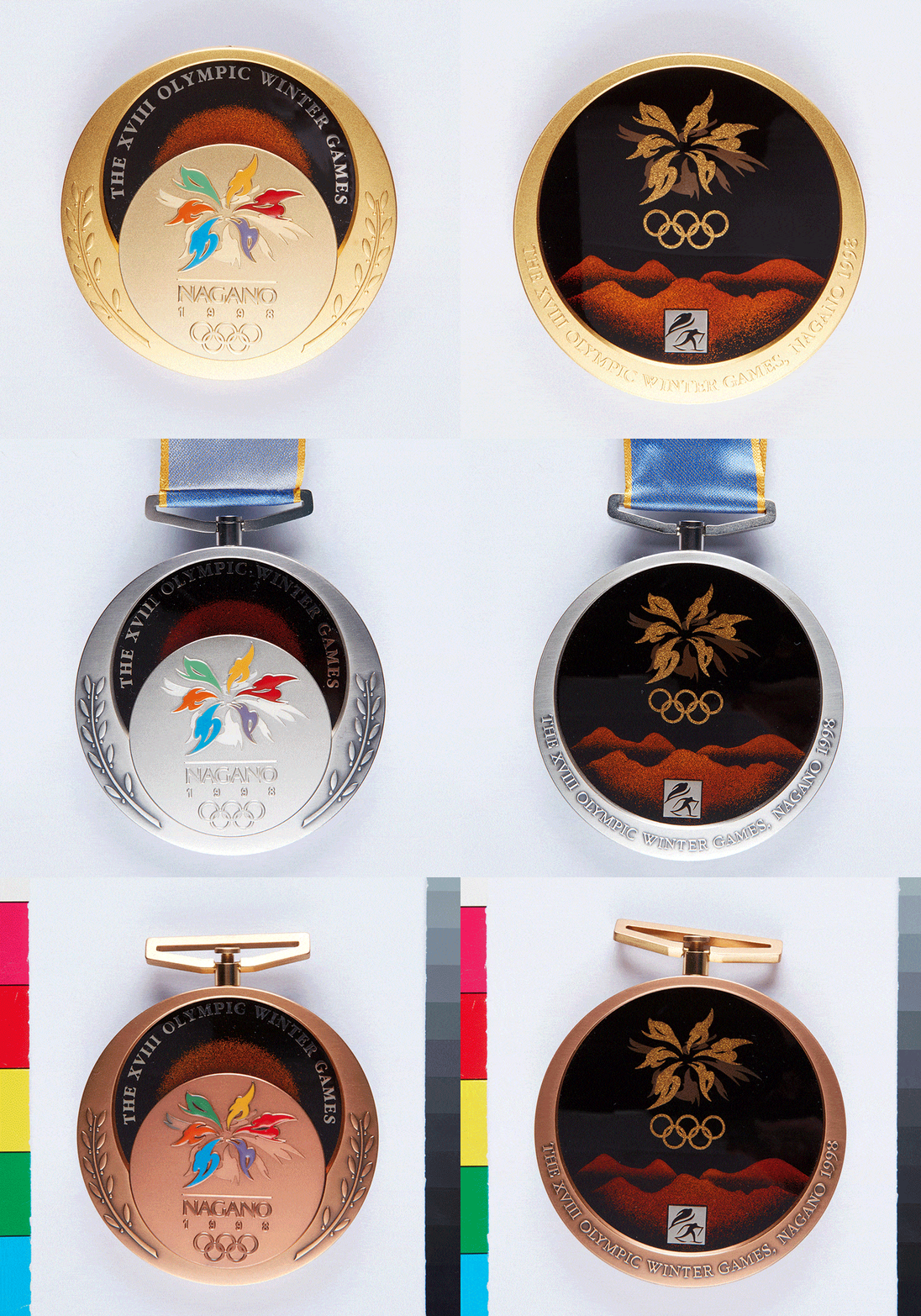
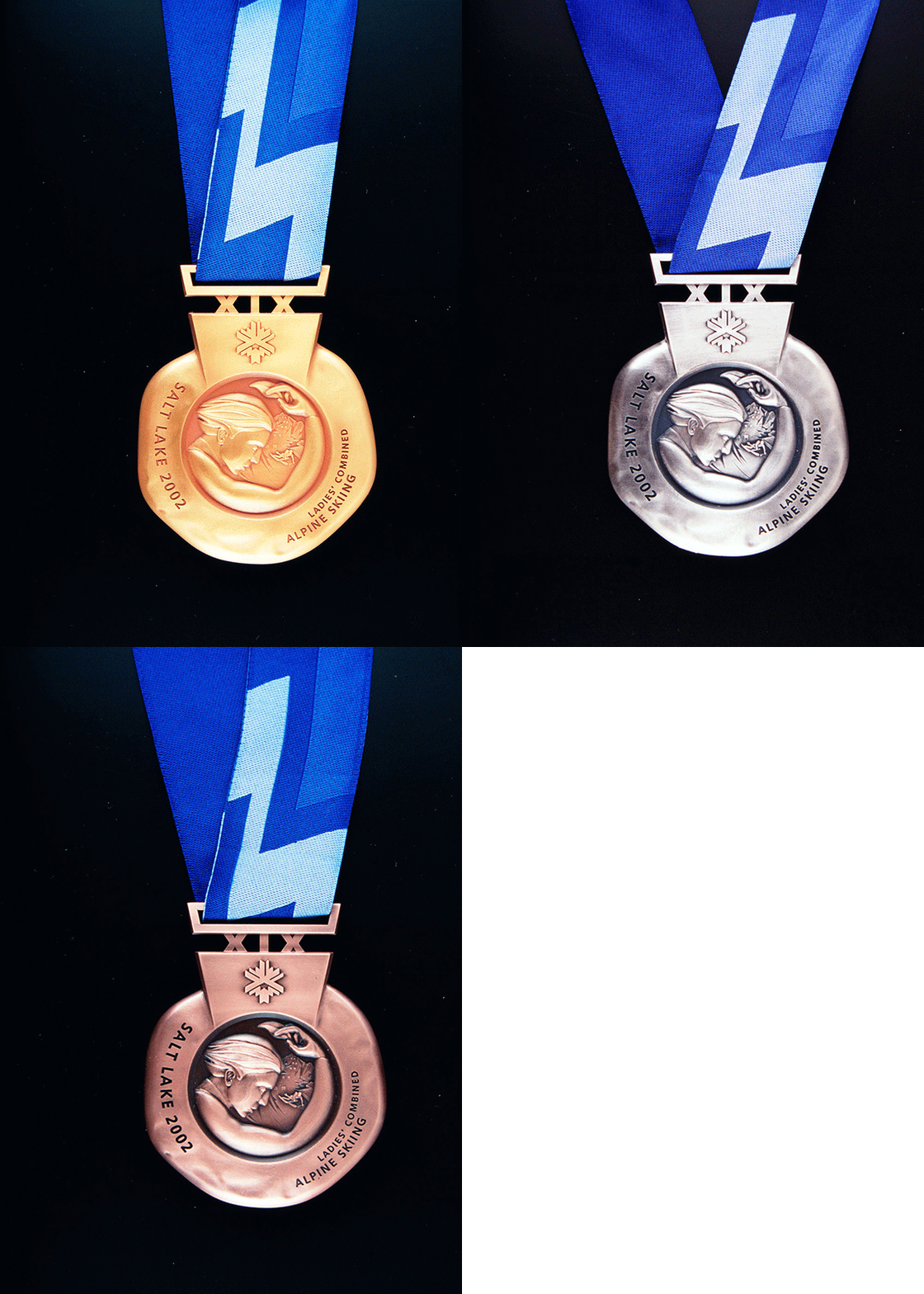
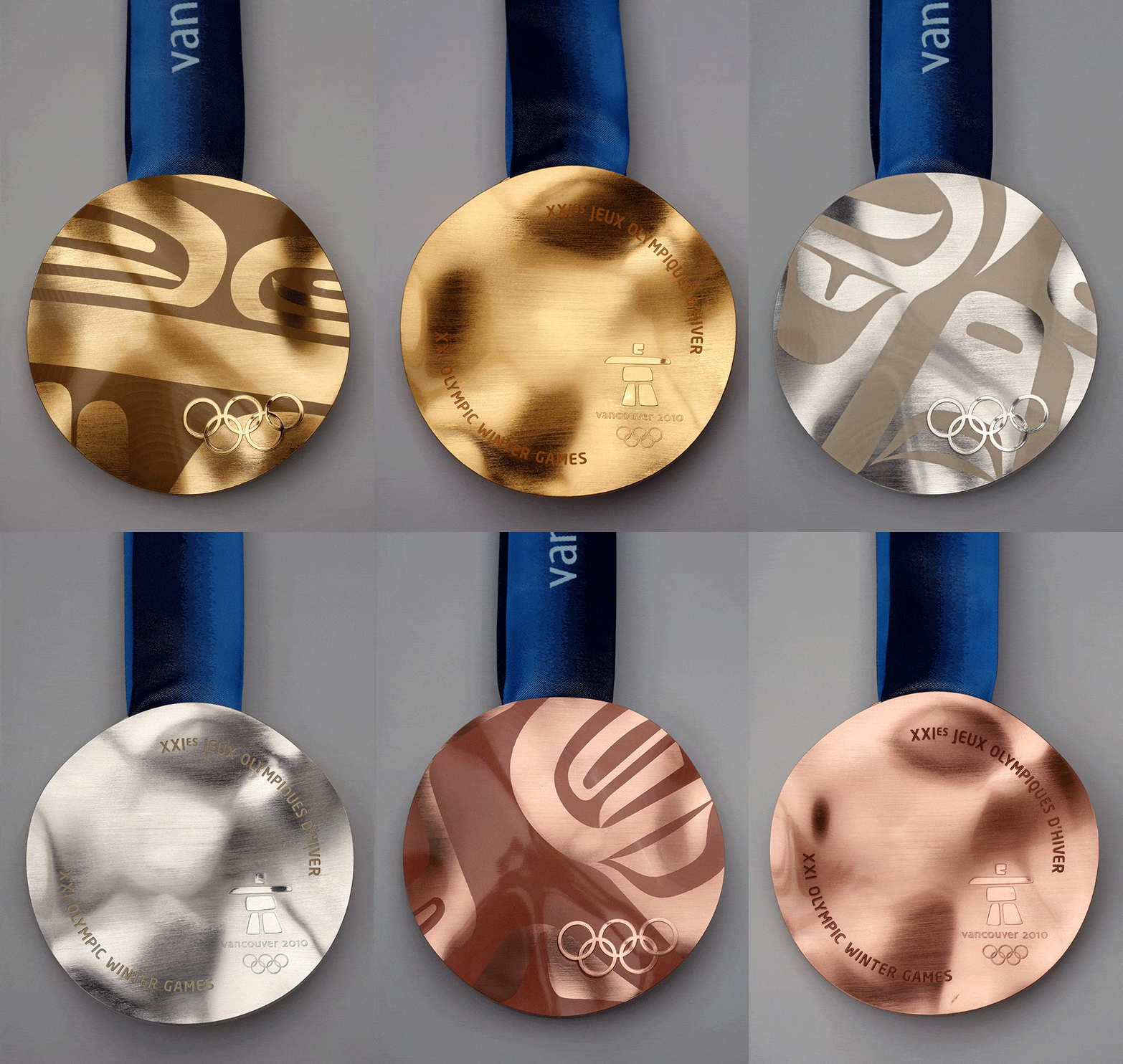
With the Olympic medals now seeping into the wider, amorphous umbrella of industrial design with variations in form, colour and shape, variations in material and composition were to shortly follow. In 1992, Albertville introduced the first glass medals, set with gold, silver and bronze, and made entirely by hand. Lillehammer in 1994 followed with granite medals designed by Norway-based Ingjerd Hanevold—modern, sleek and, as she described them, “Norwegian through and through.” Nagano in 1998 brought traditional Japanese craftsmanship into play, finishing medals in Kiso lacquer using techniques such as maki-e embossed gilding, cloisonné-style shippoyaki and precision metalwork. In 2002, Salt Lake City produced some of the heaviest medals in Olympic history, varying by sport and featuring 16 different artists’ renderings. The 2010 Vancouver medal, designed by Canadian architect and industrial designer Omer Arbel, translated Corrine Hunt’s Indigenous orca artwork into undulating, laser-textured surfaces, turning each medal into a one-of-a-kind object. In the absence of fixed iconography, Winter medals revealed how constricting the Summer Games’ visual traditions really were.
Change came more slowly to the Summer Olympic Game medals. The first meaningful departure from Cassioli’s Trionfo occurred in 1972, when Munich was permitted to commission a new design for the medals' reverse by Bauhaus artist Gerhard Marcks. His depiction of Castor and Pollux—twin sons of Zeus and patrons of sport and friendship—set a precedent: host cities could now design the medals' reverse, subject to IOC approval, while the obverse remained constrained. Even so, Trionfo continued to define the obverse of the summer medals for many more years. At the 1992 Barcelona Games, the IOC allowed an updated interpretation of the obverse design, but still mandated the use of the Nike motif. It was only in the Athens Summer Games in 2004 that the obverse received a true redesign. Greek designer Elena Votsi replaced the Roman Colosseum with the Panathenaic Stadium, restoring the medal’s visual lineage to its geographic origins. This design remains the standard today.
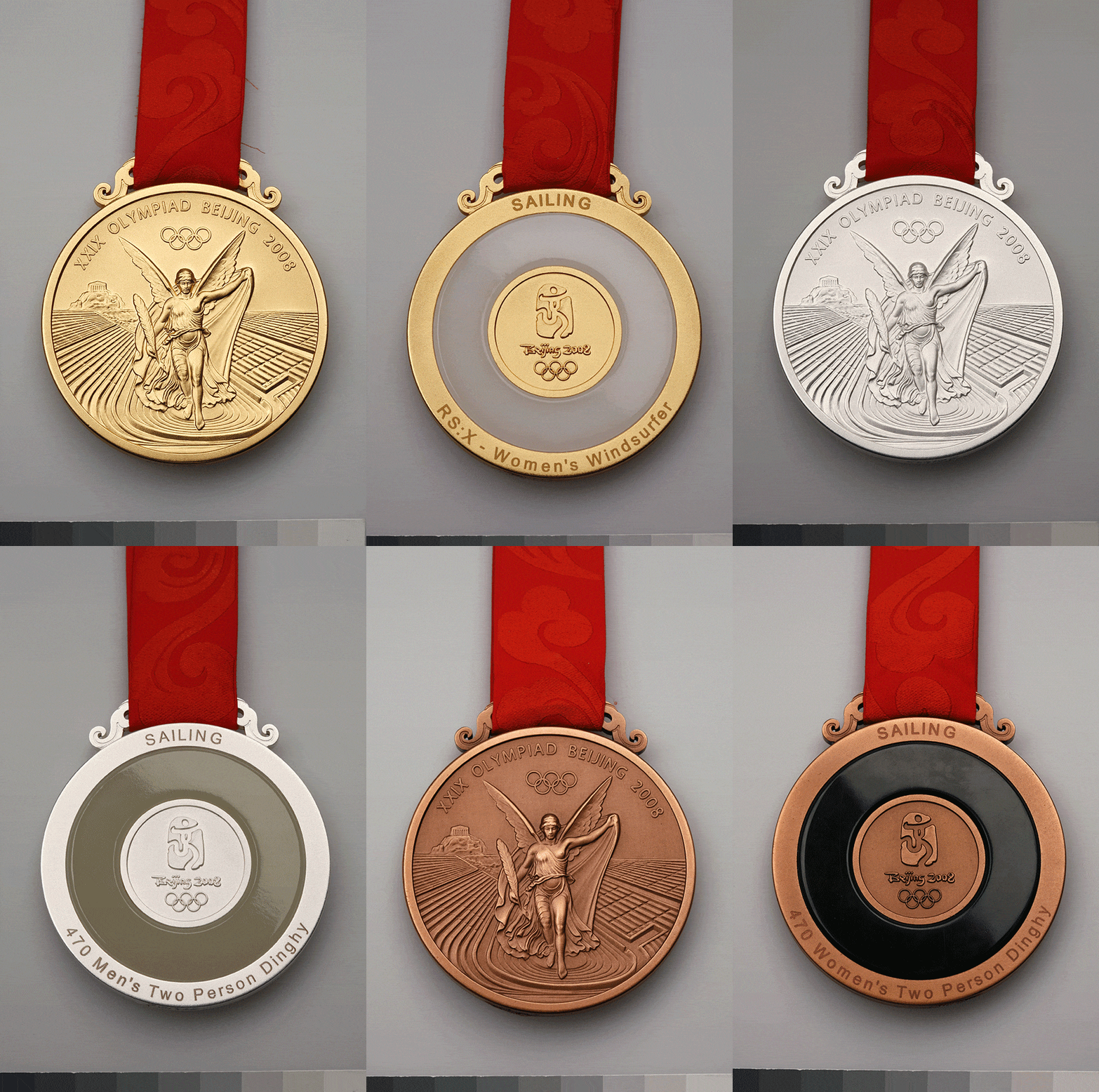
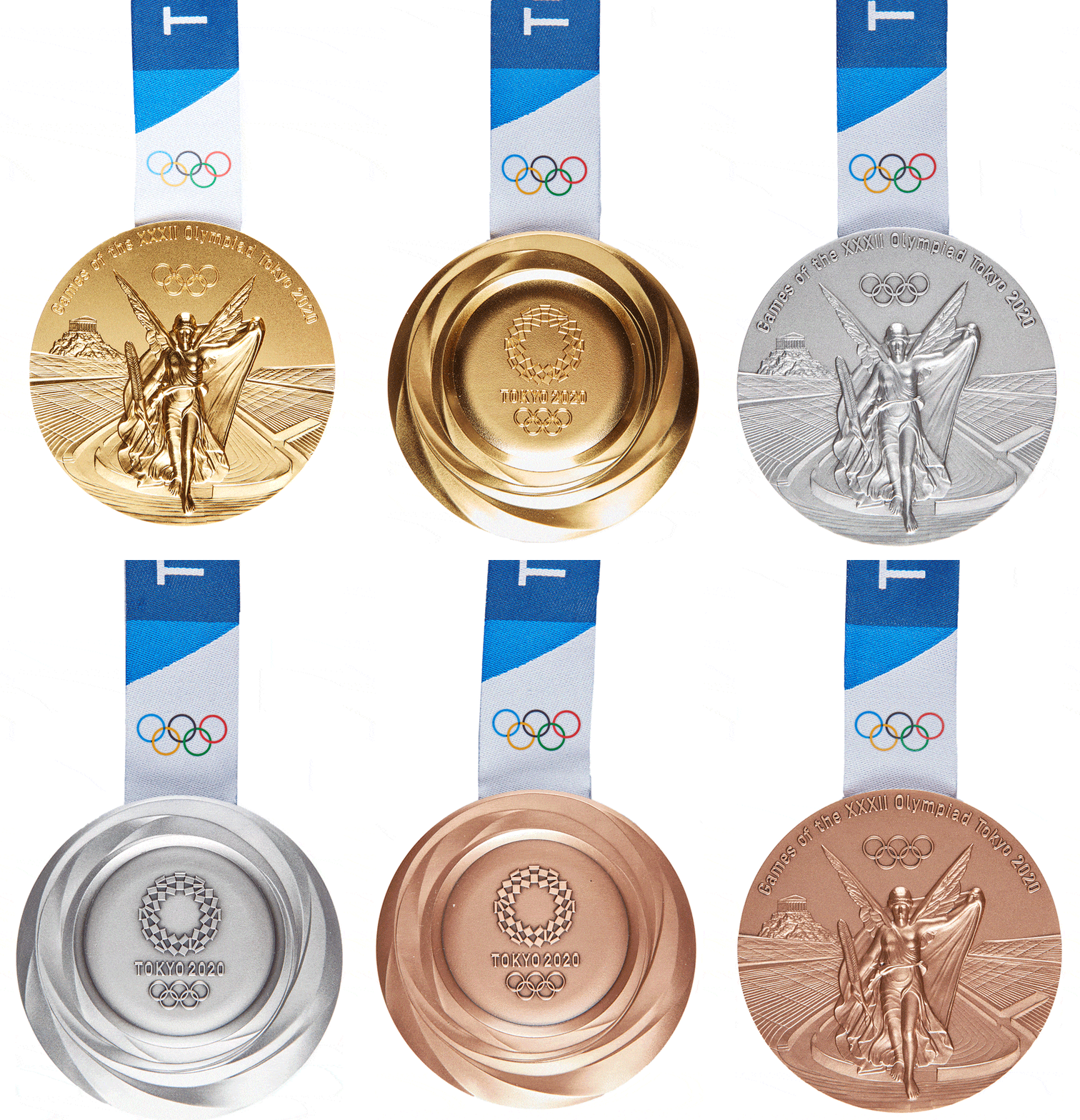
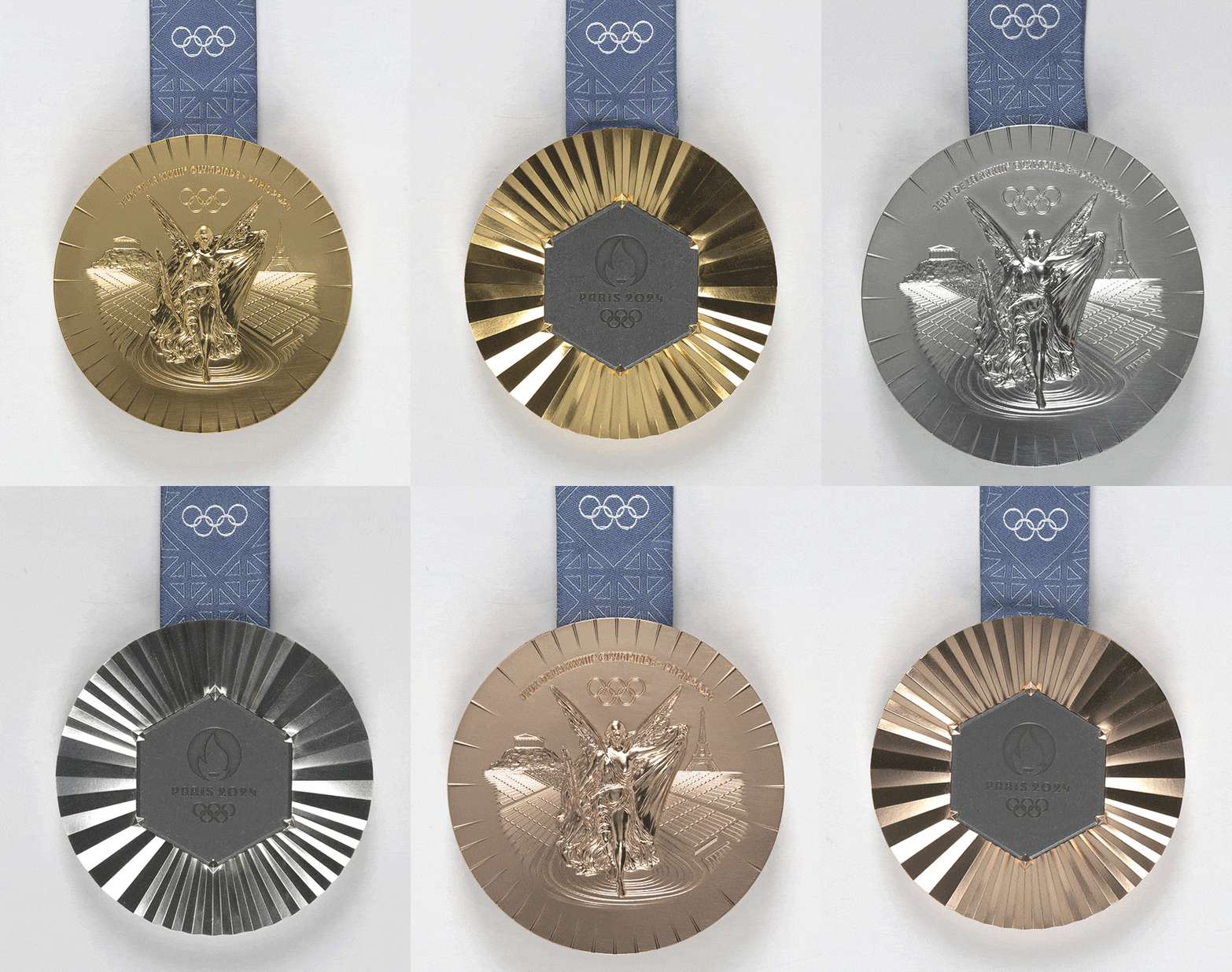
Designing the reverse of the Summer Olympic medal in the 21st century has become an increasingly explicit exercise in national, material and cultural storytelling. The 2000 Sydney medal, designed by Wojciech Pietranik and Brian Thompson, featured the Opera House pushing against the IOC’s disapproval and long-standing control over medal iconography. Beijing in 2008 embedded jade—referencing the ancient bi disc—into its medals, weaving Chinese material culture directly into the artefact. Designed by British artist David Watkins, the 2012 London medal used an abstract composition evoking the River Thames. The 2020 Tokyo Games recast the medal as an ethically produced artefact designed by Junichi Kawanishi and entirely made from recycled electronic waste collected through a nationwide campaign. Paris 2024 went further still by embedding hexagonal fragments of iron from the Eiffel Tower into recycled metal bodies designed by luxury jeweller Chaumet, blending heritage with luxury and sustainability.
Increasingly, these medals have been entrusted to well-known designers, artists and even luxury houses, marking a shift in how this object—held within the palm of one’s hands—is understood. What began as an exercise in cultural iconography is no longer merely a bearer of athletic prestige but has become a prestigious design commission in its own right: valued not only for those who win it, but also for those chosen to design it.
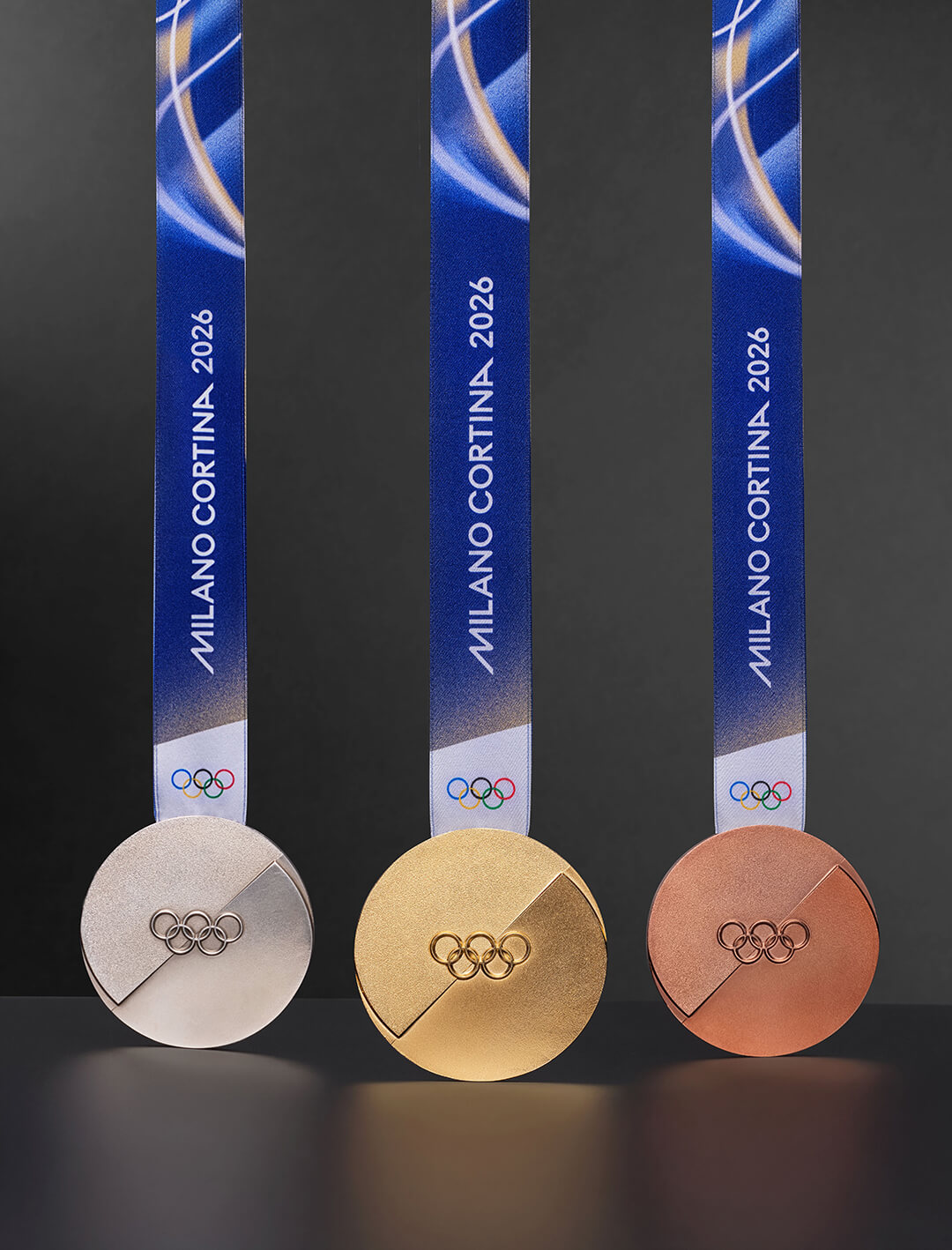
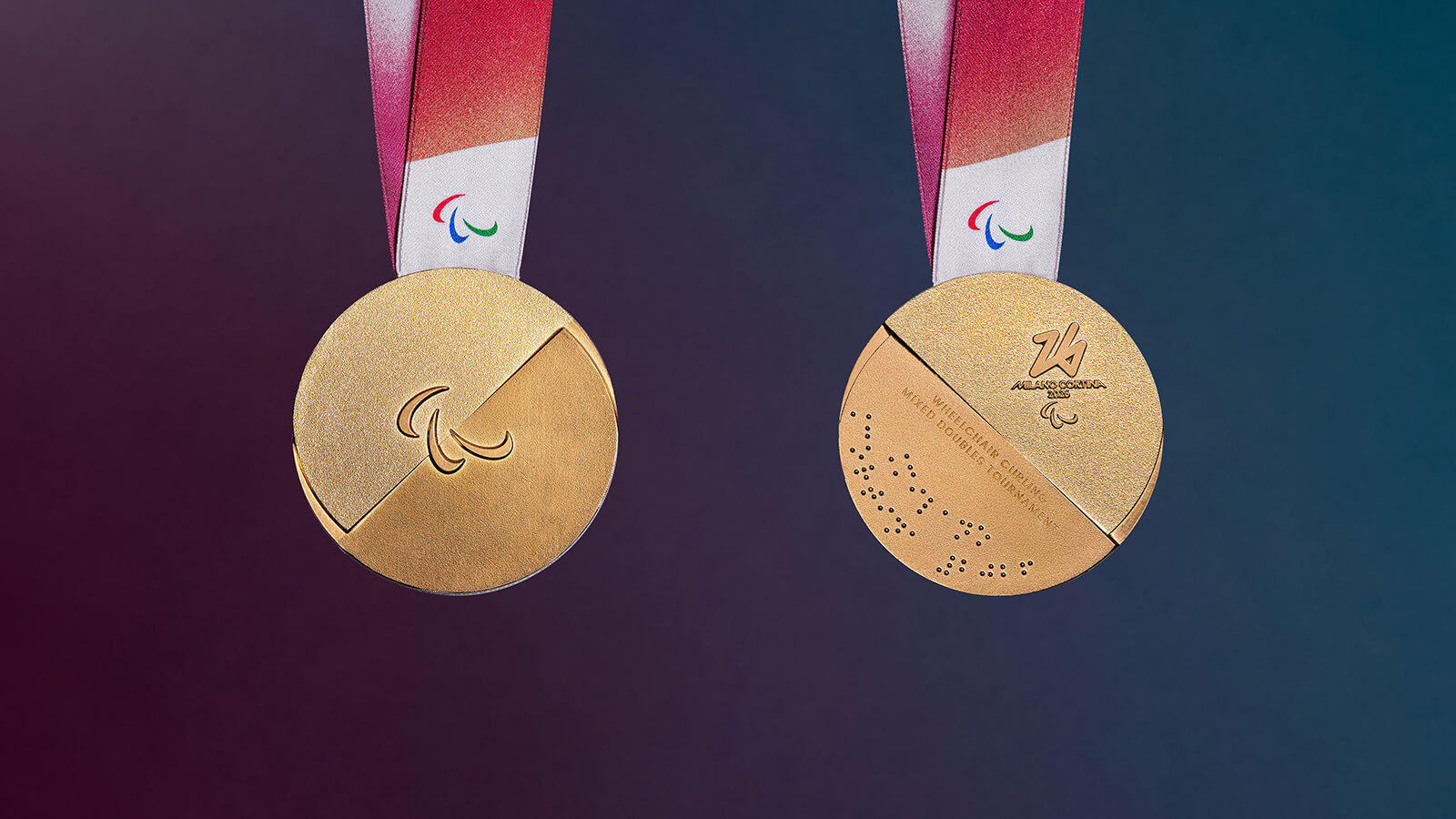
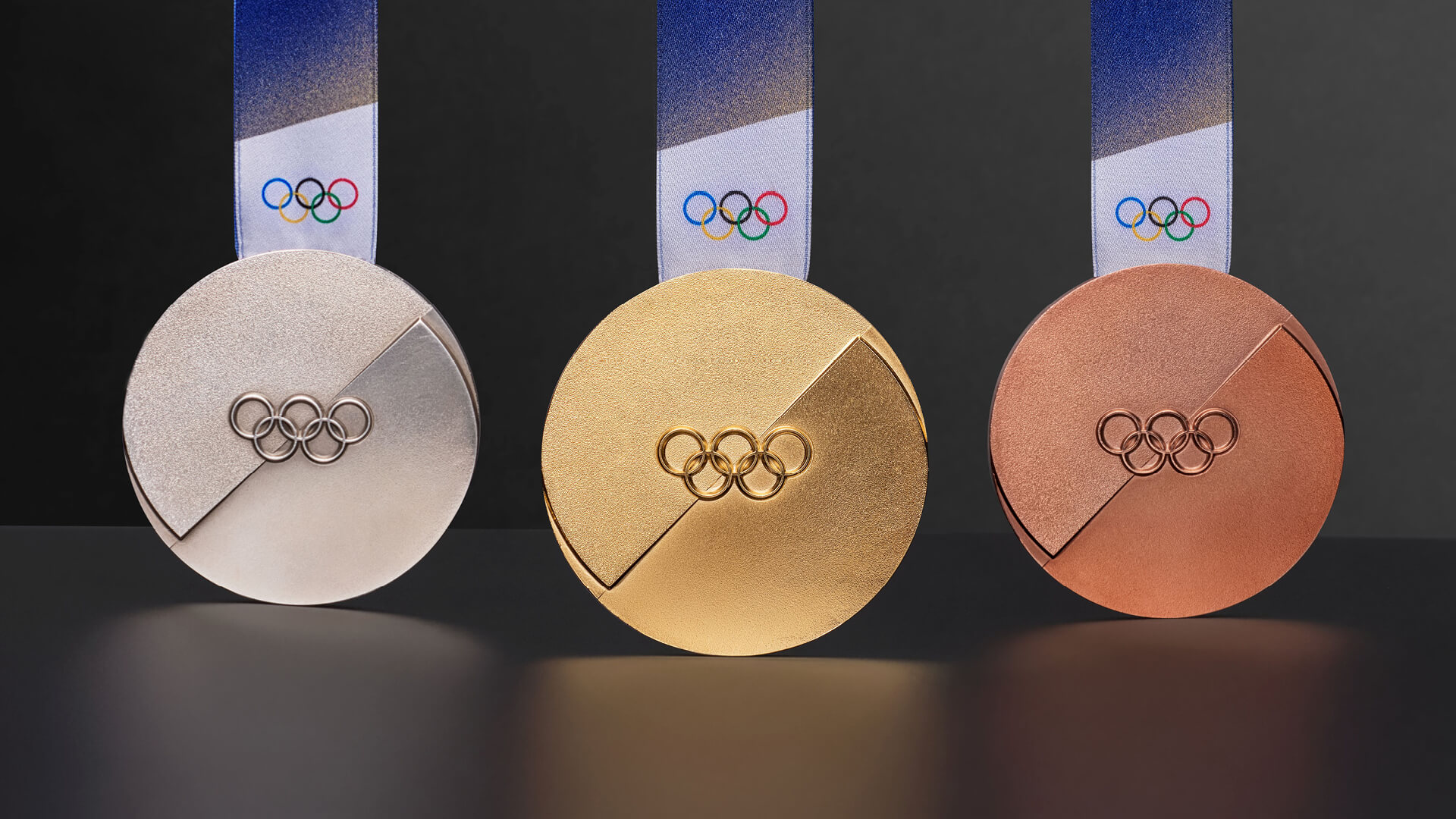
The forthcoming Milano–Cortina 2026 Winter Games continue this evolution with sustainability as a dominant design imperative. Designed to be fully recyclable and produced using renewable energy, the medals are split into two textured halves joined by the Olympic symbol—an abstract expression of the union between Milan and Cortina. This is an especially interesting paradigm—once fully absorbed into the realm of design, the Olympic medals have increasingly been compelled to answer the ethical questions contemporary design demands. And therein lies the irony—nothing was ever more materially sustainable than the ancient olive wreath. That this trajectory culminates with the Milano-Cortina medals feels telling. The design—no gods, no masters—offers only a pure abstract sort of precision; all to uphold an approximation of ecological mindedness.
Not meant for mass production or quotidian use, Olympic medals occupy a rare design territory. Freed from the demands of functionality, they were to be conceived as purely symbolic objects rather than utilitarian ones—the first supposed fallacy when prescribed to the realm of design. Over the course of an entire century, however, this very notion allowed medals to move beyond mere ornamentation and toward intentional design. Aesthetics alone were no longer enough: the designer’s hand had to become increasingly legible, the medal beginning not in the forge but on a sketching pad. With the world watching, these 'objects' increasingly came to be recognised as designed artefacts in their own right—a shift the Olympic establishment would later formalise through the commissioning of globally renowned artists and designers.
And yet, for all the ideological weight Olympic medals carry, they have remained curiously free of controversy. The Games themselves are frequently sites of some protest (and perversions) or friction, but medals, by contrast, seem to have always escaped all furore. Perhaps it is their scale—a small thing: merely a disc of metal, heavy in the hand, cool against the skin. Or perhaps it's their fate: for a brief moment standing in for lofty ideals, but once awarded, ceasing to belong to the Games at all; becoming private objects to be owned, worn or hidden away.
The views and opinions expressed here are those of the author(s) and do not necessarily reflect the official position of STIR or its editors.
Additional research and contributions by Anushka Sharma, contributor at STIR.

by Pranjal Maheshwari Oct 13, 2026
Through furniture, art and films, the showcase at the Ian Potter Centre in Melbourne advocates for biophilic material cultures as an antidote to planetary degradation.
by Pranjal Maheshwari Oct 12, 2026
The exhibition reimagines the 20th-century Scottsville residence of the American sculptor and his partner, ceramicist Nancy Jurs, curated by their daughter Alison Castle.
by Chahna Tank Oct 08, 2026
Javier Guzman Cervantes and Ulises Morin Arzola tell STIR about their ‘open code’ approach to design, working through a process of stockpiling and the idea of ‘queering’ materials.
by Mrinmayee Bhoot Oct 08, 2026
The game designer discusses their work and its manipulation of scale, scientific data and non-human perspectives to create speculative futures in conversation with STIR.

make your fridays matter with a well-read weekend
Enter your details to sign in
Don’t have an account?
Sign upOr you can sign in with
a single account for all
STIR platforms
All your bookmarks will be available across all your devices.
Stay STIRred
Already have an account?
Sign inOr you can sign up with
Verification link sent to check your inbox or spam folder to complete sign up process
Tap on things that interests you.
Select the Conversation Category you would like to watch
Please enter your details and click submit.
Enter the 6-digit code sent at


From olive wreaths to design artefacts: Tracing the evolution of Olympic medals
by Chahna Tank | Published on : Jan 23, 2026


 Sign in with Google
 Sign in with email
What do you think?