Design09 mins. read
Isamu Noguchi was never a designer, affirms High Museum of Art, Atlanta
by Sunena V MajuMay 21, 2026



by Pranjal MaheshwariPublished on : Apr 27, 2026
When it comes to creative production, there is only so much that the mind can conjure in the imagination. After a point, one needs to act: not to produce, but to test, observe and refine. The act of drawing often serves this purpose for artists, designers and even architects, wherein what is drawn—scribbled, hatched, stippled or illustrated—is a medium of exploration rather than the finished product; the beginning of a dialogue between the hand and the mind, imagination and reality. It is a rather necessary methodology of producing through iterations, of refinement through the act of continually producing something. This idea of drawing as a tool for exploration rather than a medium of production has always been integral to the creative workflow for American artist and designer Daniel Arsham. Often turning to sketching in graphite and charcoal to refine his ideas of a ‘fictional archaeology’, he commissioned the Madrid-based industrial design and fabrication studio, Caliper, to engineer for him a bespoke drafting table.
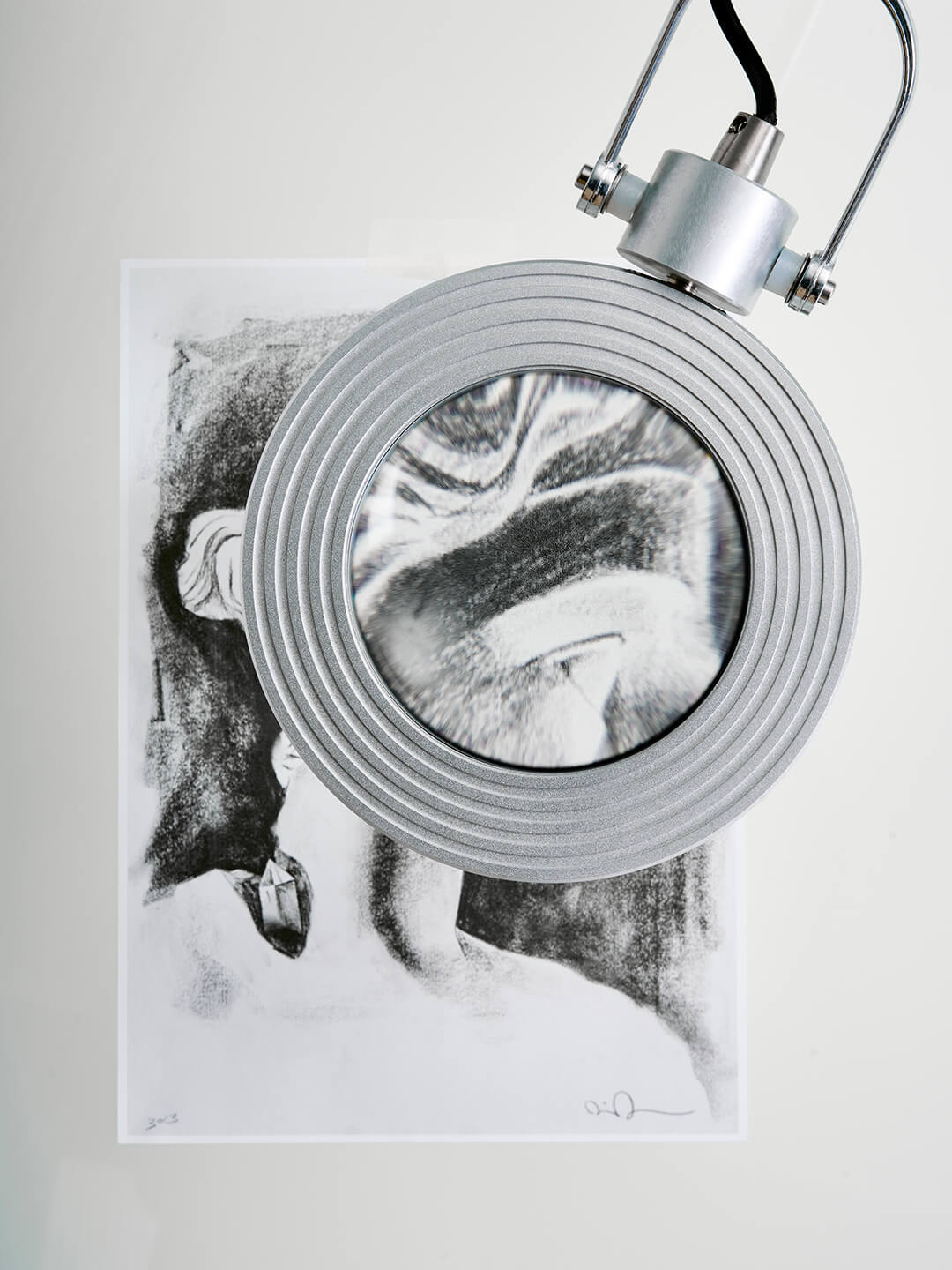
Arsham, famous for his interpretation of the present as a ‘relic for the future’, is a visual artist who has worked with a range of international brands such as Nendo for Break to Make at the Milan Design Week (MDW) 2023; Hublot for their horological land art Light & Time; and Kohler for their MDW 2022 showcase, Divided Layers, awarded the Fuorisalone Award that year. Across a career ranging from set design, architecture, sculpture, fashion and painting, he has always found himself approaching drawing as ‘preparation’, a formative part of his creative process; a trait he attributes to his training at the Cooper Union in New York. The drafting table, hence, is essentially conceived as a large, smooth base to support this ritual of honing an idea on paper before detailing it in three dimensions.
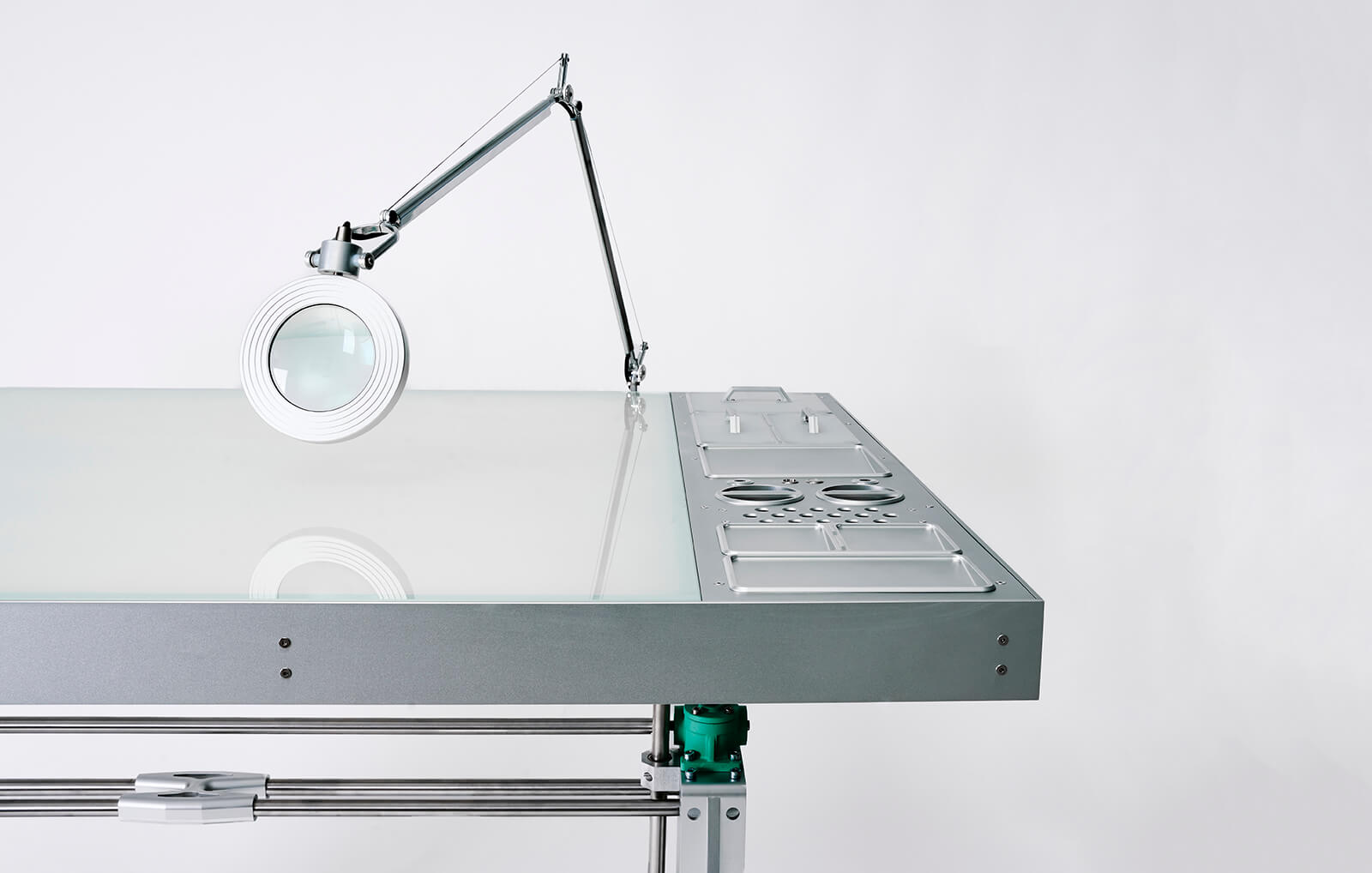
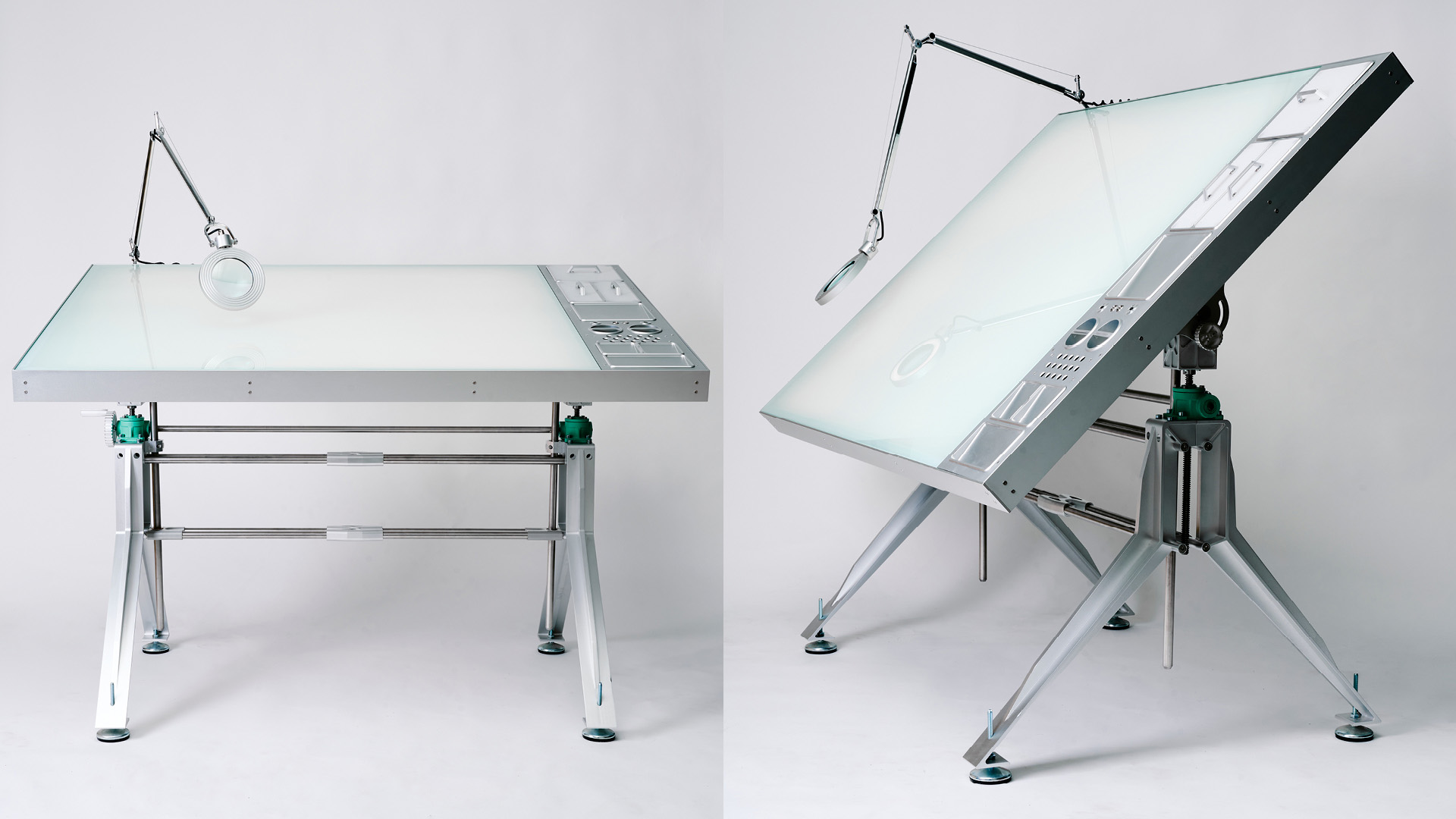
The design scheme for the drafting table dwells on Arsham’s love for the analogue, the toolkit and the process—all mediums that resonated with Caliper’s founder, Quinner Baird. Conforming to its chief utility, the table includes a backlit drawing surface mounted with an adjustable arm, attached at the back through a flexible sliding mechanism, extending to hold a magnifying lamp—an essential piece of equipment, especially for some of Arsham’s smaller but intricately detailed drawings. The drawing board is accompanied with enough storage compartments—for paper, charcoal and other tools—as is customary for an artist’s toolkit. The storage panel also integrates controls for lights and the ever-important charging ports.
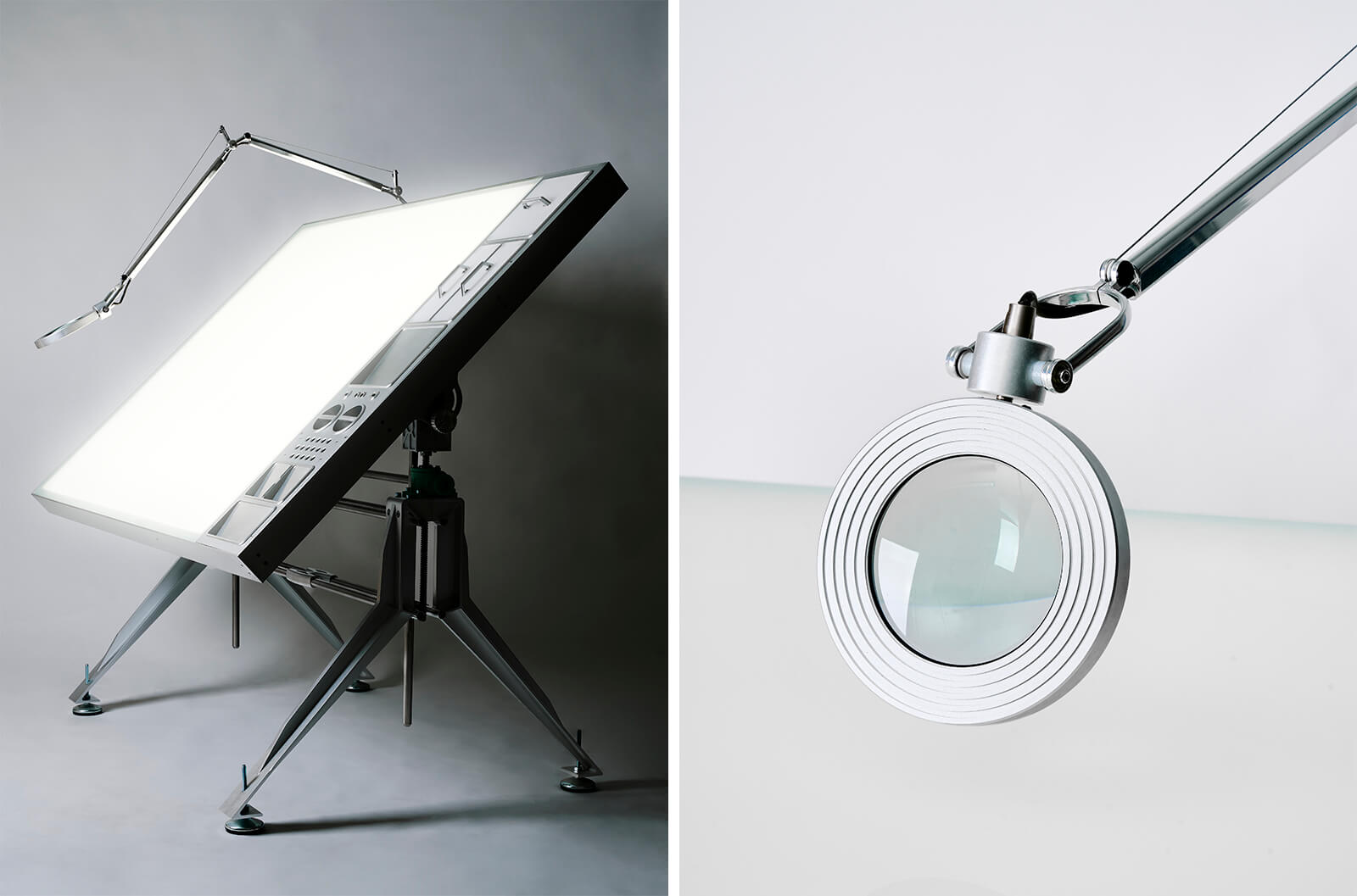
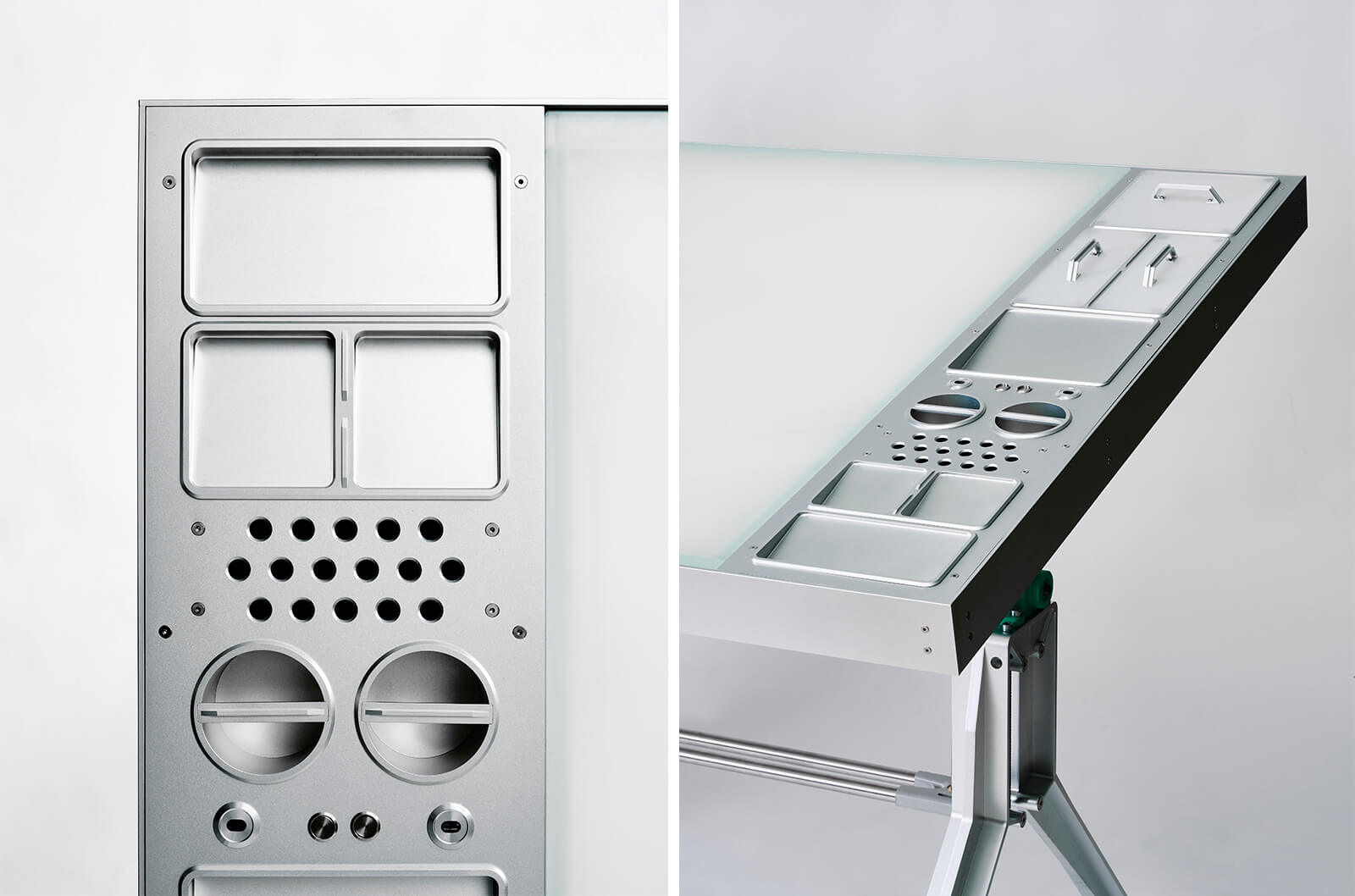
The design of the table carries a kind of mechanical, industrial yet polished aesthetic appreciated by those who thrive on the nostalgia of the process. It is perhaps this fascination that kept chunky mechanical keyboards alive even when technology had evolved to receive inputs from a projection on a flat surface. The legs are made of slender metal strips, their flat sides supported with stiffeners visible out front, lending them an intentionally bulky look and visually reinforcing the feeling of stability before it is physically experienced. The mechanism for the height and slope adjustments for the drawing board—supporting multiple working stances across sitting and standing—is left entirely exposed, from the gears to the winders. Only the mechanical knobs that adjust the tilt of the drawing surface are branded with Arsham’s monogram.
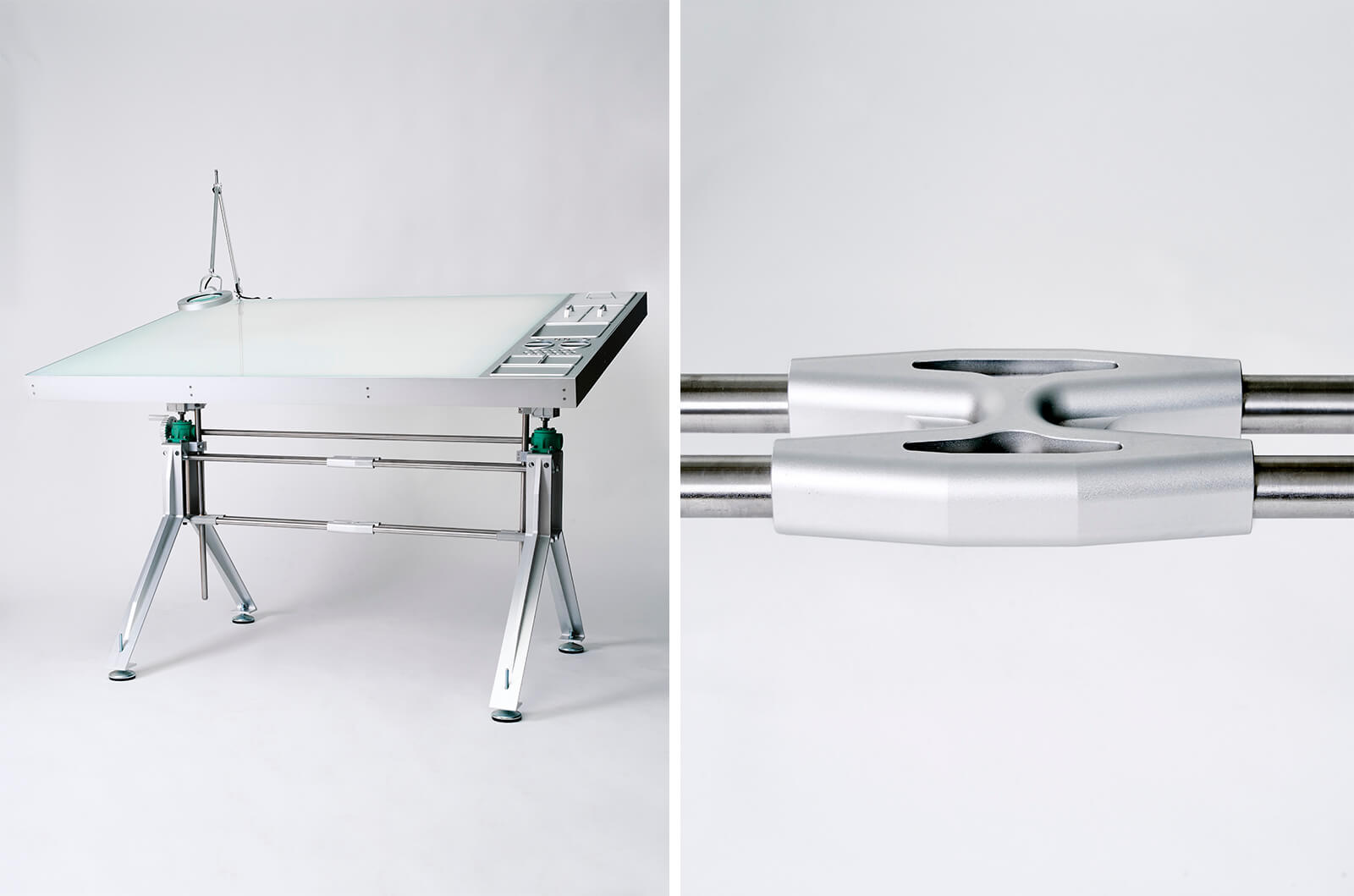
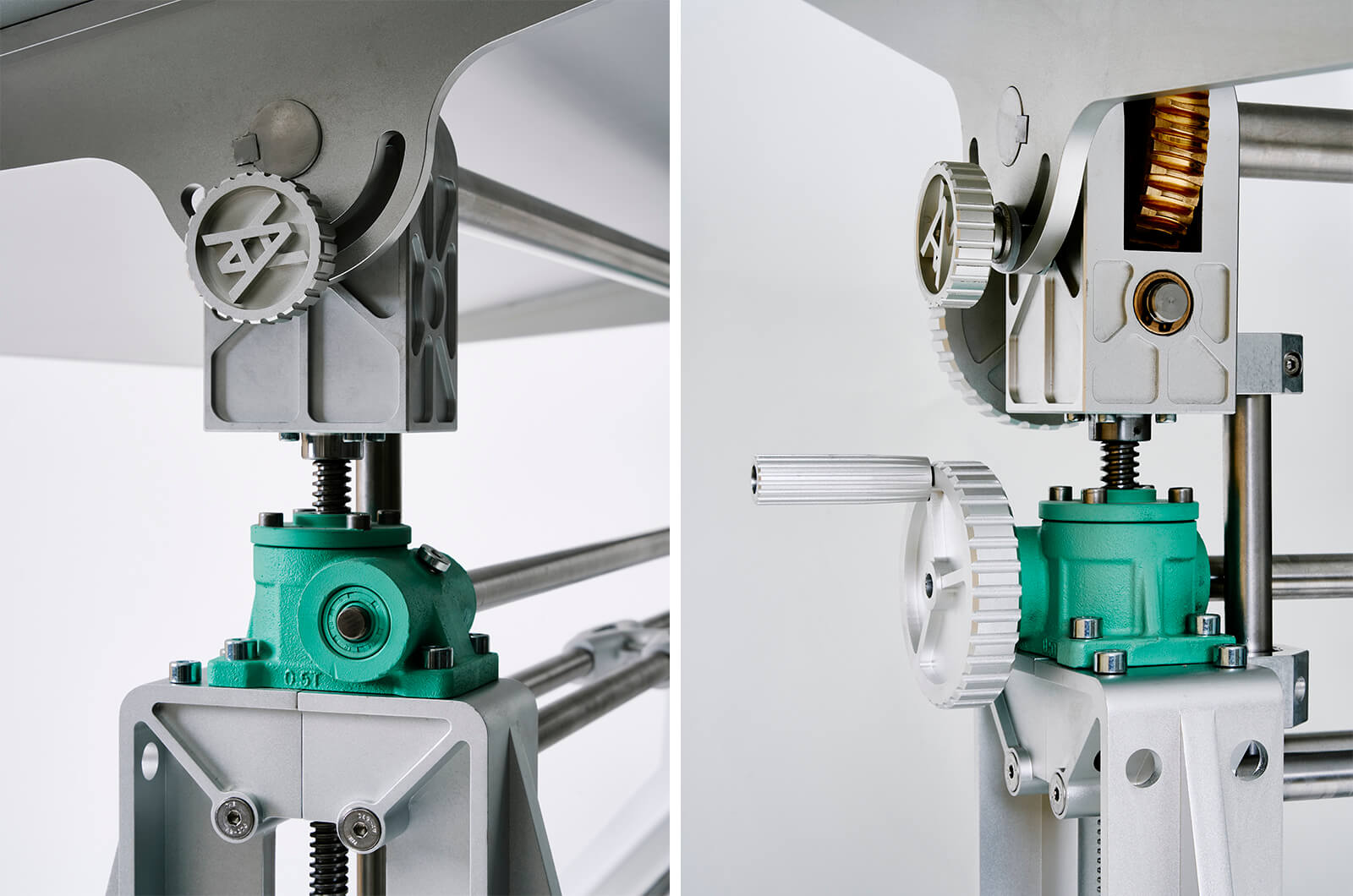
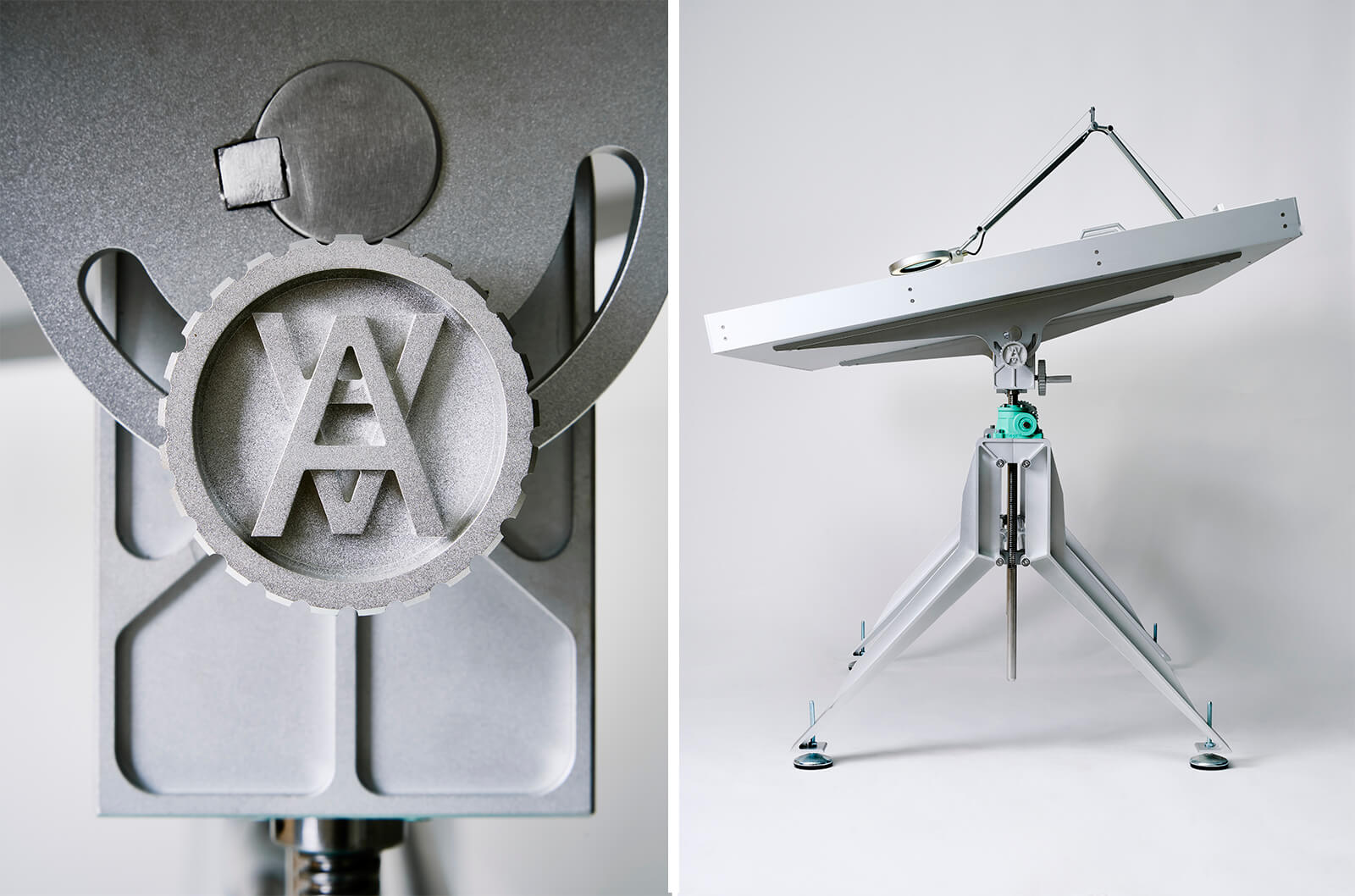
The table was made in parts, manufactured with precision in CNC-machined aluminium and processed with the studio’s signature bead-blasted anodised finish. These parts were then assembled in-house at Caliper’s studio in Madrid and shipped to Arsham’s studio in New York City. With their expertise in industrial design, Caliper strived to wrap the artist’s apparatus as well as stage his process in a shared admiration for the mechanical. As the drawings find their value in iteration and exploration, the drafting table, too, then, stands as a witness to these experiments or as a catalyst.

by Pranjal Maheshwari Oct 12, 2026
The exhibition reimagines the 20th-century Scottsville residence of the American sculptor and his partner, ceramicist Nancy Jurs, curated by their daughter Alison Castle.
by Chahna Tank Oct 08, 2026
Javier Guzman Cervantes and Ulises Morin Arzola tell STIR about their ‘open code’ approach to design, working through a process of stockpiling and the idea of ‘queering’ materials.
by Mrinmayee Bhoot Oct 08, 2026
The game designer discusses their work and its manipulation of scale, scientific data and non-human perspectives to create speculative futures in conversation with STIR.
by Pranjal Maheshwari Oct 07, 2026
Under the theme R.A.W. (Rebel Authentic Worth), one of Europe’s most awaited design festivals returns for its 26th edition to investigate solutions for a world in crisis.

make your fridays matter with a well-read weekend
Enter your details to sign in
Don’t have an account?
Sign upOr you can sign in with
a single account for all
STIR platforms
All your bookmarks will be available across all your devices.
Stay STIRred
Already have an account?
Sign inOr you can sign up with
Verification link sent to check your inbox or spam folder to complete sign up process
Tap on things that interests you.
Select the Conversation Category you would like to watch
Please enter your details and click submit.
Enter the 6-digit code sent at


In Daniel Arsham’s new drafting table, Caliper props the analogue and the mechanical
by Pranjal Maheshwari | Published on : Apr 27, 2026


 Sign in with Google
 Sign in with email
What do you think?