Design09 mins. read
India Art Fair returns for its 15th edition in 2024 with a new Design section
by Mrinmayee BhootJan 25, 2024



by Vandana KalraPublished on : Sep 03, 2026
What does it mean to imagine a future that can be described as more feminist? How is the past to be addressed, and what does a 'different' tomorrow entail? These are some of the questions central to the exhibition Women on the Edge of Time, curated by Linsey Young at the Vadehra Art Gallery in New Delhi, India. Titled after American activist and writer Marge Piercy’s eponymous novel, the show brings together works by eight South Asian women artists across generations and geographies. Instead of proposing a singular idea of feminist art, the exhibition considers how women have negotiated questions of power, autonomy, memory, labour, ecology, identity and belonging, and how these concerns have remained both changed and unchanged over time.
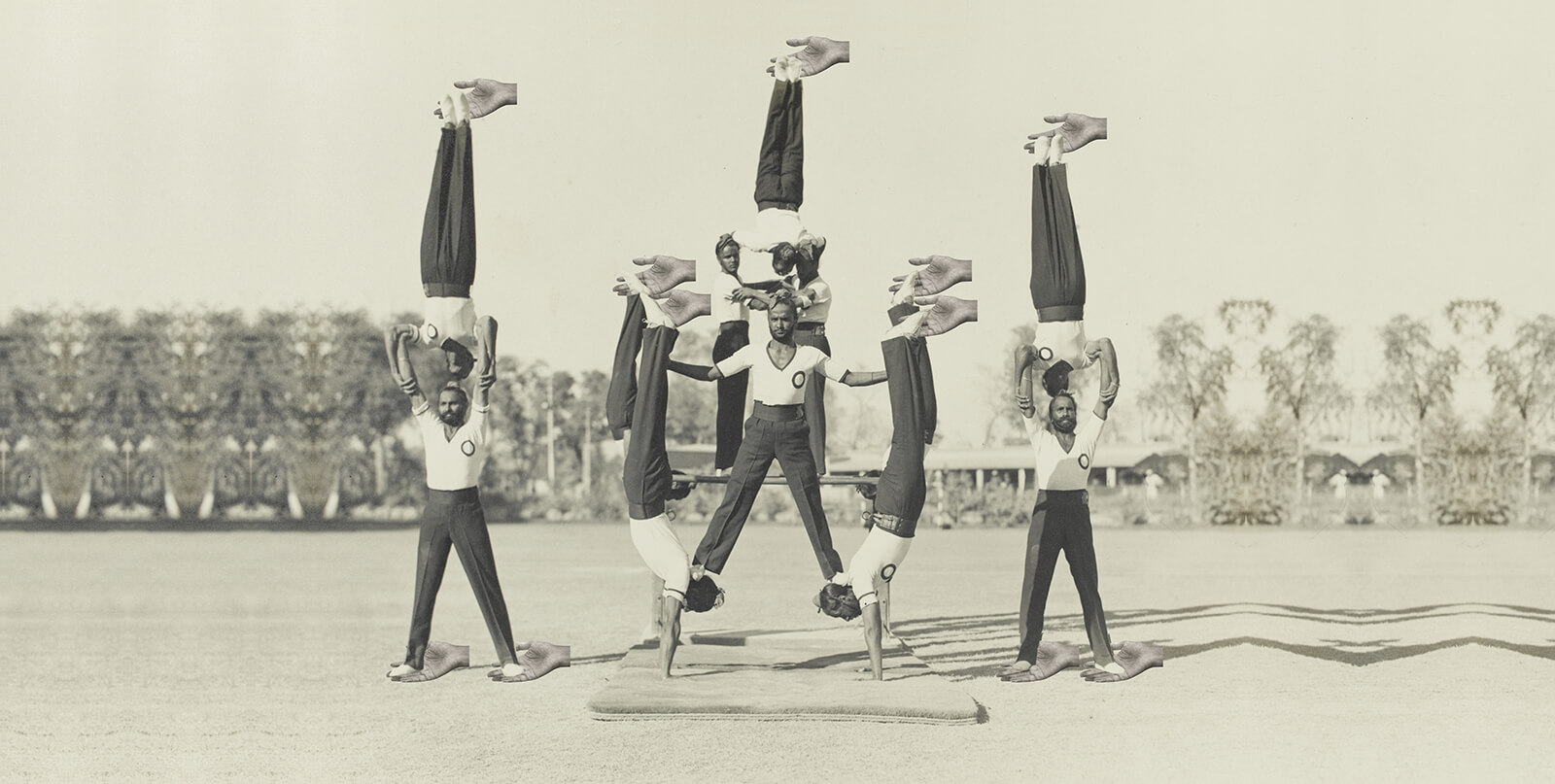
First released in 1976, Piercy’s feminist science fiction novel reimagined an alternate future with redesigned structures of gender, family, work and class, and, nearly five decades later, as women artists return to it, the premise feels both utopian and unfinished. The declaration that women perhaps most literally ‘hold up half the sky’ finds a visual counterpart in the title of Turner Prize winner Jasleen Kaur’s photograph, Women hold up half the sky, where the UK-based artist reworks an archival photograph of Sikh soldiers performing military gymnastics, balancing on one another, as Kaur inserts multiple images of a woman’s hand supporting each one from beneath. In another sculptural work by Kaur, Aunties, aparian and incense sticks are seen, drawing on inherited rituals and the artist’s own domestic memories.
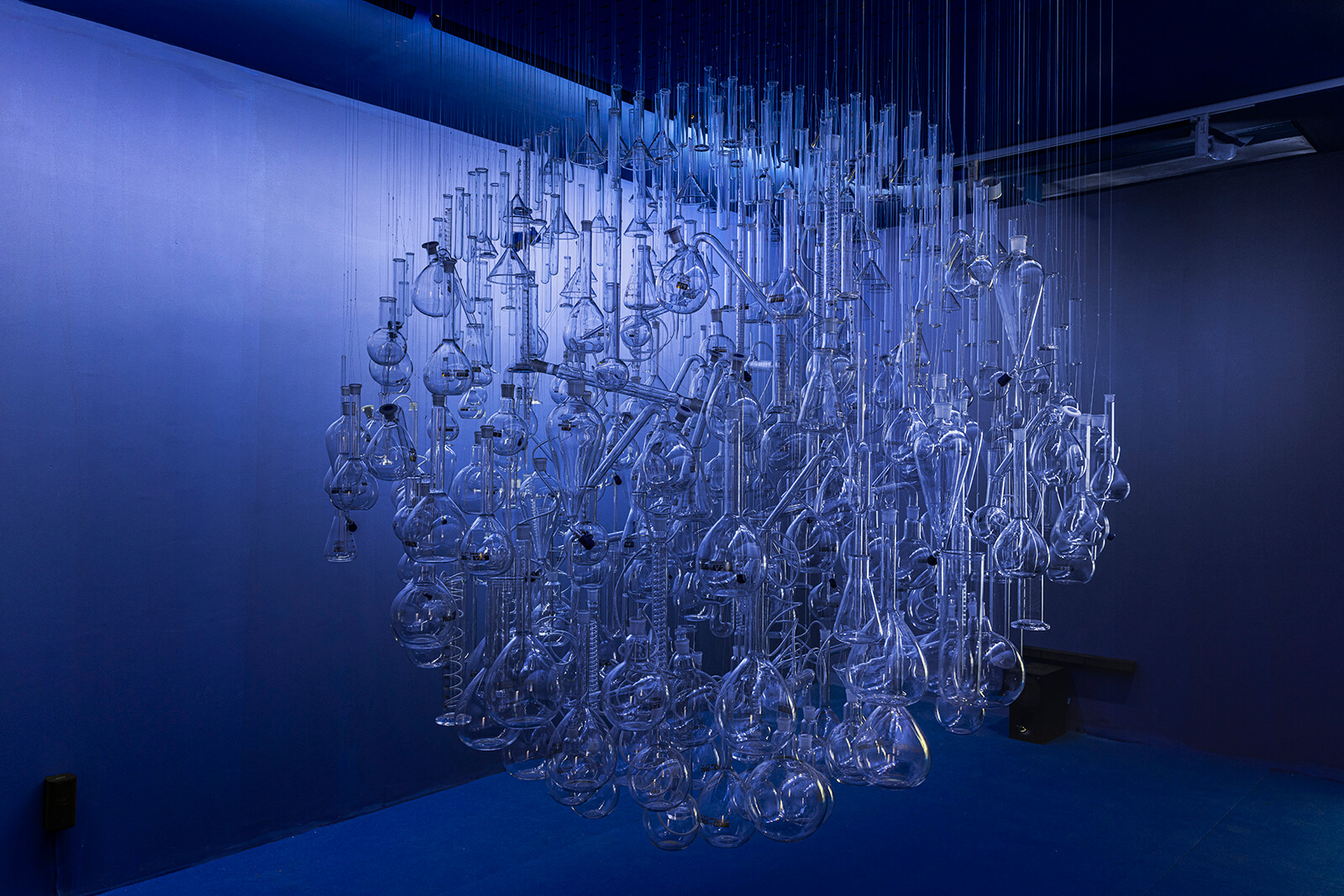
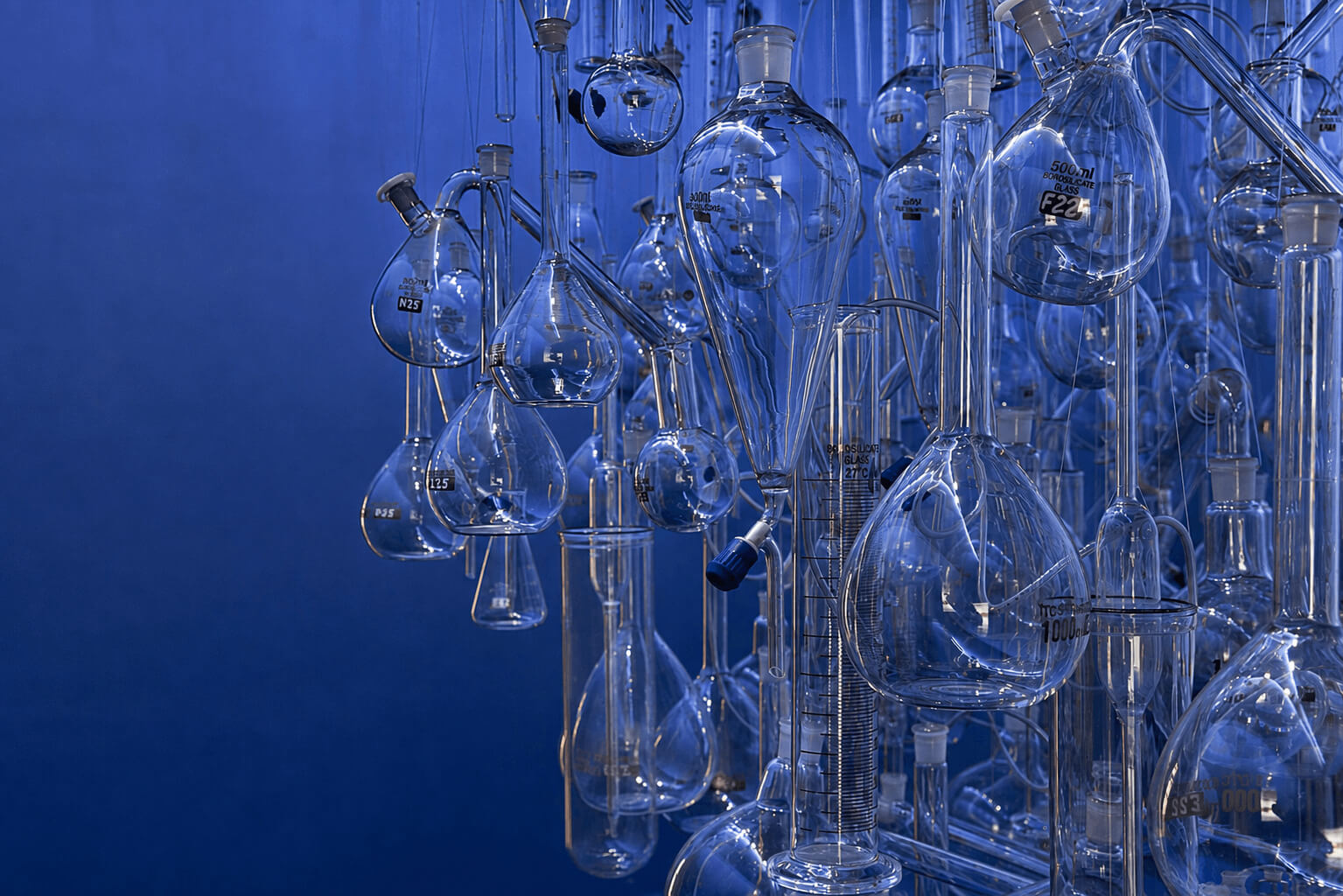
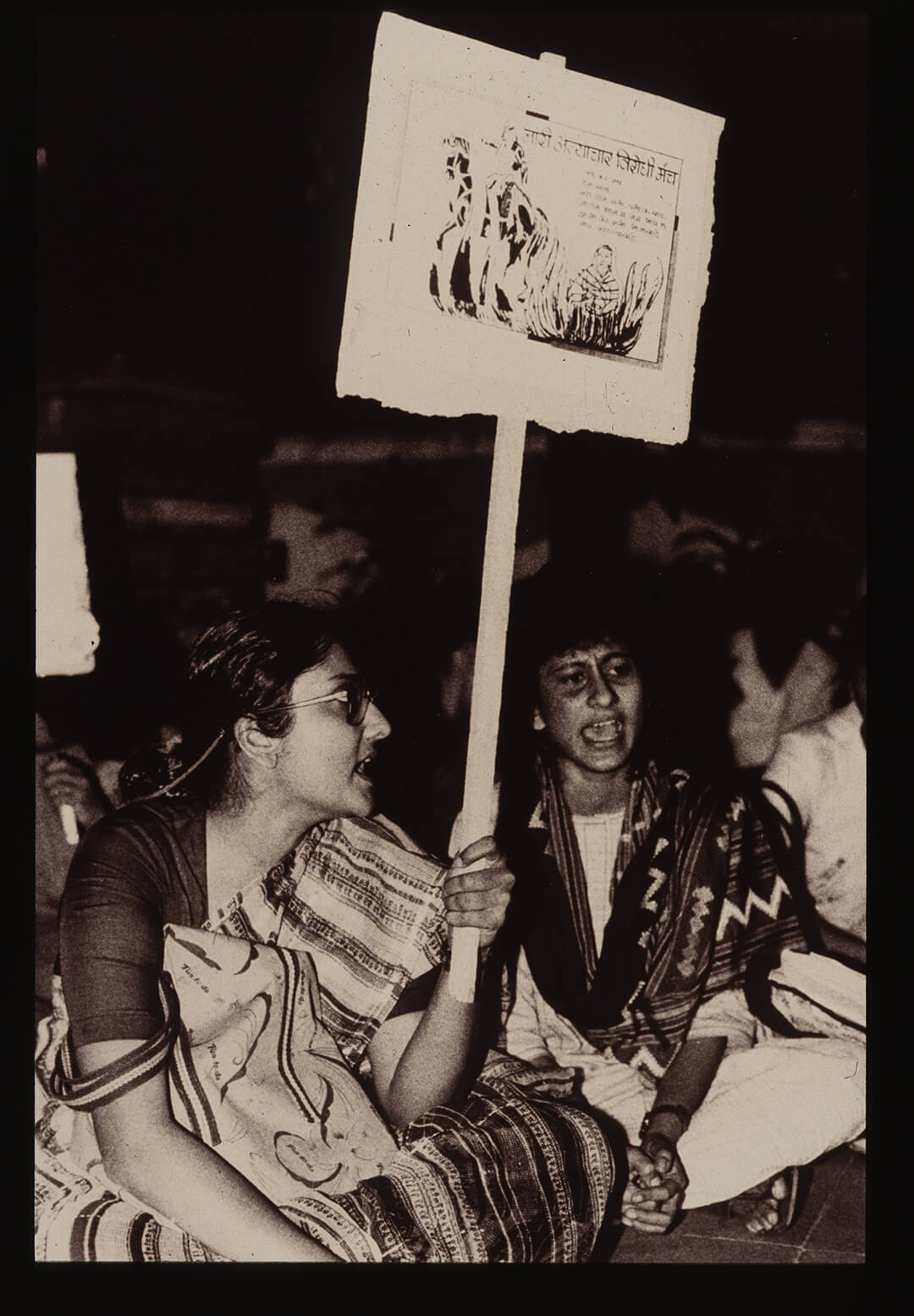
Walking into the exhibition, the first work one encounters is Sheba Chhachhi’s Strange Manufactory, an installation comprising approximately 600 pieces of laboratory glassware—from beakers to flasks, tubes to other scientific objects—that serve not their original function but together create what appears to be a site of discovery, scrutiny, control and experiment. The focus shifts from the laboratory to the streets in Chhachhi's From the Barricades, where a set of photographs document women's movements in Delhi through the 1980s and 1990s, ranging from anti-dowry demonstrations and protests against sectarian violence to a woman holding a pamphlet on Women’s Day in 1986. The modes of communication range from street play to storytelling and an exhibition.
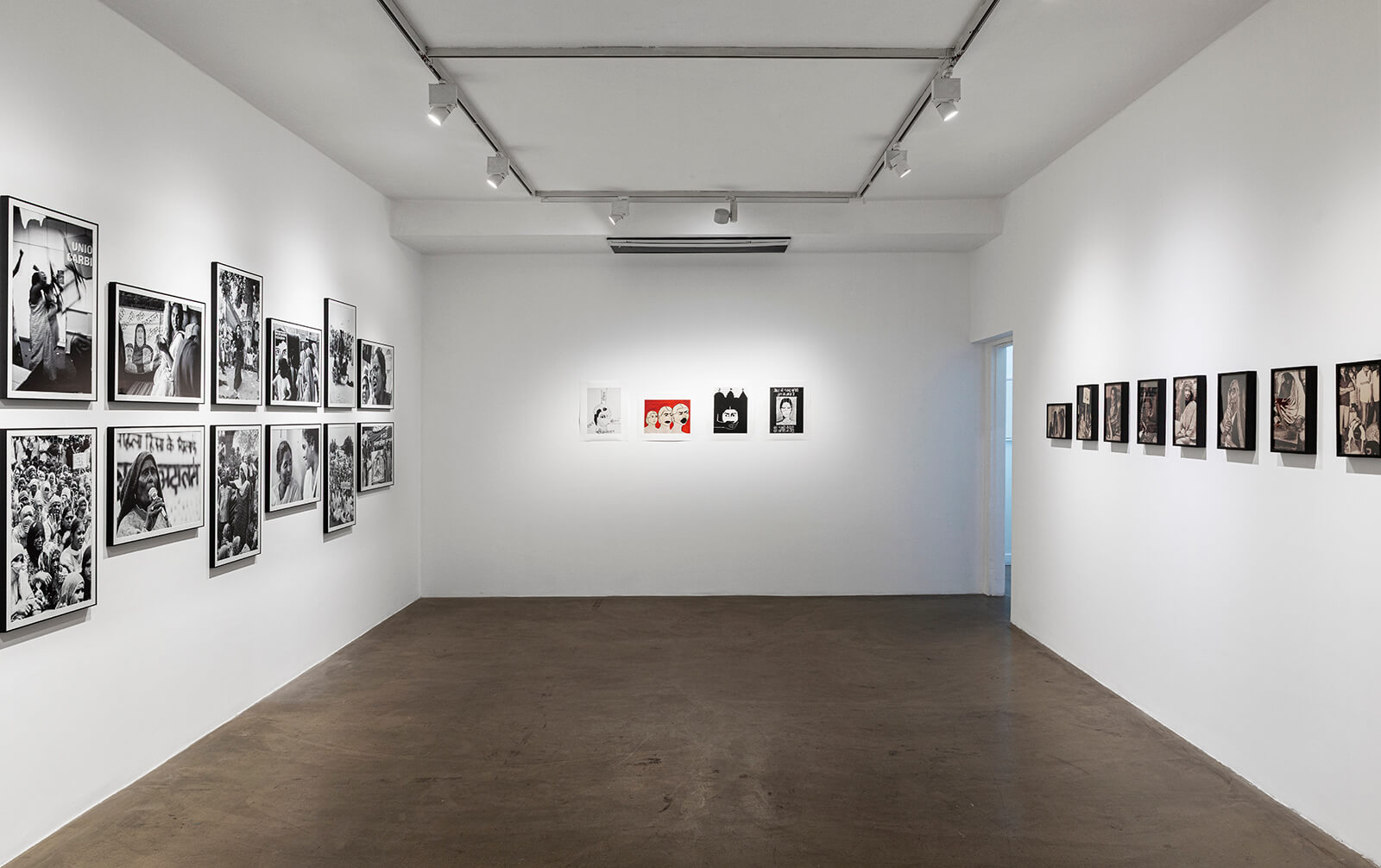
Not merely passive witnesses to history, the women in Chhachhi's photographs are thus making history themselves, visibly and collectively. That intent is evident throughout the exhibition as well—both through the approach and the artworks themselves. Speaking to STIR, Roshini Vadehra, director of Vadehra Art Gallery, stated: "Women artists have always been an integral part of our gallery programme since our inception in 1987. We have always thought deeply about the structures within which women artists are seen, exhibited and understood. Linsey brings a very particular understanding of feminist art history and an international institutional perspective, while the artists in the exhibition are rooted in the specific social, cultural and political contexts of South Asia. Bringing those perspectives together creates an opportunity for both to be reconsidered and rediscovered by today’s audience. For Vadehra Art Gallery, this is part of a larger commitment to situating the artists we work with within a wider art-historical conversation of South Asian art being an important part of the global contemporary art dialogue and not something that is insular in any way."
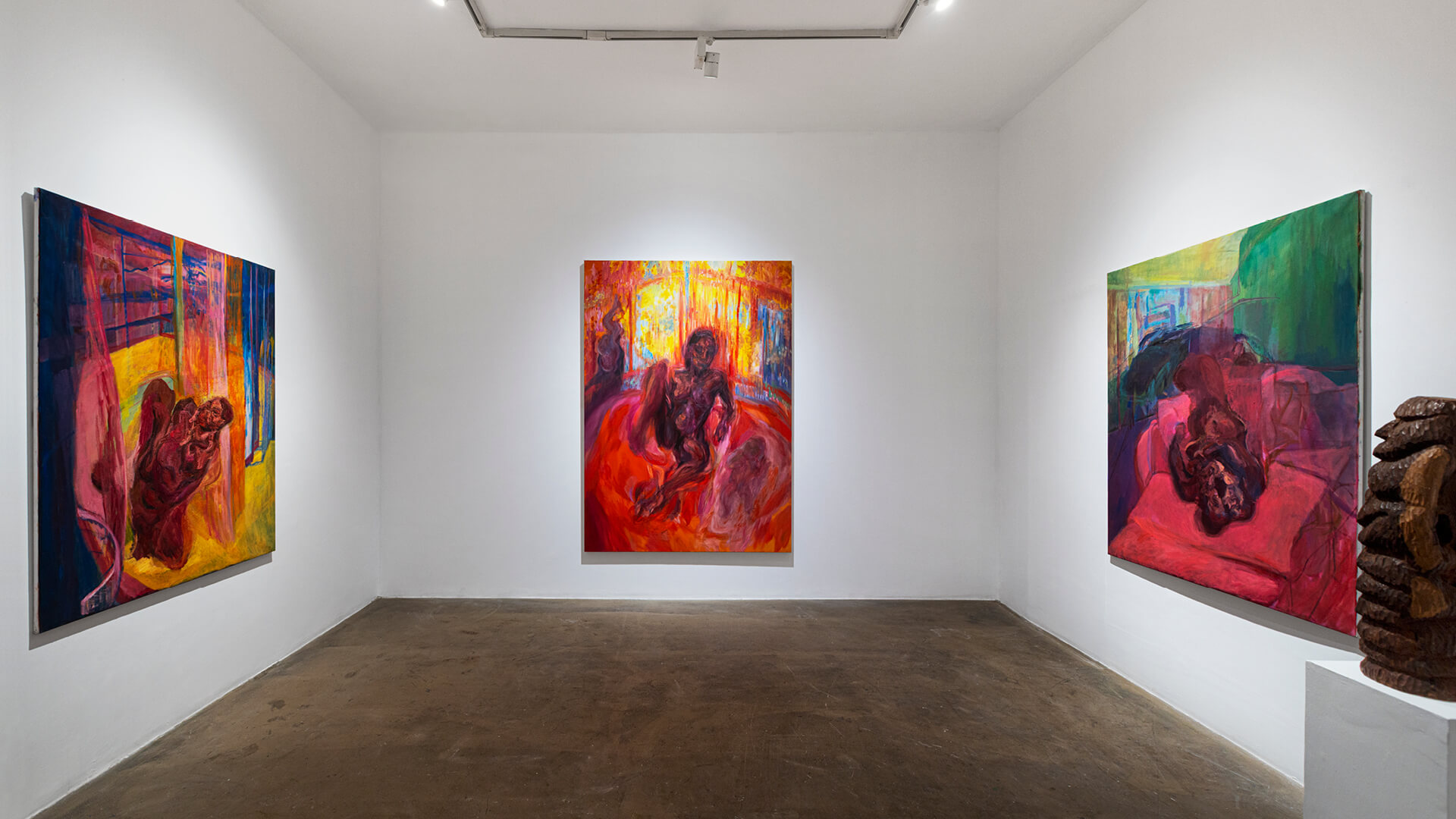
So with no single definition proposed, on view are works in multiple mediums and by artists connected through their experiences and the structures that shape them. If, in My Mothers, My Sisters, Mumtaz Karimjee brings together portraits of 14 Indian women, from a freedom fighter to a young girl at a toy-making workshop, in India-born, London-based artist Jai Chuhan's paintings, solitary women occupy interiors that appear simultaneously intimate and restrictive.
With Chuhan's works not often seen in India, the inclusion itself seems to redress an omission. It also prompts several questions, including: Who was written about, collected and exhibited and how much of women's artistic labour remained outside those systems?
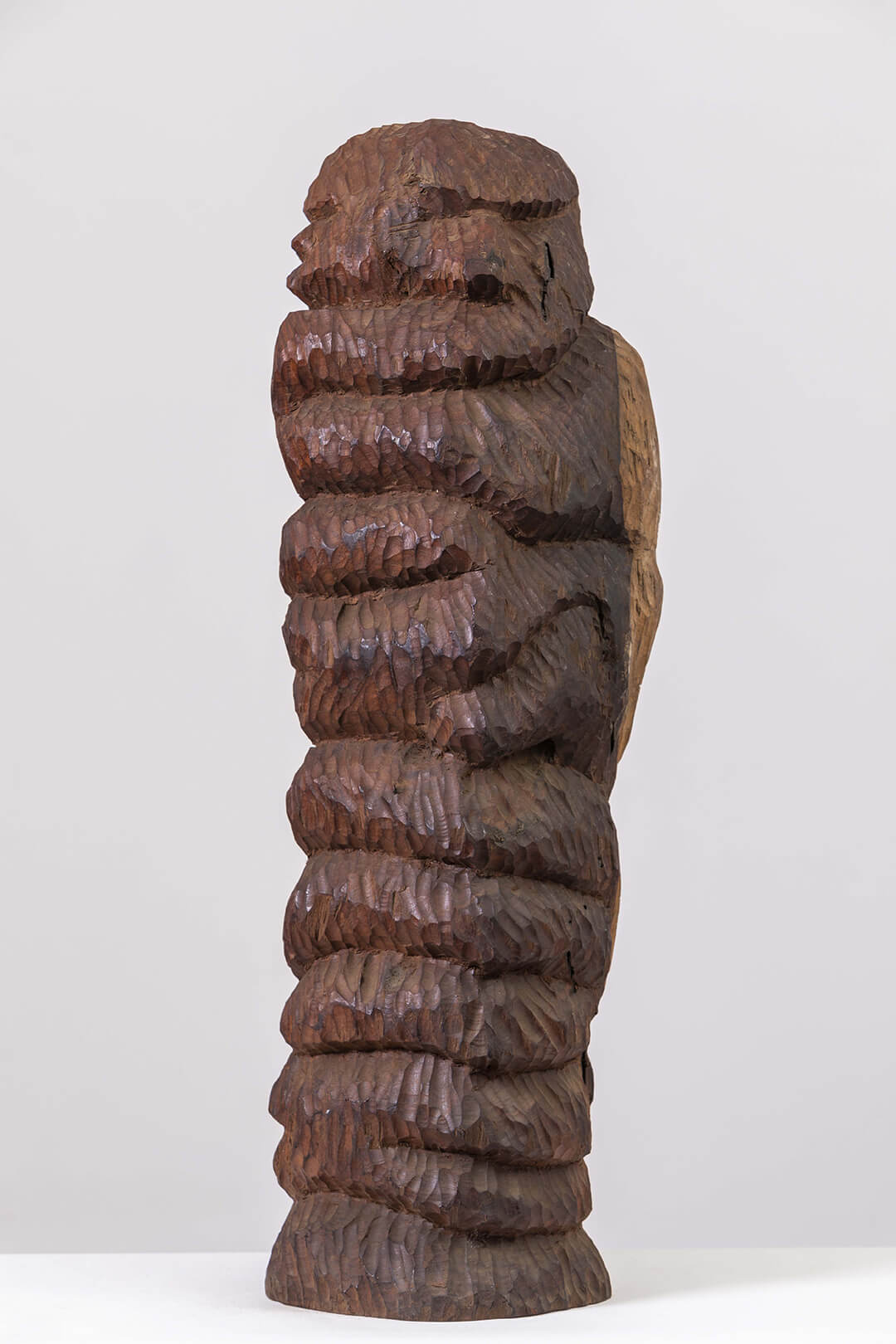
The Indian modernists, too, find representation. The wooden sculpture Intertwined Figures IV by one of the early generations of modern Indian women sculptors, Leela Mukherjee, is both rooted in material and suggestive of complex human relationships. Arpita Singh's pen-and-ink drawings, on the other hand, are constructed from lines, marks and smaller details that come together to make maps, diagrams and territories.
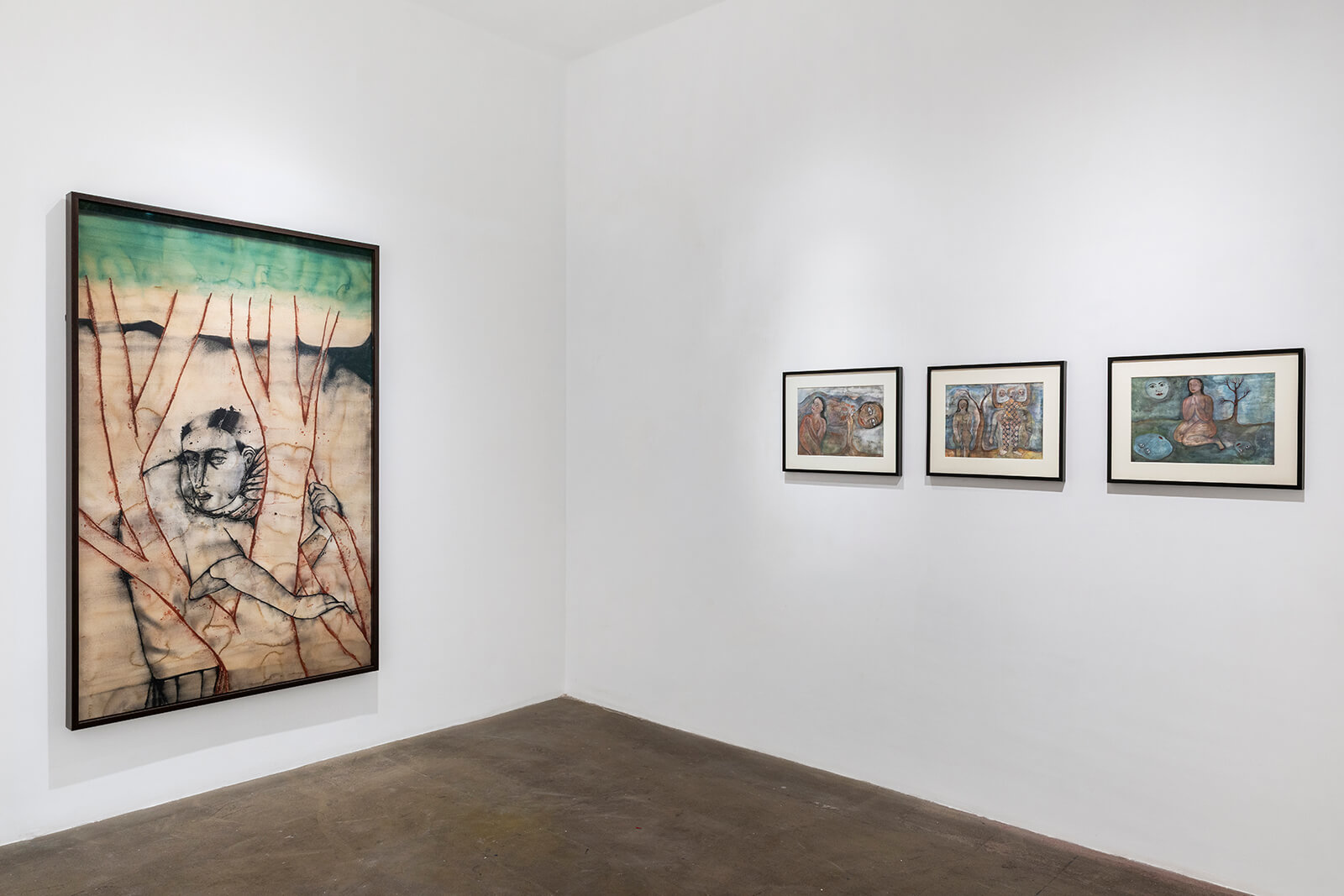
In one of the most recent works in the exhibition, Anju Dodiya returns to the Chipko movement, in which, in the 1970s, women from Uttar Pradesh embraced trees to stop them from being felled, presenting a picture of enduring feminist environmental resistance. Described by Dodiya herself as ‘fictional self-portraits’, her watercolours push the medium to its extreme, and in the work, the female body becomes inseparable from the landscape. Juxtaposed with these are watercolours by India-born, UK-based artist Gurminder Sikand, showing women in dreamlike spaces. On another wall, viewers encounter ecological engagement of another kind, in Bangladeshi artist Ashfika Rahman's Dheu, where stone marbles, silk threads and a metal frame reflect on marginalised communities, displacement and ecological vulnerability. As fragile marbles come together to create a landscape, both scale and material language take centre stage.
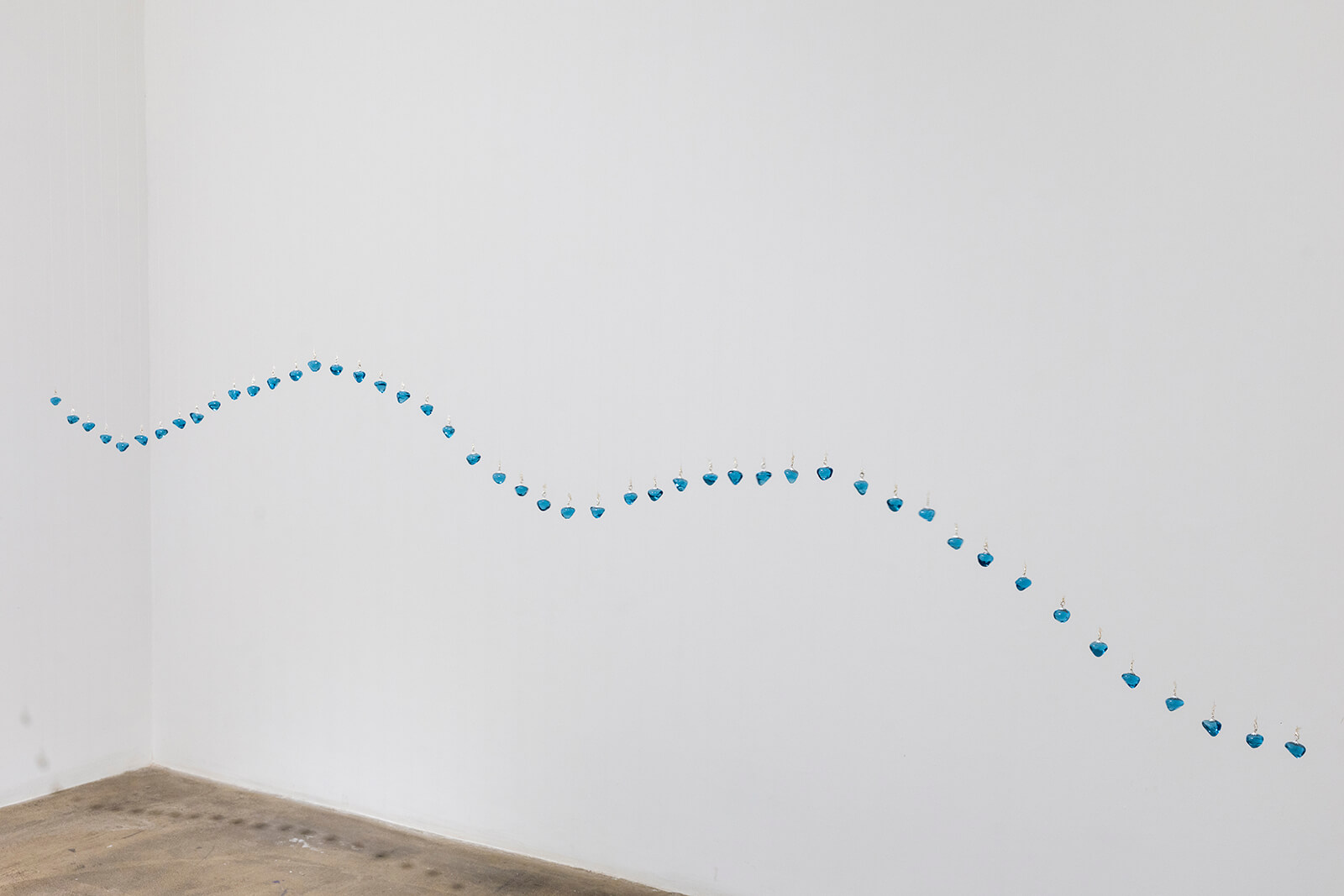
It is through such intergenerational conversations that the exhibition makes visible unfinished struggles and new forms of inequality. For instance, if women in Chhachhi's photographs were demanding autonomy on the streets of Delhi, Chuhan questions who controls the gaze and Dodiya connects women's bodies with environmental resistance. Rahman turns ecological catastrophe into a memorial, and Kaur reflects on inherited objects. Vadehra adds, "With our interest in South Asian diasporic artists growing, it feels particularly exciting to exhibit gallery-represented artists like Arpita Singh, Anju Dodiya and Ashfika Rahman alongside UK-based artists like the recent Turner Prize winner Jasleen Kaur, and Gurminder Sikand and Jai Chuhan who have significant institutional following in the UK but little recognition in India."
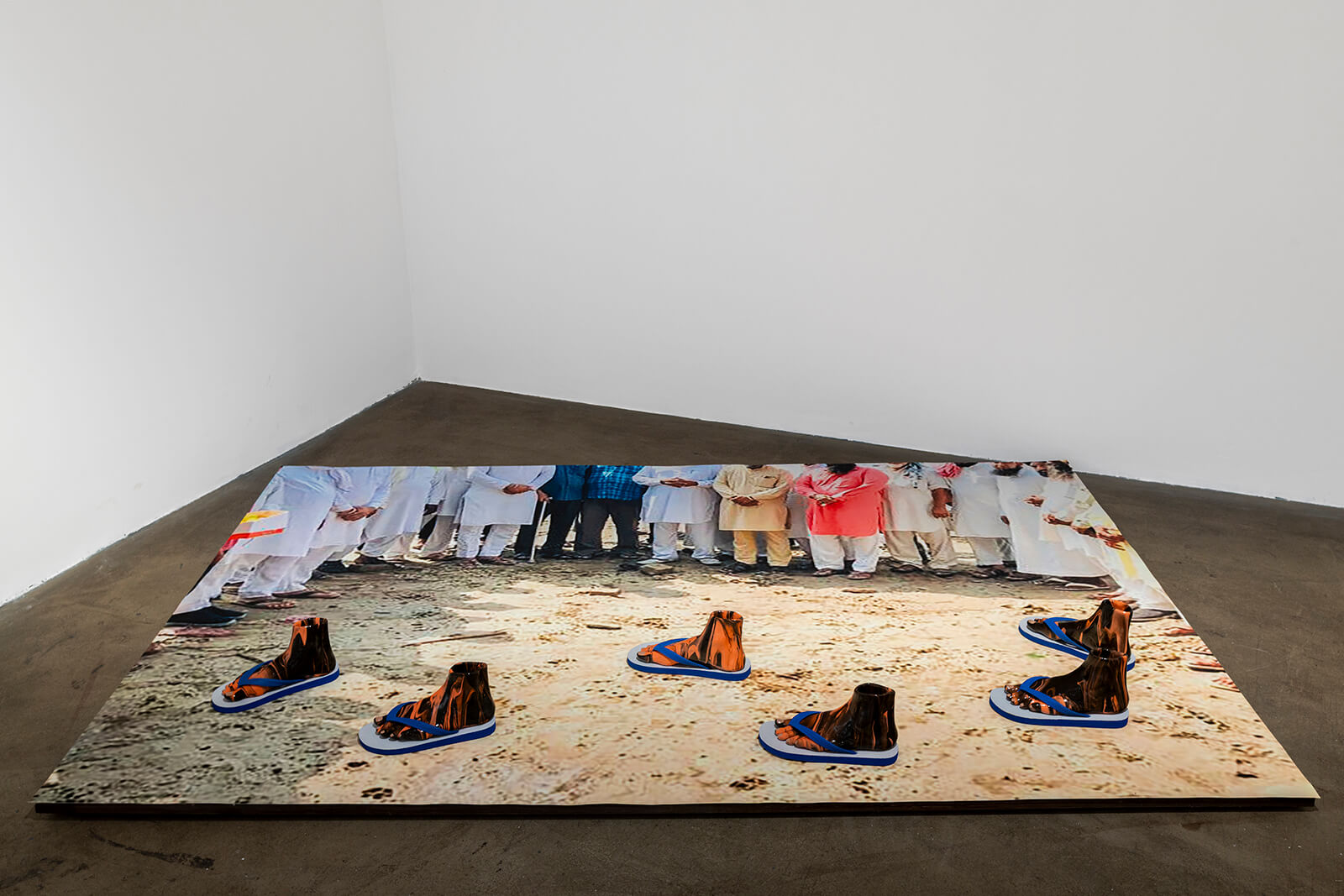
Turning back to Piercy, the feminist future she had imagined has still not arrived. The women artists in this exhibition take it forward: asking not merely to be included in history, but also questioning how history itself perhaps needs reconsideration.
‘Women on the Edge of Time’ is on view from August 21 – September 18, 2026, at Vadehra Art Gallery, New Delhi, India.
The views and opinions expressed here are those of the author(s) and do not necessarily reflect the official position of STIR or its editors.
by Srishti Ojha Oct 09, 2026
In his ongoing exhibition, the South African artist creates two post-apocalyptic futures to explore society’s relationship with textiles, patterns and technology.
by Srishti Ojha Oct 07, 2026
The Kolkata-based film festival shone a spotlight on local and international filmmakers and artists who are pushing the boundaries of what a film can encapsulate.
by Samar Jodha Oct 05, 2026
Looking at Ahmed Ali’s photographs of workers and industry within the wider history of industrial photography, from Soviet state imagery and Sunil Janah to Lewis Hine.
by Srishti Ojha Oct 02, 2026
The Indian artist’s exhibition at the Bruce Museum in the US thinks through fundamental questions of humanity by focusing on the Sun and the cosmological timescale.

make your fridays matter with a well-read weekend
Enter your details to sign in
Don’t have an account?
Sign upOr you can sign in with
a single account for all
STIR platforms
All your bookmarks will be available across all your devices.
Stay STIRred
Already have an account?
Sign inOr you can sign up with
Verification link sent to check your inbox or spam folder to complete sign up process
Tap on things that interests you.
Select the Conversation Category you would like to watch
Please enter your details and click submit.
Enter the 6-digit code sent at


How a feminist future remains unfulfilled
by Vandana Kalra | Published on : Sep 03, 2026


 Sign in with Google
 Sign in with email
What do you think?