Architecture06 mins. read
OMA puts nature at the forefront with the expansion of Buffalo AKG Art Museum
by Keziah VikranthSep 04, 2023



by Sunena V MajuPublished on : Mar 26, 2026
“Memory is at once selective and all-embracing…” – From the catalogue of Memory, New Museum’s first exhibition (1977).
Founded in the same year by curator Marcia Tucker, the New Museum emerged as an alternative institutional space, positioned somewhere between a museum and a gallery, dedicated to exhibiting contemporary art and living artists often overlooked by established institutions. In its early years, the museum occupied temporary and borrowed spaces across New York, reflecting both its experimental ethos and the instability of contemporary art’s public footing at the time.
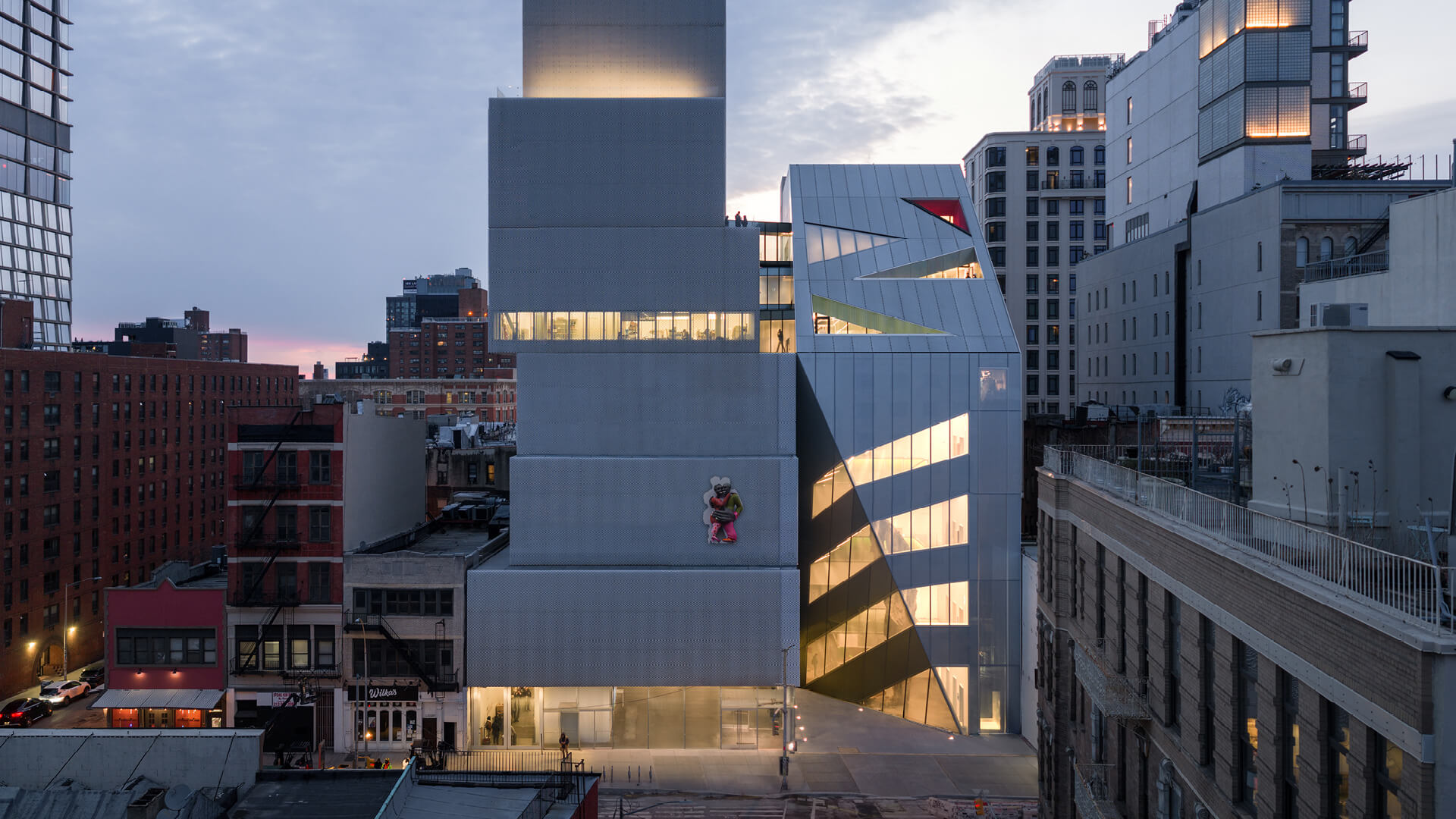
After several relocations—from the New School Graduate Center to the Astor Building on Broadway, and later to Chelsea—the museum finally established a permanent home at 235 Bowery in 2007. Designed by Tokyo-based and Pritzker Prize-winning architects Kazuyo Sejima and Ryue Nishizawa of SANAA in collaboration with Gensler, the building introduced a striking vertical stack of offset volumes into a then-gritty Bowery landscape. Its presence was both celebrated and contested, raising early concerns about the role of cultural institutions in accelerating neighbourhood change. Nearly two decades later, the Bowery has transformed significantly, with galleries, retail and hospitality developments reshaping its character, making the museum’s expansion part of a broader shift rather than an isolated intervention.
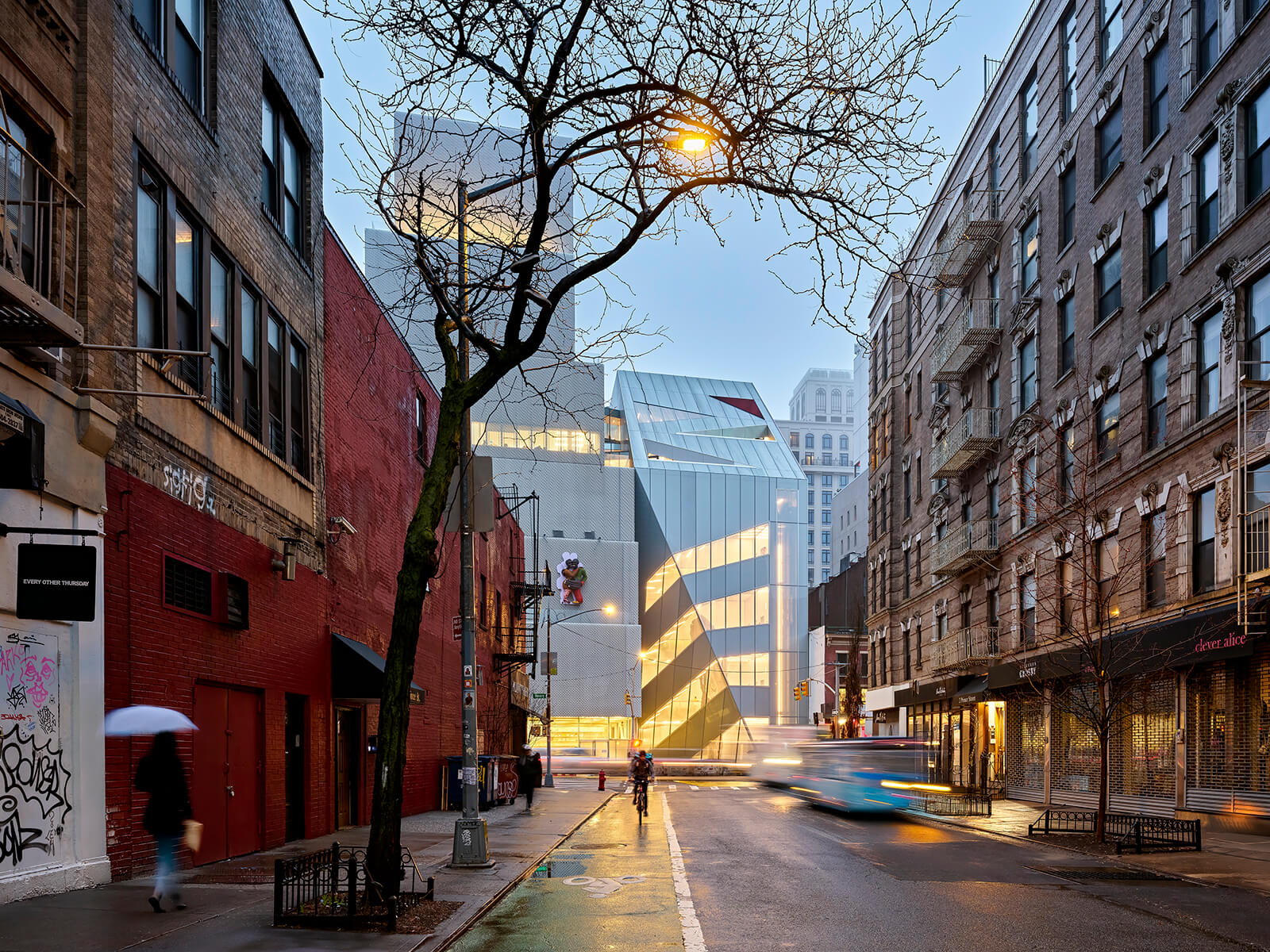
A decade later, the museum commissioned the New York branch of OMA, led by Shohei Shigematsu and Rem Koolhaas, to design an expansion that would sit alongside SANAA’s building. The brief called for a relationship between two architectural identities that were to be distinct, but could still balance continuity with contrast.
The new seven-storey, 61,930 sq ft expansion nearly doubles the museum’s exhibition capacity, adding over 10,000 sq ft of gallery space and bringing the institution’s total footprint to nearly 120,000 sq ft. New galleries connect directly to the existing building across three levels, while additional programmatic spaces include a forum, artist studios, terraces and a dedicated home for NEW INC, the museum’s cultural incubator.
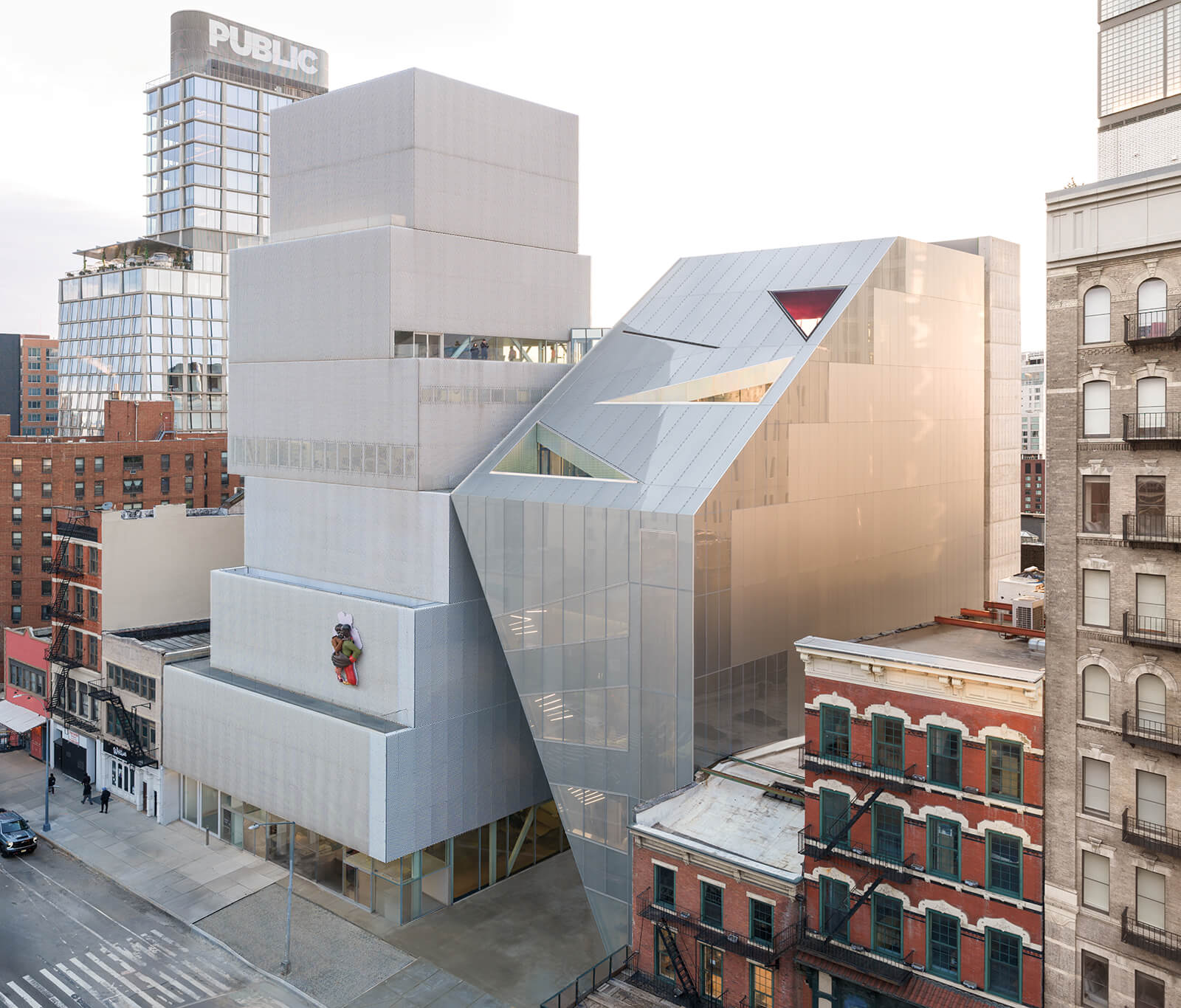
OMA described this relationship in terms of an ‘unexpected’ and even ‘romantic’ entanglement between the two structures. As Shigematsu explains, “We weren’t interested in designing a singular, standalone object. Instead, we thought of the project as a pair of buildings that together create a stronger, more diverse entity with different spatial characters.” However, as the long-awaited expansion opened to the public, the question of whether this pairing produces cohesion or a more complex tension between architectural authorship and institutional identity remains.
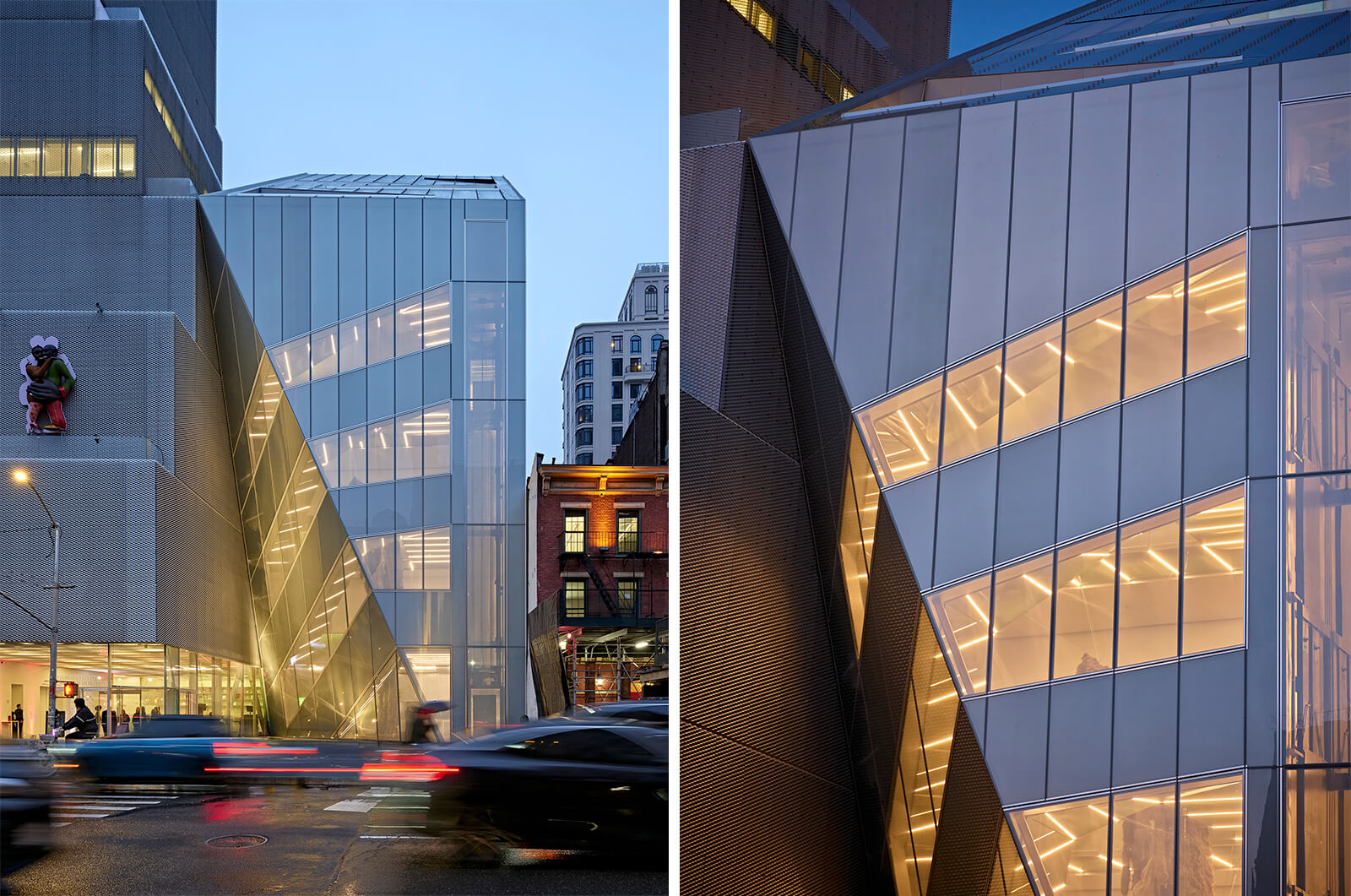
Inside, the connection between the two buildings is spatially contiguous. Externally, they register as distinct presences. The extension introduces a sharply angular form, contrasting with SANAA’s relatively softer, stacked volumes and, in doing so, repositions the original building within a newly formed architectural hierarchy, shifting it from a singular entity to one that is now read in relation to a more assertive counterpart. Both buildings retain a largely linear vocabulary and yet, OMA's intervention is defiant in contrast by virtue of evading the strictly orthogonal.
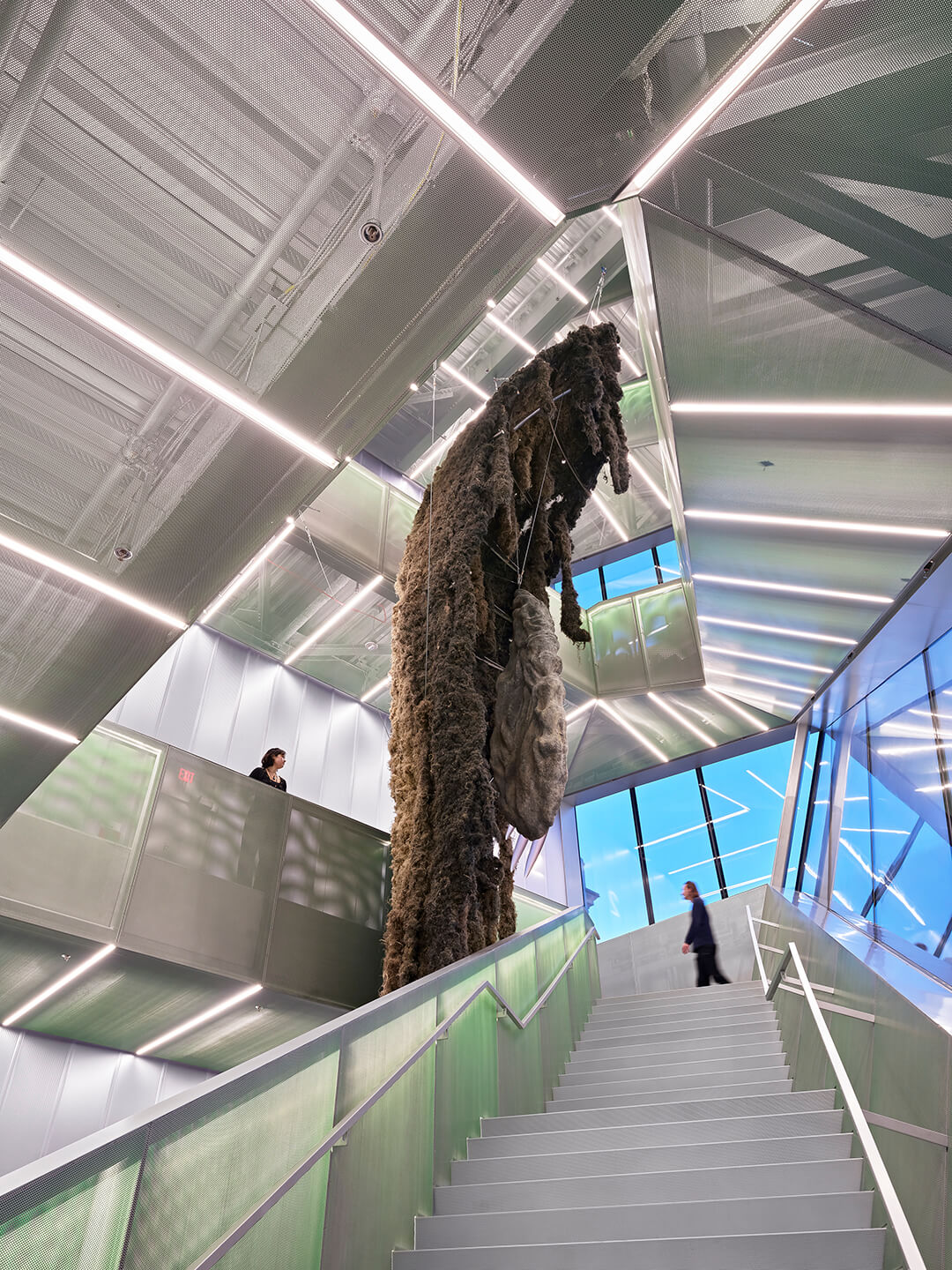
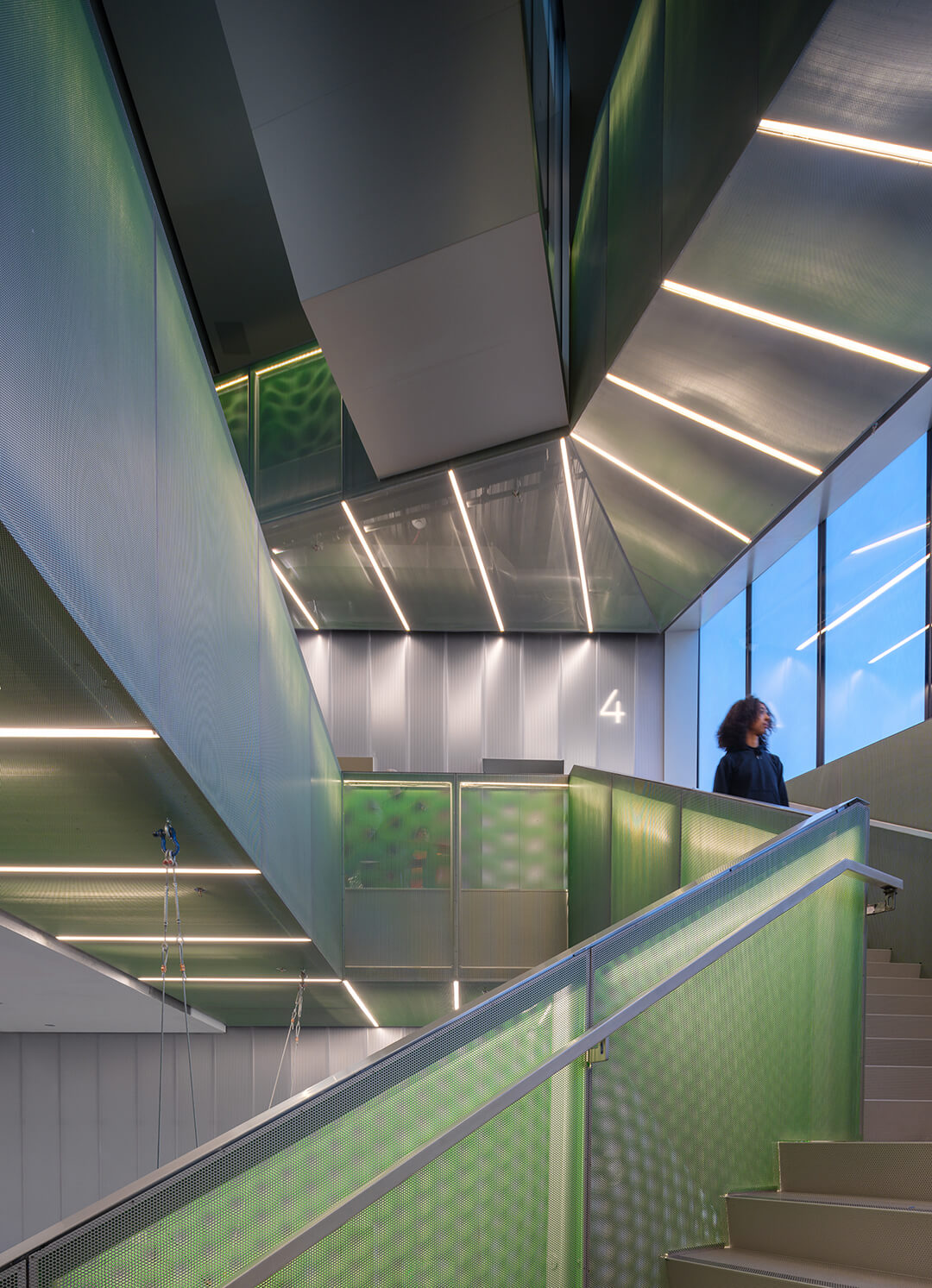
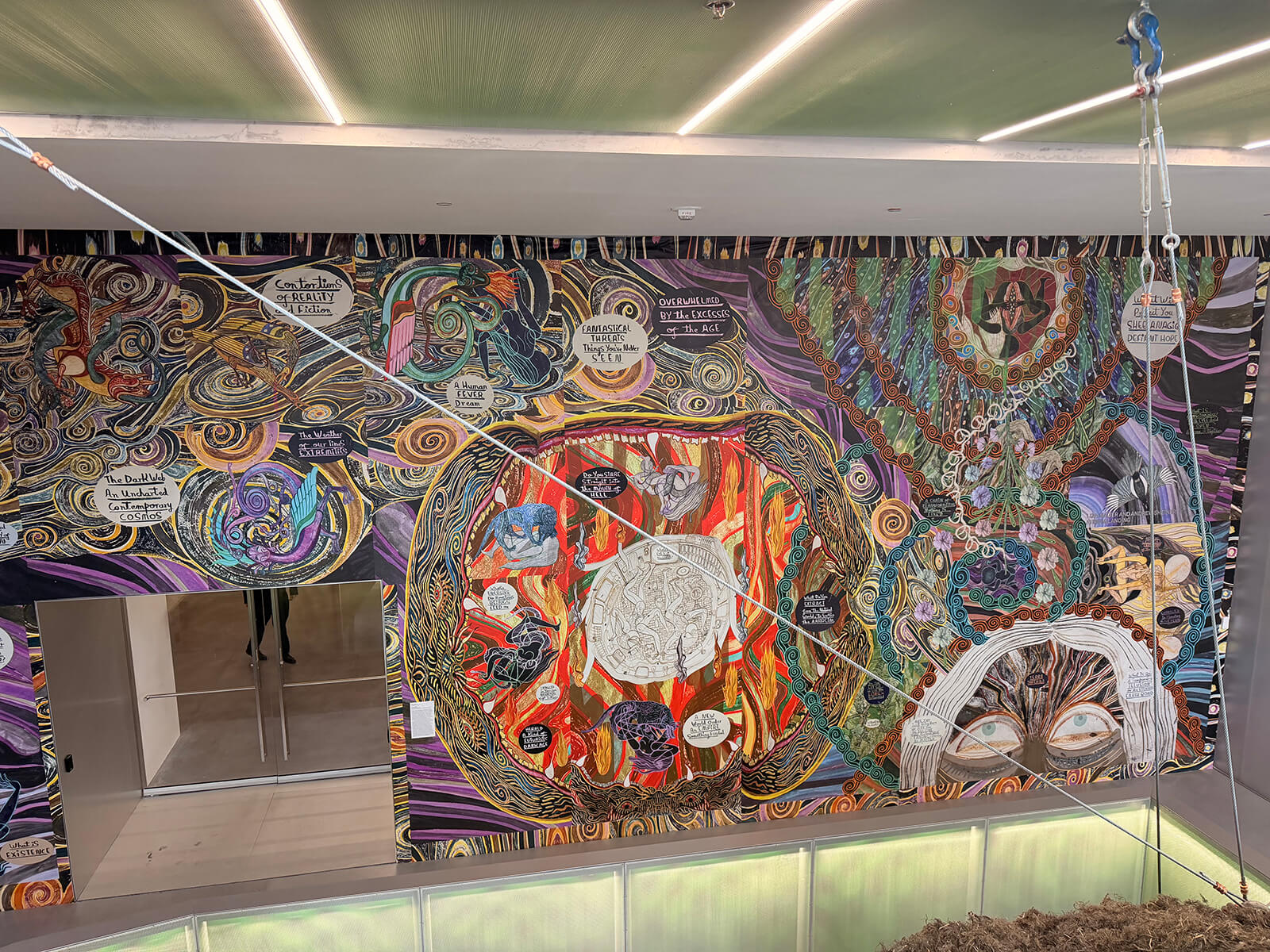
At the centre of the expansion is a multi-storey atrium, where a winding, sharply angled staircase visually takes over as the building’s primary circulatory device. Faceted and industrial in expression, the stairwell doubles as an exhibition space, currently housing Klára Hosnedlová’s Shelter (2026), suspended, allowing visitors to peruse it fully by traversing the staircase. Around it, circulation unfolds as a rather controlled sequence, wherein movement and rhythm are echoed in the fine perforations of the mesh surfaces. Galleries branch off at defined floor levels in unfixed directions, adding to as well as disrupting this rhythm.
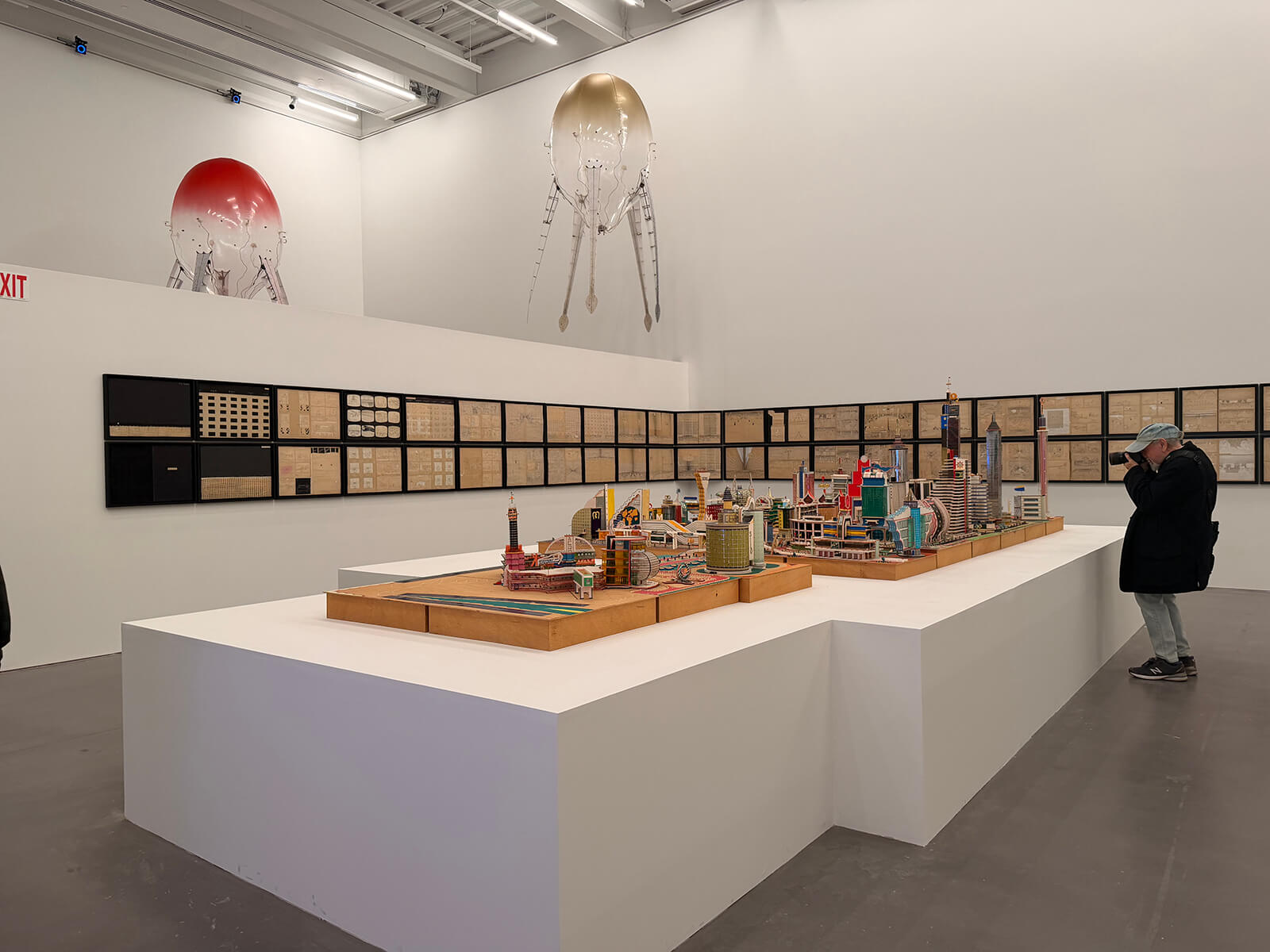
OMA’s approach prioritised, as Shigematsu noted, “maintaining ‘perfect’ gallery spaces—well-proportioned, neutral and seamlessly connected to the existing building.” The terms ‘perfect’ and ‘neutral’ here seem to recall the white cube ideal: controlled, pristine environments that ought to withdraw from view to foreground the artwork. By concentrating architectural ambition outside these spaces, the building creates a distinct split between spaces designed to disappear and highly authored zones of circulation, with more pronounced geometries within the galleries themselves emerging in the upper levels. “The museum today operates as a public platform, a place for exchange, encounters and community engagement,” Shigematsu describes, while the front portion of the building—its terraces, stairs and circulation zones—is conceived as a “kind of buffer between the city and the museum.”
It is precisely in these thresholds that the building reveals its limitations. Circulation can often feel compressed, with narrow passageways and unintended moments of congestion between stairs and elevators on a crowded day. Wayfinding is not always intuitive, and certain areas, particularly upper levels, feel ambiguously public, accessible in theory but less so in experience. The spaces intended for exchange appear carefully shaped and curated, rather than open and free to inhabit—all markers of an architectural identity that is delivered with a signature rather than arrived at through public engagement and memory.
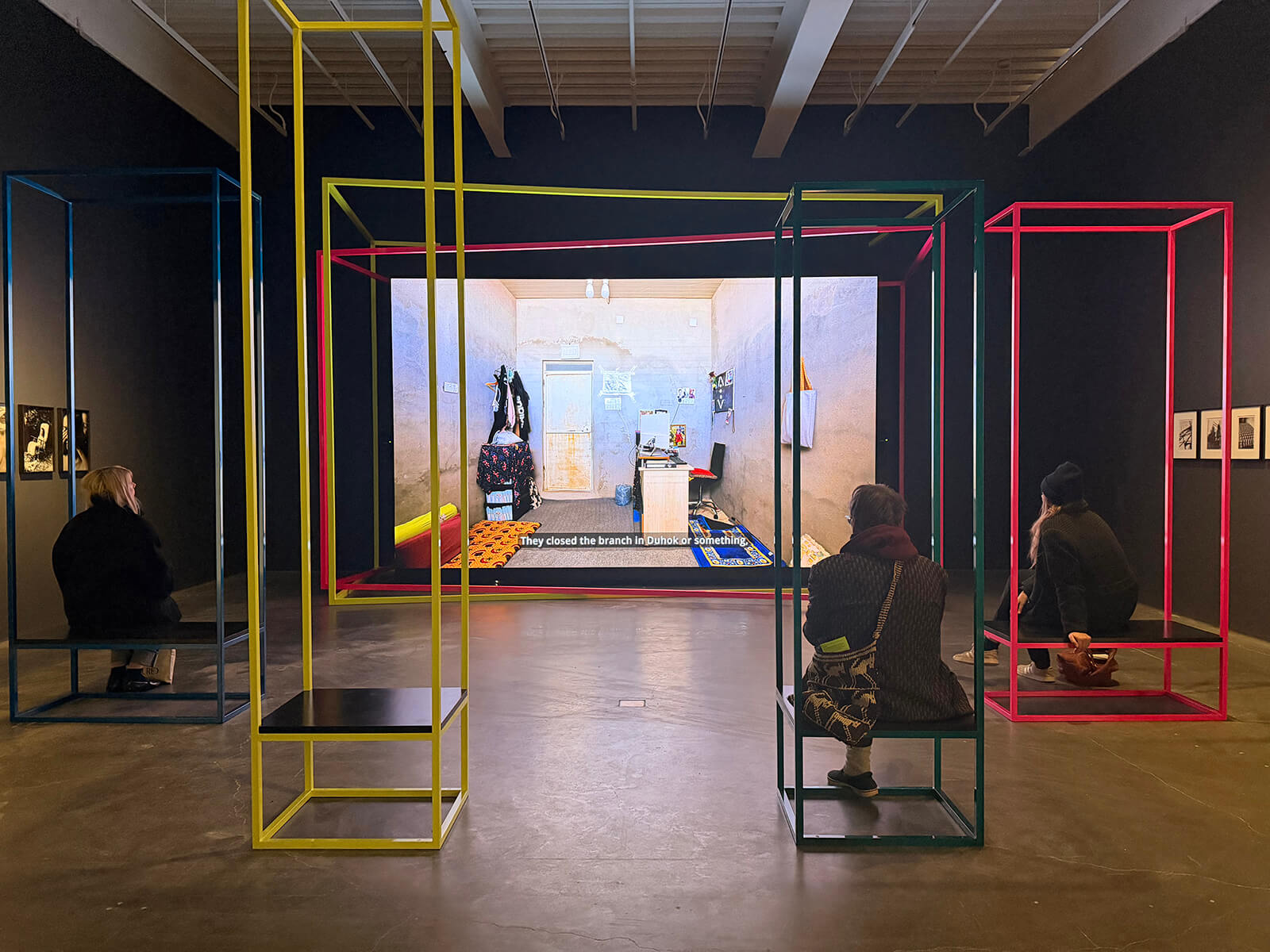
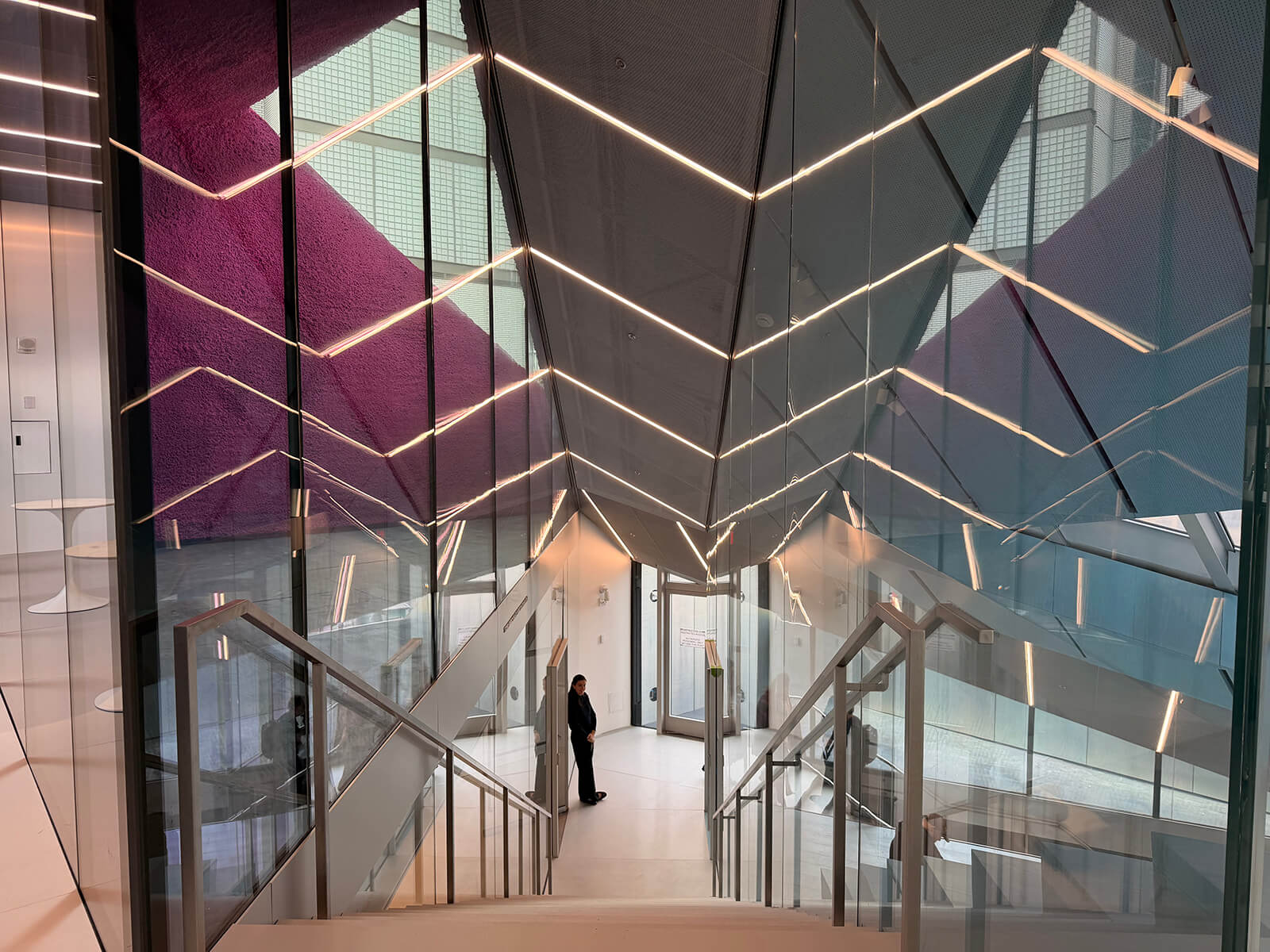
The building’s material language reinforces its industrial character: unclad steel, visible joints, raw edges and surfaces that appear unfinished. While this aesthetic aligns with OMA’s broader architectural vocabulary—the subtle green from Louis Vuitton: Visionary Journeys and blues from Casa da Musica, perforated metal as seen in Fondazione Prada and slanted angular glass facia reminiscent of Buffalo AKG Art Museum— its execution at some points here feels unresolved, raising questions about the balance between conceptual intent and spatial refinement, along with the public eye inevitably cast on projects delivered as high profile buildings from the get go. This tension is further reflective of a broader pattern in contemporary museum architecture, where buildings increasingly operate as strong formal statements and instruments of institutional visibility. That is also often at the hands of some of the biggest, most well known architectural practices in the world, inviting inevitable media attention. As museums expand, architecture plays an essential role in shaping how institutions are perceived, often becoming a parallel object of attention.
At the New Museum, this dynamic is lent an additional unmistakable dimension by the presence of SANAA’s original building. The intervention here does not inherit a tabula rasa—most buildings rarely do—but responds to an already authored condition, wherein SANAA’s existing building operates not merely as context, but as an inescapable presence shaped by time and urban memory. The extension introduces a distinct formal language into a context that is already deeply influenced by and in turn influences the museum’s public and spatial consciousness, creating a tension between continuity and the authorial agency afforded by architecture and more specifically, a project of this scale and prestige.
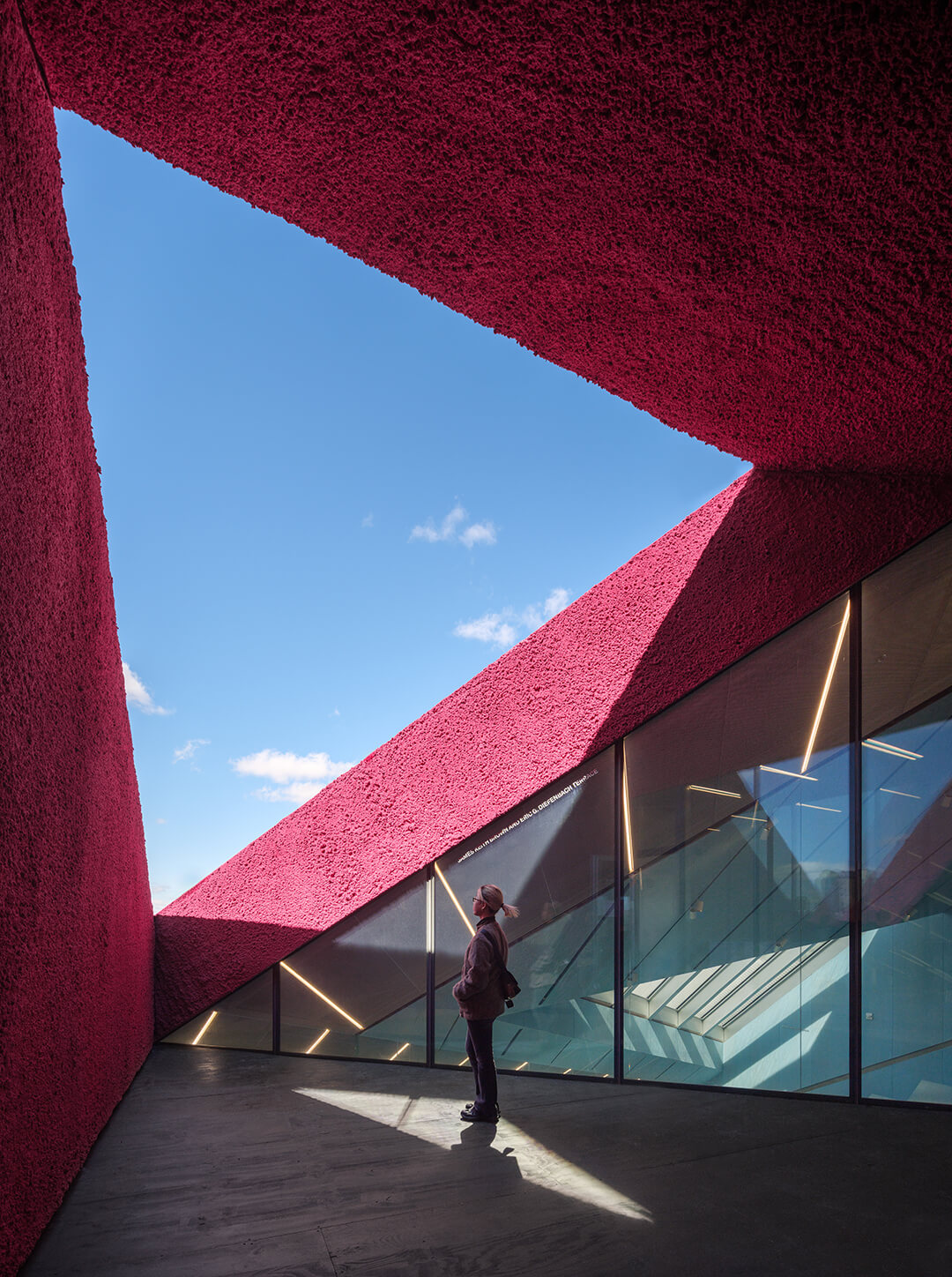
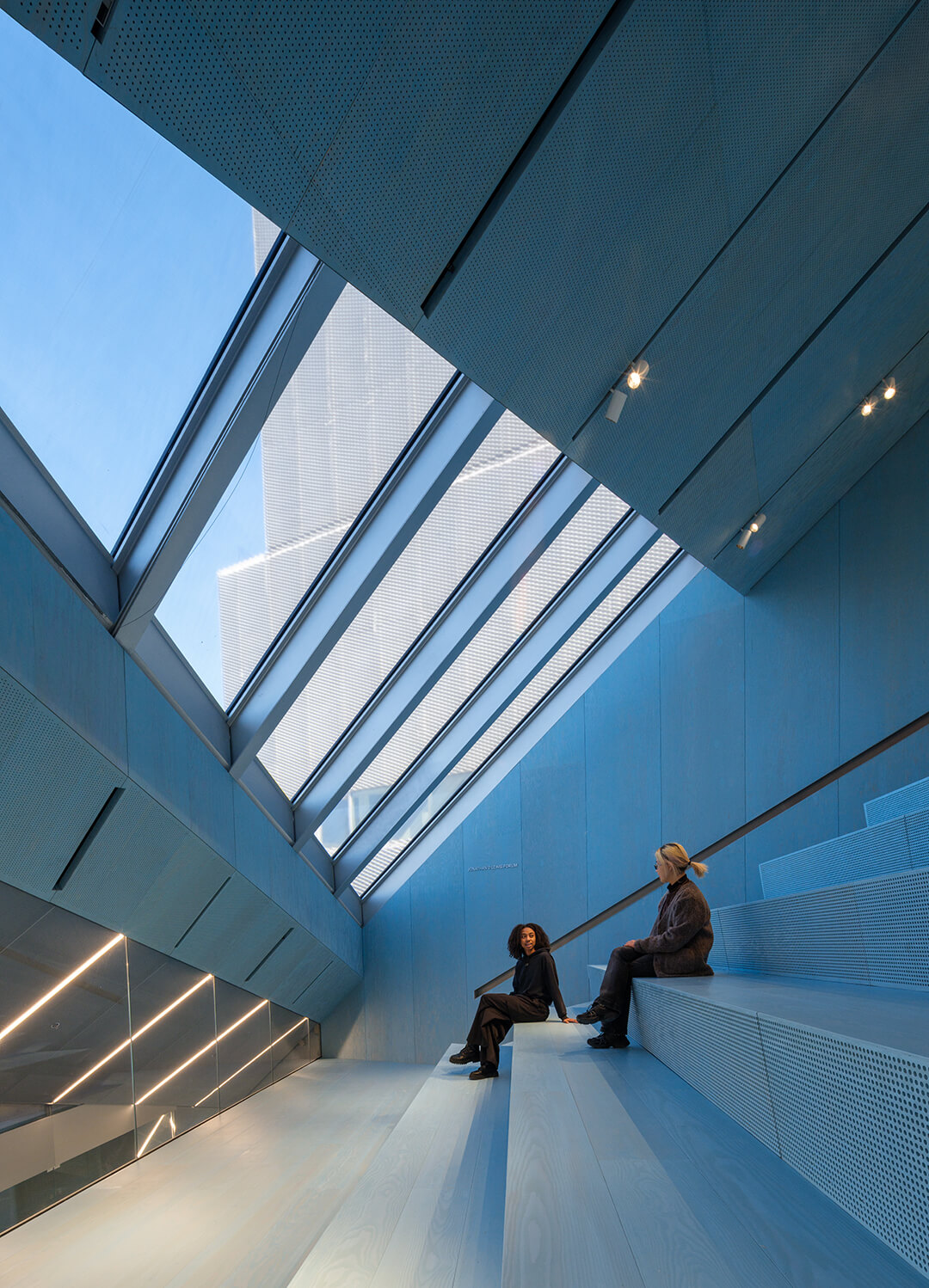
The expansion also positions itself within a wider cultural context, one that happens to be contested in our current global moment. With a capital campaign exceeding $100 million1 and construction long in progress, the building arrives at a moment when museums globally are negotiating questions of growth, funding and internal labour structures, further situating the project in the middle of ongoing conversations on the role and responsibility of cultural institutions. Within the extended dialogue of ethical collecting and archival practices, however, the New Museum finds itself a redeeming factor being a non-collecting institution trying to formulate exhibitions through commissions and loans from living contemporary artists, something that has been part of the museum's ethos since its founding.
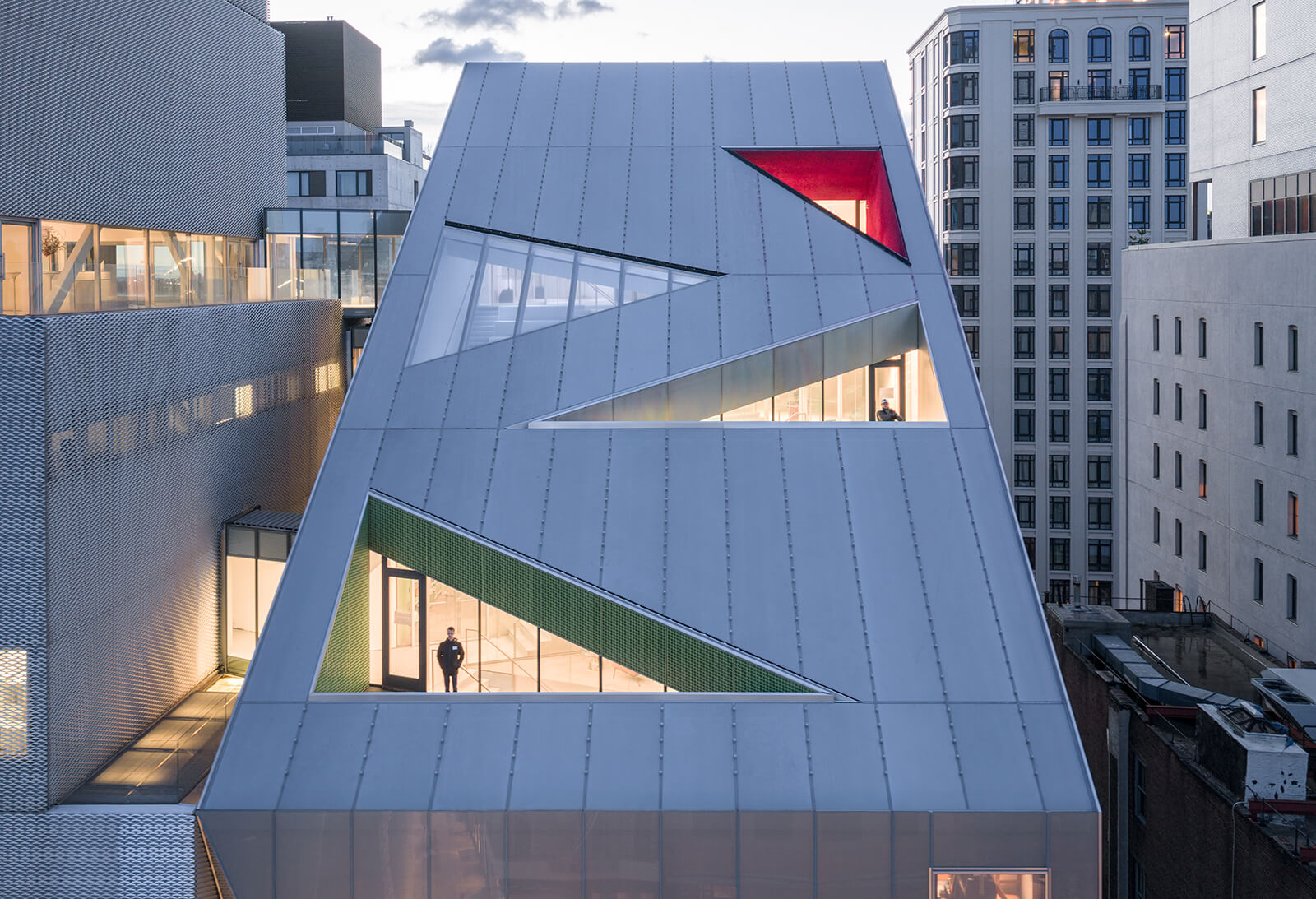
The expansion undoubtedly increases the museum’s capacity and programmatic potential. It also raises a fundamental question: how should a museum grow? As institutions expand, physically, culturally and economically, the bigger challenge—apart from that of adding space—lies in sustaining clarity, accessibility and a sense of public belonging, while remaining accountable to the values that guide what is seen, how it is framed and who it speaks to. The New Museum’s expansion, in this sense, is both a continuation and a departure. It extends a physical footprint while provoking a reconsideration of what that footprint represents. As the museum grows, what it builds is not just space but memory, actively propounding how it will be remembered and what, in the process, is carried forward or quietly left behind. Its architecture is barely the witness to it all—it is an active agent partaking in that transaction.
References
1.https://www.newmuseum.org/support/capital-campaign/
(The views and opinions expressed here are those of the author(s) and do not necessarily reflect the official position of STIR.)
by Pranjal Maheshwari Oct 24, 2026
A consortium of Copenhagen’s 3XN, Toronto’s B+H Architects and Shenzhen’s Zhubo Design has designed the museum to mimic the surrounding riverscape, topped with a public park.
by Pranjal Maheshwari Oct 19, 2026
The Mumbai-based architects integrate courtyards, mesh screens and north light trusses to create a dining space that doubles up as a community hub at SR University, Warangal.
by Mrinmayee Bhoot Oct 17, 2026
The Rotterdam-based institute centres the Indian Ocean as a network for exploring material histories and transnational links shaping coastal cultures, positing them as future models.
by Pranjal Maheshwari Oct 16, 2026
At the 2026 Stirling Prize ceremony, Mary Duggan with RUFF Architects, MAKER Architecten and Nakshabid Architects were felicitated for proffering quality housing and social equity.

make your fridays matter with a well-read weekend
Enter your details to sign in
Don’t have an account?
Sign upOr you can sign in with
a single account for all
STIR platforms
All your bookmarks will be available across all your devices.
Stay STIRred
Already have an account?
Sign inOr you can sign up with
Verification link sent to check your inbox or spam folder to complete sign up process
Tap on things that interests you.
Select the Conversation Category you would like to watch
Please enter your details and click submit.
Enter the 6-digit code sent at


OMA’s New Museum expansion in New York negotiates memory, identity and authorship
by Sunena V Maju | Published on : Mar 26, 2026


 Sign in with Google
 Sign in with email
What do you think?