Art09 mins. read
Wedding photos, 'boterismo' and Korean film stars: Your guide to Art Basel Hong Kong
by STIRworldMar 24, 2025



by Anmol AhujaPublished on : Oct 15, 2026
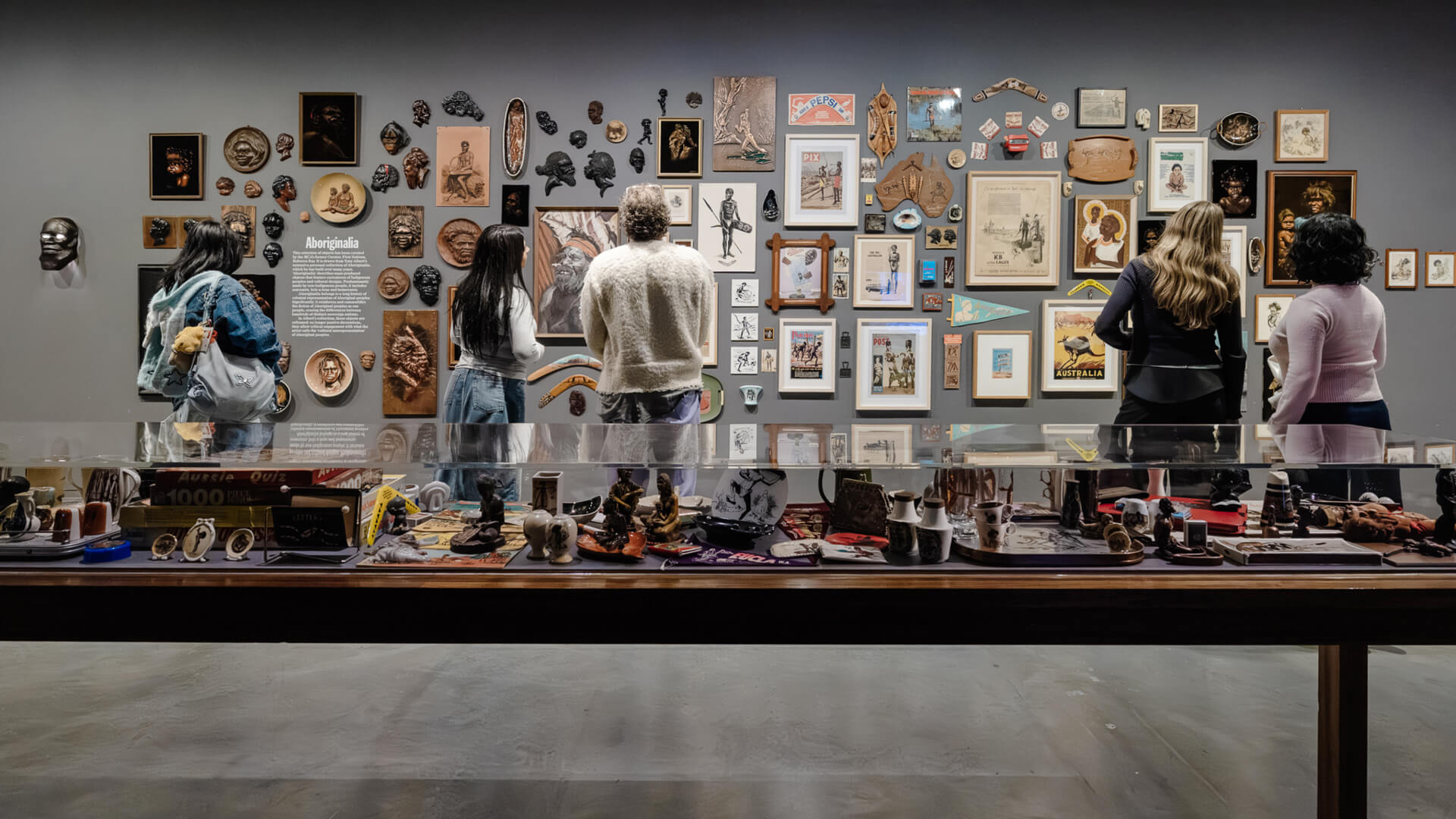
When was the last time you spared more than a passing look at the collage of fridge magnets resolutely stuck to your fridge or cabinet? Or the collected trinkets by your bedside or wares picked up at a whimsical antiques store through your travels abroad? When was the last time you pondered over the singularity of the souvenir’s image—a flag, a native animal or flower, a landmark, perhaps—and thought about abstract associations like history and authorship with that object?
The next line of questioning is perhaps more specific to people who have lived through a colonial-adjacent experience: Do you remember looking at a painting, especially in a gallery in a Western nation or an incumbent English colony, and found recreations of imperial conquest—especially ones of ‘first contact’ with Aboriginal people—to be offensive or upsetting? Found the line between portraiture and caricature blurring? More pointedly, did you feel that the trigger warning or reconciliatory text on the museum walls just didn’t suffice?
The two distinct but intertwined lines of questioning above succinctly frame my experience of Tony Albert: Not a Souvenir, currently in its final week at the Museum of Contemporary Art, Sydney. While the first probes deeper into the flattening of imagistic meaning, intention and agency for consumption—both of the artist and the subject—and what new meanings emerge when these images are reclaimed and rearranged, the second delves into the politics behind the act of artistic reclamation. That tension escalates manifold when the art in question is Aboriginal art, carrying an additional layer of agency and distinction between the artist and the subject in its very definition.
History has been a complex beast to tackle and continues to be as its effects unravel over centuries. I say this despite knowing and stating the bitter truth behind global colonial empires, precisely because of the latter. But the desire to flatten it for consumption or its reduction to memory through visuals is a near-universal one. This complexity only underlines Albert’s showcase, guest-curated by Indigenous curator Bruce Johnson McLean, as the invisible but documented force behind the creation of ‘aboriginalia’ in the first place. Through Australia’s tough record of reparation, mostly to no significant effect for First Nations peoples, thousands of kitschy, mass-produced souvenirs flooded Australian markets, primarily to cater to growing tourism in the mid 1900s. Several of these were also a domestic mainstay, uncritically created as well as collected by the ‘broader’ Australian community in their homes, most notably including sketches, paintings, sculptures, ceramics and other trinkets.
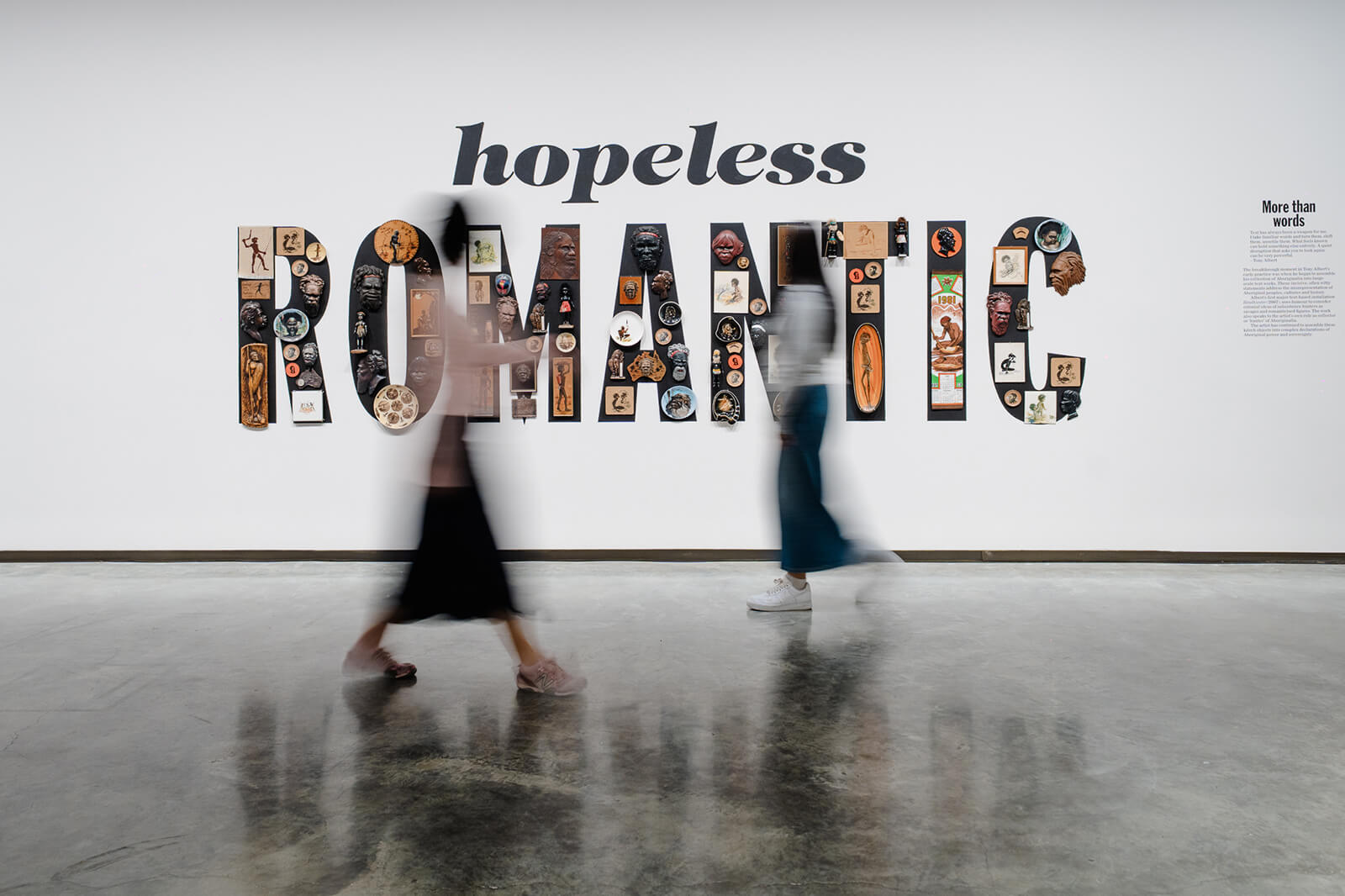
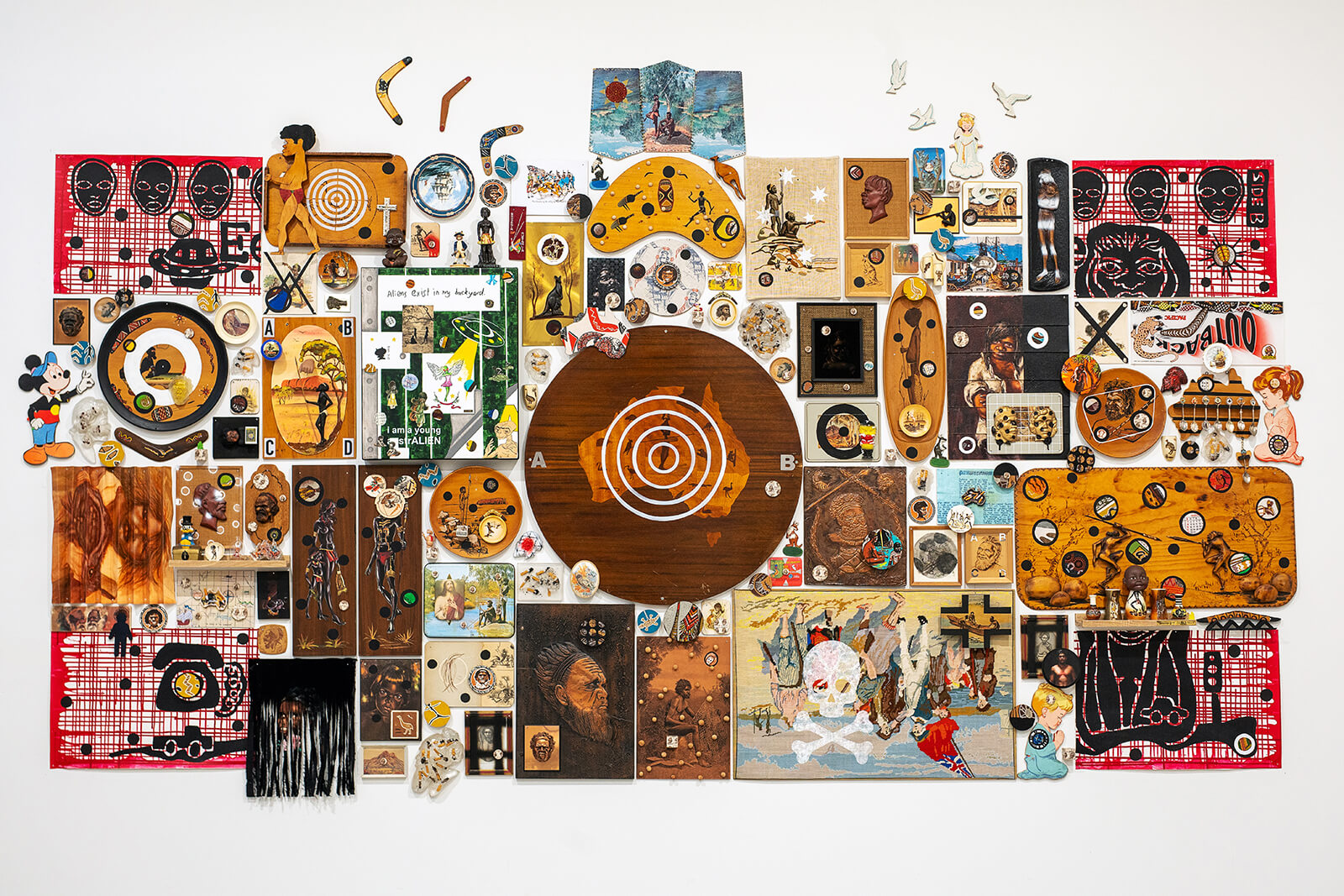
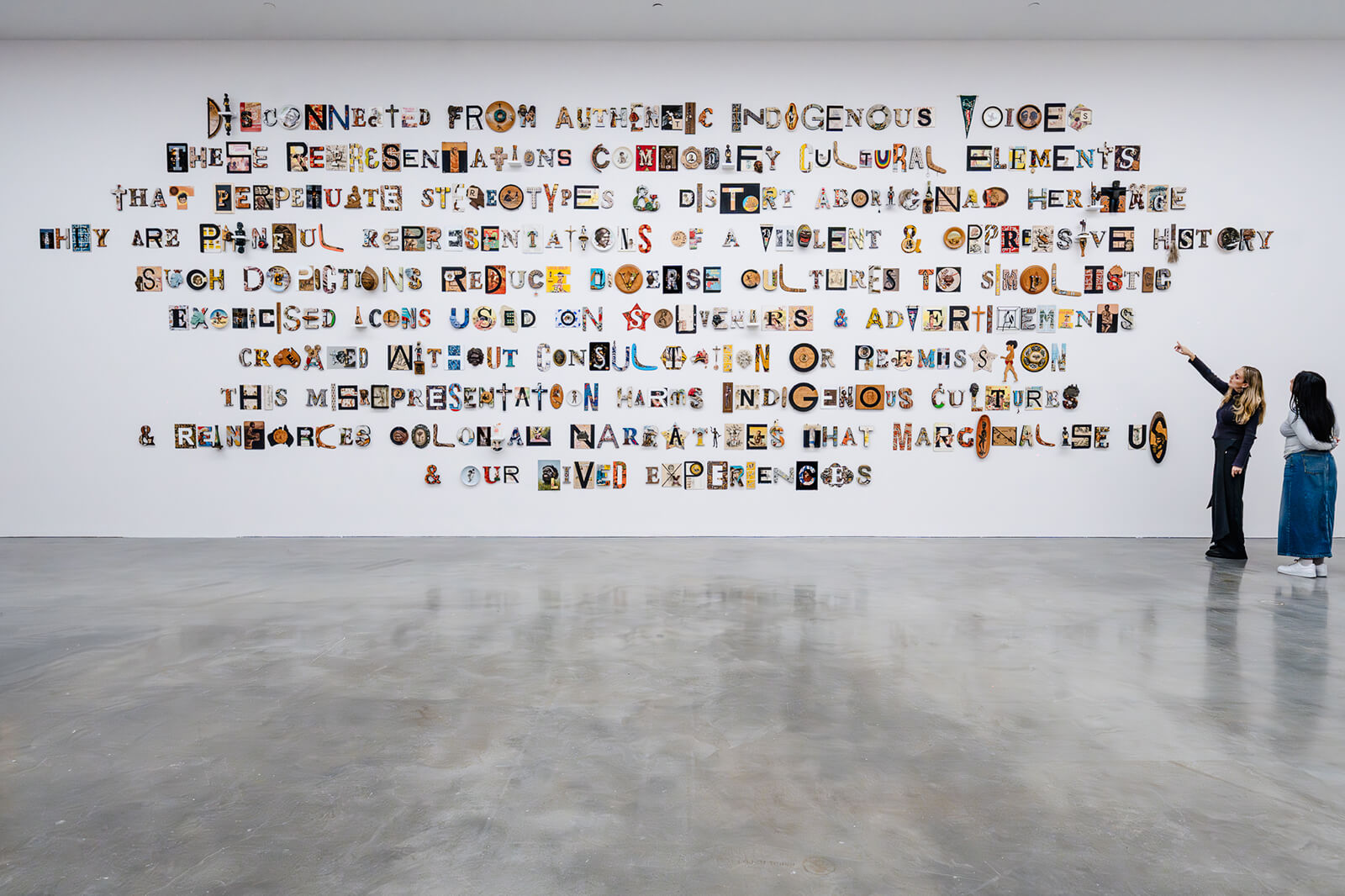
The image, while an accessible symbol, can represent but also harm. There are no two ways about the roots of aboriginalia lying not just in the exoticisation of natives for commercial gain more than accurate representation—something that could count as meaningful reparation in another world, tying people to place—but also in reinforcing colonial attitudes and narratives. In the face of this genetic ‘complexity’, Albert stages these objects with relative simplicity, implying shared, accumulated meaning superseding their original intent and even context. Unlike many ‘found object’ showcases—several from Albert’s own collection, and some from an extensive donation drive conducted in collaboration with the MCA—Not a Souvenir relies on the absence of a spotlight, insisting that these offensive objects are elevated to art only in congregation (and at the hands of an Indigenous artist). The immense, overwhelming quantum is the point; a poignant statement on Aboriginal resilience often sought in community and oneness.
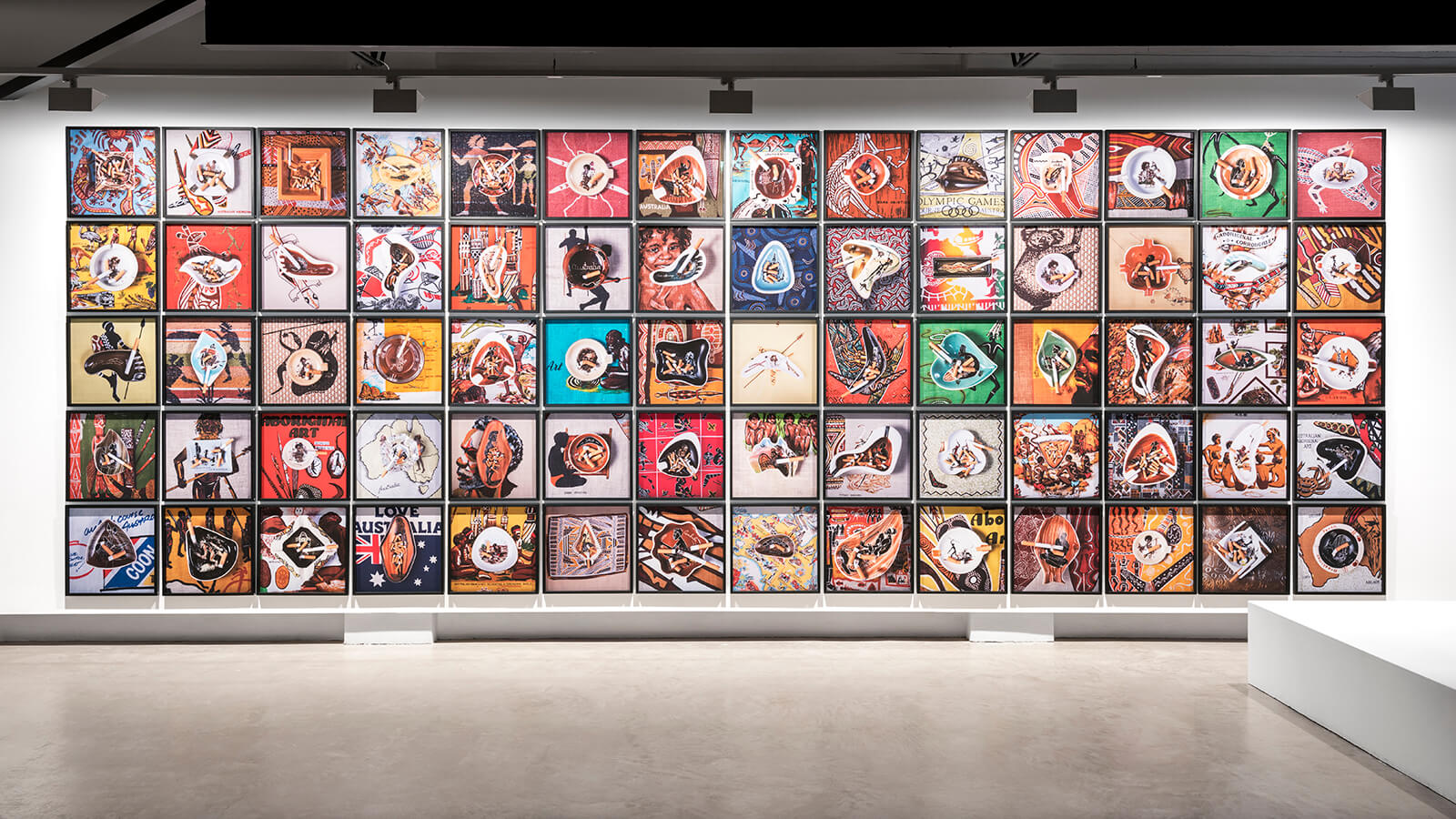
Perhaps the most interesting ‘object’ in this repository is the boomerang, reproduced manifold without the tools, techniques or traditions that define it as a symbol of connection to the mainland, especially when positioned against urban centres like Sydney and Melbourne, which paradoxically draw most tourists. Originally designed for hunting, cultural ceremonies, sport and even music, the boomerang’s entry into popular tourist spheres meant that it would be reduced to its visual appeal, even if the ‘image’ itself isn’t inherently racist in nature; just appropriated Aboriginal motifs for cultural adjacency. Others, like facial sculptures with exaggerated features, nude recreations of Aboriginal women, and especially ashtrays, laden with a hint of violence behind the utility they affront, are more direct offenders.
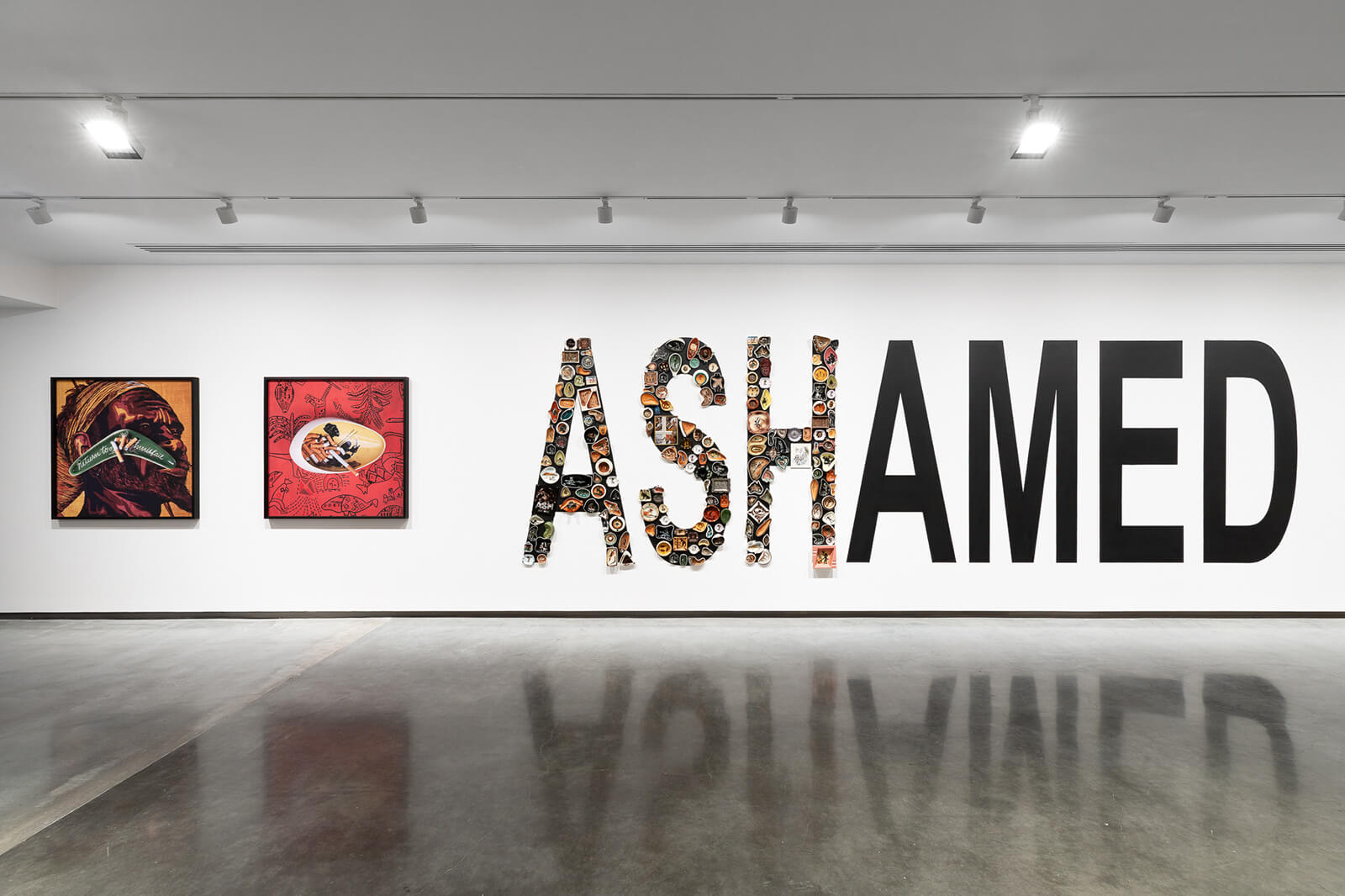
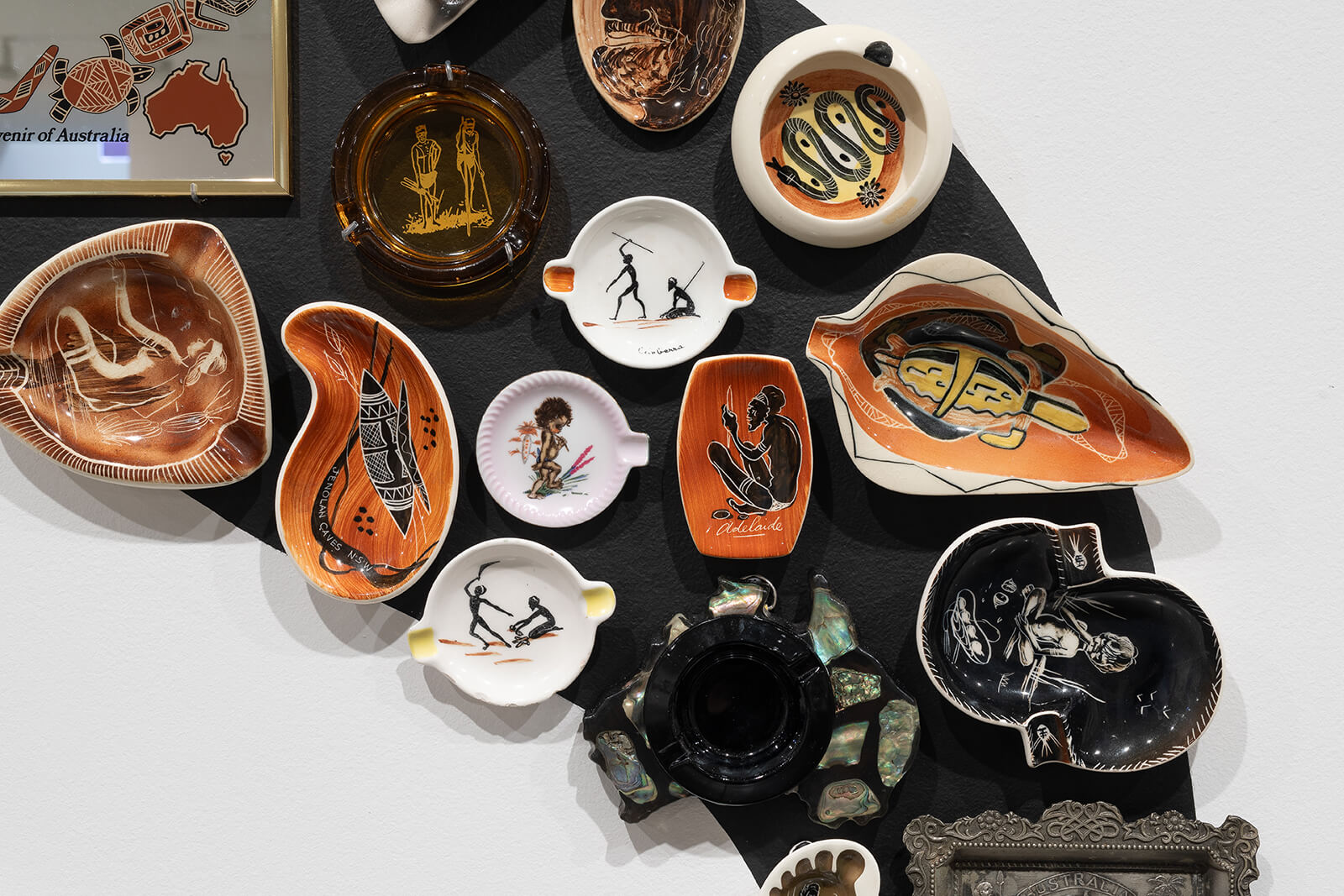
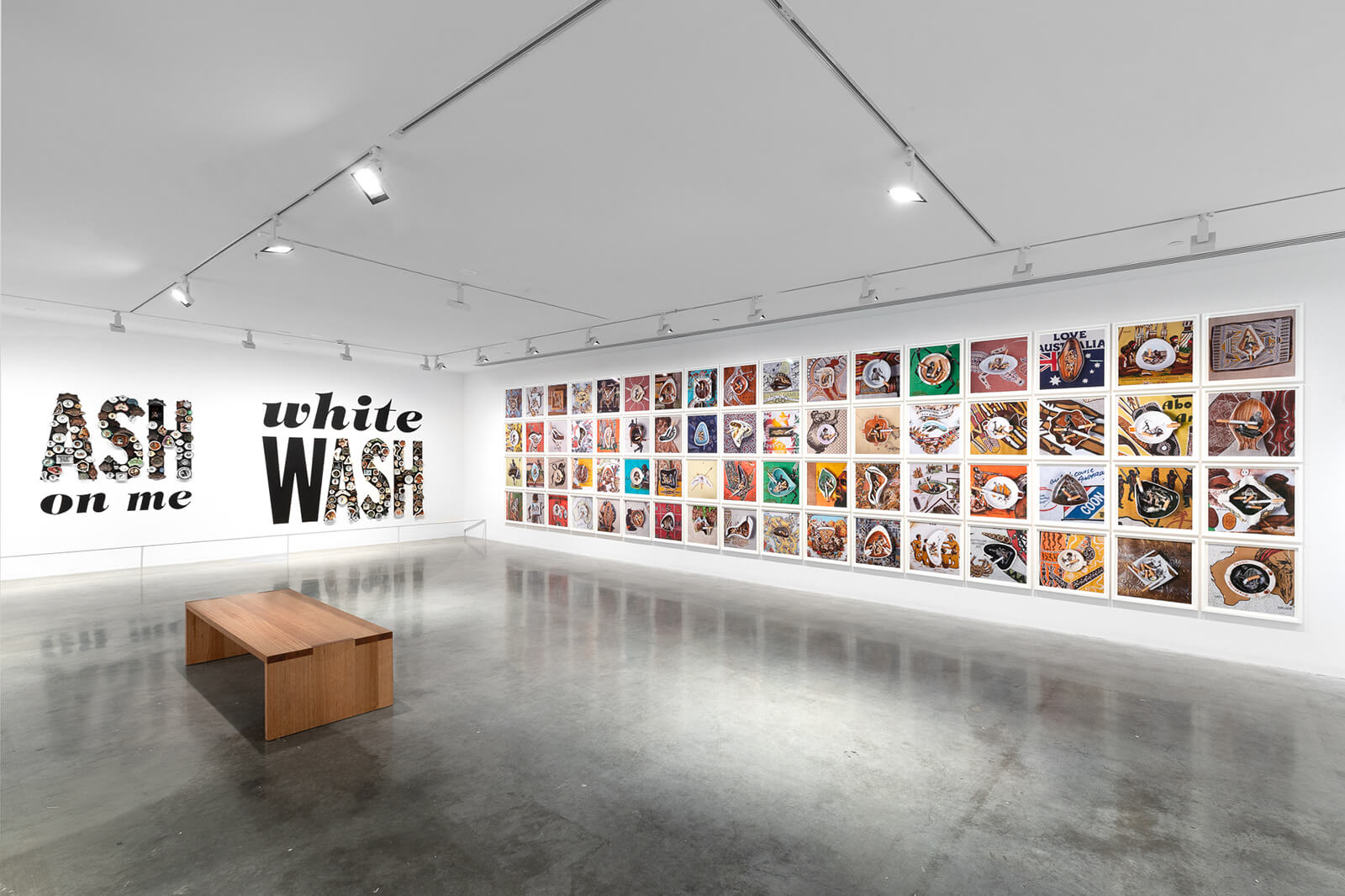
The most didactic way they come together is through Albert’s renowned experiments with text. The artist uses large-scale assemblages of aboriginalia to spell out words that cycle between quirk, humour, provocation, even empty parliamentary promises (an oversized SORRY) and, eventually, hope. “What does it mean to butt out a cigarette on someone’s face, on someone’s culture, their life and humanity?” Albert piercingly enquires with ASH on me, using the recurring word to frame whitewASH and ASHamed with hundreds of ashtrays, tea towels, crockery and figurines with Aboriginal imagery.
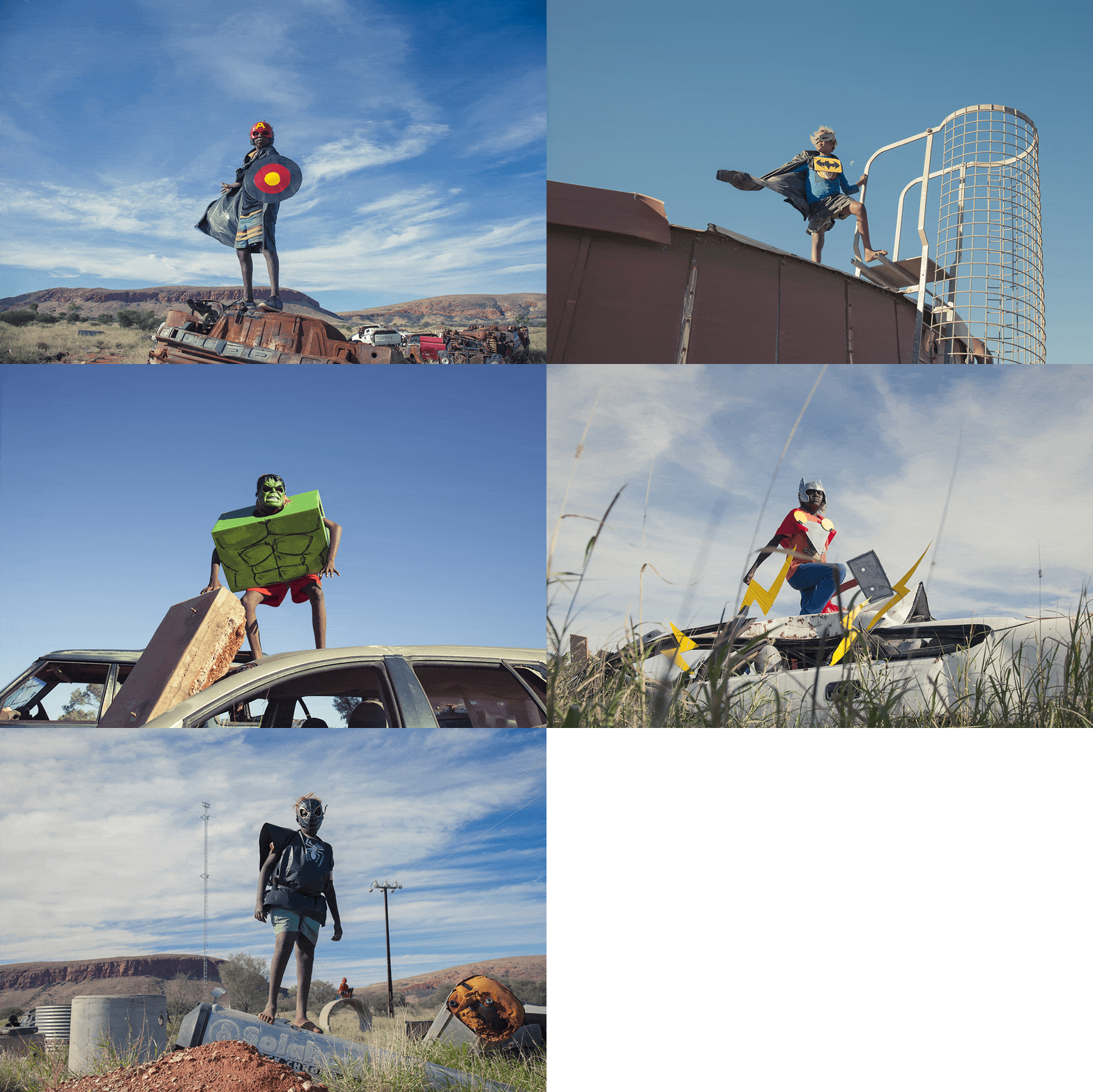
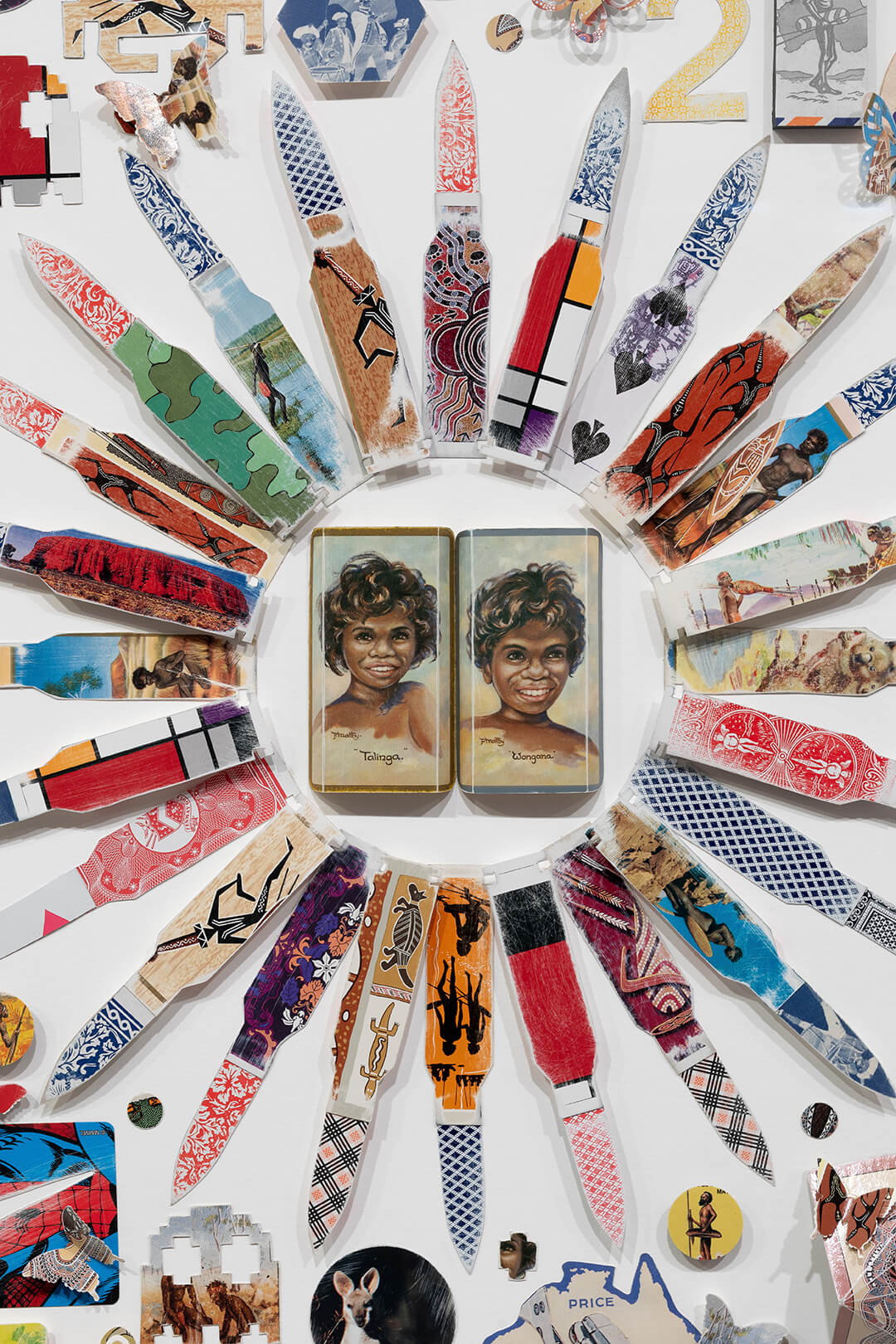
Apart from the aggregated nature of aboriginalia, several of Albert’s works in the exhibition, though singularly displayed or created, eschew singular meaning or interpretation, instead calling for extra-territorial solidarity. Similar textual proclamations stencilled onto black velvet paintings of Aboriginal children are particularly striking, with one of them proclaiming Black Lives Matter, immediately expanding the scope, understanding and ambition of the exhibition to a rallying cry. The photographic series Warakurna Superheroes adds a rather profound layer to the ‘found objects’ undertone of Albert’s works here, picturing Aboriginal children dressed as popular American superheroes using locally available waste material against the Australian outback. The alternative framing, backdrop and subjects in these photographs come across as a nod to Afrofuturism, applied to the same effect as above. Distorted national maps and playing cards round out the objectual reclamation in Not a Souvenir.
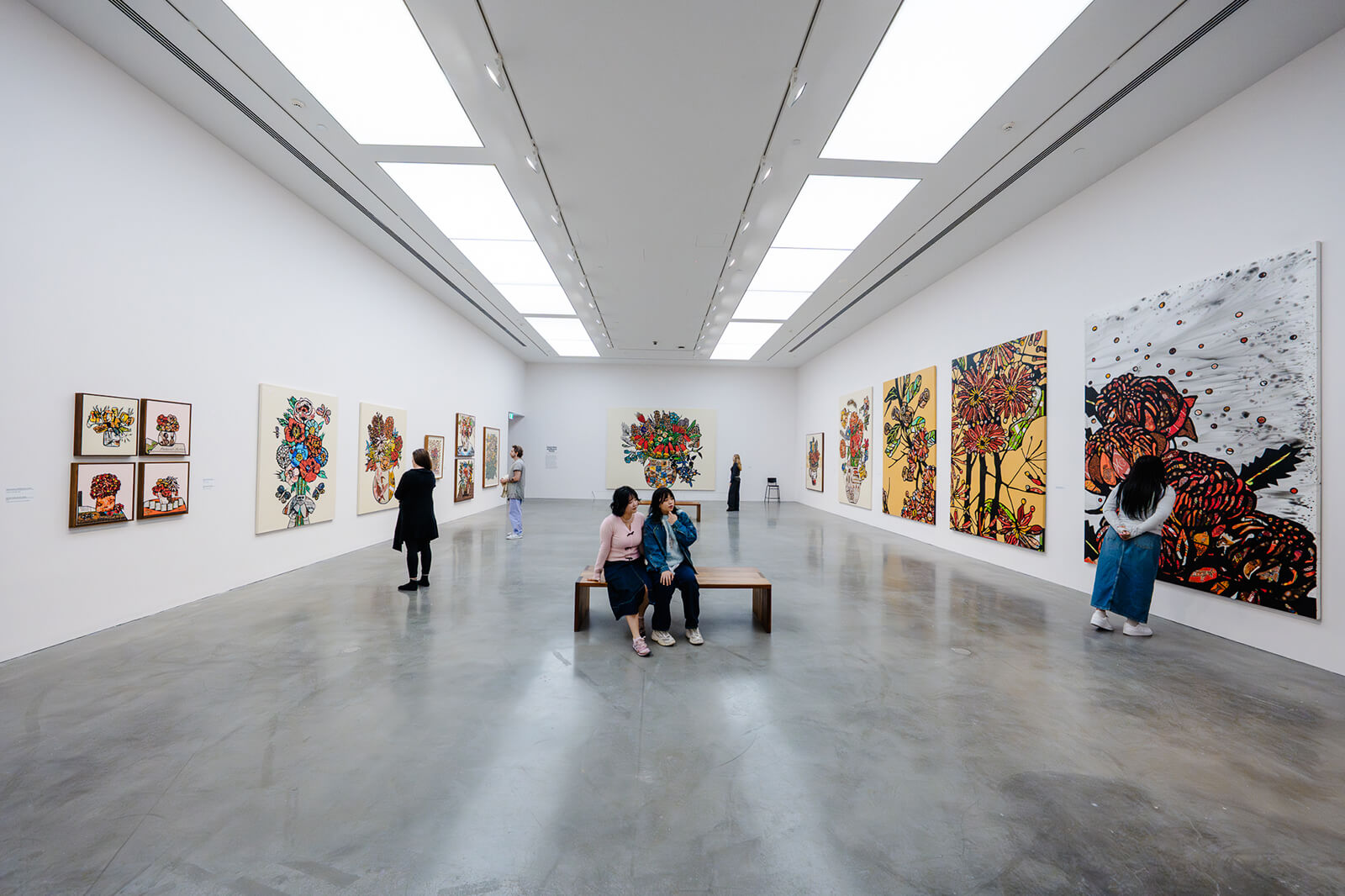
Albert’s showcase closes with a bit of welcome historical revisionism. The rest of the exhibition positions Albert as a messenger of sorts, a congregator of objects not necessarily his own, rearranged and re-presented in ways that can then perversely be consumed as art in an institutional setting, wringing the conversation on the artist’s role as aggregator. However, Conversations with Margaret Preston sees Albert at his most introspective in the showcase, reinterpreting Preston’s famous paintings of foliage and Australian nature in his own style.
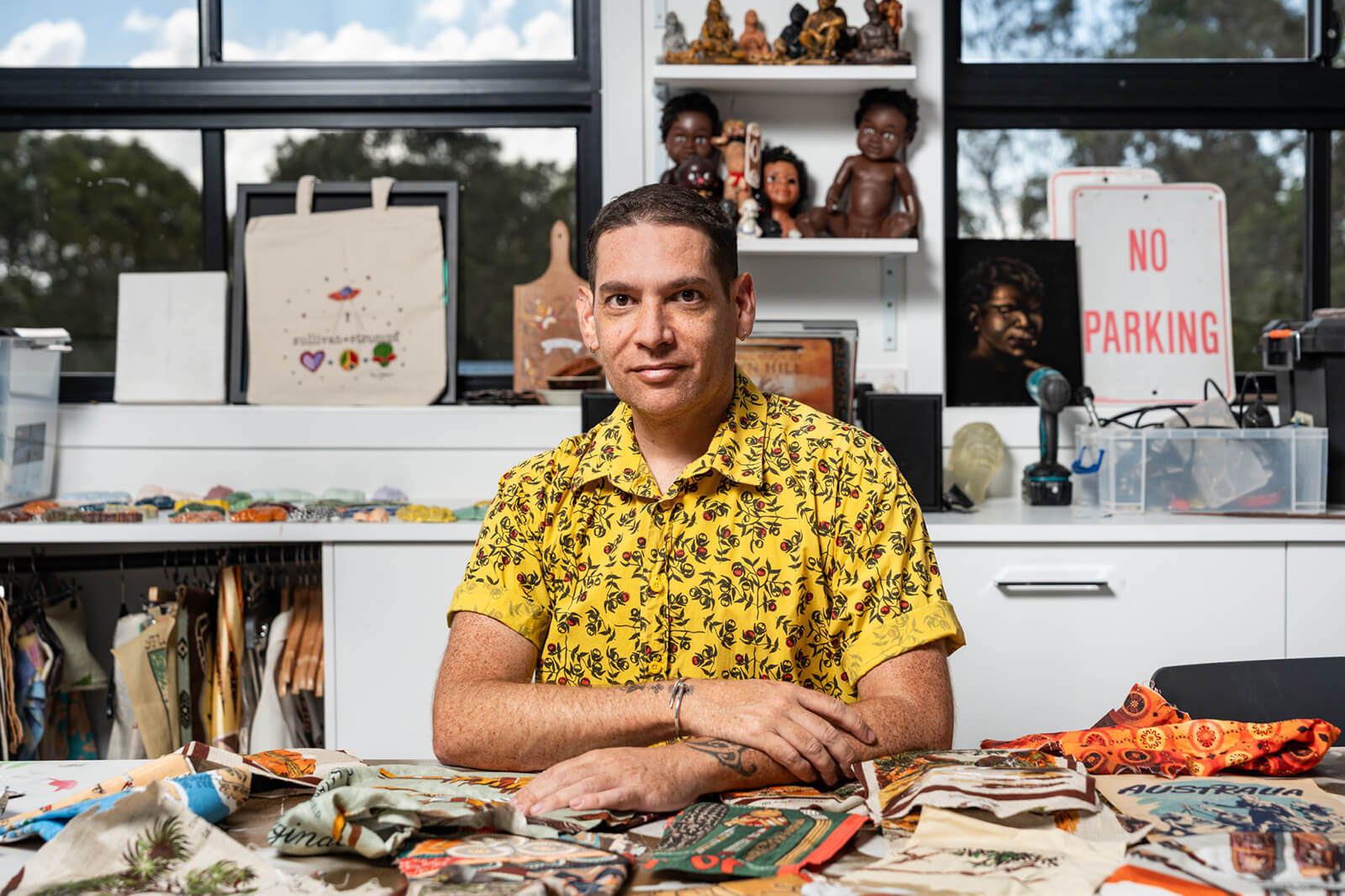
Preston was an iconic modernist who sought to usher in an identity for Australian art, but her work and inspirations bordered on appropriation of Aboriginal motifs—something that Albert resists by softly challenging a definitive chapter in Australian art history, through artistic ‘conversation’, insisting that it’s ‘neither homage nor rejection’ of Preston’s legacy. Arguably Albert’s most enduringly entertaining work—You Wreck Me—delivered here through a 32-inch LCD screen ensures that self-seriousness from Conversations isn’t a final impression. With only the slightest hint of queer joy, the part-animated video exhibit sees Albert recreate Miley Cyrus’ Wrecking Ball to knock over a statue of Captain James Cook, backed by Albert’s own off-key vocals and an entirely different kind of kitsch; an intentional one.
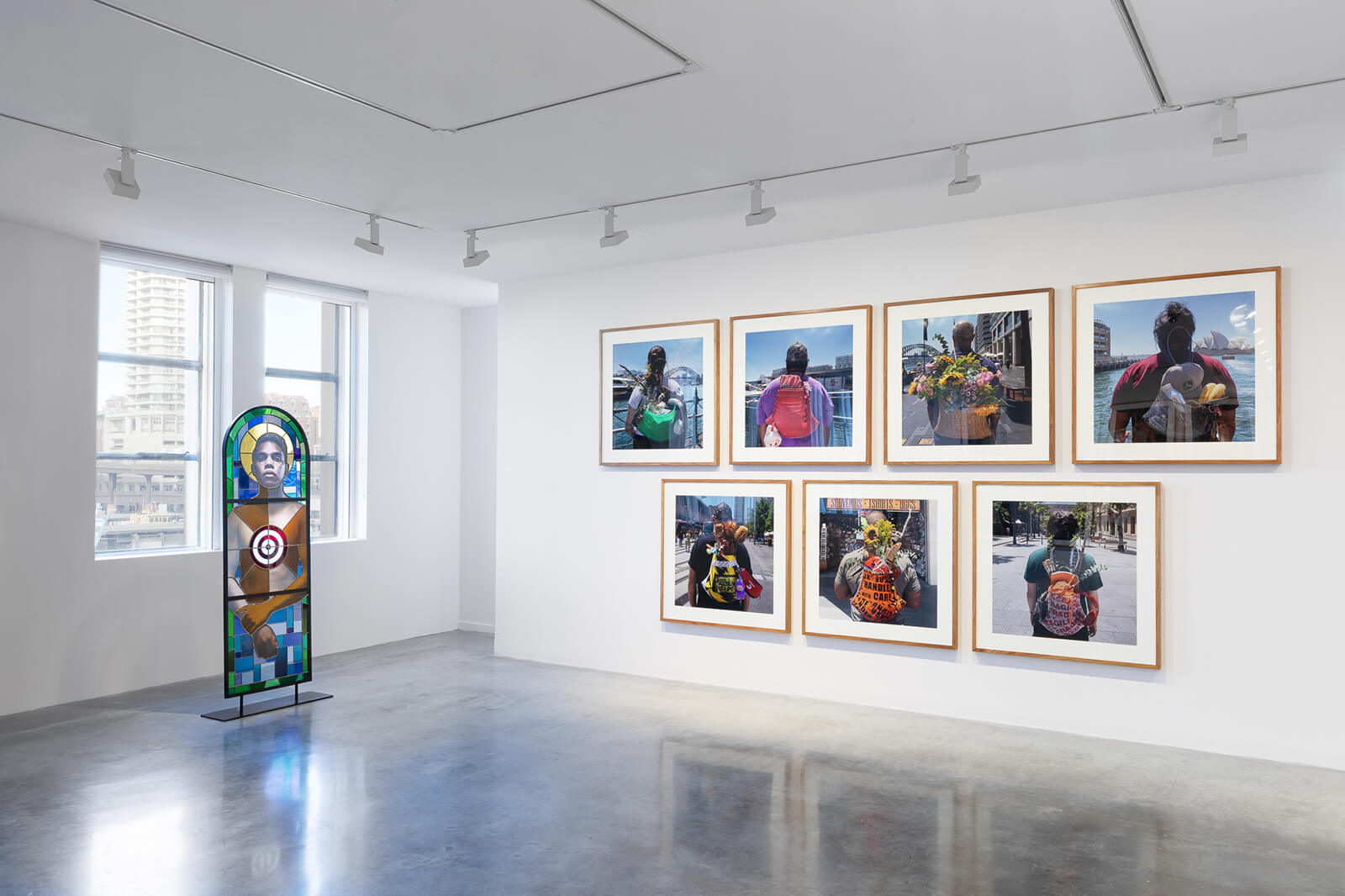
The physical context of the exhibition’s staging at Tallawoladah (The Rocks), a site of early colonial contact, isn’t lost either. Interestingly, the only room with windows in the gallery houses Albert’s Brothers series of glass sculptures framing a view of the Opera House in the distance through the infamous ‘target’ painted on Aboriginal bodies—a willful juxtaposition that is yet another reminder of Australia’s uneasy reconciliation. Nearby, shops along the quay continue selling memorabilia and souvenirs to international tourists in numbers, albeit with the kangaroo and koala taking centre stage this time around.
‘Tony Albert: Not a Souvenir’ is on view until October 19, 2026, at the Museum of Contemporary Art, Sydney, Australia.
The views and opinions expressed here are those of the author(s) and do not necessarily reflect the official position of STIR or its editors.

by Vandana Kalra Oct 14, 2026
With his latest exhibition as a point of departure, the modernist discusses his decades-long practice, the spontaneity of drawing and the social responsibility of artists.
by Srishti Ojha Oct 14, 2026
The first Dutch publication on the Turkish artist, the eponymous book centres on Refik Anadol: Latent City, his living data sculpture of Bruges, exhibited at BRUSK gallery.
by Srishti Ojha Oct 09, 2026
In his ongoing exhibition, the South African artist creates two post-apocalyptic futures to explore society’s relationship with textiles, patterns and technology.
by Srishti Ojha Oct 07, 2026
The Kolkata-based film festival shone a spotlight on local and international filmmakers and artists who are pushing the boundaries of what a film can encapsulate.

make your fridays matter with a well-read weekend
Enter your details to sign in
Don’t have an account?
Sign upOr you can sign in with
a single account for all
STIR platforms
All your bookmarks will be available across all your devices.
Stay STIRred
Already have an account?
Sign inOr you can sign up with
Verification link sent to check your inbox or spam folder to complete sign up process
Tap on things that interests you.
Select the Conversation Category you would like to watch
Please enter your details and click submit.
Enter the 6-digit code sent at


Tony Albert: Not a Souvenir reframes aboriginalia by interweaving artefact and art
by Anmol Ahuja | Published on : Oct 15, 2026


 Sign in with Google
 Sign in with email
What do you think?