Art11 mins. read
Silhouettes burned, etched and carved: Ana Mendieta at Tate Modern
by Srishti OjhaSep 07, 2026



by Mrinmayee BhootPublished on : Nov 03, 2026
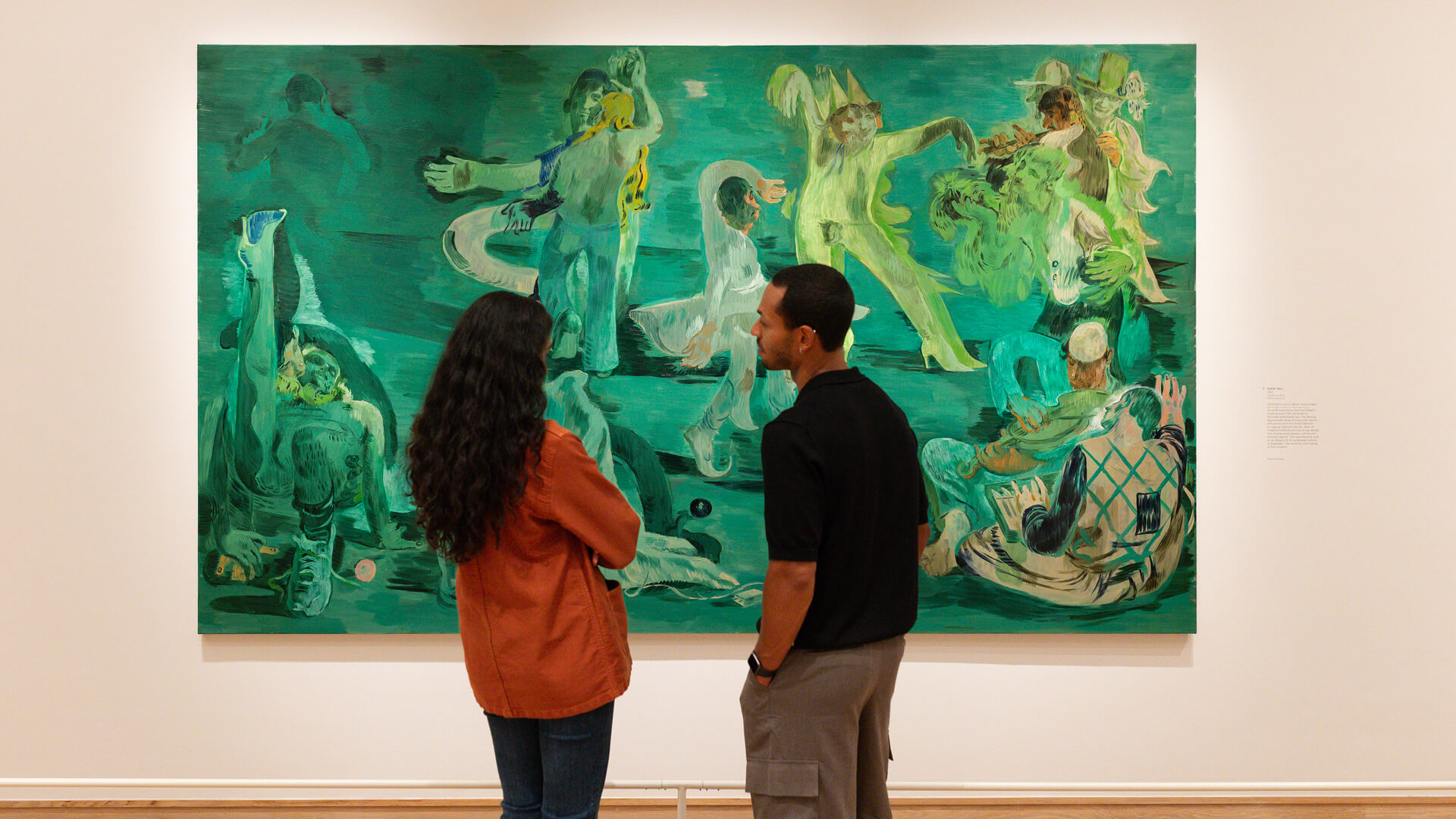
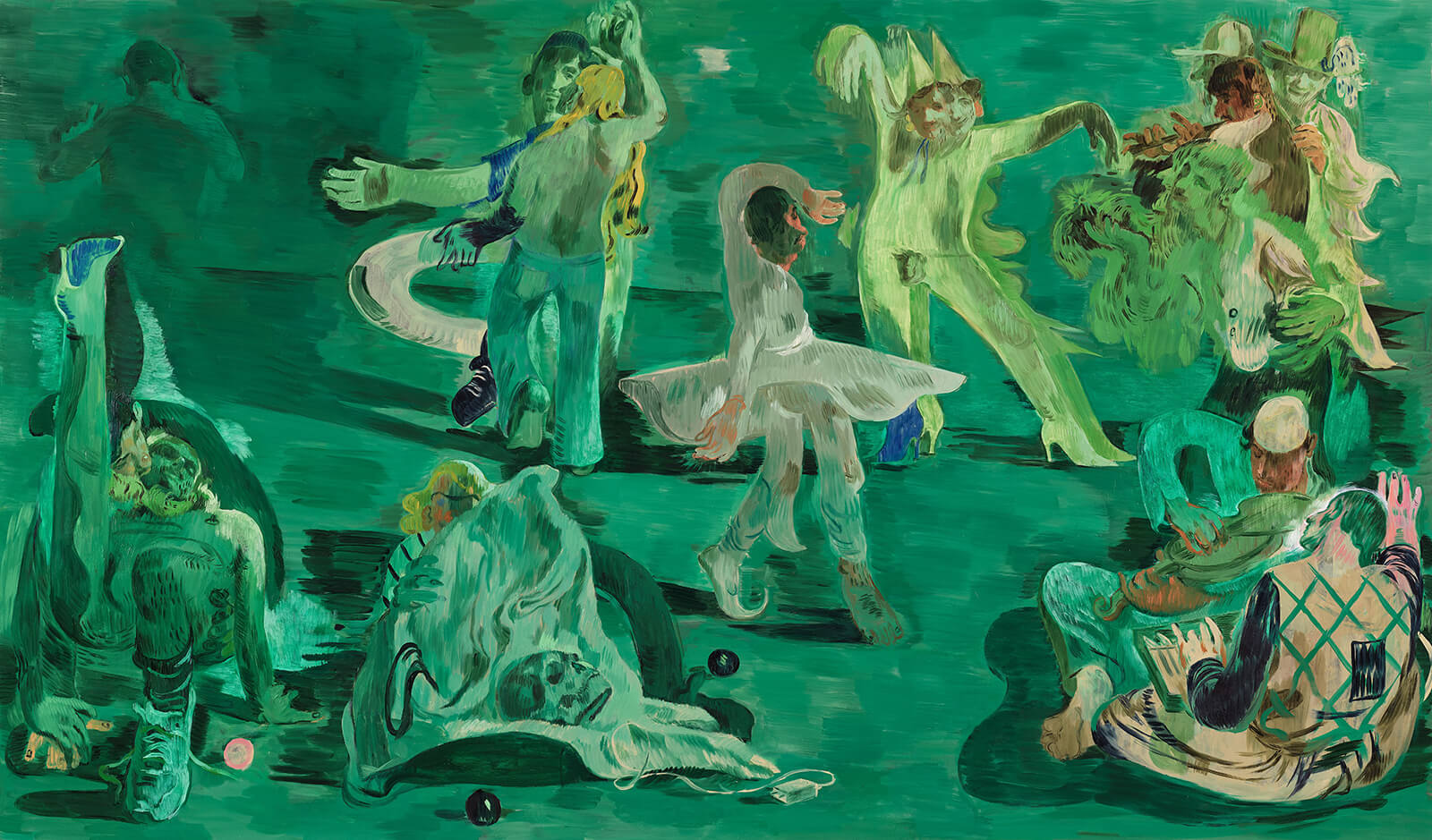
Green is the colour of nostalgia in New York-based artist Salman Toor’s paintings. It washes over bodies, chairs and the walls. It fills empty spaces with an eerie, ghostly glow that in the right light looks verdant. Its quality changes with every painting the colour leaks into. In an interview with The New Yorker in 2022, Toor noted his fondness for green, saying that “it can be very hot and very cold. Blue is cold, and it belongs to Picasso. With green, there’s a flickering light that’s nocturnal, and poisonous (think of absinthe), and also jewel-like—emeralds and jade”. If blue is associated with Picasso, green very easily might be Toor’s colour, as is evident by even a cursory glance at his collected works. It’s this ‘nocturnal’ colour that first catches your attention in his most recent solo show at the Courtauld Gallery in London.
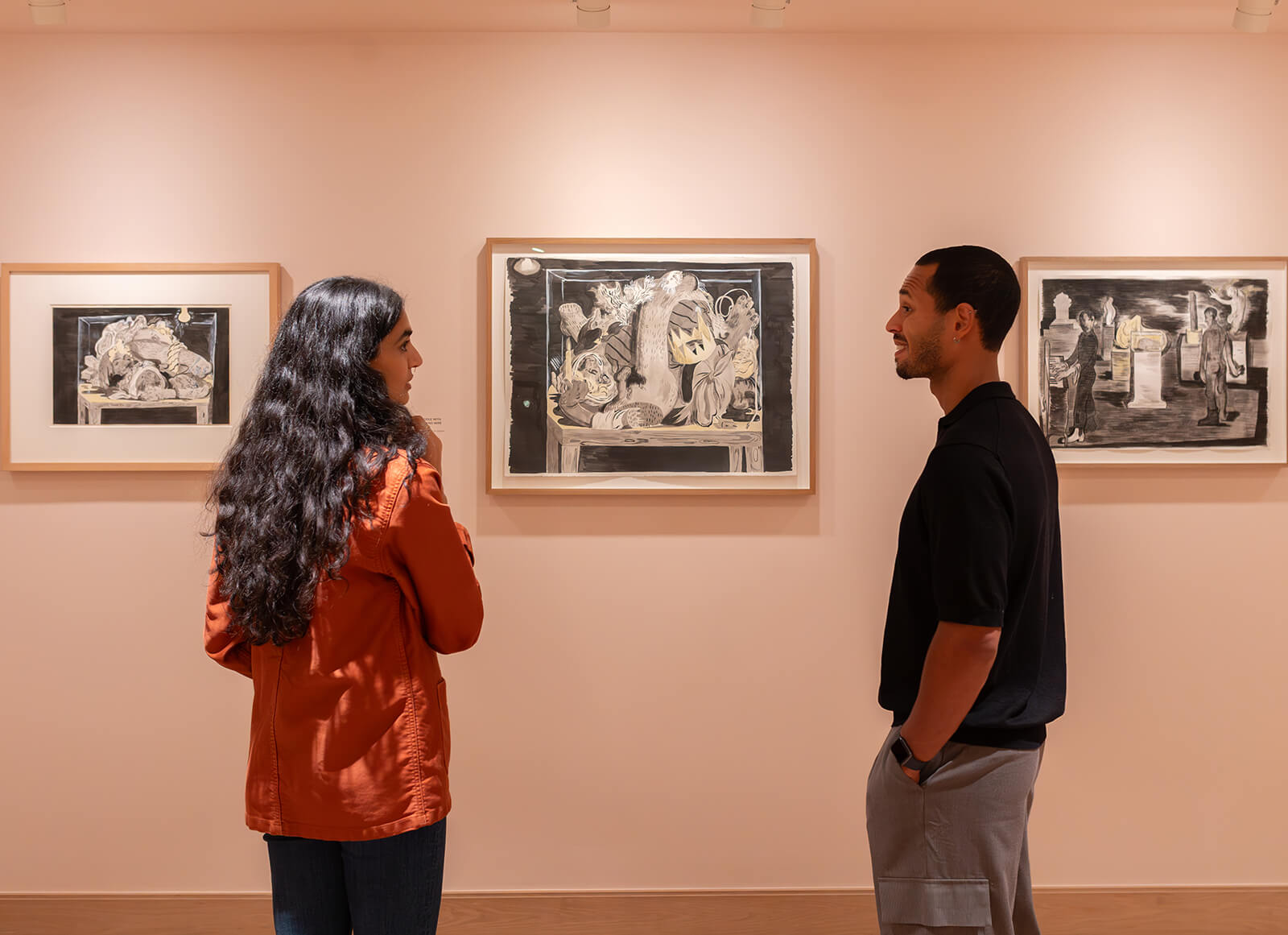
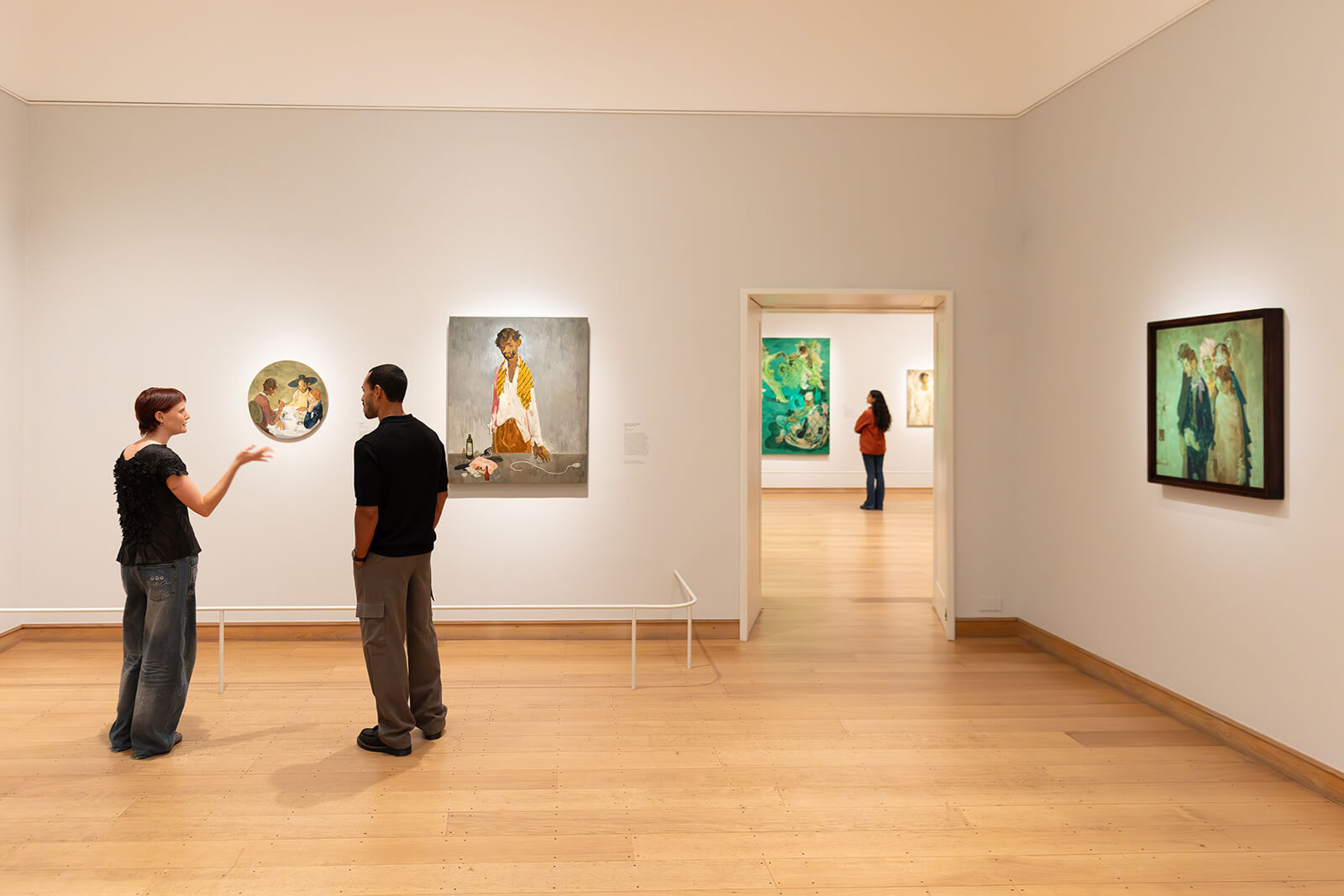
Salman Toor: Someone Like You is the Pakistani artist’s first solo exhibition in Europe, running from October 2, 2026 – January 10, 2027, and featuring 19 paintings created since 2019, along with a special display of drawings by the painter in the Gilbert and Ildiko Butler Drawings Gallery. The paintings in the showcase highlight Toor’s affinity for rendering human interactions—the lingering desire and loneliness underlying them—and the struggle to articulate a sense of cultural and emotional belonging in the most tender, everyday scenes.
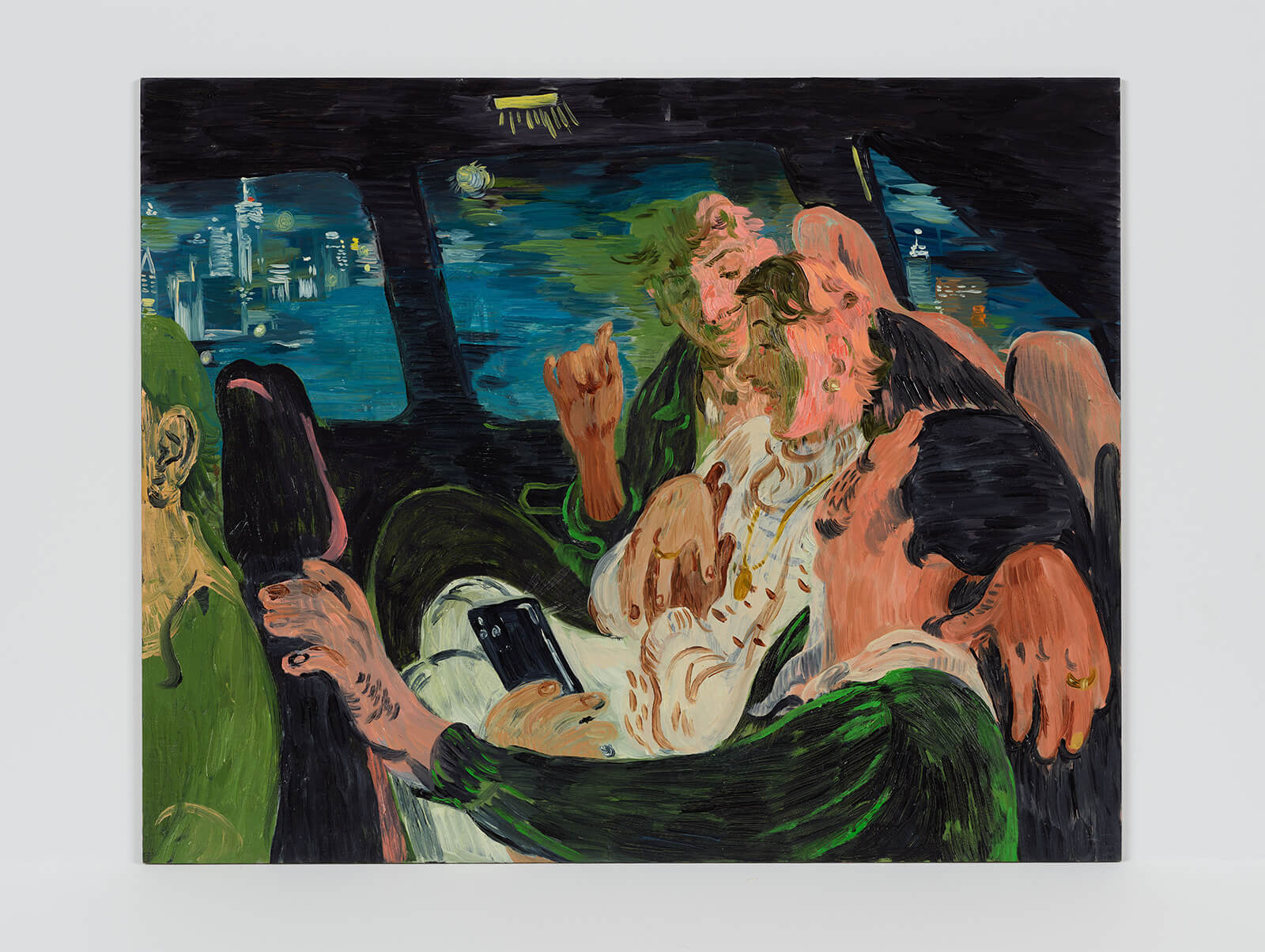
Speaking about the thought process behind the curation, Dr Elena Crippa, senior curator of Contemporary Art at the Courtauld Gallery, tells STIR, “The overarching theme that guided our selection is belonging, and the lack and longing for it. As such, the works in the exhibition inevitably entail human exchanges, encounters and gatherings.” Scenes of gatherings and encounters—in public spaces and gardens and more intimately in bedrooms, cabs and people’s living rooms—are richly populated in Toor’s work. There is often a sense of excess, such as with his Fag Puddle paintings, but there is an almost poetic attention to how bodies come together, that sense of belonging and/or desire Cripps mentioned earlier.
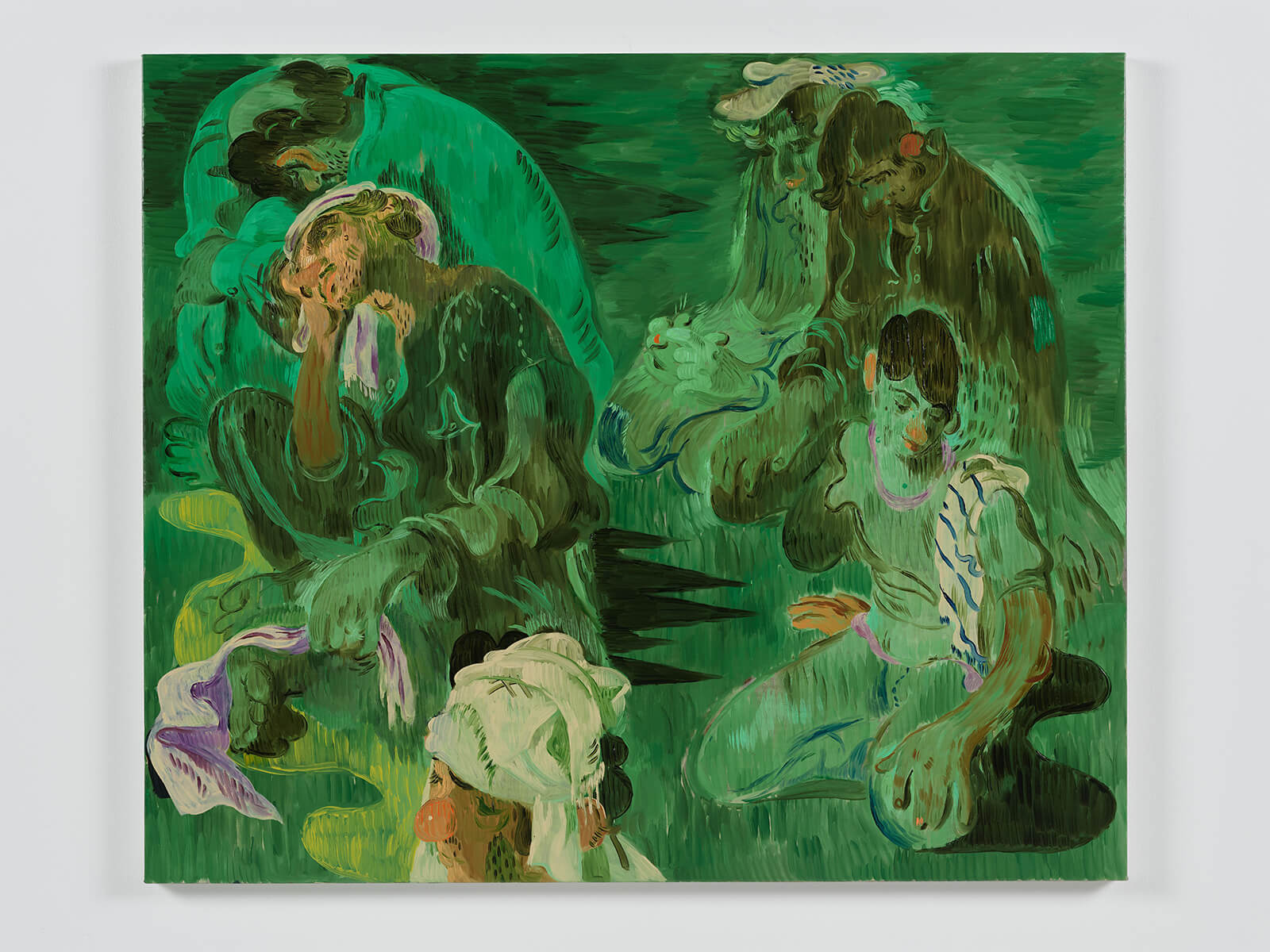
Toor’s rendering of the cosmopolitan spaces of New York has been celebrated, especially given that he filters these through his personal experience as a queer artist. “I was using painting to be ‘out’ – and to tell stories I had censored for years,” he has noted. If queerness might have contributed to Toor’s outsider status, his being an immigrant makes him doubly so. In the solo show, oil paintings depicting the experiences of immigration hold the spotlight. For instance, in Citizens (2022), two people appear, seemingly taking the oath of citizenship as the title suggests, while in Group B (2020) a mass of people are depicted, their heads respectfully down, awaiting a call at the immigration office.
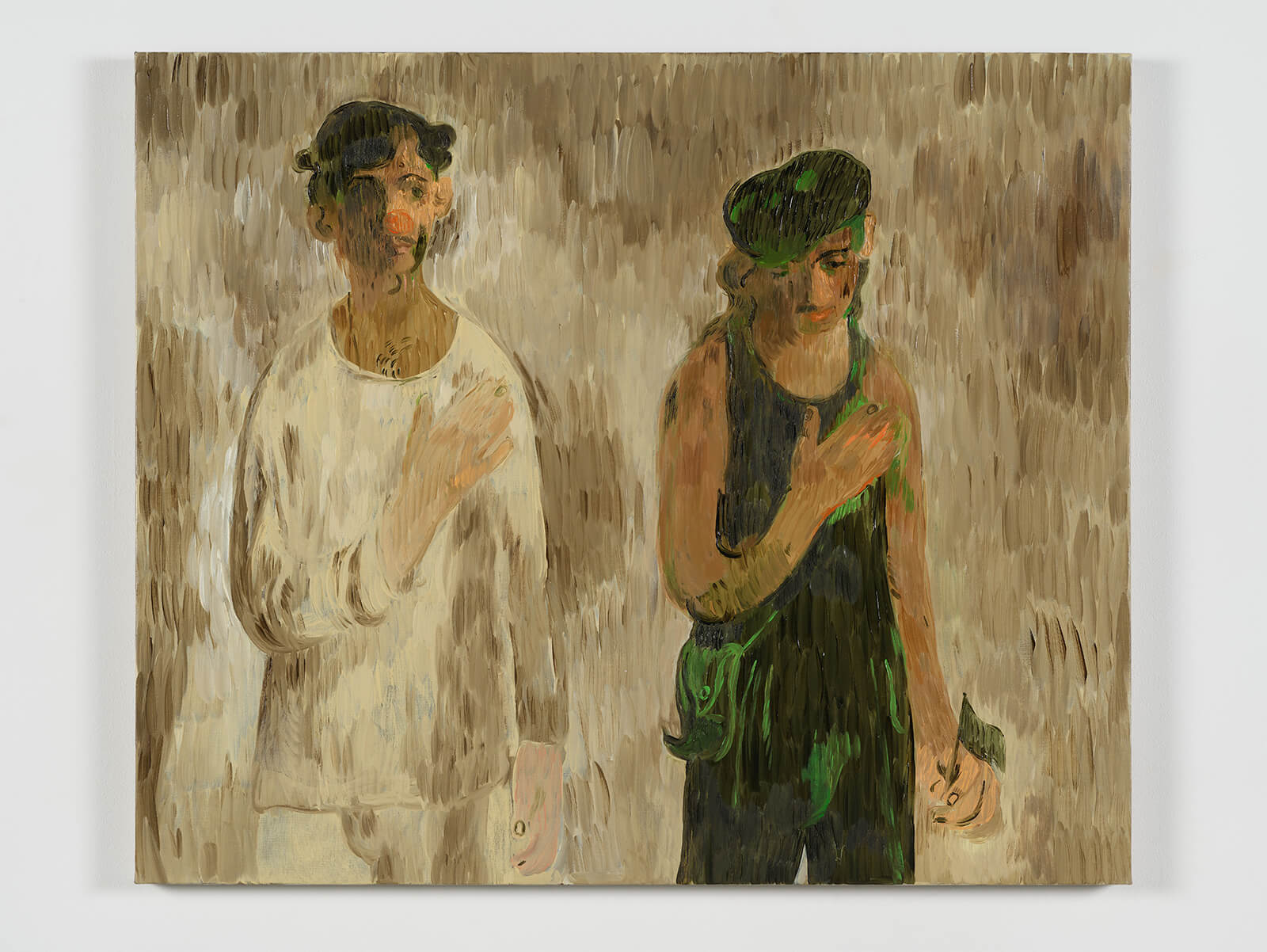
What comes to the fore is the idea that these frames are windows, from which to gaze into a different world, an alternate green-light filtered place where people have comically large noses. Perhaps when we look at a painting, what we really want is to find ourselves in the frame—laughing with friends at lunch, scrolling on our phones at a party, going home from that party at an ungodly hour. We all want to believe that this is our life. That sense of voyeurism is also underscored by Crippa, as she shares with STIR, “Even when we are looking at the portrait of an individual, as in Man with Face Creams and Phone Plug (2019), the painting stages an encounter, and, as visitors, we are implicated.” The desire for belonging in a painting like Bar Boy (2019) might be very different from Citizens (2022), but both spotlight it, in some sense connecting the two: the personal and the political.
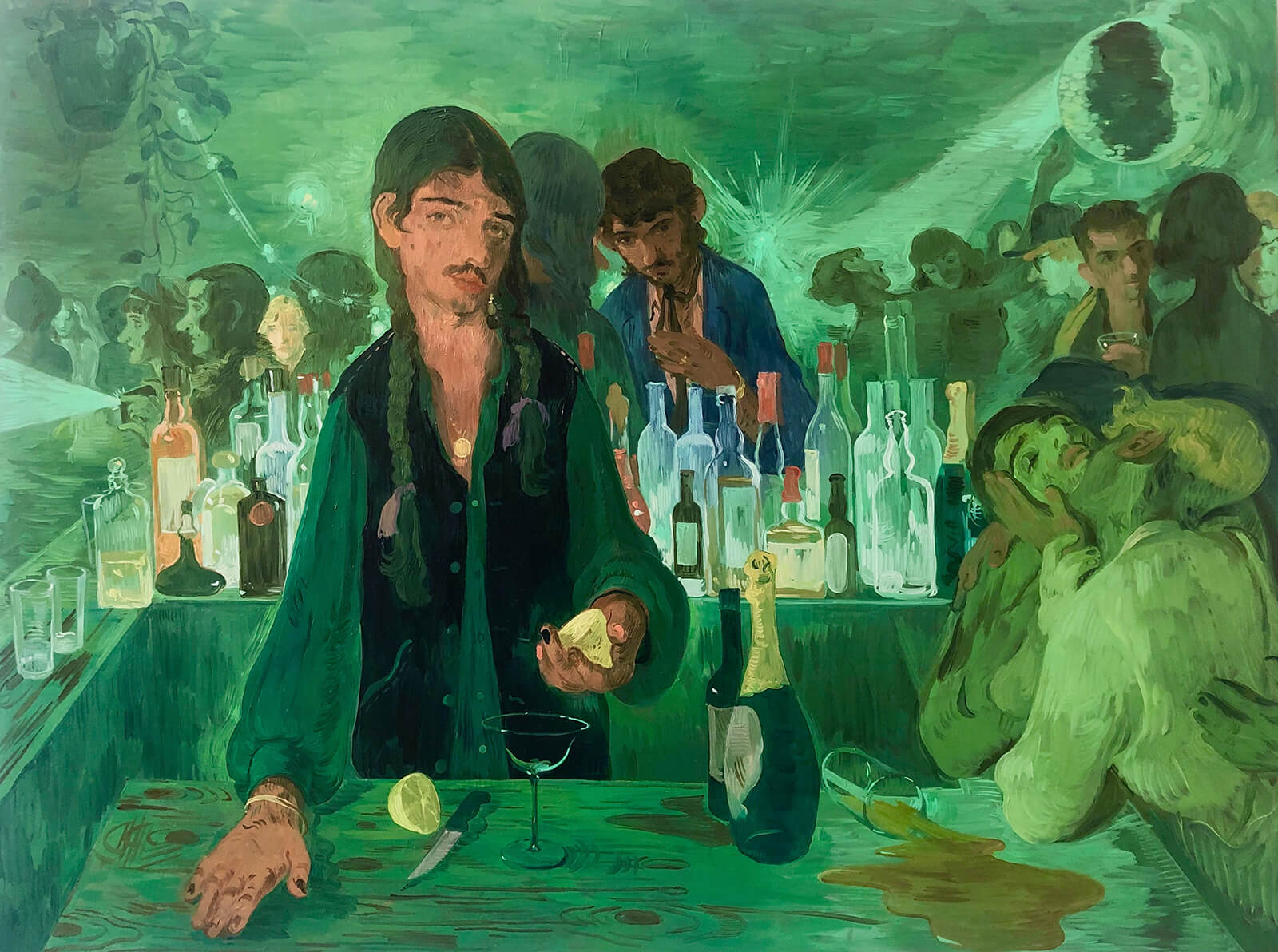
The sense of voyeurism, of looking into another’s life, is most apparent in The Bar on East 13th (2019), a play on Édouard Manet’s A Bar at the Folies-Bergère. For Toor, while depicting queerness and his own South Asian identity (which is not reduced to stereotypes) is crucial, so is showcasing his admiration for and engagement with the Old Masters, in particular the Baroque masters and 18th-century painting subjects translated into modern form. In Museum Boys (2021), the era’s ornate fashion is replicated in the figures—with a buckled wide-brim hat, a shawl and a pearl earring reminiscent of Johannes Vermeer. In one of the artist’s largest and most ambitious paintings, Ghost Ball (2023), a group of figures dancing to the sound of musicians is shown, inspired by the masterpiece Dancing Villagers (c.1730), attributed to renowned artist Pandit Seu, who worked in India in the 18th century. Back Lawn (2021), as Toor noted, was meant to be a modern update of Mughal miniatures depicting gardens.
Manet’s painting, which Toor has said he was obsessed with, hangs at the Courtauld Gallery, a sort of precursor to Toor’s version. His is set in New York’s East Village, where queer couples make out, and a brown barman wearing nail polish and braided hair takes the place of the melancholy French barmaid. Speaking of his works in the exhibition brochure, he has stated they “depict queer and immigrant lives that straddle different cultures and inhabit the tension between intimacy and exposure, belonging and estrangement. What it means to find a community, but also the daily costs associated with visibility”.
That depiction of especially what belonging means in an increasingly mistrustful world today is vital. As Crippa notes, “One of the extraordinary qualities of Salman’s work is that he brilliantly represents belonging and alienation as intertwined, in a way that closely recalls our everyday existence as we move from our home to different urban contexts and across borders. [T]his tension is not only crucial to the exhibition: it also resonates with some of the most pressing questions of our time: how to live together, belong, and feel connected in a world that is global and hyperconnected, and yet fractured and mired in divisions.”
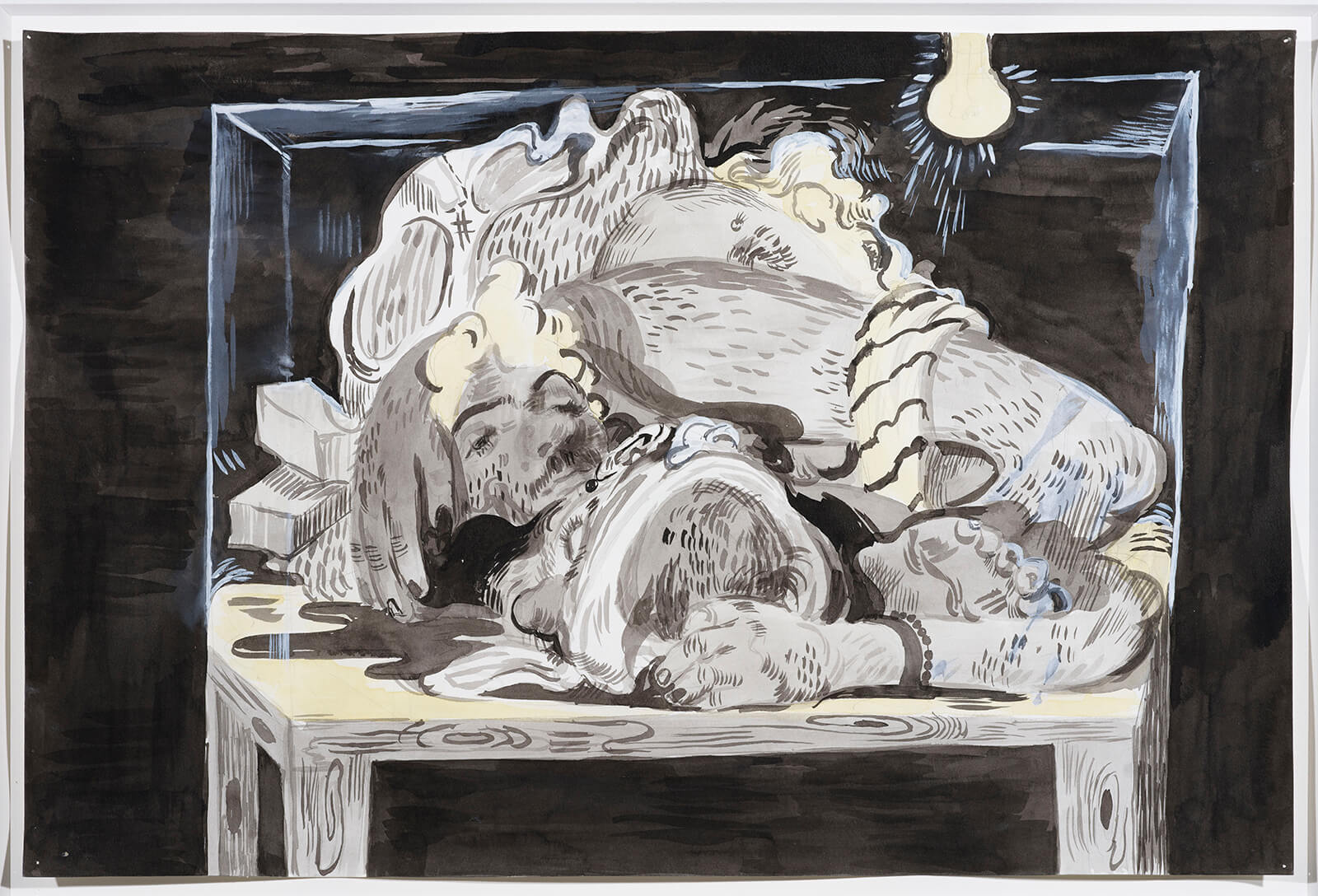
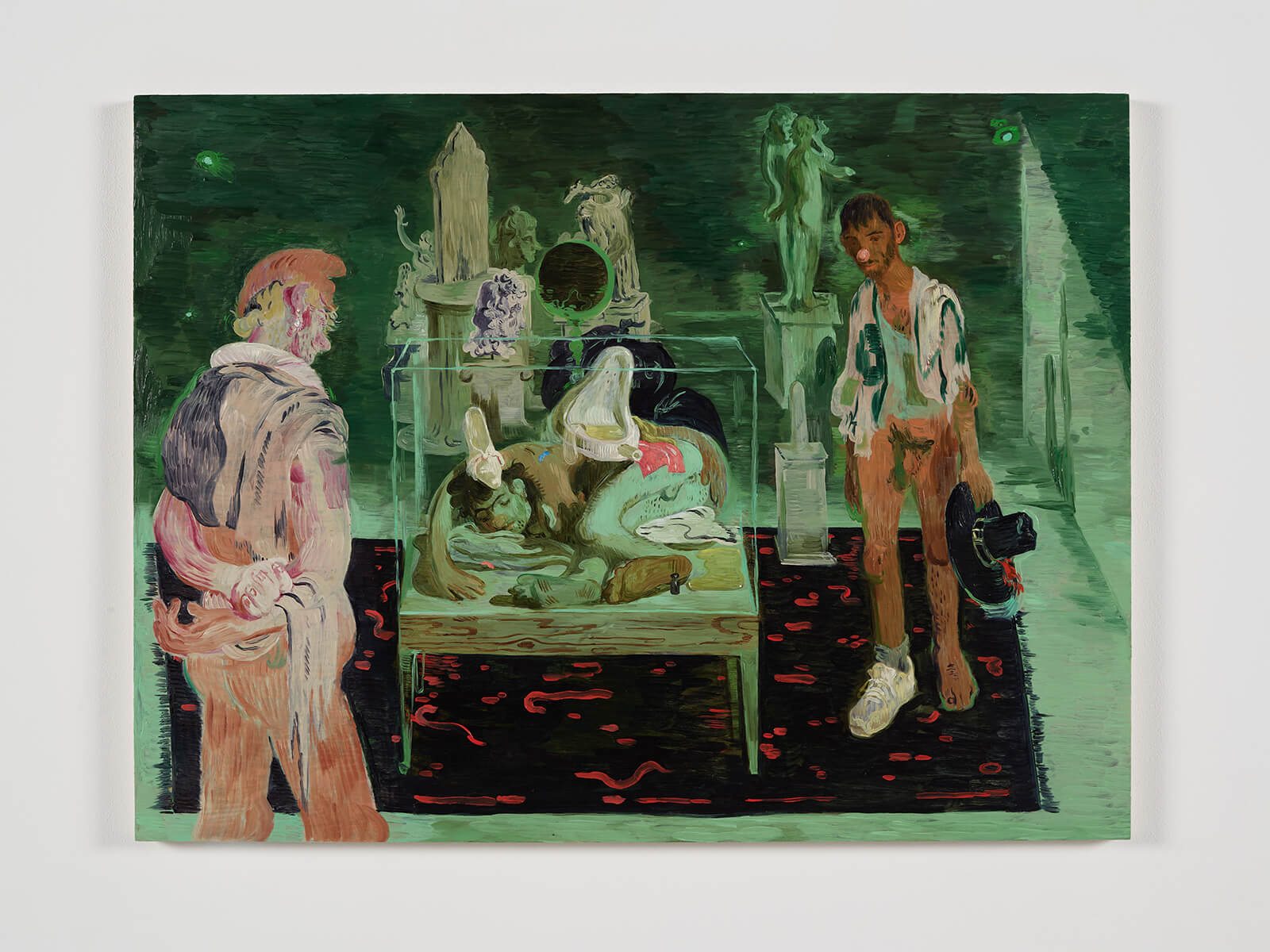
One could look at a painting by Toor and feel at once drawn in and restricted, like scenes from memories that have since faded. Toor never sketches before painting, and he doesn’t work with reference images. Each is created from memory, adding an almost dreamlike quality to them. This is especially evident in his Fag Puddle paintings, where dismembered limbs, butts and heads are jumbled together with parts of sculptures, high heels, wigs and even pearls. It’s almost too much for one person to bear looking at, and at the same time captures a sense of desire (in its strangeness). It is, at the moment, too close to the kind of images we’ve been seeing in Delhi. A jumble of bodies, protestors straining against state authorities as they try to repress and detain them. Limbs over limbs over limbs; tangled together in an angry, irresolvable knot.
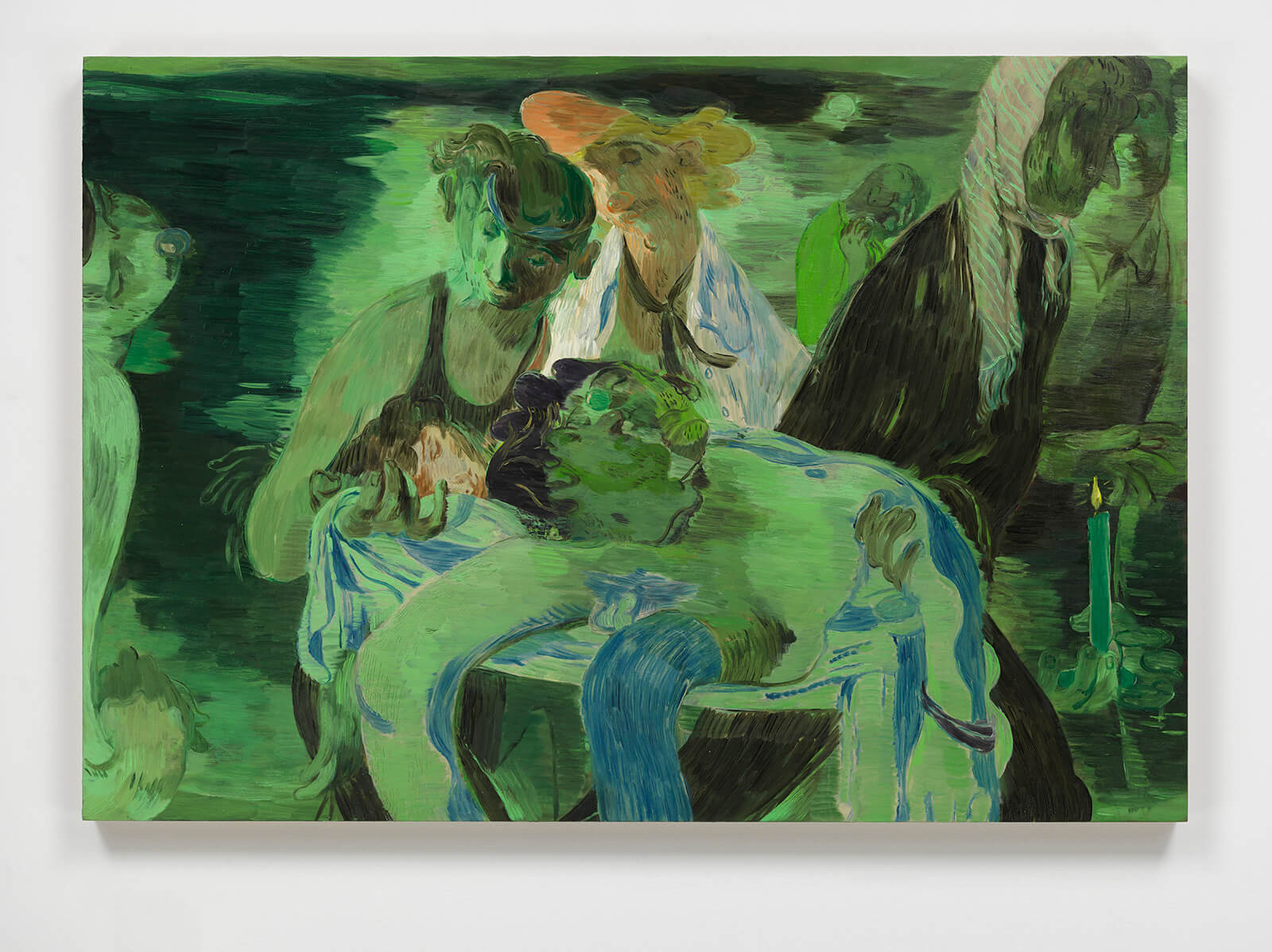
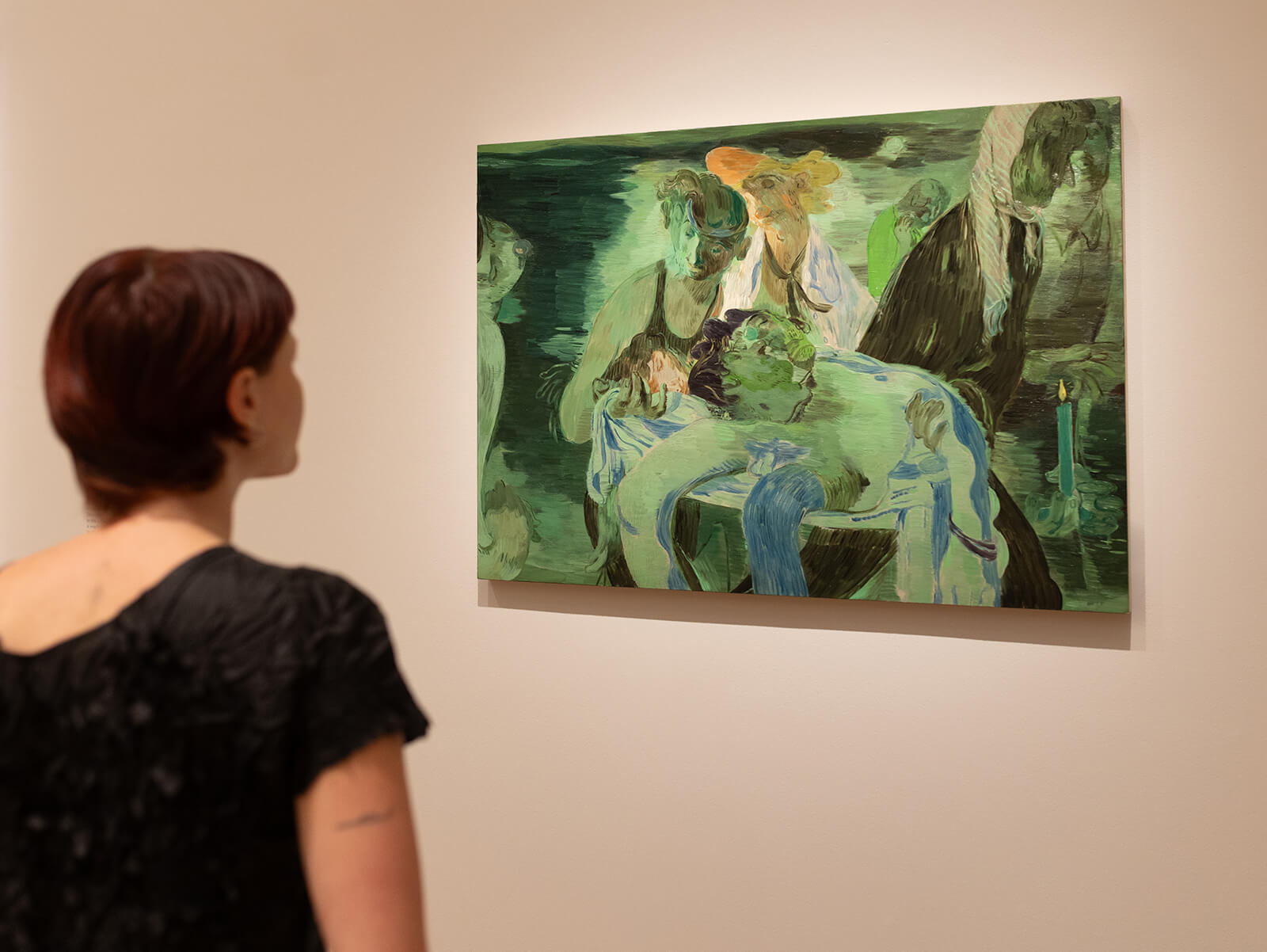
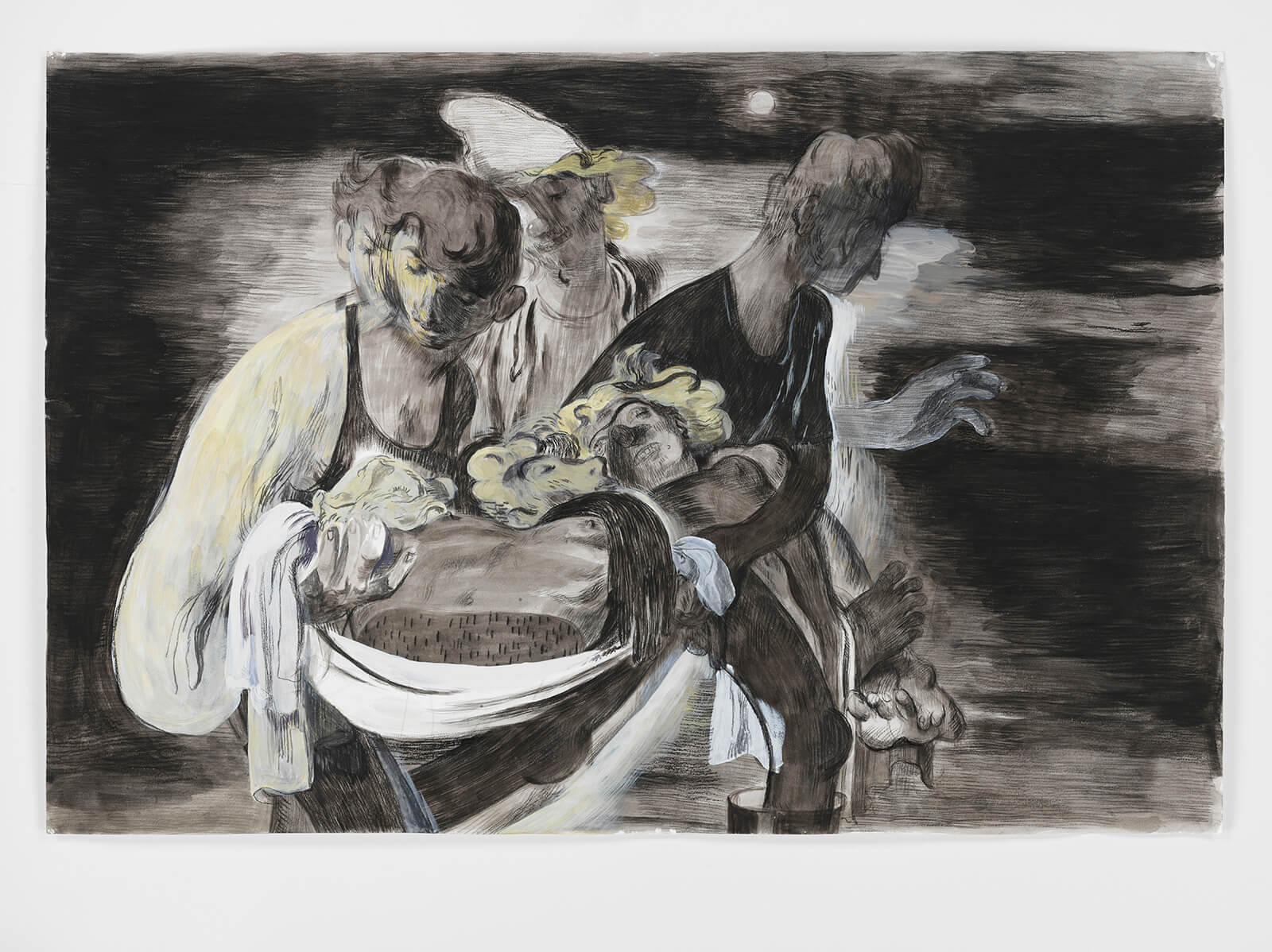
For the UK-based institution’s show, Toor created Fag Puddle with Carriers (2026), shares Crippa. Referencing Lorenzo Lotto’s The Entombment (c. 1550 – 1555), the artist created the painting to “address the documentation of war and conflict in the media and a deep sense of loss and mourning”, feeling “paralysed by the live-stream coming out of Gaza,” she explains. Palestine might very well be our final frontier, the one litmus test in deciding who belongs to the land they dwell on and on what terms. The painting, its reference to what is already an unconventional depiction of Jesus—one that focuses on the grief and the intense humanness of him, dead in his fellow’s arms—is devastating. But in a corner, Toor has painted a candle, carried by a scarf-clad woman in the background: a sign of a new world.
The fact that Toor, as a South Asian and a queer artist, has had solo exhibitions in New York, Baltimore and Beijing, which have earned him universal praise, that his paintings now sell for millions, that Time magazine included him in its 2026 list of the most influential art people, is noteworthy. It reflects the growing recognition of voices that have long been pushed to the margins, especially relevant for an artist who reinterprets European art through paintings that make space for the formerly colonised. There is space for us to claim still.

by Srishti Ojha Oct 27, 2026
The 13th Gyeonggi Ceramics Biennale in South Korea showcases global ceramics, from ancient traditions to contemporary experimentation
by Srishti Ojha Oct 26, 2026
The Taiwan-based artist shares his opinion on exhibition rituals, protests and his search for ‘fragmented beauty’.
by Srishti Ojha Oct 21, 2026
Increasingly, artists, filmmakers and activists are turning to VR to create more personal, tangible accounts of the climate emergency and its impact on vulnerable communities.
by Mirra Lynn Oct 20, 2026
The Indian artist paints the old wadas of central Pune, capturing the traces of everyday life that cling to these structures, battered by time but unbowed.

make your fridays matter with a well-read weekend
Enter your details to sign in
Don’t have an account?
Sign upOr you can sign in with
a single account for all
STIR platforms
All your bookmarks will be available across all your devices.
Stay STIRred
Already have an account?
Sign inOr you can sign up with
Verification link sent to check your inbox or spam folder to complete sign up process
Tap on things that interests you.
Select the Conversation Category you would like to watch
Please enter your details and click submit.
Enter the 6-digit code sent at


Salman Toor: Someone Like You at the Courtauld explores identity and belonging
by Mrinmayee Bhoot | Published on : Nov 03, 2026


 Sign in with Google
 Sign in with email
What do you think?