Art10 mins. read
10 art exhibitions you must see in Fall 2024
by STIRworldSep 14, 2024




by Ranjana DavePublished on : Dec 03, 2025
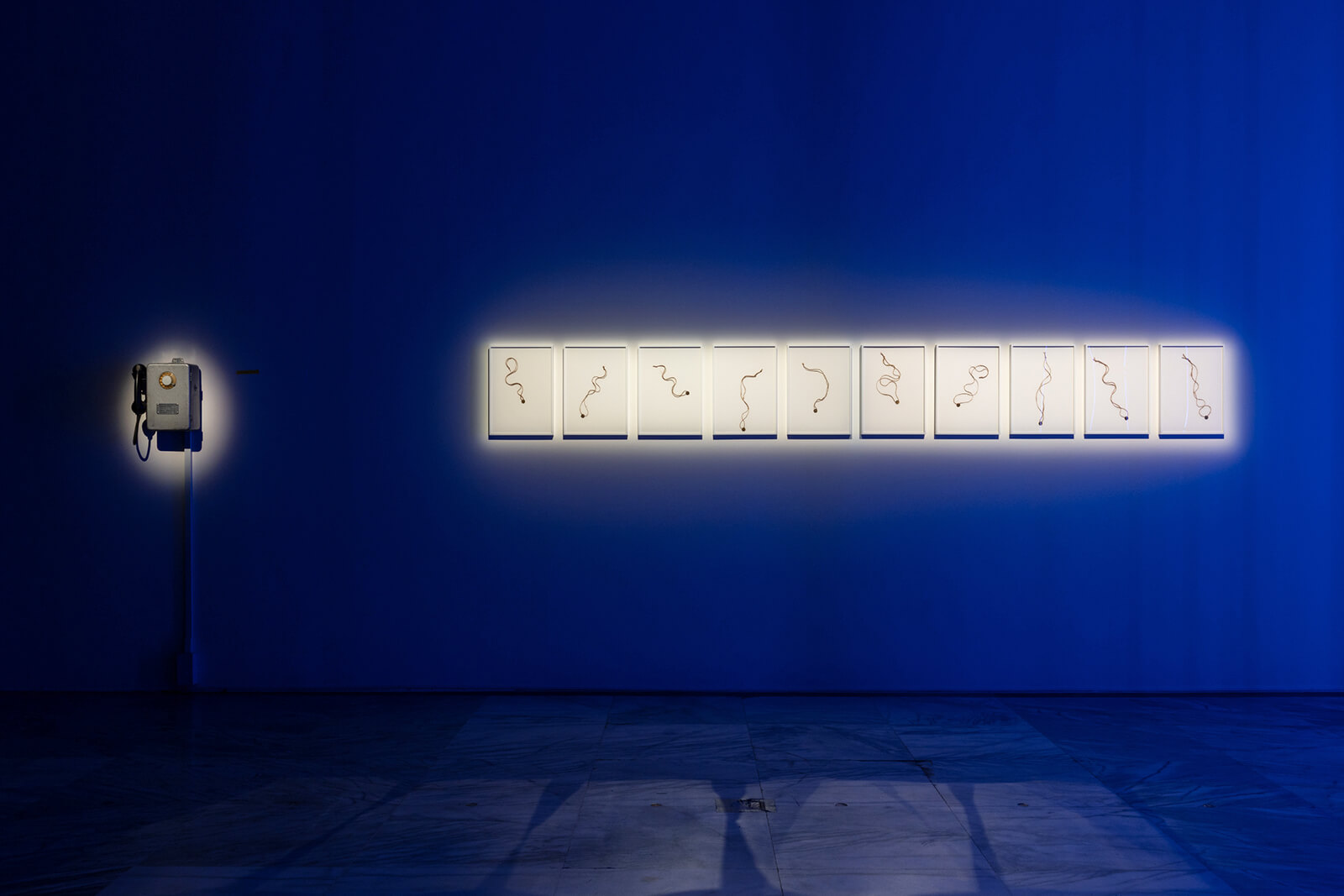
The first work I spot on entering the 14th Taipei Biennial is Anna Jermolaewa’s On the Line, a Soviet-era pay phone mounted on the wall, like an administrative figment that museum staff might use to communicate with each other. Jermolaewa’s work recalls a brief window of opportunity in 1980s St. Petersburg (where she was born), the accompanying note tells us, when a technical error in the phone system allowed strangers to talk to each other, as if they were dialling into a chat room, in encounters sparked by chance. On the Line sums up the spirit of the biennial, framing it as one that hints at imperfect regimes, focusing instead on the human possibility burgeoning in their crevices.
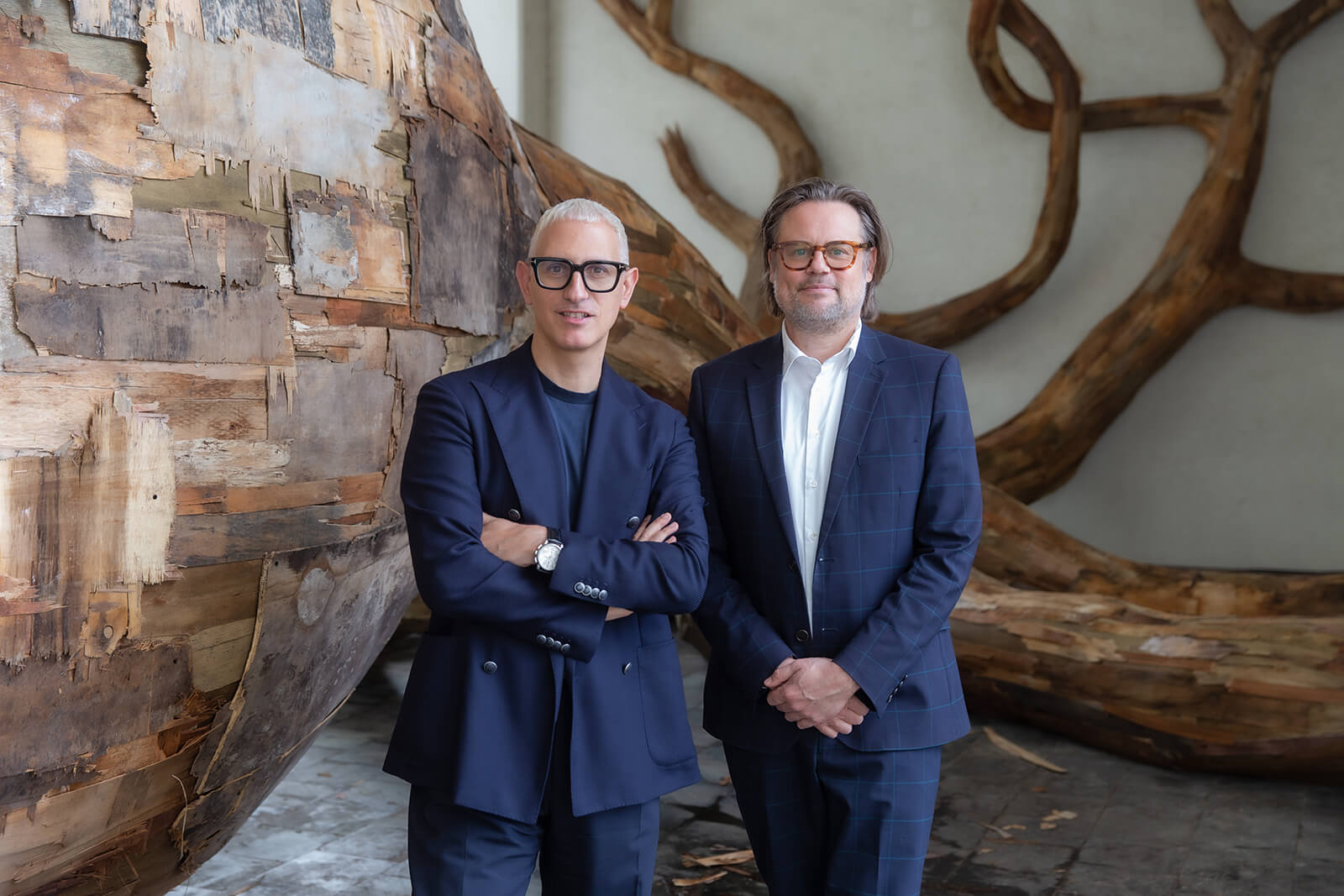
Titled Whispers on the Horizon, the 14th Taipei Biennial is curated by Sam Bardaouil and Till Fellrath. They use three fictional objects borrowed from Taiwanese cinema and literature – a puppet, a diary and a bicycle – to punctuate their theme of yearning, as it manifests across presence and absence. As Bardaouil said of these three anchors in a recent interview with STIR, “Together, they form a triangular field of the intimate, the historical, the nomadic. Rather than offering an easy sense of place, they become conceptual compasses.” The biennial is on view at the Taipei Fine Arts Museum until March 29, 2026, and is partly structured around the museum’s collection – facilitating interactions between early 20th-century Taiwanese artists and a global selection of works by late 20th-century and 21st-century practitioners.
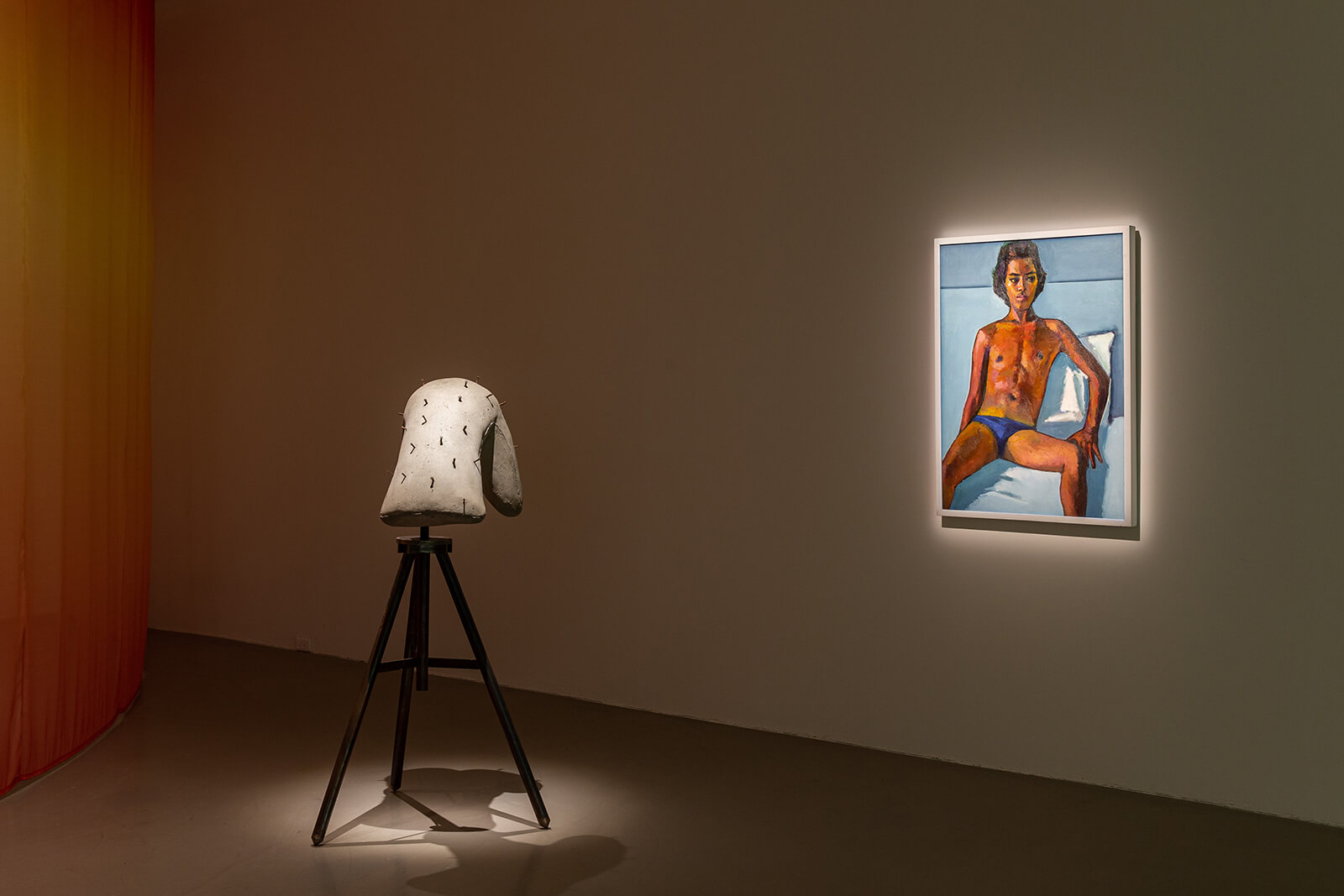
Working across three levels at the museum, the curators map intricate desire lines through preexisting spaces, often by coterminously staging works that are varied in scale. Artists are described by their place of birth or origin, and where they are based now – New York and Berlin are frequently invoked. Along the periphery of a massive four-screen video installation by multimedia artist Young-jun Tak lingers a painting of a young man in a bathing suit by midcentury artist Shiy De-jinn (born in Sichuan, later based in Taiwan). It is paired with a flesh bust by Chinese artist Yu Ji (based between Shanghai and New York), nails piercing its surface, an anthropomorphised pincushion of sorts. Named for the days of the week, Young-jun’s films feature movement, dialogue, woodworking and scenes from ritual occasions. A group of queer male dancers rehearse pyramidic formations in Berlin’s Grunewald forest, with the film cutting back and forth to a Maundy Thursday procession with Spanish soldiers in Malaga, who carry a statue of Christ on their shoulders. On other screens, dancers move between a church, a queer club and even an abandoned jumbo jet in various configurations of gender and age, with each film contrasting two distinctly different settings, either in form or in time and space.
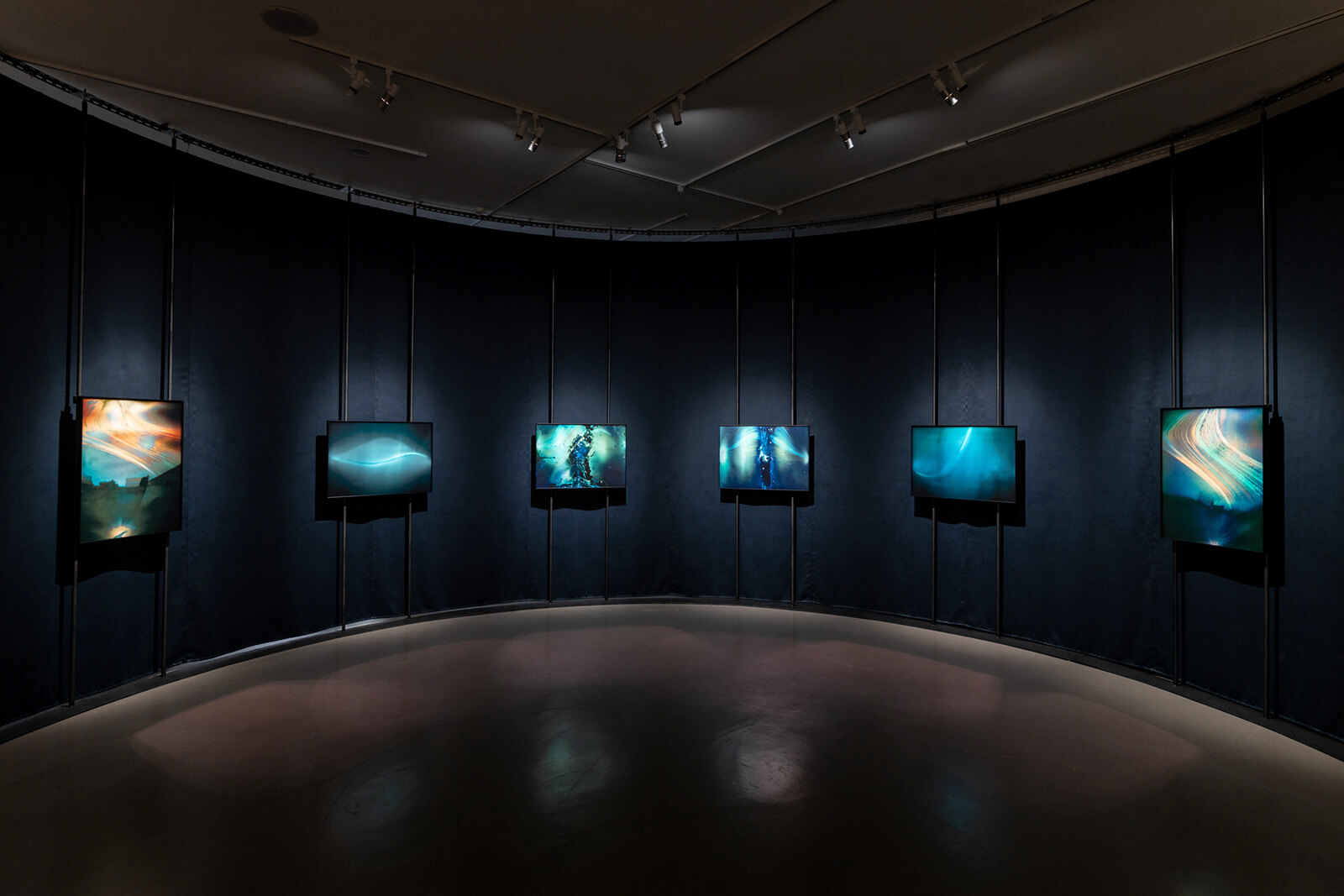
In a darkened alcove, Indian artist Rohini Devasher showcases solargraphs made using pinhole cameras placed in two locations in the National Capital Region of Delhi, their tightly compacted luminescence belying the role of time in their making. Álvaro Urbano turns a swathe of the museum’s ground floor into a sanctuary for fallen leaves (cast in metal and hand-painted) and other artworks, under a plexiglas ceiling scattered with more leaves, their forms clustering into dark shadows against its brightly lit surface. Afra al Dhaheri’s rope installation curves down from the ceiling, landing in gentle parallel arcs, the rope endings knotted and frayed. Coils of rope surrounding this work served both as embellishment and as seating, inviting visitors to pause, even rest, in an exhibition that is otherwise mostly devoid of visitor seating.
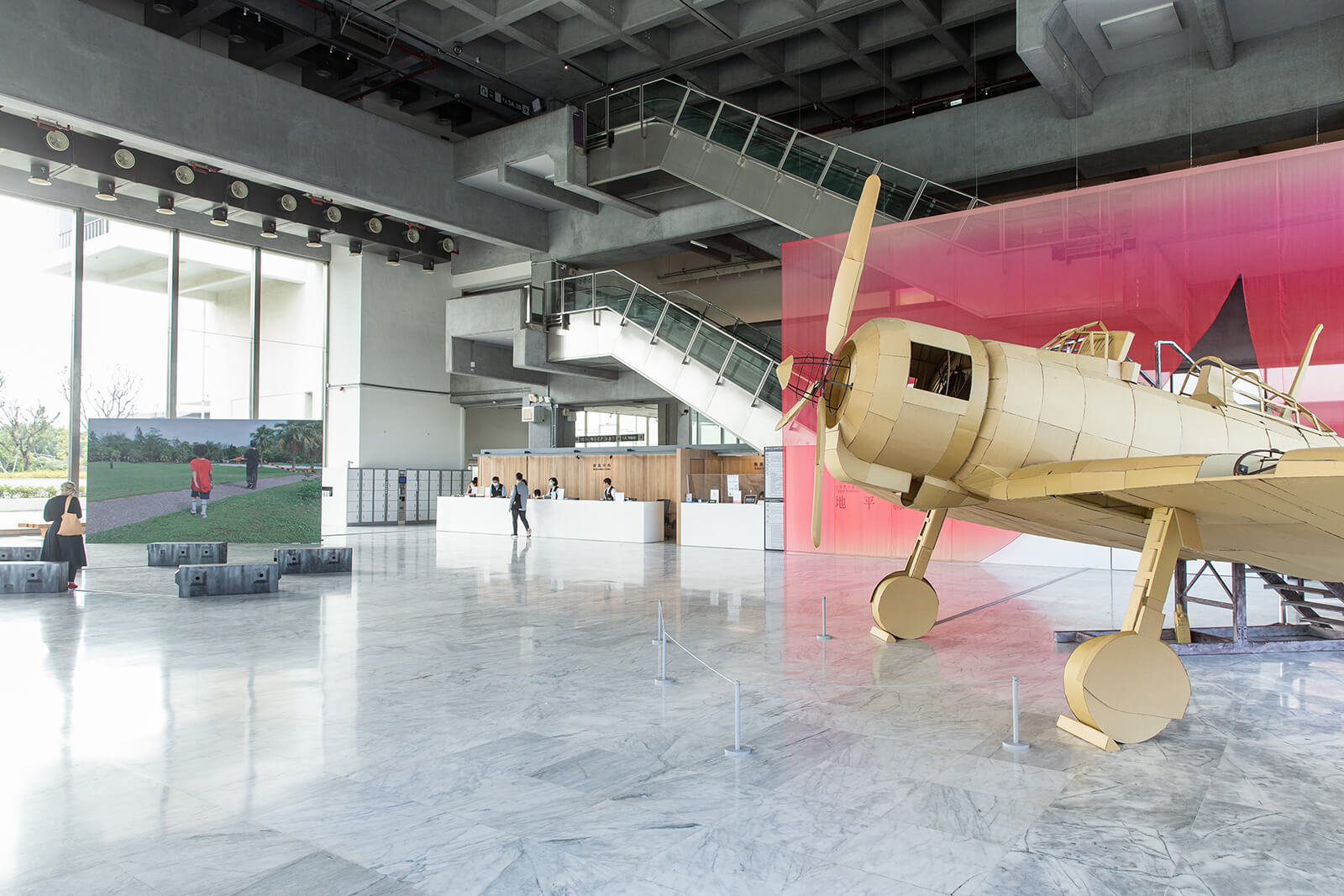
The passing of time is a running strand through the biennial, in its three conceptual markers, moored around Japanese colonial rule, Taiwan’s wartime history, nearly four decades of martial rule from 1949 to 1987 and its coming of age as a democracy. These markers are refracted across other artworks, including photographs from the museum’s collection, capturing moments from 20th-century Taiwan – its public life and culture. Temporal overtones also shine through in the biennial’s inclusion of video and installation work that is implicitly or overtly durational – like Fatma Abdulhadi’s garden of basil plants and Gäelle Choisne’s Fortune Cookies installation, executed by actors who kneaded and shaped the cookies and arranged them in straight lines along a section of the museum’s tiled floor. In the final weeks of the biennial, Choisne said to STIR, visitors would be invited to pick a fortune cookie, dismantling the installation in the process. At the entrance of the museum, Zih-Yan Ciou’s Fake Airfield (film and site-specific installation) sees the artist stage the construction and eventual flight of a giant cardboard aircraft inspired by recollections of colonial-era war strategies, when the Japanese staged airfields with fake aircraft to confuse Allied forces during World War II. The artist works with a young child, putting his aircraft together, panel by panel. His hair billows in the wind as he cruises against the backdrop of a filmed urban landscape, building up to the aircraft’s inevitable failure, the white smoke emanating from its rudder at odds with its make-believeness.
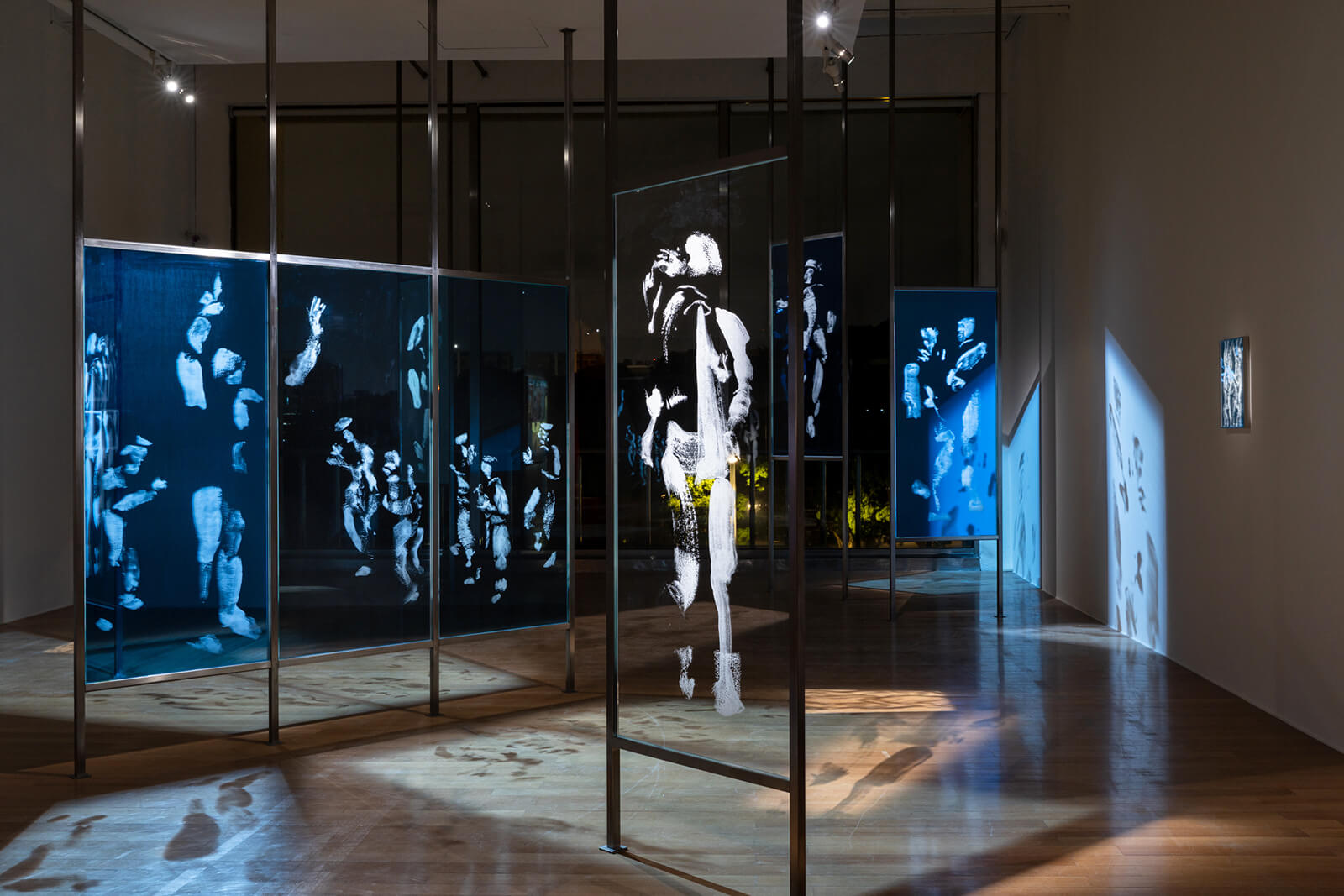
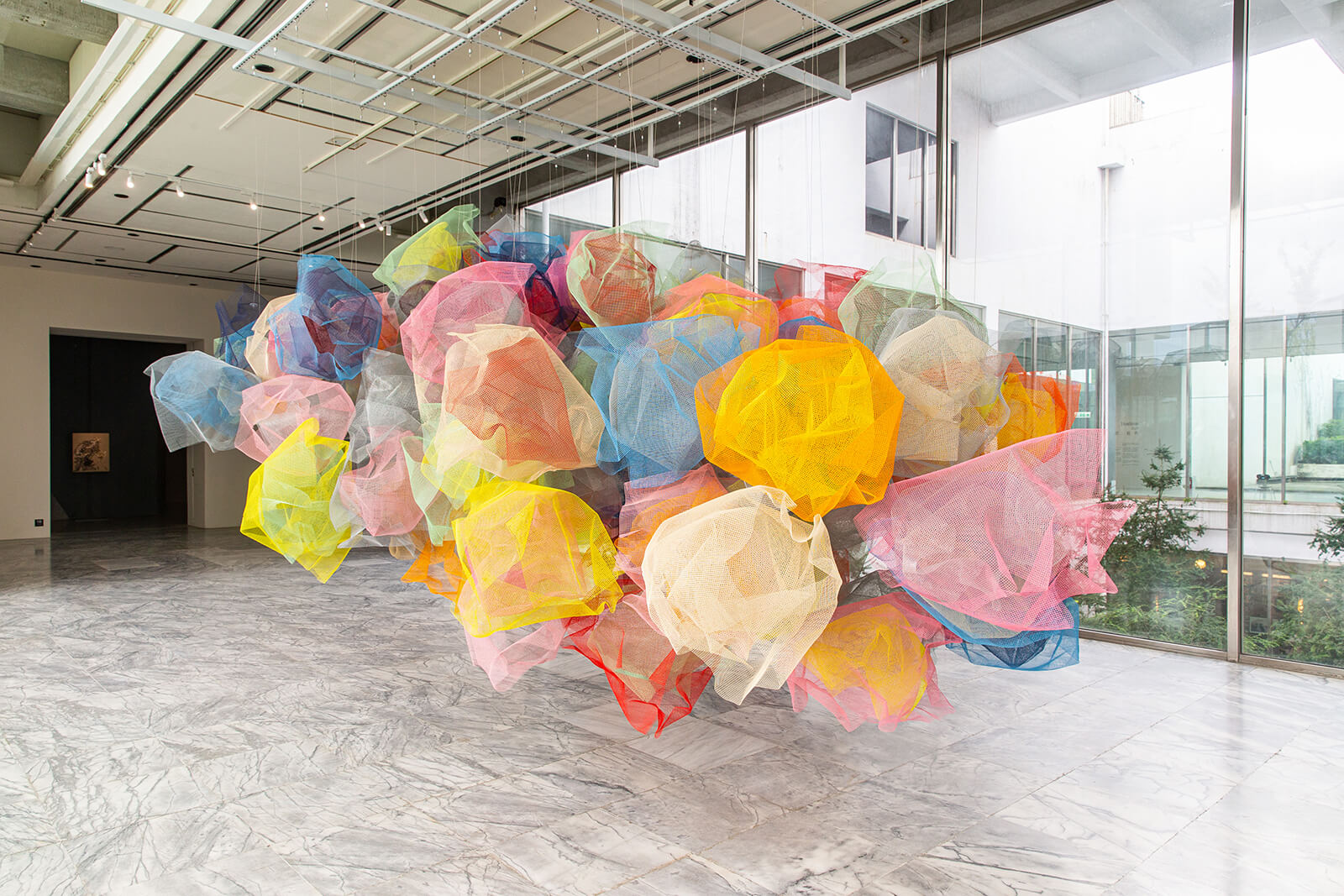
A room with floor-to-ceiling windows on the museum’s upper level looks out onto a construction site – the museum’s new wing, still in the initial stages of development. While this is not part of the biennial, the perspective it suggests runs through other works, like Mona Hatoum’s Cellules, where fiery red glass orbs lie flagrantly in steel cages, set against the back of a sunlit room with a street view. Similarly, in another room, Isaac Chong Wai’s etched glass and mirror panels, Touched: A Better Tomorrow, carry fragmented traces of the artist’s own body, in ghostly torsos and limbs, the city’s muted bustle – more palpable than audible – aggravating their eerie dissonance. Unlike these whispered presences, in other parts of the museum, gigantic sculptural forms subsume their surroundings. Henrique Oliveira’s Cizania is a wondrous structure made of decaying plywood in several hues of damp brown, its sharp-angled outdoor tunnel erupting into a bulbous mass within the corridors. One walks around and under Rana Begum’s No. 1511 Mesh, an amorphous accumulation of powder-coated mesh in bright colours, their crumpled shapes suggesting a slow, constant, yet imaginary, unravelling.
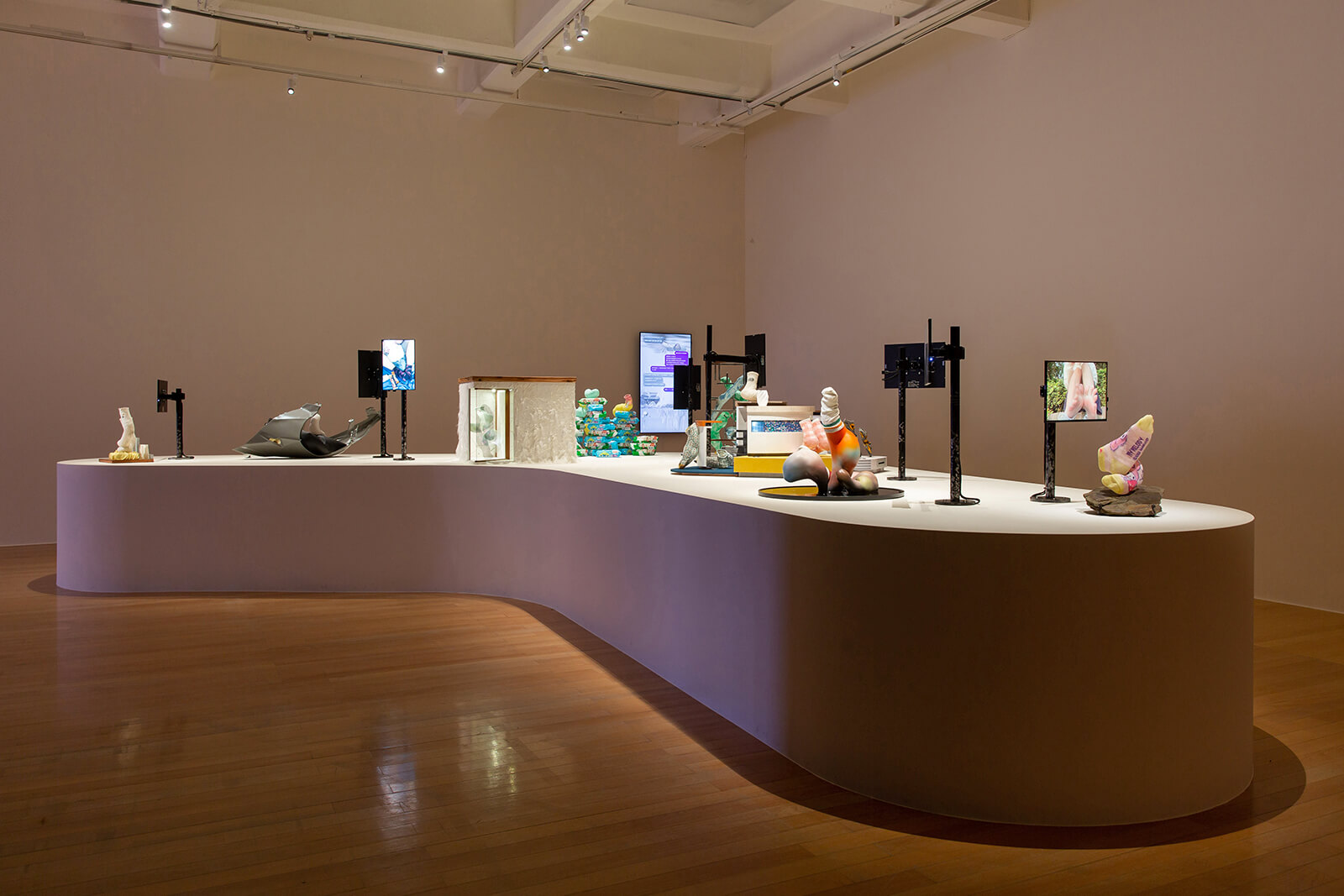
On the upper level, an entire table is dedicated to a work on foot fetishism by Ni Hao, who lives and works in Hsinchu, a tech hub that is often labelled Taiwan’s Silicon Valley. On diminutive screens dotting the table, we see people wearing and taking off the socks the artist buys from second-hand marketplaces, baldly focused on going through the motions. Sometimes their toes flare outwards as the socks come off, discreetly beckoning the viewer into further bodily intimacies. It is in this mode of suggesting, as opposed to saying, that the biennial operates best. Perhaps that also reflects Taiwan’s complex political history and its ambiguous relationship to China – where the things that remain unsaid sustain liminal states of being – both metaphorical and geopolitical ones – and in doing so, allow life to go on.
The 14th edition of the Taipei Biennial, ‘Whispers on the Horizon’, is on view from November 1, 2025 – March 29, 2026, at the Taipei Fine Arts Museum.
(The views and opinions expressed here are those of the author(s) and do not necessarily reflect the official position of STIR.)
by Srishti Ojha Oct 21, 2026
Increasingly, artists, filmmakers and activists are turning to VR to create more personal, tangible accounts of the climate emergency and its impact on vulnerable communities.
by Mirra Lynn Oct 20, 2026
The Indian artist paints the old wadas of central Pune, capturing the traces of everyday life that cling to these structures, battered by time but unbowed.
by Anmol Ahuja Oct 15, 2026
How do heaps of souvenirs and relics with racist Aboriginal motifs and features become art? MCA Sydney’s winter showcase—the artist’s largest to date—beckons a possibility.
by Vandana Kalra Oct 14, 2026
With his latest exhibition as a point of departure, the modernist discusses his decades-long practice, the spontaneity of drawing and the social responsibility of artists.

make your fridays matter with a well-read weekend
Enter your details to sign in
Don’t have an account?
Sign upOr you can sign in with
a single account for all
STIR platforms
All your bookmarks will be available across all your devices.
Stay STIRred
Already have an account?
Sign inOr you can sign up with
Verification link sent to check your inbox or spam folder to complete sign up process
Tap on things that interests you.
Select the Conversation Category you would like to watch
Please enter your details and click submit.
Enter the 6-digit code sent at


Whispers on the Horizon traces desire lines across Taiwan’s shifting horizons
by Ranjana Dave | Published on : Dec 03, 2025


 Sign in with Google
 Sign in with email
What do you think?