Design10 mins. read
Reflections on artificial intelligence and the moral burdens of What We Owe the Dead
by Mrinmayee BhootSep 09, 2026



by Mrinmayee BhootPublished on : Oct 08, 2026
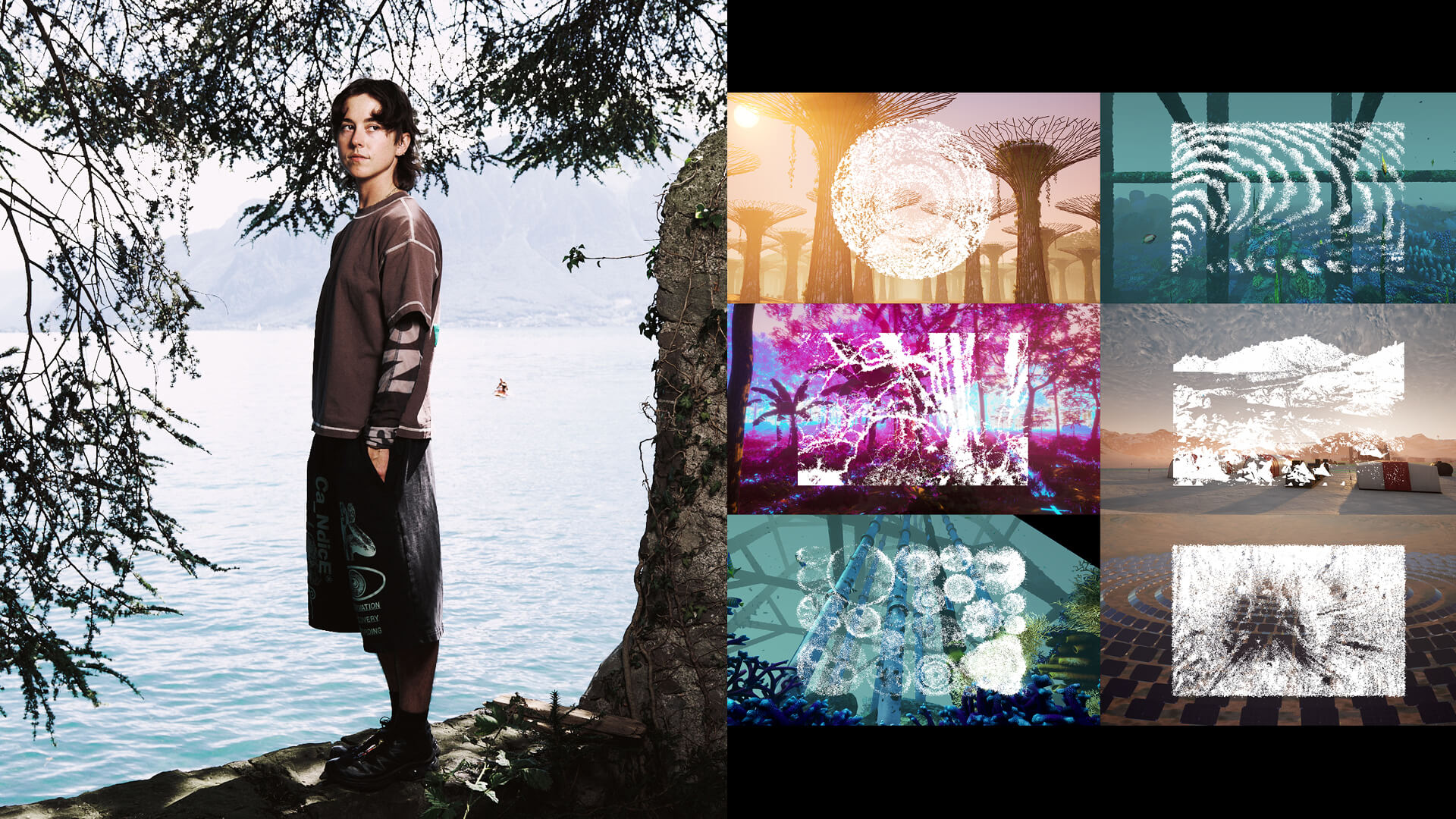
The urge to live another life is resolutely human. To cast oneself in another’s shoes, even for a little while, and leave behind this little life and its machinations, to dream about what else our lives could be. The appeal of video games, as many will tell you, lies in that very suspension of disbelief—of entering and inhabiting another world with its own rules, of becoming someone else and having the tools (or at least their provisions) you need to solve the problems you encounter. The experience of gaming is, as artist and game designer Alice Bucknell notes in a conversation with STIR, like stepping into a ‘magic circle’.
Referring to video game designer Ian Bogost’s concepts (which he borrows from Johan Huizinga), Bucknell notes that through their games, they hope to foster that feeling of suspended judgement, to ask a player to relinquish their agency within a game environment, engage in systems that might feel uncanny and, by so doing, test the limits of human knowledge systems. In their work—including video games, films and video art—the LA-based artist explores interconnections among architecture, ecology and nonhuman and machine intelligence. Unlike most art—and as they observe, video games have only now started entering ‘serious’ institutional spaces as legitimate forms of art—you actually interact with games, ‘break them’, as Bucknell quips. That makes our encounter with games a more porous exchange; we come to a game with experiences of the ‘real’ world, and it pushes back with its own logic.

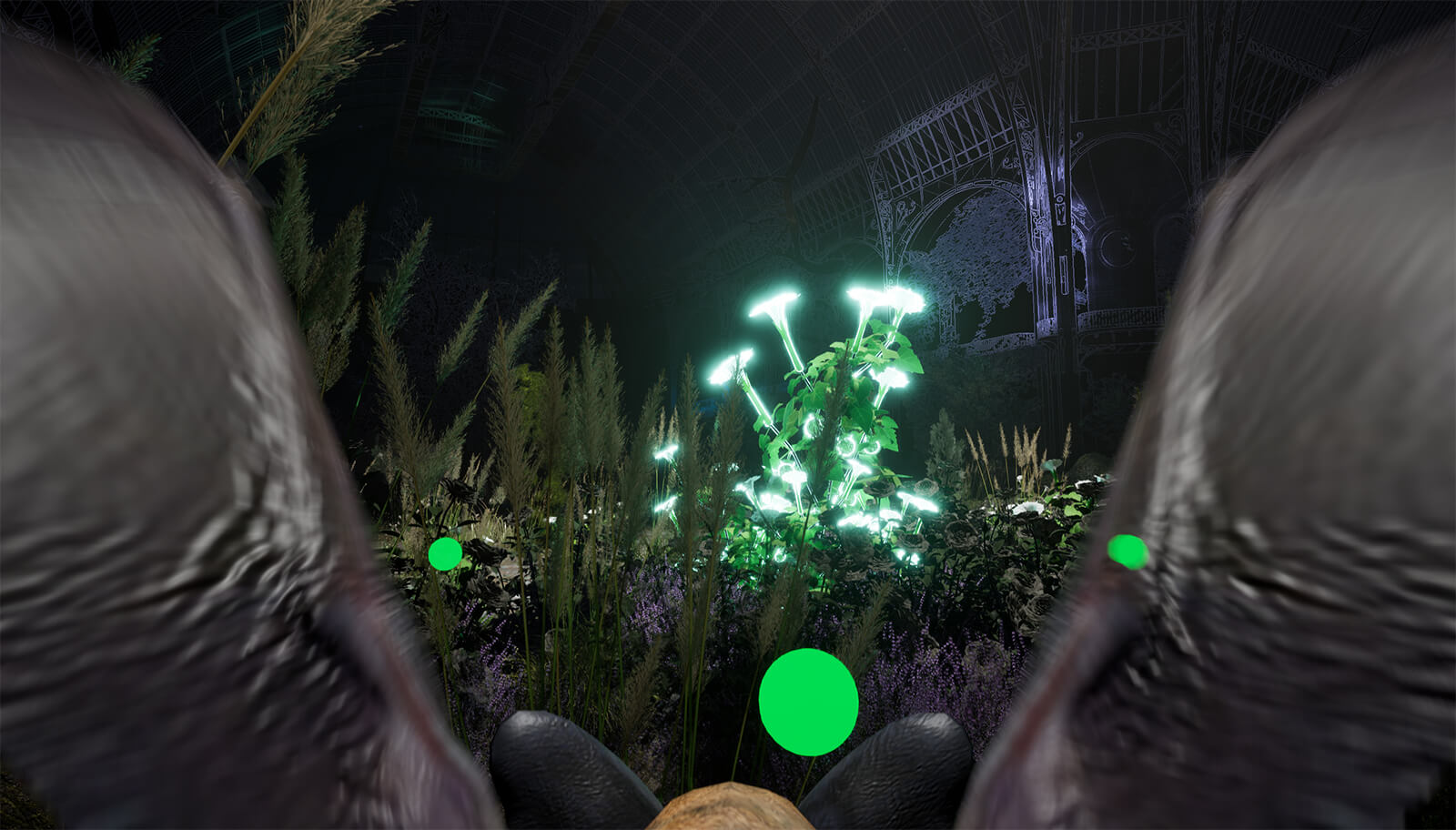
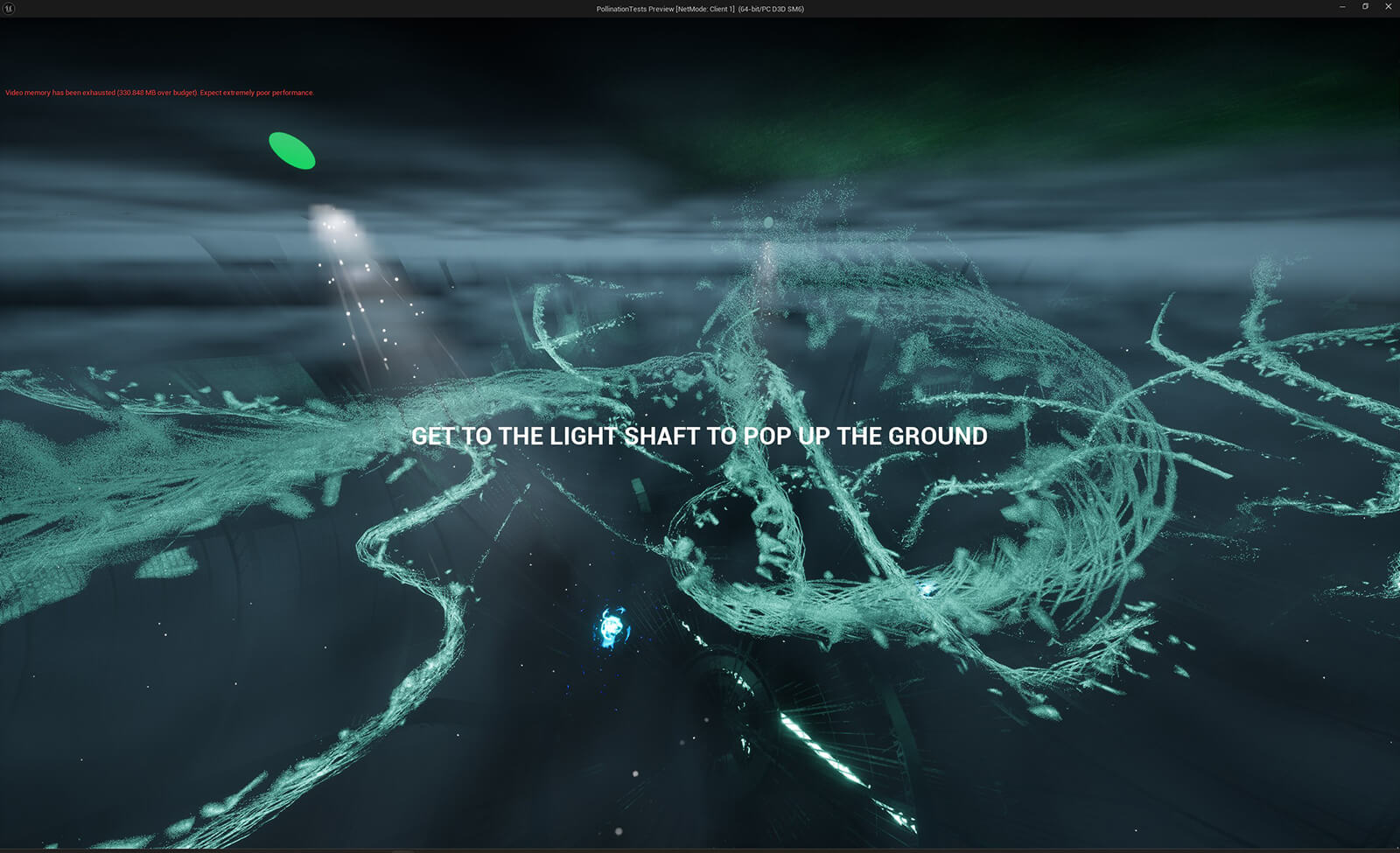
Through their game designs, the video game artist hopes to demonstrate that if humans were to decentre our perspectives, the world might look very different; that inhabiting a speculative future as a bug might help us better understand the enormity of the ‘wicked problems’ of today: societal collapse, ecological ruin, climate crisis, the terrifying rise of tech oligarchies. Not entirely escapist utopias, their work emphasises disorientation and discomfort in the solely human perception of the planet. One of their recent games, Nightcrawlers (2025), explores this idea by featuring bats and flowers as playable characters. Commissioned by Centre Pompidou and described as a pollination simulator, the two-player cooperative game asks players to become attuned to other ways of knowing the world. In its fictional world, bats fly around the Grand Palais in the dark of night, mapping the building through their sensory logic, and the two players have to work in harmony to ‘rewild’ the museum complex.
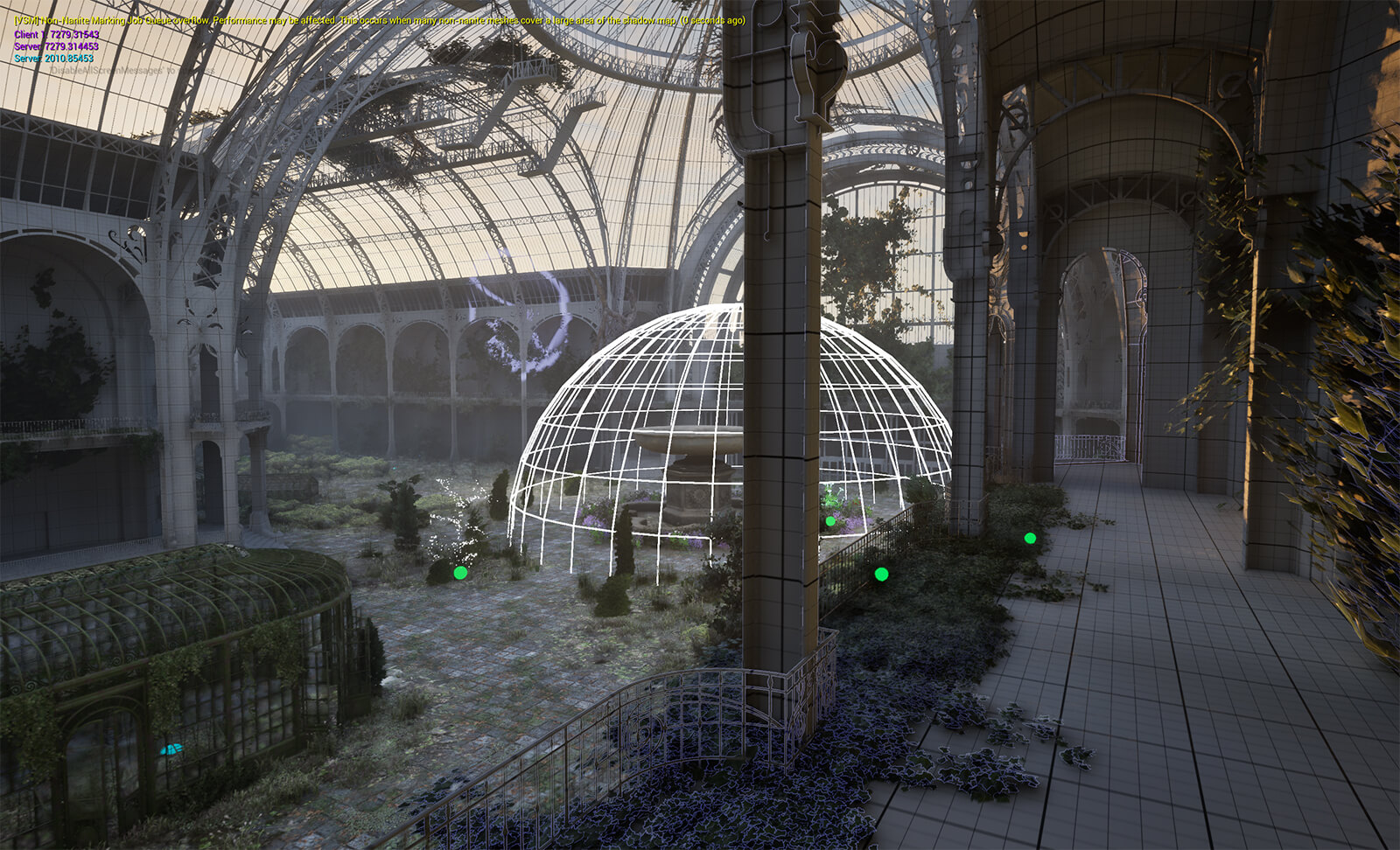
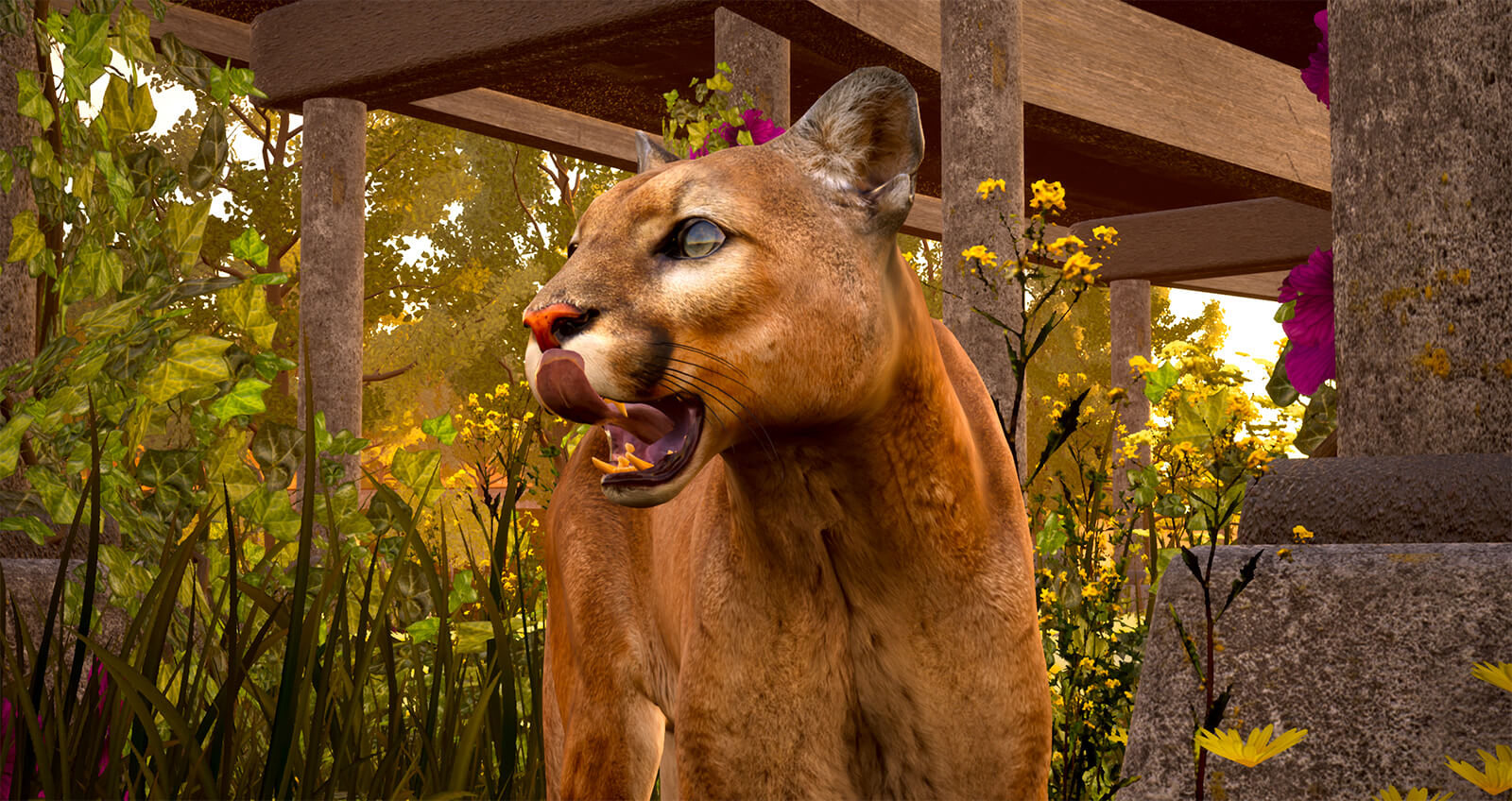
Similarly, in The Alluvials, both a video work and a video game set in near-future LA, Bucknell presents the ecological and political histories of the Los Angeles basin and river, probing the region's water crisis. These stories, including the Tongva people’s relationships to the land and its water, the Riparian rights implemented by the colonial settlers and the aborted urban plans developed by the Olmsted Brothers in the 1930s, are told from a more-than-human perspective. In the video, we hear from the river itself, a 400-year-old sycamore tree cut down in 1895 and even a famous wild mountain lion who used to roam Griffith Park. As players, people can choose to become wildfires raging across the land or a Joshua tree playing out a love story with a Yucca moth.
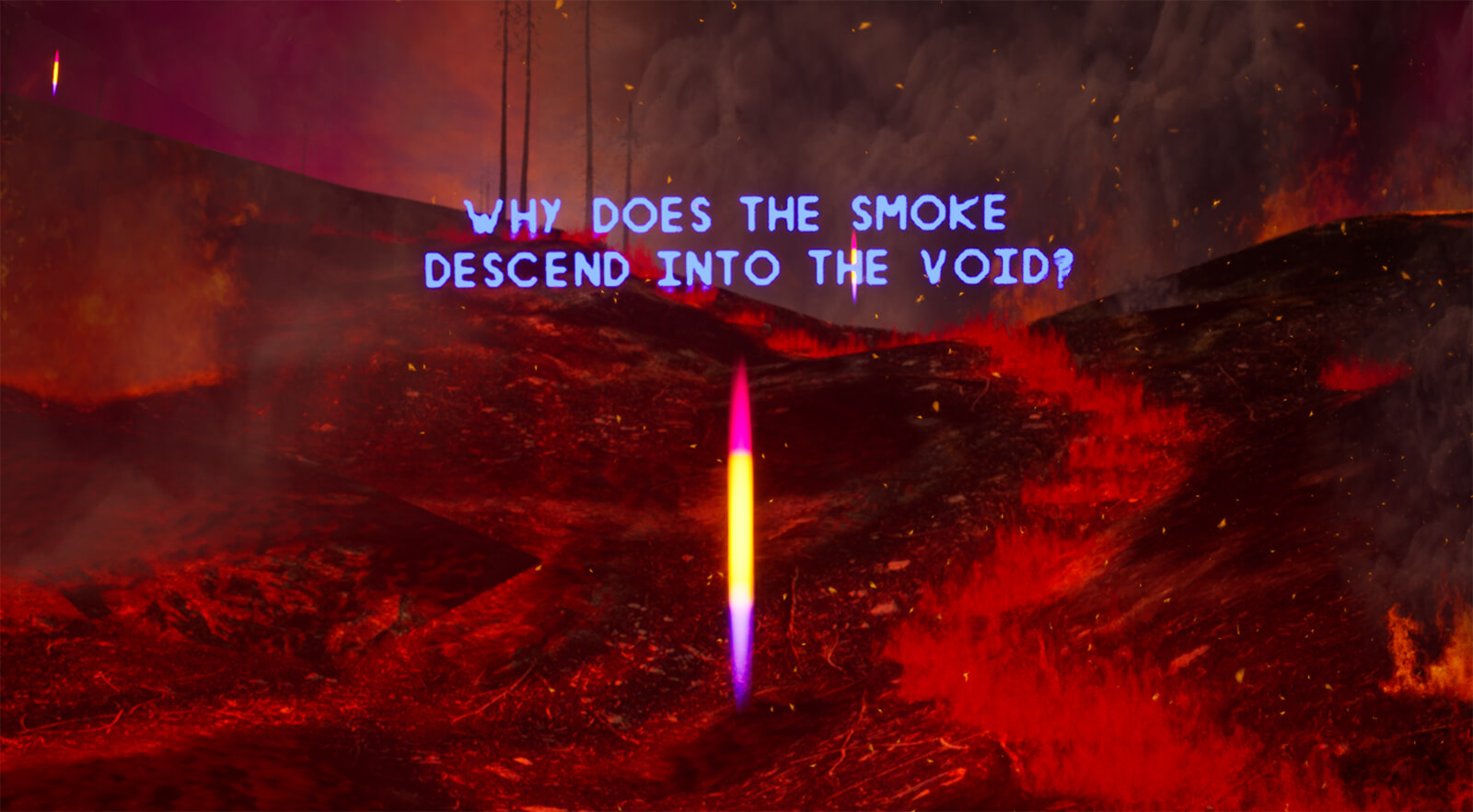
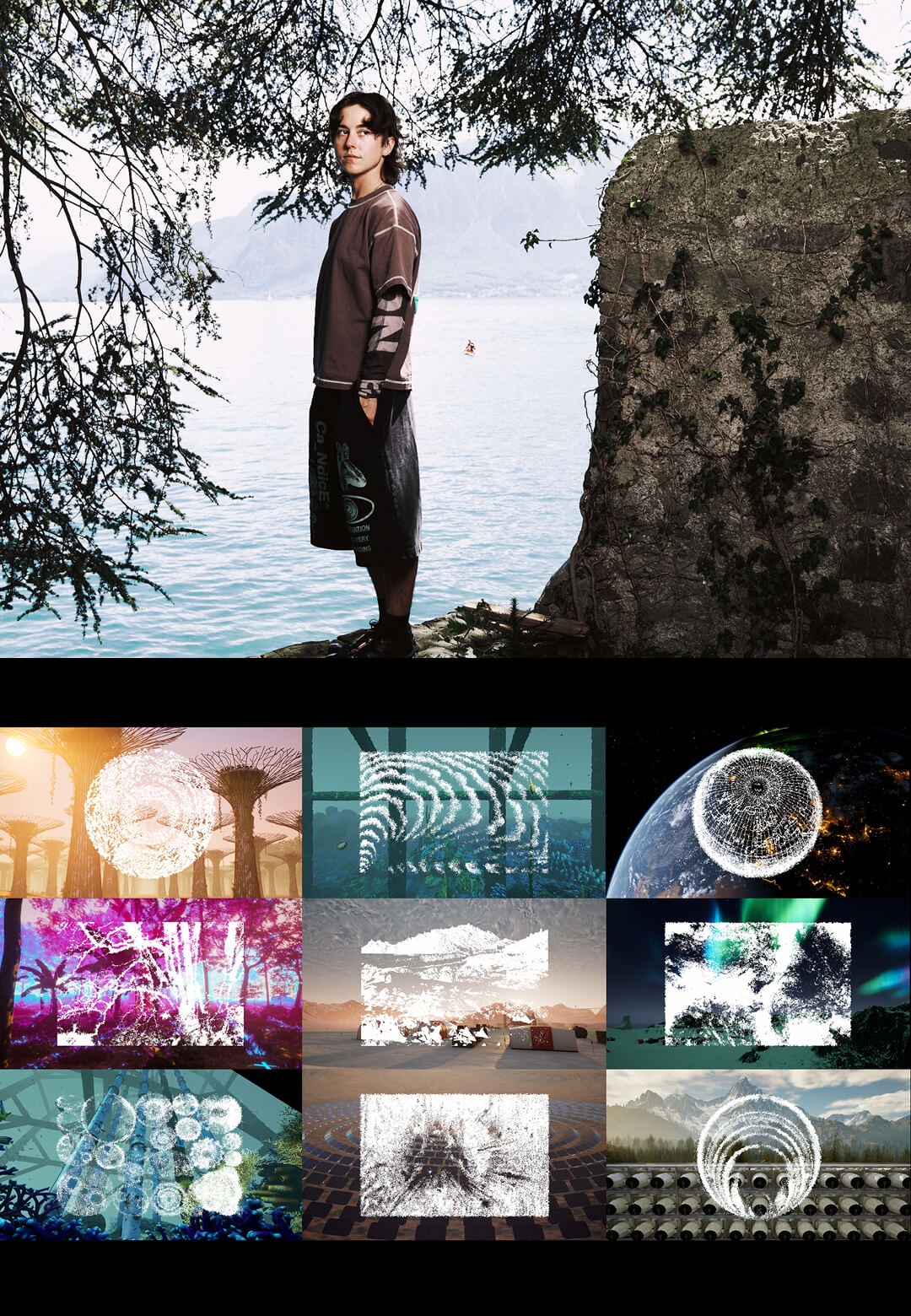
The work incorporates drone scans, AI-generated imagery and game-engine environments: their own as well as GTA V mods. Often, as with The Alluvials, Bucknell’s videos are created using game engines, giving Bucknell the capacity to build entirely original fictional architectures. For their alternate version of LA, the artist trained Stable Diffusion on simulated worlds they created alongside historical photographs and future-fictional renderings of the LA river from Frank Gehry’s River Revitalisation Masterplan. By presenting expansive worlds for players to inhabit, and by affording as much agency to enact changes to the world as the player, Bucknell asks us to notice the rhythms of the world. Their games ask for a particular attention to even the grass beneath our feet.
This is not only a way to emphasise our interdependencies, but to argue that our collaborations are necessary to survive. As the anthropologist Anna Tsing writes in her book The Mushroom at the End of the World, “We forget that collaborative survival requires cross-species coordinations. To enlarge what is possible we need other kinds of stories, including adventures of landscapes.” The non-human protagonists in Bucknell’s universes often mirror real-world systems, critiquing them and allowing viewers a more digestible grasp of what is otherwise confounding, dense information (climate monitoring data, climate projection visualizations, AI models to name a few).
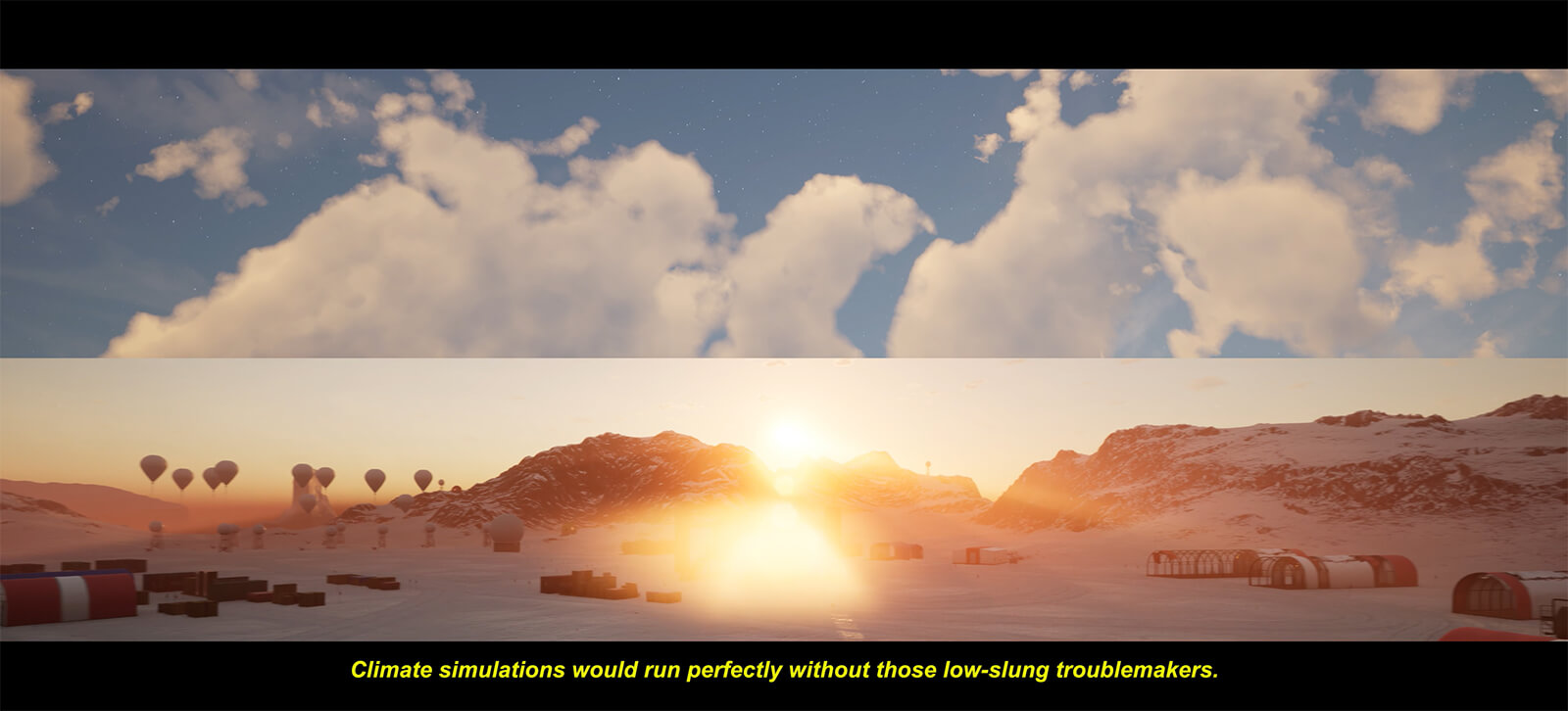
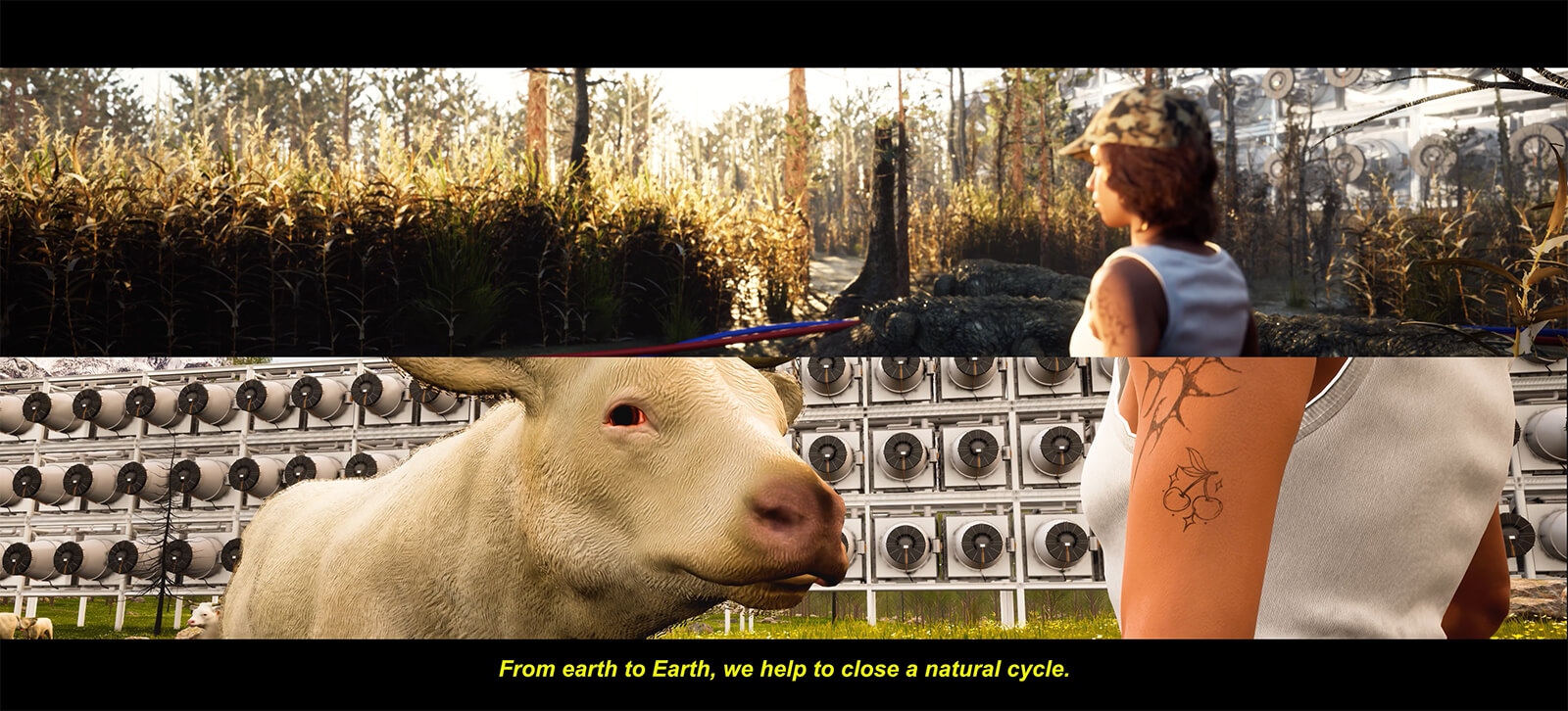
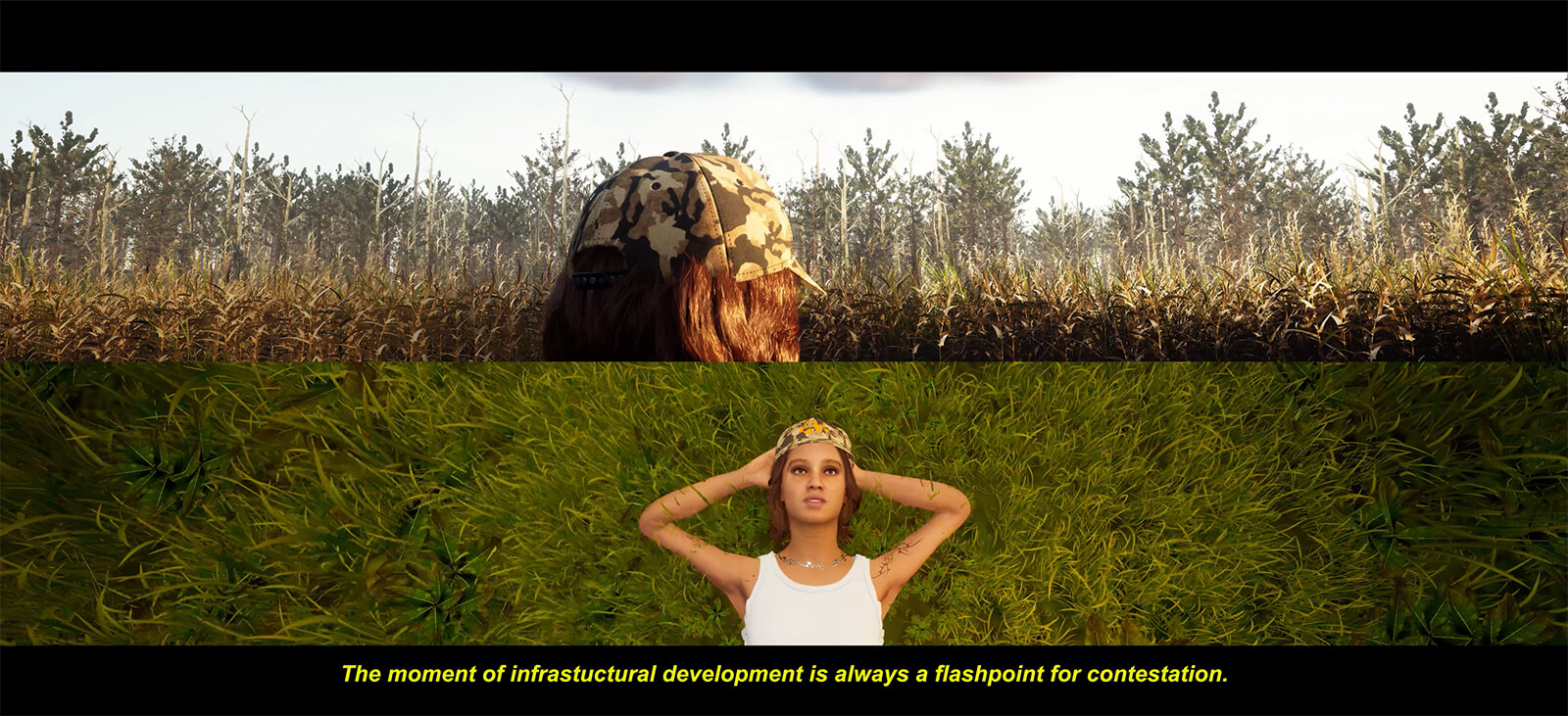
In Staring at the Sun, a video work that probes solar geoengineering proposals, this interpolation between different scales (the planetary and the granular) is particularly apparent. The ‘sci-fi documentary’ offers the perspectives of multiple protagonists, including NASA remote sensing scientists, geoengineering startup CEOs, documentarians, and a supercomputer called Derecho—all based on real-world interviews conducted by the artist—about the deliberate, large-scale modification of Earth’s climate systems. In depicting the planet-altering ways in which humans engage with the Earth, Bucknell asks what purpose these technologies serve, and what a world where this technology has taken over might look like.
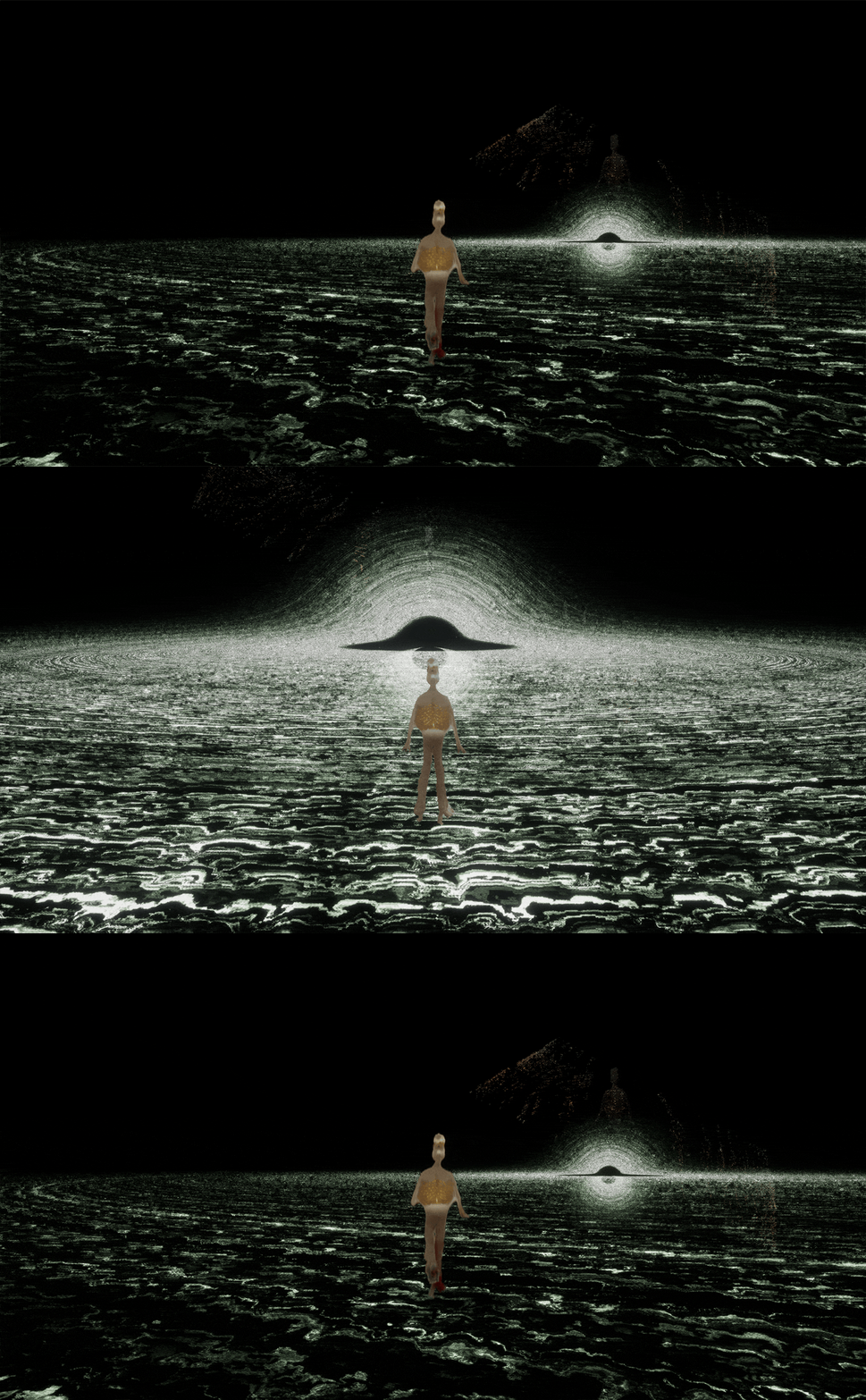
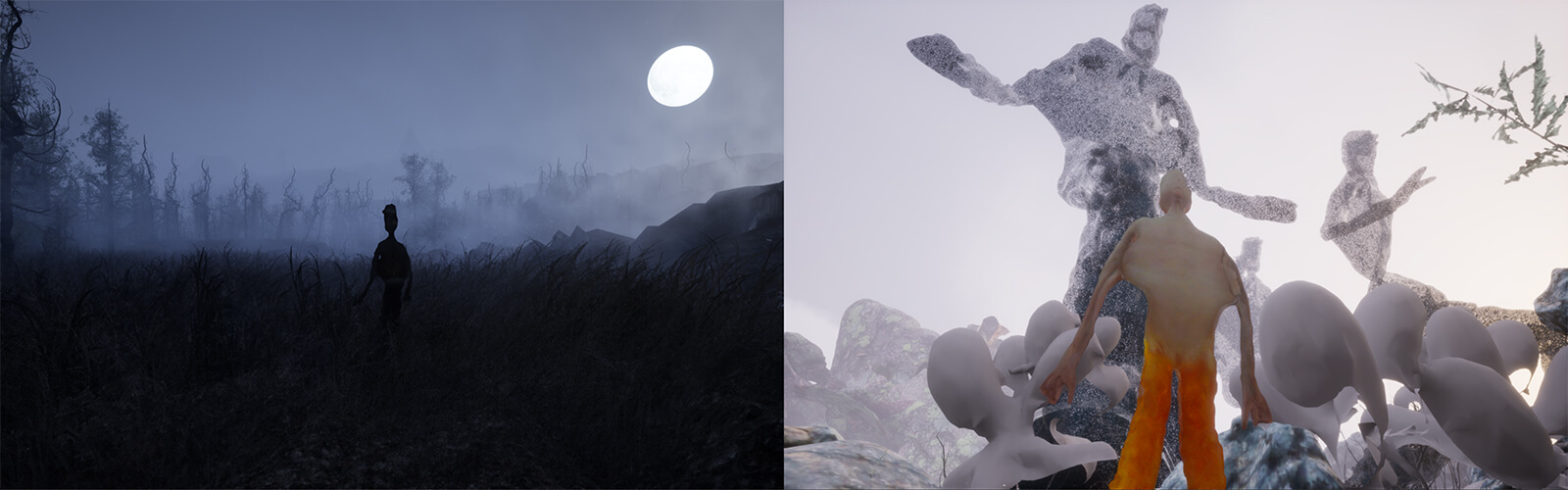
Ultimately, each game design or film is meant to be open to interpretation, as they note in the rich dialogue with STIR. The artist hopes that their interdisciplinary mode of working, blurring the boundaries between fact and fiction and, vitally, drawing attention to scientific research, might make viewers and players conscious of how the technicalities of science are imbricated in our sociopolitical worlds. Another example of this interdisciplinarity comes from their work at the Collide residency program between Arts at CERN and Copenhagen Contemporary, where Bucknell created the video game, Small Void. The simulation-based artwork is a cooperative two-player ‘call and response’, with its game mechanics inspired by the paradoxes of black holes and quantum entanglement, conceived in dialogue with theoretical physicists at CERN. Developed in collaboration with Jonathan Corjn, with a custom score by Magda Drozd, the game is built using Unreal Engine. Players embody matter and antimatter, roaming labyrinthine forests and volcanic landscapes, relying on sound and touch to find each other across dimensions.
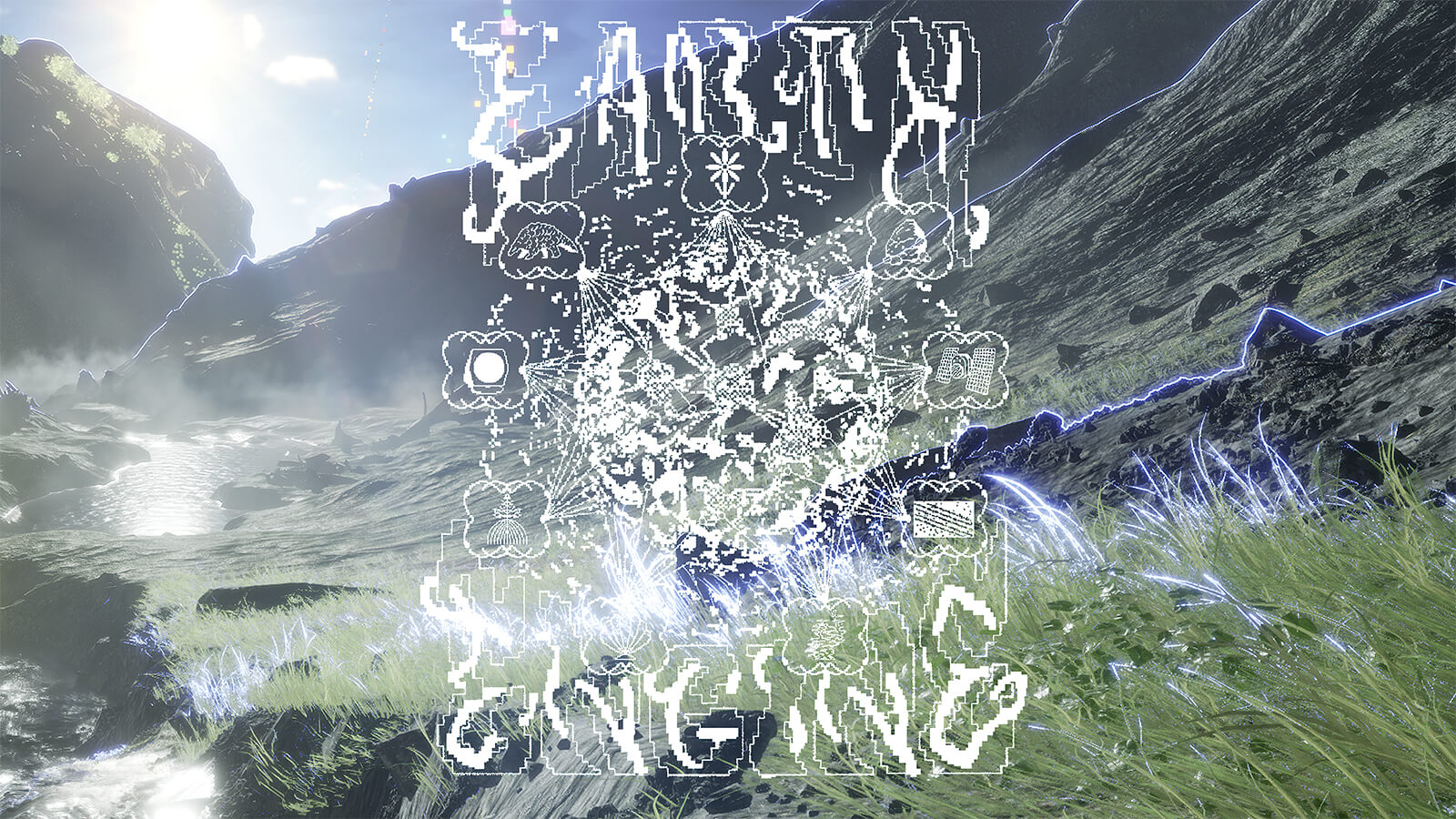
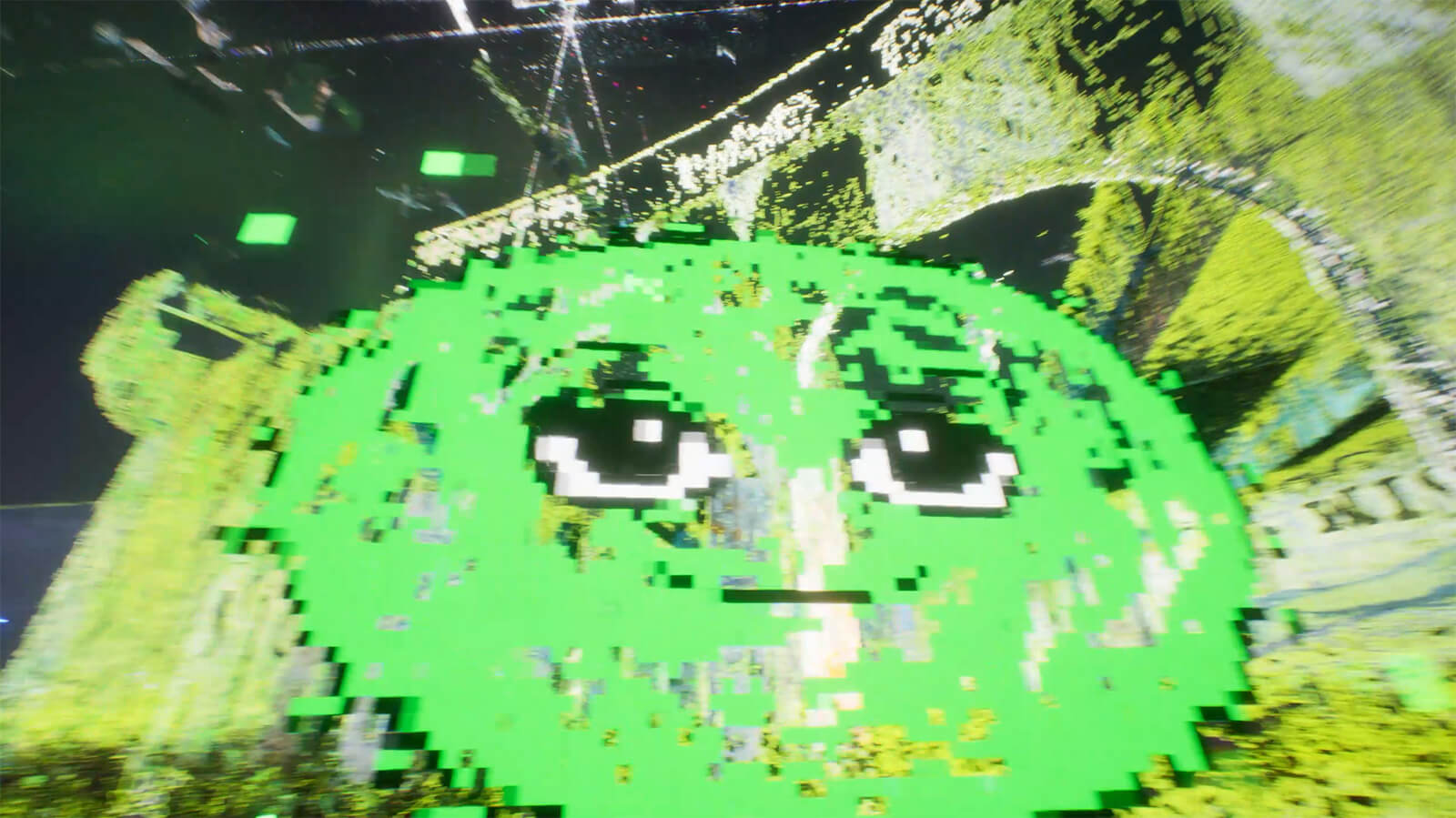
There is, as Bucknell has noted in some of their previous interviews, a constant exploration of what togetherness means in the work they create. The messiness of human and more-than-human relationships, and the breakdown of language and knowledge systems become core mechanics of the gameplay to demonstrate the failure of the systems we live with. It feels like a defeated position to want to think about the failures of our world in another, but that remains the biggest hope of speculative fiction. That desire for another life is transformed in Bucknell’s insistence on subverting the players’ agency through their games, showing the hierarchies of the world we inhabit. They also underscore that this world is not fixed once we step out.

by Chahna Tank Oct 08, 2026
Javier Guzman Cervantes and Ulises Morin Arzola tell STIR about their ‘open code’ approach to design, working through a process of stockpiling and the idea of ‘queering’ materials.
by Pranjal Maheshwari Oct 07, 2026
Under the theme R.A.W. (Rebel Authentic Worth), one of Europe’s most awaited design festivals returns for its 26th edition to investigate solutions for a world in crisis.
by Chahna Tank Oct 03, 2026
Wooden chairs by the Chilean designer reveals handmade forms and painted details that weave memories, literary references and personal stories.
by Mrinmayee Bhoot Oct 01, 2026
As the European Central Bank concludes a public survey to determine the new designs for Euro notes, the discourse expands to how currency could signify shared values and identity.

make your fridays matter with a well-read weekend
Enter your details to sign in
Don’t have an account?
Sign upOr you can sign in with
a single account for all
STIR platforms
All your bookmarks will be available across all your devices.
Stay STIRred
Already have an account?
Sign inOr you can sign up with
Verification link sent to check your inbox or spam folder to complete sign up process
Tap on things that interests you.
Select the Conversation Category you would like to watch
Please enter your details and click submit.
Enter the 6-digit code sent at


Alice Bucknell on yielding human agency and exploring futurity in their game worlds
by Mrinmayee Bhoot | Published on : Oct 08, 2026


 Sign in with Google
 Sign in with email
What do you think?