Design06 mins. read
Alice Bucknell on yielding human agency and exploring futurity in their game worlds
by Mrinmayee BhootOct 08, 2026



by Mrinmayee BhootPublished on : Sep 09, 2026
In Cixin Liu’s science fiction novel The Three-Body Problem (2006), a central narrative thread involves a video game, Three Body, developed by a secret organisation to garner empathy for their cause—letting aliens from the planet Trisolaris take over Earth. What’s most interesting about the virtual reality game is not only that it was invented by Liu in the story to challenge humanity’s voracious desire for progress and the redeemability of our future—but also that it employs alien technology. In this, it sets forth questions on our enchantment with and reliance on ‘novel’ technology, the inherent value systems of games and how we react and culturally adapt to them.
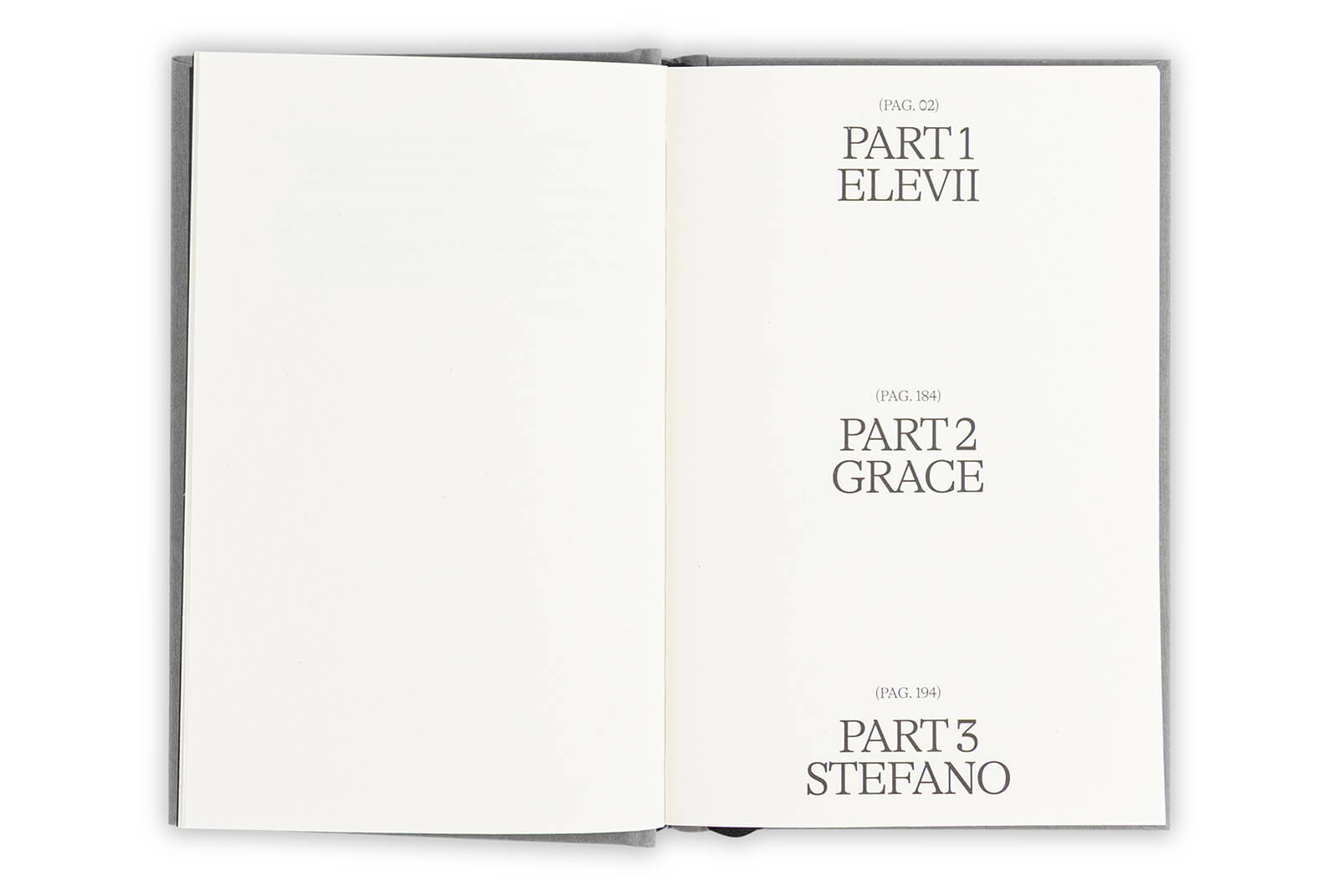
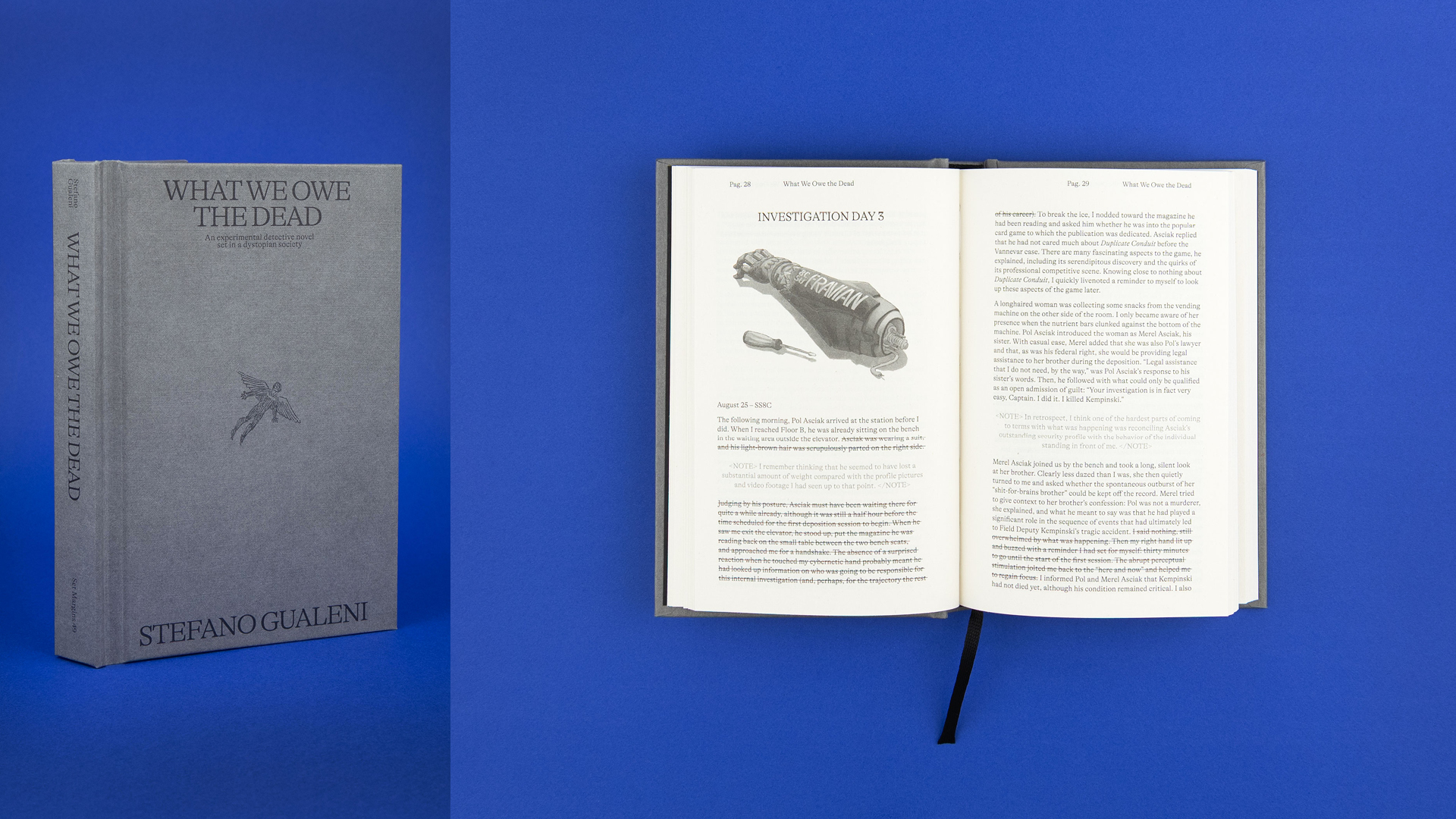
Stefano Gualeni, an Italian philosopher, professor and game designer, argues that fictional games become a way to subvert the status quo of a specific context, questioning long-held assumptions of the real world because of their speculative, playful nature—like Three Body, whichasks its players to inhabit a different culture and worldview. The game, and The Three-Body Problem by extension, are also a surprisingly close parallel to Gualeni’s recent book, What We Owe the Dead (2025), centred on its own fictional game called Duplicate Conduit. His larger purpose in writing this mundane, strange, but at the same time familiar story is to “put some ‘flesh’ on philosophical abstractions”, Gualeni notes in the afterword. More specifically, he hopes readers think about the larger implications of the story that go mostly unspoken in the book; reflecting on the sociocultural obligations that bind us to our ancestors—whether that’s through the transformative nature of rituals, much like gameplay, or how artificial intelligence has intrinsically changed how we interact with the archives that make up our understandings of the past.
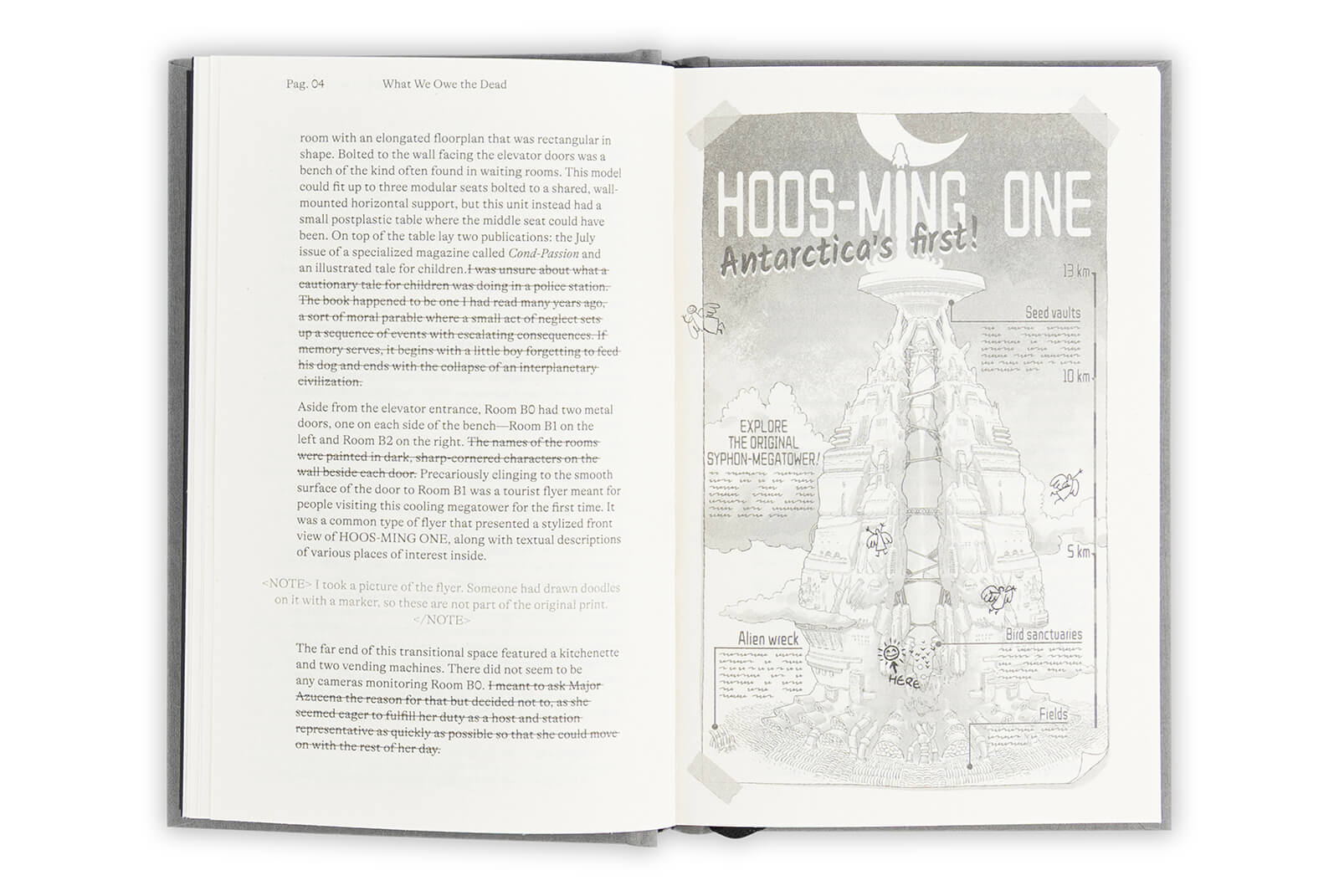
While the novel itself, set in a future dystopian society, revolves around an investigation into a security officer’s misdemeanour, Duplicate Conduit is pivotal to that plot. The world in Gualeni’s text is bleak, with humanity living in a post-global-warming world (should that ever exist), having built cooling mega-siphons to lower atmospheric temperatures and house the last of our civilisation. As the book progresses, readers piece together different aspects of the world and its fictional architecture. For instance, animals have become extinct in this world, but birds still survive. Society is heavily surveilled; different levels in the megatowers signify social hierarchies. Cyborgs and artificially intelligent robots live amongst ‘humans’ in this world. Most vitally for Gualeni’s larger goals, readers learn early on that the technology that allowed humanity to survive what would have been certain annihilation from their own hubris was actually alien technology, buried under Antarctic glaciers centuries ago when a spaceship crashed into the Earth.
Readers are made privy to these facts through the narration of the protagonist, Elevii A. Tarkka, the audience stand-in in this case. She’s a Security Captain called to one of the lower levels within the tower for the investigation (and she has a robotic arm that some people are not used to seeing, as we learn). Special Unit deputy Bakola (a specifically engineered droid) is assigned as her partner for the case proceedings, due primarily to their ability to record the depositions and present objectively factual data for deliberation later. The presence of Special Units underscores some of the philosophical issues Gualeni hopes his reader can dwell on. As he describes, they are machines with the brains—and hence consciousness and memories—of deceased security officers, while also possessing independent artificially intelligent secondary frames.
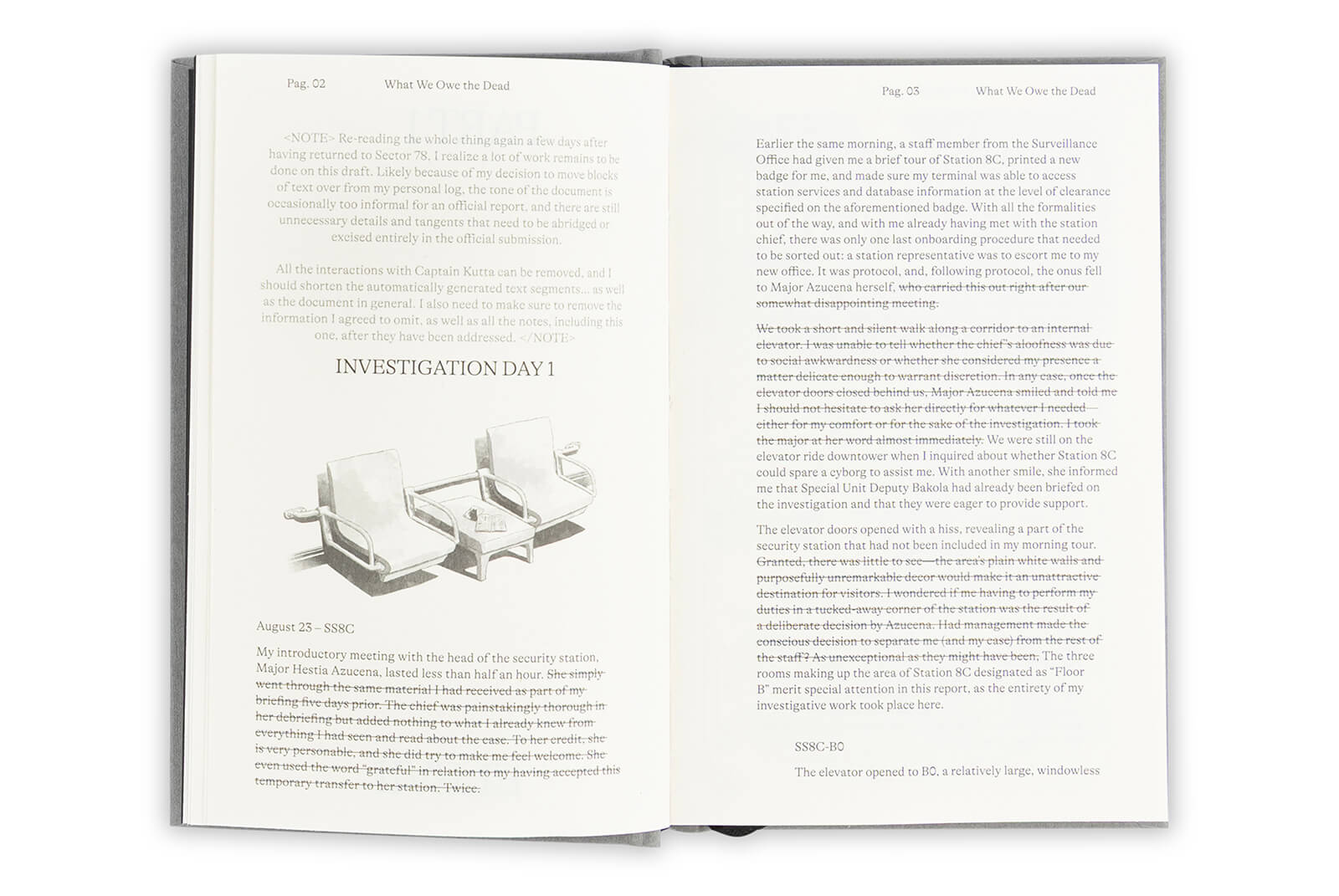
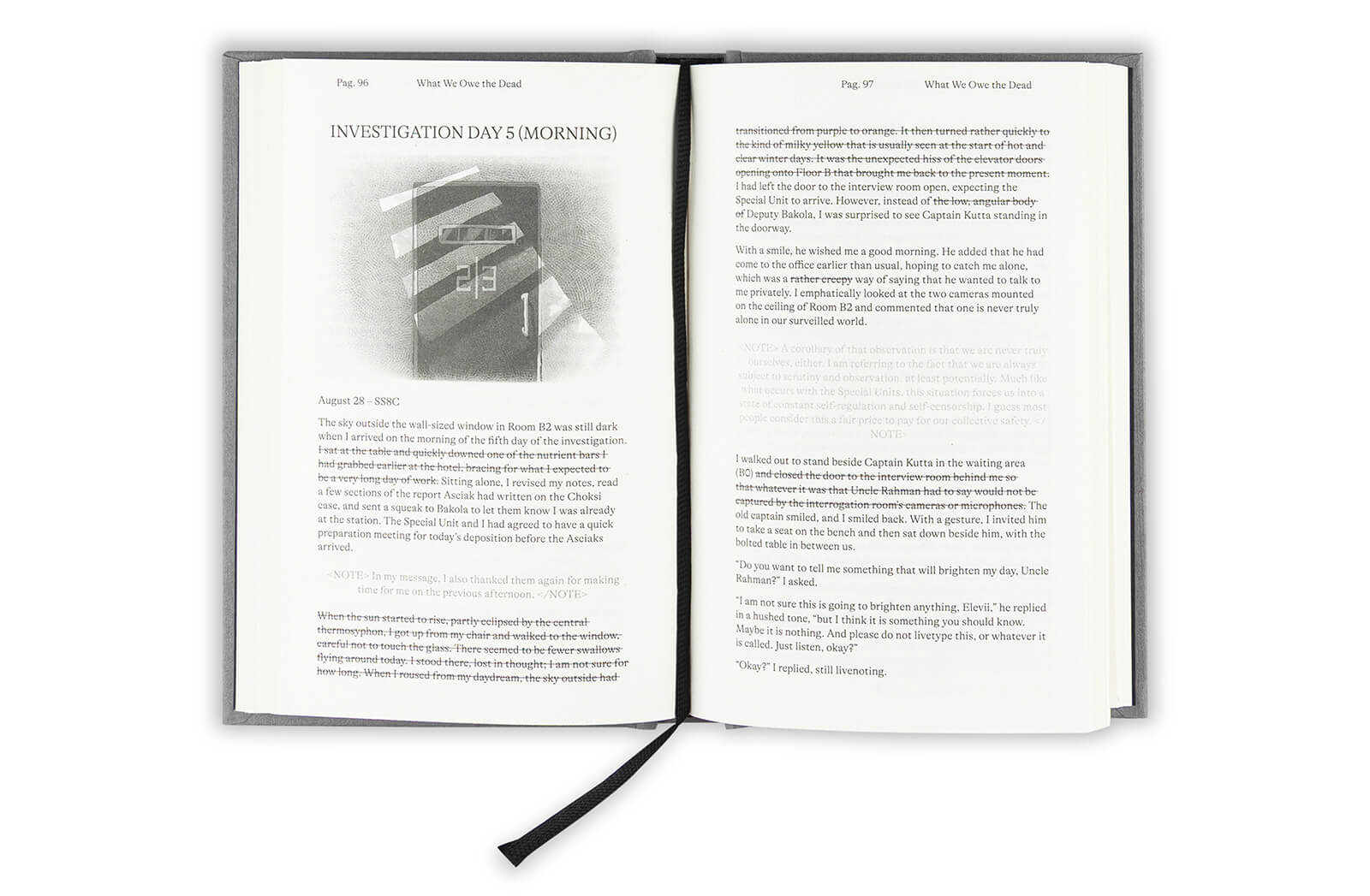
The Special Units in the book are fully realised characters who make small talk and tell terrible jokes. Calling them machines feels like reducing their ‘humanness’ to being treated as simple tools, which presumably is the tension Gualeni plumbs. In an exchange with another Special Unit (played as a recording during one deposition), they mention how artificial intelligence always monitors the biological functions of the Unit, ensuring that their only programming remains being reliable security officers. They also mention that Special Units are technically not even autonomous; they are owned by the security stations where they work—property more than people. And yet, Special Unit Bakola (who readers spend the most time with) was once a woman who had a partner; they loved reading classic literature—a trait that still persists in the memories of the Special Unit. But all they have now become is surveillance technology. The fact that AI is used nefariously for surveillance in the book feels all too familiar, and particularly chilling in today’s world.
Tech moguls have spent months (not even decades) arguing that AI is the future, that it is a tool—eliding its extractivist nature—to make our lives better. They hope to make it seem more ‘human’ (think of how Gen AI models are named) so that we trust it with our information, but at the same time, underscore its servile nature. Companies like Google, OpenAI or Meta disguise generative AI as convenience, so that we never question what purpose the technologies we are surrounded by are used for. In the last two years alone, we have been inundated with AI in every aspect of our lives, from Google searches to coffee machines. They hope that AI overviews will make us complacent, that instead of wasting time on reading a book (or watching a 30-second reel), we’d be better off reading a summary of it. Intelligence will become a commodity that we pay for, Sam Altman has pronounced. Ignorance is strength.
But these platforms are not creatures that think for themselves. They are only weird simulations that are arguably really good at pattern recognition. If, as Frank Herbert speculates in Dune (1965), humans should never create machines in the likeness of a human mind, Herbert also warns that it is the people who control these machines that we should worry about, not the machines themselves. But what if we were to one day create machines that could think? That, like in Gualeni’s world, had some form of agency? That, ostensibly, were reborn citizens who had interests and opinions? How would we reconcile with a world where the ‘dead’ may walk amongst us?
Arguably, AI has also made such a world possible1. Give a prompt to a chatbot, and Sylvia Plath might ‘write’ a new poem. It’s been done with songs, with record companies ‘immortalising’ rappers by ‘re-creating’ their music. Simulacra of celebrities re-created by AI are becoming a means of ‘preserving’ and perpetuating culture. This question of cultural cultivation—how we maintain the values of our ancestors, how we understand and grapple with our histories—and our duties to those who have died is another thread Gualeni probes. In a fictional column in the book, one of the characters, Dr Grace Tizzi, a game theorist in-universe, reflects on the murder of a Duplicate Conduit player, then broadening her scope to thinking about the history of the game itself. As Gualeni has already told readers, the game was never designed by humans. Instead, it was found among the aliens’ (called Fleeting by Gualeni) belongings when the Antarctic glaciers melted. The same event that gave hope to humanity also gave us the game, or what we adopted as a game.
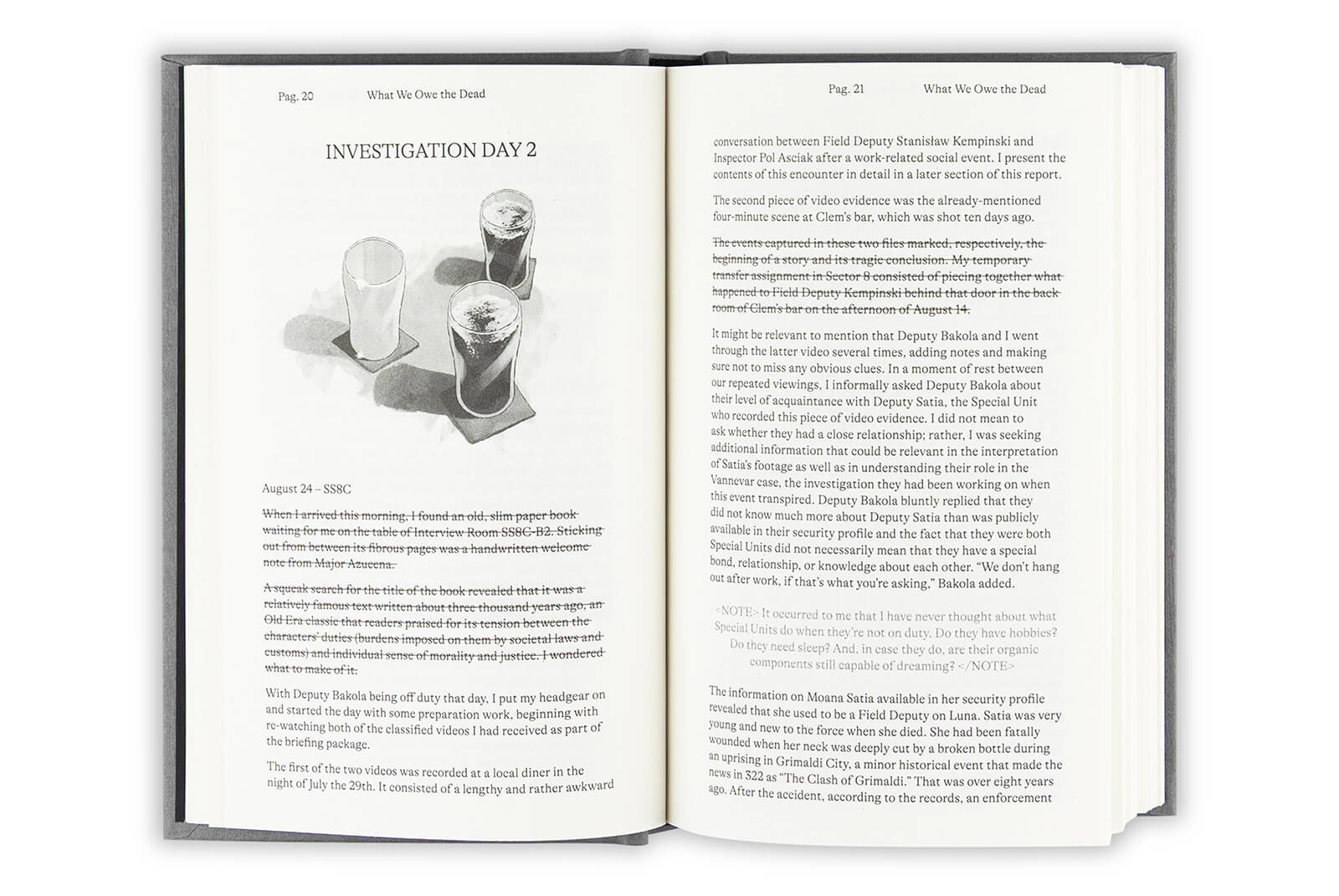
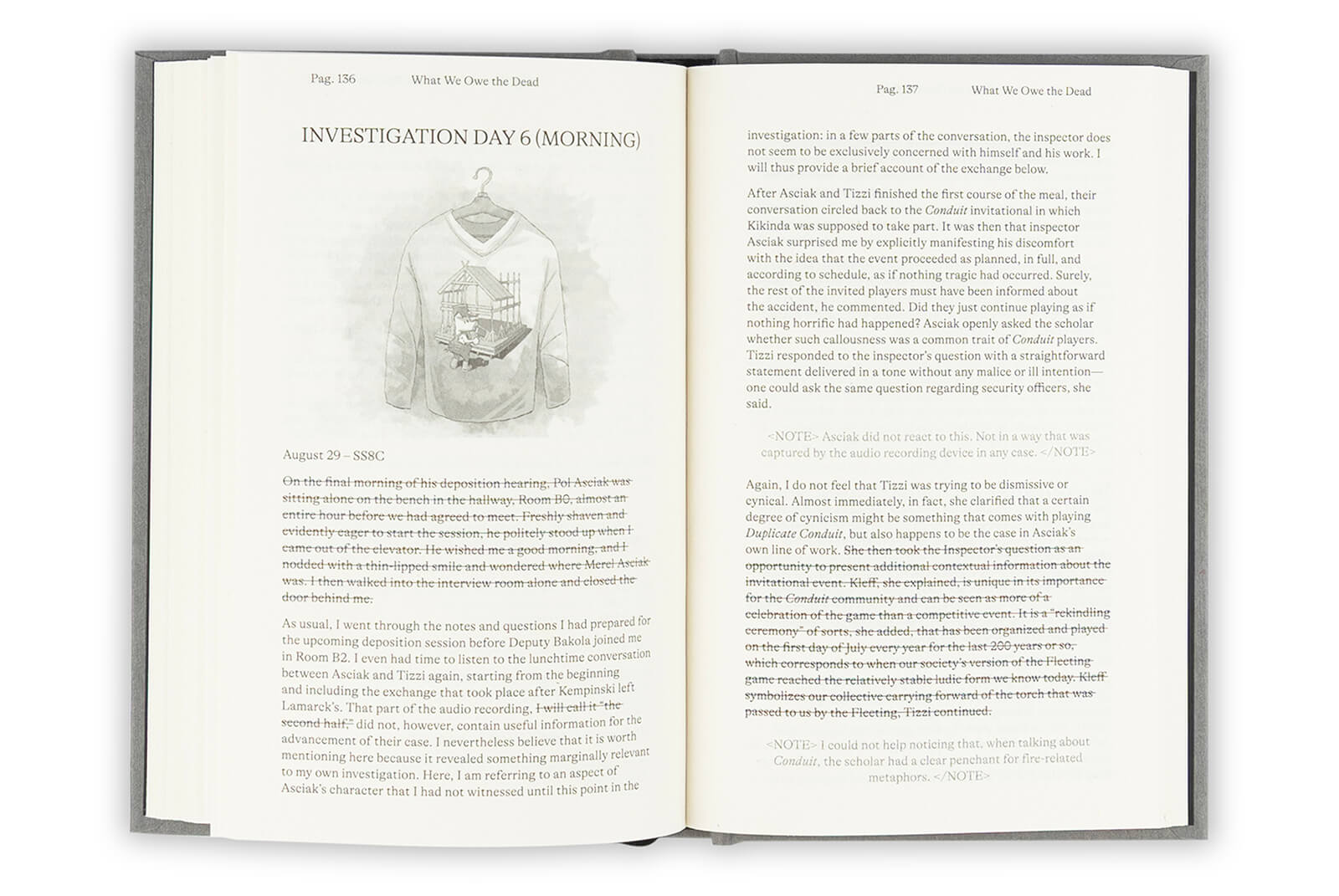
Through the column, Dr Tizzi ponders on cultural carework and what we value today. Bringing up archaeological surveys, she asks whether it is morally justified for archaeologists to engage with and study artefacts from ancient burial sites, thus disrupting the sanctity of a place meant to honour the dead, even if for discovery or in the service of a greater, historical good. What value do we gain today from understanding the lives of those long past, whose ways of being were tangentially different from ours? In contrast, she brings up that in the book’s world, the Eiffel Tower was melted down for metal, despite being the symbol nonpareil of French cultural identity. How then, do we decide what heritage—and by extension, values—matter to us? Regarding the alien technology that ensured humanity’s survival, she notes that by continuing to play Duplicate Conduit (or however we reinvented what was among the alien artefacts), we are honouring and protecting the memory of those who came before us.
If, as Walter Benjamin wrote, “Every image of the past that is not recognised by the present as one of its own concerns threatens to disappear irretrievably”, then, by preserving a semblance of the aliens’ way of life, the humans in What We Owe the Dead are indeed preserving what remains a concern for the present: the survival of humanity. Those who came before, the Fleeting, live on in our memories through Duplicate Conduit. The debt we owe our ancestors is precisely that then, to keep the grand notion of ‘humanity’ and its symbols alive. However we choose to define it. And it is that very idea that gets eroded when we choose convenience over actual compassion for the other. If culture is to survive, it has to be diverse, egalitarian and comprehensive. It can never truly be when it is dictated by a few, when we can reconstruct ‘history’ with the click of a button.
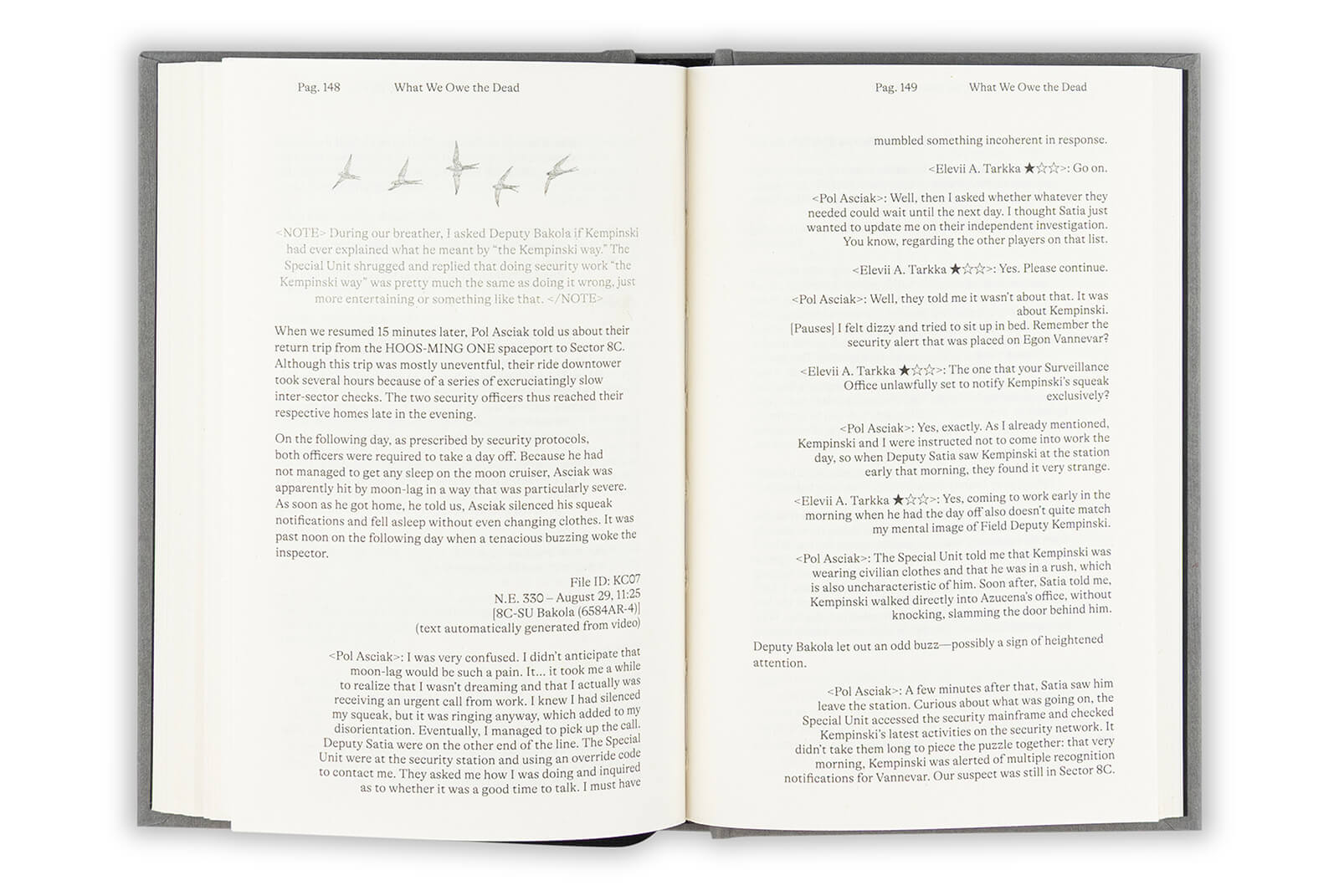
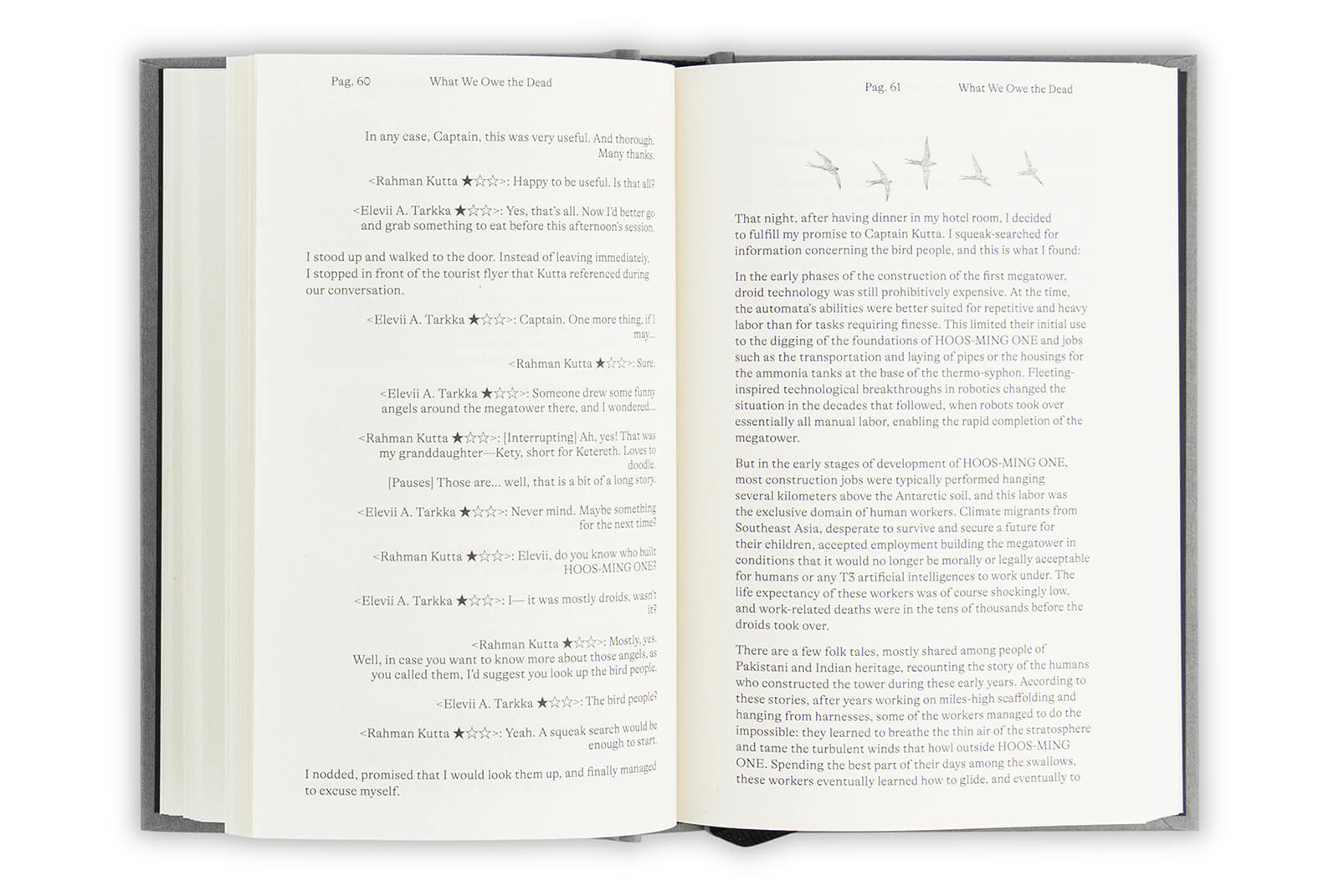
There’s one part of the novel that Gualeni does not expand on, that does not necessarily fit into his larger themes, but demands more attention. Gualeni tells readers that before the Fleeting technology was discovered, climate migrants from Southeast Asia, ‘desperate to survive and secure a future for their children’, were the people building the megatowers. They spent so many years working on miles-high scaffolding that they developed the ability to survive stratospheric conditions, even learning to glide. A character tells readers that according to one myth, some eventually turned into swallows. It’s an image that haunts the imagination because it is unresolved, because even after giving everything to the future, it will be the dispossessed who are increasingly no longer the concerns of the present; one that is diligently trained on what will come, and not those who have come before. But it’s to them that we owe our biggest debts.
References
1.When AI Speaks for the Dead by Patricia J. Williams; published in The Yale Review, September 8, 2025

by Jincy Iype Oct 15, 2026
STIR explores craft, material intelligence and people shaping Indian design through dialogues with Design Democracy’s co-founders and the curators of its special exhibitions.
by Pranjal Maheshwari Oct 13, 2026
Through furniture, art and films, the showcase at the Ian Potter Centre in Melbourne advocates for biophilic material cultures as an antidote to planetary degradation.
by Pranjal Maheshwari Oct 12, 2026
The exhibition reimagines the 20th-century Scottsville residence of the American sculptor and his partner, ceramicist Nancy Jurs, curated by their daughter Alison Castle.
by Chahna Tank Oct 08, 2026
Javier Guzman Cervantes and Ulises Morin Arzola tell STIR about their ‘open code’ approach to design, working through a process of stockpiling and the idea of ‘queering’ materials.

make your fridays matter with a well-read weekend
Enter your details to sign in
Don’t have an account?
Sign upOr you can sign in with
a single account for all
STIR platforms
All your bookmarks will be available across all your devices.
Stay STIRred
Already have an account?
Sign inOr you can sign up with
Verification link sent to check your inbox or spam folder to complete sign up process
Tap on things that interests you.
Select the Conversation Category you would like to watch
Please enter your details and click submit.
Enter the 6-digit code sent at


Reflections on artificial intelligence and the moral burdens of What We Owe the Dead
by Mrinmayee Bhoot | Published on : Sep 09, 2026


 Sign in with Google
 Sign in with email
What do you think?