Design05 mins. read
Mayfair Design District 2025 professes converging cultures Beyond Boundaries
by Bansari PaghdarSep 30, 2025



by Pranjal MaheshwariPublished on : Mar 24, 2026
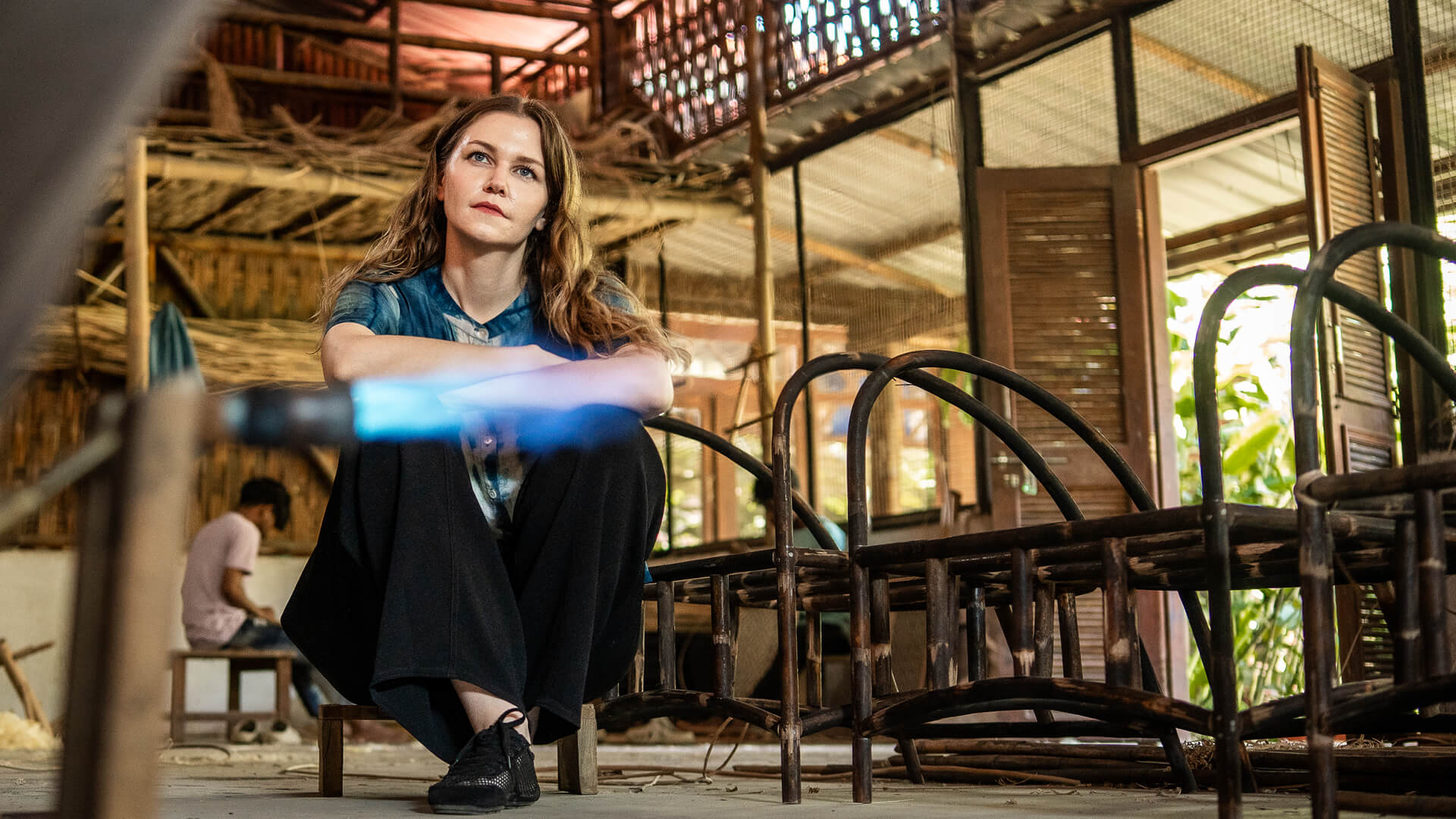
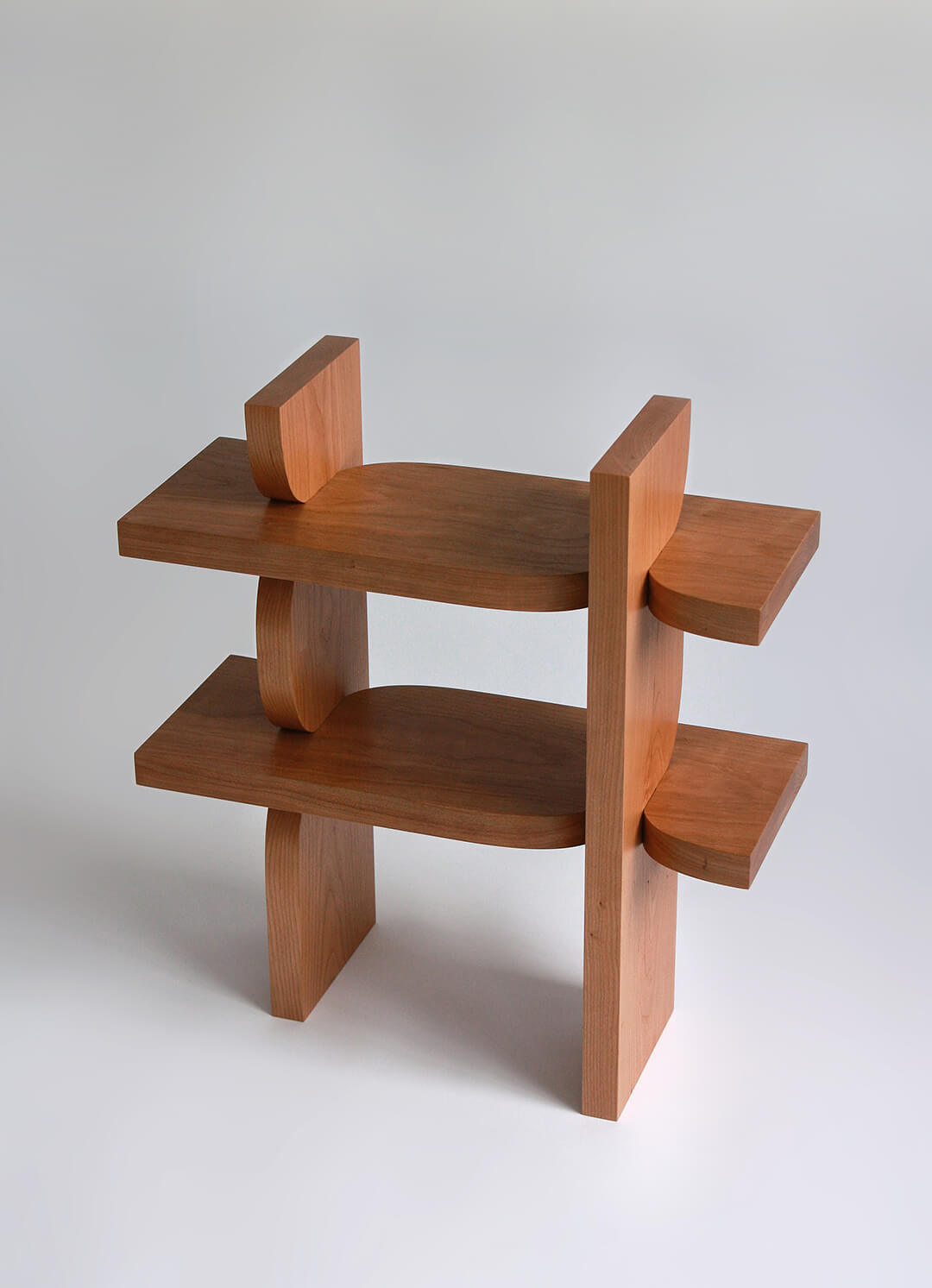
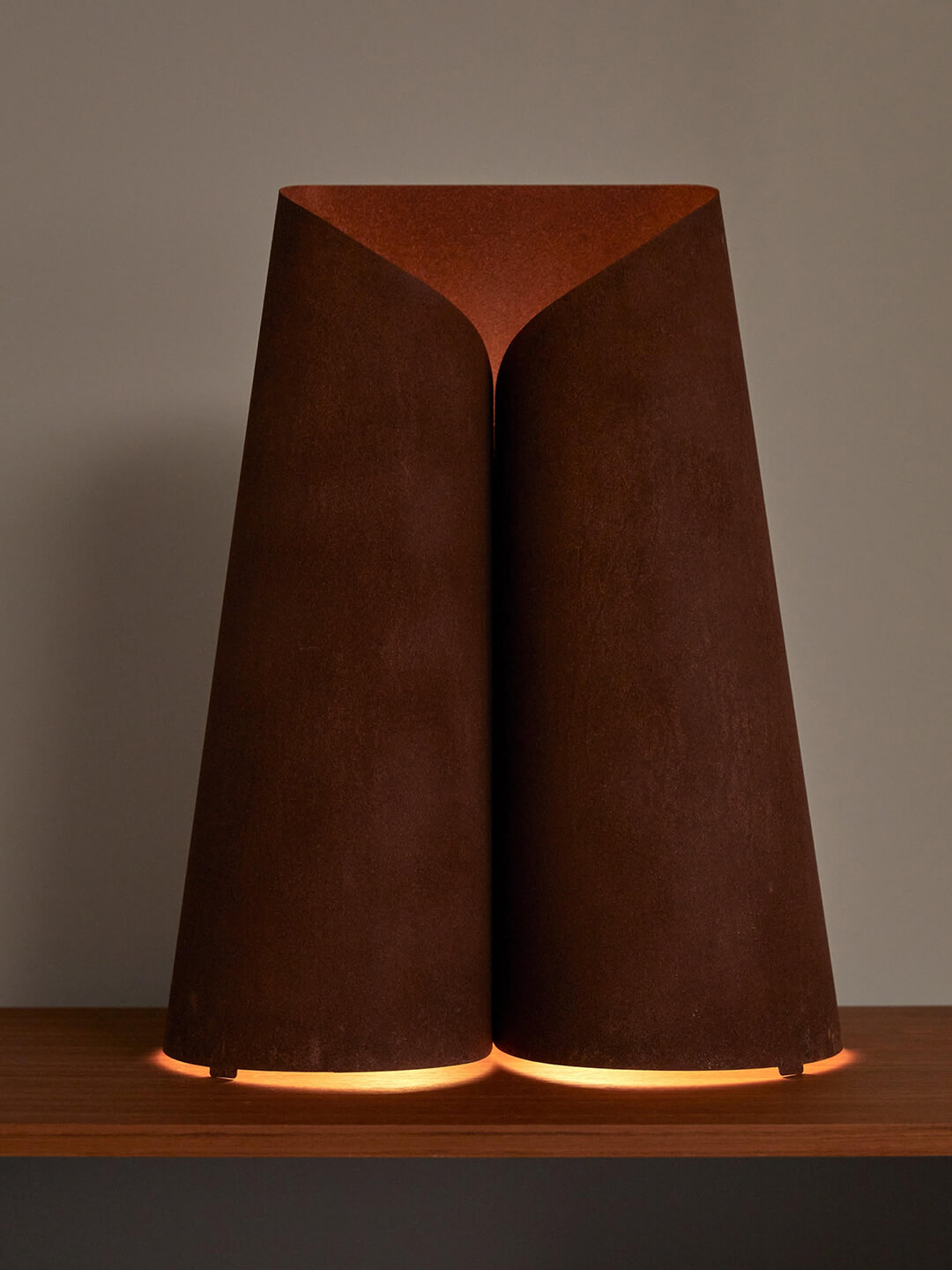
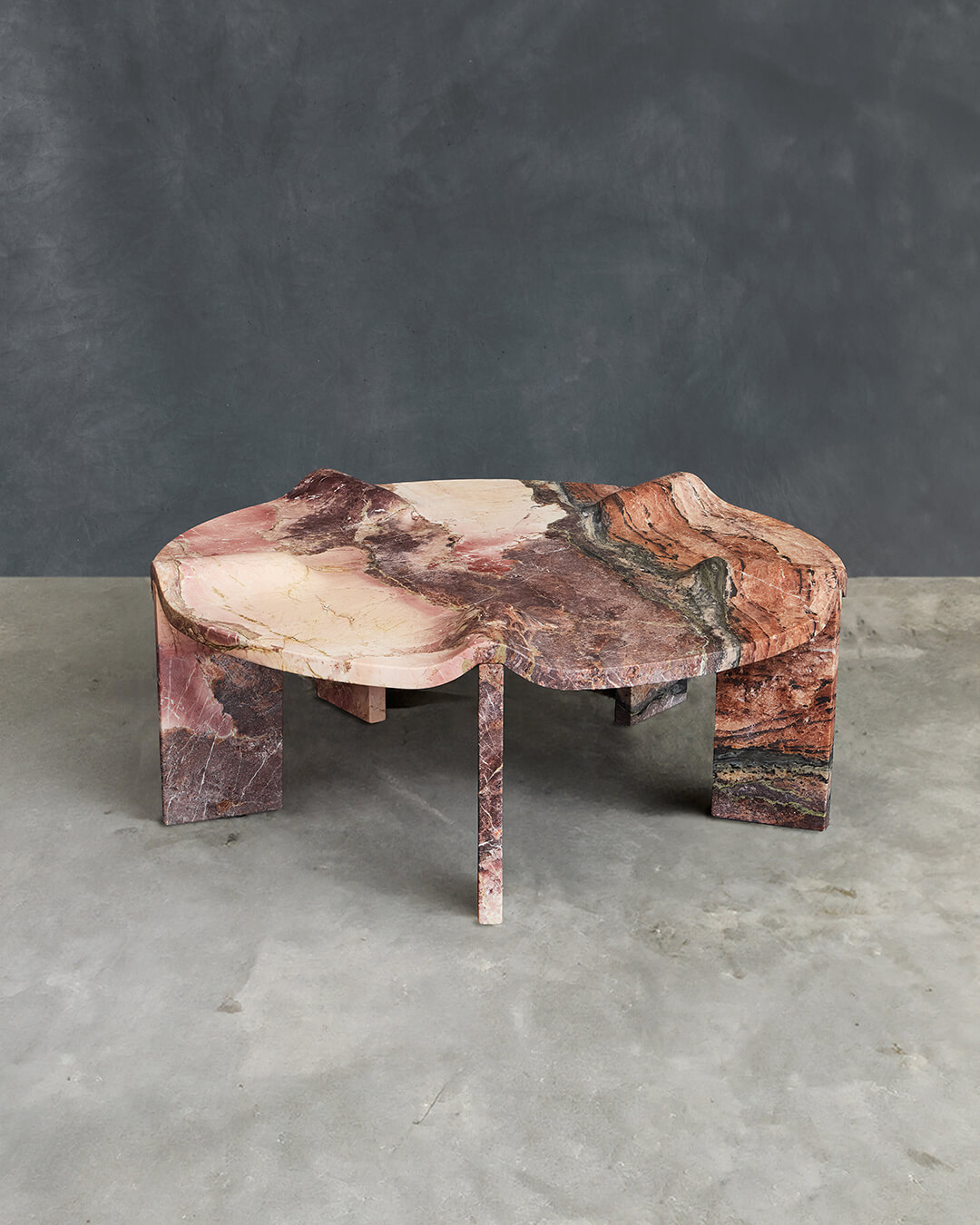
A wooden shelf that tempts disassembly as strongly as it showcases stability. A stainless steel table whose legs breaks through its otherwise seamless top, as if deliberately withholding the last step that differentiates what counts as ‘in-progress’ from ‘finished’. A rusted metal lamp, curling inwards as it prepares to emanate light. A stone table with fluid curves, both relying on and defying the solid rigidity of its material. If the world is to be understood as a suspension between dualities—two equally powerful yet seemingly opposing forces in constant action—then its embodiment can be seen in the works of the Netherlands-based furniture designer Maria Tyakina.
Born in a remote town in Russia, Tyakina’s formative exposure to art and design was through books and films, until she met a local artist in a museum, chiselling bodily images out of wood and stone. It was when she moved to The Hague, The Netherlands, to study Interior Architecture at the Royal Academy of Art, that she closely explored the fields of object-making and furniture design. Combining her love for the process and her fascination with material journeys, Tyakina set up her eponymous furniture and product design practice in Rotterdam rooted in the ethos of “material honesty, craftsmanship and a close relationship between form and making”. Influenced by geological memory, user interaction and physical forms of materials, her designs strive to carry a sense of meaning outside of their intended function.
For Tyakina, her role is not to create but to act as a catalyst—engaging with materials already in a state of formation and refining them through a dialogue of forces. When design is read as continuous rather than originating from a fixed beginning, even the ‘finished’ product remains part of the process—a condition brilliantly articulated in her designs. “Making is not just about producing an object, but about being part of a continuous exchange between people, materials and place,” she tells STIR.
In conversation with Tyakina, STIR explores the designer’s perception of the synthesis of form and material, their role in defining her creations and the significance of retaining ‘the process’ as an active element in the ‘finished’ product.
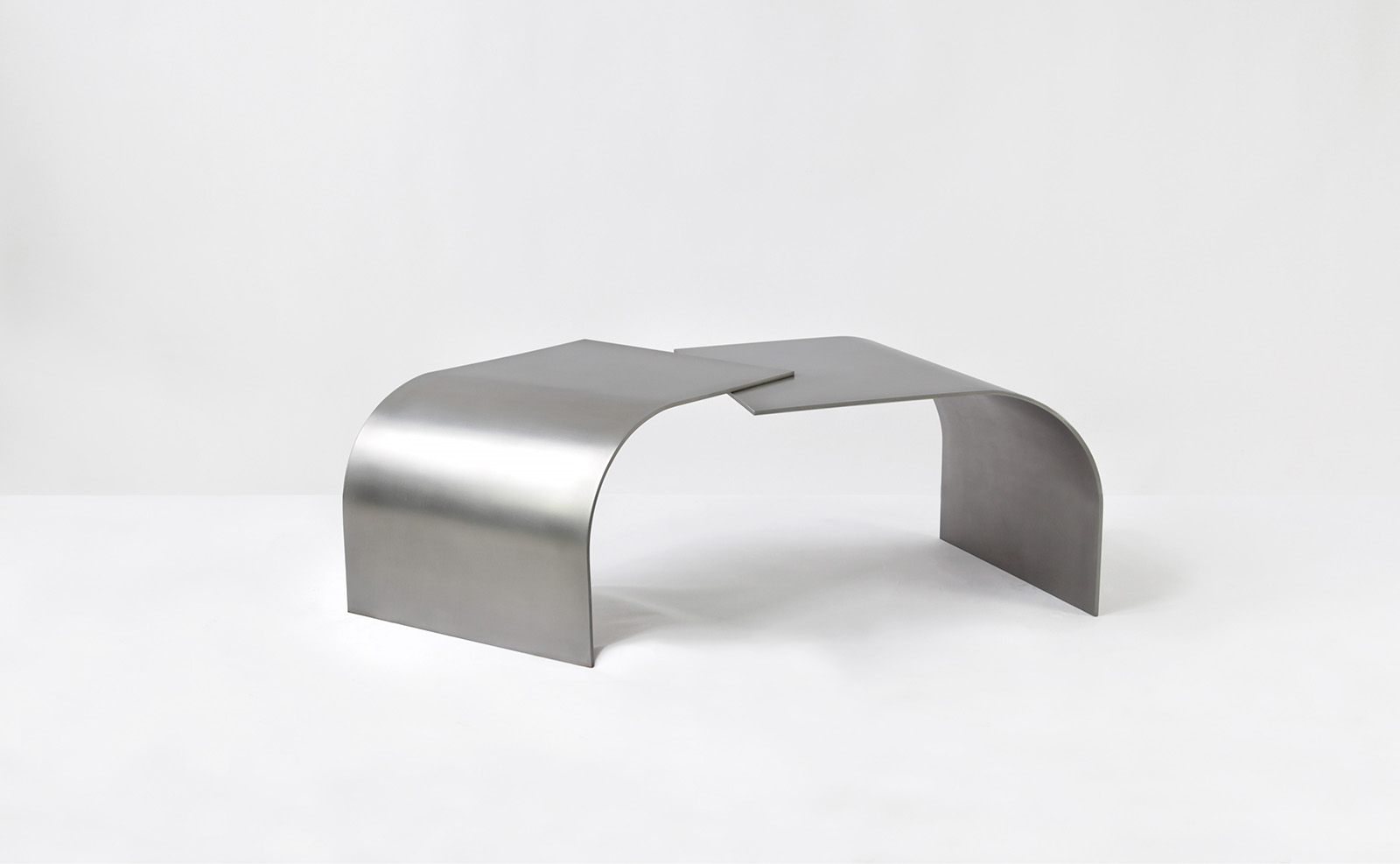
Pranjal Maheshwari: Do you primarily categorise your work as an artistic expression or as the design of functional objects? Which one of these two holds greater importance for you?
Maria Tyakina: I see my work somewhere between artistic expression and functional design. The two are closely connected in my practice, and I don’t approach them as separate. I’m interested in how they can work together, so the object feels both as having a place in everyday life and capturing a certain feeling within the work, without one compromising the other. I am particularly interested in how objects can influence behaviour and how their form can shape the way they are experienced.
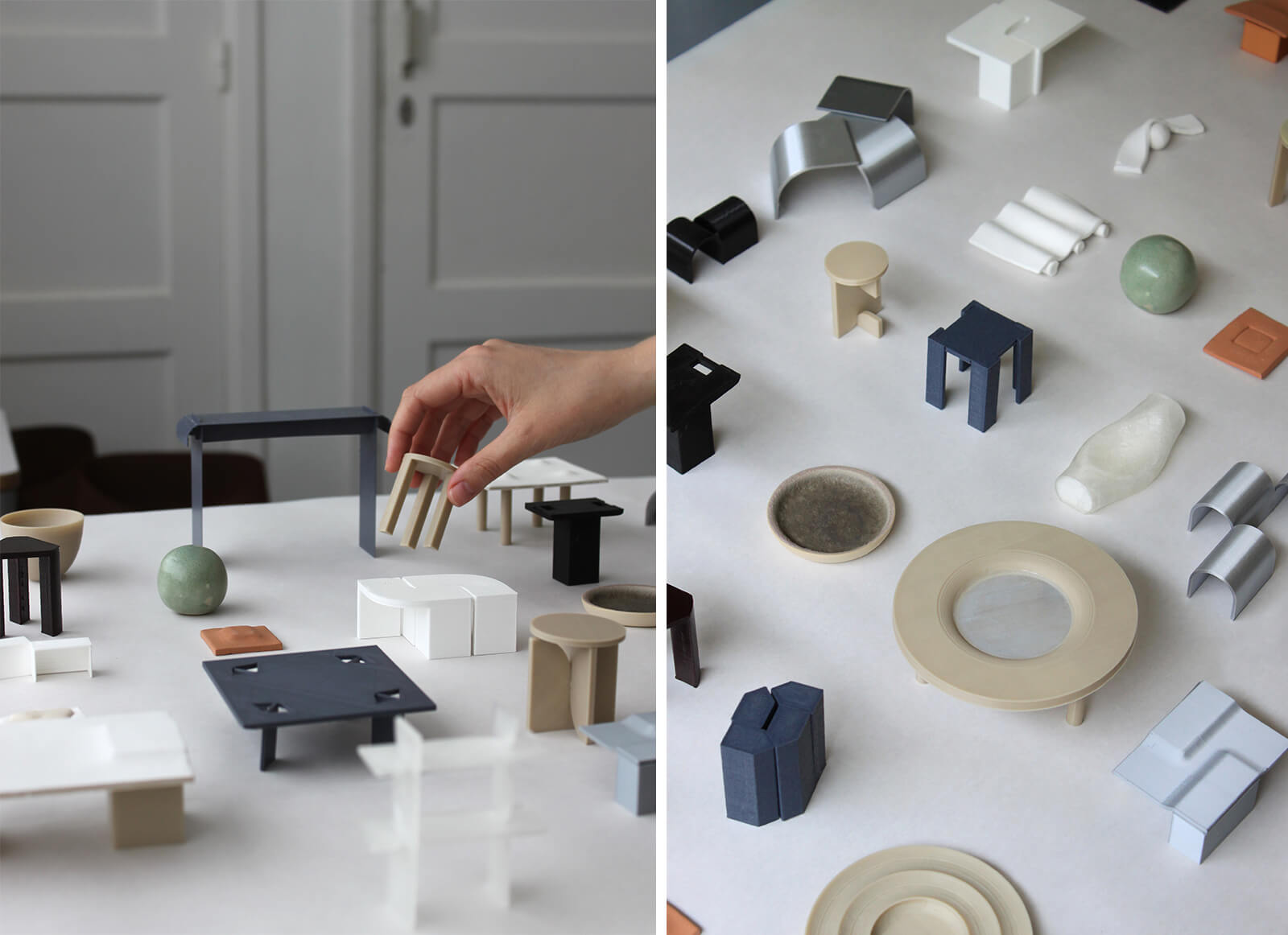
Pranjal: When initiating a new project, do you think of the form first or the materiality? How do these elements interrelate; does one dictate the trajectory of the other?
Maria: When starting a new project, it’s usually not strictly form or material that comes first—it often begins with a more abstract idea, such as a gesture, an interaction or a certain tension I want to explore. From there, form and material develop together.
Material plays a strong role in guiding the process. Its properties, limitations, formal and aesthetic qualities, as well as the associations it carries, naturally influence how the form evolves. At the same time, I shape the material towards a certain expression, creating a continuous dialogue between the two. I’m particularly interested in introducing qualities like gravity and plasticity, where something solid can appear slightly soft or under pressure. It’s in this space that the metaphorical and the physical begin to overlap.
I’m interested in finding ways for a piece to achieve a strong presence with minimal means. This process of reduction, where small decisions carry significant visual and structural weight.
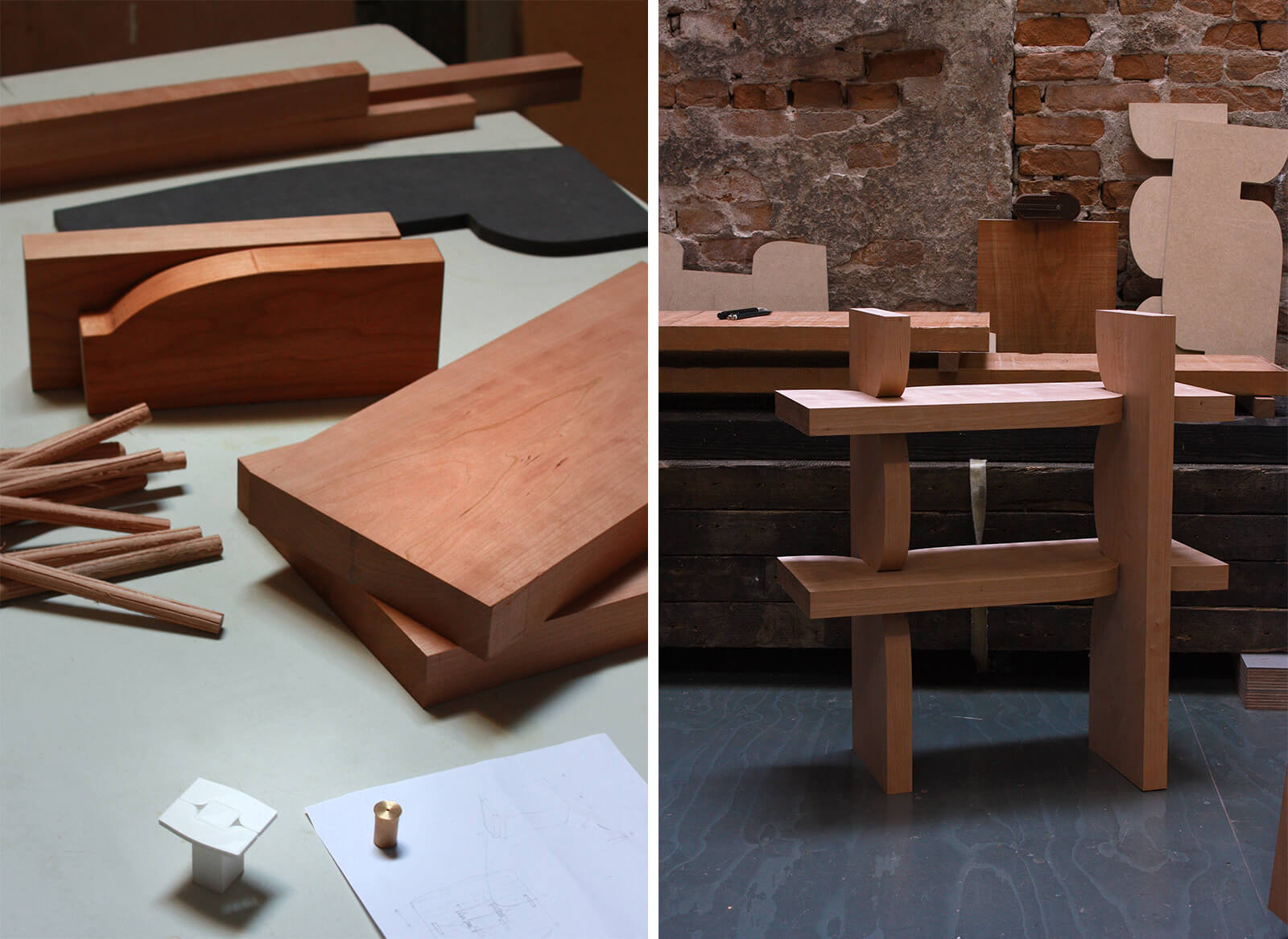
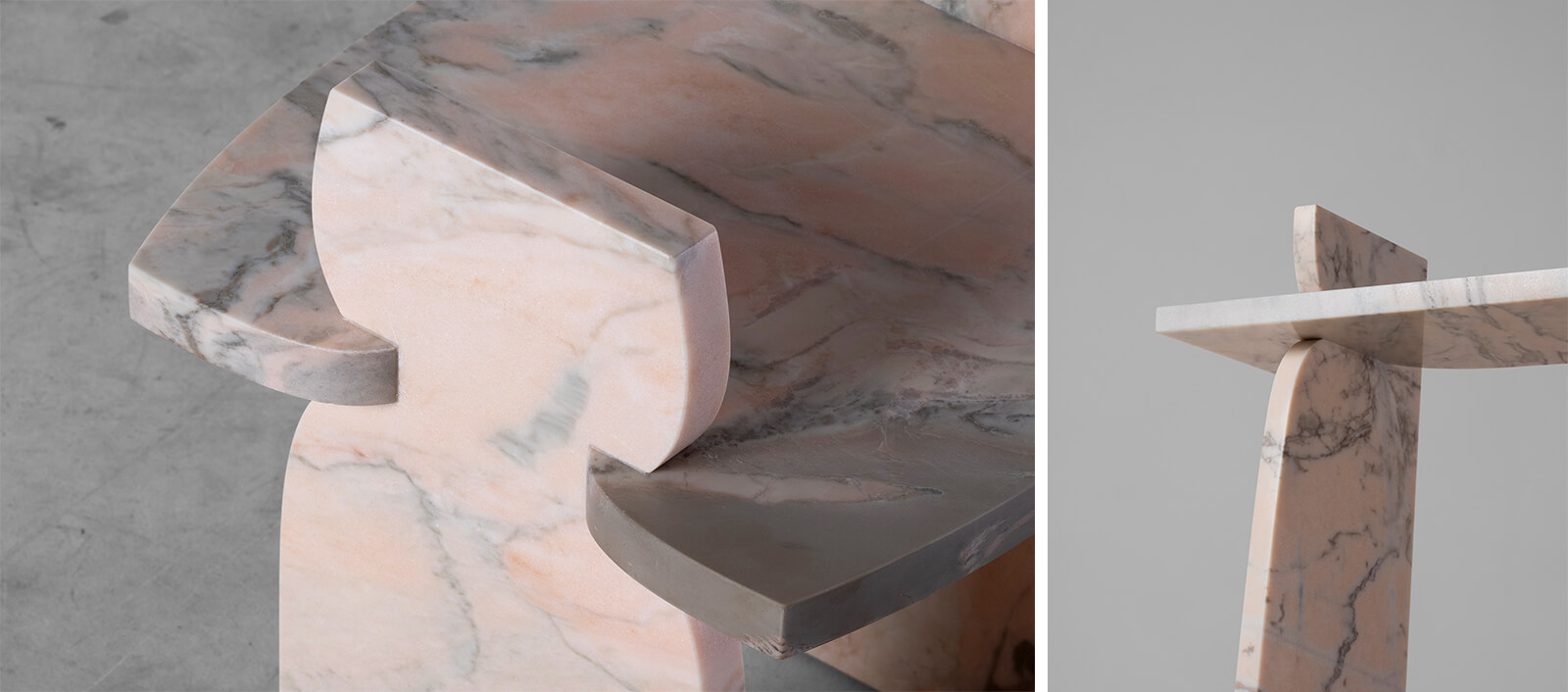
Pranjal: Do you typically envision your designs in isolation, or as part of a broader setting? How does this initial perspective influence your design approach and process?
Maria: I usually begin by thinking about the object quite independently, focusing on its internal logic. Looking at how the elements relate to one another, how the form develops and how the structure resolves itself.
At the same time, I’m aware that the piece will ultimately exist within a space and will interact with the user, so that consideration gradually becomes more important as the design evolves.
I also tend to think of objects as part of a broader family or ongoing series. Certain themes, gestures or tensions reappear across different pieces, sometimes translated through another material or explored in a new way. Often, something discovered in one object becomes the starting point for the next, as if each piece carries a trace of the previous one.
I’m particularly interested in introducing qualities like gravity and plasticity, where something solid can appear slightly soft or under pressure. It’s in this space that the metaphorical and the physical begin to overlap. – Maria Tyakina
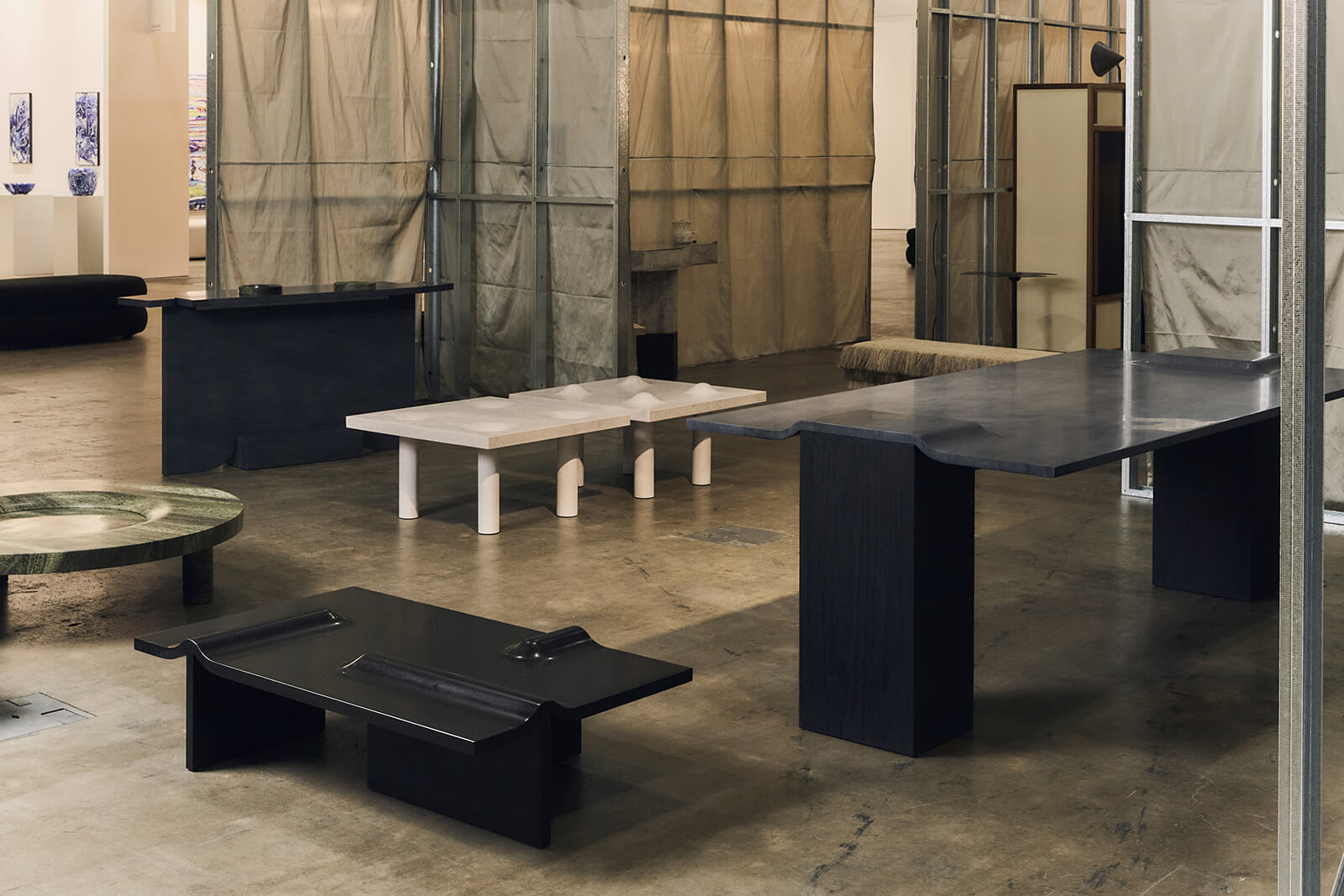
Pranjal: Your portfolio frequently showcases a delicate equilibrium between opposing natural forces, such as compression and tension, positioning them prominently as both formative and cohesive elements within the work. What intrinsic appeal does this duality hold for you?
Maria: There’s something quite fundamental about these forces. They exist in both physical and emotional senses. I think I’m drawn to this duality because it allows form to emerge from a condition rather than from a fixed idea. Opposing forces like compression and tension introduce a sense of necessity where the object feels as though it has arrived at its shape through a process of negotiation rather than imposition.
What interests me is that these forces are both structural and perceptual. They define how a piece stands and holds itself, but they also influence how it is read, whether it feels stable, pressured, balanced or on the verge of shifting. This creates a subtle ambiguity, where the object exists between resolution and movement. There’s also something inherently universal about these conditions. They operate beyond specific materials or contexts, which allows the work to connect on a more intuitive level.
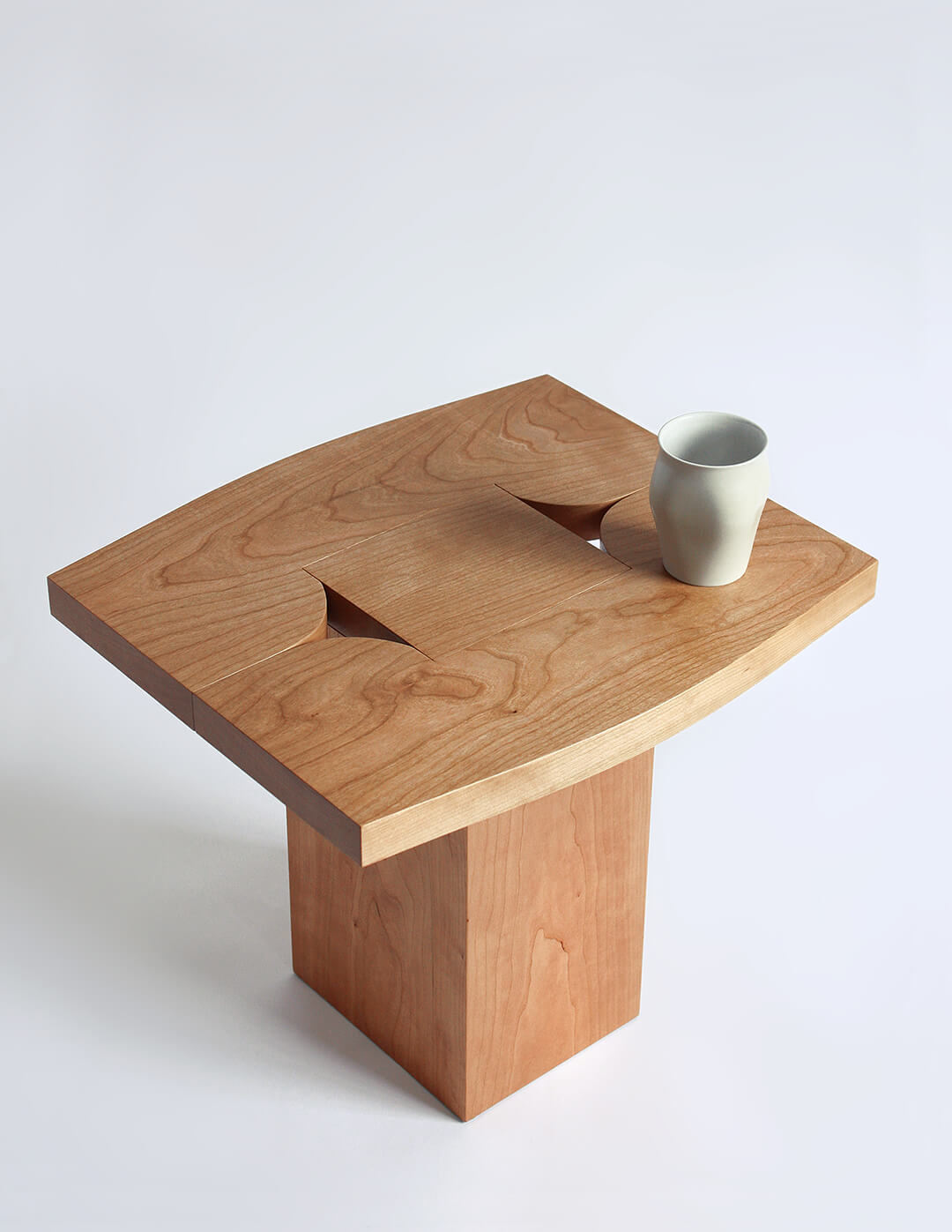
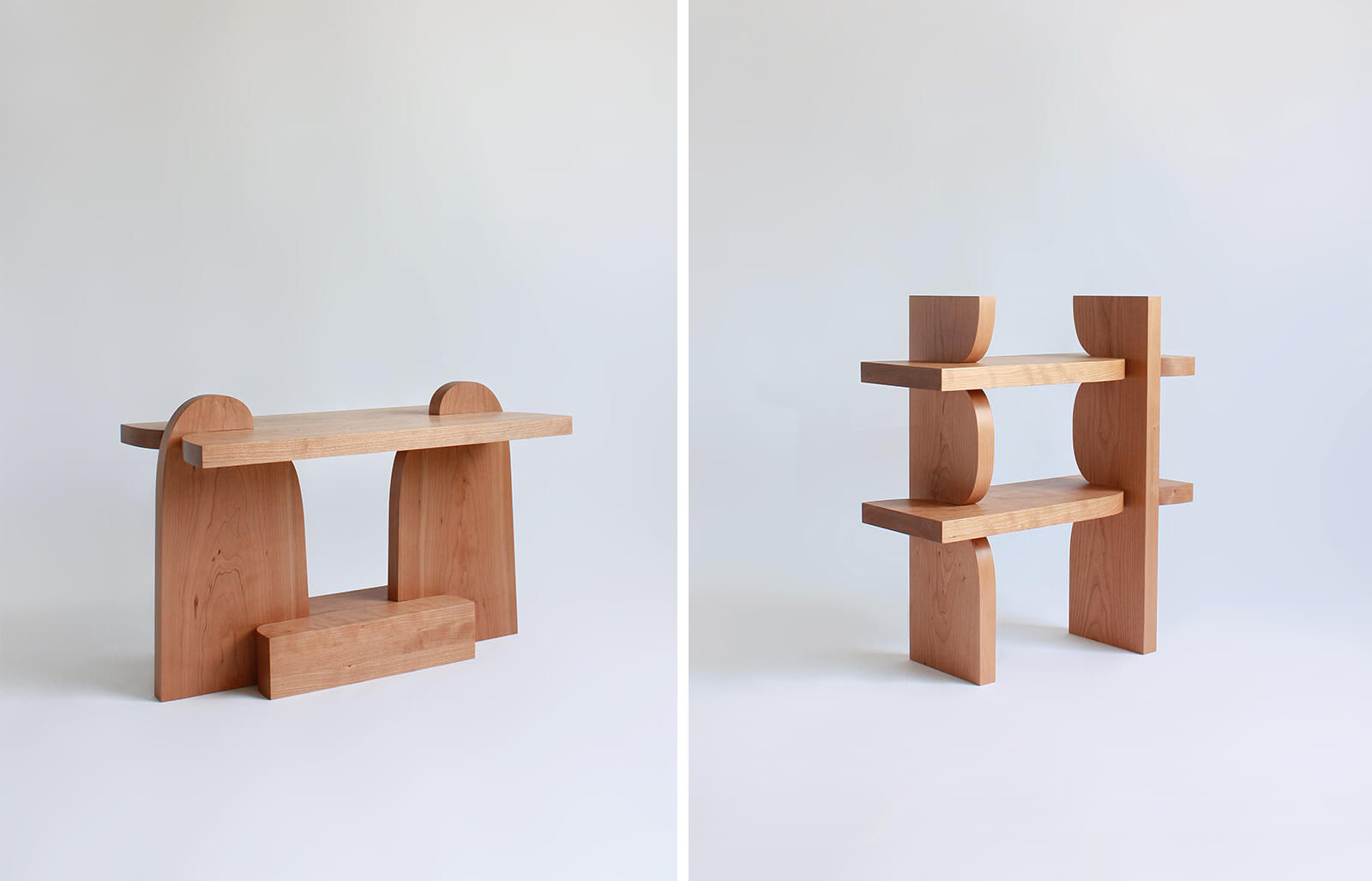
Pranjal: Your designs appear to inherently celebrate the process of their formation, perhaps even surpassing the final product in significance. What do you think makes the process a spectacle visible in the ‘finished’ product?
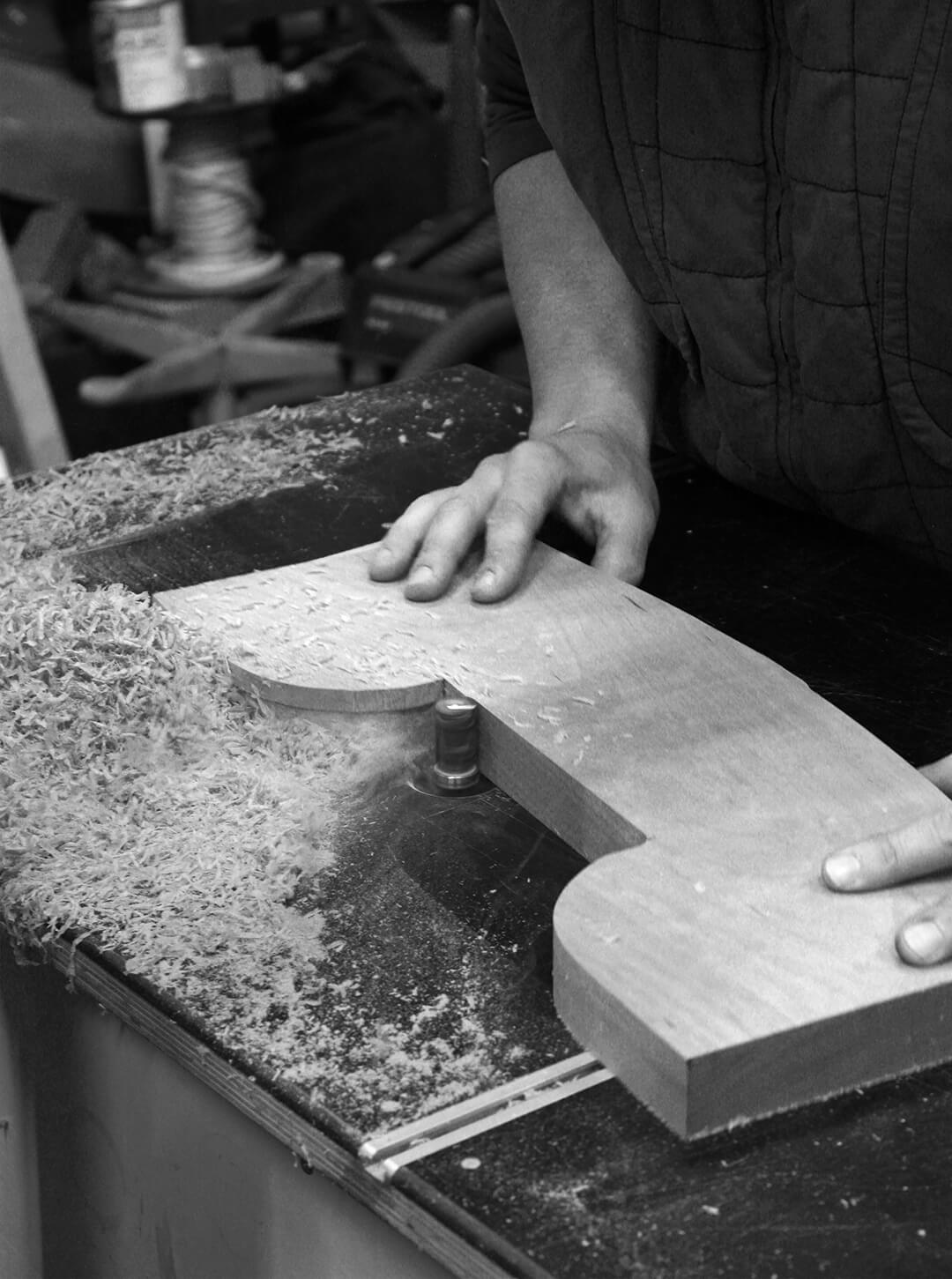
Maria: I’m interested in allowing the logic of making to remain readable, so the piece carries a sense of how it came into being. In that sense, the 'finished' object isn’t separate from the process.
What interests me is that the process leaves traces, and these become part of the expression of the work. Rather than concealing them, I try to let them remain present. I’m often drawn to a state where the material still feels active in its own right. This was something I explored during my time at the Shakti Design Residency in India, where I worked in a more immediate way, allowing the material to remain raw and letting each step of making stay visible in the final piece. In this way, the work becomes a way of celebrating the material and questioning what we consider finished or refined.
Pranjal: Your recent collection, Geologies of Memory, chronicles the history of a material from its geological genesis to the finished piece. This is an ethos visible in your other works as well. Why is the articulation of this material narrative so significant for you?
Maria: Materials are not neutral; they carry a history, a process of formation and a certain presence that exists long before they enter a design context.
What interests me is the idea that making is not the beginning of the object, but a continuation of something already in progress. By acknowledging this, the role of the designer shifts from imposing form to engaging with a material that already has its own logic and history.
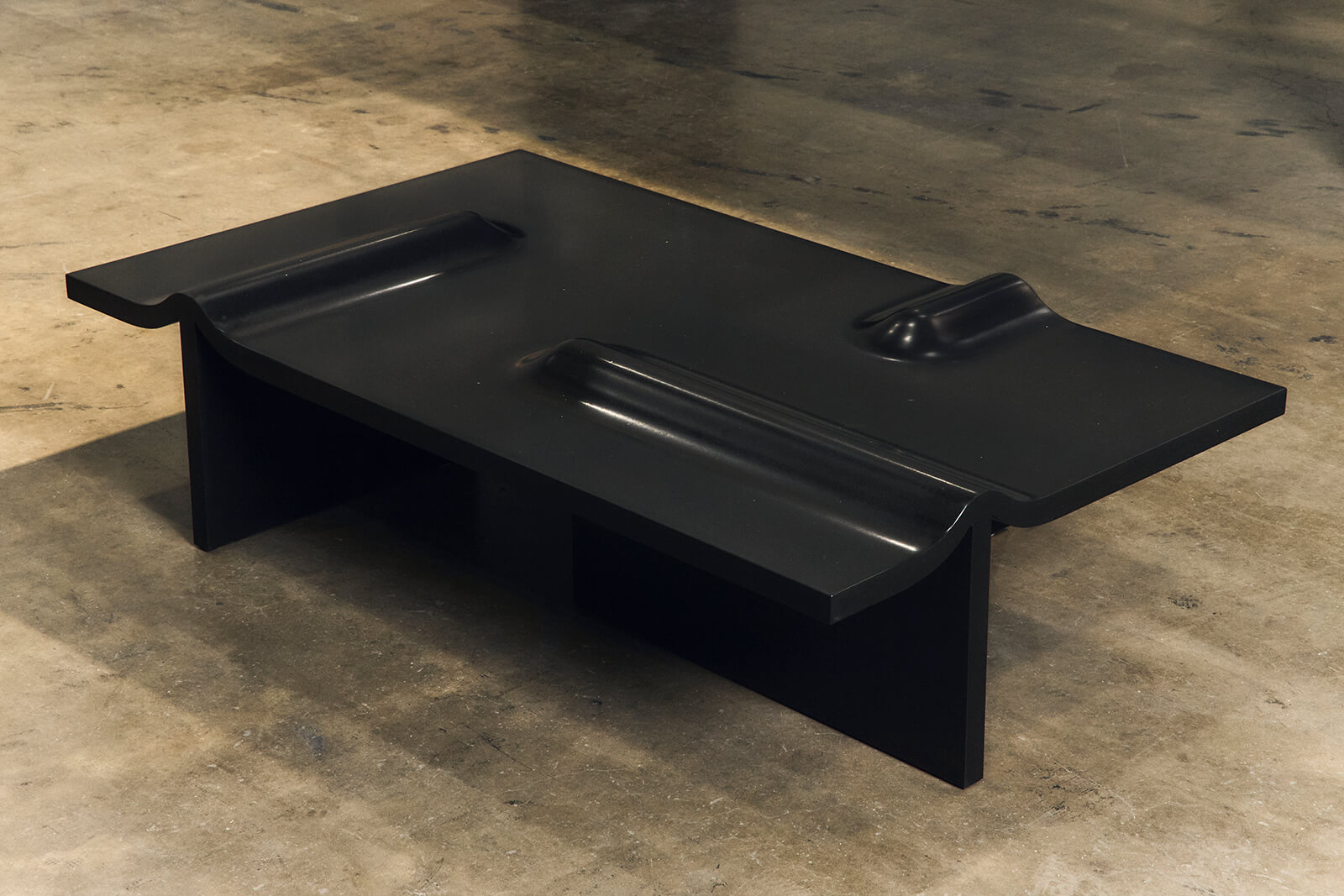
In Geologies of Memory, developed in collaboration with Agglomerati, I was interested in making that timeline more visible. The project approaches form as something accumulated rather than imposed, shaped through pressure, time and the negotiation of opposing forces. Stone becomes a model for this process. Its permanence, formed through geological time and tectonic pressure, frames ideas of endurance, restraint and accumulation.
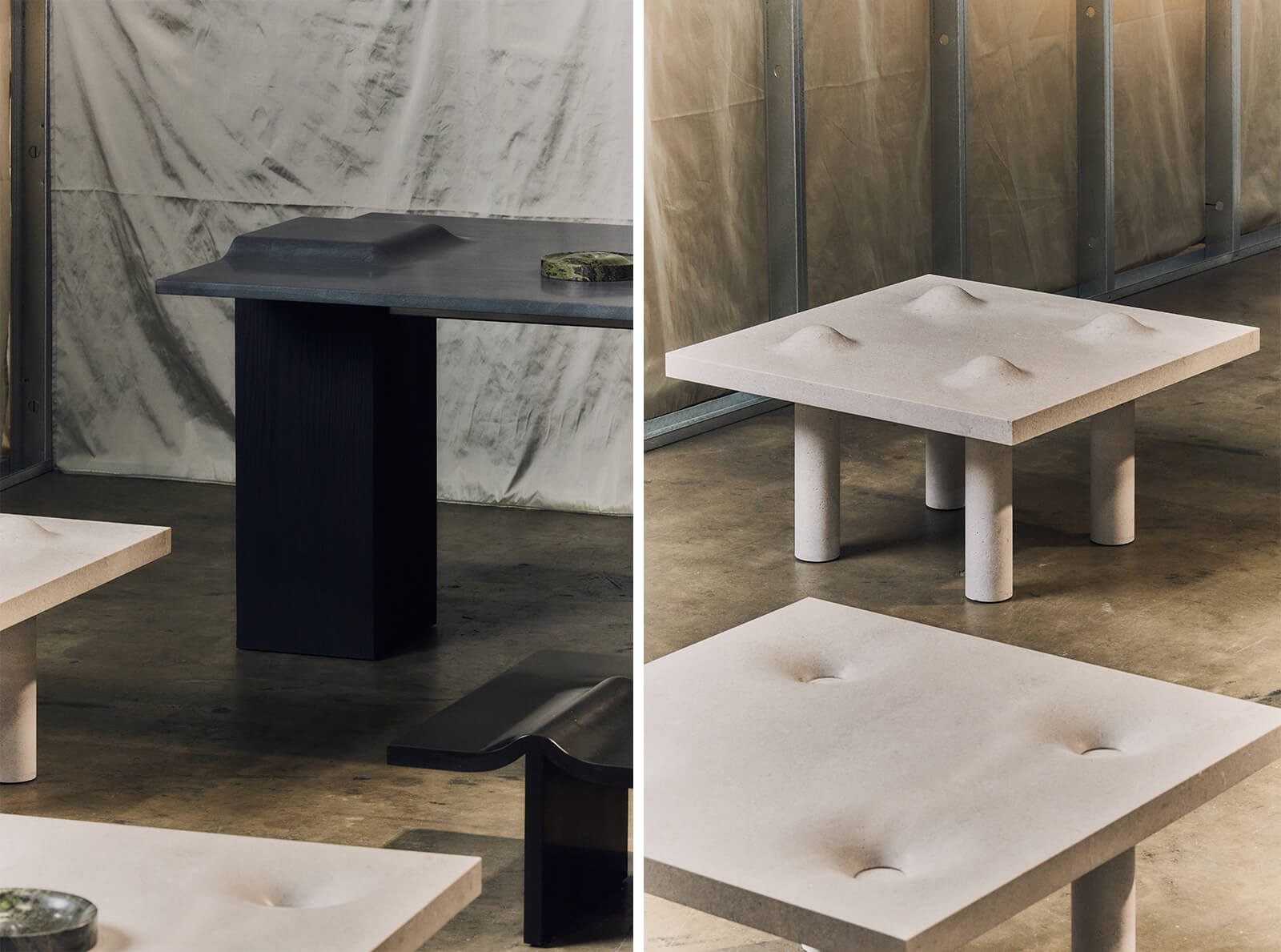
Pranjal: Over the years, what do you think has changed in your approach as a designer and as a practice? Are there any art forms, designs or cultures—traditional, regional or contemporary—that have influenced your journey?
Maria: Rather than trying to control everything from the beginning, I’m more open to letting the material and the making process guide certain decisions. I’ve become more comfortable with uncertainty and more attentive to how material, making and form can guide decisions along the way.
I’m drawn to practices both traditional and contemporary that emphasise material honesty, craftsmanship and a close relationship between making and form. I’m also influenced by sculptural practices, particularly those that explore balance, tension and spatial presence. These references don’t translate literally into my work, but they shape how I think about objects. How they occupy space, how they relate to the body and how they carry meaning outside their function.
Pranjal: You recently visited India and worked with Indian ateliers and artisans. What did you take back from your experience that is going to have an implication in your future work?
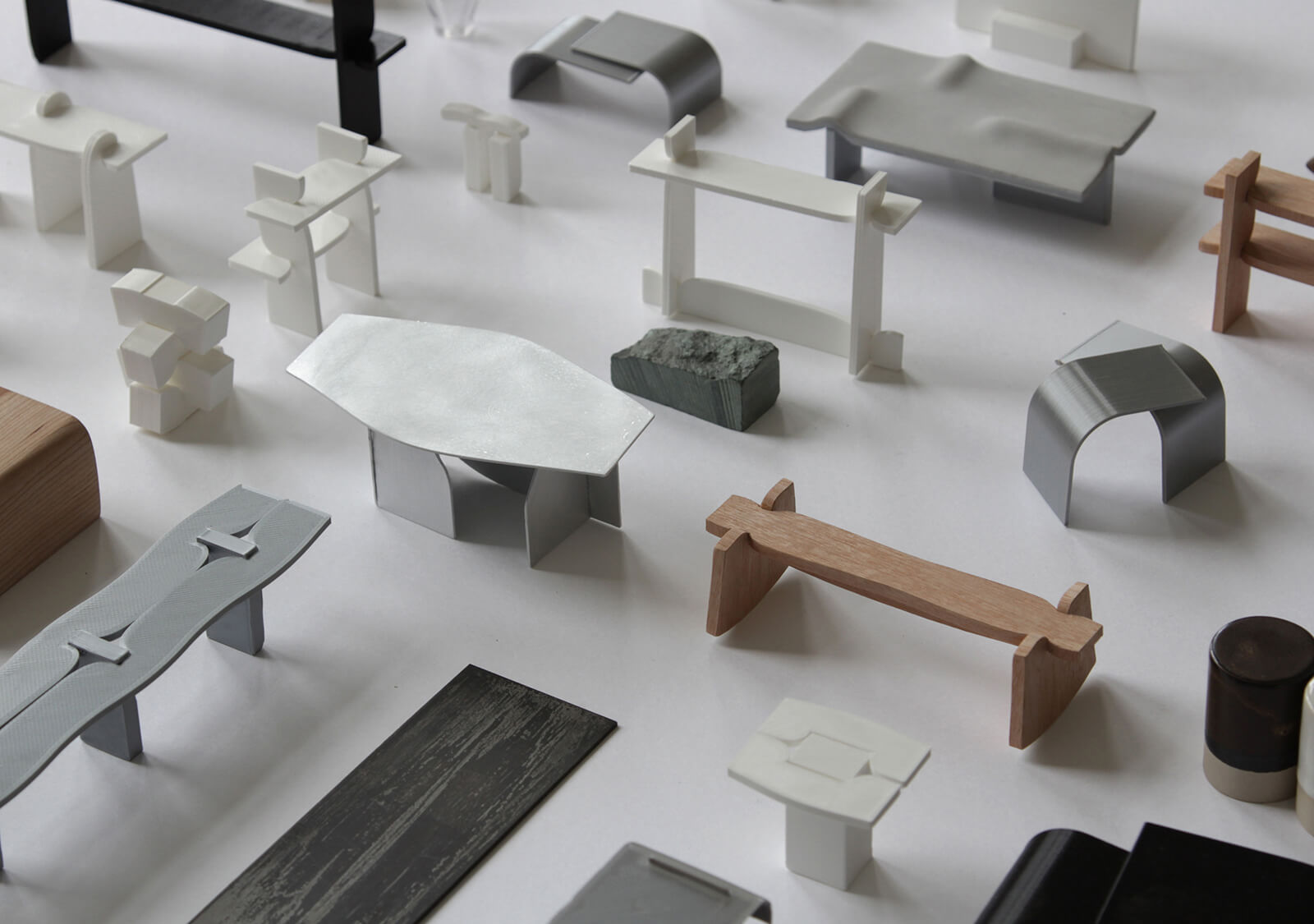
Maria: During Shakti Design Residency and spending time at the Heirloom Naga Centre in Nagaland, what struck me most was how design, craft and daily life are naturally intertwined. Decisions are made through doing, through direct contact with the material and through the knowledge of the artisans rather than from a predefined concept. It reinforced the idea that making is not just about producing an object, but about being part of a continuous exchange between people, materials and place.
It made me reflect on how much of my own process is shaped by distance working through drawings, models or digital tools, whereas their making happens in contact with material and environment. That proximity creates a different kind of clarity.
Pranjal: Is there a material you have always aspired to work with, but did not get the opportunity? Conversely, are there any materials you avoid working with?
Maria: I’ve had the opportunity to work with a wide range of materials, and that diversity is something I value a lot. I’m generally drawn to natural and locally sourced materials, as they carry a certain immediacy and connection to place.
At the same time, I’m increasingly interested in working with reclaimed or repurposed materials as a way of extending the life of what already exists and engaging with material as something that carries time and prior use.
When a material feels too detached from its natural qualities or is overly processed, I find it harder to connect with it in a meaningful way. As someone working with physical matter, I also feel a responsibility toward how materials are used. I try to avoid those that cannot be easily recycled or reintegrated, and instead focus on materials that allow for a more considered approach to making.
Rather than trying to control everything from the beginning, I’m more open to letting the material and the making process guide certain decisions. – Maria Tyakina
Pranjal: In the process of making, what is more exciting for you: the moment right after you start a new project, or the moment right before finishing one?
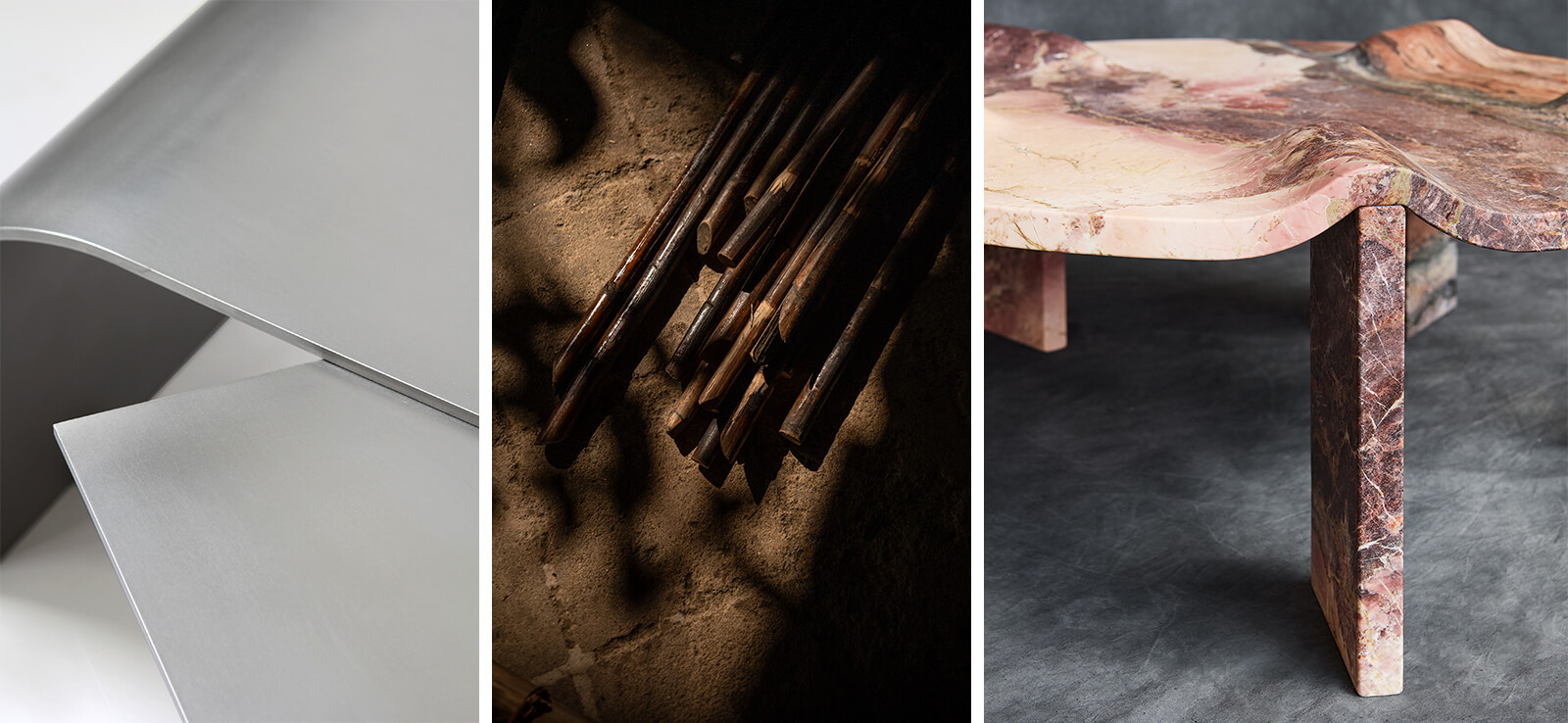
Maria: I love the early stages of a project. Working through models and prototypes feels open and instinctive. It’s an expansive moment where I can explore multiple ideas at once.
That said, there is a moment after all the decisions and reductions when the piece begins to align and become clear, and nothing quite compares to that feeling. There’s something almost magical in seeing something that existed only as a thought or feeling take on a physical presence.
Pranjal: What is NEXT for you?
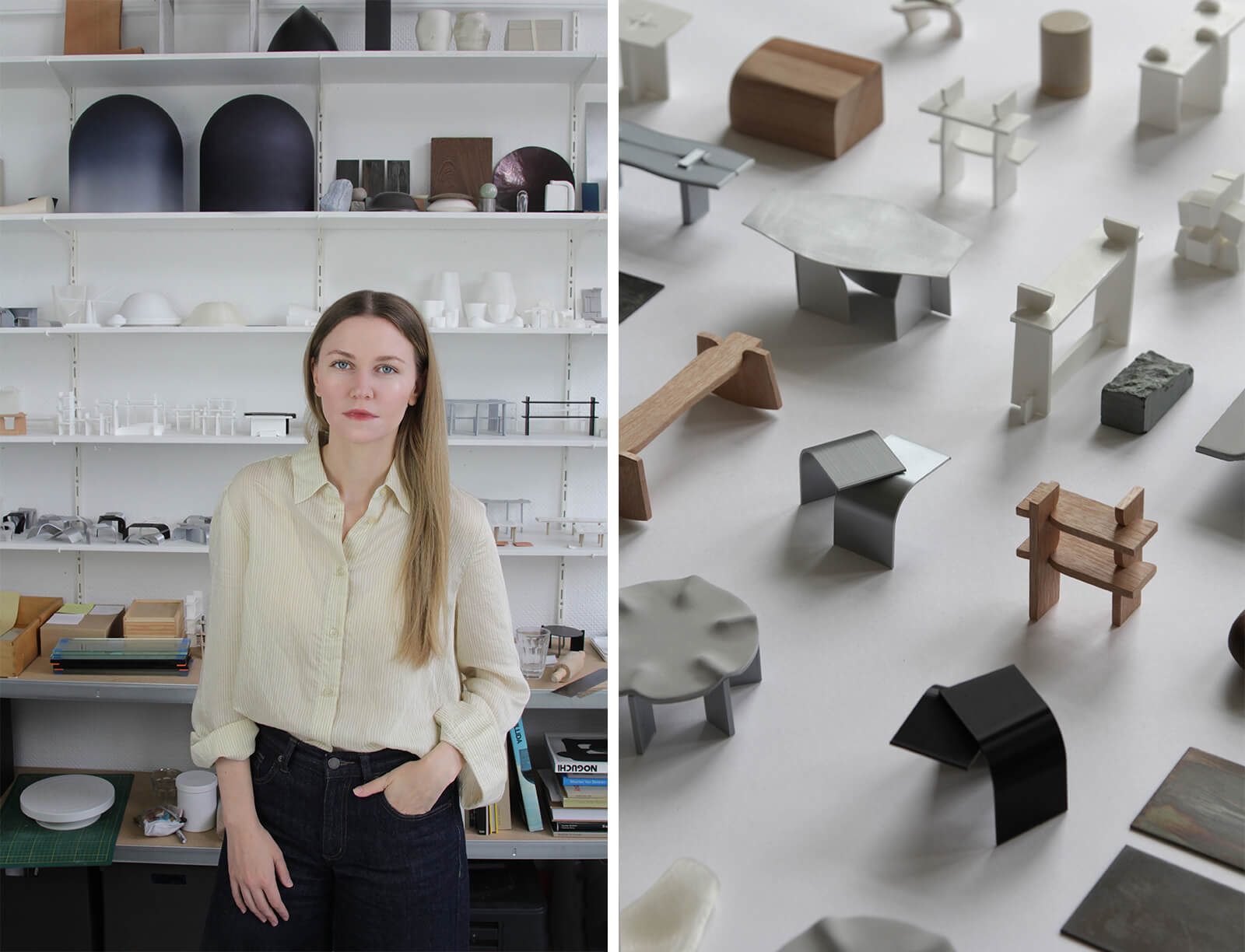
Maria: This spring, I will be doing a residency at the EKWC [The Netherlands], where I’m looking forward to focusing on ceramics and exploring new directions within my practice. I see it as an opportunity to work more deeply with the material and to further develop ideas around process, interaction and the relationship between material and structure.
by Pranjal Maheshwari Oct 13, 2026
Through furniture, art and films, the showcase at the Ian Potter Centre in Melbourne advocates for biophilic material cultures as an antidote to planetary degradation.
by Pranjal Maheshwari Oct 12, 2026
The exhibition reimagines the 20th-century Scottsville residence of the American sculptor and his partner, ceramicist Nancy Jurs, curated by their daughter Alison Castle.
by Chahna Tank Oct 08, 2026
Javier Guzman Cervantes and Ulises Morin Arzola tell STIR about their ‘open code’ approach to design, working through a process of stockpiling and the idea of ‘queering’ materials.
by Mrinmayee Bhoot Oct 08, 2026
The game designer discusses their work and its manipulation of scale, scientific data and non-human perspectives to create speculative futures in conversation with STIR.

make your fridays matter with a well-read weekend
Enter your details to sign in
Don’t have an account?
Sign upOr you can sign in with
a single account for all
STIR platforms
All your bookmarks will be available across all your devices.
Stay STIRred
Already have an account?
Sign inOr you can sign up with
Verification link sent to check your inbox or spam folder to complete sign up process
Tap on things that interests you.
Select the Conversation Category you would like to watch
Please enter your details and click submit.
Enter the 6-digit code sent at


Maria Tyakina on narrating material journeys through balance and tension in design
by Pranjal Maheshwari | Published on : Mar 24, 2026


 Sign in with Google
 Sign in with email
What do you think?