Design09 mins. read
Design Democracy 2026 puts regional design at the heart of Made in India
by Jincy IypeOct 15, 2026




by Akash Singh, Zohra KhanPublished on : Feb 06, 2026
Is it a wave? Is it a particle?
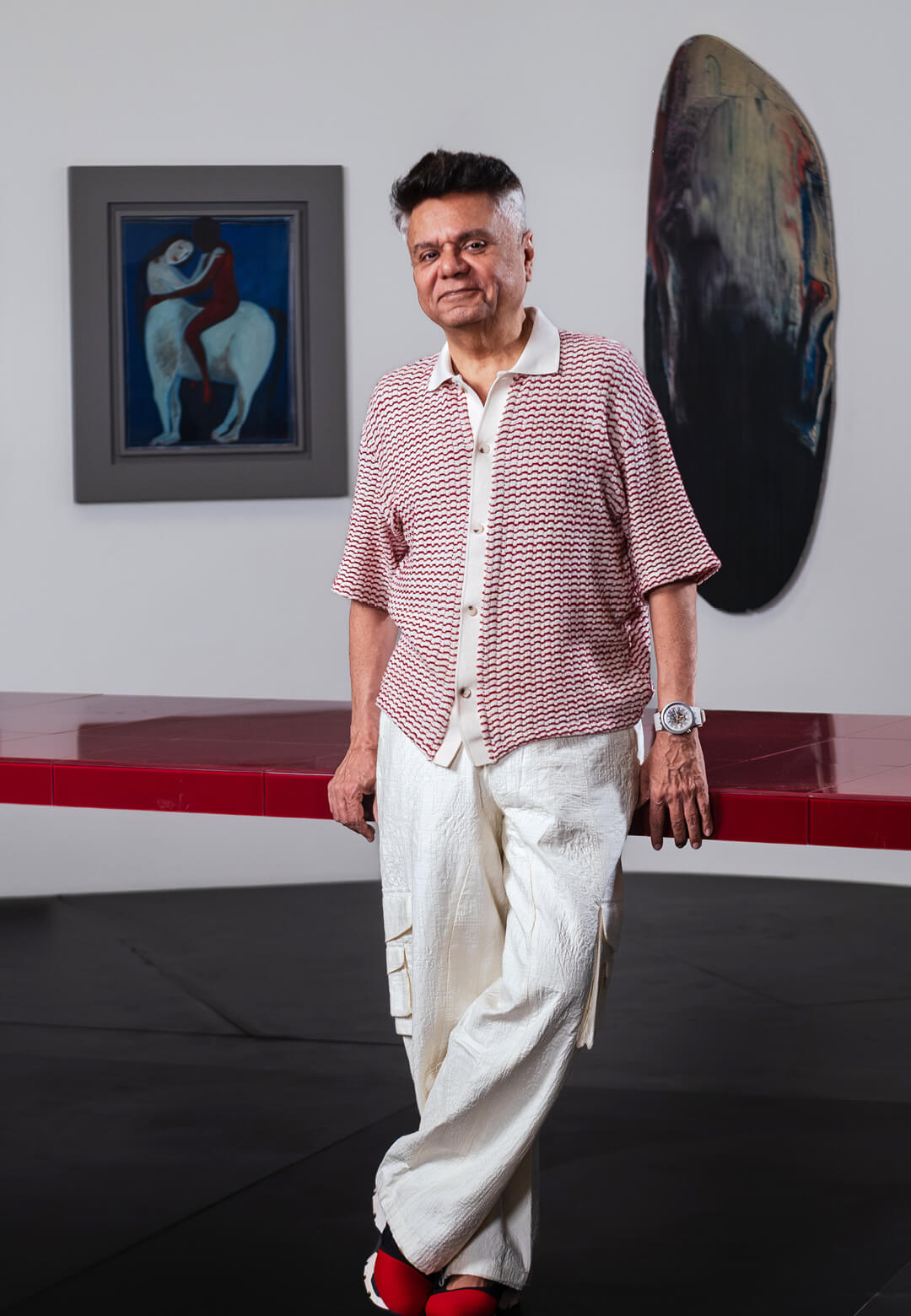
One of the most bewildering (and counterintuitive) ideas of physics has been how, at the minutest of scales, sub-atomic particles like photons and electrons are undeterministic—we cannot predict their future. But on a scale visible to the human eye, the world is largely predictable. Using Newtonian physics, you can reasonably predict the path of a ball someone might have thrown (hopefully not towards you). It’s fascinating to think about how prevalent paradoxes are and how they show us the gaps in our collective understanding of the world. It is their inherent nature to be uncomfortable that often drives most people away, but also happens to intrigue a few. Pinakin Patel, one of the most prolific design polymaths of India—self-taught in the disciplines of architecture, interior design, furniture design and fashion—is one of them.
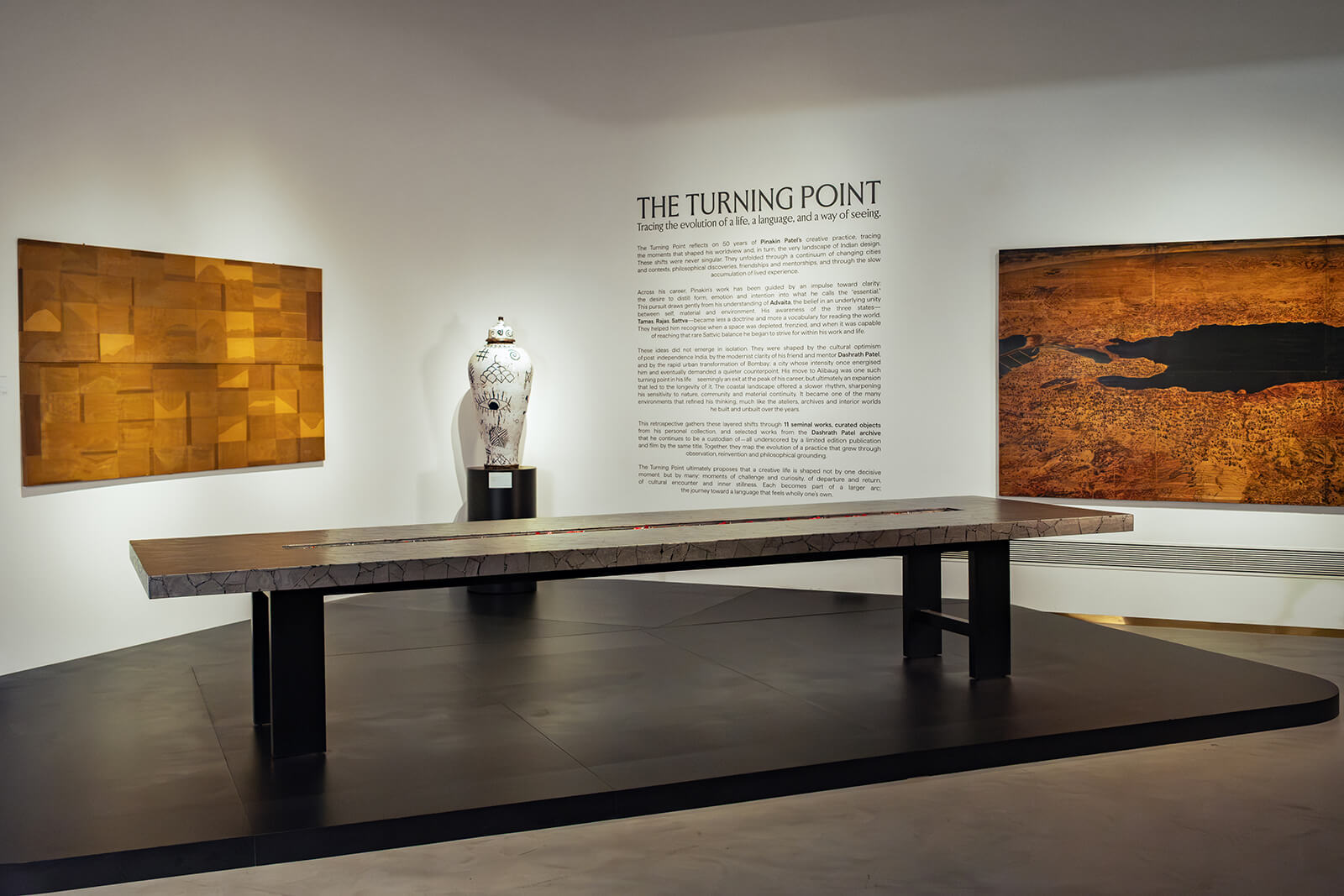
Instead of a visual style, paradoxes seem to define Patel’s oeuvre—and perhaps his life. The Indian designer’s ongoing retrospective, The Turning Point, exhibited at the Nilaya Anthology in Mumbai and curated by Pavitra Rajaram, celebrates 50 years of his creative practice through the presentation of 11 seminal works. As a tribute to his mentor, Dashrath Patel, the exhibition also features select works of the late Padma Bhushan awardee, one of the mavericks of Indian design. STIR recently visited the showcase and explored its offerings through a refreshing walkthrough led by Pinakin Patel himself.
I prefer self-growth and exploration over being identified through a consistency of style or medium. – Pinakin Patel
The curatorial statement notes the convergent nature of Pinakin Patel’s work, which has been guided by an impulse towards clarity: a desire to distil form, emotion and intention into what he calls the 'essential'. This impulse was born midway along his journey, when he found something amiss and picked up Indian philosophy, where he discovered the concept of Advaita (non-duality) extending to the idea that there is unity between the self, material and environment. His philosophy further evolved when his understanding of the three states of being—Tamas, Rajas and Sattva—helped him further develop a sense of creative consciousness, where he learned how everything keeps shifting between these and how to identify them. He exercised these learnings transformatively, with this ancient philosophy informing his modern design approach. This philosophical awakening emerges as one of the key turning points of his career—made tangible through the works brought together in The Turning Point exhibition.
Patel articulated to STIR about the inherent divergence of his journey, of his perpetual exploration. He said, “I am a self-taught designer. I have been a student all my life. Each time I see the world around me changing, I respond to it, in the meantime, learning a new discipline. For me, it has been one continuous journey, but there have been several turning points, and I believe these have been shown here.” The Turning Point explores this dichotomy of convergence and divergence in Patel’s practice, revealing how the two come together to shape his unique design vocabulary—one that balances the restrained wisdom of a monk with the unabashed curiosity and jest of an infant.
Life itself is at the centre. You can’t remain on the periphery. – Pinakin Patel
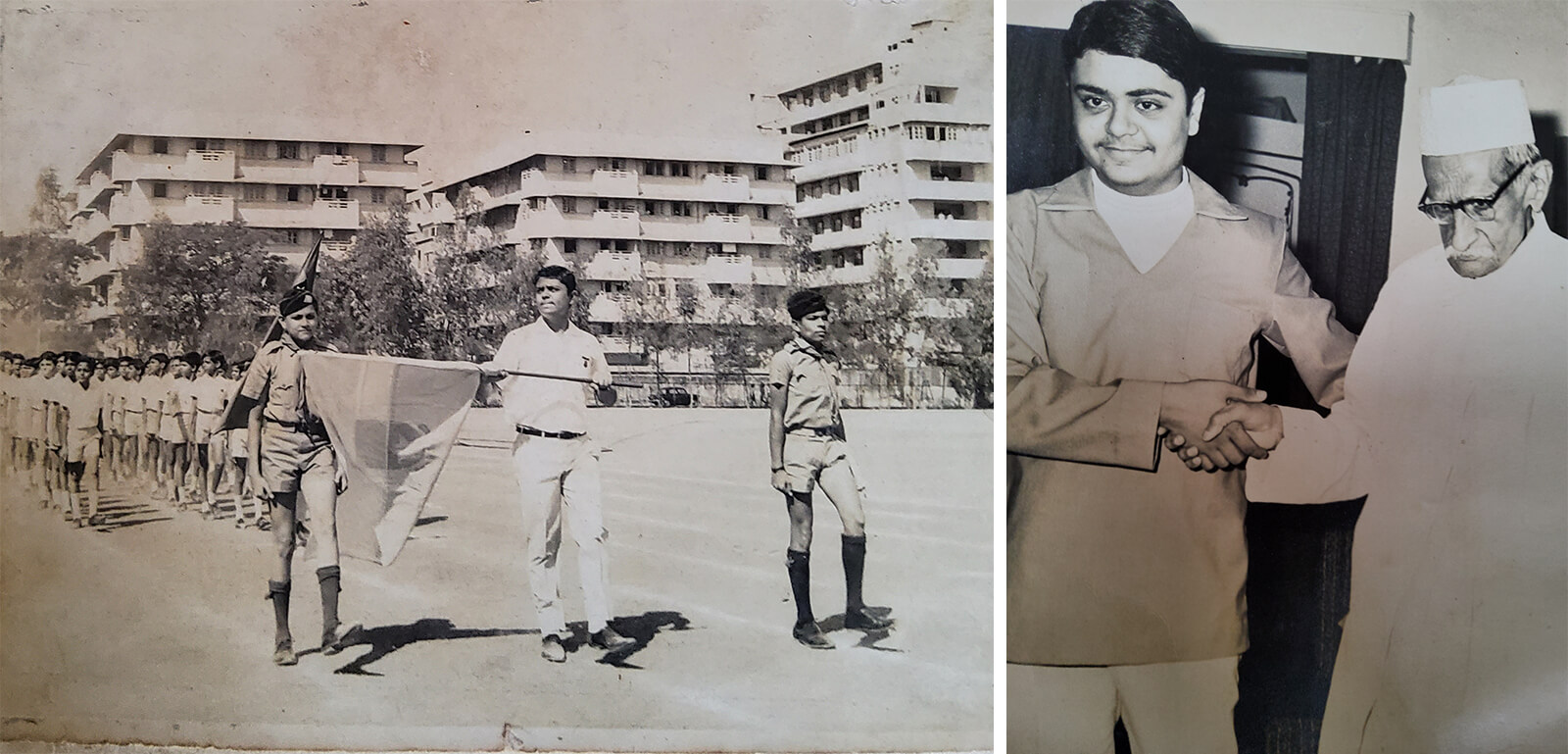
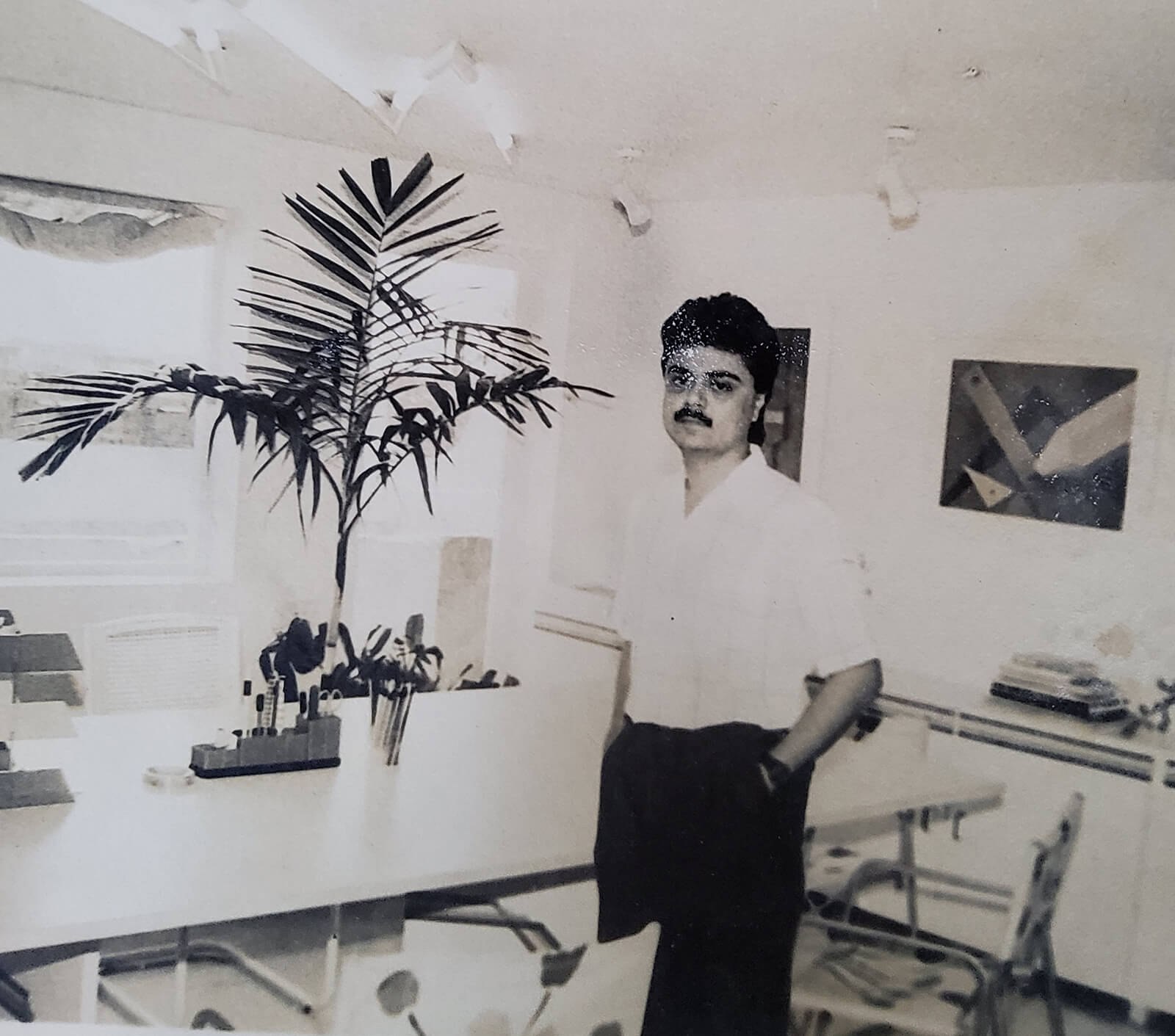
Though it manifests, in the long run, as effortless mutability, Patel admits it is an everyday practice. “As one gets older, you start becoming hard-edged. Opinionated. Rigid. When I started working on this exhibition with young creatives, I did not always align with the lens through which they saw my work. I wouldn’t have interpreted it that way. But the child in me asked me to let them do their job. Maybe I’ll learn something else from this as well.”
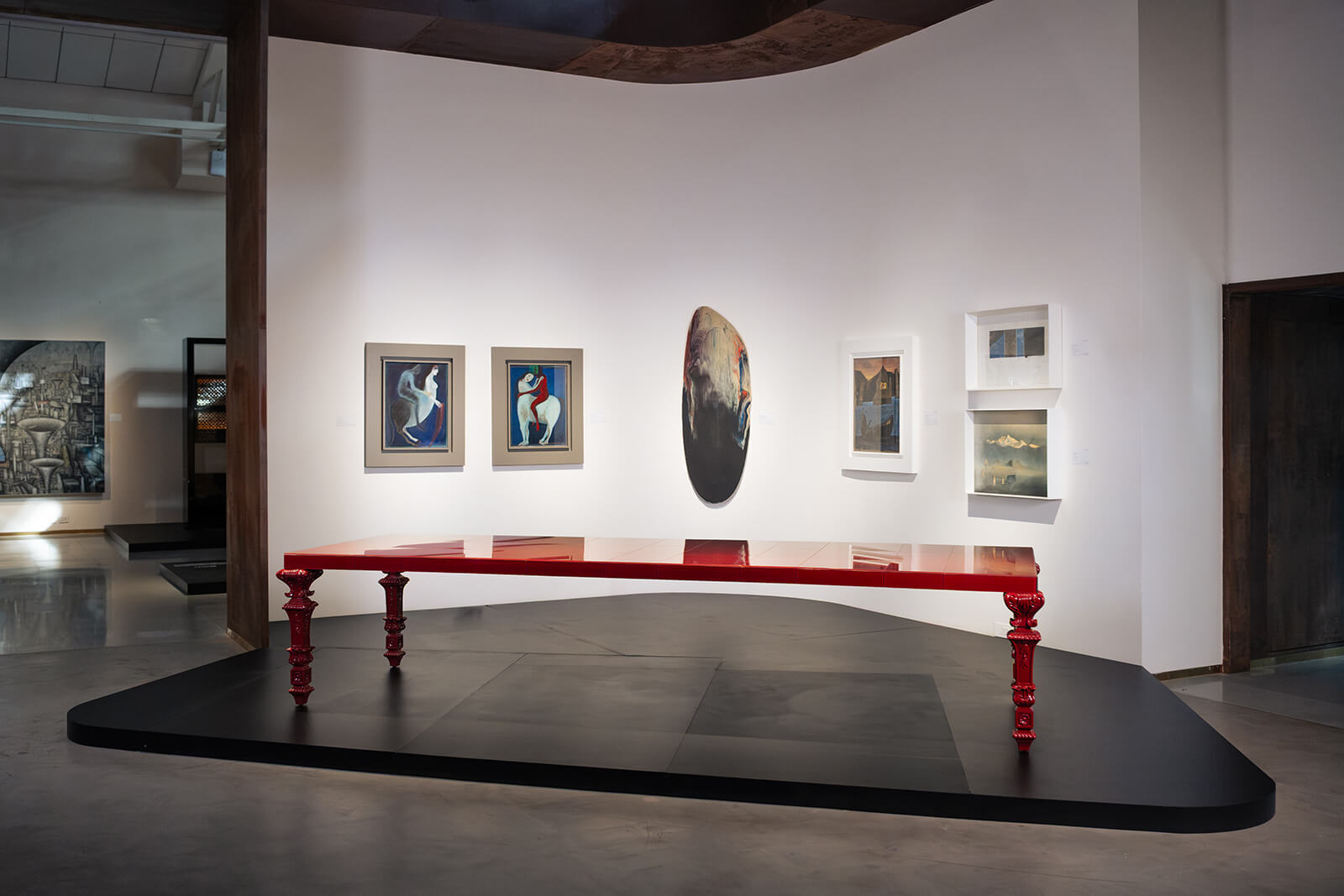
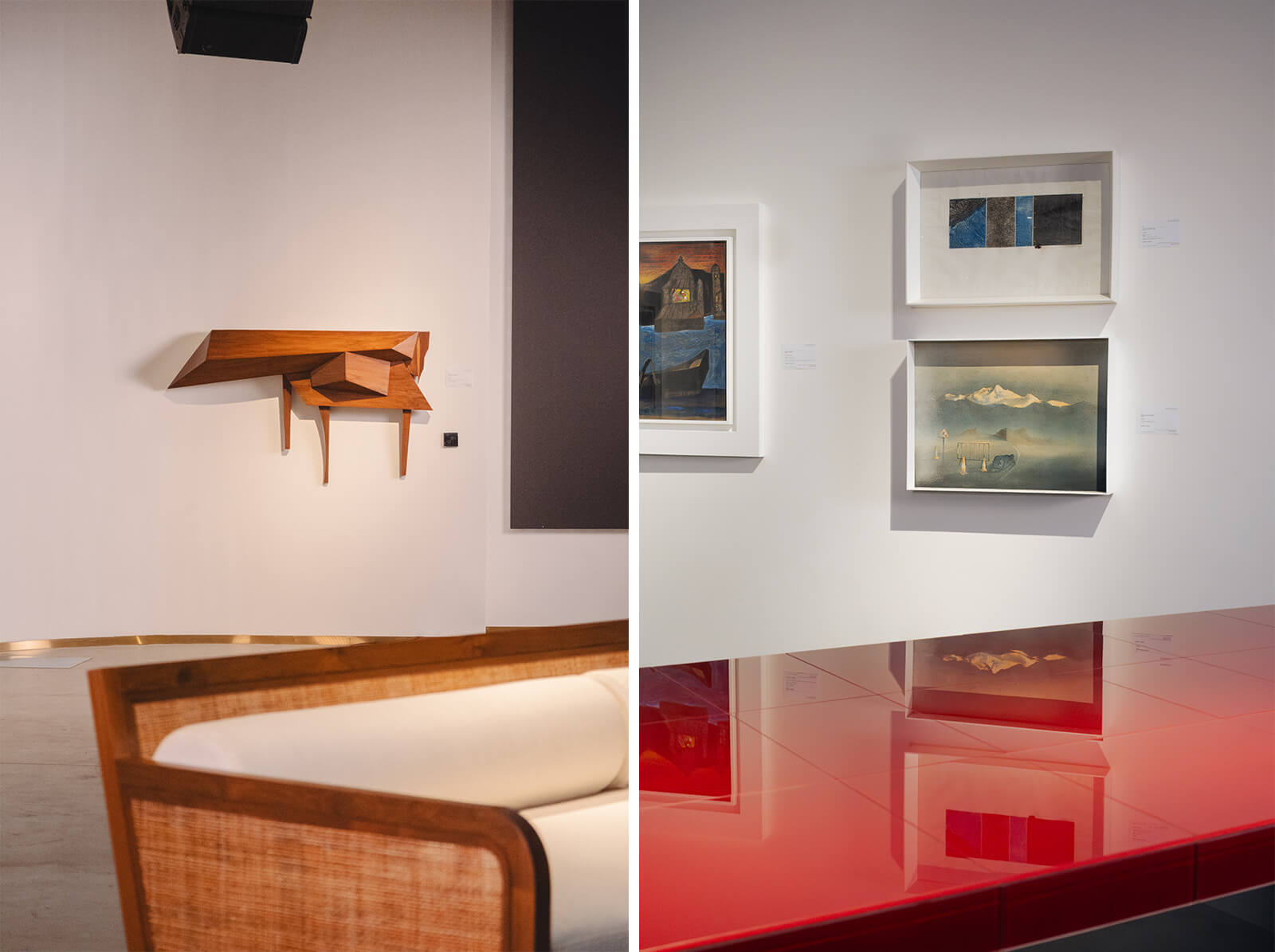
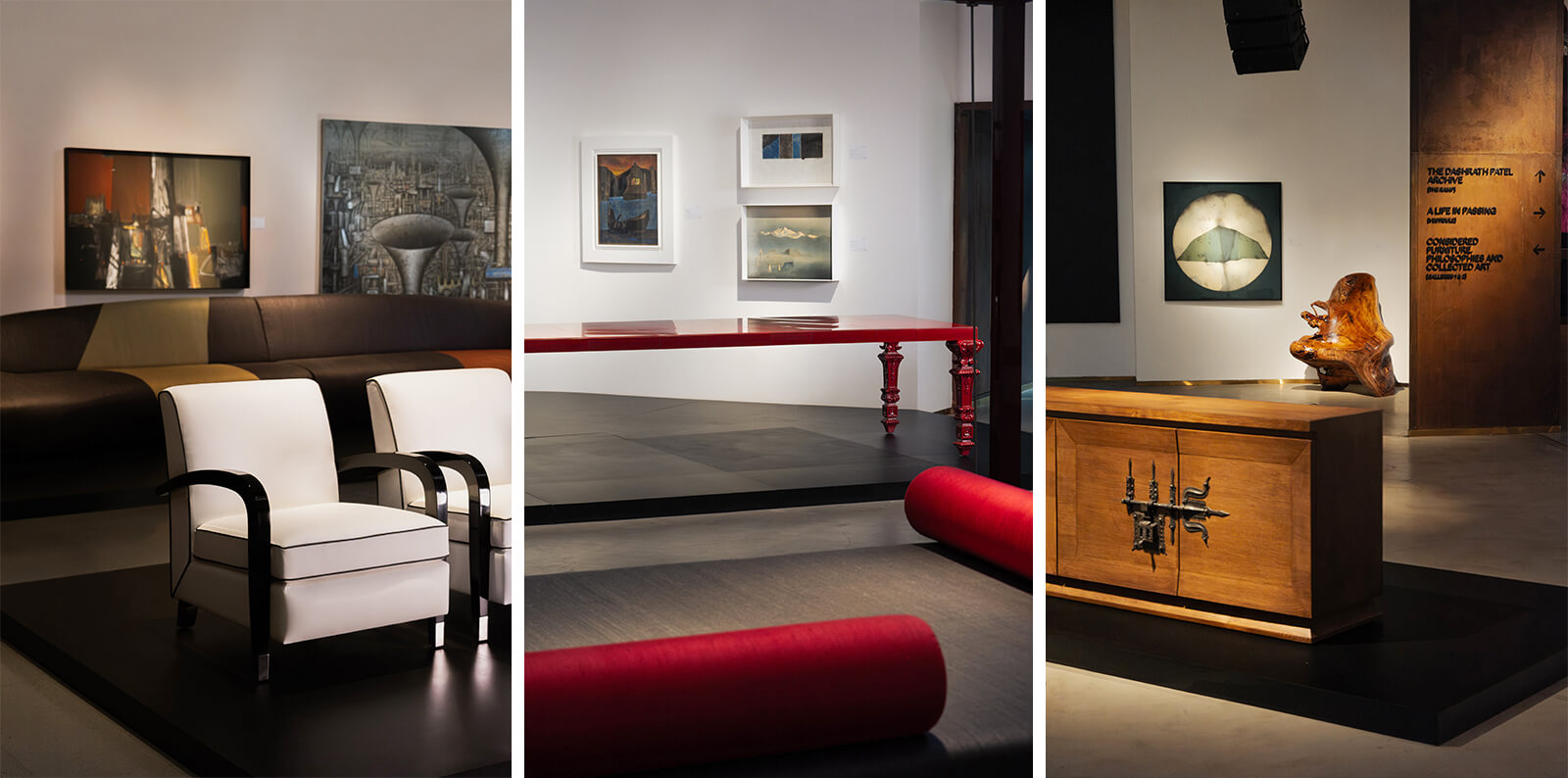
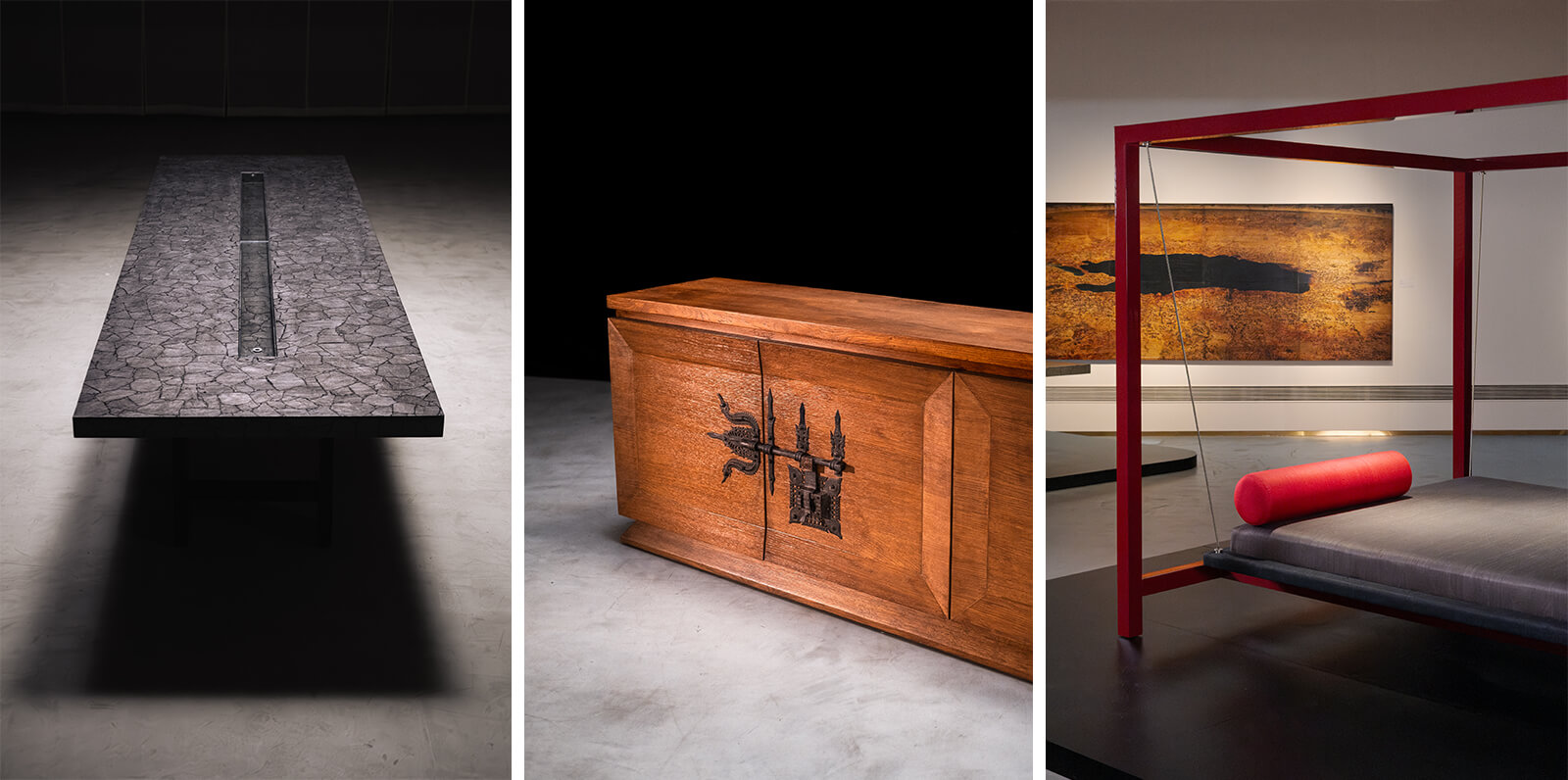
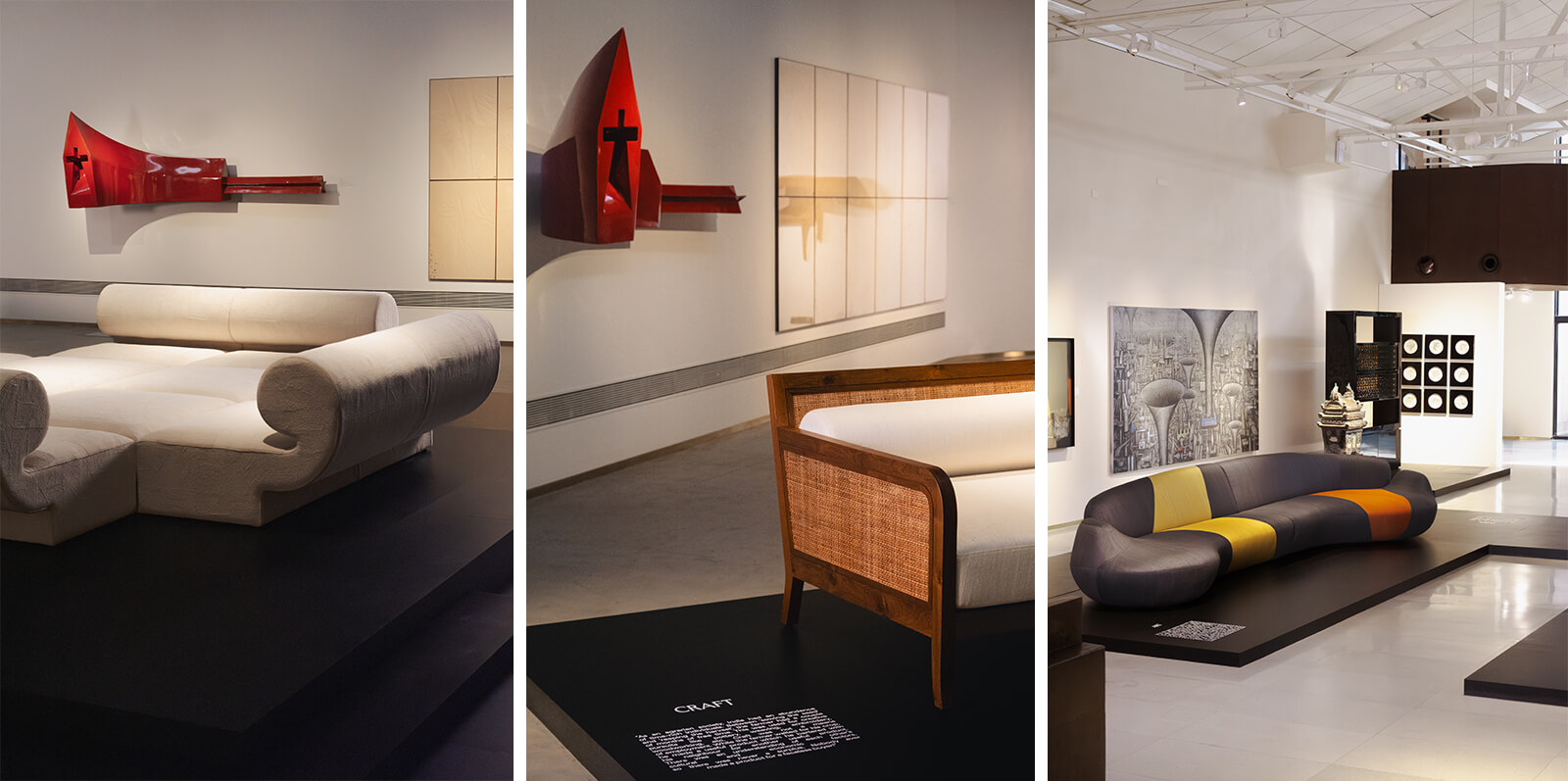
The pieces presented in the exhibition express a desire to break functional and aesthetic norms. The Bramhaputra Table features a central niche, where Patel welcomes the user to engage with it, completing the furniture piece by decorating it in their own way. The Jhoola-Bed, initially designed to be a part of the Vrindavan series, functionally integrates a sense of play within its assembly in an ode to the love of Radha and Krishna. And as romantic as it is conceptually, Patel’s consideration for counterpoints allows for the bed to sway without ever hitting the supports, adding to an unconcerned experience for the user. The Kilim, unlike its namesake, is an elemental piece made entirely out of solid teakwood and features antique hardware that renders it aesthetically antithetical to the Turkish rugs. The Contour sofa, on the other hand, has a very dynamic form and was designed for a multitude of forms of lounging. It is upholstered with Bhagalpuri Silk, with a few stripes of bold colours adding to the dynamism of the form. While the pieces instil a sense of wonder, they also showcase an underlying exploration of what more a piece of furniture offers apart from its default functioning.
Patel refrains from being iconified and does not want to be limited to a stylistic language. He said, “I prefer self-growth and exploration over being identified through a consistency of style or medium.”
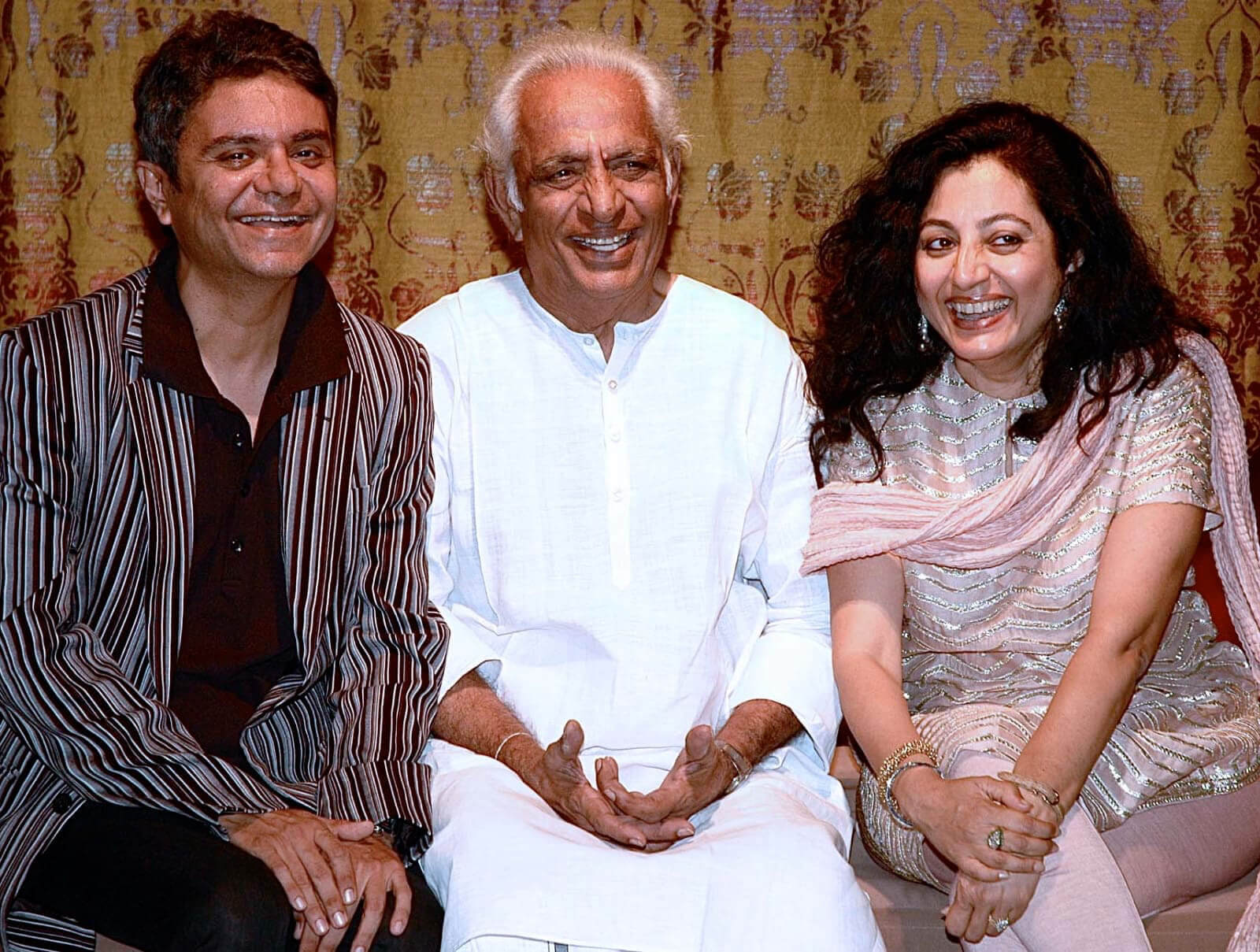
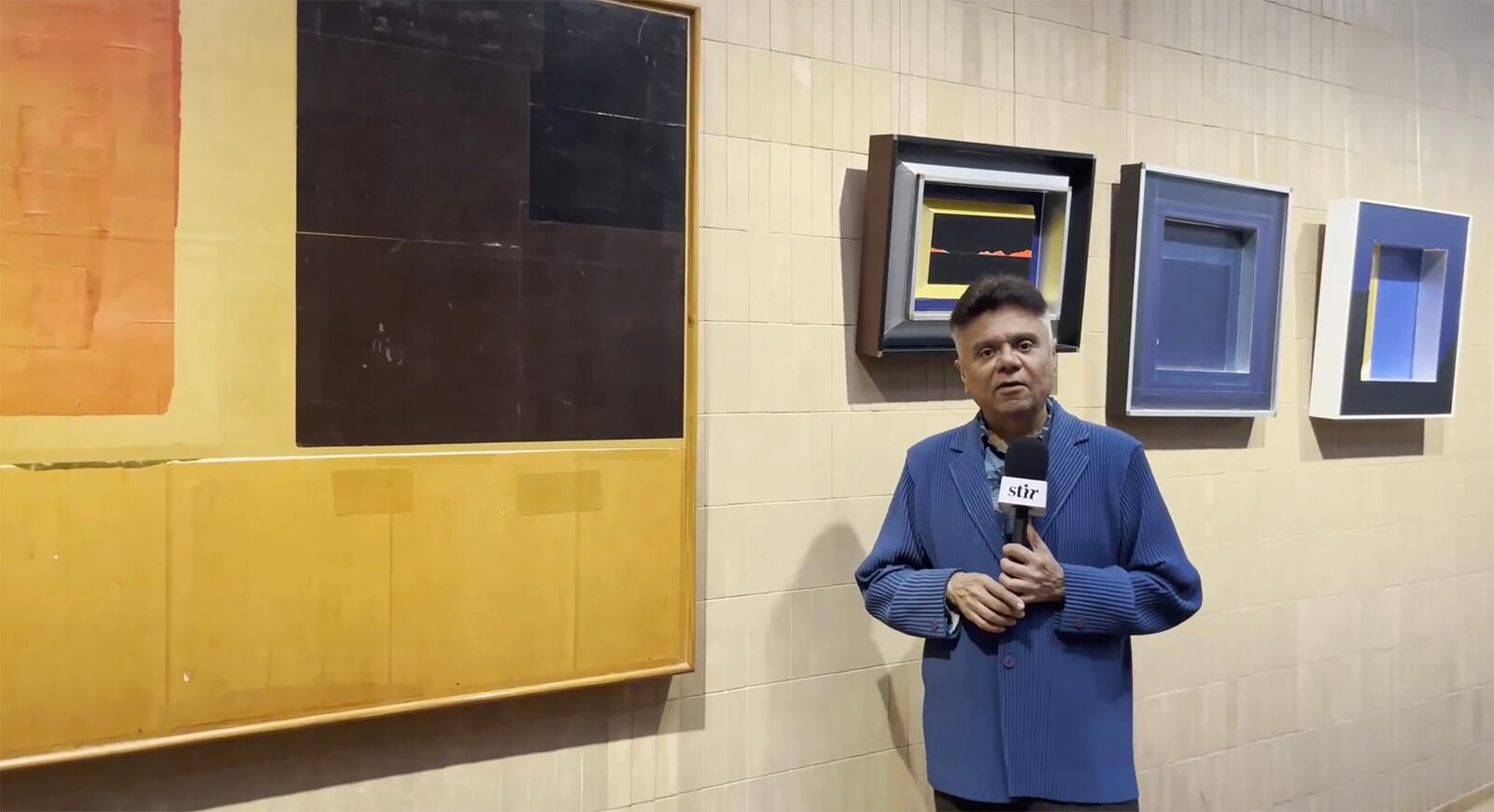
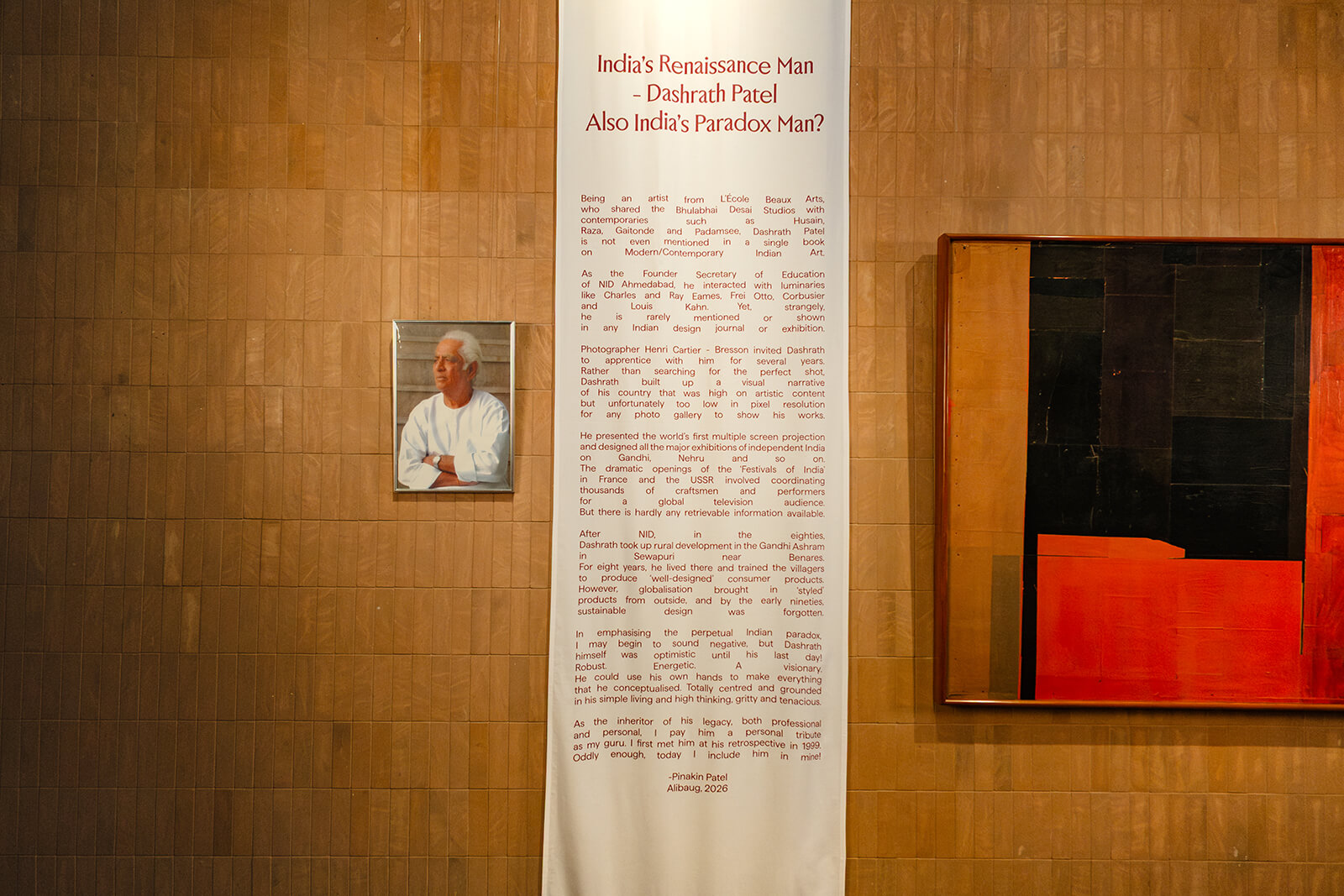
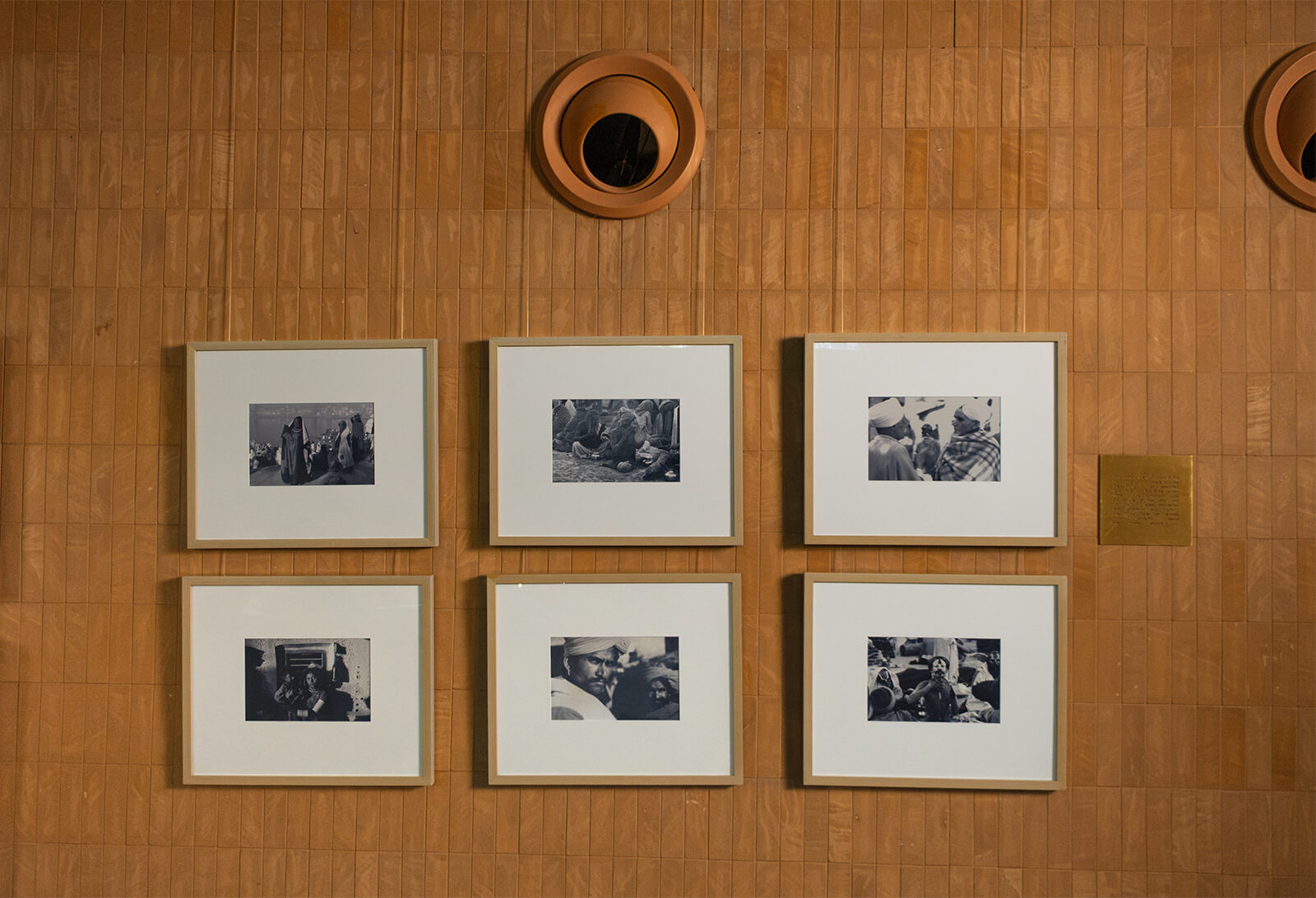
In his conversation with STIR, one theme recurred above all: his reverence for his mentor, Dashrath Patel. Pinakin Patel found the latter midway through his own journey, an encounter that significantly influenced Patel’s work and worldview. This influence is evident in the way Dashrath Patel’s artworks adorn the walls of Nilaya Anthology, while Pinakin Patel’s furniture pieces inhabit the floor—together forming a composition, almost as if the works themselves are in conversation. Patel reflects, “Art and Design often exist at the peripheries of life, and so do artists and designers. What I’ve learned, however, is that unless you move to the centre, towards where life is at its full force—to the dirty, gritty and difficult parts of it—you cannot excel in what you do.”
To watch the complete interview, tap on the cover image.


by Pranjal Maheshwari Oct 23, 2026
Co-authored by Jareh Das, Chairman traces the British designer’s fixation on chairs as symbols of power and identity and as mediums of expression and community building.
by Mirra Lynn Oct 22, 2026
The curators behind Palestine Design Week 2026 reflect on its intent, considering how design holds memory, makes space for loss and imagines a future in Palestine.
by Chahna Tank Oct 22, 2026
STIR speaks with the Mumbai-based type designer about her practice, type walks and why she wants more people to have stronger opinions about Indian-script fonts.
by Jincy Iype Oct 15, 2026
STIR explores craft, material intelligence and people shaping Indian design through dialogues with Design Democracy’s co-founders and the curators of its special exhibitions.

make your fridays matter with a well-read weekend
Enter your details to sign in
Don’t have an account?
Sign upOr you can sign in with
a single account for all
STIR platforms
All your bookmarks will be available across all your devices.
Stay STIRred
Already have an account?
Sign inOr you can sign up with
Verification link sent to check your inbox or spam folder to complete sign up process
Tap on things that interests you.
Select the Conversation Category you would like to watch
Please enter your details and click submit.
Enter the 6-digit code sent at


Pinakin Patel on pursuing the essential and The Turning Point of his career
by Akash Singh, Zohra Khan | Published on : Feb 06, 2026


 Sign in with Google
 Sign in with email
What do you think?