Architecture04 mins. read
At Sheepfield Barn, DSDHA builds on Henry Moore’s legacy of making alongside nature
by Pia BhatiaSep 07, 2026



by Aarthi Mohan, Pranjal MaheshwariPublished on : May 08, 2026
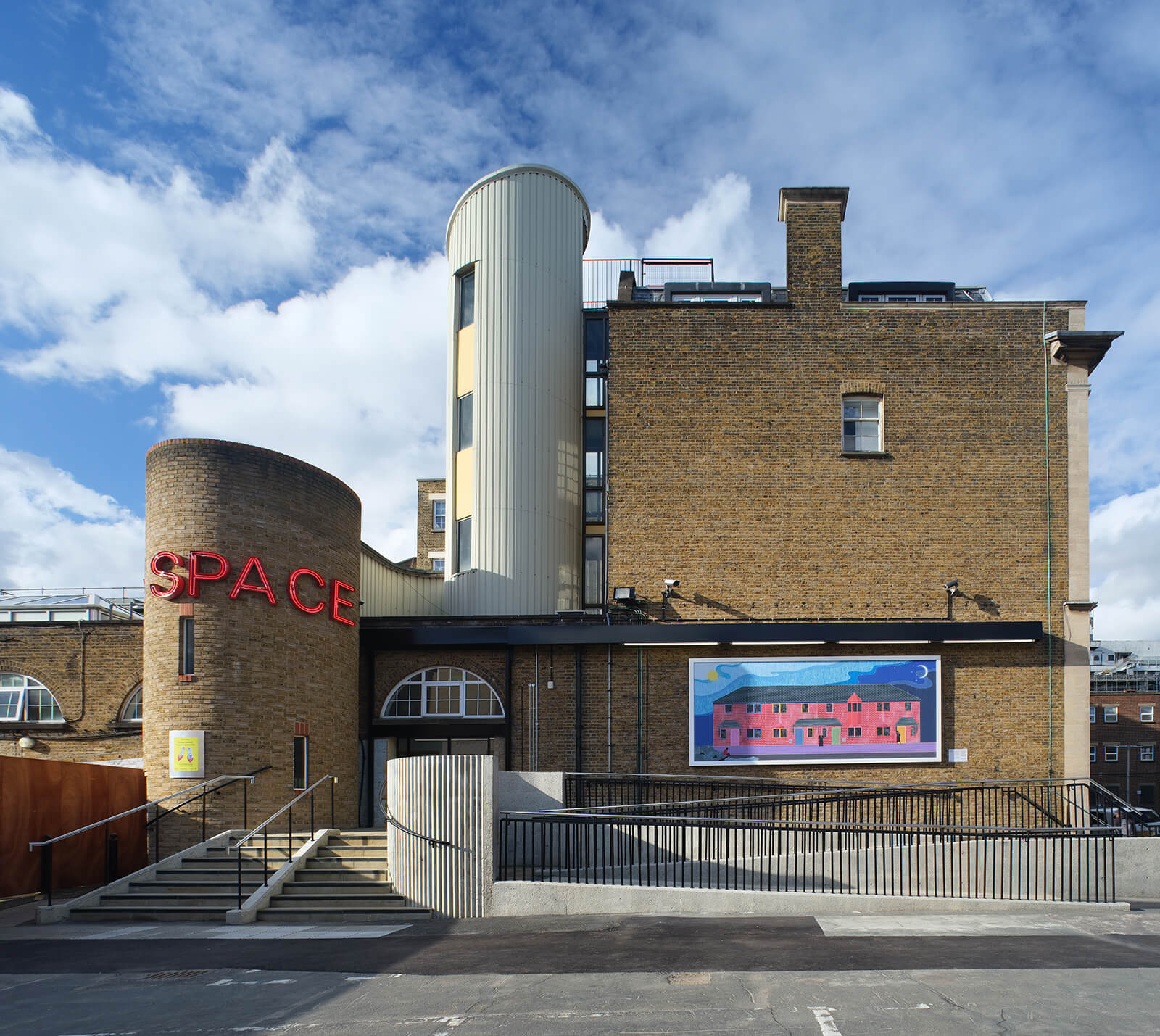
Glancing across the street at the SPACE Ilford art gallery, you immediately notice a billboard depicting a vibrant red-brick facade set strikingly against the gallery’s own rustic exposed brickwork. As it draws you in, the gaze shifts to a yellow sun riding across blue waves that represent the sky, before gliding along a violet band toward three human figures dotting the frame. The illustration recreates one of the terraced houses on Vicarage Lane where London-based spatial artist and designer Sahra Hersi spent her childhood, less than a mile from the gallery.
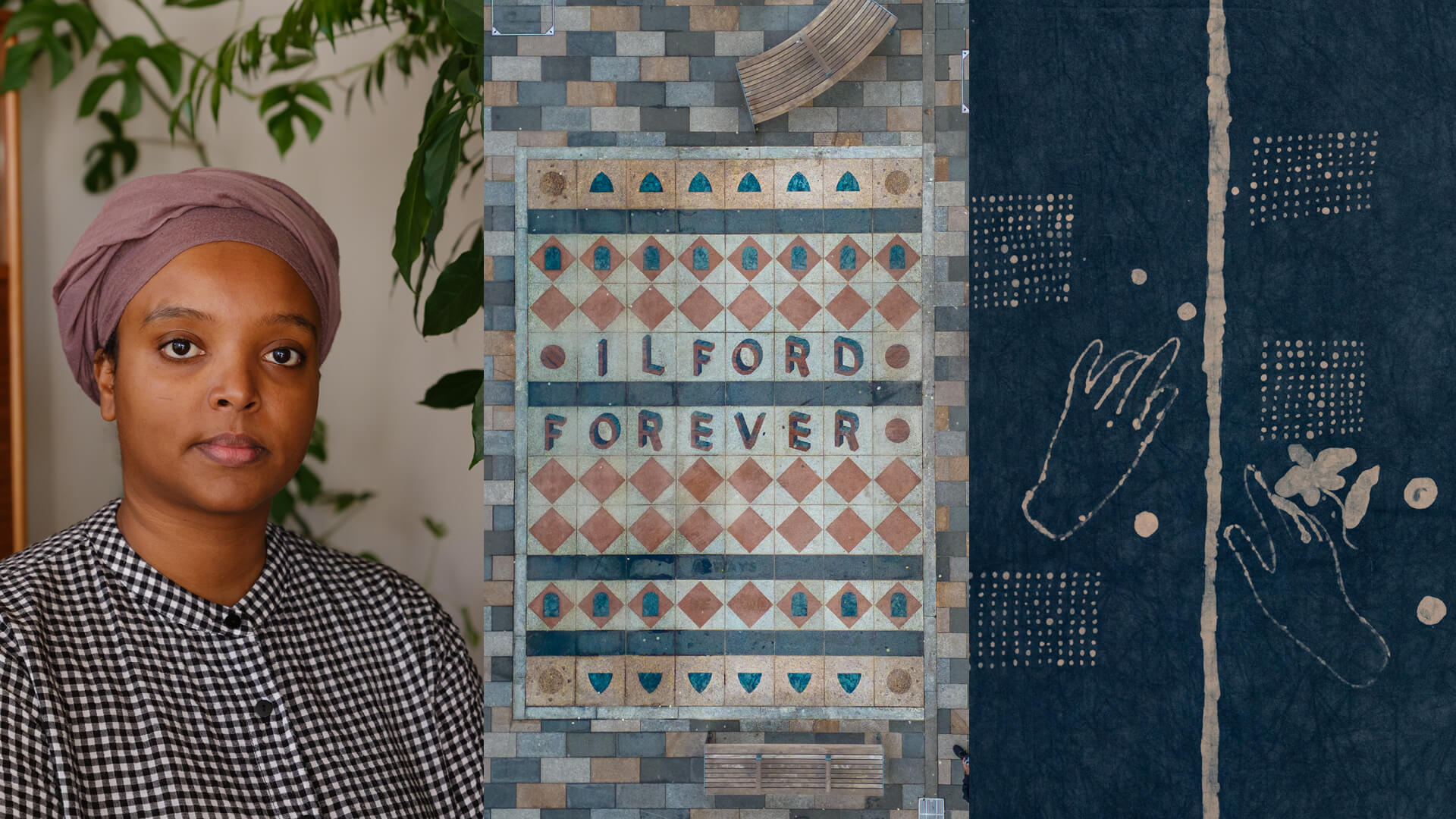
Hersi is both a catalyst and expressionist in her own right. Since graduating from the Royal College of Art in 2017, she has worked extensively with diverse communities on ideas and places they dwell in, while striving to maintain a definitive originality and ownership. With an oeuvre that ranges in scale, spanning zines, workshops, public-realm interventions and buildings, Hersi explores the influence of participatory design and community engagement in interpreting art and design as means of calling attention to socio-cultural events and concerns. Speaking with STIR, she reflects on her journey so far.
STIR: Who taught you to take up space?
Sahra Hersi: I come from a minority group, a minority within a minority in the UK, and I wanted to work with voices similar to mine. So much of my practice involves workshops and community participation, so I never really thought about it as me taking up space. It's more about a collective taking up of space, and I guess that comes from my own political view that public space should be for everyone.
STIR: You have said that your work cares about ‘people, places, art and architecture: in that order’. What does that hierarchy mean for your practice?
Sahra: A lot of my work has been influenced by my research and understanding of the works of William Morris. For me, he stands out for his philosophy around beauty and decoration, and I am sick of modernism and the idea that form follows function. I feel the form is where the vernacular, the culture, resides. If you strip back all of the symbology and the decoration, it becomes very cold and machine-like, unlike natural living beings. I want my work to be very much in line with nature and people.
I think art is important. Don't get me wrong, architecture is just as important, but art is where the atmosphere is: the things we can't measure and the things that the client can't easily throw a monetary value on. I don’t see architecture as just an arrangement of spaces, but also an arrangement of care: giving shelter to people, making sure the environment is comfortable.
I put ‘places’ before art and architecture because they should always respond to the people and places. I feel so much of architecture is just plonked anywhere. [laughs] You see the same buildings in very hot and cold climates, and then we have to use non-passive ways of cooling and heating them, which isn't great for the environment. We're not really working with what we have, but just relying on fossil fuels. That is something I think about more and more in my practice. It is probably not clearly articulated in the way that I talk about it, but it’s a concern for me.
STIR: Your practice moves fluidly across scales—from zines and workshops to public interventions and buildings. What stays constant in your approach across these different formats, and what shifts or evolves as you move between them?
Sahra: I think the process that I've developed over the years is a framework that adapts to people, communities and places to develop a piece of work. The scale and the materiality changes for a series of reasons: the brief, budgets, really the boring but necessary things [laughs] that you work with as a designer, behind the scenes. The artwork scale changes, but I always try to engage smaller groups to build more meaningful relationships.
I think when you work with people, you are constantly negotiating where your voice comes in, and the realisation for me is that I'm not the pen of the community. I'm still very much the author, and the process is what informs my ‘moving of the pen around’. – Sahra Hersi
STIR: When working on public projects, what human dimension do you think is most often overlooked across the design sector that you are particularly interested in?
Sahra: I don't want to make generalisations because not everyone works this way, but a lot of times the process of engaging communities feels like ticking a box. There is already an outcome in mind, and engaging the community is just a way of justifying it. The people could be angry, or they might not even care, but they say: We've engaged people, and now people have consented to whatever comes out.
I really want to engage people more honestly. That doesn't always mean it's a massive party, and everyone is super happy. Engaging people is not easy; it takes a lot of resources, emotional labour, a lot of listening and managing disappointment because, as you're developing a project, they will start to conjure an image in their heads. They're probably not designers or artists, so what they're imagining, you might never do. I understand why people want to tick boxes; it is so much easier and also quicker. But as part of my practice, I always try to be transparent in managing expectations and making sure they feel valued, because they have key insights. Their presence shapes the work.
STIR: Your practice inquires about ways in which design becomes dialogue. How do you define what counts as a ‘dialogue’ in a design process, and what are the markers, the signals you look for?
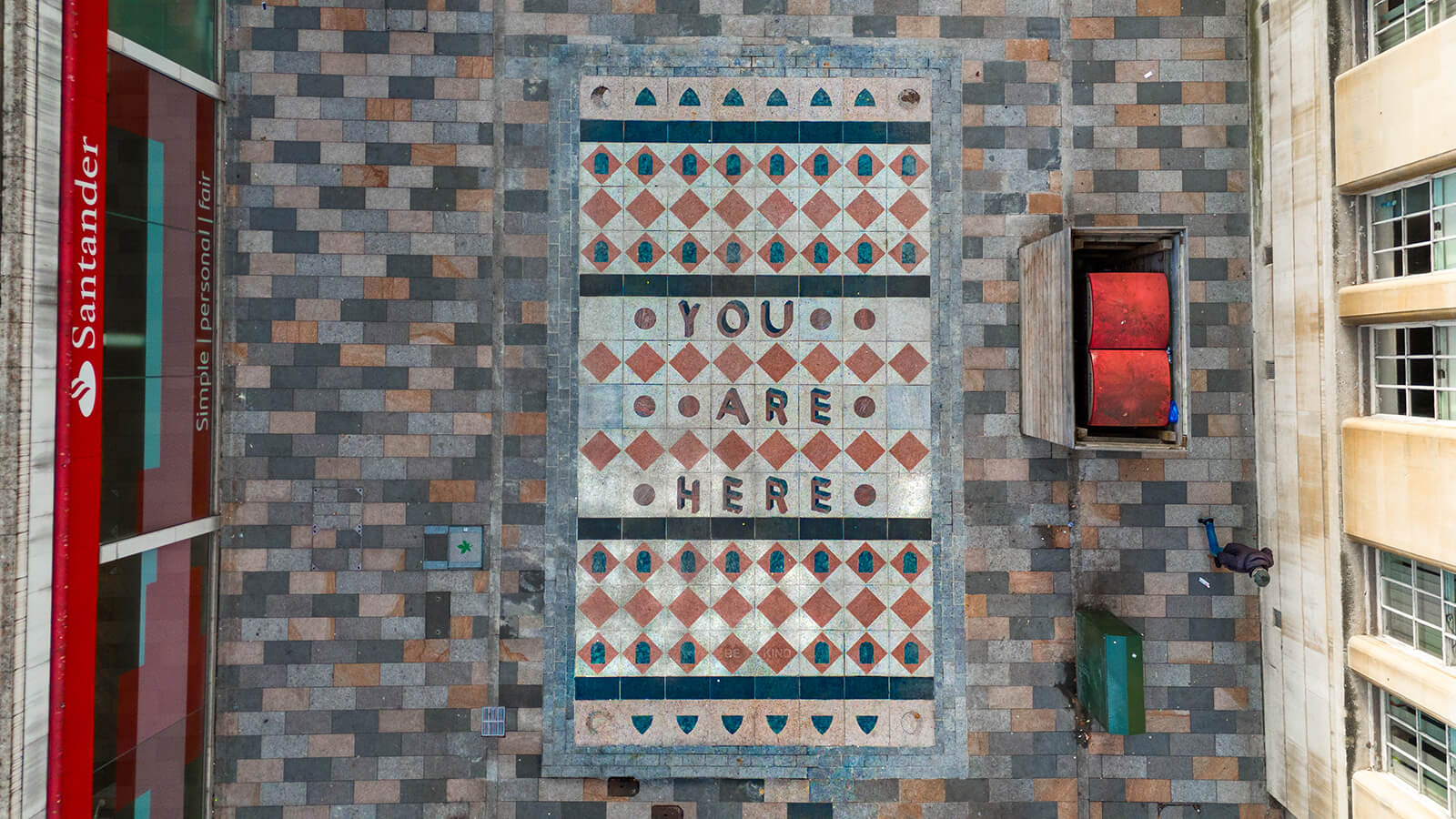
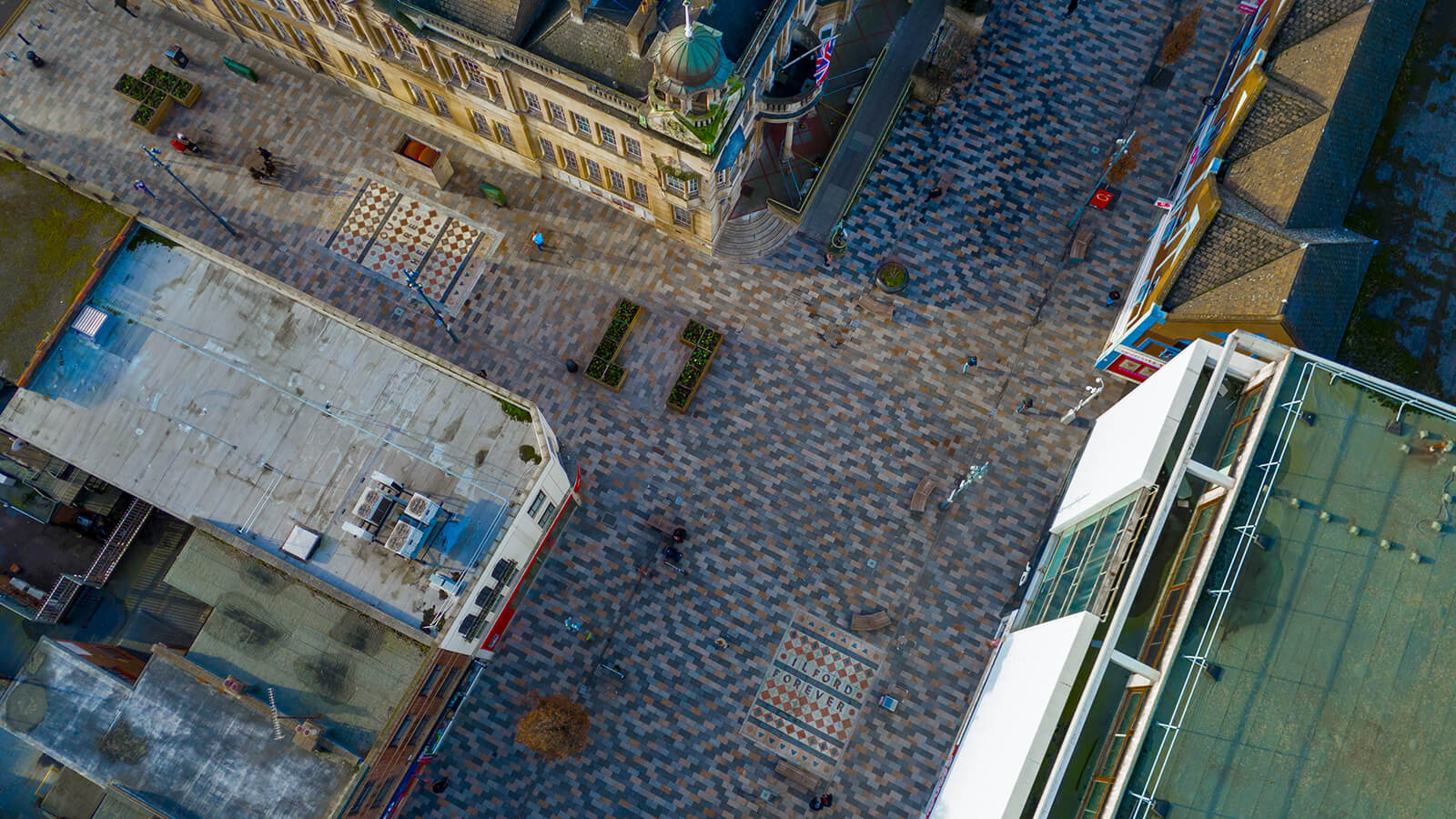
Sahra: That's such a good question about authorship! I do feel like the work always belongs to me in the sense that I've made it. But, for example, whenever I visit the granite artworks that I made in Ilford, the Ilford Forever, I don't really feel like it is the work that I made. I love it as a piece, and I’m very proud of it, but it feels kind of removed from me now. It's living its own life, like a child that’s now out into the world [laughs]. And I also wonder about the young people involved in it: do they feel that it's their work, or do they also feel like it's now for the larger public to engage with?
I think when you work with people, you are constantly negotiating where your voice comes in, and the realisation for me is that I'm not the pen of the community. I'm still very much the author, and the process is what informs my ‘moving of the pen around’. It informs what the outcome is, how I use the tools and what the work becomes.
STIR: In the workshops for Tender Women, you invited participants into practices like cyanotype and cross-stitch: techniques that carry history, tactility and craft. How do acts of making by hand intersect with your ideas about care, healing, and shared memory?
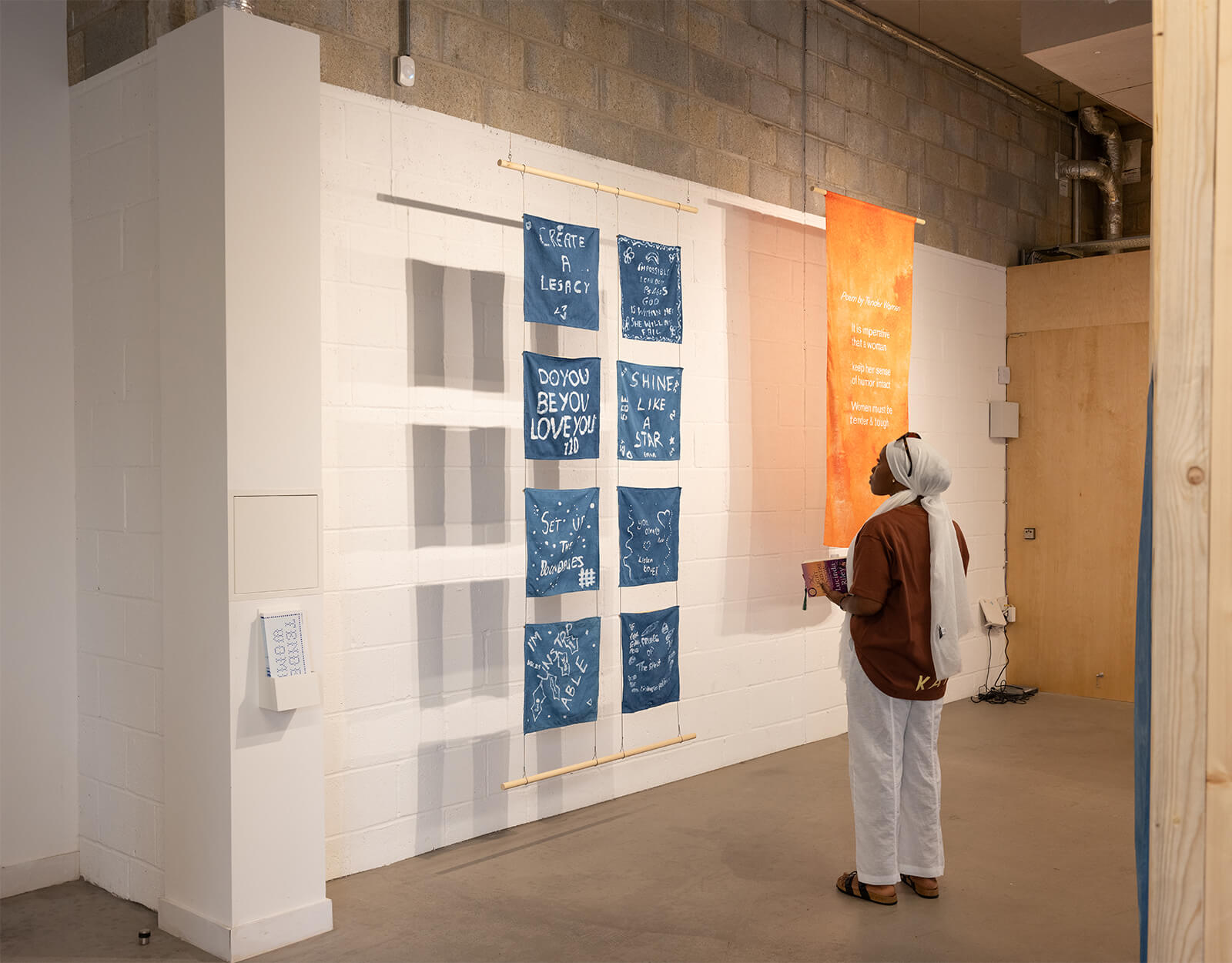
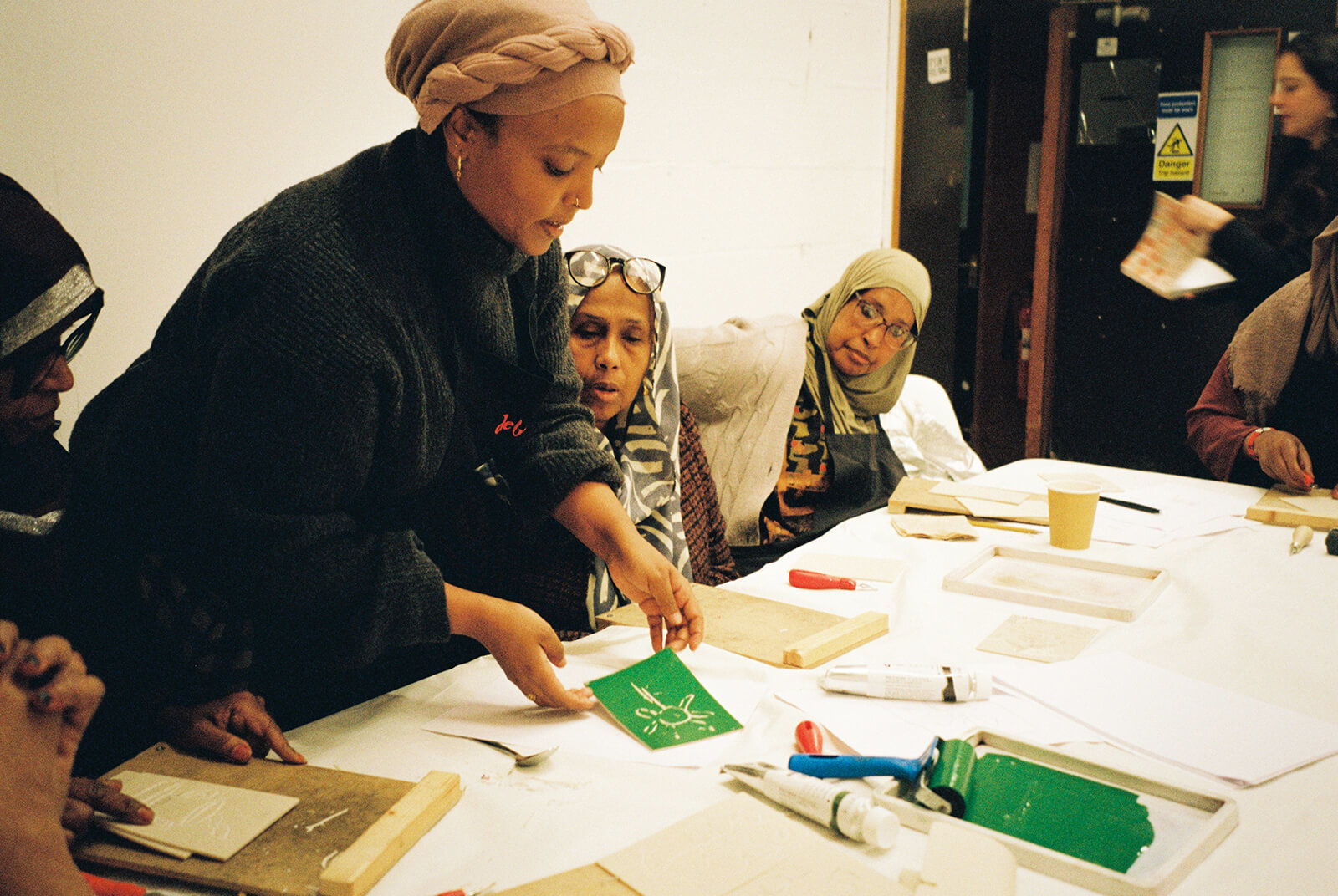
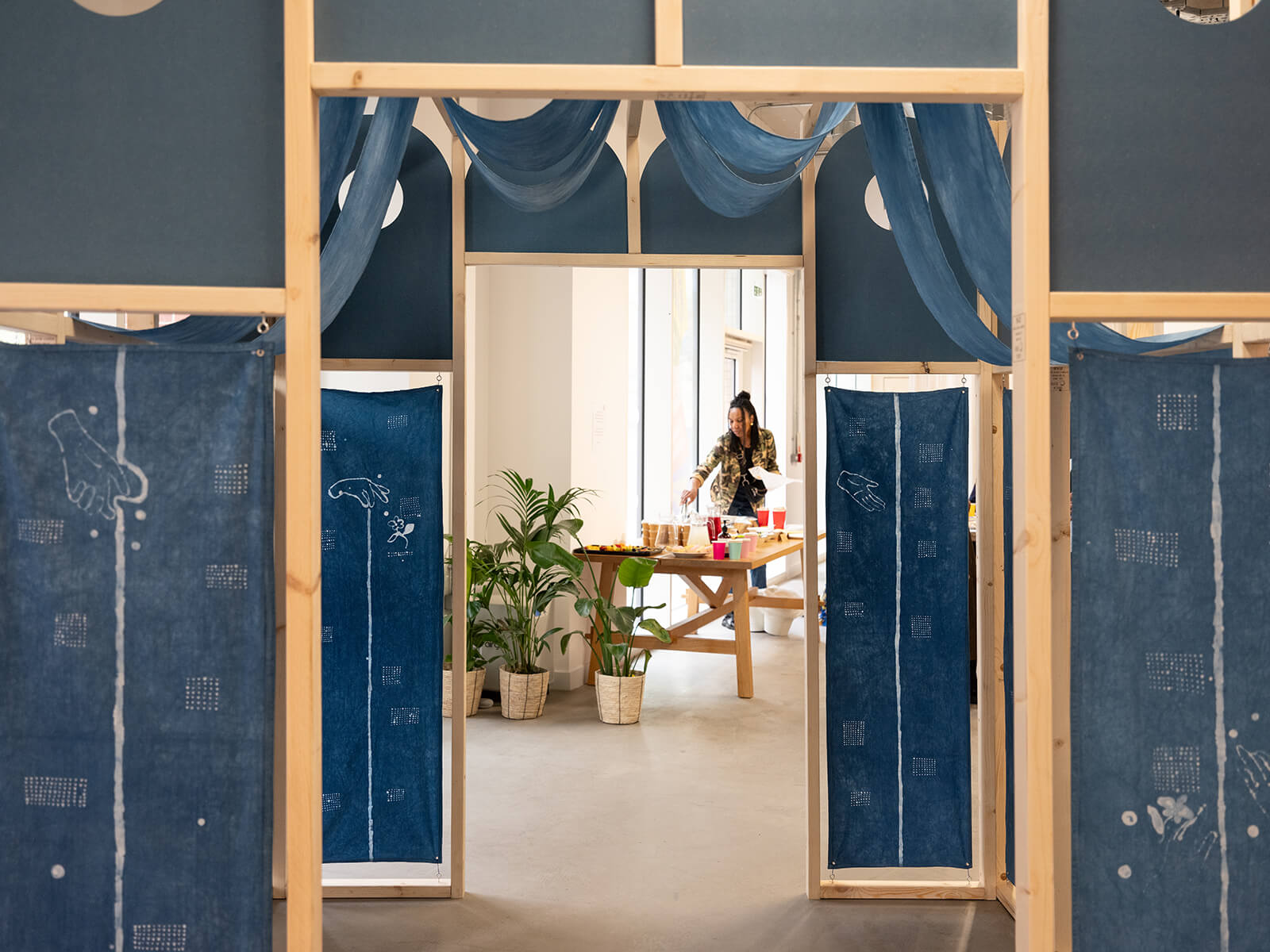
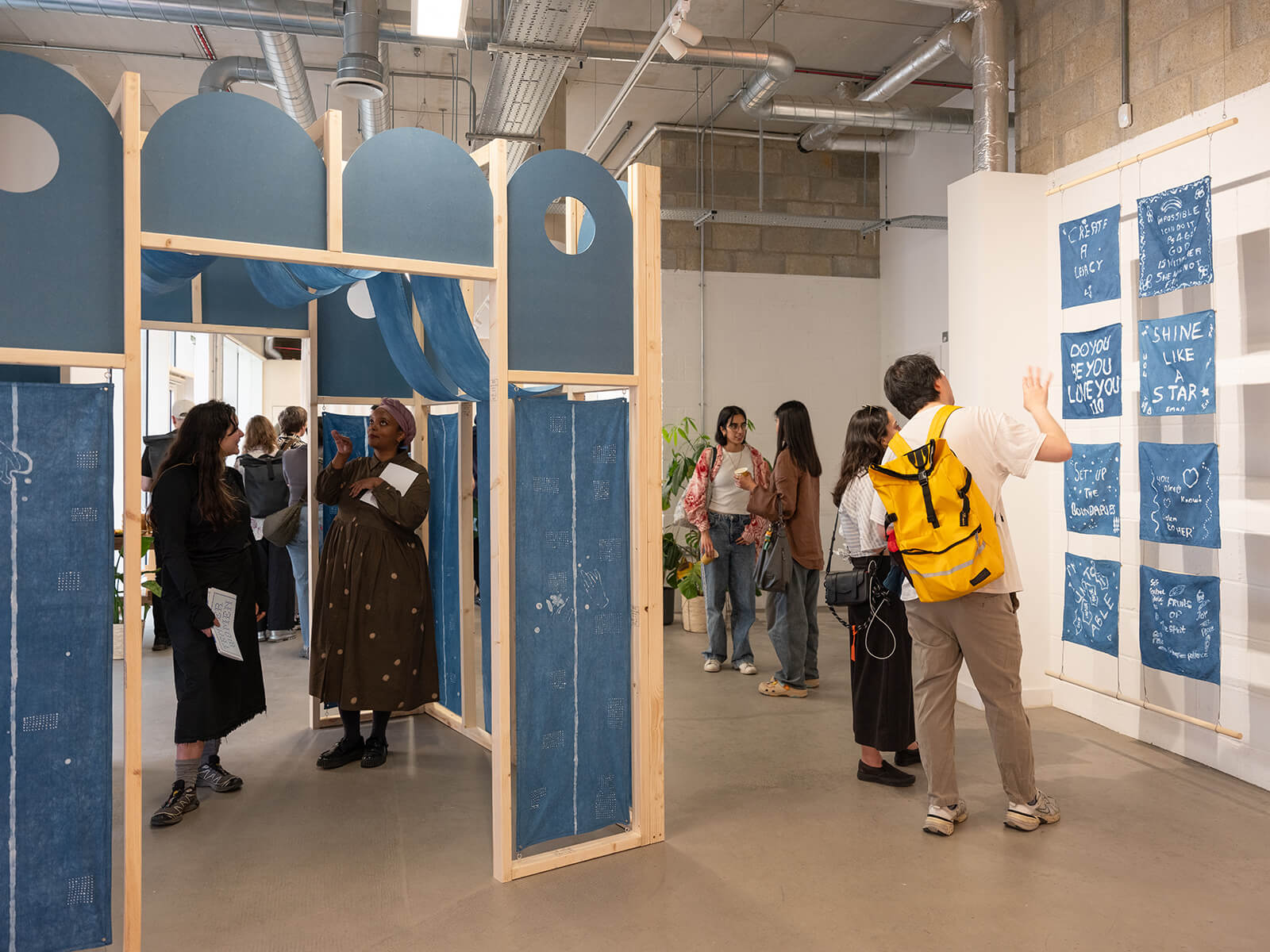
Sahra: The women at Adanna Centre hadn't really done cross-stitching before. They did it in their own style, which came out quite beautifully. As a facilitator for those workshops, my focus was not on doing things ‘the right way’. I was there to create an atmosphere for people to talk, have respite, build kinship and feel collectively safe.
The participants did batik with indigo dye and wrote poetry. We chatted, sang and had a fun time. There were such beautiful characters in the workshop; it felt very much like a sisterhood was being formed. It was as much about being together as it was about making a piece of design. In the end, the indigo pieces and the collective poem called Tender Women were put on display along with a structure that I made.
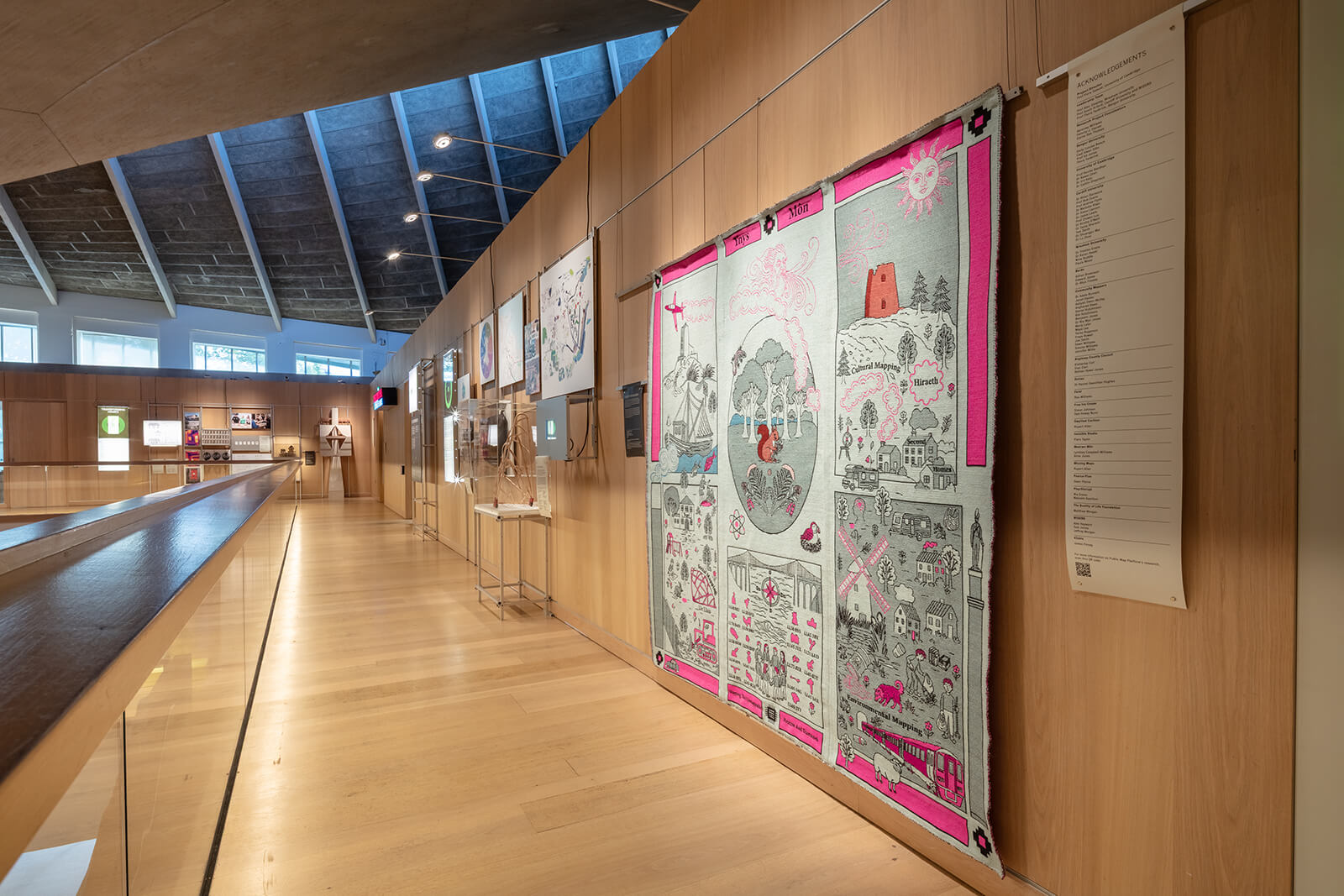
STIR: The commission A Tapestry for Anglesey (Ynys Môn, for the Design Museum’s Future Observatory, 2025) drew you into Welsh landscapes and histories. Did working in that context prompt a new relation to geography or ‘place’ for you?
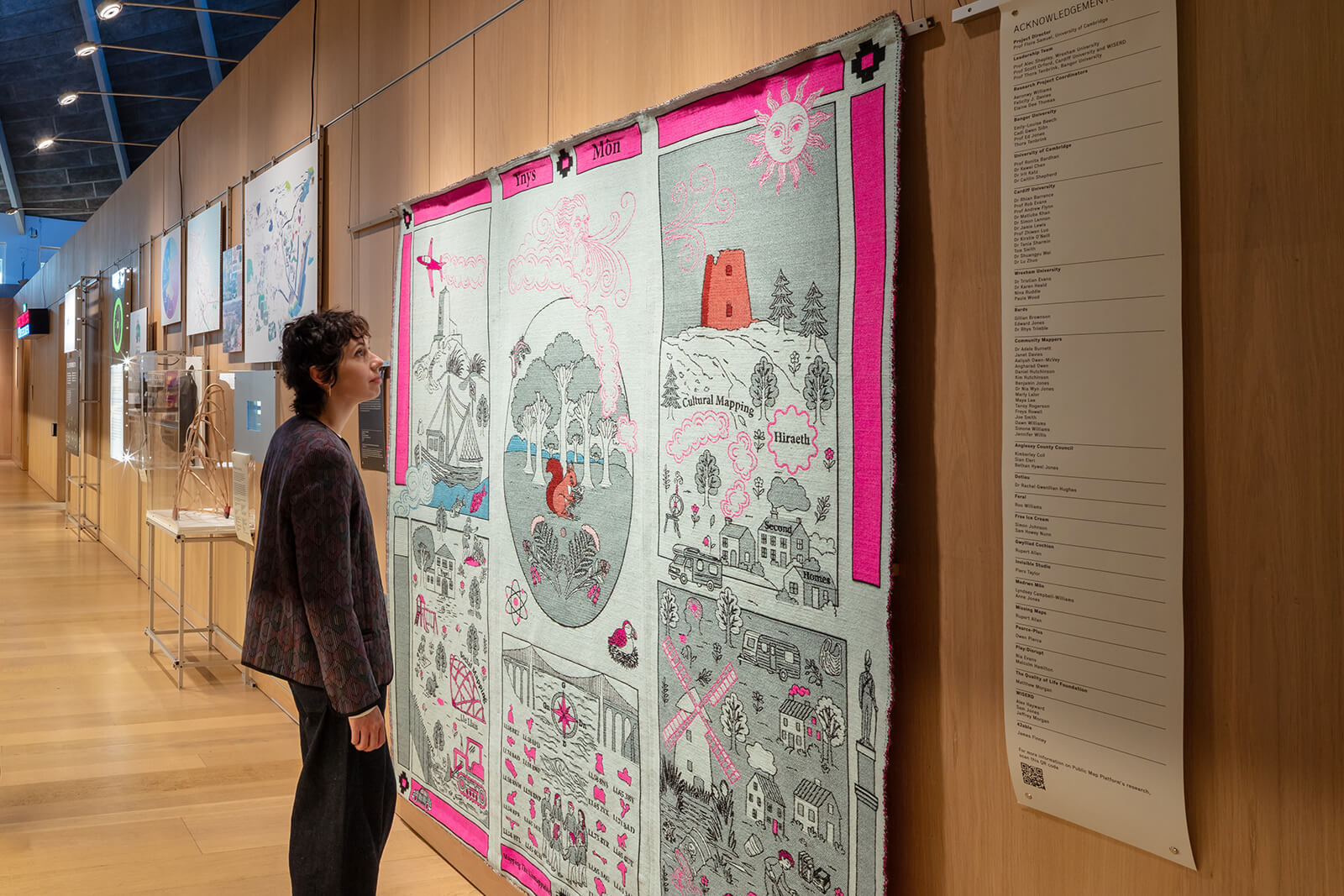
Sahra: Anglesey is an incredibly beautiful island in Wales. There was a workshop with the mappers who were living [on site]. While I was trying to get my head around the 700 layers of data that had been collected, the mappers were generously talking about their experiences and how they've been working. For me, it became about mapping the unmappable things, like the human connections and the human story. I couldn’t try to represent all that data visually; there was just so much, but I could try to tell a story through this idea. That's where this idea of a tapestry came up.
Then, at the Textile Museum in the Netherlands, I saw Jacquard looms, whose binary punch-card system helped inspire modern computers. Fascinated by them, we connected with skilled textile workers in Bristol and worked mainly with UK-sourced wool after being unable to find makers in Anglesey.
So it became about using that computer system in a very human way. The women hand-wove the tapestry that I had designed on Illustrator. It was quite a big tapestry, roughly two by two metres. It had an array of symbols and images from my conversations with the mappers and my observations of the landscape. It became a kind of folk art interpretation of the data.
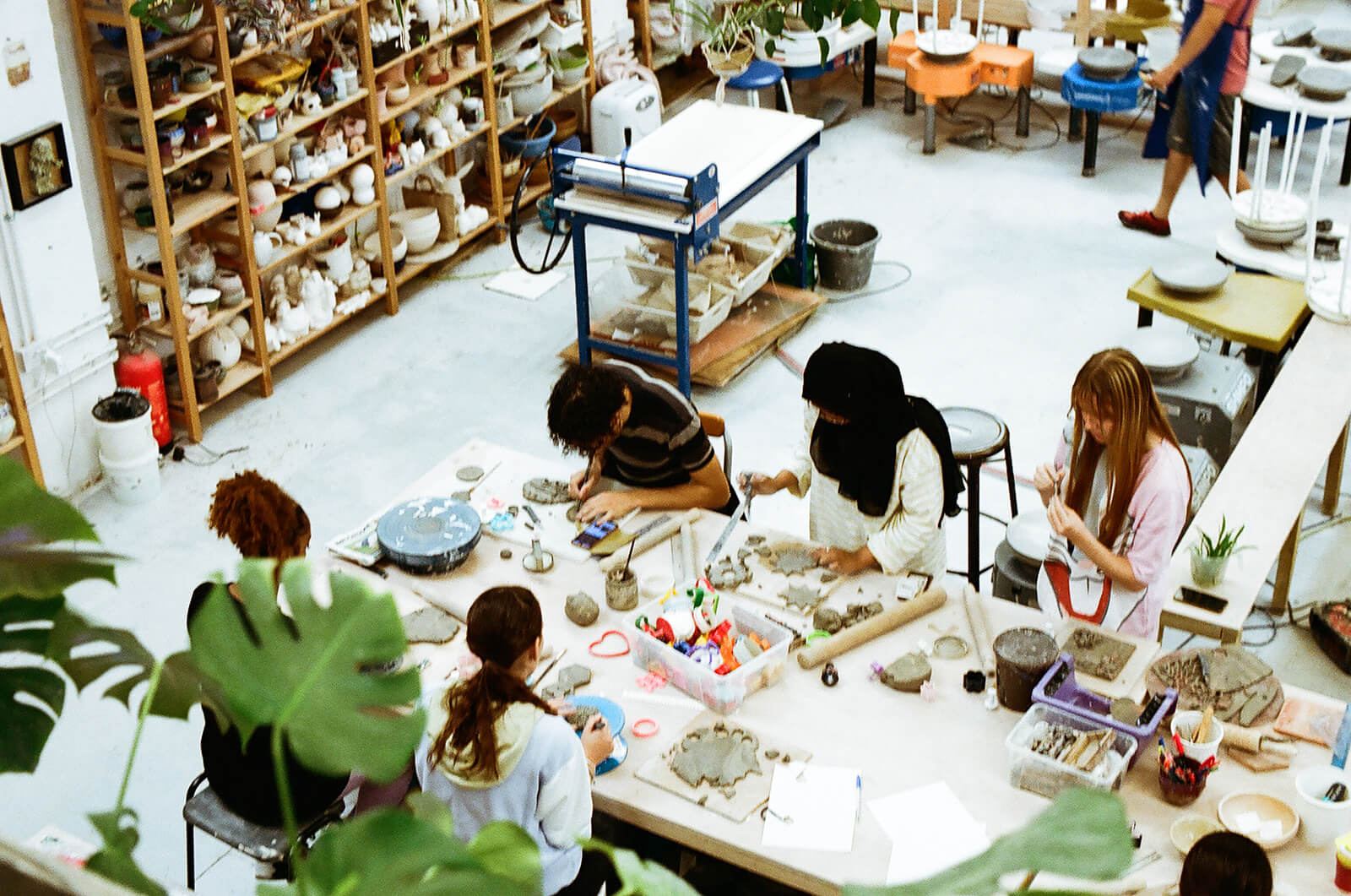
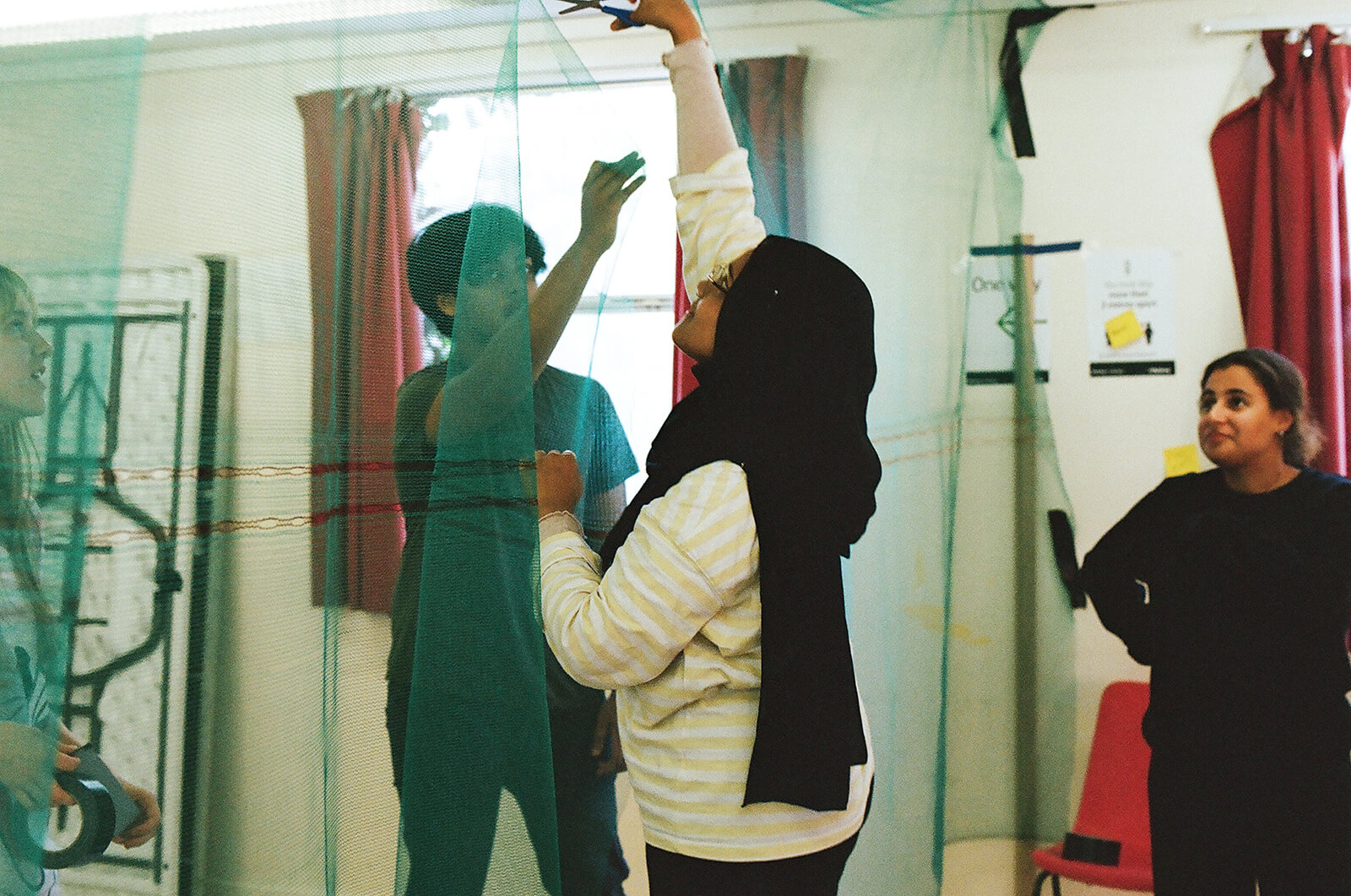
STIR: In the context of the Mountford Community Hall project, how do you envisage the role of public and semi-private space, shifting post-pandemic? What does ‘community making’ look like for you now that the rhythms of gathering have changed?
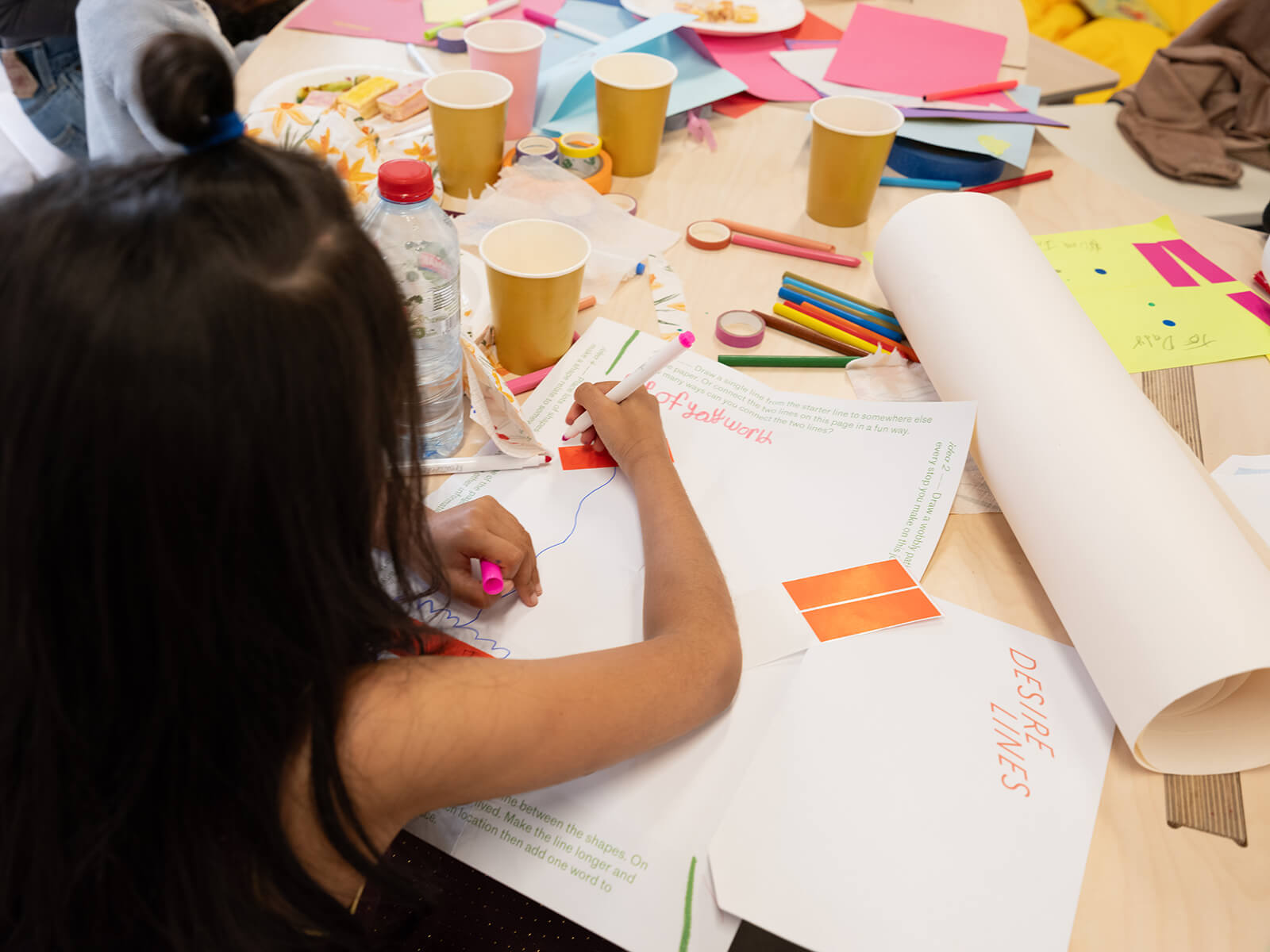
Sahra: With Mountford, I got involved with an artist called Rose Gibbs, who co-runs it with her neighbours and residents from Mountford Estate. She had asked me during the pandemic to work with her to develop a summer and autumn school for young people to think about regenerating this community hall. We ended up creating a publication, but we still haven't built it. If anyone's out there and wants to fund this project, get in touch! [laughs]
I think even pre-pandemic in the UK, public spaces like community halls were under threat since the Tory government came to power. A lot of what we call ‘third spaces’, like community halls, youth centres, and libraries, were shut because of a lack of funding. All the spaces that were free or very cheap for people to use as extensions of their domestic space were undervalued. It became all about ‘commerce’ or ‘development’.
For me, it is a really important project to try and push forward. Initially, we did get some seed funding from the mayor, but now it's come to a pause. It just feels so hard to get these projects built. And this was happening before the pandemic. The pandemic has taught us that we need [third spaces] even more, and it's a shame that there aren't. Some are being built, and I don't wanna be a complete downer, but I don’t think it's enough. We need better third spaces where people can sit in for free and hire out for free.
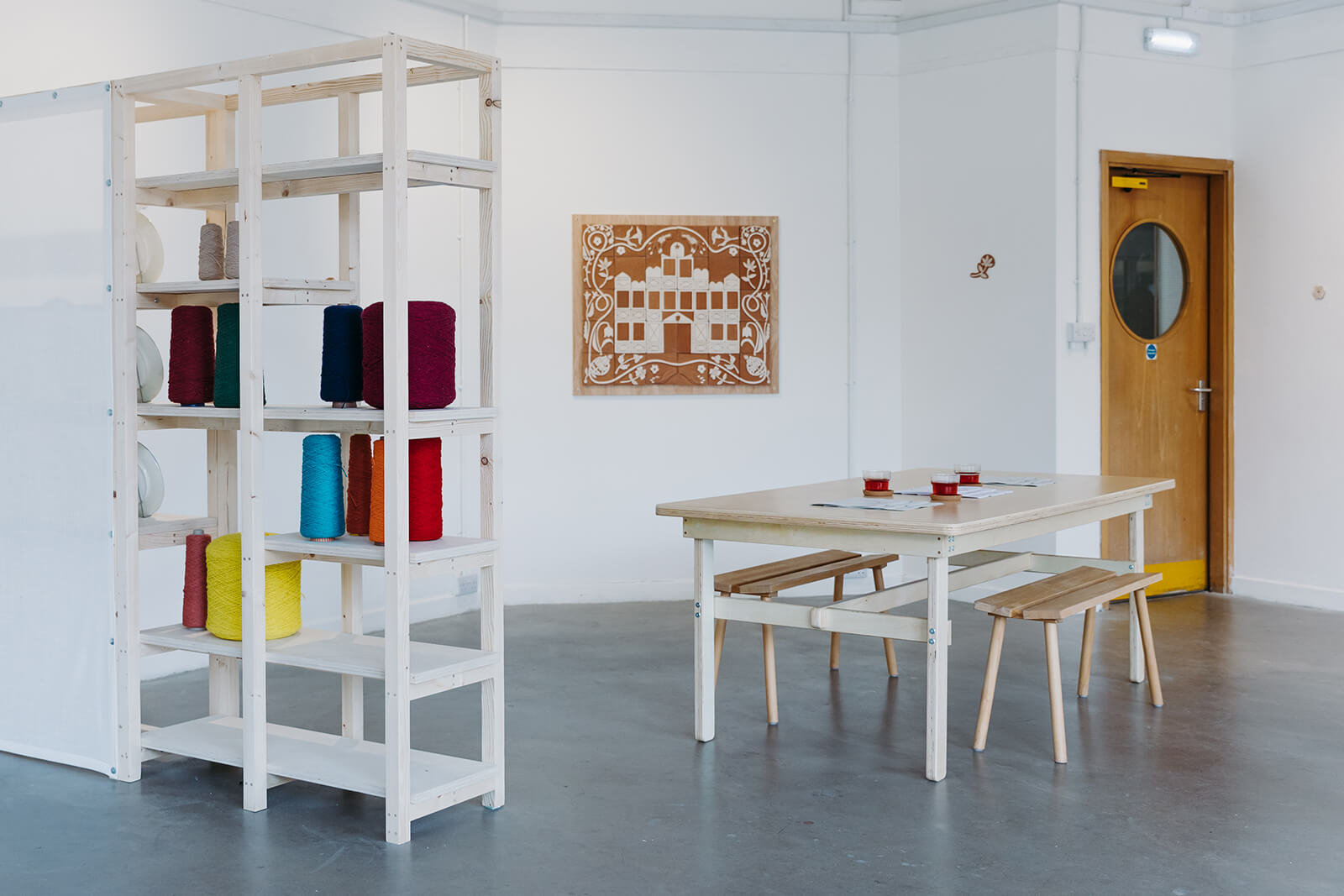
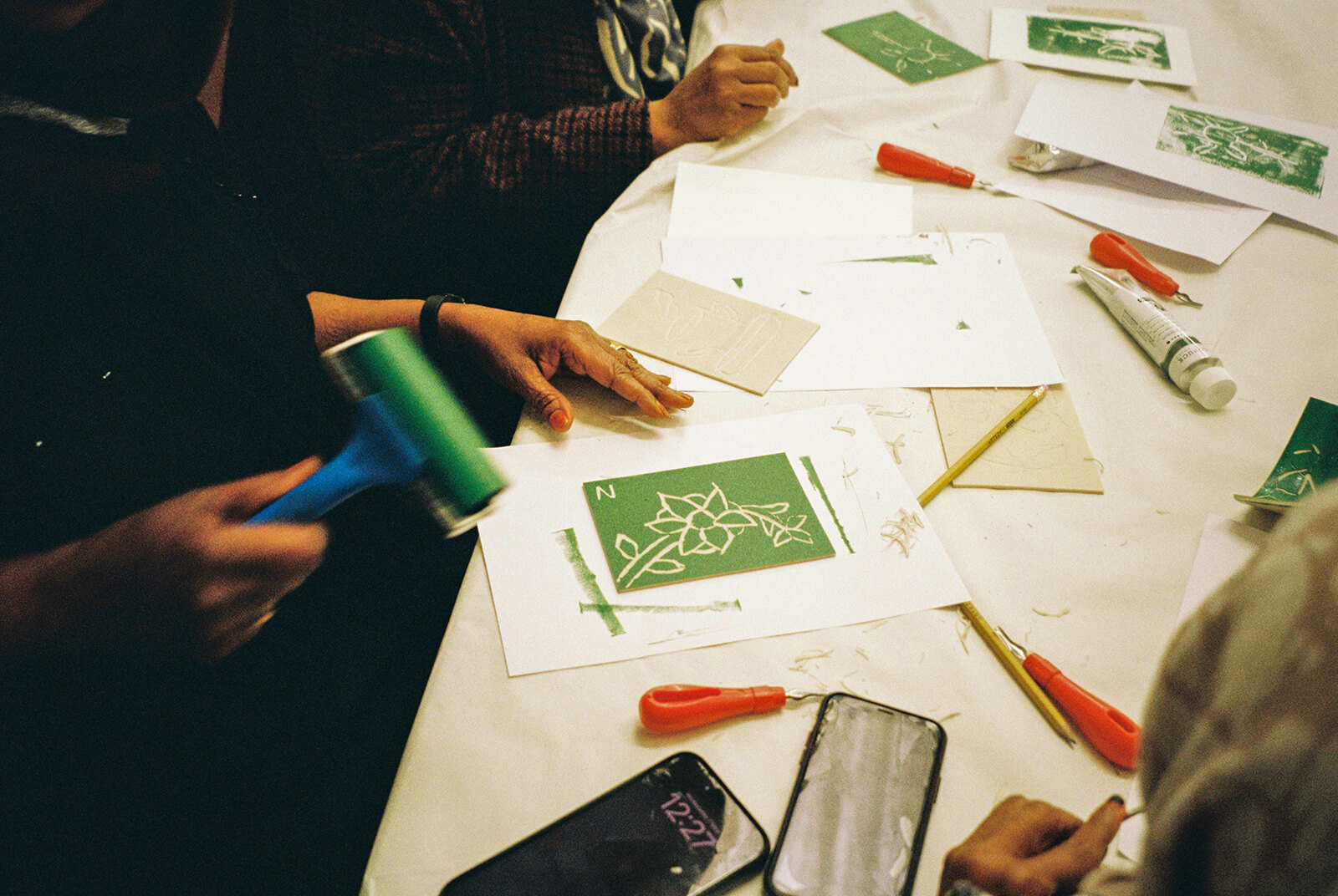
STIR: Your curation at the recently opened V&A East museum’s permanent Galleries, Why We Make, brings together a diverse array of works. What did you imagine it would stir amongst the visitors of the gallery?
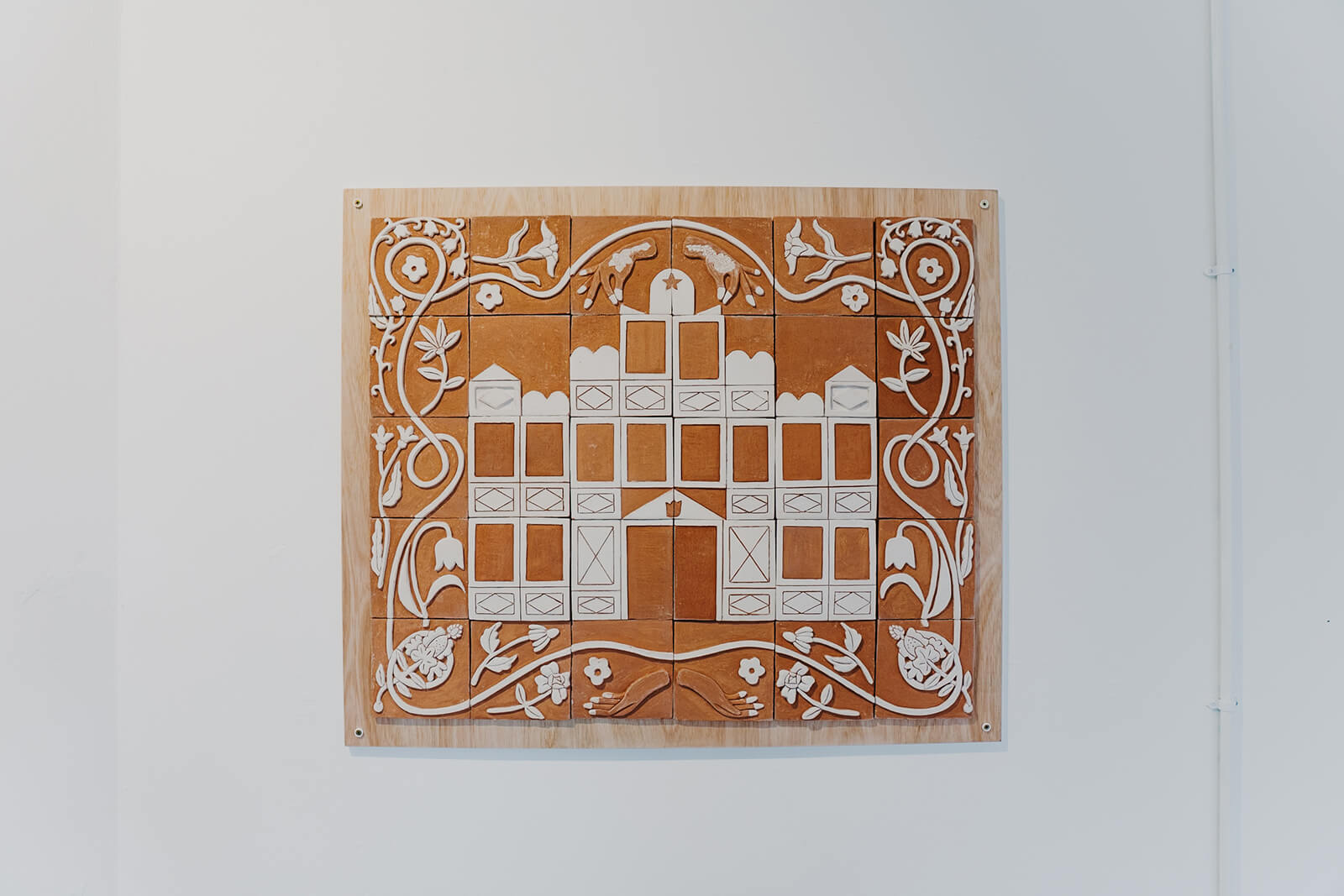
Sahra: I hoped the display would encourage people to think about how art and design can be politically engaged and carry broader social meaning, while still being deeply connected to everyday life. A lot of the curation comes from my own connection to East London. Works such as the Green Street Print, the ‘Always Keep Your Integrity’ print and some of the test tiles connect back to local histories in Newham and surrounding areas like Hackney, alongside everyday observations, personal memory and the communities that shaped me.
Materiality was also really important to me in the selection. I wanted visitors to think not only about objects themselves, but also about the social and economic stories embedded within materials, craft traditions, labour and place. There are also clear connections to figures like Peggy Angus, Morris and See Red Women’s Workshop, whose ideas around art, labour, craft and public life have influenced me deeply. It also felt important to include things that might not traditionally be seen as museum objects, such as test tiles, mistakes, workshop outcomes, fragments and references. I wanted the display to reveal the thinking and relationships behind the finished works.
Ultimately, I wanted the display to stir conversations around materiality, community, care, longevity and collective memory, and to show that making is never neutral. Objects carry histories, relationships, values and stories within them.>
STIR: What are some recurring challenges that you often encounter, and how do you navigate through them without losing your sense of curiosity or care?
Sahra: I am glad it reads like it carries care. What keeps me going, perhaps, is that I always feel like there isn't enough care.
I think the way I navigate it is by trying to stay close to the actual people involved rather than the pressure around the project. The moments that keep me curious are usually quite small: conversations during workshops, unexpected stories, the way someone interprets a material or symbol differently to how I imagined it. Those moments remind me why the work matters beyond deadlines, funding pressures or institutional demands.
I feel like I'm always putting myself forward to disappoint people in the outcome. – Sahra Hersi
STIR: What feels most personal to you in your practice right now?
Sahra: It feels like a cop-out saying all of it is personal, but it really is. I think all the work is about putting care in, which isn't always the easiest thing to do. Care demands a lot of energy and a thick skin. I feel like I'm always putting myself forward to disappoint people in the outcome. I'm always negotiating with my own ego, but in the end, bringing people together and sharing space with them is so much more valuable than any disappointment.
STIR: What’s NEXT for you? Any ideas, questions or directions that are beginning to take shape?
Sahra: Moving forward, I want to find a way to continue operating, and I think the only way to do that is to find others who are also operating similarly and to try to navigate a world that feels quite scary. How do we keep moving forward when we're facing human and environmental crises? I feel that's, for me, my next challenge. It feels really huge to say that my next challenge is figuring out how to keep operating.

by Pranjal Maheshwari Oct 23, 2026
Co-authored by Jareh Das, Chairman traces the British designer’s fixation on chairs as symbols of power and identity and as mediums of expression and community building.
by Mirra Lynn Oct 22, 2026
The curators behind Palestine Design Week 2026 reflect on its intent, considering how design holds memory, makes space for loss and imagines a future in Palestine.
by Chahna Tank Oct 22, 2026
STIR speaks with the Mumbai-based type designer about her practice, type walks and why she wants more people to have stronger opinions about Indian-script fonts.
by Jincy Iype Oct 15, 2026
STIR explores craft, material intelligence and people shaping Indian design through dialogues with Design Democracy’s co-founders and the curators of its special exhibitions.

make your fridays matter with a well-read weekend
Enter your details to sign in
Don’t have an account?
Sign upOr you can sign in with
a single account for all
STIR platforms
All your bookmarks will be available across all your devices.
Stay STIRred
Already have an account?
Sign inOr you can sign up with
Verification link sent to check your inbox or spam folder to complete sign up process
Tap on things that interests you.
Select the Conversation Category you would like to watch
Please enter your details and click submit.
Enter the 6-digit code sent at


Sahra Hersi on the charms and challenges of participatory public design
by Aarthi Mohan, Pranjal Maheshwari | Published on : May 08, 2026


 Sign in with Google
 Sign in with email
What do you think?