Architecture05 mins. read
Quzika Winery by PL-T Architecture Studio is hidden in the rich Tibetan landscape
by Anushka SharmaAug 15, 2024




by Pranjal MaheshwariPublished on : Feb 14, 2026
Sydney’s relentless wave of infrastructural redevelopment, travelling from the Opera House, along the foreshore, through complexes and boardwalks, meets the industrial hub of the city’s expansive fish industry at the new Sydney Fish Market in Blackwattle Bay. More than an upgrade of the existing fish market, the new building, designed by 3XN GXN in association with BVN Architecture, is positioned as the major inaugural project for the NSW Government’s urban renewal program for Blackwattle Bay at large. The only industrial harbour along the city’s edge from Rozelle to Woolloomooloo foreshore walk, the site connects the neighbouring Wentworth Park to the harbour along the 10.4-hectare string of Sydney’s seaside icons, including the Royal Botanic Gardens, Circular Quay, Sydney Harbour Bridge, Barangaroo, Darling Harbour and of course, the Sydney Opera House.
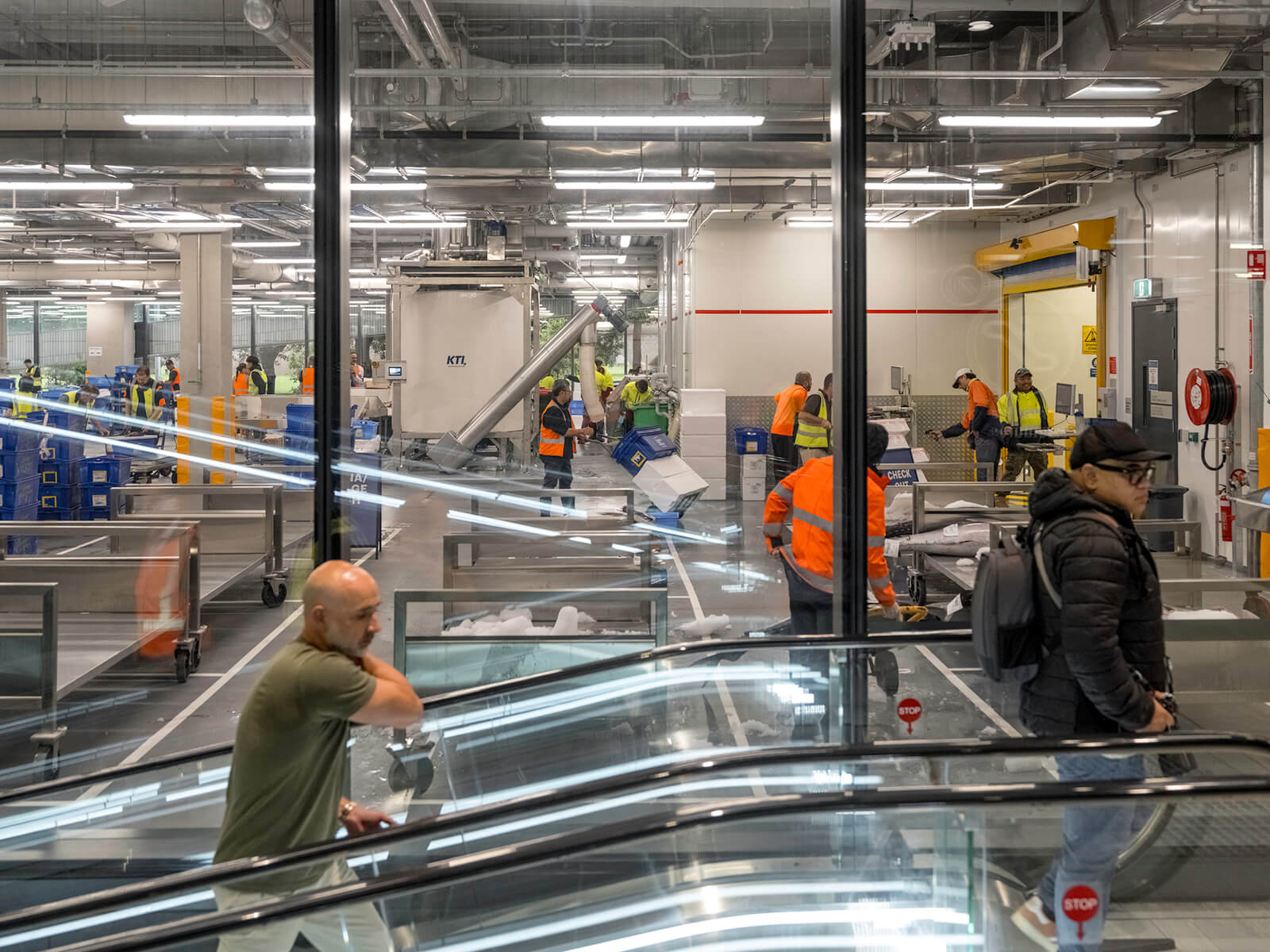
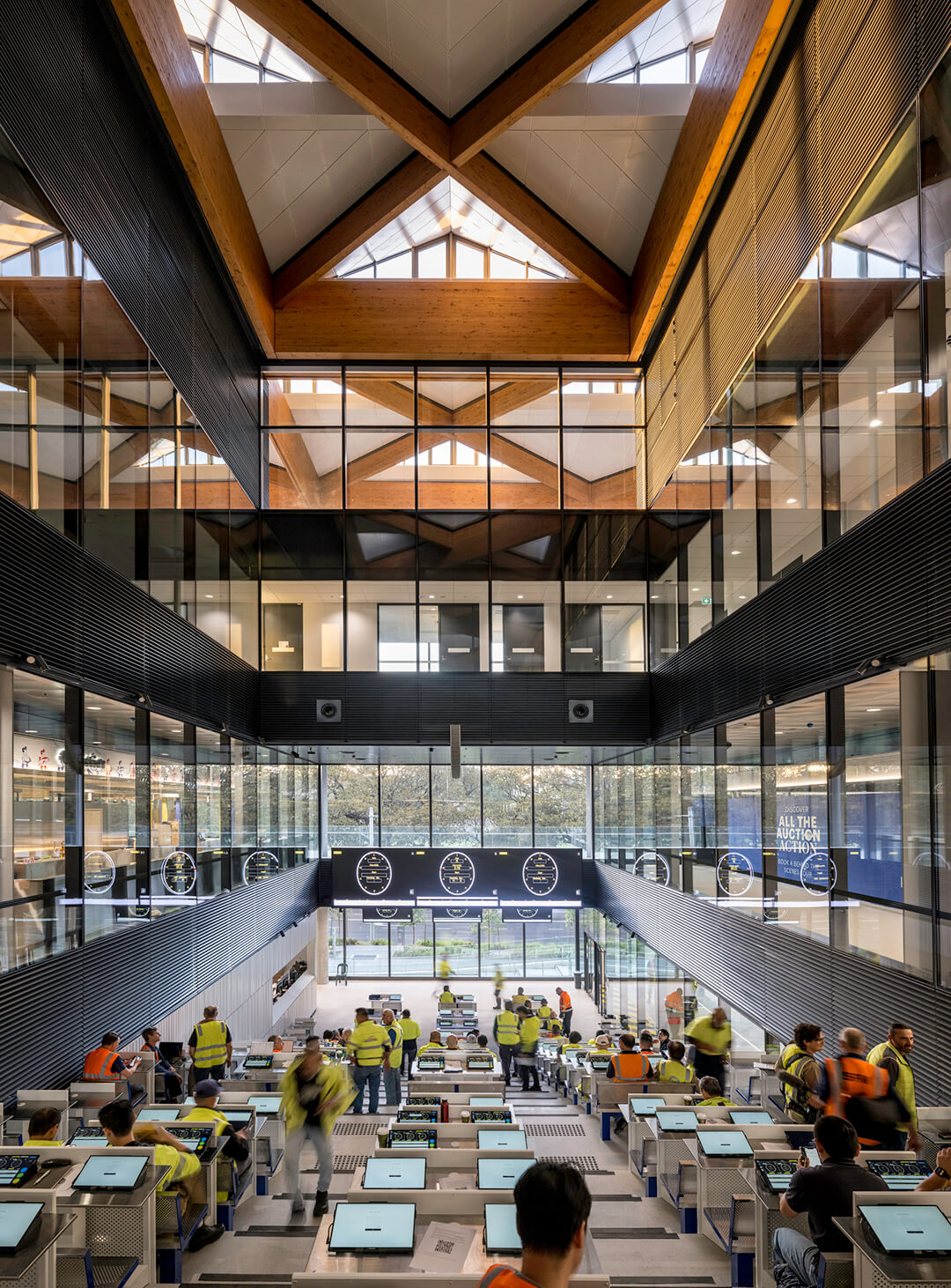
Over a history spanning thousands of years—from the traditional landowners, the Gadigal people of the Eora Nation, to the development and regulation of formalised markets by the city council in 1871 and its evolution into what now stands as the New Sydney Fish Market building—the city has developed a fishing culture that is highly sophisticated and sustainable in its outlook and operations. The resultant system of industrial acquisition, from climate-regulated storage, sorting of the daily catch and production of 70 tonnes of ice for preservation, to an elaborate Dutch-style auction, is no less than a spectacle: something that is revered by the programming of the new market. The building now stands as the southern hemisphere’s largest fish market, housing wholesale, retail, culinary and educational facilities on the bearings of the industry, along with catering to tourists—all under one roof.
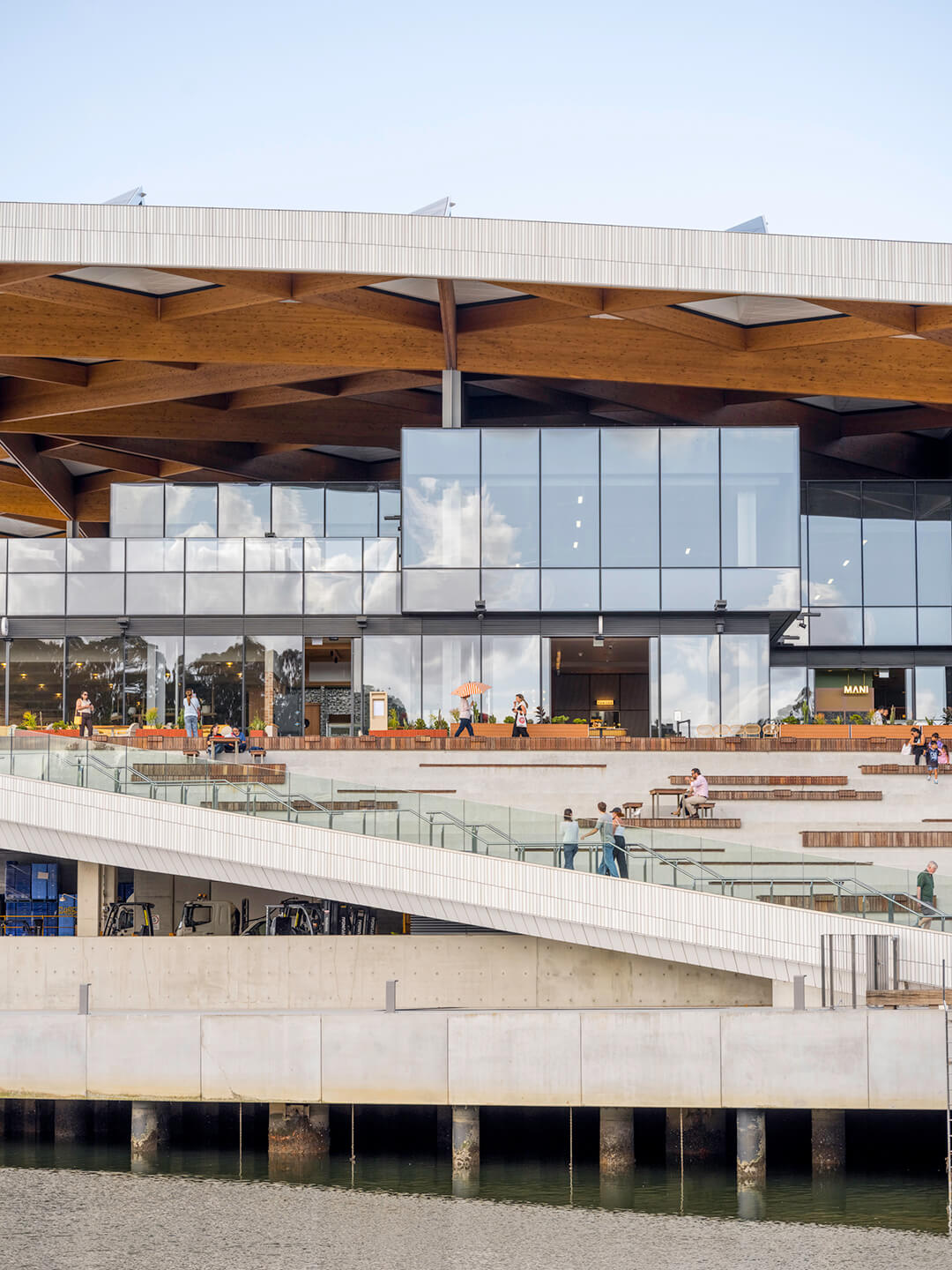
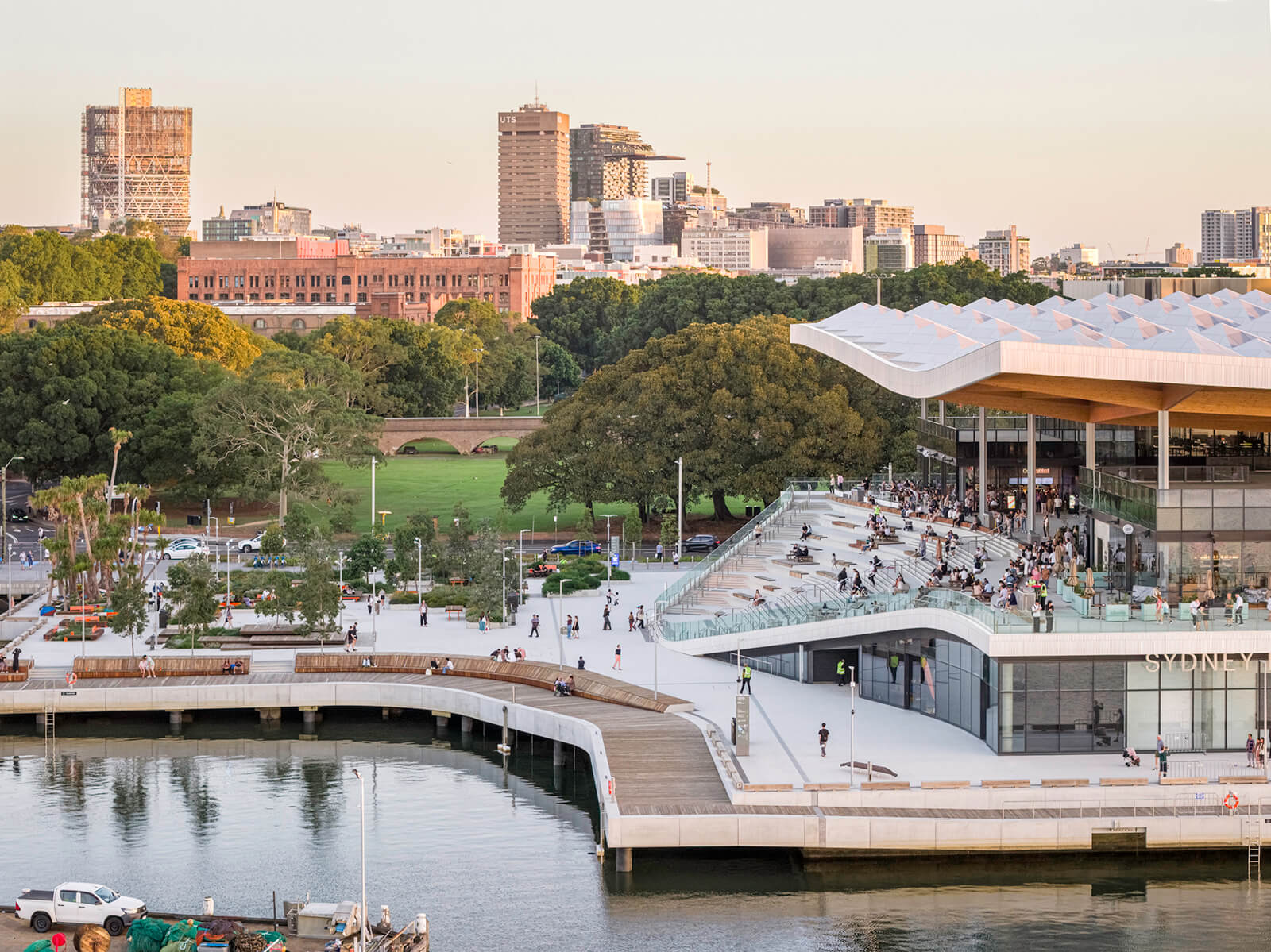
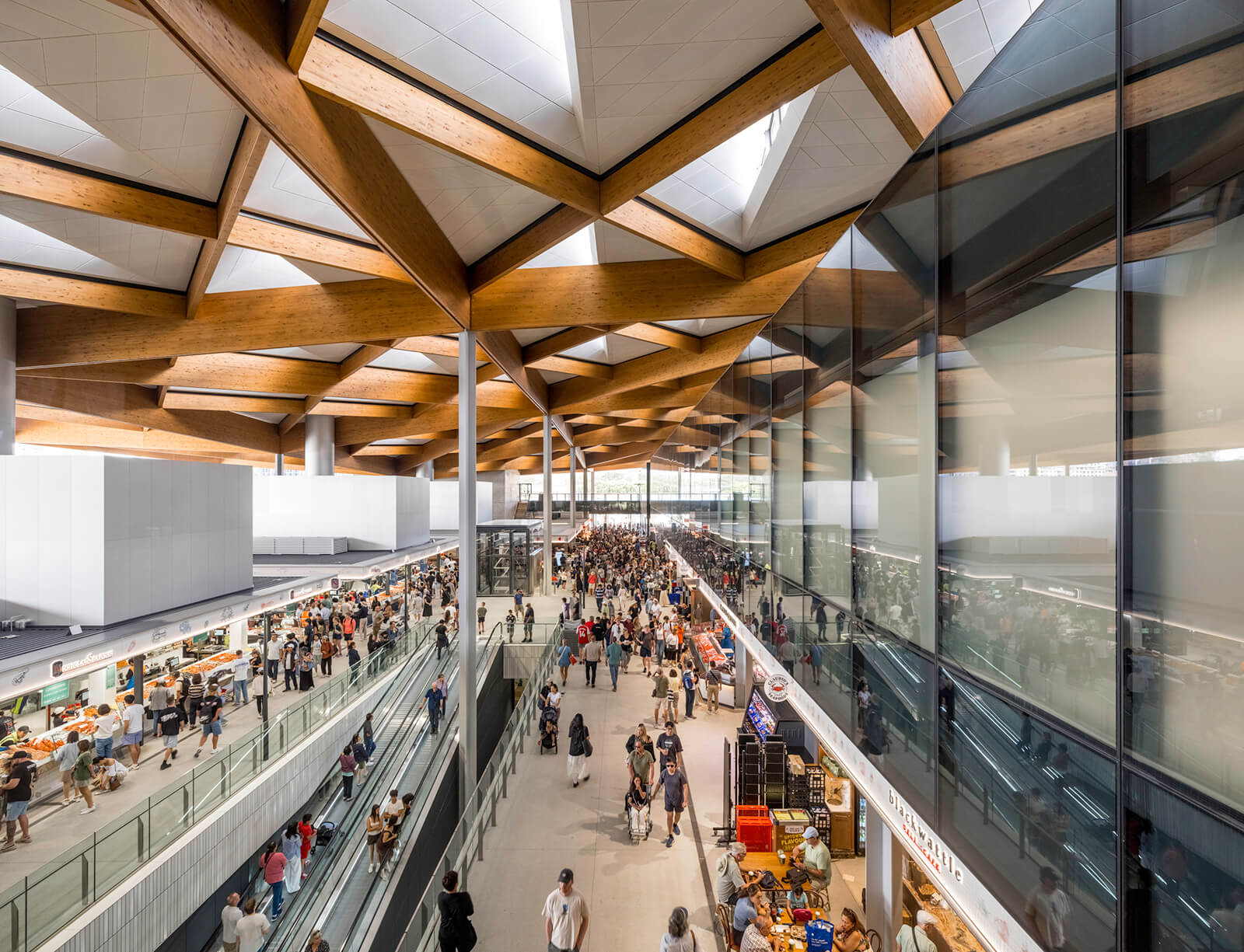
The design caters to multiple circulation flows, offering seamless movement between this range of operations across four distinct levels. With the underwater basement acting as a car park, the lower-ground level contains the loading bay, from where fish and crustaceans are transported to the operating area of the market. Tourists and locals walking along Blackwattle Bay can climb up the stairs along the building perimeter and land straight into the heart of the public market—maintaining the market’s porous thresholds—from where they can witness first-hand the acts of loading, sorting, preserving and even auctioning through the screen displays in the adjacent market hall, or from the southern promenade.
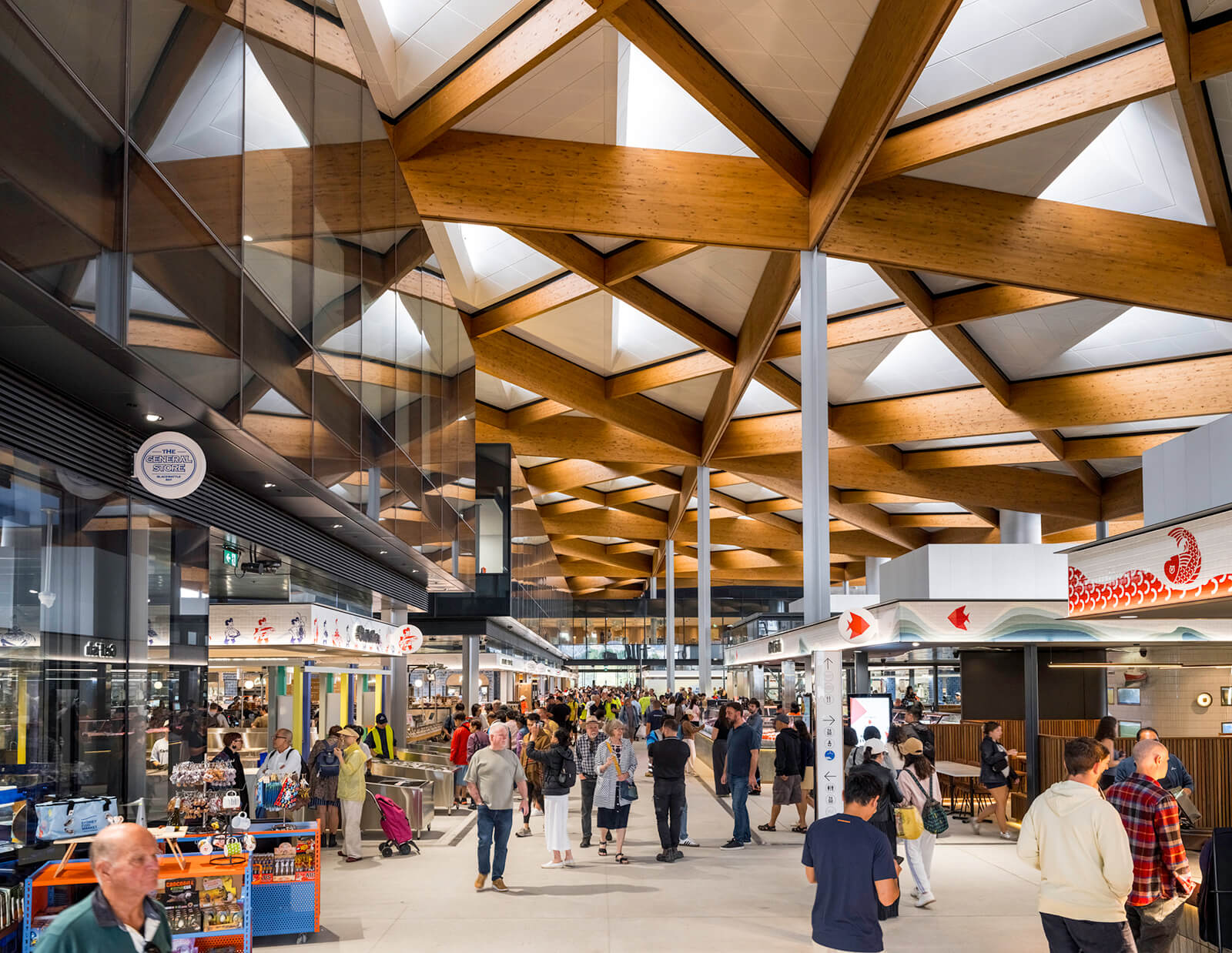
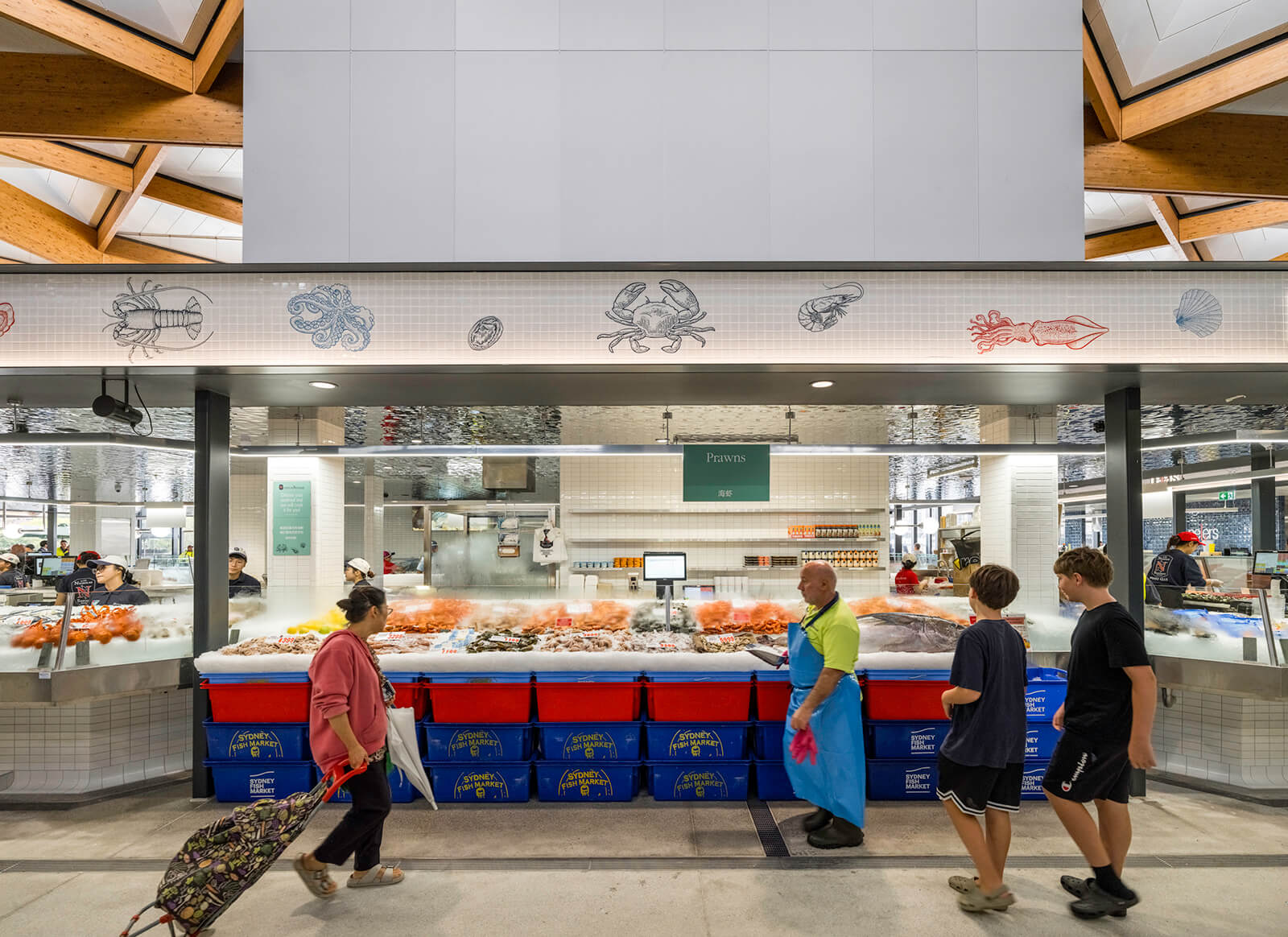
A level above lies the retail section: shops and eateries hosting a variety of vendors offering some of the city’s most coveted dining experiences. Inside, a staggered, modular plan provides flexibility, while the glazed partitions connect to the harbour outside, emulating the authentic ‘open-air’ market setting. This section also opens up to the outdoors in parts, where the steps double up as a public dining area. A mezzanine on top of the contiguous retail block houses the complex’s office spaces along with a cooking school.
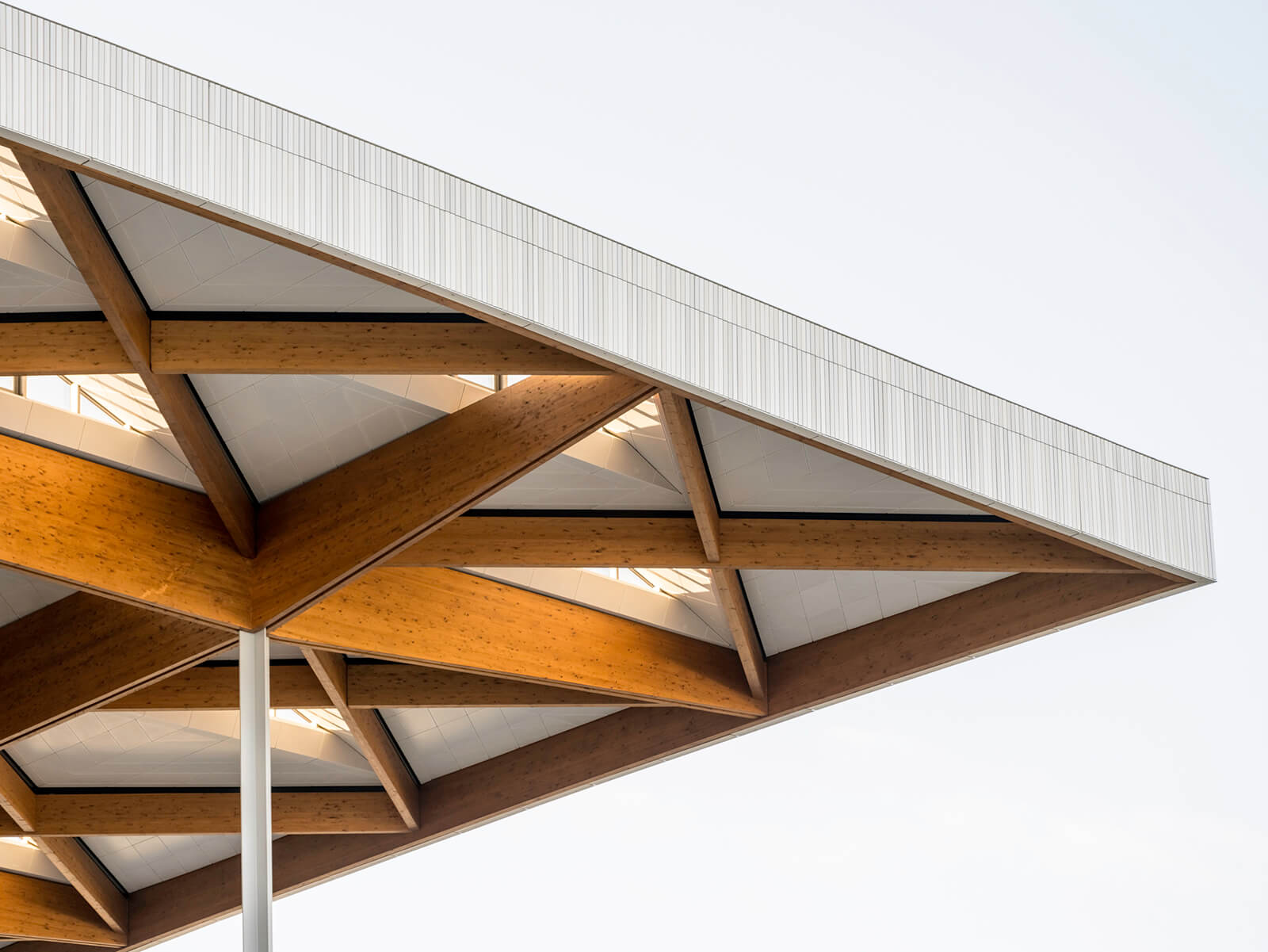
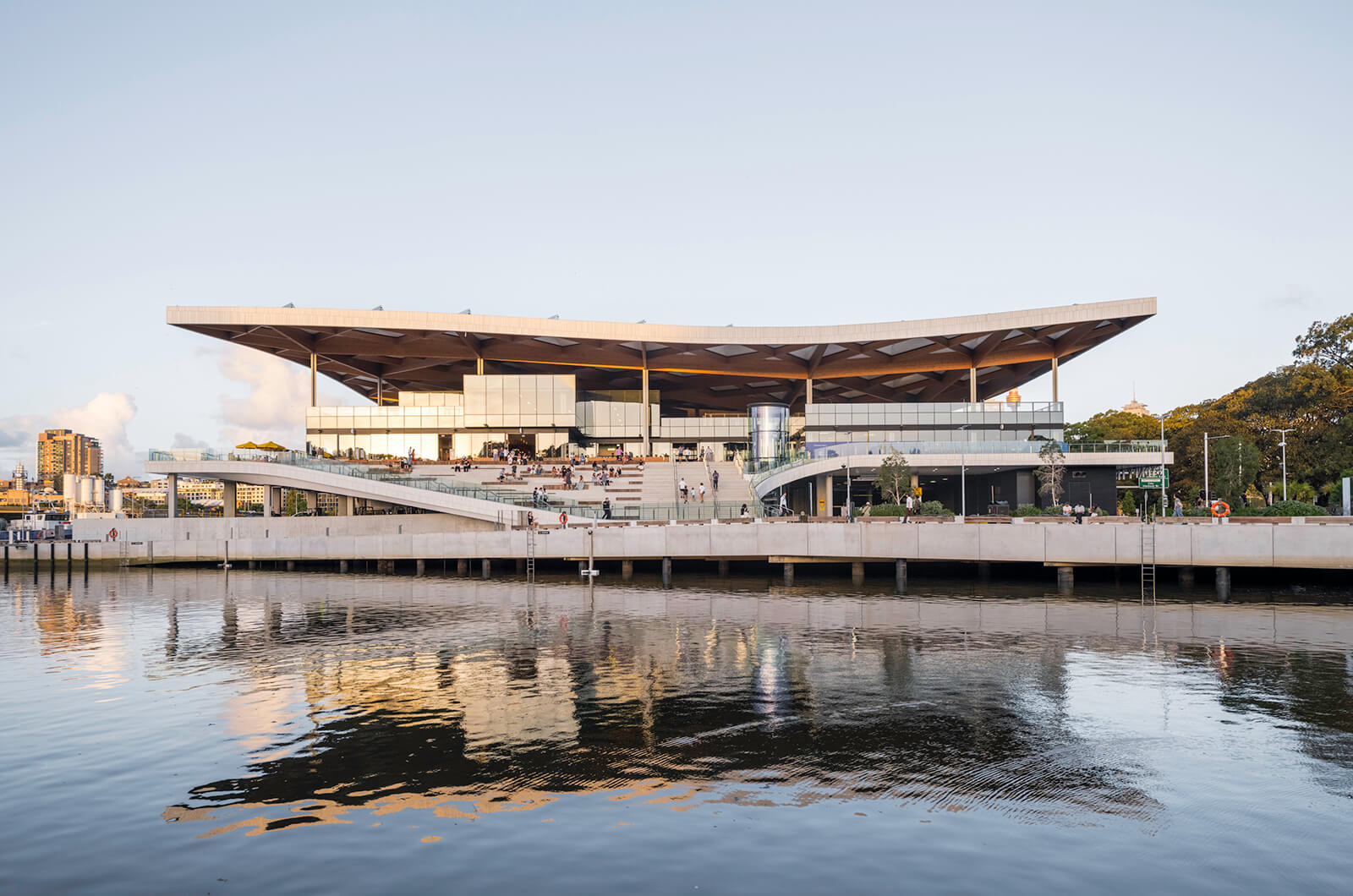
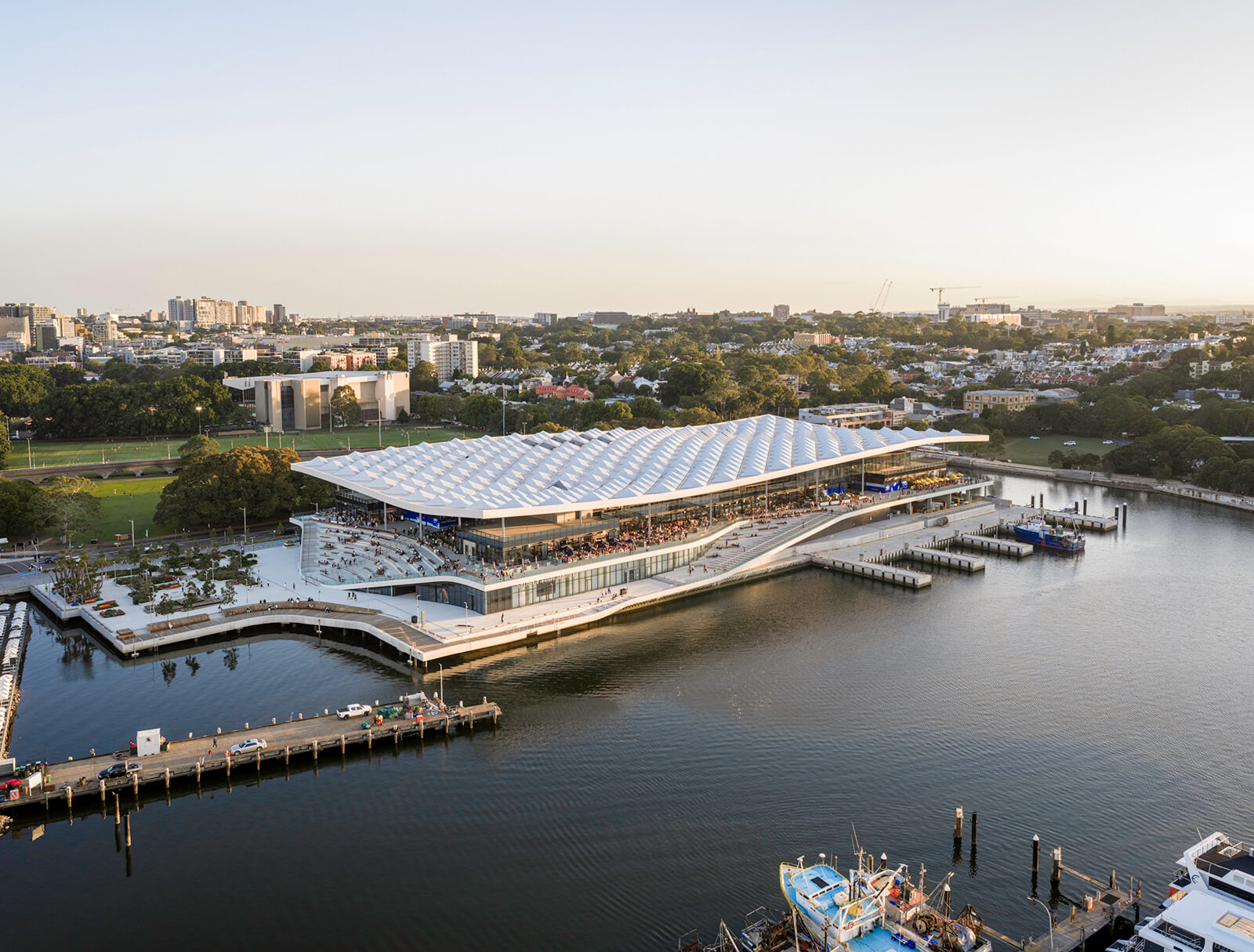
The achieved layout for the market also guides the underlying structural grid—essential to the industrial, stripped-down aesthetic of the fish market—supporting the nearly two-hectare undulating canopy topping it. A standout element in the design, this canopy is composed of 594 ‘glulam’ timber beams and 407 aluminium pyramids, each lined with skylights and solar panels. In conjunction with the roof, the overall built form can be visually understood as a composition of steps cascading down from a ground plane—inversely defined by them—and the roof emanating from above. Kim Herforth Nielsen, founder and creative director of 3XN Architects, describes this composition as an ode to Danish architect Jørn Utzon’s oeuvre.
Beyond resources on land, the project also extends integrated efforts to replenish aquatic life: 3D-printed coral reefs over the tidal edge of the market’s wharfs, underwater lattice structures, seawall tiles, bio shelters and water filters can collect a million items of plastic and other waste.
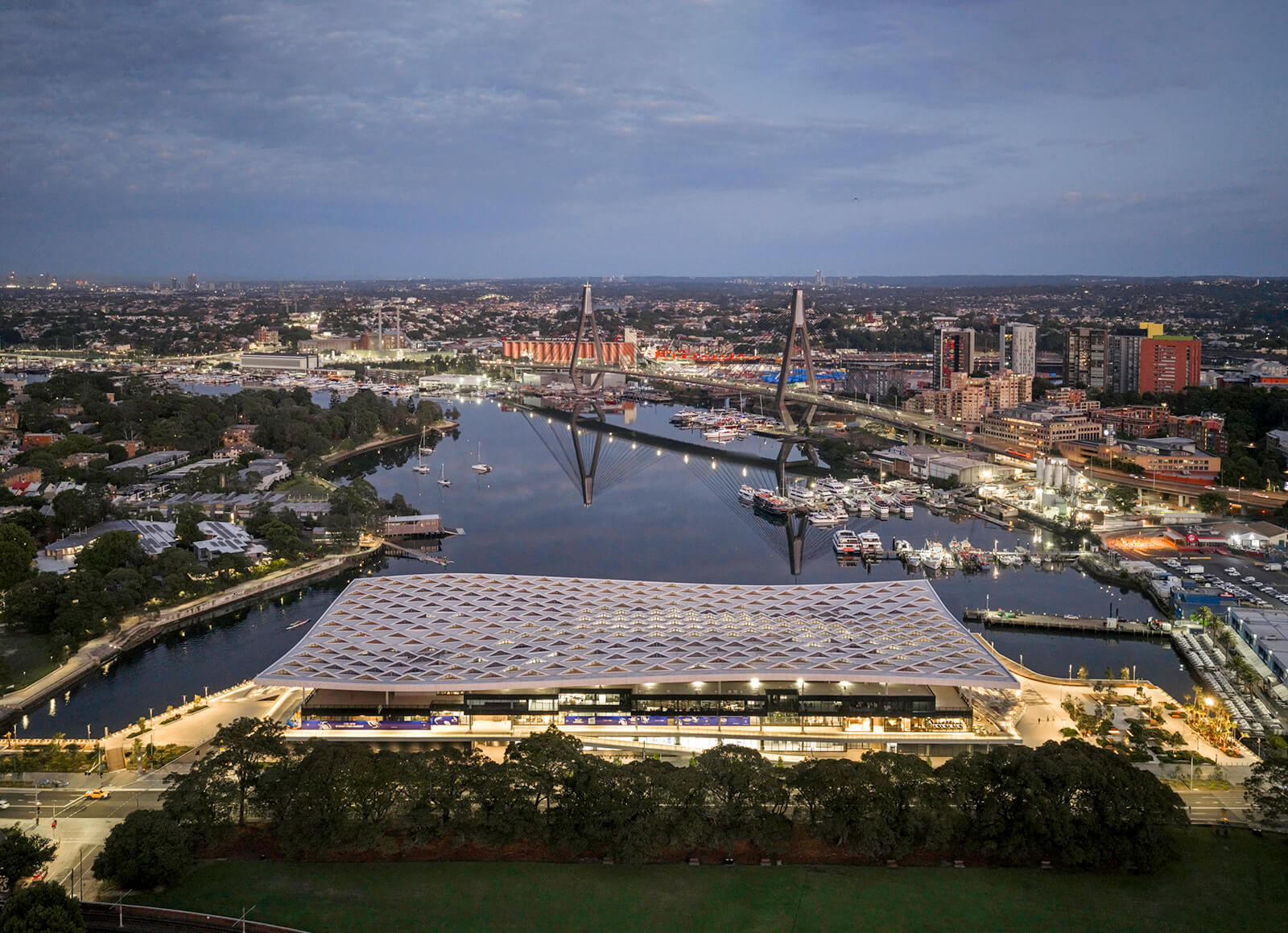
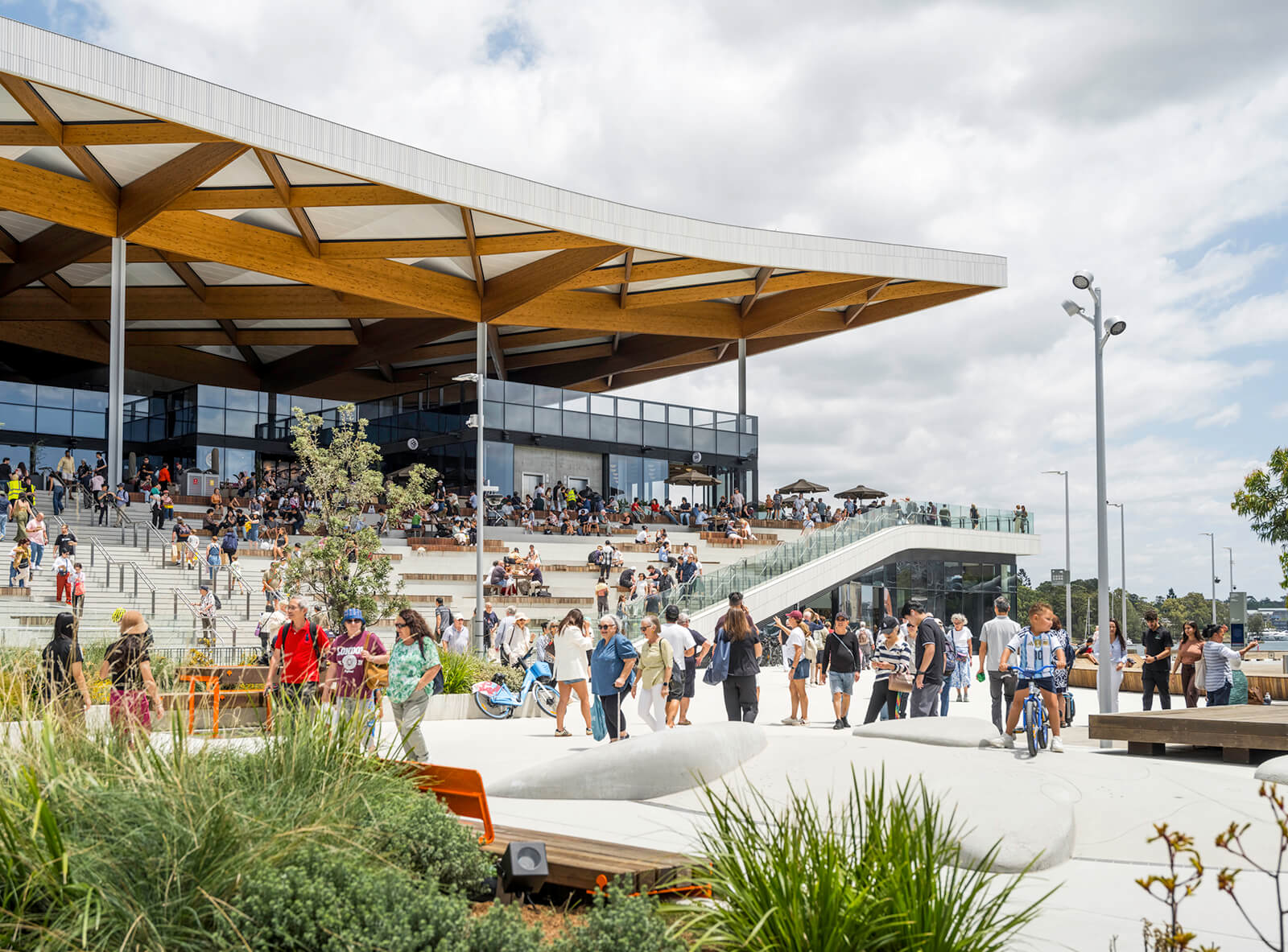
While designed for a landmark impression, the New Sydney Fish Market also makes marked attempts to reduce its impact on the environment. Optimised industrial processes meet specific humidity, hygiene and operational standards for the market, while reducing up to 80 per cent waste disposal to landfills and achieving a 5-Star Green Certification for the building. The roof has been designed to balance sunlight and shade while leveraging the prevalent breeze across the harbour to reduce energy loads by up to 35 per cent. The geometry also allows for rainwater harvesting from two collection points, while the wetland flora in the plaza landscape, designed by ASPECT Studios, filters stormwater, reducing the potable water requirement of the public building by half.
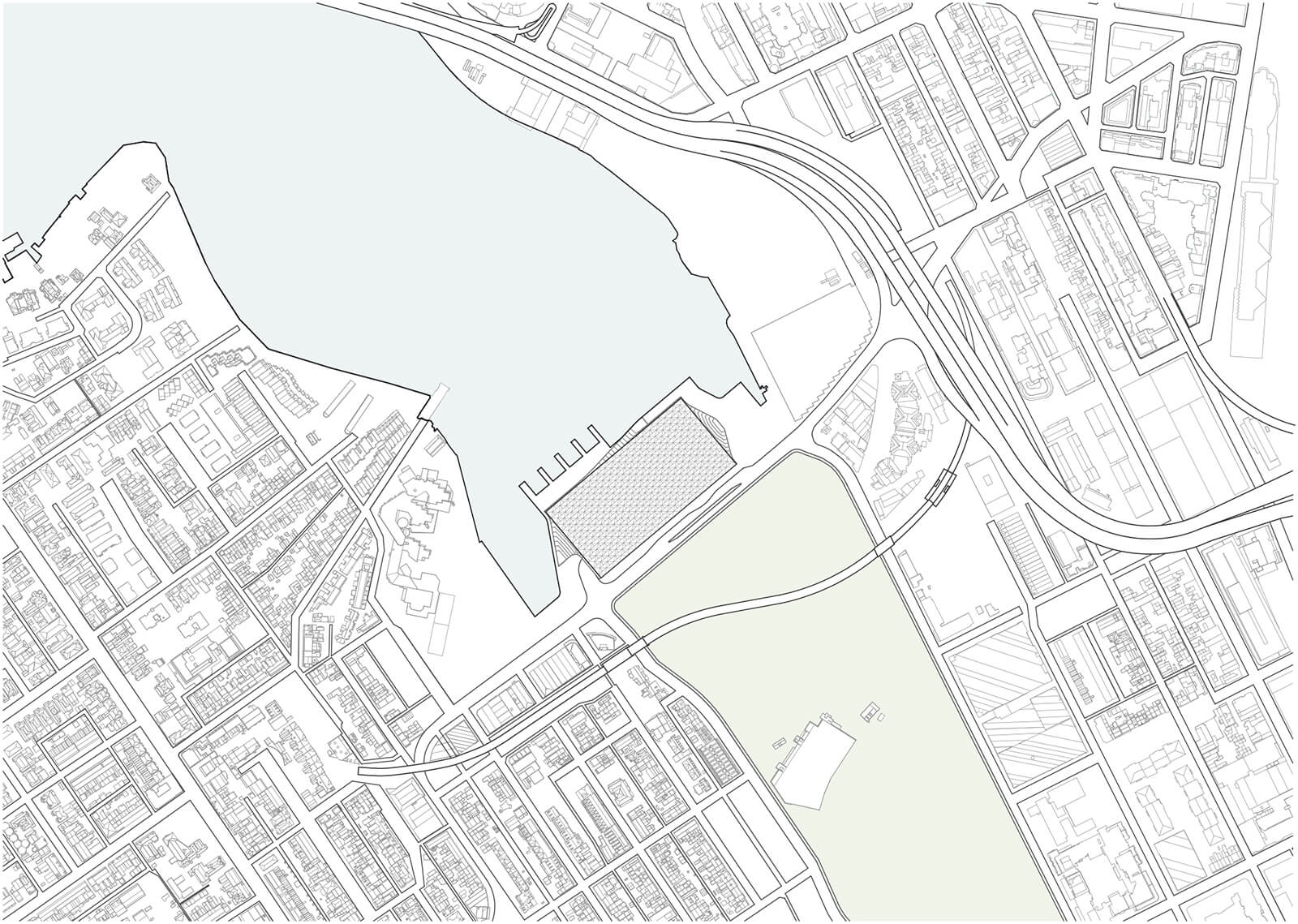
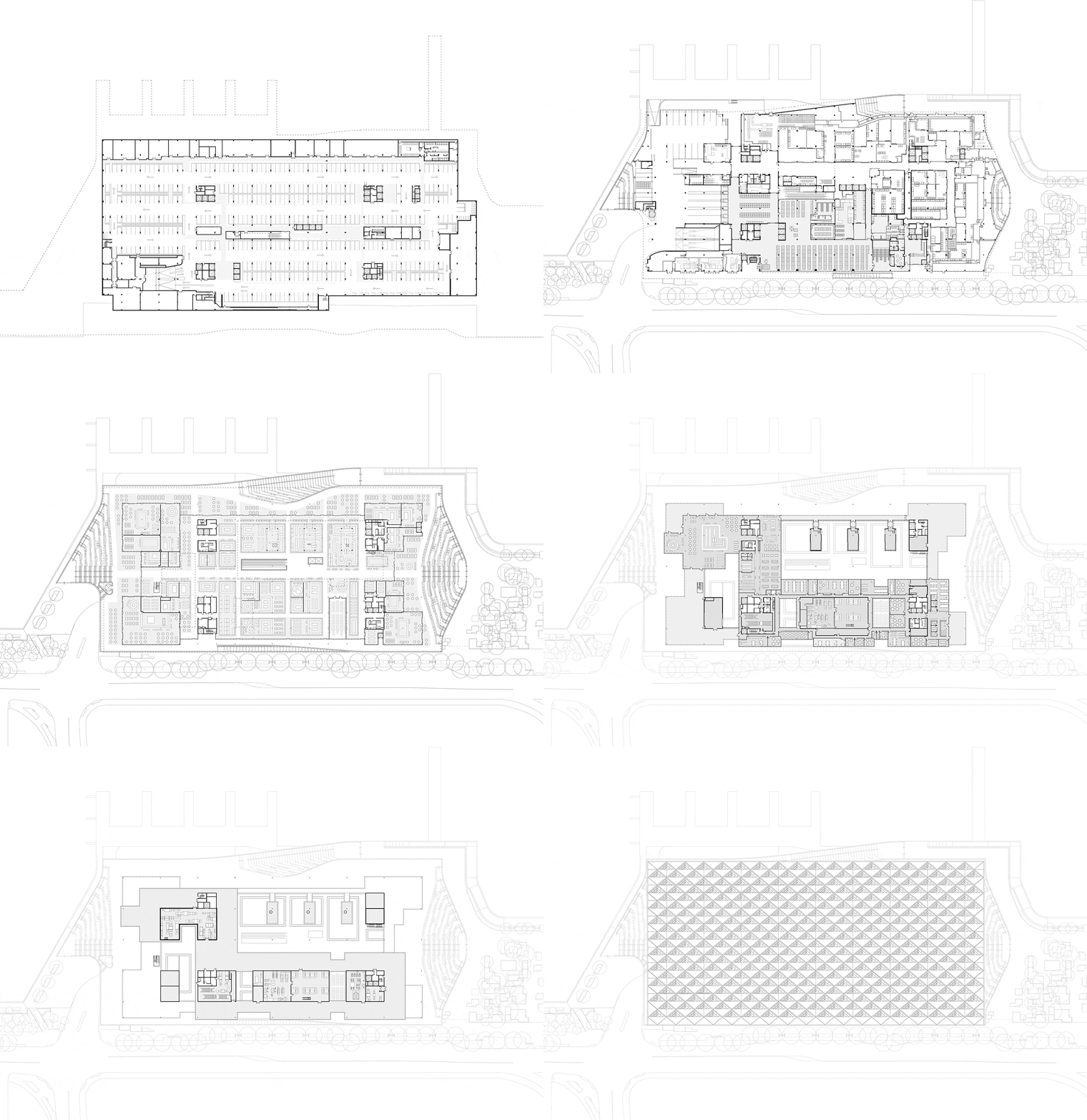
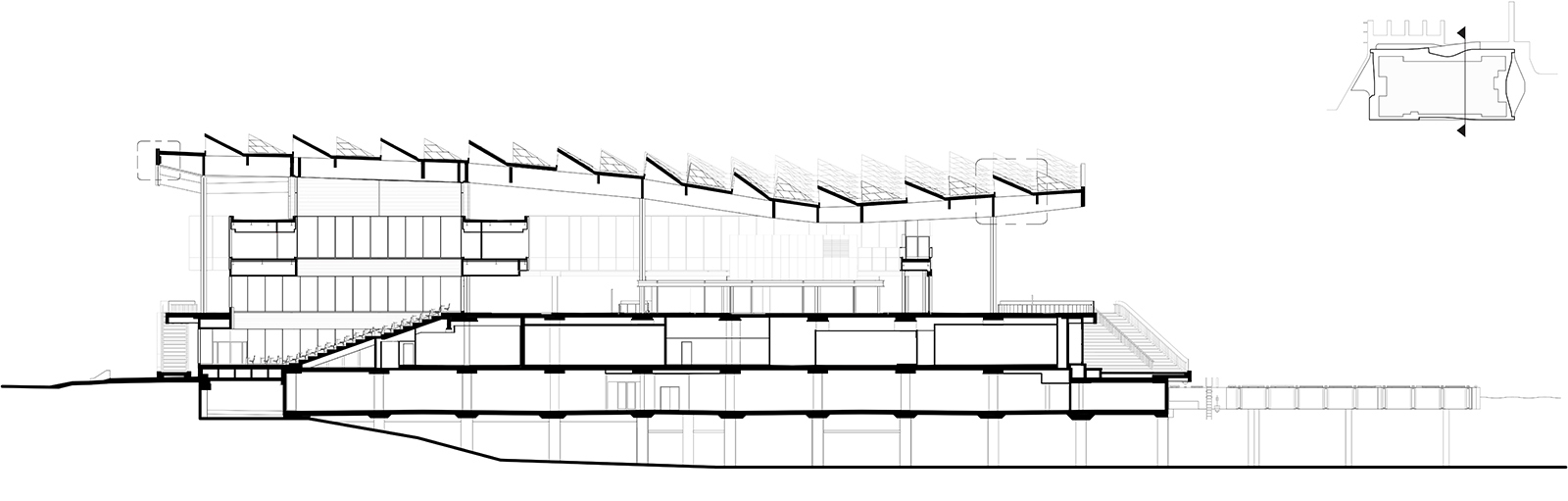
To be in a ‘fish market’ is often considered synonymous with being in a loud, noisy and often ‘smelly’ setting, as the adage goes. By portraying a seemingly chaotic node as a site for carefully choreographed operations transparently, the New Sydney Fish Market building offers to redefine an industrial hub as a means for community and tourist engagement by integrating its daily operations with several high-end experiences under one roof. With the new market expecting a footfall of at least six million visitors every year, the renewed harbour at Blackwattle Bay—with the fish market as its gateway—stands as the site for a new community nexus and a global food destination.
Name: Sydney Fish Market
Location: Australia
Typology: Mixed Use
Client: Infrastructure NSW
Architect: 3XN GXN in association with BVN Architecture
Collaborators: ASPECT Studios (Landscape Architect)
Area: 65,000 sq m
Year of Completion: 2025

by Pranjal Maheshwari Oct 19, 2026
The Mumbai-based architects integrate courtyards, mesh screens and north light trusses to create a dining space that doubles up as a community hub at SR University, Warangal.
by Mrinmayee Bhoot Oct 17, 2026
The Rotterdam-based institute centres the Indian Ocean as a network for exploring material histories and transnational links shaping coastal cultures, positing them as future models.
by Pranjal Maheshwari Oct 16, 2026
At the 2026 Stirling Prize ceremony, Mary Duggan with RUFF Architects, MAKER Architecten and Nakshabid Architects were felicitated for proffering quality housing and social equity.
by Mrinmayee Bhoot Oct 12, 2026
The new Centre for Contemporary Arts, fostering public engagement with art in Uzbekistan, is housed in a tram depot refurbished by the French studio, emulating local craftsmanship.

make your fridays matter with a well-read weekend
Enter your details to sign in
Don’t have an account?
Sign upOr you can sign in with
a single account for all
STIR platforms
All your bookmarks will be available across all your devices.
Stay STIRred
Already have an account?
Sign inOr you can sign up with
Verification link sent to check your inbox or spam folder to complete sign up process
Tap on things that interests you.
Select the Conversation Category you would like to watch
Please enter your details and click submit.
Enter the 6-digit code sent at


3XN GXN’s New Sydney Fish Market softens thresholds between industry and public life
by Pranjal Maheshwari | Published on : Feb 14, 2026


 Sign in with Google
 Sign in with email
What do you think?