Design04 mins. read
Not just a chair: Urs Fischer elevates the banal through absurdity in Shucks & Aww
by Bansari PaghdarJan 31, 2026




by Chahna TankPublished on : Nov 06, 2025
Scaffolding is ephemeral. A provisional framework that makes construction possible while revealing, rather than concealing, the process of making. Unlike the finished façade, it lays bare the anatomy of becoming, exposing the logic of assembly: the joints and braces that hold a structure, or make it possible in the first place. Its strength lies not in any single element, but in the way its parts work together, creating a system of reliance that sustains the whole. It is within this poetics of balance and mutual support that the exhibition A Shared Scaffolding unfolds.
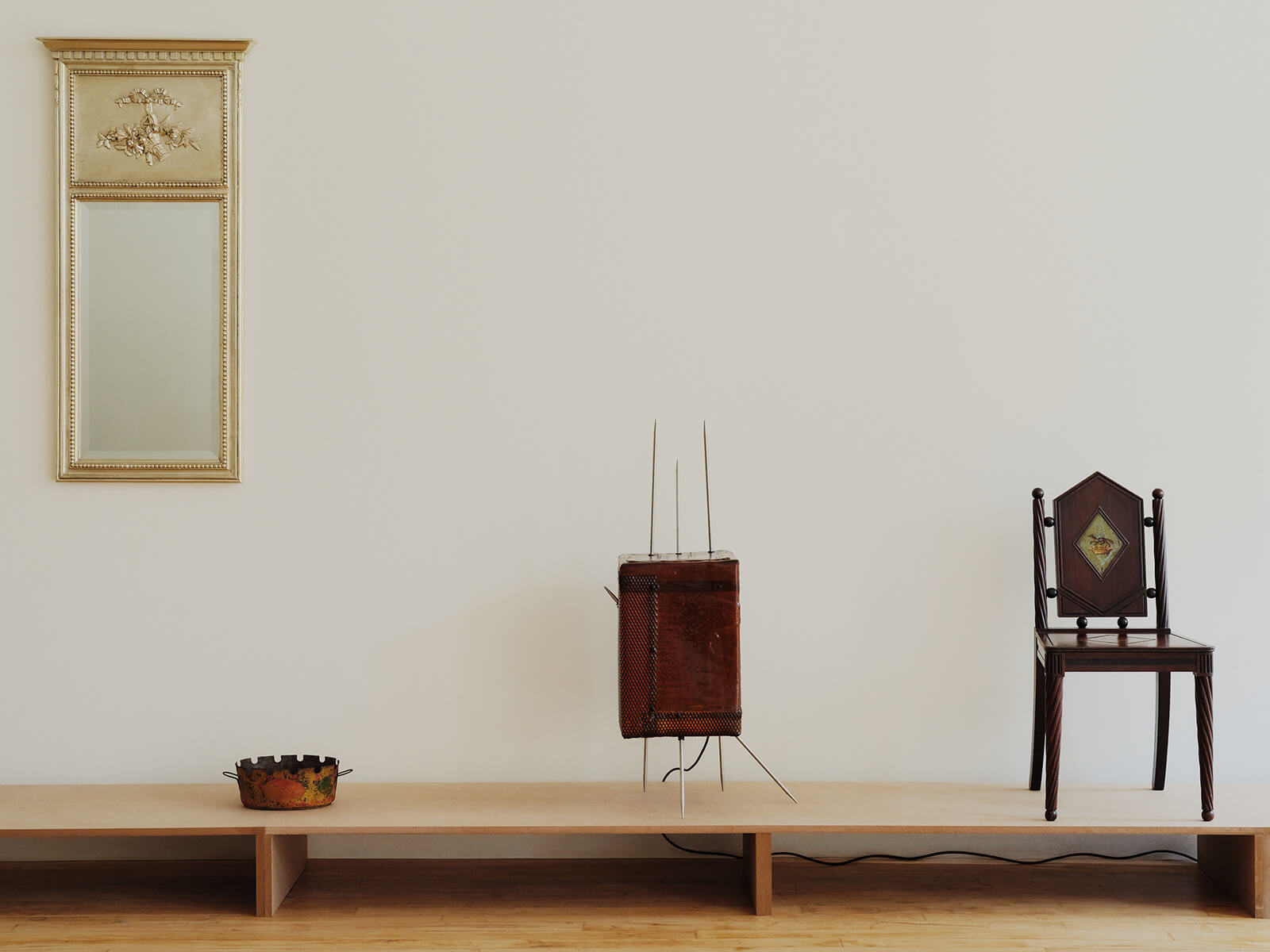
Presented by the NYC-based Jacqueline Sullivan Gallery in its first collaboration with Montreal-based studio and peer design gallery BRUISES, the show—on view from September 19 – November 15, 2025—offers a unique perspective on design, collaboration and temporality. “The exhibition marks a singular moment in time—a fleeting opportunity for the intersection of artistic intentions, processes and ways of making. My intention… is to further interrogate what it means to work both in concert and in tension with one another,” says the gallerist and curator Jacqueline Sullivan, in the show’s official release.
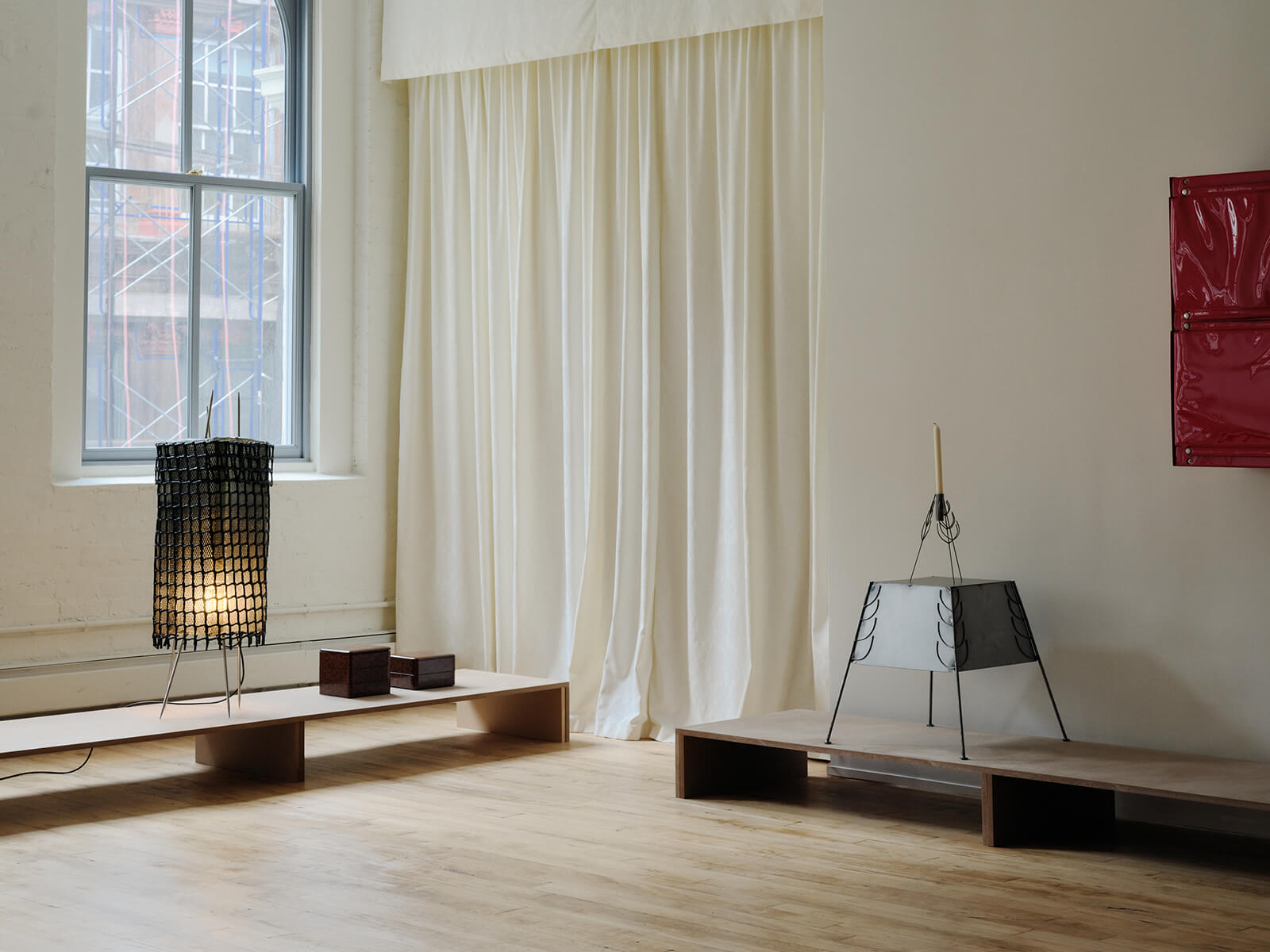
Rooted in the structural attributes of early 20th-century circus tents—‘The Big Top’ or marquee—A Shared Scaffolding attempts to extend their architectural language into the realm of design. The circus tent, like the scaffold, is a structure defined by its impermanence and the essential rigging that holds it aloft. Its tensile canopy, made of fabric stretched taut between poles, ropes and cables, balances on a precise choreography of parts in which no element stands alone. As the exhibition’s statement notes, the marquee offers both a physical and conceptual framework. “It encloses the stage, further interrogating what it means to support, work in concert with one another and shape a distinctly collaborative and unified narrative,” the press release notes.
In this spirit, the decorative arts and design gallery invites contemporary artists and designers to engage with this idea of structure and support through diverse materials, including textiles, stainless steel, ceramics, plastics and metal mesh. For the collaborative presentation, the gallery presents a new lighting collection by London-based contemporary design studio LS Gomma, alongside a selection of historical design pieces, while BRUISES debuts a ceramic sculpture by Quebec-based ceramic artist Sylvie Cauchon and metal furniture by its creative director, Florence Provencher-Proulx.
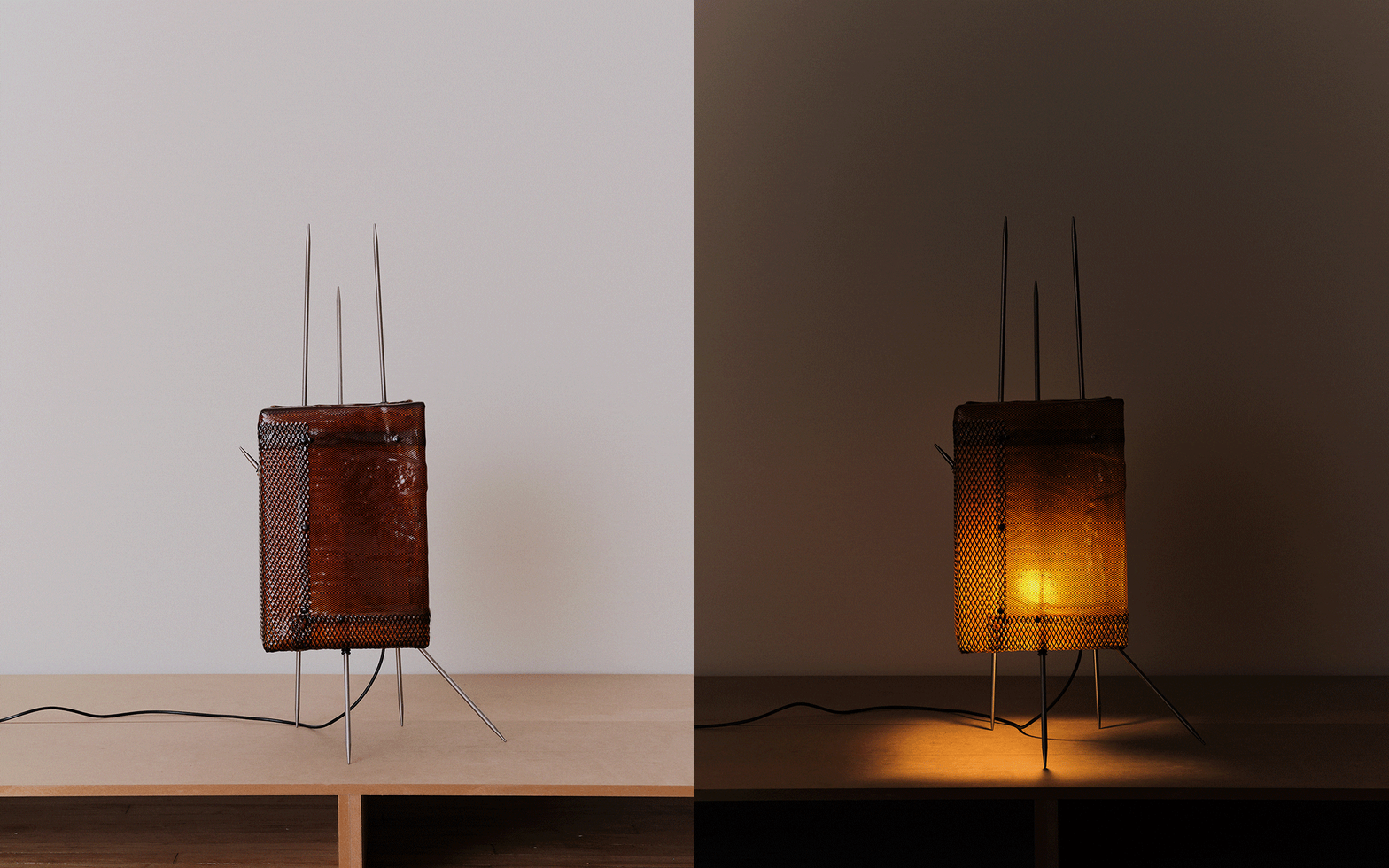
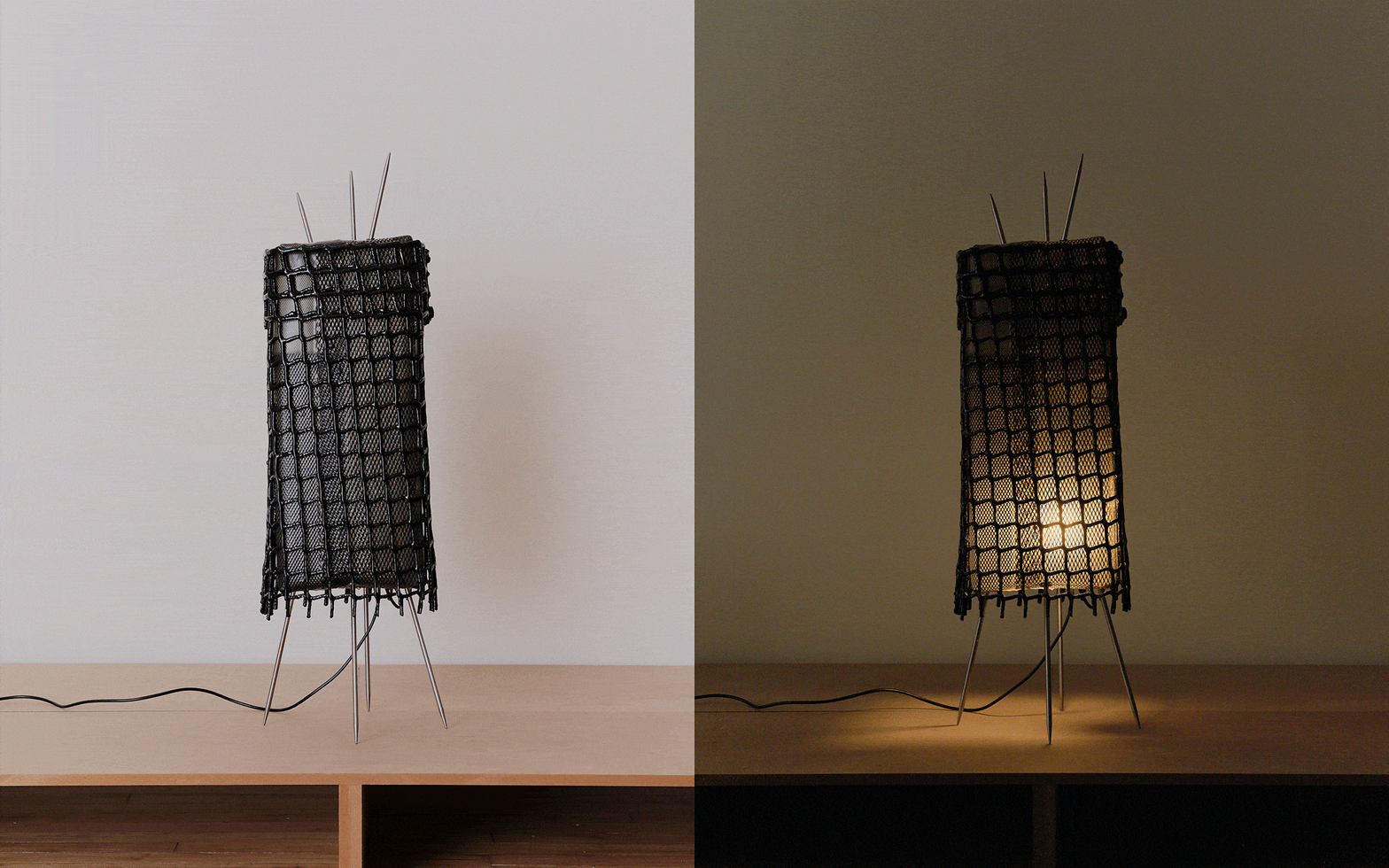
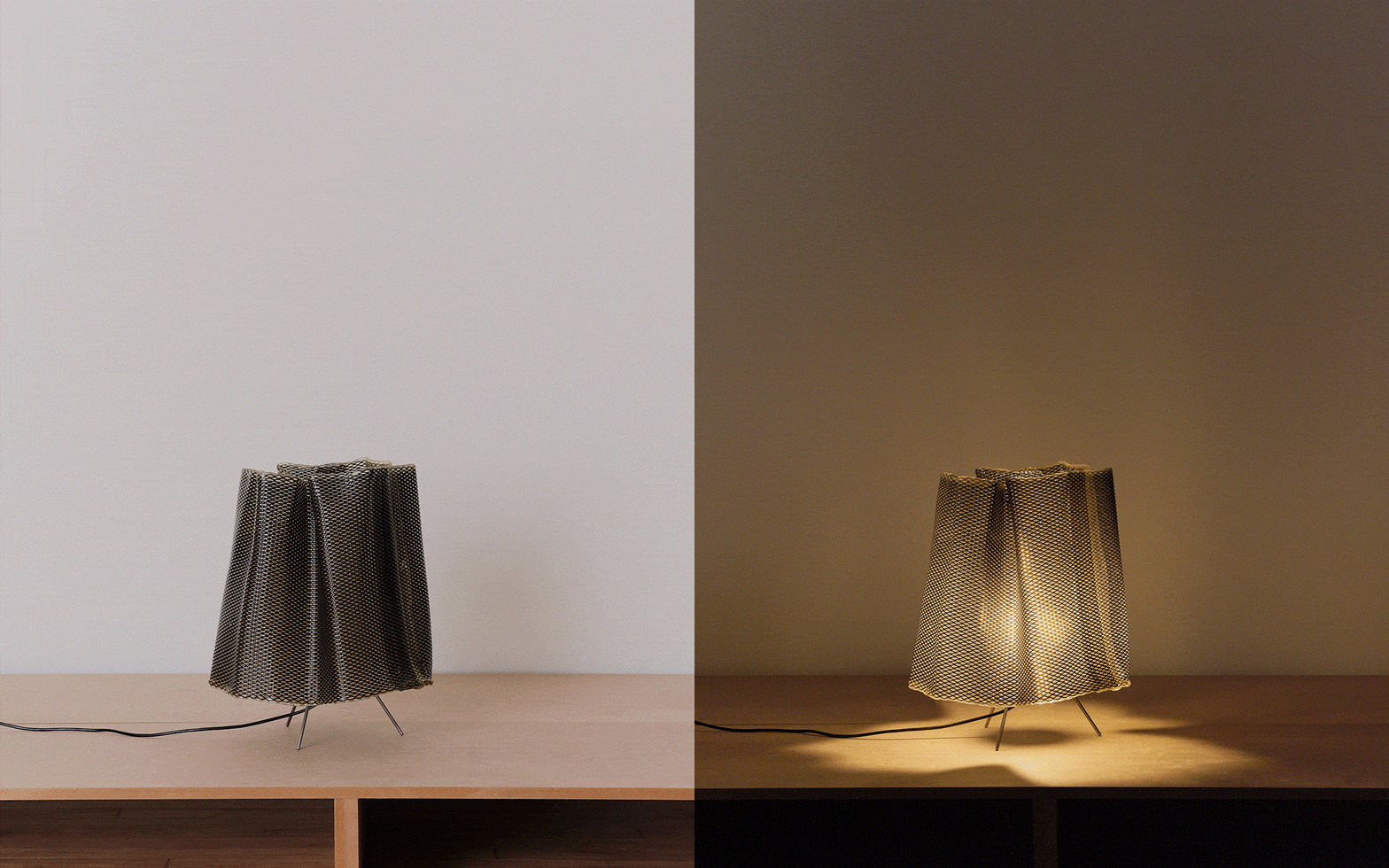
Among the pieces is a new lamp series by product designer Joel Muggleton of LS Gomma, exploring the sculptural potential of materials such as rubber and metal mesh. Guided by his assertion that “to lift an object into the air is always a sculptural act”, Muggleton explores the dynamics of suspension and support through his works: Pierced Box Lamp #1 (Amber), Pierced Box #2 (White), Pierced Box #3 (Black Netted), Ghost Lamp (Clear) and Total Freedom #4. Each lighting design is suspended by long stainless-steel needles of varying heights, recalling the suspended tension of a circus tent or the tensile poise of a marquee. Rather than merely supporting the lamps, these needles pierce through their forms, transforming the act of support into a sculptural gesture. The layered mesh and pigments diffuse light into soft gradients, revealing a surface depth that feels ethereal.
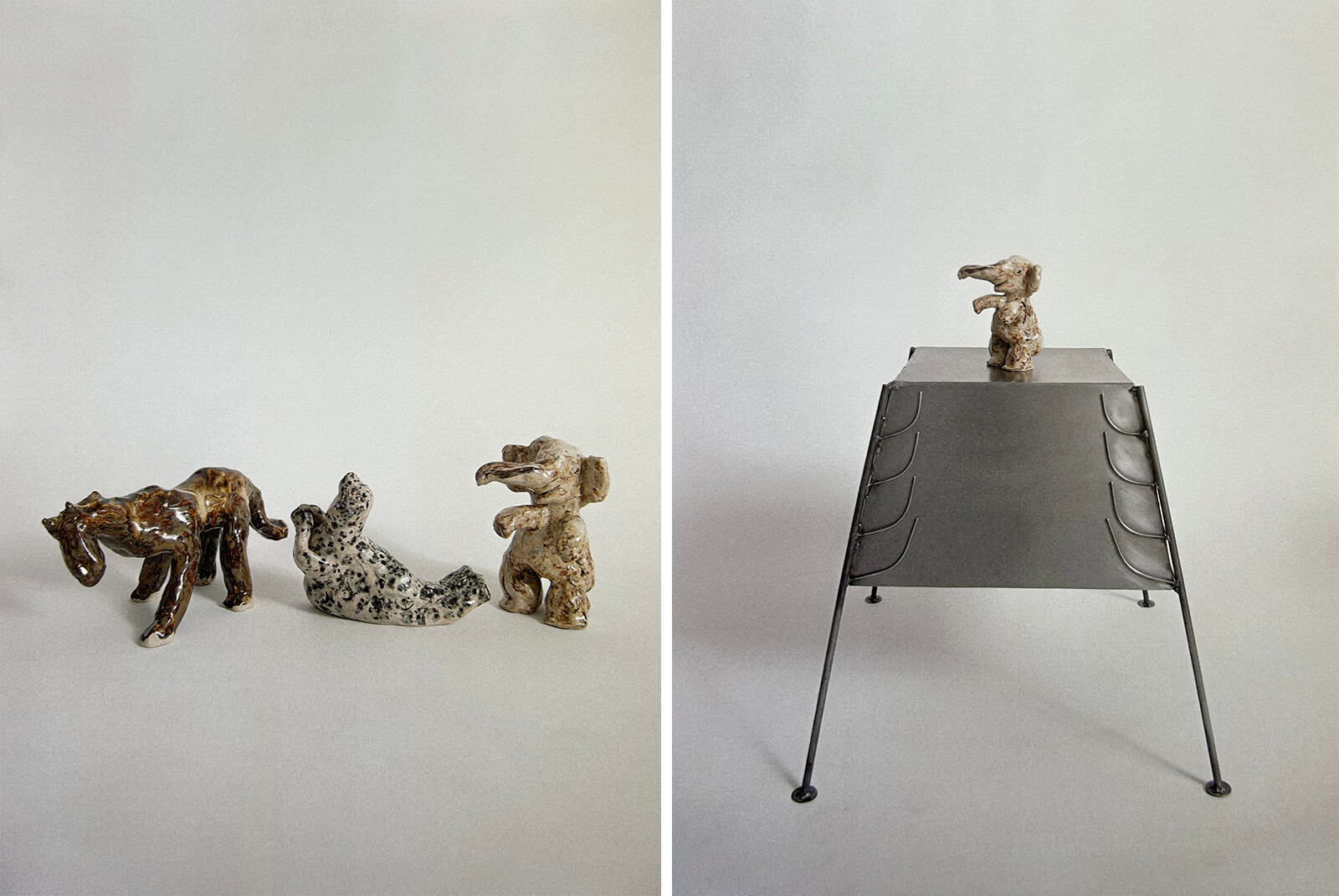
Expanding the theme into a more intimate register is Cauchon’s sculptural art pieces. Her practice reflects a lifelong closeness to animals and the natural world. Surrounded by them since childhood, she continues to draw on these early memories in her clay sculptures—Seal, Horse and Elephant. These hybrid or subtly anthropomorphic animals, often associated with the spectacle of the circus, take on a subdued presence in Cauchon’s hands. Shaped intuitively, these carry the tactile traces of touch and memory, their textured surfaces revealing a realism rooted in emotional connection.
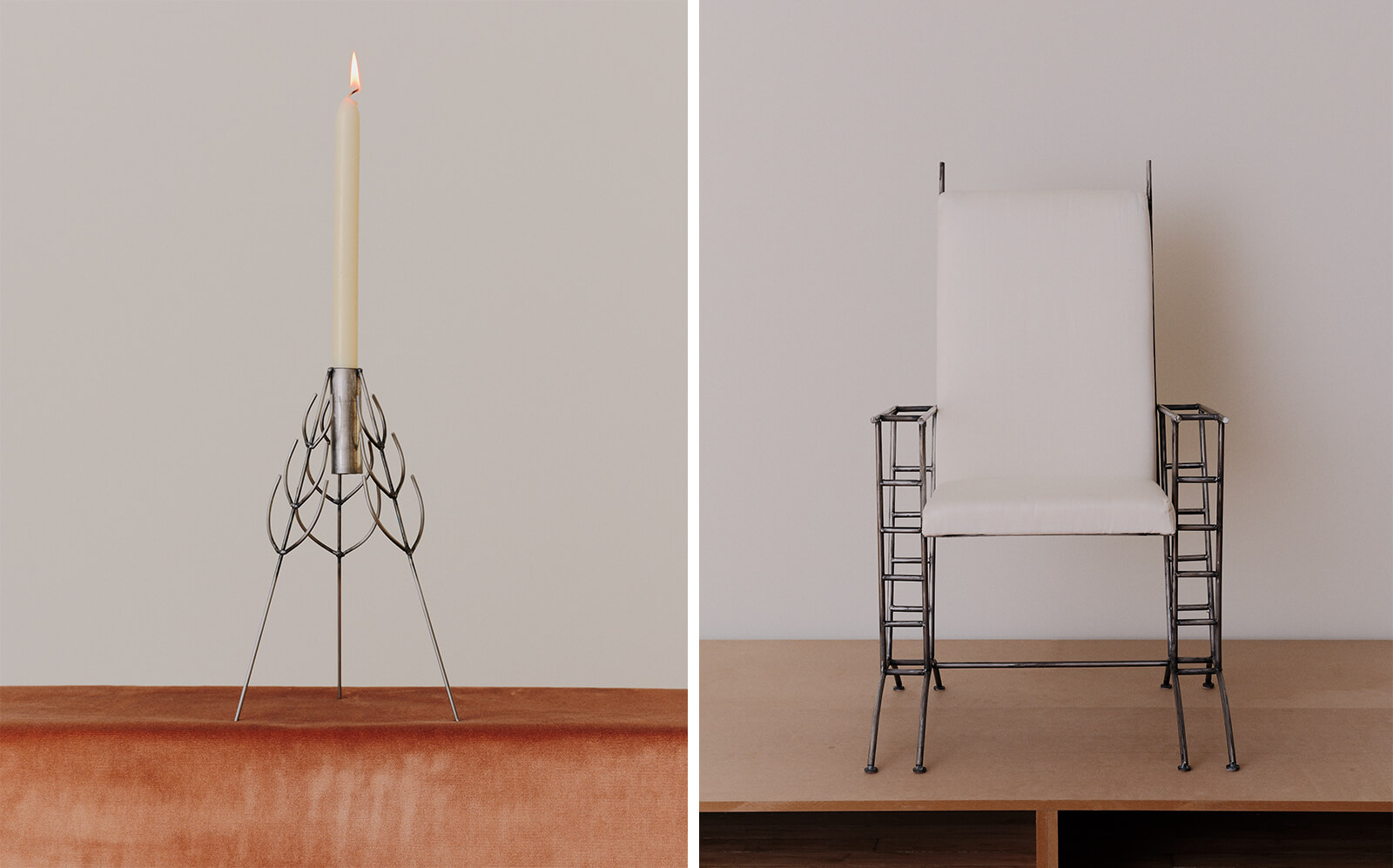
While Cauchon’s sculptures ground the exhibition in an organic, earthbound sensibility, Provencher-Proulx approaches material from a more theatrical lens. Working primarily with reclaimed steel, she creates objects that oscillate between functional sculpture and decorative art. Her Chandelier Plume (Feather Candleholder), Table Plume (Feather Table)and Chaise Pavillon Trapèze (Pavilion Trapèze Chair) explore material tension and balance through curved steel elements and intricate details.
The inclusion of historical design pieces here establishes a vital archival scaffold. Spanning from the 17th to the late 20th centuries, these pieces—crafted in materials ranging from wood and textiles to glass, plastic and metal—situate contemporary explorations of form and structure within a broader lineage of design innovation. “Presented alongside contemporary works, they create a layered temporal framework, where contrasts in craftsmanship and conception reveal design as a continuously evolving conversation across eras,” notes Sullivan.
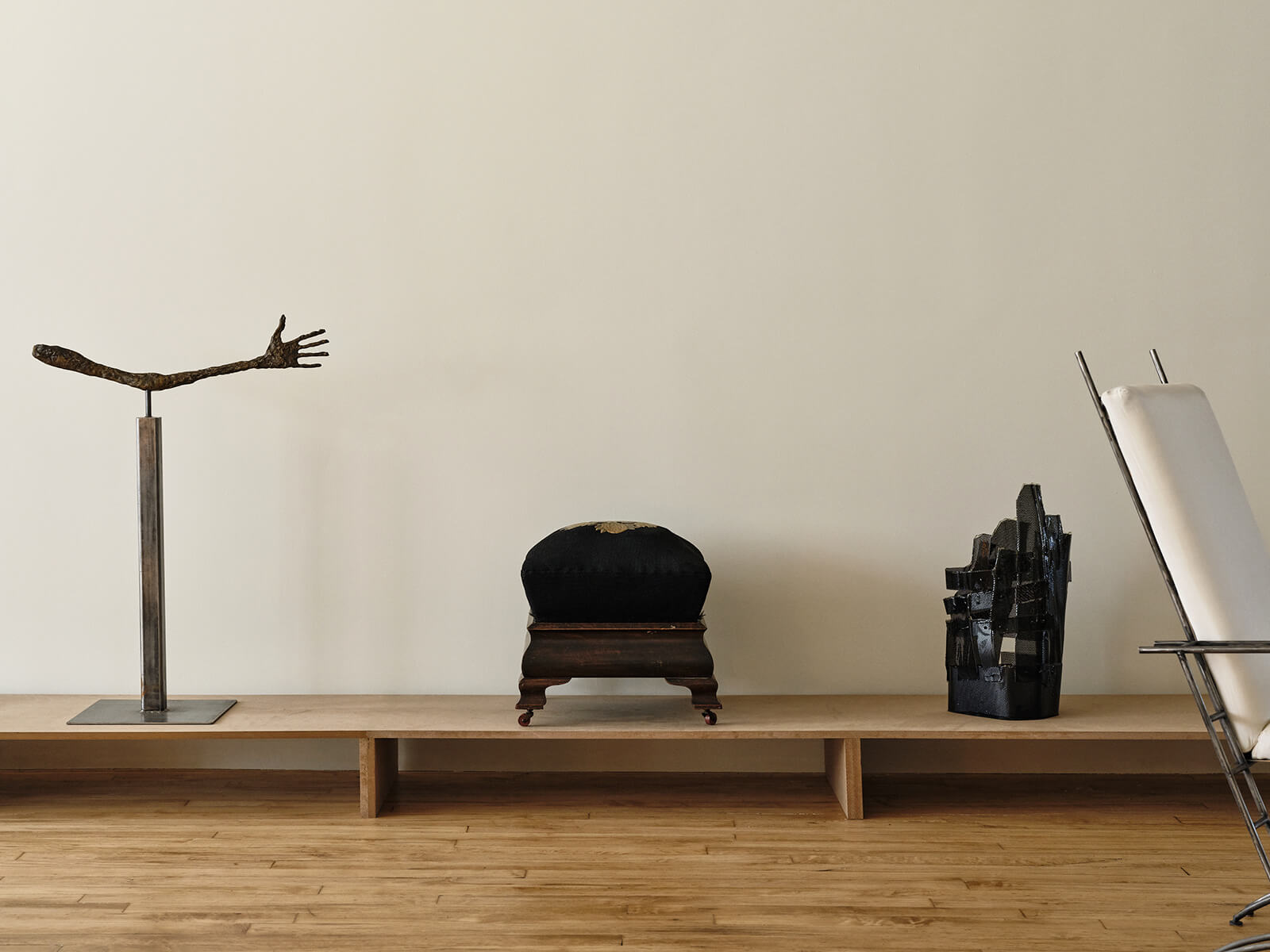
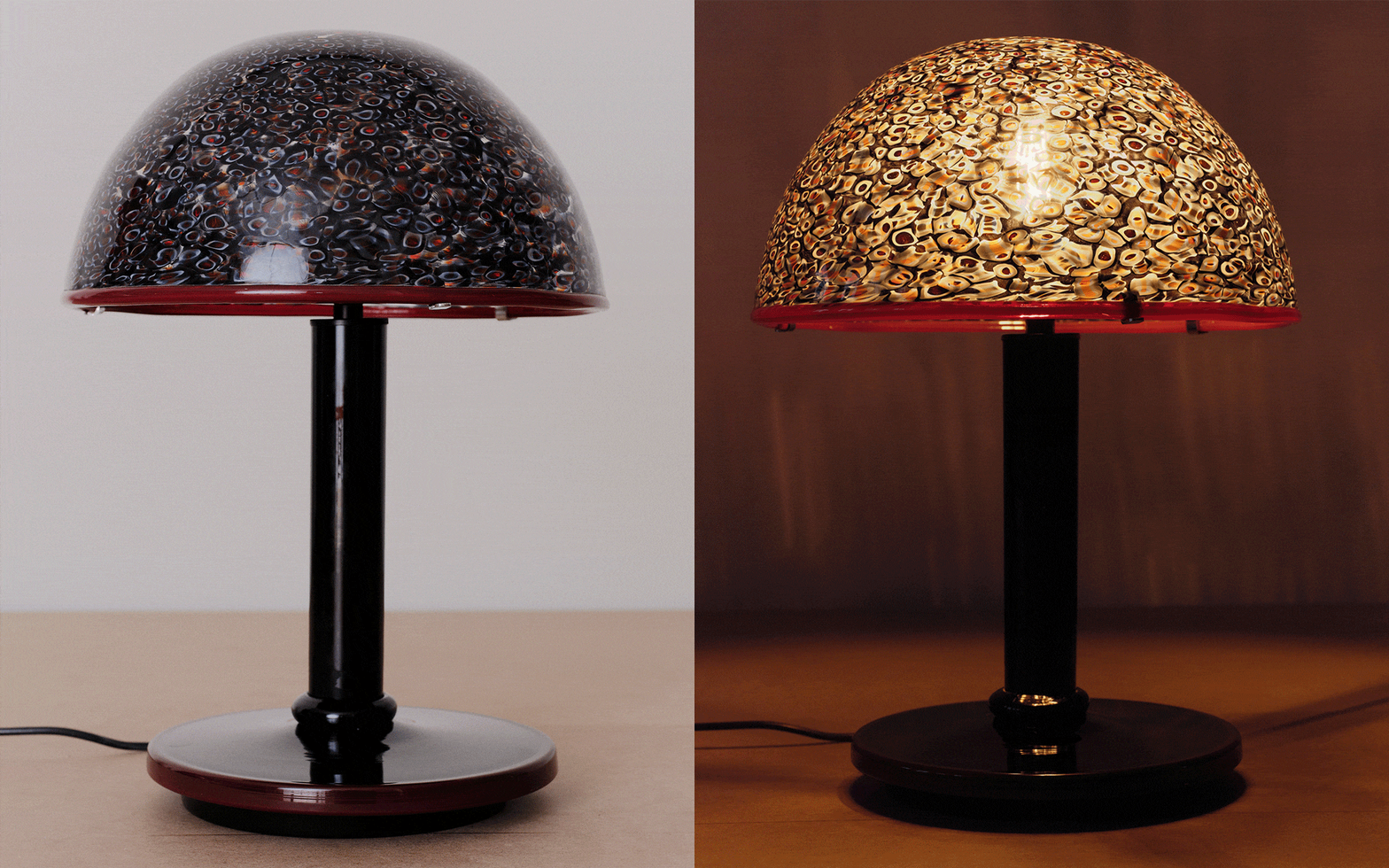
Among them is the Neverrino Table Lamp, designed by Italian architect Gae Aulentifor the Venetian lighting company Vistosi in the 1960s. Translating her architectural sensibility to the scale of a domestic object, the product design features an elegant Murano glass dome resting on a black-painted metal base. Elsewhere, Hermann Becker’s Alberto Rack (1988) embodies the postmodern spirit of Gruppe Pentagon, the Cologne-based design collective that challenged the prevailing norms of 1980s German design, which valued functionality, industrial production and conventional ideas of ‘good taste’. Inspired by the Swiss sculptor Alberto Giacometti, Becker’s coat rack, with its elongated hand and arm crafted in steel and brass, evokes Giacometti's attenuated figures and slender forms, resulting in a surreal yet utilitarian form.
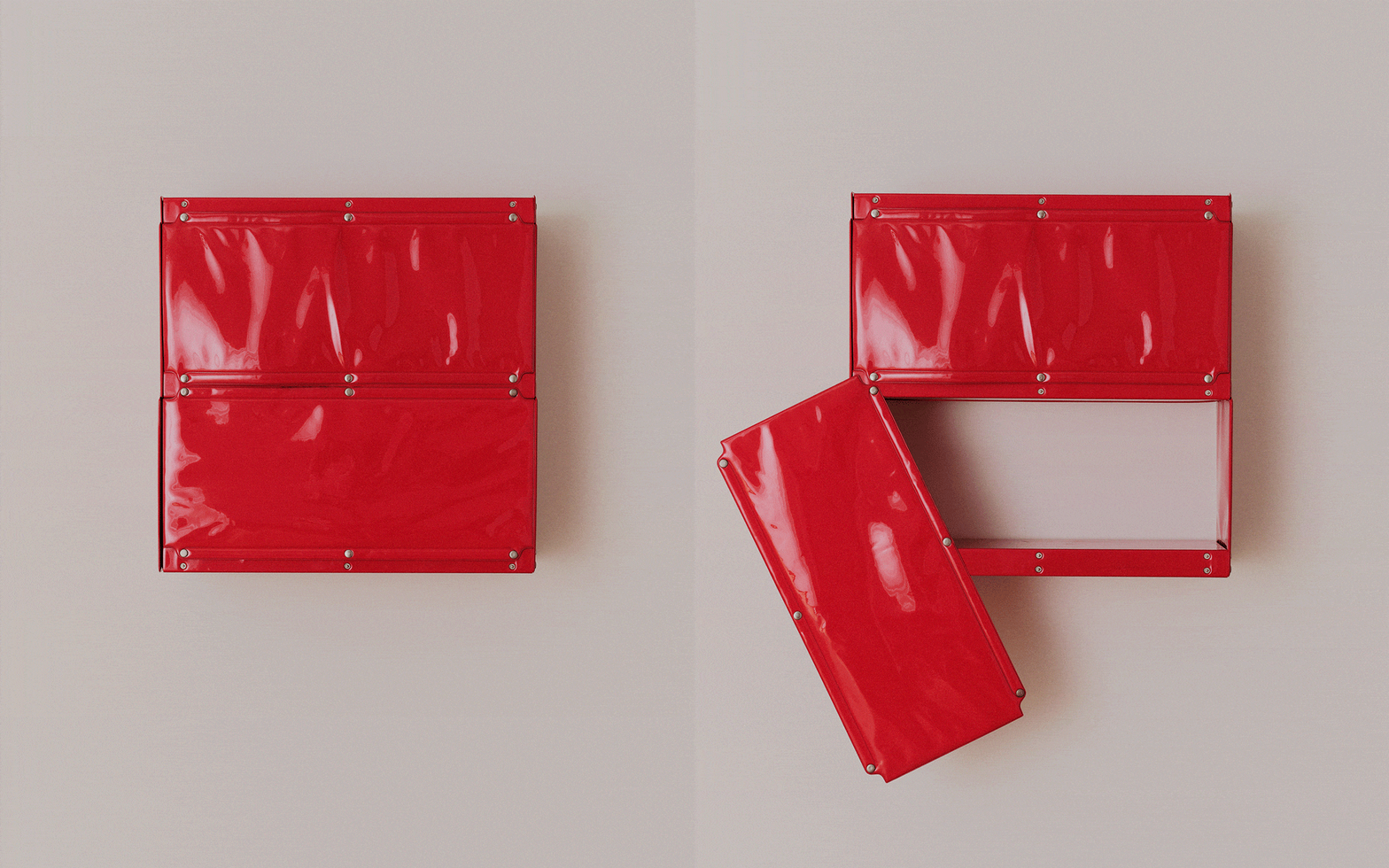
The pair of Softline Cabinets (1960) by Czechoslovakian industrial designer Otto Zapf, developed during his early exploration of the Softline System, is a series of flexible office units that could serve multiple configurations. The furniture design exemplifies his pursuit of modularity and adaptability in postwar industrial design. Composed of plastic sheets framed in metal and coated in a subtly iridescent lacquer, the fire-red colour introduces a sense of playfulness into the cabinet. Meanwhile, furniture designer Bepi Fiori’s May Jhon Chair & Ottoman (1970), designed for the Italian firm Bernini, features an adjustable backrest and a hinged ottoman that transforms into a gentle rocker. Upholstered in chestnut suede with black leather trim, the pieces balance architectural structure with comfort.
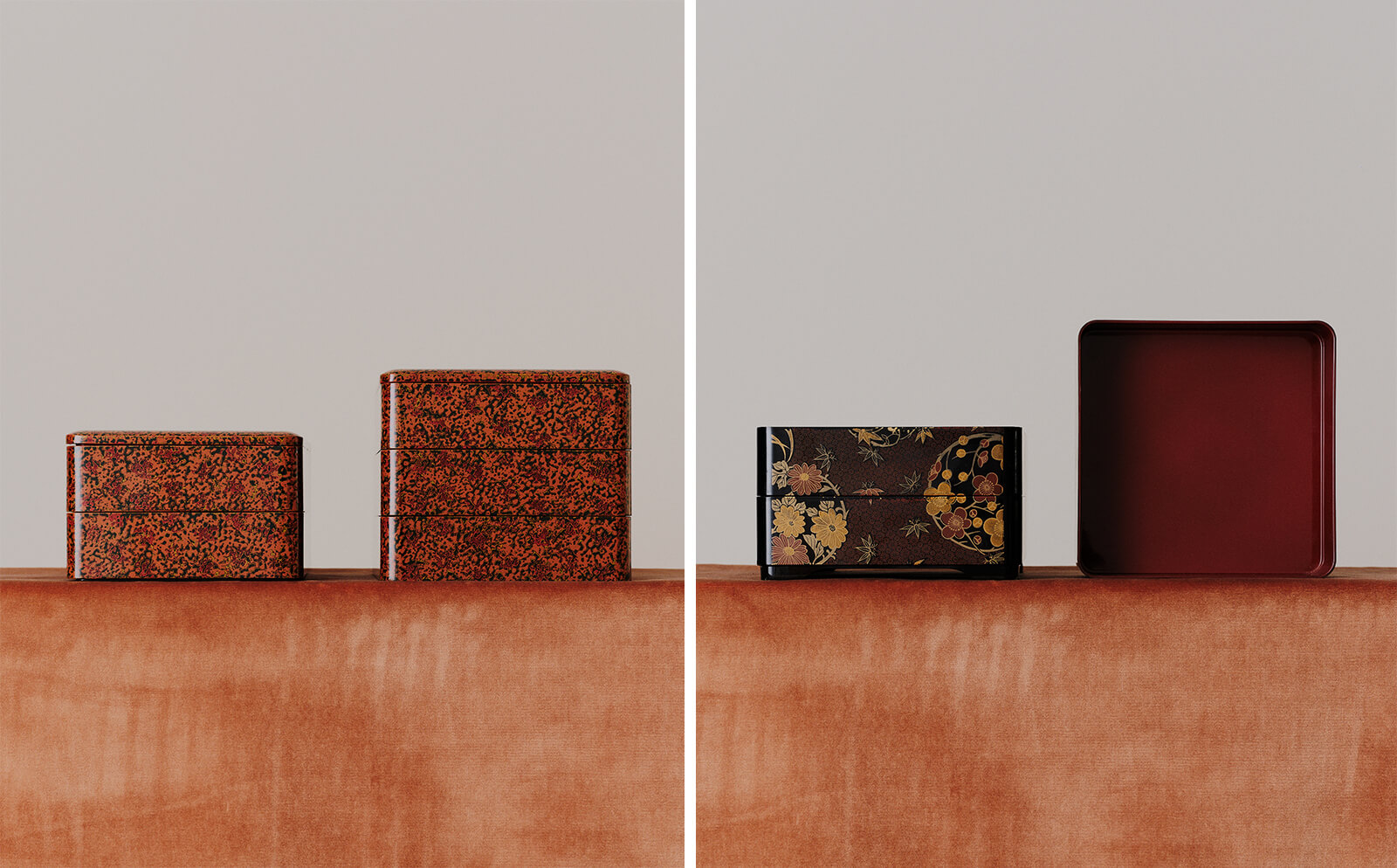
Complementing these are a selection of unattributed historical pieces ranging from a 17th-century English refectory table and early 20th-century Arts and Crafts carved oak hall bench to a Danish wardrobe from the 1970s and an American Classical mahogany footstool. Objects such as Japanese bento boxes, tole trays and a neoclassical mirror further expand this lineage across geographies and craft traditions.
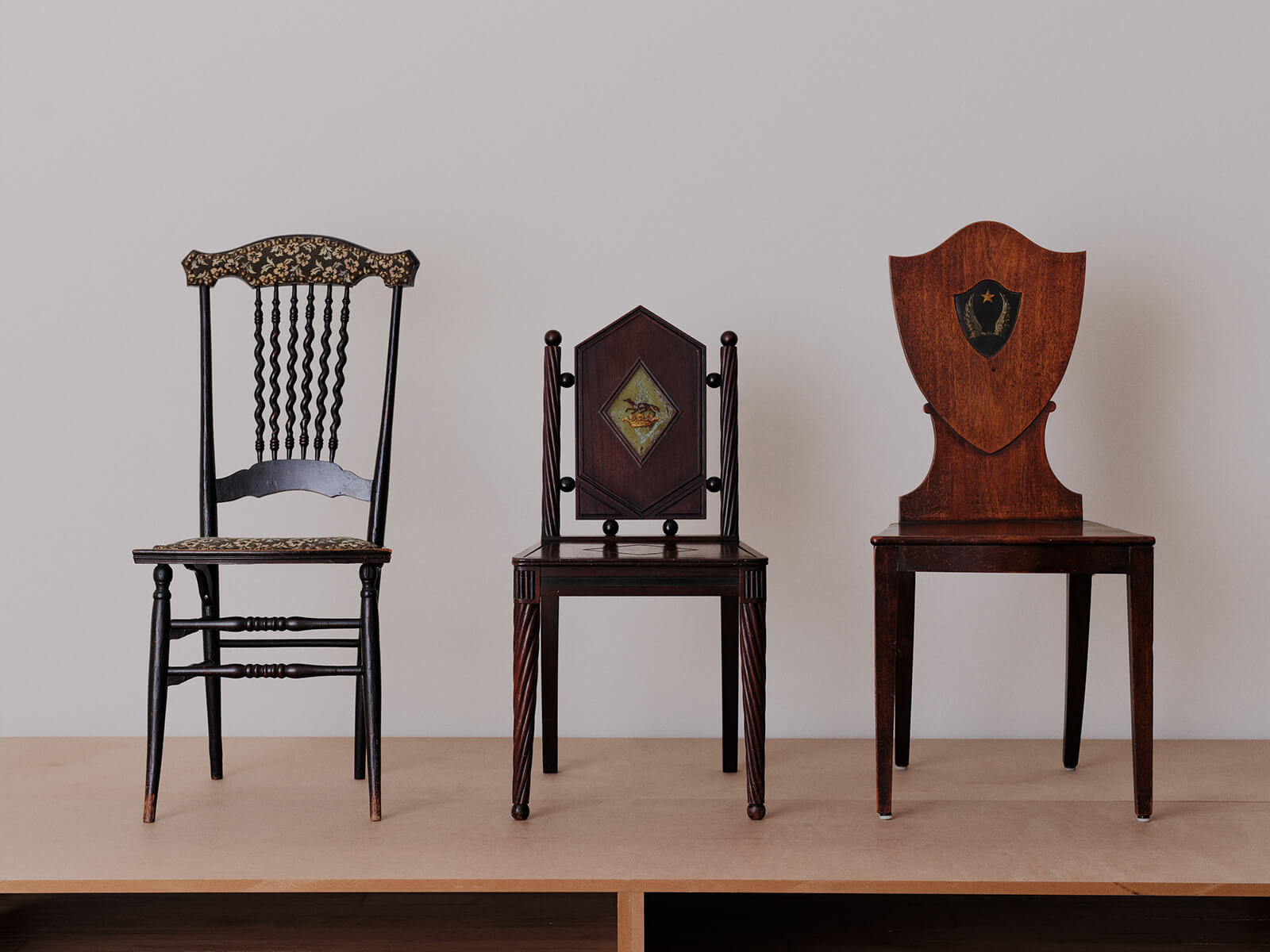
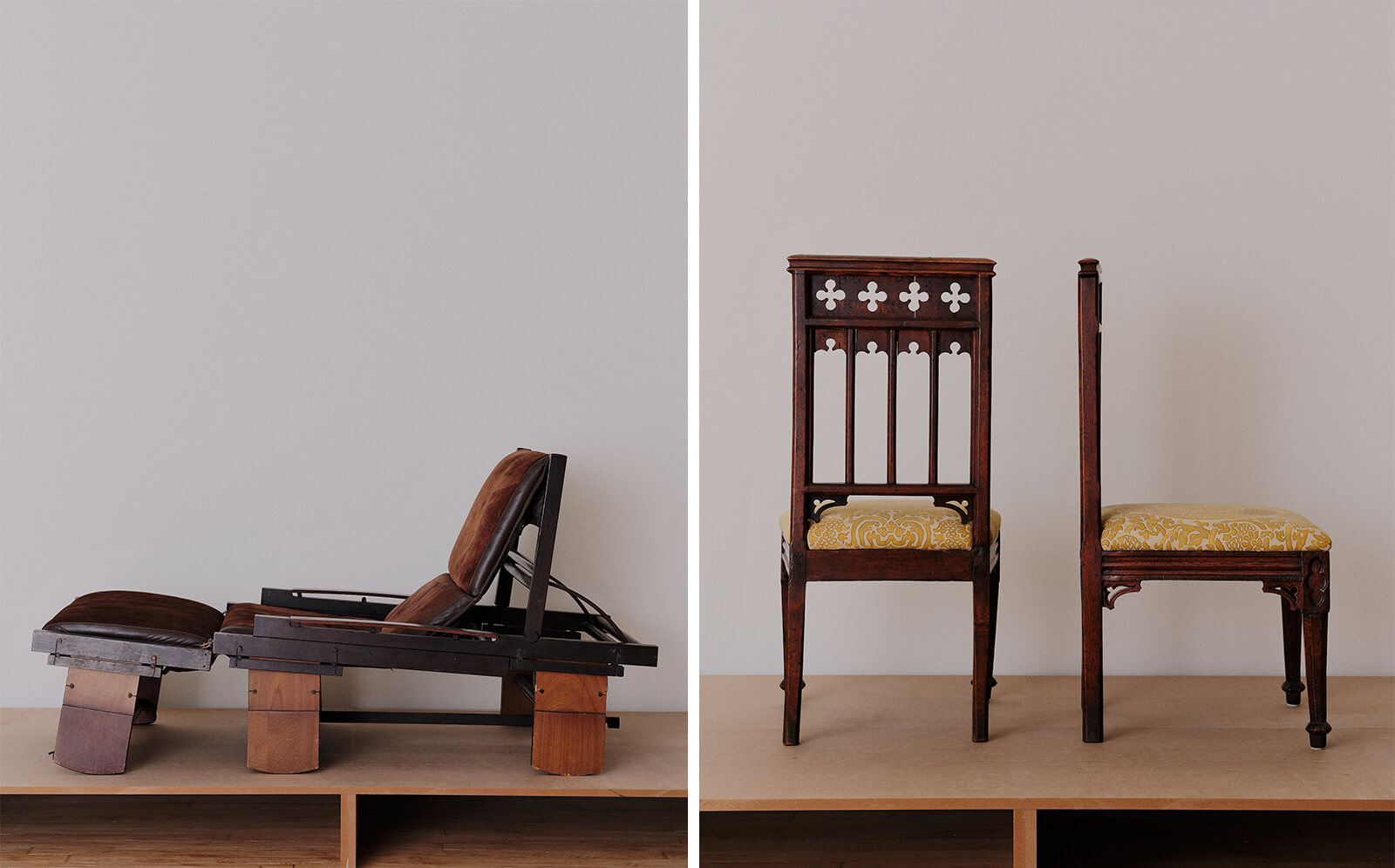
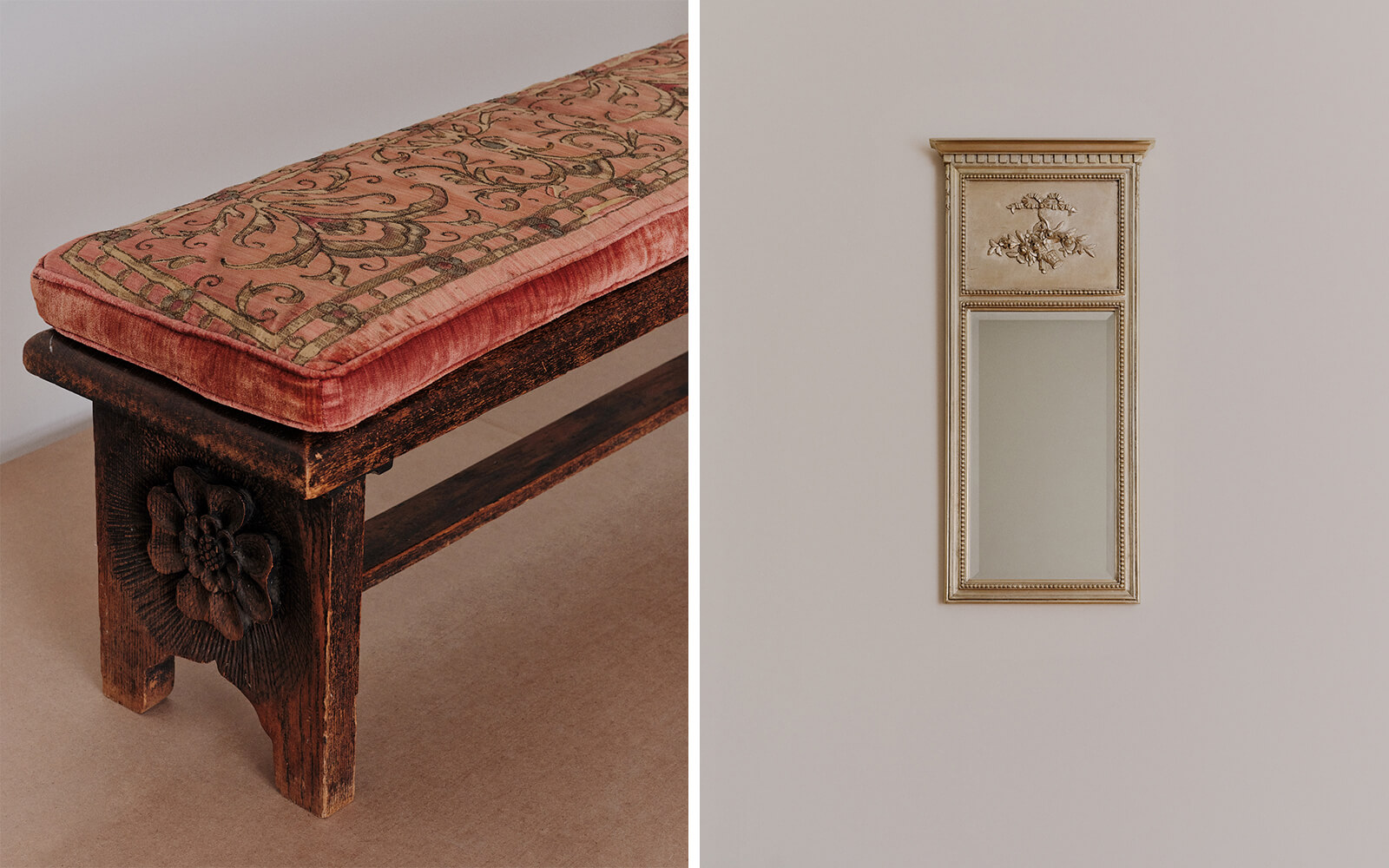
Ultimately, A Shared Scaffolding traces a living continuum, in which each object—whether centuries old or newly forged—arises from a shared lineage of forms and intentions. Conceived as a ‘temporary arena for transnational cultural exchange’, the design exhibition probes what it means to work both in concert and in tension with one another. The materials may change with time, but their interaction and interdependence hold a form together. Like a circus tent rising and falling with each performance, these works gesture toward the intricate frameworks that hold fast the spectacle, however briefly they endure.
‘A Shared Scaffolding’ is on view from September 19 – November 15, 2025, at Jacqueline Sullivan Gallery, New York.

by Pranjal Maheshwari Oct 13, 2026
Through furniture, art and films, the showcase at the Ian Potter Centre in Melbourne advocates for biophilic material cultures as an antidote to planetary degradation.
by Pranjal Maheshwari Oct 12, 2026
The exhibition reimagines the 20th-century Scottsville residence of the American sculptor and his partner, ceramicist Nancy Jurs, curated by their daughter Alison Castle.
by Chahna Tank Oct 08, 2026
Javier Guzman Cervantes and Ulises Morin Arzola tell STIR about their ‘open code’ approach to design, working through a process of stockpiling and the idea of ‘queering’ materials.
by Mrinmayee Bhoot Oct 08, 2026
The game designer discusses their work and its manipulation of scale, scientific data and non-human perspectives to create speculative futures in conversation with STIR.

make your fridays matter with a well-read weekend
Enter your details to sign in
Don’t have an account?
Sign upOr you can sign in with
a single account for all
STIR platforms
All your bookmarks will be available across all your devices.
Stay STIRred
Already have an account?
Sign inOr you can sign up with
Verification link sent to check your inbox or spam folder to complete sign up process
Tap on things that interests you.
Select the Conversation Category you would like to watch
Please enter your details and click submit.
Enter the 6-digit code sent at


A Shared Scaffolding considers temporary frameworks sustaining enduring forms
by Chahna Tank | Published on : Nov 06, 2025


 Sign in with Google
 Sign in with email
What do you think?