Design07 mins. read
We Must Imagine It by Unfold Projects advocates for regenerative art and design
by Pranjal MaheshwariJul 14, 2026



by Chahna TankPublished on : Dec 16, 2025
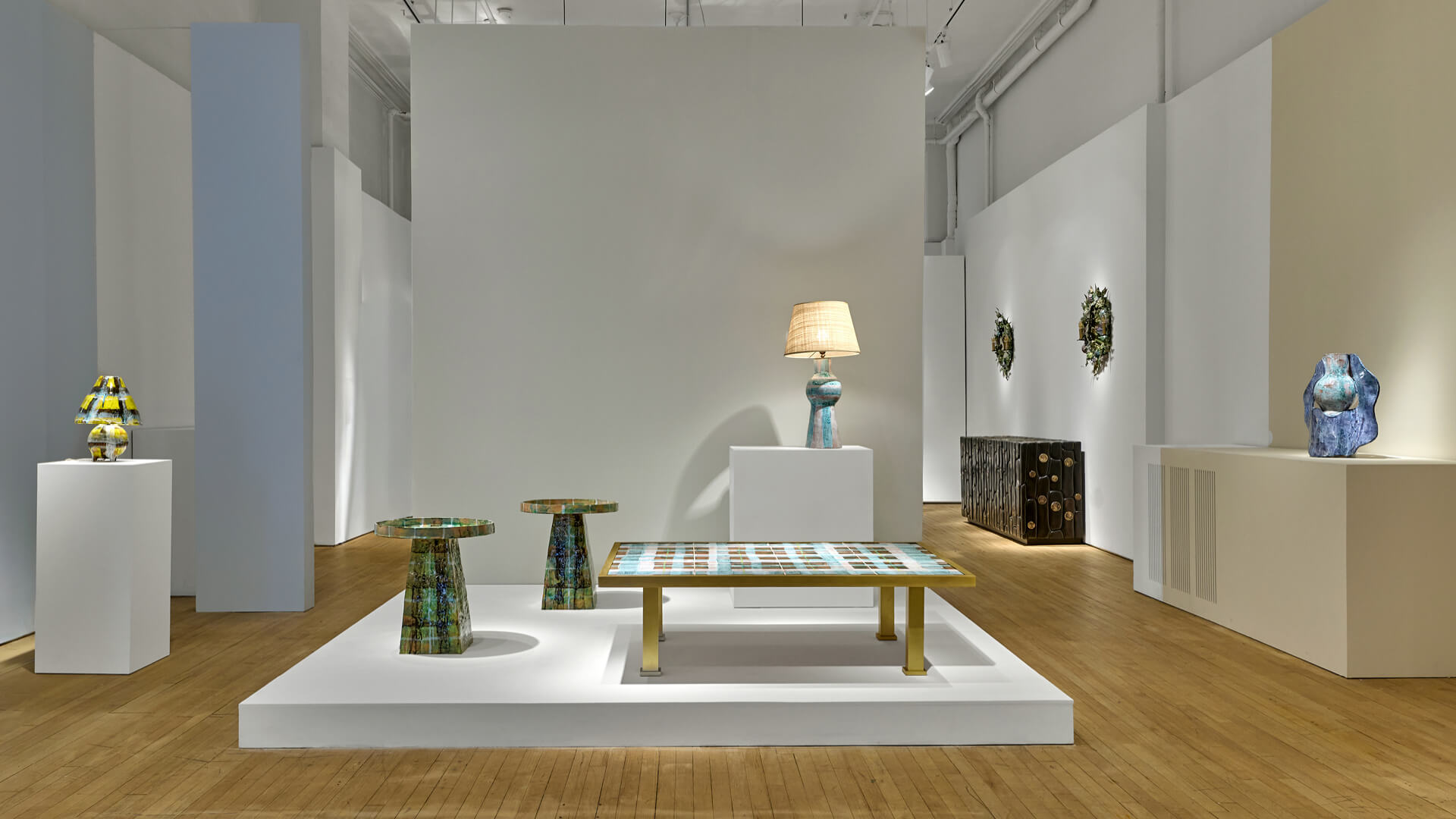
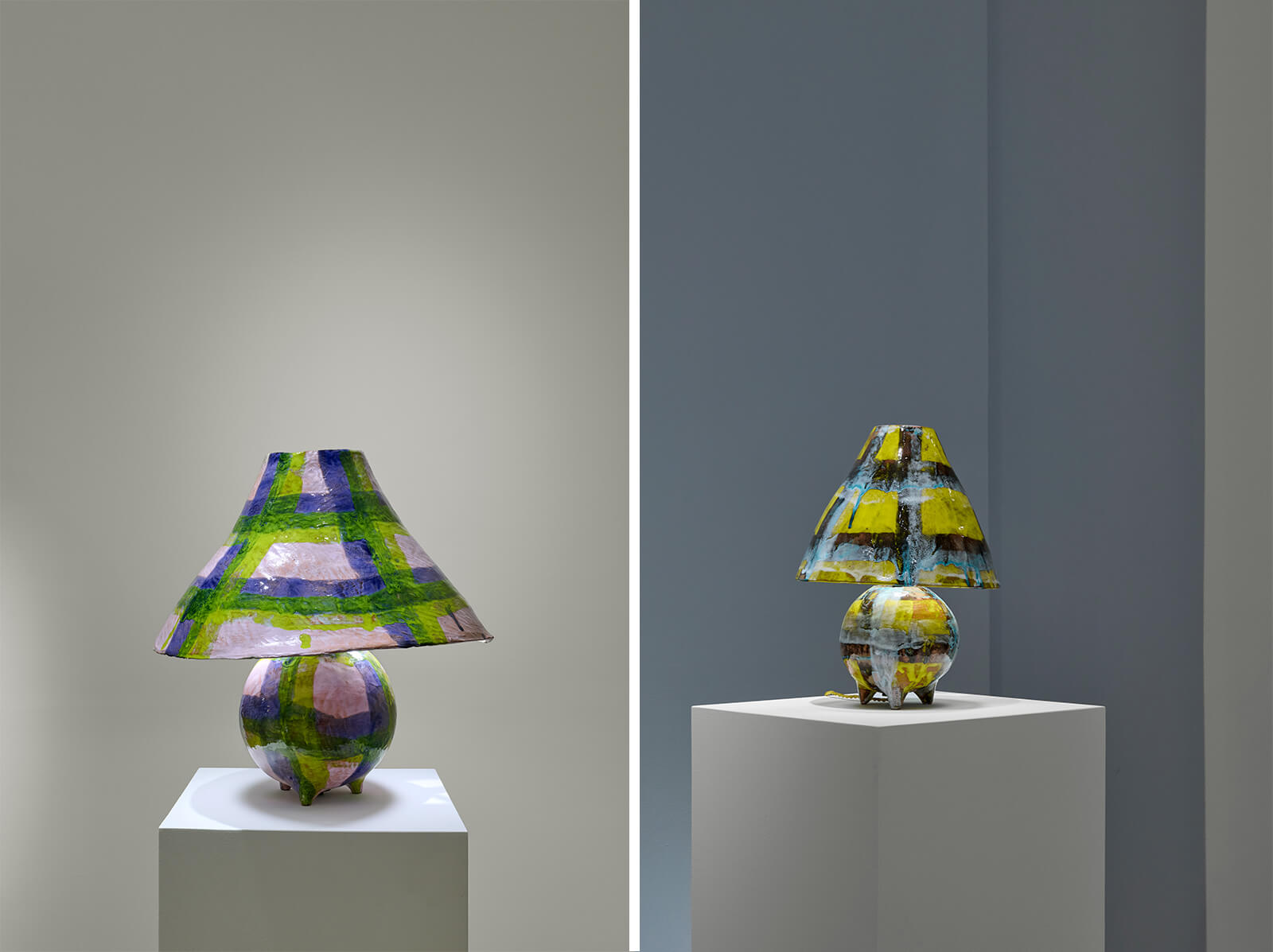
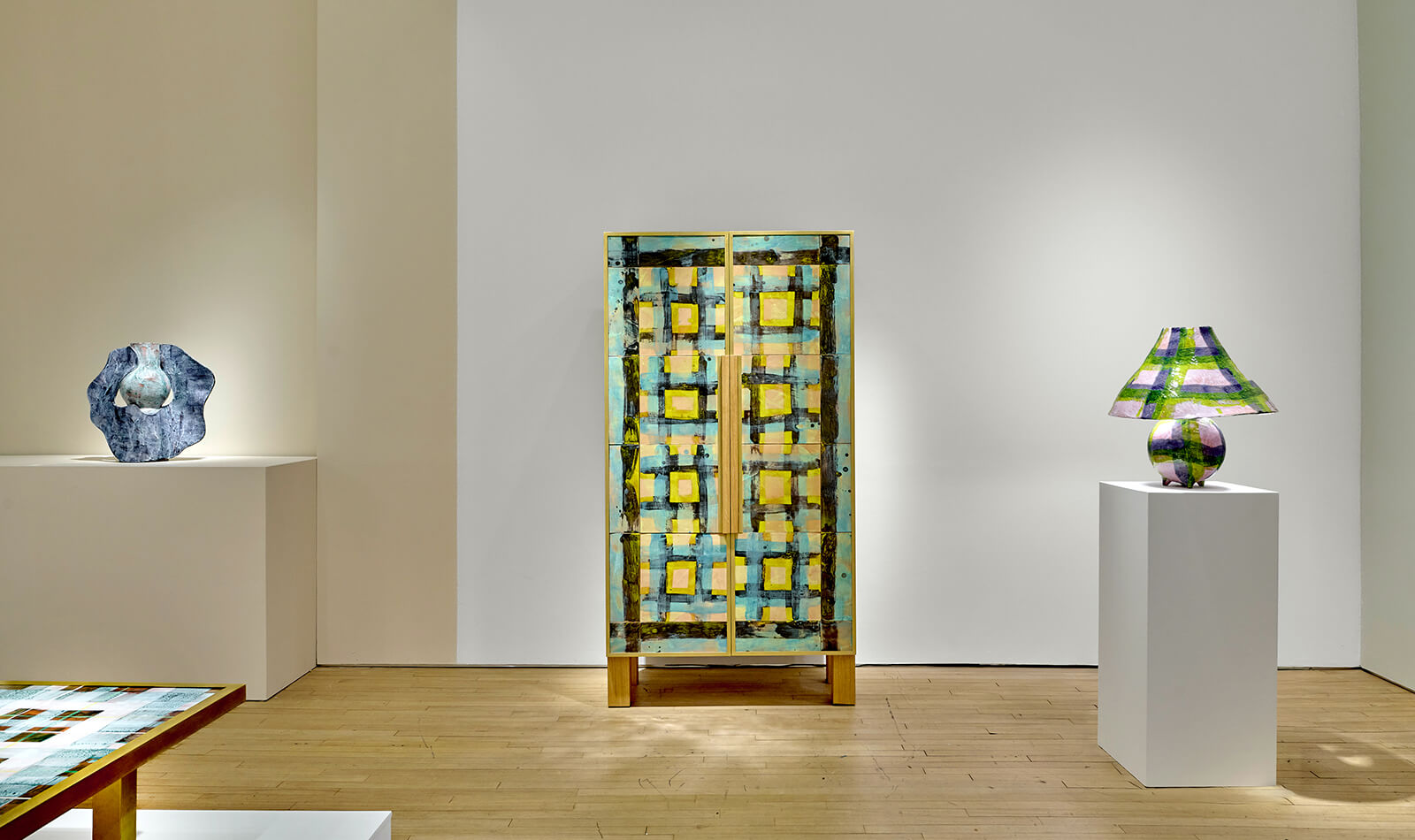
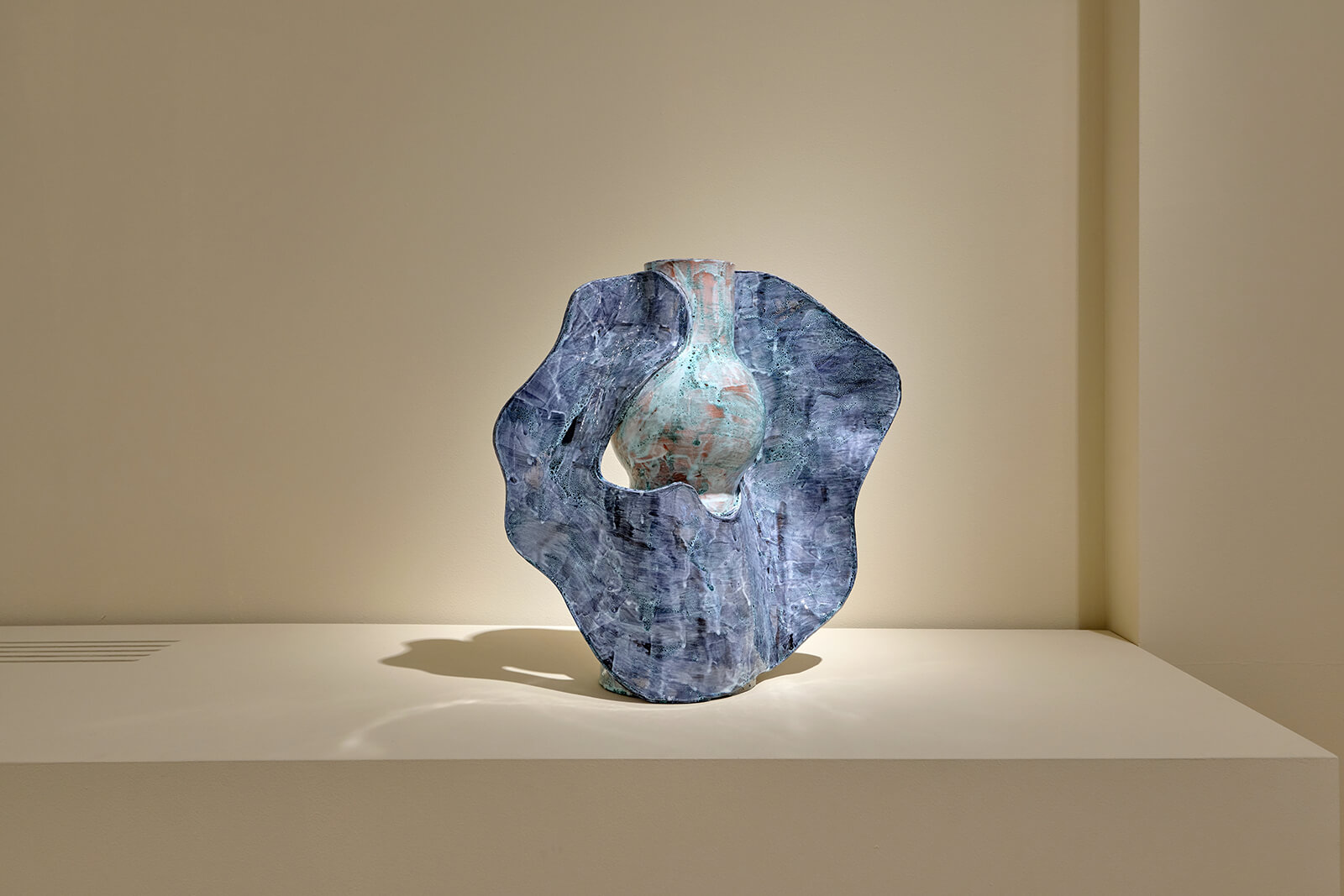
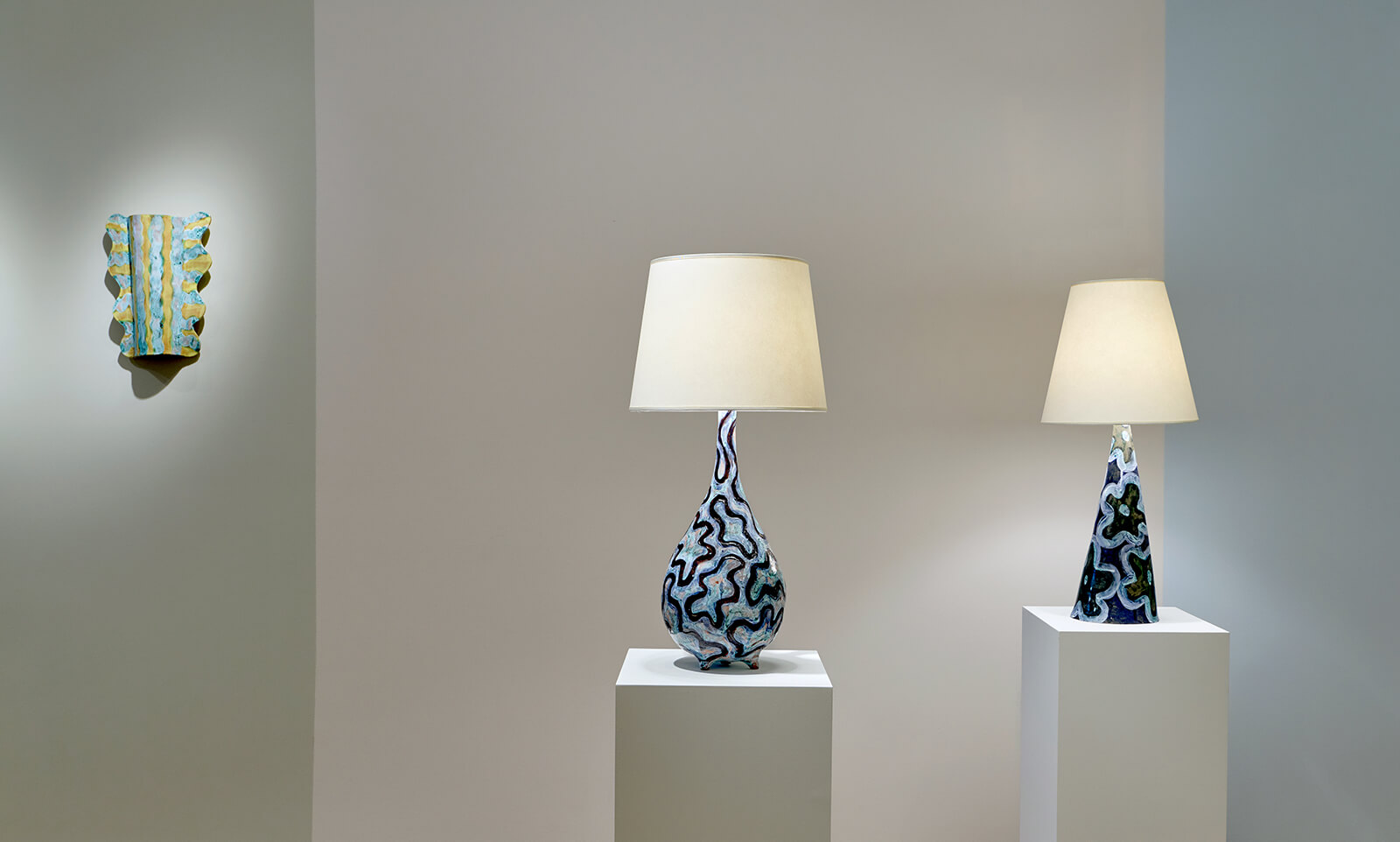
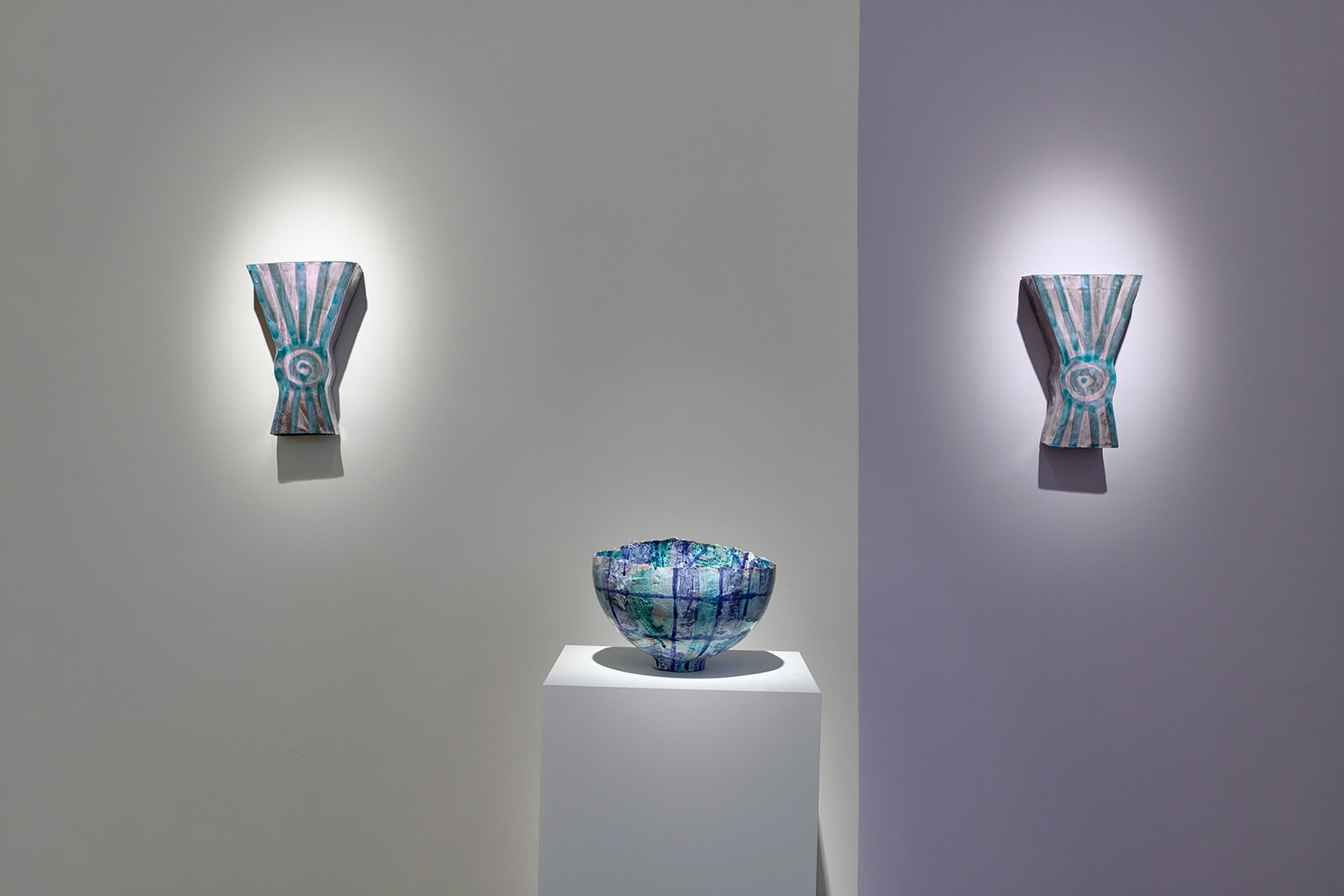
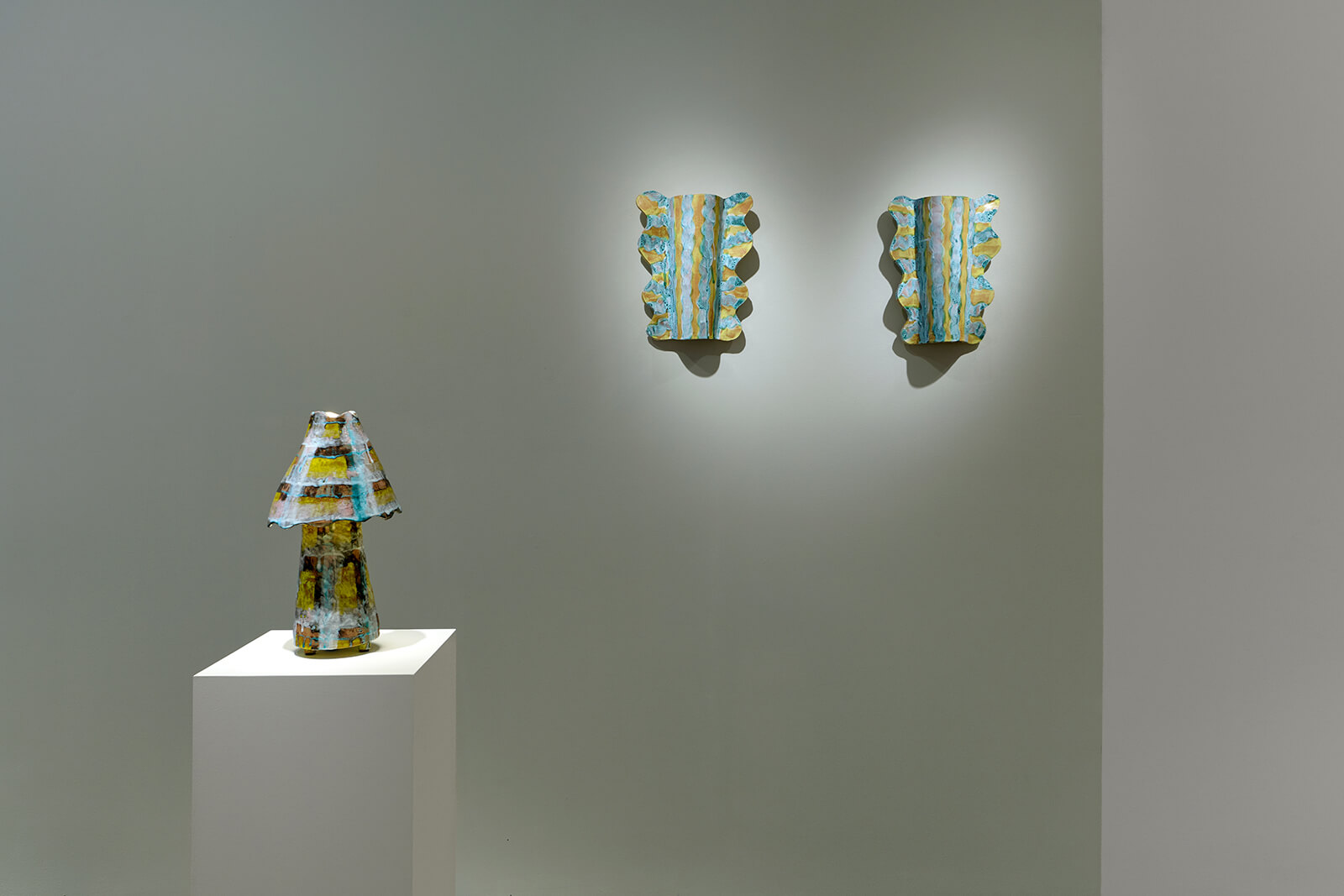
At first sight, French ceramic artist Alice Gavalet’s works seem to beam with their own buoyant personalities—bold forms wrapped in vibrant colour, brimming with whimsy; their surfaces pulsing with tartan grids, gestural brushstrokes and layered glazes that shimmer between opacity and translucence, rippling with movement. Their irregular silhouettes translate into an animated physicality for each of the pieces, as if they are joyfully asserting their place in the room.
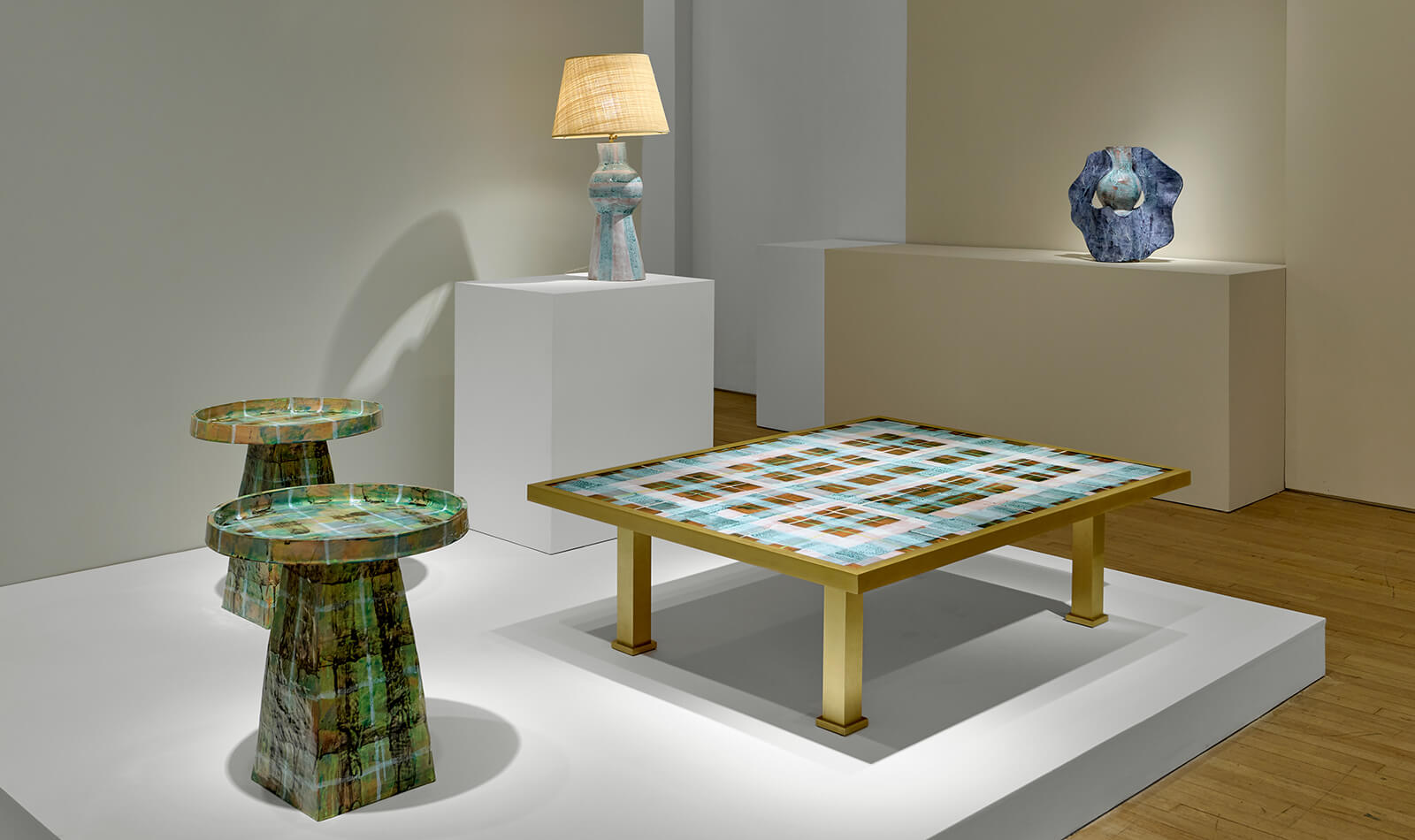
This lively ensemble comes together at Twenty First Gallery in New York, where Pattern Play, Gavalet’s first solo exhibition in the United States, brings together seventeen sculptural works, brought alive in a scenography that feels as lighthearted as the objects themselves. On view from October 30 – January 30, 2026, the showcase features lamps, vases and sconces, alongside a cabinet and a coffee table—her first foray into furniture design—pushing her language honed in ceramics into new terrain, while introducing new materials like brass and waxed oak into the mix. The design exhibition celebrates these functional objects as ‘painted sculptures’, as Gavalet calls them.
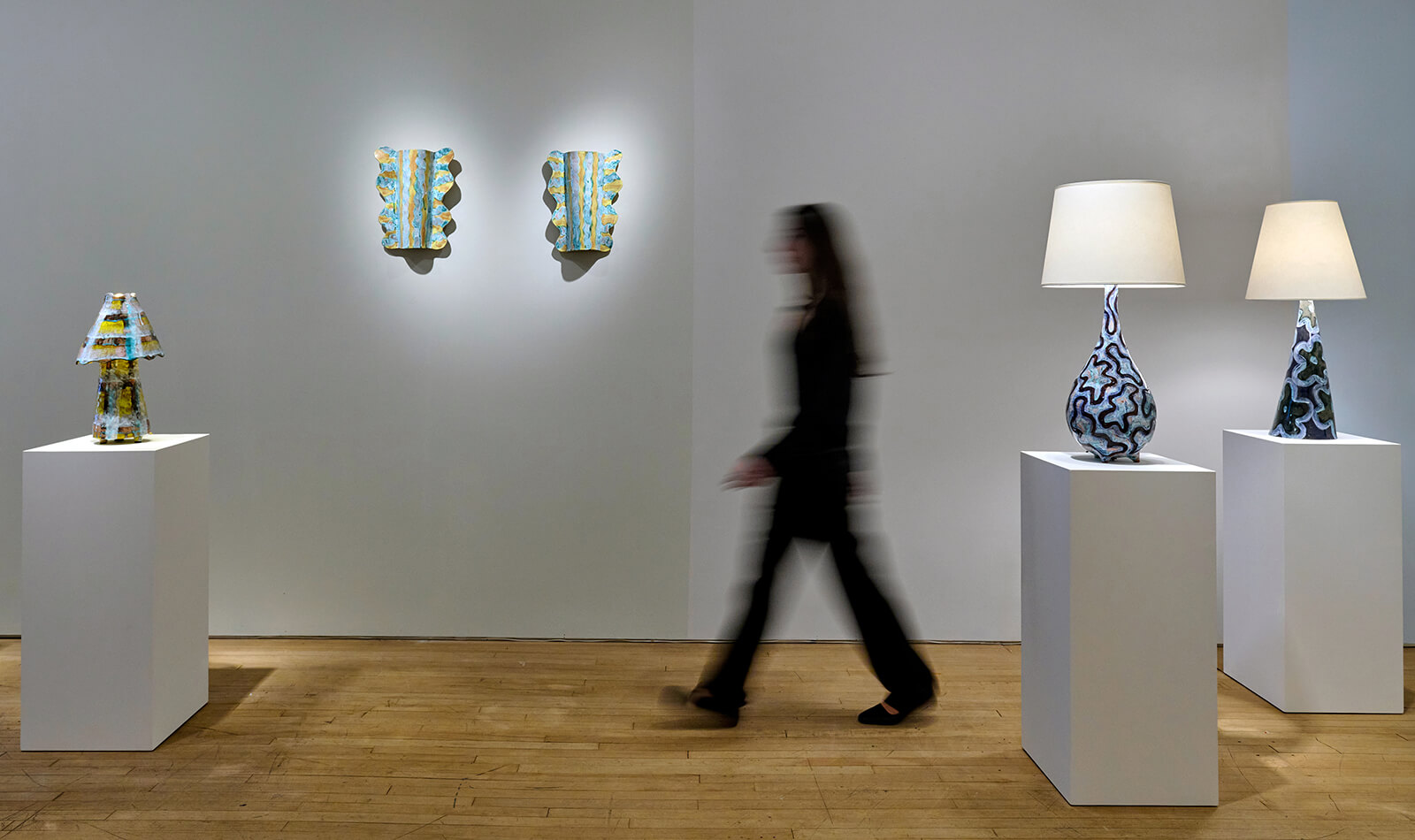
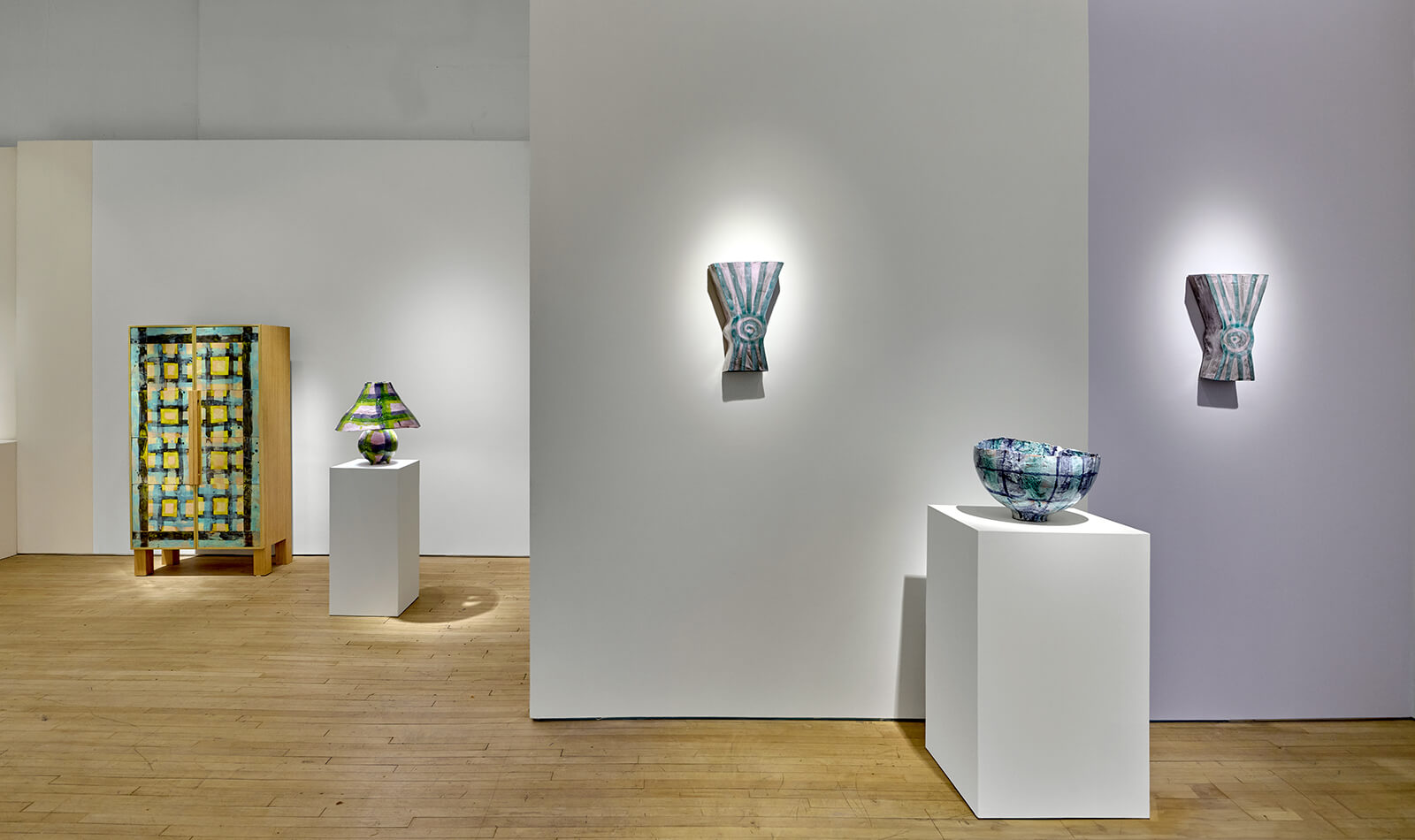
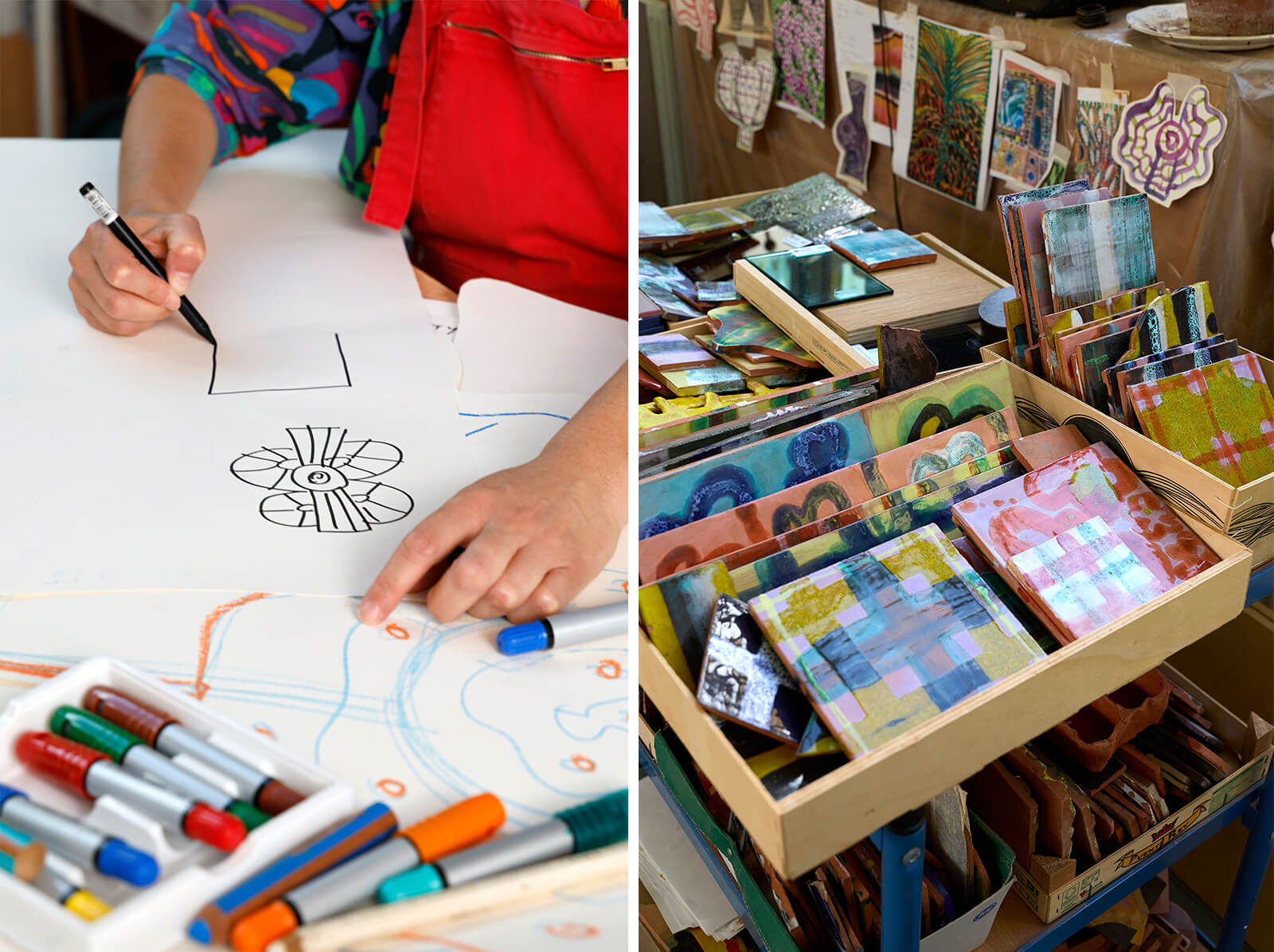
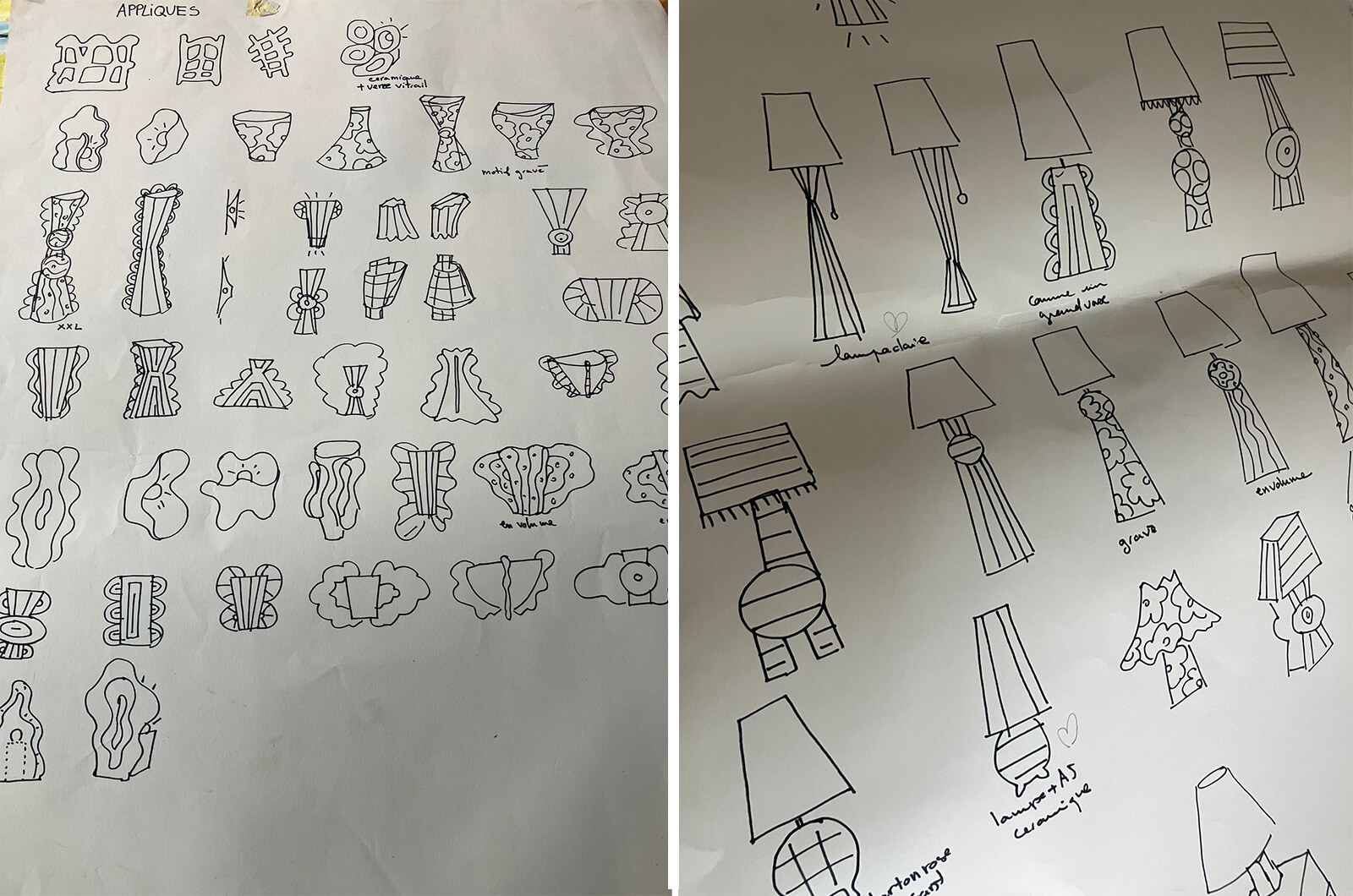
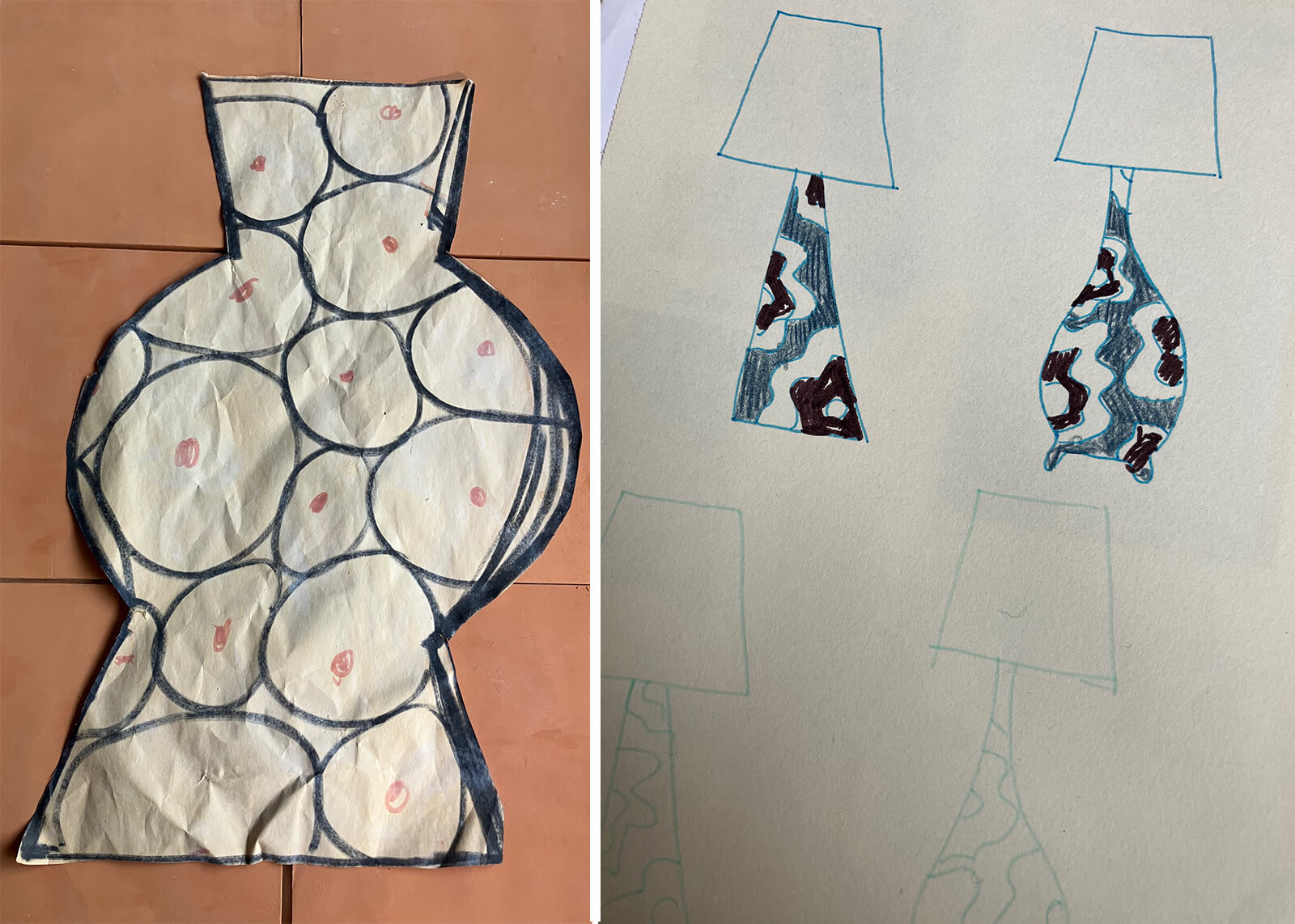
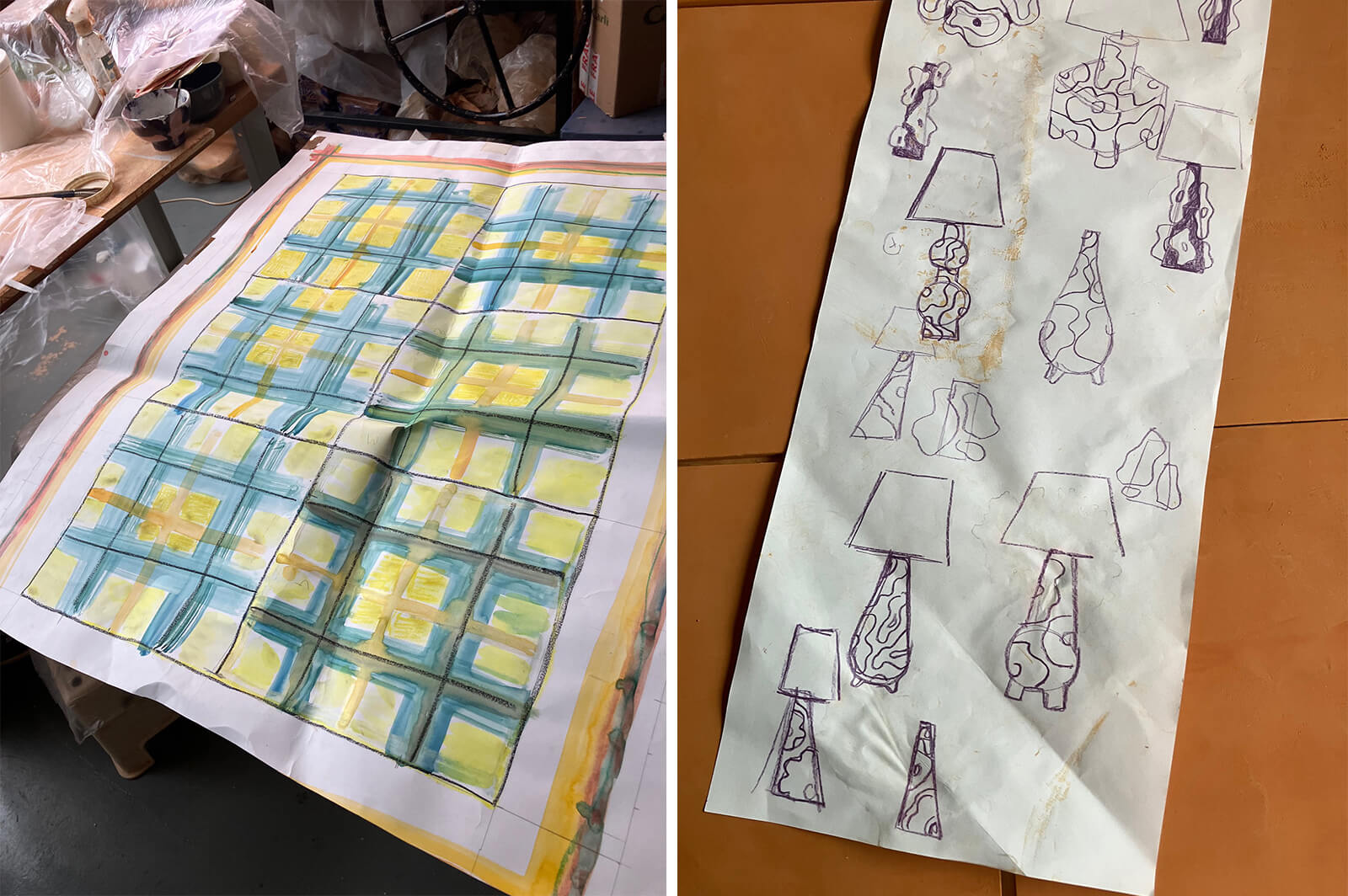
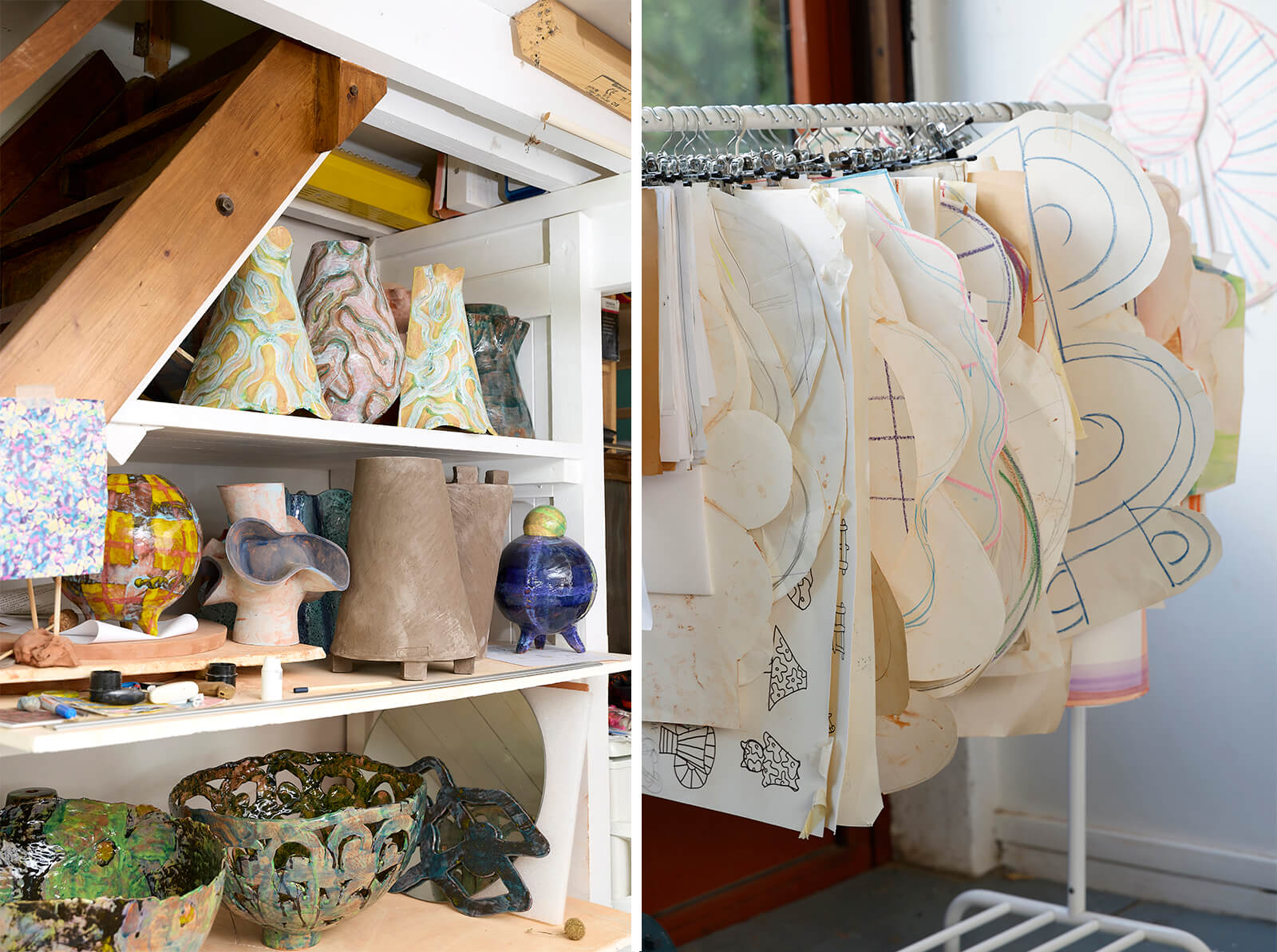
The exuberance and spontaneity of these works result from her carefully honed process. She sketches her ideas on paper first and makes cut-outs before translating them into clay using slabs and coils. Imperfections are welcomed into the final composition: a wobble in a line, a swelling curve or a glaze that drips out of bounds. Rather than flaws, these become an aesthetic strategy, a way of preserving the contingency arising from making.
Colour and pattern bring an equally dynamic energy to her work. Gavalet’s playful approach resonates with the designers and artists she names as touchstones: American artist Betty Woodman, Italian architect Ettore Sottsass and especially French designer Elisabeth Garouste, with whom she trained early in her career. From Garouste, she inherits the conviction that “making objects should be fun”—an ethos that is visible in every piece in the exhibition.
Tartan grids, one of the recurring motifs in her practice, stretch and bend across the curved surfaces of Gavalet's clay; their lines shifting subtly as if caught in a ripple. What might seem at first like a playful pattern reveals an underlying framework that is drawn equally from textile design and geometry. As Renaud Vuaillat, founder and director of Twenty First Gallery, notes in an official release, “I find tartan to be a complex abstract art form with a strong mathematical undertone. It feels less like the sum of its parts and more like a unified aesthetic, yet every time I look at it, I discover something new—an endless variation.” With Gavalet venturing into creating larger pieces for the first time, translating this pattern into them was a challenge, but one that ultimately pushed this motif into new territory, technically and visually. “It was quite challenging in terms of the making, but I was intrigued by the potential outcome—and in the end, both pieces turned out stronger than ever,” says Vuaillat.
In a conversation with STIR, Gavalet reflects on her process, patterns and the role of joy in her practice. Edited excerpts from the conversation follow (translated from French):
Chahna Tank: You describe your style as ‘joyful’, ‘instinctive’ and ‘naïve’, and believe that making objects should be fun. How do you relate to these descriptors in your practice? What does ‘fun’ mean to you as an artistic value and as a creative process?
Alice Gavalet: I imagine my work in the studio as a child's play. I don't want to get bored, so I work quickly and instinctively. I don't overthink things, but I'm very focused. I decide on my own rules; I create my own manufacturing processes. Clay is like play dough to me. I roll it out like pie dough, I cut it, I stick it together—my process is simple, it just requires dexterity and concentration. I like it when my ceramics look unstable, asymmetrical. I want to leave the brushstrokes and tool marks visible. I don't want to erase the imperfections.
I'm even starting to think about new ways of applying colour. Glazing is complicated and more laborious; I want to find new solutions for this step. Although I particularly appreciate the idea of a ‘surprise’ after each firing.
Chahna: Tartan has become a defining motif in your work. What initially drew you to it?
Alice: I started working at Kenzo at 25. In the design studios, I discovered the immense diversity of tartans, colours, patterns and the art of working with yarn. I found the same characteristics when I was creating my enamel samples.
On my tiles, I layered strokes of different colours and intensities. I was trying to reveal what happens when two colours intersect and overlap, depending on their positions. The colour in ceramics is a surprise that unfolds after firing. I want to see the colours that ‘eat’ each other, that react to ‘neighbouring’ colours they touch. It was an obvious choice, but not a deliberate effect on my tiles; after firing, tartan patterns appeared.
Chahna: How do you translate the logic of textile patterning into ceramic surfaces, especially in the context of this specific body of work that you refer to as ‘painted sculptures’?
Alice: I'm interested in patterns in general: stripes, flowers. I cover my ceramics with patterns as if they were camouflage; I dress them up. My ceramics are all unique in their forms, and the glaze is treated like paint (transparencies, brushstrokes). I therefore consider them ‘painted sculptures’.
Mixing colours and patterns is possible, even if it has long been a source of fear. – Alice Gavalet
Chahna: The exhibition scenography creates a playful, visually engaging environment. What kind of experience did you hope the display would create for viewers, and how does the installation shape the way the pieces are read together?
Alice: The exhibition design was conceived by Jean de Pièpape; he skilfully highlighted my work and introduced subtle colours that connect the pieces. He created a dialogue between my works, each one like a character from the same family. They all have their own personality; they are alive in my eyes. I also hope that this exhibition demonstrates that mixing colours and patterns is possible, even if it has long been a source of fear.
'Pattern play' is on view from October 30 – January 30, 2026, at Twenty First Gallery in New York.

by Pranjal Maheshwari Oct 23, 2026
Co-authored by Jareh Das, Chairman traces the British designer’s fixation on chairs as symbols of power and identity and as mediums of expression and community building.
by Mirra Lynn Oct 22, 2026
The curators behind Palestine Design Week 2026 reflect on its intent, considering how design holds memory, makes space for loss and imagines a future in Palestine.
by Chahna Tank Oct 22, 2026
STIR speaks with the Mumbai-based type designer about her practice, type walks and why she wants more people to have stronger opinions about Indian-script fonts.
by Jincy Iype Oct 15, 2026
STIR explores craft, material intelligence and people shaping Indian design through dialogues with Design Democracy’s co-founders and the curators of its special exhibitions.

make your fridays matter with a well-read weekend
Enter your details to sign in
Don’t have an account?
Sign upOr you can sign in with
a single account for all
STIR platforms
All your bookmarks will be available across all your devices.
Stay STIRred
Already have an account?
Sign inOr you can sign up with
Verification link sent to check your inbox or spam folder to complete sign up process
Tap on things that interests you.
Select the Conversation Category you would like to watch
Please enter your details and click submit.
Enter the 6-digit code sent at


Alice Gavalet transposes tartan patterns onto vibrant ceramics in Pattern Play
by Chahna Tank | Published on : Dec 16, 2025


 Sign in with Google
 Sign in with email
What do you think?