Architecture07 mins. read
The MCxA Group wraps 'Casa Santa María del Oro' around five guardian trees
by Pooja Suresh HollannavarNov 04, 2024



by Aarthi MohanPublished on : Feb 02, 2026
Architecture in Valle de Bravo, a lakeside town in the state of Mexico, is often framed through its scenery. Forested slopes, seasonal greenery and distant water views tend to dominate how projects are described and understood. Located on a gently sloping site between two ravines on the outskirts of Valle de Bravo, Casa El Espino approaches this context from a more literal position. Rather than drawing on an idealised image of the region, the project responds to the specific conditions encountered on site, such as dryness, sustained solar exposure, uneven terrain and a transitional landscape where pine forest gives way to low, thorny vegetation. These conditions inform the house’s form, material palette and spatial organisation, establishing a residence shaped by climate and topography rather than scenery.
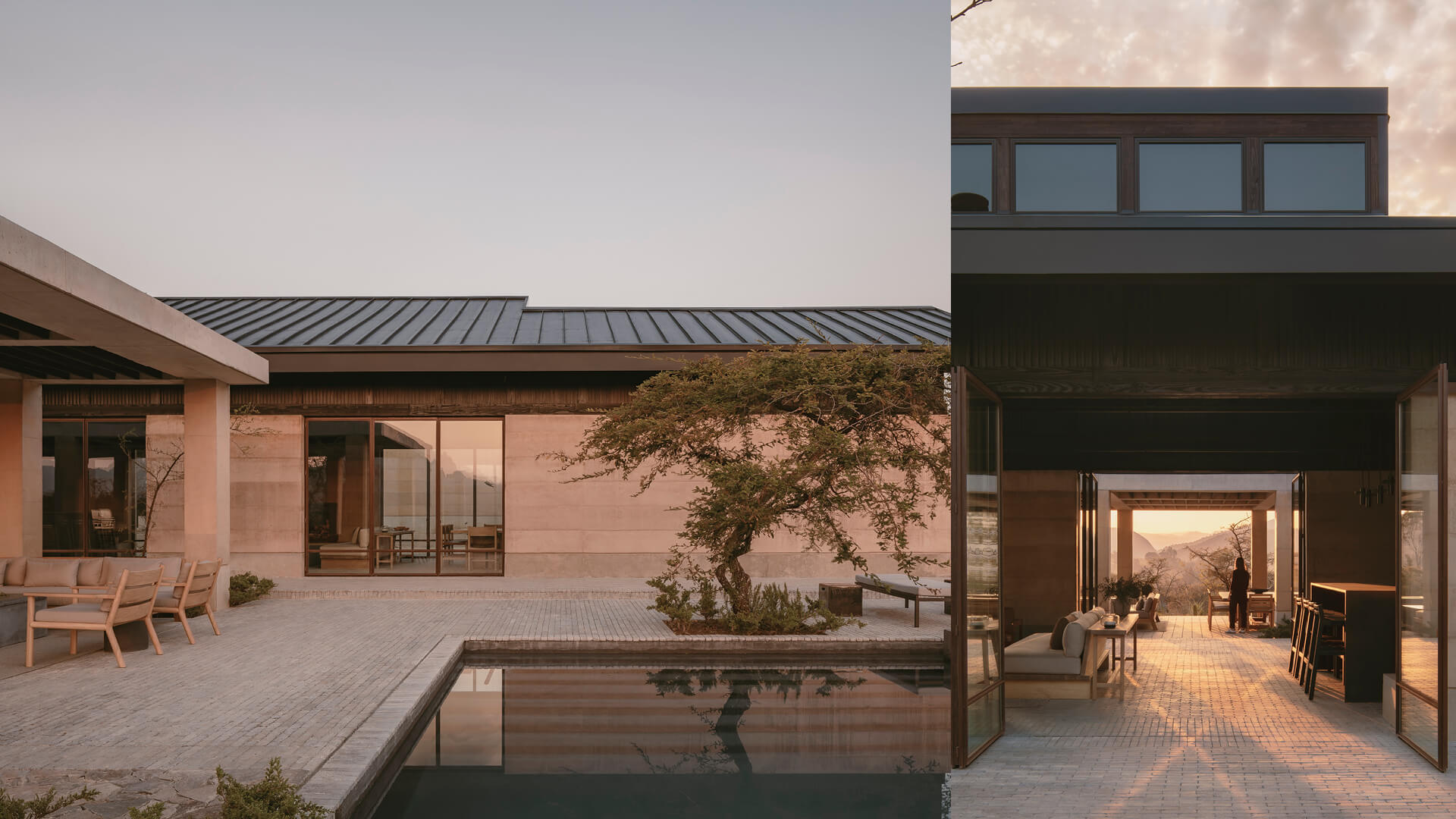
The house occupies a gently sloping plot, set between two ravines that connect a pine forest above with thorny low jungle vegetation below. This transitional landscape is warm and dry for much of the year, with hard light and limited shade. When Mexican architectural practice, Soler Orozco Arquitectos (SOA), led by Juan Soler and Alan Orozco, first visited the site together with the interior design studio DIRECCIÓN, directed by Mariana Morales, the decision was made to accept these conditions without mitigation. Rather than reshaping the land to fit a preconceived architectural language, the team allowed the land to establish the terms of the project.
This approach reflects a shared working ethos between the two practices. For SOA, site analysis is not a preliminary step but a continuous process that informs planning decisions, buildin g massing and construction strategies throughout the project. DIRECCIÓN works in parallel, developing interiors that extend the architectural logic rather than overlaying it. In this residential architecture project, this collaboration results in a building where architecture and interiors are inseparable, unified by restraint and clarity.
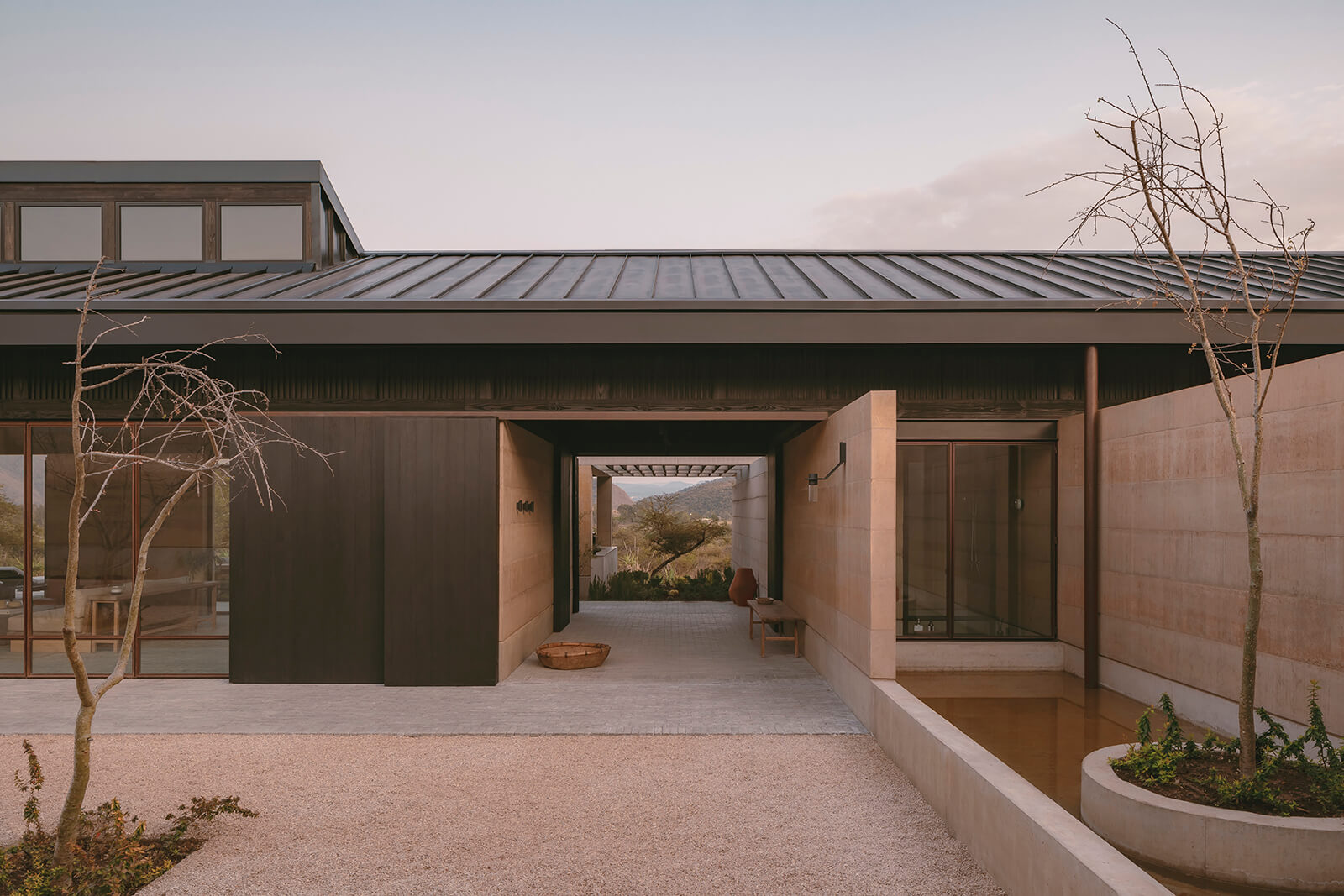
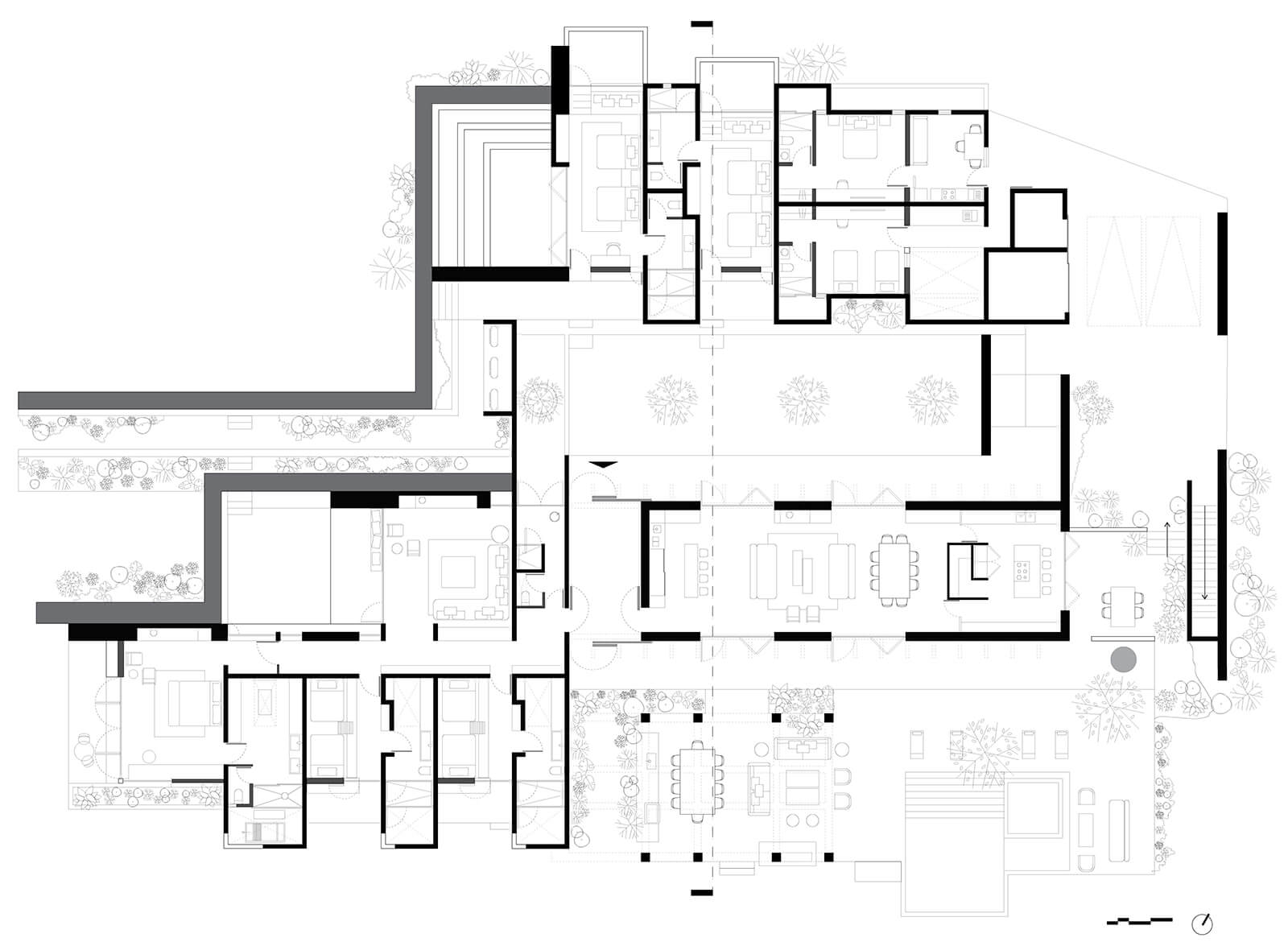
The house is arranged entirely on a single level, with subtle changes in floor height that follow the natural slope. These shifts allow the building to sit within the terrain rather than on top of it. From a distance, particularly when viewed from the lake or surrounding mountains, the roofline reads as a thin canopy hovering close to the ground. The massing remains low and horizontal, ensuring that the topography remains visually dominant.
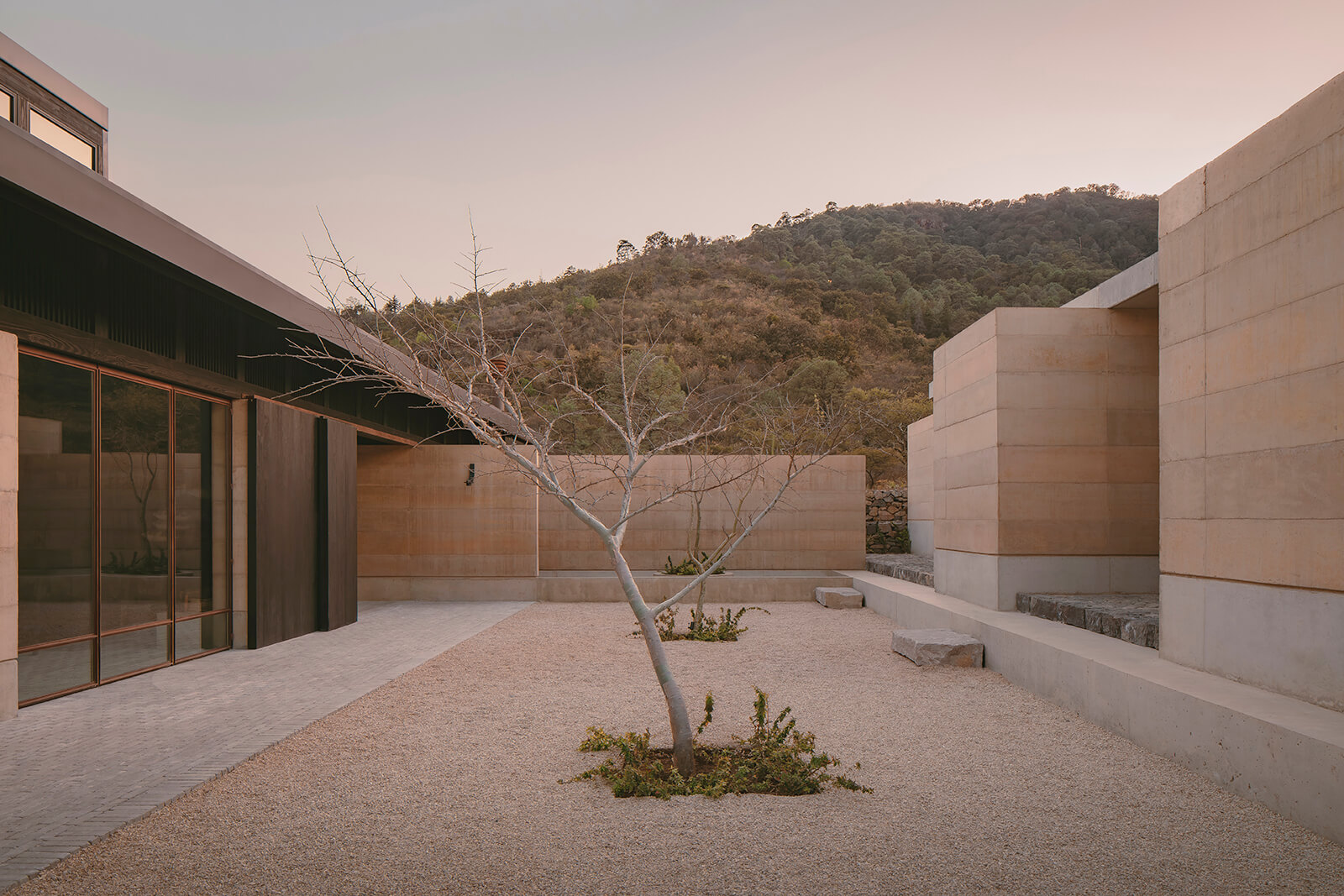
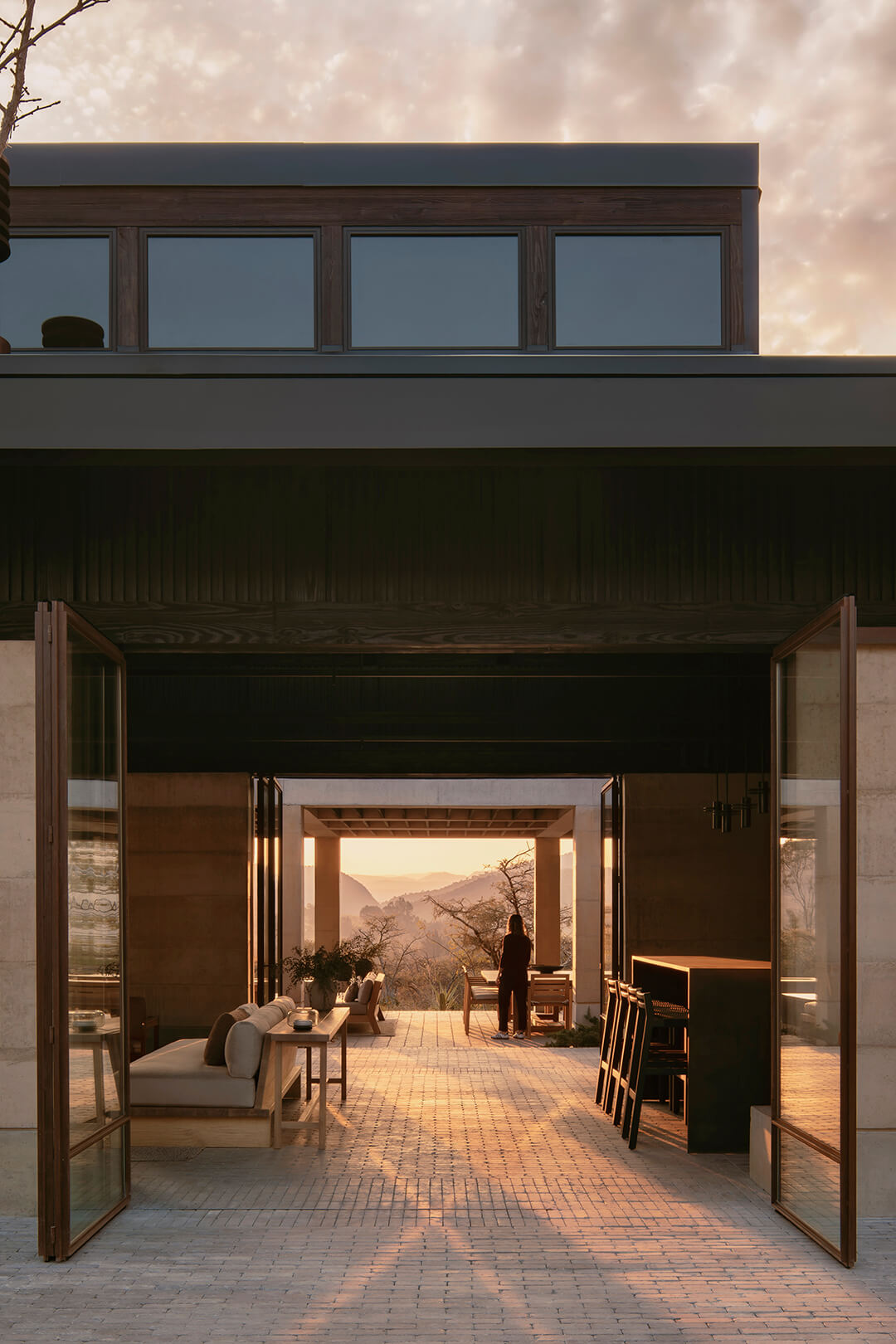
The spatial organisation of the house is structured around a gravel courtyard that functions as the project’s primary point of reference. The main house and a separate guest pavilion frame its perimeter, forming an enclosure that is clearly defined without feeling rigid. Arrival is deliberately understated. Rather than relying on an axial approach or a framed vista, the courtyard design provides a moment of pause and orientation, where changes in light, temperature and material are registered before moving into the interior spaces.
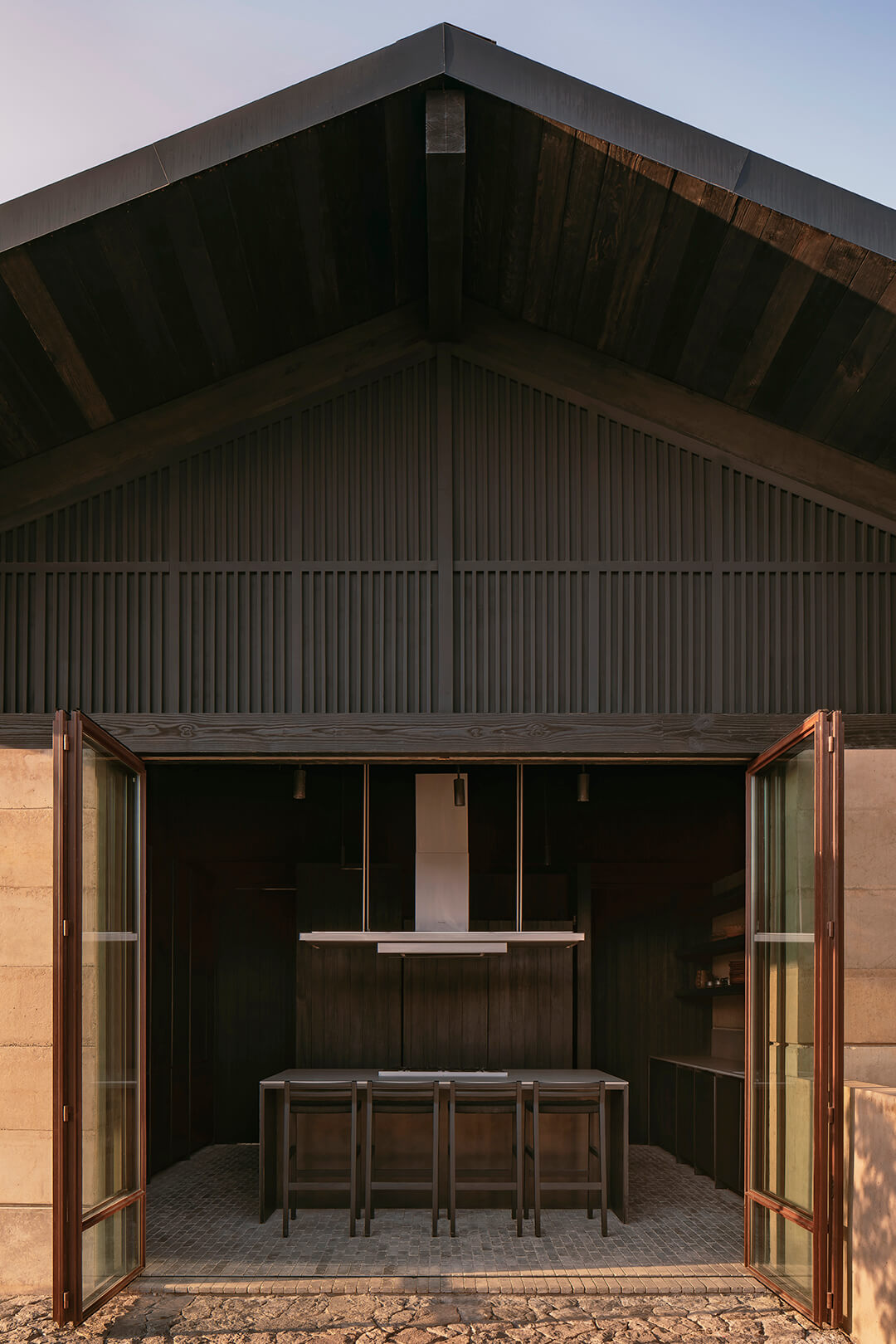
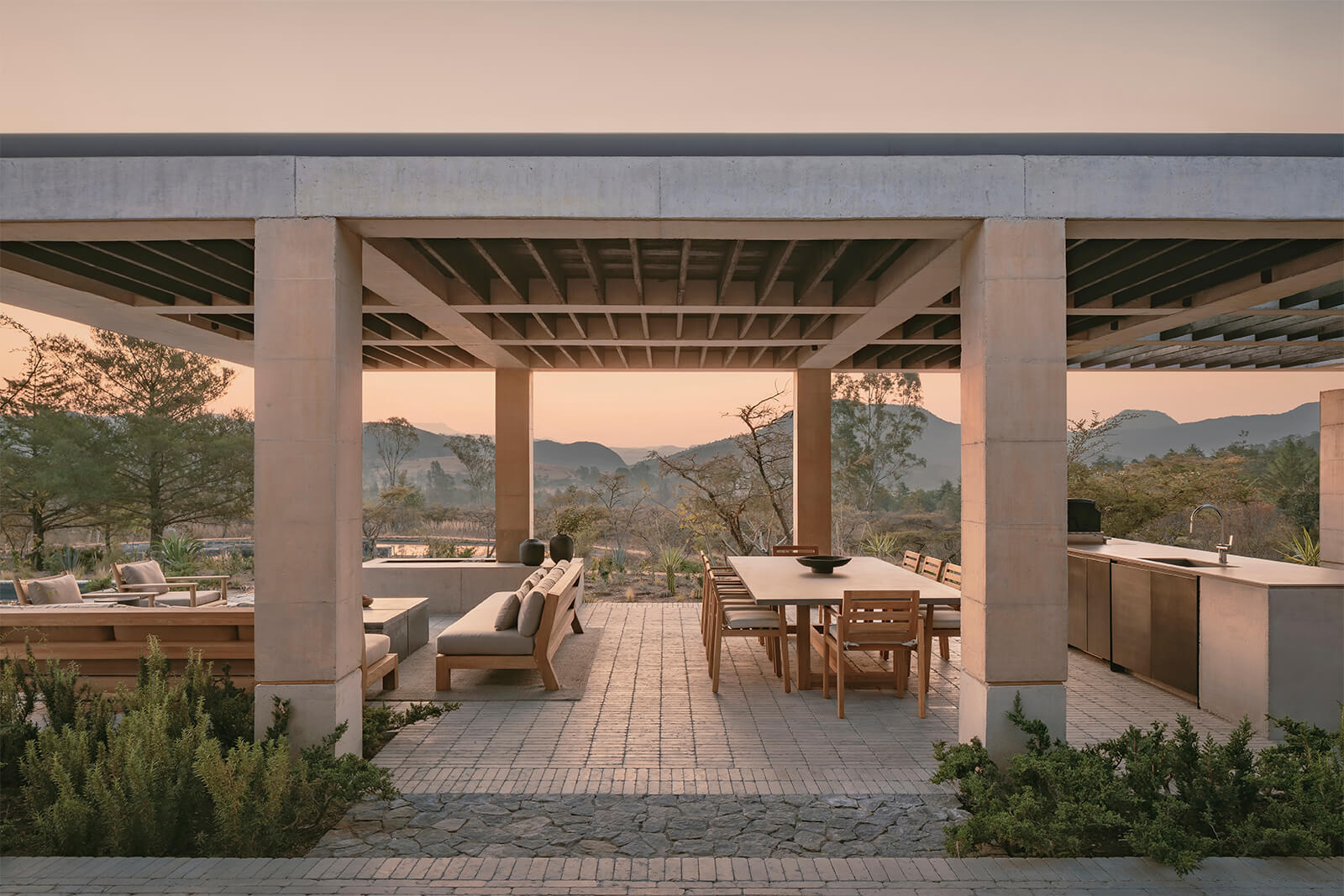
From the courtyard, a covered passage leads into the social core of the house. This space is formed as a gabled nave constructed from a black-stained wooden structure. The kitchen, dining area, living space and bar are accommodated within a single volume, encouraging continuous use rather than formal separation. Large openings connect the interior to the surrounding landscape, while the pitched roof allows natural light to enter in controlled bands, reducing glare while maintaining visual openness.
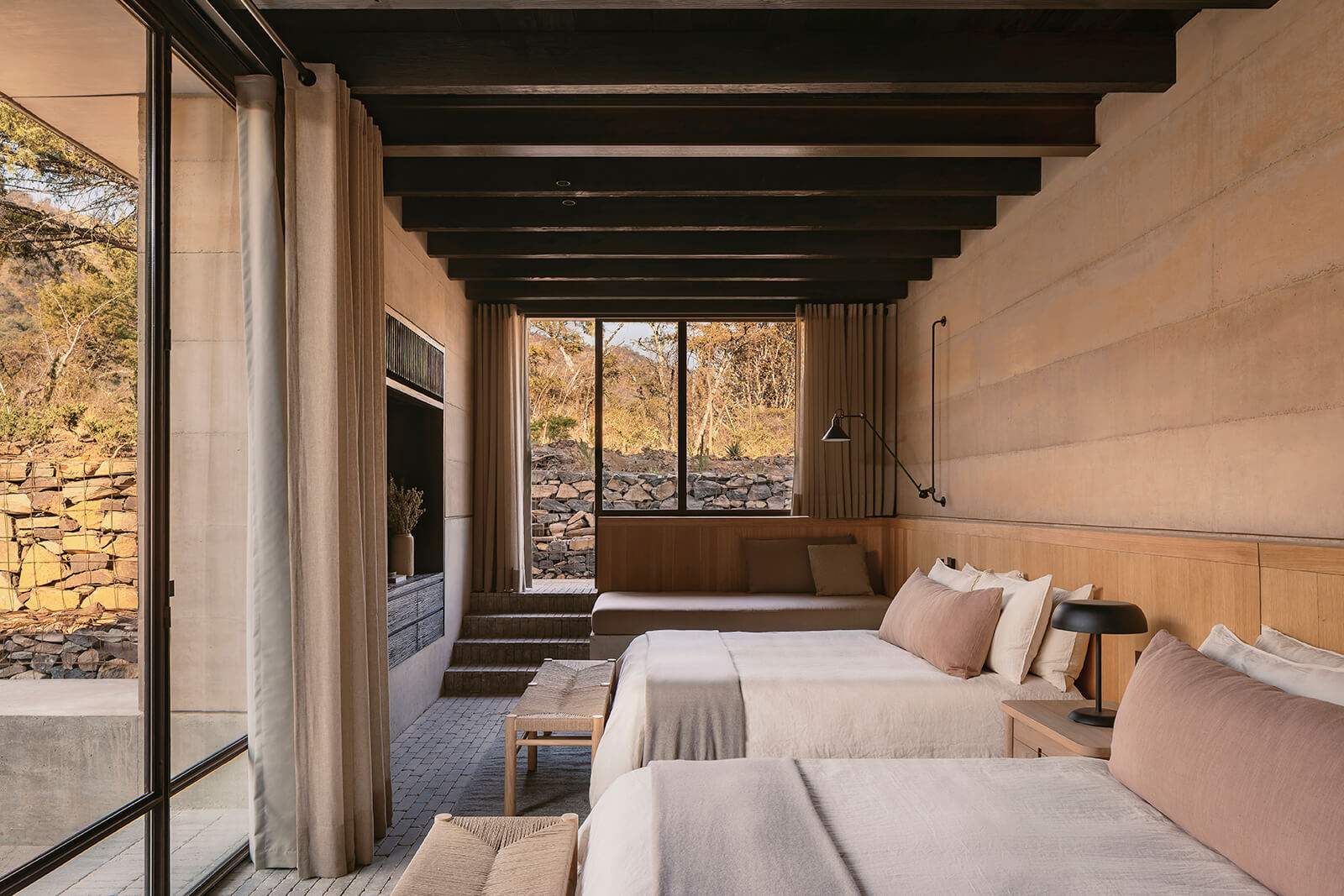
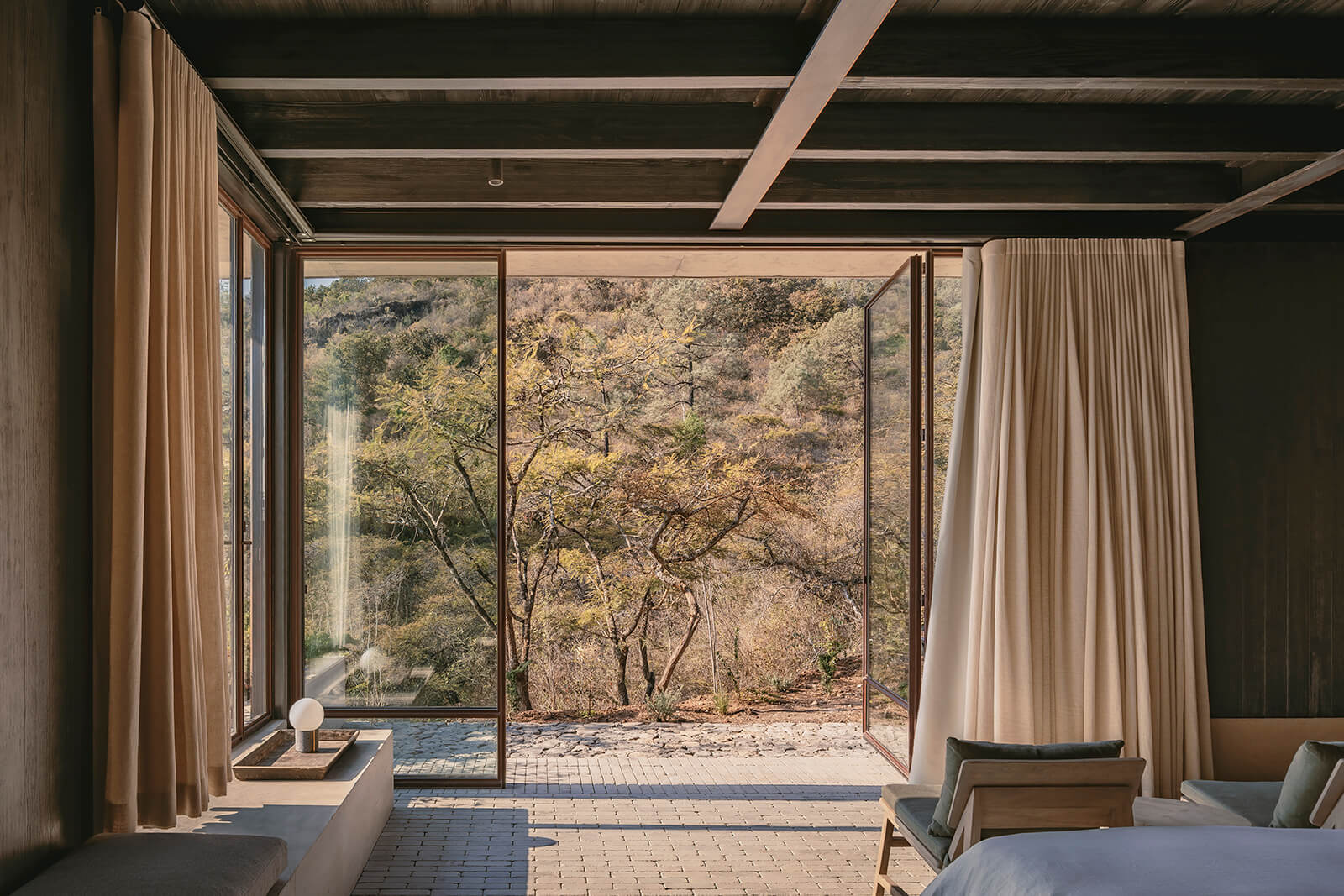
Material selection throughout the project is intentionally limited. Concrete, stone and wood form the primary palette, chosen for their durability and their capacity to weather over time. Grey stone floors extend across interior spaces, while walls are finished in muted earth tones. Ceilings lined with dark-stained wood absorb light and temper the brightness of the exterior environment. Oxidised metal details appear in fixtures and fittings, reinforcing a sense of material honesty. None of these elements seeks visual prominence. Their role is to support daily use and long-term endurance.
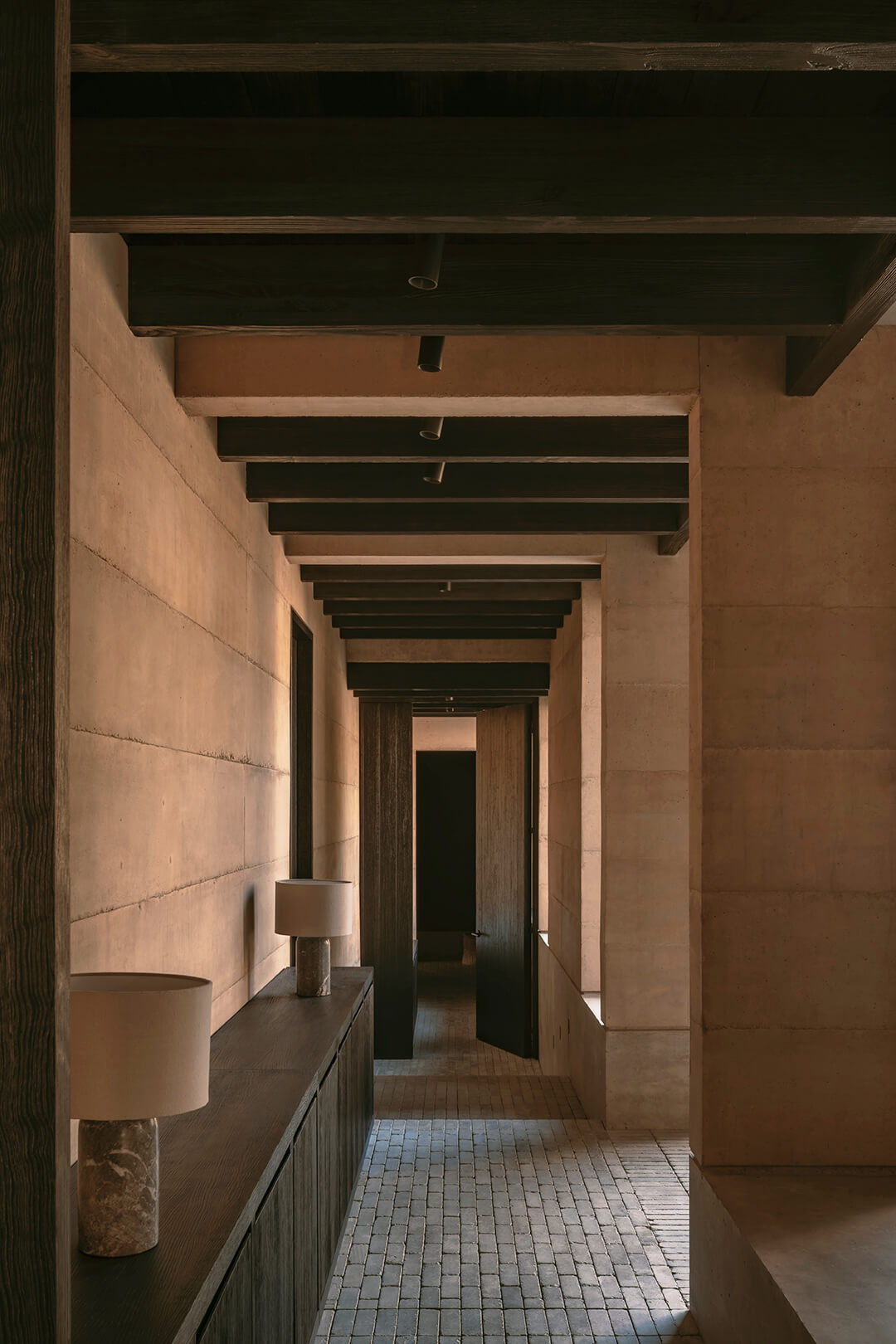
Light and shadow are treated as active elements within the building’s form and enclosure. Outside, the linear geometry of the building produces sharp, almost graphic shadows that move across stone architecture and concrete surfaces during the day, making the passage of time legible. Inside, black-stained wood ceilings temper the intensity of daylight, reducing glare and creating a subdued interior atmosphere that remains warm rather than dim. Transitions between inside and outside are carefully calibrated so that openness does not result in exposure, allowing the residence to remain responsive to climate without relying on visual drama.
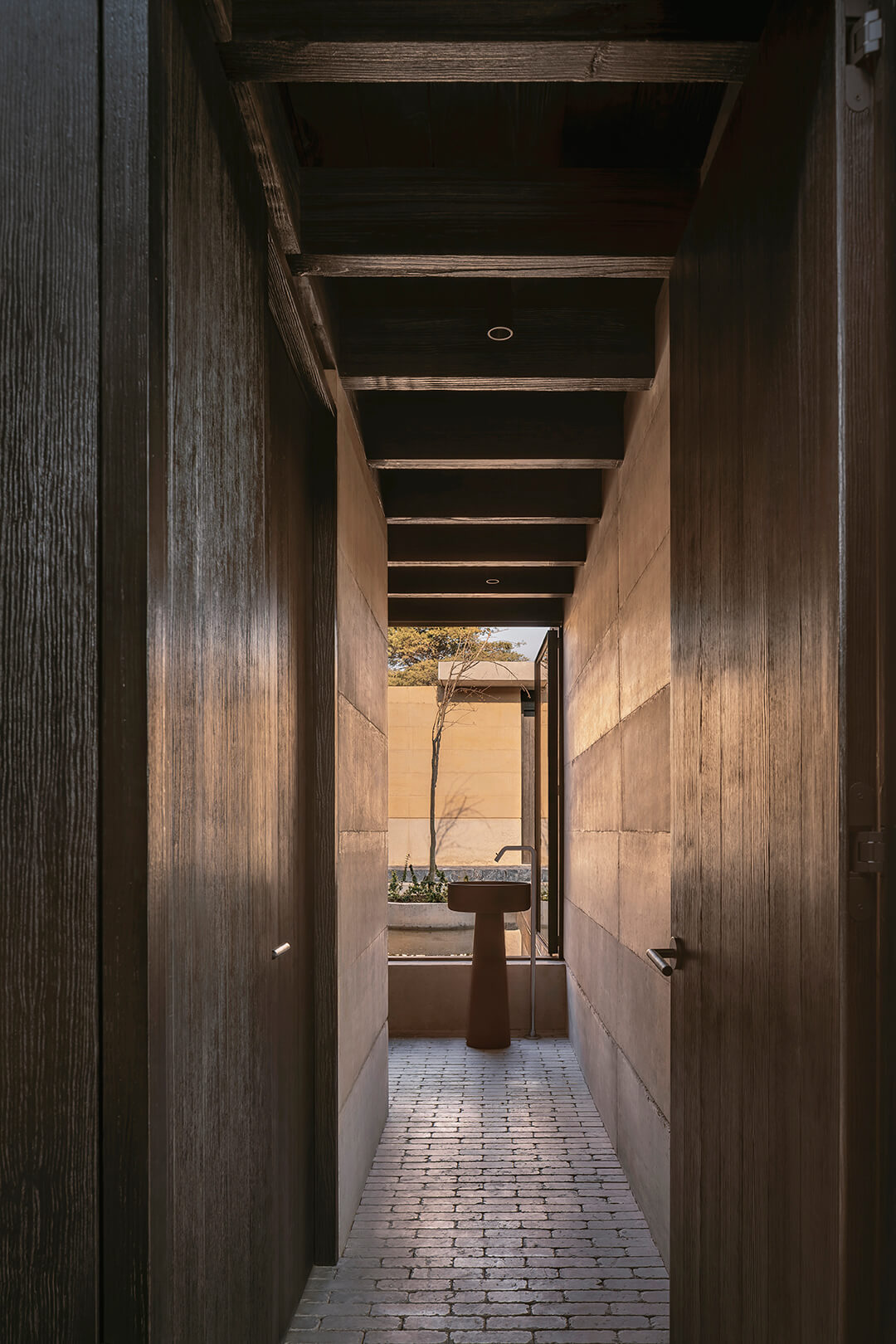
Private spaces are located within a flat-roofed volume that extends along the slope. Three bedrooms are arranged along a gently descending corridor, reinforcing the relationship between movement and terrain. The master bedroom is taller than the others and opens directly toward one of the ravines, marking the end of the sequence with a measured pause rather than a dramatic gesture. At the opposite end of the house, a covered terrace overlooks a rain-fed water feature adjacent to the pool, providing a shaded outdoor room that remains usable across seasons.
The guest pavilion completes the perimeter of the central courtyard. It contains two bedrooms along with service areas, allowing visitors to occupy the site independently while remaining visually and spatially connected to the main house. Like the primary volumes, it employs flat roofs and restrained openings, maintaining consistency across the residential design project.
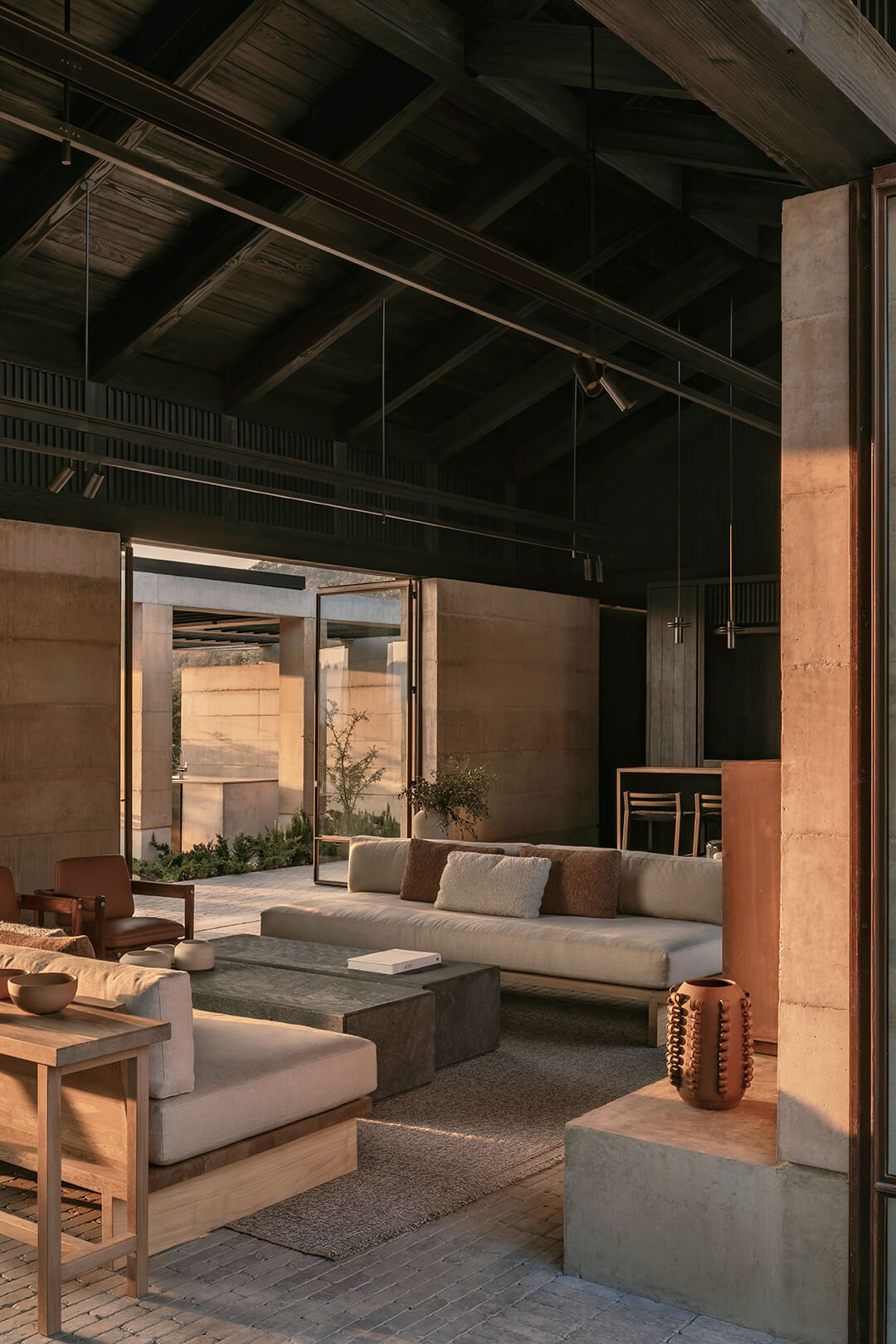
Interior design is treated as an extension of architecture. Custom-designed furniture, including sofas, tables and lamps, is produced using materials such as linen, cotton and stone. These elements are selected for tactile quality and durability rather than visual impact. The intention is to create interiors that can accommodate daily life without requiring constant preservation. Textures are meant to be used, not protected.
A single existing espino tree located between the terrace and the pool was retained throughout construction. The espino is a hardy native species commonly found in dry and traditional landscapes in the region, characterised by slow growth, dense wood and the capacity to survive in poor soil conditions. Its presence is understated but significant, offering shade without softness. Rather than being incorporated as a feature element, it remains part of the site’s existing ecology, reinforcing the project’s broader attitude toward permanence, endurance and continuity.
Casa El Espino does not attempt to present a new image for Valle de Bravo. Its value lies in its precision and restraint. By allowing topography, climate and material behaviour to guide architectural decisions, the project establishes a way of building that prioritises longevity over expression. The result is a house that inhabits its landscape quietly, shaped by use, time and environmental conditions rather than by spectacle.

by Pranjal Maheshwari Oct 19, 2026
The Mumbai-based architects integrate courtyards, mesh screens and north light trusses to create a dining space that doubles up as a community hub at SR University, Warangal.
by Mrinmayee Bhoot Oct 17, 2026
The Rotterdam-based institute centres the Indian Ocean as a network for exploring material histories and transnational links shaping coastal cultures, positing them as future models.
by Pranjal Maheshwari Oct 16, 2026
At the 2026 Stirling Prize ceremony, Mary Duggan with RUFF Architects, MAKER Architecten and Nakshabid Architects were felicitated for proffering quality housing and social equity.
by Mrinmayee Bhoot Oct 12, 2026
The new Centre for Contemporary Arts, fostering public engagement with art in Uzbekistan, is housed in a tram depot refurbished by the French studio, emulating local craftsmanship.

make your fridays matter with a well-read weekend
Enter your details to sign in
Don’t have an account?
Sign upOr you can sign in with
a single account for all
STIR platforms
All your bookmarks will be available across all your devices.
Stay STIRred
Already have an account?
Sign inOr you can sign up with
Verification link sent to check your inbox or spam folder to complete sign up process
Tap on things that interests you.
Select the Conversation Category you would like to watch
Please enter your details and click submit.
Enter the 6-digit code sent at


Casa El Espino is a site-led residence in the dry landscape of Valle de Bravo
by Aarthi Mohan | Published on : Feb 02, 2026


 Sign in with Google
 Sign in with email
What do you think?