Design06 mins. read
Cultural memory and material intelligence to take centre stage at Design Mumbai 2025
by Bansari PaghdarNov 22, 2025



by Zohra KhanPublished on : Dec 24, 2025
The 2025 edition of Design Mumbai emerged as a vibrant platform for dialogue, where collaboration became both method and message. Across the fair, architects, designers, artists, brands and institutions came together to blur boundaries—between architecture and object, craft and concept, reuse and reinvention. The offerings did more than showcase finished works; they invited participation, reflection and conversation, engaging the community through shared processes and diverse perspectives.
From a game that demystifies architectural thinking to a timber pavilion that reinterpreted modernist legacies—the showcases spanned disciplines, scales and material layers. Here are STIR’s picks from the fair—projects that embody a pluralistic design culture rooted in exchange, experimentation and shared authorship.
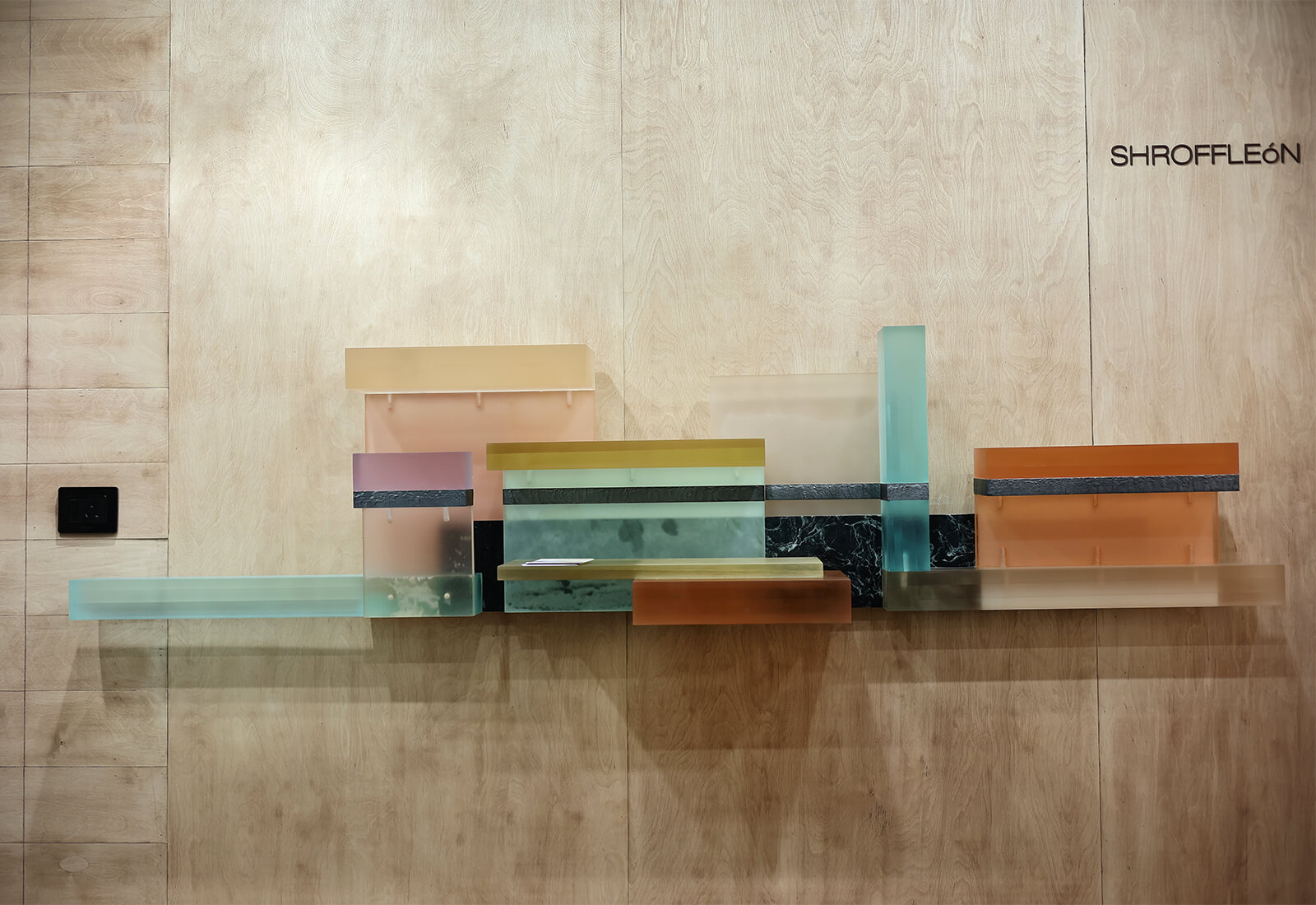
An architectural layout projected vertically in resin takes form in a special-edition collection of utilitarian art designed by architectural firm SHROFFLEóN in collaboration with luxury home brand Madheke. Titled Sanara, the project comprises miniature architectural objects that were inspired by the design language of a house by SHROFFLEóN. The collection presents abstract interpretations of architectural moments—ranging from facade treatments to rhythmic assemblies and intersections of planes and volumes.
The materiality of the pieces foregrounds a slow, considered approach to craft and the process of joinery—facets that are central to the practices of both studios. Through this shared sensibility, Sanara bridges architecture and object-making, translating architectural ideas into tactile, functional forms.
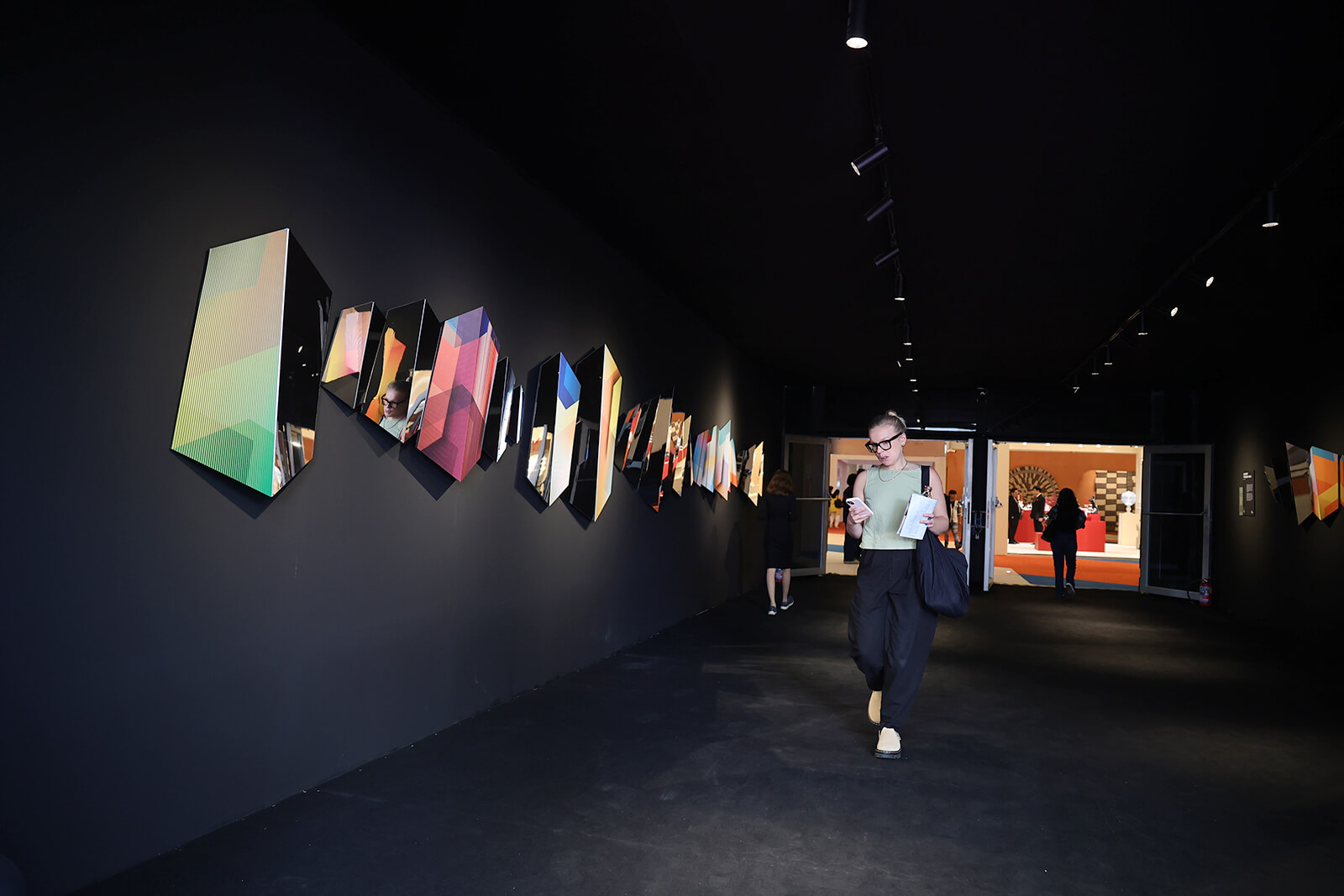
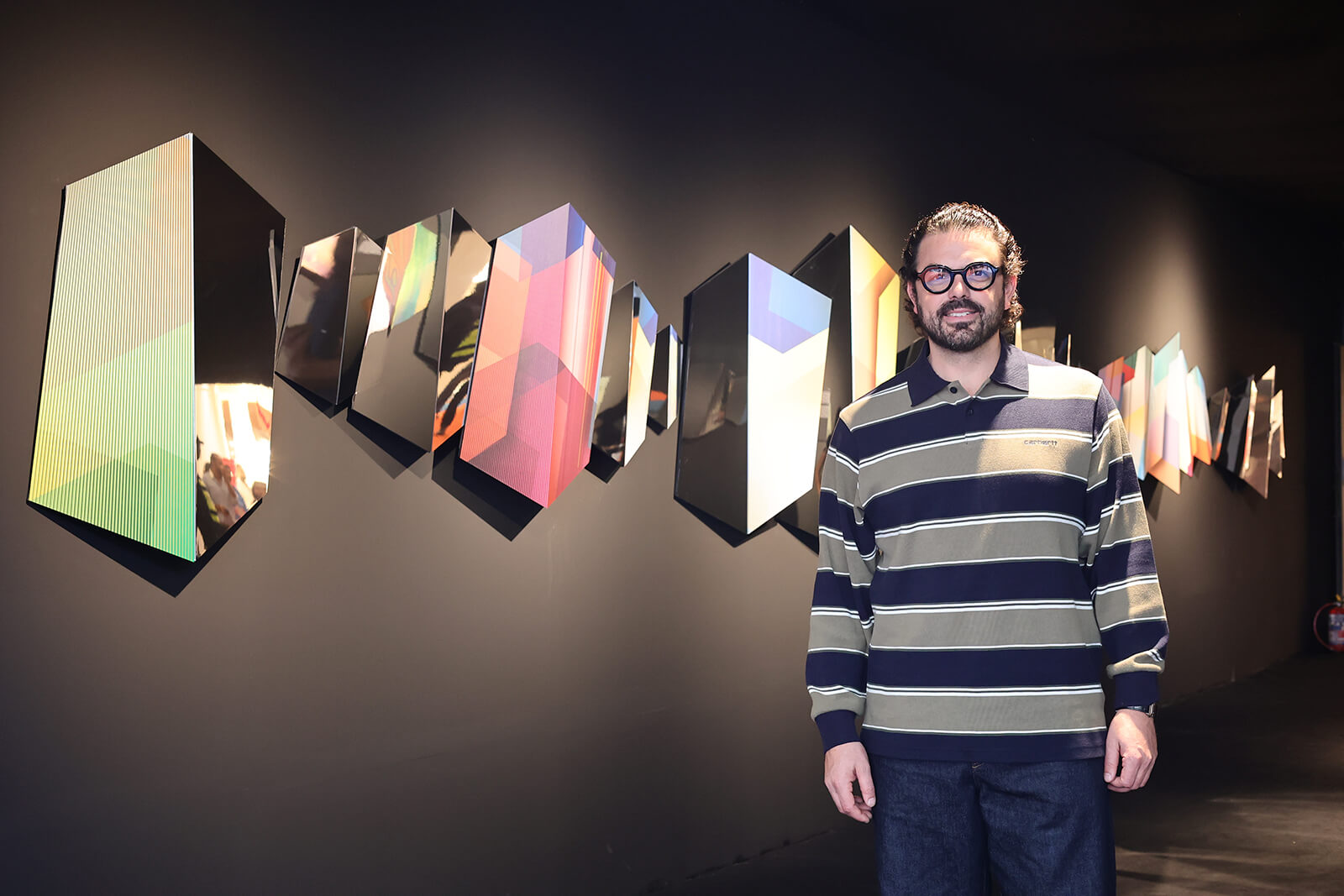
Entry into the Design Mumbai premises was mediated by a tunnel-like installation that abstracted the movement and frenzy of the show through shifting, fragmented glimpses. Journey through India was Venezuelan graphic designer Juan Gerstl’s presentation for the fair. Conceived as a long, zigzagging form that spanned the breadth of the entrance wall, the installation was crafted from mirrored, geometric panels printed on aluminium composite. Through UV-printed colour and reflection, the work actively engaged visitors, folding their presence into the artwork and transforming each passerby into a moving element in its shifting imagery.
The project’s sense of ‘geometric poetry’ stemmed from Gerstl’s first trip to India in 2012—a formative experience he describes as the moment he truly became an artist.
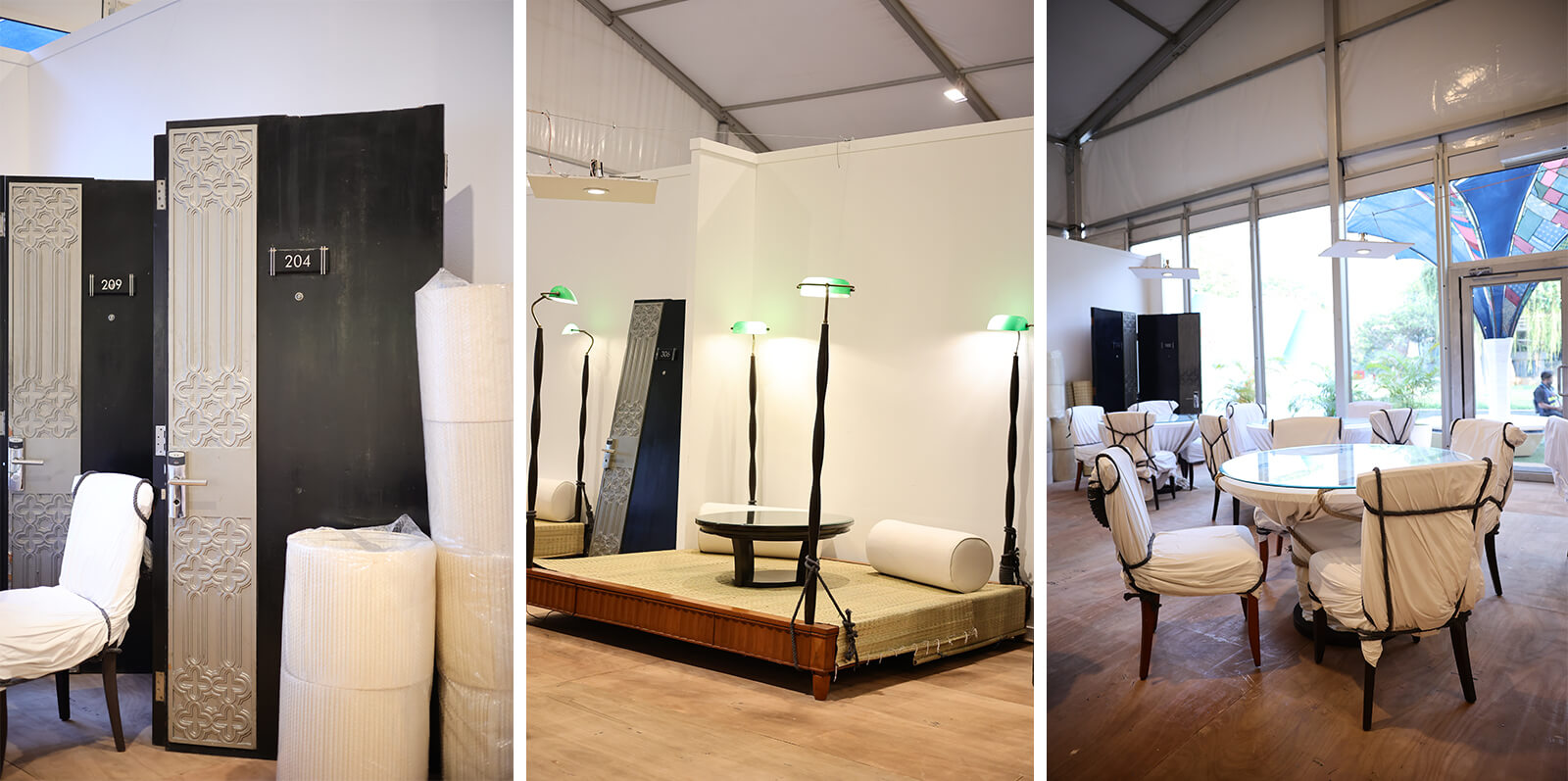
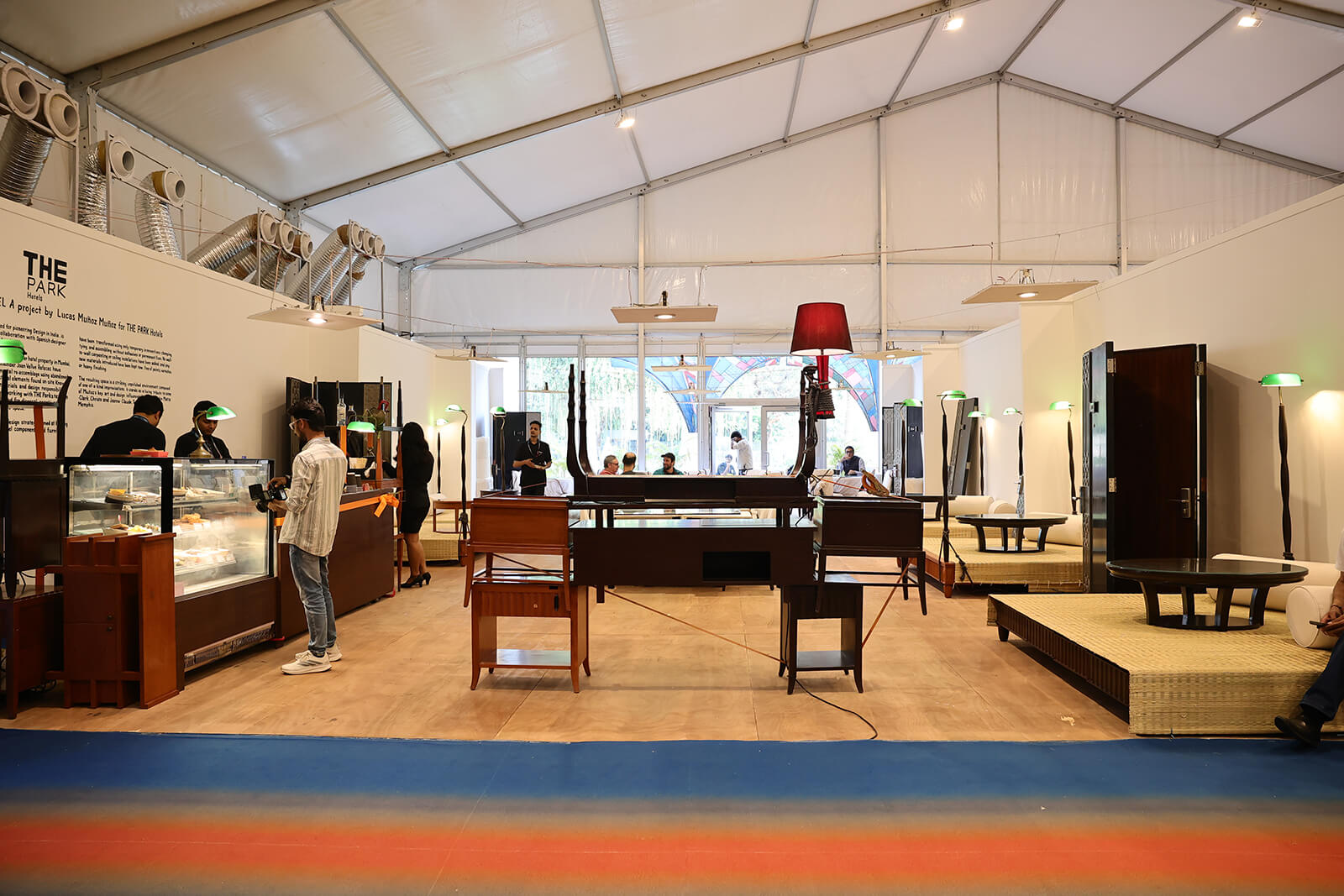
Materials salvaged from an abandoned hotel became a catalyst for a cafe installation designed by Luca Muñoz Muñoz. Titled Ex Hotel, the project created a leisurely setting in which the forgotten assumed an uncanny yet dignified presence. Chairs were wrapped in white sheeting and bound with rope, a central table—assembled from repurposed coffee tables and topped with extracted wall cutouts—anchored the space. Around it, daybeds fashioned from old hotel beds were lined up—each paired with a disused hotel door standing beside it.
Initiated by The Park Hotels, which recently acquired the Mumbai property after it had lain abandoned for over five years, the project gave Muñoz just six days to mine the building for elements he could extract, reactivate and repurpose for the cafe at Design Mumbai. His finds included cast-off lamps, wall panels and ceiling squares, which were combined with a minimal palette of new materials like ropes, straw mats and cushions. The installation relied on temporary assembly methods such as clamping and tying, reinforcing its low-impact approach. In doing so, Ex Hotel questioned prevailing attitudes towards furniture waste, demonstrating how second, third, or even fourth lives of furniture can be both functional and quietly beautiful.
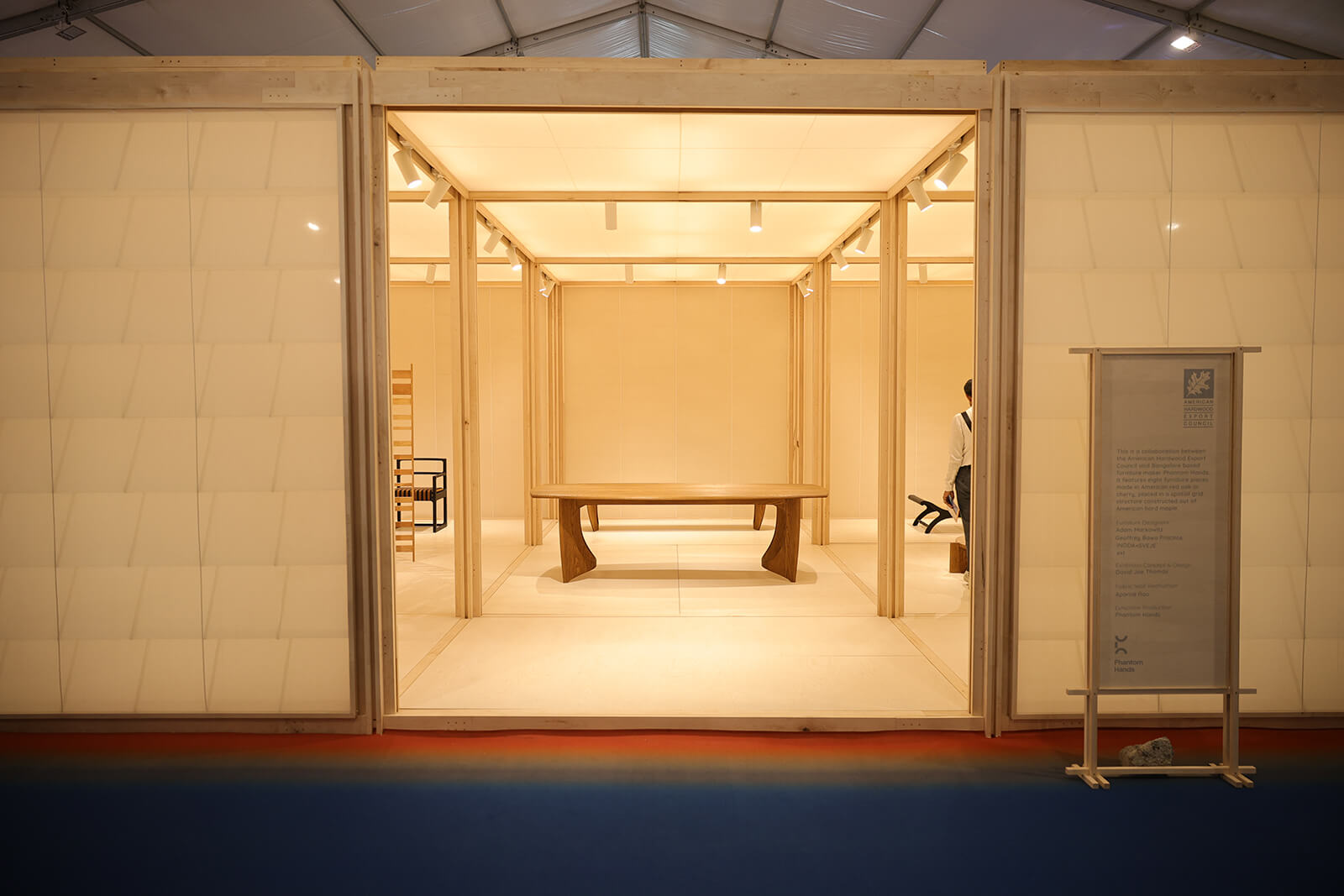
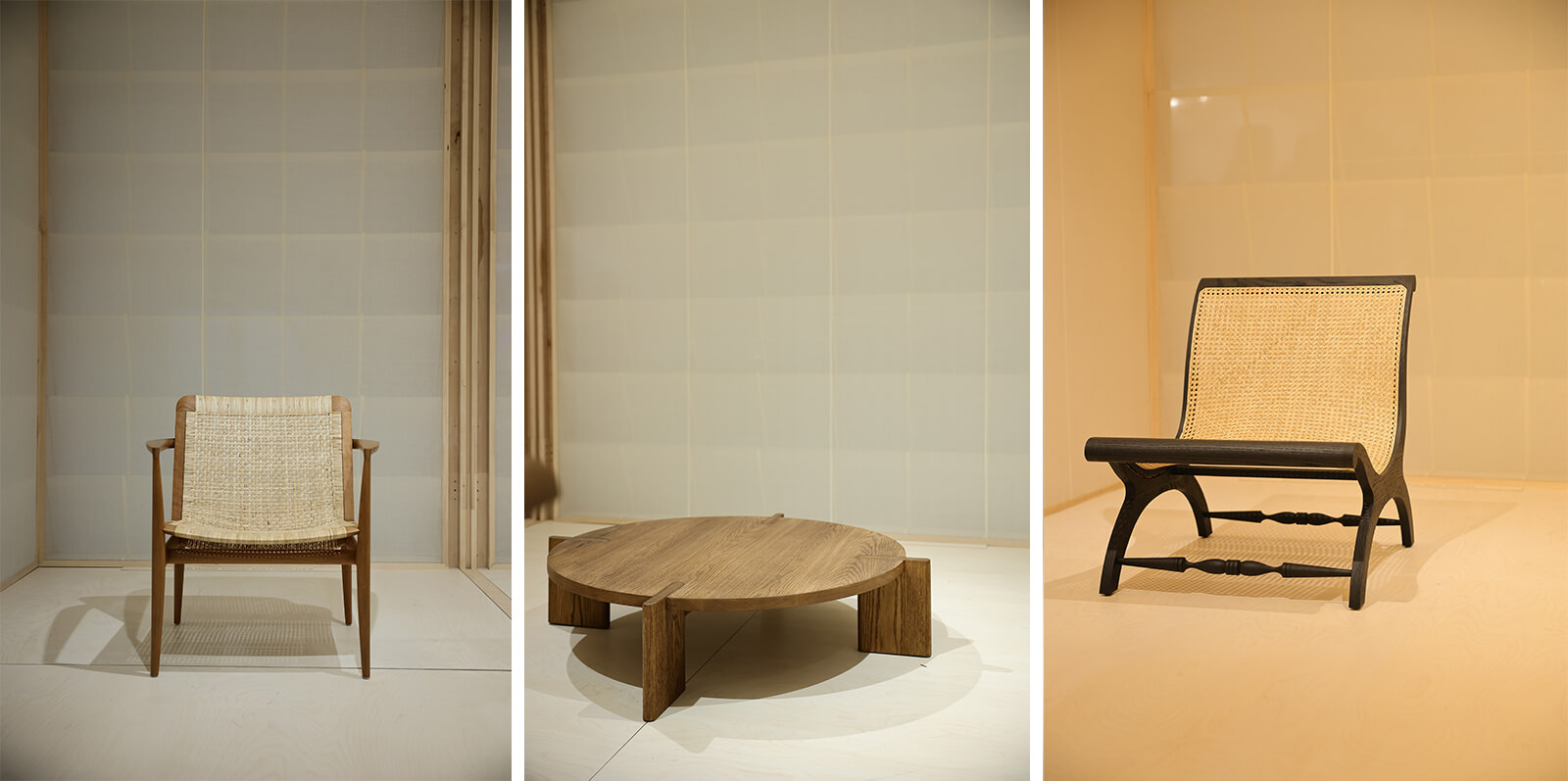
At Design Mumbai 2025, Bangalore-based furniture studio Phantom Hands unveiled a pavilion that appeared less like a static installation and more like a lyrical exploration of timber. Reimagining Timber, designed by architect David Joe Thomas, drew inspiration from the furniture and architecture of the city of Chandigarh, translating the city’s modernist vocabulary into a modular, experiential space.
Created in collaboration with the American Hardwood Export Council (AHEC), the pavilion combined a wall, lightbox ceiling and floor, with a curated series of furniture pieces in red oak and cherry, exploring what responsibly sourced timber could look and feel in contemporary craft. The visually light walls echoed the integrated brise-soleil that Corbusier used across Chandigarh and Ahmedabad projects, while also referencing the bookshelves designed by Pierre Jeanneret. Inside, the pavilion featured furniture such as Refractions by Adam Markowitz alongside reinterpretations from Sri Lankan architect Geoffrey Bawa’s The Bawa Collection.
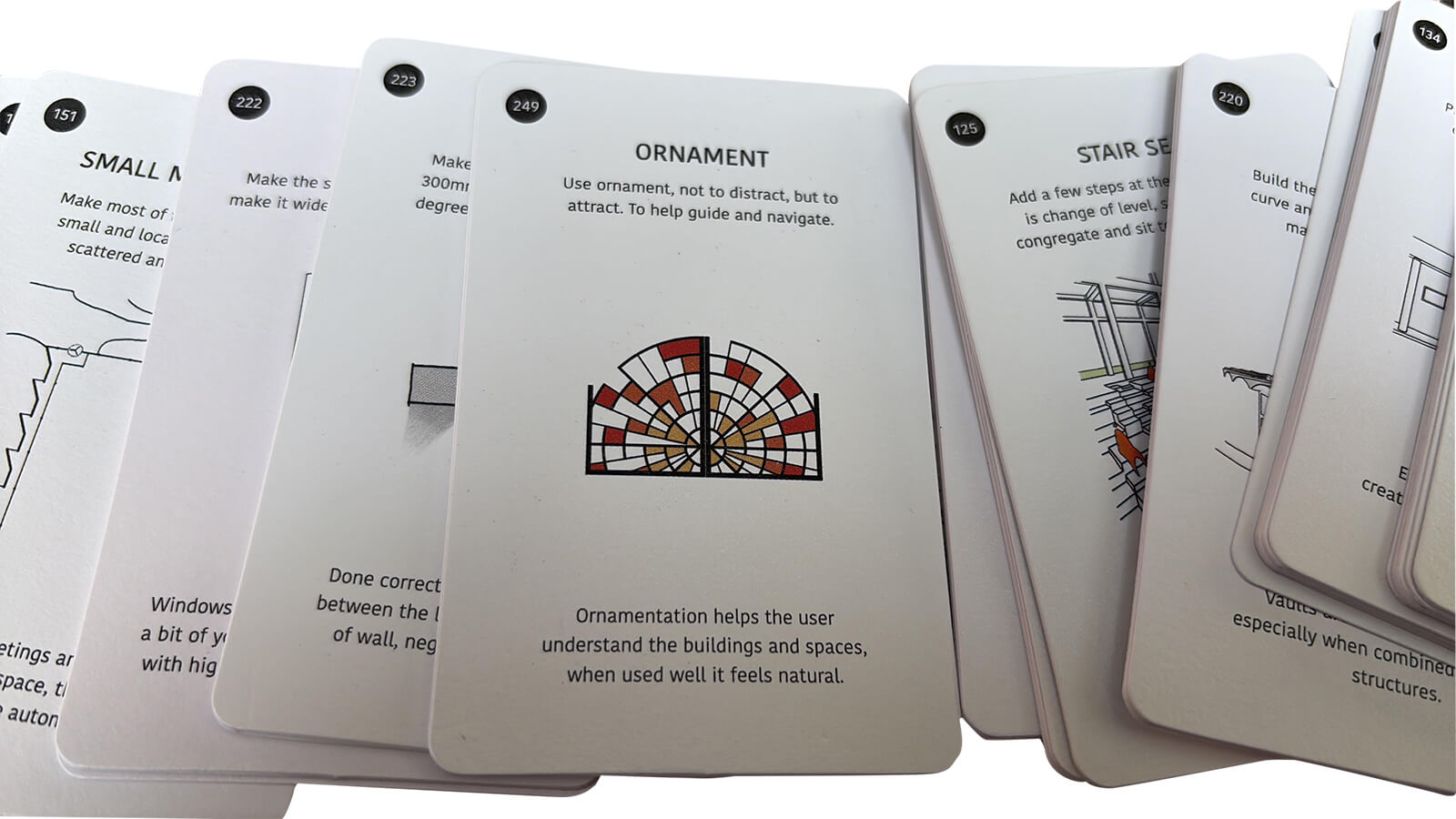
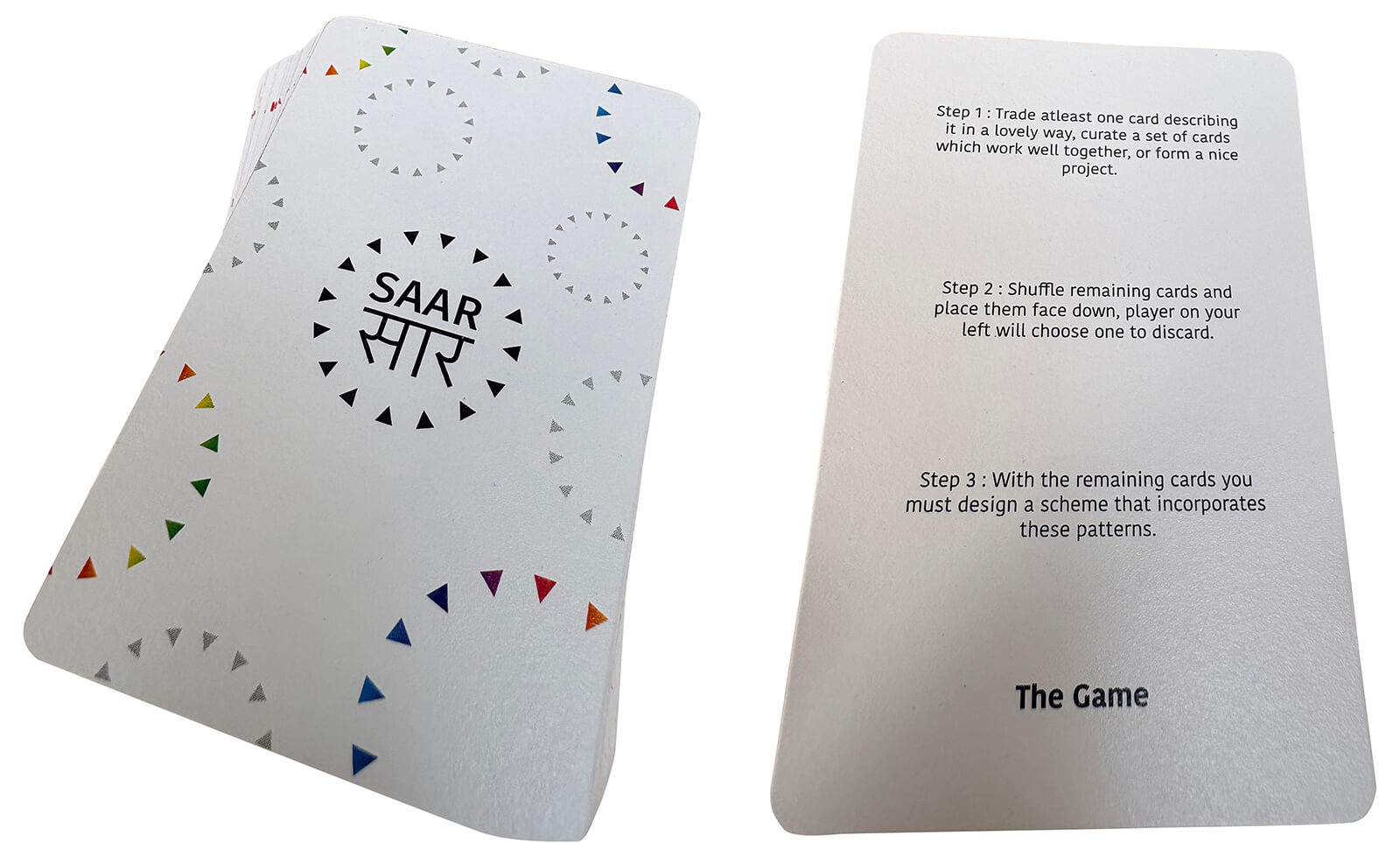
At Design Mumbai 2025, The Game by Studio Saar stood out as a thoughtful and playful exploration of how we understand and design the built environment. Rooted in the ideas of Christopher Alexander’s A Pattern Language, the game translates architectural thinking into an accessible, hands-on format that prioritises human experience over style or authorship. Studio Saar began by examining their own practice, identifying recurring spatial and landscape patterns that reflect what they value in architecture. These insights were distilled into a deck of cards, each representing a pattern across different scales and contexts.
The gameplay is intentionally simple: players draw five random cards and explore how these patterns might work together. From there, they design a building or landscape within a limited time, using the selected patterns as guiding constraints. The real richness emerges in what follows—players present and explain their ideas, sparking conversations about intent, context and process. “As a player, you introspect, you draw and investigate your ideas, and finally explain them to others in the group. This process shines a light on the architectural process and ignites curiosity towards the ‘why’ and ‘how’ of architecture,” Ananya Singhal, partner at Studio Saar, told STIR.
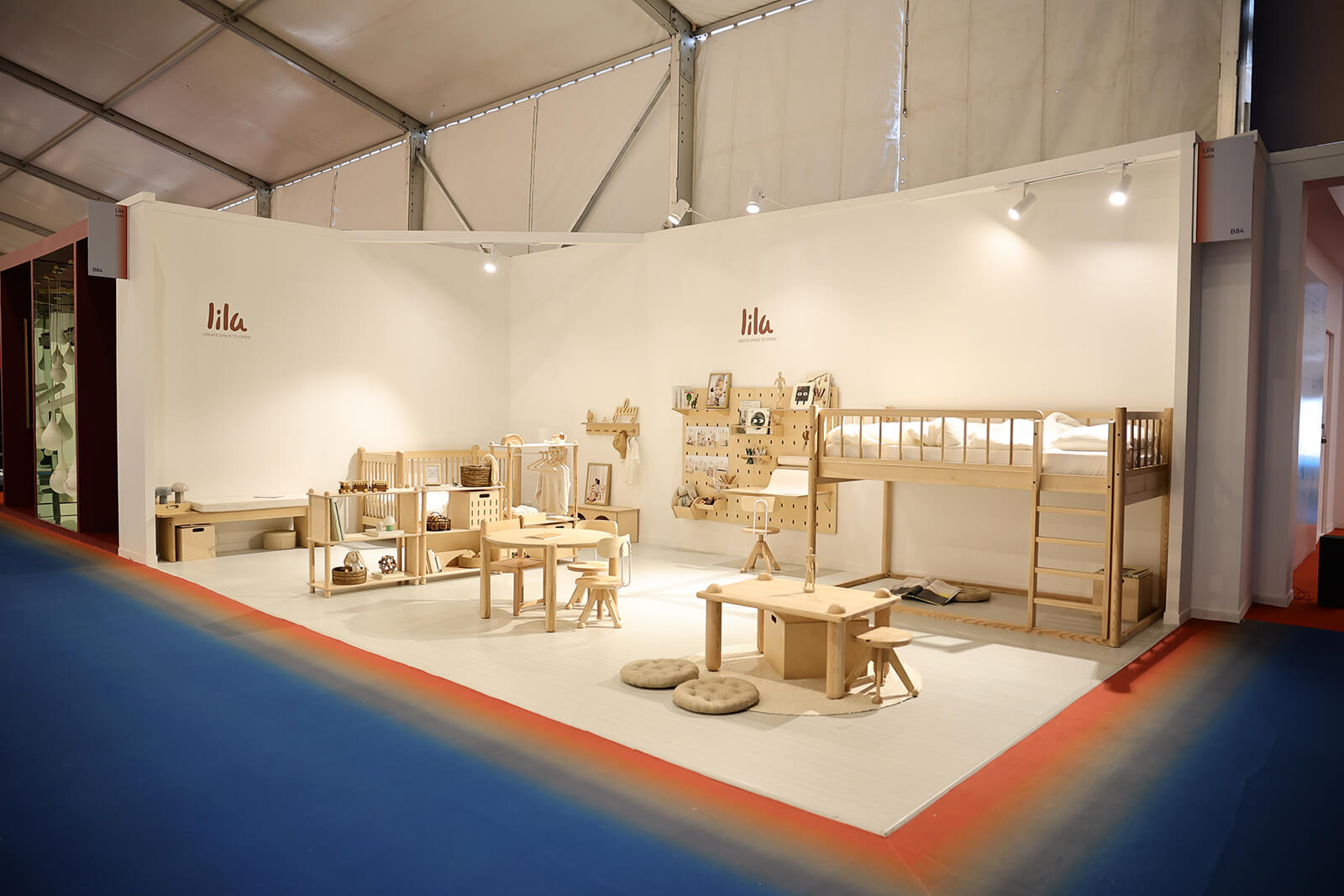
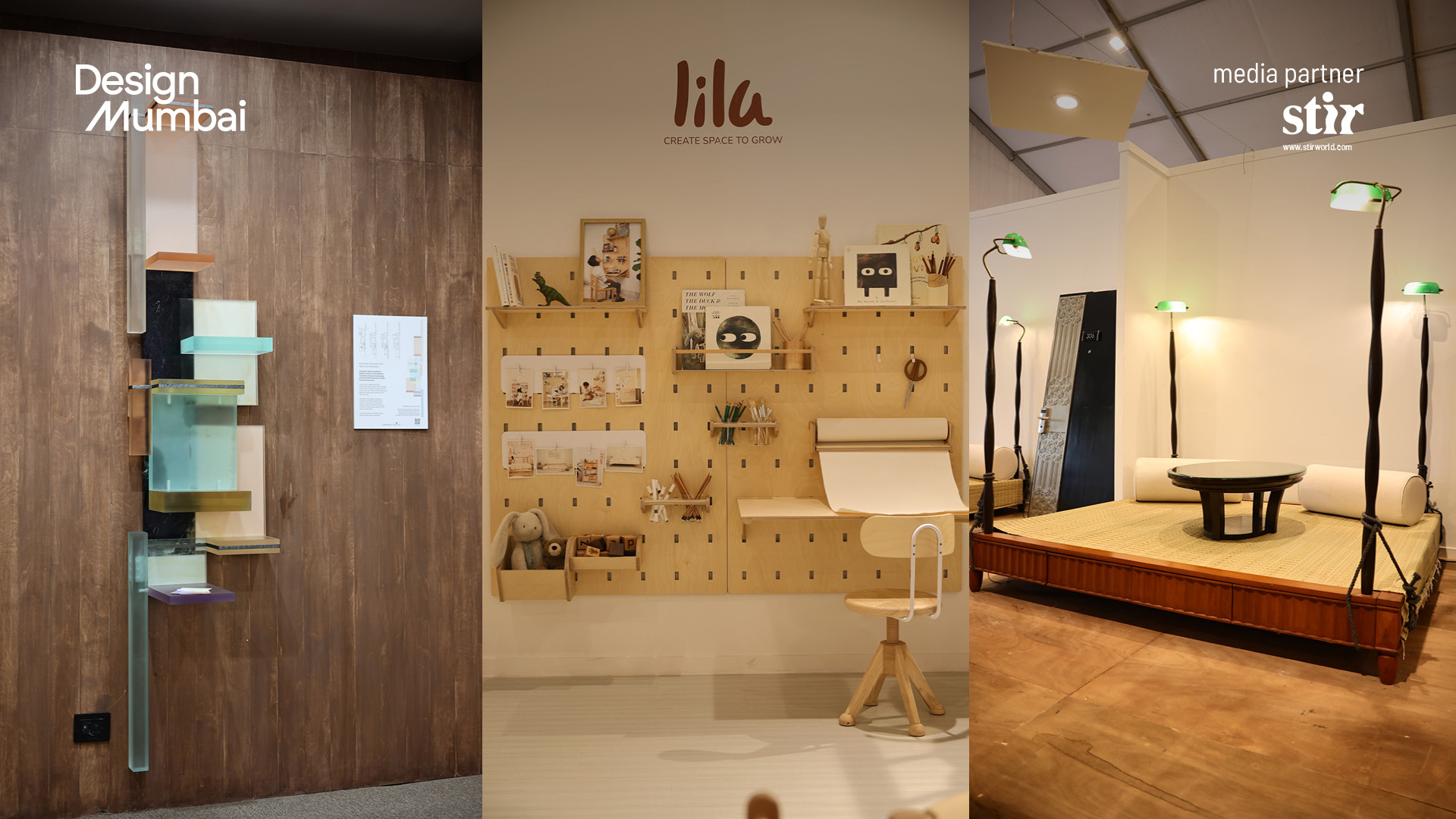
Lila stood out for its restraint and clarity at the fair through its quietly compelling vision of kids' furniture rooted in intention and care. The Bangalore-based children's furniture brand unveiled its newest bed collection as a set of modular pieces that can evolve alongside a child, responding to changing needs without visual clutter. Alongside the beds, the brand expanded its learning range, presenting adaptive systems that encourage creativity and independence—equally suited to homes and educational environments. The showcase offered visitors a serene environment reflecting the brand’s core belief: that well-made, long-lasting furniture can meaningfully shape how children grow.
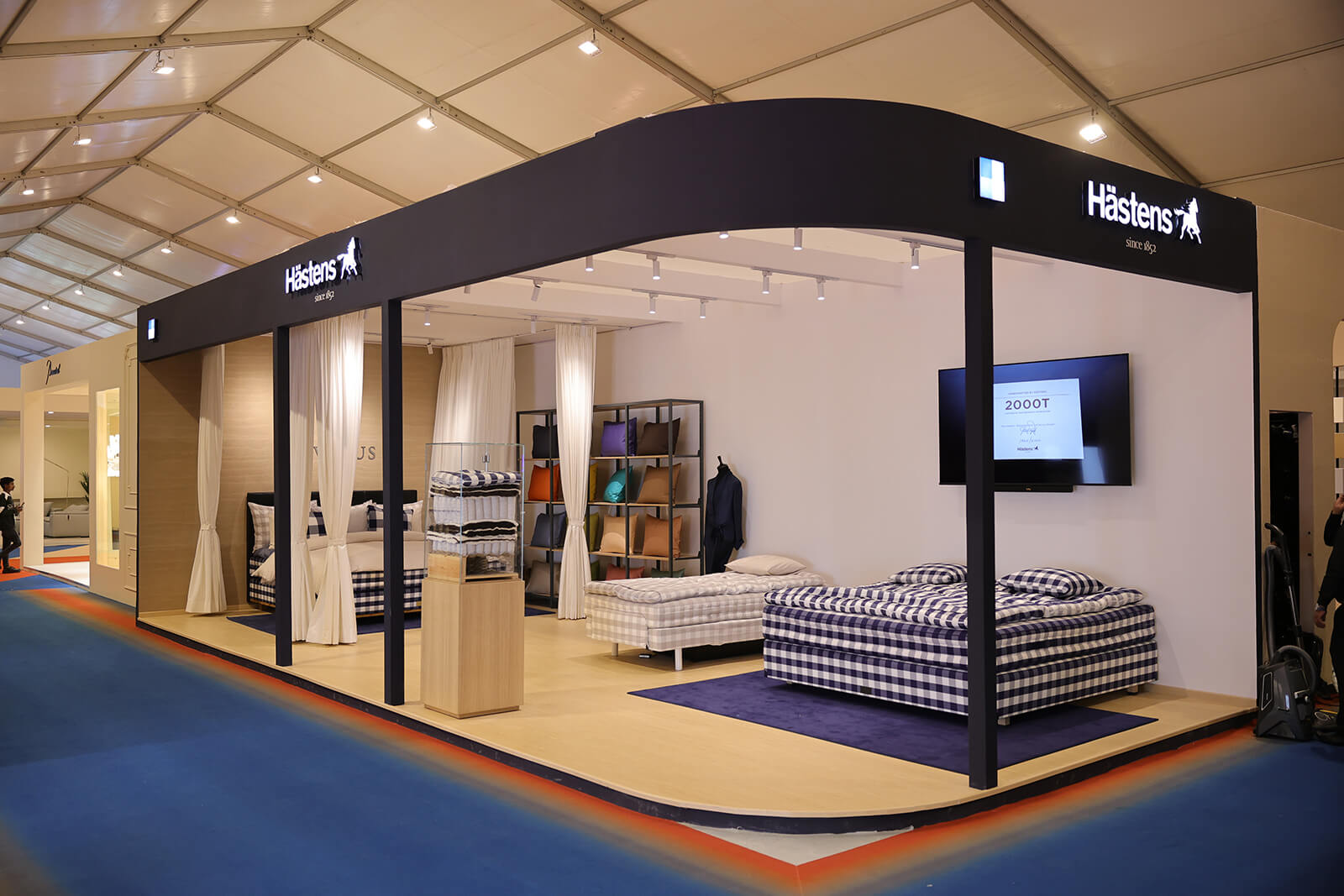
Amid the visual noise and constant motion of the fair, Hästens’ Vividus presentation became a poetic pause in a city that never sleeps. The space invited visitors not just to observe luxury, but to feel it—to lie down, jump on the bed, or simply surrender to a rare moment of rest. The Vividus collection by the Swedish brand transformed sleep into an immersive design experience, celebrating touch, craftsmanship, and well-being. In Mumbai’s relentless rhythm, Hästens offered a radical idea: that true luxury is time, stillness, and restorative comfort—making the installation an unforgettable spotlight of the show.

by Pranjal Maheshwari Oct 23, 2026
Co-authored by Jareh Das, Chairman traces the British designer’s fixation on chairs as symbols of power and identity and as mediums of expression and community building.
by Mirra Lynn Oct 22, 2026
The curators behind Palestine Design Week 2026 reflect on its intent, considering how design holds memory, makes space for loss and imagines a future in Palestine.
by Chahna Tank Oct 22, 2026
STIR speaks with the Mumbai-based type designer about her practice, type walks and why she wants more people to have stronger opinions about Indian-script fonts.
by Jincy Iype Oct 15, 2026
STIR explores craft, material intelligence and people shaping Indian design through dialogues with Design Democracy’s co-founders and the curators of its special exhibitions.

make your fridays matter with a well-read weekend
Enter your details to sign in
Don’t have an account?
Sign upOr you can sign in with
a single account for all
STIR platforms
All your bookmarks will be available across all your devices.
Stay STIRred
Already have an account?
Sign inOr you can sign up with
Verification link sent to check your inbox or spam folder to complete sign up process
Tap on things that interests you.
Select the Conversation Category you would like to watch
Please enter your details and click submit.
Enter the 6-digit code sent at


Collaborative highlights from Design Mumbai 2025 that embody design as dialogue
by Zohra Khan | Published on : Dec 24, 2025


 Sign in with Google
 Sign in with email
What do you think?