Art10 mins. read
India Art Fair 2025: STIR brings you its list of must-visit booths
by Manu SharmaFeb 04, 2025



by Srishti OjhaPublished on : Apr 20, 2026
One of the most famous passages from French writer Marcel Proust, whom Indian artist Subodh Gupta references in his latest solo exhibition, A Fistful of Sky, is about a madeleine—a small, shell-shaped tea cake. The protagonist in Proust’s In Search of Lost Time takes a bite of an ordinary snack and is instantly, emotionally, transported to a moment from his childhood. The universality of an ‘involuntary memory’ triggered by a simple, everyday object made the passage the most quoted excerpt from the book and rocketed the cake’s popularity, earning it a place in the annals of iconic literary symbols. For years, the contemporary artist has been doing the same with bartans, the humble metal vessels that can be found in every Indian kitchen and, thanks to Gupta, who is represented by Nature Morte, in galleries worldwide. A Fistful of Sky is a show about labour, migration and the aspirations that undergird them, but it is also an interrogation of value—how we value the everyday, the Indian, the rural and the often overlooked. The show unfurls across four storeys of the Art House at the Nita Mukesh Ambani Cultural Centre (NMACC) in Mumbai, reframing objects such as cow dung cakes, mosquito nets, saris, dabbas and, of course, bartans. The expansive exhibition is Gupta’s first in a while and features a host of new works shown beside early pieces in a meditation on time—the time of childhood, simpler times, lost time and time as it will be seen from the future.
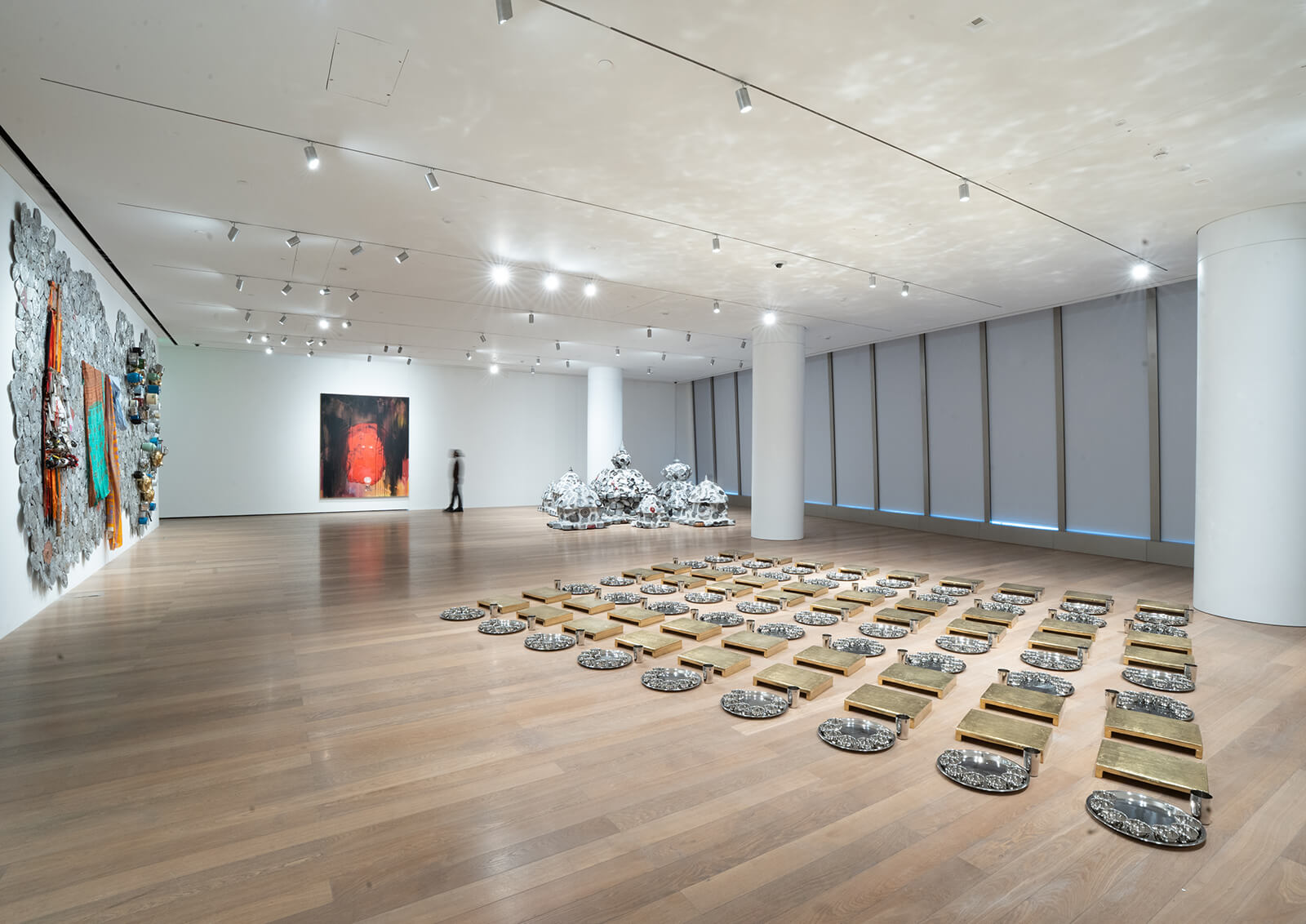
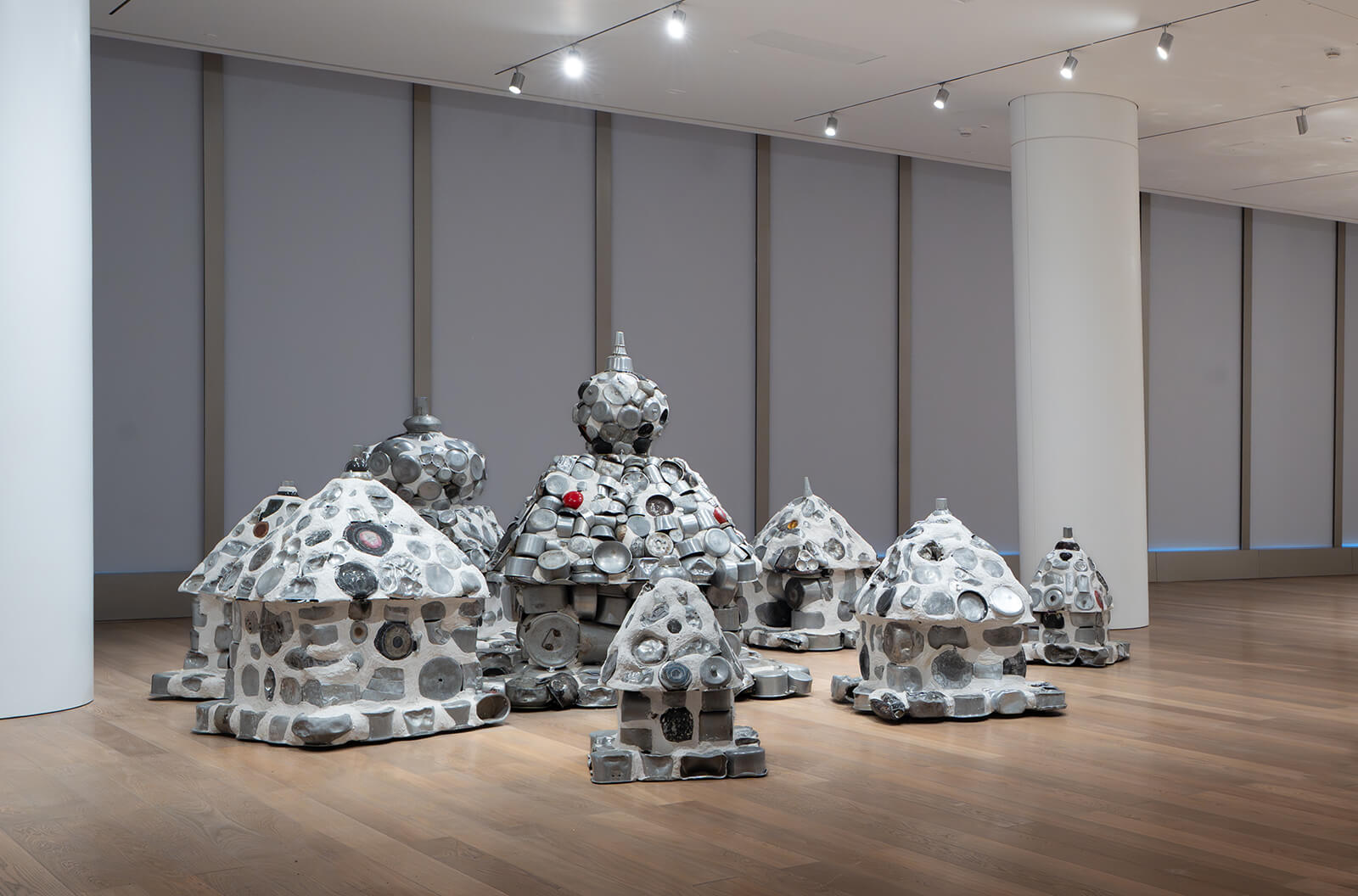
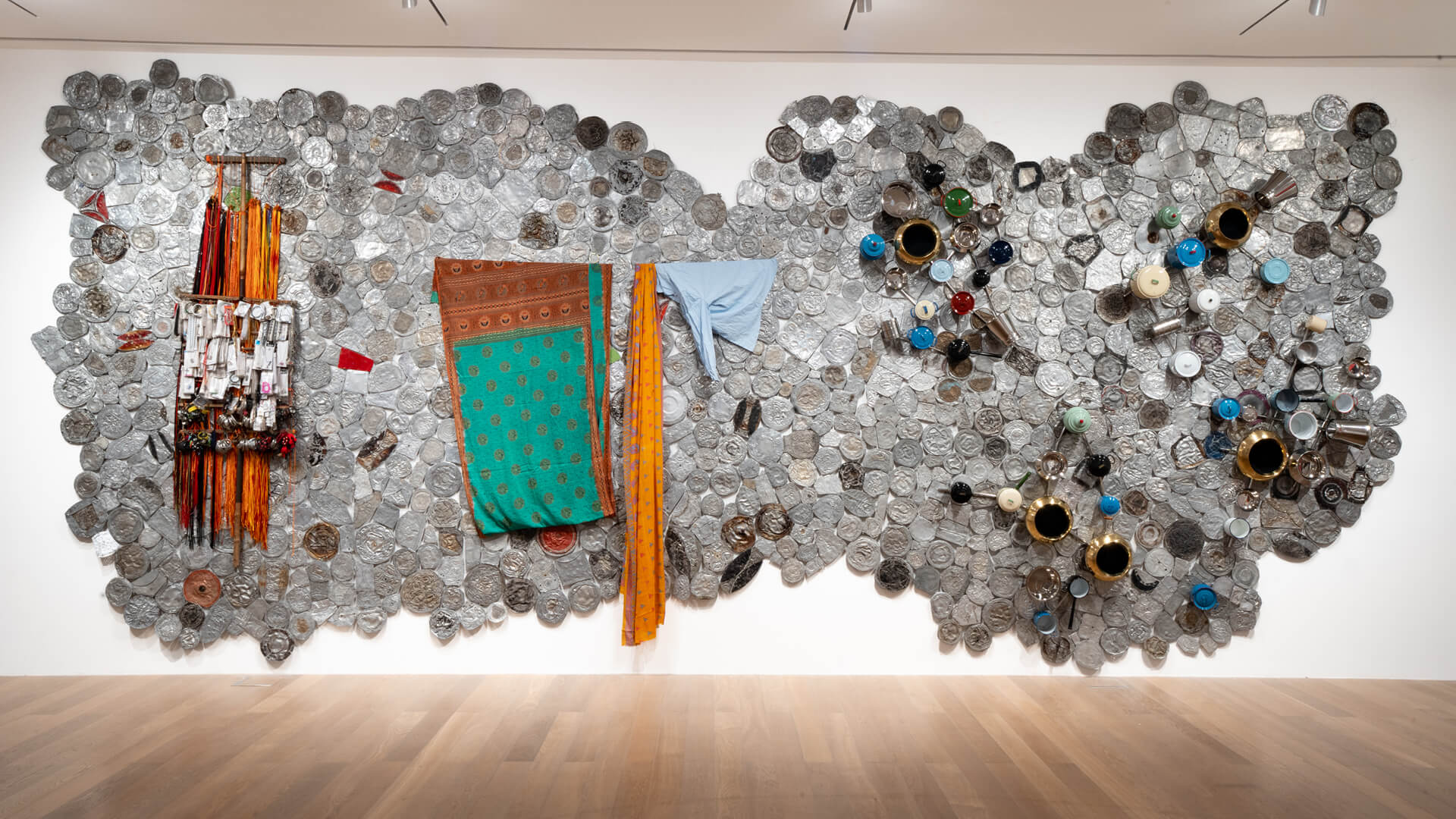
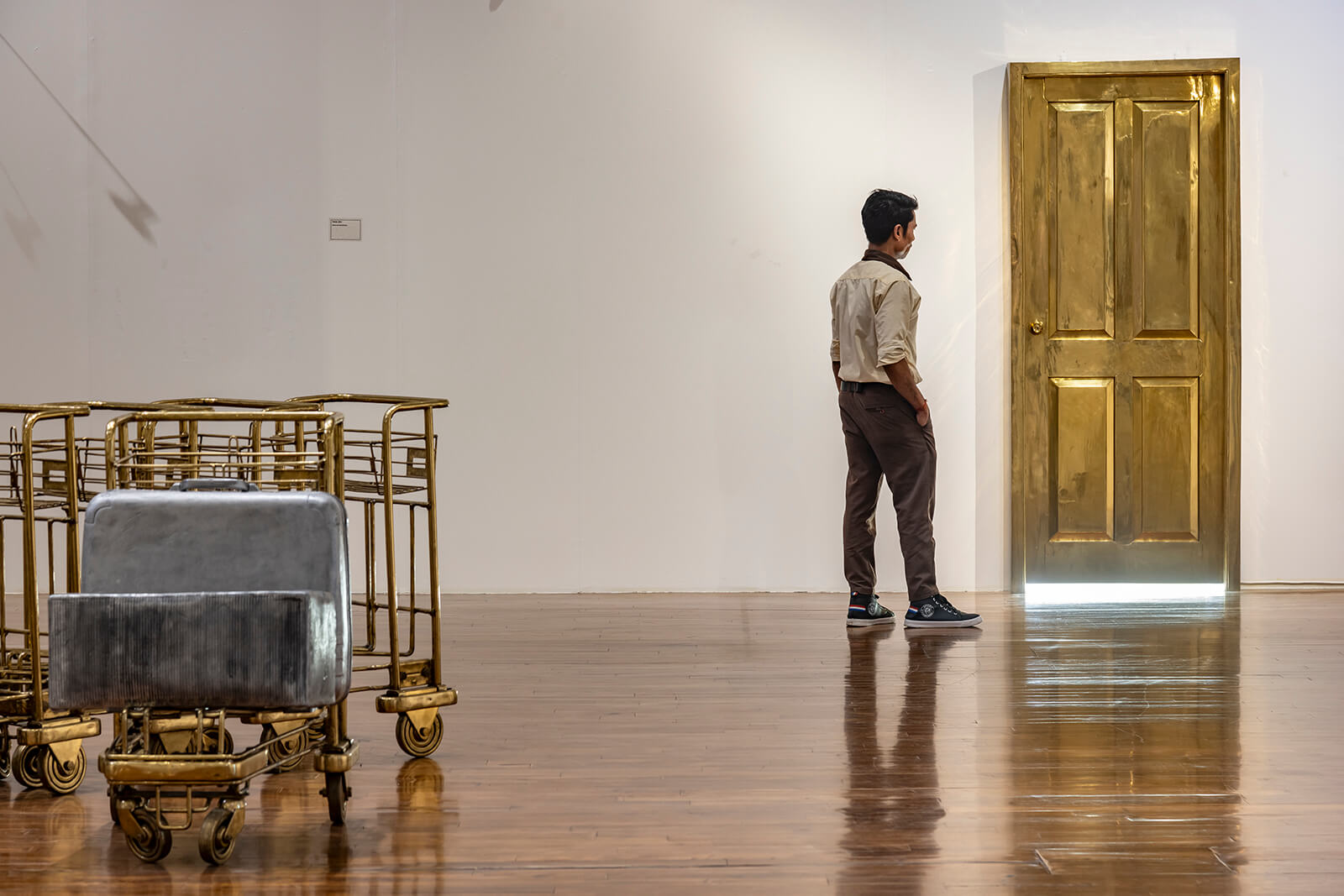
One walks through the massive double doors of the Art House and finds themselves standing in front of and looking down at School (2008), which consists of a series of brass stools and thalis laid out in rows on the gallery floor, a familiar communal eating setup. They are modelled on the exact wooden stools from Gupta’s childhood home, which he retrieved and cast in brass, preserving memory in the form of his father’s initials embedded on every seat. Rituals of cooking, serving and eating play a central role in the artist’s practice as the site where the work of community and care often occurs. On the adjacent wall of this first level is Proust Mapping (2024 – 26), a kind of tapestry made from stainless steel and aluminium cookware in various states of blackening, denting and use. “Each utensil is like a human palm. It’s a canvas of anonymous hands and labour,” Gupta tells STIR during a walkthrough of the exhibition with curator Clare Lilley. The grey landscape is contrasted with colourful pastel enamel cookware resting atop the steel base—their untarnished, colourful forms acting almost like paint. Gupta was inspired by the enamel utensils often produced in Chettinad, which are often a part of a bride’s dowry. The more exotic appearance of these utensils meant they usually functioned as markers of wealth rather than actual cookware. Through this juxtaposition, he begins his argument about value—how what we cherish and exalt is so often different, or even opposite to what we use every day—the objects that make up the background of our lives and memories.
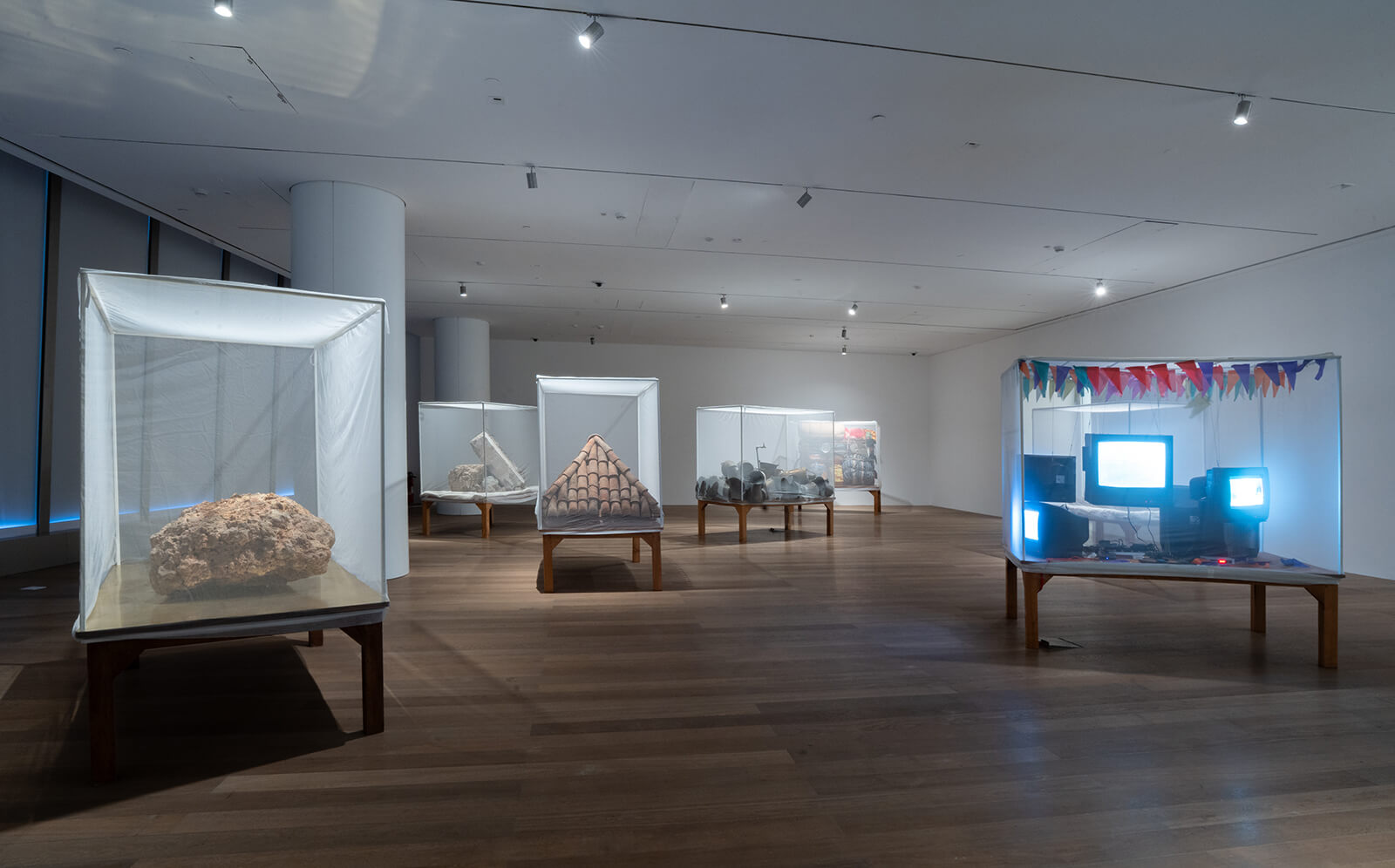
Arriving at the second level, one walks into a long, dimly lit room with nine exhibits filling the space. Each of these consists of a charpai bedframe draped with a mosquito net, playing on the appearance of museum glass showcases. Gupta says, “When I slept in the veranda as a child, I remember always feeling safe inside the mosquito net, even if my mother was inside.” One netted installation contains old, fat-backed televisions showing footage of people in transit, taken by Gupta on his travels back to his home in Bihar; another houses a segment of a terracotta-tiled roof. Others display chakkis and other traditional tools, abandoned construction materials, cow dung cakes piled high with colourful cattle collars hanging above them, while one houses a small, simple patch of green grass. Together, they form A Fistful of Sky, the installation that gives the exhibition its title. The vestiges of a rural life and vernacular practice are brought to a museum context, reframing them as contemporary art objects, allowing a new, spontaneous encounter with the familiar, even typical, that triggers memory.
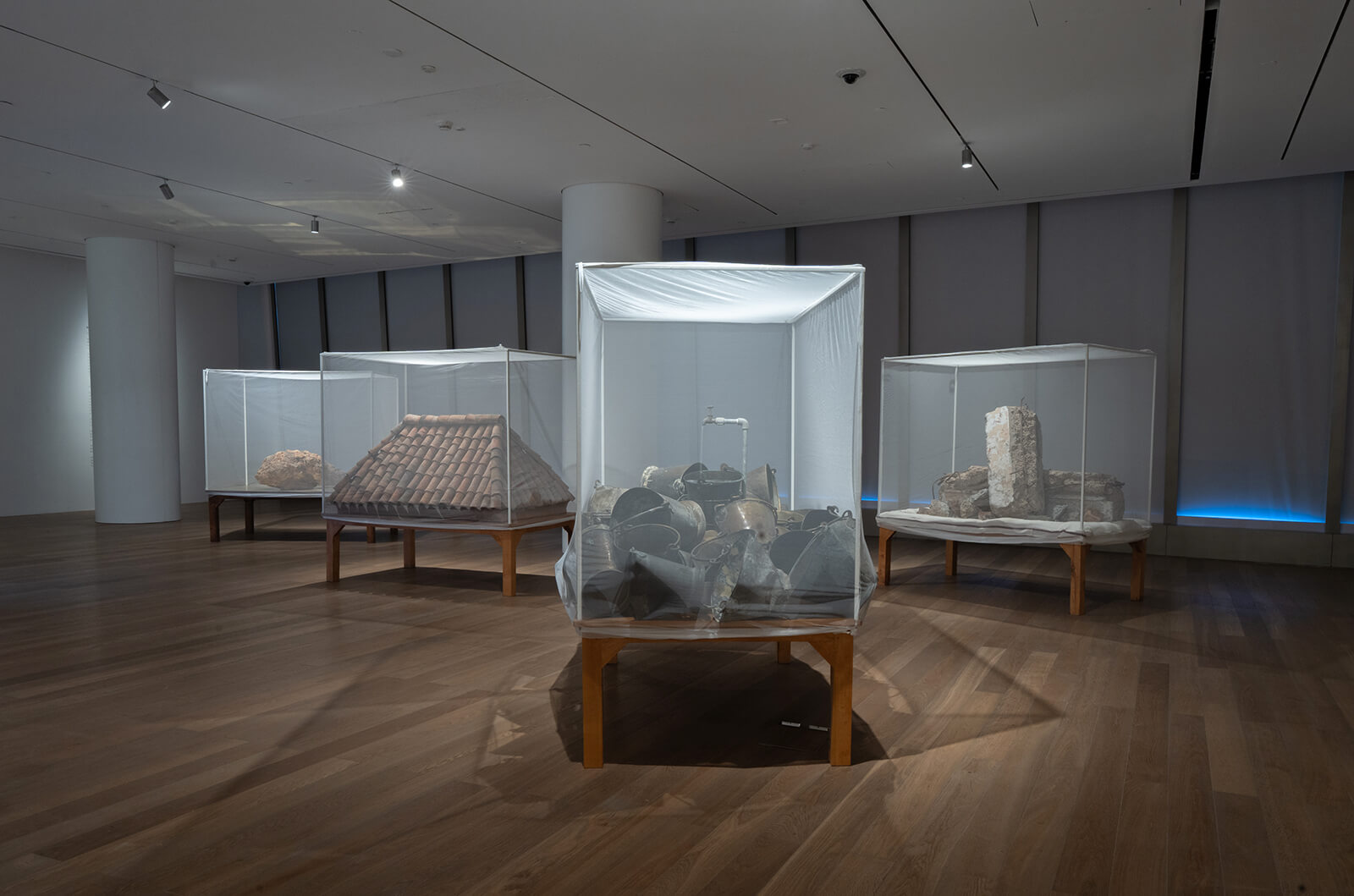
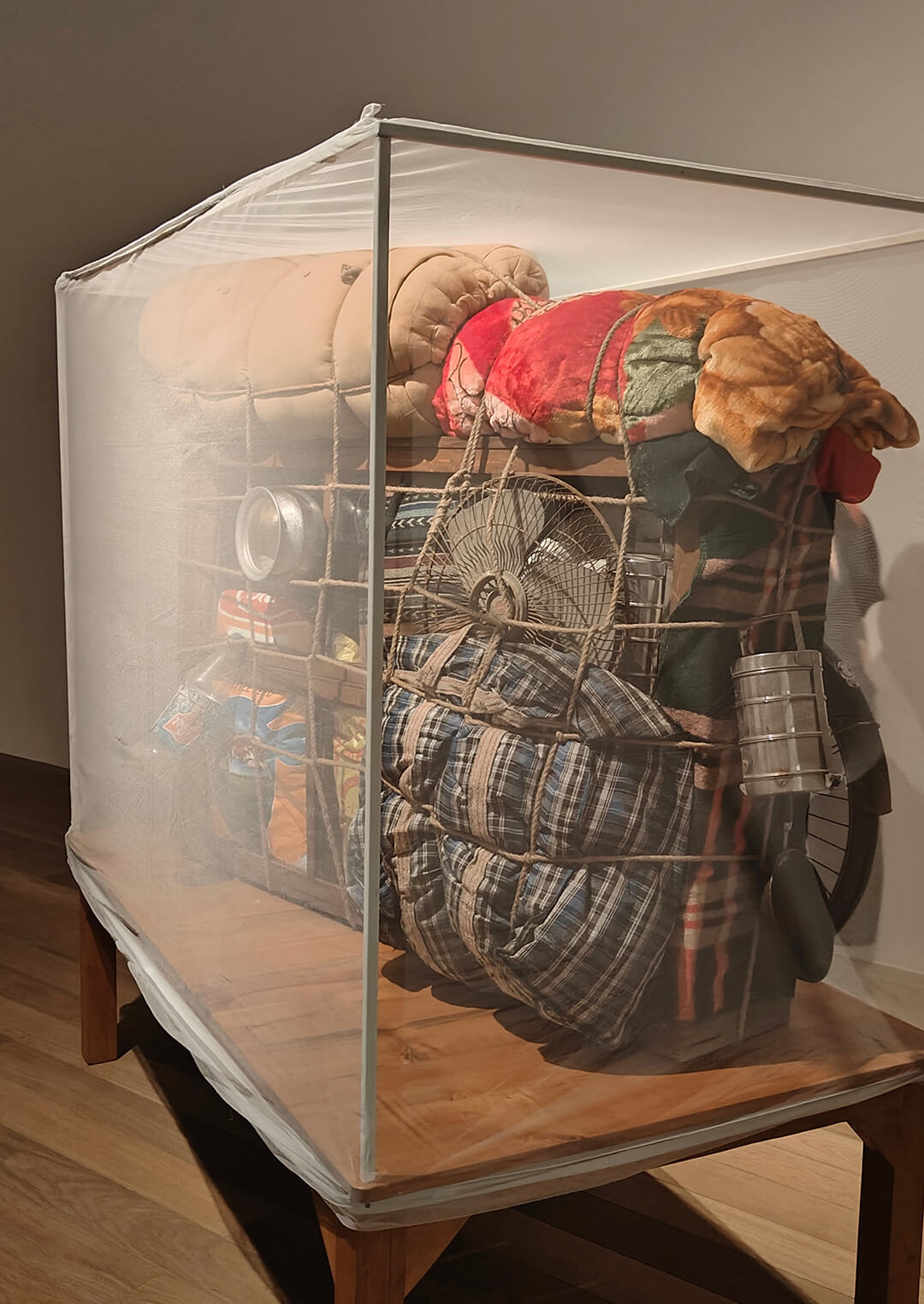
Gupta leads us towards the back of the room, turning to an installation housing a pile of steel buckets, one of them standing beneath a dripping tap whose rhythmic sounds echo through the quiet room. Here, Gupta doesn’t have to supply his own memories; he jokingly points out the universality of the persistent sound of an ever-dripping, malfunctioning tap. Even Lilley finds herself transported to a moment from her childhood in England, oceans away from Bihar. This reverie of memory is ruptured by the installation at the very back of the room—a heavily loaded migrant caravan, tightly packed with pans, cotton mattresses and plastic bottles hanging off it. This symbol of migration, of movement that aspires beyond and upwards, is paradoxically a requisite part of the imagery of the rural, something Gupta, whose work constantly highlights migrant labour, is sensitive to. The back of the installation sees everything perched precariously on a bicycle, signifying movement but acknowledging the heavy load of the journey.
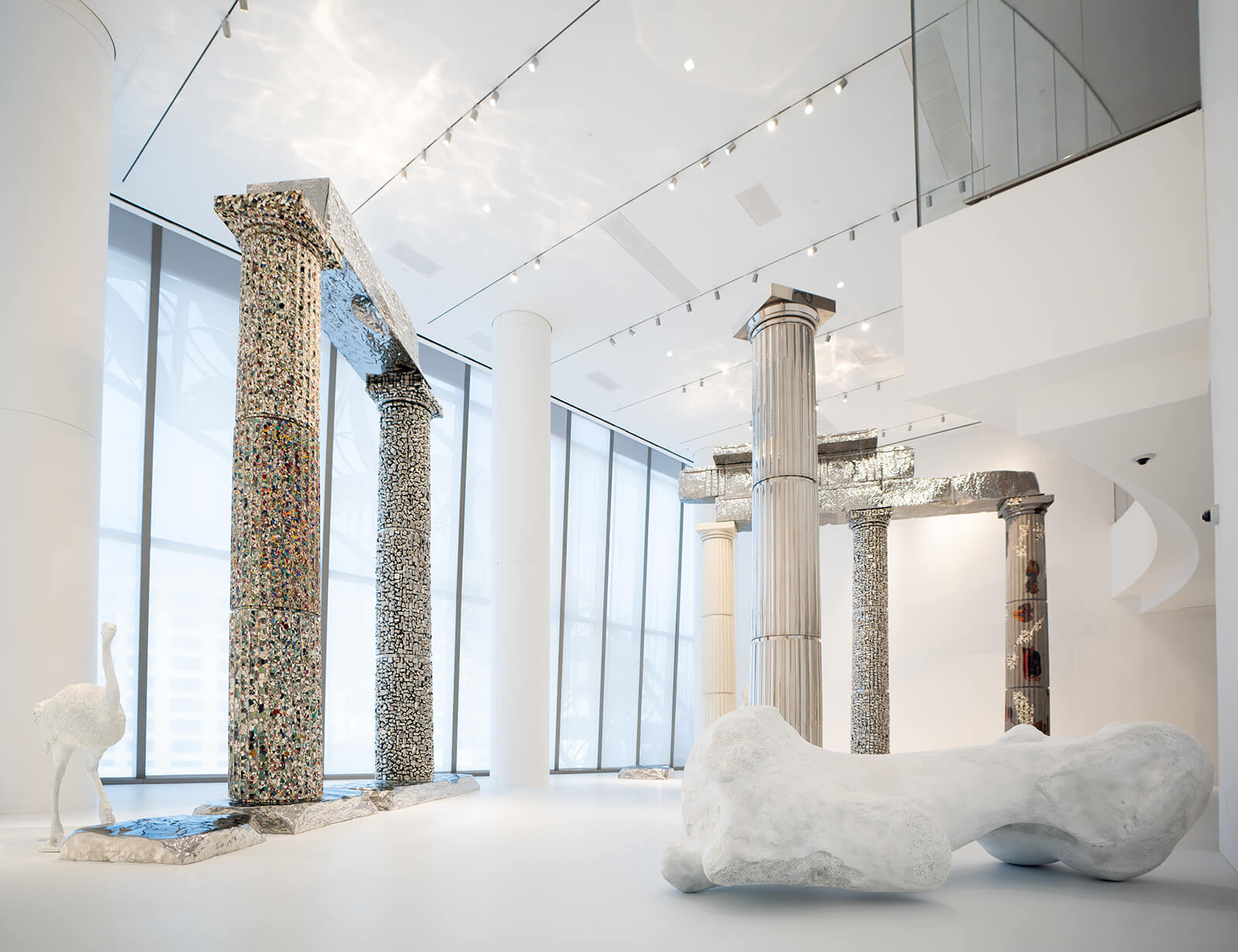
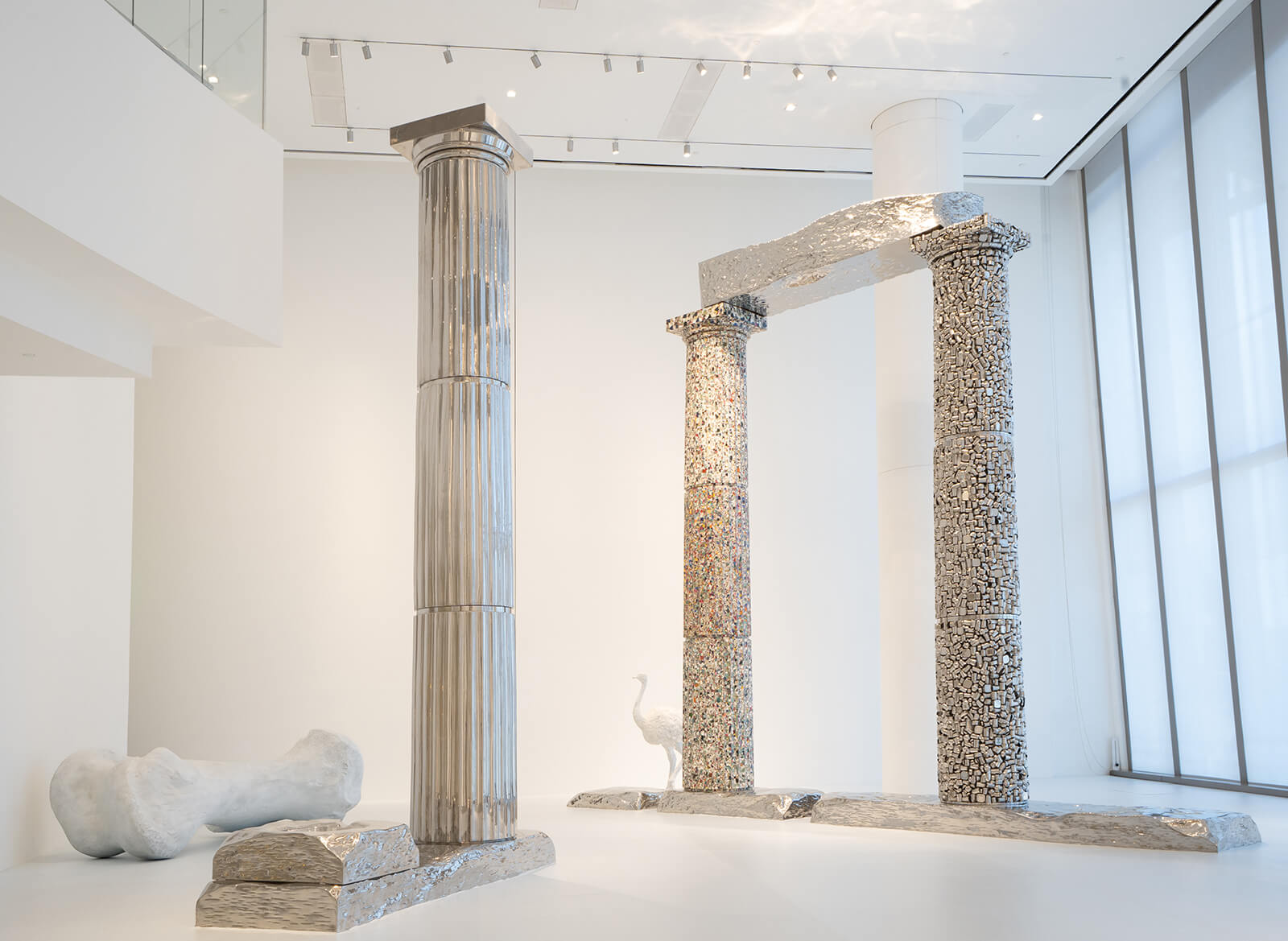
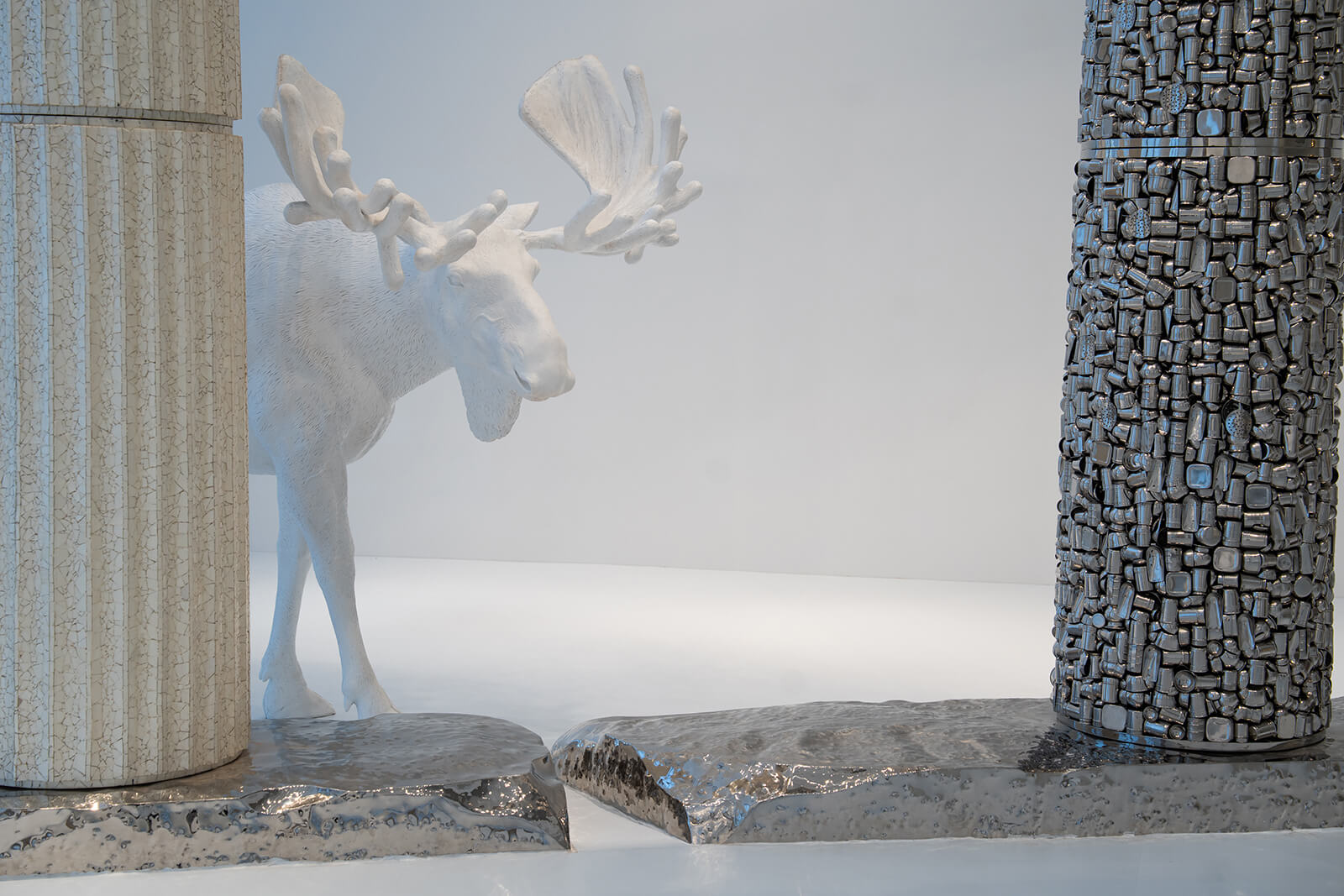
Another staircase upwards, away from the dim cocoon of the second floor, one arrives at the exhibition’s third section on deep time. Bright, white light explodes into view as the door opens onto a massive room constructed with white walls and ceilings stretching endlessly upward and outward, and a white constructed floor creating a liminal, dreamlike atmosphere. In complete contrast to the earthy, specific, grounded installations of previous rooms, Gupta moves into the realm of fantasy, dream and surrealism. Classical ionic columns stretch 7.5 metres upward, dwarfing viewers, rendered in classic stone, beaten silver metal, concrete, broken ceramics and bartans. Peering out from around these giant structures are animals—realistic, but strange in their coexistence and presence here—an ostrich, a moose, a giant rhinoceros bone. In this white room, differences between times and spaces collapse as architectural traditions, materials and fauna come together in an anachronistic, collaged ruin.
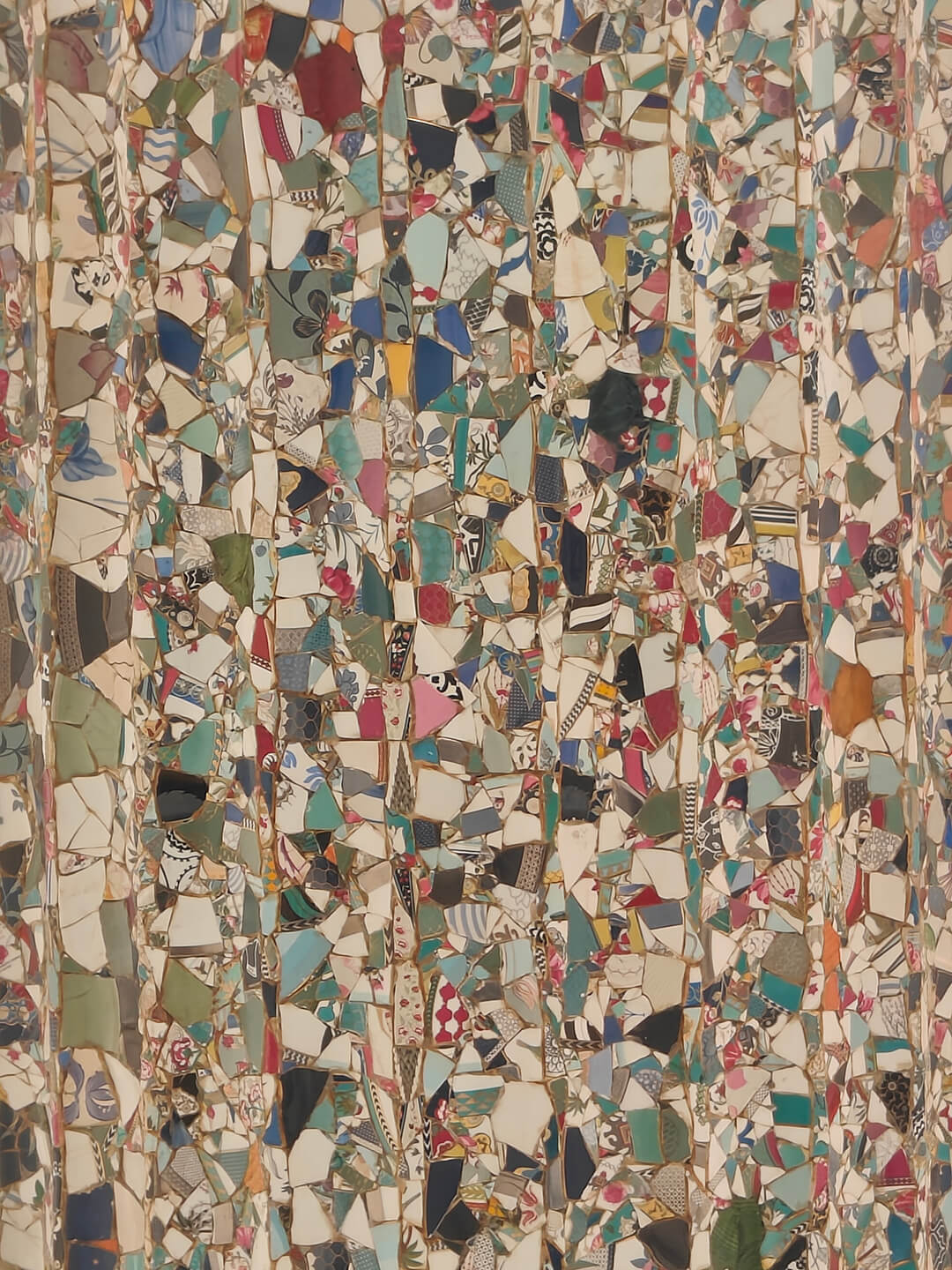
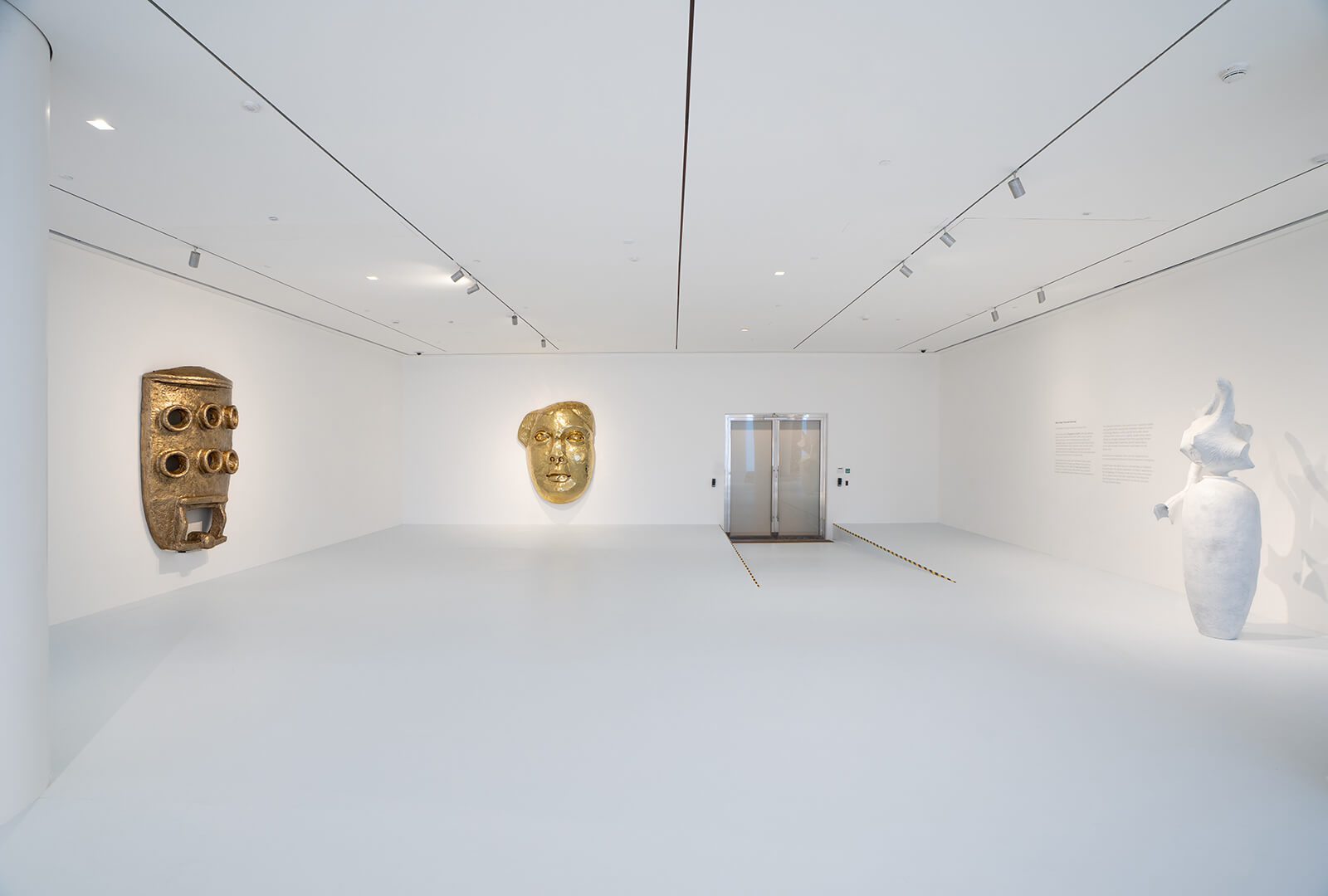
Gupta talks about the work behind the 10-year-long mixed media undertaking, saying, “[The hammered metal columns] are made through ‘chasing’ (a metalwork technique where metal is hammered from the reverse side to make a relief pattern), a technique only used in China and India. It’s meant to mimic the texture of the stone…[The concrete pillar] has a printed sari embedded in it…[For the mosaic column], one of my friends has a factory that manufactures plates, etc. I knew there would be broken plates and ceramic material, so I asked for their waste to construct this.” The varied materials come together in idealised classical forms, creating an image of modern civilisation through the physical and consumer goods it generates, and reimagining them in the language of a future archaeology. Gold masks recall more ancient, African art and round out the installation, Kingdom of the Earth (2016 – 26), expanding the timescale we typically think in, just as the white space expands the felt experience of space.
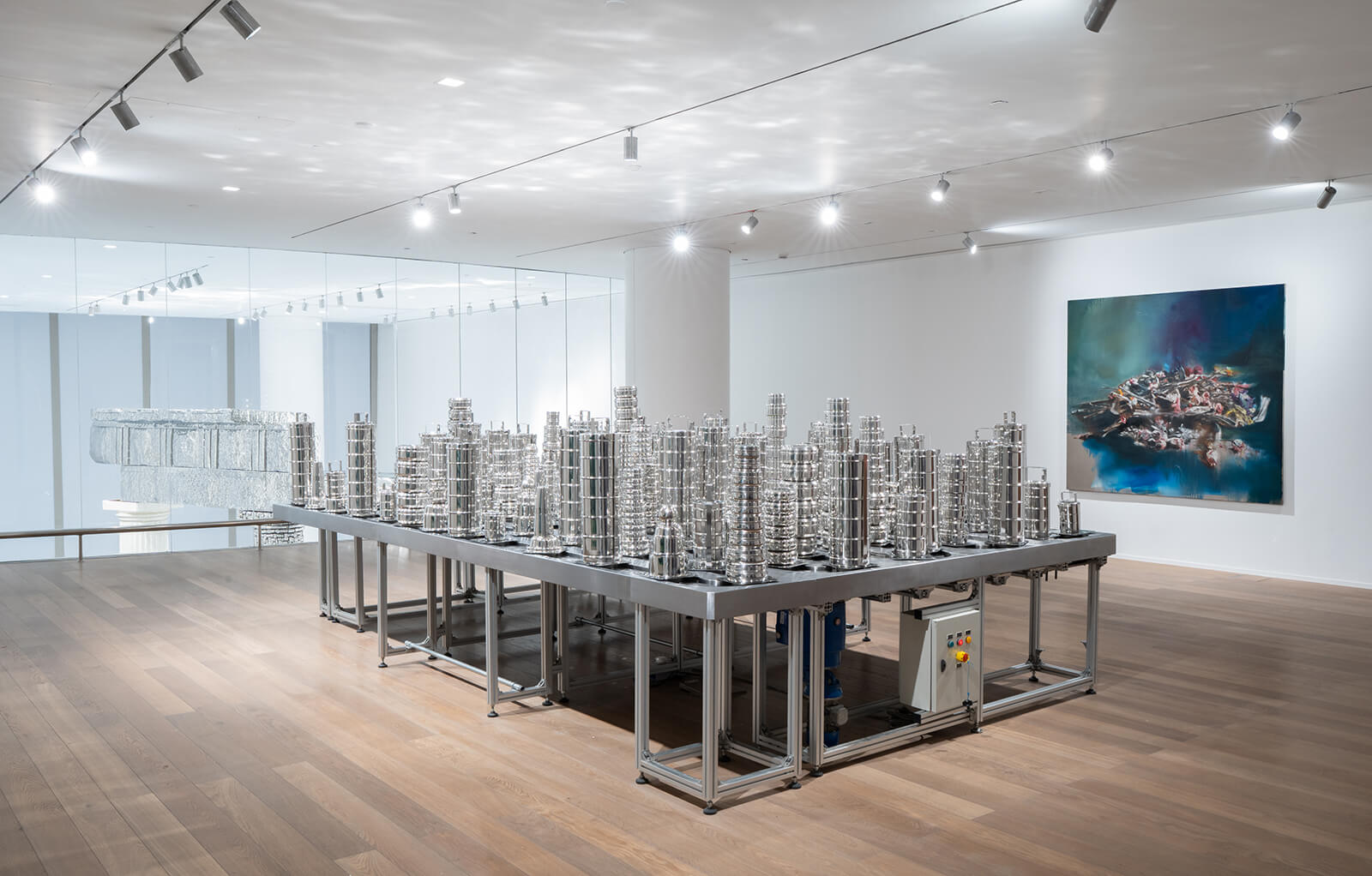
The final leg of the exhibition unfolds in a small room just above the previous one, a glass window overlooking the columns. “The difference in levels is similar to that of the Roman ruins that are still found metres below street level in Britain. This creates the perspective of looking down at an ancient, sunken ruin,” Lilley explains. The room itself features a large metal installation with skyscrapers of dabbas moving circuitously, on conveyor belts that Gupta gleefully compares to those seen in some sushi restaurants. Faith Matters (2010 – 17) pays homage to the iconic dabbas and skyline, which immediately recalls Mumbai’s urban rat race, powered equally by the daily delivered food and the aspirations of millions of citizens, many of them migrants. It also shows the role food plays in migration, often travelling further and faster than the people who make and eat it. The dynamic installation is juxtaposed with a series of recent vanitas paintings—muted canvases with wilting flowers—that are a return to form for Gupta, who was trained as a painter before becoming widely known for his sculptures. The exhibition winds up its exploration of time on a sobering memento mori pressing in on the dreams and daily lives of all the people who long for a fistful of sky.
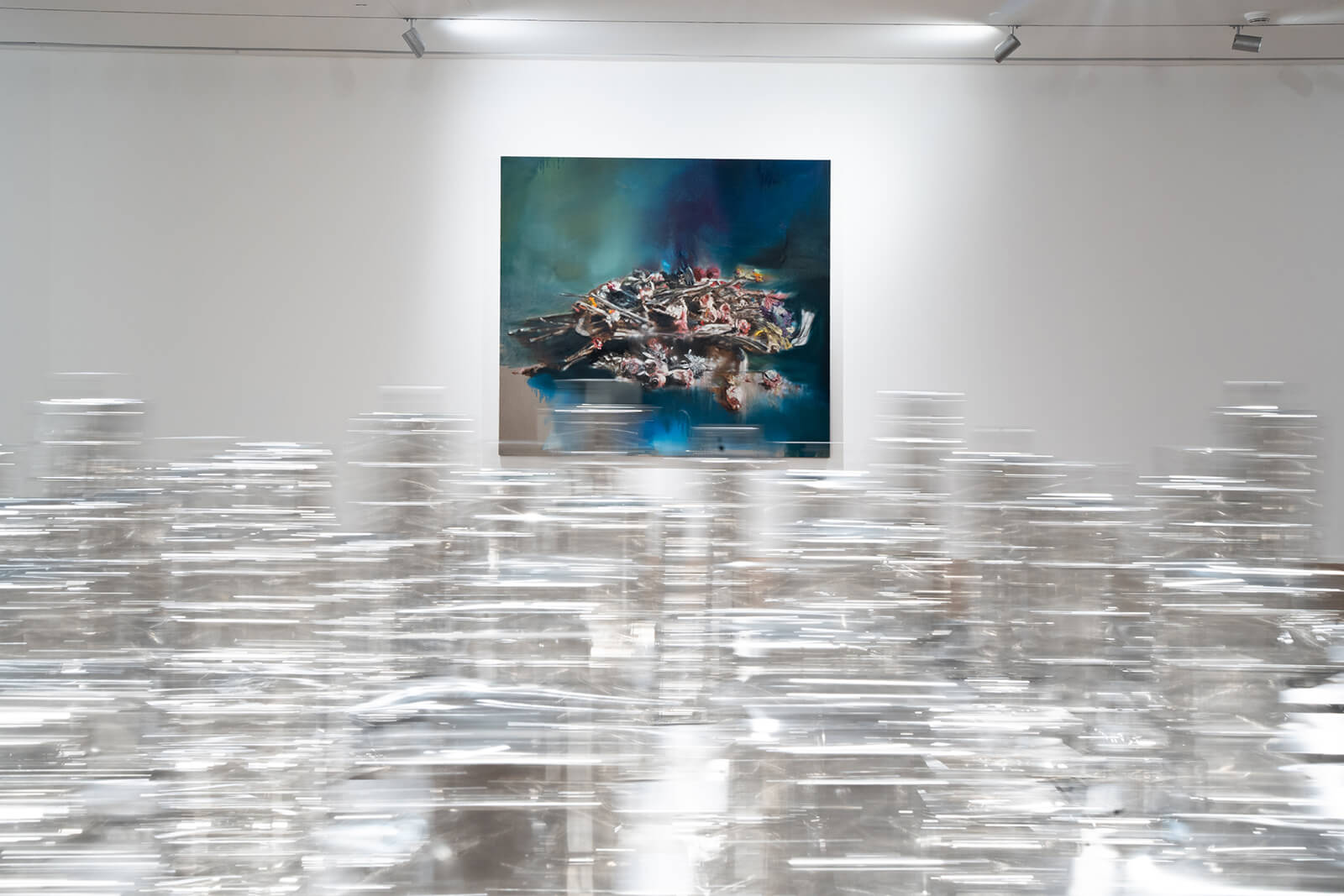
This comprehensive exhibition unfolds like a narrative—moving from early lived experiences to memories to a future history to the world as it actually exists and its temporary, fleeting nature. Gupta takes the overlooked and the undisplayed and reframes them, staging encounters of the Proustian kind, reminding viewers of their unconscious, their past, of the people and things around them that they ignore, of the labour concealed in everyday objects. A Fistful of Sky is a study of aspiration and of who and what it seeks to leave behind. Gupta’s unwavering focus on labour, migration and domesticity animates the materials he puts together, creating a portrait of the hands that make, behind the scenes.
‘A Fistful of Sky’ will be on view at the Art House at NMACC from 3 April to 17 May, 2026.

by Srishti Ojha Oct 21, 2026
Increasingly, artists, filmmakers and activists are turning to VR to create more personal, tangible accounts of the climate emergency and its impact on vulnerable communities.
by Mirra Lynn Oct 20, 2026
The Indian artist paints the old wadas of central Pune, capturing the traces of everyday life that cling to these structures, battered by time but unbowed.
by Anmol Ahuja Oct 15, 2026
How do heaps of souvenirs and relics with racist Aboriginal motifs and features become art? MCA Sydney’s winter showcase—the artist’s largest to date—beckons a possibility.
by Vandana Kalra Oct 14, 2026
With his latest exhibition as a point of departure, the modernist discusses his decades-long practice, the spontaneity of drawing and the social responsibility of artists.

make your fridays matter with a well-read weekend
Enter your details to sign in
Don’t have an account?
Sign upOr you can sign in with
a single account for all
STIR platforms
All your bookmarks will be available across all your devices.
Stay STIRred
Already have an account?
Sign inOr you can sign up with
Verification link sent to check your inbox or spam folder to complete sign up process
Tap on things that interests you.
Select the Conversation Category you would like to watch
Please enter your details and click submit.
Enter the 6-digit code sent at


Involuntary memory and invisible labour underpin Subodh Gupta’s A Fistful of Sky
by Srishti Ojha | Published on : Apr 20, 2026


 Sign in with Google
 Sign in with email
What do you think?