Architecture08 mins. read
From obsidian to architecture: Studio Ossidiana on transformation and memory
by Aarthi MohanFeb 19, 2026



by Bansari PaghdarPublished on : Jan 12, 2026
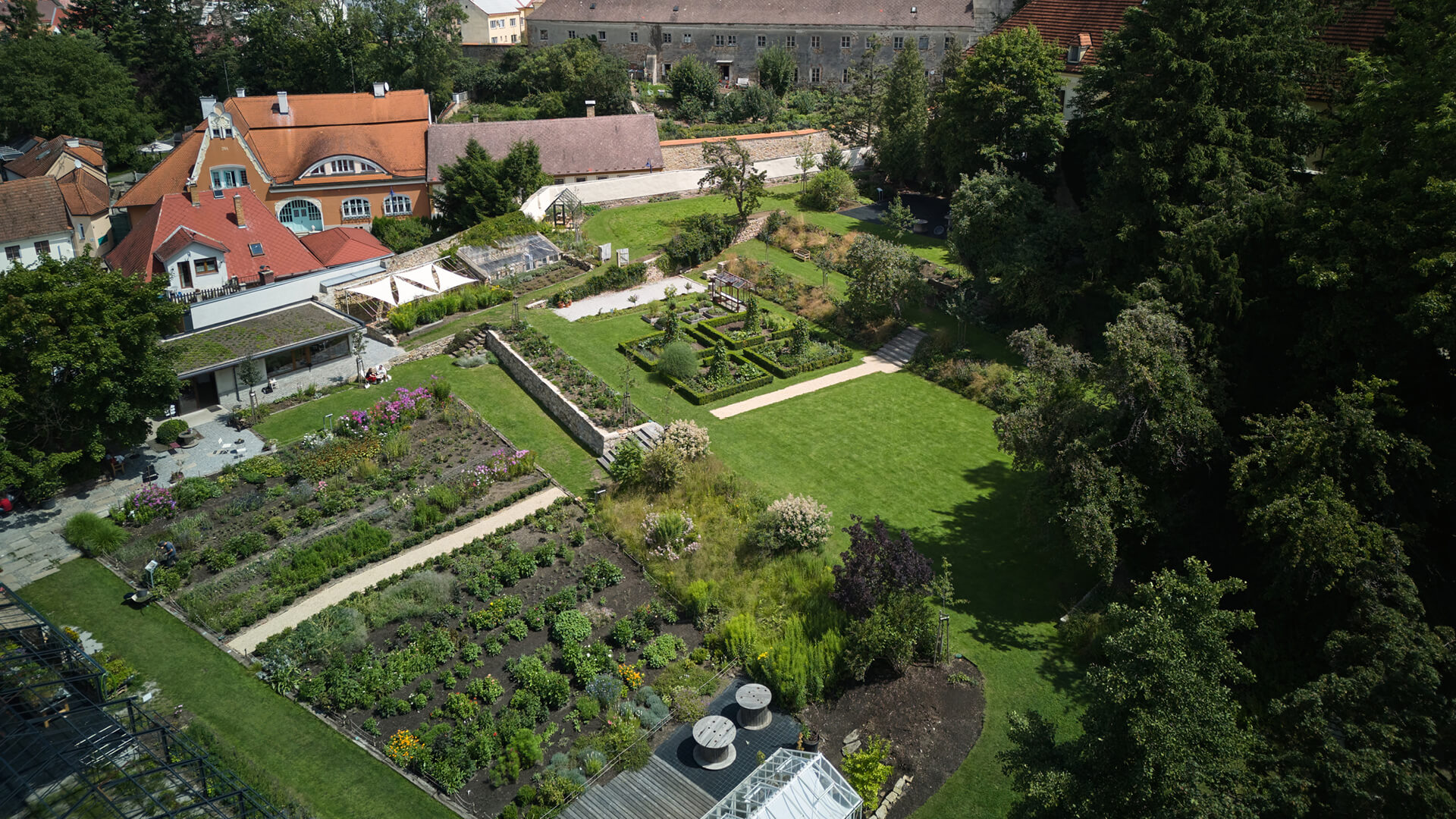
“Kraffer Garden is not a passive space for walks, but a living organism,” landscape architecture practice Atelier Za Mák tells STIR. Located in Jindřichův Hradec, Czech Republic, the garden complex has a story dating back to the 18th century. Originally a Baroque palace garden, it was eventually separated from the palace and sold after a major fire. For over a century, the Kraffer family operated the site as a horticultural nursery, until significant alterations were made in the 1950s. The nursery and its buildings gradually became a brownfield, partly cleared at the turn of the 2000s. In 2021, a large-scale renewal of the garden began when the abandoned nursery was transformed by the landscape architects into a community space where the craft of horticulture met local culture and socio-cultural narratives.
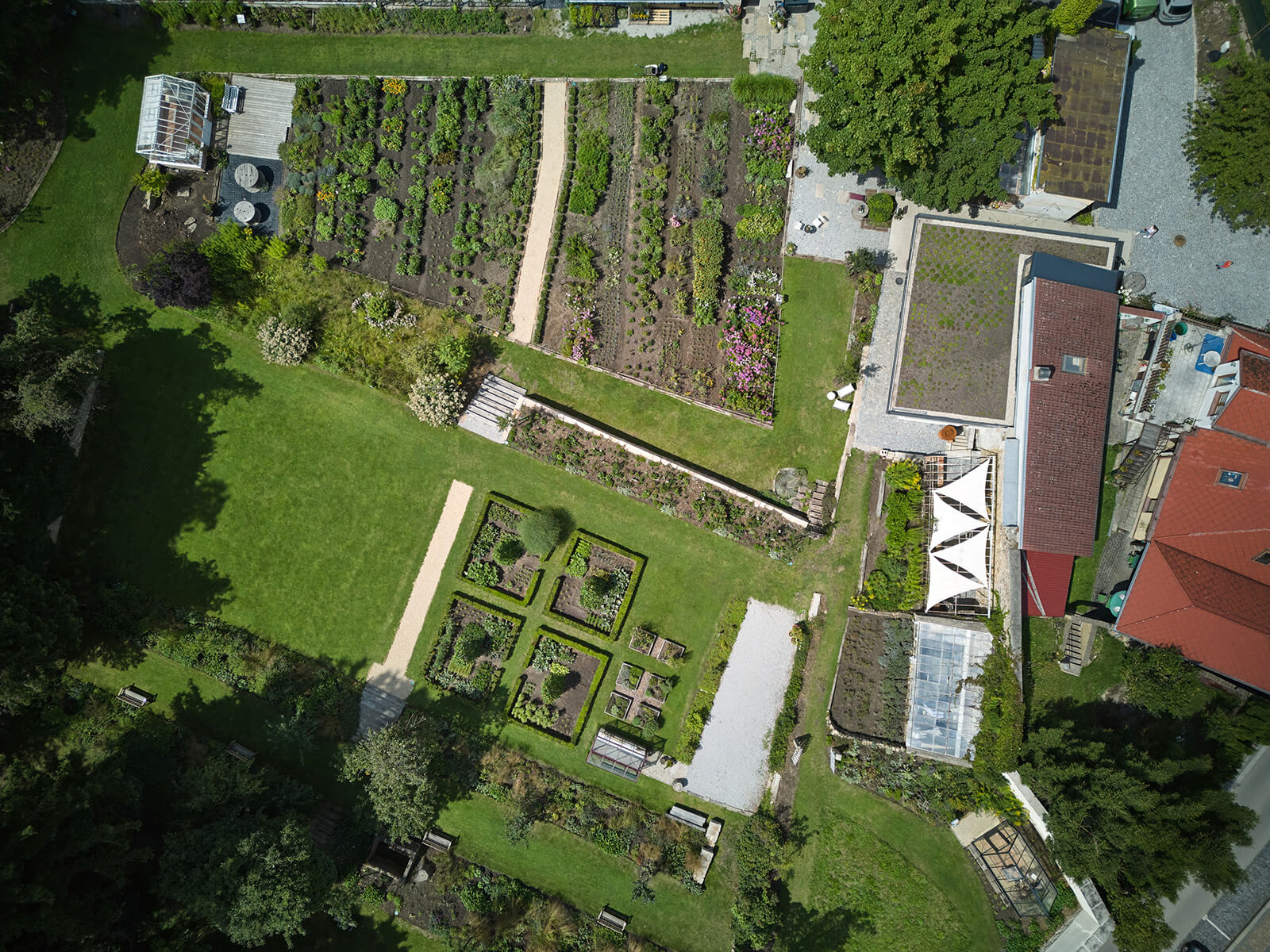
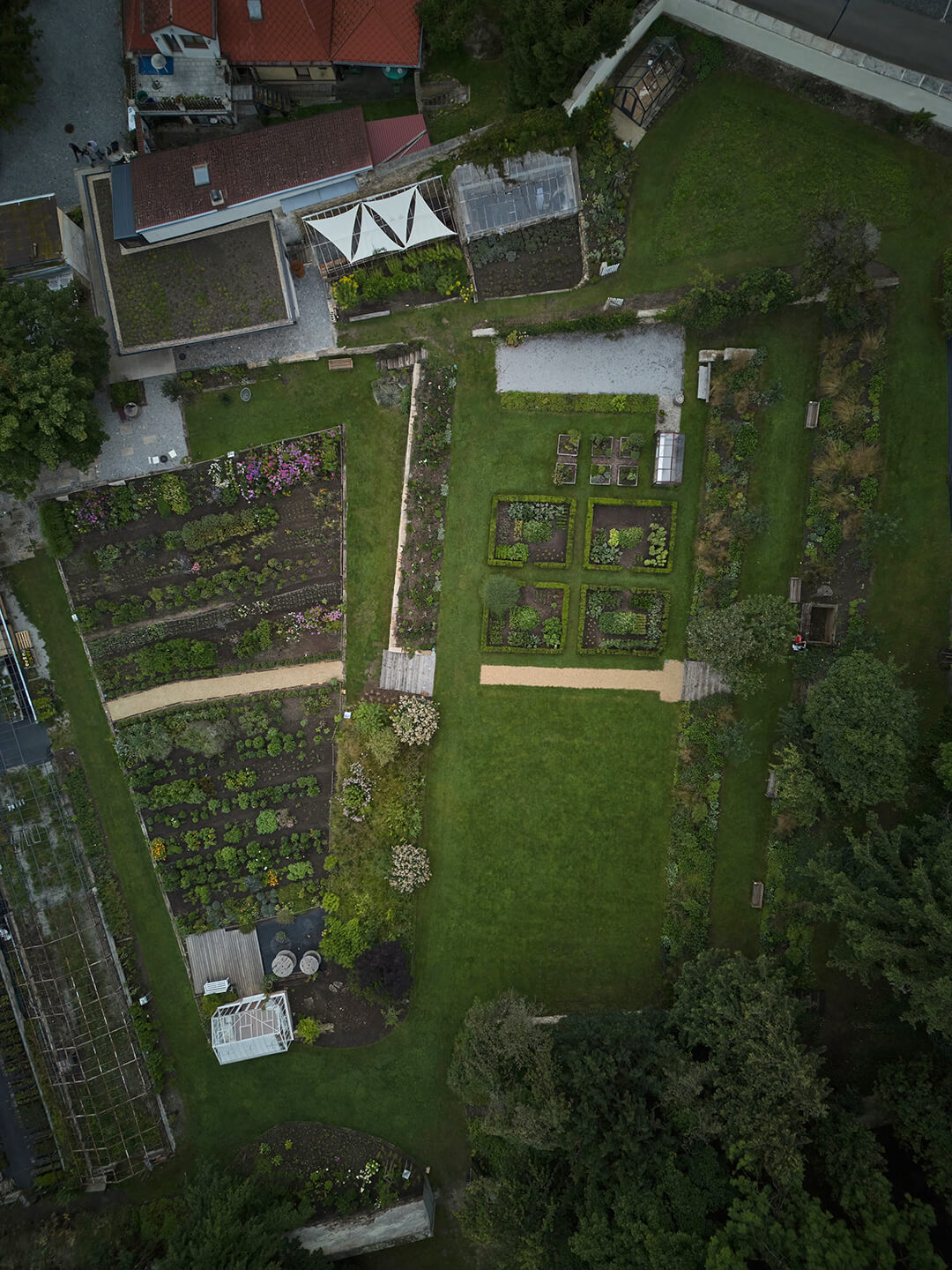
Built on the footprint of a Baroque garden, the intervention unfolds as ‘a vivid performance’, as per the design team. It draws on a 200-year-old terrain configuration which is adapted to contemporary functions, resulting in an adaptable space for the cultivation of culture, leisure and landscape. “In Kraffer Garden, we approached the tension between baroque geometry and natural wilderness as an opportunity, not a problem. Our design language is the layering of individual historical traces on top of each other,” the landscape architects explain. Preserving the basic geometric shapes of the original garden and using it as a structural grid helped with the legibility and orientation of the garden, while introducing new vegetation to this formal structure broke the predictability of the layout. The result, per the design team, was a dynamic dialogue: a formal order that provided a framework and a sense of ecological spontaneity that filled the garden with new life and welcomed change over time.
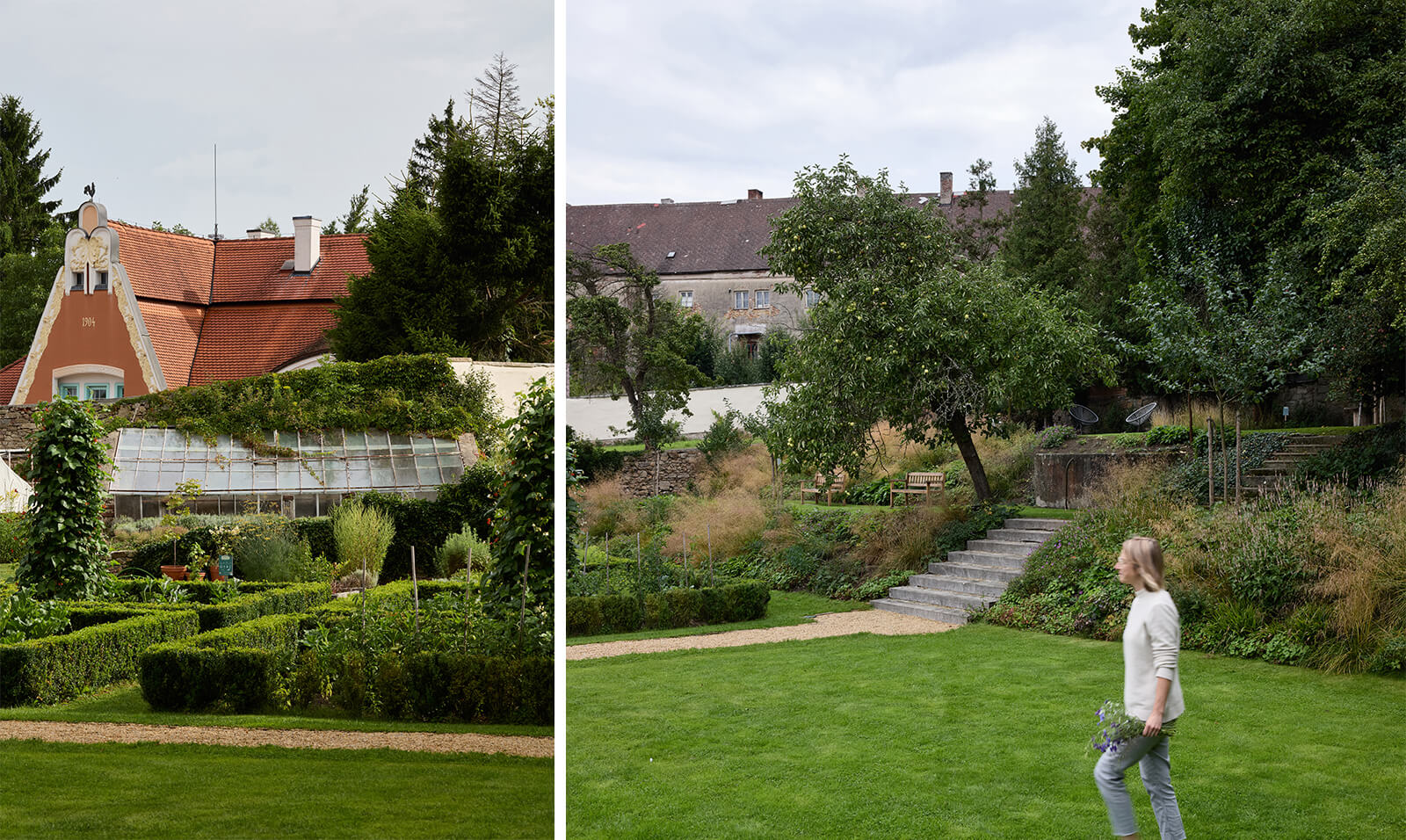
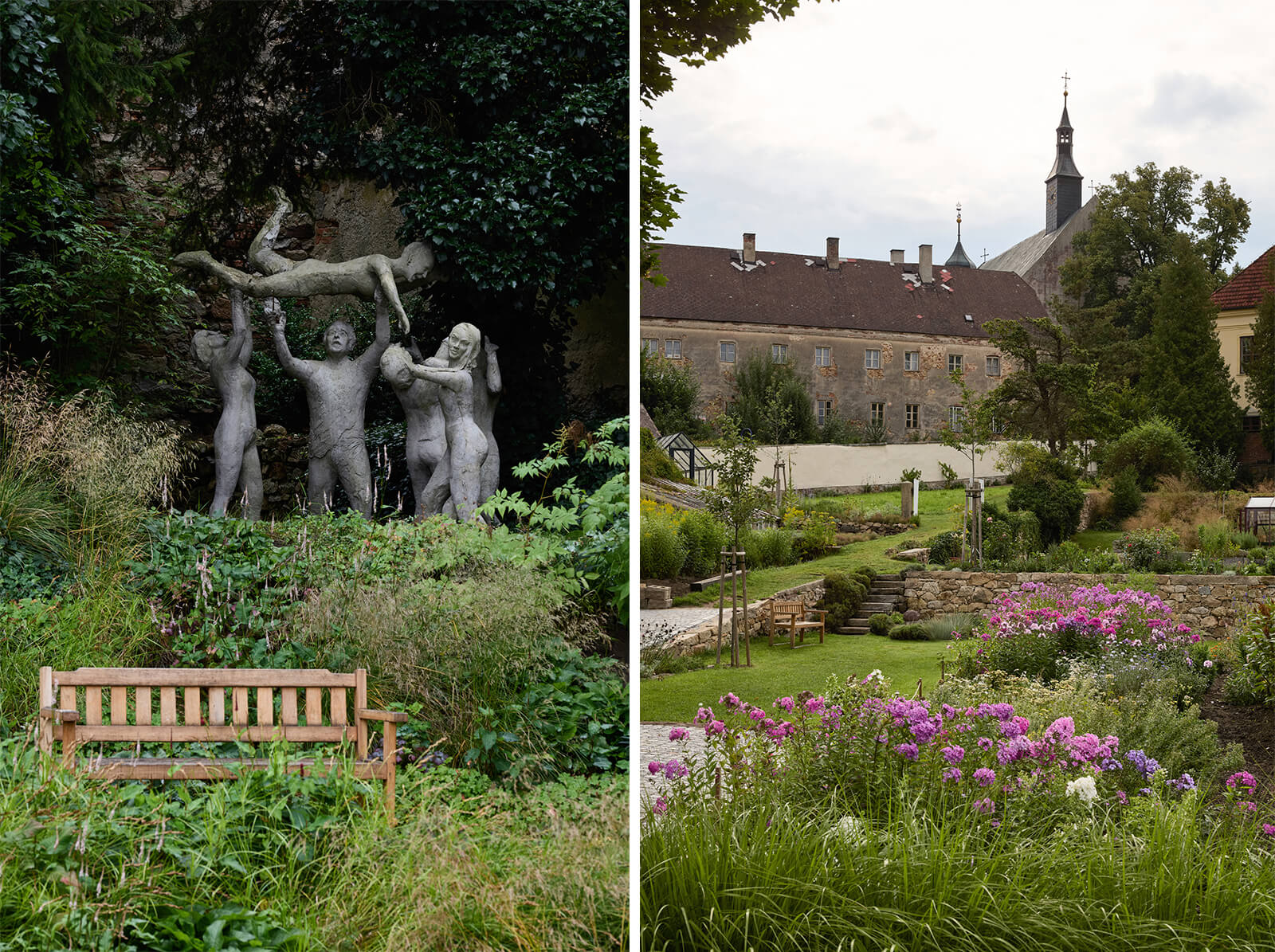
“Unlike traditional historic gardens or ordinary public parks, visitors here experience active participation, variability of functions and a living experience. The space functions as a gardening and floristry workshop, where people can observe and take part in real gardening work. The garden is constantly physically changing—it is both a productive horticultural space and a venue for various cultural events at the same time. The scent of flowers, the texture of plants, the sounds of work in the garden—this is an authentic experience, not just an aesthetic backdrop,” reveals the practice.
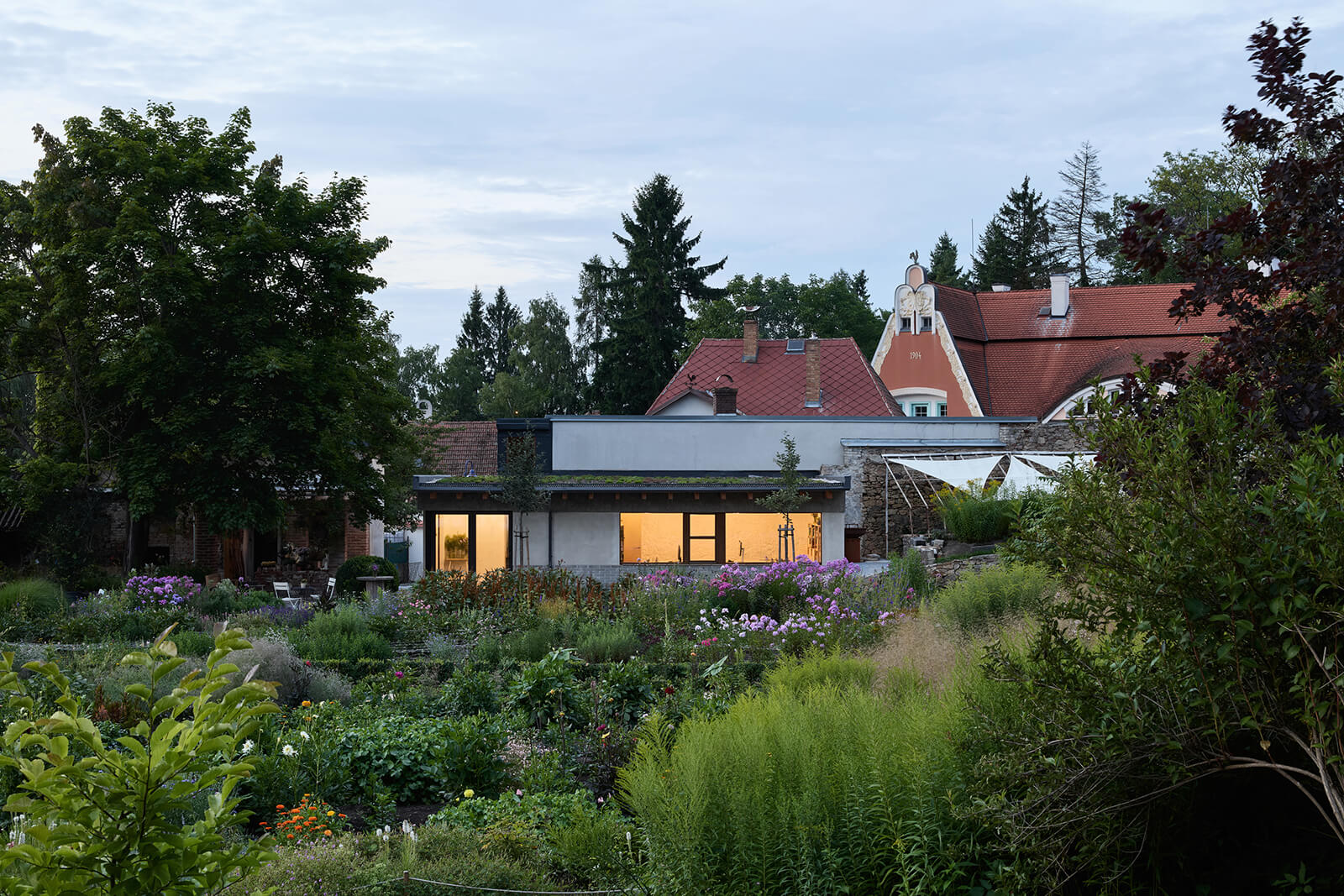
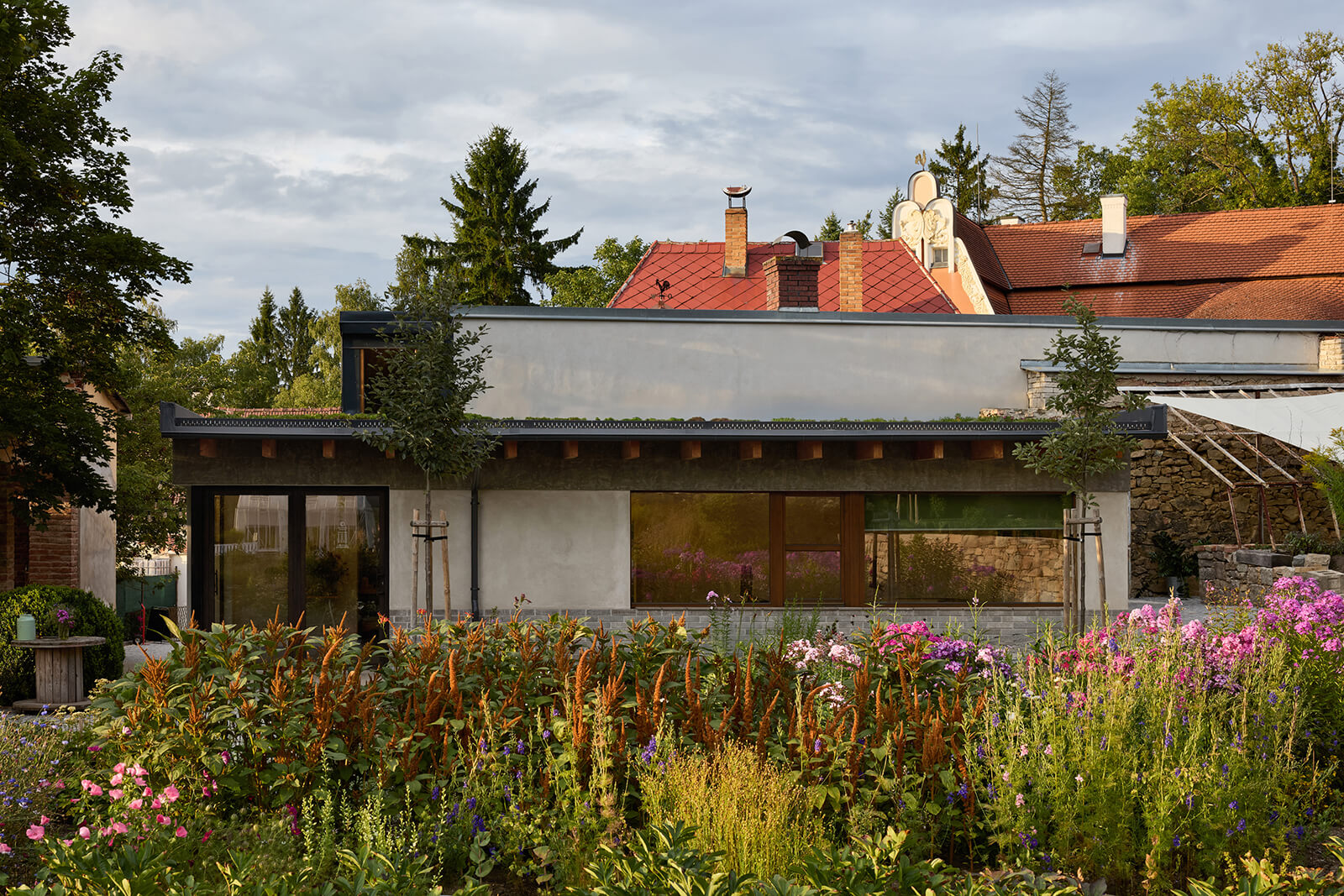
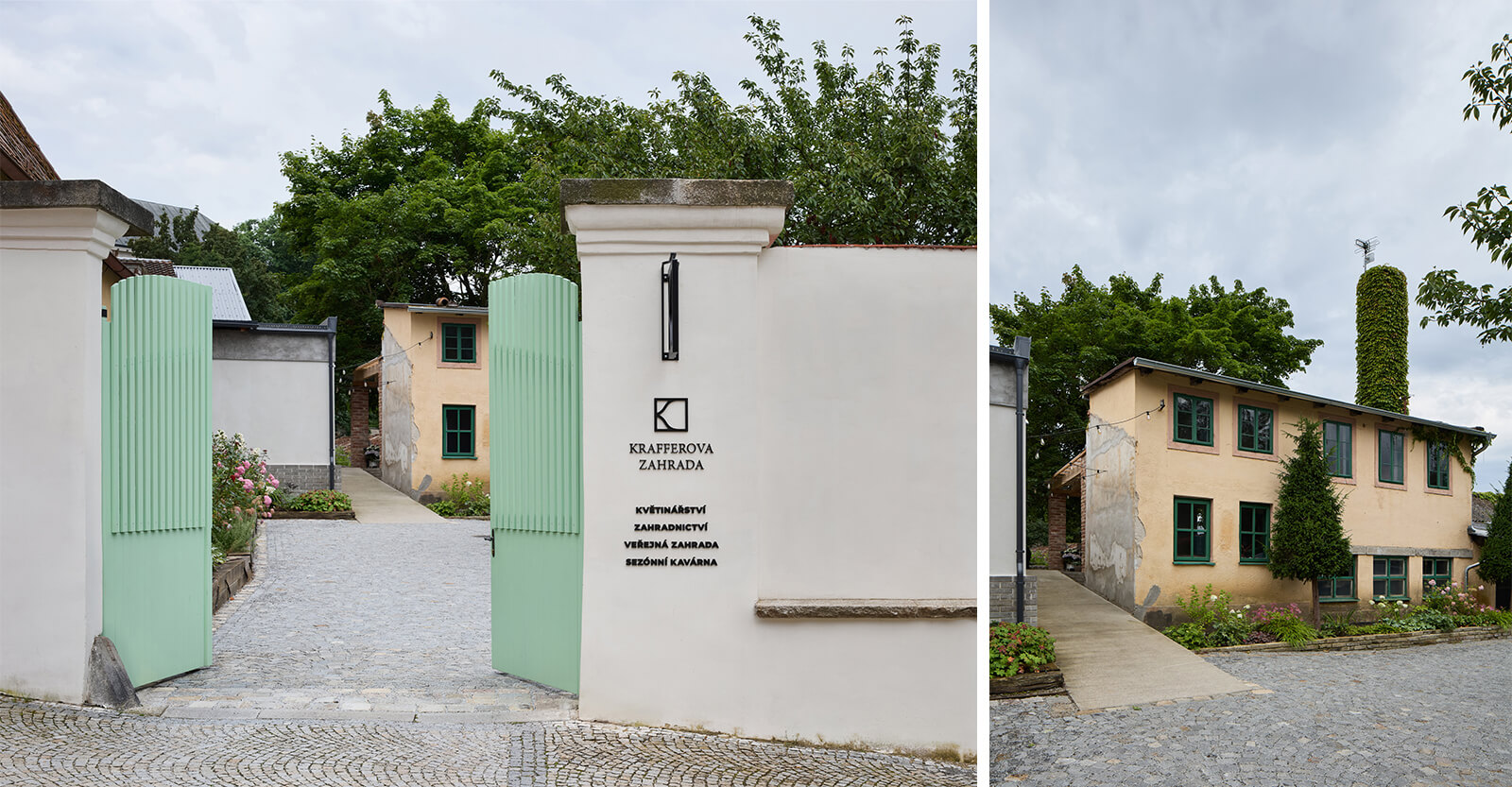
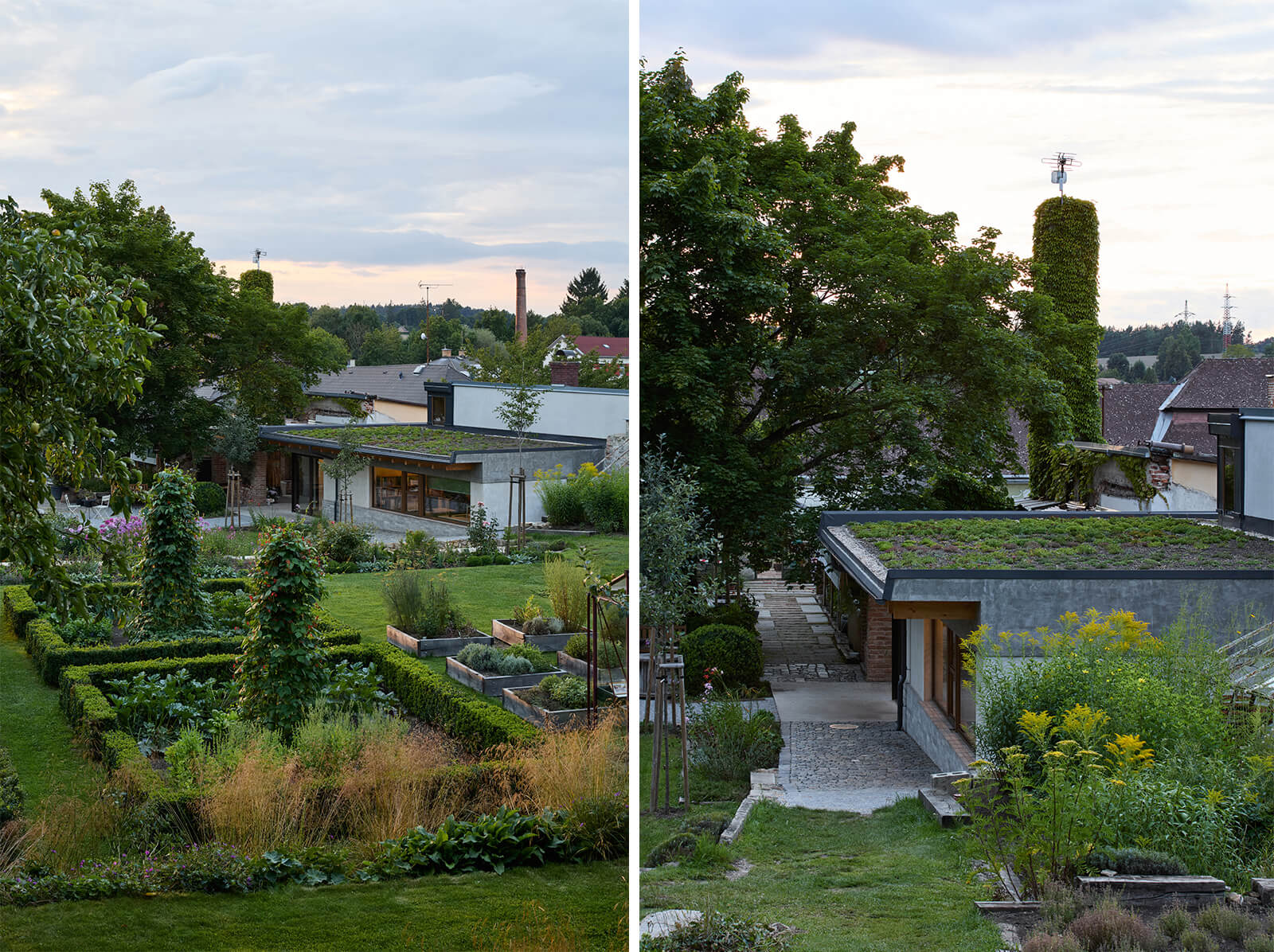
With the intent of opening the garden to the public, Matěj Šebek architekti’s architectural intervention is placed on the northeast edge of the garden. Splitting the warehouse and greenhouse complex into two parts, the volumes open a doorway to the garden through a ramp. Replacing the dilapidated buildings, the extension adjoins the original Baroque enclosure wall and creates a new cultural facility, a flower shop and a landscape architecture studio, blending in with the original greenhouses and the overall context of the terraced garden.
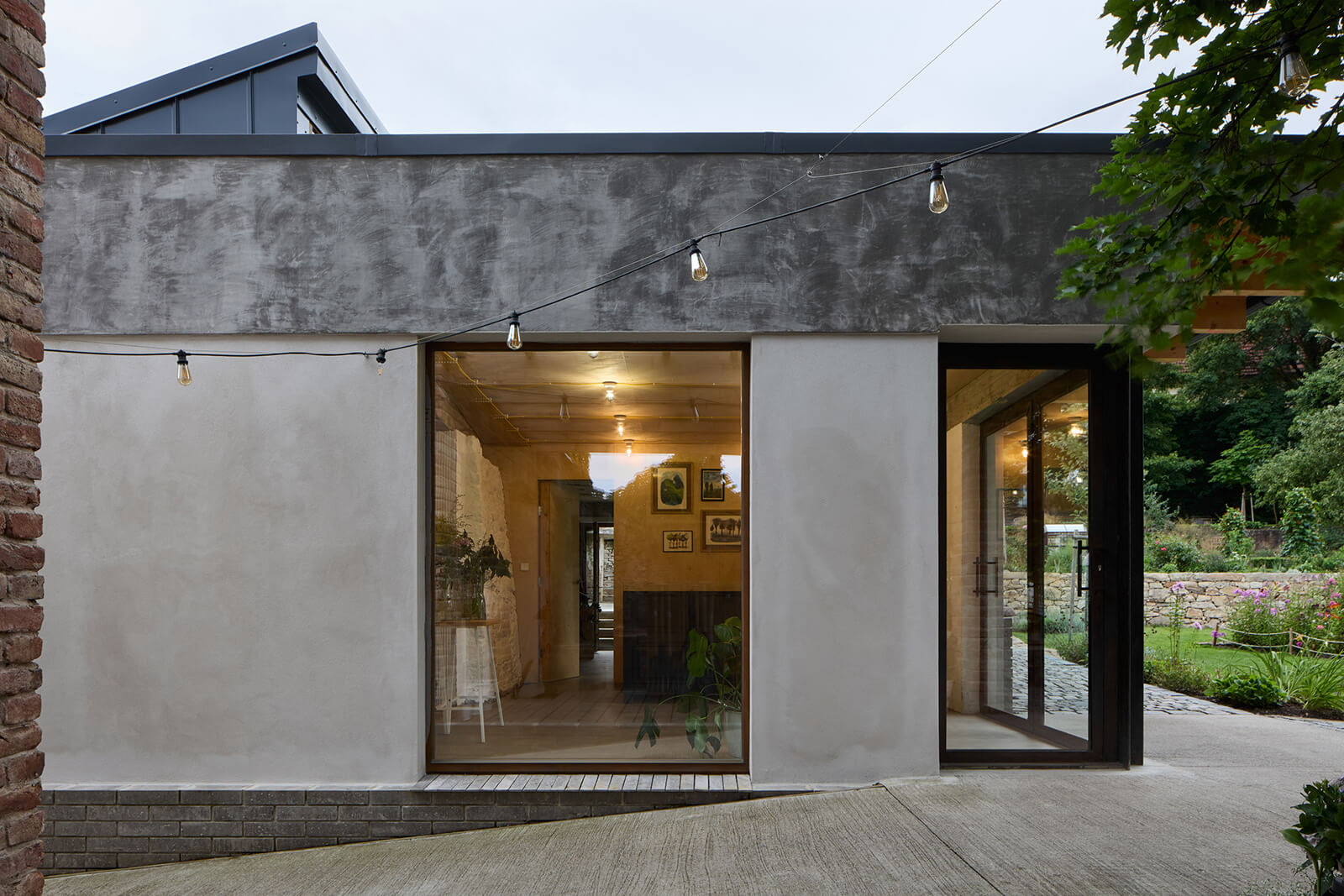
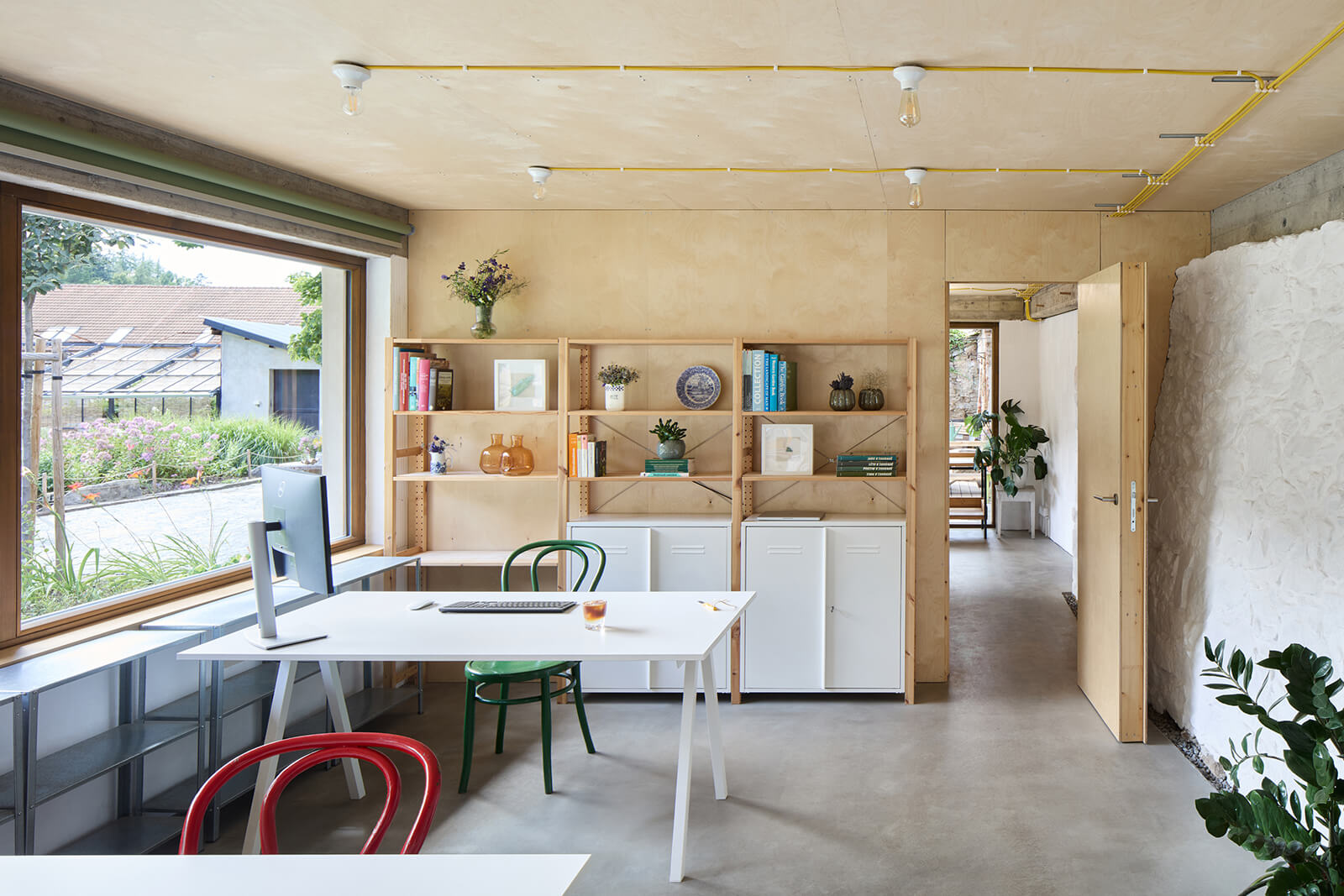
“The gradual restoration respects historical layers—from the baroque garden, through horticulture in the 19th century, socialist horticulture in the 20th century, up to the present. Architectural elements do not displace the landscape; both are equal. Instead of conservation, we create a living, functional space. Sustainability here is not just about technical measures, but about the long-term viability of the place through its active use and constant adaptation. Architectural interventions are based on traditional materials and forms that have been typical for this garden,” Atelier Za Mák reveals.
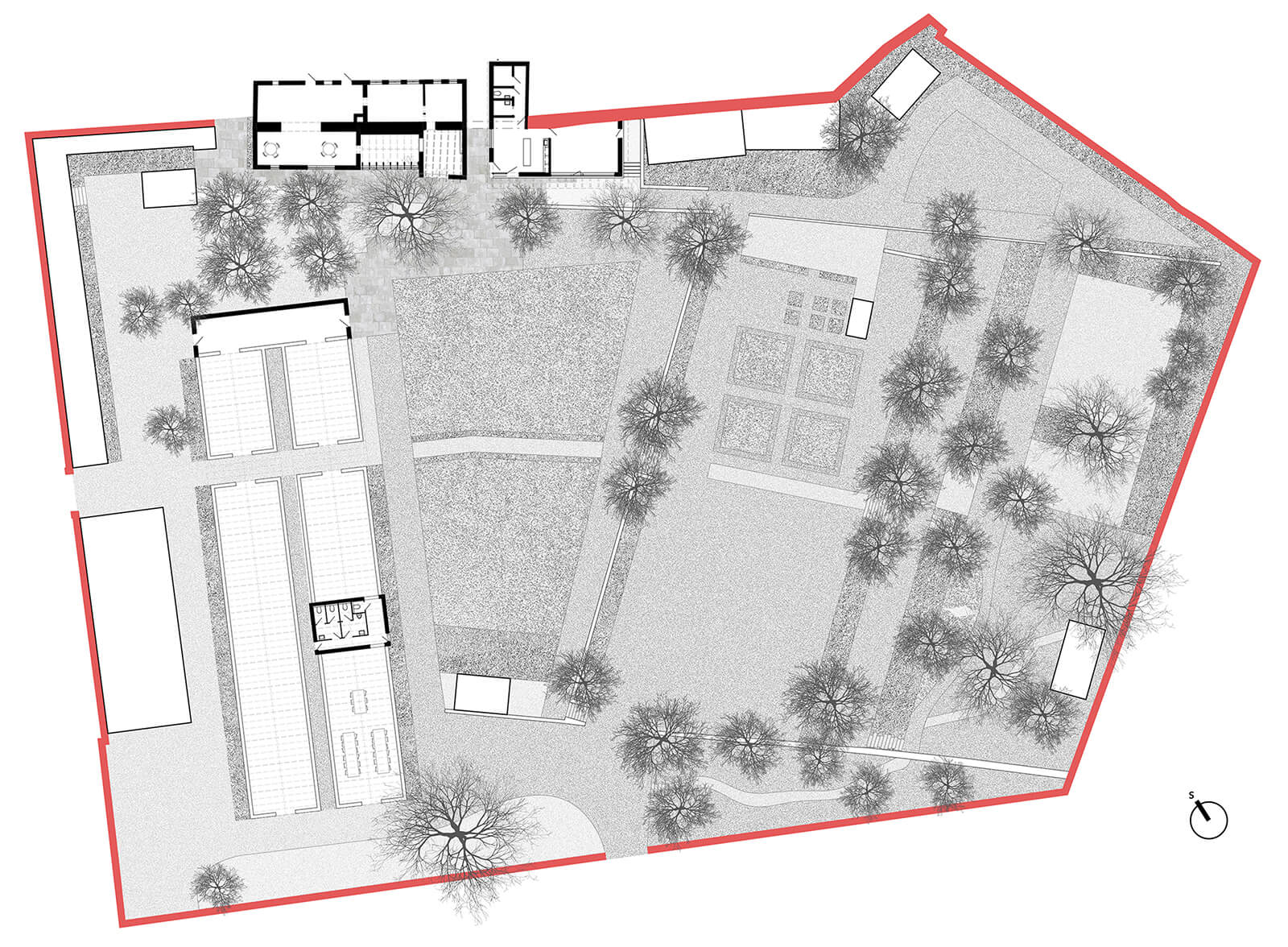
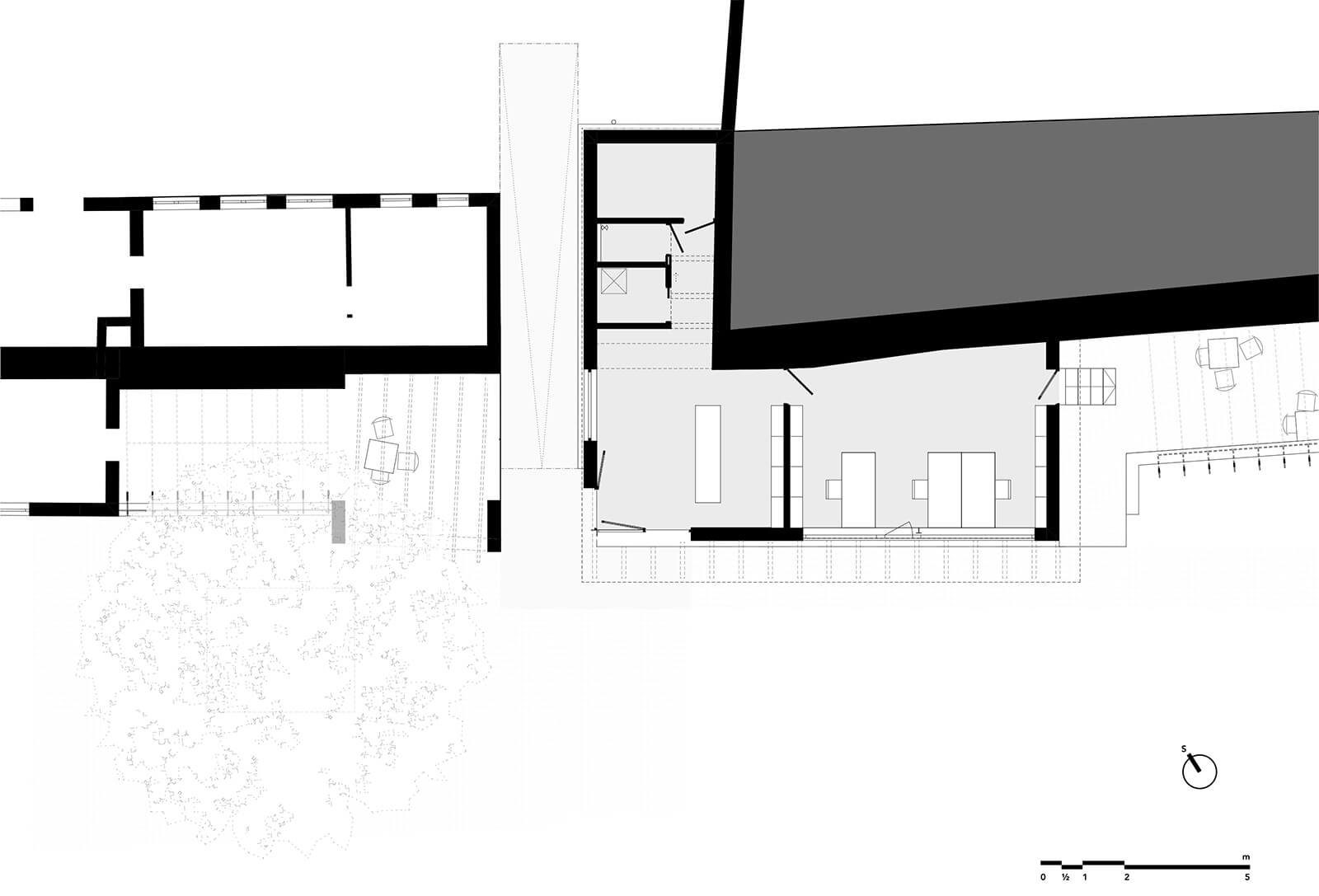
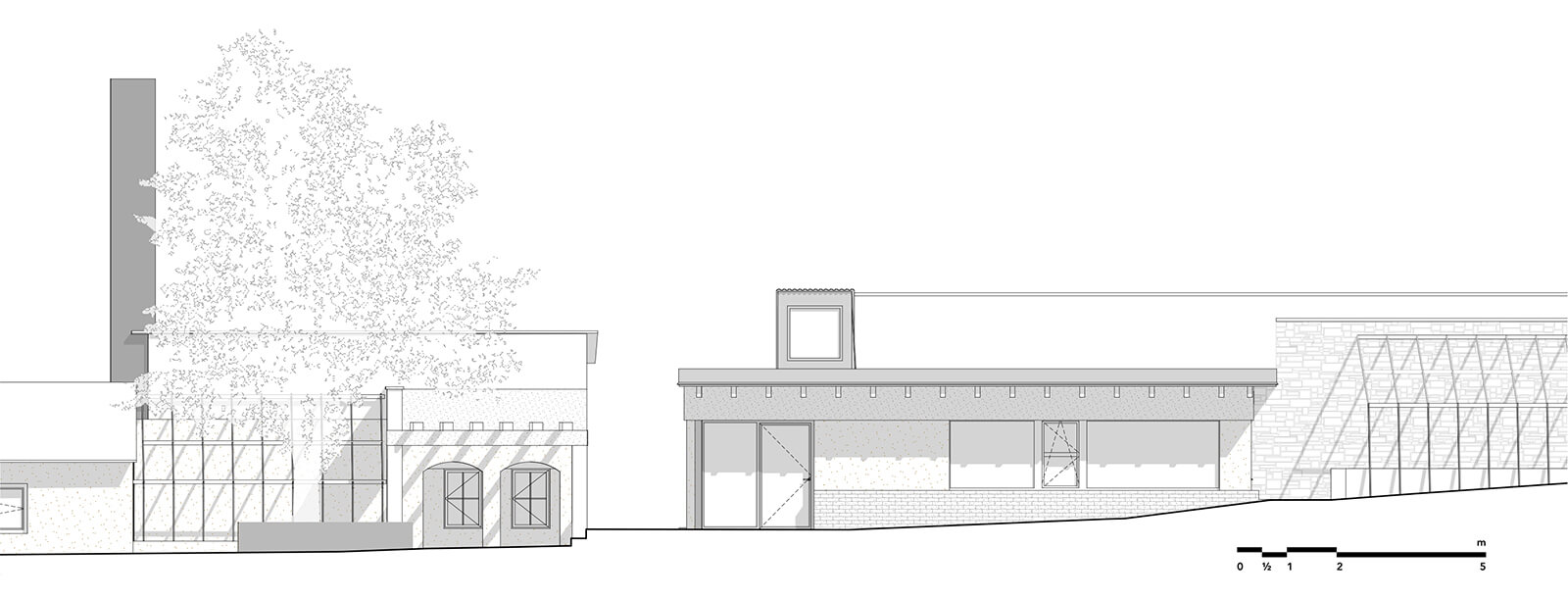
The garden, along with the architectural intervention, is developed as a dialogue between history and contemporary architecture. The collaboration between the Czech architects and landscape architects results in a joyful public space, where the greenhouses, sheds, community space and terraced garden collectively prioritise sustainability, recycling and rainwater management to enliven a natural ecosystem. The space hosts a variety of cultural activities, environmental events and flower and herb workshops, becoming a space for leisure as well as community engagement.
Name: Kraffer Garden
Location: Pražská 1286, 377 01 Jindřichův Hradec, Czech Republic
Architects: Matěj Šebek architekti
Landscape Architects: Atelier Za Mák
Built-up area: 120 sq m
Gross floor area: 80 sq m
Site area: 6,600 sq m
Year of Completion: 2025

by Pranjal Maheshwari Oct 19, 2026
The Mumbai-based architects integrate courtyards, mesh screens and north light trusses to create a dining space that doubles up as a community hub at SR University, Warangal.
by Mrinmayee Bhoot Oct 17, 2026
The Rotterdam-based institute centres the Indian Ocean as a network for exploring material histories and transnational links shaping coastal cultures, positing them as future models.
by Pranjal Maheshwari Oct 16, 2026
At the 2026 Stirling Prize ceremony, Mary Duggan with RUFF Architects, MAKER Architecten and Nakshabid Architects were felicitated for proffering quality housing and social equity.
by Mrinmayee Bhoot Oct 12, 2026
The new Centre for Contemporary Arts, fostering public engagement with art in Uzbekistan, is housed in a tram depot refurbished by the French studio, emulating local craftsmanship.

make your fridays matter with a well-read weekend
Enter your details to sign in
Don’t have an account?
Sign upOr you can sign in with
a single account for all
STIR platforms
All your bookmarks will be available across all your devices.
Stay STIRred
Already have an account?
Sign inOr you can sign up with
Verification link sent to check your inbox or spam folder to complete sign up process
Tap on things that interests you.
Select the Conversation Category you would like to watch
Please enter your details and click submit.
Enter the 6-digit code sent at


Kraffer Garden transforms a former Baroque garden into a vivid community space
by Bansari Paghdar | Published on : Jan 12, 2026


 Sign in with Google
 Sign in with email
What do you think?