Art10 mins. read
Performance and lived reality animate Abhishek Khedekar’s Tamasha at NCPA
by Srishti OjhaJun 15, 2026



by Chahna TankPublished on : Mar 30, 2026
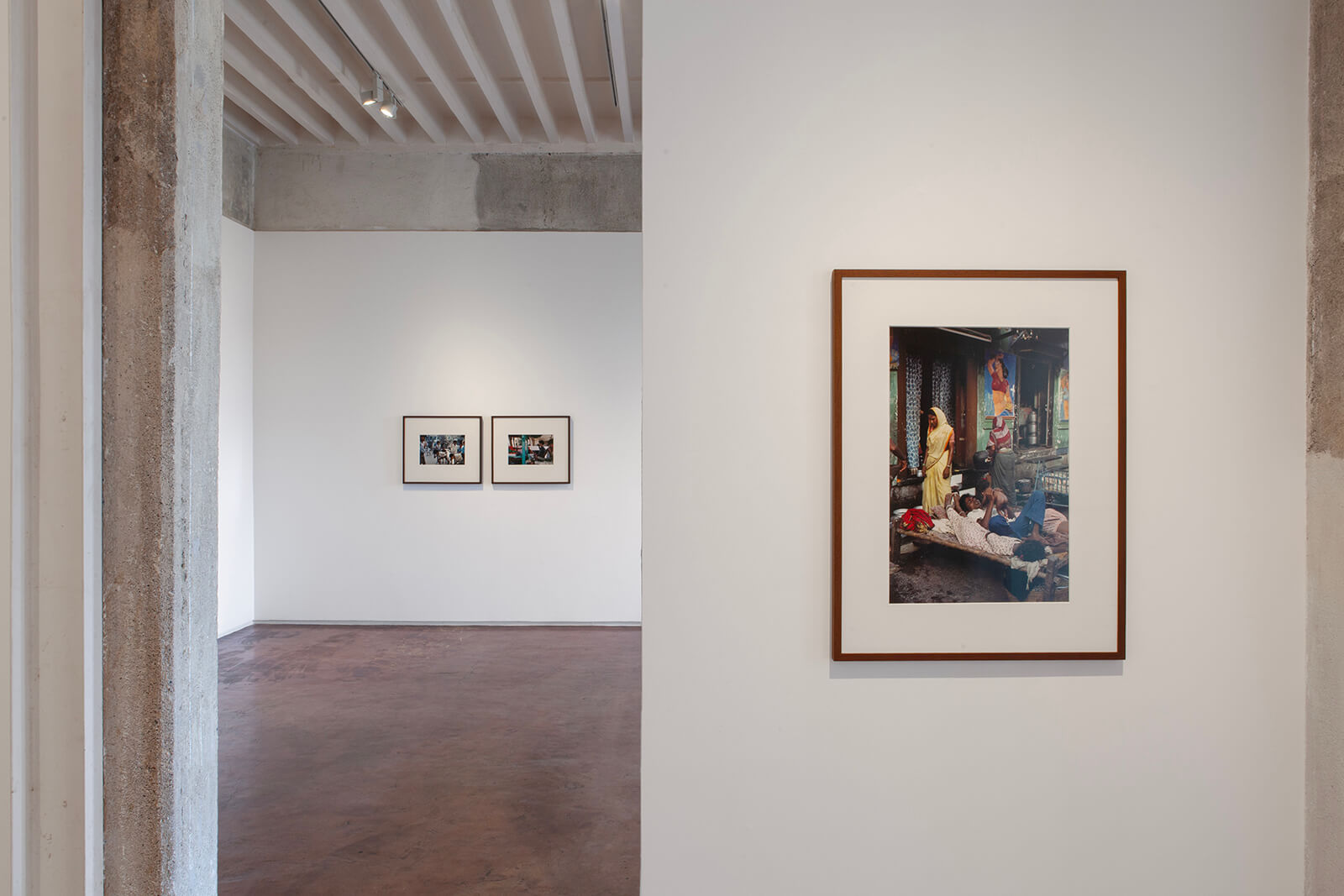
Bodies at rest, sprawled across streets and car bonnets. Bodies at work, threading through markets and crowds, in shops and stalls. Bodies in motion, passing through stations and squares. Bodies playing, celebrating, waiting and sometimes gazing directly into the camera. And all around them, everywhere—Bombay. Its markets, its buildings, its slums, its offices, its beaches, its festivals.
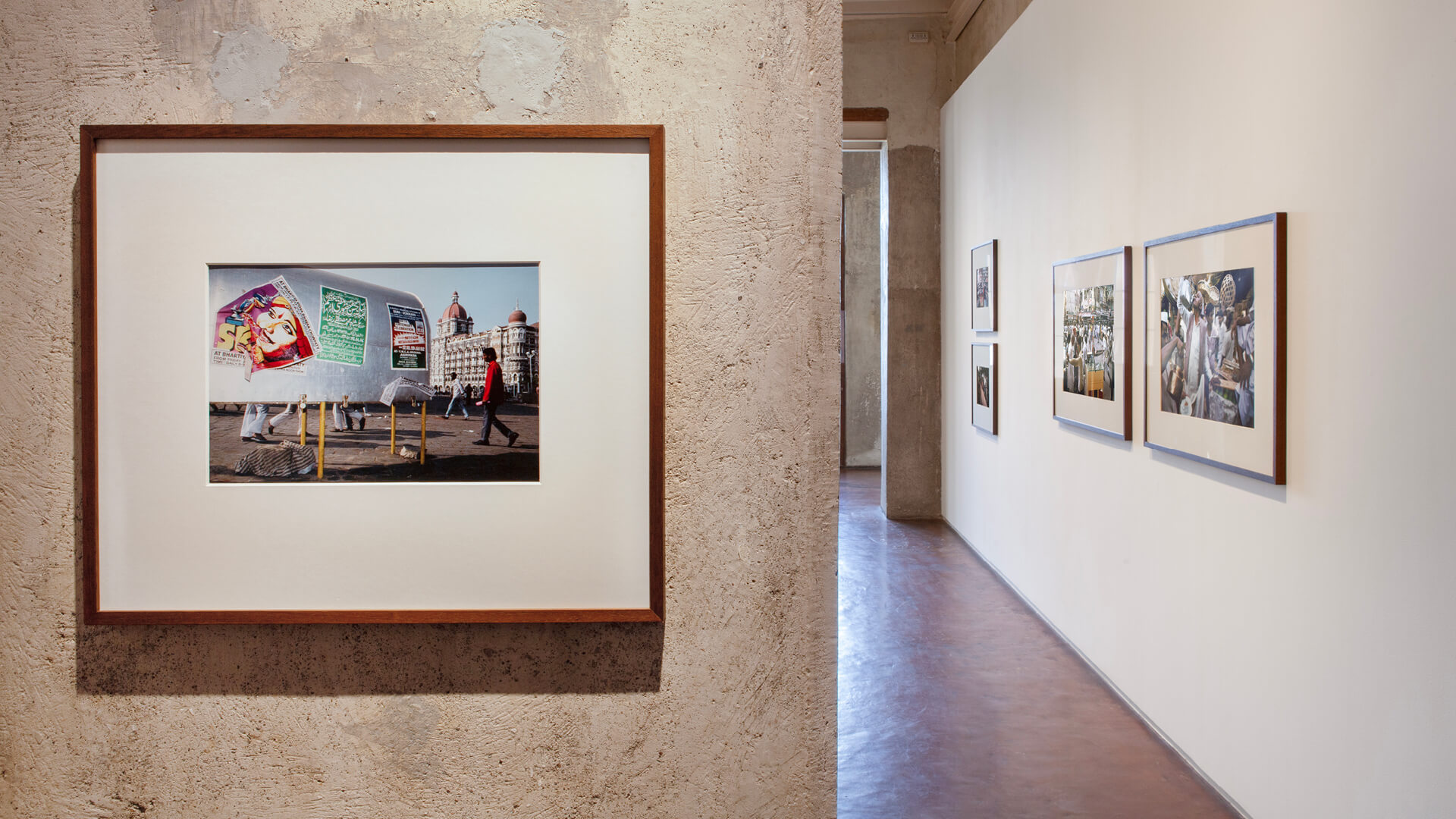
These bodies (and the city)—photographed by Raghubir Singh (1942 – 1999) while chronicling Bombay from the late 1970s to the mid-1990s—are on view at Jhaveri Contemporary in the exhibition Raghubir Singh: Bombay. To look at Bombay through Singh’s lens is to encounter a city that has already begun to slip into memory—a Bombay that no longer exists. And, in many ways, still lingers.
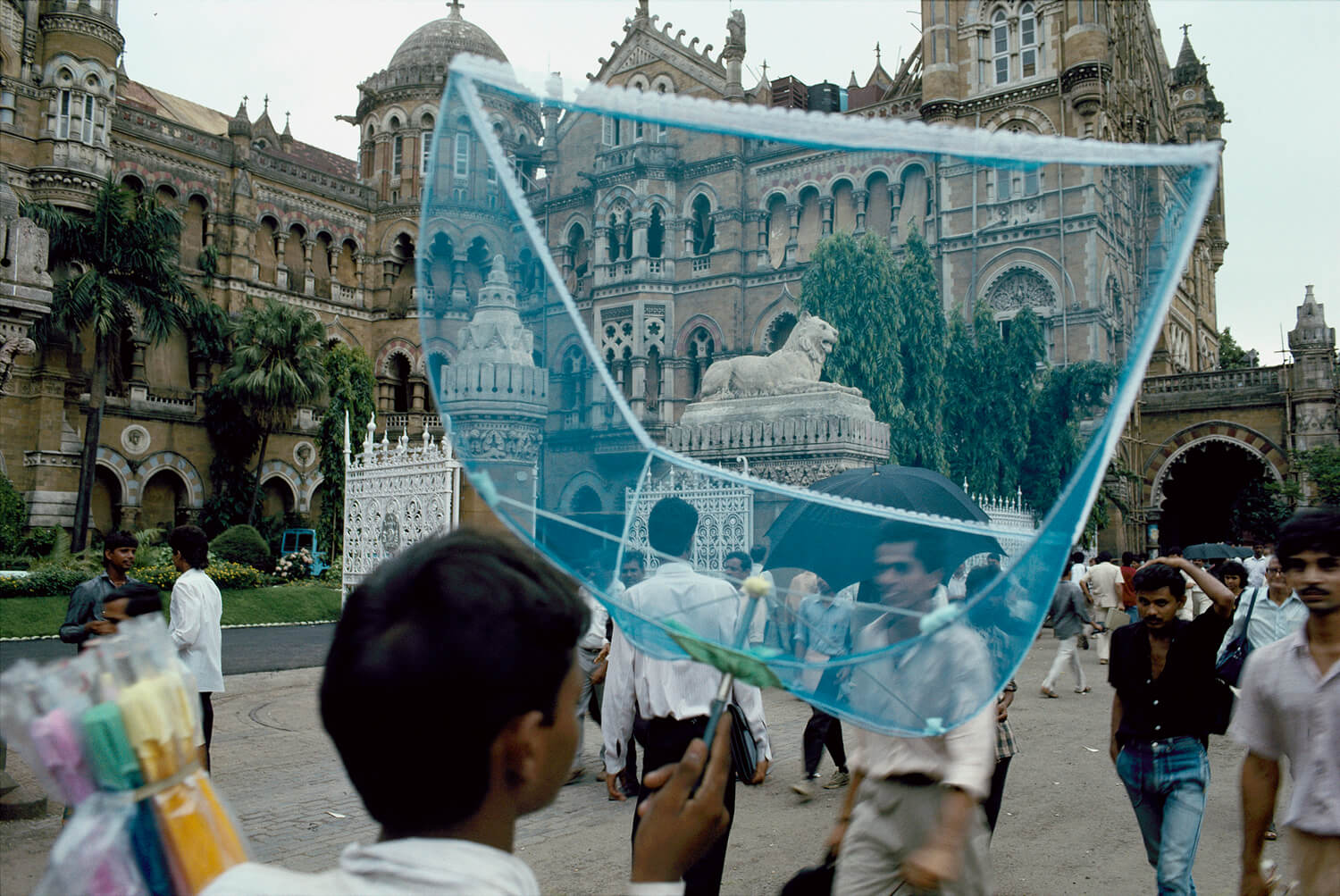
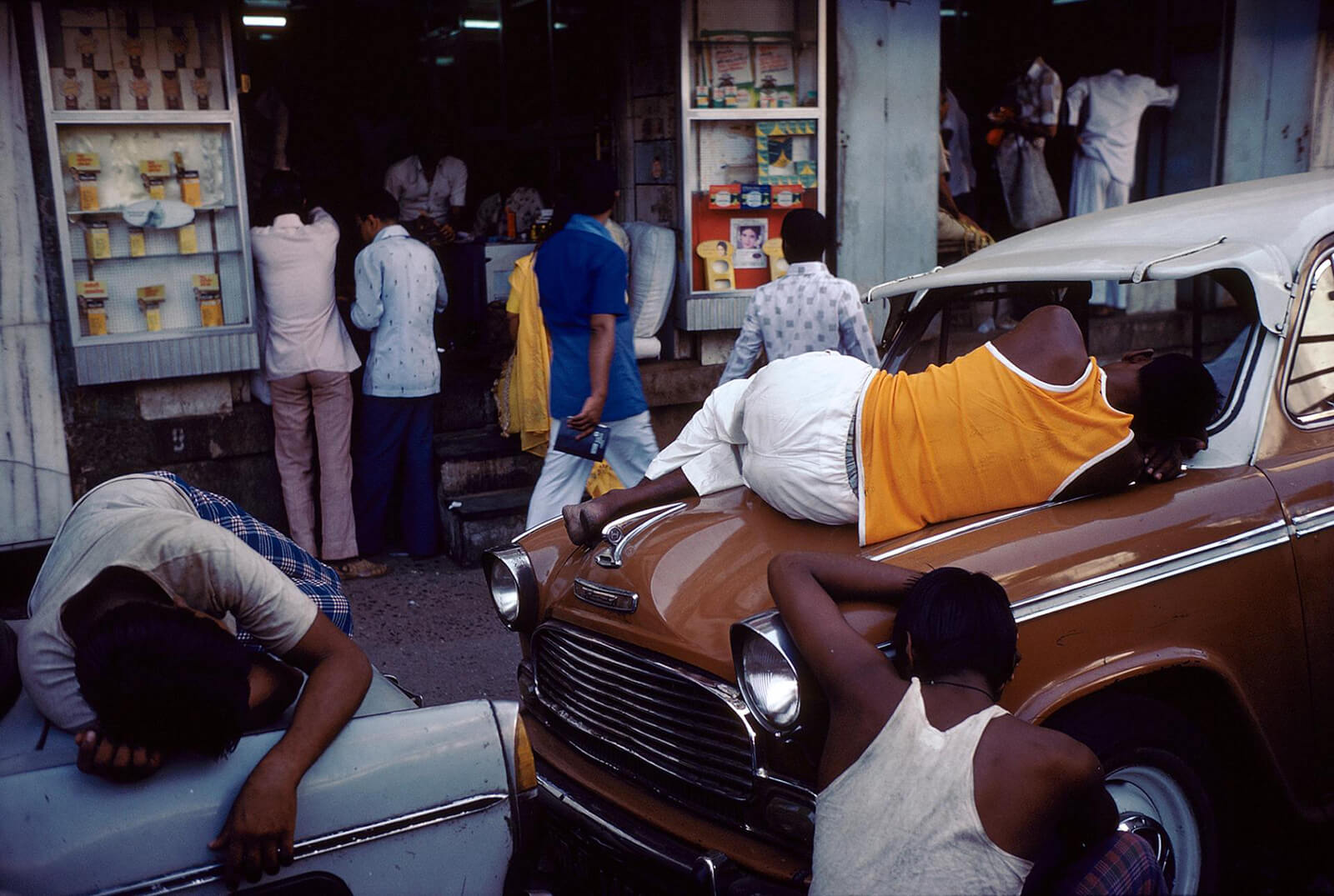
Running from March 12 – April 25, 2026, the solo exhibition brings together a selection of works by the Indian photographer who captured the rhythms of urban life in a city constantly reshaping itself—in colour. Shot on 35mm film, these raw and vivid images register what Singh described as “the several forces working in Bombay,” in a conversation with British writer V. S. Naipaul for his book Bombay: Gateway of India (1994). “It is a go-ahead city. There is tremendous movement and energy,” he noted.
Born in Jaipur into an aristocratic family, Singh was largely a self-taught photographer who was influenced by illustrious figures such as Henri Cartier-Bresson and William Eggleston, as well as Indian visual forms like Rajasthani miniature and Mughal paintings. While he lived and worked across Hong Kong, Paris, London and New York—collaborating with publications including National Geographic, The New York Times, The New Yorker and Time during his prolific career—it was in the streets of India that his photographic practice found its most defining expression, to which he kept returning. Working in colour at a time when black-and-white still dominated the medium, he emerged as an instrumental figure in Indian street photography—a flâneur, meandering around with his camera, trying to capture the polyphony of urban life in cities like Calcutta, Rajasthan, his native state, Varanasi (especially Ganges) and the unreal city that was Bombay.
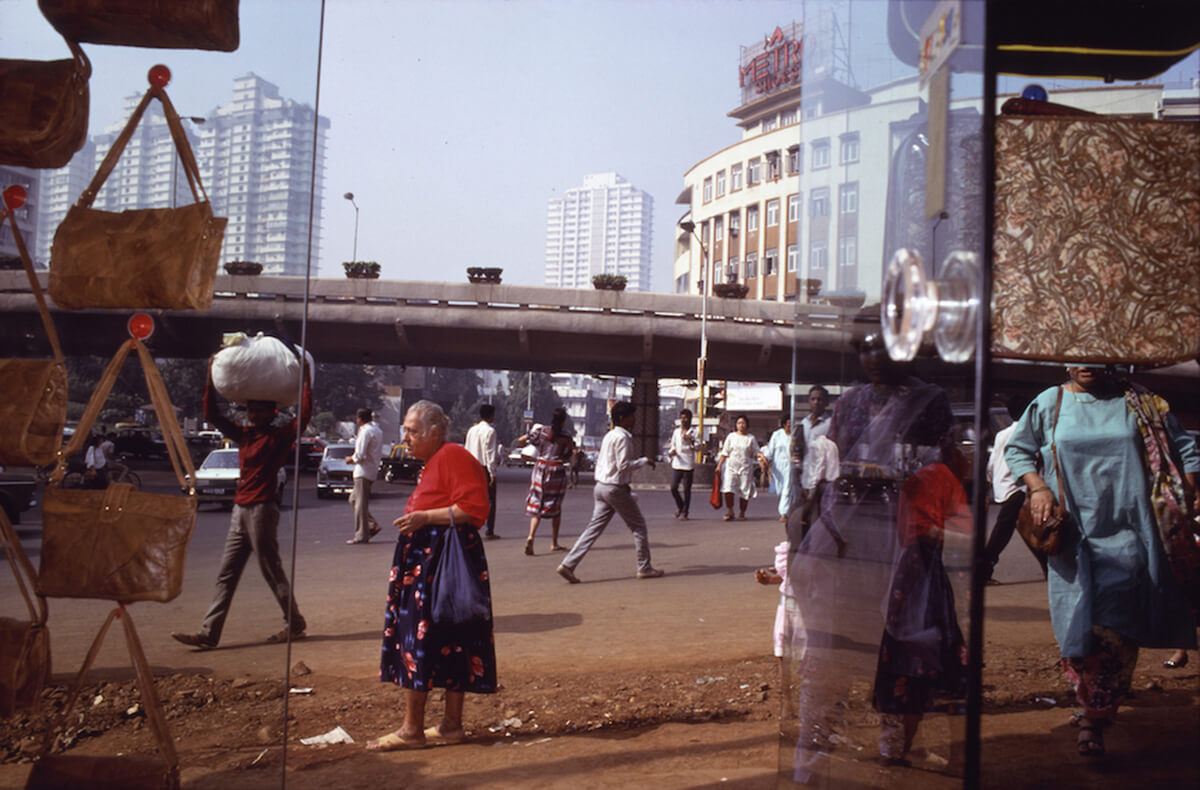
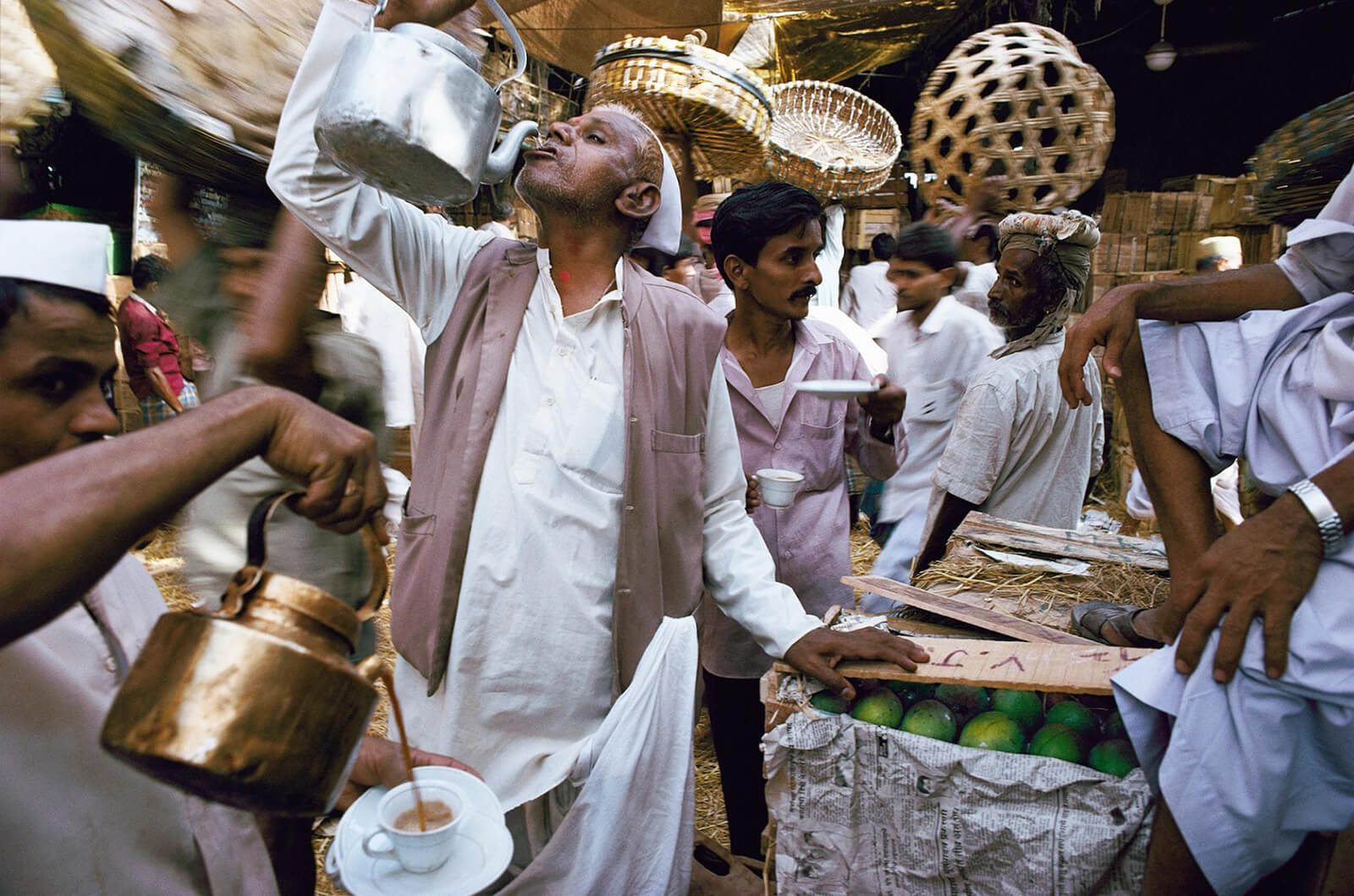
Bombay during Singh’s time was flushed with contradictions. Textile mills had closed, heralding the decline of an industrial economy, paving the way for the rise of one centred on finance, retail and entertainment. The city seemed to always be teetering on the edge of chaos, facing crisis after crisis: riots, bombings, even a plague scare, fracturing any sense of stability. It is within this atmosphere of transition and tensions of urban life in what Singh called the ‘contemporary city’ that these images were captured, their dense, layered compositions echoing a city in flux.
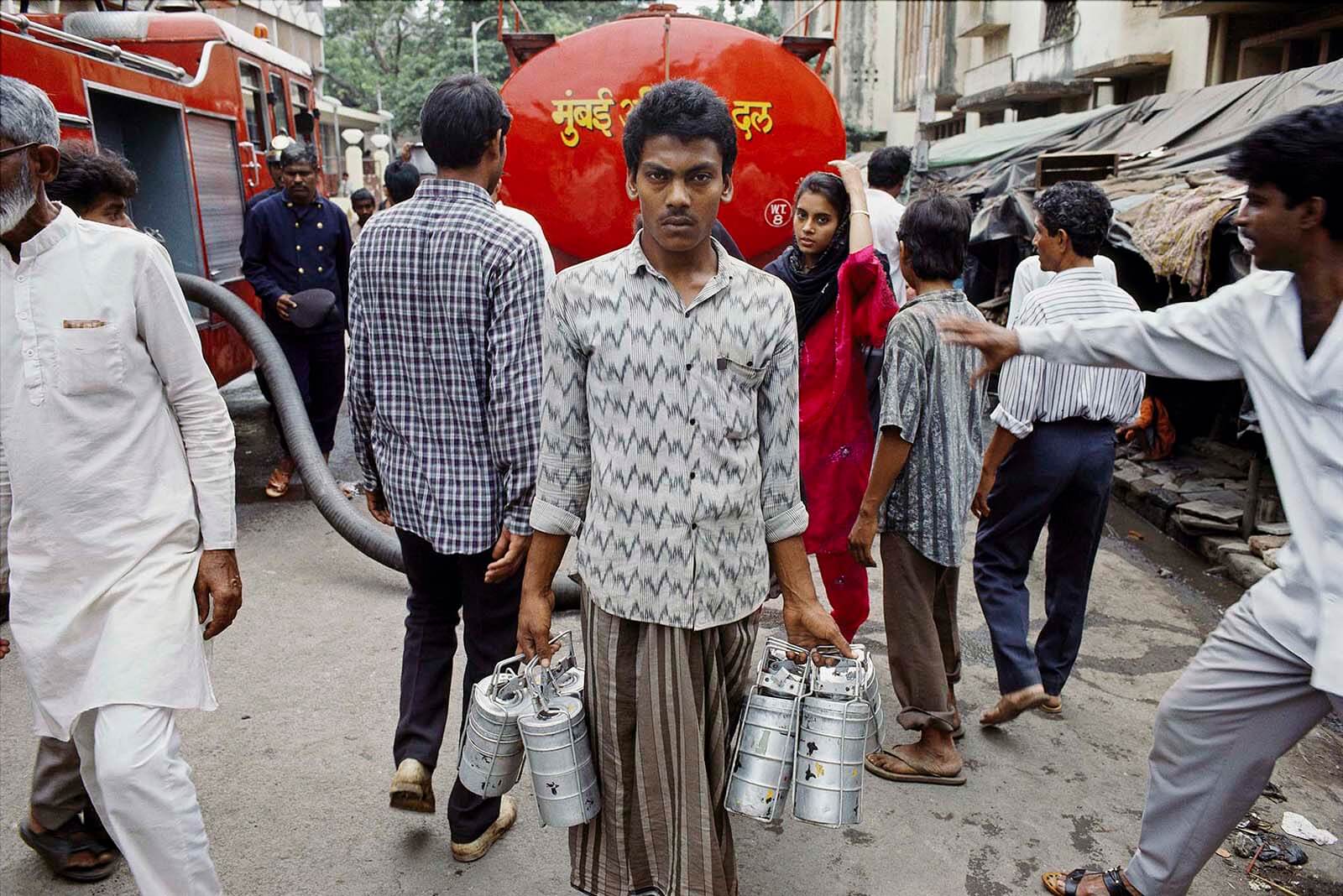
Singh’s lens shifts effortlessly across Bombay’s social and spatial divides—lingering equally on moments of splendour and scenes of everyday life. The city’s wealth and its precarity exist side by side, often separated by little more than a street or a frame. Moving through the city, Singh captures it all: from the splendour of the Taj Mahal Hotel and affluent offices to the dense, winding lanes of slums and claustrophobic markets. The festivities in Birthday Party, Malabar Hill, Bombay (1990) stand in contrast to images like Office Worker Leaves Home, Dharavi, Bombay (1992), in which we see a man stepping out into the narrow lane, the space tight and crowded, daily life already pressing in around him. His images make these layered inequalities visible—not through overt commentary, but through juxtaposition. As Naipaul observed of his work, “One sees these pictures of Bombay, one sees the setting, one sees the people. And one feels that they both make one another. The settings make the people, the people make the setting. Words are not necessary.”
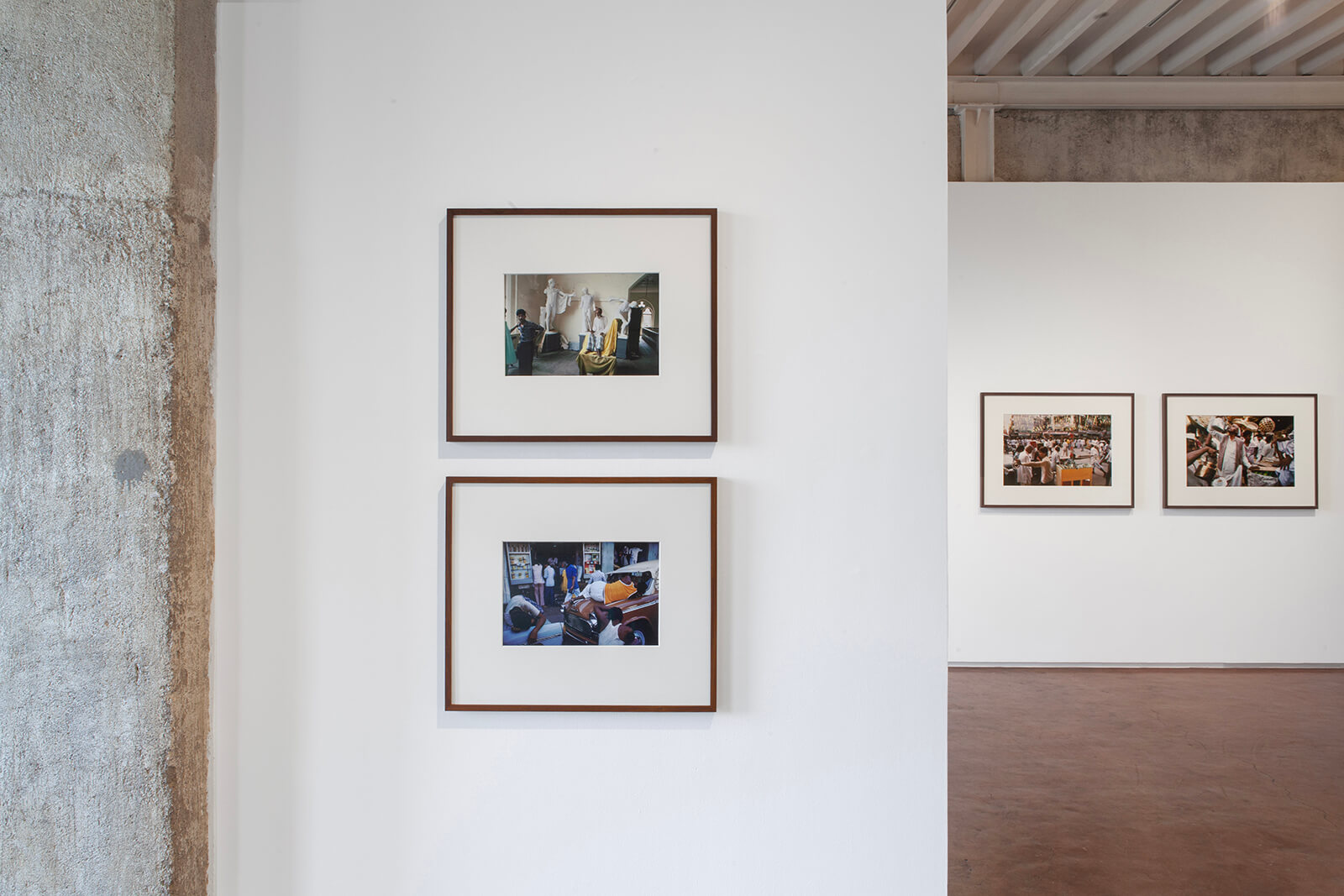
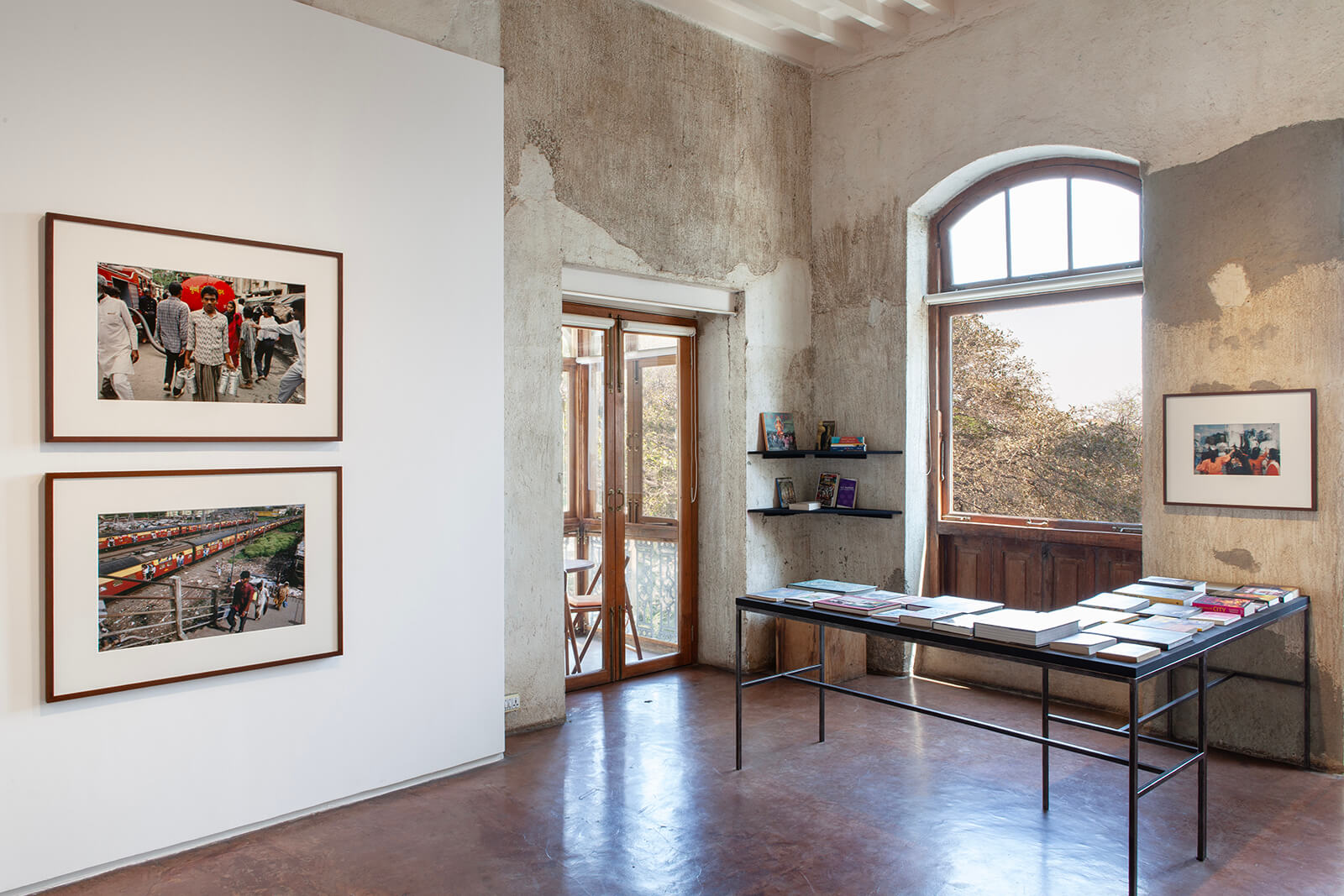
Many of Singh’s compositions are dense and layered—playing with mirrors, light and reflection. In Zaveri Bazaar and jeweller’s showroom, Bombay (c. 1989), for instance, we look outside, through the glass walls of a jewellery shop, as if through a looking-glass, at the hustle and bustle of the market, shielded from it all. Figures that appear only as reflections in works like Pedestrians, Kemp’s Corner, Bombay (c. 1989) introduce an additional layer to the image, drawing in what lies beyond the frame. In Sculptures of Indian Leaders, Chowpatty, Bombay (c. 1990), young girls pause before the display looking at the figures within, while the city behind them is caught in the glass, layering the sculptures of Indian leaders directly onto the urban fabric, so that politics, reflected in the streets, seems inseparable from the people who move through them.
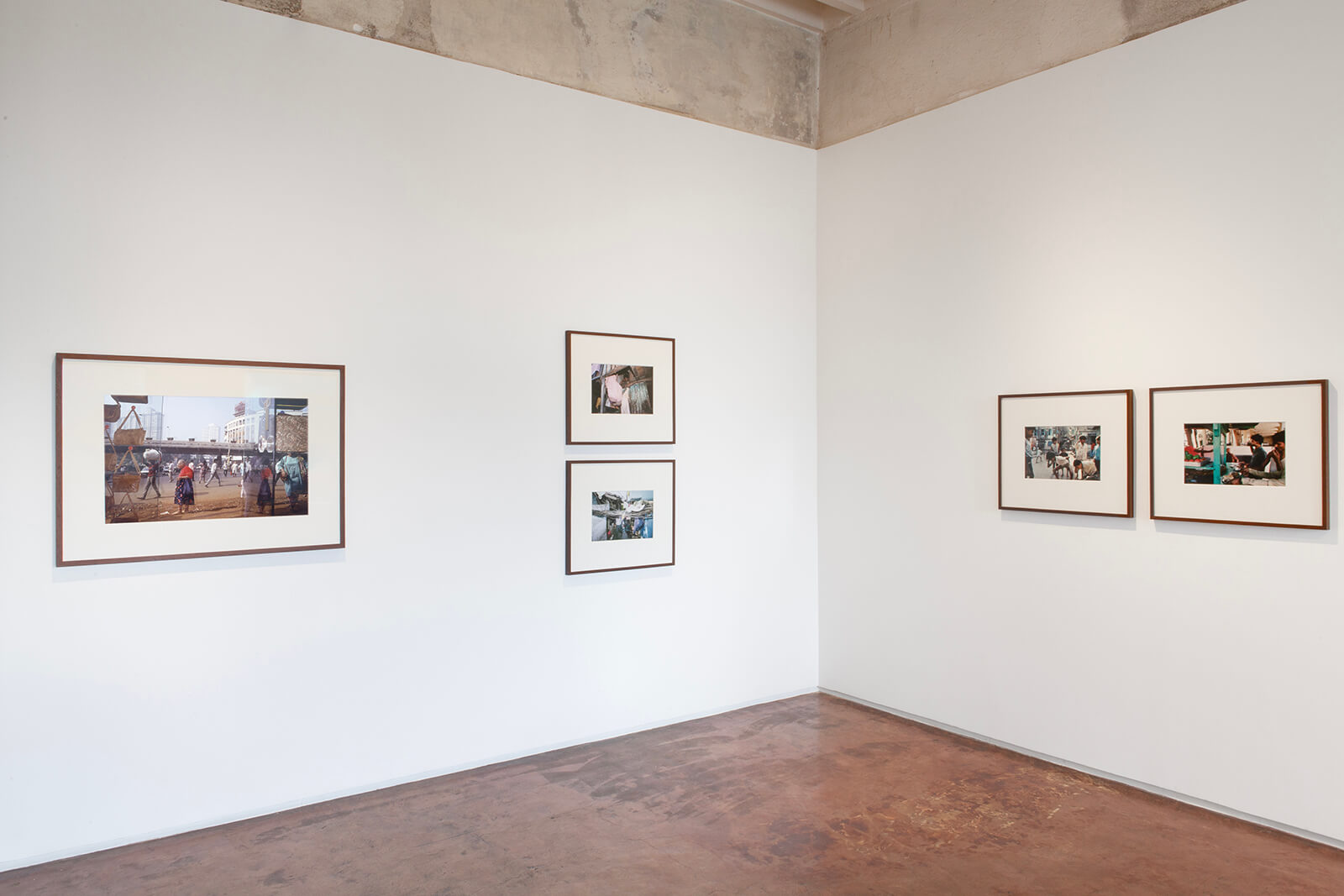
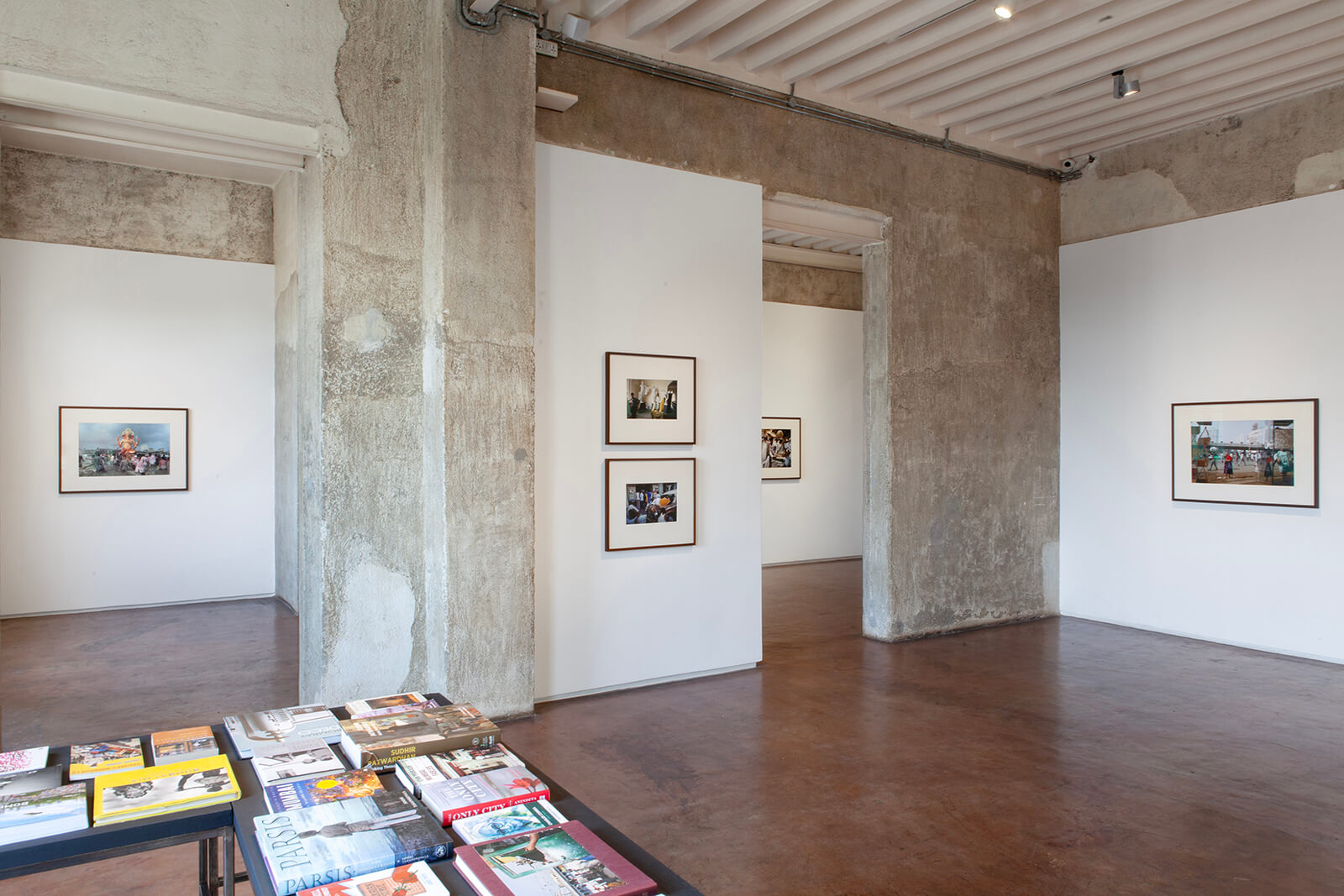
Mumbai continues to metamorphose in the decades since these photographs were taken—its skyline rising, its traffic thickening along its arteries, its neighbourhoods changing with each new wave of development and redevelopment. Yet in Singh’s images, the city is held in suspension, asking us to reflect on its evolution. To pause—and look. To savour the city in motion. To consider the layers of history and life that make Mumbai the city it is today.
‘Raghubir Singh: Bombay’ is on view from March 12 – April 25, 2026, at Jhaveri Contemporary, Mumbai.

by Anmol Ahuja Oct 15, 2026
How do heaps of souvenirs and relics with racist Aboriginal motifs and features become art? MCA Sydney’s winter showcase—the artist’s largest to date—beckons a possibility.
by Vandana Kalra Oct 14, 2026
With his latest exhibition as a point of departure, the modernist discusses his decades-long practice, the spontaneity of drawing and the social responsibility of artists.
by Srishti Ojha Oct 14, 2026
The first Dutch publication on the Turkish artist, the eponymous book centres on Refik Anadol: Latent City, his living data sculpture of Bruges, exhibited at BRUSK gallery.
by Srishti Ojha Oct 09, 2026
In his ongoing exhibition, the South African artist creates two post-apocalyptic futures to explore society’s relationship with textiles, patterns and technology.

make your fridays matter with a well-read weekend
Enter your details to sign in
Don’t have an account?
Sign upOr you can sign in with
a single account for all
STIR platforms
All your bookmarks will be available across all your devices.
Stay STIRred
Already have an account?
Sign inOr you can sign up with
Verification link sent to check your inbox or spam folder to complete sign up process
Tap on things that interests you.
Select the Conversation Category you would like to watch
Please enter your details and click submit.
Enter the 6-digit code sent at


Life in Bombay through the lens of Raghubir Singh at Jhaveri Contemporary
by Chahna Tank | Published on : Mar 30, 2026


 Sign in with Google
 Sign in with email
What do you think?