Art08 mins. read
A London exhibition reflects on shared South Asian histories and splintered maps
by Samta NadeemJun 19, 2025



by Zohra KhanPublished on : Aug 18, 2026
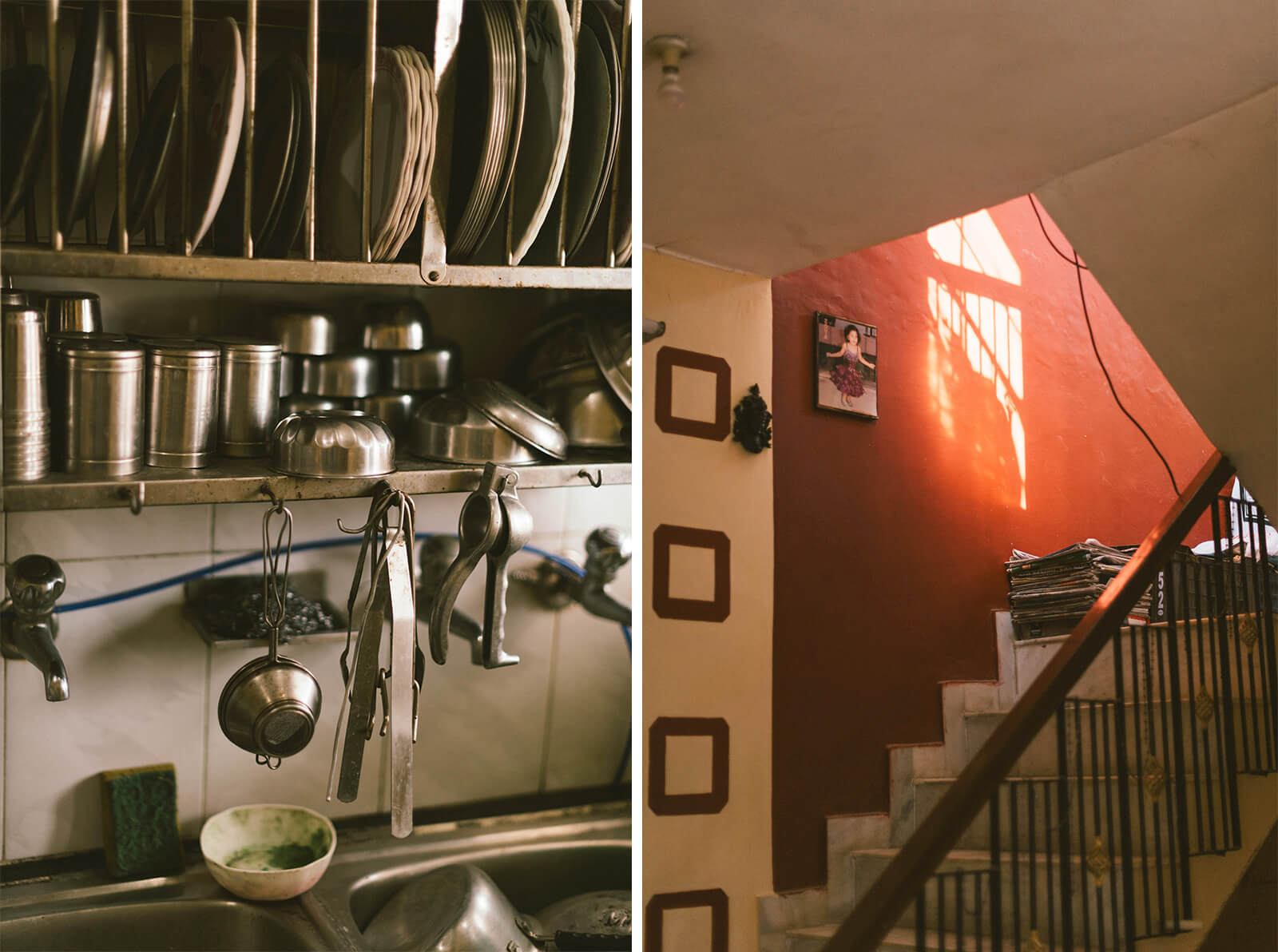
“I feel like if I sit, I’ll sit forever. A streaming river is beautiful, but when it sits still, it gets a bad smell. That’s how I lead my life,” says a middle-aged Himachali woman, her words echoing her trust in self-dependence and a fear of losing vitality if ever she slows down. A portrait of a slightly curled hand shows her fingers loosening the grip of routine; and in another—dressed in an embroidered woollen suit—she looks out through a window by her bed, a corner that’s hers where rest crawls in.
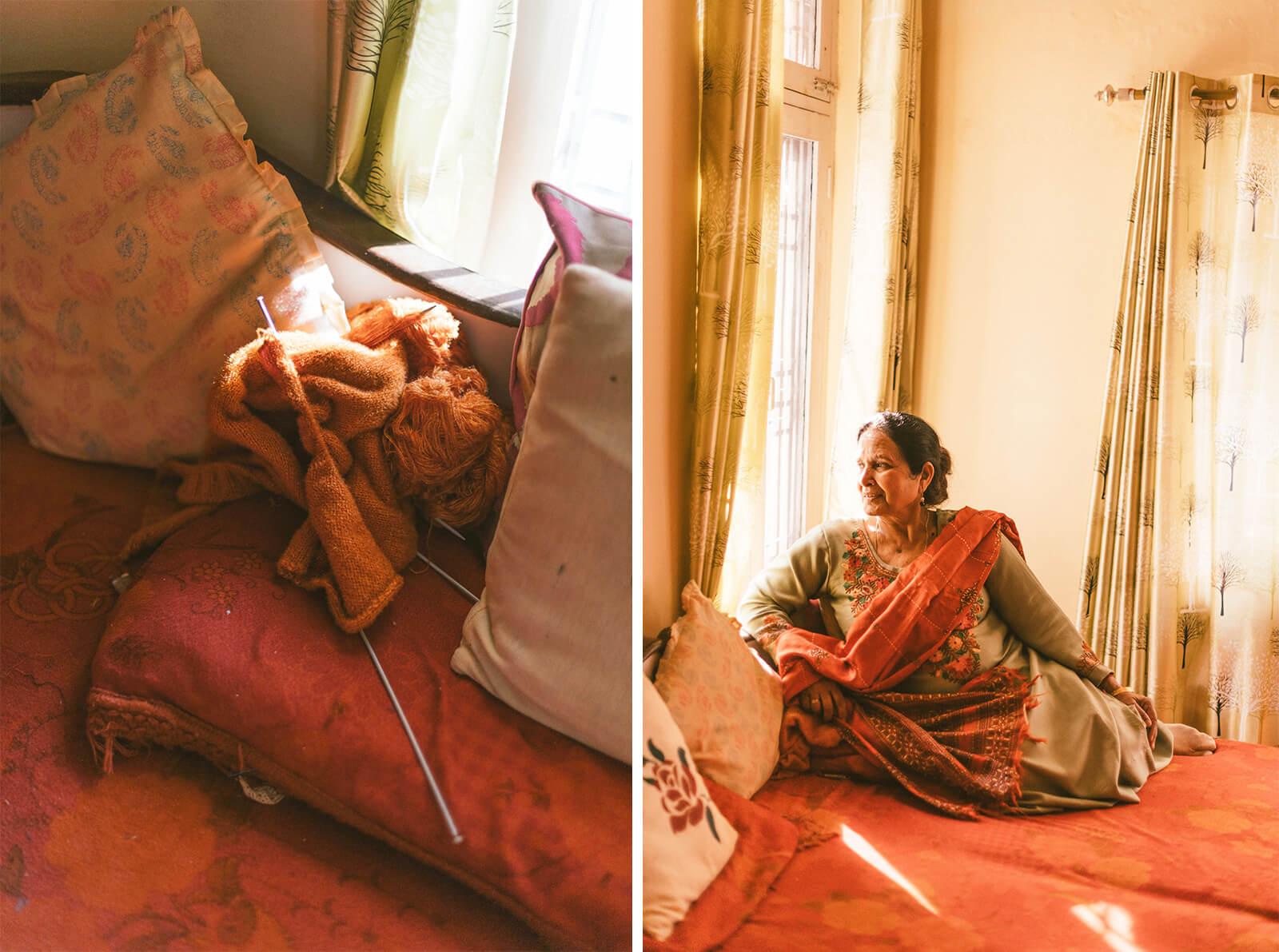
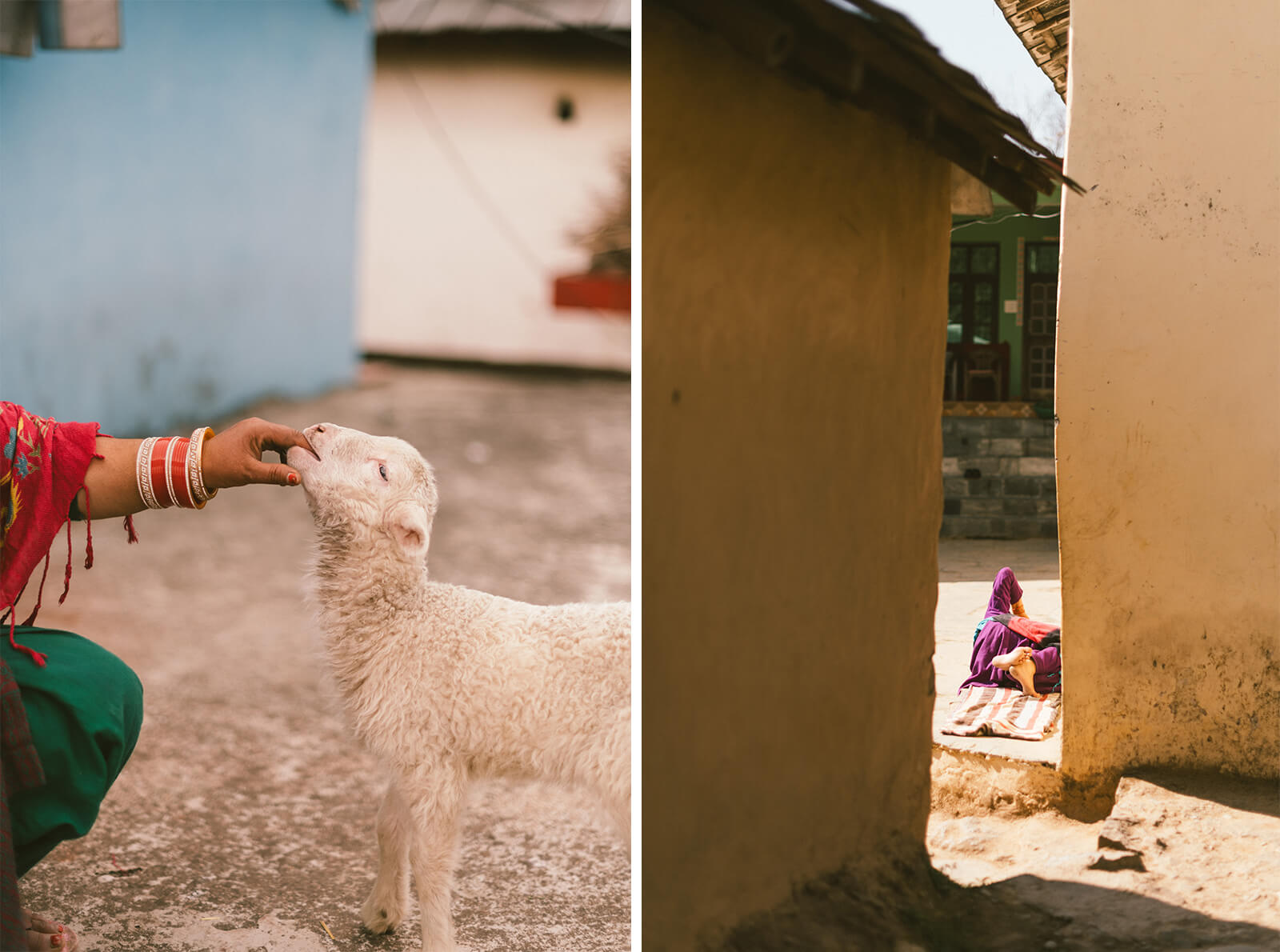
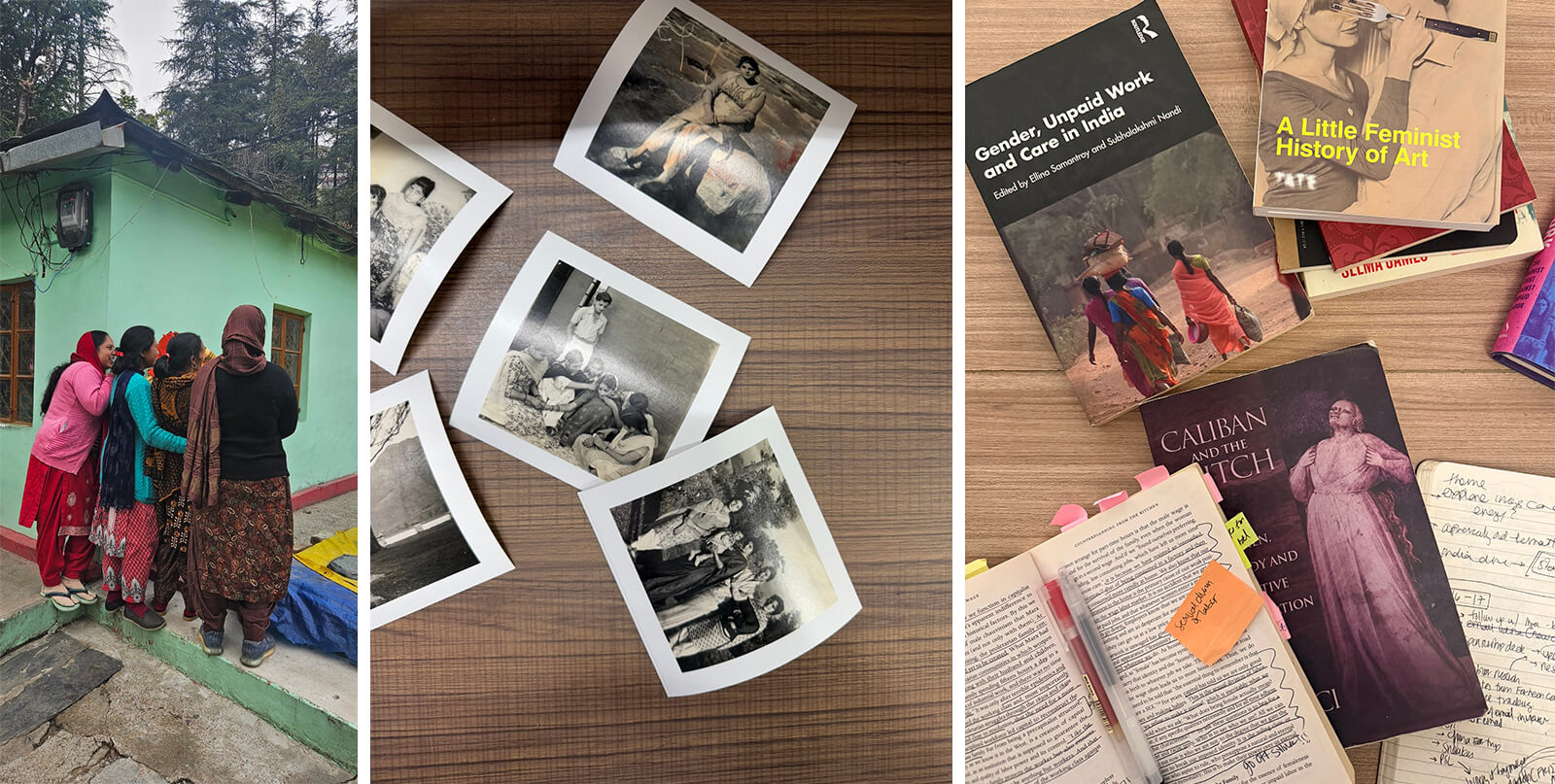
The photos accompany the words within the pages of Mai Ni Meriye—a photo book emanating from a multimedia project titled Mai Ni Meriye, an endeavour by Indian artist Farheen Fatima and researcher Aashna Singh. The project presents a tender compilation of portraits and words of women and their domestic universes, conveying how for generations women’s uncompensated everyday labour has been considered a ‘feminine duty’, unworthy of appreciation. Their round-the-clock ‘carework’ that conventionally goes unnoticed often seeks validation in love, in rare conveyings of ‘how good a dinner was’, ‘how well a home looks’ and ‘how easily dreams are given up to sustain marriages’.
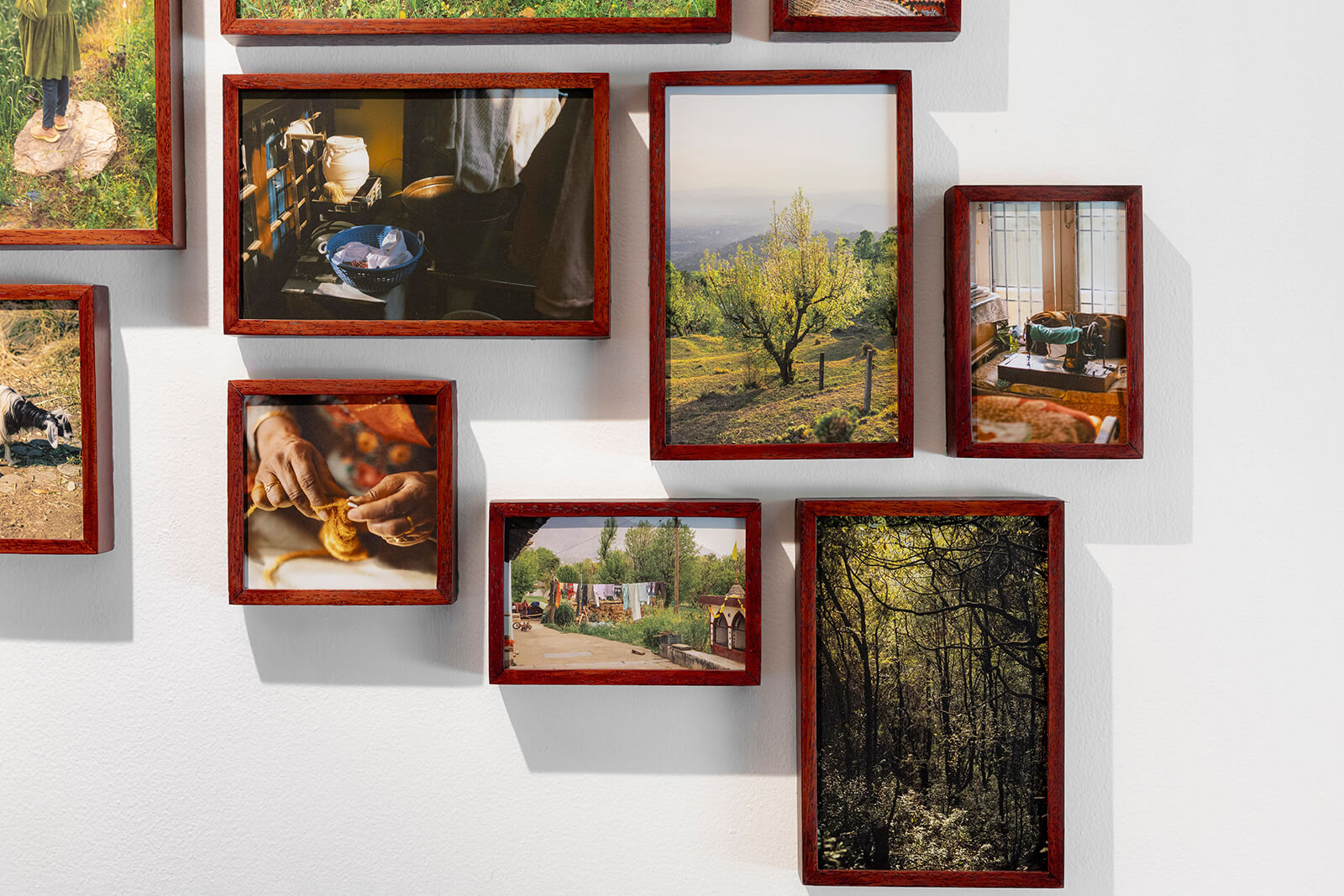
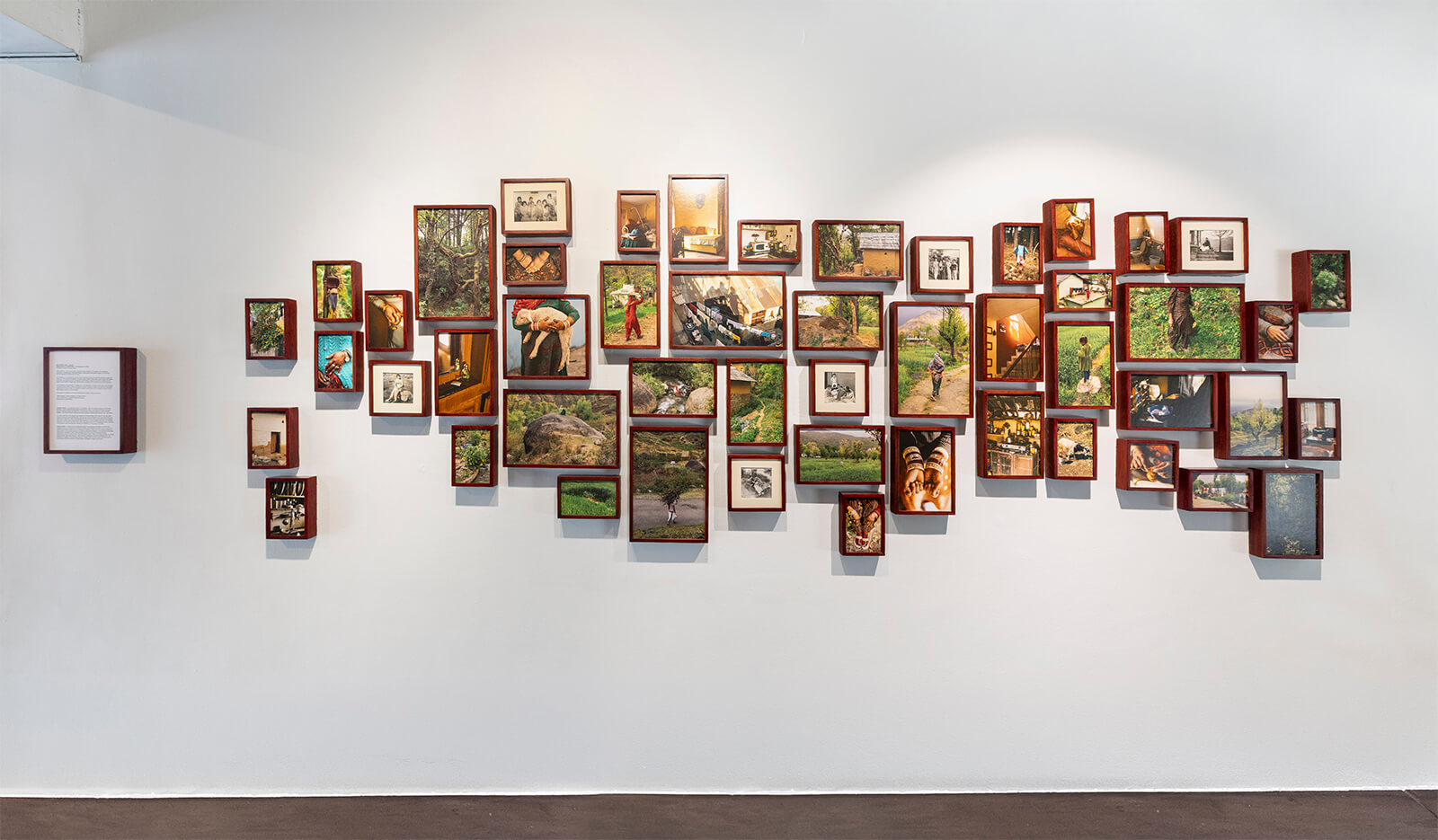
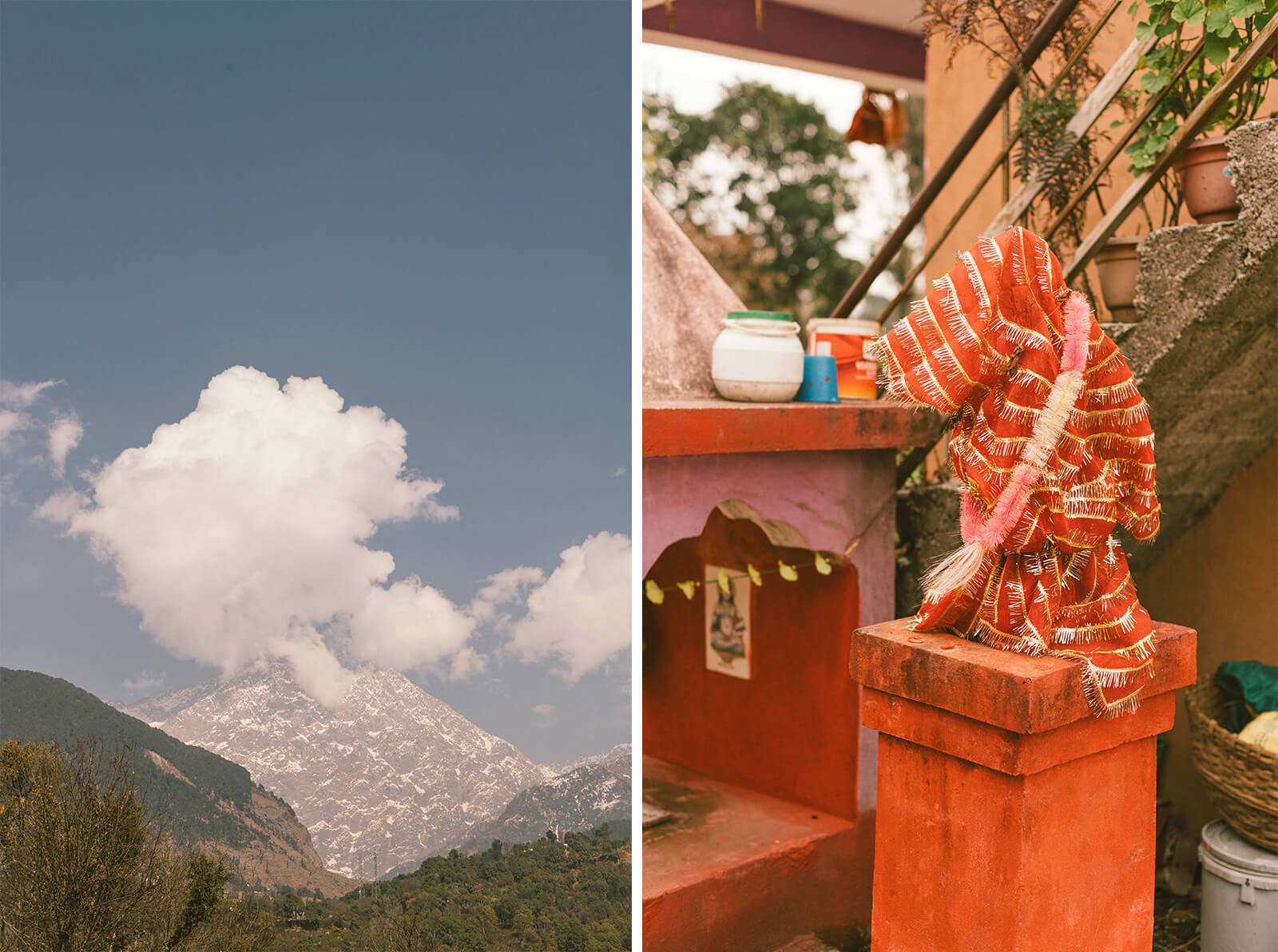
Through conversations with 19 rural protagonists from across Dharamshala, India, Mai Ni Meriye captures bodies, homes and landscapes, unravelling rituals and social orders that engulf women’s lives in the Himalayan foothills. To expand the dialogue discussing these lives of equal grit and grace, the project was recently scaled up into a travelling exhibition, currently on view at The Other Space gallery in Dharamshala. Against majestic views of the towering Dhauladhar range, Mai Ni Meriye, Womanhood in the Mountains: A Contemporary Archive brings forth a moving collection of portraits and pennings from the documentation. Fatime, who led the photography, visual language and curation of the project, alongside Singh, who spearheaded its concept, research and production, spoke to STIR about the endeavour.
Zohra Khan: Why did you choose to name the project Mai Ni Meriye?
Aashna Singh, Farheen Fatima: The song Mai Ni Meriye is popular around Himachal and India, at large. It’s a recognisable and familiar title. It is actually a traditional folk song that has been passed down by generations. It’s an oral history. The lyrics of the songs are from the point of view of a young girl, young woman, seeking directions towards her lover, or husband’s home and village. I think the guidance sought from “Mai” which means mother — and is also a way to call any older woman — embodies a lot of the themes we draw out in the project. I have interpreted the song, while also romanticising it, as a signal to the network of women in the region and womanhood at large. There are multiple interpretations of the song but this is what spoke to me, and I think a project title that was recognisable as well by locals was an important aspect.
Zohra: Could you take me through the protagonists in some of the photos of the project? What are some of the lived experiences the documentation puts a spotlight on?
Aashna, Farheen: The project was motivated to highlight everyday women, and the ins and outs of womanhood that usually go unnoticed. Some of the women are young, and some, older. The young ones are students, daughters, sisters. Some of the women work outside the home, in addition to carrying their household duties. Most of them are wives, mothers and homemakers. Among them were some women who were widows and also one who was divorced. The lived experiences we wanted to document were of their daily lives – the unwaged labour, their environments, their homes, their everyday objects, and their thoughts and views on their own lives and womanhood in society.
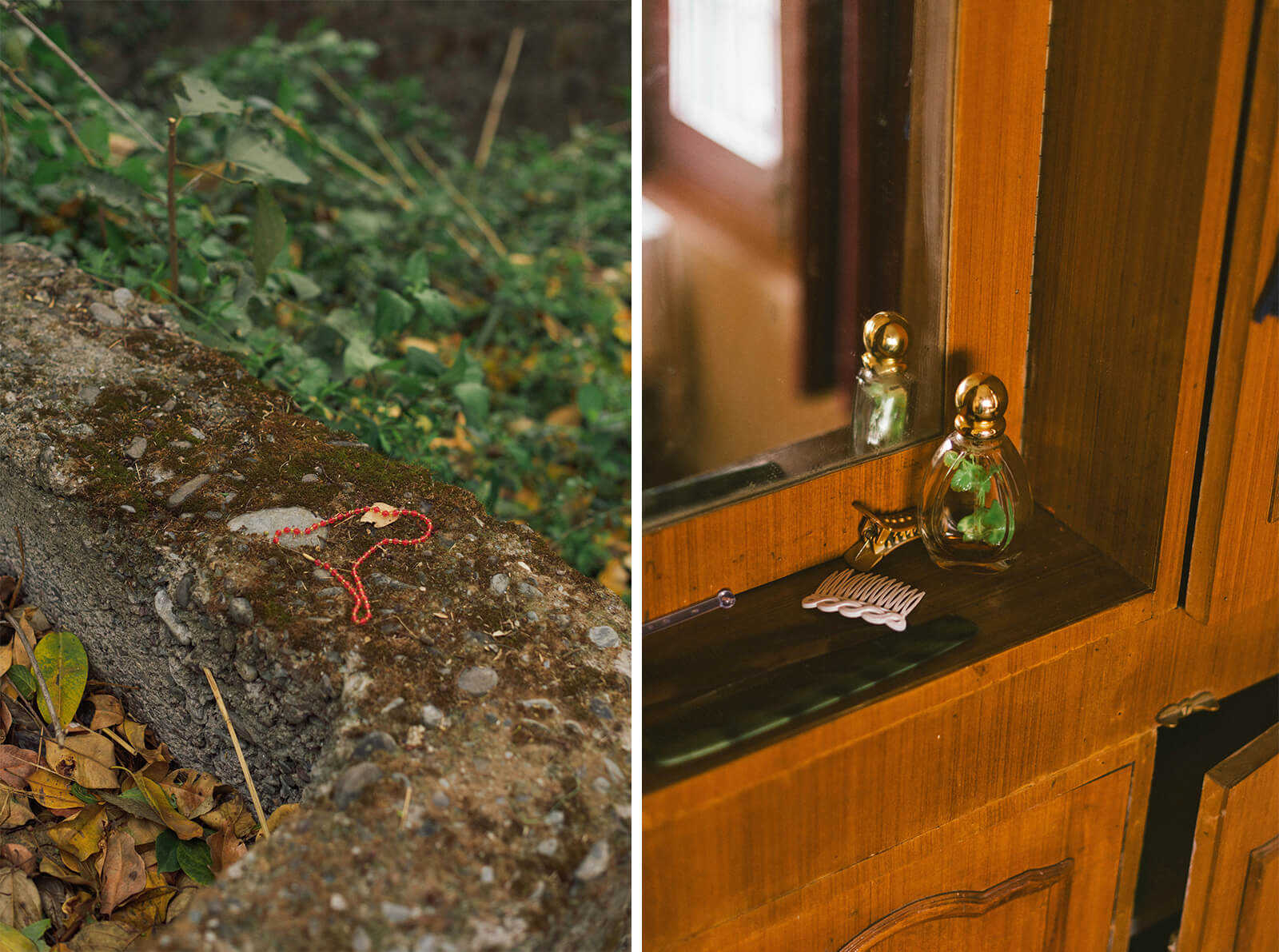
Zohra: I am particularly fascinated by pictures in which the absence of a woman figure is substituted by either an object, such as an item kept on a dressing table, or a red dupatta stuck amid rocks of a babbling brook. How significant was this approach for you in developing the project?
Aashna, Farheen: We wanted to expand the project from the photobook that was more focused on labour to the exhibition capturing womanhood as a whole. Visuals of women working are impactful, but in addition, there is an entire culture embedded in objects and environments that signal gendered patterns and give insight into the experiences of womanhood more holistically.
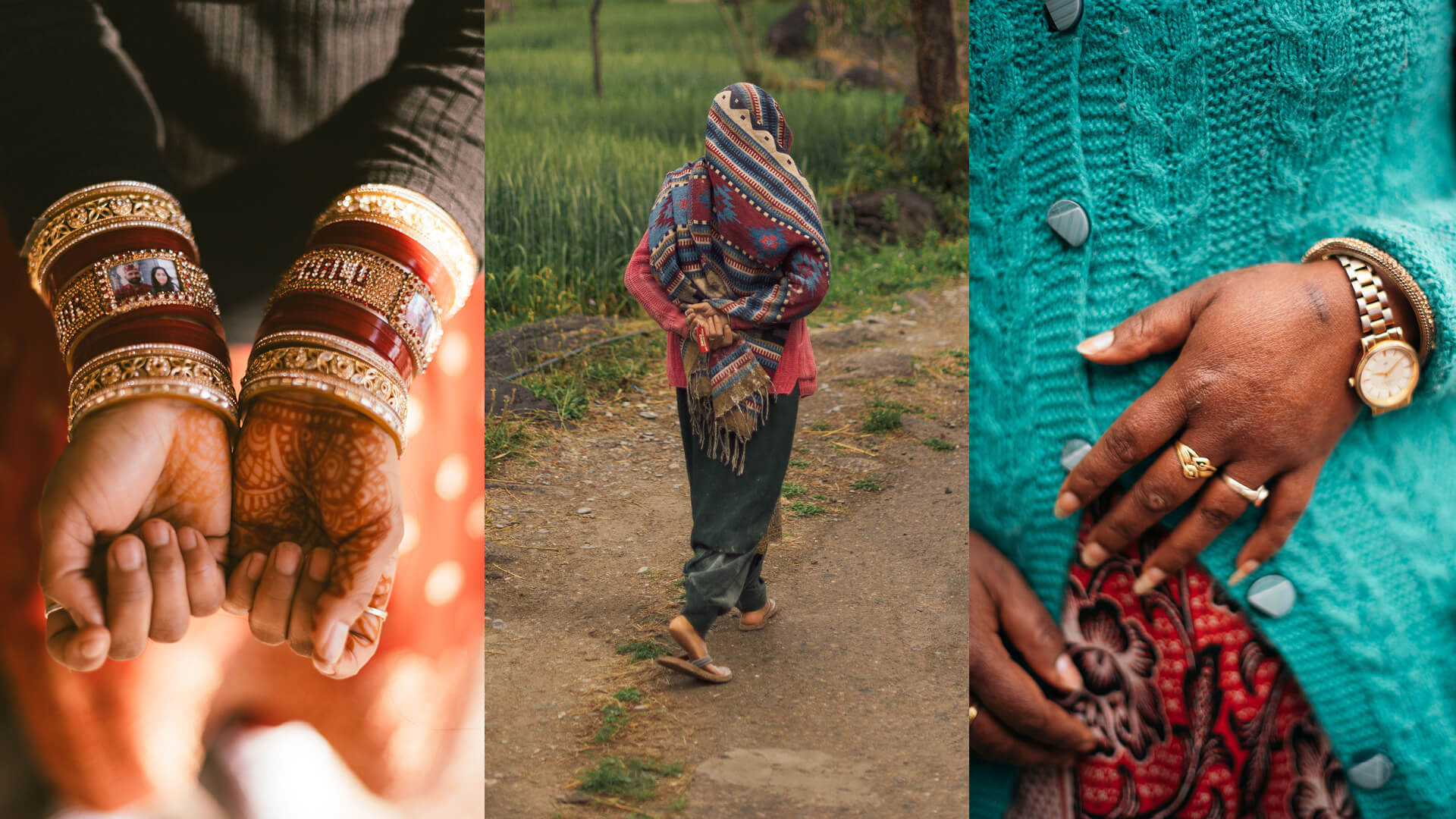
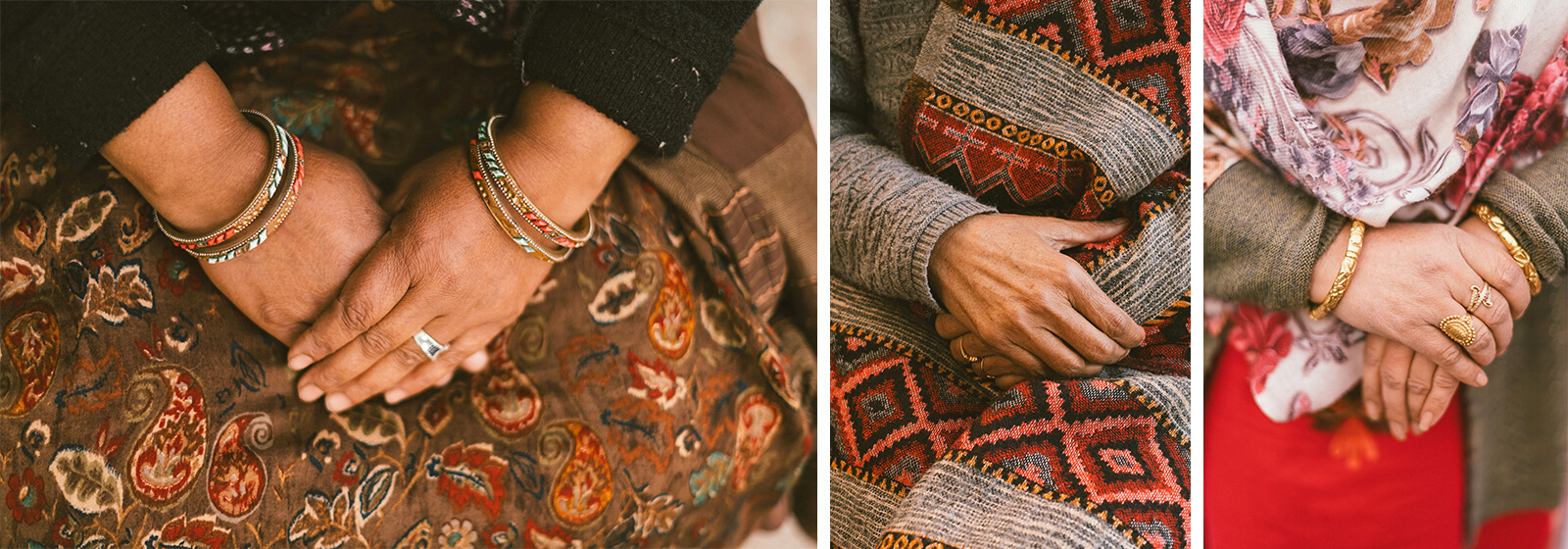
Zohra: You have struck an interesting balance in depicting the we-can-do-it-all idea associated with womanhood: from hands decked in henna and chooda (traditional bridal bangles) to women treading lone paths carrying hunted wood or immersed in weaving sweaters/shawls to earn a living. Why was illustrating this balance important for the project?
Aashna, Farheen: The project spotlights the fact that labour is embedded into the gendered experience of women – which is universal. The sweater weaving, gathering wood, caring for the livestock, and the land, are all extensions of their household labour. The goal of the project is to show how labour is a formative component to gender and to show labour’s relationship to femininity as well.
Zohra: What has been your intention behind expanding the project into an exhibition and what do you hope people will take back from it?
Aashna, Farheen: The exhibition was an opportunity to take the project further, open it to a wider audience and take on a new form. The original goal of the project, which remains the same, is to continue to share the concept and raise consciousness around the sexual divisions of labour that are universal in society around the world. The exhibition was another way to do that in addition to the book. The hope is that it inspires people to look and reflect on their environments, homes and communities.
Mai Ni Meriye, Womanhood in the Mountains: A Contemporary Archive is on view from June 5 - September 5, 2026 at The Other Space, Dharamshala.

by Anmol Ahuja Oct 15, 2026
How do heaps of souvenirs and relics with racist Aboriginal motifs and features become art? MCA Sydney’s winter showcase—the artist’s largest to date—beckons a possibility.
by Vandana Kalra Oct 14, 2026
With his latest exhibition as a point of departure, the modernist discusses his decades-long practice, the spontaneity of drawing and the social responsibility of artists.
by Srishti Ojha Oct 14, 2026
The first Dutch publication on the Turkish artist, the eponymous book centres on Refik Anadol: Latent City, his living data sculpture of Bruges, exhibited at BRUSK gallery.
by Srishti Ojha Oct 09, 2026
In his ongoing exhibition, the South African artist creates two post-apocalyptic futures to explore society’s relationship with textiles, patterns and technology.

make your fridays matter with a well-read weekend
Enter your details to sign in
Don’t have an account?
Sign upOr you can sign in with
a single account for all
STIR platforms
All your bookmarks will be available across all your devices.
Stay STIRred
Already have an account?
Sign inOr you can sign up with
Verification link sent to check your inbox or spam folder to complete sign up process
Tap on things that interests you.
Select the Conversation Category you would like to watch
Please enter your details and click submit.
Enter the 6-digit code sent at


Mai Ni Meriye documents the unrecognised carework of women in Himachal, India
by Zohra Khan | Published on : Aug 18, 2026


 Sign in with Google
 Sign in with email
What do you think?