Architecture06 mins. read
Foster + Partners' Zayed National Museum set to make waves in UAE's cultural context
by Mrinmayee BhootJul 29, 2025



by Pia BhatiaPublished on : Aug 24, 2026
To construct a building housing millennia of recorded natural history in a decidedly manmade space feels completely in keeping with the overarching project of Saadiyat Island, a low-slung, 27 sq km island in Abu Dhabi that has become one of the most concentrated experiments in cultural architecture in the Gulf. The island already boasts institutions of international prestige, including the Louvre Abu Dhabi, and is in a process of continuous expansion, with a Gehry Partners-designed Guggenheim set to open later this year.
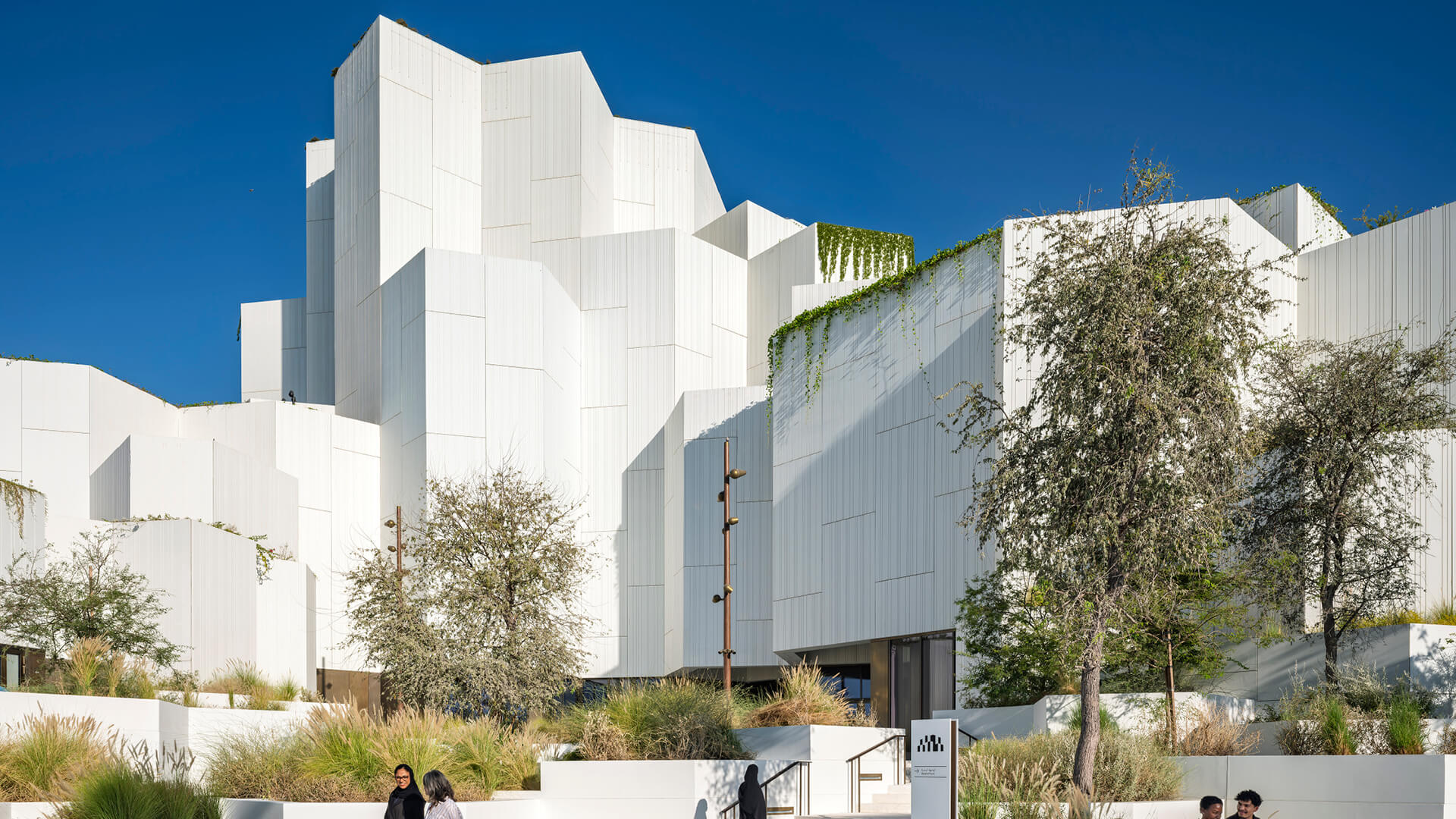
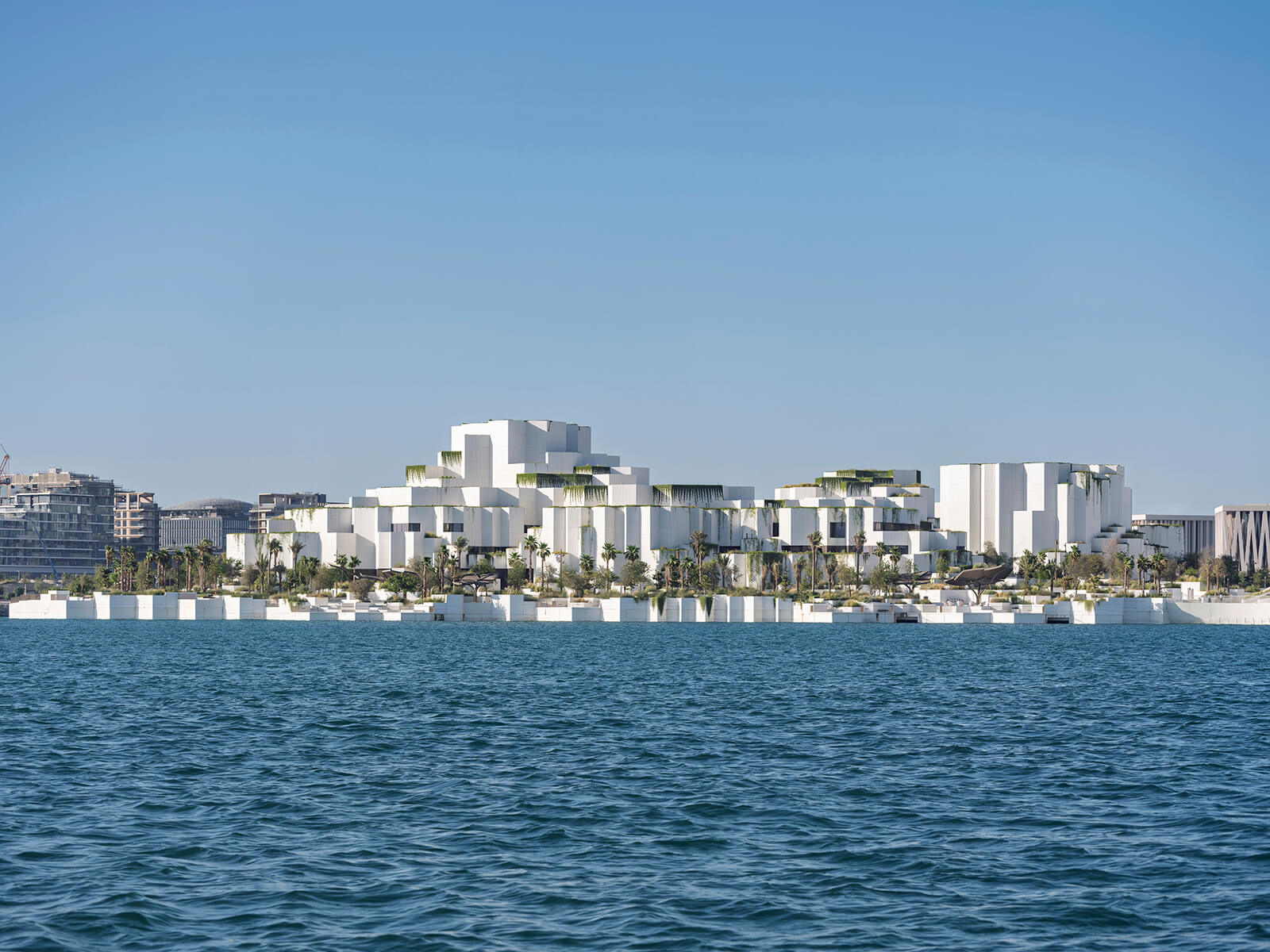
Saadiyat’s competing intentions—to become a global cultural hub while promoting Emirati culture, and to promote sustainability while accelerating the construction of billion-dollar cultural institutions and mega structures—are visibly reflected in the Natural History Museum Abu Dhabi. The 35,000 sq m structure draws on the geological formations and wadis of the region, translating them into a monumental composition with imposing facades of locally-manufactured ultra-high-performance concrete.
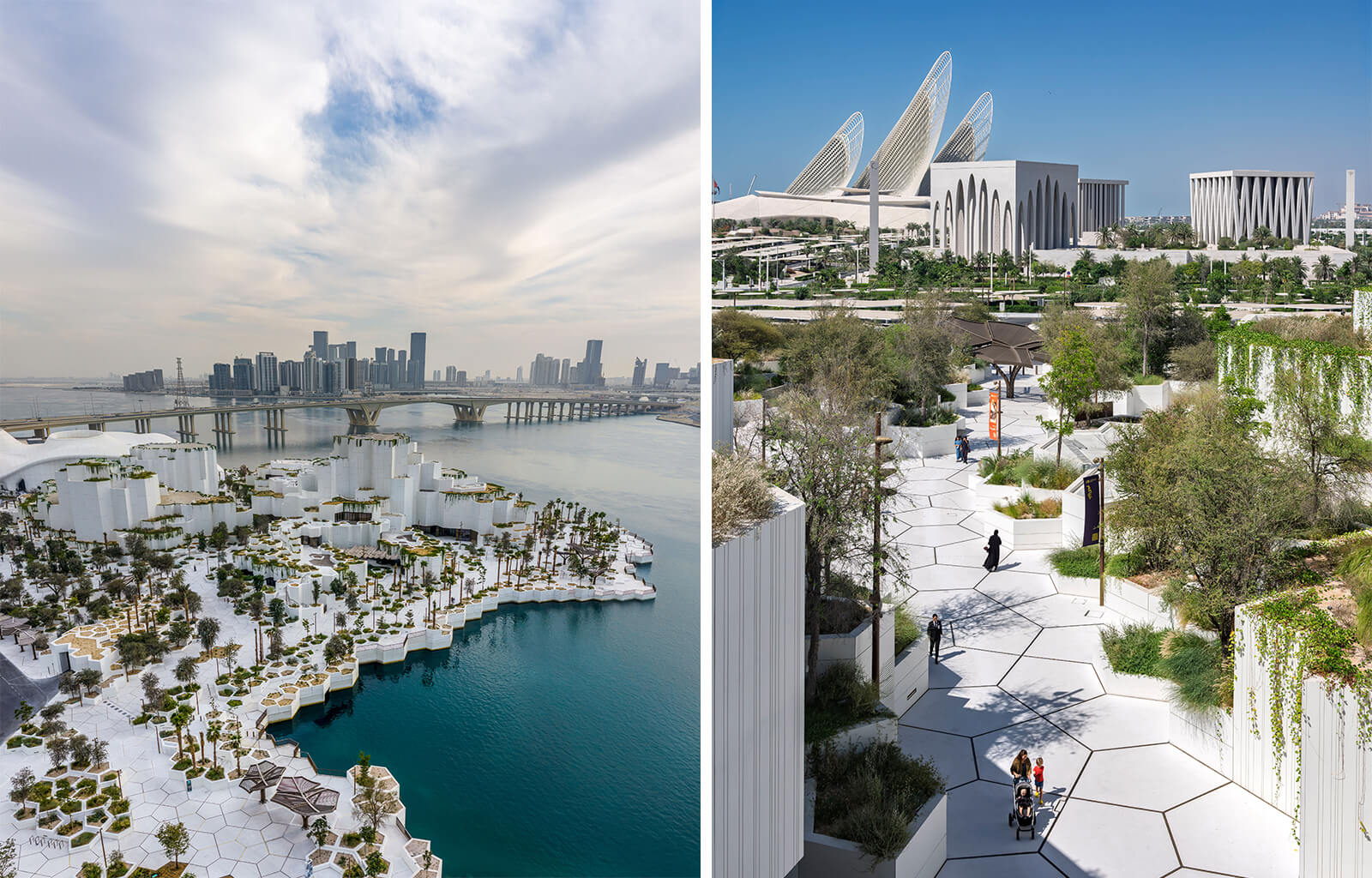
Designed by Dutch architecture practice Mecanoo with Egis, Broadway Malyan, Pascall+Watson and WAHO Landscape Architects, the museum takes an unusual approach to the natural-history institution. Its architecture repeatedly attempts to bridge the distance between the natural and the constructed.
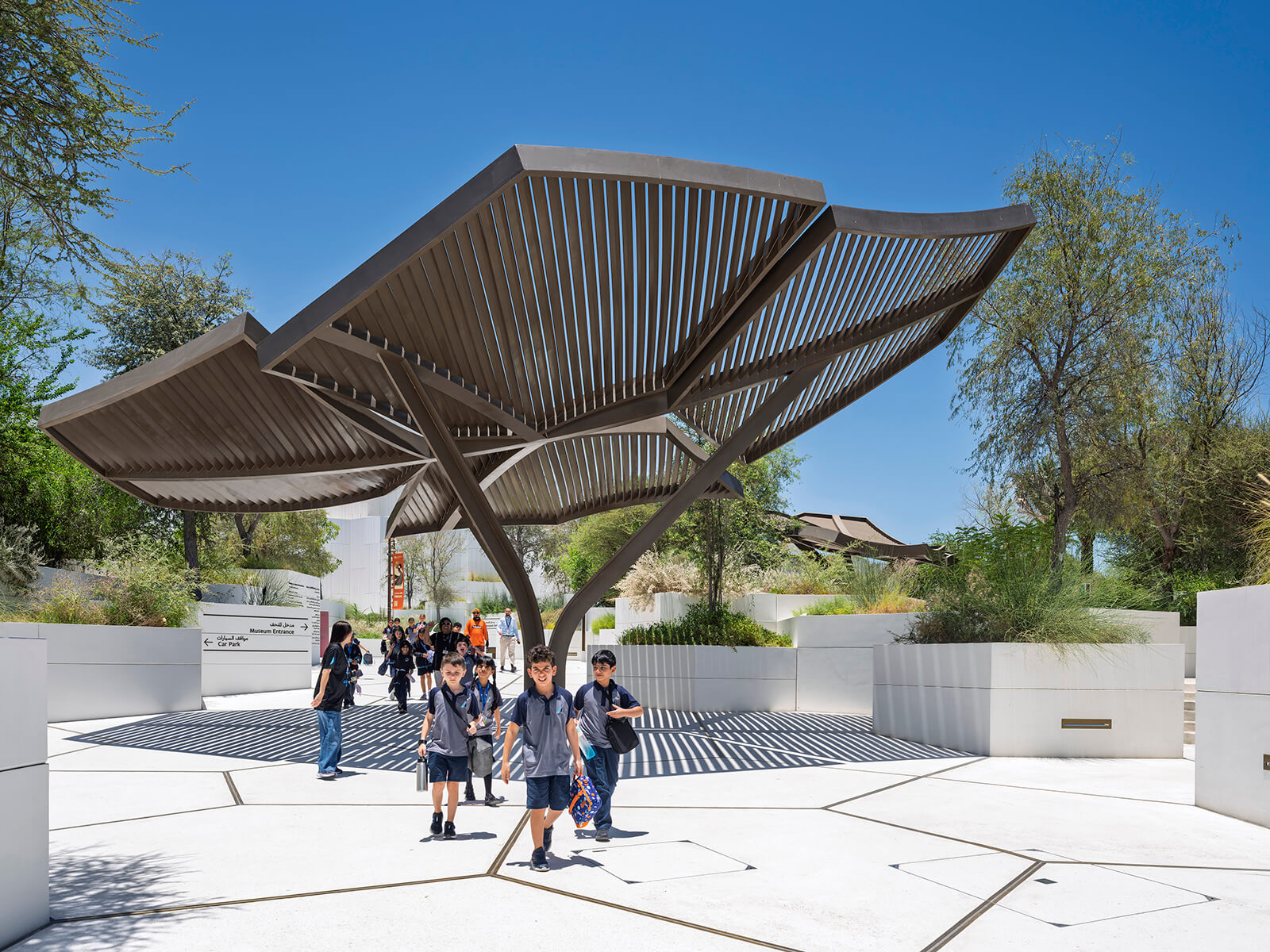
From the outside, the Natural History Museum Abu Dhabi is composed of heavy, sculpted volumes broken up by pentagonal patterns derived from cellular structures in nature, lending it the order of something between a hive and a glacier. Its outward form can be read as a reference to rock formations as well as cellular structures, but simultaneously appears to have a more contemporary interpretation read through a pixelated, digitally consistent pattern manifested across its facades.
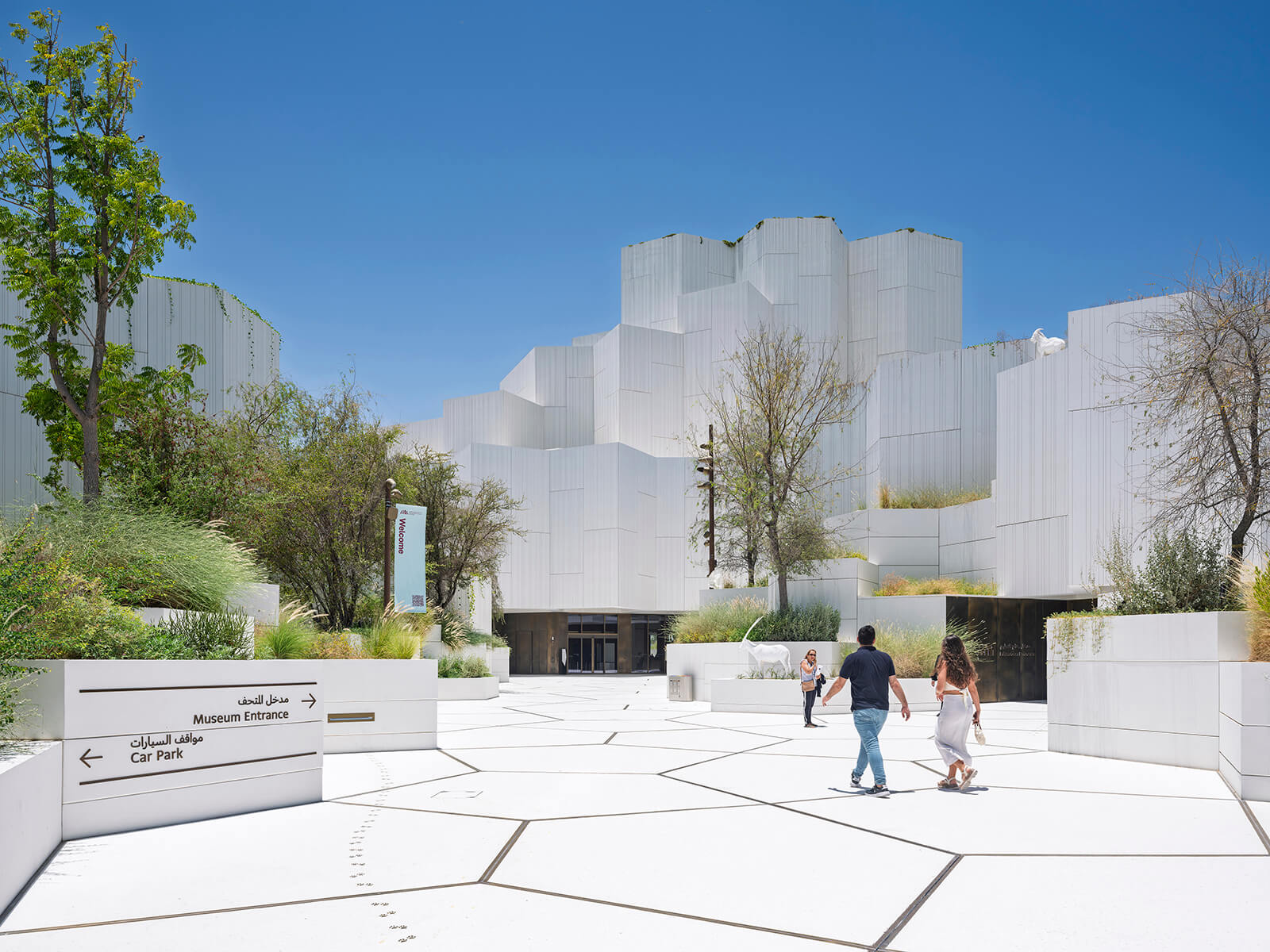
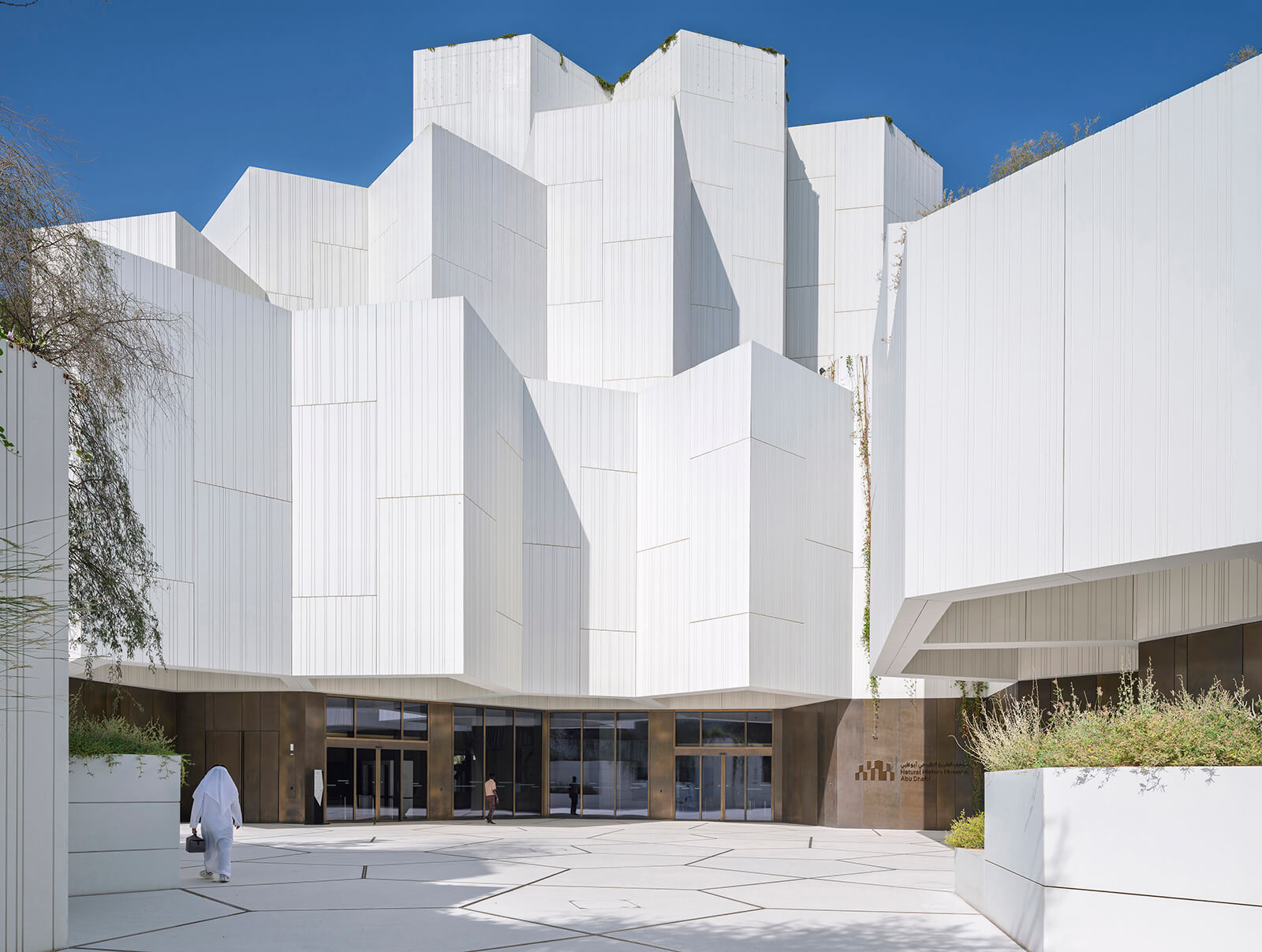
The museum’s spatial programme warrants its expansive size. Alongside its main galleries and display areas, the building incorporates a café, an education centre, laboratories and other ancillary spaces for logistics and operations, as well as research and administrative facilities. The building also boasts generous public spaces, including multipurpose and event rooms, a plaza, gardens and a waterfront landscape to facilitate rest and self-guided exploration. Three public pathways run through the site, connecting the waterfront with the surrounding cultural institutions of Saadiyat Island. Crucially, these routes do not require a museum ticket. The stated ambition is to make the building part of everyday public life: somewhere to wander, pause and observe, rather than simply a container entered for the purpose of consuming an exhibition.
The building comes together as both a scientific institution and an architectural destination—a place of structured education that is designed to produce wonder. The galleries can be followed chronologically, but the central courtyard allows visitors to break from that sequence and pursue their own curiosities. Porous spatial divisions invite visitors to construct their own routes through a story that stretches from the Big Bang to the climate crisis.
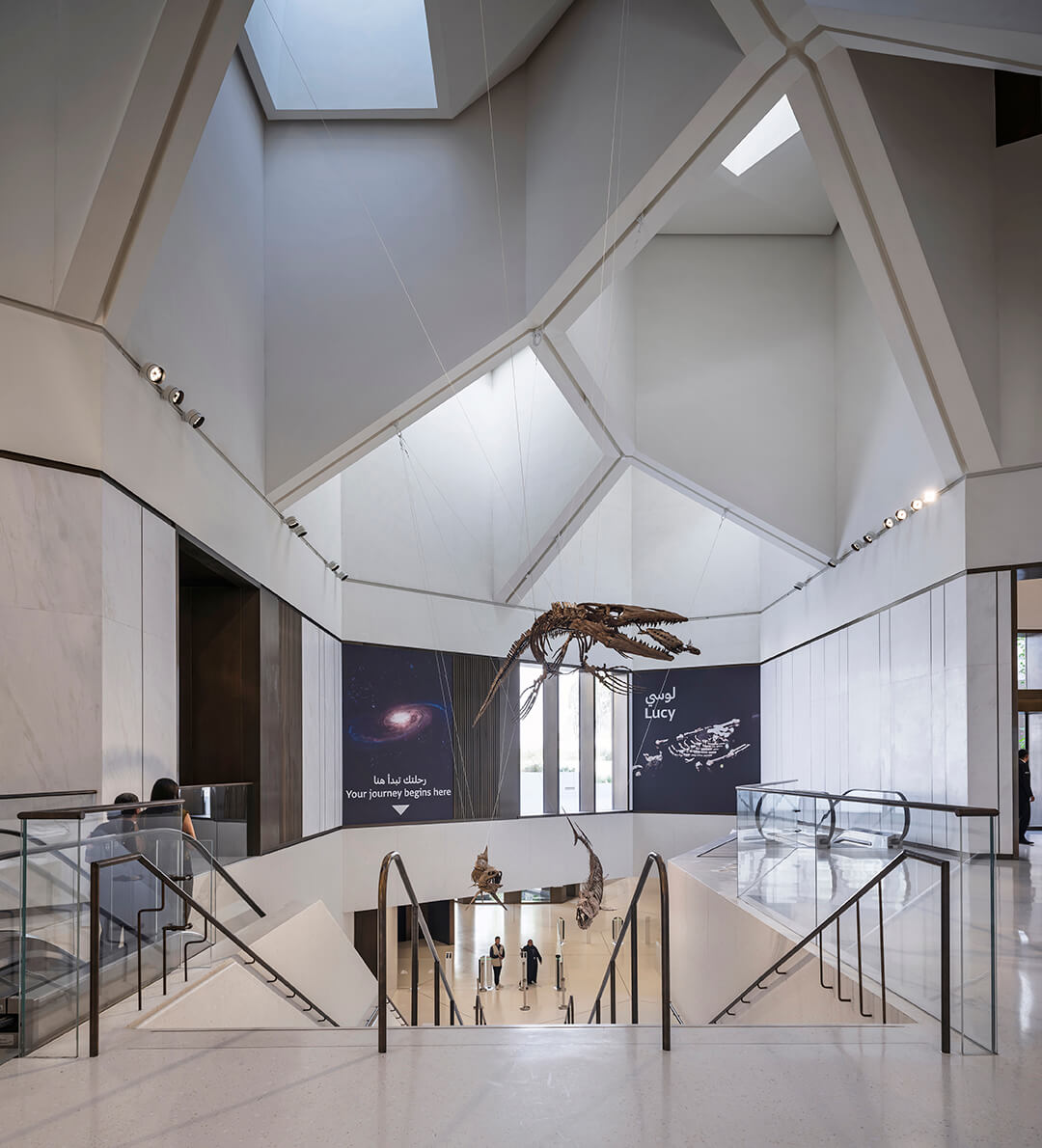
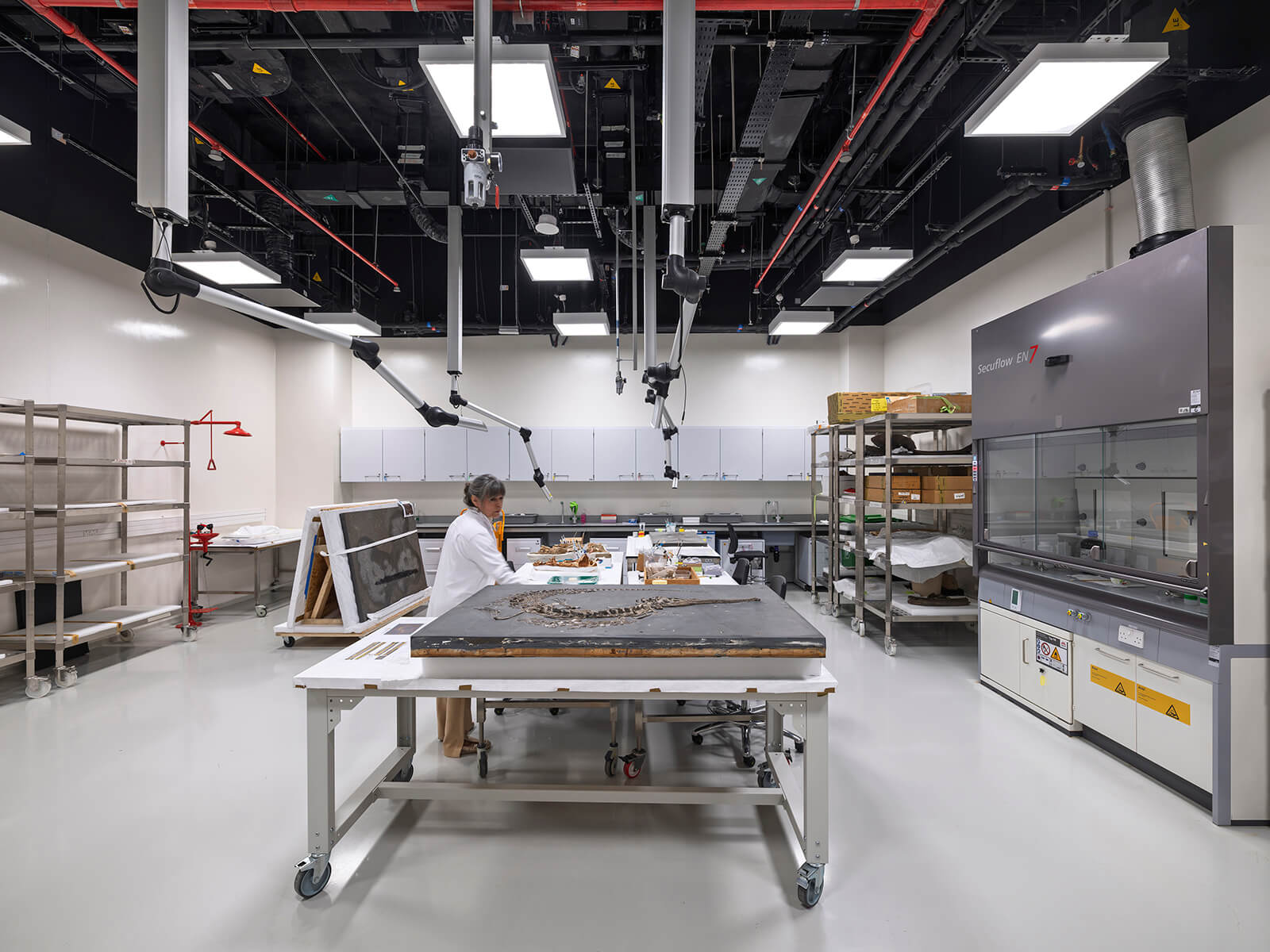
Deep skylights bring controlled daylight into the building, while textured surfaces and shadows add tactile volume to the artefacts—cast over bones, taxidermy mounts and rockwork; the variety of light and shade help make these static objects look dynamic and alive. Elsewhere, terraces, shaded passages and landscaped areas extend the museum’s displays beyond its galleries.
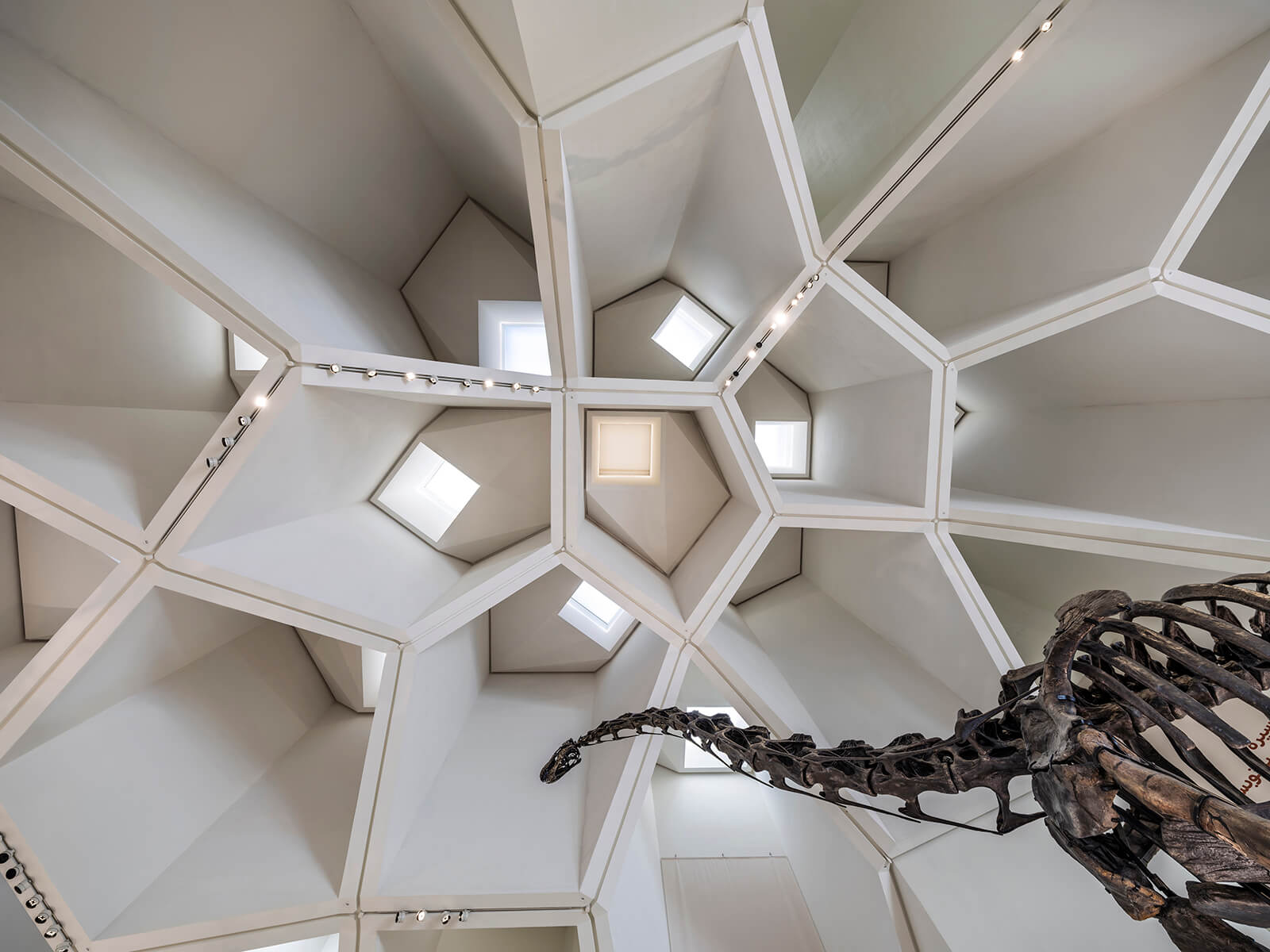
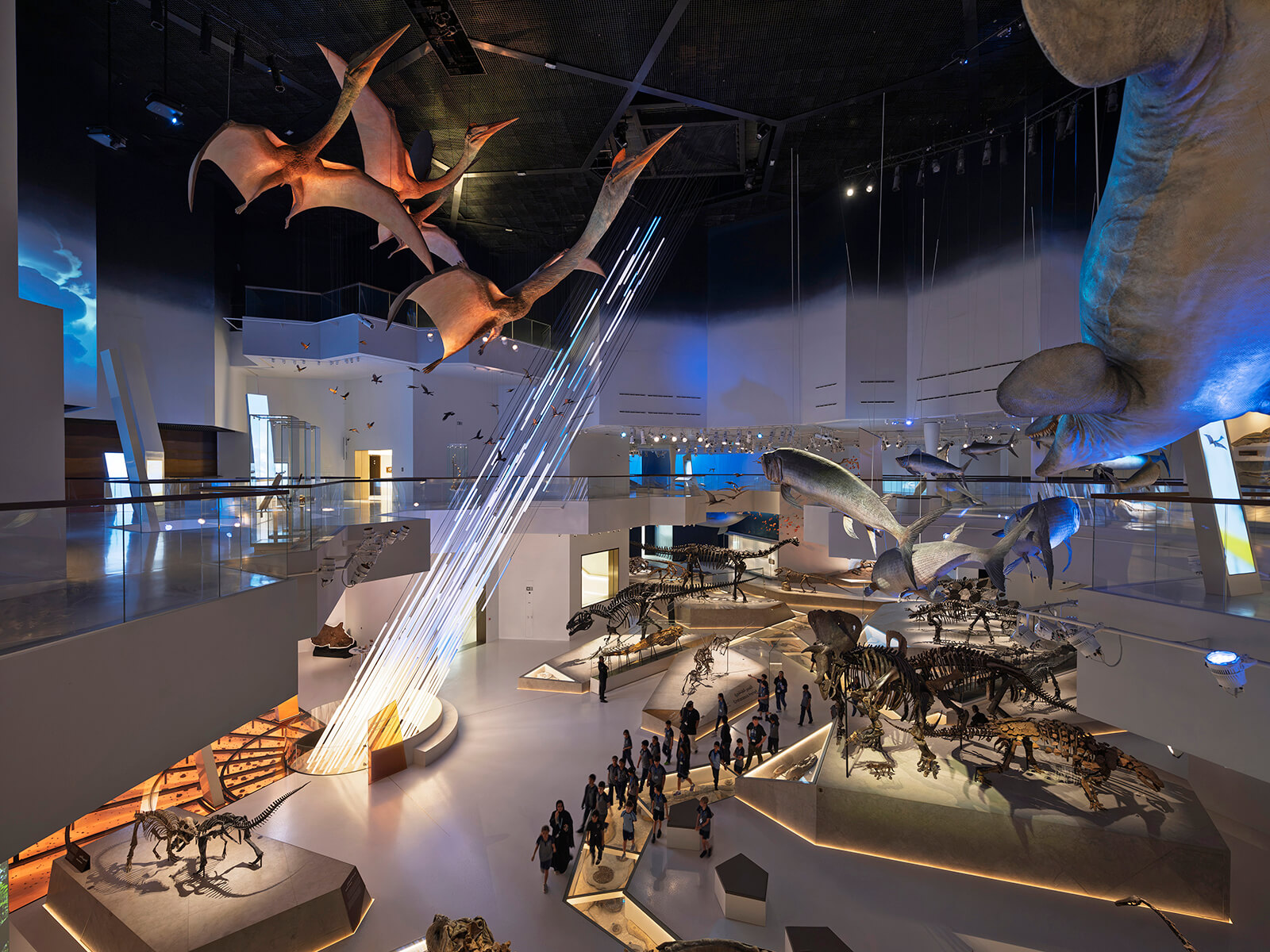
The tension between the organic and the constructed continues throughout the building. Here, the remains of the natural world are given the treatment of works of art: fossils are isolated and illuminated, while enormous reconstructions are staged as colossal installations. Stan, the museum’s nearly complete Tyrannosaurus rex, is among the museum’s centrepieces, alongside a 25-metre blue whale skeleton and the Murchison Meteorite, which contains grains older than the Solar System itself.
While these specimens are platformed as cultural artefacts, visitors are not always separated from them by conventional boundaries. The attempt here is to create a sense of continuity between the body of the visitor, the architecture and the objects on display—reinforcing the museum’s attempt to make natural history feel less like something being observed from a distance and more like an environment of which we are already a part.
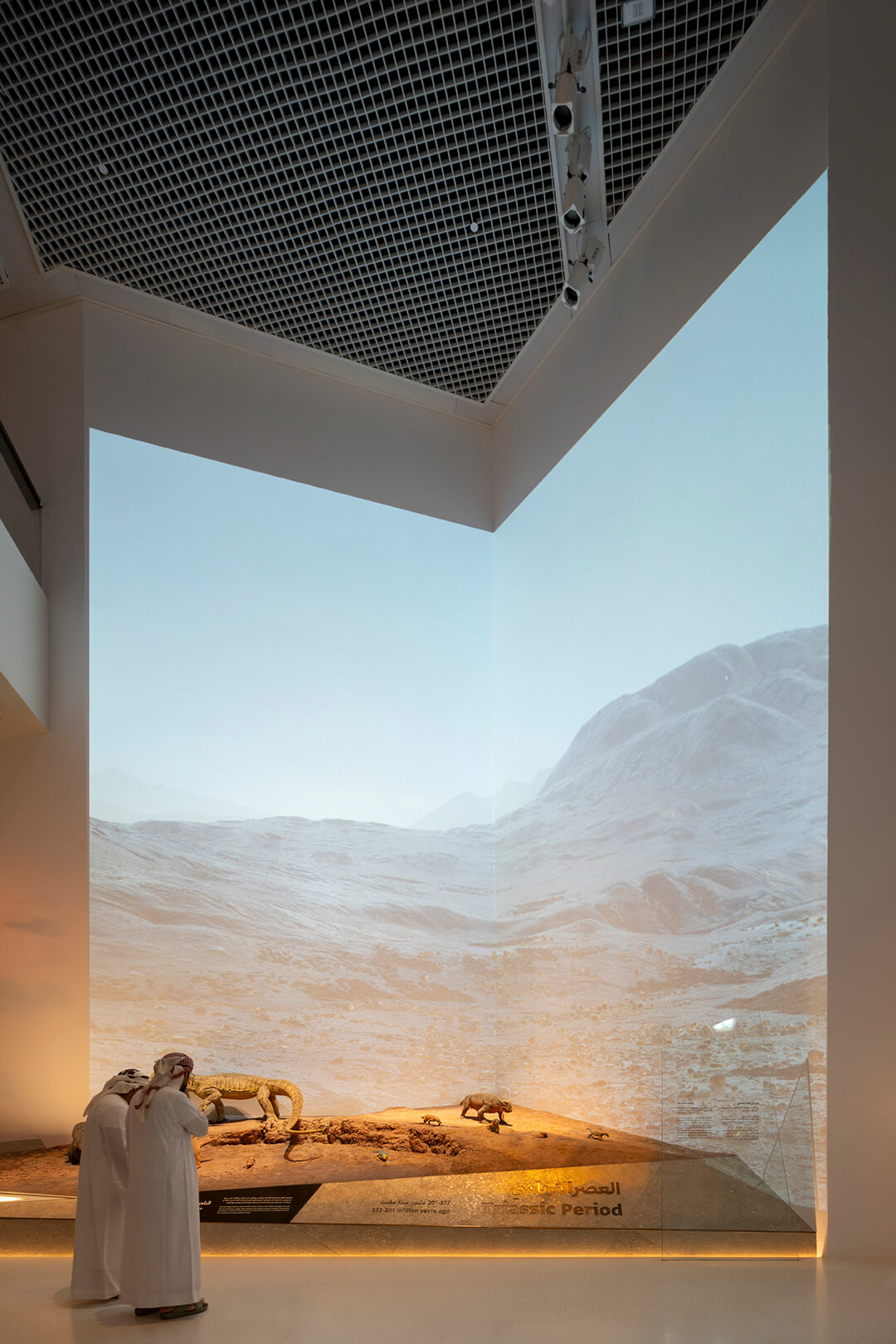
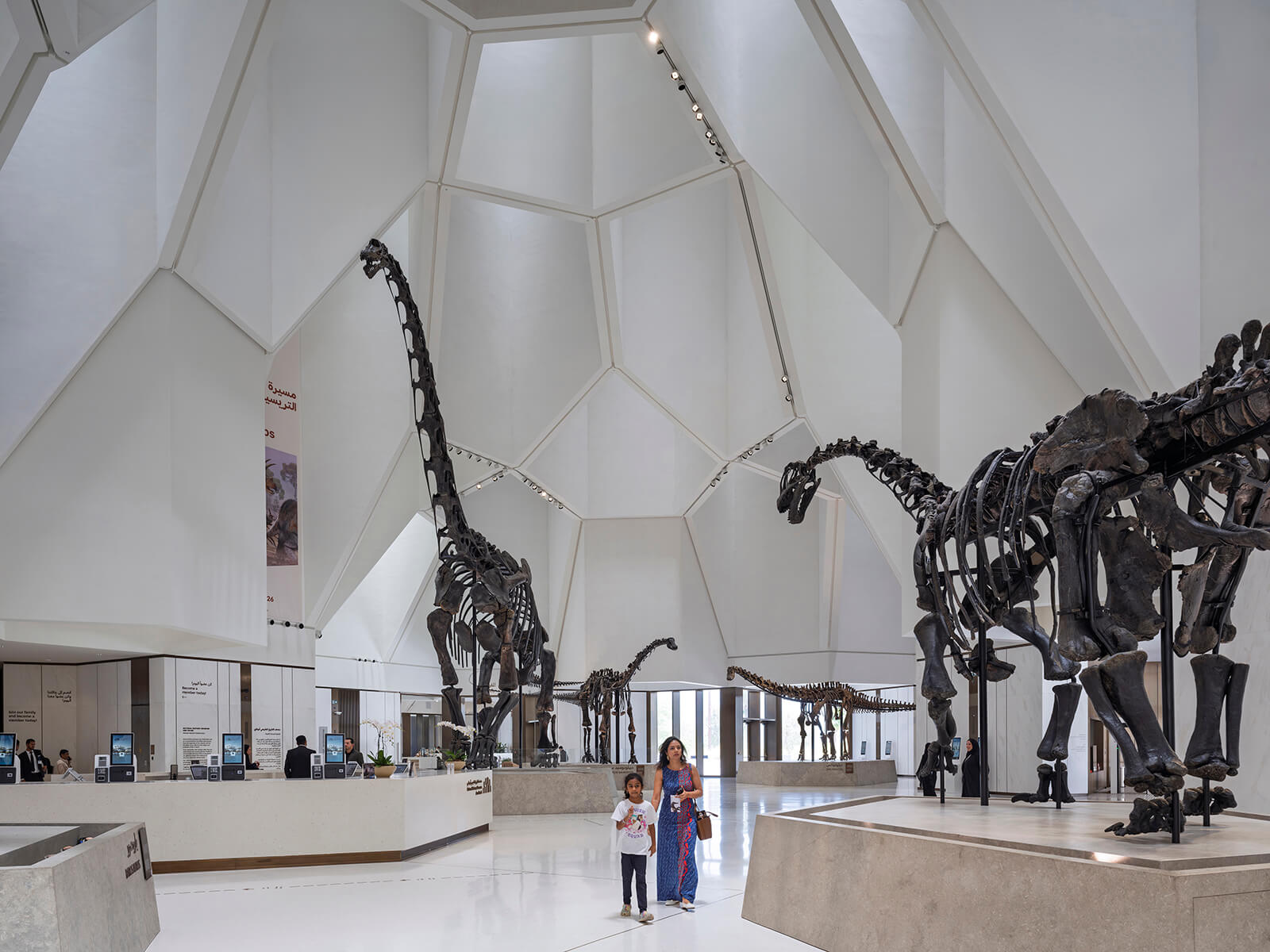
The Natural History Museum Abu Dhabi echoes the characteristic grandeur of Saadiyat. It takes an almost incomprehensible subject—the 13.8 billion-year history of the natural world—and gives it an equally monumental architectural setting. The building’s geological vocabulary thus makes it feel less like a container of artefacts than an extension of the vast landscape it seeks to explain.
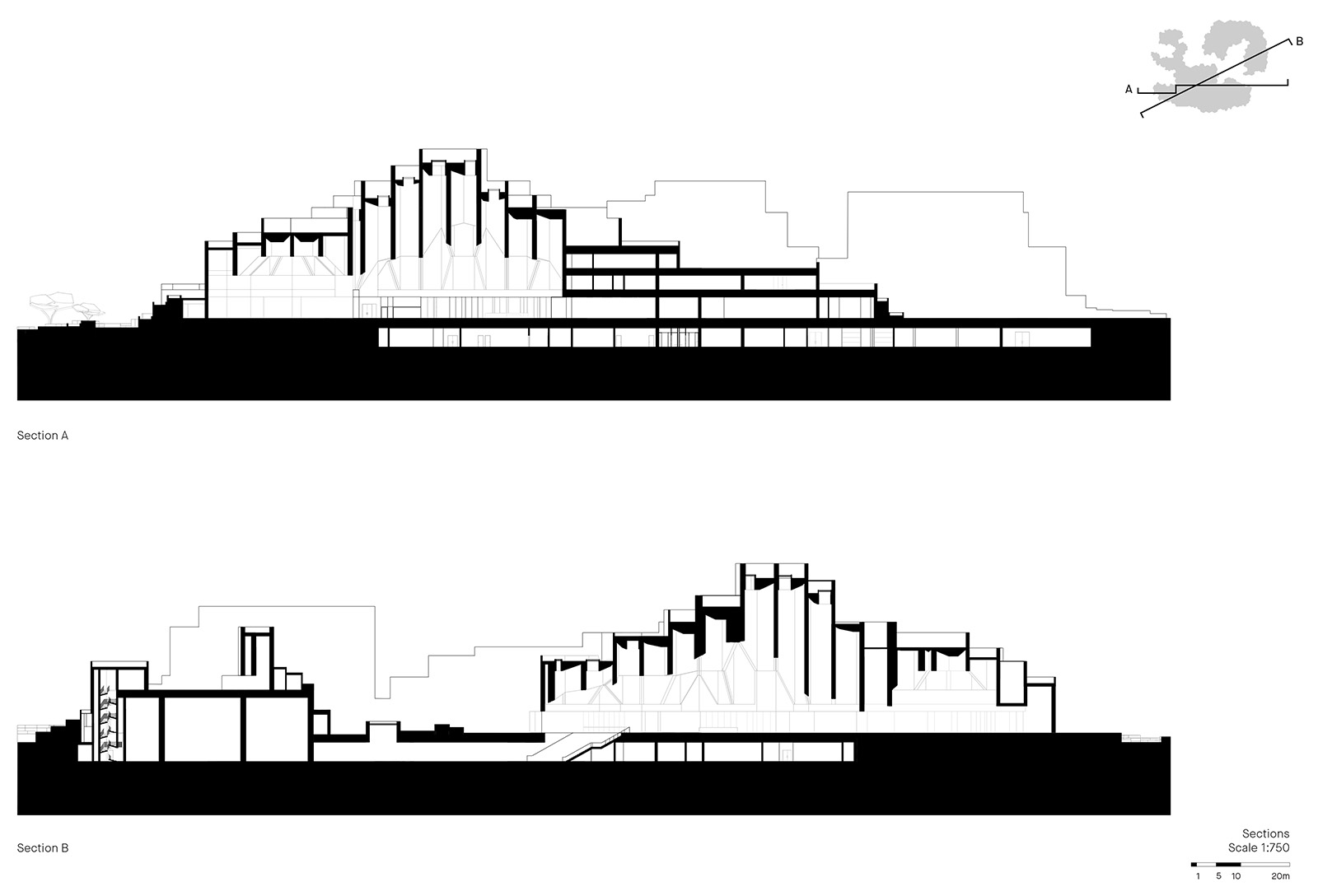
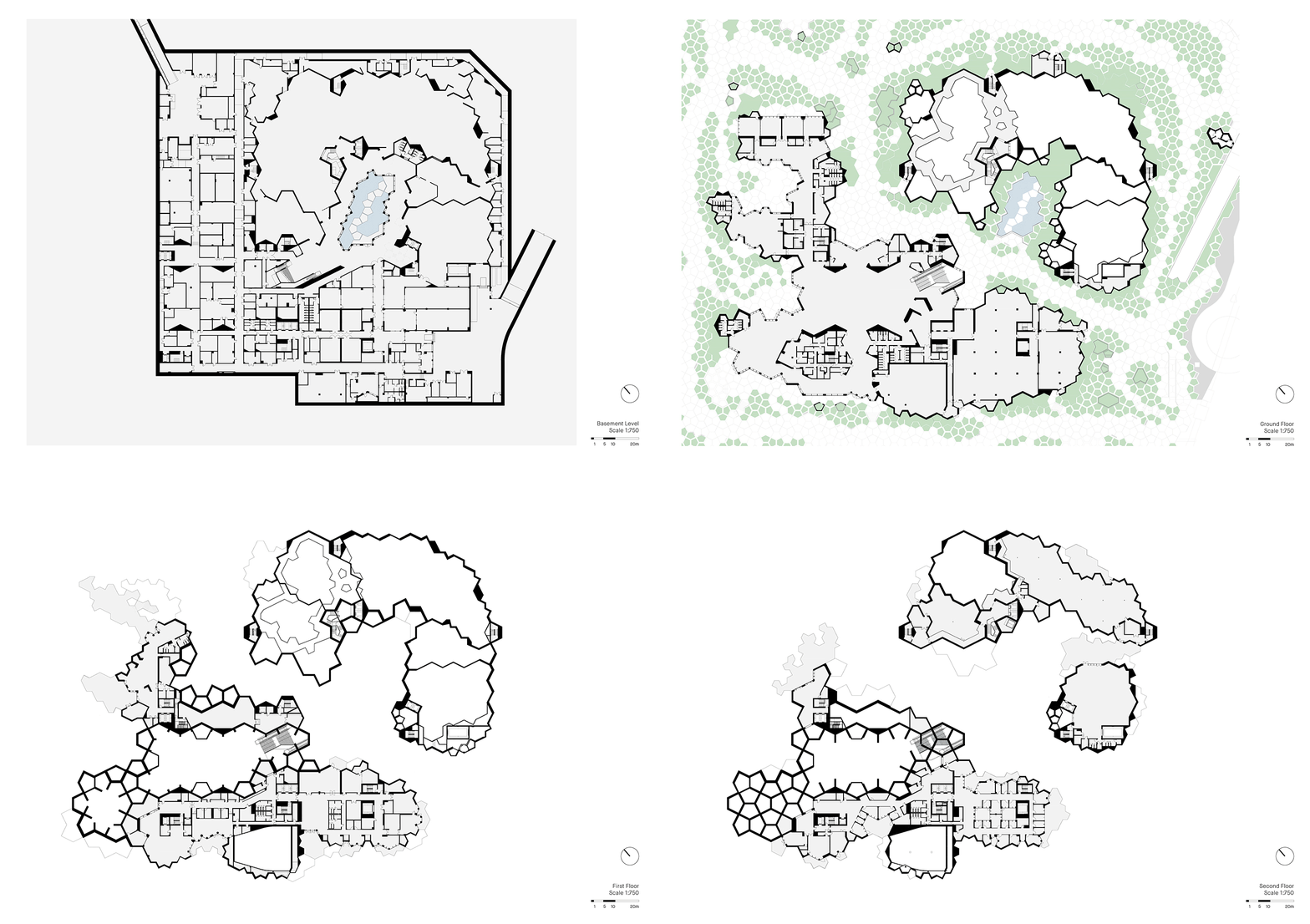
Name: Natural History Museum Abu Dhabi
Location: Abu Dhabi, United Arab Emirates
Client: DCT (Department of Culture and Tourism Abu Dhabi)
Architect: Mecanoo
Collaborators: Egis, Broadway Malyan, Pascall+Watson and WAHO Landscape Architects, Plan A Consultants, EllisDon, Miral
Area: 800 sq ft
Year of Completion: 2026

by Pranjal Maheshwari Oct 19, 2026
The Mumbai-based architects integrate courtyards, mesh screens and north light trusses to create a dining space that doubles up as a community hub at SR University, Warangal.
by Mrinmayee Bhoot Oct 17, 2026
The Rotterdam-based institute centres the Indian Ocean as a network for exploring material histories and transnational links shaping coastal cultures, positing them as future models.
by Pranjal Maheshwari Oct 16, 2026
At the 2026 Stirling Prize ceremony, Mary Duggan with RUFF Architects, MAKER Architecten and Nakshabid Architects were felicitated for proffering quality housing and social equity.
by Mrinmayee Bhoot Oct 12, 2026
The new Centre for Contemporary Arts, fostering public engagement with art in Uzbekistan, is housed in a tram depot refurbished by the French studio, emulating local craftsmanship.

make your fridays matter with a well-read weekend
Enter your details to sign in
Don’t have an account?
Sign upOr you can sign in with
a single account for all
STIR platforms
All your bookmarks will be available across all your devices.
Stay STIRred
Already have an account?
Sign inOr you can sign up with
Verification link sent to check your inbox or spam folder to complete sign up process
Tap on things that interests you.
Select the Conversation Category you would like to watch
Please enter your details and click submit.
Enter the 6-digit code sent at


Mecanoo’s Natural History Museum Abu Dhabi stages a stroll through geological time
by Pia Bhatia | Published on : Aug 24, 2026


 Sign in with Google
 Sign in with email
What do you think?