Art06 mins. read
What Ahmed Ali’s industrial photographs reveal about a new India
by Samar JodhaOct 05, 2026



by Chahna TankPublished on : Nov 11, 2026
The Alpine landscape of South Tyrol in northern Italy is still dotted with the remnants of a conflicting past. The province, which borders Austria and Switzerland, was fortified with a network of bunkers built by the Italian Fascist regime in the years leading up to and during the Second World War, which have long outlasted the fraught circumstances that necessitated their construction in the first place. These subterranean concrete monoliths, conceived as instruments of military defence—built for protection, fortification and survival—were nonetheless borne out of fear; and now stand as reminders of a particularly volatile and violent chapter in history that we had hoped to have learned and moved on from.
These giant relics, scattered across Europe, have since met with different fates. While there have been attempts to reckon with them through adaptive reuse, like TOITO architekti's transformation of the abandoned Bunker B-S 10 in the Czech Republic into an experiential dwelling or Lasovsky Johansson Architects' reimagining of the Řopík bunkers into brutalist forest cabins in Slovakia, a majority of them have been left at the mercy of time, abandoned, sentenced to oblivion, just as surely as they were erected from it.
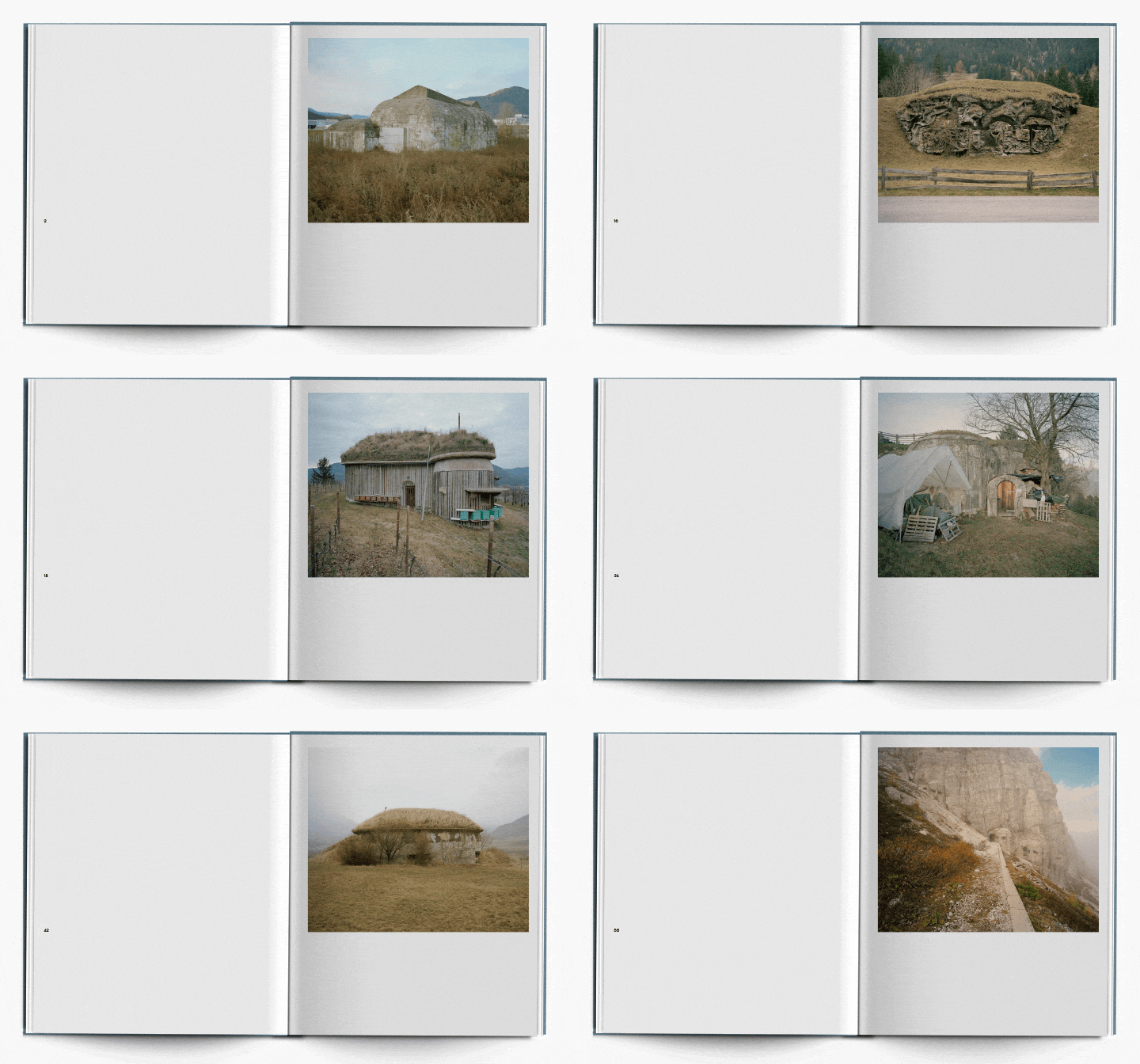
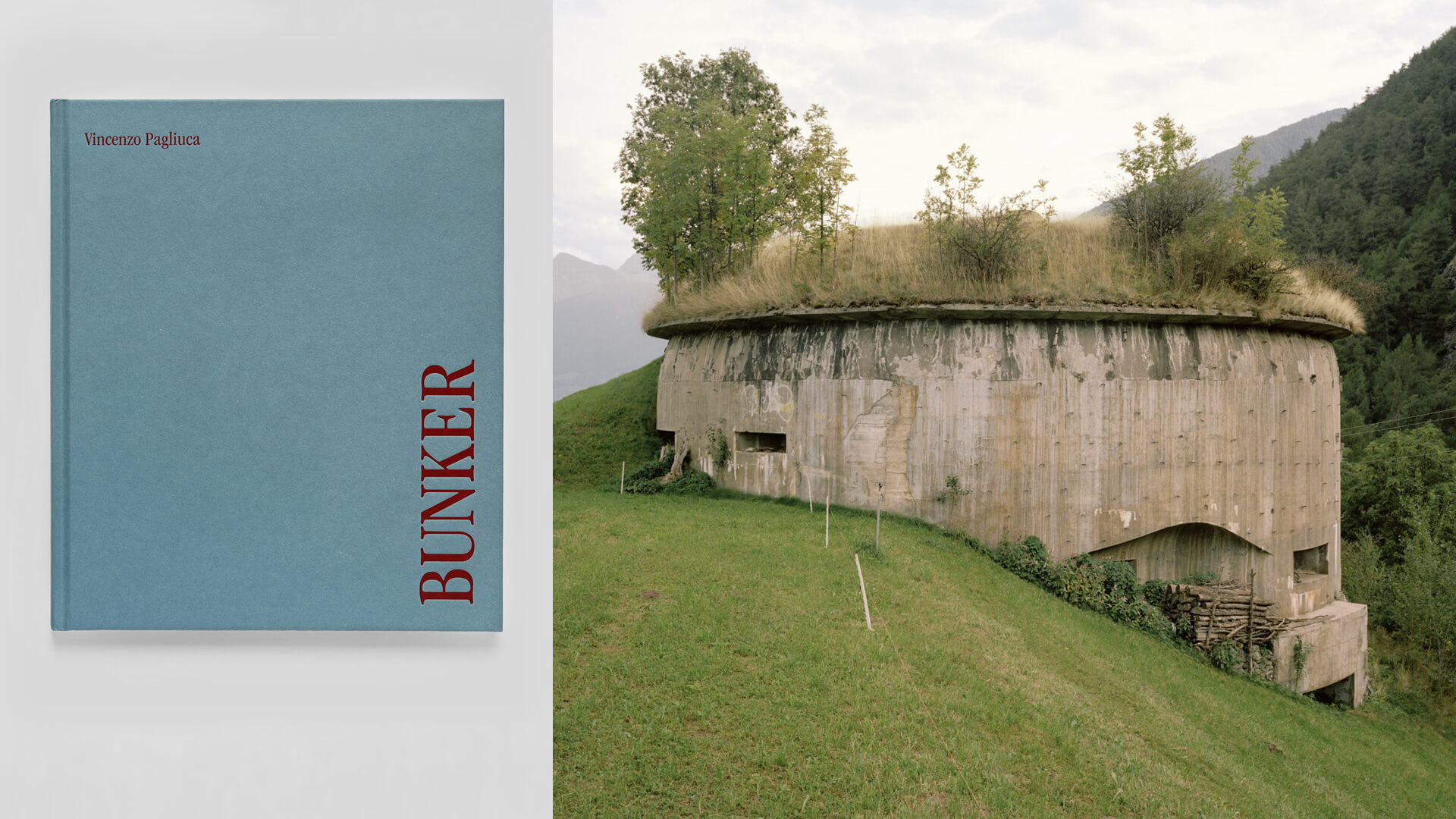
In the photobook Bunker published by Hartmann Books, the Italian photographer Vincenzo Pagliuca revisits these remnants in South Tyrol, tracing the remains of the Vallo Alpino (Alpine Wall) between 2018 and 2023, capturing the coexistence of these imposing military structures with the natural landscape that surrounds them—a relationship he describes to STIR as 'paradoxically symbiotic and dissonant at once'. The 72-page book is notably sparse in its presentation, with pages devoted almost entirely to the photographs, with no accompanying text to guide the reader, allowing them to hold on their own. Only towards the end does the book offer a sequence of captions, followed by two essays that provide historical and critical perspectives on the bunkers.
The book is part of a larger trilogy, alongside mónos and the forthcoming Domus, through which Pagliuca constructs what he calls a 'personal inventory of architectural archetypes'. While mónos documented isolated homes in the mountainous regions of southern Italy, Domus will capture Sardinia's Neolithic tombs. “Domus speaks of a remote past, mónos of the present of territories marked by depopulation and Bunker of a possible dystopian future,” the architectural photographer explains.
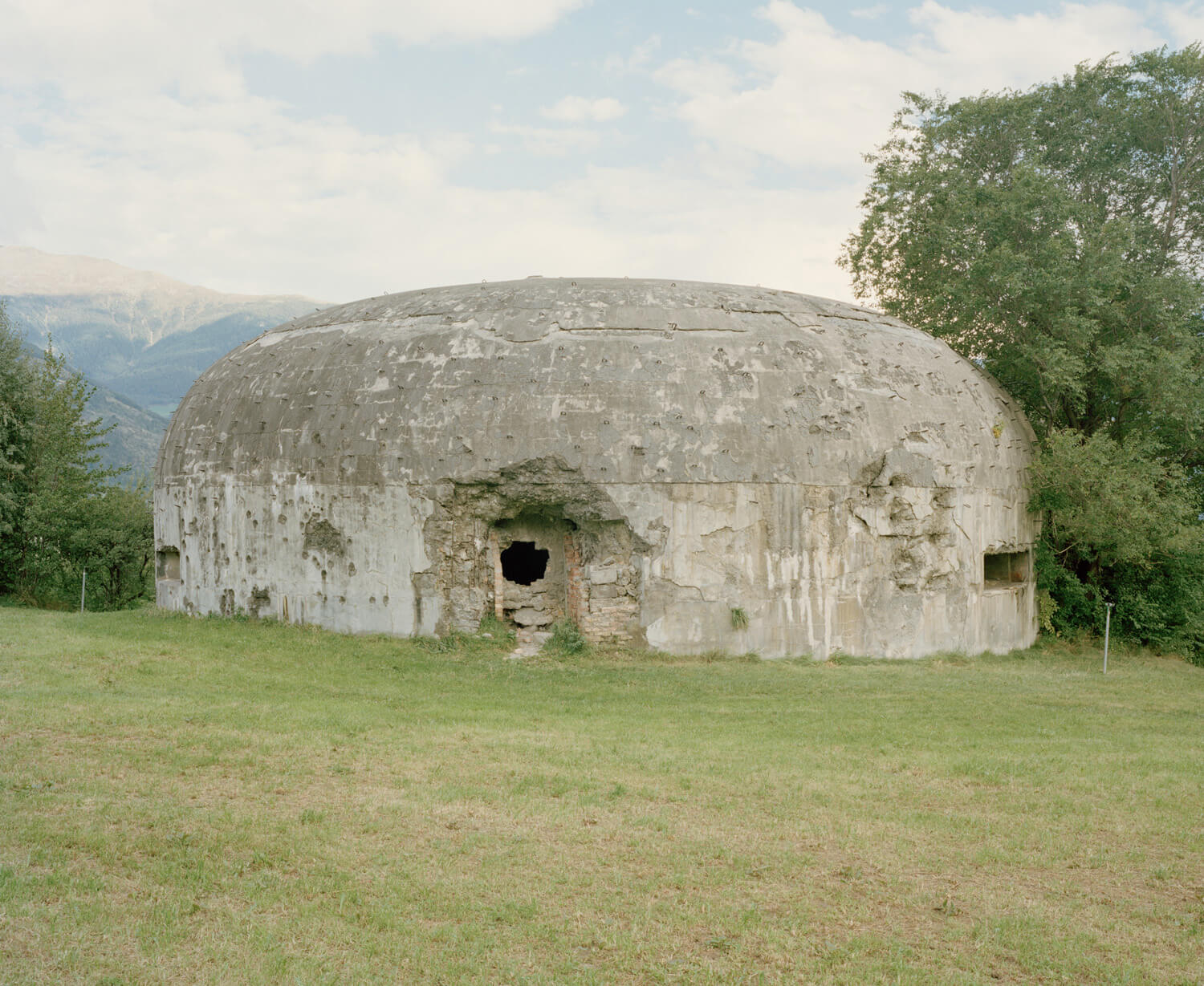
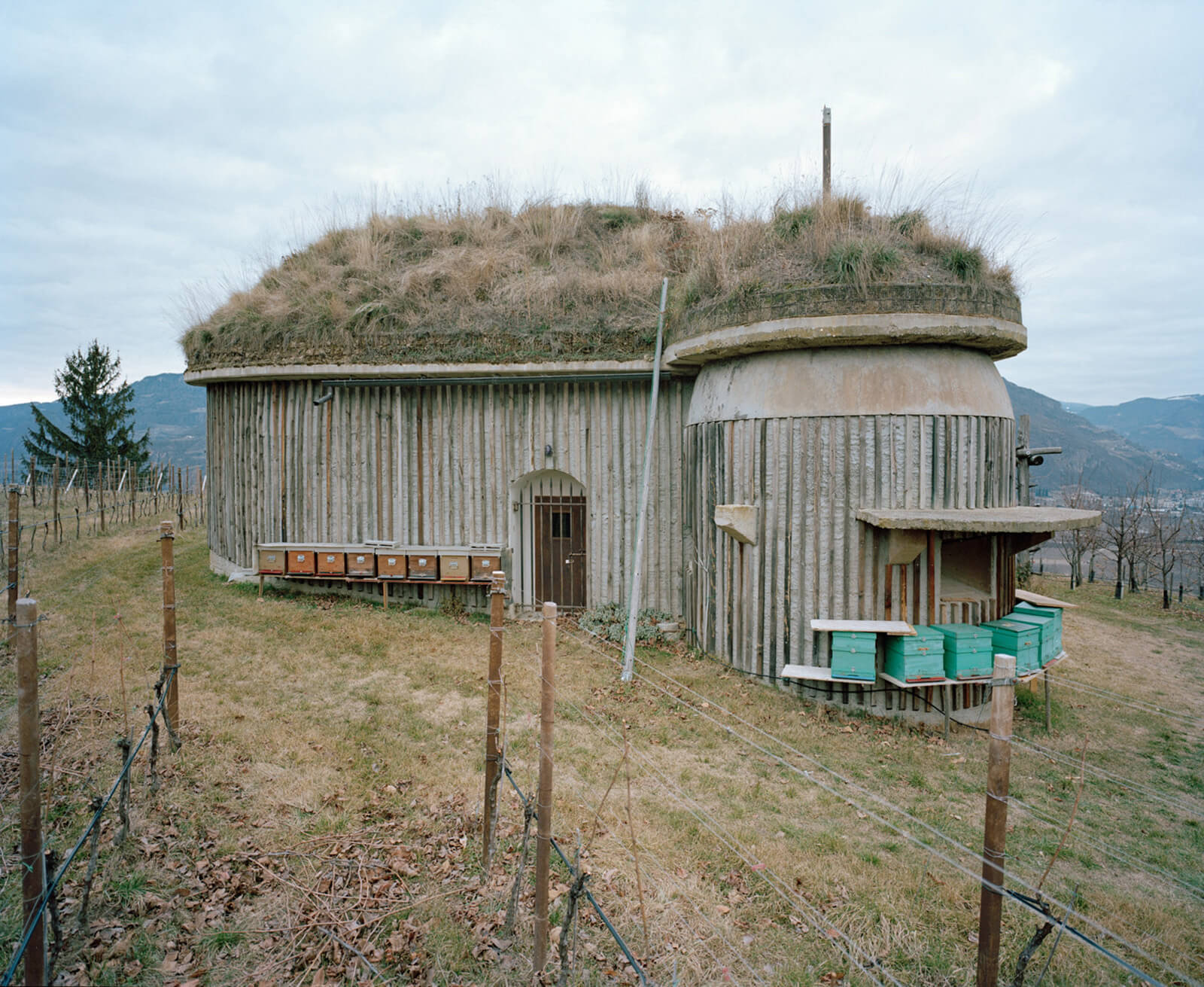
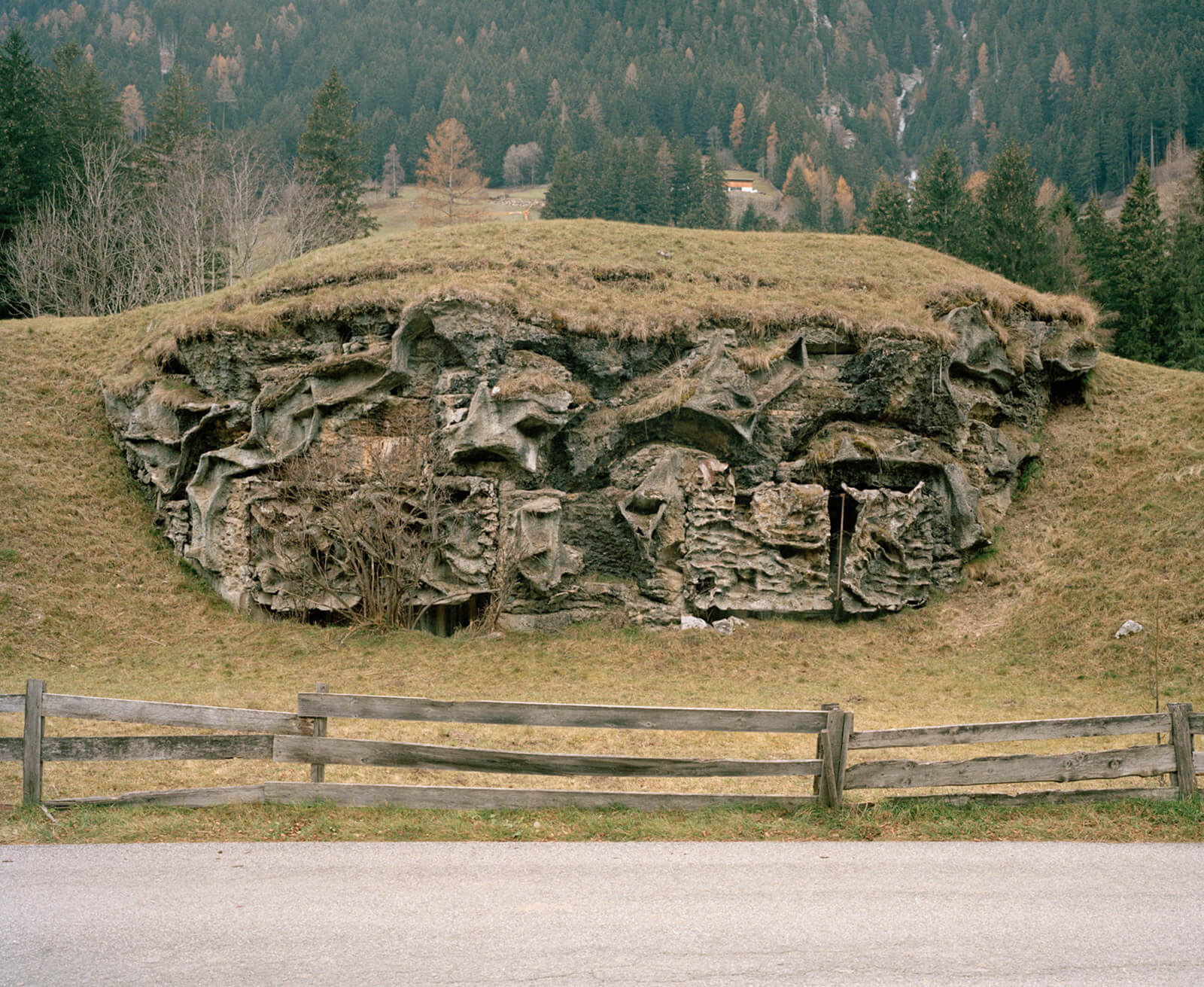
Pagliuca first encountered the bunkers of South Tyrol during an artist residency, as he tells STIR, and was interested in photographing these structures because of their stark architectural presence in the otherwise verdant landscape. Yet, for him, the project also carries a broader historical and contemporary significance. “At a time marked by a return to rearmament and by increasingly pervasive, invisible surveillance systems, the bunkers appear as archaeological remains of a modernity founded on control. They are an uncomfortable legacy, one I believe is worth preserving in order to keep alive the collective memory of a dramatic period in European history, marked by nationalism and by the inability to resolve conflicts through peaceful means,” he shares.
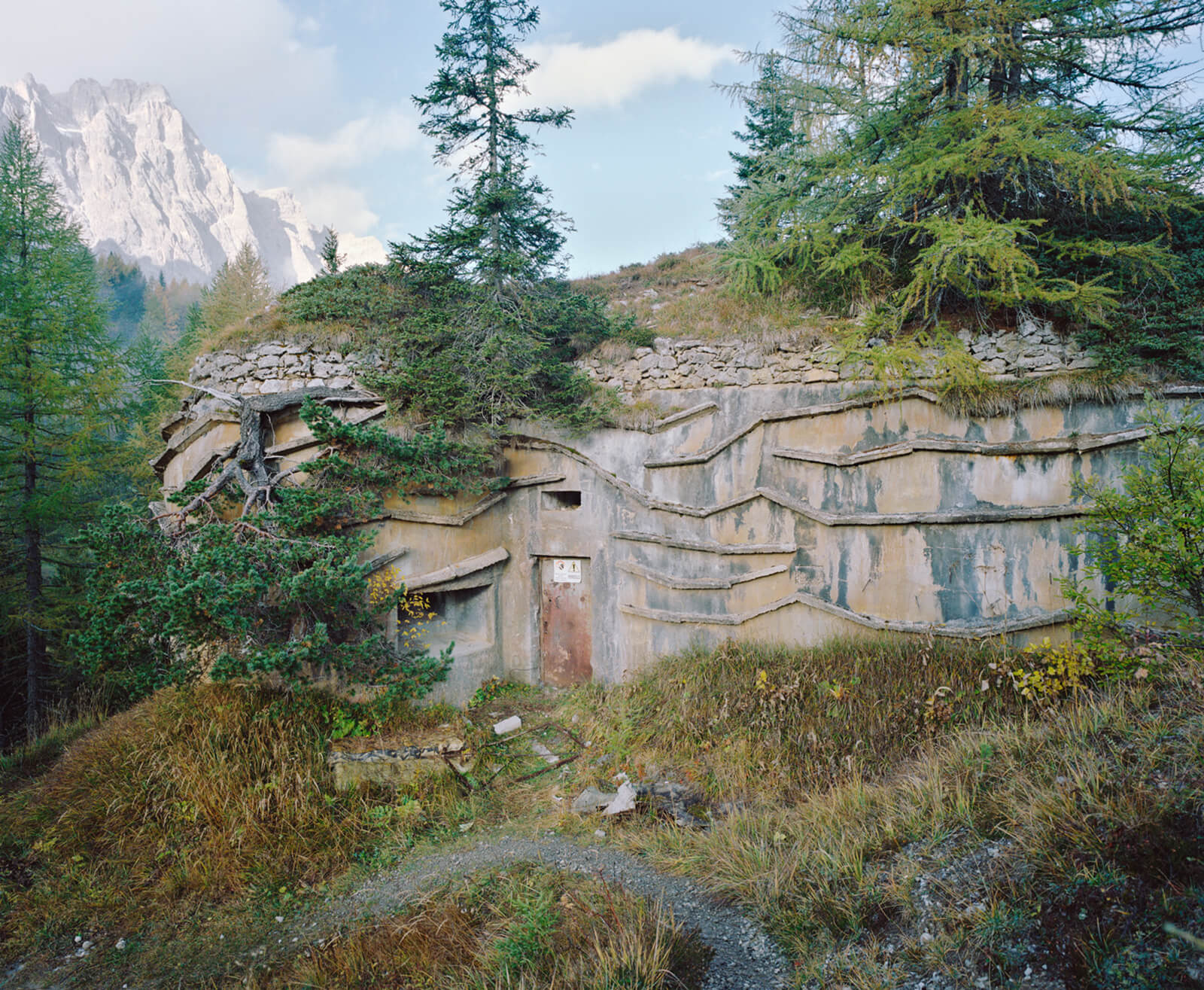
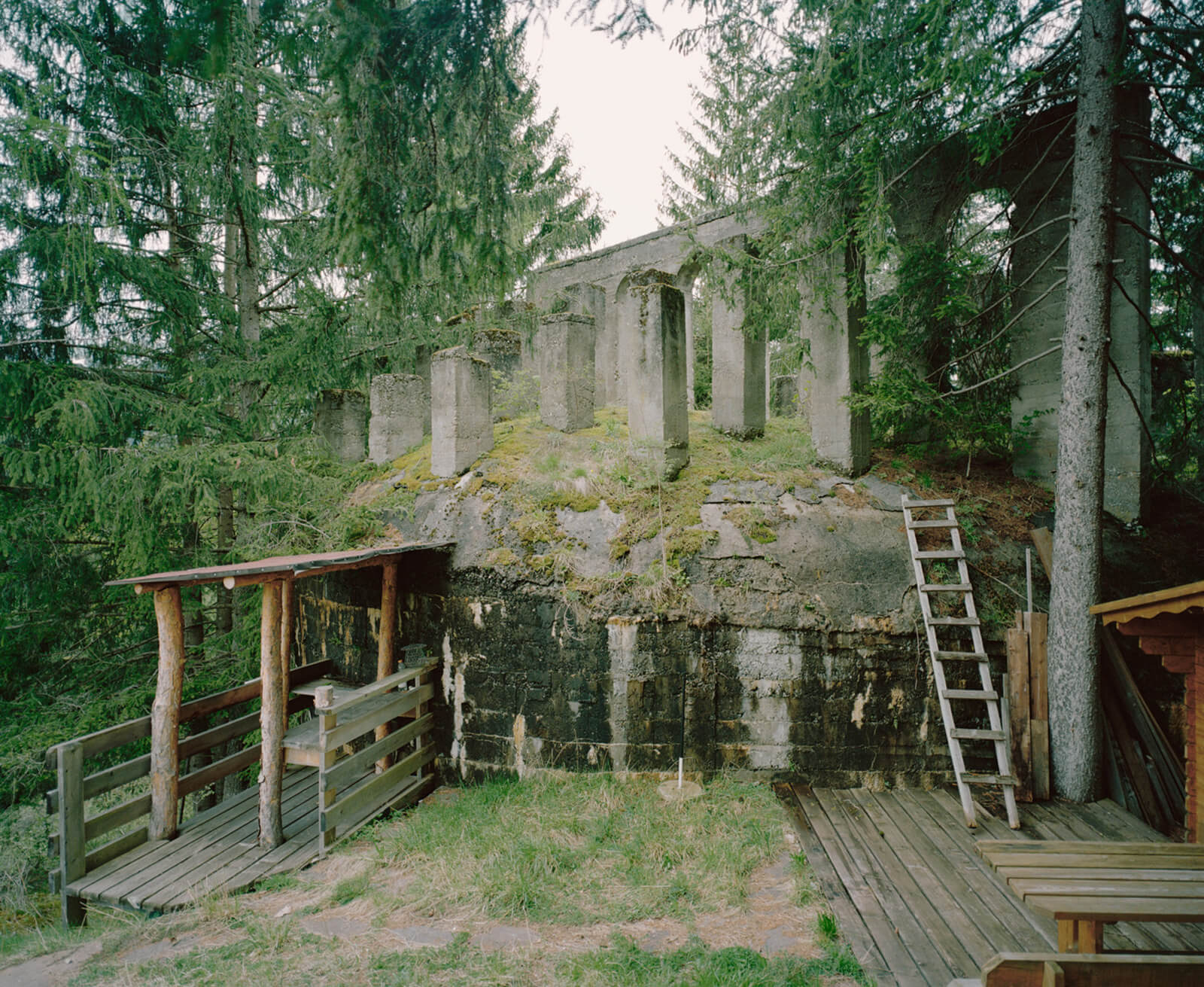
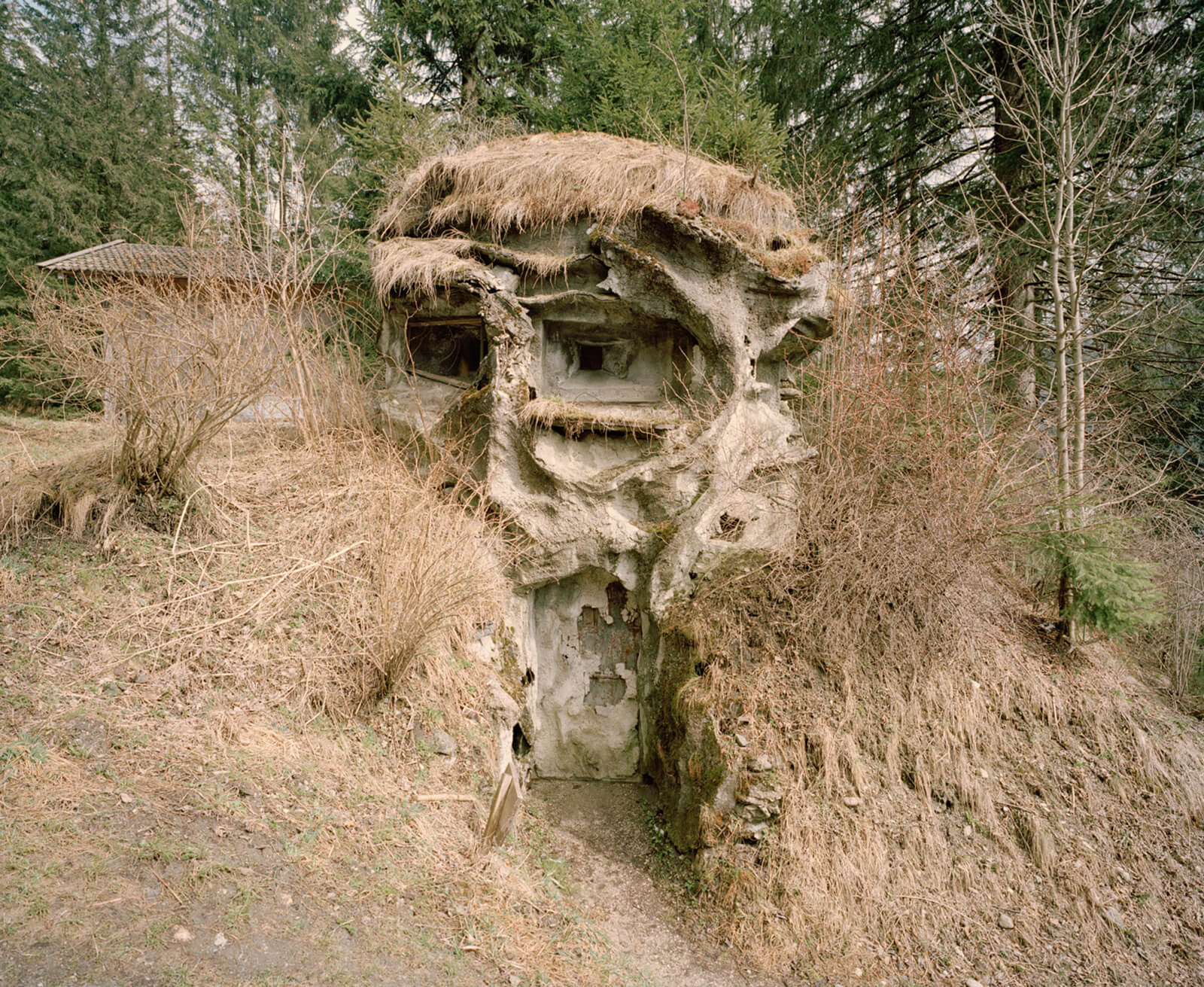
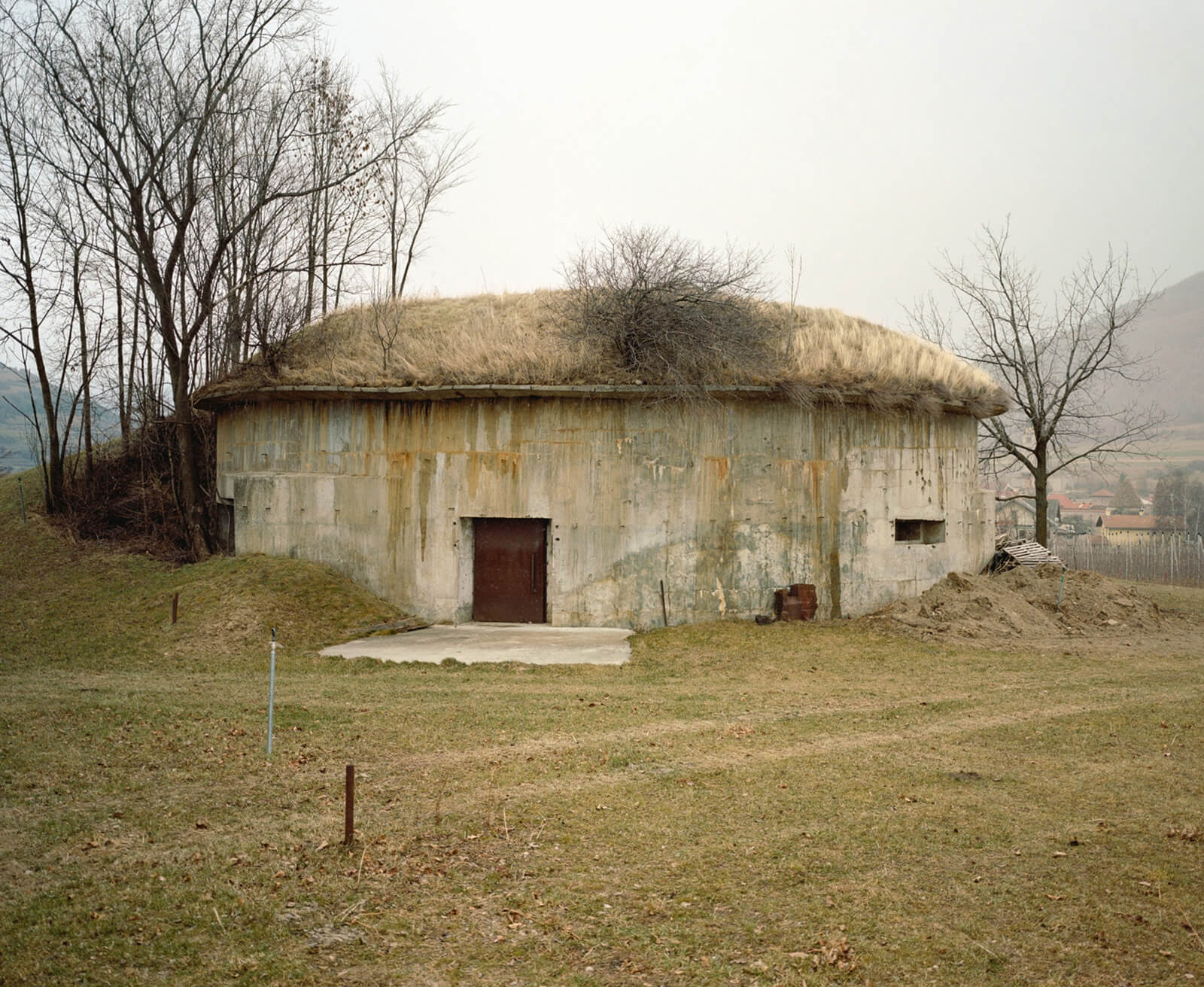
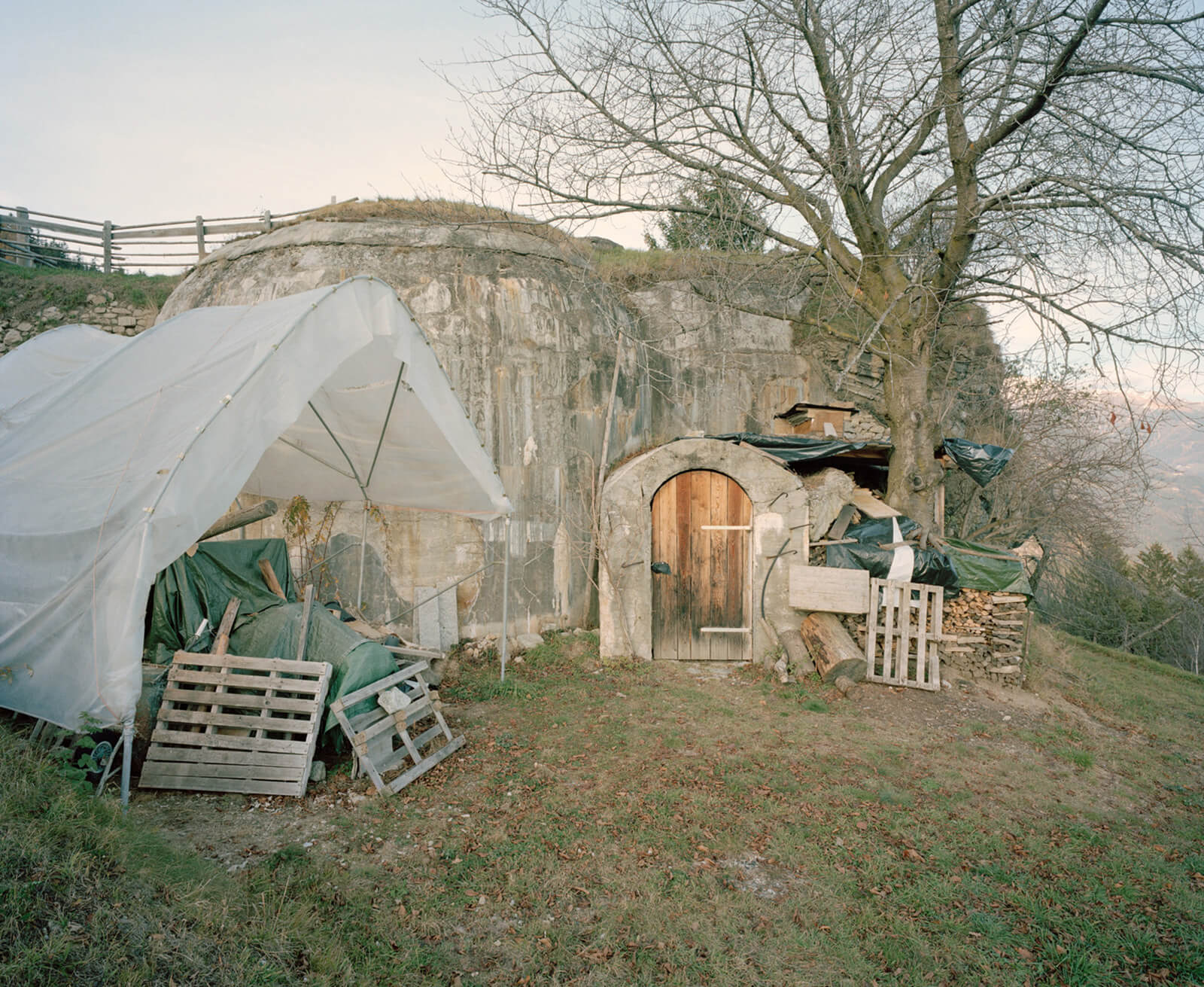
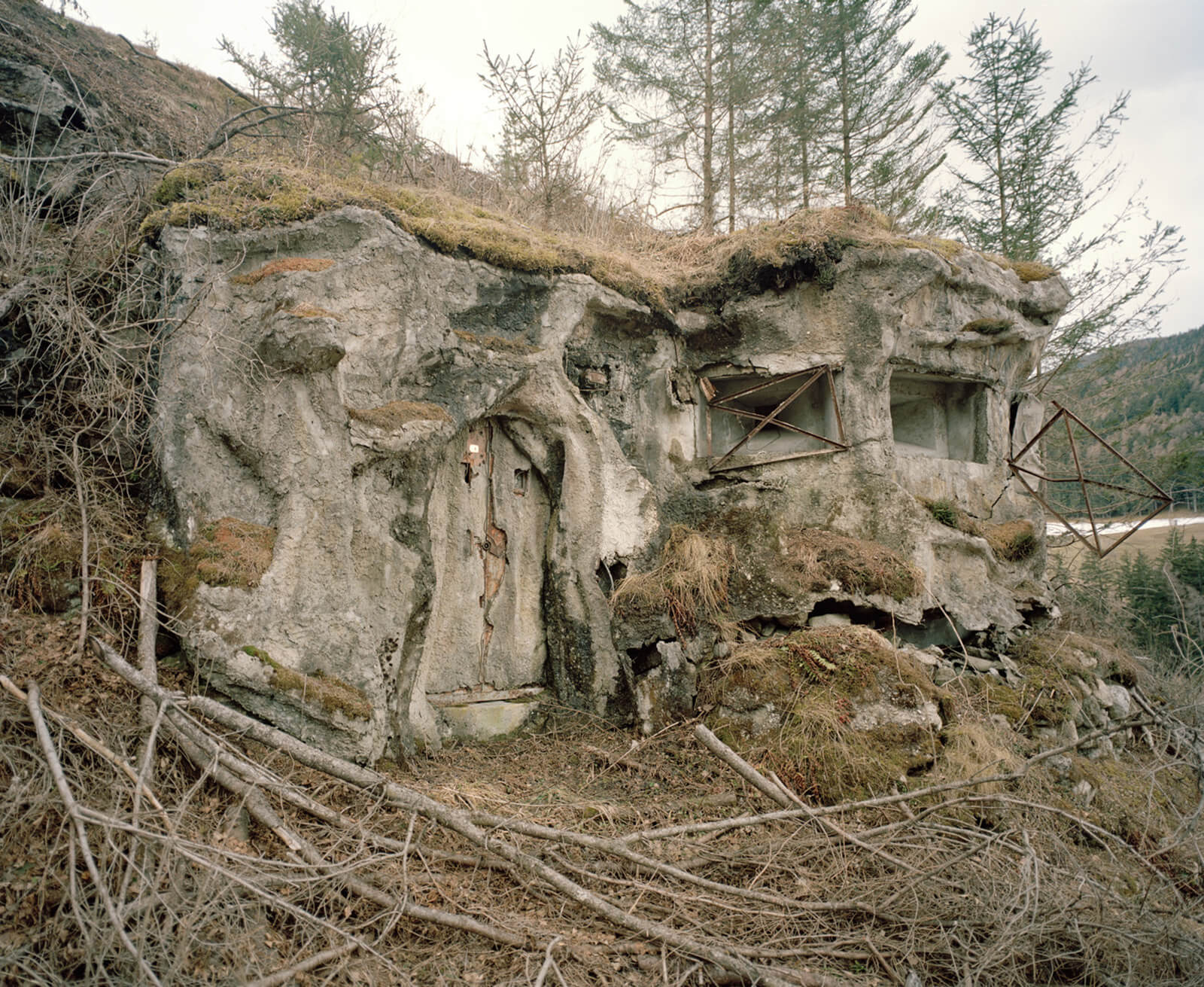
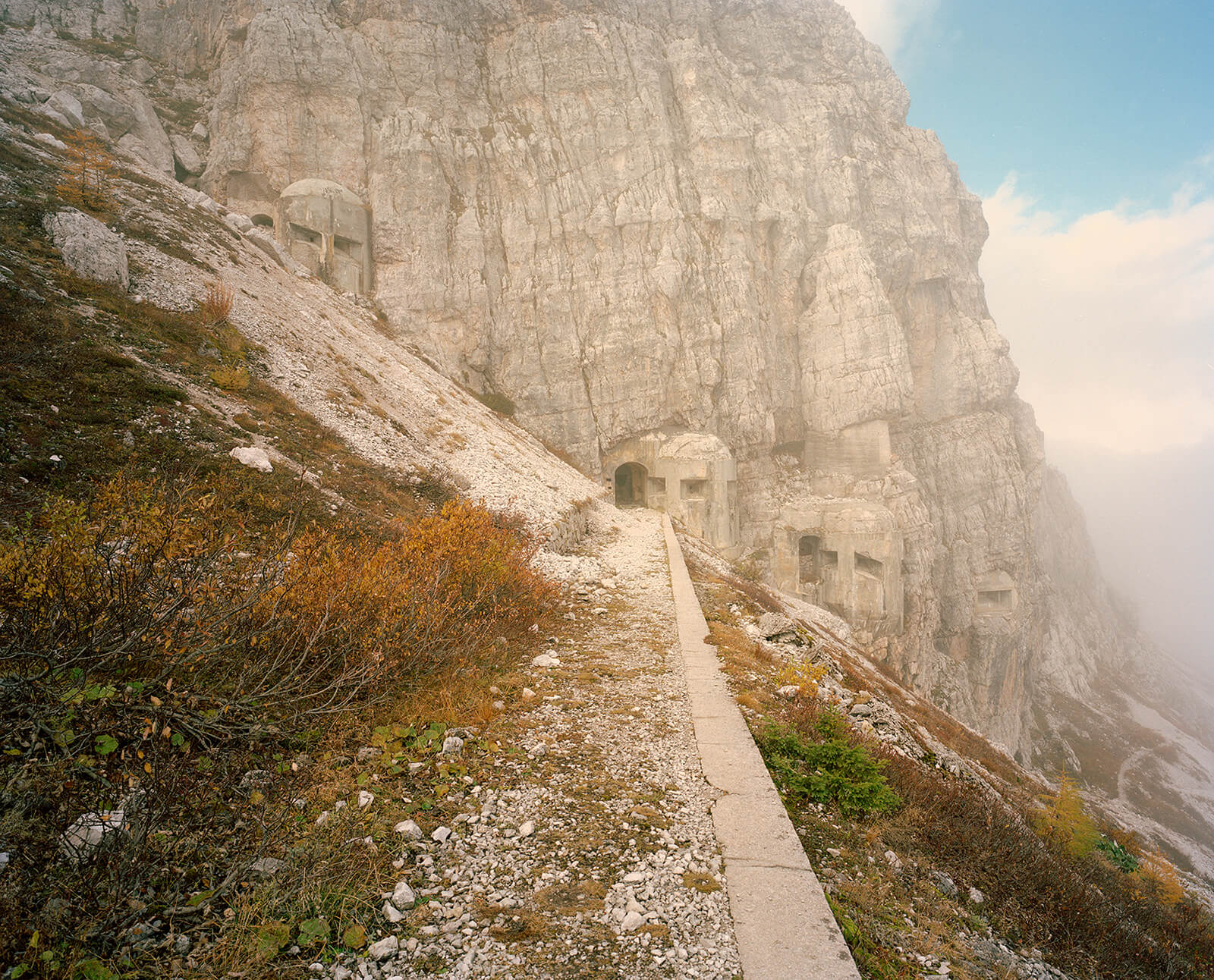
The photographs in Bunker document these structures in varying states of decay and disrepair. Some remain imposing, their concrete facades still intact; others appear submerged in the landscape, overtaken by nature, as if they belonged there. The visuals are almost evocative of the solarpunk world of Becky Chambers in A Psalm for the Wild-Built, which is ironic given that these structures were not conceived as spaces for coexistence. Stripped of their original military function, they now remain as structural ruins. "All military buildings have had one characteristic in common for centuries: they only serve their original purpose for a very limited time. Otherwise they remain unused or misused and gradually pass through every stage of ruin," Austrian-Italian architect Heimo Prünster writes in the essay Young Ruins towards the end of the book.
Pagliuca's lens approaches these bunkers through carefully composed frames, central perspectives and a masterful use of light, lending them an almost surreal presence. There is a certain stillness to these images, an uncanny quality that makes these bunkers appear at once familiar and otherworldly—as though they belong not entirely to the past, not entirely to the future. "An image is always the result of a long relationship with a place. Light, in the way it defines, reveals or dissolves forms, is a decisive element, one that heightens the mystery of the subject. Over the years, these elements have grown into a vision that, while remaining rigorous, aims to stay open and leave room for the imagination," the photographer shares.
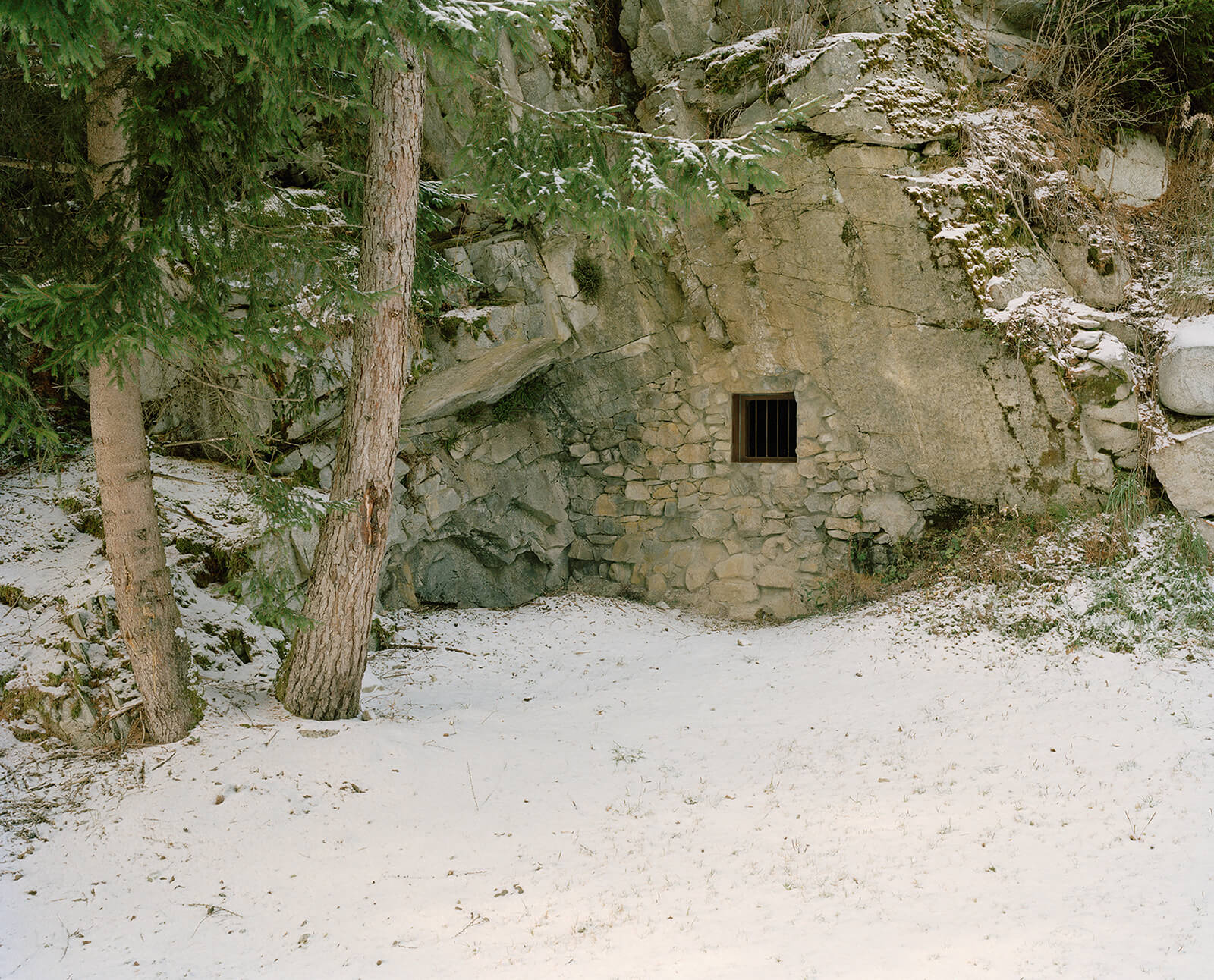
The bunkers, even now, speak to a deeply human impulse to seek shelter, protection and permanence in the face of uncertainty. Why else would the billionaires build private bunkers and luxury survival compounds in anticipation of an impending catastrophe they actively fuel? But the question today is: who gets to build these shelters, and who are they built for? Who gets to buy safety? From the Fascist regimes that fortified national borders to the billionaires now preparing for the collapse of civilisation, the powerful have long sought to secure their own survival, often against the very world their power has helped shape. It seems that when the world comes undone, there will always be a bunker for those who helped bring it to the brink. The rest will be left to reckon with the ruins.

by Mrinmayee Bhoot Nov 07, 2026
The third iteration of the acclaimed triennial aims at appraising architecture’s role in shaping collective life in a world marked by rapid transformation and movement.
by Mrinmayee Bhoot Nov 06, 2026
Andrew Santa Lucia and Daniel Jonas Roche’s book traces an alternative genealogy for architecture, drawing on historical examples and radical theorists’ work.
by Mirra Lynn Nov 02, 2026
Pivoting timber shutters, dual courtyards stretching into the subterranean and narrow wall openings organise the spatial experience of the five-sided House of Thirds.
by Jincy Iype Oct 31, 2026
The second session in the public event series brought Elsie Owusu, Torange Khonsari, JJ Cliff and Rhael ‘LionHeart’ Cape to unpack who cities are built for and who they leave out.

make your fridays matter with a well-read weekend
Enter your details to sign in
Don’t have an account?
Sign upOr you can sign in with
a single account for all
STIR platforms
All your bookmarks will be available across all your devices.
Stay STIRred
Already have an account?
Sign inOr you can sign up with
Verification link sent to check your inbox or spam folder to complete sign up process
Tap on things that interests you.
Select the Conversation Category you would like to watch
Please enter your details and click submit.
Enter the 6-digit code sent at


Vincenzo Pagliuca's Bunker logs enduring military remnants of Italy’s Alpine Wall
by Chahna Tank | Published on : Nov 11, 2026


 Sign in with Google
 Sign in with email
What do you think?