Architecture06 mins. read
Nina’s House: A 1970s home in London turns fossil fuel-free through a natural retrofit
by Anushka SharmaJul 21, 2025




by Bansari PaghdarPublished on : Dec 17, 2025
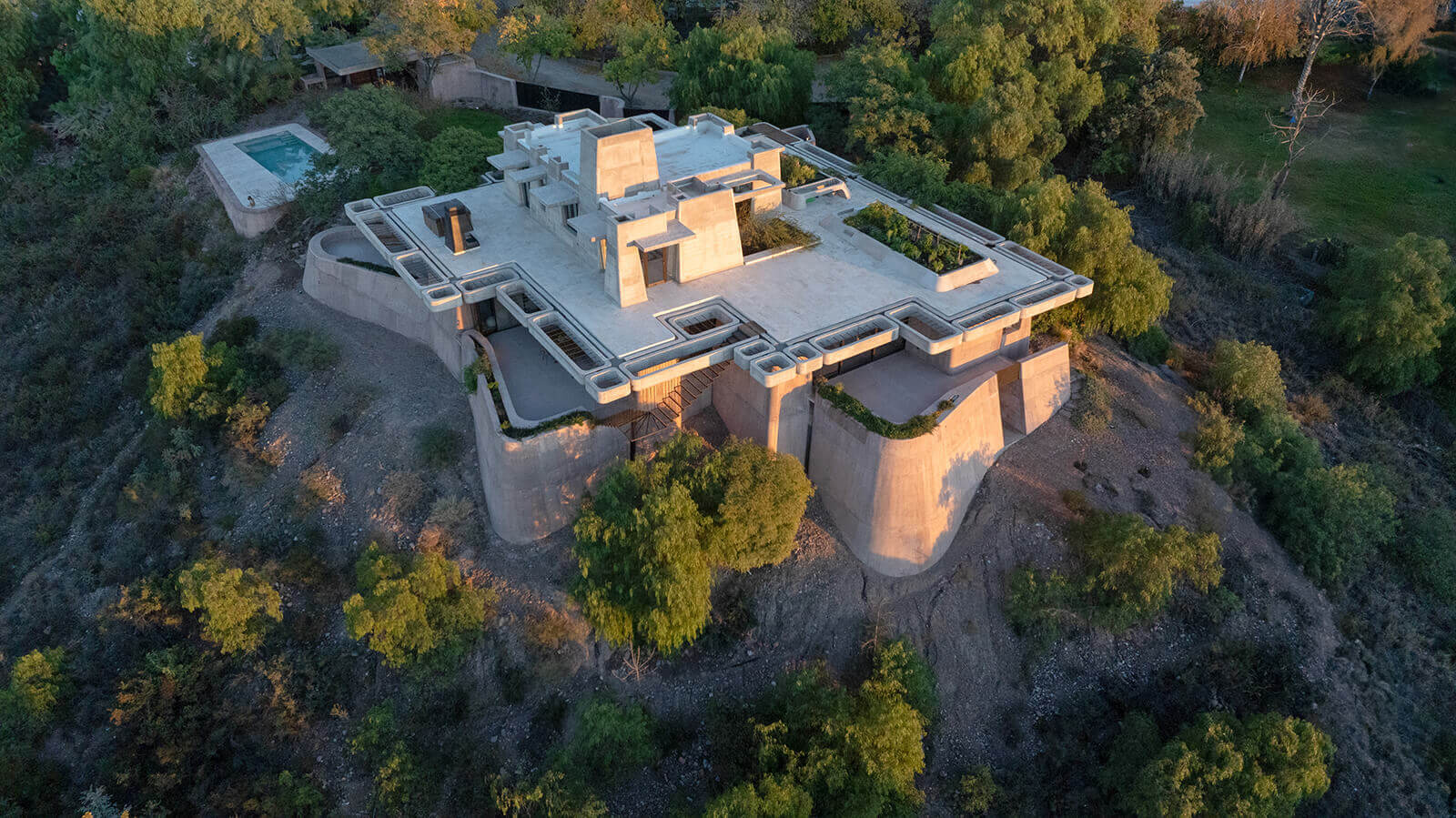
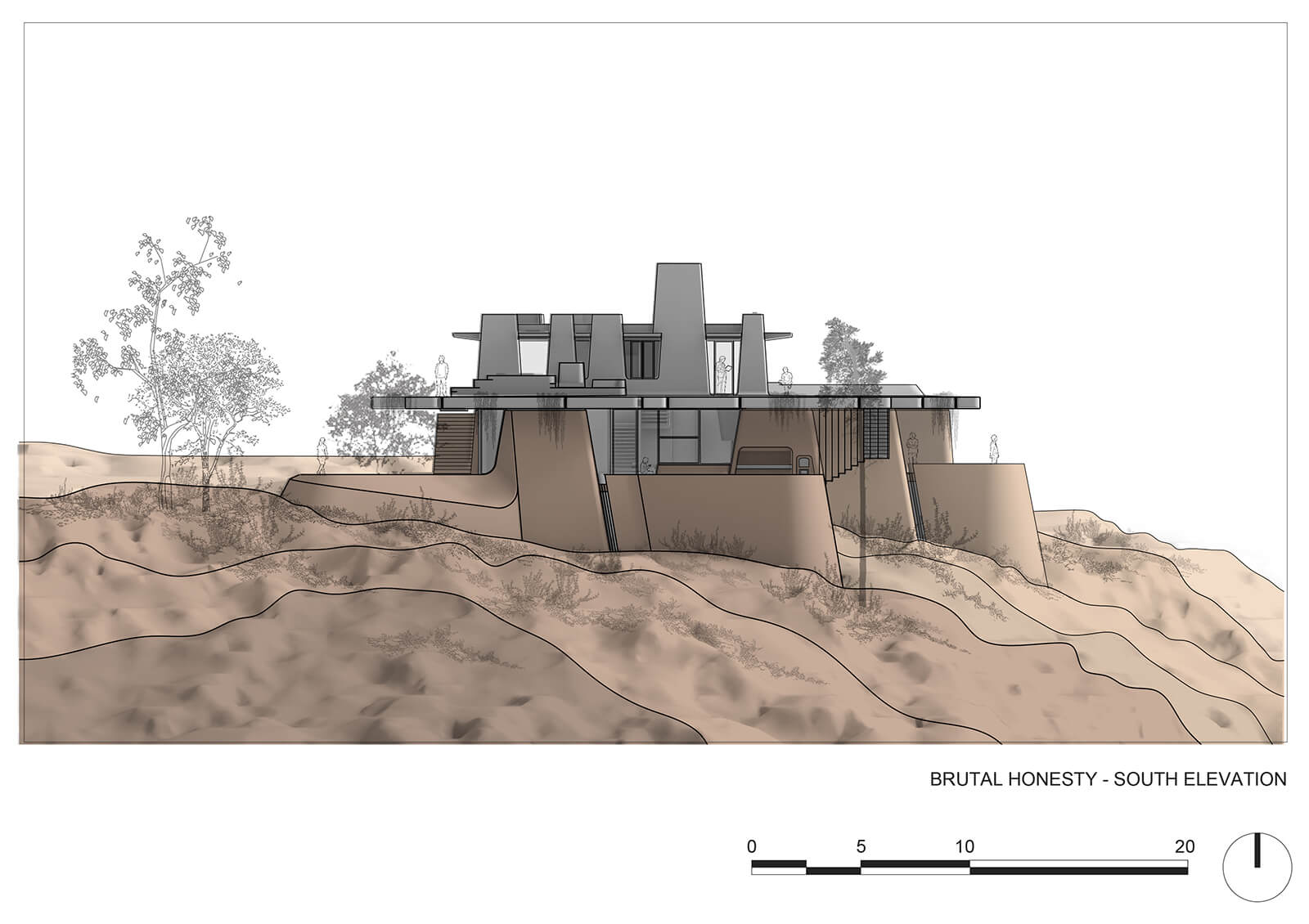
In the Piedmont region of Argentina’s Mendoza province, tapering brutal masses seem to emerge from a series of rock formations, blending with the grain of the surrounding natural landscape. Resembling a hilltop stronghold or a fortress at first glance, the private residence, named Brutal Honesty, is characterised in form and principle by four terraces that reflect the surrounding terrain, offering panoramic views of the Andes mountains. Designed by London-based practice OF. Studio, the house boasts optimal natural light from the north and vistas on the south, featuring native vegetation in and around it without felling any existing trees on the site—a willed contrast with the otherwise sculpted forms of the residence.
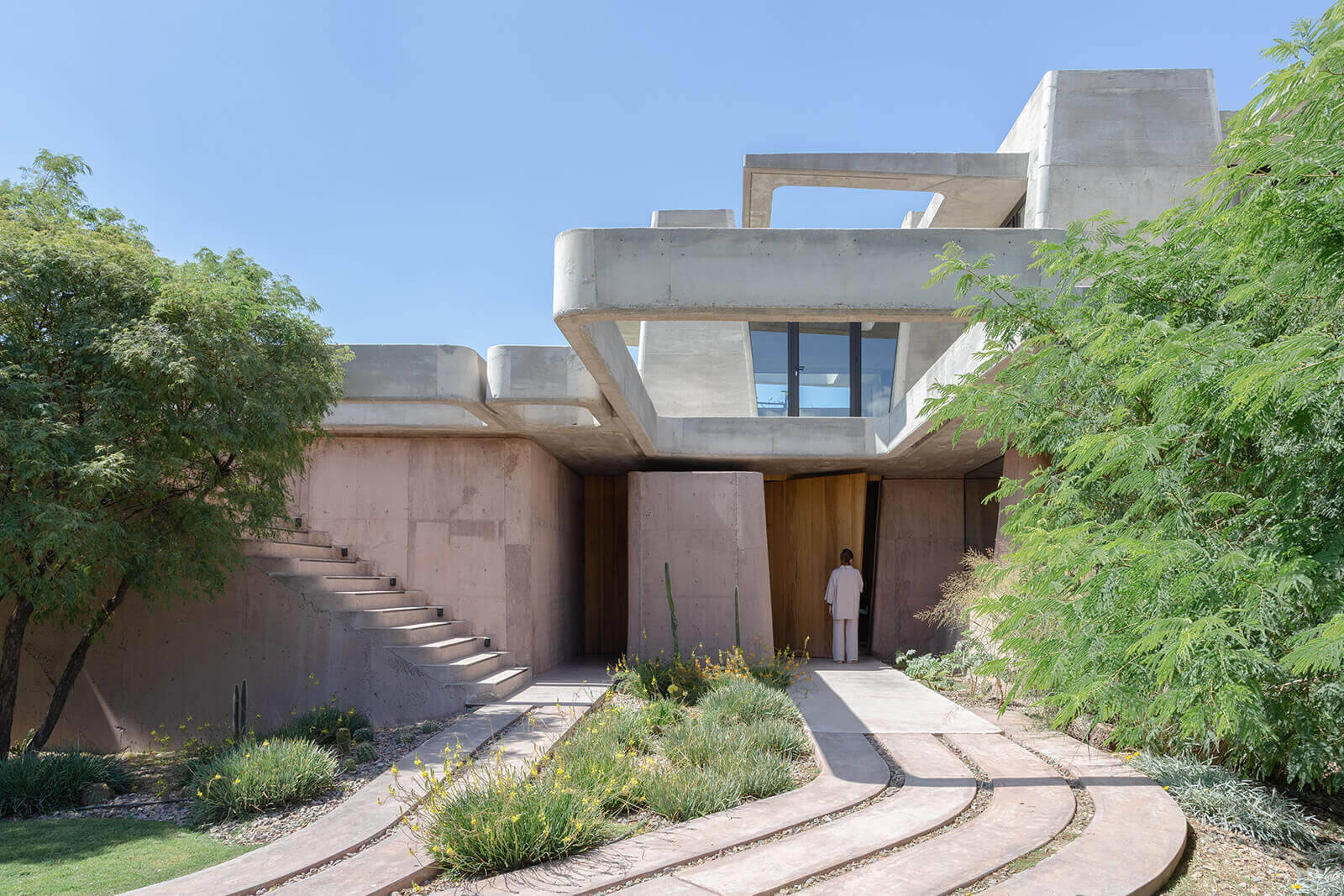
“The clients envisioned a home that minimises unused corridors and maximises visual connectivity. The house is designed to be lived in actively by the family, allowing for a variety of events and gatherings while maintaining privacy. This balance ensures that every space is purposeful and that circulation feels intuitive and integrated rather than residual,” the British architects tell STIR. The practice, founded by Argentina-born Valentina Cerrone and Sebastián Andia in 2017, treads and seeks to coalesce the boundaries between architecture, human perception and other creative disciplines. Their process is guided by sociocultural factors and technology-driven interventions, aiming to create meaningful designs in various contexts.
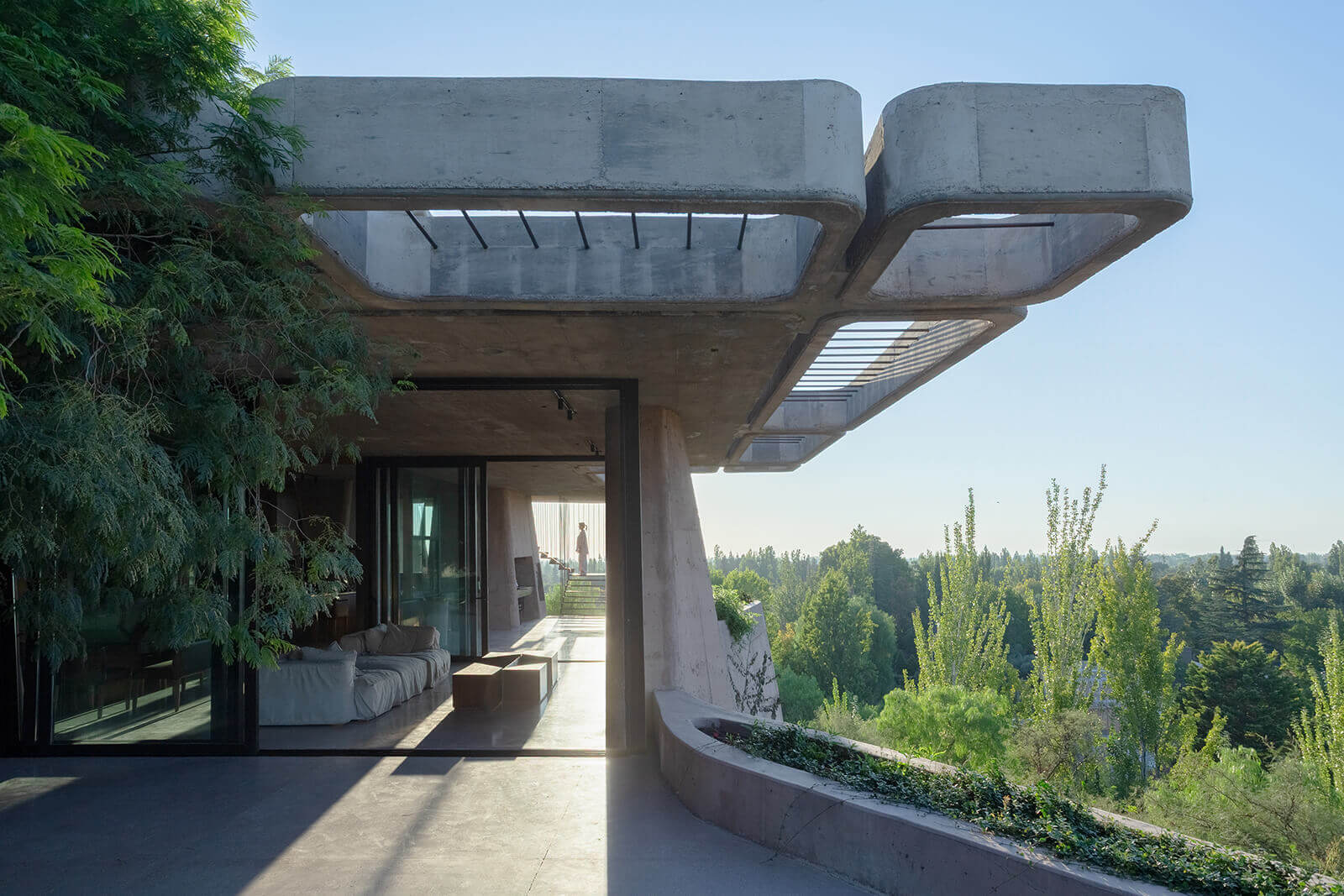
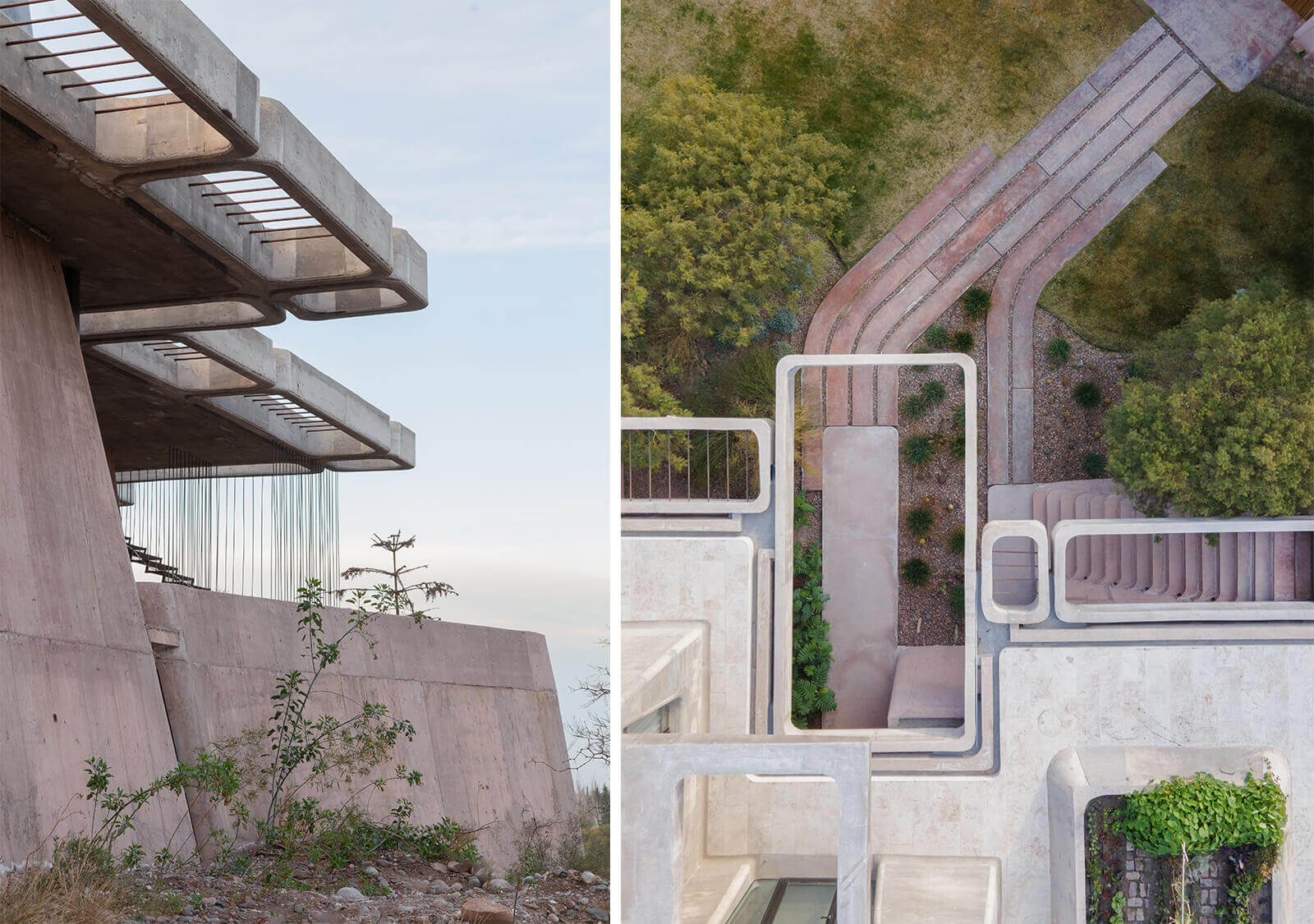
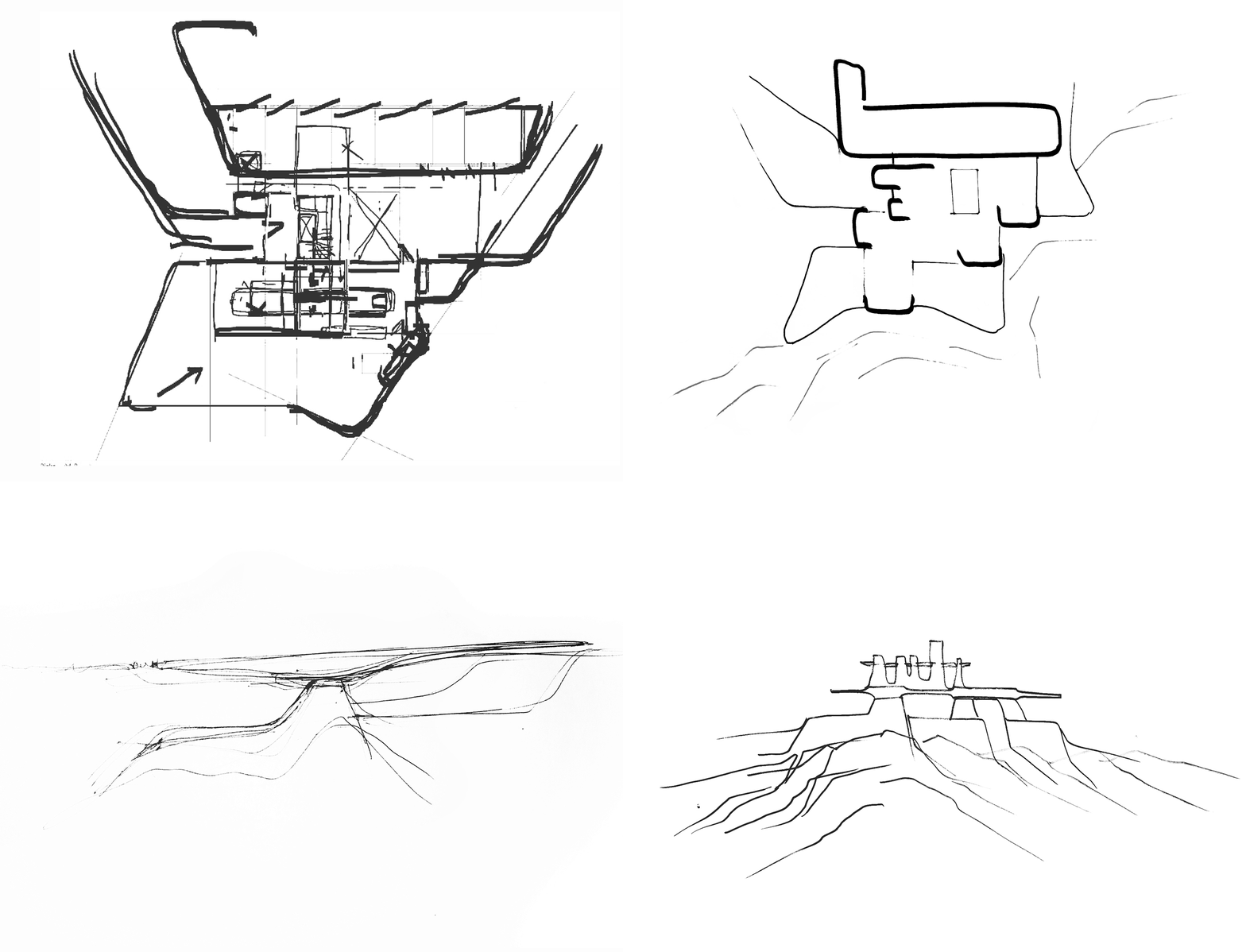
For Brutal Honesty, the architects incorporate the concept of ‘abstract nature’, attempting to harmoniously bridge the gap between natural and built environments and conceiving a kind of ‘symbiosis’ that helps the concrete structure not be visually or physically disruptive. “The idea of ‘abstract nature’ revolves around the notion that nature represents the inherent context, whatever it may be. It’s about creating a symbiotic relationship between the architectural concept and its surroundings. In this case, that context is a mountain, but it could just as well be an urban environment. The essence lies in how the design adapts and harmonises with the natural fabric of its setting, fostering a seamless integration that’s both contextual and conceptual,” the architects explain to STIR.
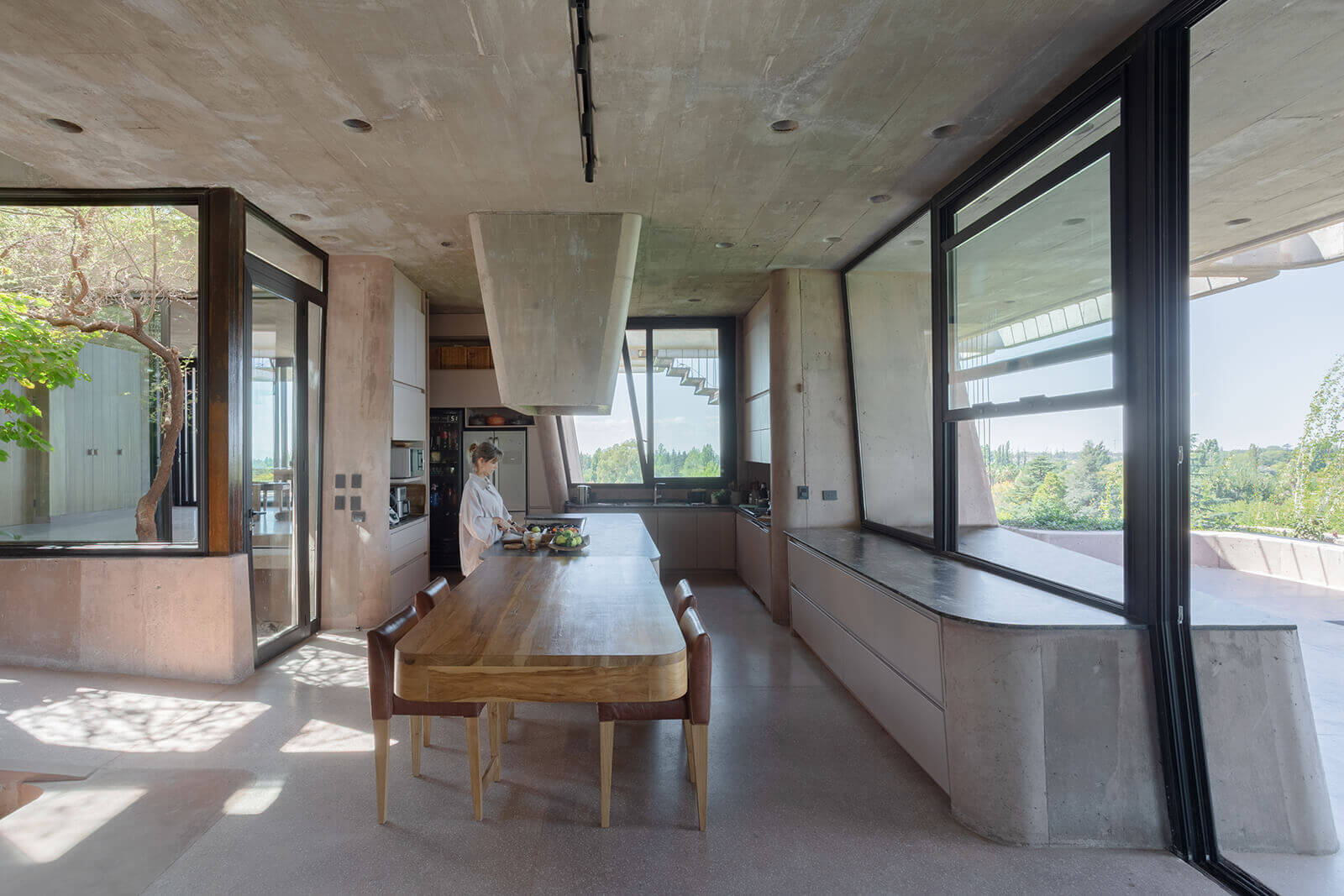
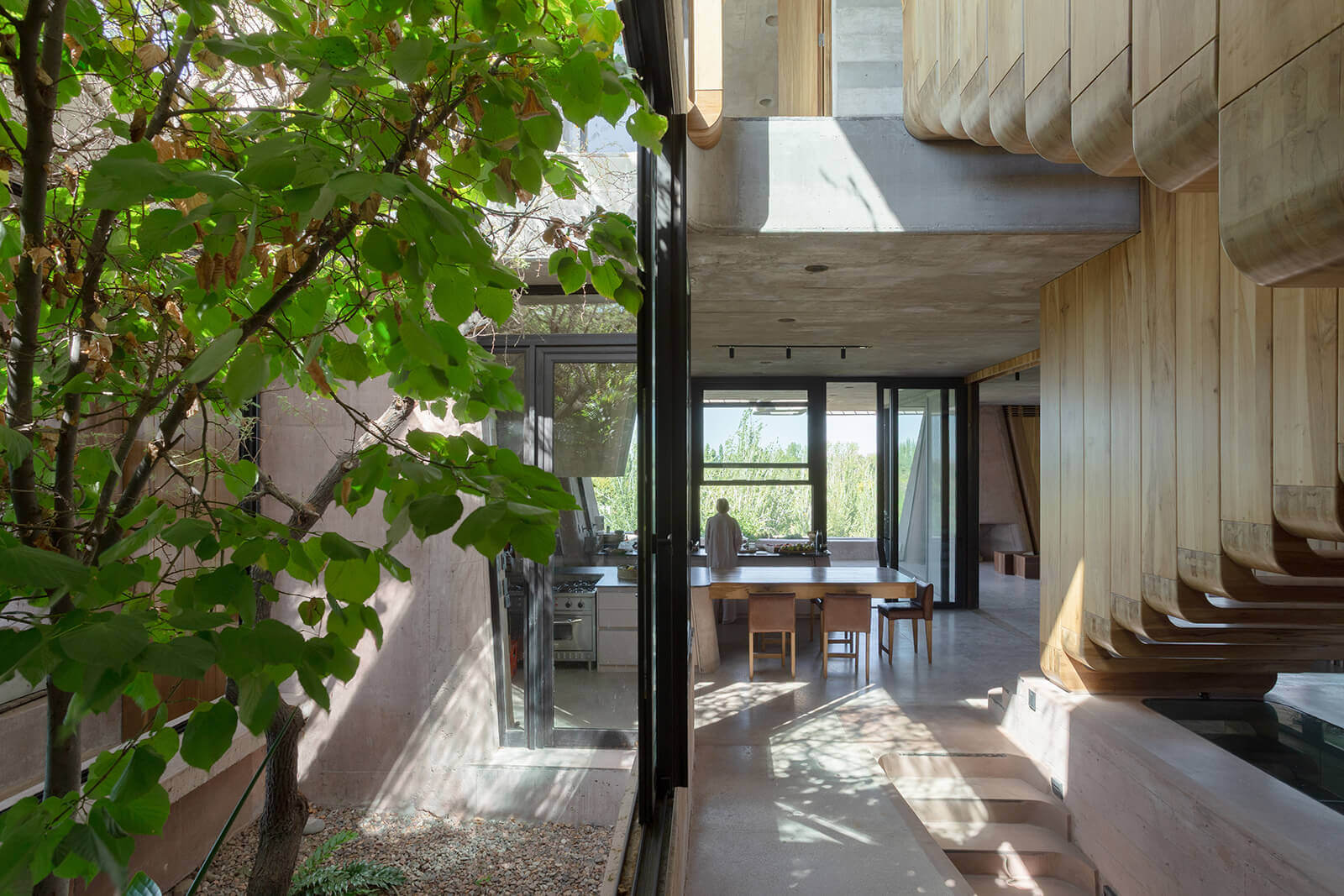
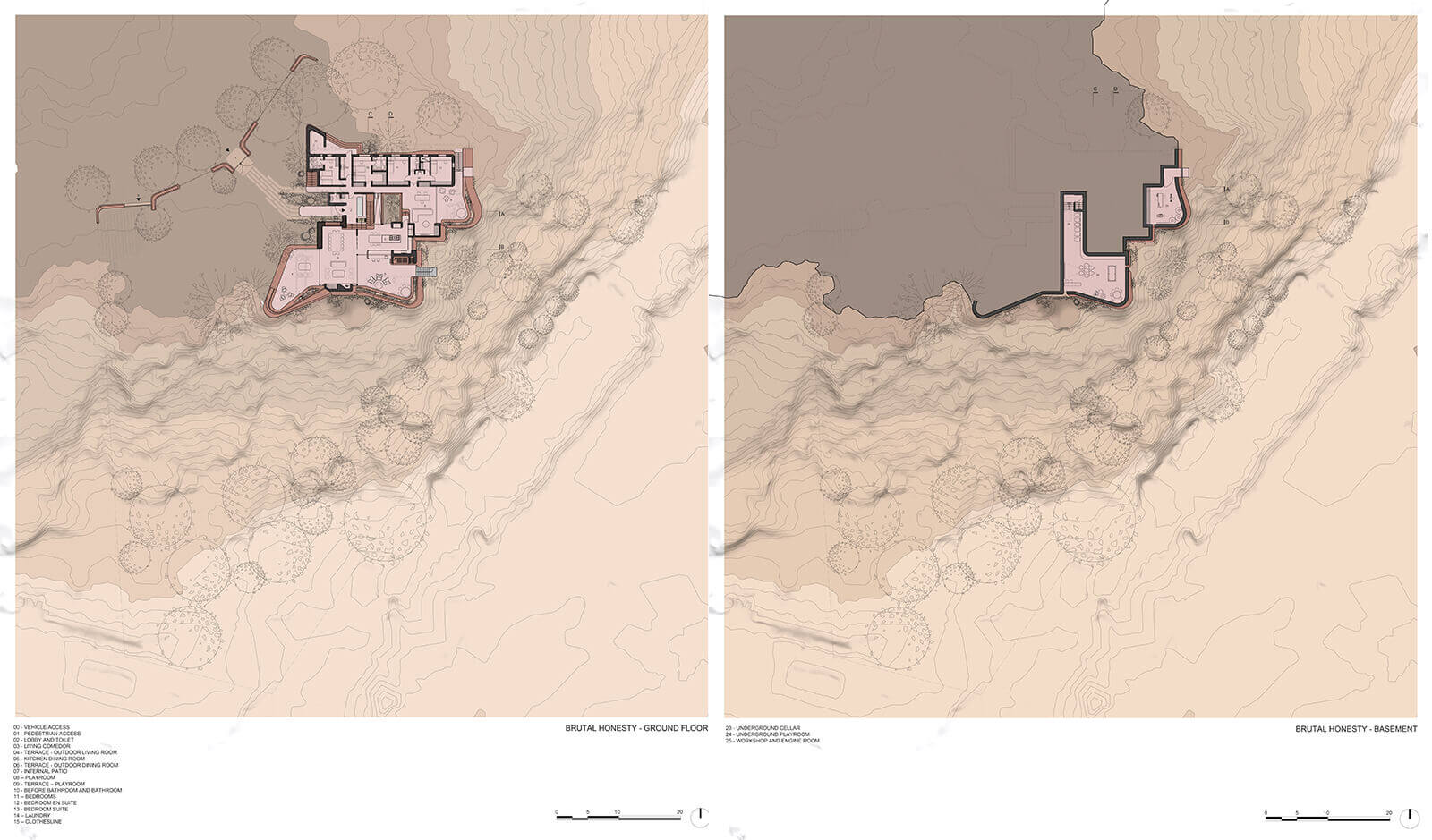
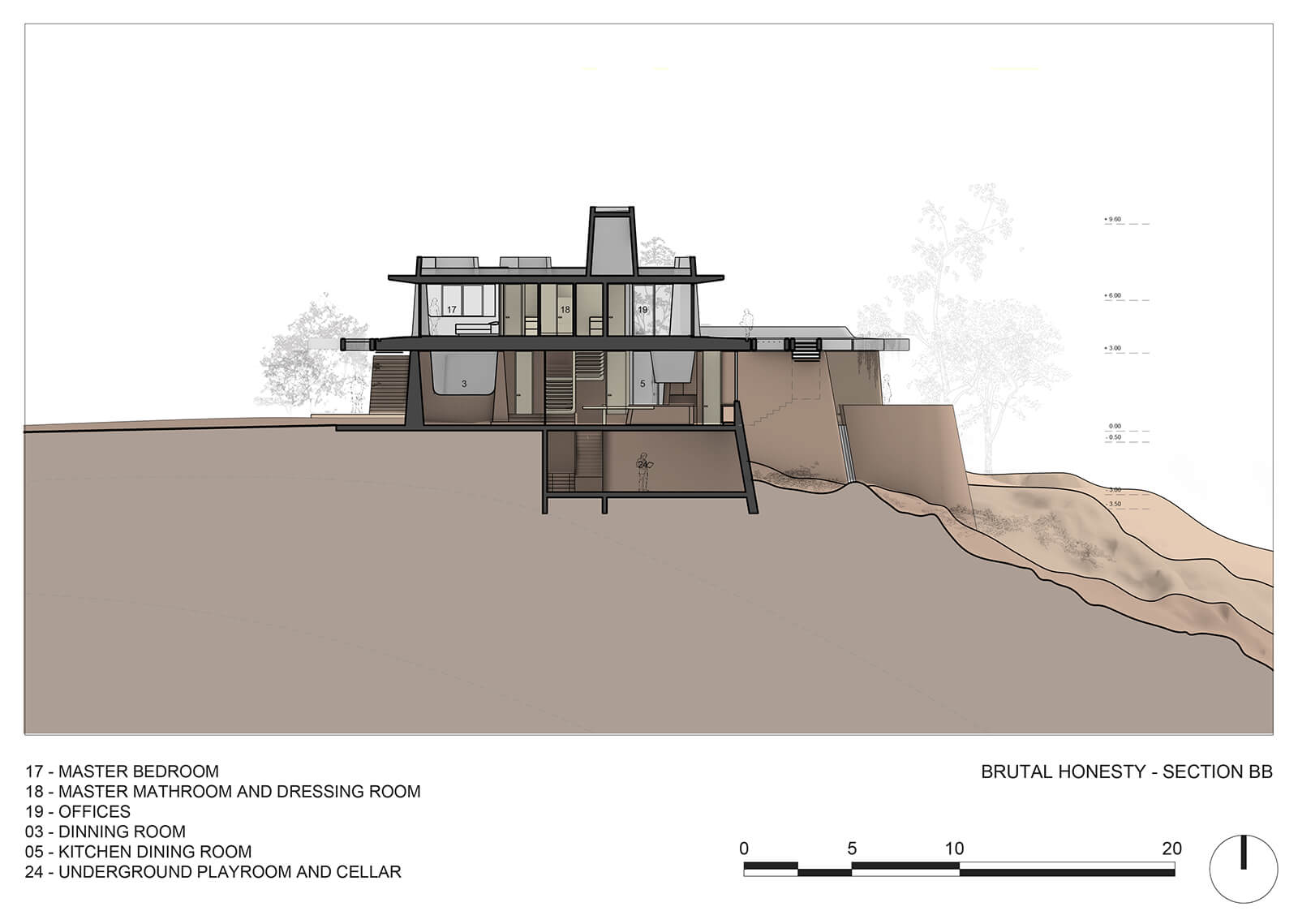
With tapered walls and curved edges, the residential architecture is erected almost as an exaggerated, cinematic lair of sorts, and yet, the humane shines through. Spatially, the house is divided into three zones: inside the earth (the basement level), in-between the earth (the ground floor) and outside the earth (the first floor), earmarked as such. The basement, featuring small vertical openings, accommodates the cellar, playroom, workshop and engine room. The kitchen is the heart of the ground floor, with a courtyard and a terrace on either side. The living area is sandwiched between two large terraces that extend to the landscape, becoming an ideal progression of spaces for large gatherings.
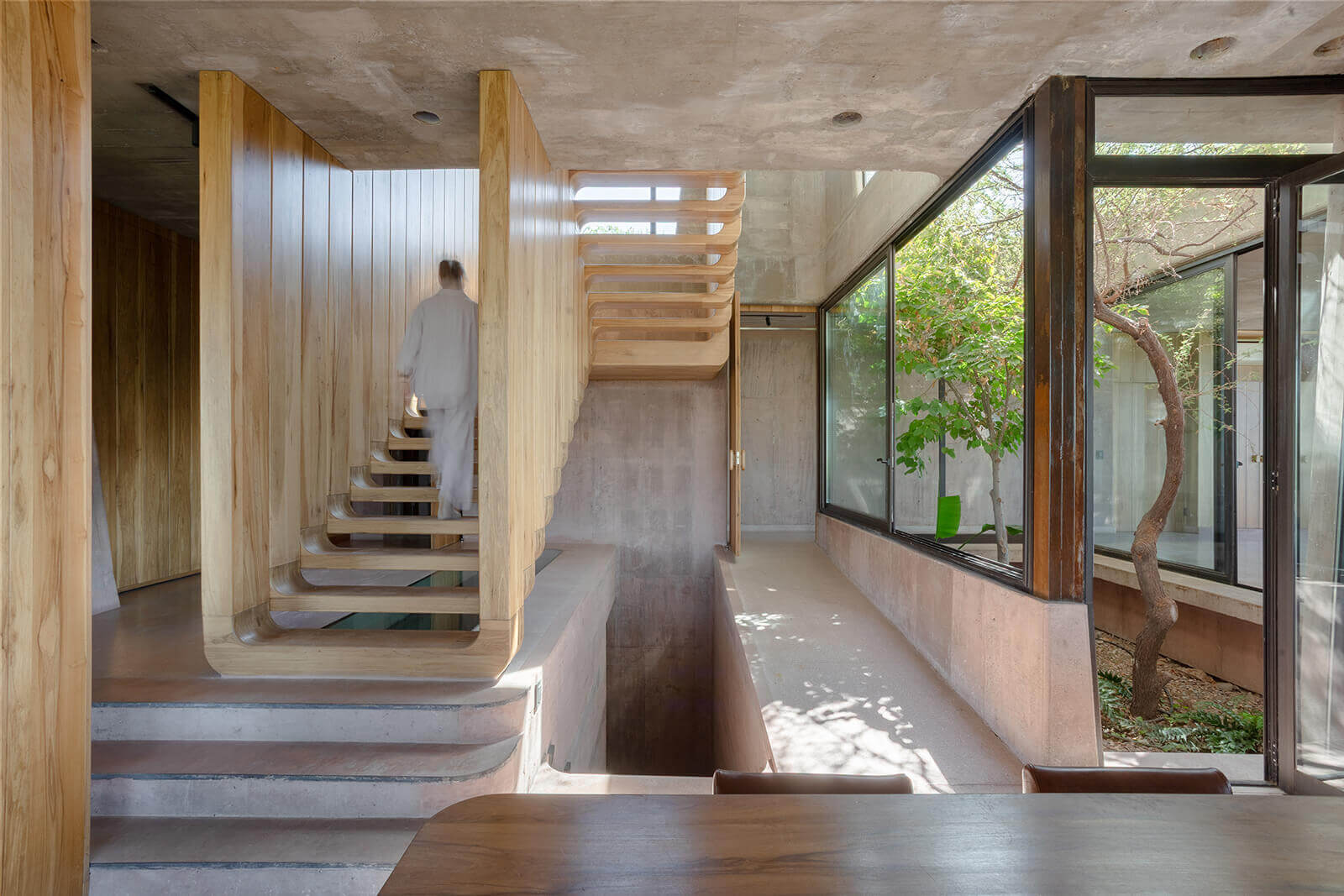
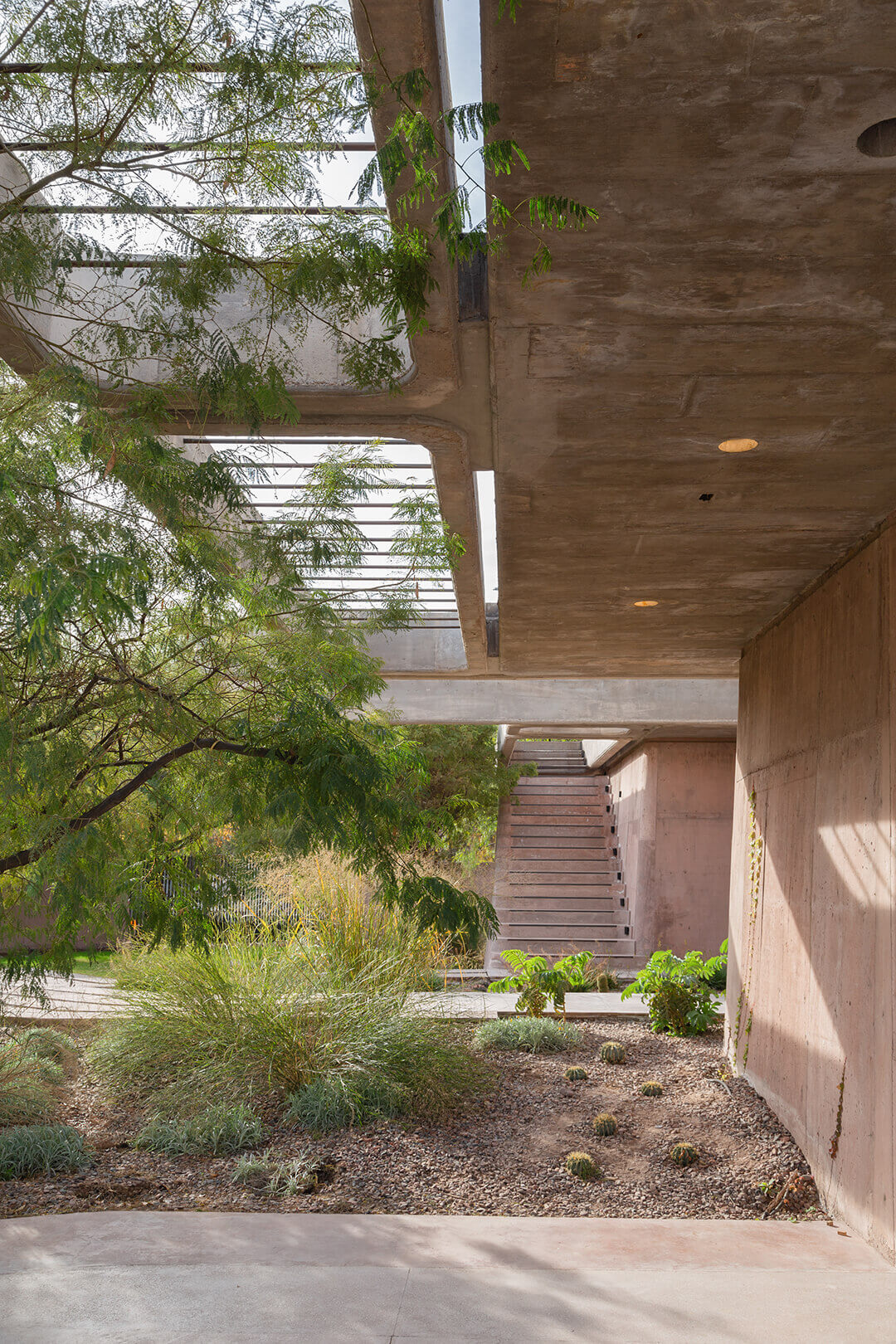
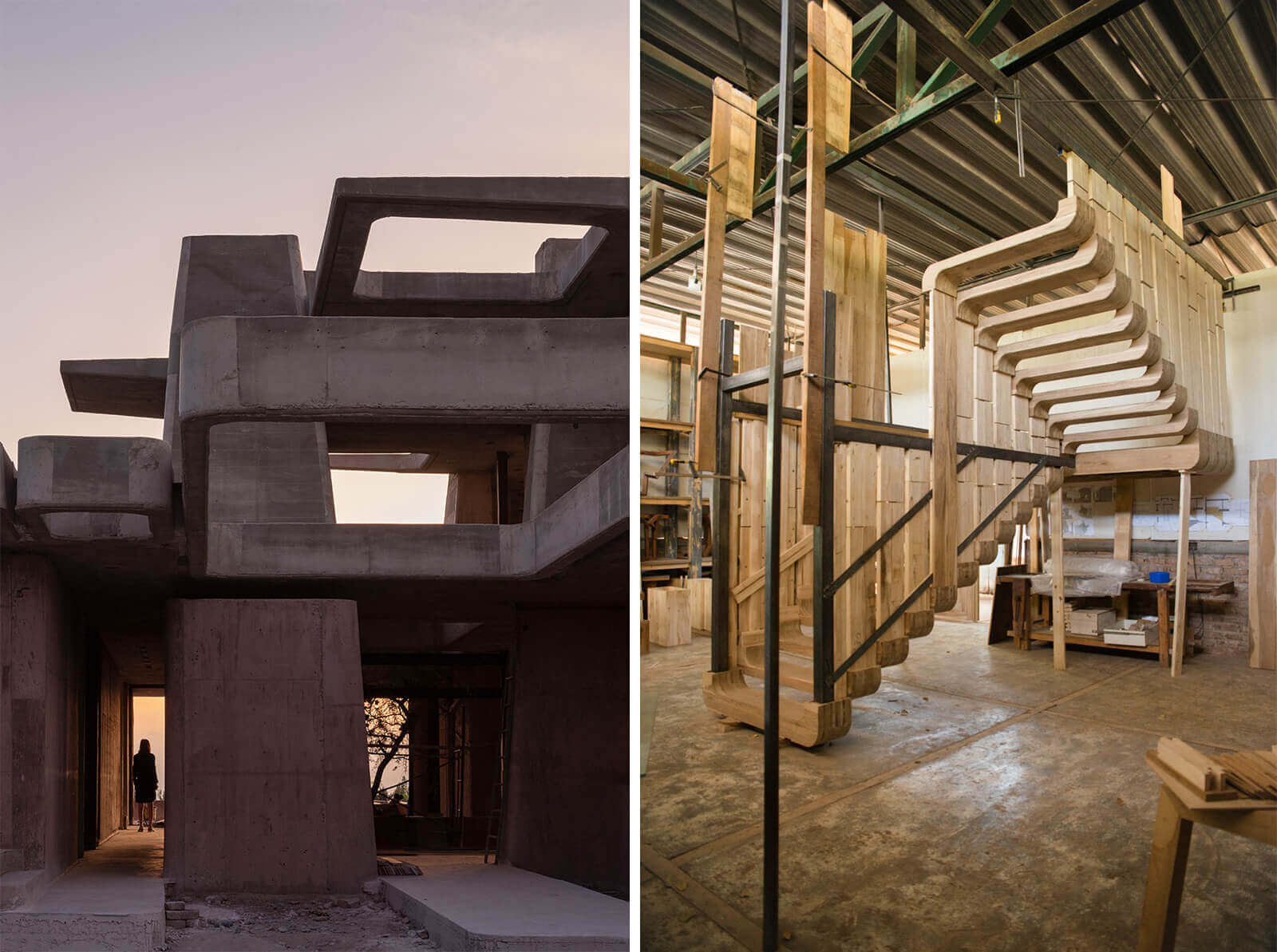
The playroom on the ground floor adjoins the third terrace, which is located on the northeast corner of the residential design. With three bedrooms and a separate entrance for the staff quarters, the level offers distinct zones for private and family lounging. The first level, which accommodates the master suite, library, office, jacuzzi and yoga area, features the largest terrace that surrounds the built mass, including two additional courtyards on the north.
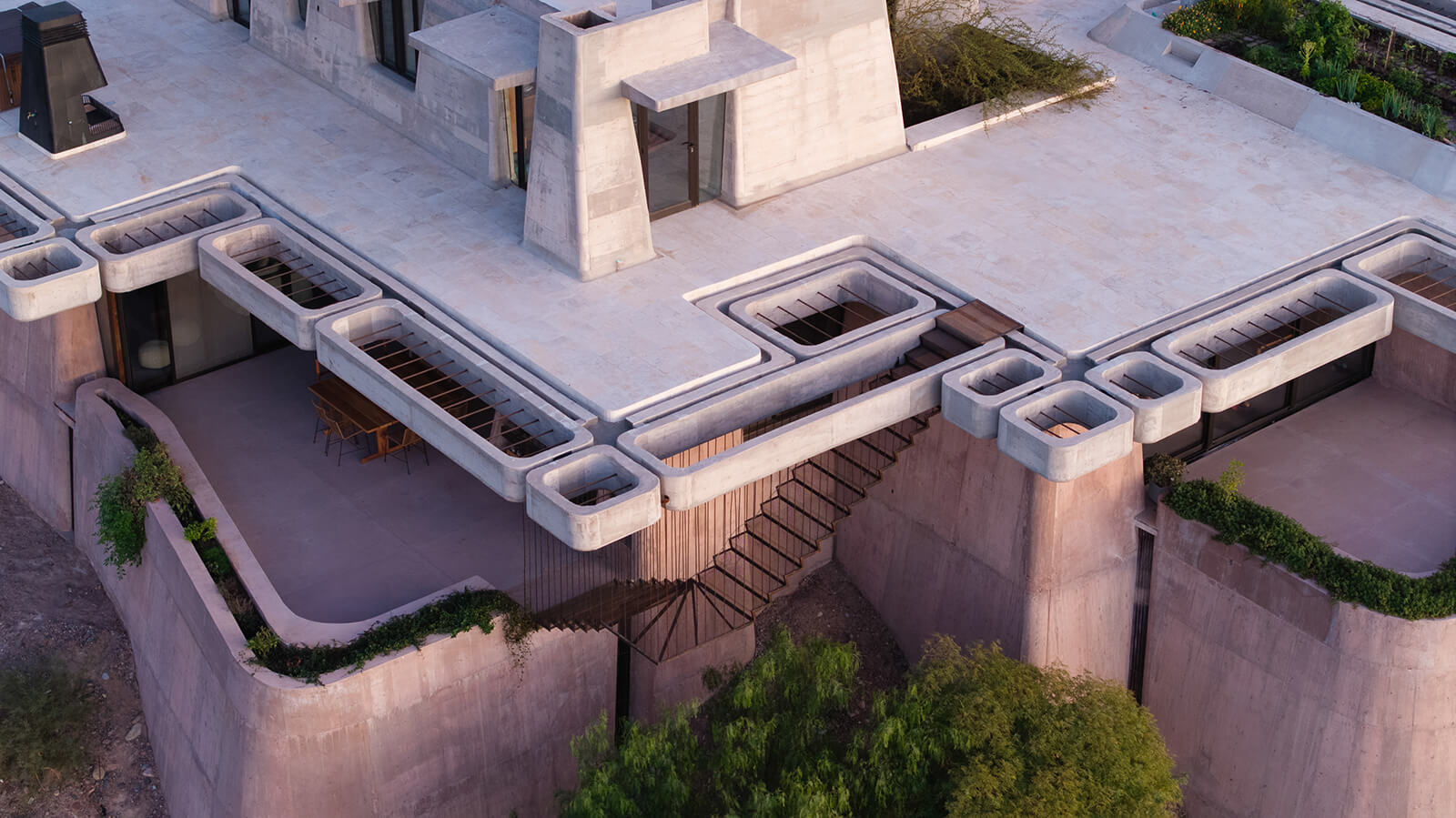
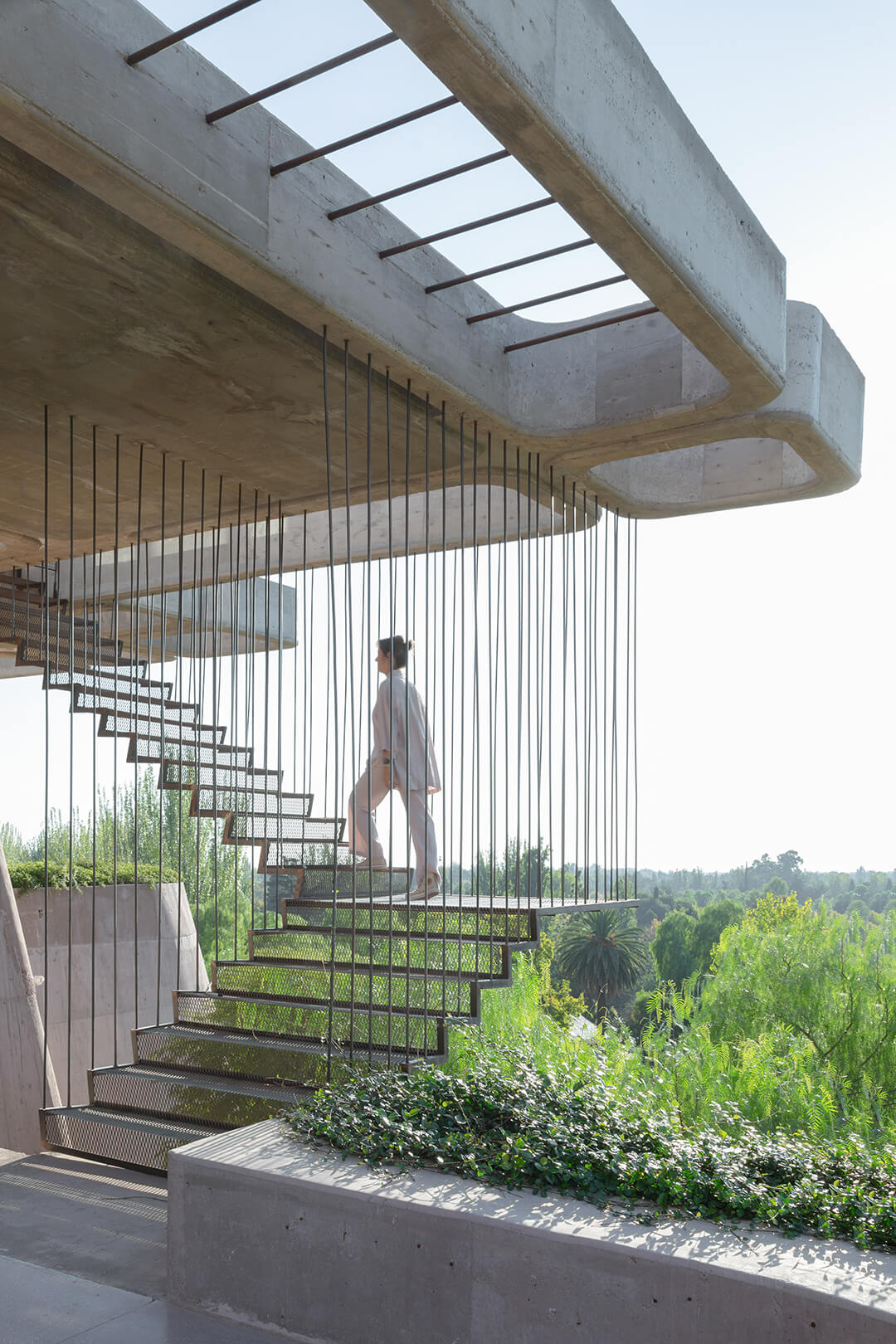
The architects thoughtfully chose the colour of the exposed concrete to reflect the colours of the surrounding rocks through extensive testing, ensuring the floors and walls of the ground level maintain a cohesive visual identity. The upper level, nimble in contrast, features a lighter grey colour. Together, they symbolise a concrete architecture that sits atop a crevice in the earth. “The design language is rooted in the idea of an element emerging from the earth and gradually being shaped by erosion over time, creating a lasting impression of the landscape’s natural processes. Concrete here is a medium that enables this natural experience, rather than an end in itself. From the interior, the space feels enveloped by the mountain context, with walls and surfaces that reinforce the sensation of being part of the landscape,” the architects tell STIR.
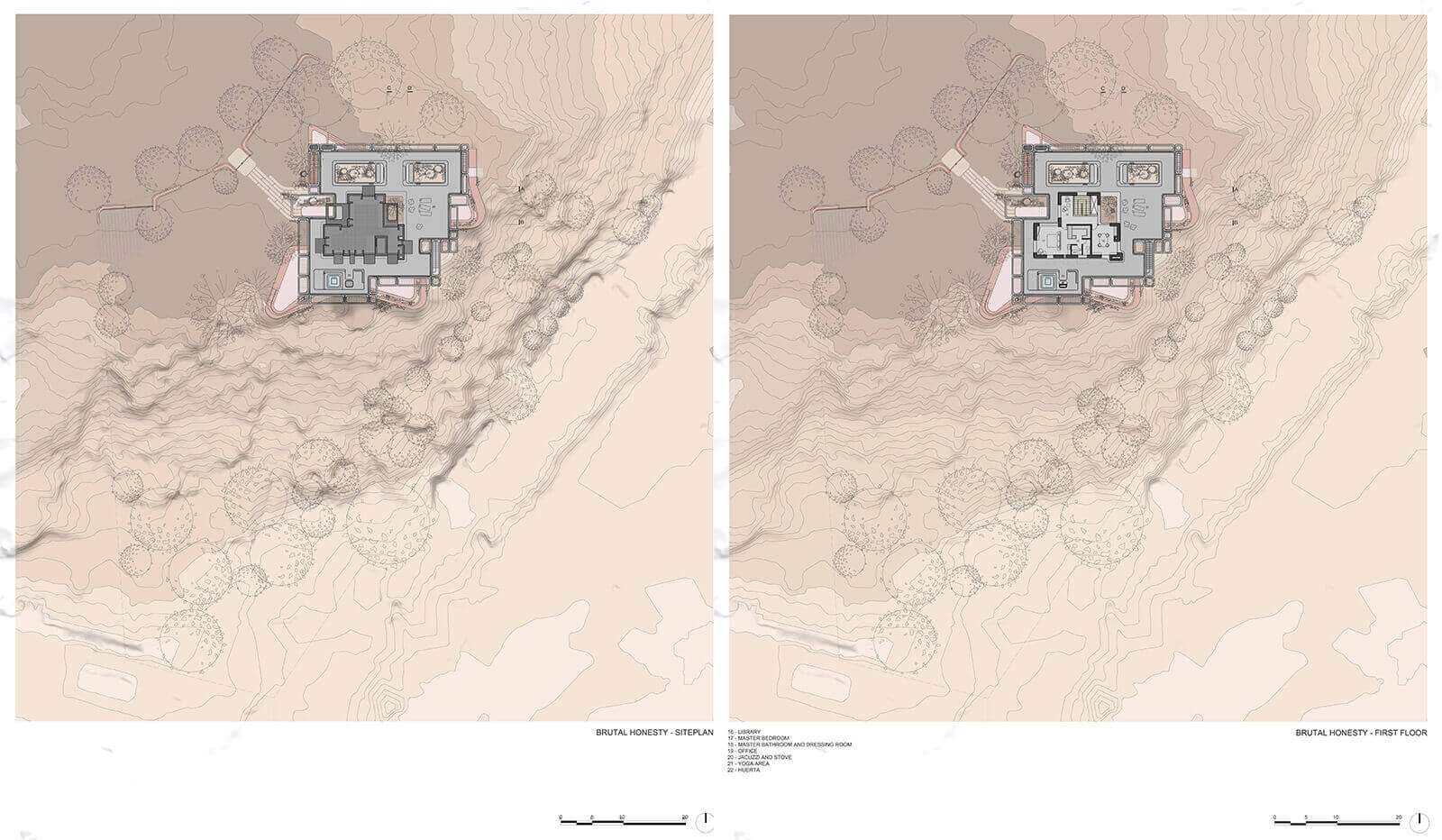
Along with materiality, sustainability is central to the project’s approach. Solar panels, solar heaters, a greywater system and passive design strategies cater to thermal insulation, shading and natural ventilation within the house, reducing the energy demand and resulting in an energy-efficient design.
Instead of striving for permanence—especially in the architectural sense of making and leaving an indelible mark on the land—Brutal Honesty seems to recognise the beauty of erosion with the passage of time and considers change as a vital design agent. An exercise in a slightly more positive direction for the paradigm of coexistence between nature and human intervention, OF. Studio’s design attempts to become a geological extension of the site. Through empathy and restraint, the residence reimagines the tabula rasa approach often callously accompanying historic Brutalist architecture around the world and shows how a structure can emerge from the earth yet remain attuned to its fragility. In its quiet, visually pleasing and precise yet organic built and contextual harmony, the home embodies an architecture that is bold, abrasive even, yet honest in conception and being.

by Pranjal Maheshwari Oct 24, 2026
A consortium of Copenhagen’s 3XN, Toronto’s B+H Architects and Shenzhen’s Zhubo Design has designed the museum to mimic the surrounding riverscape, topped with a public park.
by Pranjal Maheshwari Oct 19, 2026
The Mumbai-based architects integrate courtyards, mesh screens and north light trusses to create a dining space that doubles up as a community hub at SR University, Warangal.
by Mrinmayee Bhoot Oct 17, 2026
The Rotterdam-based institute centres the Indian Ocean as a network for exploring material histories and transnational links shaping coastal cultures, positing them as future models.
by Pranjal Maheshwari Oct 16, 2026
At the 2026 Stirling Prize ceremony, Mary Duggan with RUFF Architects, MAKER Architecten and Nakshabid Architects were felicitated for proffering quality housing and social equity.

make your fridays matter with a well-read weekend
Enter your details to sign in
Don’t have an account?
Sign upOr you can sign in with
a single account for all
STIR platforms
All your bookmarks will be available across all your devices.
Stay STIRred
Already have an account?
Sign inOr you can sign up with
Verification link sent to check your inbox or spam folder to complete sign up process
Tap on things that interests you.
Select the Conversation Category you would like to watch
Please enter your details and click submit.
Enter the 6-digit code sent at


OF. Studio’s Brutal Honesty residence in Argentina poses erosion as a design agent
by Bansari Paghdar | Published on : Dec 17, 2025


 Sign in with Google
 Sign in with email
What do you think?