Architecture05 mins. read
LANZA Atelier's Serpentine Pavilion 2026, a first in brick, frames a fluid spatial bearing
by Pranjal MaheshwariJun 03, 2026



by Pranjal MaheshwariPublished on : Mar 23, 2026
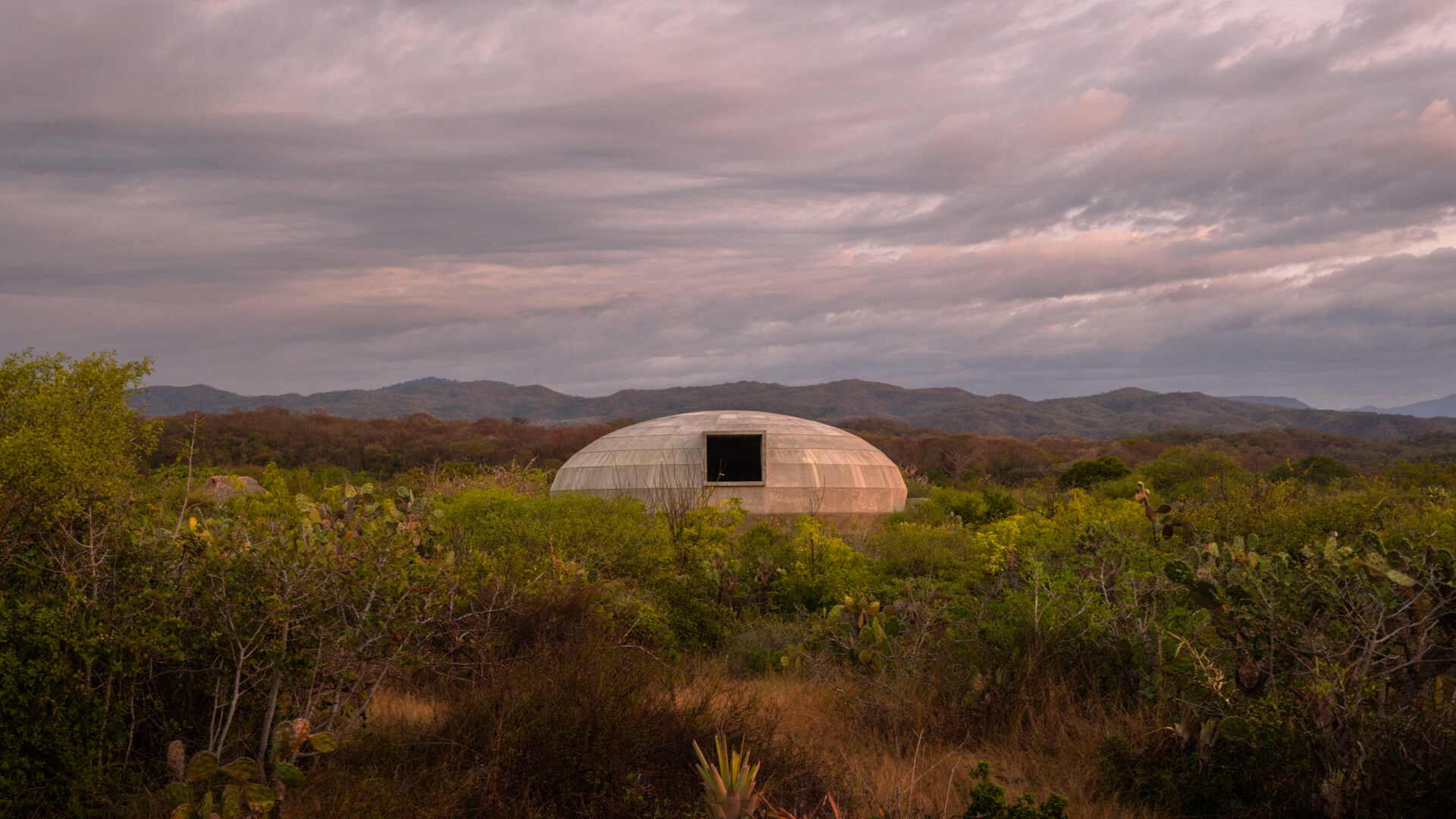
If not for the precisely cut, protruding orthogonal openings in its bare grey skin, the Mushroom Pavilion appears as a concrete egg nestled amid the 65 acres of green forestscape of Fundación Casa Wabi, seen from the Oaxacan coast. Designed by OMA as a space for cultivating fungi, the pavilion also engages the local communities of Puerto Escondido through food, art and nature, resonating with the vision of Mexican artist Bosco Sodi, who started the foundation to empower the people of his homeland through education and infrastructure.
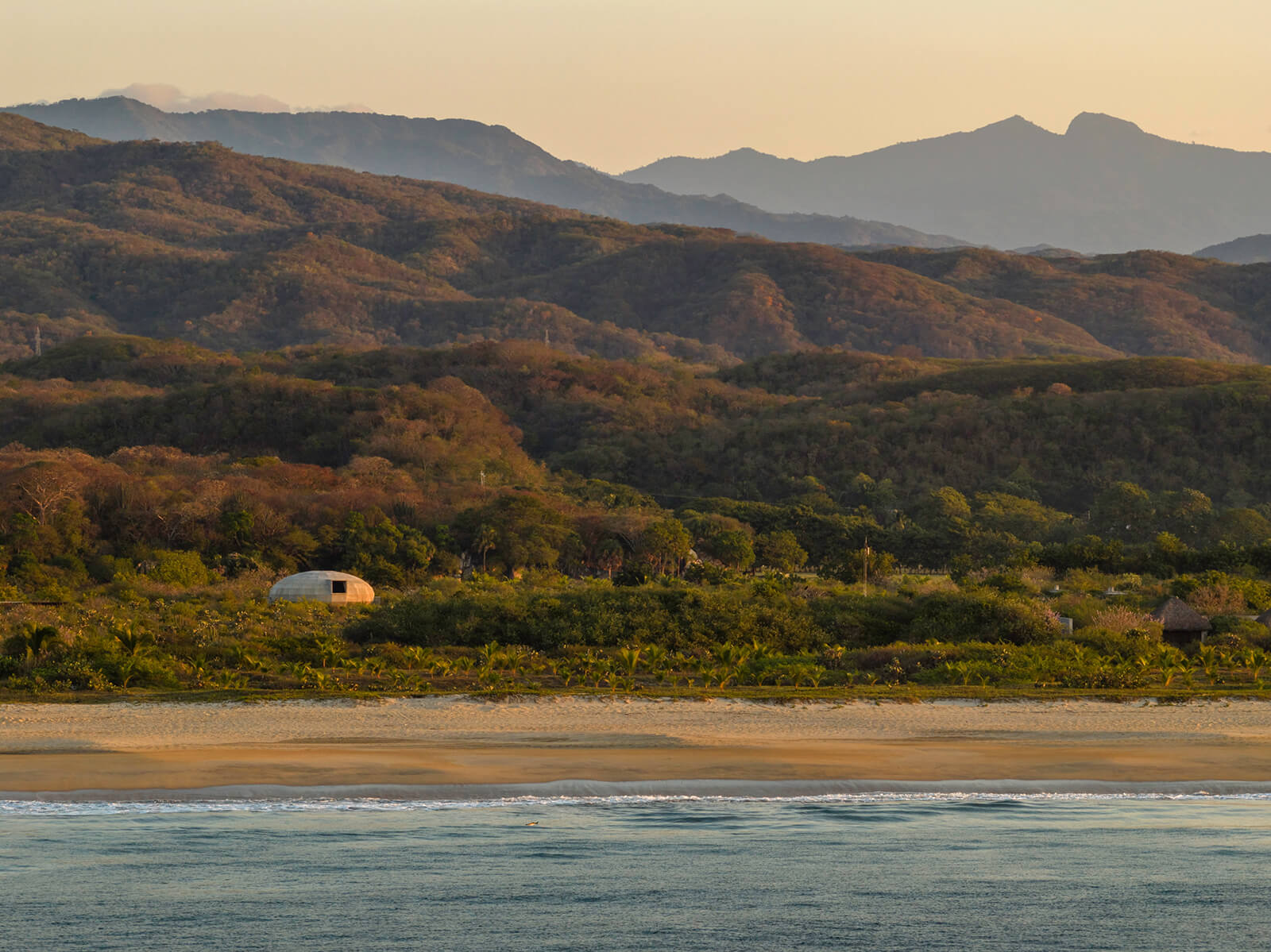
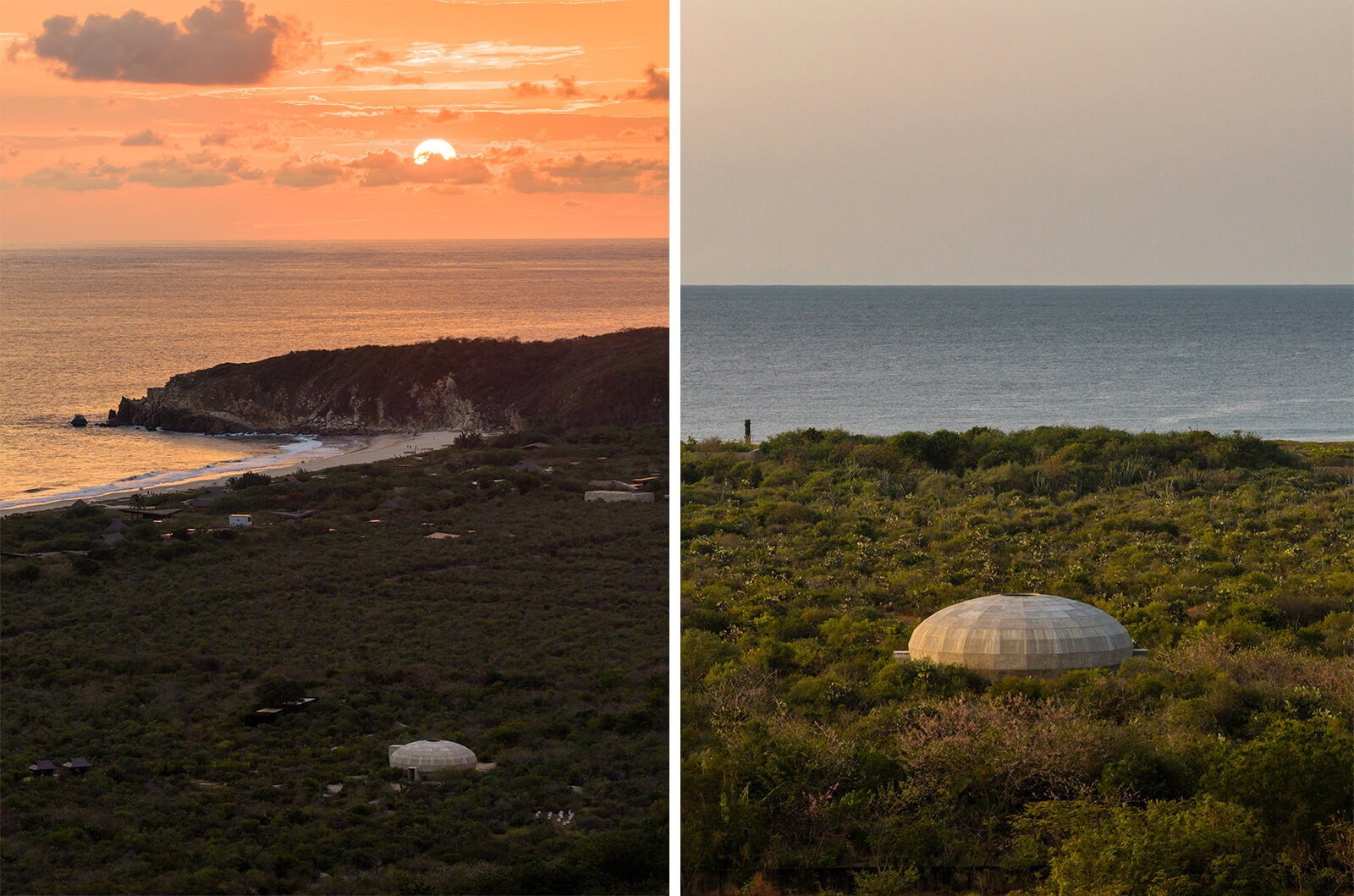
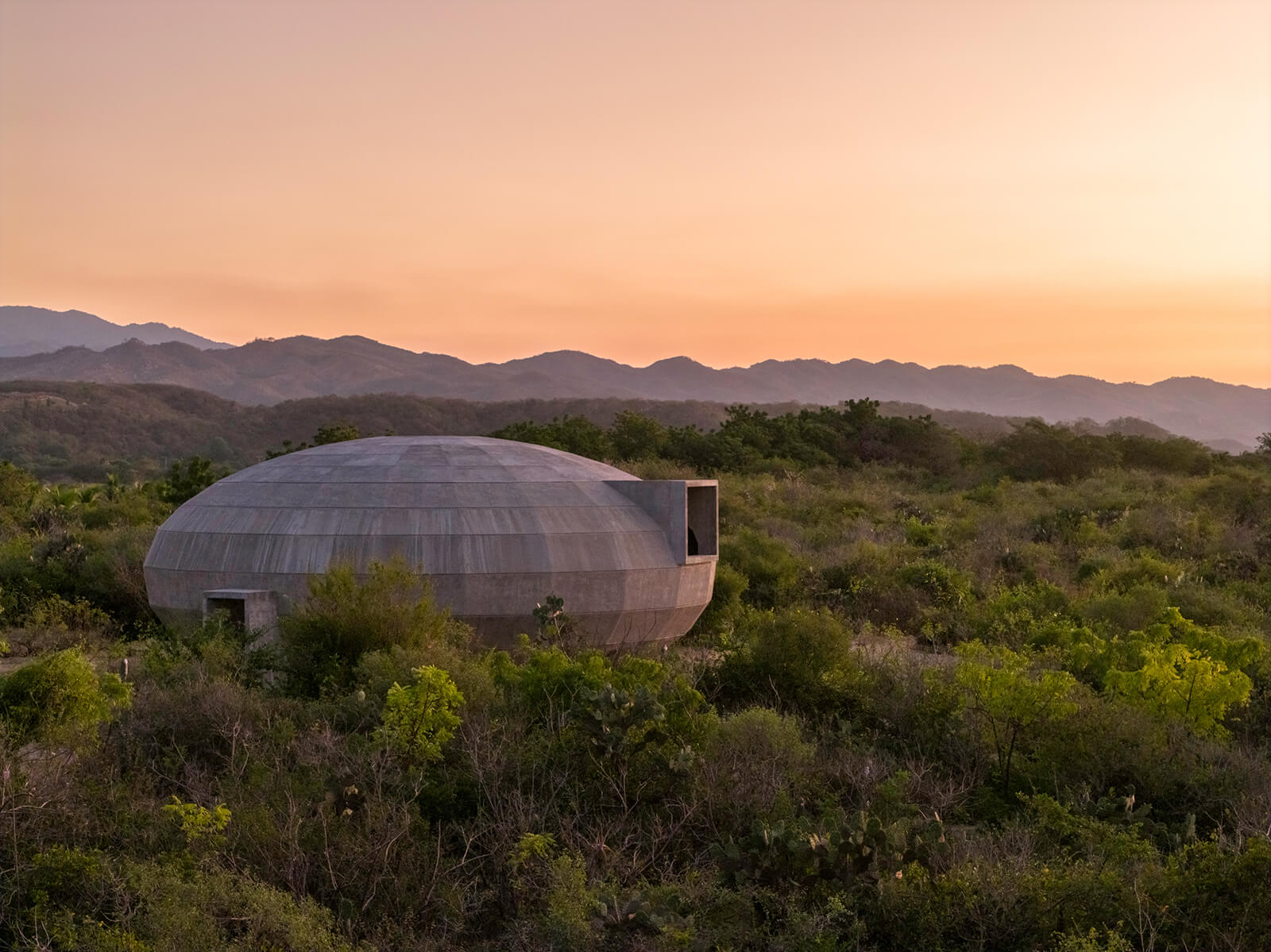
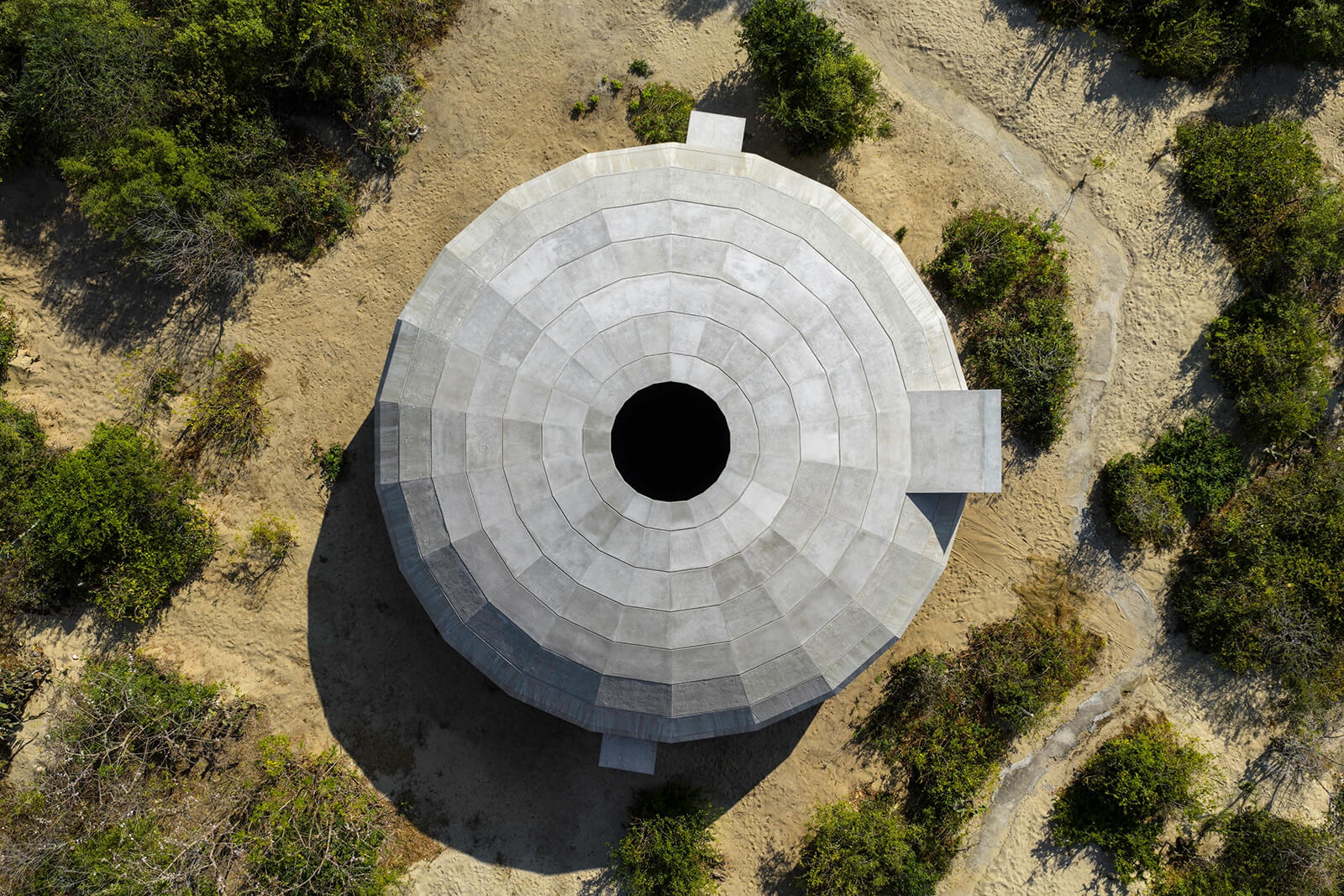
The structure of the pavilion is an ellipsoid pierced by a cuboidal volume along its horizontal axis. The oblate design allows the building to minimise its contact with the ground, reducing the displacement of the native guayacan vegetation. Rectangular openings along the lower perimeter facilitate cross-ventilation through the space, while an oculus in the domed roof invites natural light and rain directly into the central area, illuminating and livening the cave-like interiors. A platform at the top of the steps offers expansive views of the surrounding landscape and the ocean beyond.
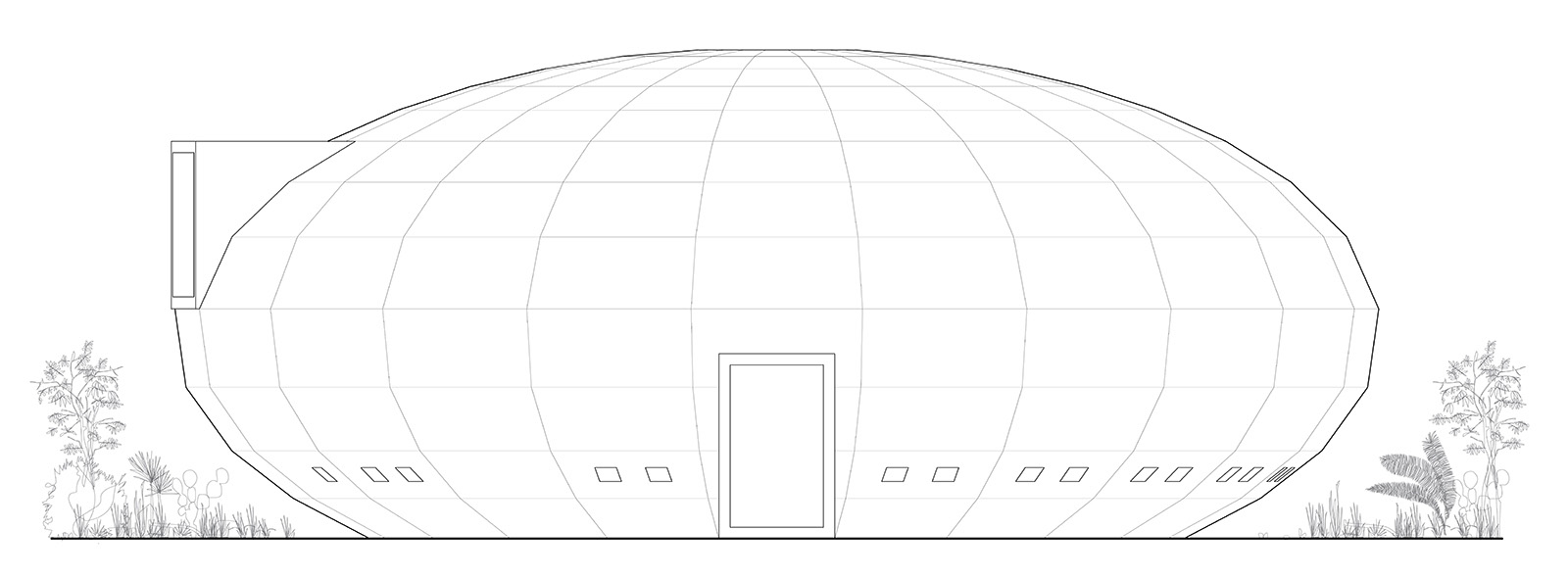
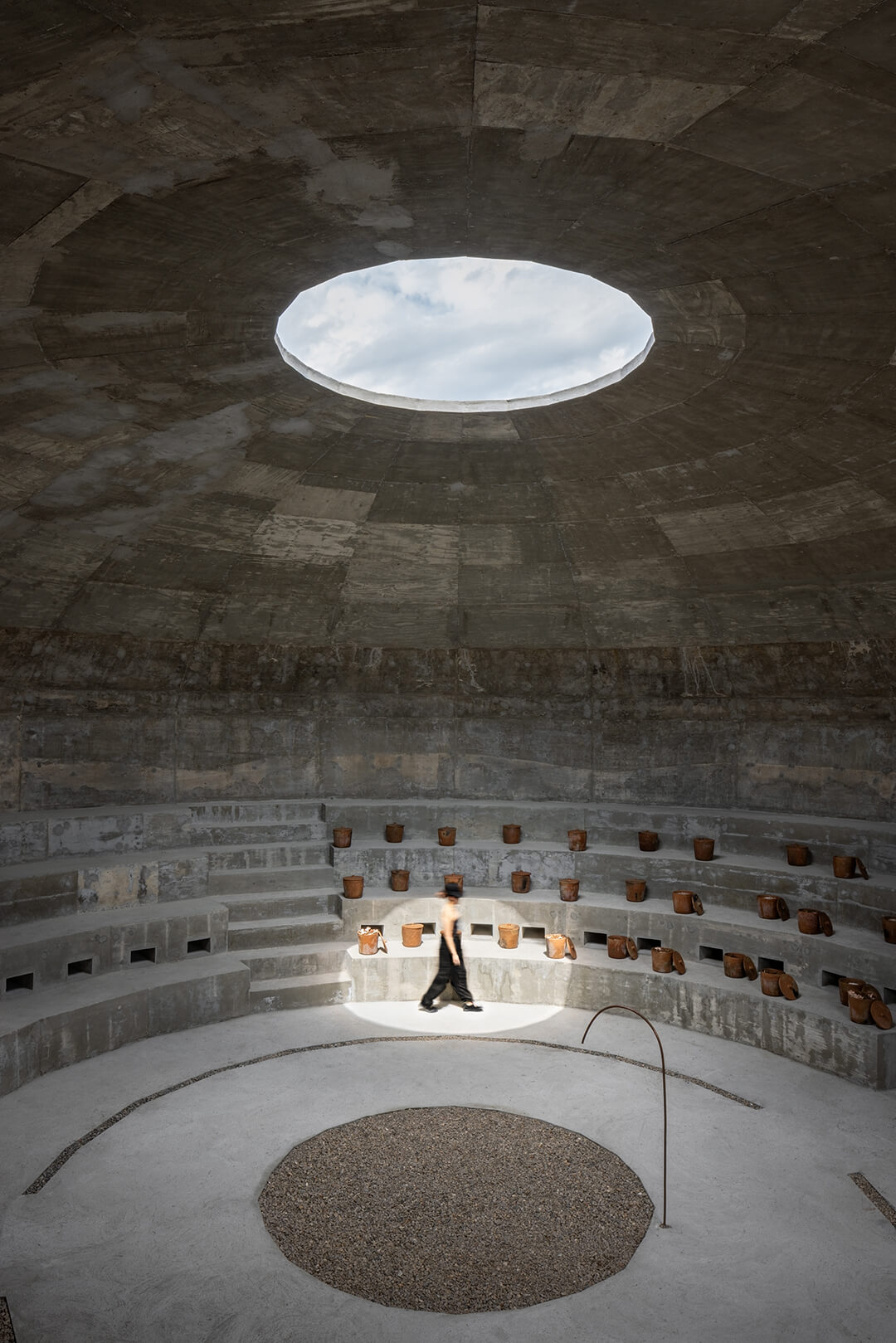
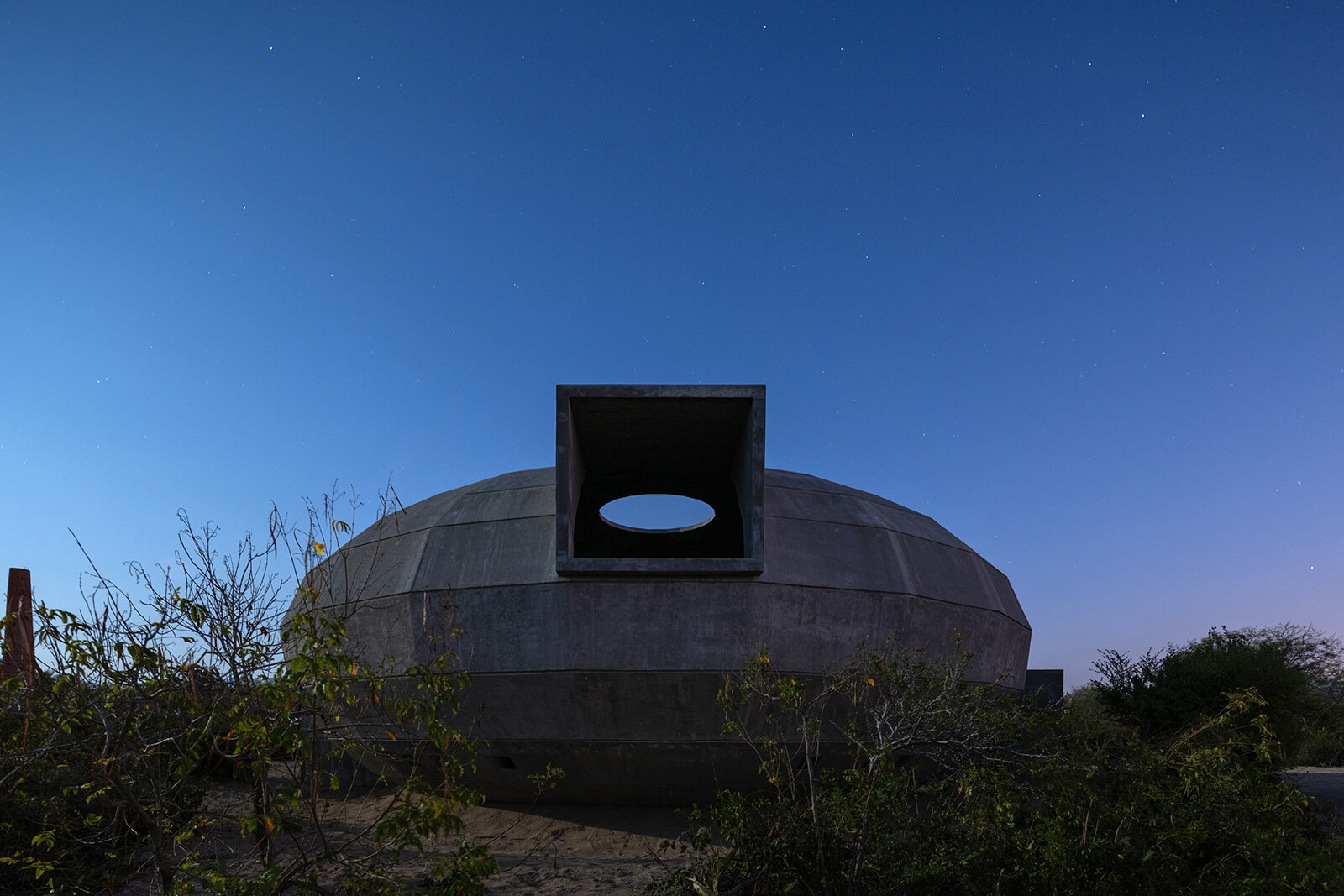
Although the pavilion design caters to multiple purposes—including cultivating edible fungi for the foundation’s kitchen and hotel, propagating sustainable farming techniques and being a venue for exchanging ideas among the local coastal communities, artists and visitors—the team at OMA purportedly chose a simple form for flexibility and ease of accessibility. “Working with Bosco Sodi and Fundacion Casa Wabi, we conceived a pavilion for the very specific function of mushroom cultivation while offering a space for people to come together”, states Shohei Shigematsu, project lead and partner-in-charge at OMA, in the official press release.
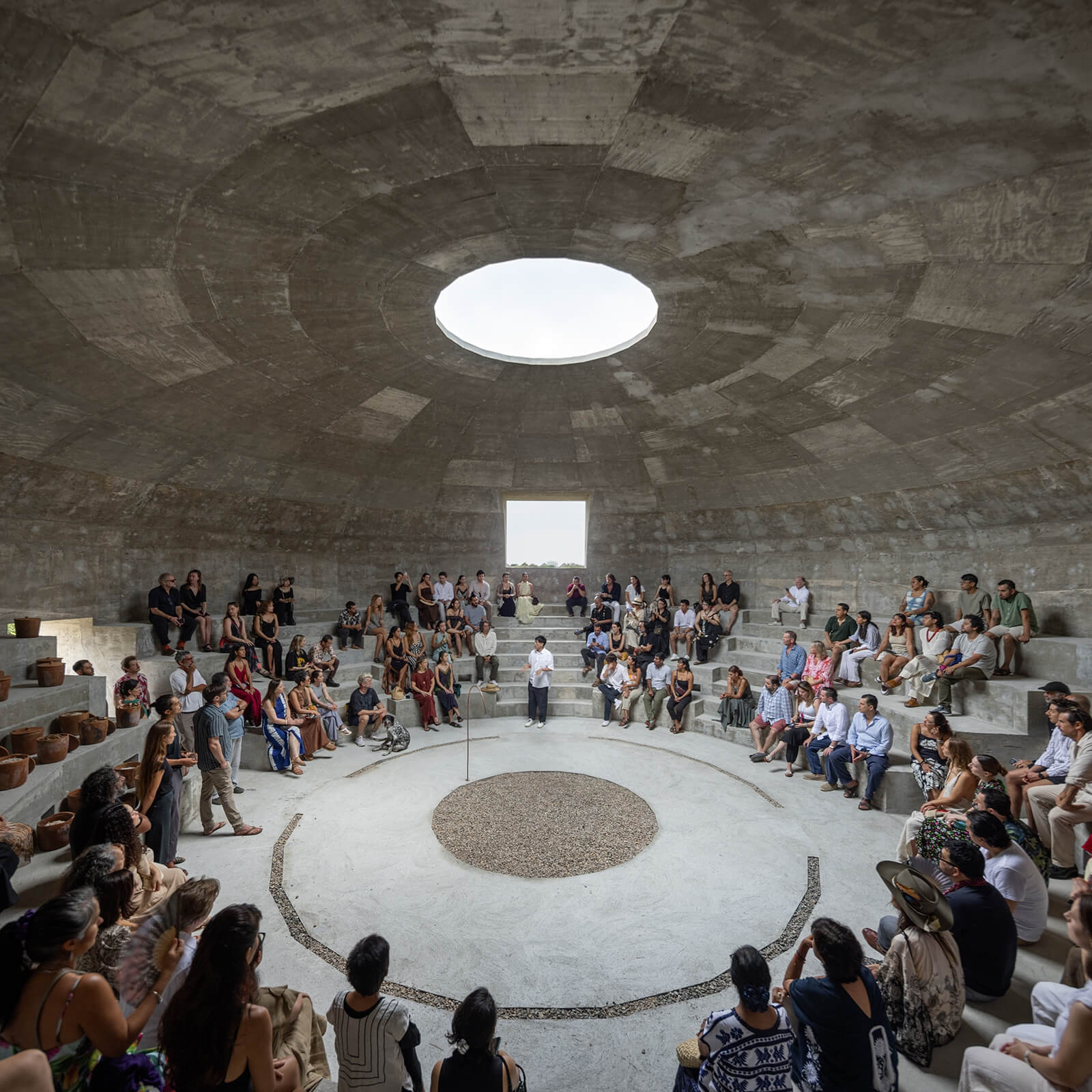
The commercial cultivation of mushrooms, beyond their natural occurrence, typically comprises a three-step process. The first stage requires darkness and warmth for the mycelium to colonise the substrate; the second needs light, high humidity and fresh air to nurture growth; and finally, the produce is stored in a cool place. The ovular volume of the pavilion is, hence, spatially divided into three sections—one each for the stages of incubation, fruiting and storage—surrounding a central focal space.
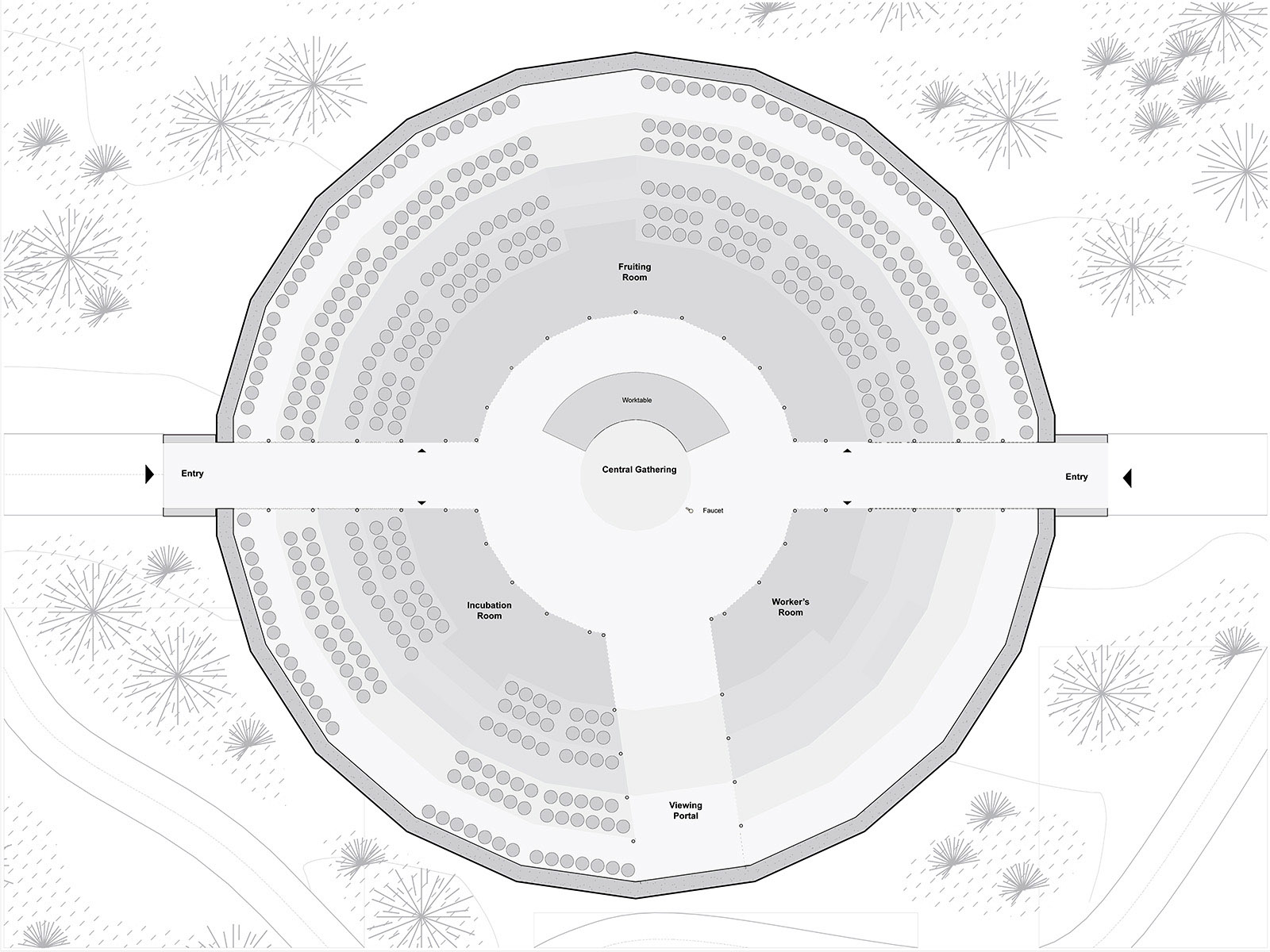
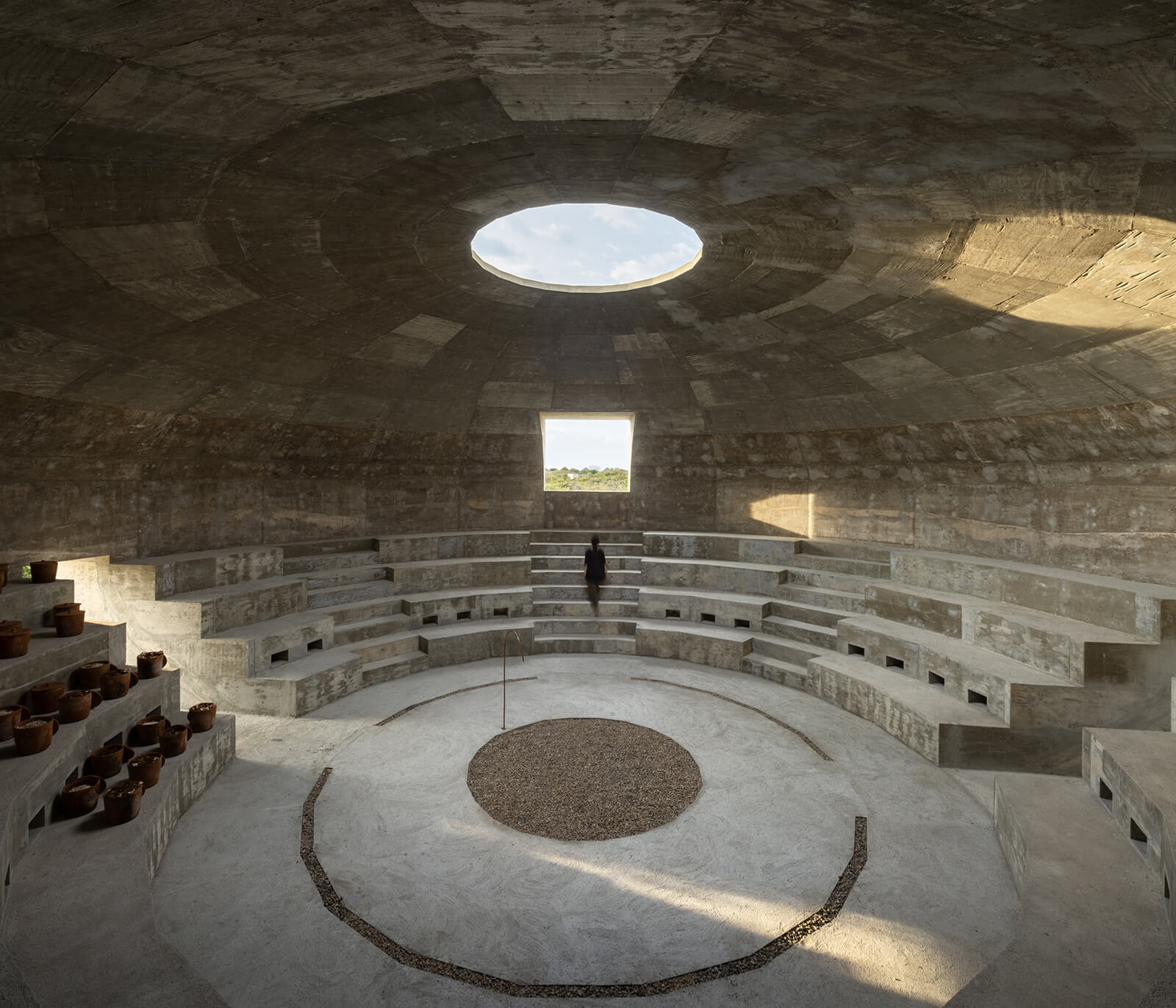
The curved walls inwardly yield steps that serve a dual purpose: as shelves for the mushroom pots, handcrafted in terracotta by local artists; and as the seating levels of an amphitheatre to foster dialogue, community building and educational workshops. Emanating radially and outward from the ‘focal space’, the layout offers a comprehensive view of the complete mushroom-growing process, ensconced in its architecture.
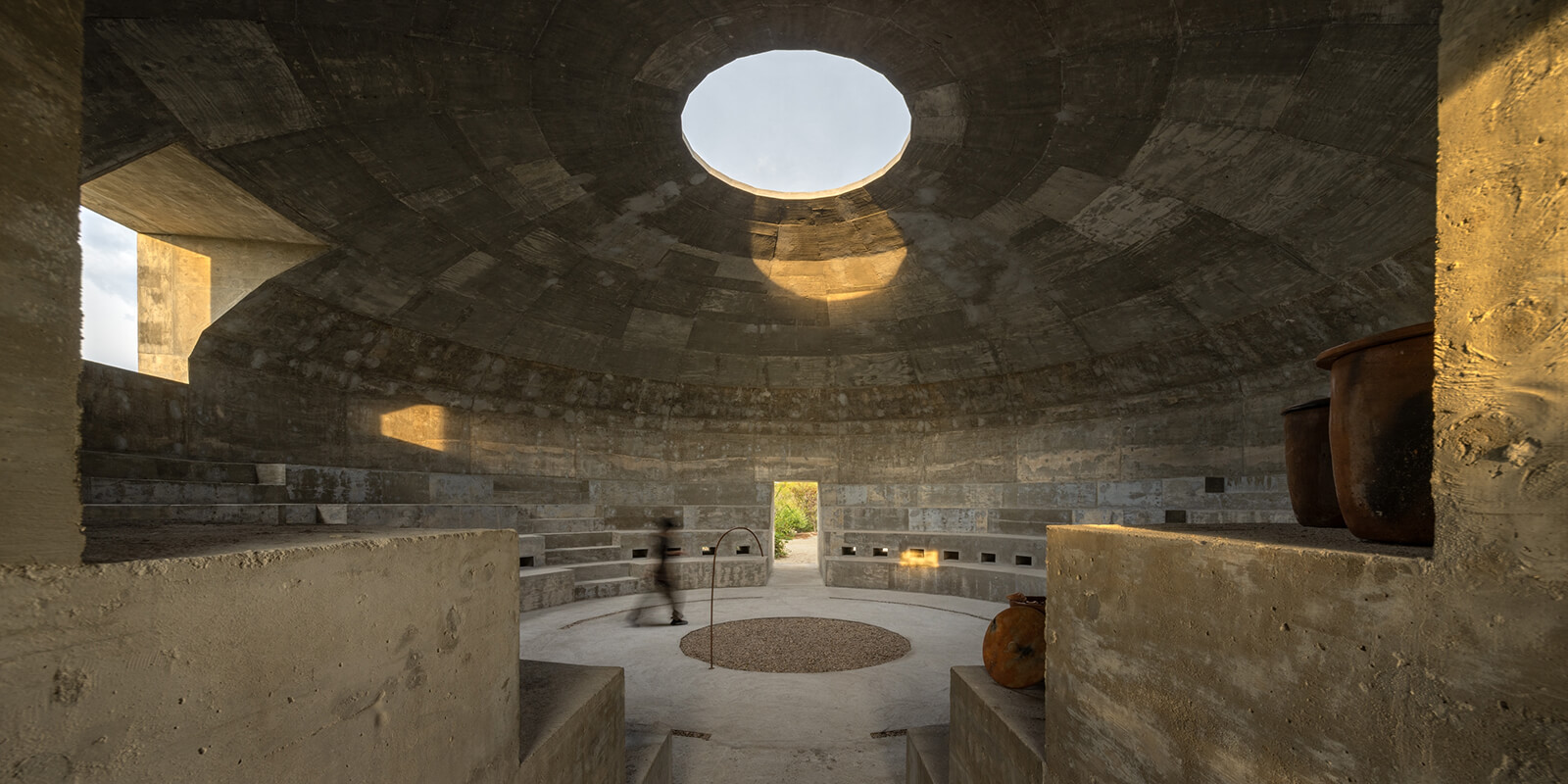
While the pavilion appears to be a monolithic mass from a distance, on a closer look, the tessellated construction of the shell is rendered visible. Cast in troweled and poured-in-place concrete, the surface of the shell is finished in a gunny texture to hold the iron-rich rainwater of the region, causing it to rust and change appearance along with the surrounding natural landscape, submitting the structure to the perennial passage of time.
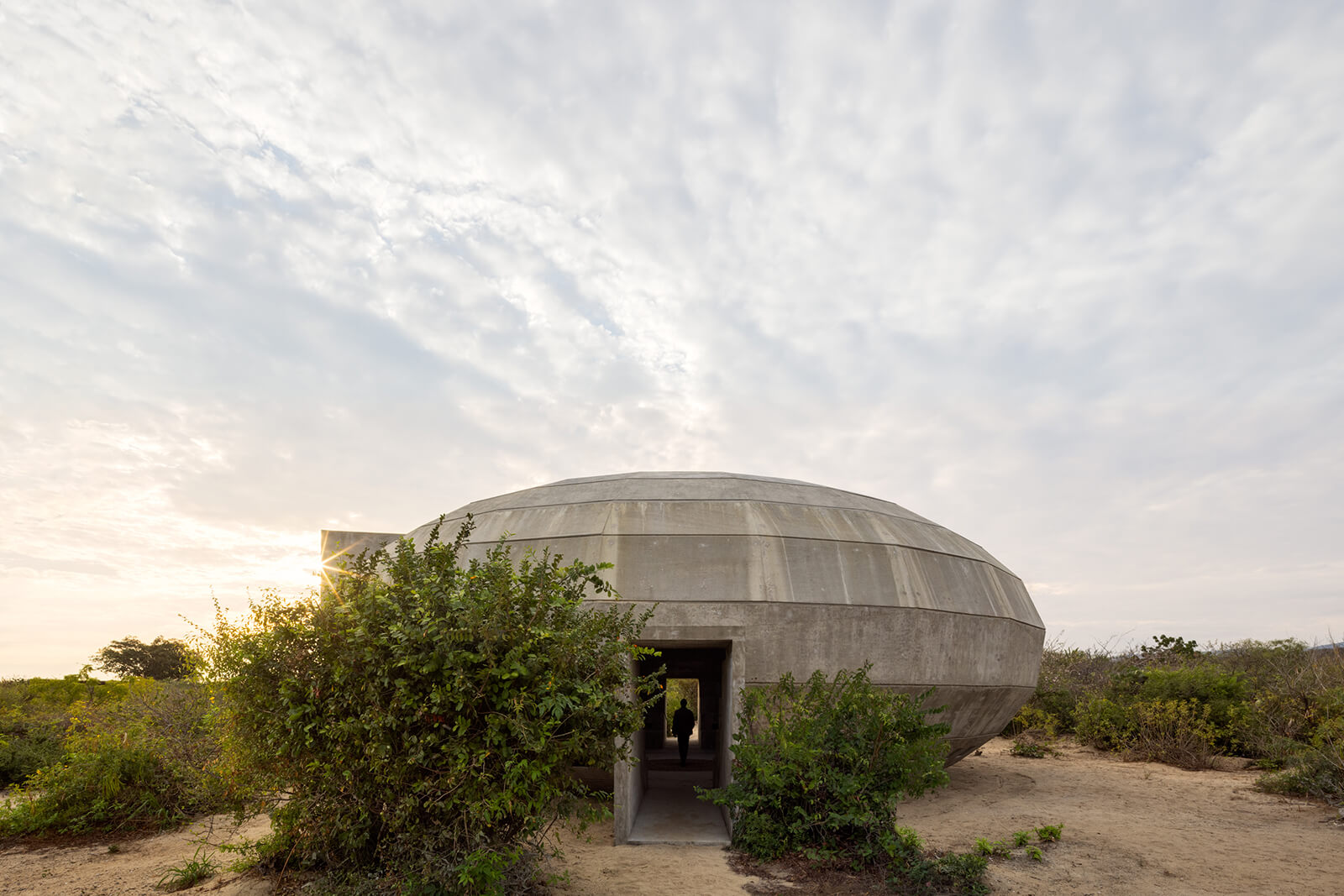
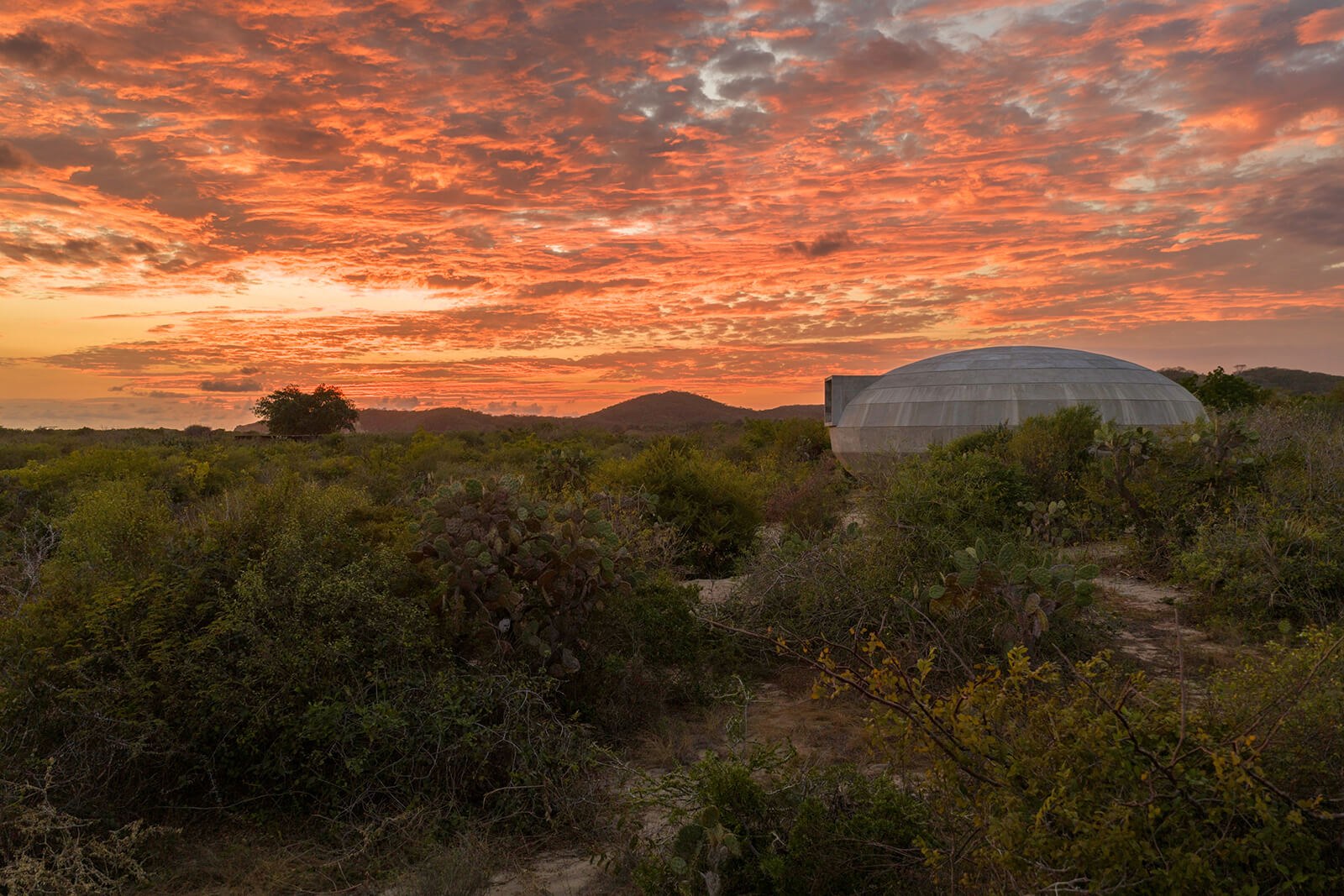
Along with interventions by Kengo Kuma, Alberto Kalach and Carlos H Matos, OMA’s Mushroom Pavilion—notably the Dutch architecture firm’s first completed project in Mexico—adds to an ongoing series of architectural pavilions commissioned over the last few years across the foundation’s campus, itself designed by Tadao Ando.
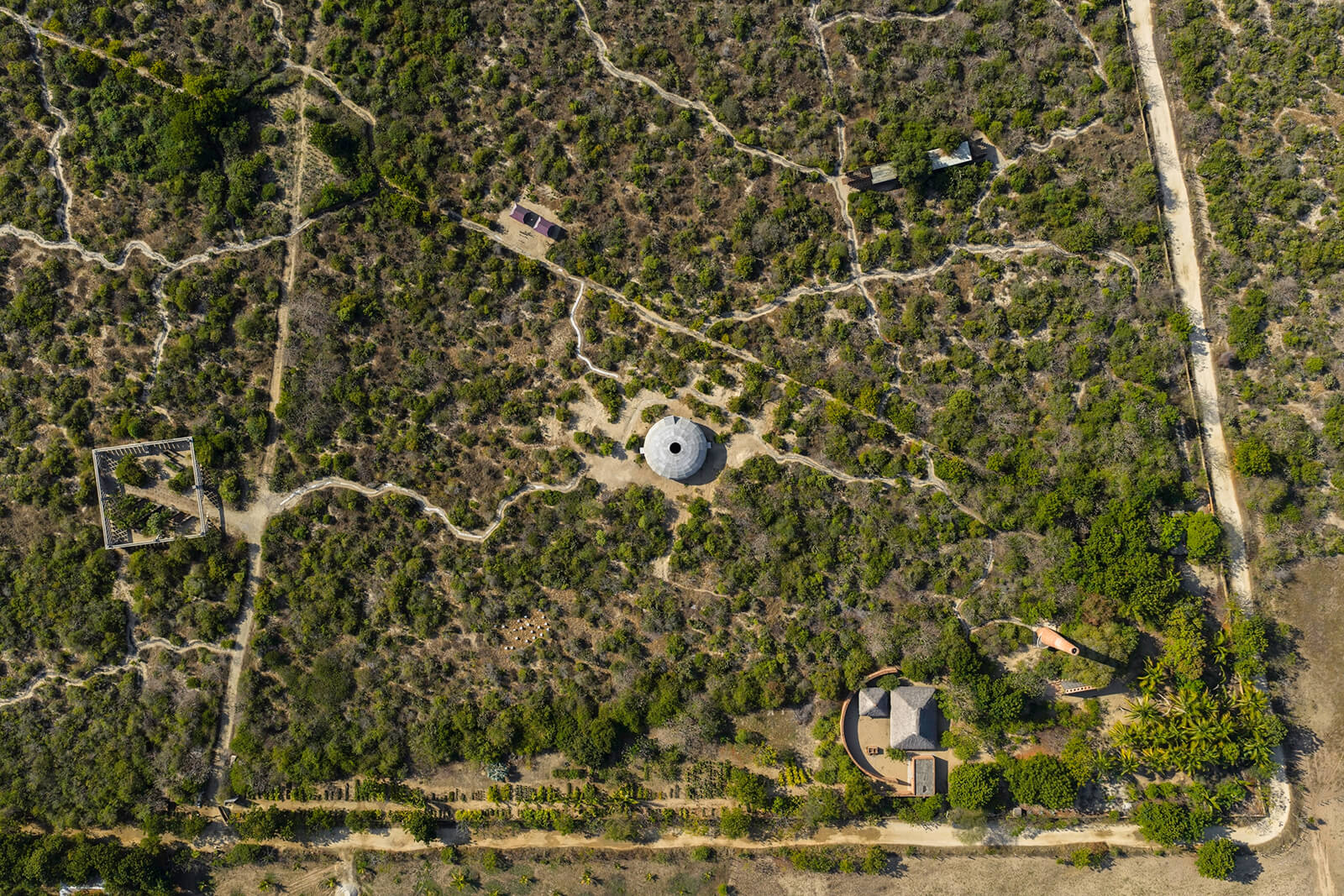
The Pavilion’s immediate physical context within the foundation’s expansive campus greens lends the project both its unique predisposition as well as its best provocation. As a standalone structure, it is an incubator of ideas and an intervention that stands to serve its community over time—both increasingly relevant in a time when mushrooms are gaining unprecedented importance in contemporary design and architecture discourse. That is not just for their material contributions, but also to their resilience as living forms, best summed up by academic Anna Tsing. If there is to be a mushroom that survives at the end of the world, do we then need the structures housing them, facilitating them, to be equally resilient or ephemeral?
Name: Casa Wabi Mushroom Pavilion
Location: Puerto Escondido, Oaxaca, Mexico
Typology: Pavilion
Client: Fundación Casa Wabi
Architect: OMA
Design Team: Shohei Shigematsu (Partner-in-Charge); Shary Tawil, Caroline Corbett (Project Architects); Dylan Wei, Francesco Rosati
Area: 2153 sq ft
Year of Completion: 2026

by Pranjal Maheshwari Oct 19, 2026
The Mumbai-based architects integrate courtyards, mesh screens and north light trusses to create a dining space that doubles up as a community hub at SR University, Warangal.
by Mrinmayee Bhoot Oct 17, 2026
The Rotterdam-based institute centres the Indian Ocean as a network for exploring material histories and transnational links shaping coastal cultures, positing them as future models.
by Pranjal Maheshwari Oct 16, 2026
At the 2026 Stirling Prize ceremony, Mary Duggan with RUFF Architects, MAKER Architecten and Nakshabid Architects were felicitated for proffering quality housing and social equity.
by Mrinmayee Bhoot Oct 12, 2026
The new Centre for Contemporary Arts, fostering public engagement with art in Uzbekistan, is housed in a tram depot refurbished by the French studio, emulating local craftsmanship.

make your fridays matter with a well-read weekend
Enter your details to sign in
Don’t have an account?
Sign upOr you can sign in with
a single account for all
STIR platforms
All your bookmarks will be available across all your devices.
Stay STIRred
Already have an account?
Sign inOr you can sign up with
Verification link sent to check your inbox or spam folder to complete sign up process
Tap on things that interests you.
Select the Conversation Category you would like to watch
Please enter your details and click submit.
Enter the 6-digit code sent at


OMA’s Mushroom Pavilion is a sanctum for community, congregation and cultivation
by Pranjal Maheshwari | Published on : Mar 23, 2026


 Sign in with Google
 Sign in with email
What do you think?