Art07 mins. read
Weaving a language beyond abstraction: Olga de Amaral in Paris
by Giulia ZappaDec 02, 2024



by Manu SharmaPublished on : Nov 01, 2024
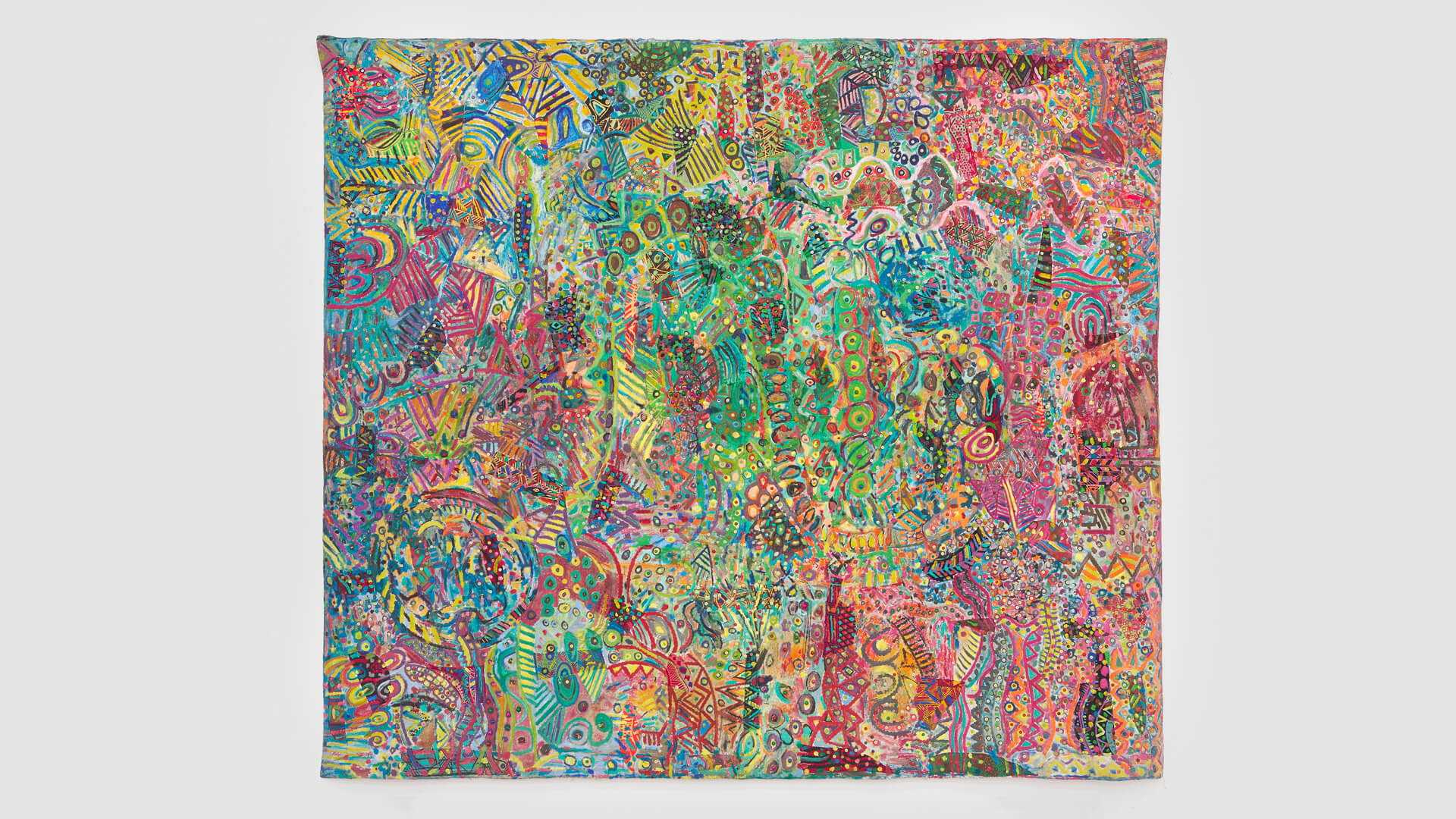
The Art Gallery of Ontario (AGO) in Canada is currently presenting Pacita Abad, the Canadian leg of the first major retrospective by the eponymous Filipino-American artist (1946 - 2004), from October 9, 2024 - January 19, 2025. The solo show spans Abad’s career of 32 years, bringing together over 100 works, including painting works, prints and the technique of trapunto (traditional Italian quilts), which she used to create colourful quilted paintings that were embellished with accumulated materials, addressing various political topics through her work. Pacita Abad is organised by the Walker Art Center, Minneapolis, in collaboration with the artist’s estate, and is curated by Victoria Sung, Phyllis C. Wattis Senior Curator, Berkeley Art Museum and Pacific Film Archive, and curatorial fellow Matthew Villar Miranda from the Visual Arts department at Walker Art Center. The AGO presentation is organised by Renée van der Avoird, associate curator of Canadian art, AGO, in collaboration with Carla Felix, community outreach advisor. Van der Avoird joins STIR for an interview that explores the artist’s perspective on transforming the language of quiltmaking and how she channelled her global inspirations.
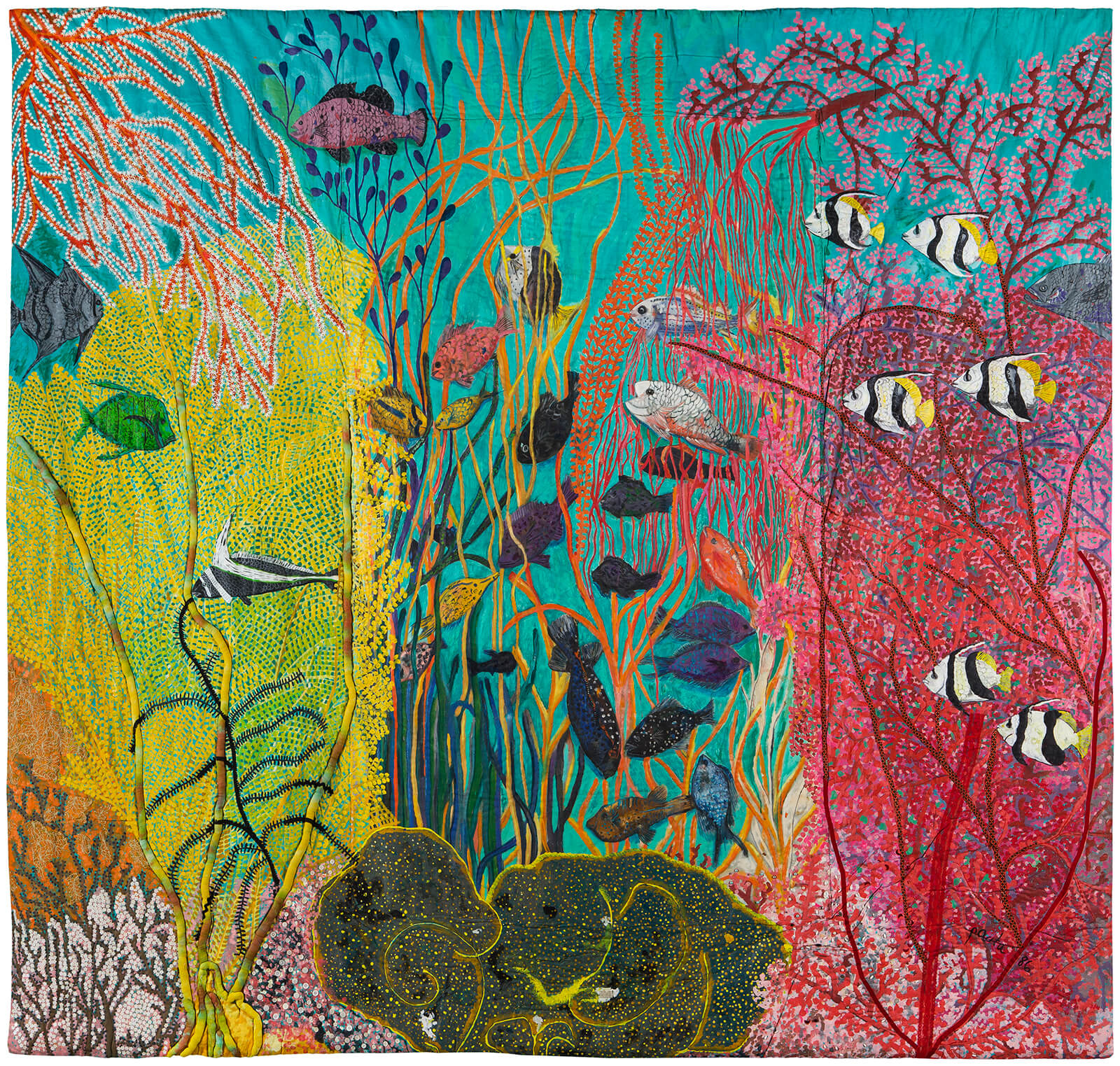
...By embracing (textiles) in her practice, Abad broke down barriers between fine arts and functional arts. – Renée van der Avoird, associate curator of Canadian art, AGO
Pacita Barsana Abad was born in Batanes, Philippines and became politically active during her youth. She migrated to the United States in 1970 to escape persecution by the infamous Marcos regime (1965 - 1986), which saw the nation under martial law from 1972 to 1981. An inveterate traveller, she visited over 60 countries in her lifetime, subsuming the crafts she encountered on her journeys into her practice. Her influences ranged from Indonesian batik printing to Korean beadwork, but it was perhaps medieval Italian quiltmaking that left the deepest impression on her. 'Trapunto', as it is known, became Abad’s signature technique. This style of quiltmaking involves a design being added into a quilt through stitching, followed by stuffing being pushed into that particular portion from the back of the quilt to raise it.
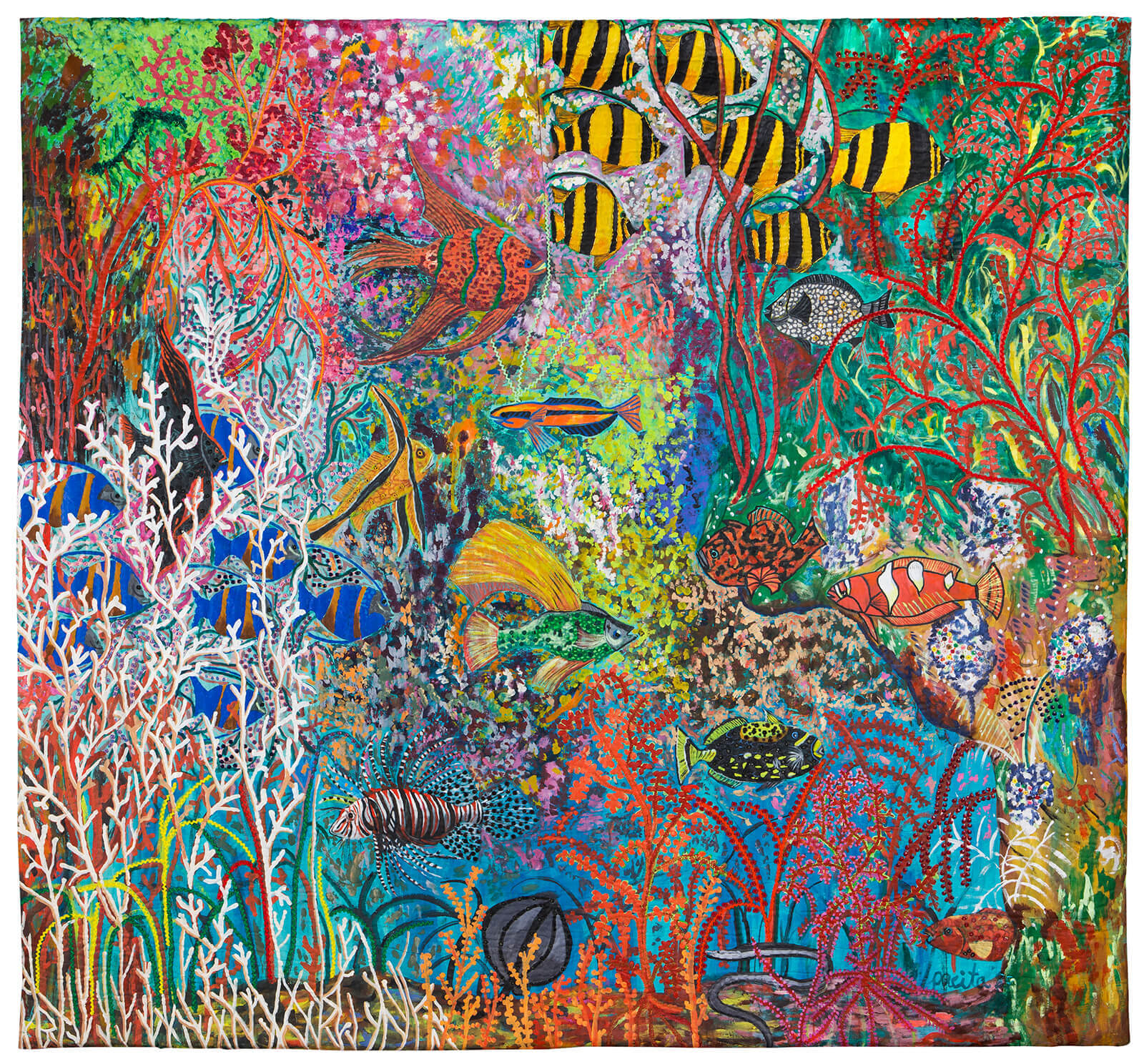
Western art has traditionally held a gendered prejudice against quiltmaking—and more broadly textile work—which it has pejoratively associated as “women’s work”. The AGO curator addresses Abad’s focus on textile-based art, telling STIR, “...we can interpret Abad’s commitment to quilting and needlework as a strategy of resistance to traditional art forms of Western modernism…By embracing (textiles) in her practice, Abad broke down barriers between fine art and functional art.”
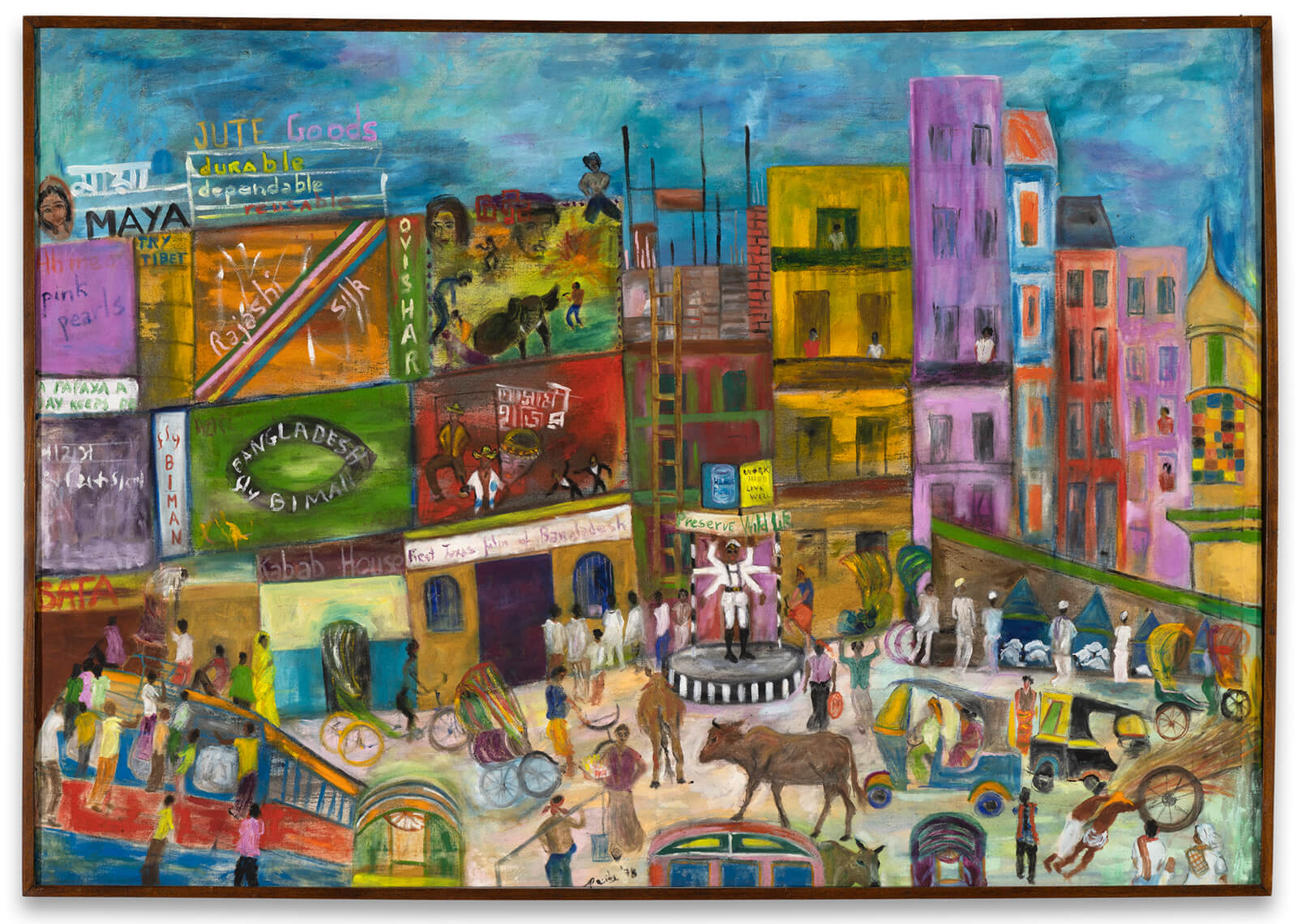
Many of the works at the exhibition highlight the artist’s global and pluralistic approach towards artmaking. As an example, Van der Avoird references the trapunto, pointing to the series Masks from Six Continents (1990 - 1993). She says,“[This series was] originally on view over 30 years ago at the Metro Center transit station in Washington DC [and] these immense textile works reference [maskmaking] cultures from Oceania, South America, Africa, and Asia.” She explains that this series presents an interconnected vision of a more equitable world and that the artist developed it through careful observation of mask-making traditions with ceremonial and artistic contexts.
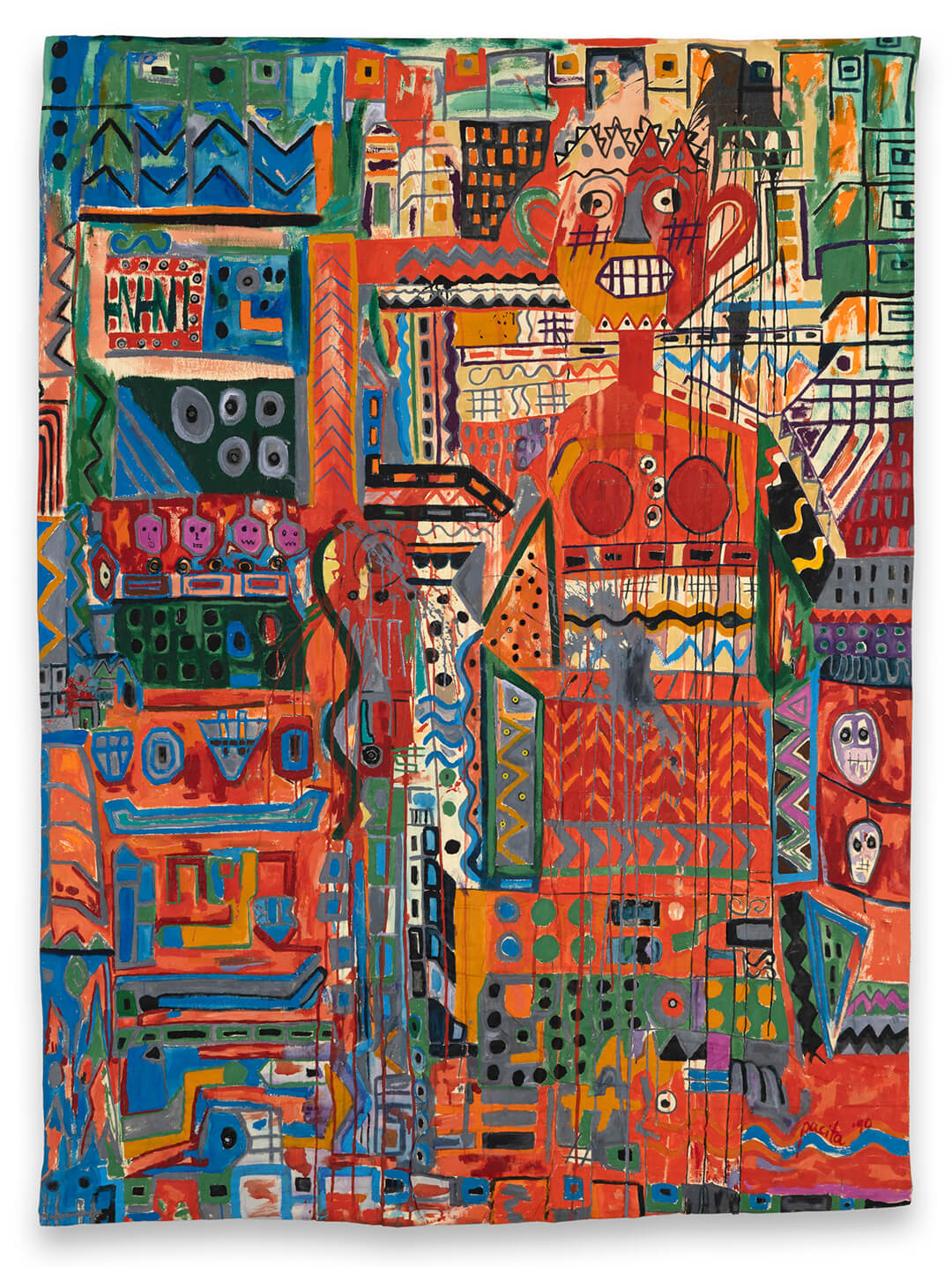
Like many women artists, Abad was under-recognised in her lifetime, perhaps especially so because of her commitment to textile art. Her practice carries great value as it presents a modern vision of integrating diverse traditional art practices—free from hierarchicalism—as one unique creative voice. Pacita Abad, which has already been shown at the Walker Art Center, the San Francisco Museum of Modern Art and MoMA PS1, New York is making its only slated showing in Canada at the Art Gallery of Ontario. The retrospective exhibition will go a long way in correcting the historical error of overlooking Abad’s work. Additionally, it could spark a lasting curiosity in audiences to explore the work of other women artists who have been sidelined, as well as the traditional art birthed by Canada’s rich Indigenous heritage.
‘Pacita Abad’ is on view at AGO, Ontario from October 9, 2024 - January 19, 2025.

by Srishti Ojha Oct 09, 2026
In his ongoing exhibition, the South African artist creates two post-apocalyptic futures to explore society’s relationship with textiles, patterns and technology.
by Srishti Ojha Oct 07, 2026
The Kolkata-based film festival shone a spotlight on local and international filmmakers and artists who are pushing the boundaries of what a film can encapsulate.
by Samar Jodha Oct 05, 2026
Looking at Ahmed Ali’s photographs of workers and industry within the wider history of industrial photography, from Soviet state imagery and Sunil Janah to Lewis Hine.
by Srishti Ojha Oct 02, 2026
The Indian artist’s exhibition at the Bruce Museum in the US thinks through fundamental questions of humanity by focusing on the Sun and the cosmological timescale.

make your fridays matter with a well-read weekend
Enter your details to sign in
Don’t have an account?
Sign upOr you can sign in with
a single account for all
STIR platforms
All your bookmarks will be available across all your devices.
Stay STIRred
Already have an account?
Sign inOr you can sign up with
Verification link sent to check your inbox or spam folder to complete sign up process
Tap on things that interests you.
Select the Conversation Category you would like to watch
Please enter your details and click submit.
Enter the 6-digit code sent at


‘Pacita Abad’ is a kaleidoscopic retrospective of the late artist’s work
by Manu Sharma | Published on : Nov 01, 2024


 Sign in with Google
 Sign in with email
What do you think?