Art05 mins. read
GAK Bremen’s new group show exposes the absurdity of debt
by Srishti OjhaJun 11, 2025



by Srishti OjhaPublished on : Oct 24, 2025
In David Foster Wallace’s posthumously published last novel, The Pale King (2011), the protagonist, known as Mr X, lives a life few would envy, working a tedious and repetitive desk job examining tax returns for the IRS. Eventually, through embracing monotony and letting himself fall into a deep, singleminded concentration, he achieves the ability to levitate. For Wallace, the boredom that has become central to modern life can be helpful, powerful and even profound. In her solo exhibition at the Städel Museum in Frankfurt, Germany, A Wolf, Primates and a Breathing Curve, German artist Asta Gröting explores similar ideas through her video art and photography. Gröting invites viewers to pause, contemplate, reflect and see the familiar through fresh eyes. In eight works created over the last decade, she bottles the poetry of the everyday, turning her gaze to the invisible or overlooked moments of life.
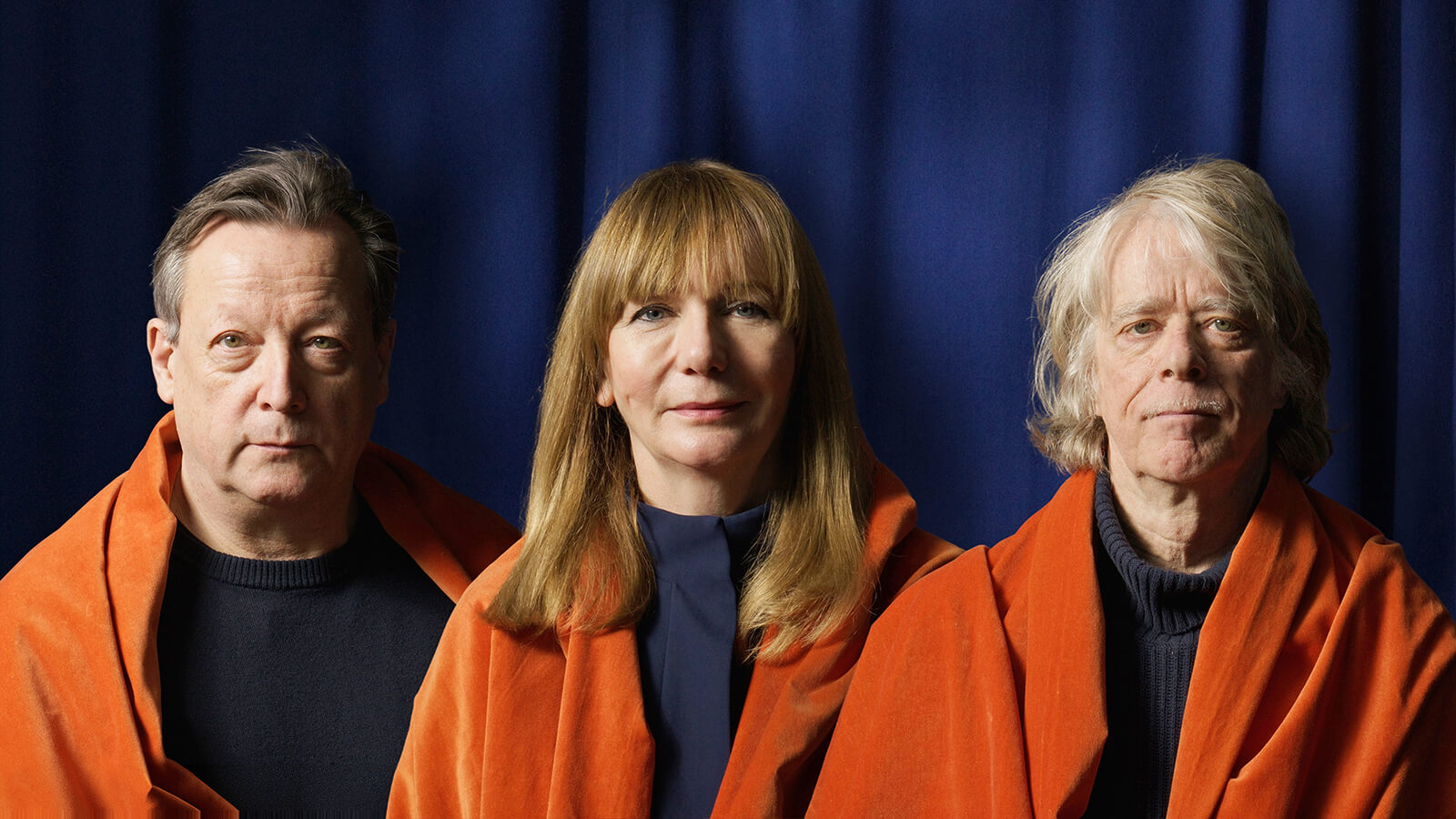
Gröting was born in 1961 in Herford, Germany, influenced by the industrial elements of her hometown and her mother’s work. She joined Hoesch AG, a former steel and mining company, as an apprentice and received technical training at metal foundries, carpentry and metalwork workshops and even photo studios. Her artistic education began at the Düsseldorf Academy of Art, where she pursued her interest in the tactile and the everyday through sculpture. After moving to Berlin in 1993, where she lives and works, her practice shifted to multidisciplinary art, incorporating theatre, experimental art, performance, sculpture and video art. Svenja Grosser, the Head of Contemporary Art at the Städel Museum and curator of the exhibition, told STIR, “Gröting is best known for her sculptural work. What many people don’t realise, however, is that she has been working with video on an equal footing since the 1990s. At the Städel Museum, we wanted to highlight this lesser-known yet equally significant aspect of her practice and open up a new perspective on her artistic language.”
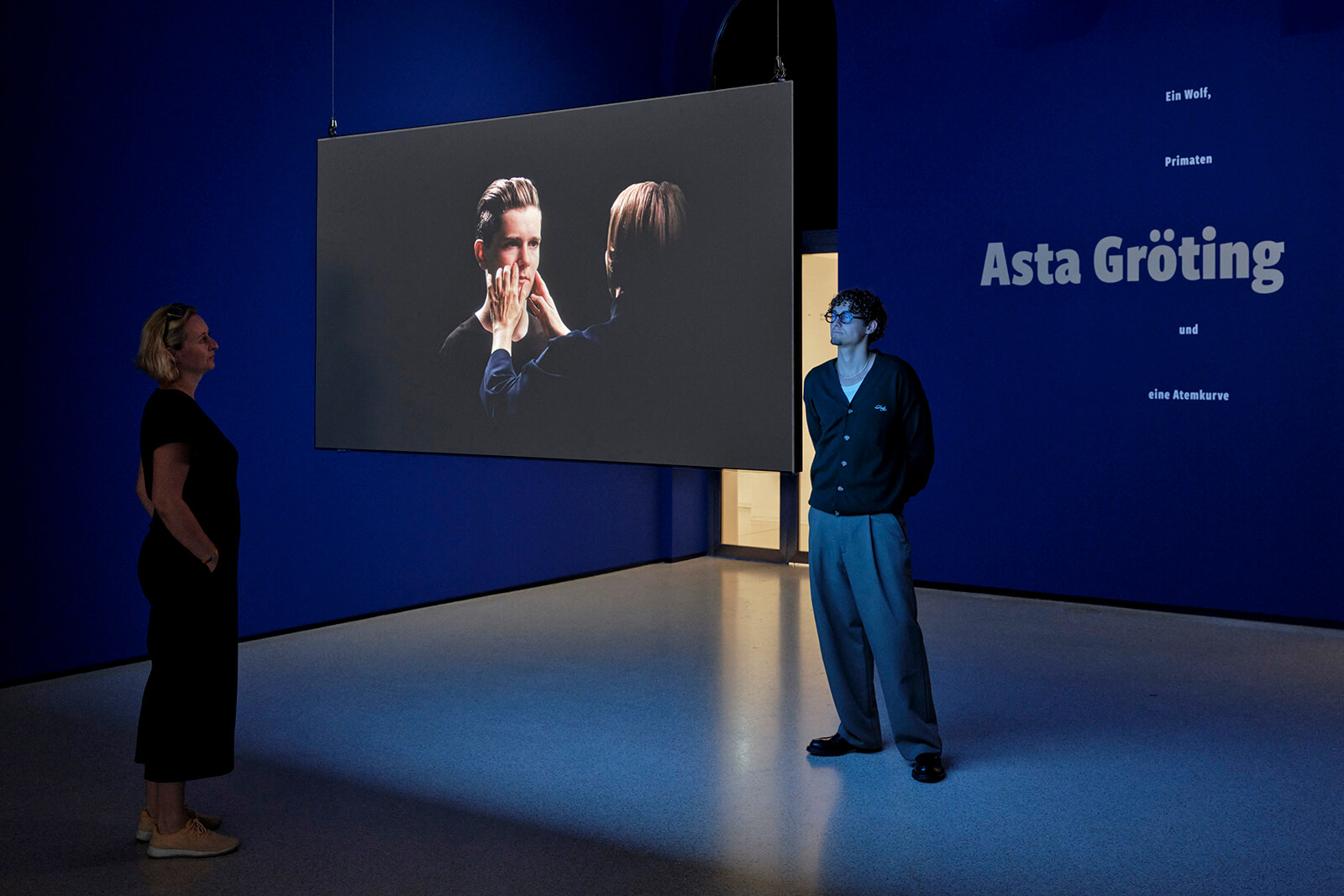
The earliest work shown, Touch (2015), reveals the connection between her practice in both mediums and the formative influence of contemporary artists like Marina Abramović on her work. The video shows the artist with her back to the camera, with 11 people standing close by. One by one, she looks deeply into their eyes and feels their faces with her hands, a physically intimate and sculptural gesture that becomes a form of wordless communication. The latest work, Matthias, Helge and Asta (2025), shown publicly for the first time, features German actor Matthias Brandt, entertainer Helge Schneider and the artist herself. The film begins as Matthias asks, “Have you failed?” Gröting and Schneider respond with nonverbal gestures, glances and breaths, remaining silent as they ruminate. The work not only attempts to destigmatise failure but also explores how people perceive and are perceived by one another in the absence of (much) language.
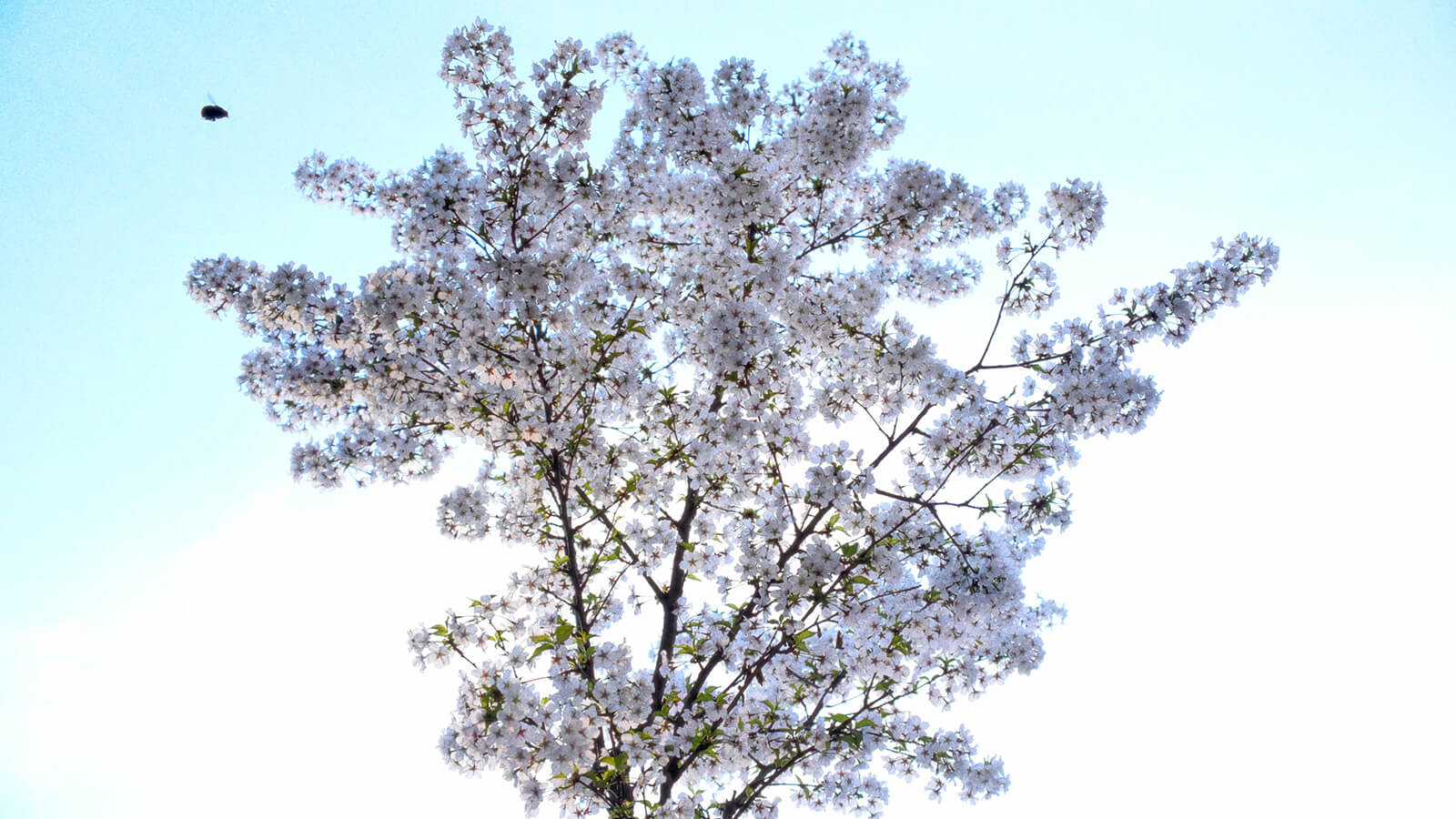
While her other works retain this focus on communication and connection outside of language, they pivot to nonhuman subjects. The qualities of animals, nature and everyday objects, as well as their relationships with each other and with humans, reveal valuable insights about the nature of life and broaden the meaning and scope of the human story. Cherry Blossom – Dawn and Dusk (2022) shows a blooming cherry tree over the course of one day, splicing together frames captured once every second. The result begins in darkness with only the silhouette of the tree seen, before bursting into colour and activity as daylight reveals flowers and leaves in vibrant shades and frantic streaks of the accelerated movement of bumblebees and other insects. The ever-changing visuals capture the contradiction of time in nature—ephemeral but cyclical.
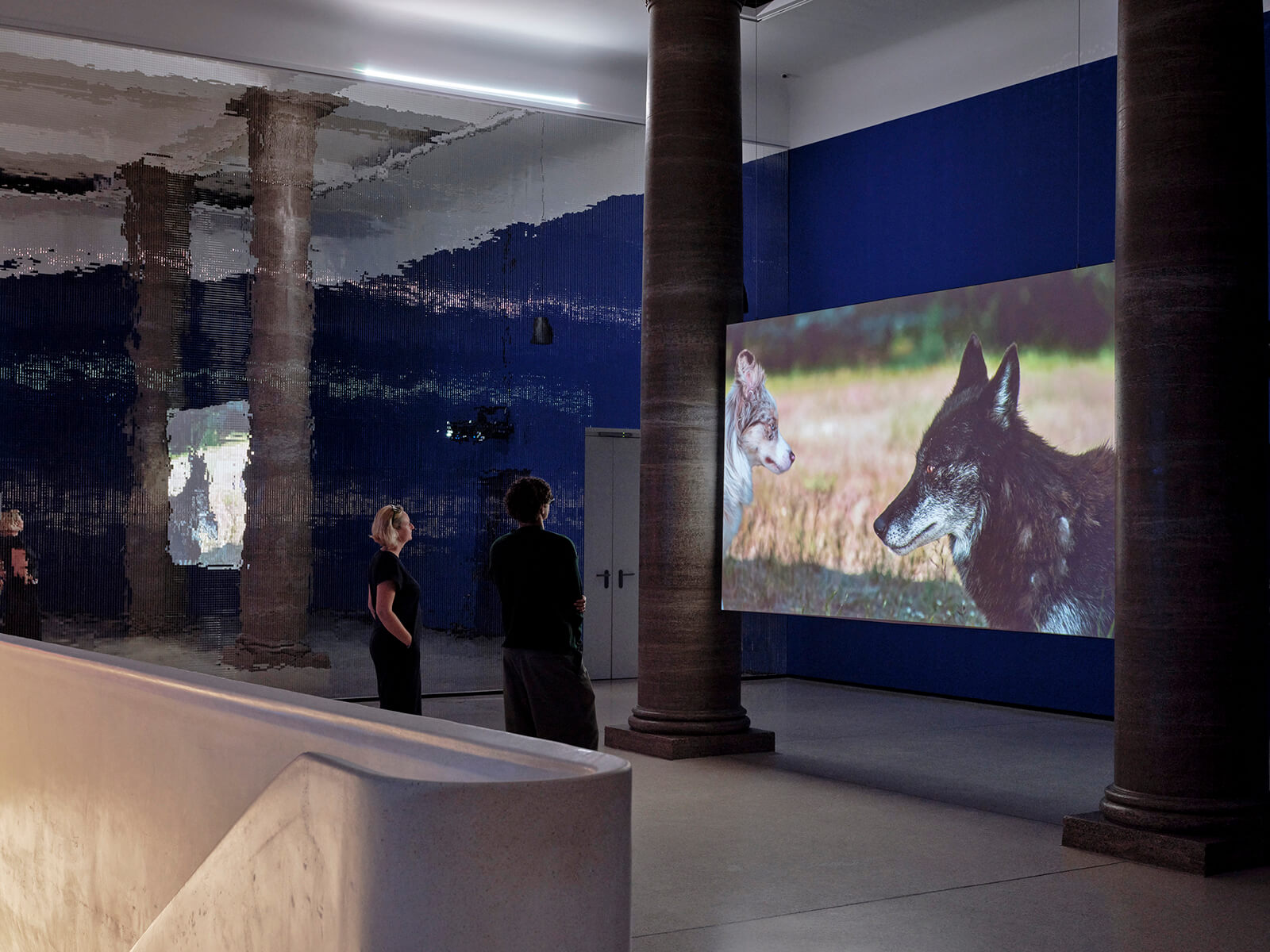
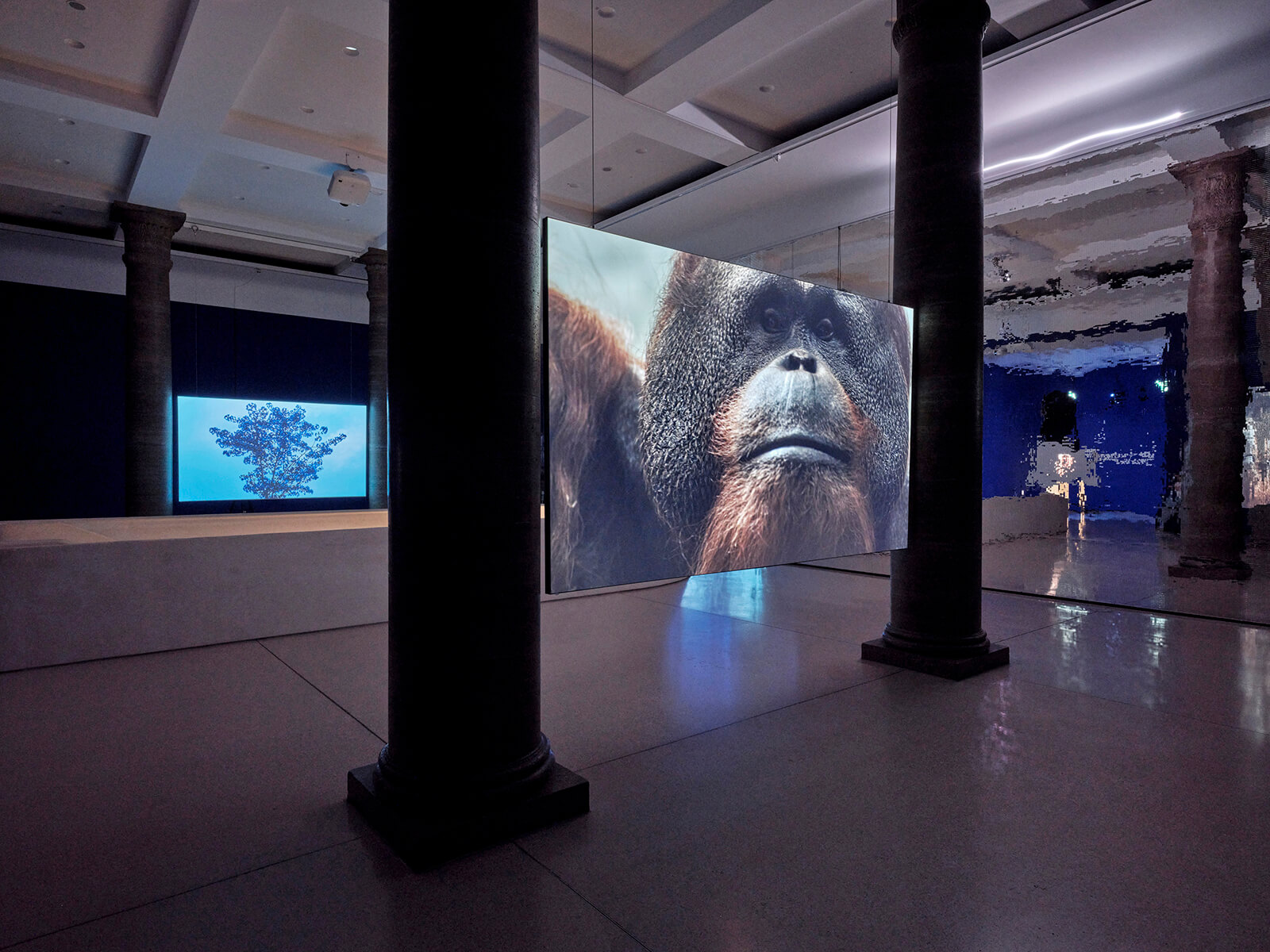
Wolf and Dog (2021) shows an encounter between a dog, friendly and trusting, eating out of a human hand and a wolf, wary and independent. Gröting is interested in their interaction with each other—such as when the dog approaches the wolf in playful competition—but also in the origin of their differences. The human hand in the video symbolises the catalyst that diverged the fate of these two animals millennia ago and created the distinctions between wild and domesticated. Primate and Human (2023) comes closer to home, asking urgent ethical questions about the manmade distinctions that divide us from our closest relative species. Close-ups of two orangutans, highly intelligent Southeast Asian apes, overlap with the face of a human baby. Gröting raises important concerns about the nature of humanity and our responsibility to those we share our planet with.
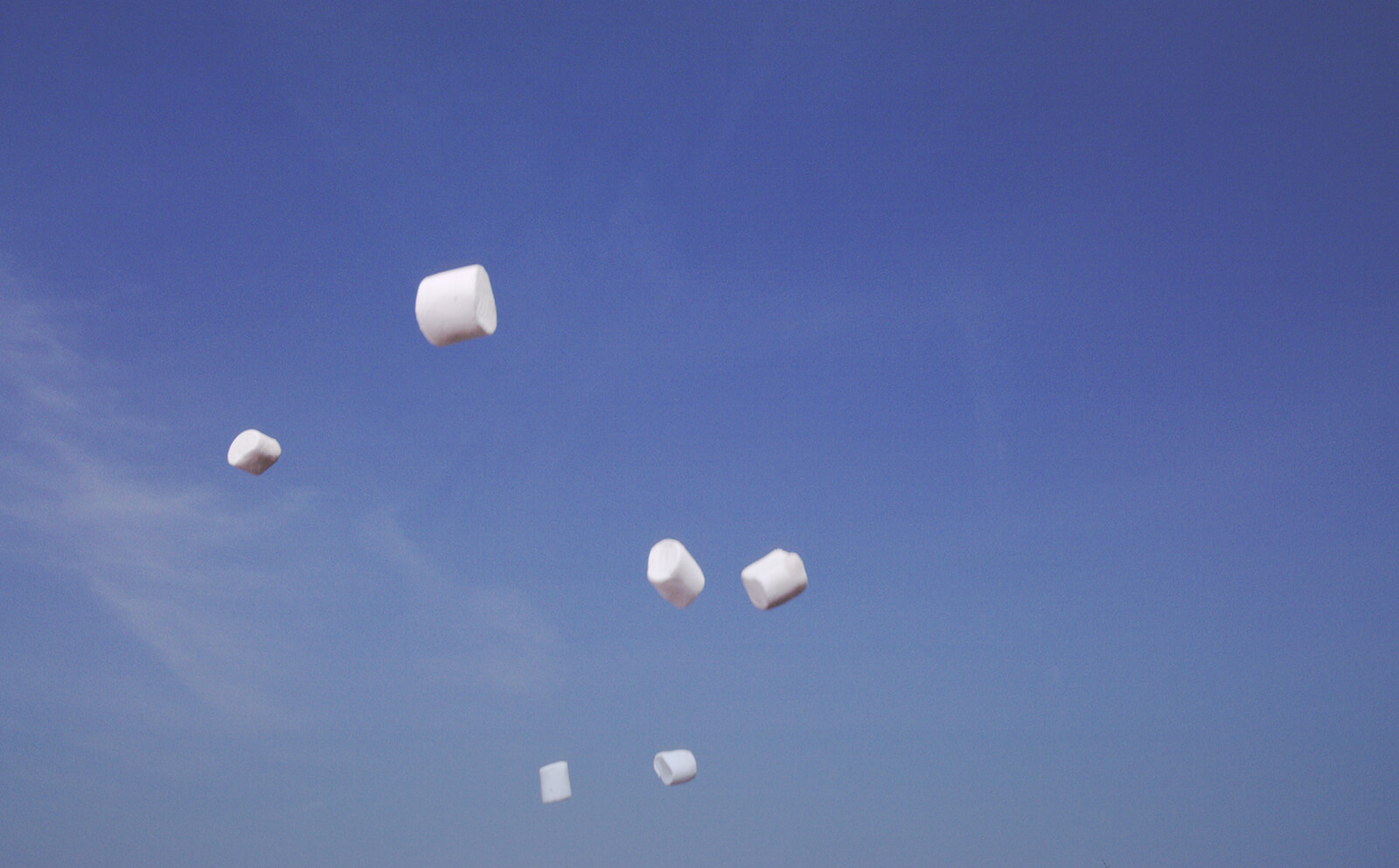
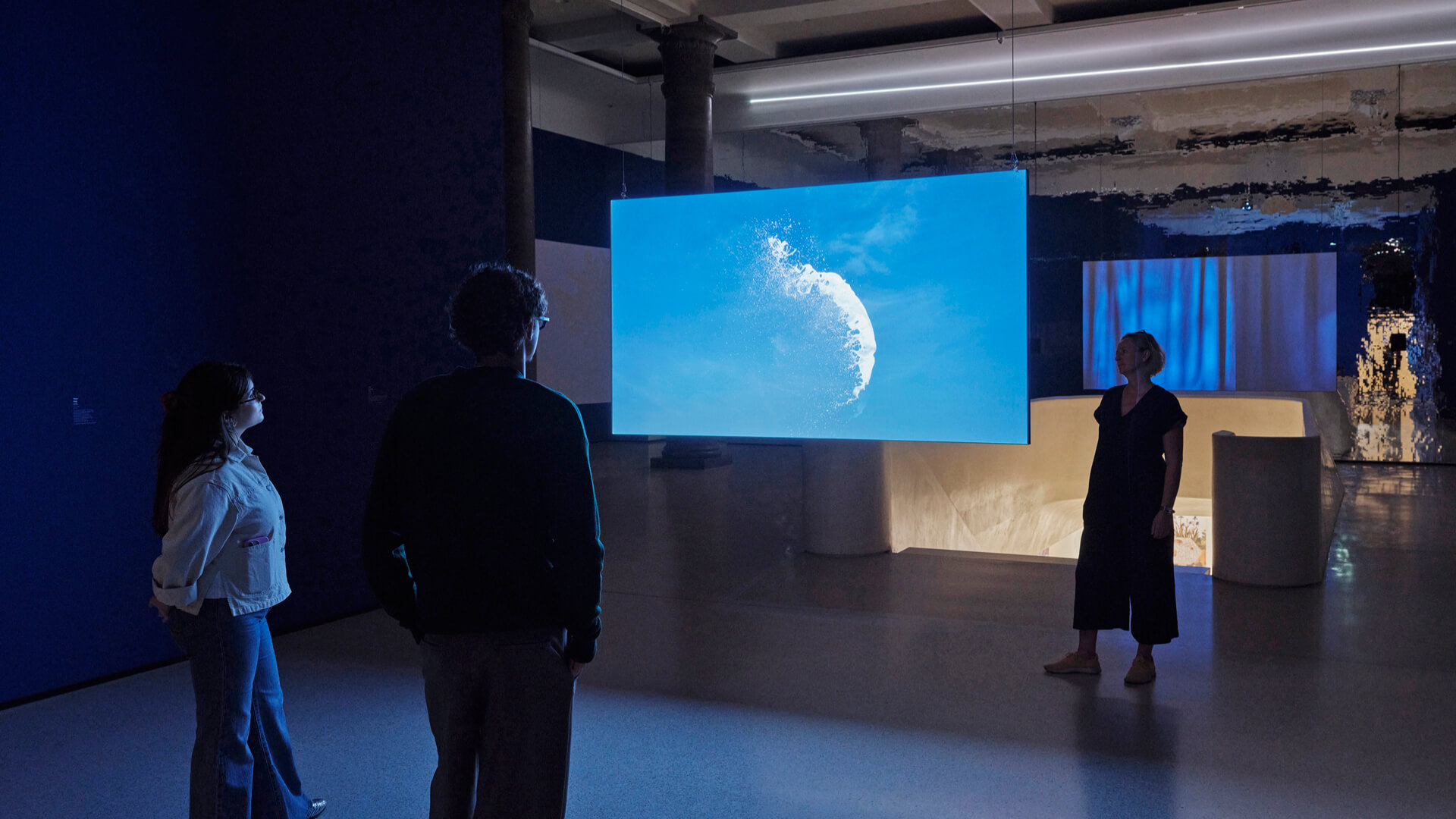
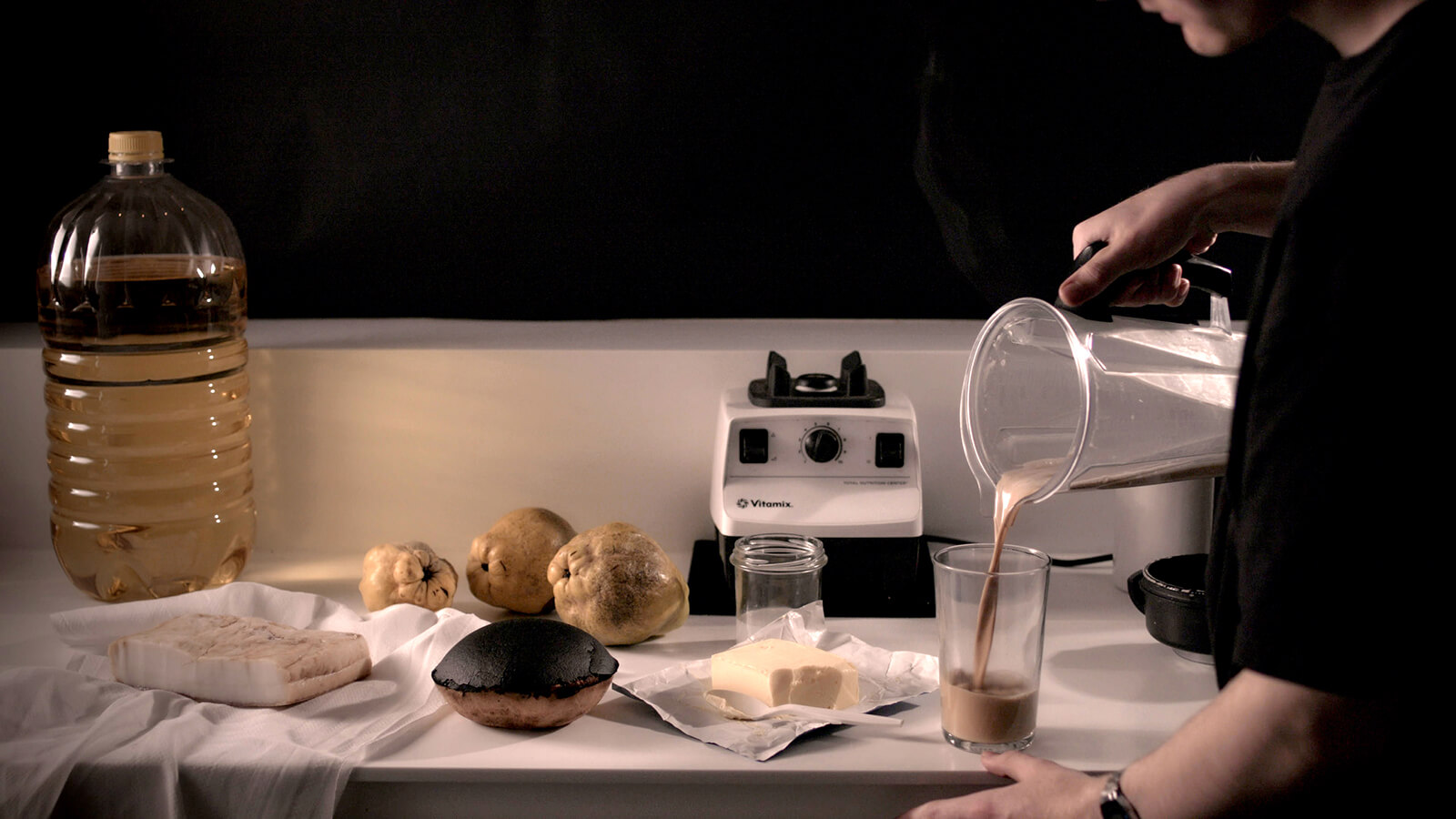
Things (2018), meanwhile, turns to objects. Flowers, fruit, milk, an octopus and other random objects float up into a blue sky and glide back down. In this surreal contemporary art tableau, these objects are separated from the consumerist milieu. Through slow-motion shots and the defamiliarising background, the viewer is invited to regard the objects as they are, not as the purpose they can serve. First Drink, from the same year, brings humans back into the picture, albeit only partially. The film shows eight people preparing their first drink of the day, surrounded by the objects that comprise the backdrop of their everyday lives. The hands arrange and make, in an intimate ritual act that is elevated to high art by nothing more than close attention. The objects are more than set dressing; they speak of their owners’ personality, culture, preferences and habits. This in-progress still life and the glimpses of the people behind it come together to create images of identity.
The final and newest work is Breathing Curve (2025), a laser projection that brings attention to the most autonomic and vital everyday act—breathing. A bright white line is projected onto the reflective surfaces of Mosaic Mirror Wall Piece (1991–2012) by John M. Armleder. It transforms a medical measurement of breath flow into pure light, abstract and symbolic of the life it implies. Gröting once again uses time-bound mediums to bind attention to the things it most slips away from. Breathing Curve represents the culmination of the leitmotifs in Gröting’s body of work—meditative, human without being anthropocentric and rewarding slow contemplation.
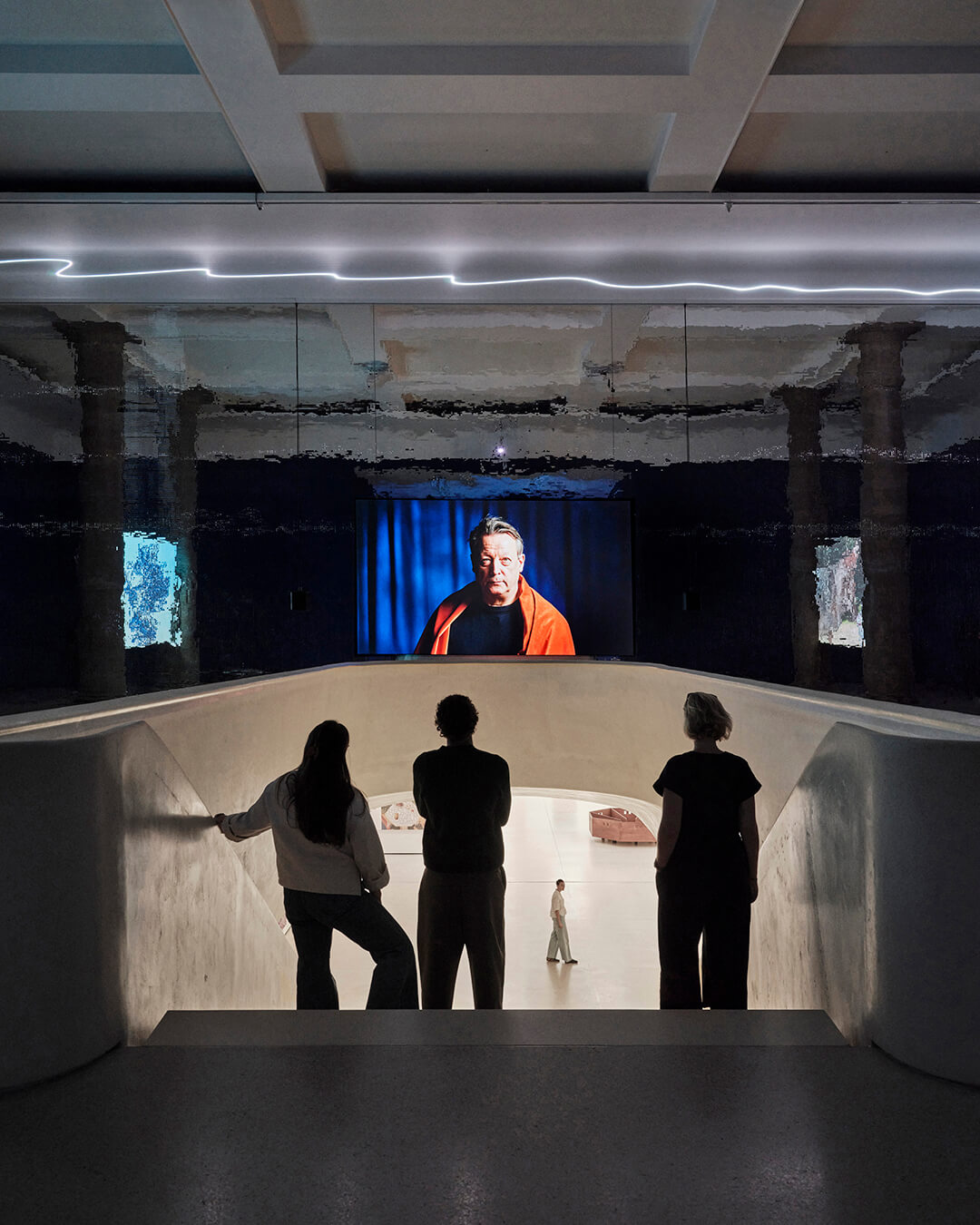
Grosser said, “Gröting’s visual language—whether in her sculpture or her video work—is absolutely unique. She directs our attention to what usually escapes our notice and finds a form that makes the invisible perceptible. That, to me, is the essence of powerful art: it changes how we see the world. With this exhibition, we hope to inspire visitors to do the same—to focus on things that tend to slip past us in everyday life and to rediscover the art of truly seeing.”
A Wolf, Primates and a Breathing Curve is a timely exhibition—carving out a new mode of capturing attention outside of the fast-moving, flickering, exploitative zeitgeist and the attention economy it subsists on. Gröting moulds time with skill and compassion, creating pockets of space where uninterrupted contemplation reveals new, profound facets to that which has been maligned as unimportant or boring. The thoughtful compositions and small gestures in the exhibition leave room for the emotions, questions and thoughts that are so often crowded out by the routines of modern life.
‘A Wolf, Primates and a Breathing Curve’ is on view from September 5, 2025, to April 12, 2026, at the Städel Museum.

by Srishti Ojha Oct 21, 2026
Increasingly, artists, filmmakers and activists are turning to VR to create more personal, tangible accounts of the climate emergency and its impact on vulnerable communities.
by Mirra Lynn Oct 20, 2026
The Indian artist paints the old wadas of central Pune, capturing the traces of everyday life that cling to these structures, battered by time but unbowed.
by Anmol Ahuja Oct 15, 2026
How do heaps of souvenirs and relics with racist Aboriginal motifs and features become art? MCA Sydney’s winter showcase—the artist’s largest to date—beckons a possibility.
by Vandana Kalra Oct 14, 2026
With his latest exhibition as a point of departure, the modernist discusses his decades-long practice, the spontaneity of drawing and the social responsibility of artists.

make your fridays matter with a well-read weekend
Enter your details to sign in
Don’t have an account?
Sign upOr you can sign in with
a single account for all
STIR platforms
All your bookmarks will be available across all your devices.
Stay STIRred
Already have an account?
Sign inOr you can sign up with
Verification link sent to check your inbox or spam folder to complete sign up process
Tap on things that interests you.
Select the Conversation Category you would like to watch
Please enter your details and click submit.
Enter the 6-digit code sent at


Städel Museum’s exhibition of Asta Gröting’s art rewards slow contemplation
by Srishti Ojha | Published on : Oct 24, 2025


 Sign in with Google
 Sign in with email
What do you think?