Architecture04 mins. read
Concrete and shipping containers stack up in lego-like forms in Agrosemillas Offices
by Bansari PaghdarAug 04, 2026



by Pranjal MaheshwariPublished on : Mar 03, 2026
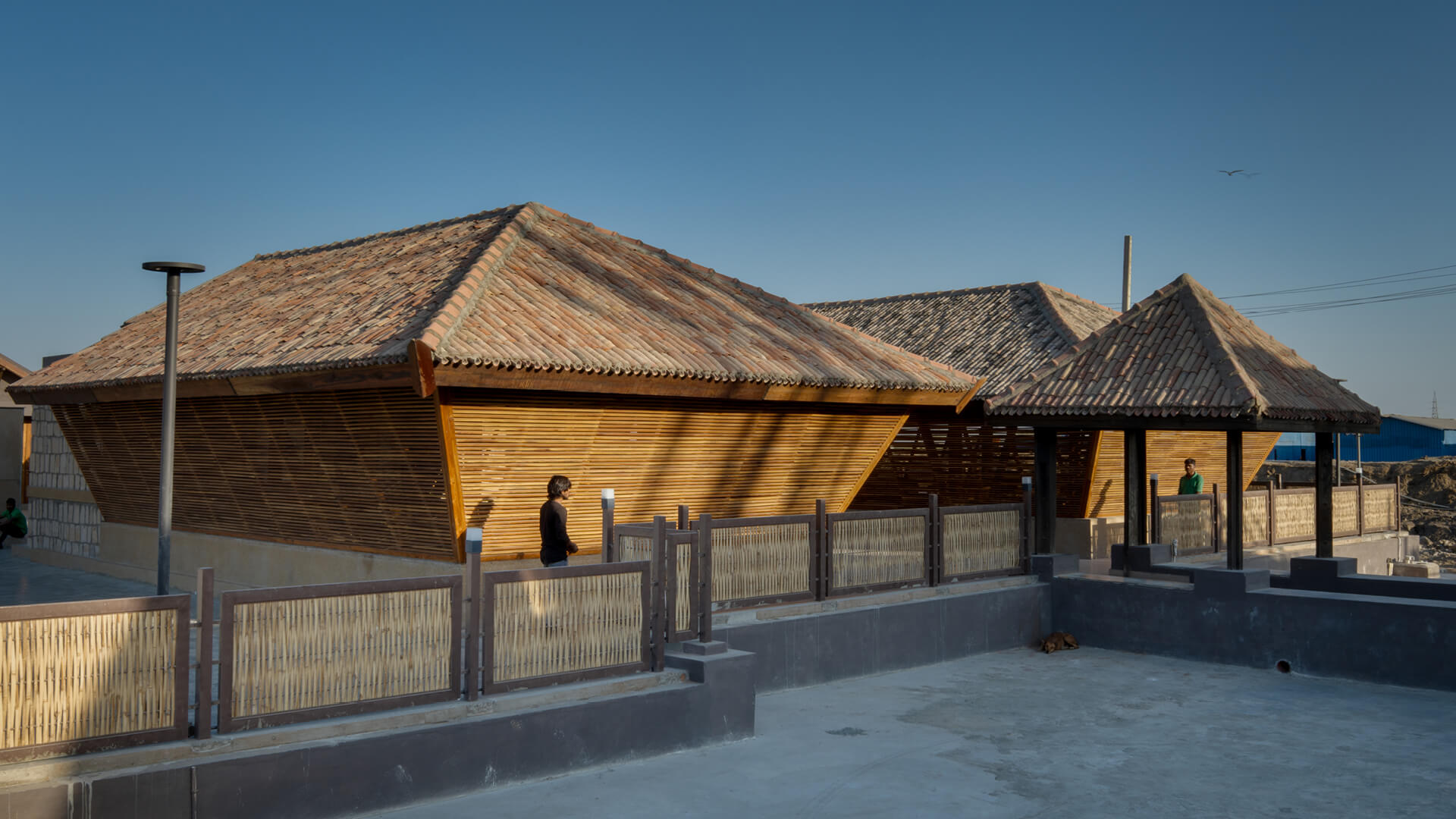
Extremes often define adverse conditions and demand novel solutions to the challenges they raise. Yet these conditions are what nurture those solutions—gradually, but consistently, over time—that often make home within these landscapes, such as a cactus in a desert. The team at Studio Dot designed a canteen for a similar extreme: the Agrocel Factory in the vast salt desert of the Rann of Kachchh in Gujarat, India.
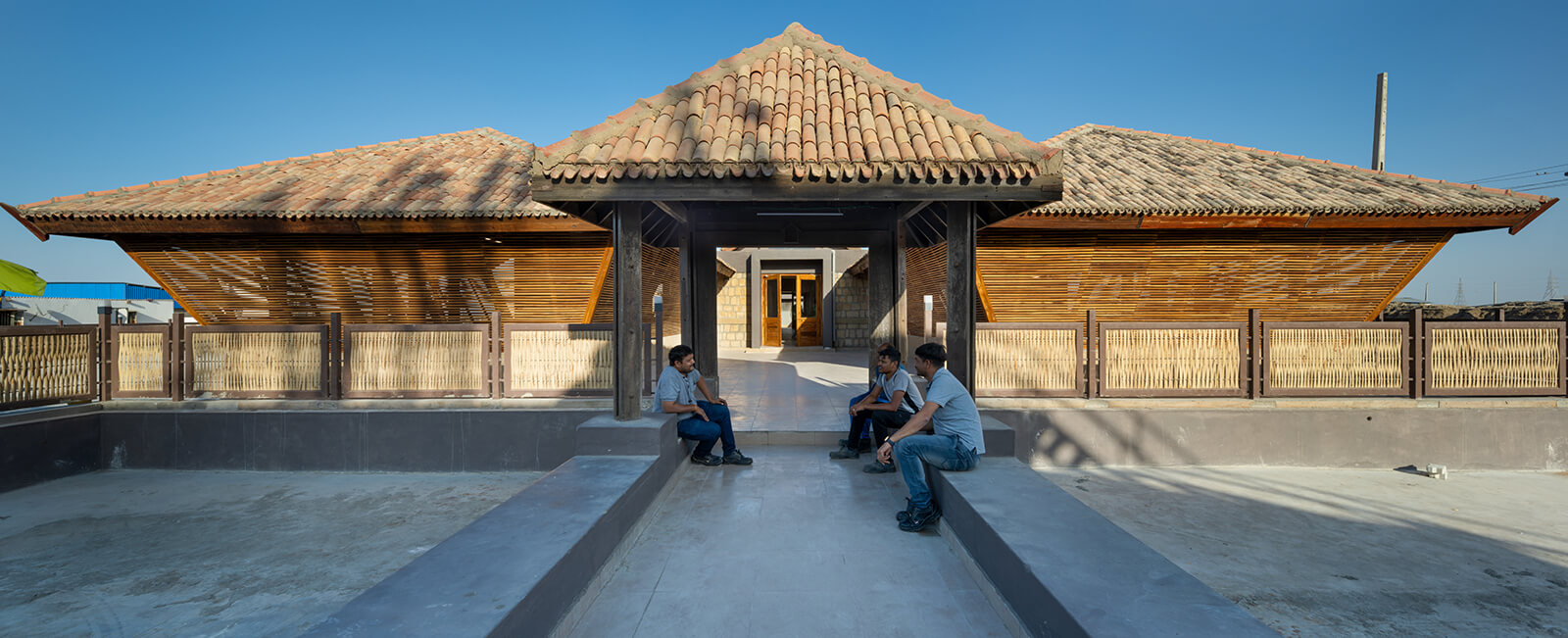
Realising the potential of the naturally occurring large salt deposits to optimise the manufacturing process of bromine in India, Agrocel Industries established a factory near Dhordo village in Kachchh in the 1990s. Three decades later, they realised the need for a new and efficient cooking and dining space for its staff and workers. The establishment of the Factory Canteen, much like the original factory, found roots in the landscape as a novel opportunity rather than a difficult condition.
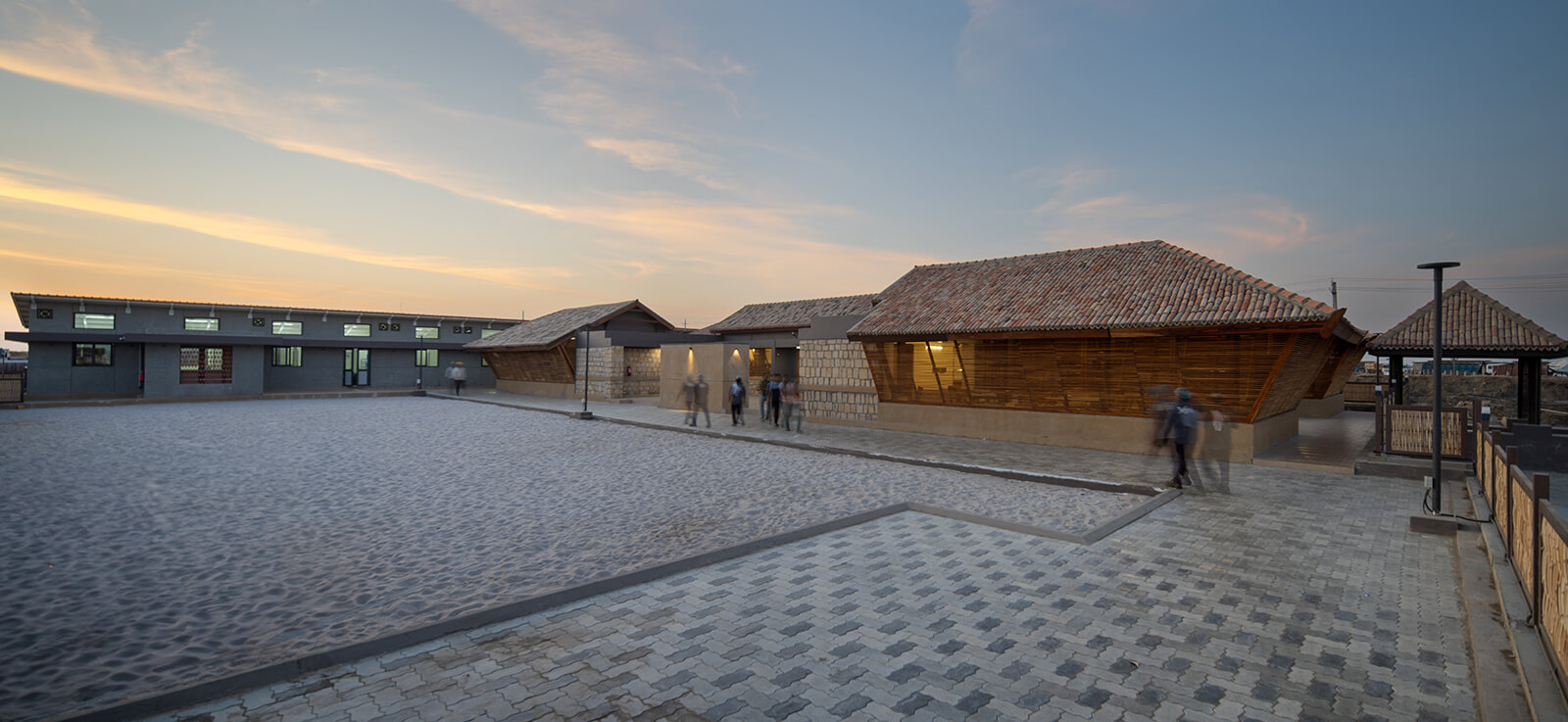
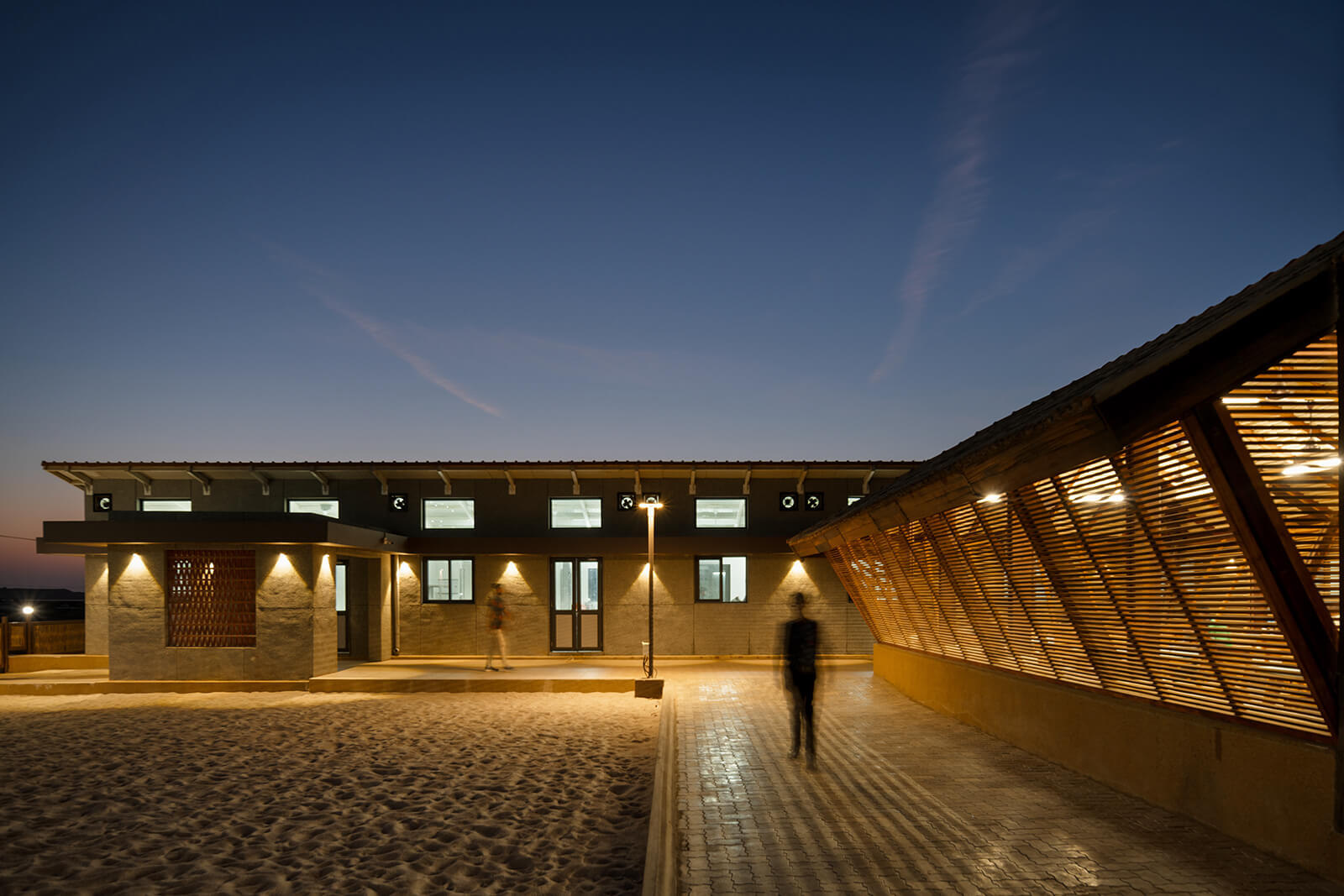
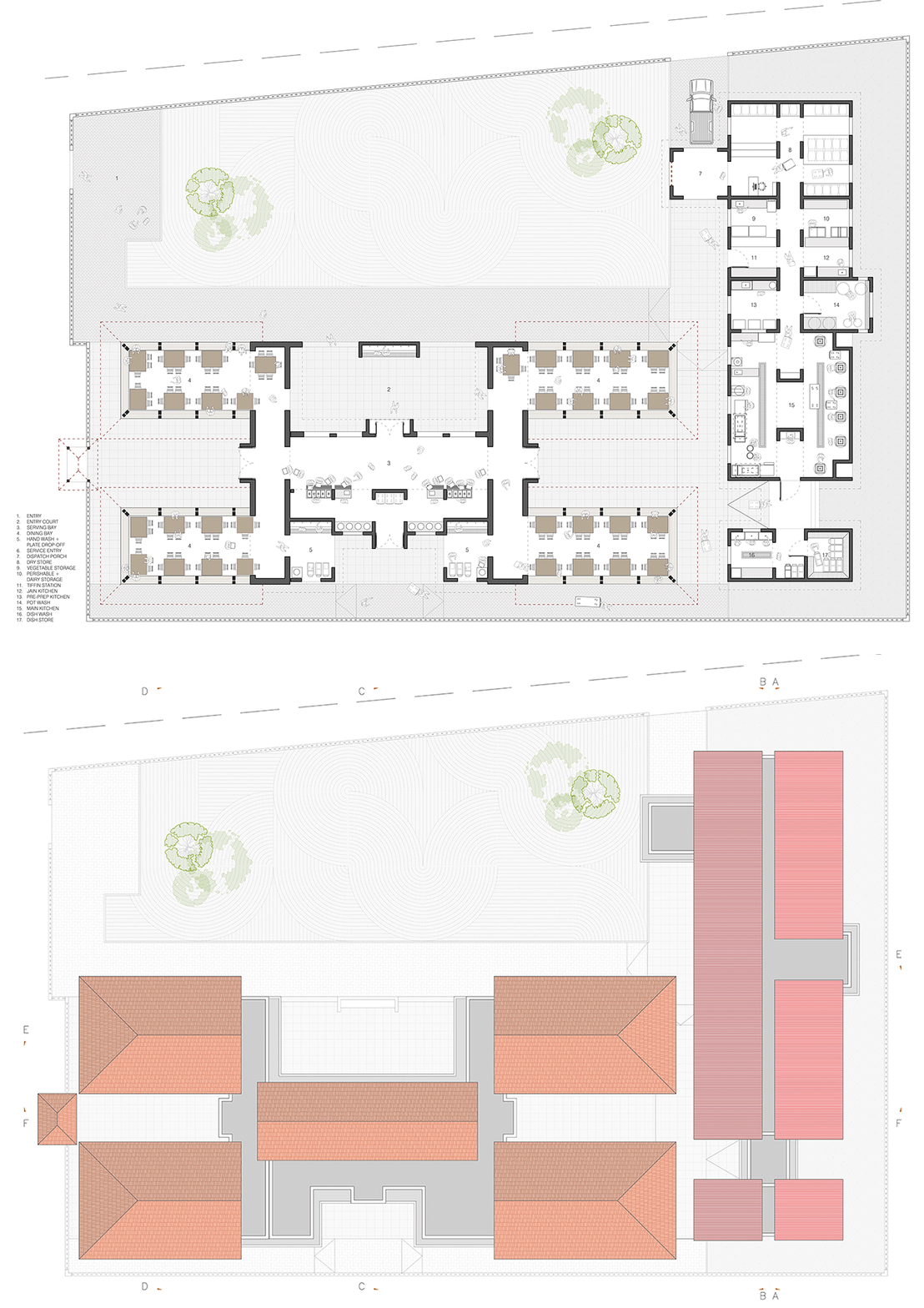
The kitchen is designed as a longitudinal block progressing linearly from storage, sorting, to cooking. The layout streamlines the process of preparing up to 1000 meals, which are dispatched to multiple satellite dining areas in the factory premises, in addition to serving the main dining block. To address the harsh and arid desert climate, the design has made provisions for clerestory windows to maximise intake of natural light, while the roof uses puff panels to safeguard itself from the high temperatures of the region. The exterior of the building is finished with stone chips—a material favoured for its durability when exposed to corrosive saline air, especially when compared to painted finishes.
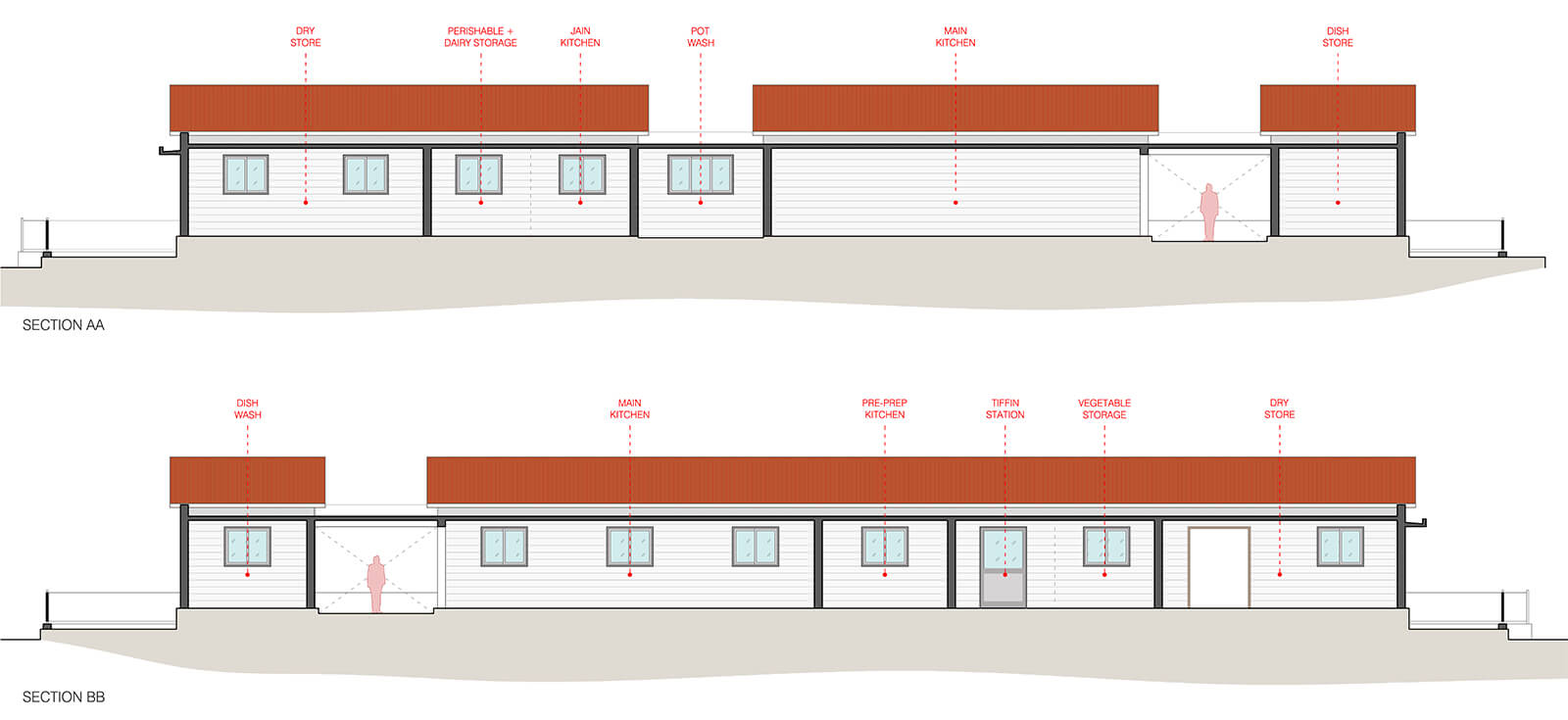
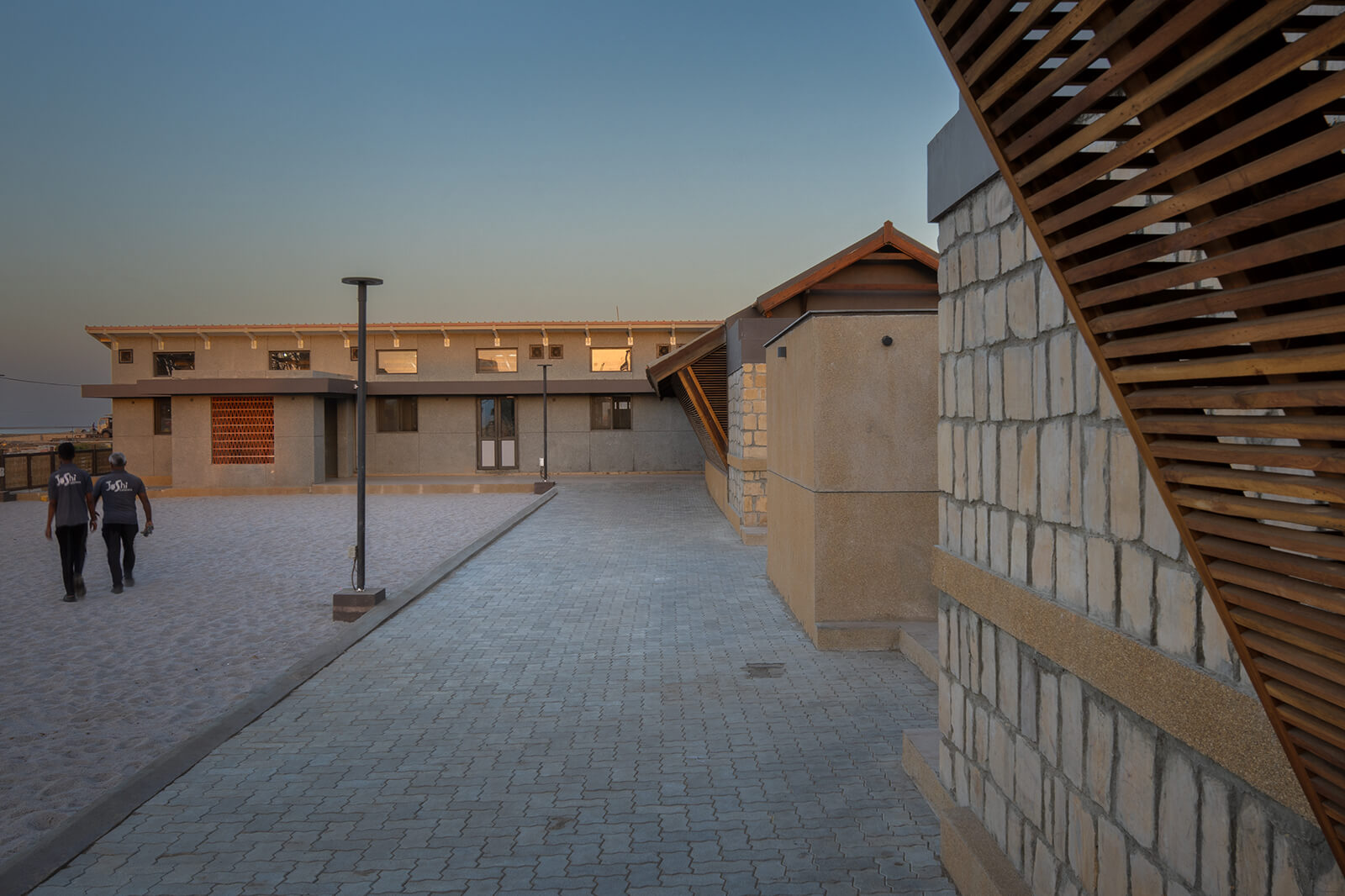
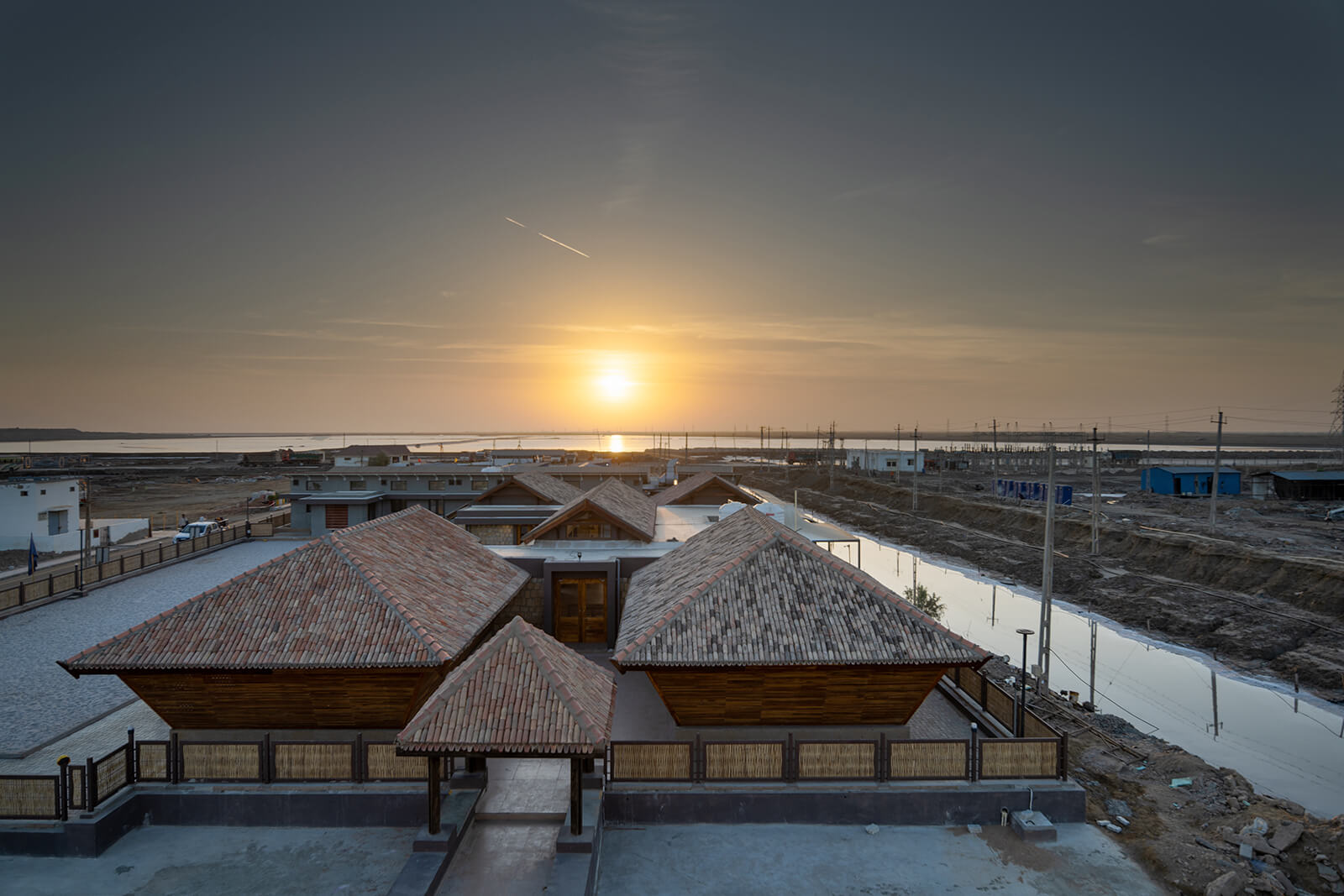
The dining area is arranged into four identical 50-seater bays converging into a linear service area. While the design focuses on functional efficiency—to handle the large workforce of the manufacturing plant, especially during peak hours—the resultant modularity is also a response to the geographic conditions of the site. “Kachchh comes under seismic Zone V, and while the advancements in structural design and building materials allow us to put up a structure using the conventional RCC, brick and mortar, we wanted to refer back to our indigenous wisdom,” Satya Vaghela, founding partner at Studio Dot, tells STIR. “The dining space, which could very well have been a large hall, was split into smaller bays that made the structure lighter and allowed for scalability to adapt to different volumes of people using the space.”
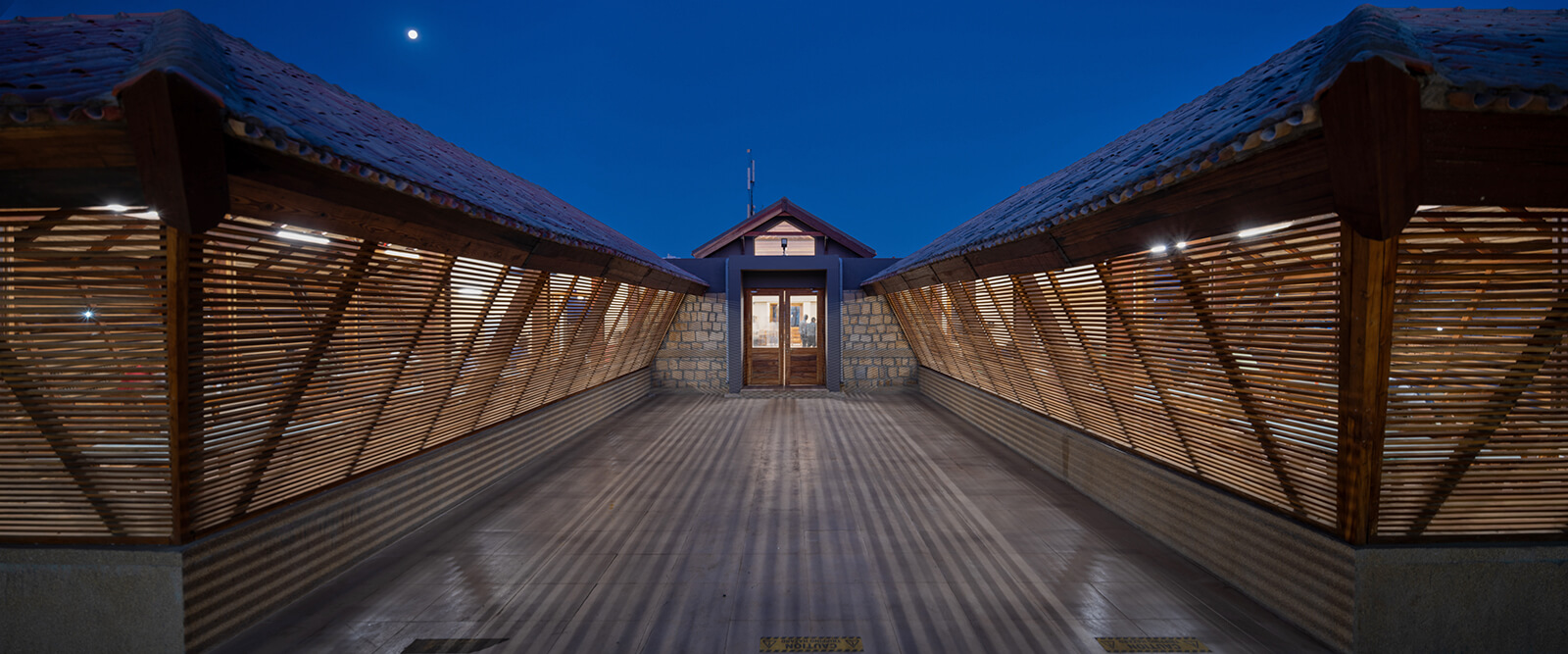
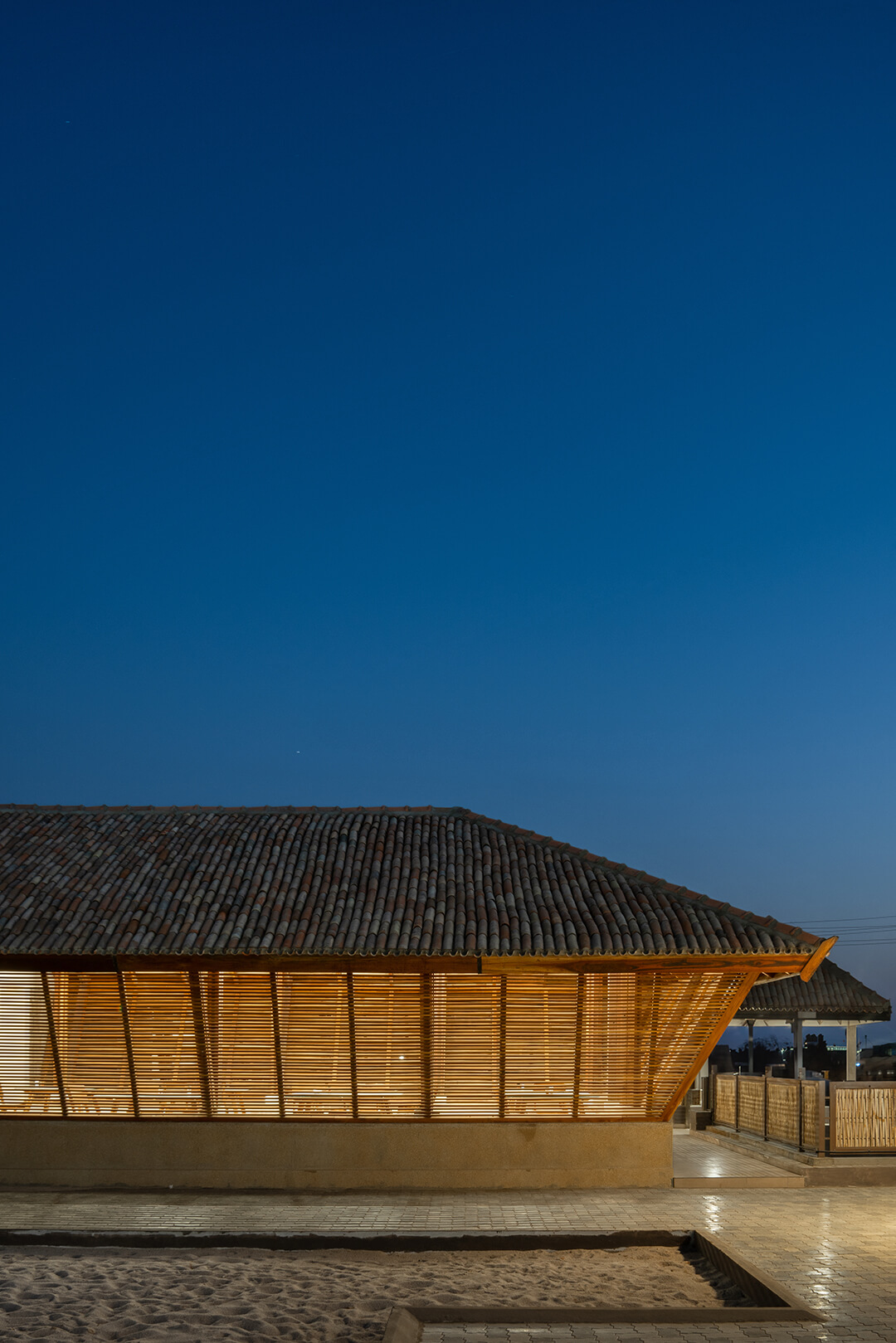
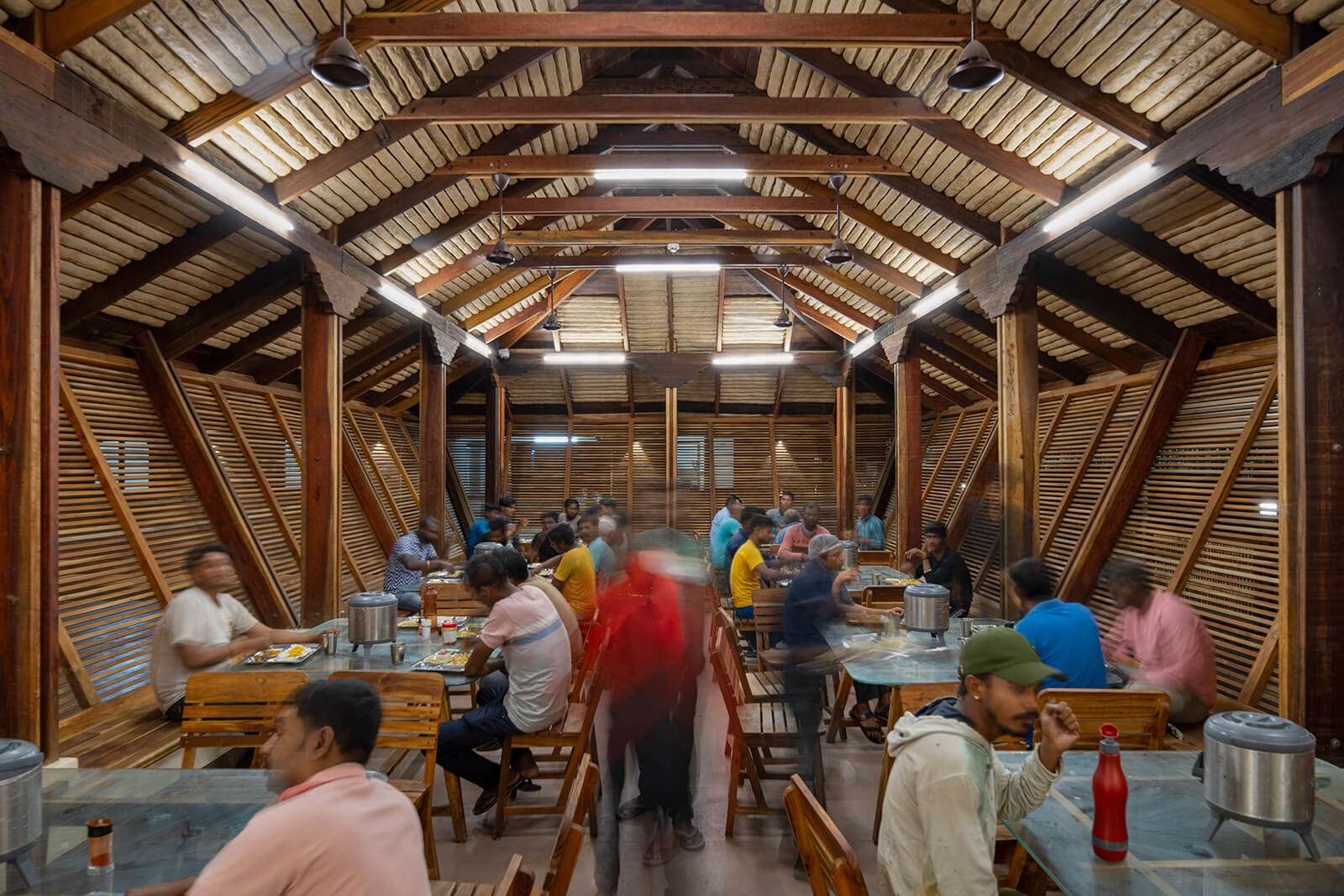
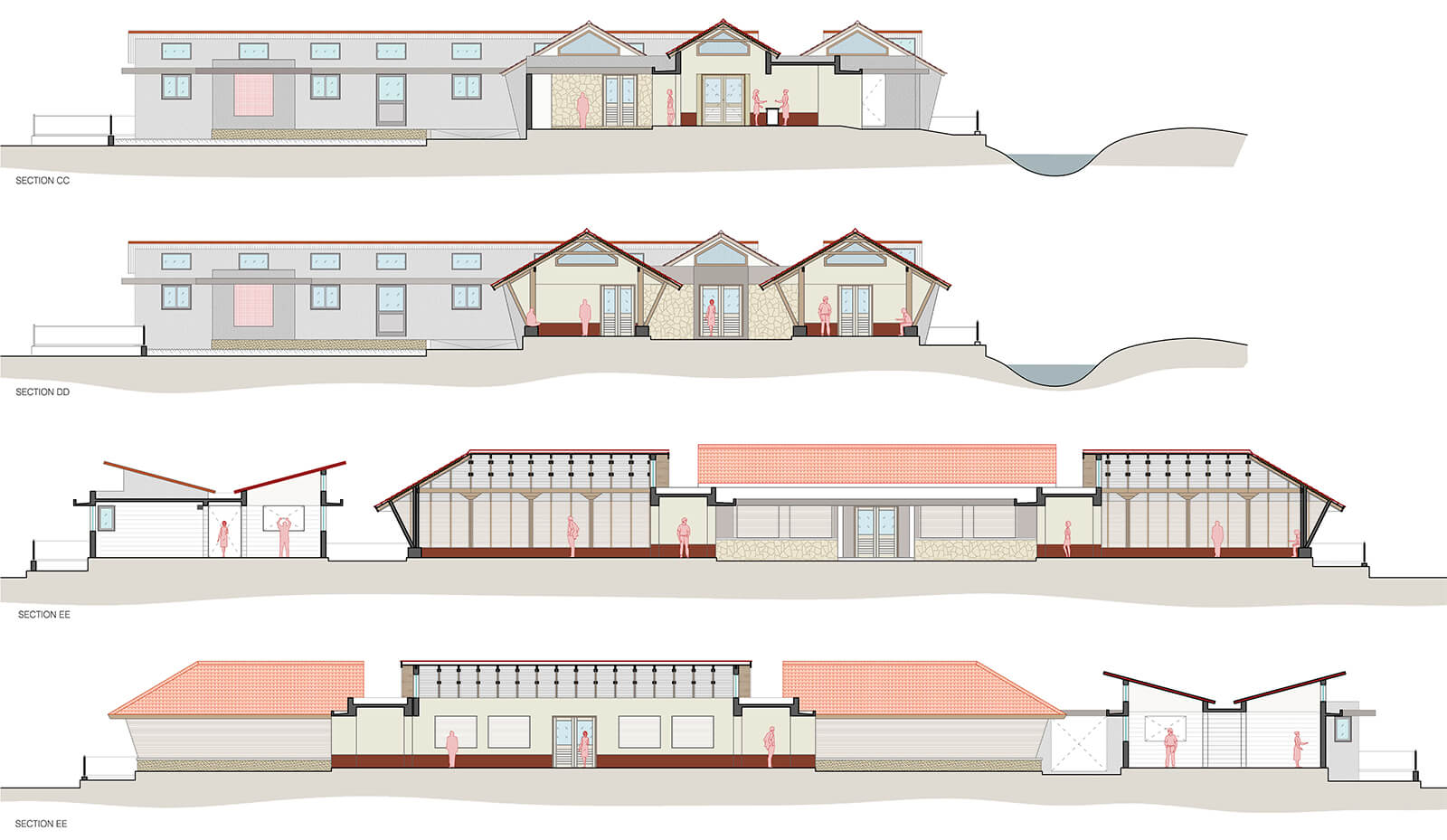
The bays are enclosed by solid limestone walls up to the sill level, topped by jaali screens made of wood sourced from sawmill scrapyards from nearby Kandla. “The driving force behind using a wooden jaali façade as our primary vertical face”, Vaghela notes, “was to keep the structure light and the space always breathing.” Leaning outward as they rise, these screens act like a self-shading device that allows filtered light and promotes cross ventilation to create a comfortable interior environment.
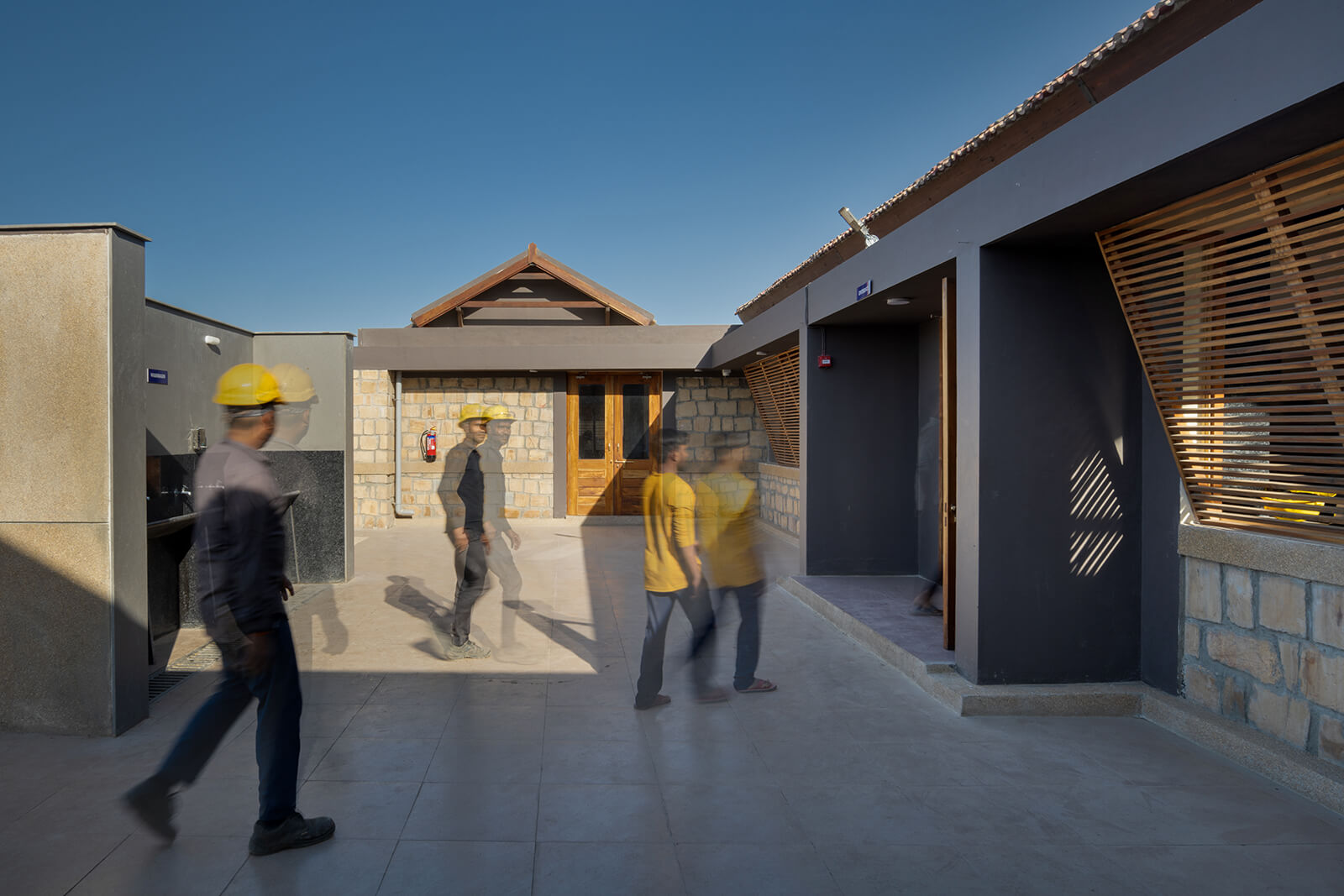

The space is crowned by a timber roof that slopes down from the ridge, appearing to settle gently against the oblique screens. What currently defines the trusses, rafters and beams that once fared the seas, before coming to rest at Alang, a nearby ship-breaking yard, now live an extended life as part of the structure. The roof is topped by clay tiles on the outside, and lined internally with mud-rolls, a humble yet ingenious element with exceptional thermal performance, developed by Vaghela’s father through his work in post-2001 earthquake rehabilitation. The material composition consisting of wool, clay slip, lime, discarded jute bags and upcycled wooden battens has been developed in-house by the architecture studio.
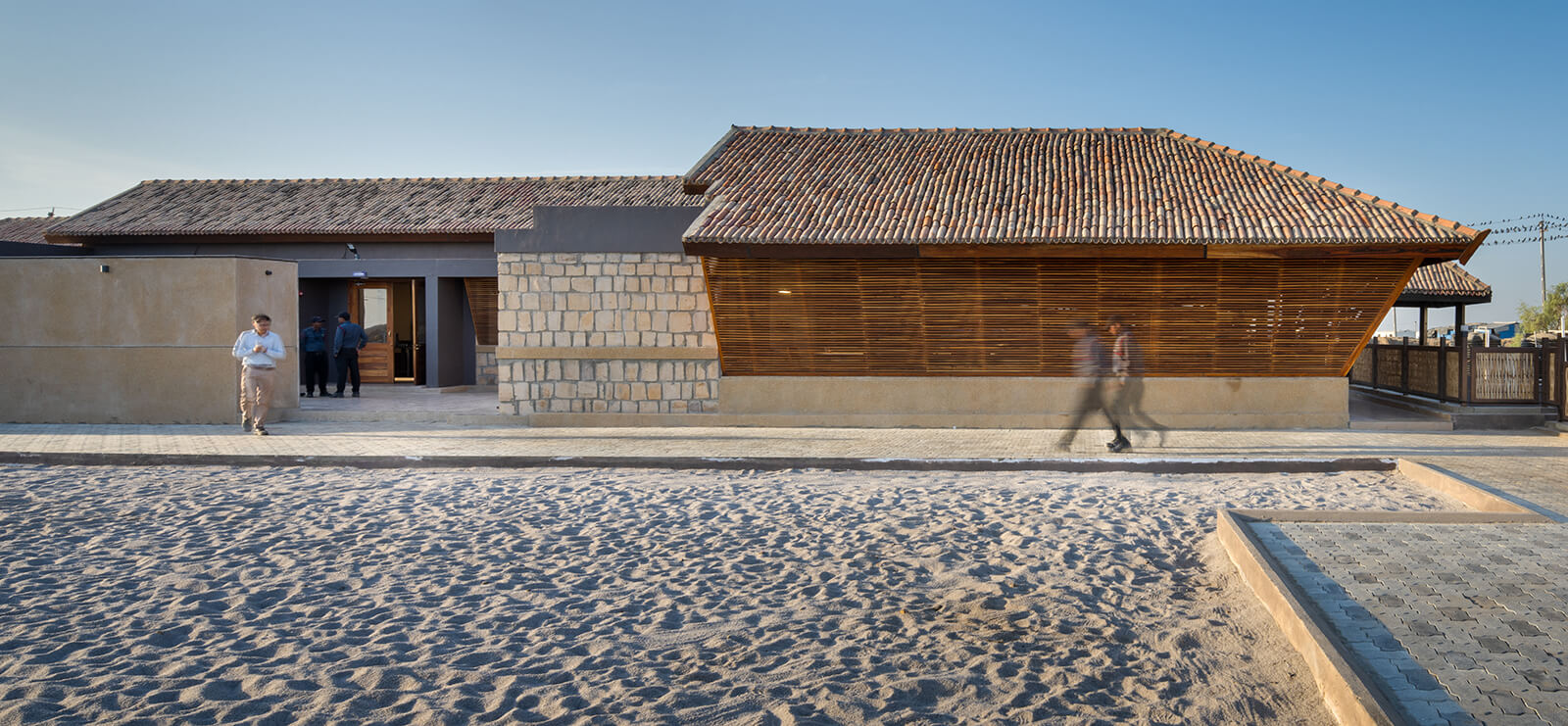
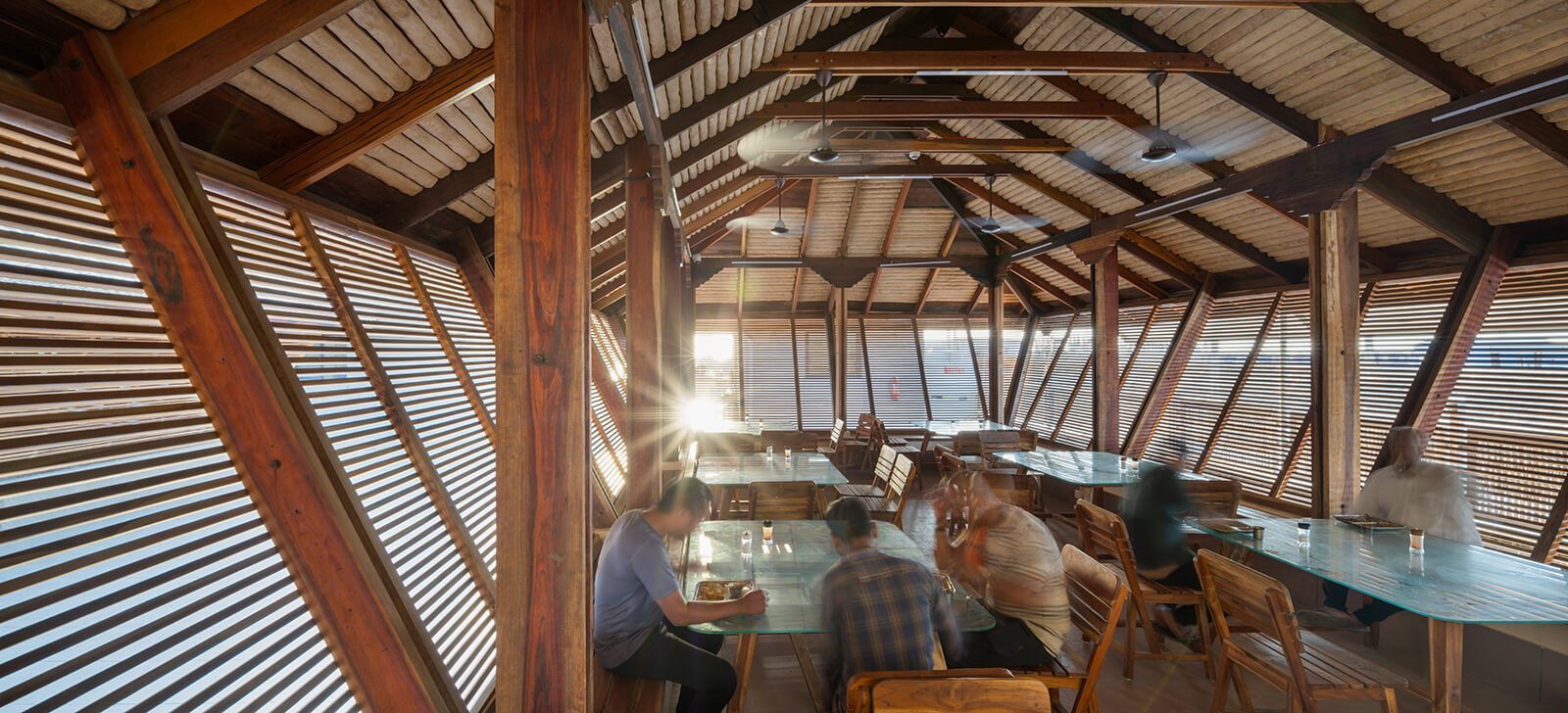
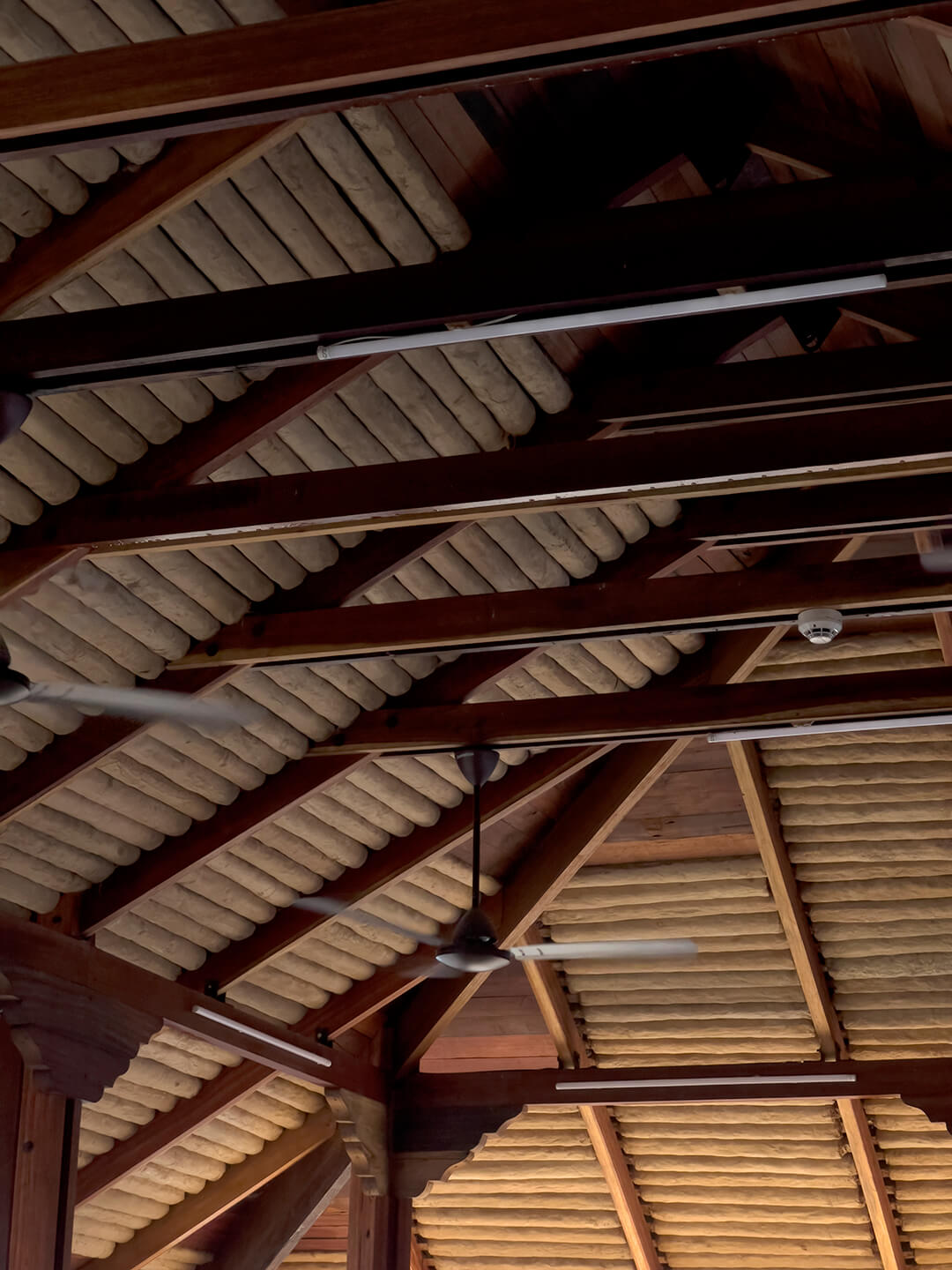
The wool for the mud rolls was procured from local shepherds in an attempt to support a struggling industry by creating new demand for the product. The horizontal screens and the mud rolls were produced in collaboration with craftsmen from the Karigarshala, an organisation that trains school dropouts across the state in regional crafts and techniques related to building and construction. In fact, the furniture in the dining area is crafted by one of the master carpenters who graduated from Karigarshala.
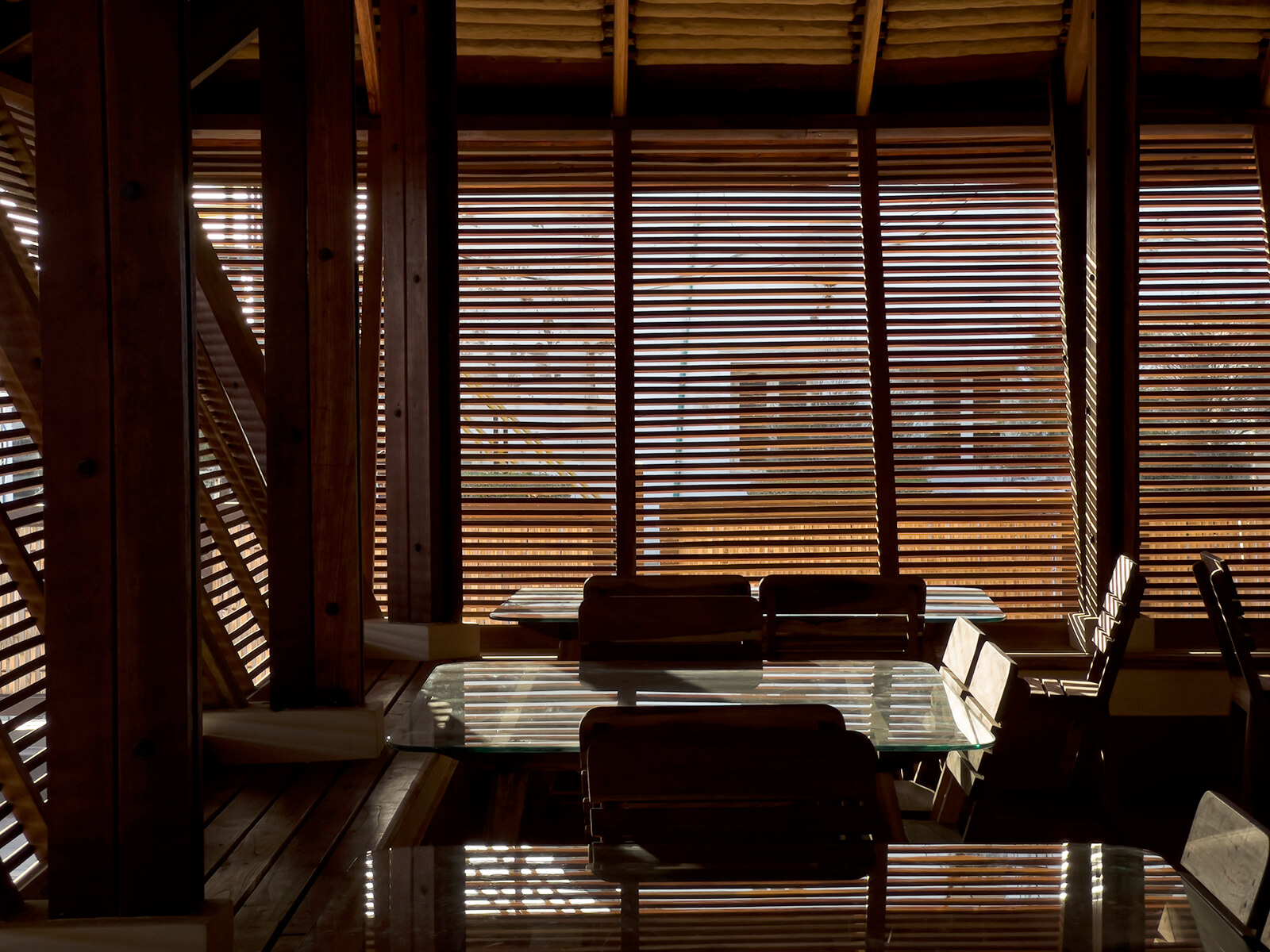
The Factory Canteen at Agrocel Industries near Dhordo village stands as an ode to the techniques and indigenous knowledge systems of the region. The Indian architects credit the extreme site conditions that have been instrumental in moulding the space as a showcase of climate-responsive design extracted from its surrounding context and harnessed through collaboration and craftsmanship. “If it weren’t for the constraints, the structure might not have come about the way it did,” Vaghela shares. “The constraints were a boon which helped us design a space that feels intimate and human-scaled in an otherwise industrial campus of the factory.”
Despite its rootedness in the local systems and craft, the architecture—soft, nurturing and warm—stands paradoxically in contrast against the harsh, arid, cold desert landscape and the mechanistic, industrial architecture; perhaps to provide the factory workers with a space for solace, contemplation and comfort and foster a sense of community. Recalling conversations with the factory workers, Veghela states, “When they work at the plant all day, or out in the salt flats, coming to a space that feels homely for a meal is something they are deeply grateful for. For us, that was very touching. Any space that we design should have a sense of belonging for the end user. It should be human, humble and true to its context.”
Name: Factory Canteen – Agrocel Dhordo
Location: Dhordo Village, Kachchh, Gujarat
Typology: Factory Canteen
Client: Agrocel Industries Pvt. Ltd.
Architect: Studio Dot
Area: 8,600 sq ft
Year of Completion: 2025

by Mrinmayee Bhoot Oct 12, 2026
The new Centre for Contemporary Arts, fostering public engagement with art in Uzbekistan, is housed in a tram depot refurbished by the French studio, emulating local craftsmanship.
by Mirra Lynn Oct 10, 2026
The Shanghai-based architecture practice’s intervention in Suzhou transforms three abandoned houses into a bookstore, café, library and homestay.
by Pranjal Maheshwari Oct 09, 2026
The eighth edition of the international architecture and urban design showcase, themed How Much?, explores diverse implications of social, ecological and economic ‘cheapness’.
by Pranjal Maheshwari Oct 06, 2026
With a programme focused on biodiversity, accessibility and safety, the Rotterdam-based architects help the neighbourhood reclaim a barren landscape as an integral social node.

make your fridays matter with a well-read weekend
Enter your details to sign in
Don’t have an account?
Sign upOr you can sign in with
a single account for all
STIR platforms
All your bookmarks will be available across all your devices.
Stay STIRred
Already have an account?
Sign inOr you can sign up with
Verification link sent to check your inbox or spam folder to complete sign up process
Tap on things that interests you.
Select the Conversation Category you would like to watch
Please enter your details and click submit.
Enter the 6-digit code sent at


The Factory Canteen by Studio Dot backs local sourcing and climate resilience
by Pranjal Maheshwari | Published on : Mar 03, 2026


 Sign in with Google
 Sign in with email
What do you think?