Architecture06 mins. read
Ukrainian Modernism charts a nation’s fractured architectural history
by Dhwani ShanghviAug 21, 2025



by Bansari PaghdarPublished on : Nov 11, 2025
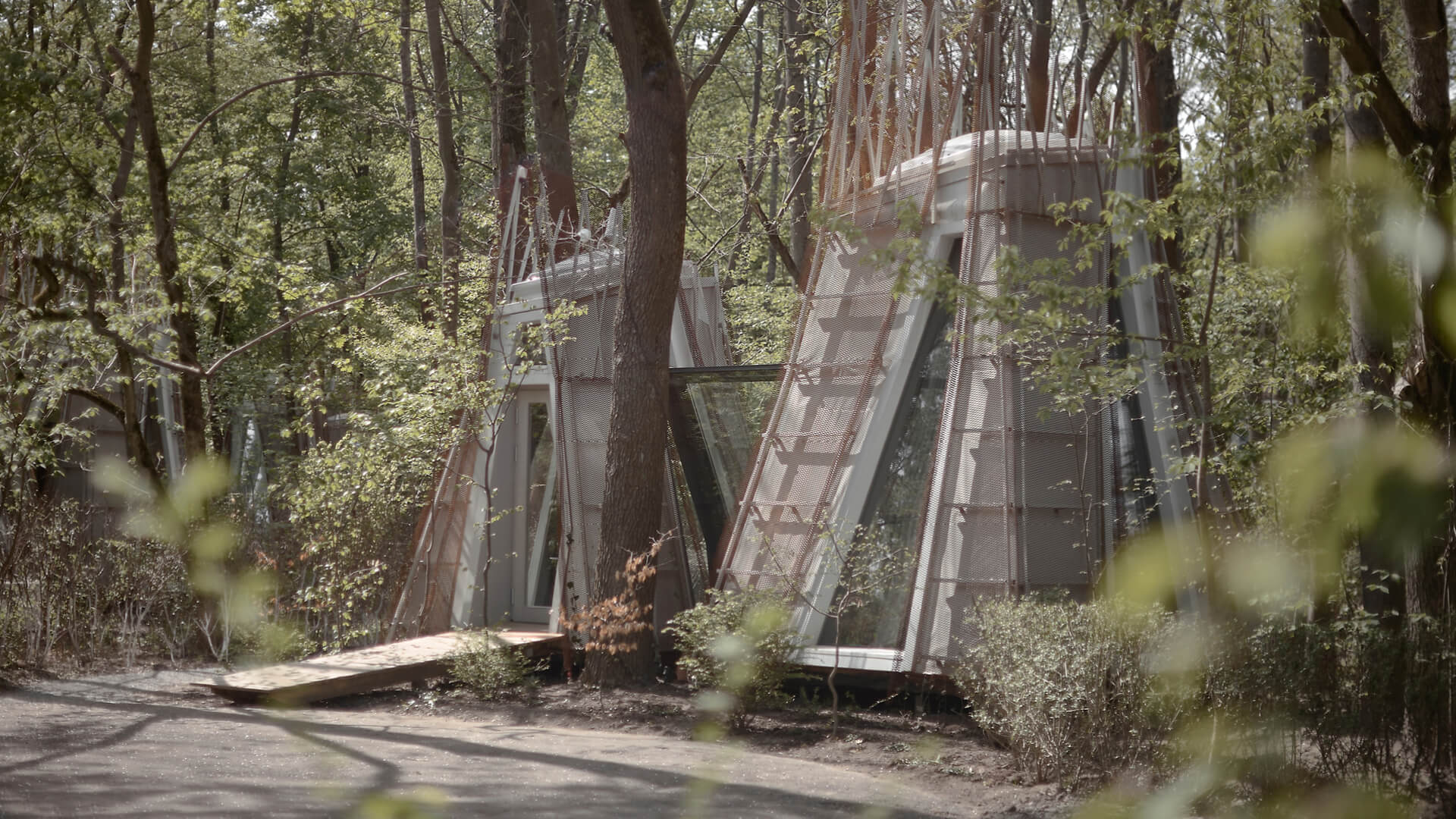
“War happens on the front lines and behind the scenes. Everyone feels it to the extent of their involvement and assistance. At times like these, you begin to appreciate the present moment. Under no circumstances should you think about the past or the future because neither exists,” Roman and Dmytro Seliuk, architects of the Namety Cabins, tell STIR. The Kyiv-based architects designed the hospitality architecture to create ‘a semblance of peaceful life’ with two things in mind: childhood memories of spending holidays in tents and the duality of war. The project is located in an exhibition complex in Kyiv—a city that endures the persistent threat of missile attacks.
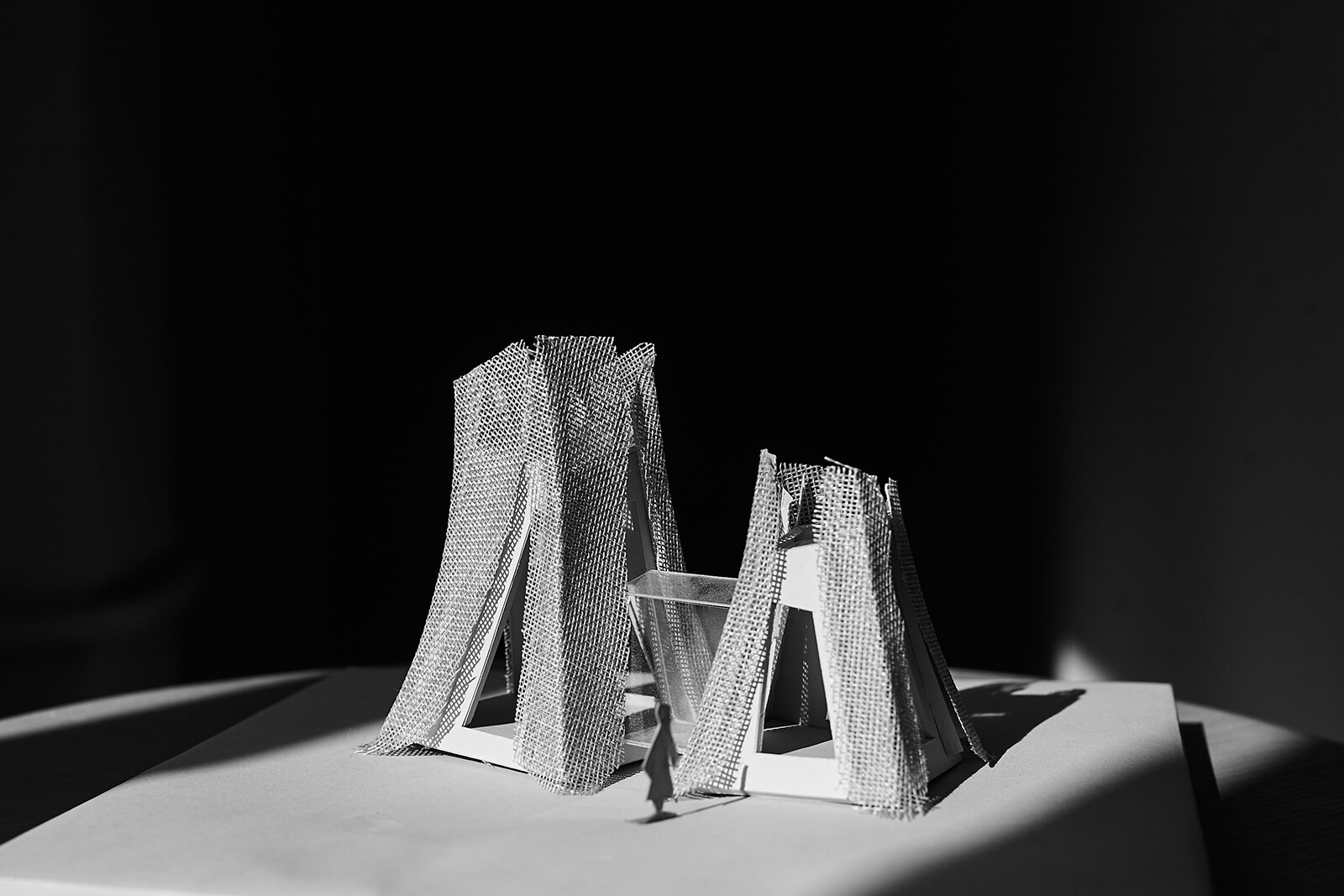
Established in 2008, the Roman and Dmytro Seliuk studio works across interior design, landscape architecture and bespoke furniture design. Their contemporary practice upholds tradition and identity in their projects, aiming to position Ukrainian architecture and culture in the global discourse. The architects, who work closely with the young academics at the National Academy of Fine Arts and Architecture in Kyiv, advocate a practice of drawing from the past to respond to contemporary design challenges. The hotel’s architectural concept also draws from the experiences of Roman Seliuk, who served in the Armed Forces of Ukraine for three years; at the time of the project’s completion, the country was still defending itself. “We (Ukrainians) dream of a new future… we know the old ways will no longer exist. The same goes for the project—it must be unique. You need freedom from templates, frameworks and prejudices. You need the courage to do new things that are difficult to implement and unpredictable in their outcome. With this mindset, we approached the project as if with a blank sheet of paper,” the Ukrainian architects shared with STIR.
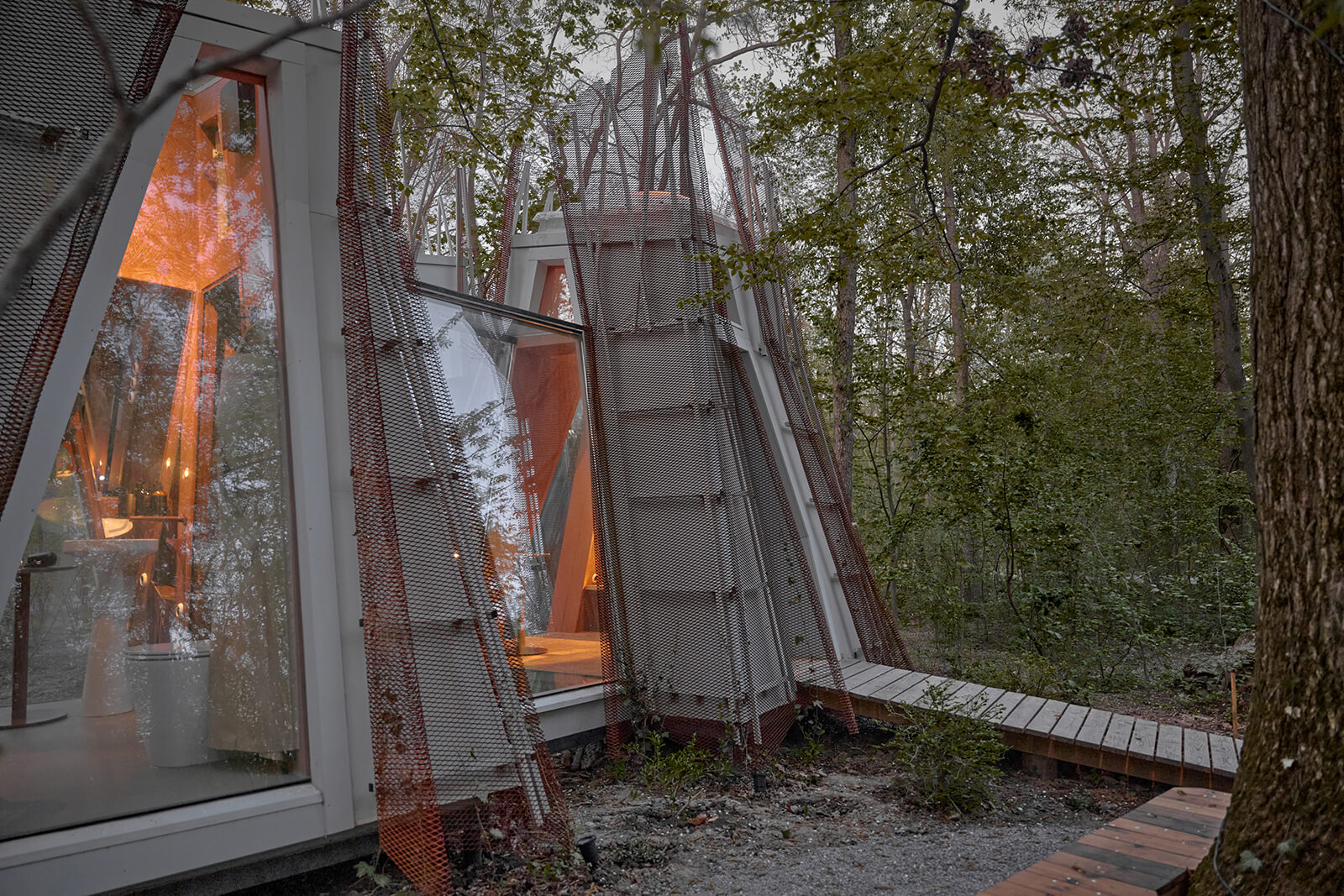
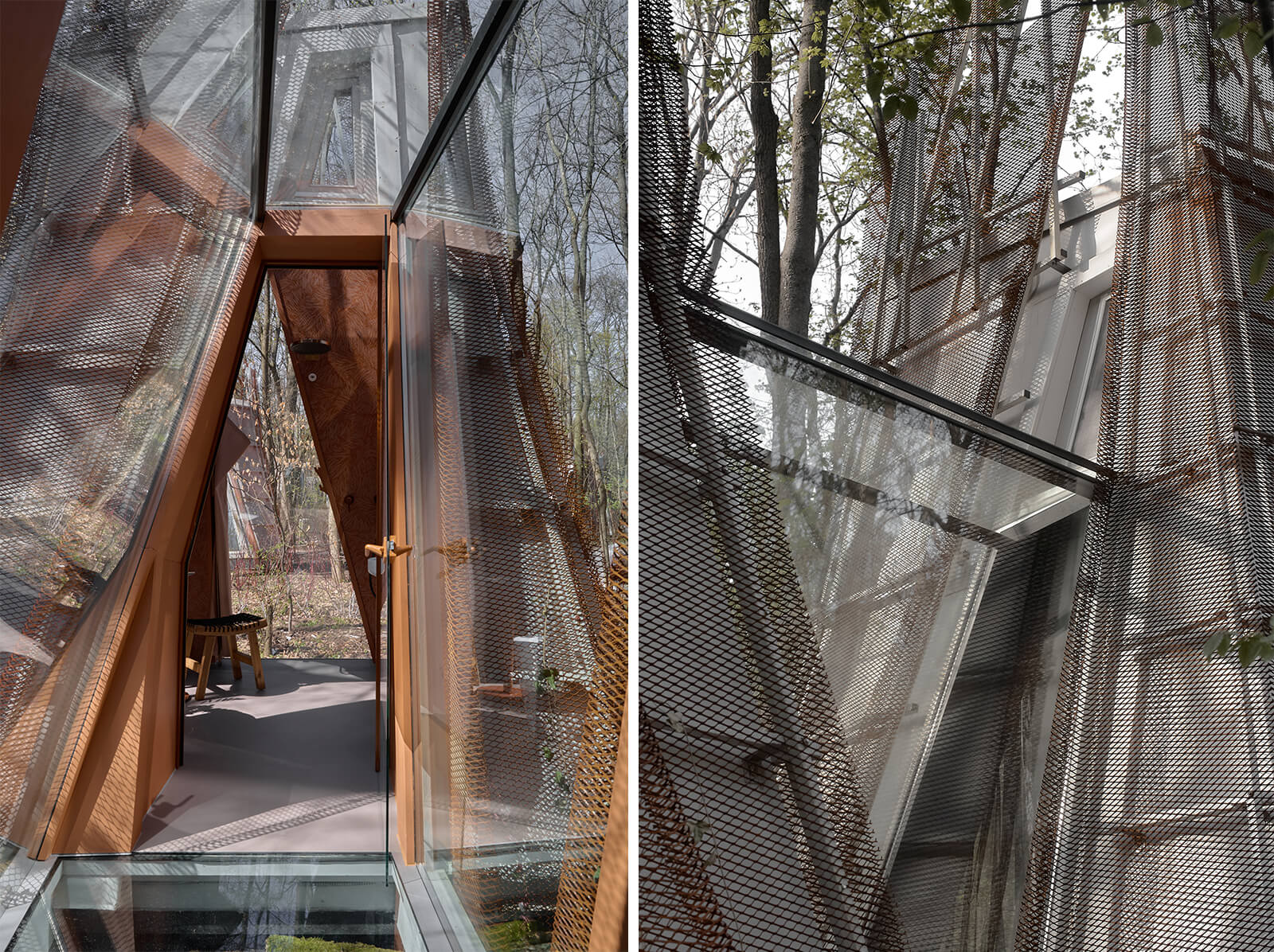
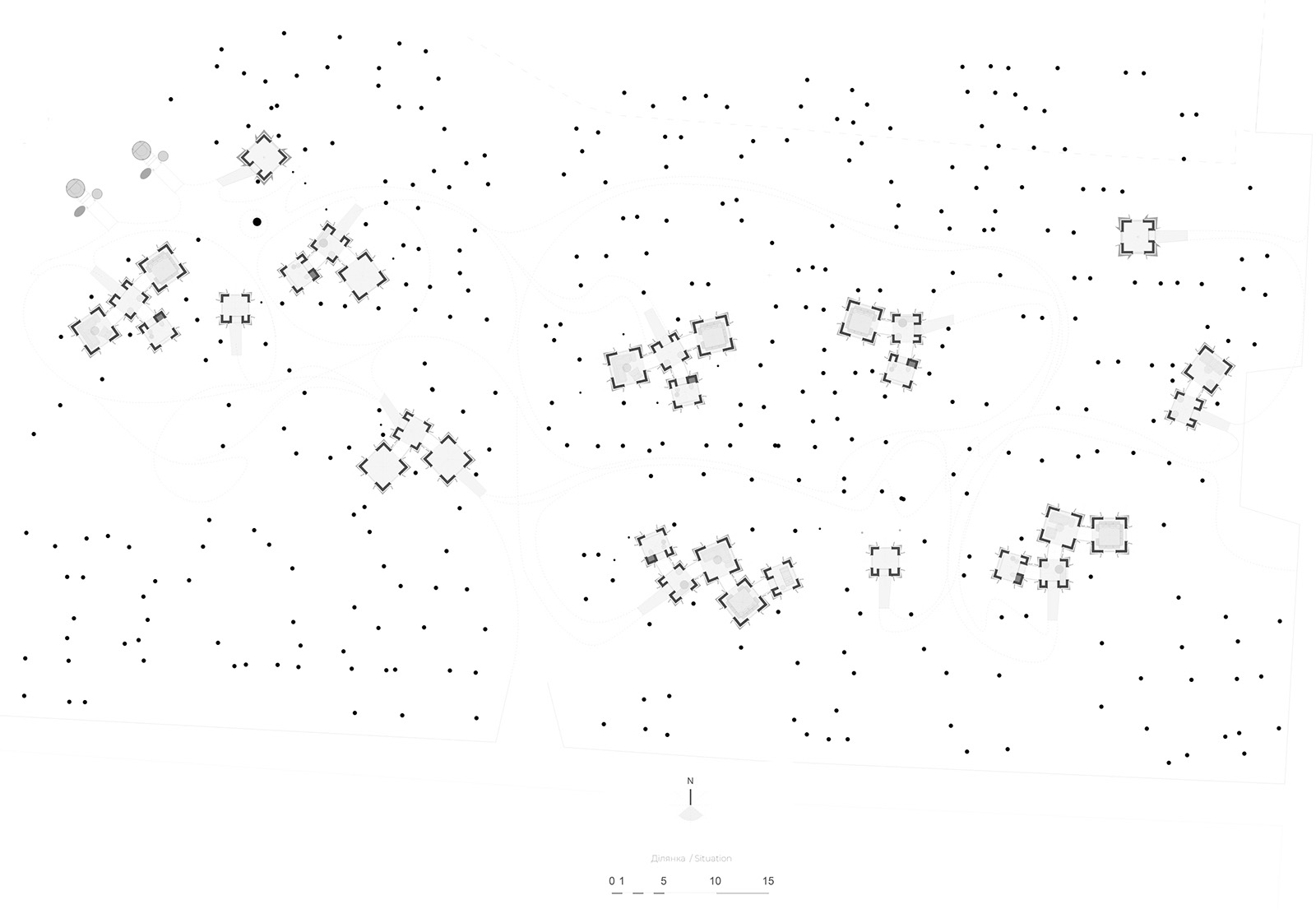
To preserve the natural landscape, no trees were felled on site. Instead, the buildings were constructed off-site as lightweight modules, which were then transported and assembled in stages. The initial brief was for it to be located among trees, artificial plantings and old gardens rather than in open glades. The modular system was designed with limited space in mind. We considered the spacing of the trees and looked for areas where they were either sparser or denser. This allowed us to identify areas where larger or smaller combinations of modules could be accommodated,” relay the architects. The materiality combines corten steel mesh, recalling the protective armour of military vehicles against enemy drones, with glass that speaks to the fragility of the circumstances. They continue, “The outer shell of the сorten mesh and the glass walkways were installed last. The mesh was chosen precisely because it helps the project to maintain its artistic image, and remain stable over the years and adapt over time thanks to the vegetation that will entwine the shell with local evergreen vines.”
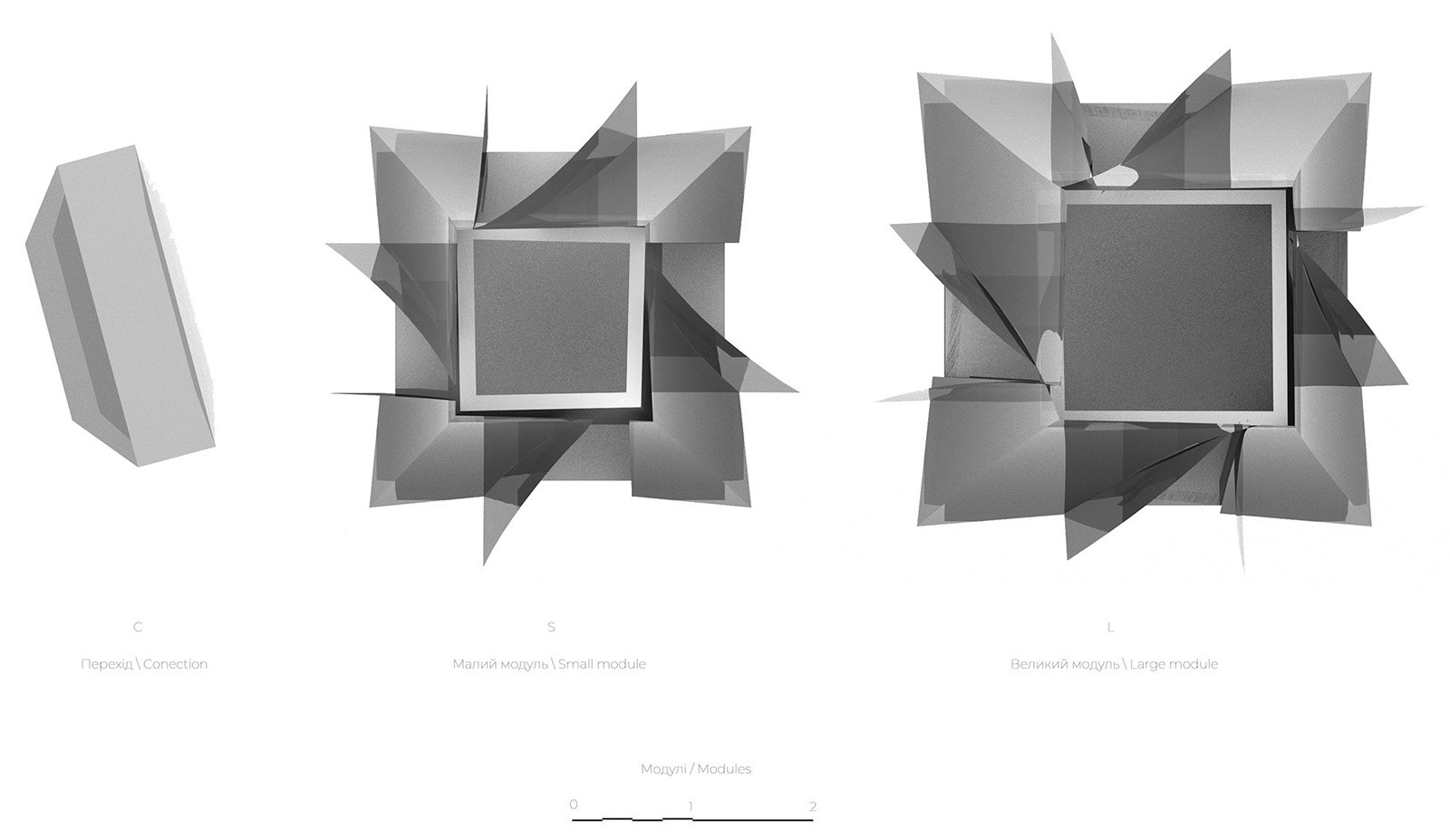
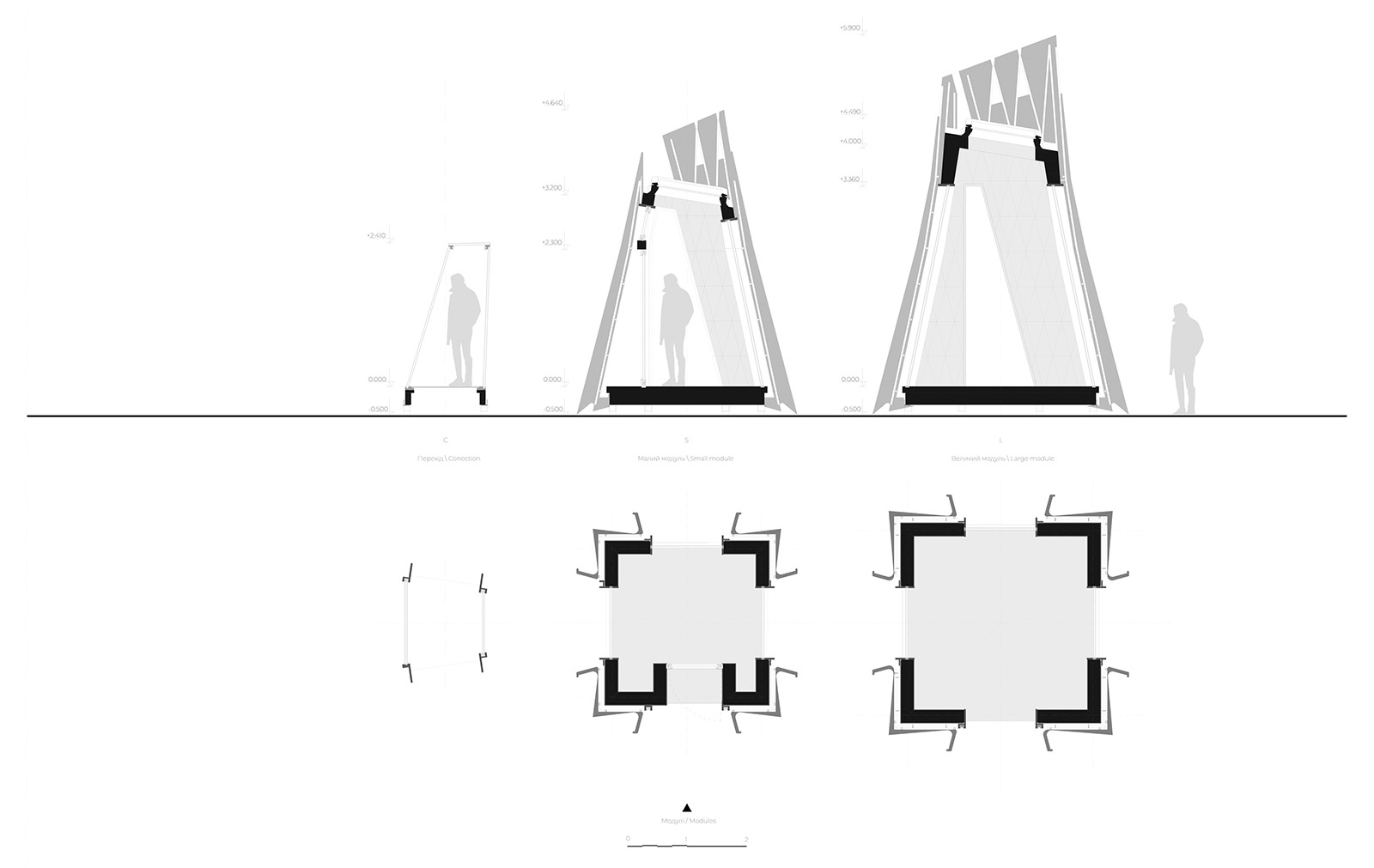
The studio articulated the conceptual design around two principles: mono-function and variation. The mono-function approach introduced spaces with a dedicated use that offers minimal interventions relying on module variations. The smaller modules are used for dressing rooms, bathrooms or auxiliary rooms, while the larger ones accommodate sauna, living and sleeping areas. The resulting modular design allows flexibility and adaptability within cabins while optimising limited footprints across the site.
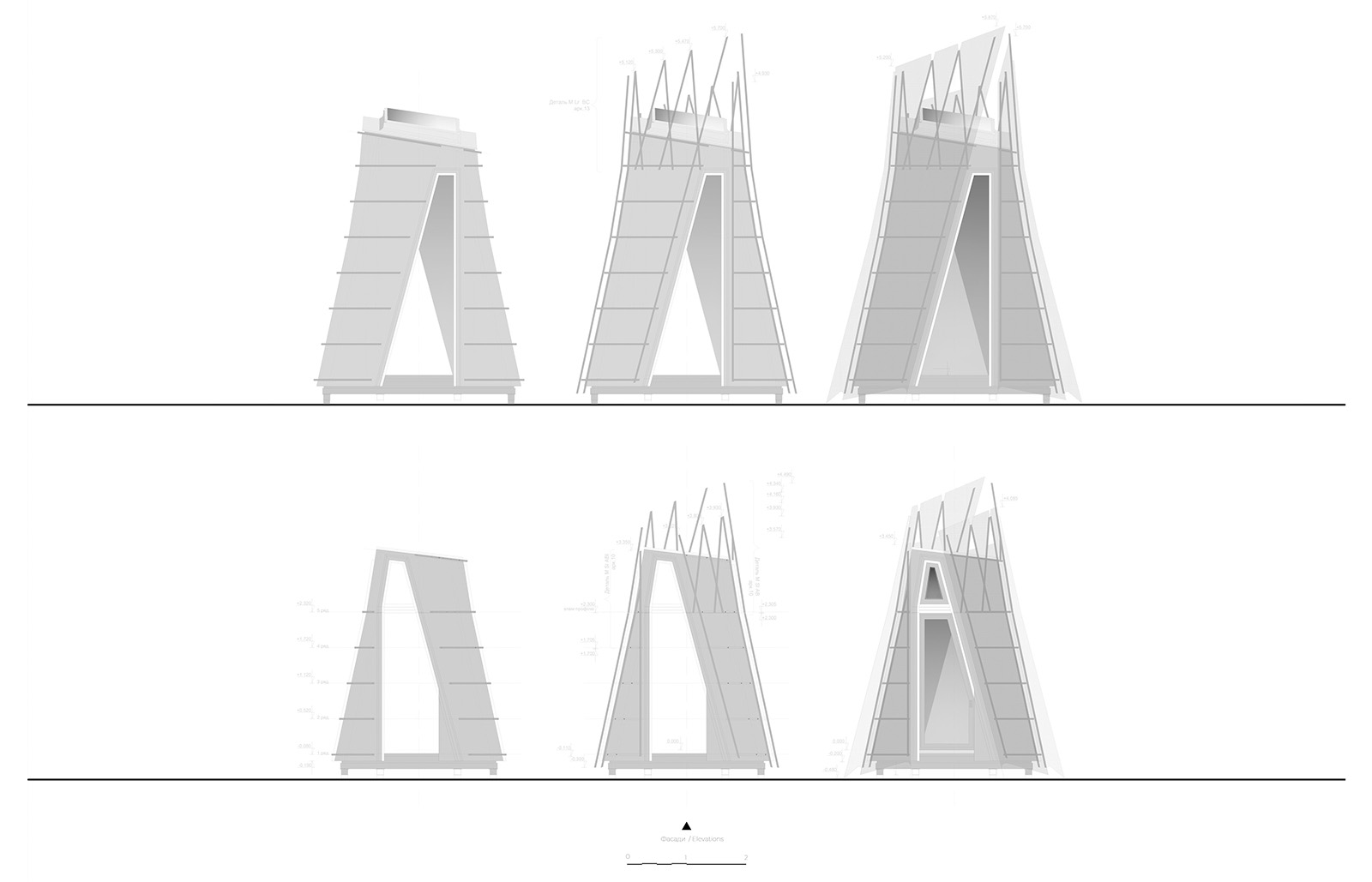
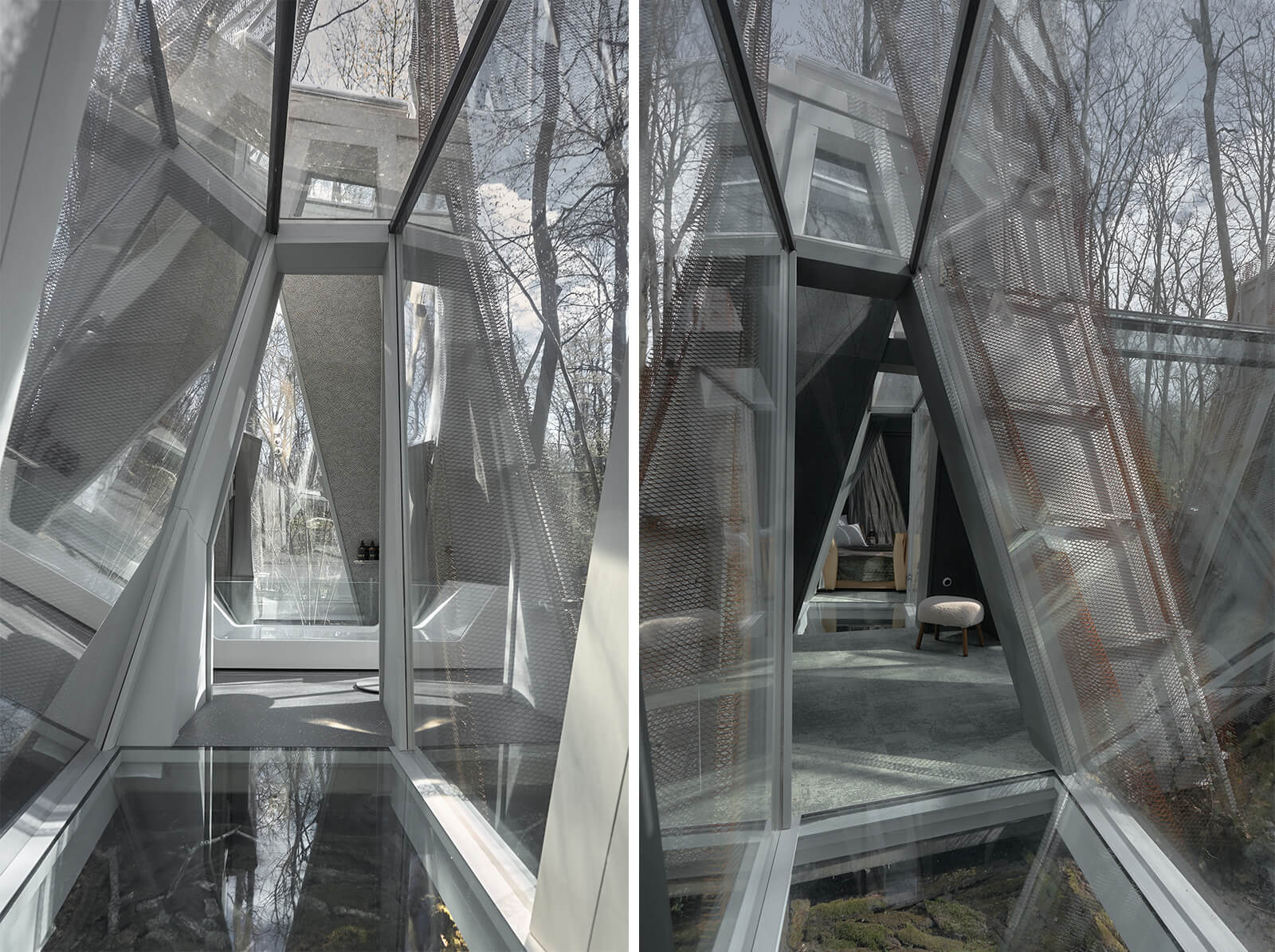
Grey mesh as a shell impart an ‘inner glow’ to the tents, essentially recreating the appearance of an illuminated frozen fabric along the corners and folds of the built mass. “Corten was also chosen for its practicality and the ability to form complex shapes, oblique bends and cuts, which would be impossible with other mesh materials,” the architects reveal. Beyond being agents of natural light, the glass corridors are places to pause and reflect, doubling as transitional spaces that connect the natural landscape across all the modules.
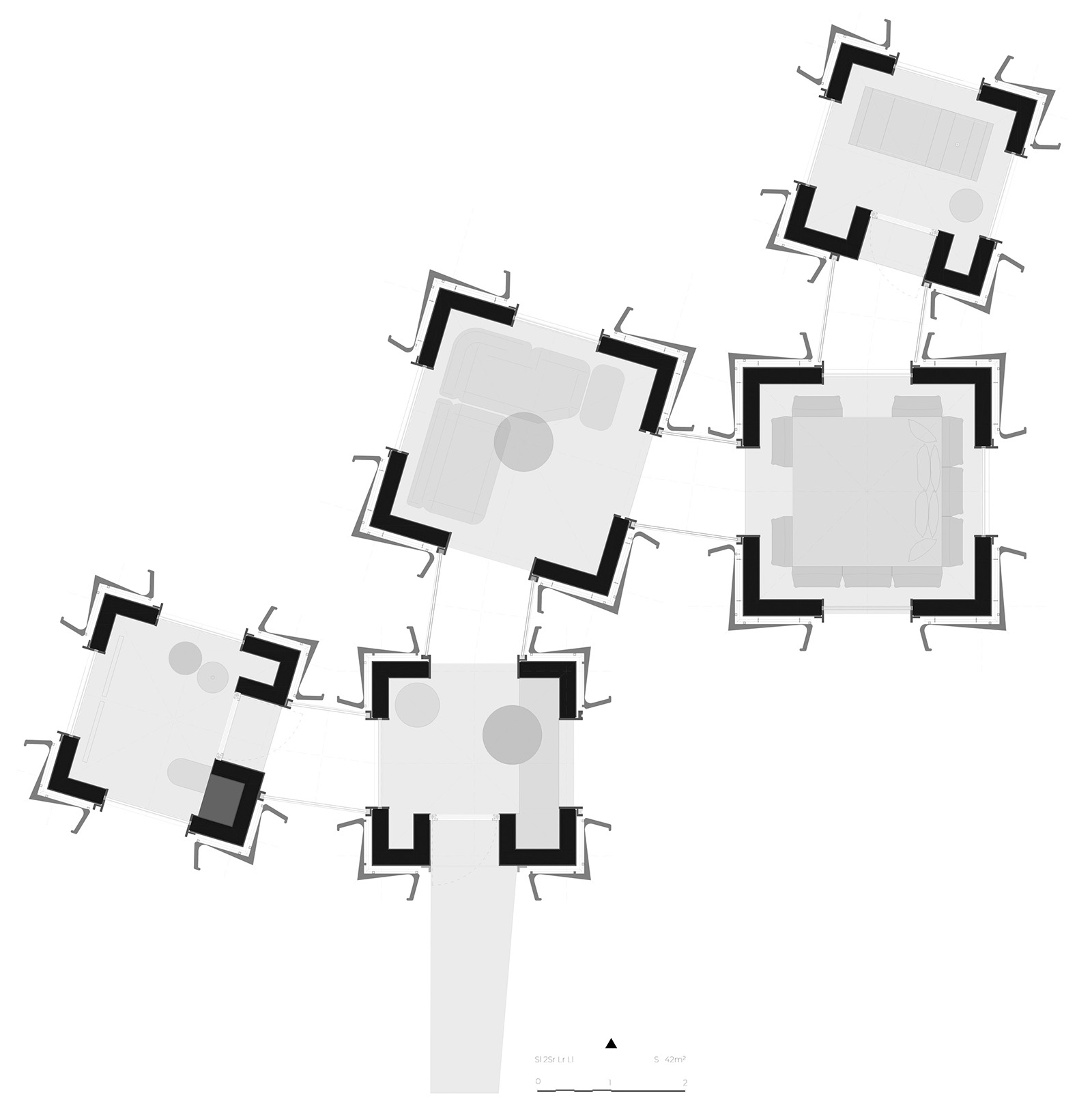
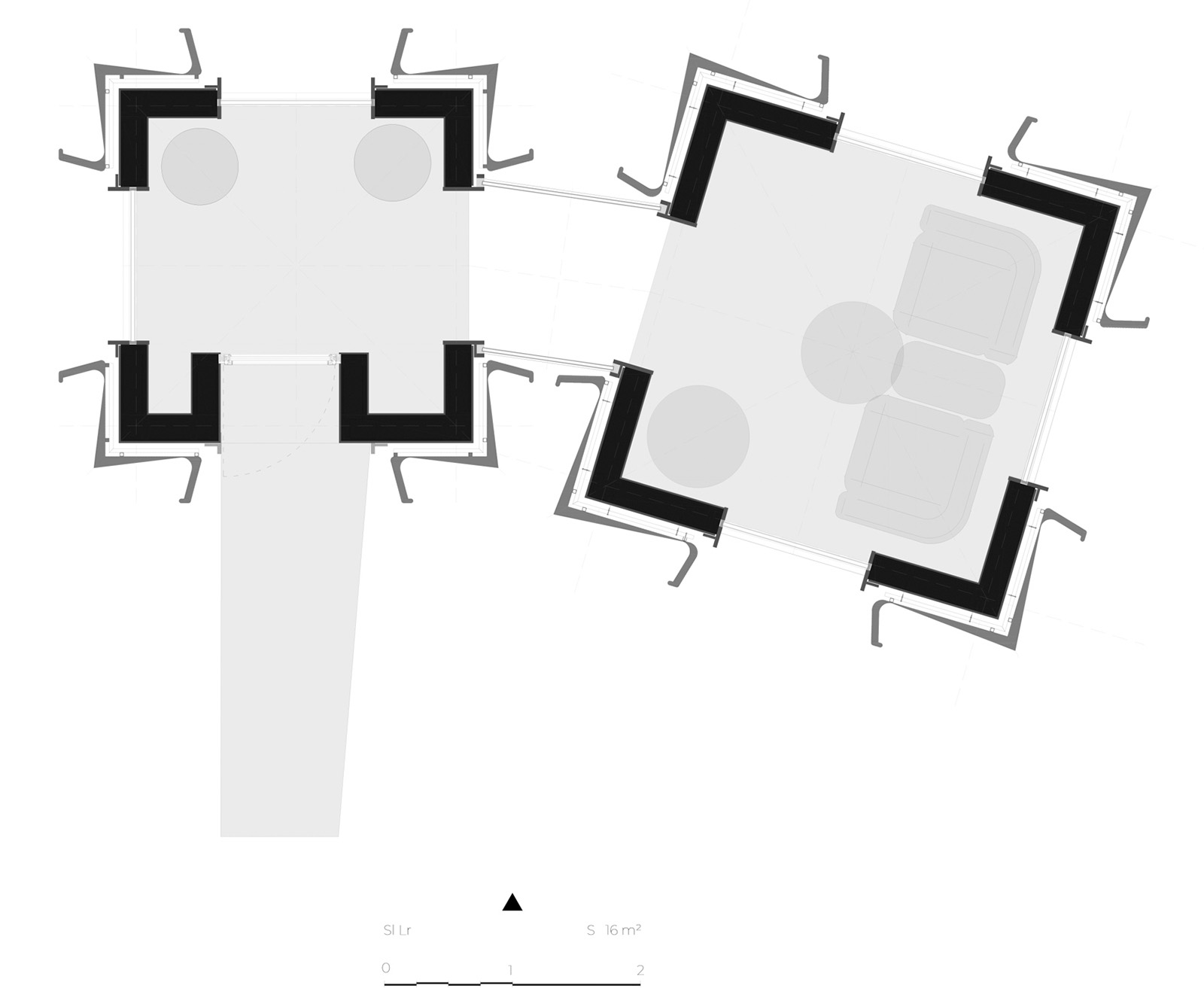
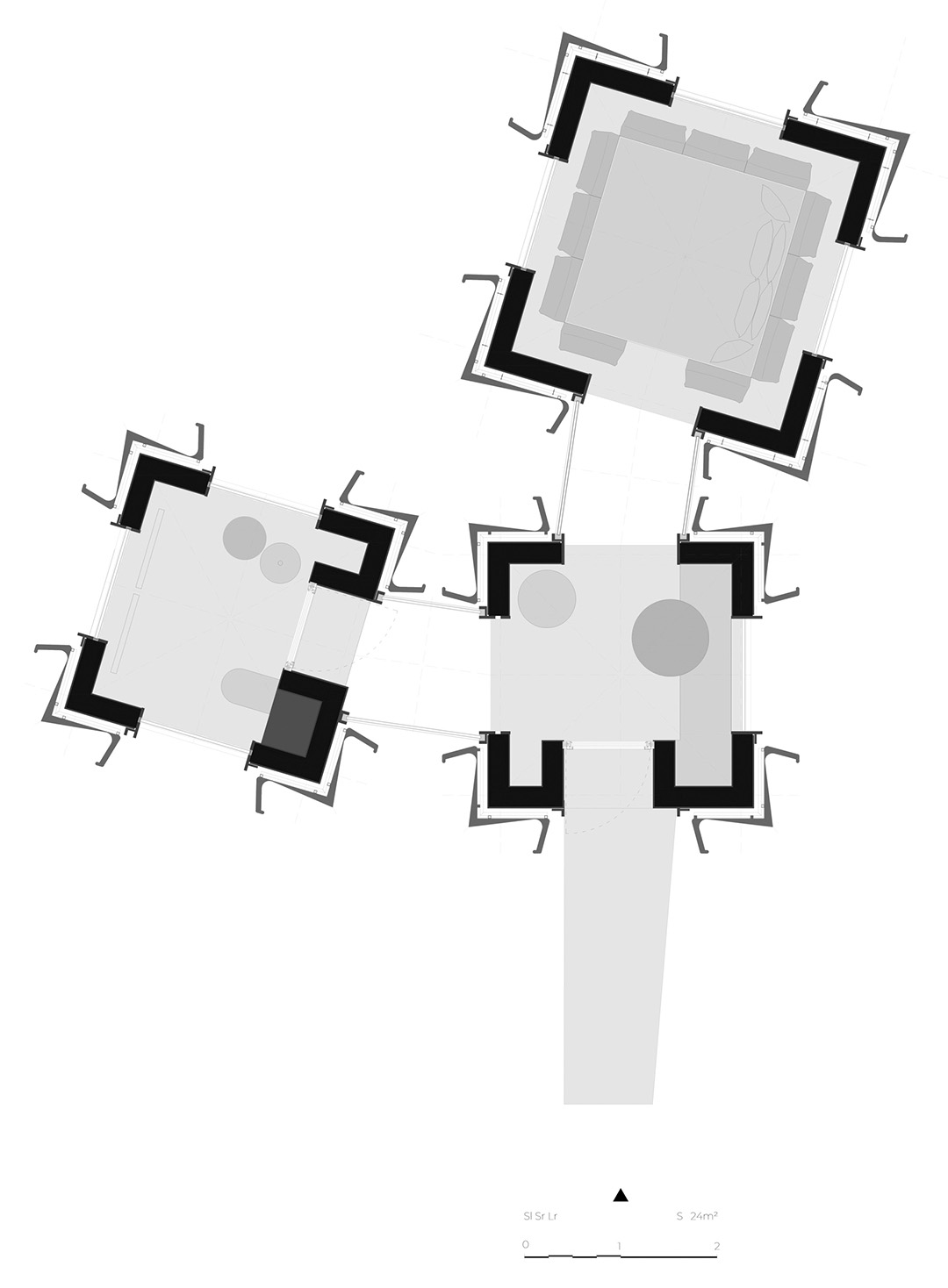
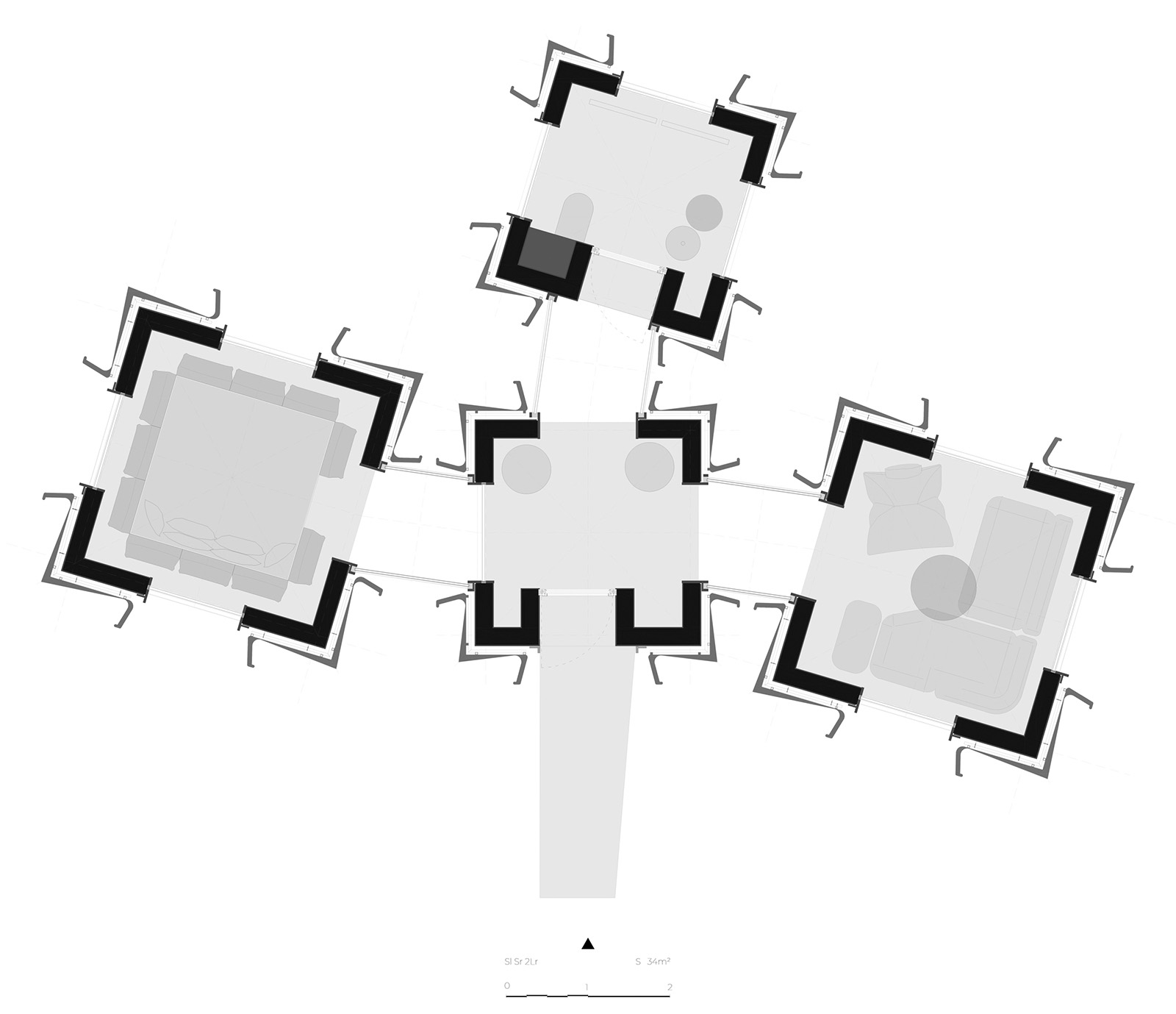
Upon viewing the structures from the outside, the contrasting materiality of weathering steel and glass in the modular architecture, along with its asymmetrical geometry and controlled disorganisation of the site, evoke feelings of ambiguity, curiosity and wonder. Perhaps from within, the contemporary architecture would reveal a sense of introspection and future nostalgia. Reframing the present war tensions and childhood memories through a sensitive lens, the Namety Cabins project embodies the architects’ take on a hybrid architectural identity that combines Ukraine’s shared memory of war with a contemporary vision for its future.
Name: The Namety Cabins
Location: Kyiv, Ukraine
Typology: Hospitality
Architect: Roman and Dmytro Seliuk
Year of Completion: 2025

by Pranjal Maheshwari Oct 19, 2026
The Mumbai-based architects integrate courtyards, mesh screens and north light trusses to create a dining space that doubles up as a community hub at SR University, Warangal.
by Mrinmayee Bhoot Oct 17, 2026
The Rotterdam-based institute centres the Indian Ocean as a network for exploring material histories and transnational links shaping coastal cultures, positing them as future models.
by Pranjal Maheshwari Oct 16, 2026
At the 2026 Stirling Prize ceremony, Mary Duggan with RUFF Architects, MAKER Architecten and Nakshabid Architects were felicitated for proffering quality housing and social equity.
by Mrinmayee Bhoot Oct 12, 2026
The new Centre for Contemporary Arts, fostering public engagement with art in Uzbekistan, is housed in a tram depot refurbished by the French studio, emulating local craftsmanship.

make your fridays matter with a well-read weekend
Enter your details to sign in
Don’t have an account?
Sign upOr you can sign in with
a single account for all
STIR platforms
All your bookmarks will be available across all your devices.
Stay STIRred
Already have an account?
Sign inOr you can sign up with
Verification link sent to check your inbox or spam folder to complete sign up process
Tap on things that interests you.
Select the Conversation Category you would like to watch
Please enter your details and click submit.
Enter the 6-digit code sent at


The Namety Cabins in Kyiv embody future nostalgia and a semblance of peaceful life
by Bansari Paghdar | Published on : Nov 11, 2025


 Sign in with Google
 Sign in with email
What do you think?