Art08 mins. read
Sandra Vasquez de la Horra: Soy Energia links our bodies with our natural contexts
by Mrinmayee BhootJan 15, 2026



by Bansari PaghdarPublished on : Jun 03, 2026
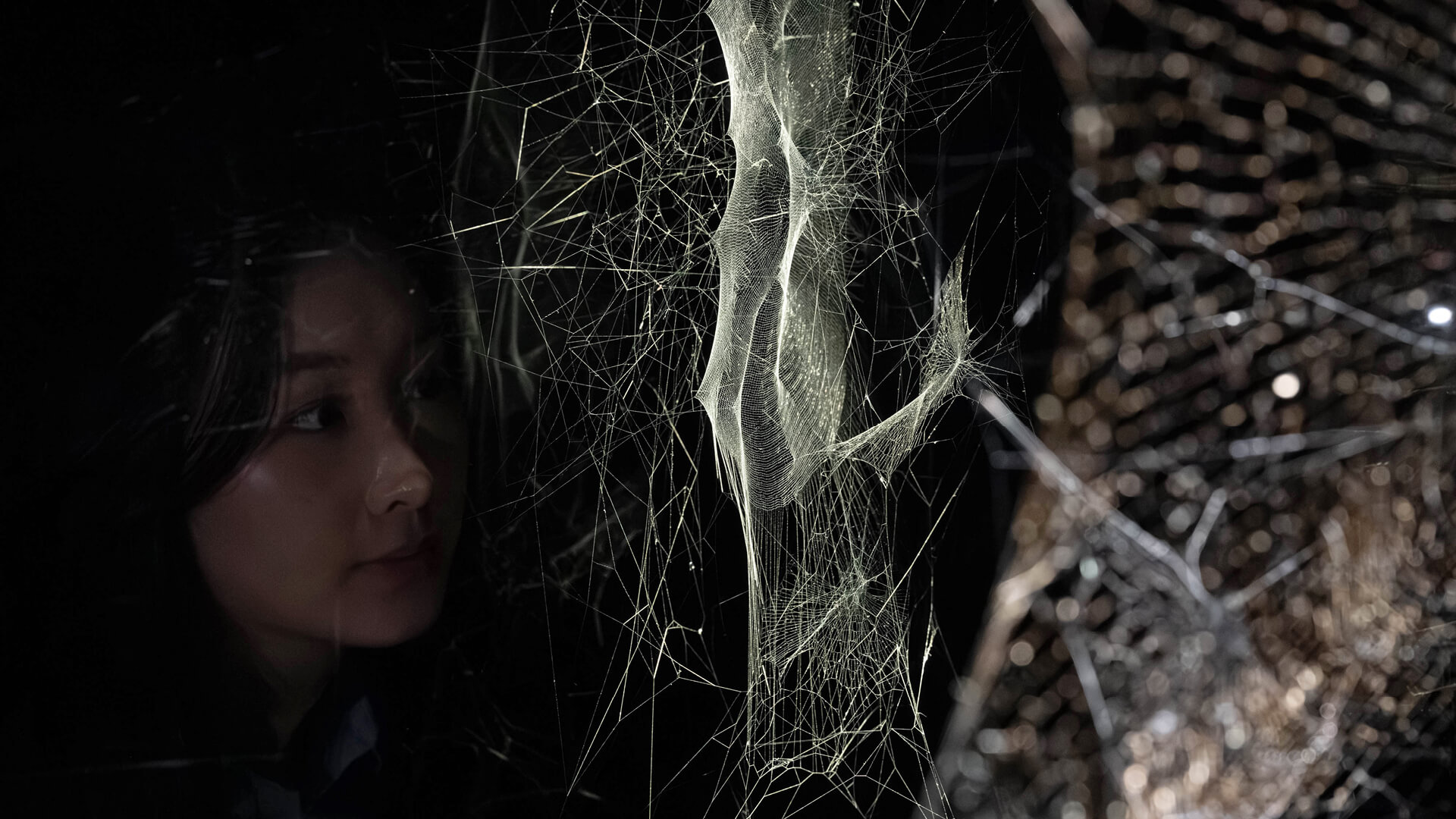
A web is fragile yet tensile. Berlin-based artist Tomás Saraceno makes it a portal across disciplines, extending its logic from spiders and spores to clouds, dark matter and cosmos in his ongoing solo exhibition, Interwoven. He explores the concept of Aerocene, which centres the atmosphere and its interwoven living and non-living things, attempting to address ecological and societal changes that impact contemporary cultural institutions. On view until September 6, 2026, at the New Taipei City Art Museum in Taiwan, the art exhibition operates simultaneously at microscopic, cosmic and geopolitical levels, suggesting that these systems are fundamentally interconnected. The presentation is a reflection of the contemporary artist’s practice—spanning art, science and social action—as he collaborates with biologists, physicists and environmental researchers to create objects and installations of meaning. What emerges is an inquiry into what Saraceno terms ‘incorporeal connections,’ asking how life might be understood not as an isolated presence, but as a relational condition.
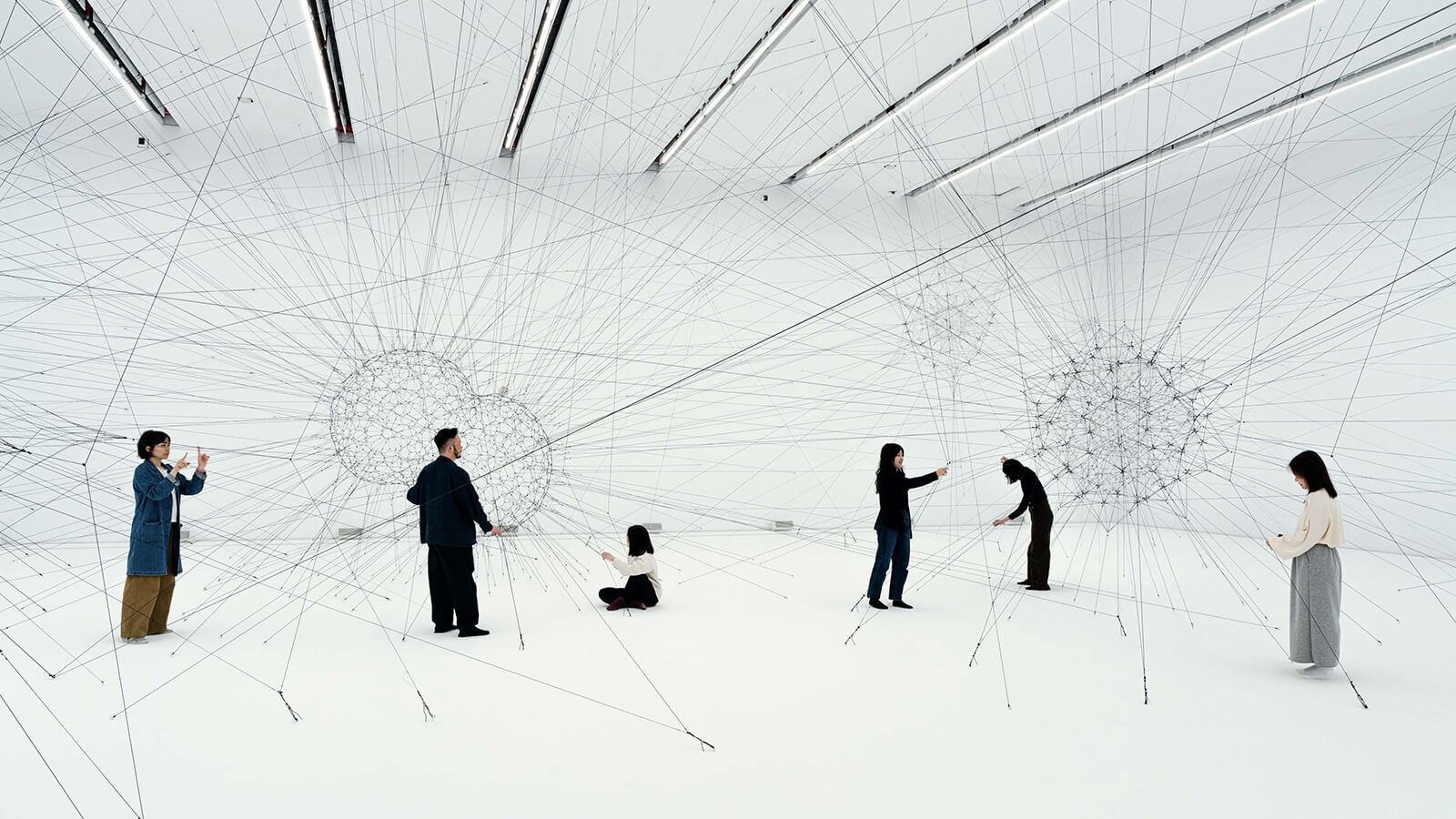
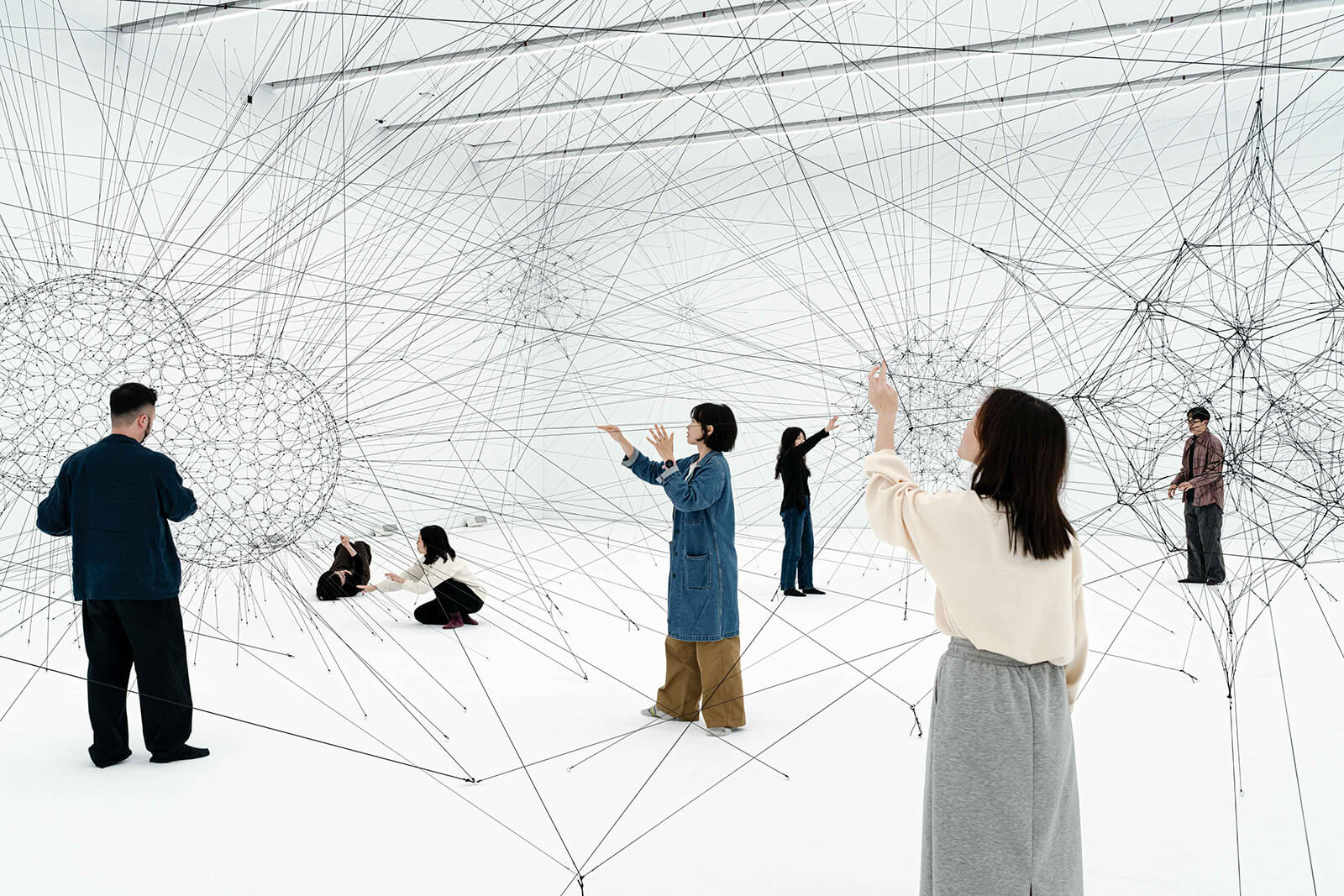
The art exhibition is said to be ‘relational,’ bringing together art, sensorial experiences and collective imagination through immersive installations, sound works and community participation. These works position the viewer within a field of forces that allow the viewer to attune to vibrations, tensions and barely perceptible exchanges that exceed human sensory primacy. At the centre of this inquiry lies the architecture of a spider's web, tangentially exploring several scientific, contemplative and poetic concepts.
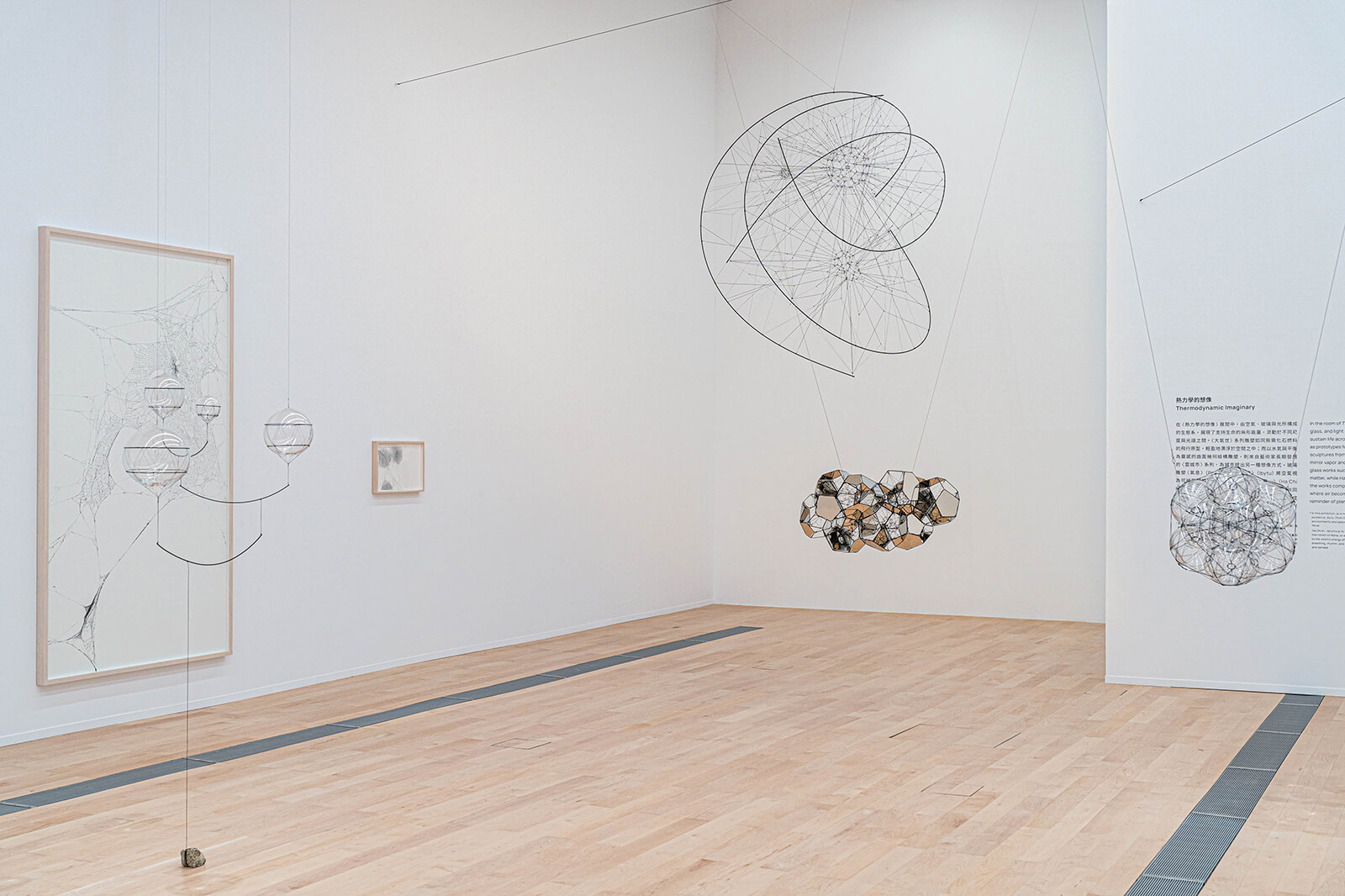
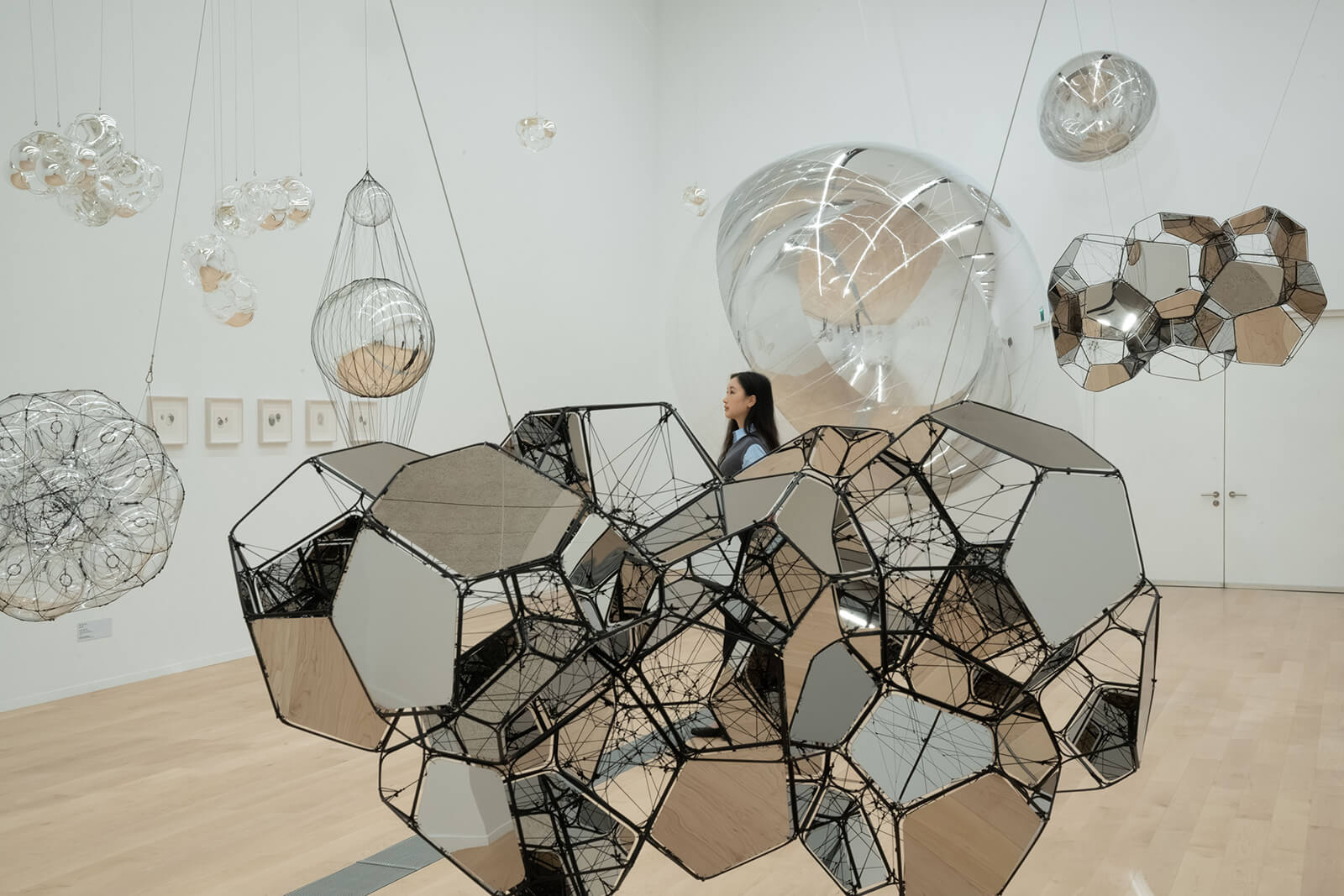
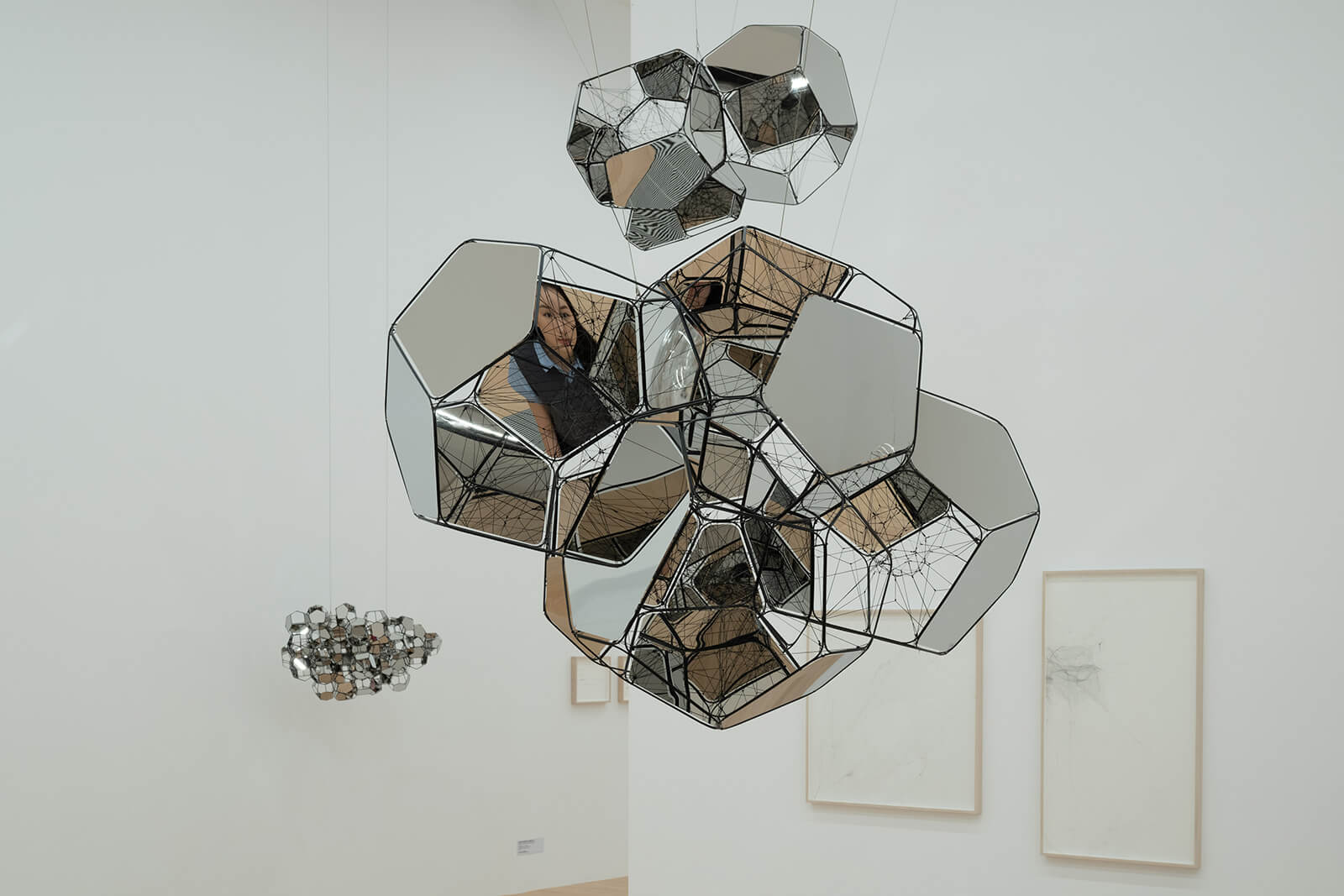
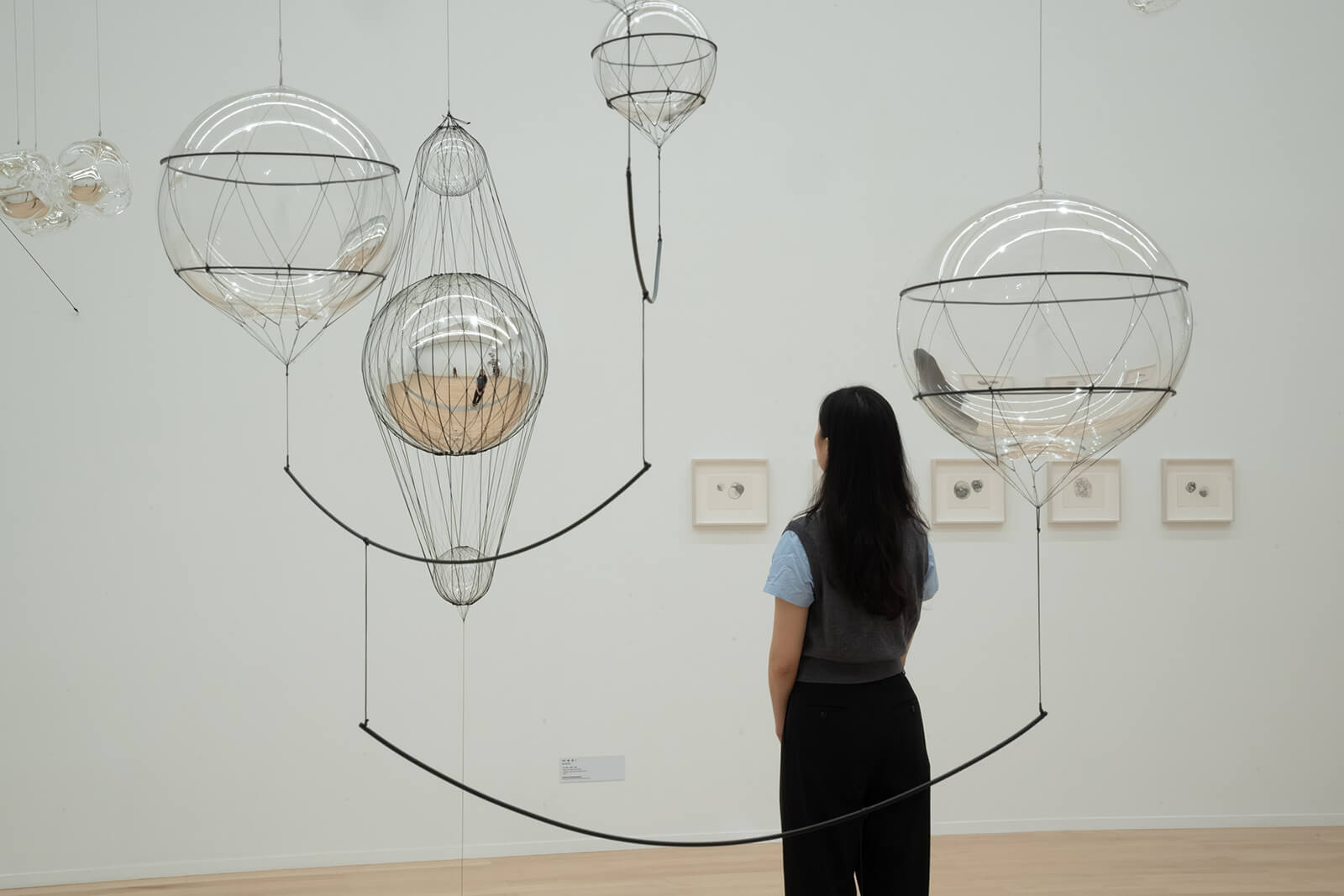
Webs of At-ten(s)ion is a three-dimensional woven network by various species of spiders. Another work, How to Entangle the Universe in a Spider/Web?, portrays the spider web as a cosmic landscape through light and spatial installations. The web’s structure is likened to the network of dark matter that links galaxies to depict their natural resemblance. In the large-scale installation, Algo-r(h)i(y)thms, the webs overtake the exhibition space, placing visitors as a spider moving through the structure to sense the vibrations and movements in the built environment.
As scale becomes recursive across the installations, similar patterns and forms echo to resolve distinctions between the minute and the immeasurable. But oftentimes, such gestures risk flattening the very conditions they seek to spotlight.
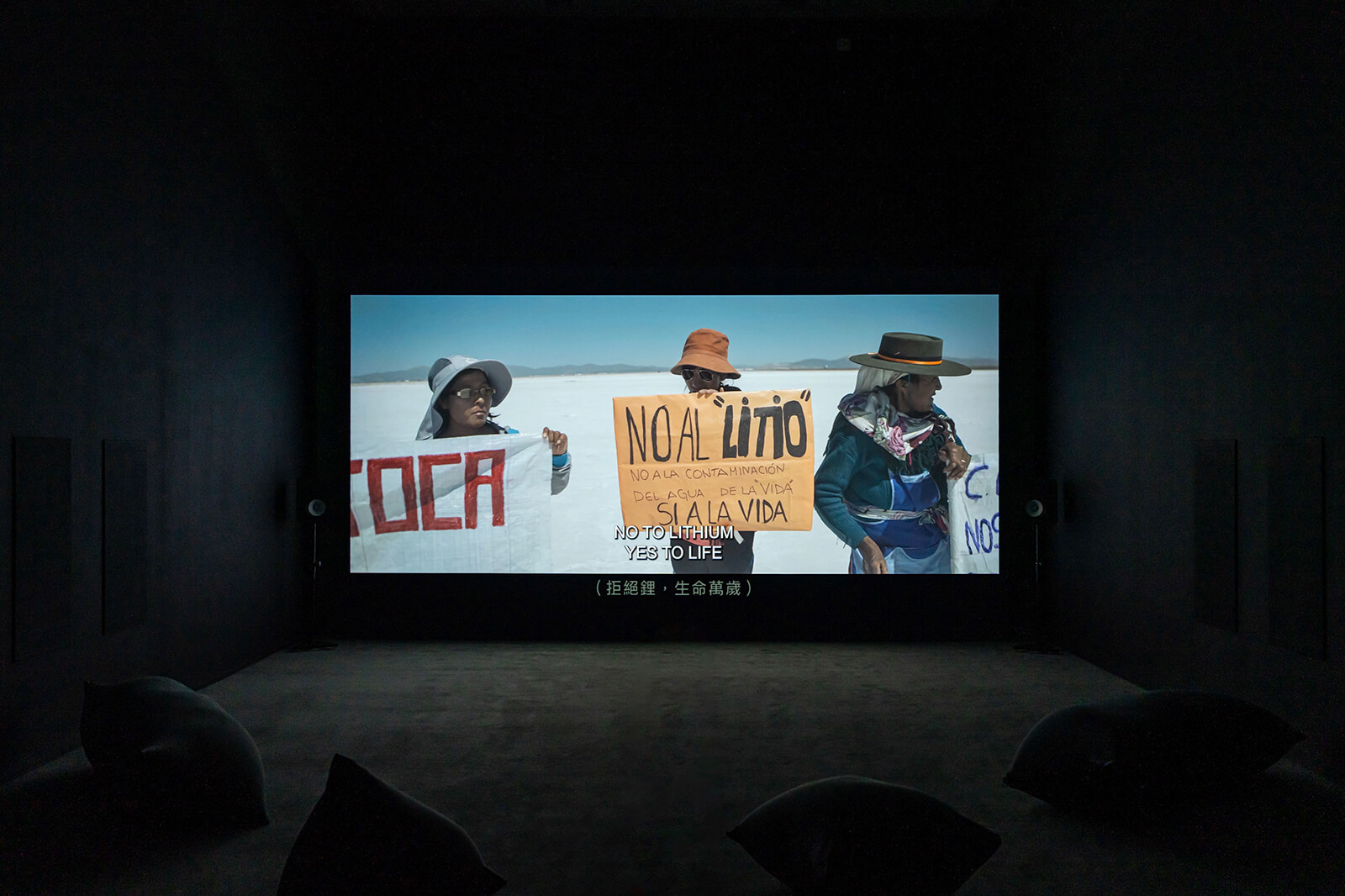
The immediacy of political and ecological urgencies can become diluted when ecological and political crises are rendered within a universal framework of interconnectedness. This leads to the absorption of the work into an aesthetic instead of being confronted as a site of conflict. This tension is reflected in the inclusion of works created in collaboration with the Salinas Grandes and Laguna de Guayatayoc communities in northern Argentina, where lithium extraction has been threatening local water systems and Indigenous livelihoods. Here, environmental violence, entangled with global supply chains and extractive economies, cannot be easily placed beside or subsumed into cosmic analogy.
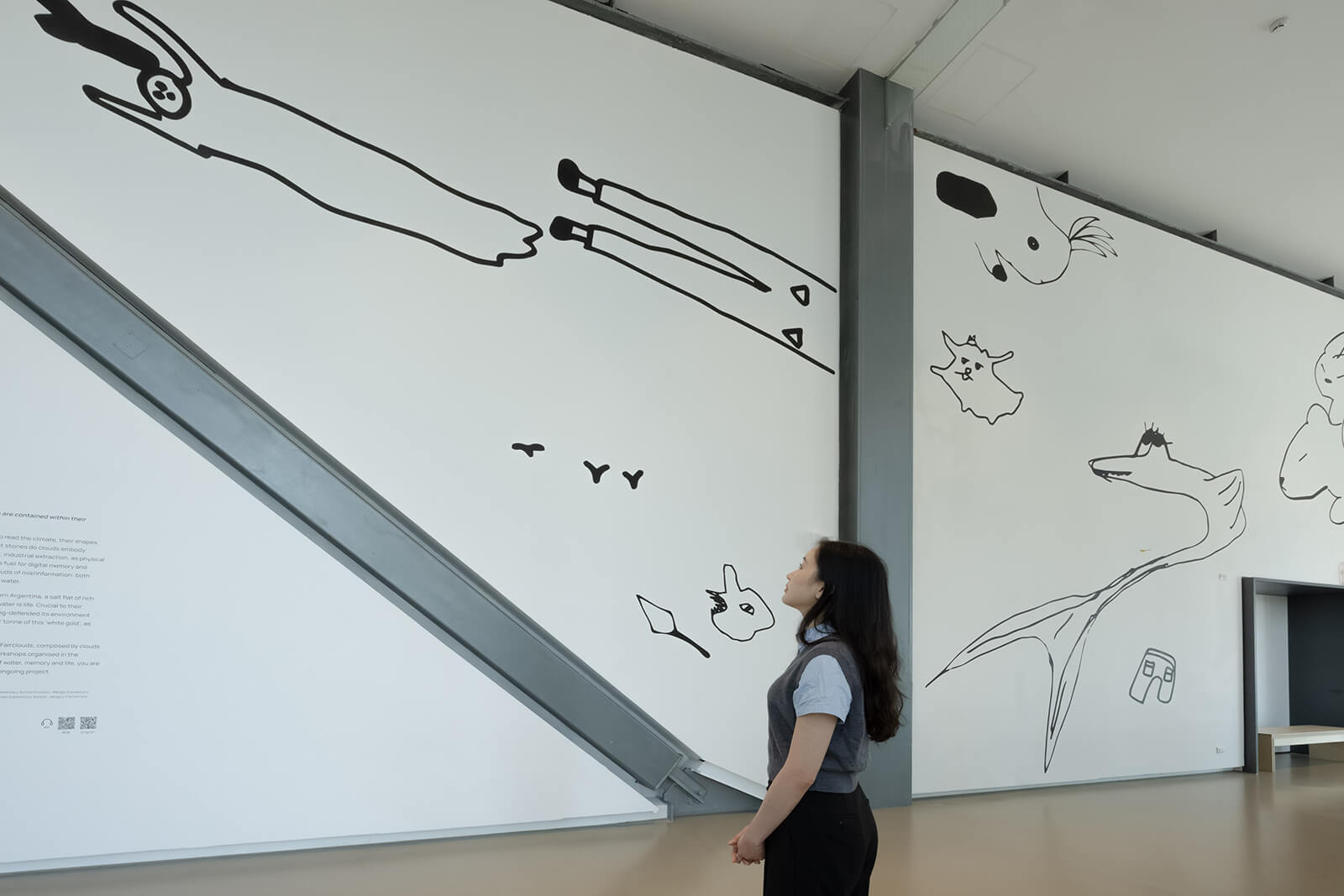
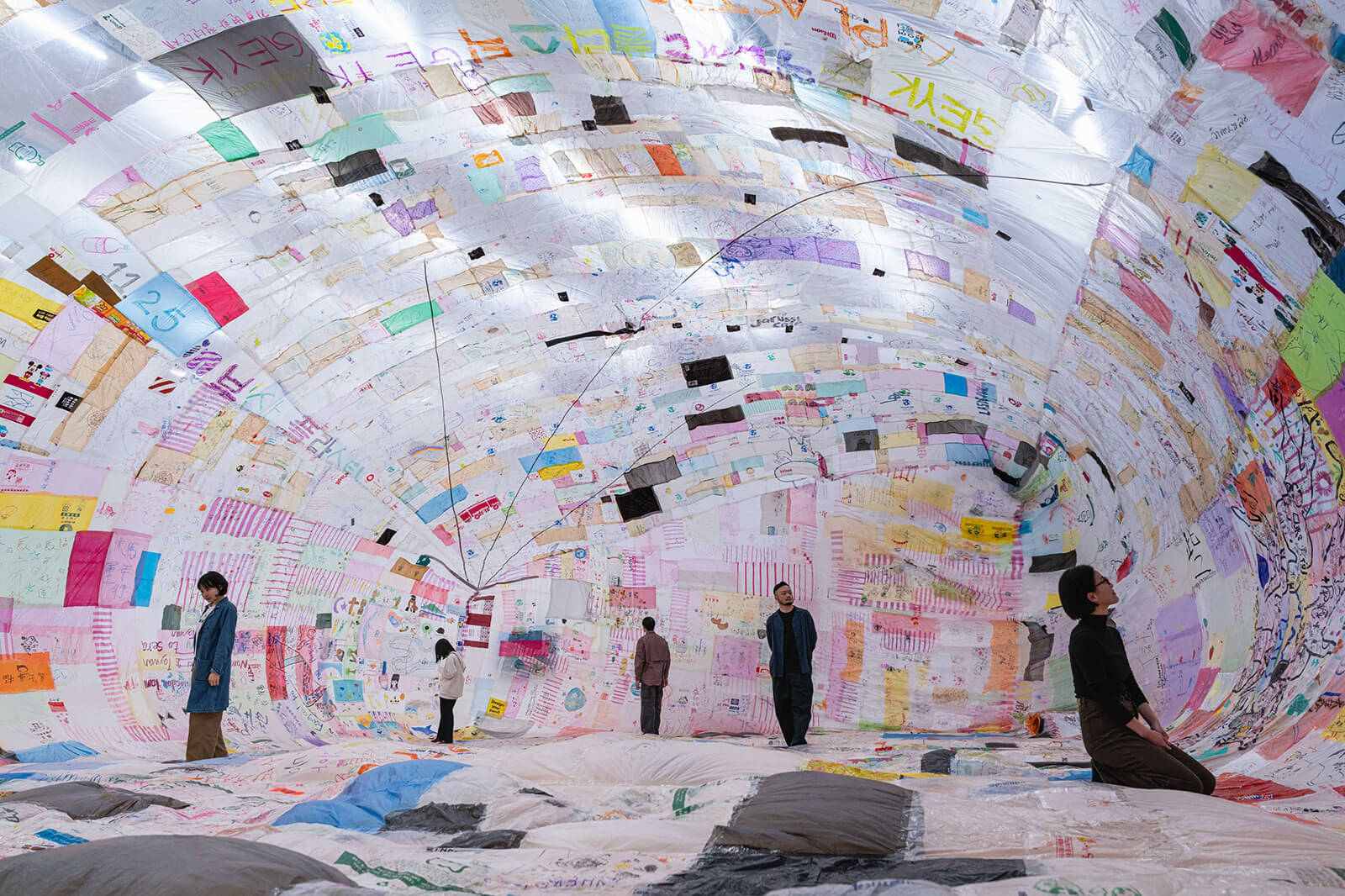
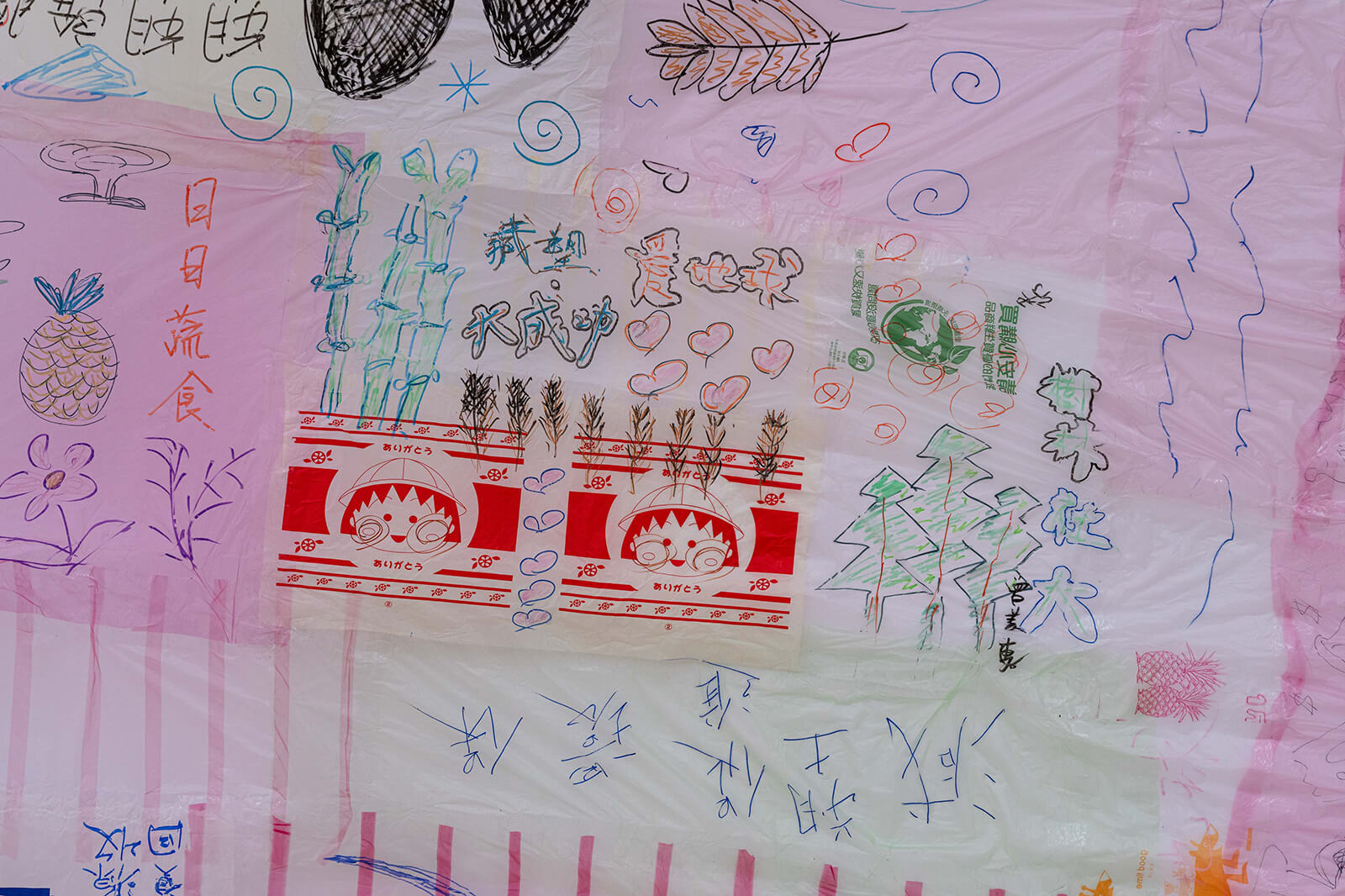
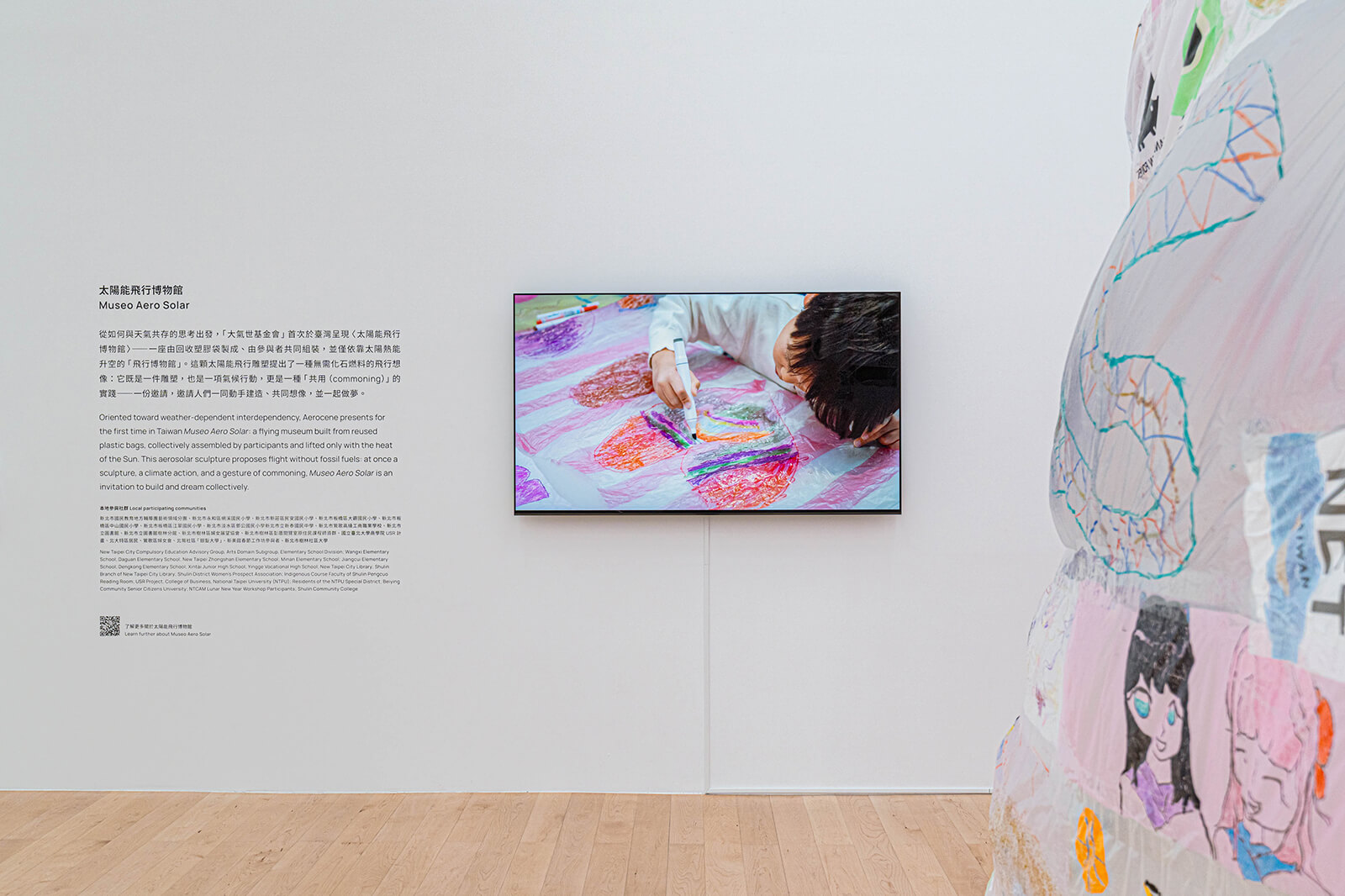
In this light, Saraceno envisions a future without fossil fuels in a monumental sculpture. Museo Aero Solar—a solar-powered sculpture made from recycled plastic bags—appears as both aspiration and abstraction. Framed as ‘a collective practice of radical collaboration,’ it gestures toward alternative infrastructures of energy, yet remains suspended between symbolic action and material feasibility.
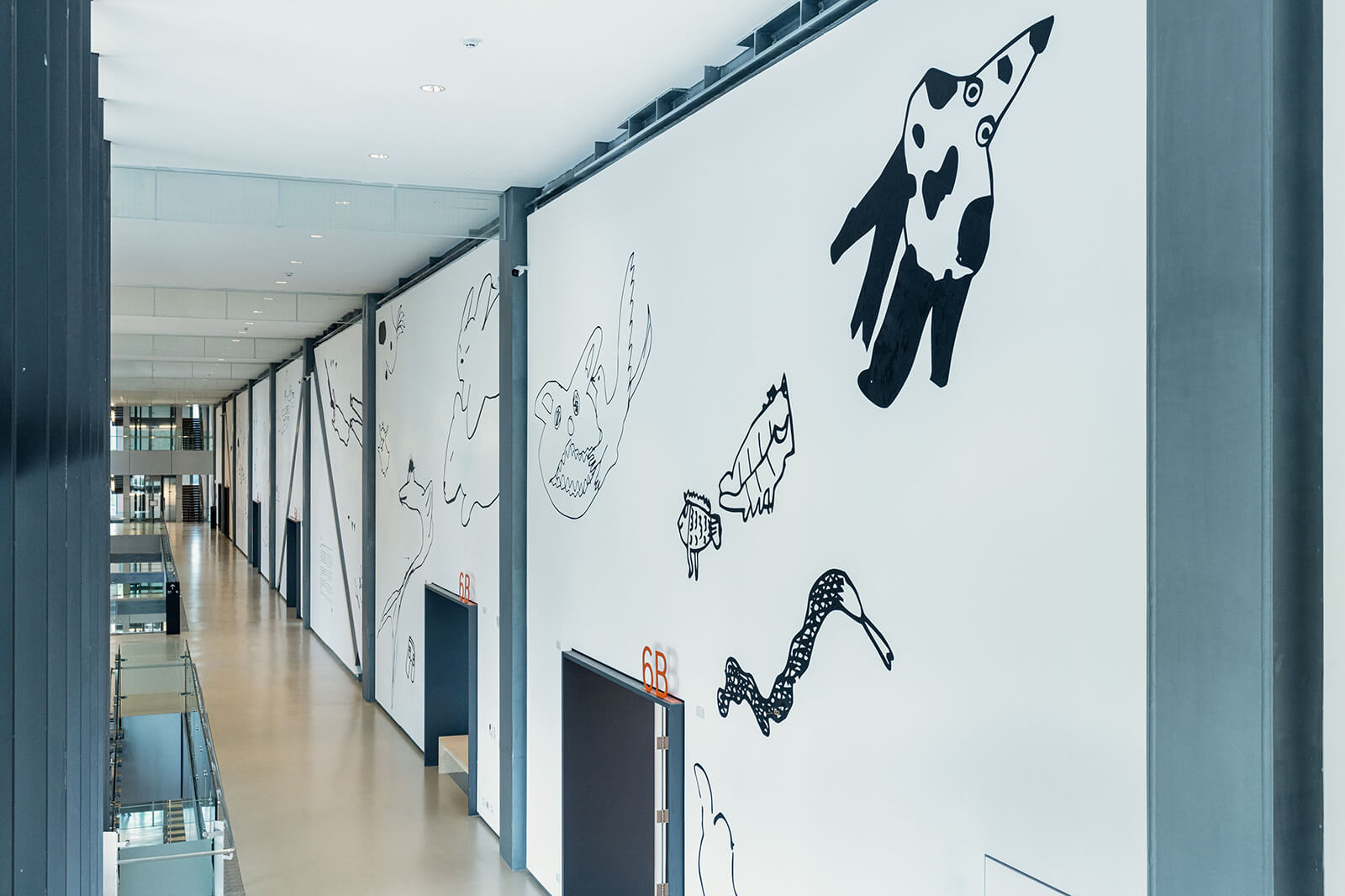
The Fairclouds project, similarly, invites visitors to draw forms of clouds in an attempt to connect them with Argentine communities’ water conservation efforts, translating geopolitical struggle into acts of collective imagination. When mediated through such distant, abstract metaphors, these social initiatives raise questions about the efficacy of this participation. While the exhibition’s educational and community engagement programmes—involving local schools and organisations—attempt to anchor these expansive ideas within regional contexts and pedagogies, they remain largely unspecified. With little information on their scope, depth or mode of engagement, the scale of this ambition is left difficult to assess.
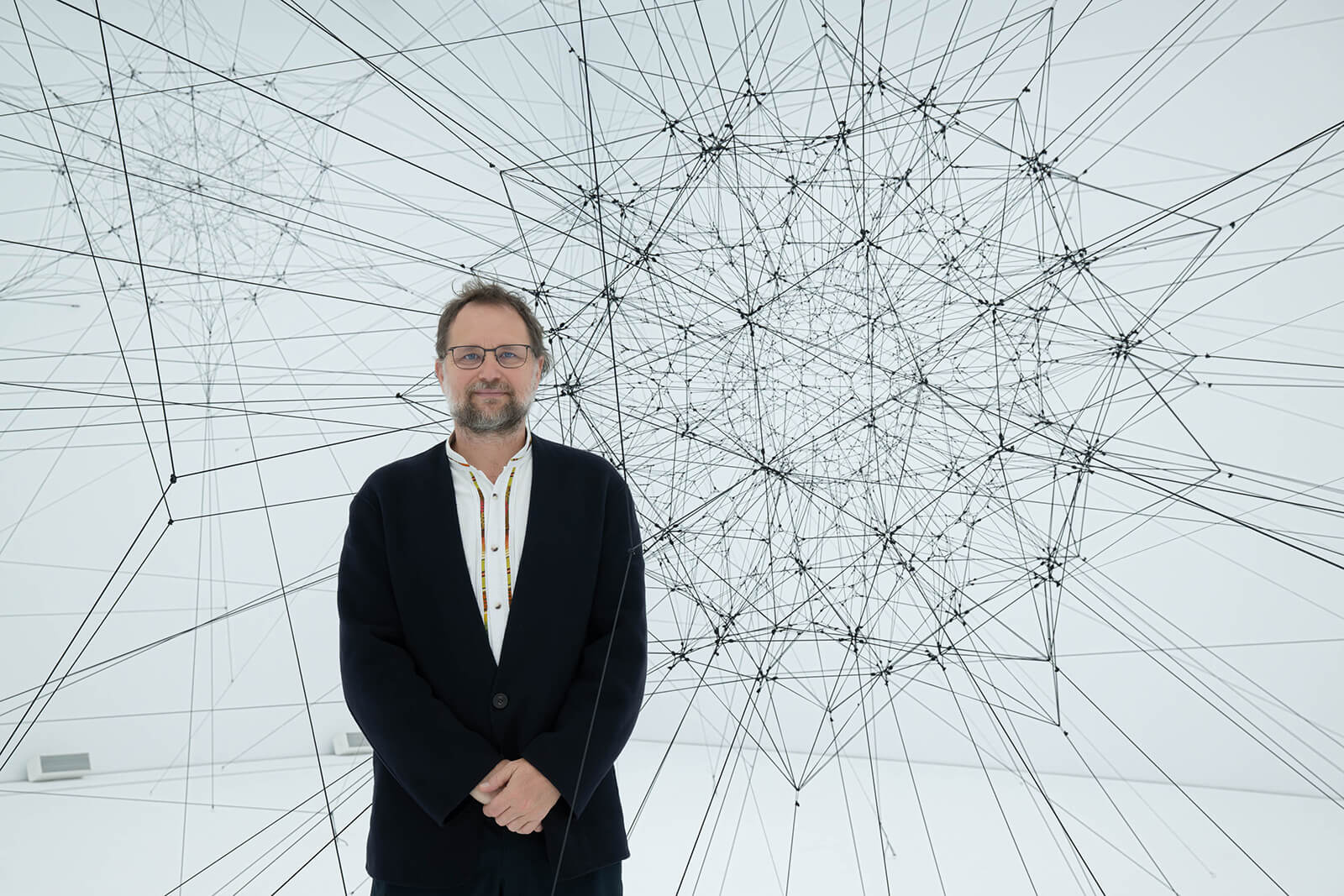
By placing cosmic speculation alongside grounded crises, Saraceno’s project oscillates between the poetic and the critical. Perhaps it abandons attempting to resolve these tensions and instead prioritises staging them in almost too complicated a way, producing a space simply with visual coherence. What remains is a dense, tangled network of competing signals, enforcing within the visitors conflicting, almost unpleasant, negotiations with the art installations.

by Srishti Ojha Oct 21, 2026
Increasingly, artists, filmmakers and activists are turning to VR to create more personal, tangible accounts of the climate emergency and its impact on vulnerable communities.
by Mirra Lynn Oct 20, 2026
The Indian artist paints the old wadas of central Pune, capturing the traces of everyday life that cling to these structures, battered by time but unbowed.
by Anmol Ahuja Oct 15, 2026
How do heaps of souvenirs and relics with racist Aboriginal motifs and features become art? MCA Sydney’s winter showcase—the artist’s largest to date—beckons a possibility.
by Srishti Ojha Oct 14, 2026
The first Dutch publication on the Turkish artist, the eponymous book centres on Refik Anadol: Latent City, his living data sculpture of Bruges, exhibited at BRUSK gallery.

make your fridays matter with a well-read weekend
Enter your details to sign in
Don’t have an account?
Sign upOr you can sign in with
a single account for all
STIR platforms
All your bookmarks will be available across all your devices.
Stay STIRred
Already have an account?
Sign inOr you can sign up with
Verification link sent to check your inbox or spam folder to complete sign up process
Tap on things that interests you.
Select the Conversation Category you would like to watch
Please enter your details and click submit.
Enter the 6-digit code sent at


Tomás Saraceno’s Interwoven navigates poetic spider webs and critical crises
by Bansari Paghdar | Published on : Jun 03, 2026


 Sign in with Google
 Sign in with email
What do you think?