Design05 mins. read
The act of reading becomes a lively dialogue in Nigel Cottier’s Alphabetical Playground
by Bansari PaghdarOct 31, 2025



by Bansari PaghdarPublished on : Jun 12, 2026
The history and identity of any region are tied to and reflected in its streets. On any busy street in India, one can find a heterogeneous mix of architectural languages, overlapping aromas from food stalls and a frantic crowd navigating through randomly parked vehicles and vendors. Amidst the chaos, ubiquitous elements such as signage, banners and posters—despite being vital to the urbanscape—often end up being overlooked. These texts are defined by distinct languages, materials, crafts, shapes, colours and styles, having undergone significant transformations over the decades. At a time when this handmade linguistic art is being overtaken by its digitally developed and more standardised counterparts, Pooja Saxena—an Indian typeface designer, lettering artist and typographer—insists that this artistry deserves a place in the canonical design discourse.
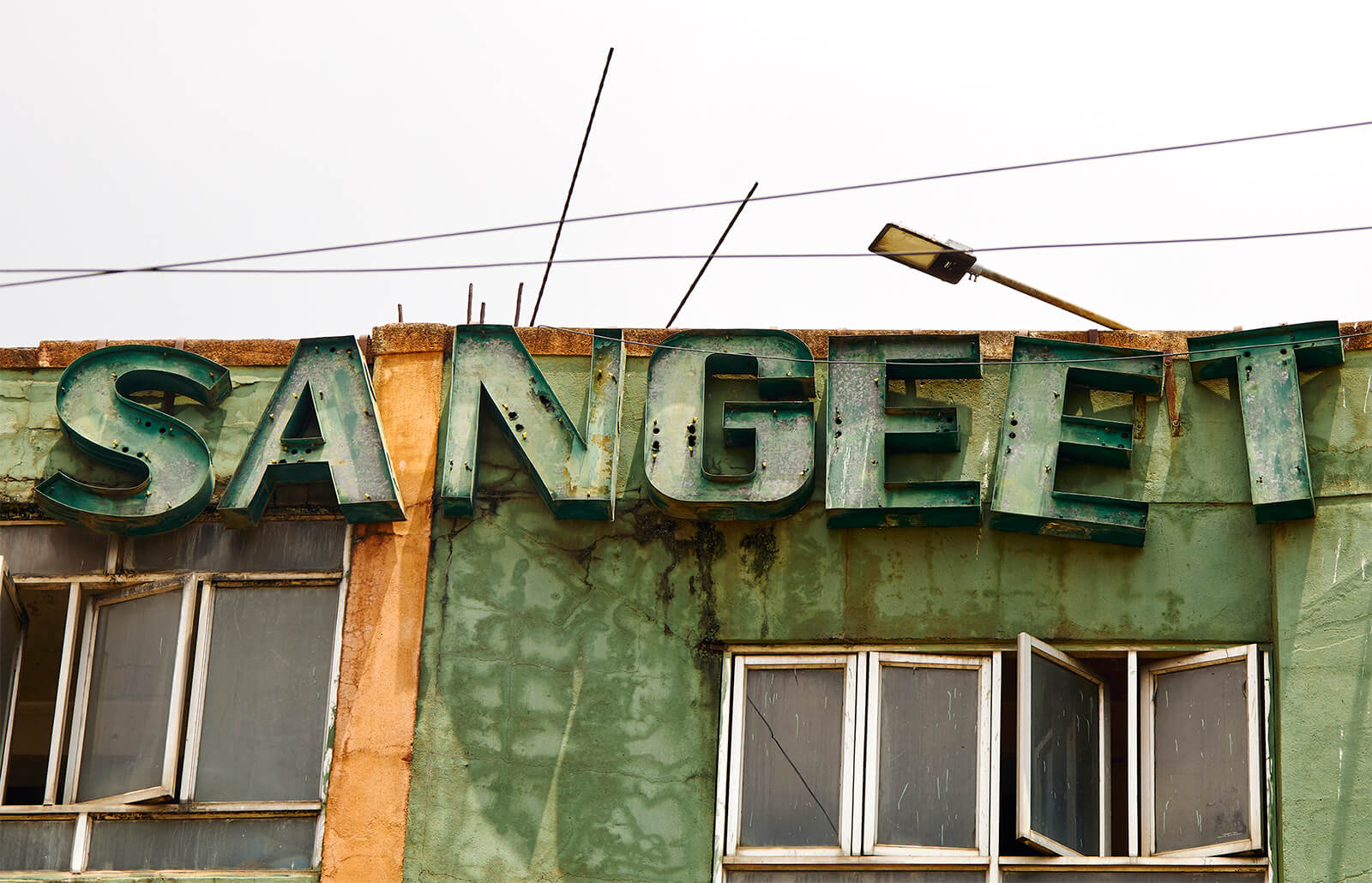
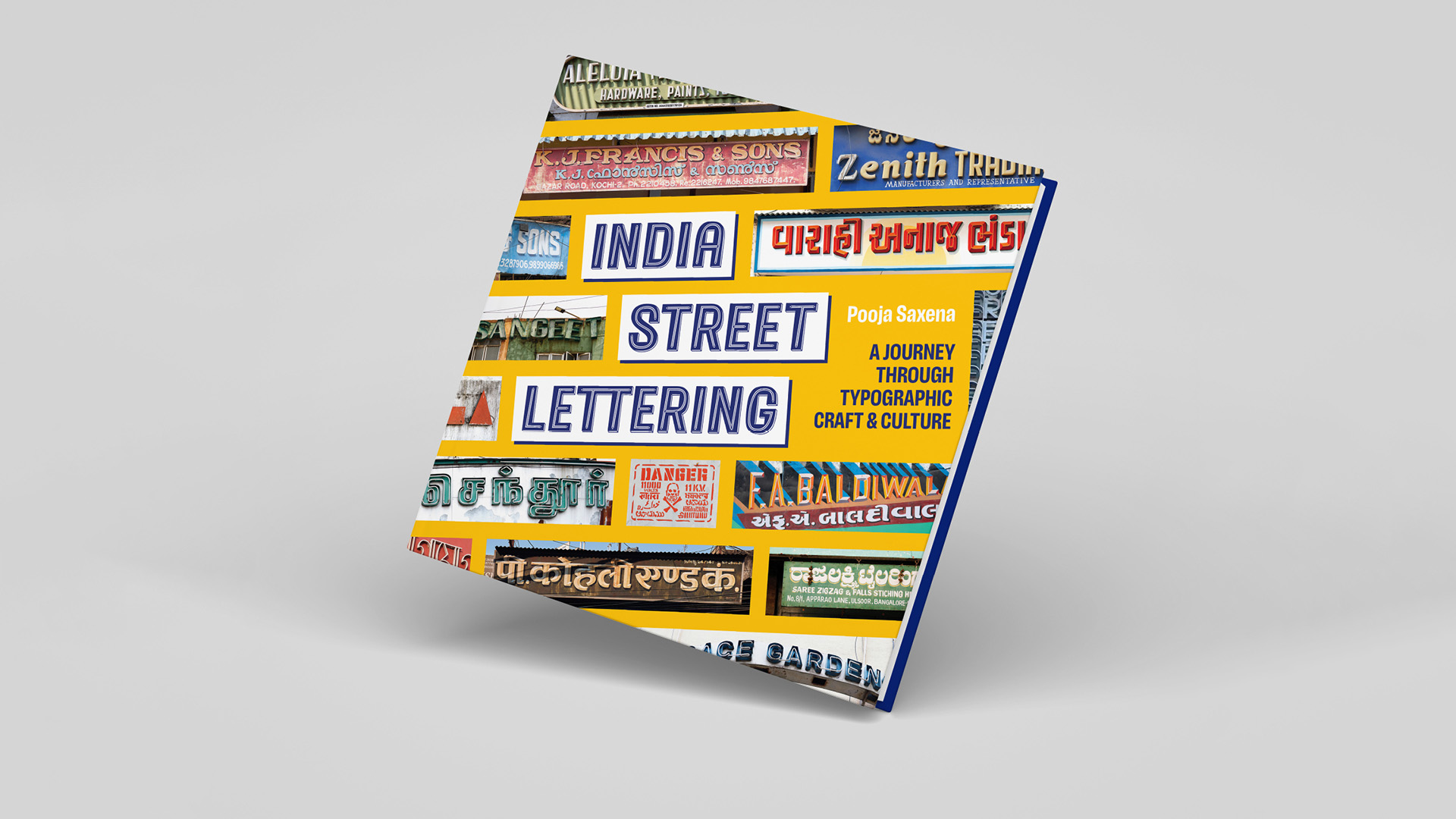
After learning typeface design in the UK, Saxena returned to Bangalore, India, and began documenting expressive Kannada lettering signs. Studying an unfamiliar script and its visual boundaries allowed her to contrast the public typography with that of cities such as Delhi and Noida, where she had spent her formative years. In 2017, she launched a website, India Street Lettering, which grew into an expanding photo archive, geotagged and accompanied by essays to unearth stories on typography across the nation. This is where she established strong connections between type designs and places, where visitors perceived the photographs with their physical and narrative contexts. Over the next few years, Saxena shared these stories through type walks, exhibitions, zines, lectures, workshops and short films, eventually releasing her book, India Street Lettering: A Journey Through Typographic Craft and Culture, in December 2025 under Chennai-based Blaft Publications.
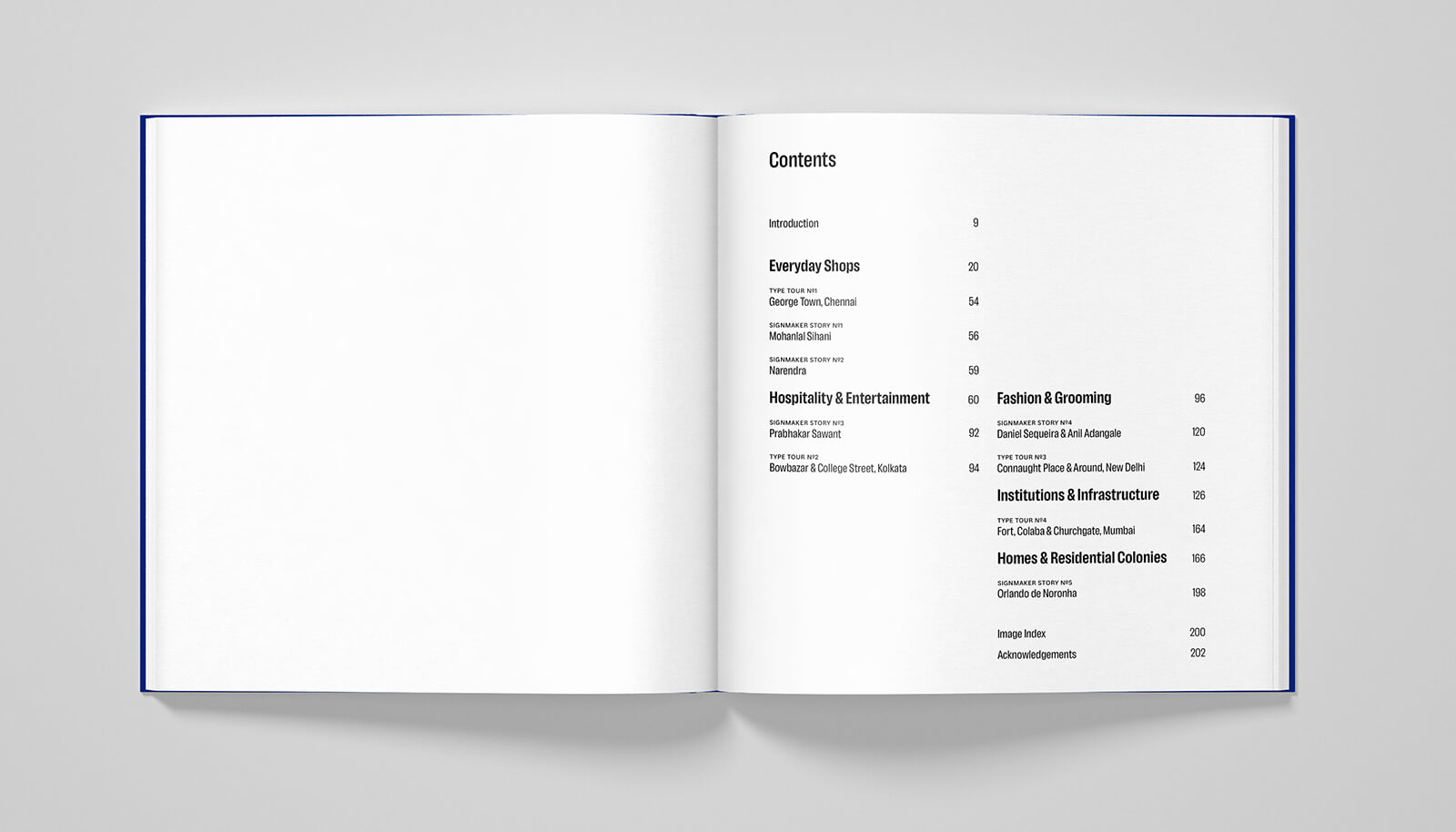
Saxena’s book has over 300 signs from 17 cities, including Chennai, Kolkata, Mumbai and New Delhi, featuring 15 languages and 13 scripts. Discovering details such as the nuqta (diacritical mark placed under certain consonants) in Indic scripts, she traces the evolution of its visual forms. This evolution is also reflected in signs with multiple languages and scripts, catering to the multicultural and multilingual population inhabiting these places. The book is closer to a typographic collage of Indian streets than what could be considered as ‘Indian’ typography. “Design idioms in India are diverse, sometimes contradictory and any effort to find a singular ‘Indian’ design identity through street signs is doomed to be reductive,” states Saxena in the book. Casting the net far and wide, the book explores texts across the country in five major categories—Everyday Shops, Hospitality & Entertainment, Fashion & Grooming, Institutions & Infrastructure, Homes & Residential Colonies—to place typography in context with its purpose.
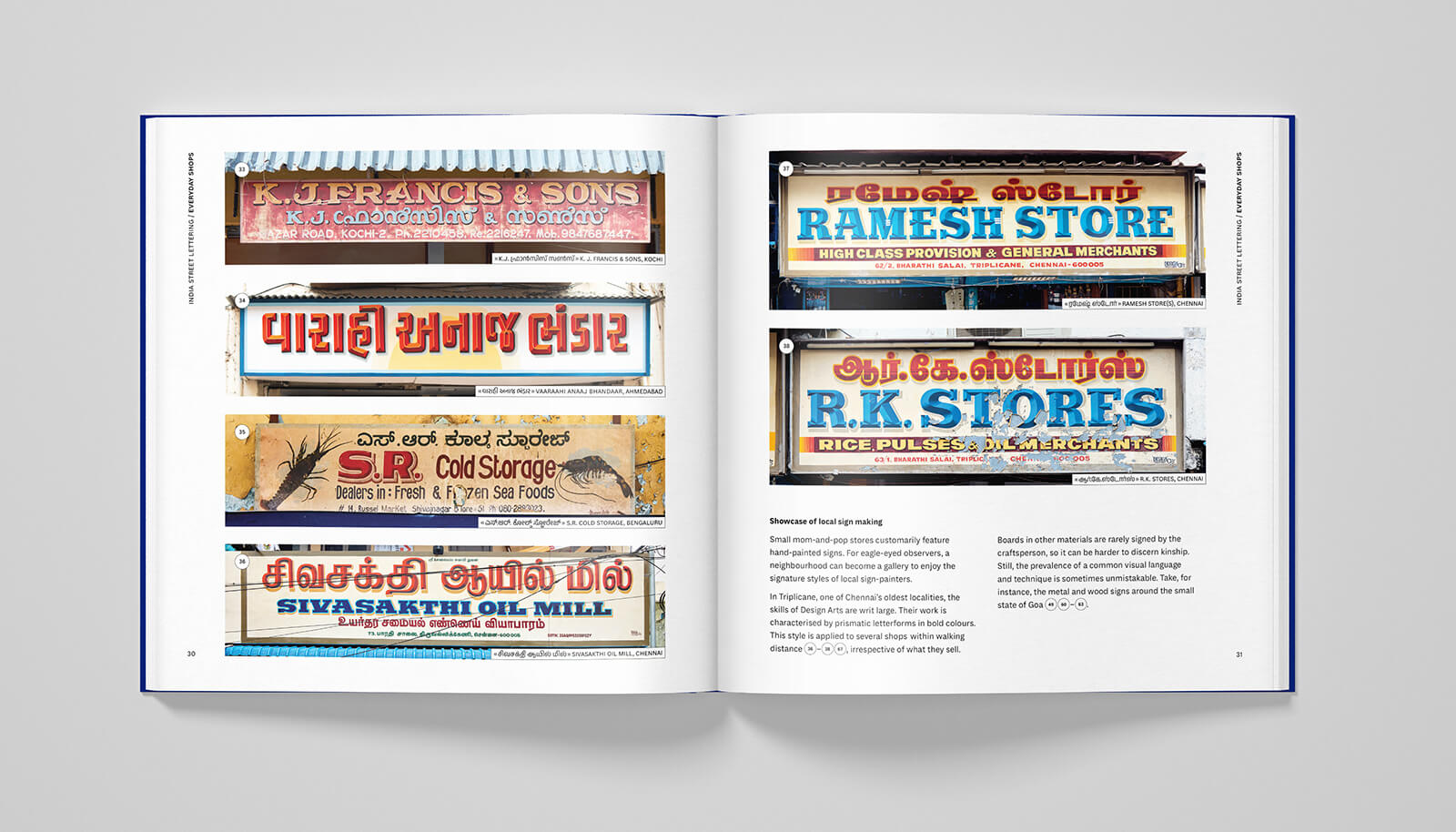
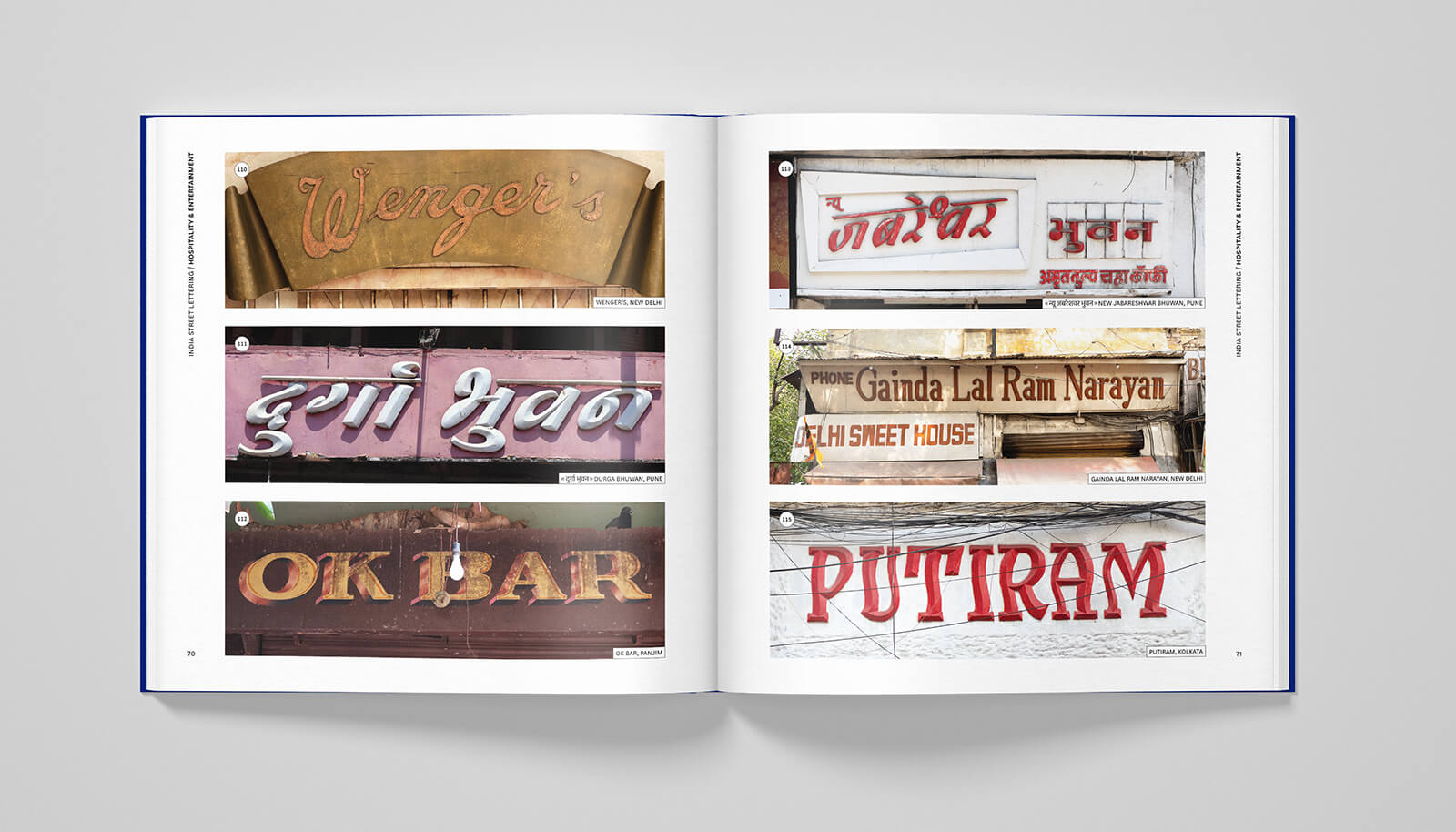
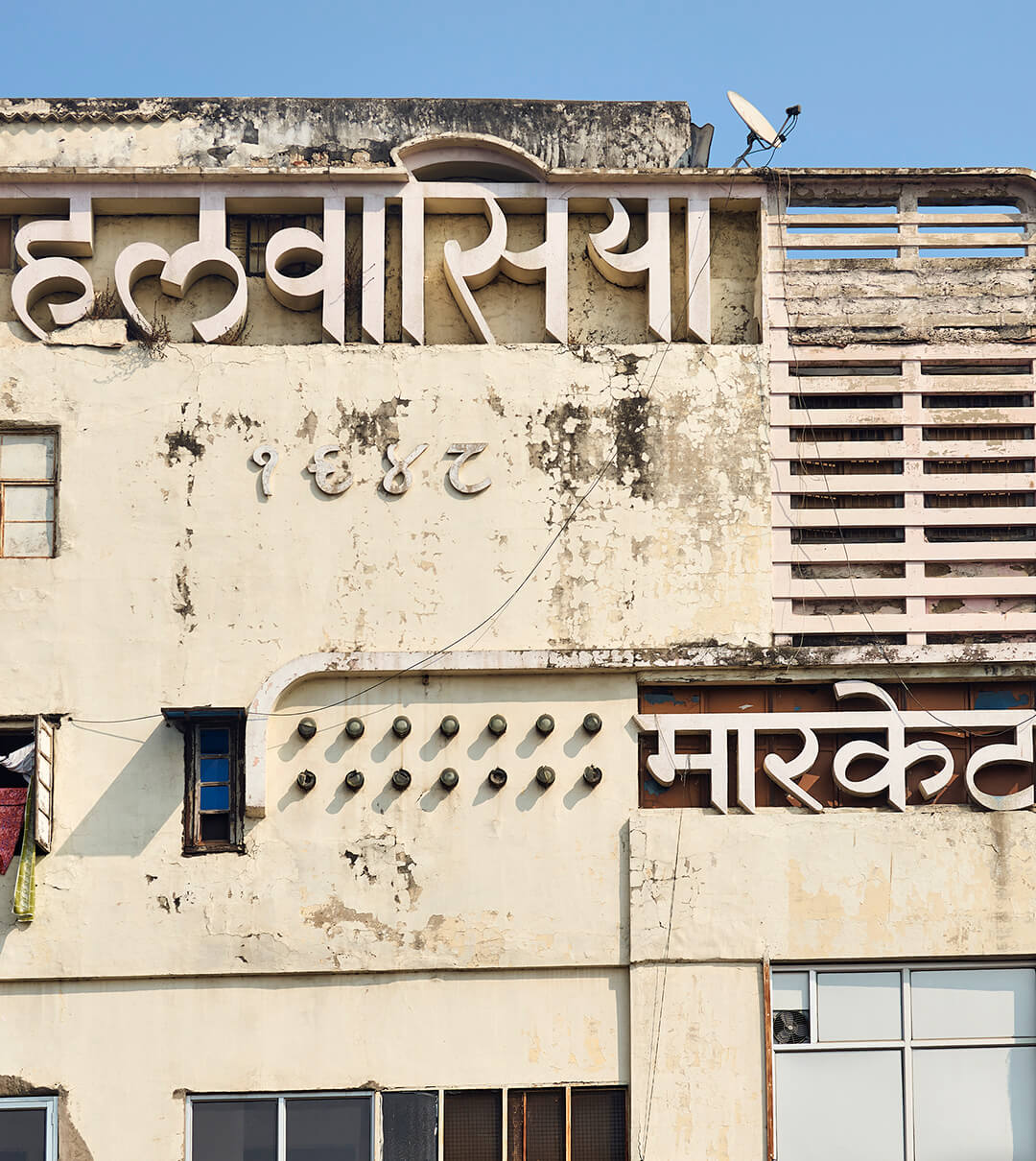
After an insightful introduction by Saxena, the book begins with an exploration of the Everyday Shops sign from cities such as Chennai, Bangalore, Panjim, Ahmedabad and Lucknow. Pulling the passersby, the signs do not always lean towards a dramatic visual language. Some prioritise motifs that easily communicate their goods and services, while others communicate in illustrations. The book then takes the readers on a type tour of George Town, Chennai, presenting tags throughout a map to locate signs. The thriving commercial hub features everything from elegant wooden signs and run-down signs to neon lettering and bilingual painted signs.
One is then introduced to Mohanlal Sihani, a second-generation signmaker from Chawri Bazaar, New Delhi, who founded Shiv Arts, a well-known shop in the area. Along with making signs, he often paints large artworks on canvas for foreign tourists and offers flex printing and LED signage options to keep up with the times. Interestingly, no visitors are presented with a portfolio of his previous works to choose from. He proudly states that Shiv Arts’portfolio ‘lives’ on the streets of Chawri Bazaar, Saxena writes in the book. Contrastingly, Narendra of Neel Arts from Kochi is a self-taught sign painter who has been painting political campaign signs for the Kochi-Muziris Biennale since 2012. As customers increasingly prefer flex printing and graphic design, he relies on his community and new streams of work that appreciate his craft.
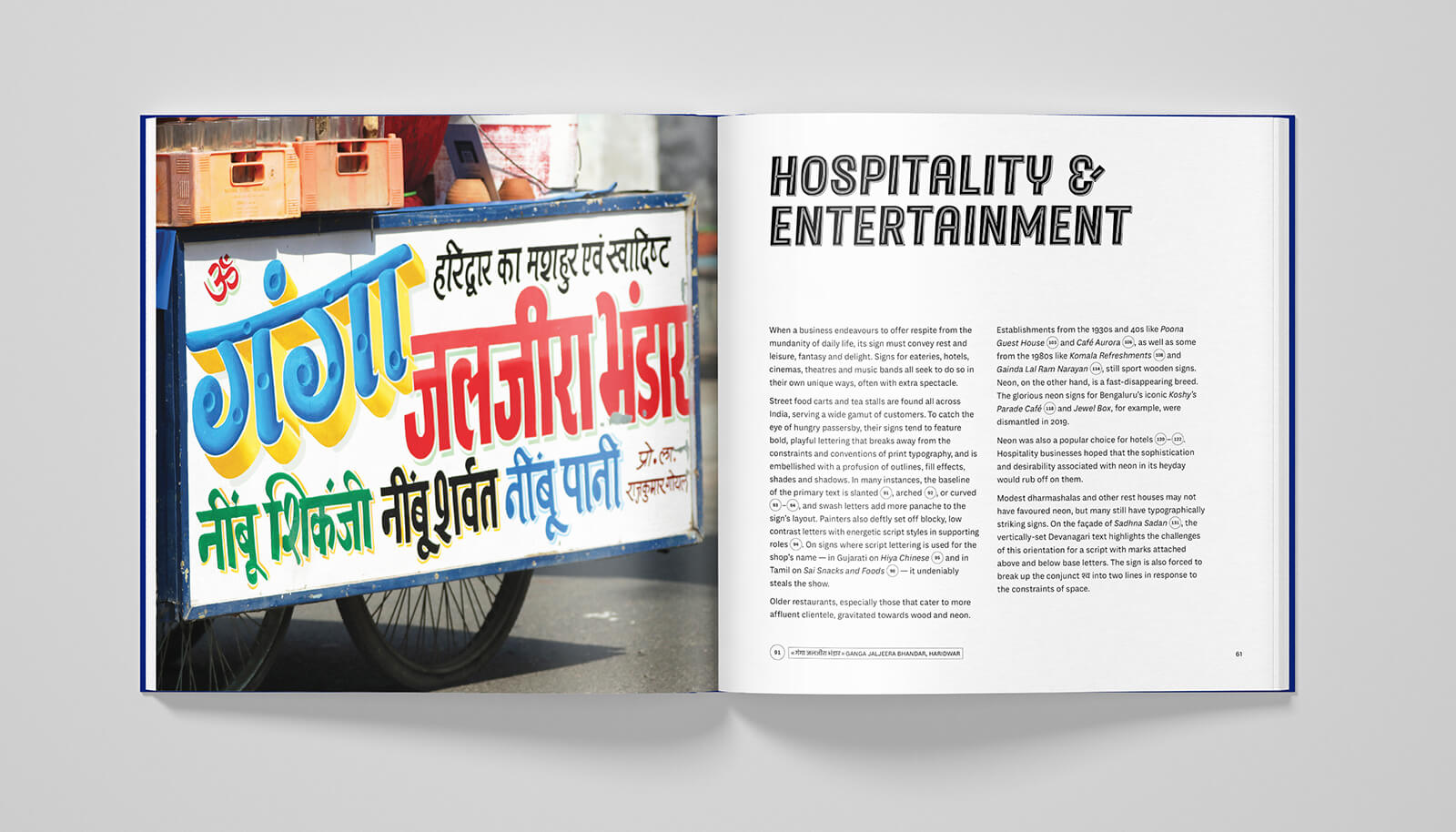
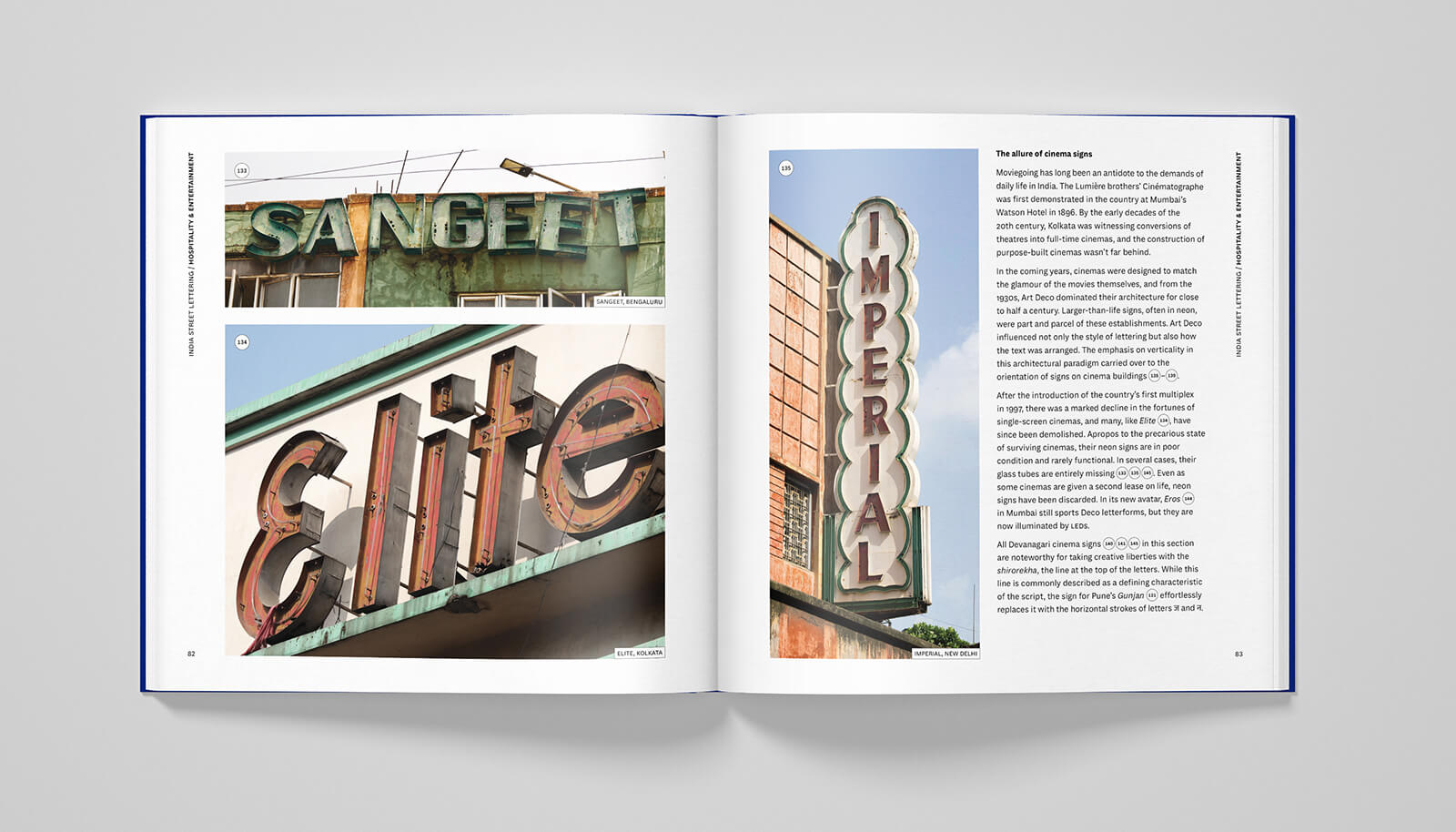
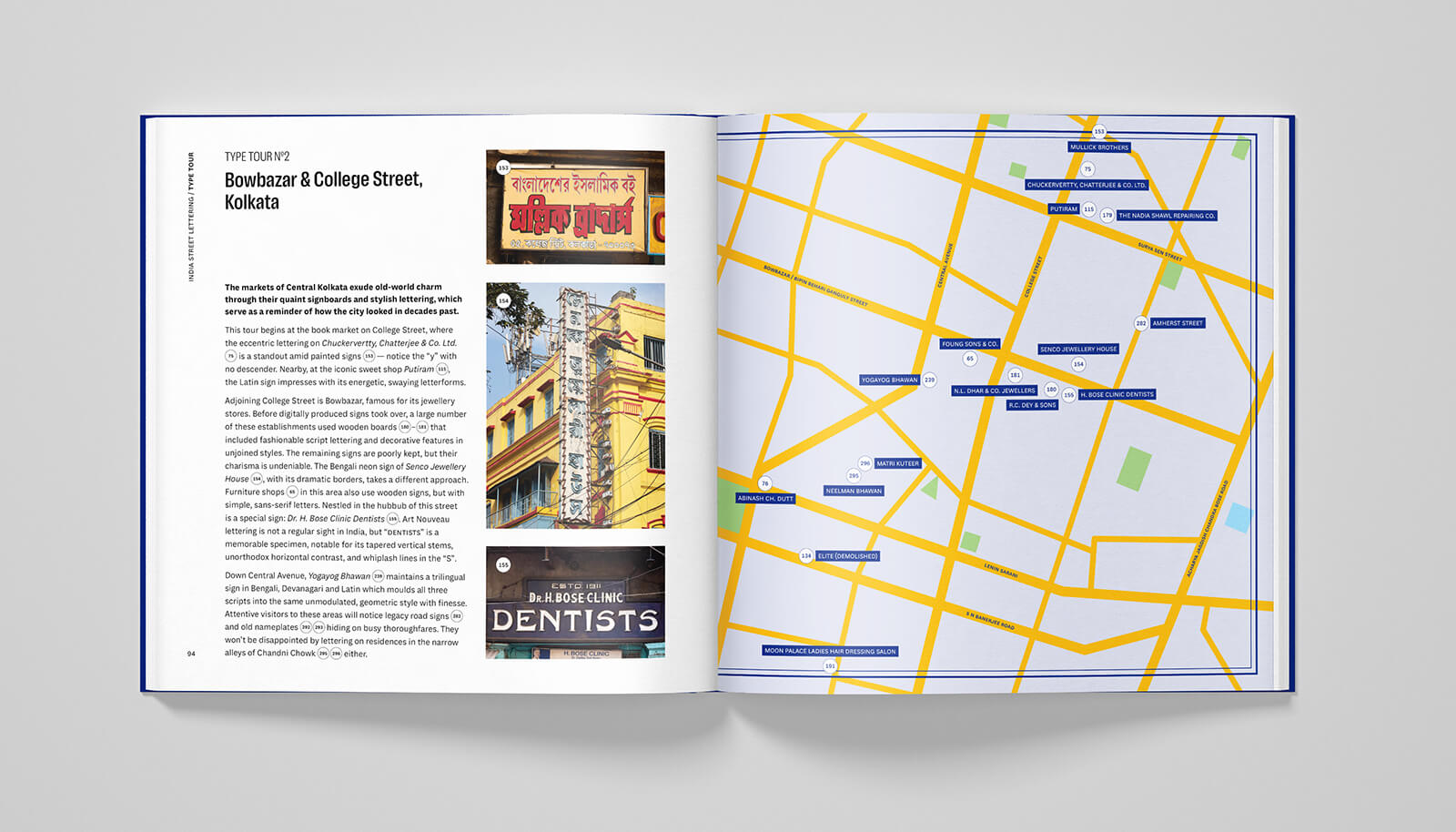
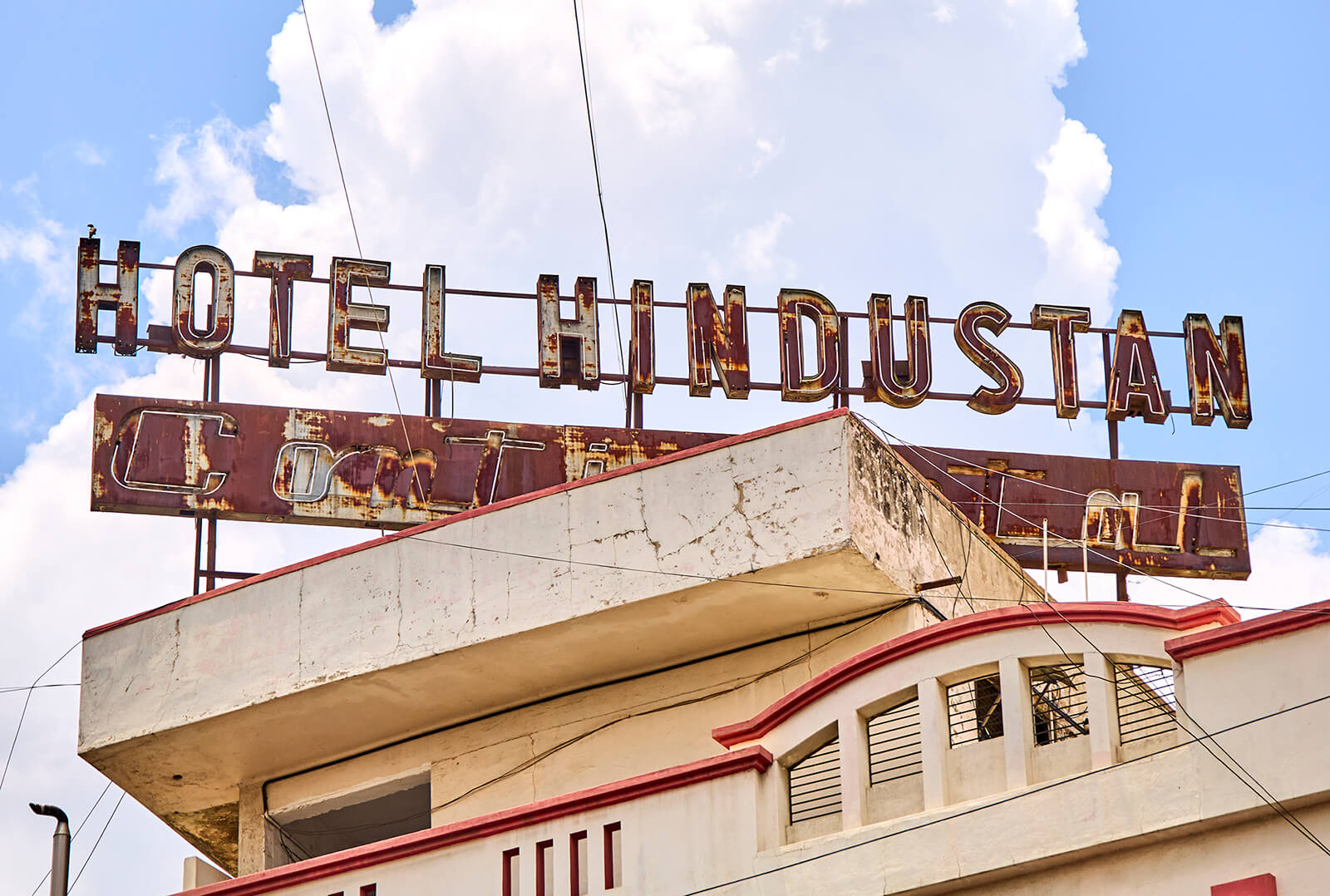
The Hospitality & Entertainment section features wooden and neon signs that were once widely popular, along with some experimental signs that respond to space constraints. While one might perceive these signs solely through the lens of typeface design, for some signmakers, it is but a fraction of what they do. Most commonly, they are practitioners of crafts such as woodwork and painting; to them, lettering is somewhat of an epiphenomenon. One such maker is fourth-generation woodworker Prabhakar Sawant from the Carpintaria workshop in Panjim. Since there were no dedicated artists in Goa for wooden signs, according to Sawant, it fell within their purview to make everything from signs to furniture and coffins. The section ends with the type tour of Kolkata’s Bowbazar & College Street, which exudes an old-world charm with its quaint and stylish lettering.
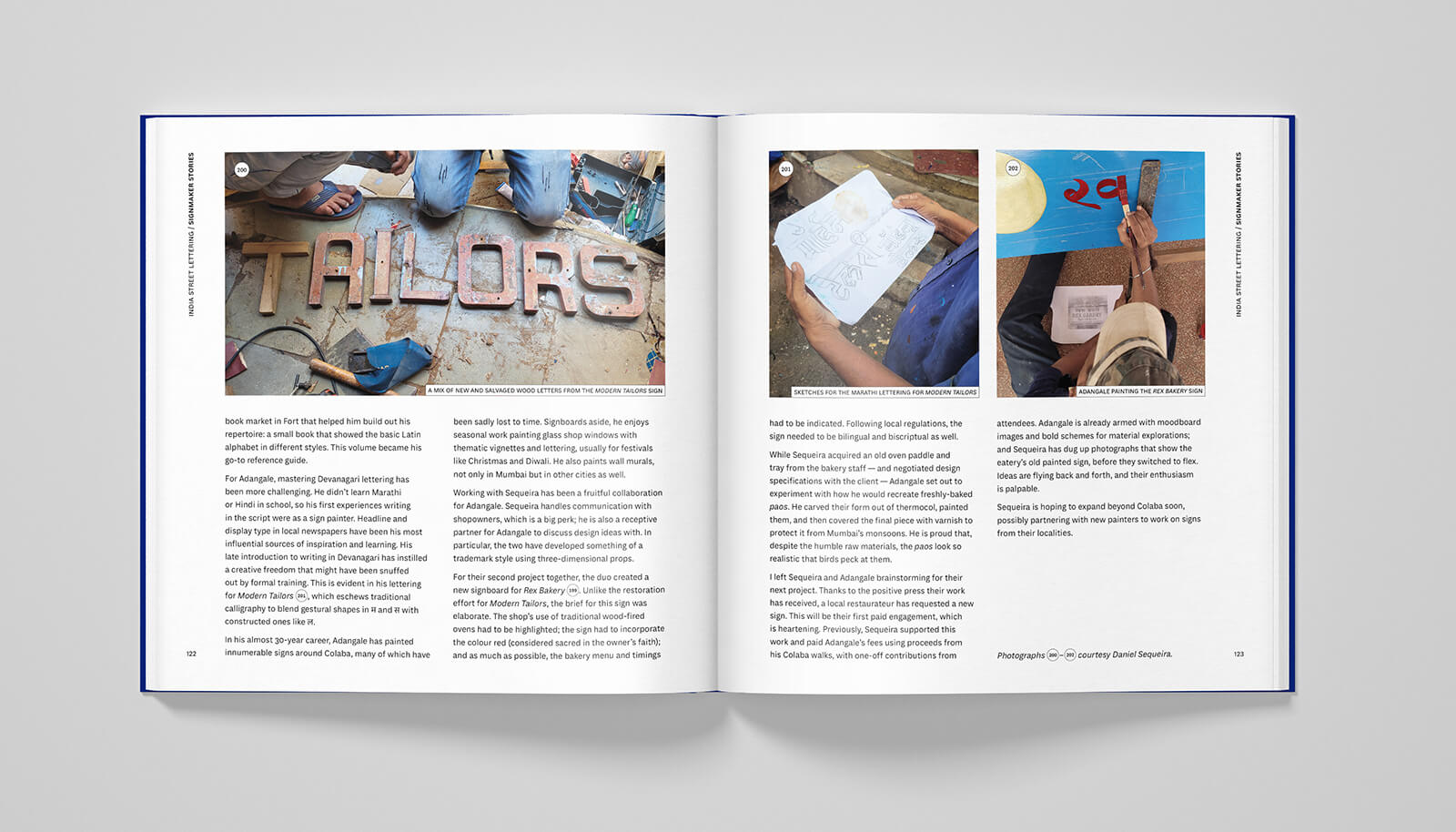
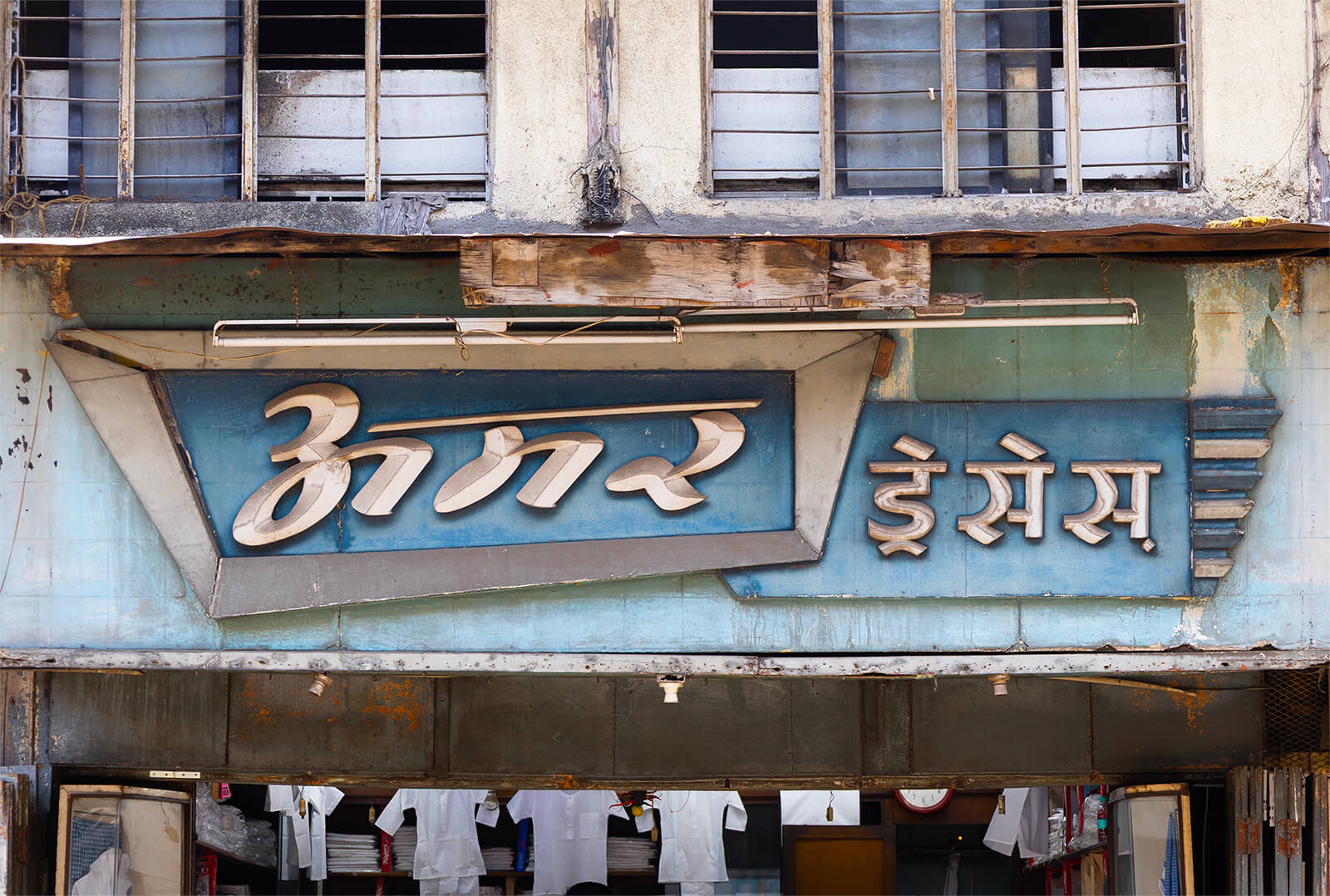
Like Sawant, Colaba-based petrol pump owner Daniel Sequeira isn’t related to the craft, but, in partnership with sign painter Anil Adangale, is working to restore and revive handmade signboards in the neighbourhood. Signs from the Fashion & Grooming shops in India are quite distinct, often using embellishments and materials commonly used in the industry. Tailoring shops especially stand out, with one sign mimicking the brushstrokes associated with Chinese characters while the other is adorned in sequins. The section concludes with a type tour of Connaught Place & Around, where lettering reflects colonial influences that have, in some cases, outlived the businesses themselves.
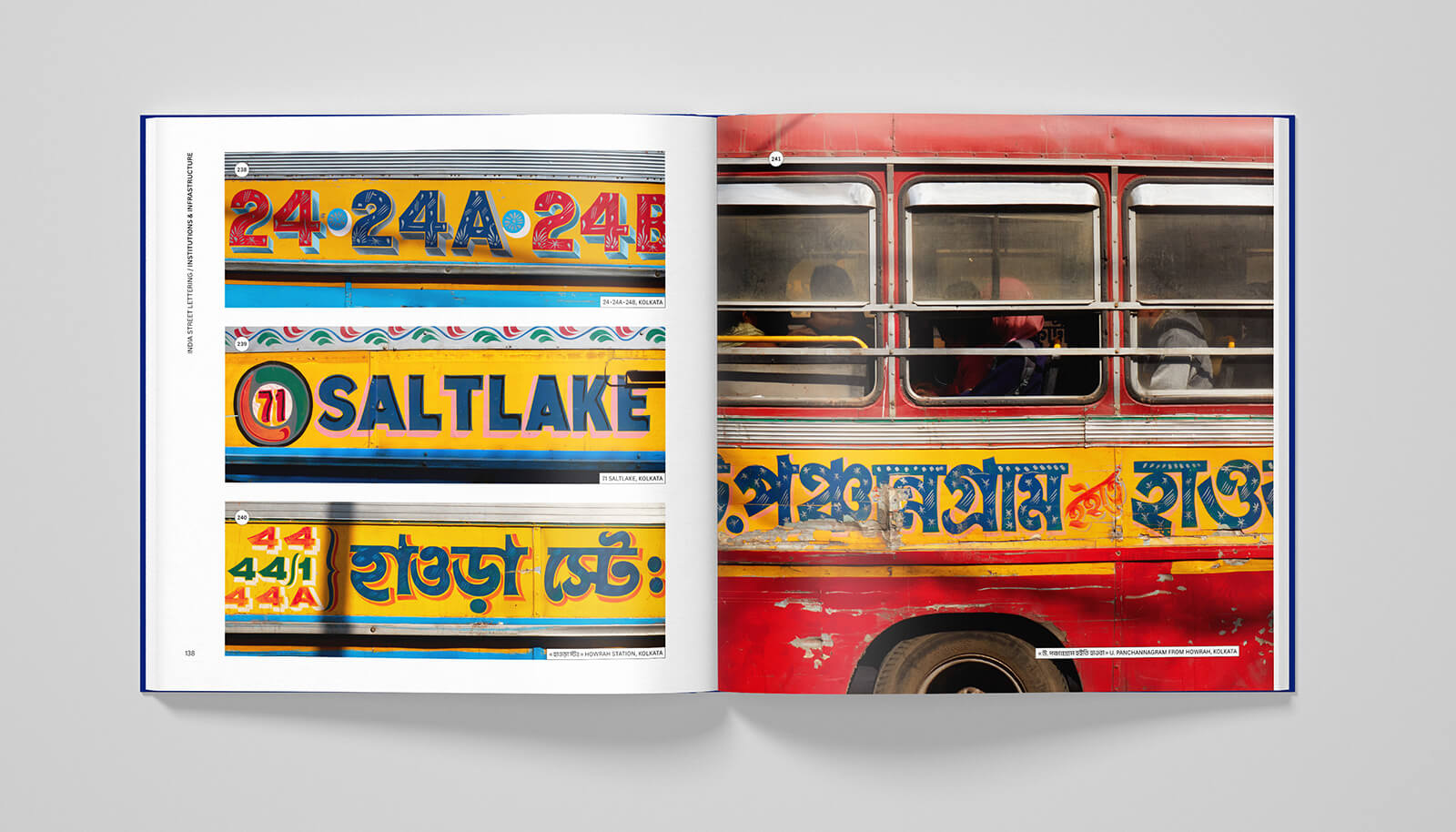
The same phenomenon, where lettering outlives the institutions, can be seen in signs for Institutions & Infrastructure, which are often designed specifically with longevity in mind, built and embedded into the facade of the buildings. Alternatively, places of worship exhibit diverse and syncretic signs in a variety of scripts, including Devanagari, Latin and Perso-Arabic.
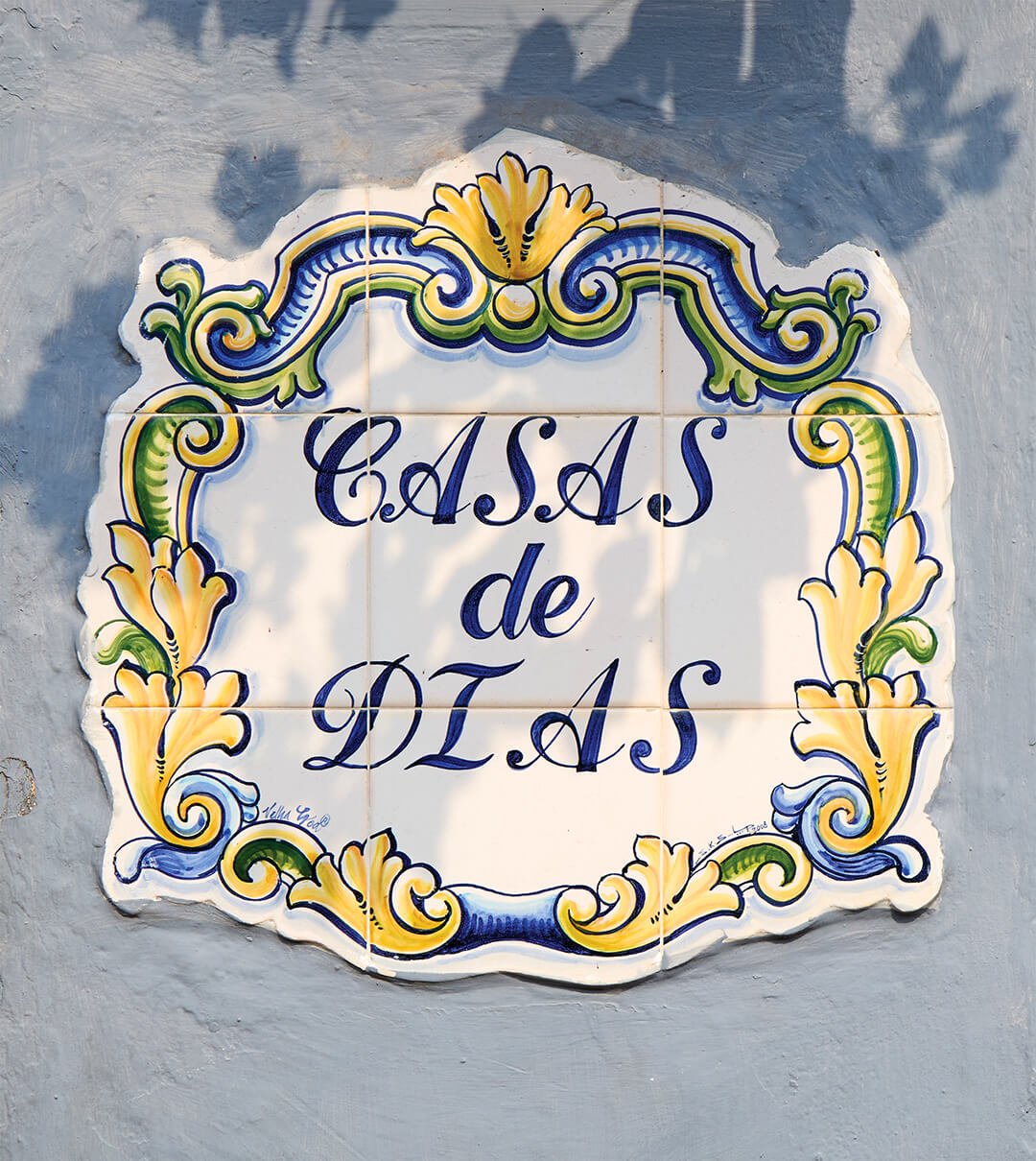
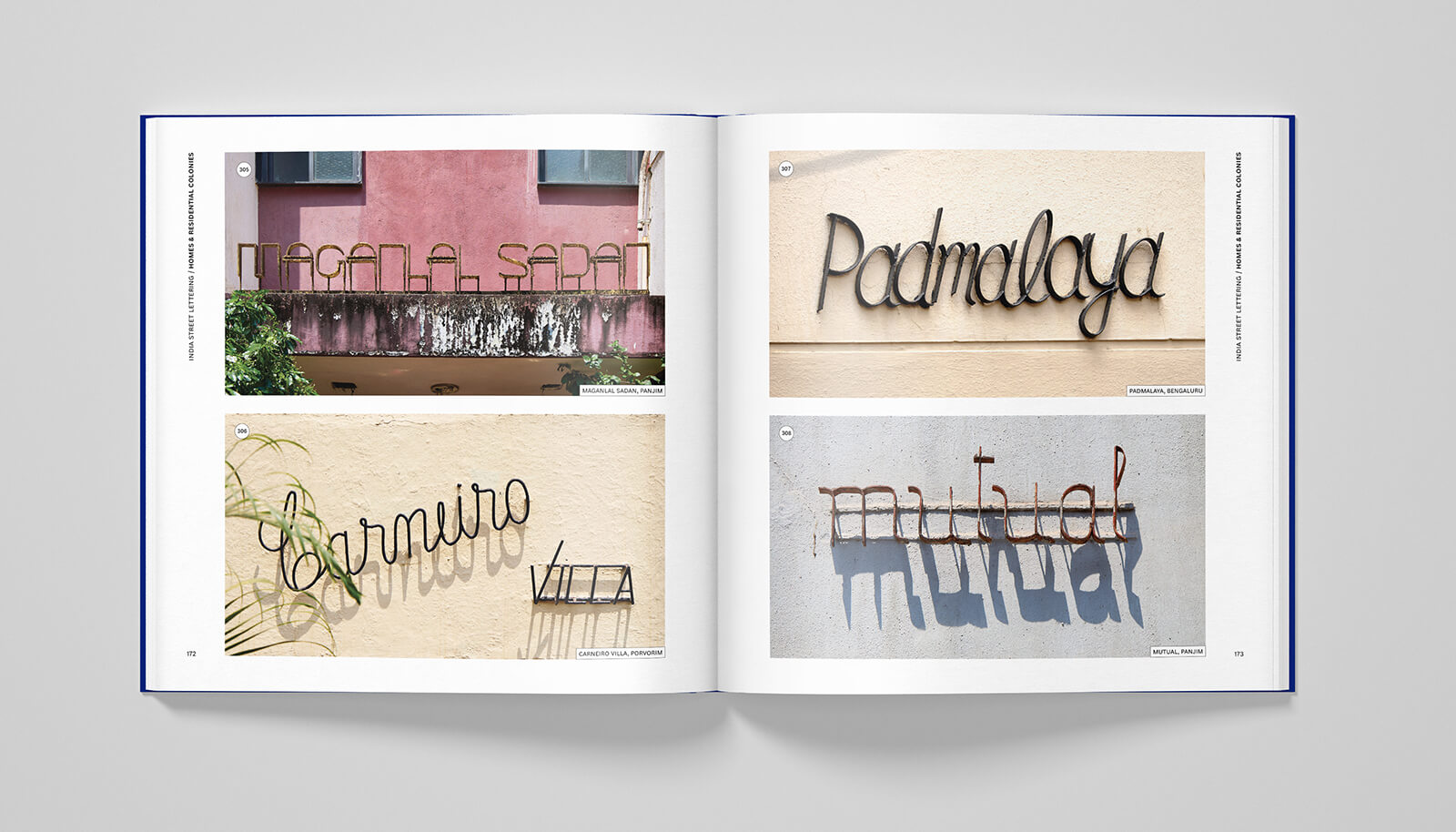
Perhaps, signs from Homes & Residential Colonies have the widest range of typography due to creative freedom, personal or familial identity and preferences. Panjim’s old Latin quarter, Fontainhas, is filled with azulejo (ceramic tilework) signs, while Lucknow homes often use stacked construction to add more dimension to the signs. In the absence of any standard rules for specifying addresses in India, these signs are pivotal in identifying apartments, complexes, societies, independent houses and general wayfinding. Following photographs of Art Deco signs and illustrations on residential architecture from New Delhi, the book concludes with the story of Orlando de Noronha of Fontainhas, whose studio, Galeria Azulejos de Goa, specialises in hand-painting azulejos.
Across India, the signs are looked at for information, but are hardly ever seen. To see them outside of their purpose is to find meaning in an essential but almost invisible form of design. Bringing these designs and practices to light, Saxena questions what constitutes valuable visual culture in the country.

by Jincy Iype Oct 15, 2026
STIR explores craft, material intelligence and people shaping Indian design through dialogues with Design Democracy’s co-founders and the curators of its special exhibitions.
by Pranjal Maheshwari Oct 13, 2026
Through furniture, art and films, the showcase at the Ian Potter Centre in Melbourne advocates for biophilic material cultures as an antidote to planetary degradation.
by Pranjal Maheshwari Oct 12, 2026
The exhibition reimagines the 20th-century Scottsville residence of the American sculptor and his partner, ceramicist Nancy Jurs, curated by their daughter Alison Castle.
by Mrinmayee Bhoot Oct 08, 2026
The game designer discusses their work and its manipulation of scale, scientific data and non-human perspectives to create speculative futures in conversation with STIR.

make your fridays matter with a well-read weekend
Enter your details to sign in
Don’t have an account?
Sign upOr you can sign in with
a single account for all
STIR platforms
All your bookmarks will be available across all your devices.
Stay STIRred
Already have an account?
Sign inOr you can sign up with
Verification link sent to check your inbox or spam folder to complete sign up process
Tap on things that interests you.
Select the Conversation Category you would like to watch
Please enter your details and click submit.
Enter the 6-digit code sent at


India Street Lettering explores a visual art that is always looked at, hardly ever seen
by Bansari Paghdar | Published on : Jun 12, 2026


 Sign in with Google
 Sign in with email
What do you think?