Art08 mins. read
Ocean futures and rooted practices take centre stage at Hastings Contemporary
by Srishti OjhaJul 01, 2026



by Srishti OjhaPublished on : Oct 21, 2026
“Four weeks ago, the world saw the shocking images of the catastrophic flash floods that swept through Nepal’s mountain communities with ferocity many have called a ‘Himalayan Tsunami’. The Bhotekoshi-Trishuli disaster was not just a local tragedy, it was a warning to the world. And I ask you today: have we really heard that warning?
- Excerpt from Nepal’s Prime Minister Balendra Shah’s speech at the 81st UN General Assembly
“A hundred agonies in black and white
from which his editor will pick out five or six
for Sunday’s supplement. The reader’s eyeballs prick
with tears between the bath and pre-lunch beers.”
- Excerpt from War Photographer, 1985, Carol Ann Duffy
In a world that is more connected, photographed and reported on than ever, when incontrovertible evidence of every tragedy, war and natural disaster is available at everyone’s fingertips, it would follow that evidence would lead to awareness, which would lead to action. But this requires the near-impossible ability to face the chilling reality of climate change and climb out from under the paralysis and fear that the scale of the threat commands.
Artists, curators and filmmakers from across the world are looking at the problem in new ways. Rather than raising awareness through reportage, documentary photography and infographics, they put viewers, quite literally, in the shoes of those on the front lines of the climate emergency. Increasingly, with technology and new media art, particularly Virtual Reality (VR) art, artists and activists are able to get audiences as close as possible to a firsthand experience of the human cost of climate change.
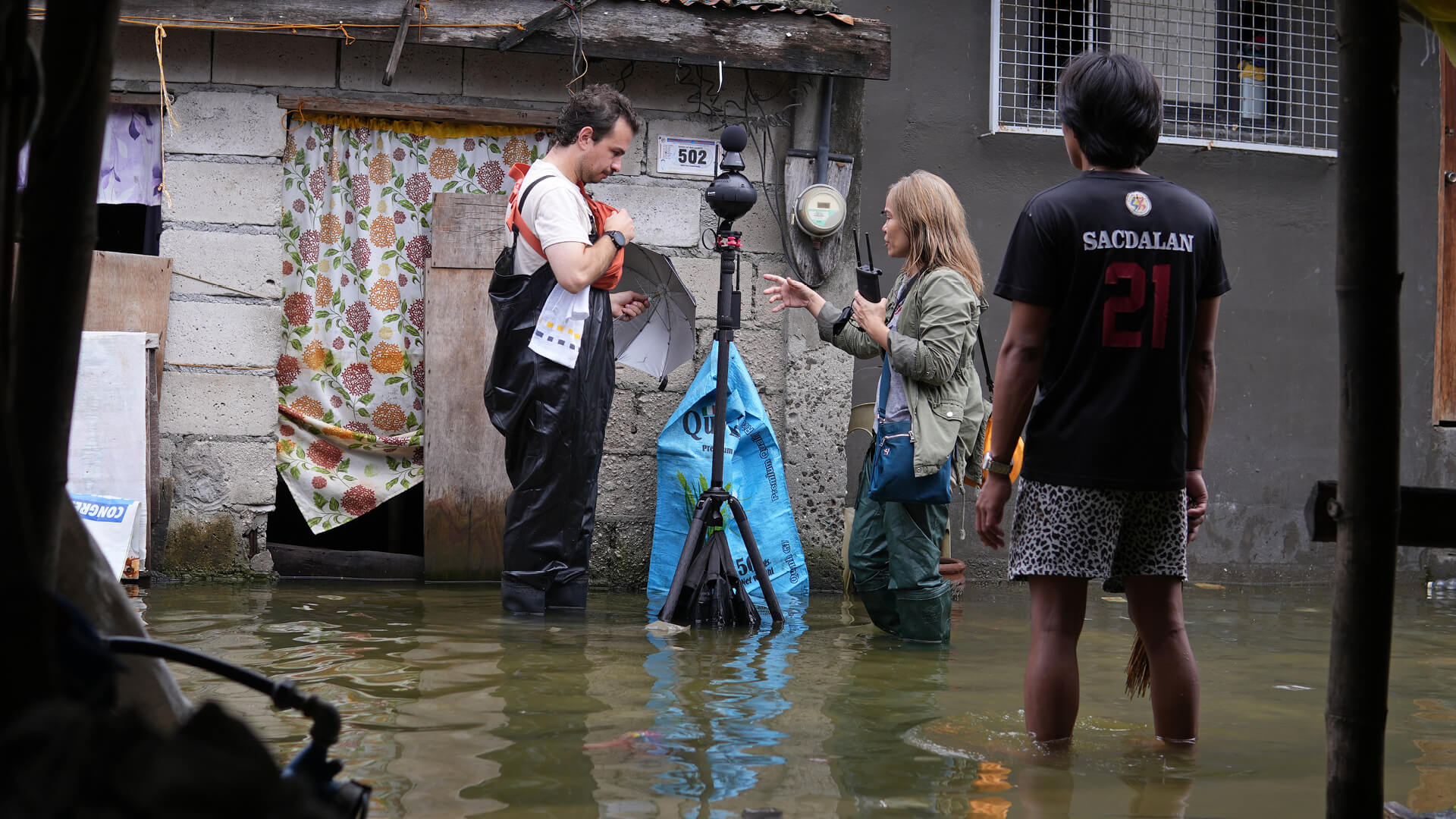
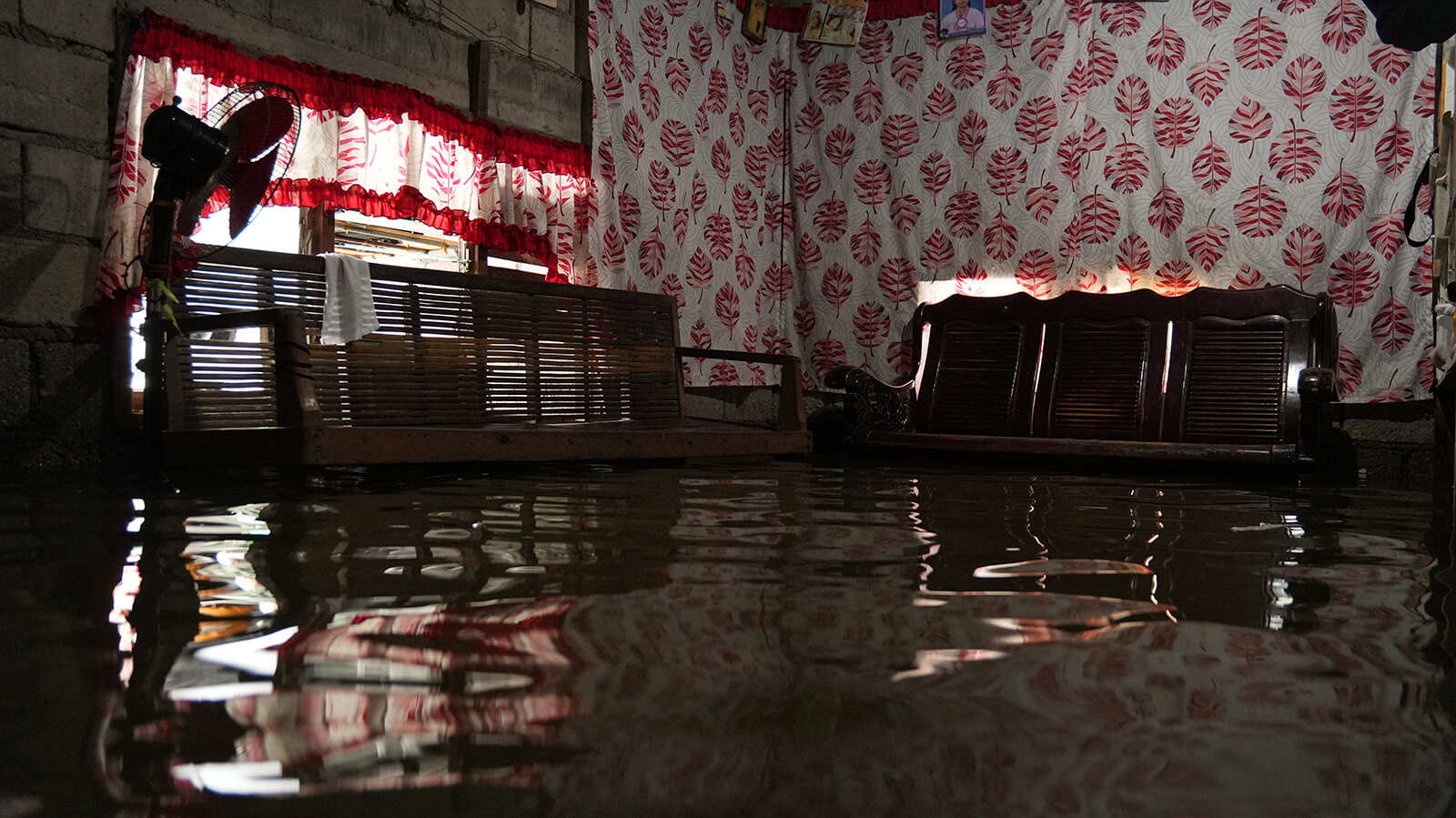
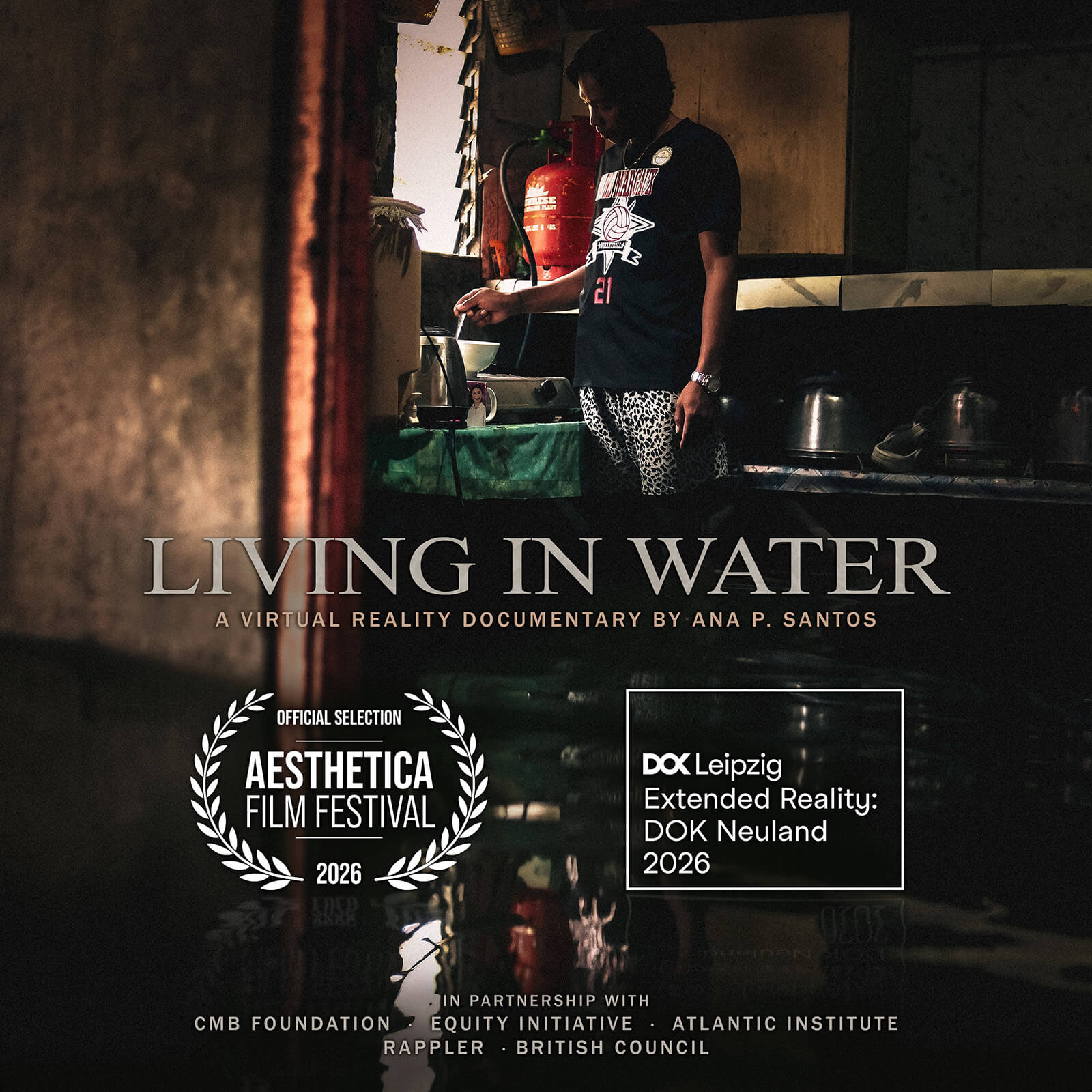
Filipina journalist Ana P. Santos spoke to STIR about her 15-minute 360° VR film, Living in Water (2026), which depicts the daily lives of Filipinos affected by the constant flooding caused by the 20 typhoons (on average) that the Philippines endures annually, making it one of the countries most prone to climate disasters in the world. The project was created in partnership with the Atlantic Institute’s XR Lab and The Equity Initiative and has been selected for the 2026 Aesthetica Film Festival in York, UK.
She explains her decision to use VR for the project, saying, “I thought, what if we could make people feel the impact of the climate emergency, beyond the highly dramatic images of flash floods? What would it do for our shared understanding of not only what is lost but what people have to unjustly endure? What if we went a step further and actually immersed people in a community that has to live with the floods caused by rising sea levels—nearly every day? That's where VR came in. Both as a medium of immersive storytelling and also as a way for the stories and personalities of the residents to come through.”
The technology enables deeper immersion, an individual experience of the work through a VR headset and a closer personal connection with the on-screen subjects. Santos’ choice echoes ones made by other artists and activists, but also science-backed strategies (including fMRI studies) recommended widely by climate activism bodies:
Other new media artists like Isobel Knowles and Van Sowerwine, whose films have premiered at film festivals like Cannes and Sundance, have been working at the intersection of narrative and technology throughout their careers. When creating a work addressing the climate emergency, they chose to zero in on the lives of three individuals—Marina, Antoinette and Tom—in their VR documentary, The World Came Flooding In (2025). The subjects of the documentary share their experiences living through a flood in different countries and contexts. The artists recreate their lost homes and objects painstakingly in miniature and translate them into VR using photogrammetry. Instead of an abstract issue, climate change becomes a deeply personal experience of shared grief, loss and memory, visualised through personal objects and homes that were washed away.
In conversation with STIR, Knowles explained the duo’s reasoning for using VR technology for the project, saying, “The climate emergency feels overwhelmingly enormous and big, but also for most people day-to-day is abstracted by its enormousness. With The World Came Flooding In, we wanted to create a very intimate and personal moment for the audience to contemplate the personal impact of climate events. We briefly simulate a flood inside a house, which is very effective in VR for people to understand the feeling of being inundated. Because VR is an individual experience, we find people feel more of a direct connection to the voices in the documentary.”
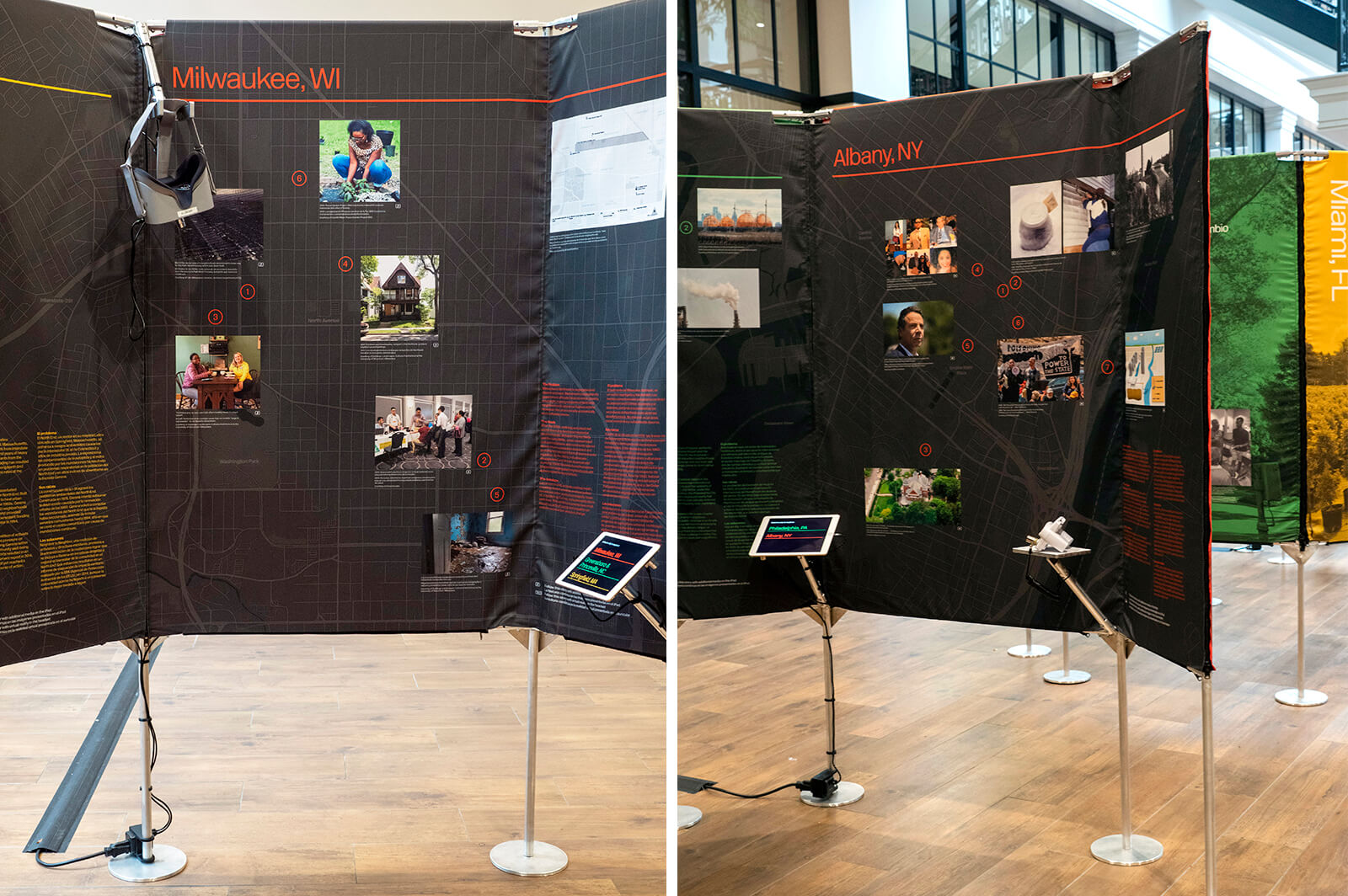
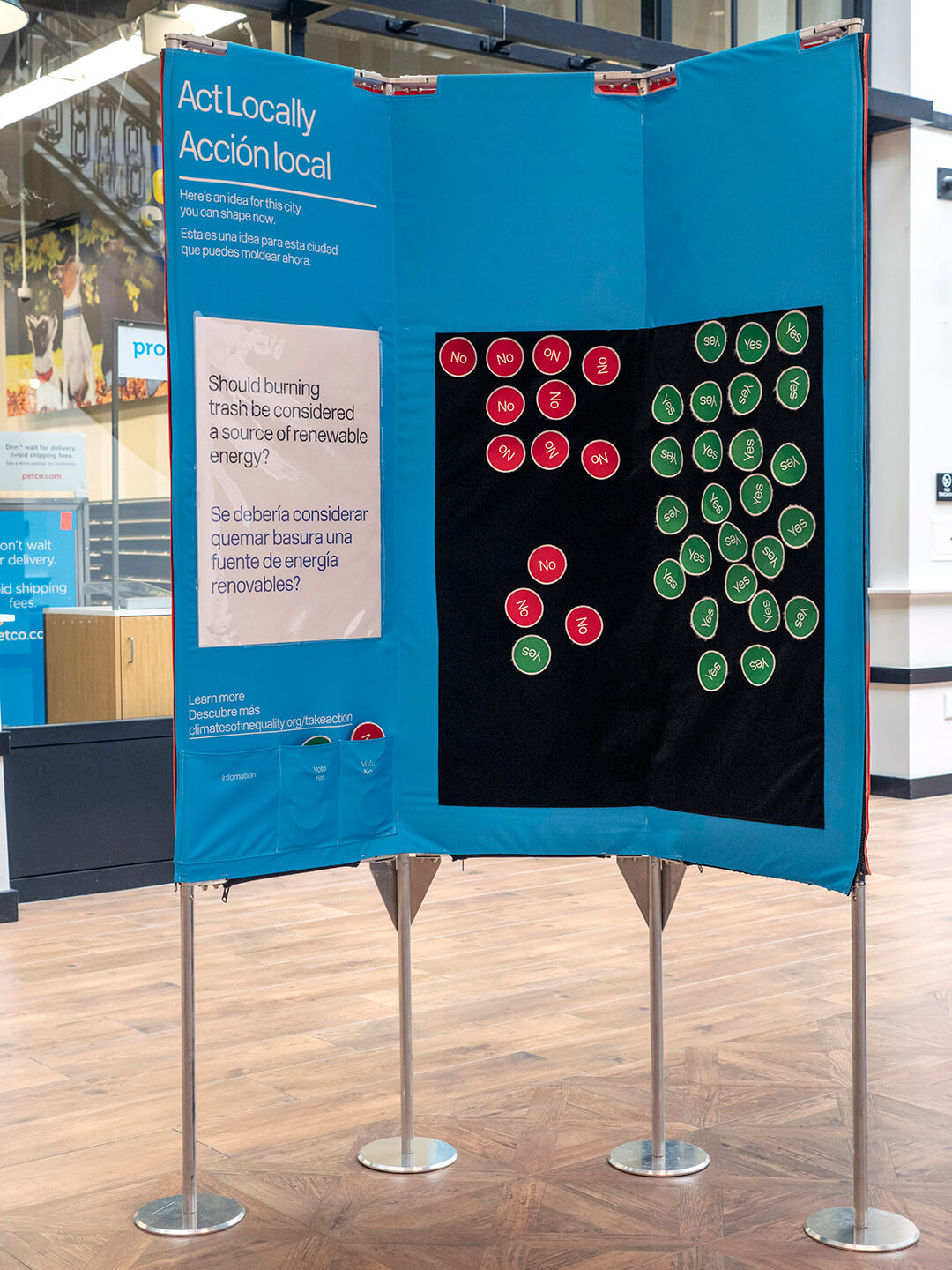
In a similar vein, VR plays an important role in the many multimedia installations, films and exhibitions that comprise Climates of Inequality, a participatory public memory project created by the Humanities Action Lab in collaboration with students, educators and communities across the USA and the world. Through travelling exhibitions that take artworks and VR headsets to schools, community centres and galleries, the Lab aims to immerse people in the ground reality of climate change and its intersection with the politics of labour, race, income inequality and other social justice issues.
Project director Wilmarie Medina-Cortes explains their goals with these projects, saying, “Through stories told by community members themselves, we hope visitors feel a sense of connection and empathy for the people most affected by environmental harms—frontline communities, those who have contributed the least to the climate crisis but bear its heaviest burdens—while also recognising the resilience, creativity and leadership communities bring to addressing these challenges…Ultimately, we hope the exhibition inspires visitors to think about how they can support and participate in grassroots, community-led efforts to advance environmental and climate justice.”
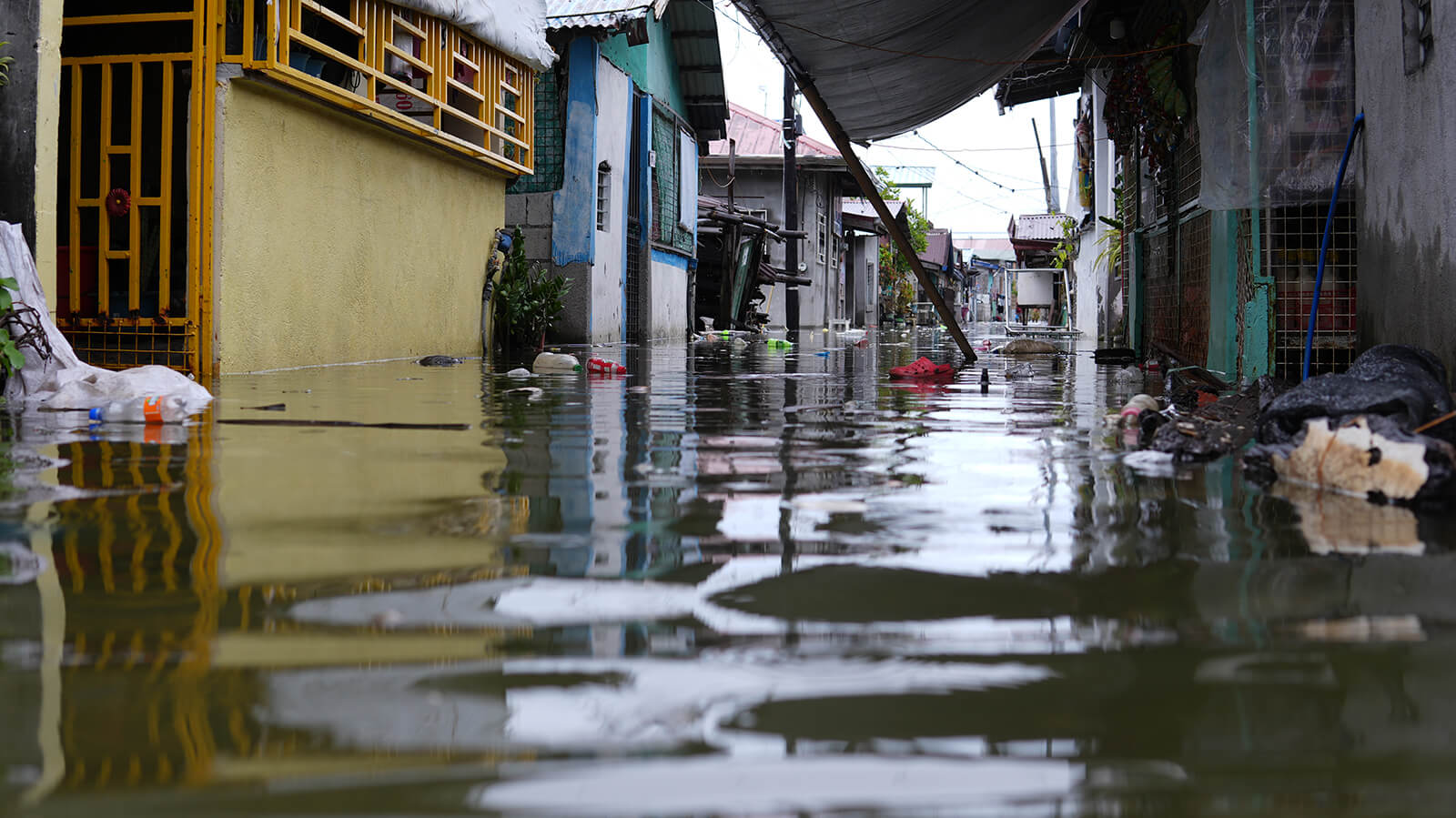
Santos’ experiences on the front lines of climate disaster give her a close perspective on the urgency and unfairness of the climate crisis. She describes her experience moving to Europe and seeing the issue from the other side—from a news cycle and public life not dictated by climate anxiety, loss and flooding. “Empathy is the biggest ask of Living in Water. I want to emphasise empathy, not sympathy. I hope that if we show audiences how the community feels about the water and the sea, we could recognise emotions that we all feel when we think about home: belonging, familiarity, history, identity, kinship. I sometimes get reactions from people who watch the film who say, ‘Oh, it makes me so grateful to not have to live like that.’ I hope that through Living in Water they give themselves the permission to sit with that discomfort and question the unfairness, the injustice of that. Why do some have to live at the jagged edge of the climate emergency and others do not?” she said.
While VR will not be the solution to the climate crisis (as, indeed, no single solution will be), it offers artists, journalists and filmmakers new strategies to invite audiences to identify with the human impact of climate change and make communities’ resilience and responses visible and tangible.
The views and opinions expressed here are those of the author and do not necessarily reflect the official position of STIR or its editors.
by Mirra Lynn Oct 20, 2026
The Indian artist paints the old wadas of central Pune, capturing the traces of everyday life that cling to these structures, battered by time but unbowed.
by Anmol Ahuja Oct 15, 2026
How do heaps of souvenirs and relics with racist Aboriginal motifs and features become art? MCA Sydney’s winter showcase—the artist’s largest to date—beckons a possibility.
by Vandana Kalra Oct 14, 2026
With his latest exhibition as a point of departure, the modernist discusses his decades-long practice, the spontaneity of drawing and the social responsibility of artists.
by Srishti Ojha Oct 14, 2026
The first Dutch publication on the Turkish artist, the eponymous book centres on Refik Anadol: Latent City, his living data sculpture of Bruges, exhibited at BRUSK gallery.

make your fridays matter with a well-read weekend
Enter your details to sign in
Don’t have an account?
Sign upOr you can sign in with
a single account for all
STIR platforms
All your bookmarks will be available across all your devices.
Stay STIRred
Already have an account?
Sign inOr you can sign up with
Verification link sent to check your inbox or spam folder to complete sign up process
Tap on things that interests you.
Select the Conversation Category you would like to watch
Please enter your details and click submit.
Enter the 6-digit code sent at


Can immersive VR experiences change how people respond to the climate crisis?
by Srishti Ojha | Published on : Oct 21, 2026


 Sign in with Google
 Sign in with email
What do you think?