Architecture05 mins. read
'Matrix' by CPLUS at Taikang Art Museum re-imagines urban experiences
by Dhwani ShanghviSep 17, 2024



by Srishti OjhaPublished on : Jul 02, 2026
What do you picture when you think about a museum? What do you see when you imagine yourself walking through an art gallery? The answers to these questions would probably remain uncannily similar whether they are answered by someone living in 2026, or 50 years ago in 1976. You are wearing clothes that are presentable, but not too flashy, walking quietly through hallowed, wide halls, stopping every few metres at paintings and sculptures before tilting your head slightly to the side in contemplation. The script of an art gallery experience has remained the same over decades, even as the world outside its walls has undergone drastic transformations—stirred by globalisation, the advent of the internet and the mobile phone, new strides in audiovisual media, projection and experimentation with interactive and generative art. Yet somehow, the Gallery as an institution has seemed impervious to these changes, remaining a custodian of a ‘canon’ that may or may not reflect the will, interests and concerns of the visitors or artists who it engages with.
However, like most things which refuse to change with the times, which fossilise, these galleries and museums now risk losing relevance. Visitors are more likely to access their favourite artists on Instagram from the comfort of their own homes, or peruse art served to them by an algorithmic feed with no greater concern than their specific interests and tastes. The world has gotten wider and more democratised and galleries must move quickly and creatively to not be left behind. From here, a pivotal question emerges: How can contemporary art galleries begin to live up to the ‘contemporary’-ness they promise? What can finally lure visitors off their screens and back into the hallowed halls of the Gallery?
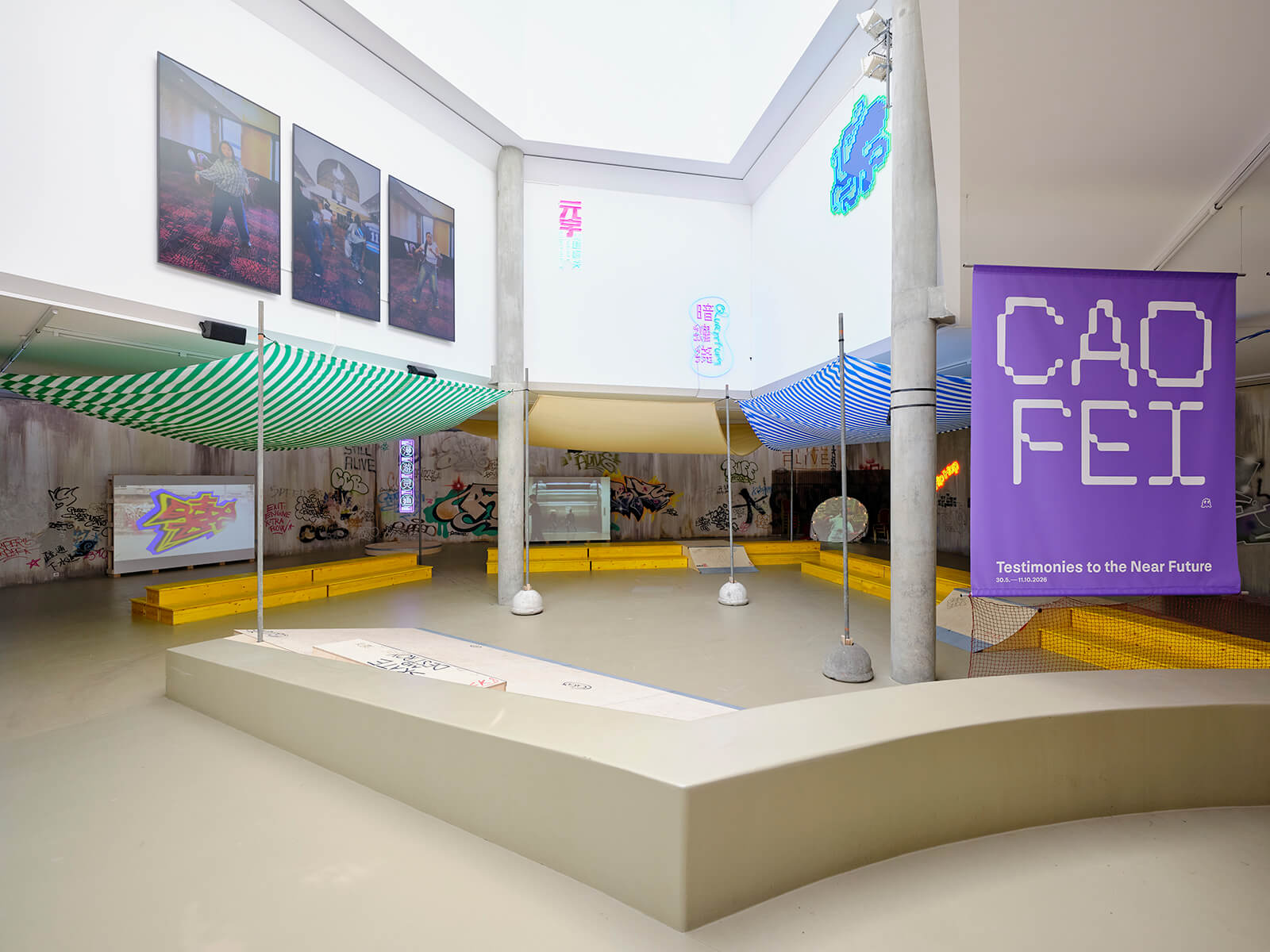
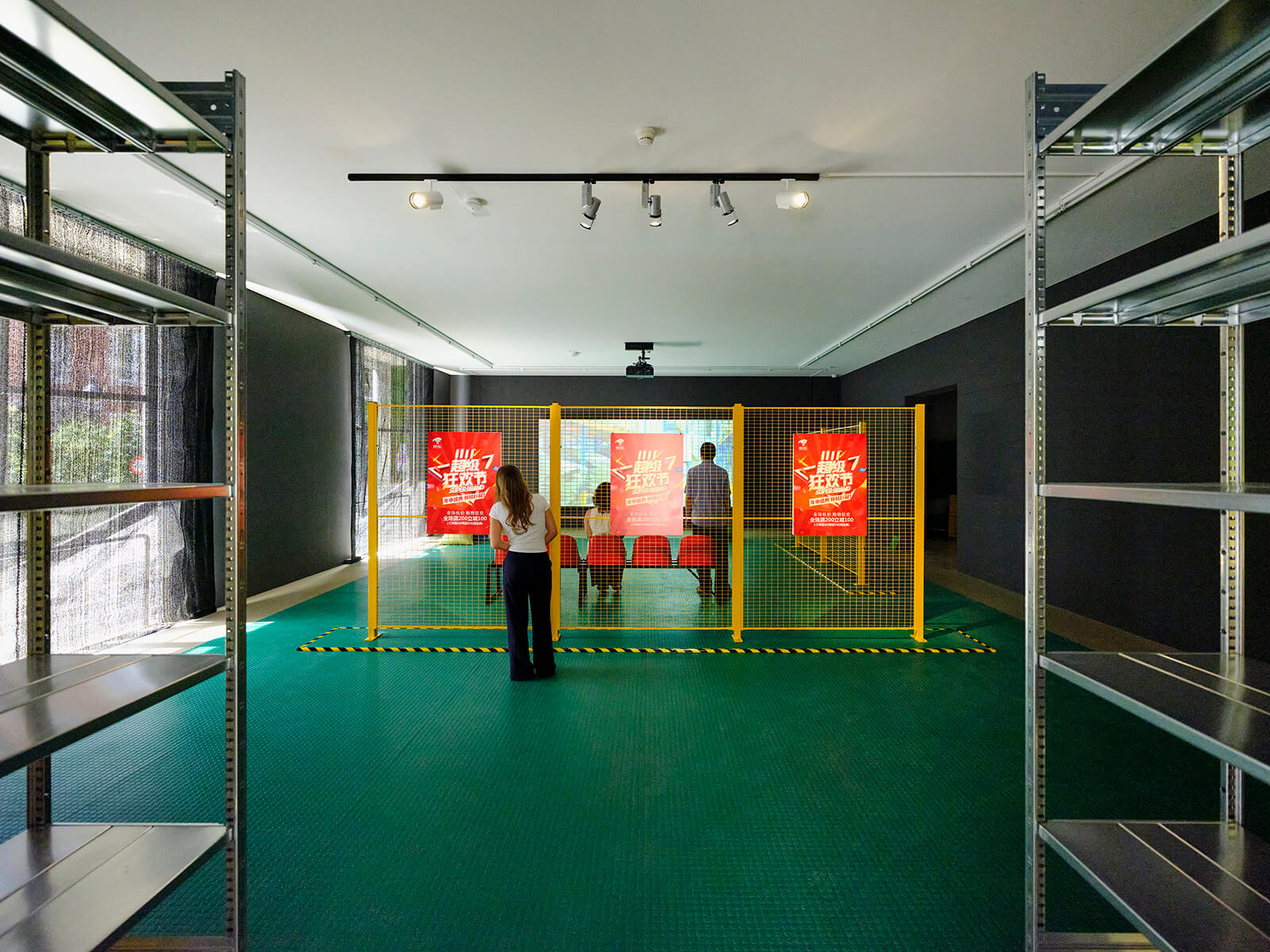
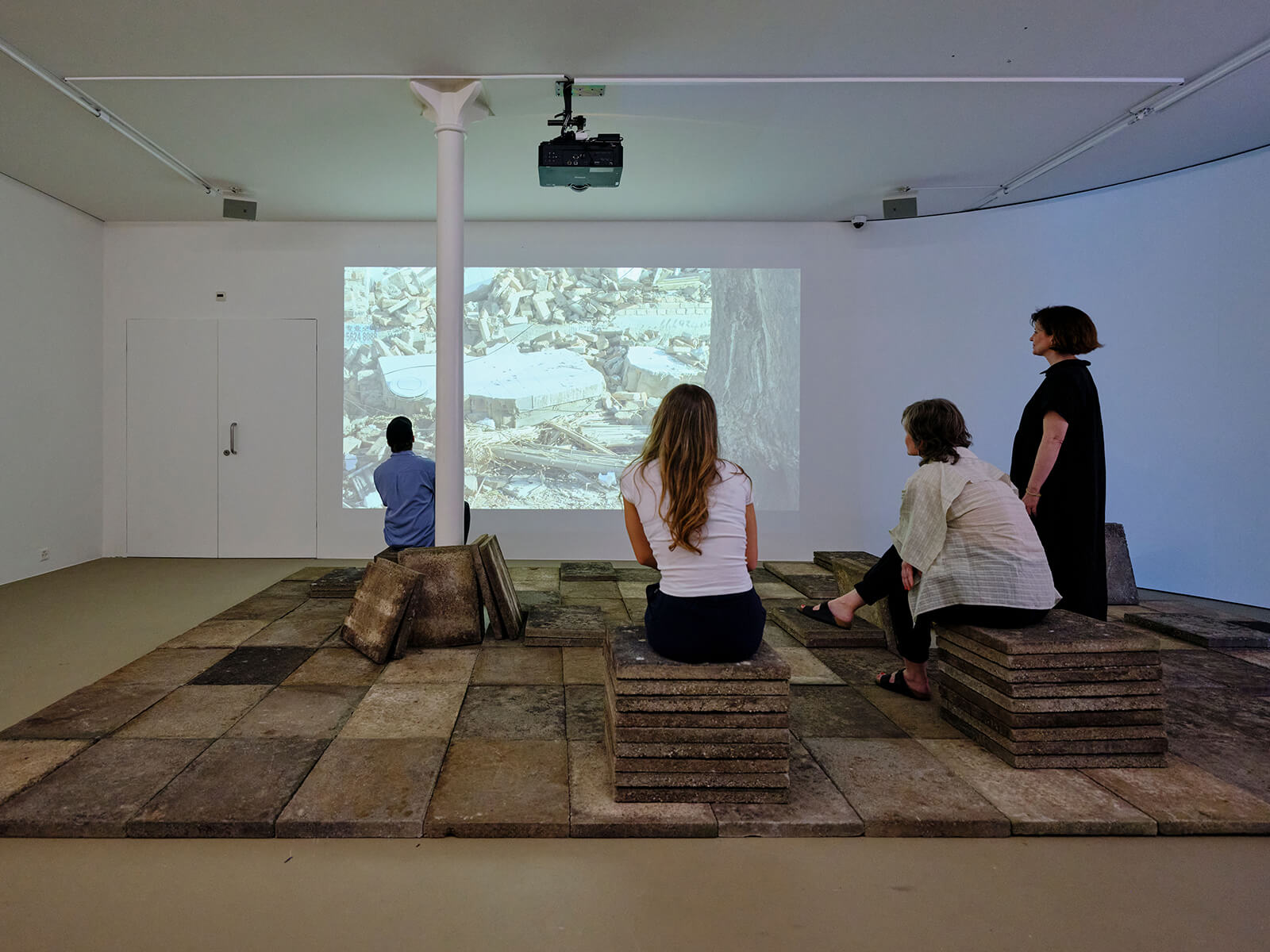
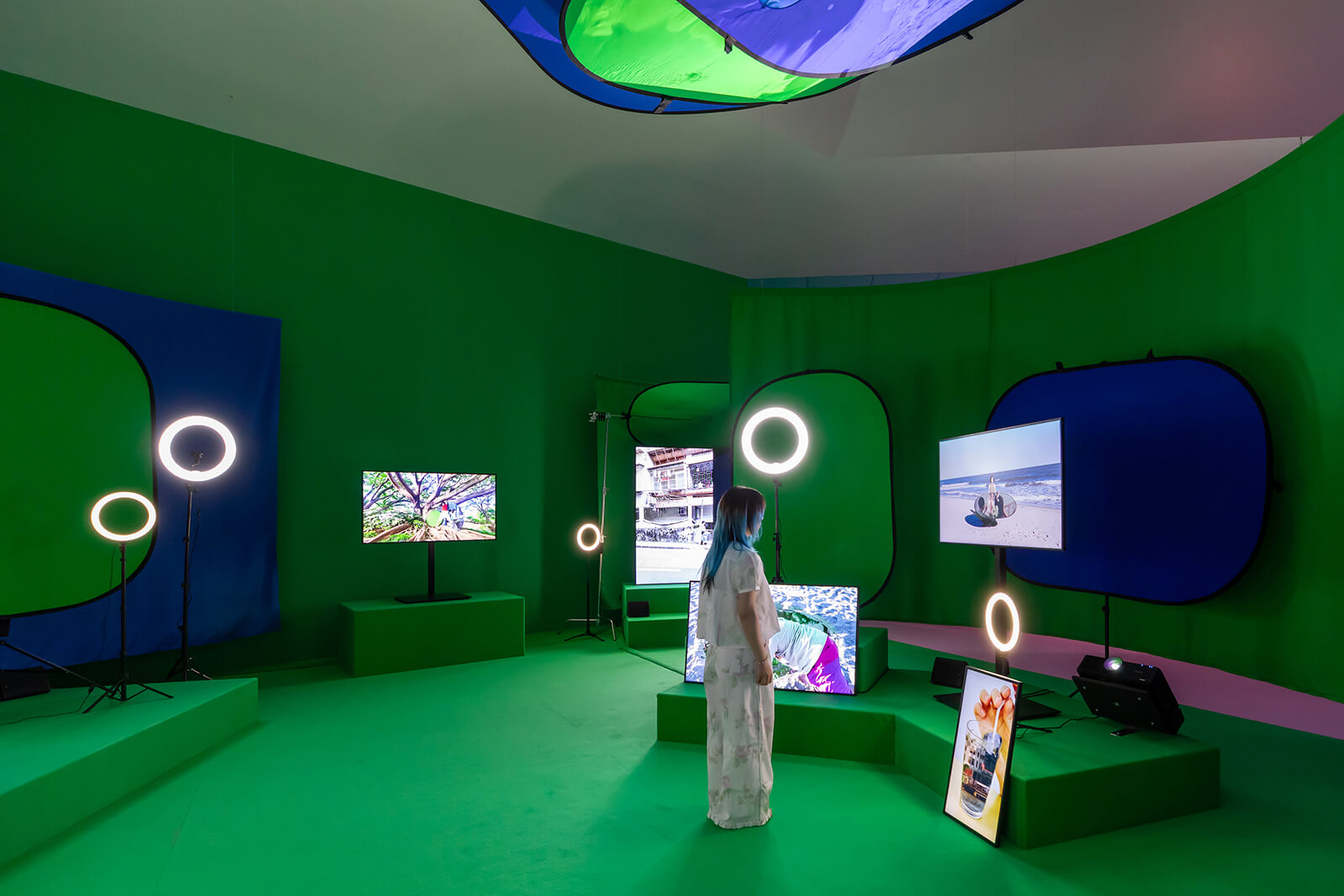
Imagine a different kind of gallery experience where you walk inside a building and find a streetscape, complete with graffiti, skate ramps and road signs. A blend of Cantonese pop music and American hip-hop fill the space as videos of dancers play on a series of screens. Further in, you encounter astroturf grass and animal-print beanbags facing a projector screen showing videos of cosplayers moving through urban environments. Through plastic-flap doors, you enter into a factory lined with empty shelves, yellow fencing, rigging and caution tape that welcome you into the life of a shift worker. Exiting through a calm waiting room hallway, you find yourself inside an old theatre. You watch ‘Rumba’ cleaning robots navigate rubble in an almost apocalyptic film sitting on ‘chairs’ of stacked, stone-like slabs. You are surrounded by greenscreens and ring lights in one room; in another you watch scenes from contemporary China as a lifesize matryoshka doll watches you.
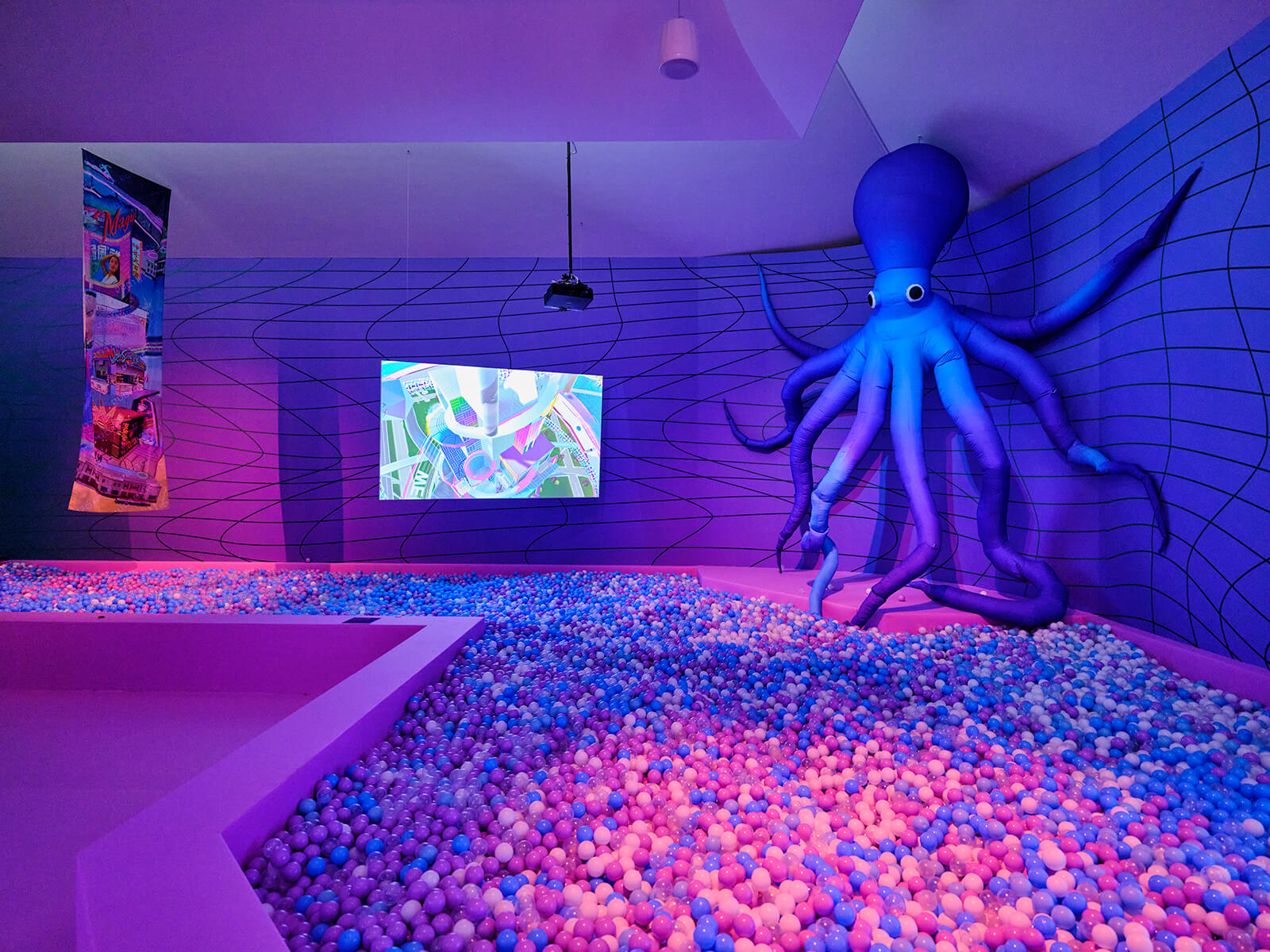
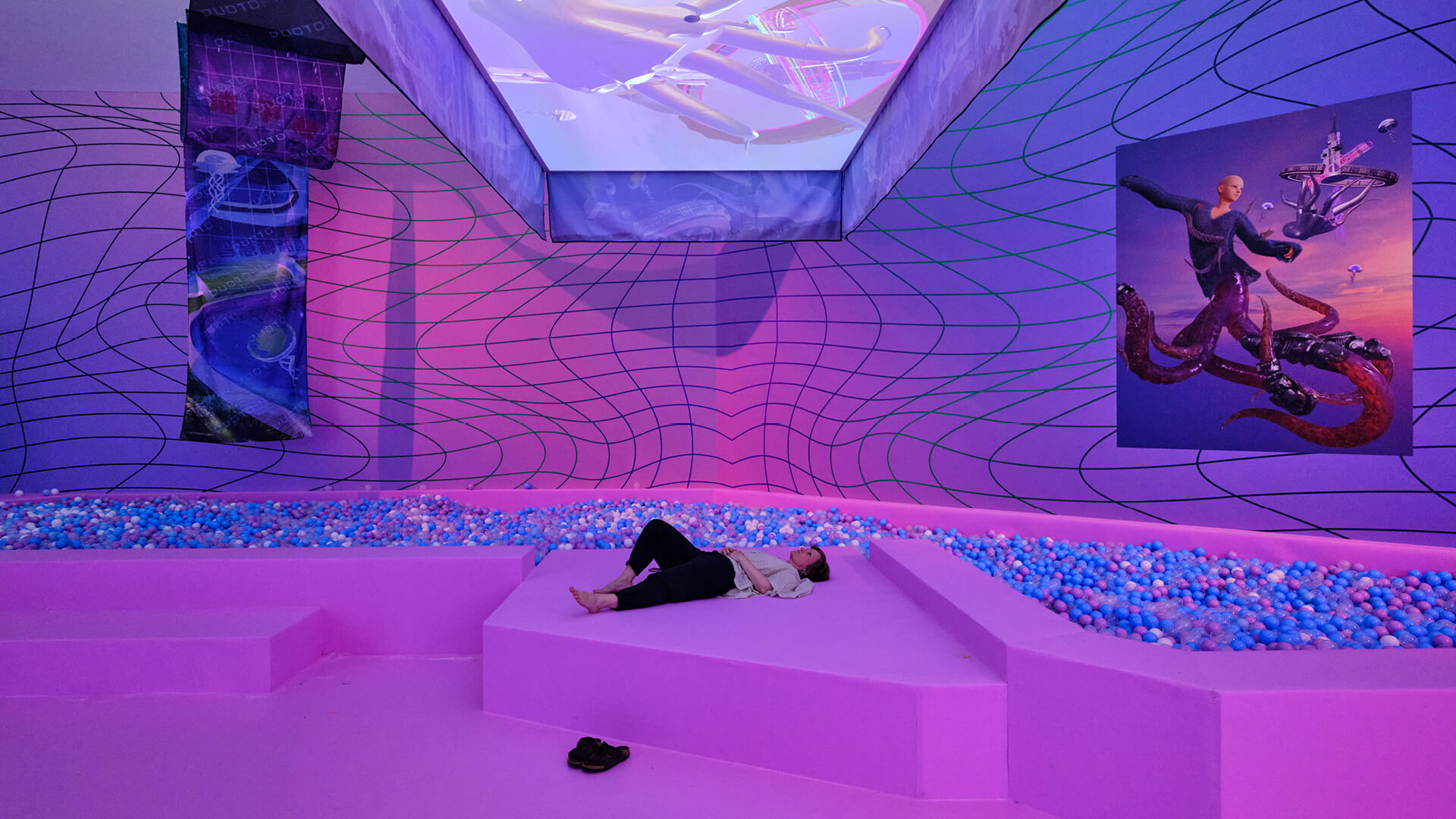
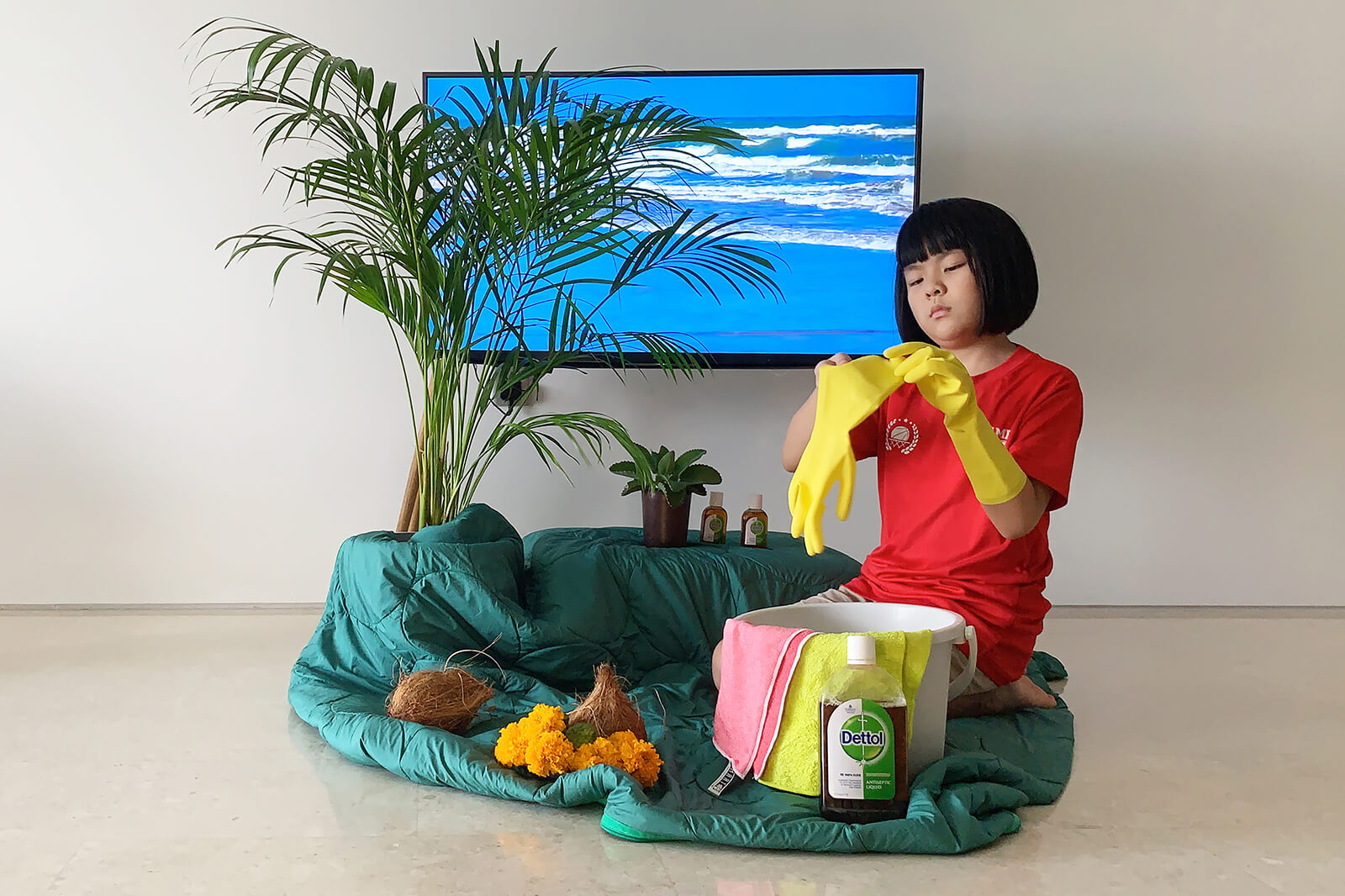
Things get stranger as you walk into a space flushed in pink and blue light and find a giant, inflatable octopus guarding a massive ballpit. Here, vintage arcade machines glow in the corners of the room and a badminton setup beckons. Before long you are subsumed in the blue light of an office where androids stare at you from the walls, work equipment and laptops call you to work and glowing cubes invite you to sit and watch digital auctions and instructions on how to get ‘free money’. Just when you think you can’t take the rapid changes, turns and motion anymore, you enter a shelter. Video installations show a young girl transforming familiar household interiors and objects into exotic landscapes in an imaginative, cloistered scene that recalls the COVID-19 pandemic. An adjoining room, which resembles a school computer lab, holds analogue televisions with even more information on everything you have just seen.
Having moved through four levels of a building in the span of only a few hours, you have travelled a whole city, complete with environments and economies that blur the lines between the virtual and the physical, packed with artworks in every imaginable medium and settings that invite your attention, interaction and play. This new gallery experience, this dizzying fever dream is Cao Fei: Testimonies To The Near Future, a transformative, immersive exhibition created by the acclaimed Chinese artist, Cao Fei, for the Kunstmuseum Basel, marking her first solo exhibition in Switzerland. The artist’s decades-long career has been rich with multimedia works exploring globalisation, urbanisation, emerging subcultures and virtual environments that is almost unparalleled in its depth and breadth. The exhibition takes over the entirety of the 365-year-old museum building, a Swiss heritage site which houses the oldest public art collection in the world.
For a foreign artist working with digital art and multimedia to have the license to transform such a prestigious and historic institution from the ground-up, to replace its paintings and sculptures with ballpits and projection screens, would have been unthinkable until recently. Testimonies To The Near Future is a striking example of the change in the relationships between museums/art galleries and their artists and visitors. Cao Fei, in many ways, is the perfect artist to reimagine what a gallery can be and reconstitute an institution like the Kunstmuseum Basel for contemporary audiences. In a conversation with STIR, Kunstmuseum Basel’s curator of art after 1960, Stephanie Seidel, spoke about this reimaging, saying, “Cao Fei rethinks the museum in a very joyous way, showing so many possibilities of what a museum could be, what art is and how we encounter it. She approaches it with an earnestness, opening up museums and making them accessible without losing depth at all, but extending an invitation to enter on so many levels.”
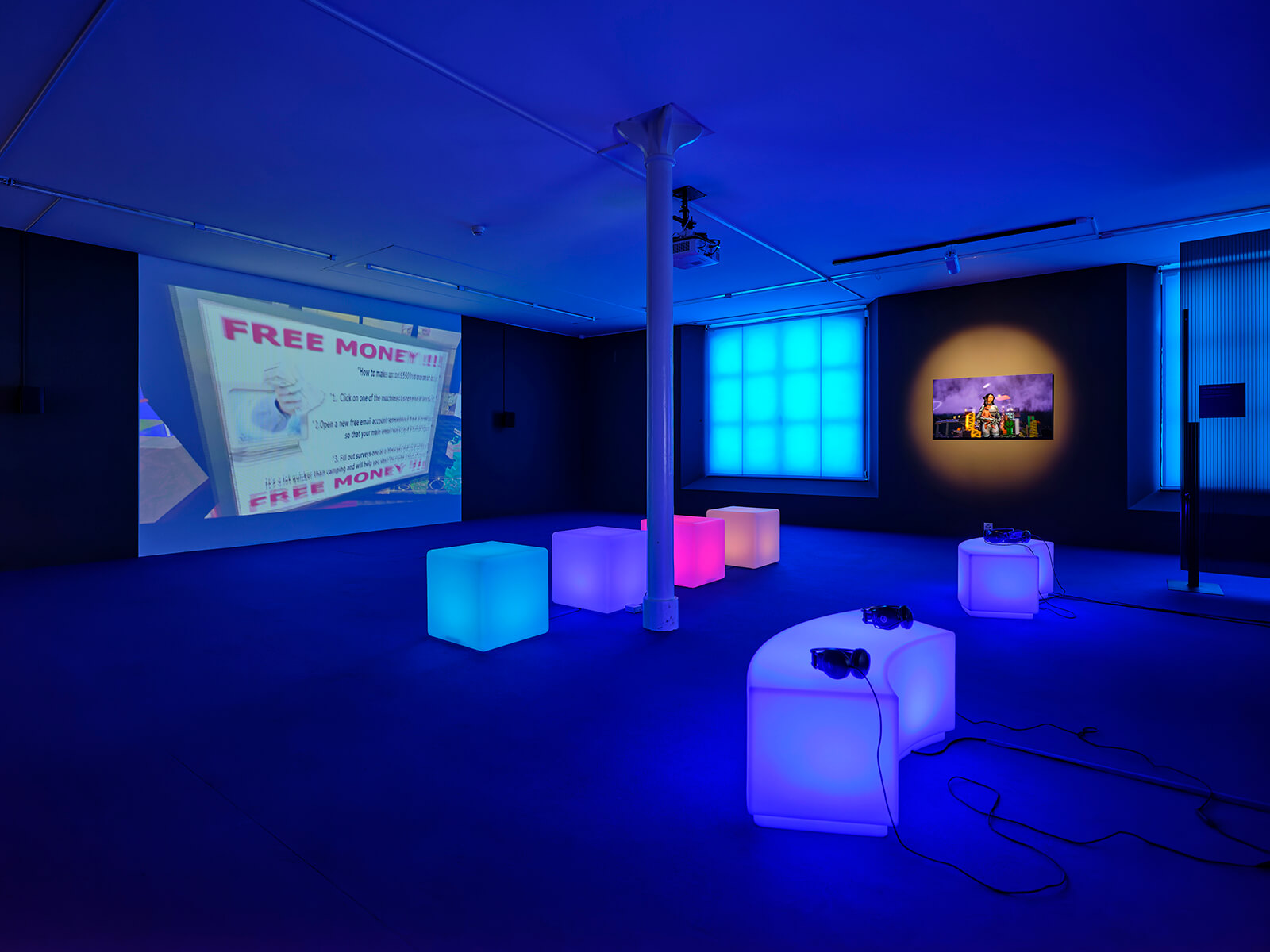
The exhibition is divided into seven sections—The Street (featuring Fei’s works on hip-hop culture), The Park (which shows her video works documenting cosplayers), The Factories (containing acclaimed large-scale works such as 11:11 (2018), Asia One (2018) and Whose Utopia (2006), The Cinema (a reinterpretation of the now-defunct Hongxia Theatre in Beijing), The Playground (featuring the interactive artwork Duotopia (2022, 2024)), The Office (centred around her long-term project RMB City (2007-2011) and The Shelter (a reprieve and look back into Fei’s archive). “It’s a show that covers almost 30 years of Cao Fei’s work from the mid-90s to 2025. All the spaces are very immersive, there’s no white cube space in the entire museum. We changed the colours of the walls, the flooring, the seating and we didn’t use our regular museum signage but big, oversized colour-coded signs like in a city,” Seidel shared, discussing the exhibition design.
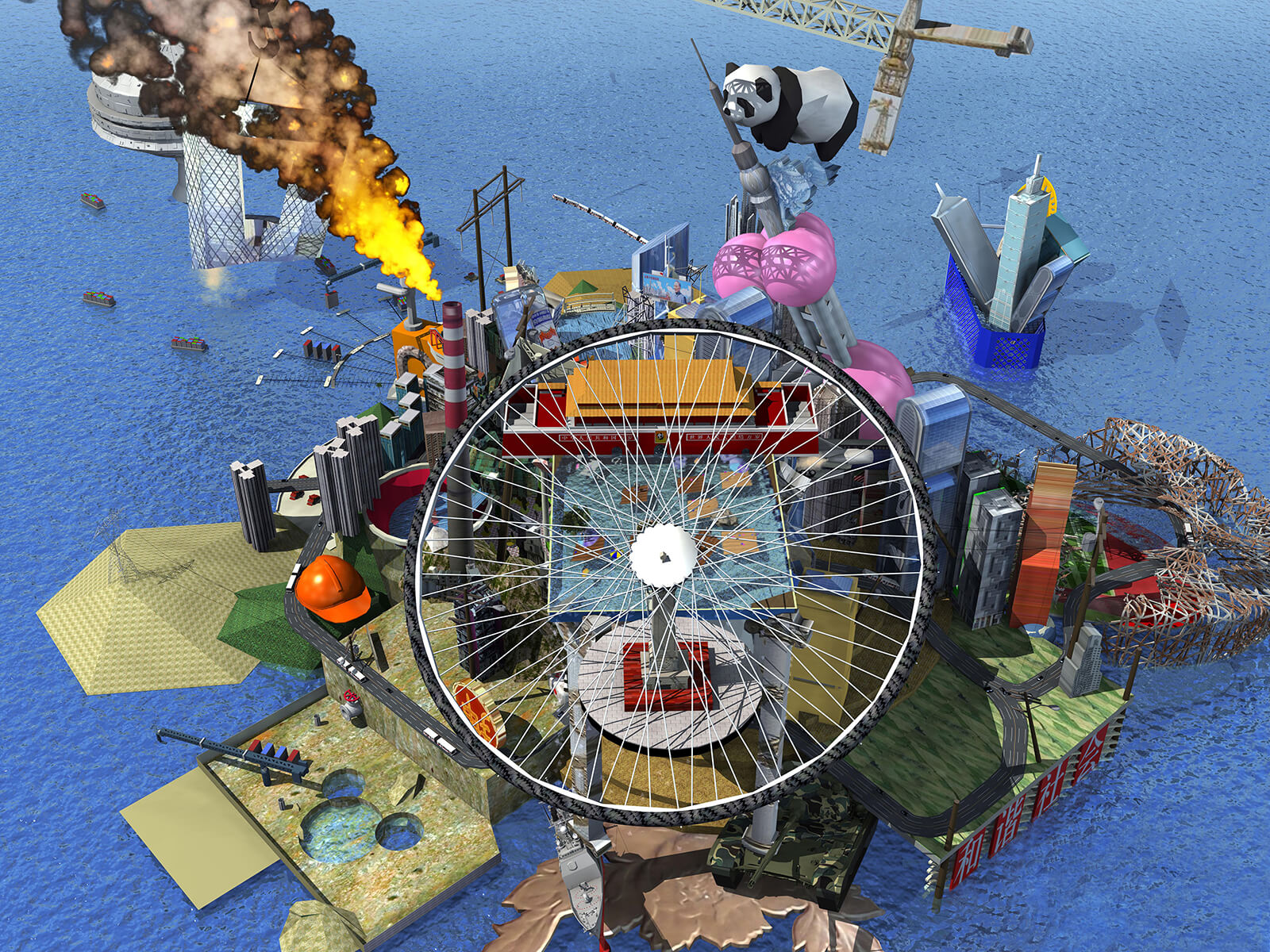
The exhibition—conceived in collaboration with the contemporary artist along with architects from Small Production in Beijing—explores spaces, cities and how their design impacts and is impacted by culture and the digital landscape. The exhibition is not only created within this context of change, it also takes change as its central subject, becoming a metacommentary on the vast theme. Seidel recounted an exchange with the artist that inspired the exhibition. She said, “Cao Fei mentioned while she was visiting Switzerland that the landscape still looked so similar to the photos of the country she had seen from the 80s. On the contrary, she shares with us a reality that is so rapidly changing and so many of her own past artworks have become testimonies to the changing urban environment of China.”
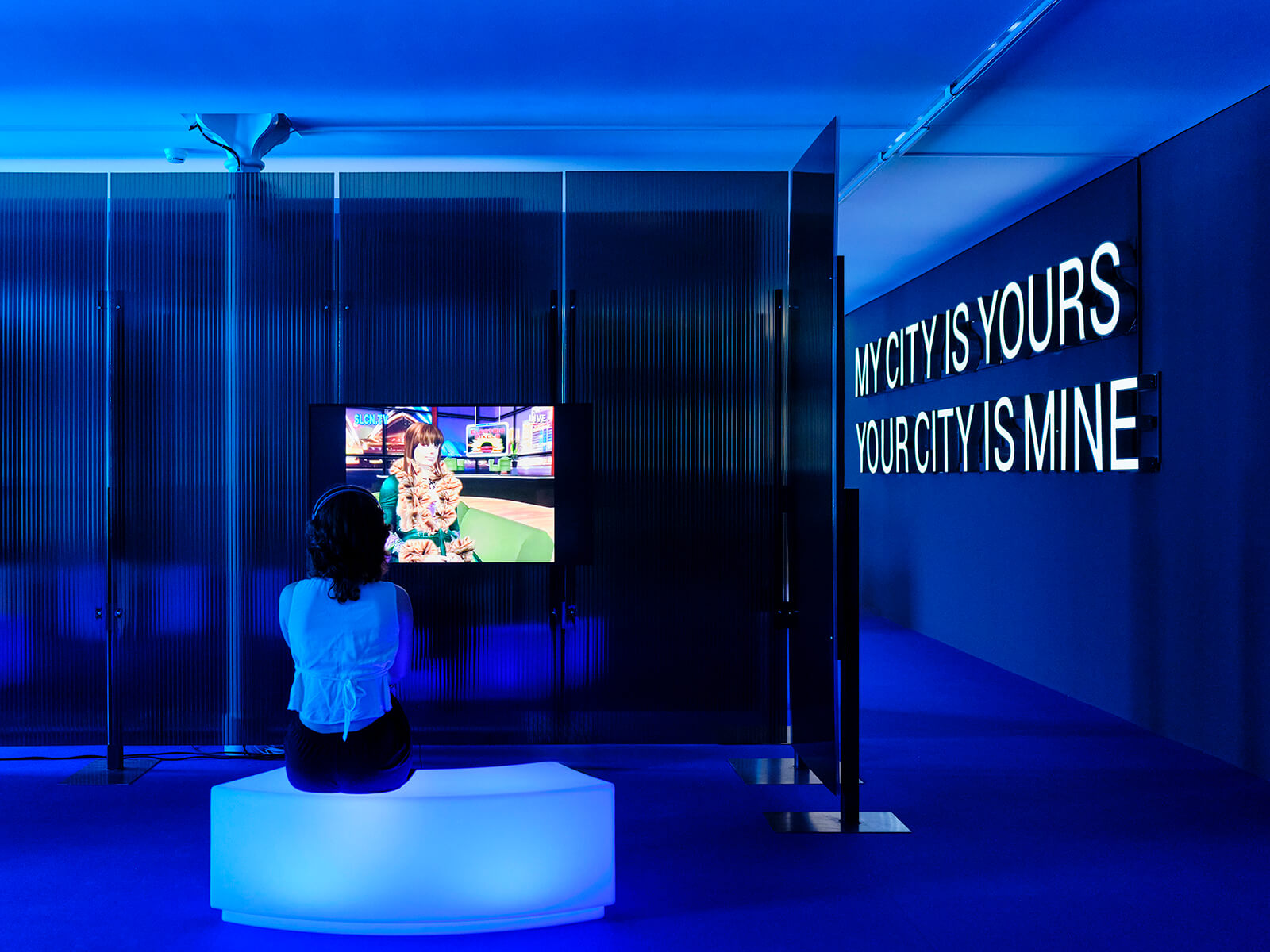
The new media artist’s oeuvre has always created a tension between speculative and real, digital and physical and historical and futuristic. Her vision of the near future draws on all these elements in different ways—by overlaying science fiction and the history of socialist reconstruction in 1949 China in the film Nova (2019), in the architectural metaverse and its cyborg characters in the installation Duotopia (2022, 2024) and in the virtual Chinese metropolis, RMB City (2007-2011), created on the online Second Life platform. With so many dense—layered and technological—political themes populating her works, their immersive, interactive and playful aspects become critical for diverse audiences to understand and engage with her ideas.
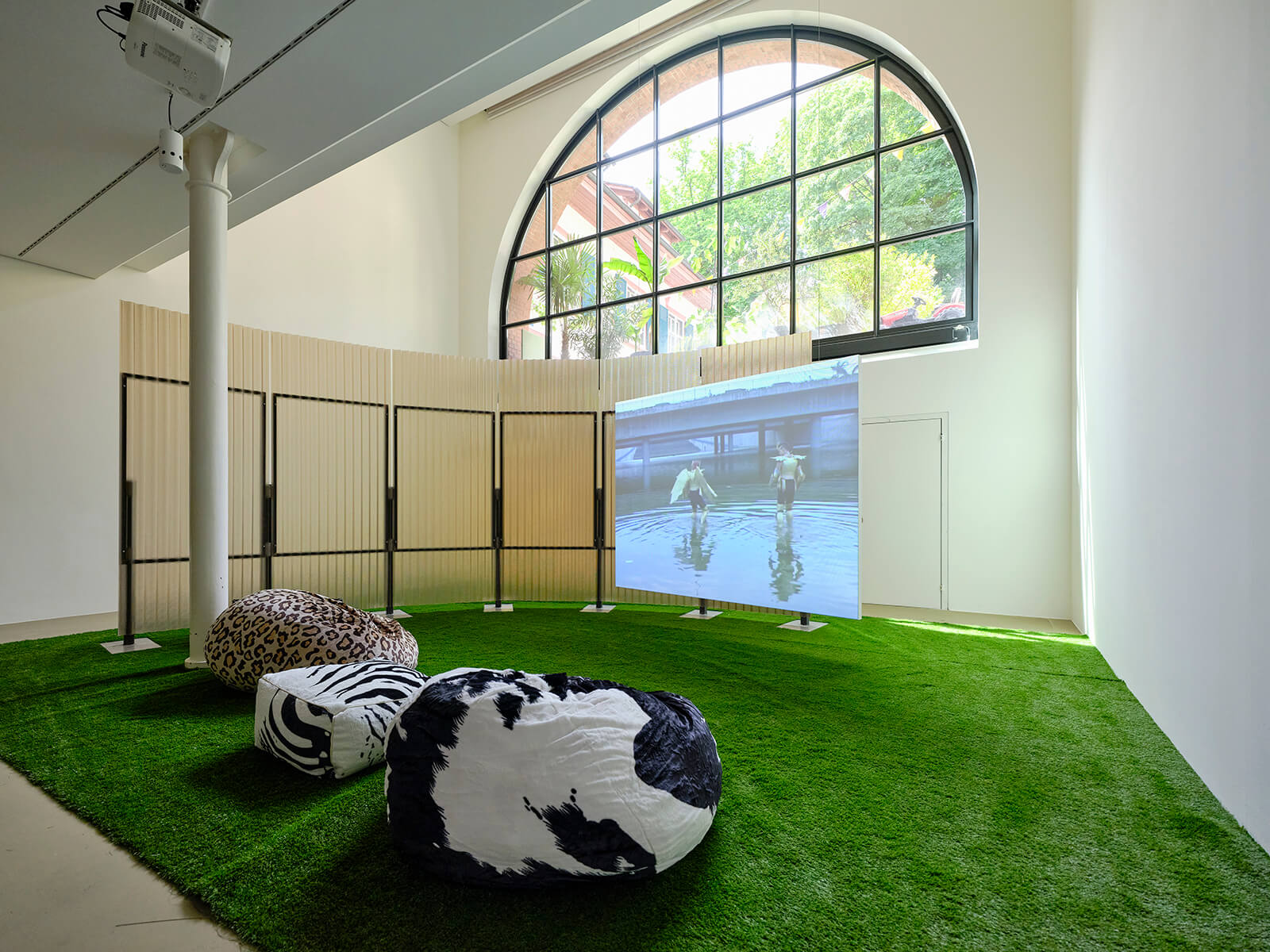
Digital spaces, which Cao Fei has been interrogating and engaging with since the 1990s, are increasingly designed to be incredibly addictive and highly personalised to maximise profit for the tech monopolies that control them. This has changed the expectations of viewers for physical spaces and experiences, forcing museums to reconsider their social role as spaces to passively view canonical ‘high art’ that may or may not connect with local communities, or consider accessibility, interests and comfort of potential spectators. Galleries have to offer something unique, grounded, embodied and easily accessible to survive the highly competitive attention economy. As a result, the terms ‘visceral’, ‘embodied’ and ‘interactive’ are becoming more central to the strategies and programmes of museums and galleries internationally as a more alienated, digital existence changes how people experience media and art.
Kunstmuseum Basel takes this approach to its thrilling, full-throated extreme, giving the artist the freedom to completely rework the historic building, creating a somatic parallel to the exhibition’s themes. Seidel spoke about the decision to commit to this unique project, saying, “You really break into the world that Cao Fei depicts. It’s not like you’re in a black box or a white cube on a regular museum bench, you’re already half a step in there. Having the different forms of tactility—sitting on different benches, walking on different flooring—it takes you out of the museum and into The Factories or The Office and it’s a very playful way to think about the themes of the artworks on a more sensual or visceral level.”
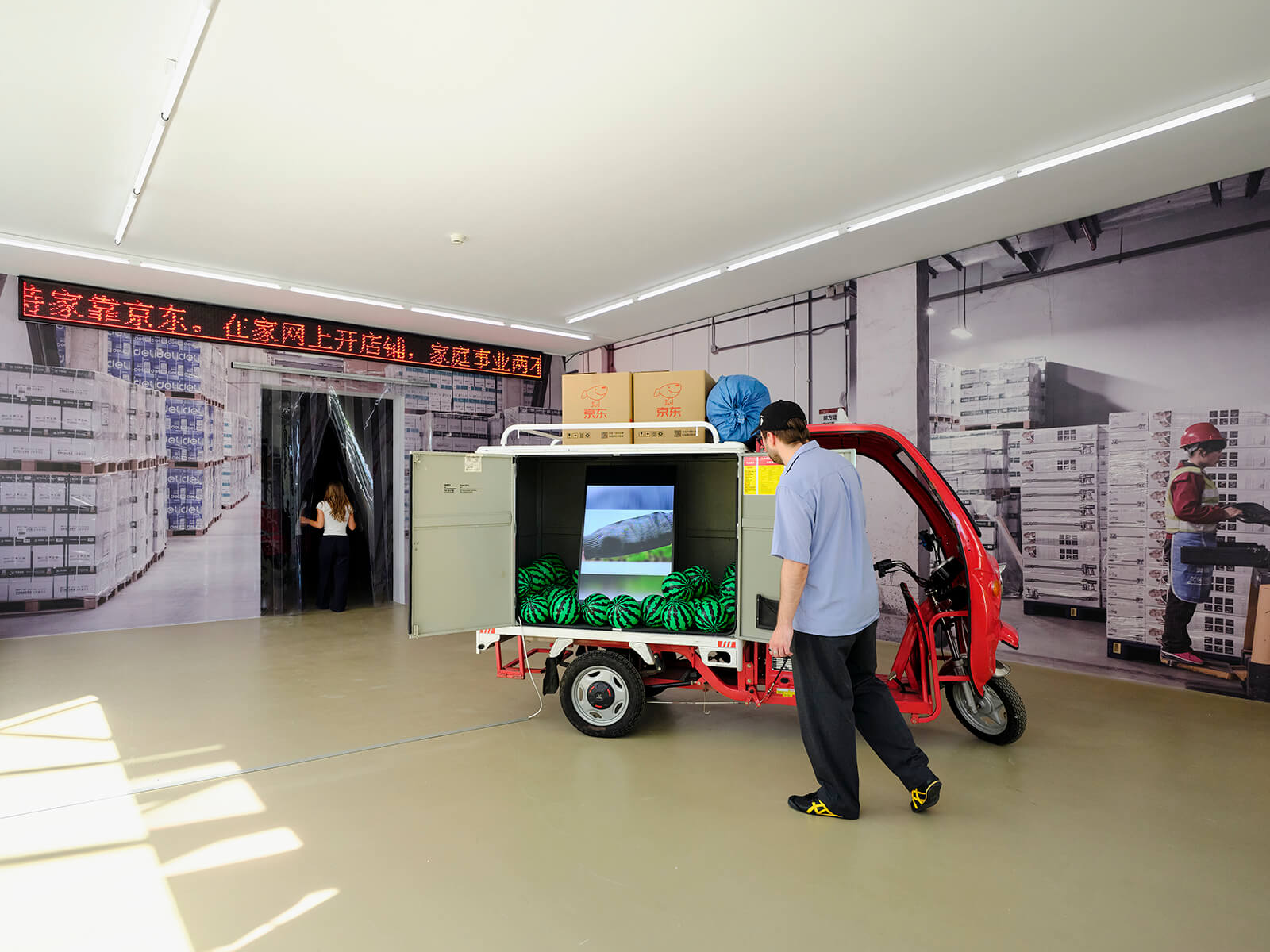
This push for accessibility, for what Seidel identifies as ‘generosity’ from museums, is a correction away from the longtime elitism and cultural hegemony museums have employed as the source of their credibility. In the past, museums and art galleries have been highly gatekept spaces, often with limited outreach, a conventional adherence to distinctions between ‘high’ and ‘low’ art, a ‘Do Not Touch’ approach and a formal, hushed atmosphere. This has erected a barrier between normal life and Art that has historically excluded many demographics based on class, education, race and cultural cachet. The democratisation of media experiences through the internet has forced a shift that is reflected in this exhibition by the transformation of the Kunstmuseum into recreations of relatable, non-gallery spaces like 'The Street', 'The Office' and 'The Factories'.
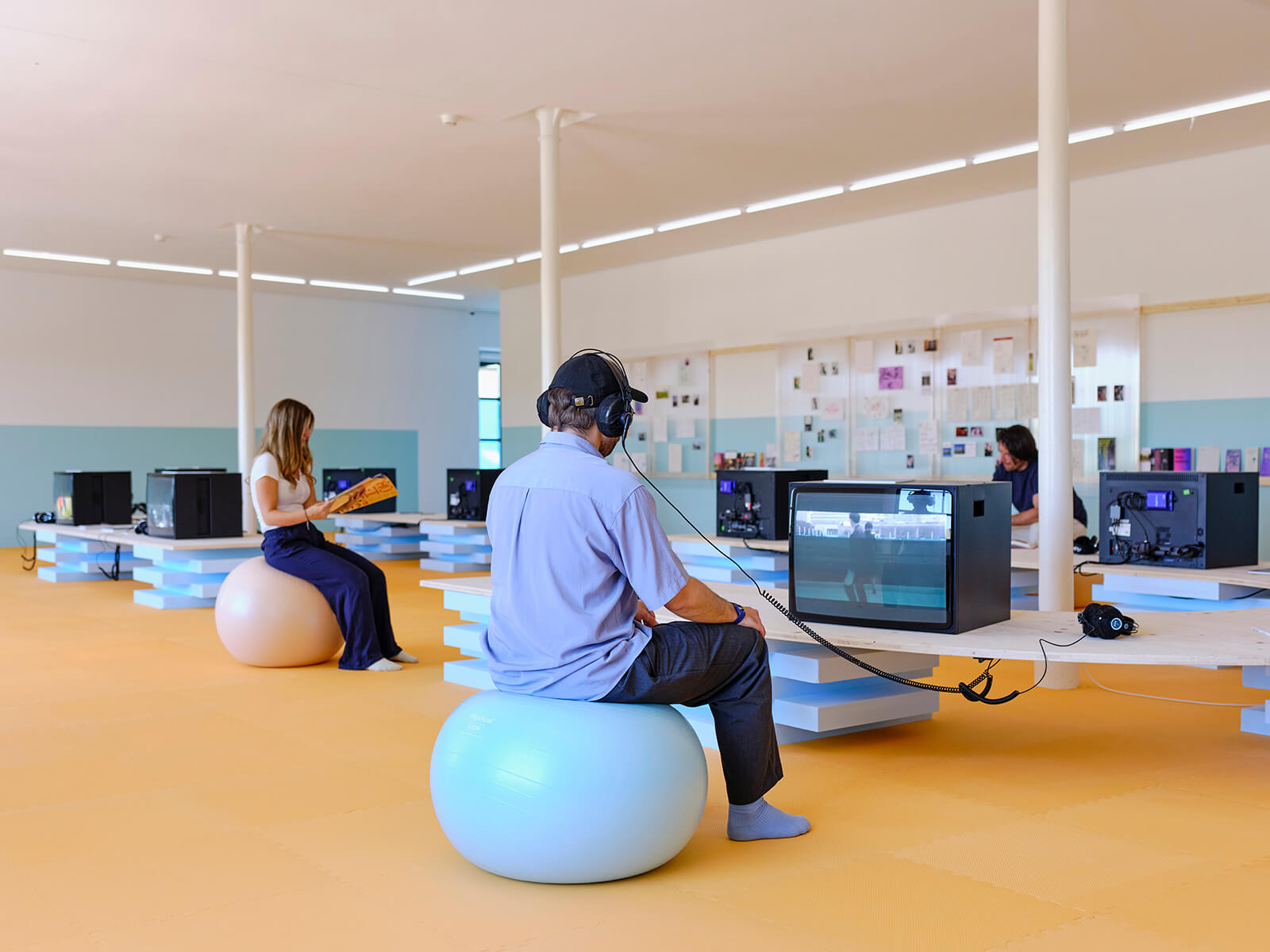
Describing the response from viewers to this exhibition (which also functions as a testimony to the near future of museums and art galleries), Seidel concluded, “We’ve had visitors from all ages—from super young to grandparents with their grandchildren and all ages inbetween—really embrace this different kind of exhibition. In being so inviting, it really opens the door to enter Cao Fei’s work on a deeper level; she really helped us to see our building from a different vantage point. Many visitors during the past weeks have also pointed out that they have never seen the [Kunstmuseum Basel] in this way before.”
Cao Fei: Testimonies to a Near Future both explores and exemplifies what life, work, economy, art and culture look like in a landscape mediated by digital technology, virtual reality and the machinations of urbanisation. The physical transformation of the Kunstmuseum Basel becomes almost a metaphor for the larger transformations in society and upended power dynamics and status quo that come with the era-defining changes that technology always brings. Through her ambitious immersive, interactive art and multimedia and video works, Cao Fei lays out a new blueprint—playful, accessible but uncompromising—for what contemporary art exhibitions can look like.
Cao Fei: Testimonies to a Near Future will be on view until October 11, 2026, at the Kunstmuseum Basel | Gegenwart in Basel, Switzerland.
by Srishti Ojha Oct 09, 2026
In his ongoing exhibition, the South African artist creates two post-apocalyptic futures to explore society’s relationship with textiles, patterns and technology.
by Srishti Ojha Oct 07, 2026
The Kolkata-based film festival shone a spotlight on local and international filmmakers and artists who are pushing the boundaries of what a film can encapsulate.
by Samar Jodha Oct 05, 2026
Looking at Ahmed Ali’s photographs of workers and industry within the wider history of industrial photography, from Soviet state imagery and Sunil Janah to Lewis Hine.
by Srishti Ojha Oct 02, 2026
The Indian artist’s exhibition at the Bruce Museum in the US thinks through fundamental questions of humanity by focusing on the Sun and the cosmological timescale.

make your fridays matter with a well-read weekend
Enter your details to sign in
Don’t have an account?
Sign upOr you can sign in with
a single account for all
STIR platforms
All your bookmarks will be available across all your devices.
Stay STIRred
Already have an account?
Sign inOr you can sign up with
Verification link sent to check your inbox or spam folder to complete sign up process
Tap on things that interests you.
Select the Conversation Category you would like to watch
Please enter your details and click submit.
Enter the 6-digit code sent at


Cao Fei’s Swiss exhibition reimagines what an art gallery can (or should) be today
by Srishti Ojha | Published on : Jul 02, 2026


 Sign in with Google
 Sign in with email
What do you think?