Architecture10 mins. read
MAS Context welcomes all to learn how to create and build 'A Lot With Little'
by Almas SadiqueJan 20, 2024



by Mrinmayee BhootPublished on : Mar 18, 2026
To consider brick and its transformation from a solitary entity to the grand composition that is architecture is to acknowledge that architecture, or building, is an ongoing process. Architecture is always embedded in the supply chains, market economics and infrastructure networks that make up the globe. This view of building as process and not product lends itself to a more exacting view of the costs the planet must bear, the labour required and the negotiations between natural, manmade, political and cultural that keep the enterprise afloat. This is meticulously illustrated in German director Harun Farocki’s 2009 documentary, In Comparison, where Farocki bestows an almost anthropological attention to the brick. In the film, Farocki portrays and implicitly compares various forms of brick production around the world—from manual to industrial. While in one shot, a construction worker scoops mud into frames, the next features automated machinery that cuts long blocks of clay into appropriate shapes. There’s a sense of scale in how the documentary progresses, moving from the hand to the machine, but there’s also a certain rhythm and sound. The plonk of wet mud, the hiss of the wire cutting through a block of clay, becomes a way for Farocki to illuminate the (literal) building blocks of culture, and how our worlds revolve around them.
The idea of architecture as process, one that is intrinsically embedded into global infrastructures and planetary ecologies, is crucial to understanding the aims of the wienerberger-initiated BRICK AWARD. The organisation’s objective: to ask what a ‘material ethics’ for contemporary architecture looks—and as Farocki implies—feels like, is a means to rethink how we practice today, what values discern the projects that we champion today and perhaps to raise consciousness towards the planetary impacts of our thoughtless plundering. In this sense, the shortlist for the 2026 cycle under the category Living together—which assesses urban residential developments—presents case studies where such considerations are not only vital through the perspective of sustainable design, but also hope to address one of humanity’s inalienable rights in a thoughtful, inclusive manner; that of housing.
Of the eight projects that have been shortlisted for the awards, half employ circular design principles: either as adaptive reuse projects or by recycling material generated from demolition. This in itself is a signal to the growing fascination in architecture and design to foreground practices of care and repair. It is also quite interesting to note here that only one of the projects under consideration is located outside of Europe, in contrast to the majority of them being located outside the region and in the Global South, in Feeling at home. This not only points to the extent of the housing crisis in the region, owing to scarcity of land for large-scale developments, migration and socioeconomic inequality, but also shows that architecture does have a role to play in alleviating these conditions.
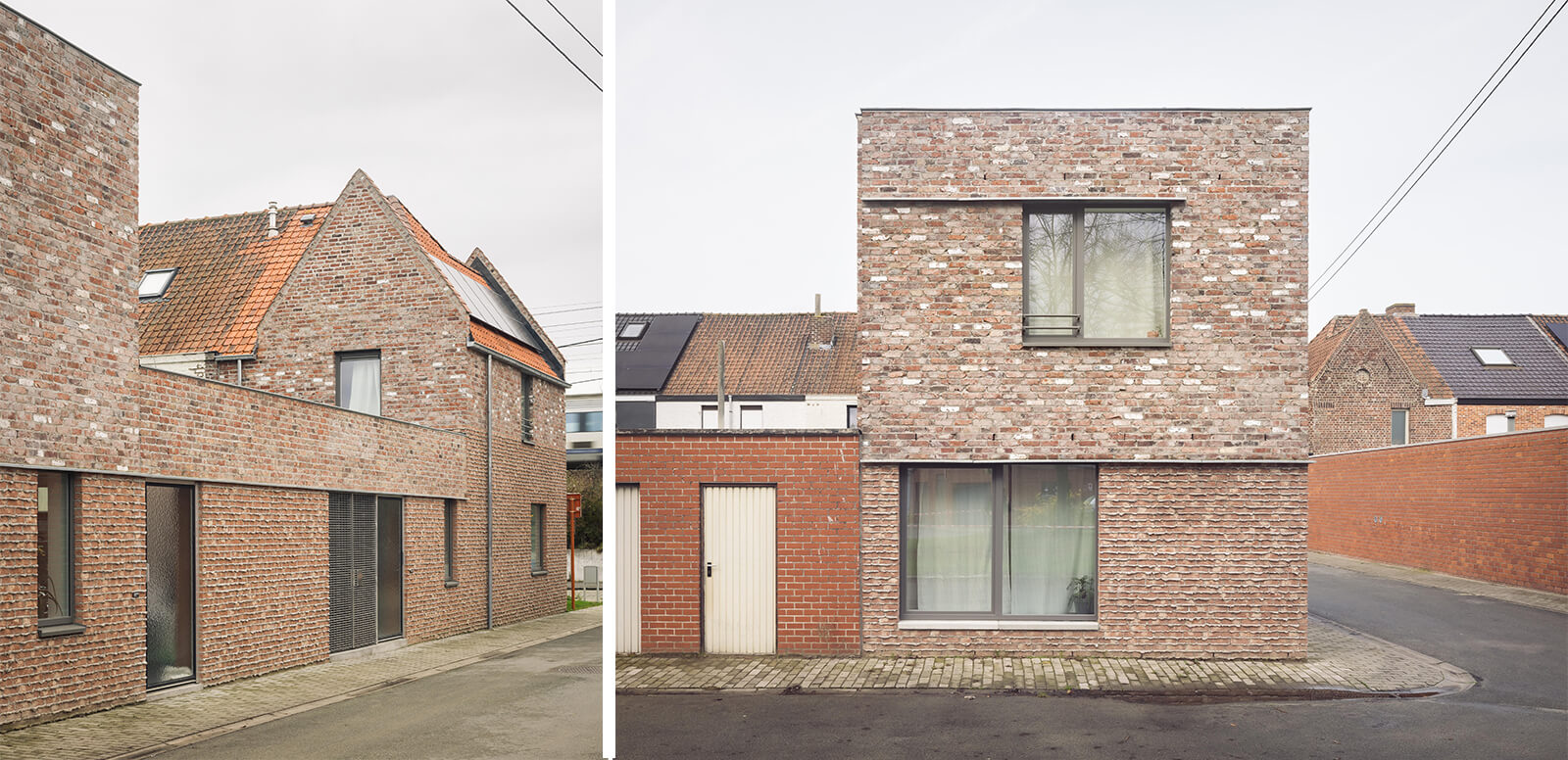
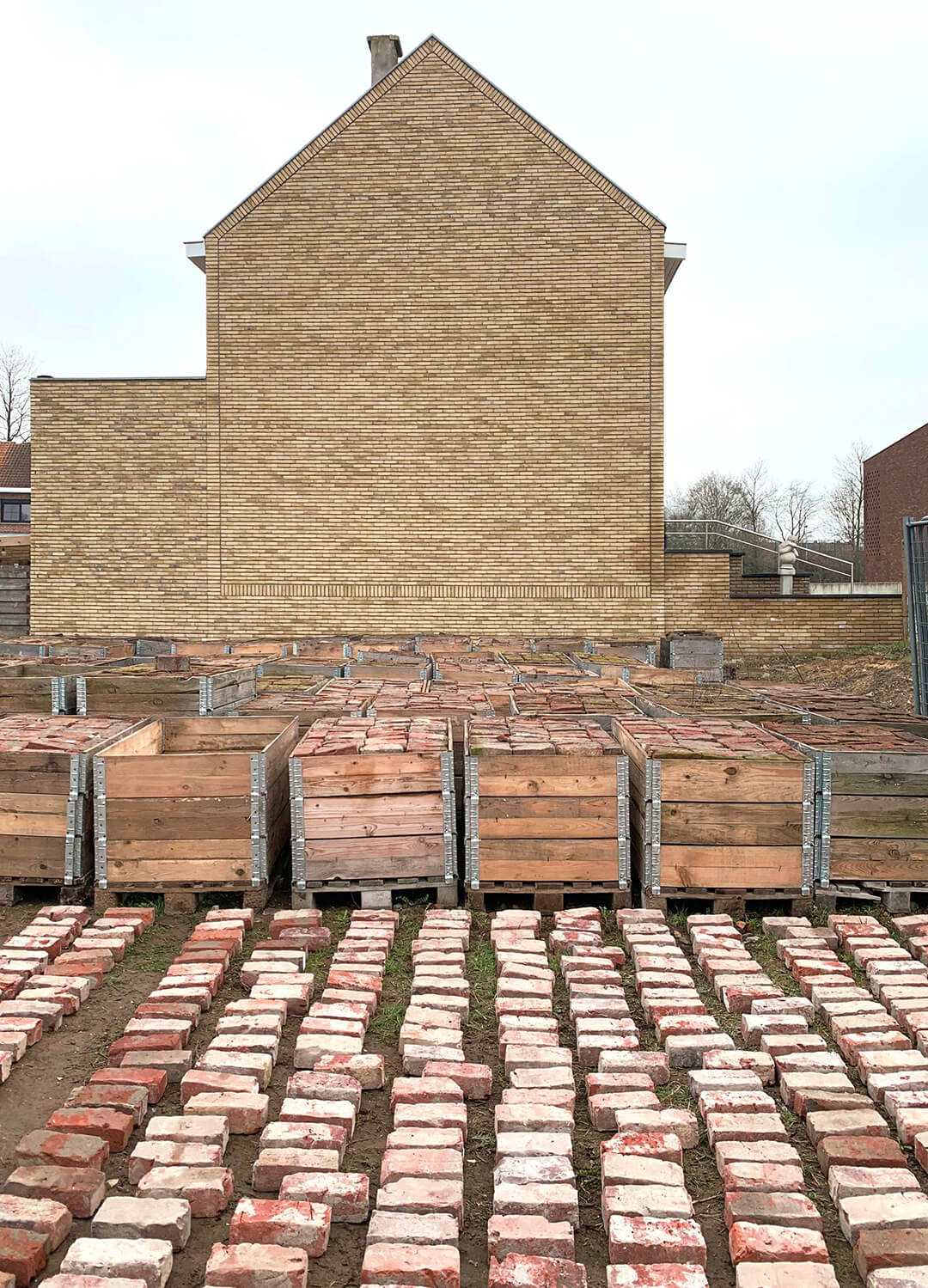
Extending the rhetoric from Feeling at home and private residences in brick and ceramic, and speaking on Living together, the role of the brick extends beyond craftsmanship and contextual relevance. While still important factors, especially in cases of material reuse, it becomes about how identity is preserved and how the brick determines the shape of a home when scale is factored in. Moreover, it points to ways in which projects may be cost-effective, or use as little new material as possible. This is demonstrated aptly in the Social and urban infill project in Kortrijk, Belgium, designed by MAKER architecten. Conceived as an enclave with different typologies of residences, the project prioritises shared spaces that encourage encounters, interaction and community life. Materials were recovered from the site and the debris of the erstwhile structure it housed—including bricks and roof tiles over a hundred years old—and reused to emphasise a circular construction strategy. Any bricks found that did not meet the structural requirements for facade applications were reused in gabions as property boundaries.
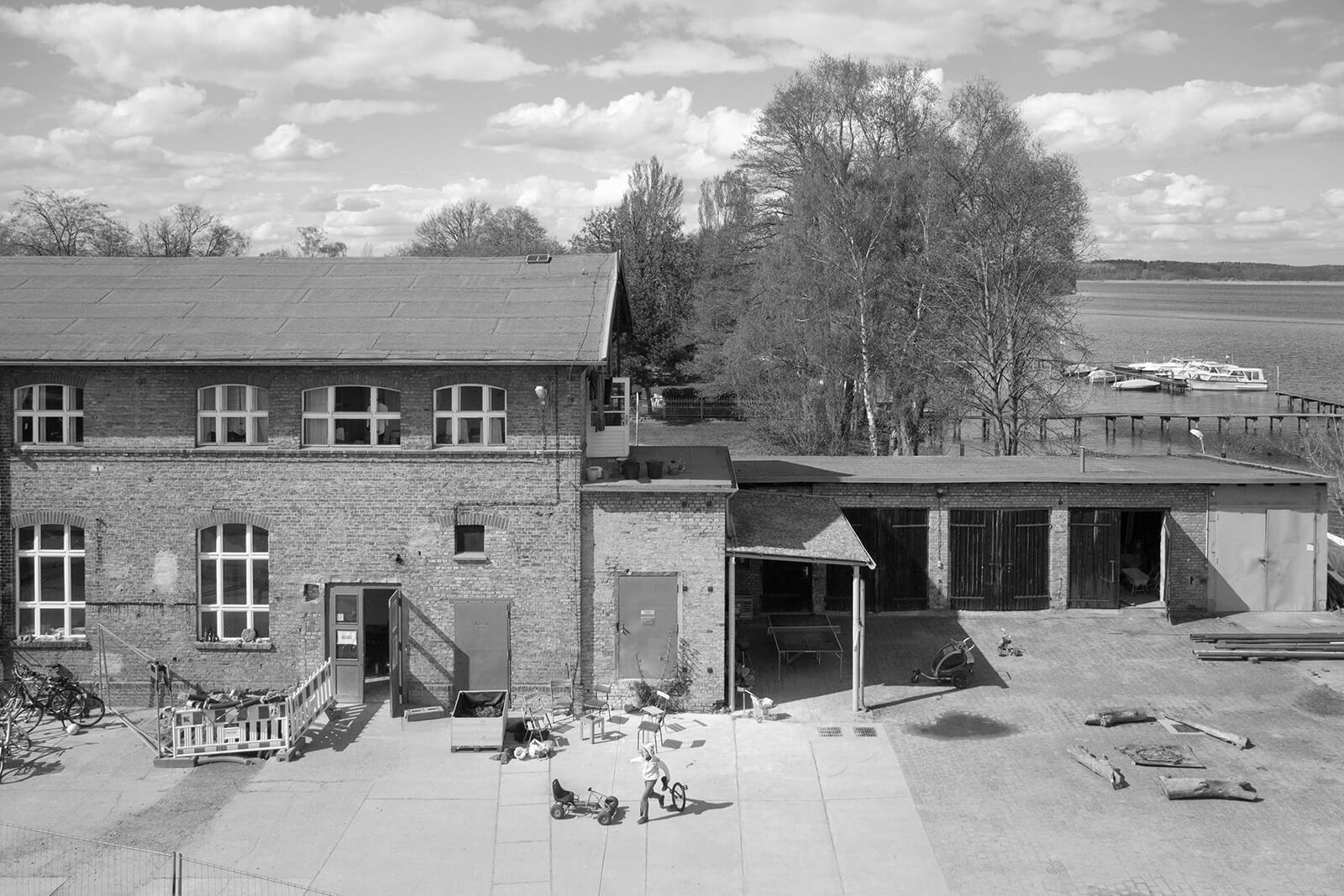
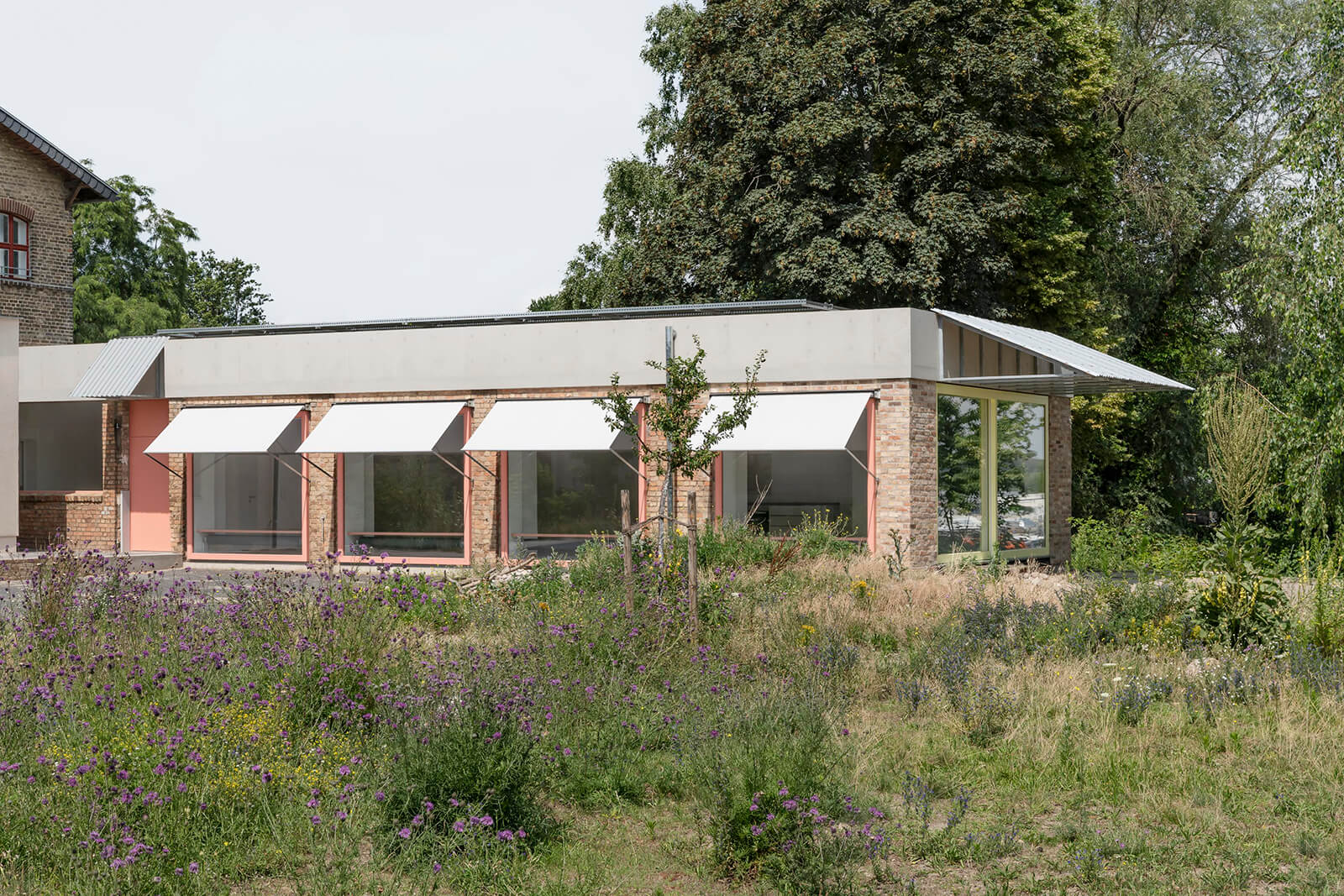
More assiduously, three projects ensure the refurbishment of existing buildings, highlighting the advantages of retrofit architecture for regions scrambling for more land to accommodate ever-growing needs. Luise 19E by undjurekbrüggen, for instance, is an exercise in adaptive reuse, updating a dilapidated building with four garages in Germany that was due to be demolished. The German architects proposed a plan of preservation wherein the structure would be transformed into a community house for all residents—a meeting place and common living space for all.
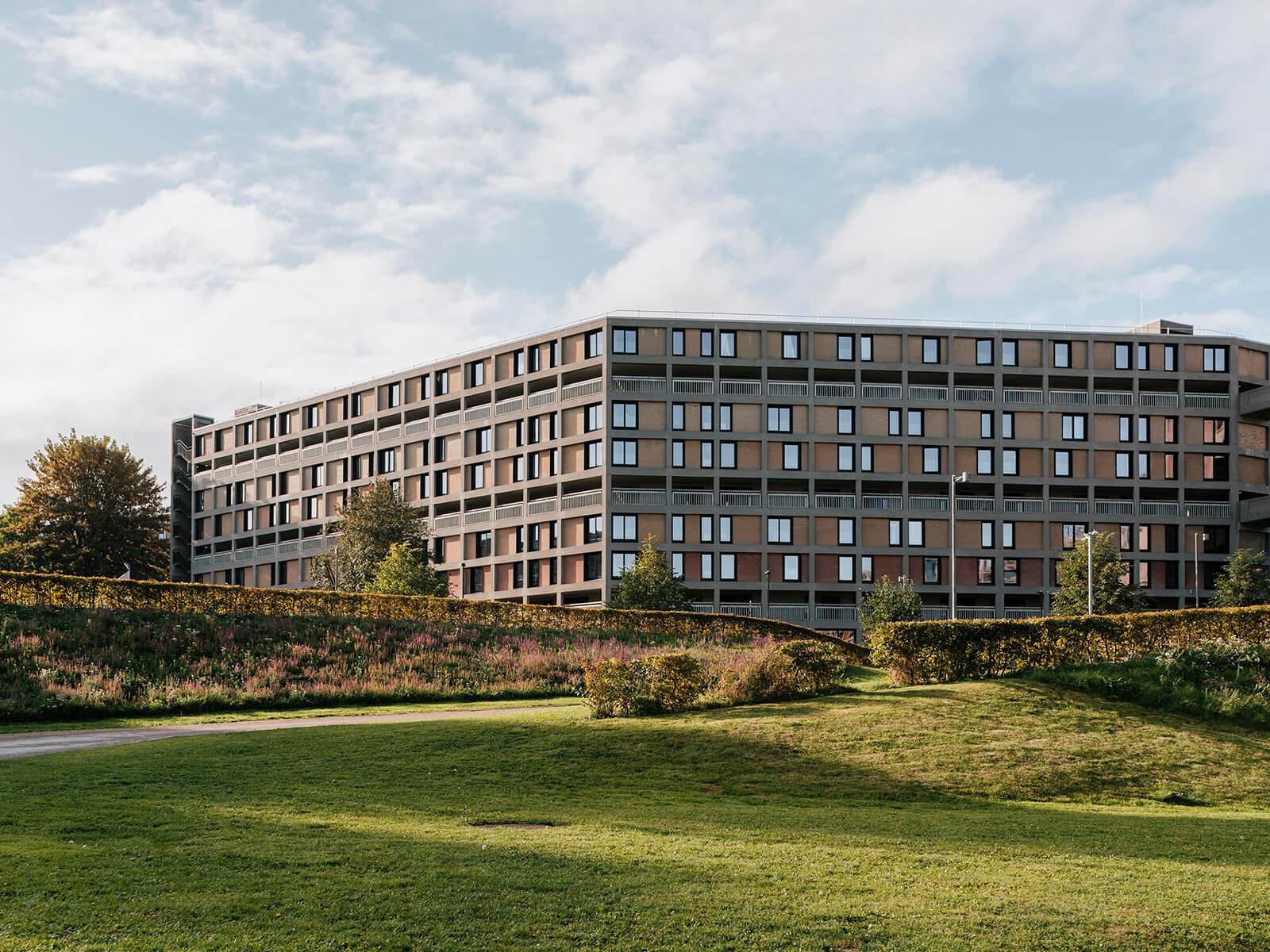
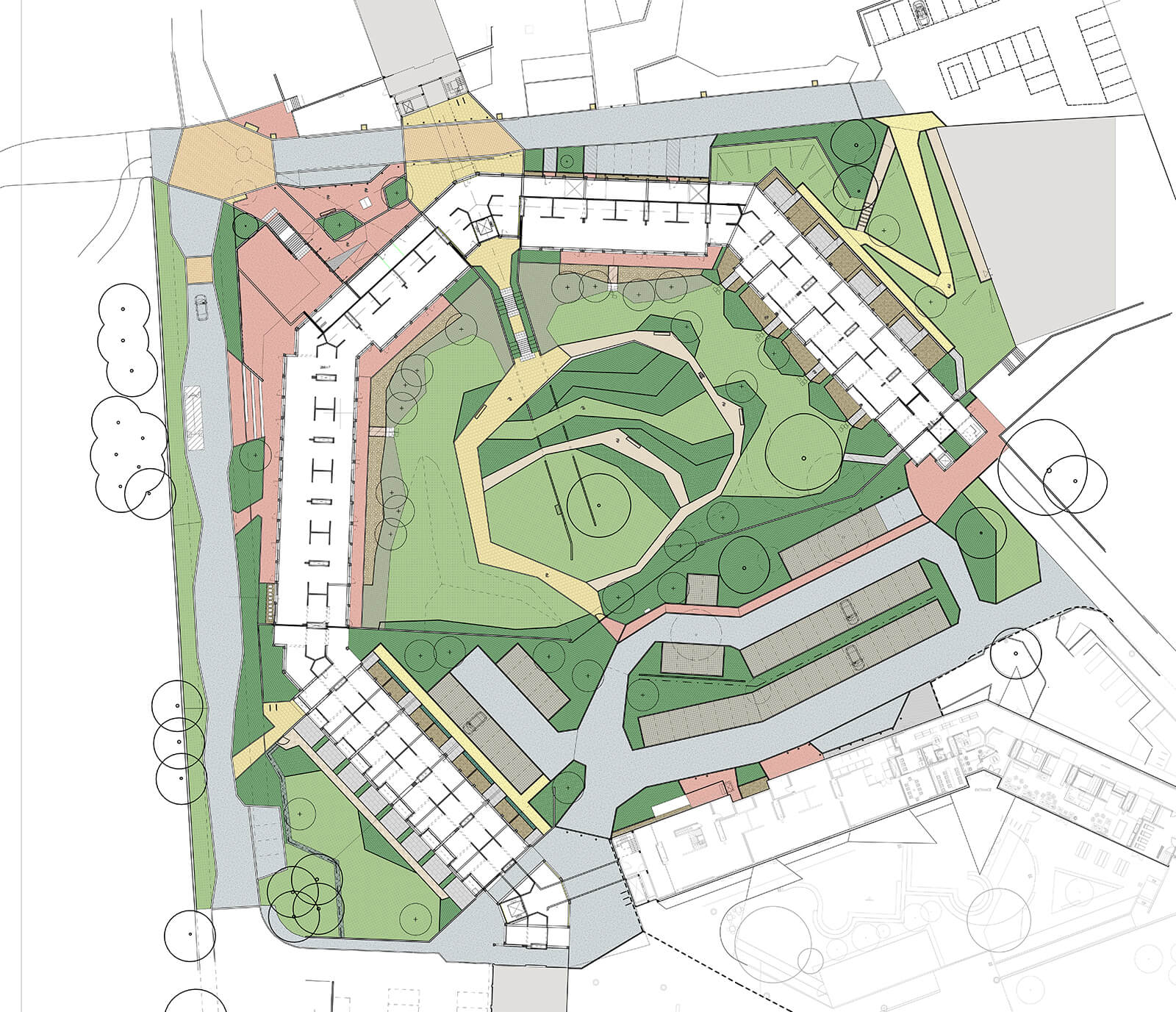
This participatory thread in housing—purported to be designed for everybody to start with—has a long history in the UK’s social housing programme. Most prolific in the post-WW2 push to rebuild Britain, the 1950s and 60s saw the implosion of pre-fabricated high-rise blocks or ‘streets in the sky’; notable among them was Park Hill in Sheffield, designed by Jack Lynn and Ivor Smith. Following the prevalent architectural language of the time, brutalism, the council estate was constructed in concrete with an infill exposed brick facade, demonstrating an ‘honesty in material and technique’. Lying derelict in the present day, plans for its regeneration were approved 10 years later, with British architecture firm Mikhail Riches working on the second phase of this refurbishment. The now shortlisted project involved a rehaul of the existing residential layouts for contemporary needs and ensured proper insulation to optimise the performance of the building envelope.
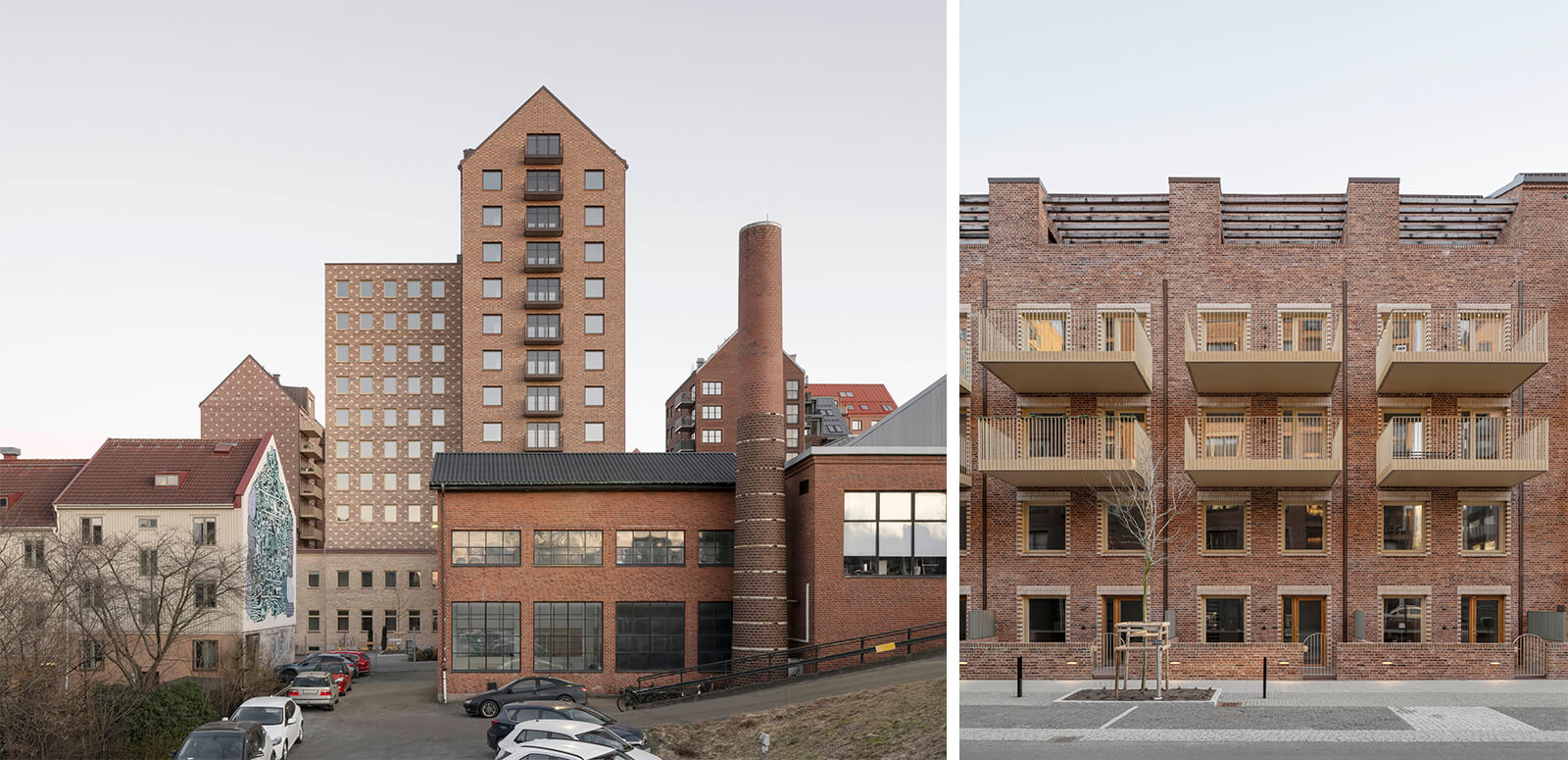
Similarly, a project in Sweden, Fixfabriken Spanjoletten by Olsson Lyckefors Arkitekter, offers a mix of residential developments by combining newly built residences with the redevelopment and reuse of existing office buildings. Formerly the Fixfabriken factory, the project preserves the city’s industrial heritage by transforming the building and drawing on the original factory's brick architecture for a distinct visual language. Intricate patterns in the brick facade distinguish the project, integrating it into the built fabric in its context while still allowing it to become a landmark within the neighbourhood.
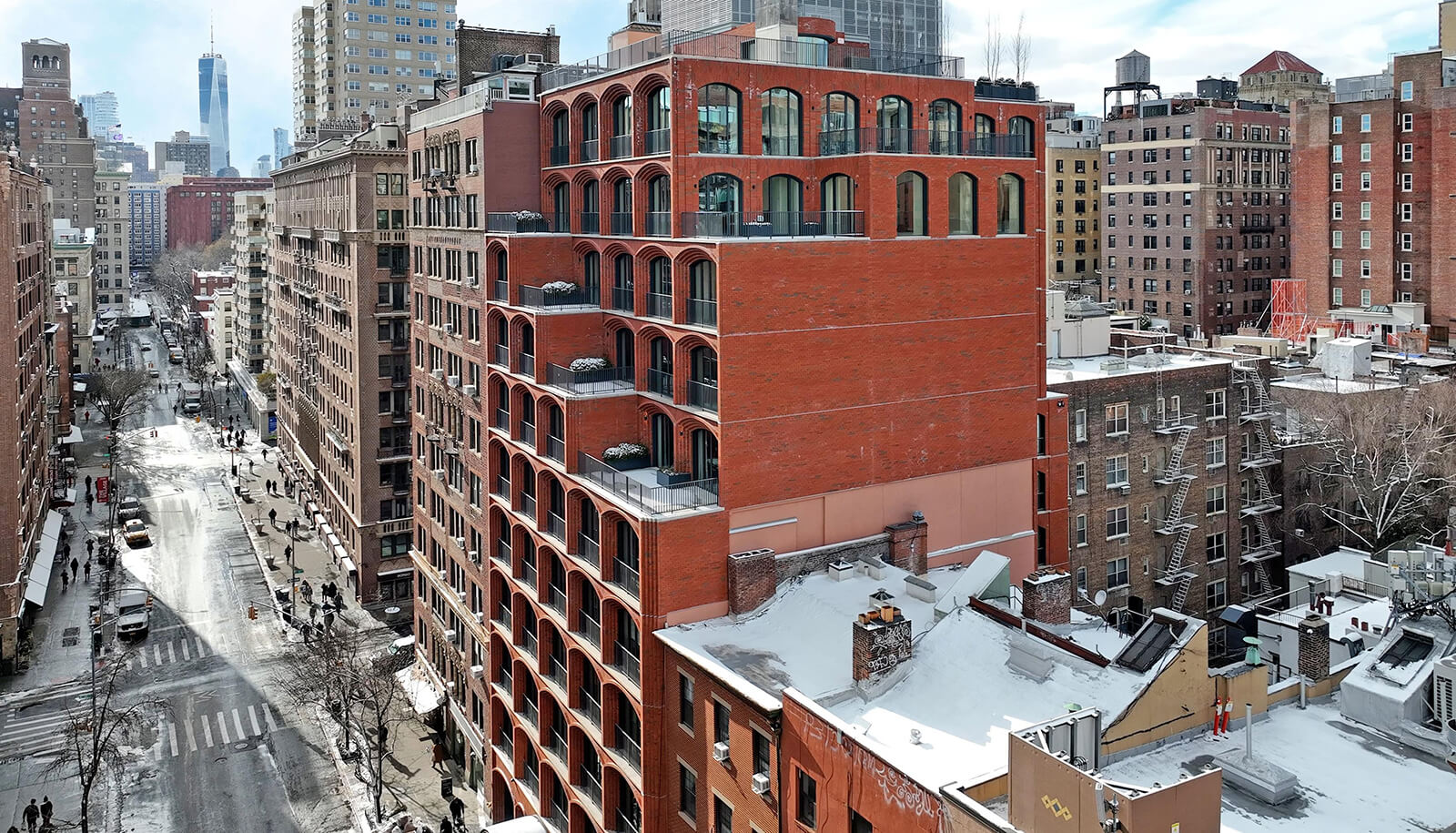
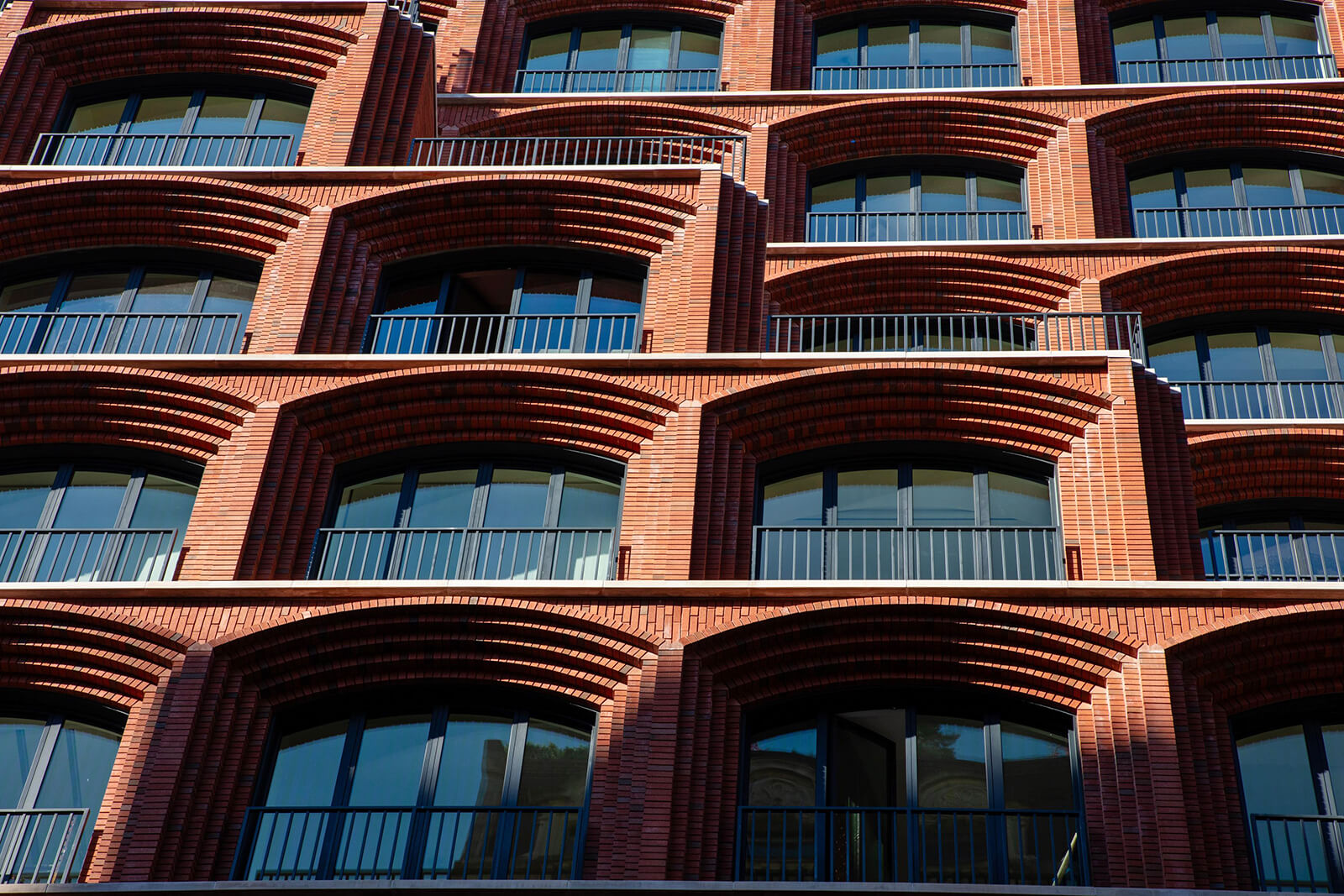
If we further consider the projects through this lens of material cohesion within a historic context, each presents a wide-ranging understanding of the versatility of brick. This is also especially demonstrated by 64 University Place in New York, USA. The design intends to ‘define a contemporary version of the American vernacular’, as the architects Kohn Pedersen Fox note in an official release. The iconic brick facade of 64 University Place is easily distinguished by its sculptural, recessed, shallow arches constructed of hand-set brick, lending a sense of ornamentation and texture, simply through the expression of craft. The townhouses are now adapted into an 11-story residential building.
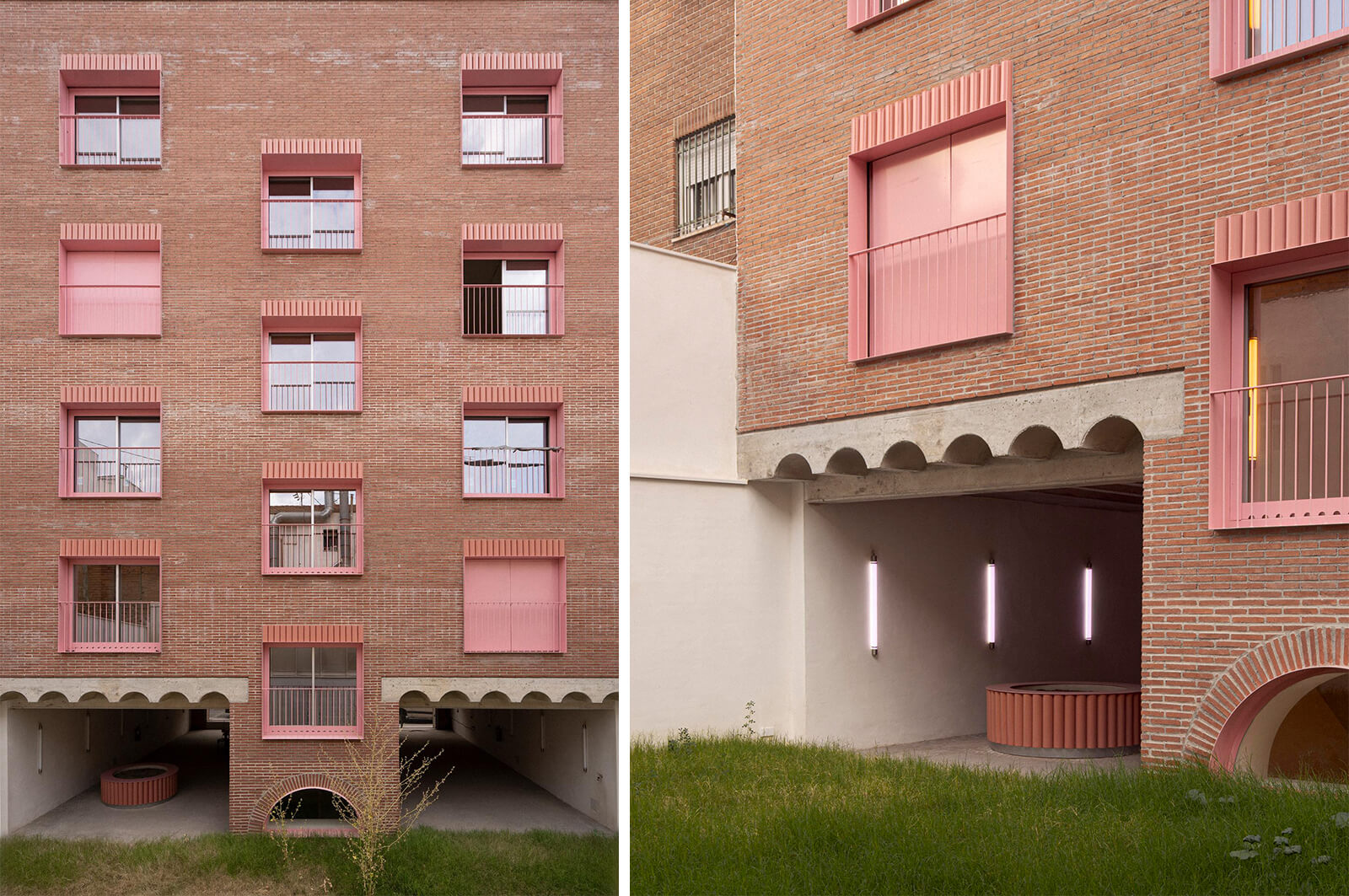
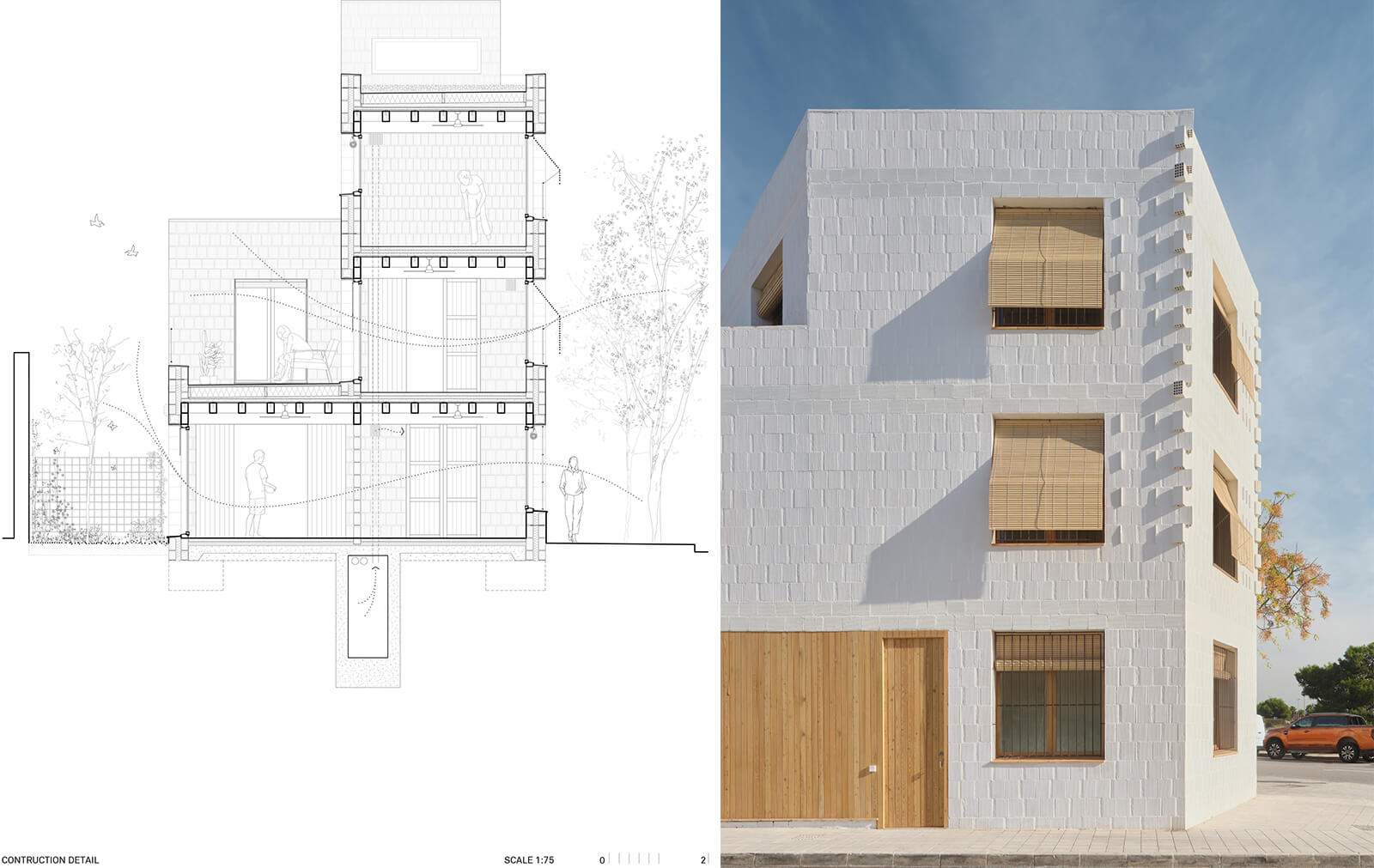
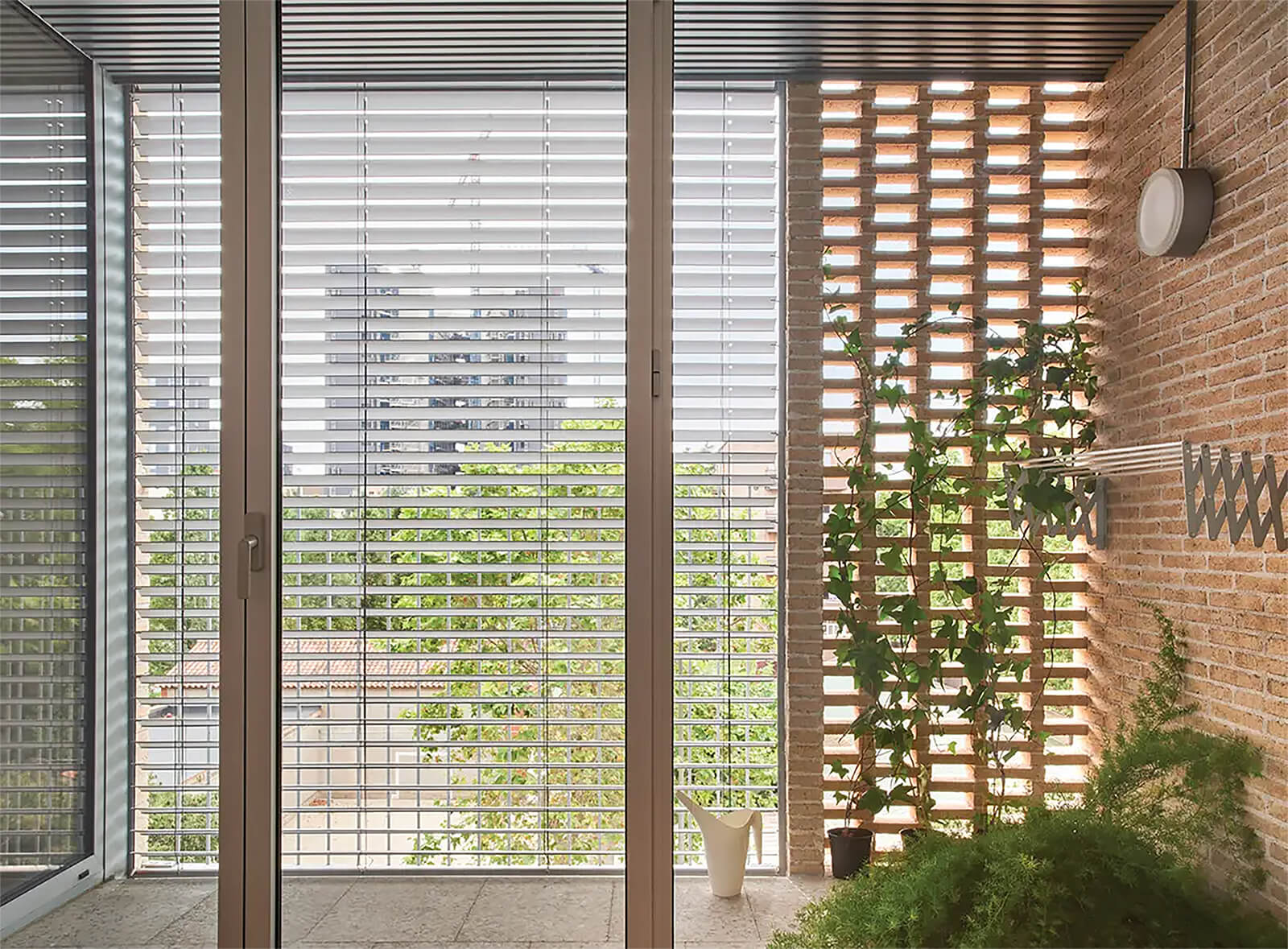
This concern with contextuality yielding an aesthetic expression is also highlighted in the project by Spanish architects BURR STUDIO’s O 14 in Madrid. The project plays with the repeatable, modular nature of brick blocks, complementing it with other sculptural elements in a similar colour palette. The idea here was to reimagine the domestic facade as a surface that actively dialogues with its context. Another project from Spain by Carles Enrich Studio similarly utilises the form of the brick itself. 11 social housing units in Palma is located on a narrow and small plot, previously occupied by a marés stone quarry, with a facade that is entirely open on one side, featuring rattan curtains covering the large-scale openings. Constructed with Mallorcan ceramic blocks, with detailing that accentuates the precision of the material, the materiality is meant to emphasise the architects’ drive for durability, economic efficiency and low environmental impact, as they note. Lastly, the project by Peris+Toral Arquitectes & L3J harps on community interaction and openness in programme through design. Social Atrium – 54 dwellings in the Besòs in Barcelona is designed as porous blocks of rental social housing with communal amenities on the ground level.
It is discernible here that in the project of collectivity—in making, building and habitating, as are the principles behind housing endeavours globally—the relevance of material is in ensuring identity and preserving memory, while also updating the codex of what has been thus far. It is to find new ways of coming together and forming new collective units without altering the individual: brick or human. That indeed is the strength of material exploration, of zooming in to the cellular while retaining the ‘big picture’; of hearing the sound the brick makes when joined with another and how it echoes across different contexts.
(The views and opinions expressed here are those of the author(s) and do not necessarily reflect the official position of STIR.)
STIR is a strategic media partner for BRICK AWARD 26. Read more thought pieces on the shortlisted buildings, exclusive interviews with jury members and updates on the awards and winners here.

by Pranjal Maheshwari Oct 19, 2026
The Mumbai-based architects integrate courtyards, mesh screens and north light trusses to create a dining space that doubles up as a community hub at SR University, Warangal.
by Mrinmayee Bhoot Oct 17, 2026
The Rotterdam-based institute centres the Indian Ocean as a network for exploring material histories and transnational links shaping coastal cultures, positing them as future models.
by Pranjal Maheshwari Oct 16, 2026
At the 2026 Stirling Prize ceremony, Mary Duggan with RUFF Architects, MAKER Architecten and Nakshabid Architects were felicitated for proffering quality housing and social equity.
by Mrinmayee Bhoot Oct 12, 2026
The new Centre for Contemporary Arts, fostering public engagement with art in Uzbekistan, is housed in a tram depot refurbished by the French studio, emulating local craftsmanship.

make your fridays matter with a well-read weekend
Enter your details to sign in
Don’t have an account?
Sign upOr you can sign in with
a single account for all
STIR platforms
All your bookmarks will be available across all your devices.
Stay STIRred
Already have an account?
Sign inOr you can sign up with
Verification link sent to check your inbox or spam folder to complete sign up process
Tap on things that interests you.
Select the Conversation Category you would like to watch
Please enter your details and click submit.
Enter the 6-digit code sent at


Housing with brick: The material ethics and socialities of living together
by Mrinmayee Bhoot | Published on : Mar 18, 2026


 Sign in with Google
 Sign in with email
What do you think?