Art05 mins. read
Luis Sahagun's art unites indigenous histories with contemporary realities
by Sakhi SobtiOct 20, 2023



by Sunena V MajuPublished on : Mar 11, 2026
For decades, ‘American’ may have been the most successfully marketed word in the English language. American music, American film, American fashion, American freedom, American dollars, American Dream—the list is endless. In the 1990s and early 2000s, globalisation in the Global South often felt like a process of Americanisation. However, what does it mean for something to be American at all now? If politics, economics and culture must reckon with the country’s colonial histories, then art cannot remain outside that reckoning. In such a moment, what does a ‘survey of American art’ choose to show, or not?
The art world’s favourite and most controversial survey of American art opened its doors recently. With no conceptual or poetic framing, this year’s exhibition is simply titled Whitney Biennial 2026. At first glance, the title appears almost disappointingly neutral. Compared to 2024’s Even Better Than the Real Thing and the 2022 Quiet as It's Kept, this year’s biennial title tells you nothing about what you should expect or what exactly the curators want you to think. Marcela Guerrero and Drew Sawyer, both in-house curators at the Whitney Museum of American Art, took a risk with that. For a biennial that is criticised almost every time—whether for its selection of artists, its male-heavy lists, the nationalities represented, racist works on display, insensitive curation or the overwhelming whiteness of the galleries—everything becomes an experiment. Therefore, the absence of framing turns out to be a surprisingly sharp curatorial decision.
In an era of instant opinion and accelerated consumption, titles often function as interpretive shortcuts. By refusing one, the curators compel viewers to look before deciding what the exhibition means. Throughout the exhibition, this quality remains. Every piece of work by the 56 artists, duos and collectives makes you ask, “What is it? What does this mean?” The biennial is spread across the two main floors, one gallery on the ground floor, and the billboard outside. Some works exist in relation to each other. Some are placed where there seems to be enough space. Some seek to make you walk by, turn back and stay for a few minutes. “Rather than approaching the exhibition as a set of themes or issues to be illustrated through each artist’s work, Whitney Biennial 2026 is composed as a constellation of resonant moods…Angst, amusement, ecstasy, nonchalance and ambivalence ripple across the galleries through works that engage senses beyond the visual, incorporating sound, scent and touch,” reads the curatorial statement. You experience all those emotions and more.
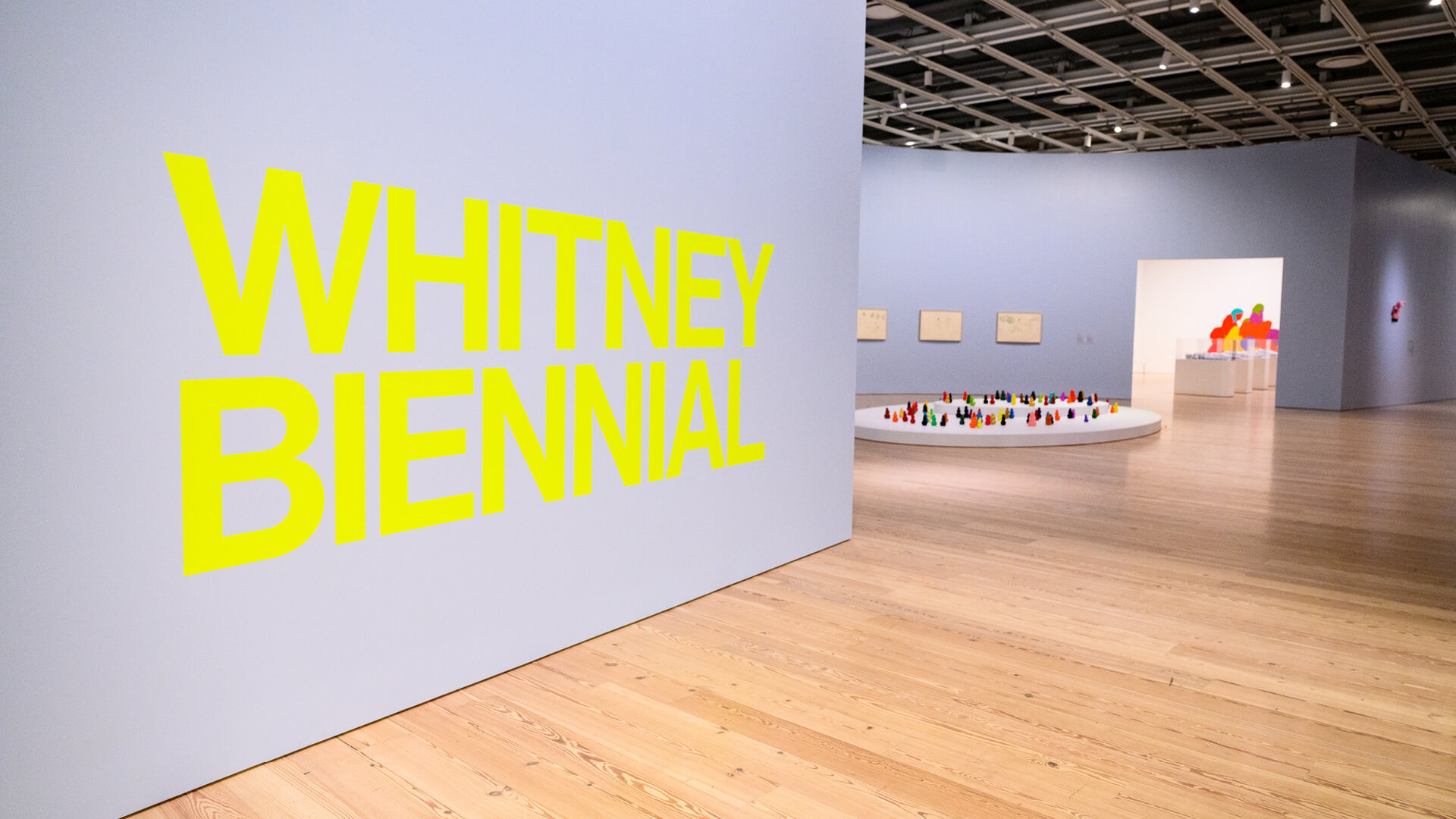
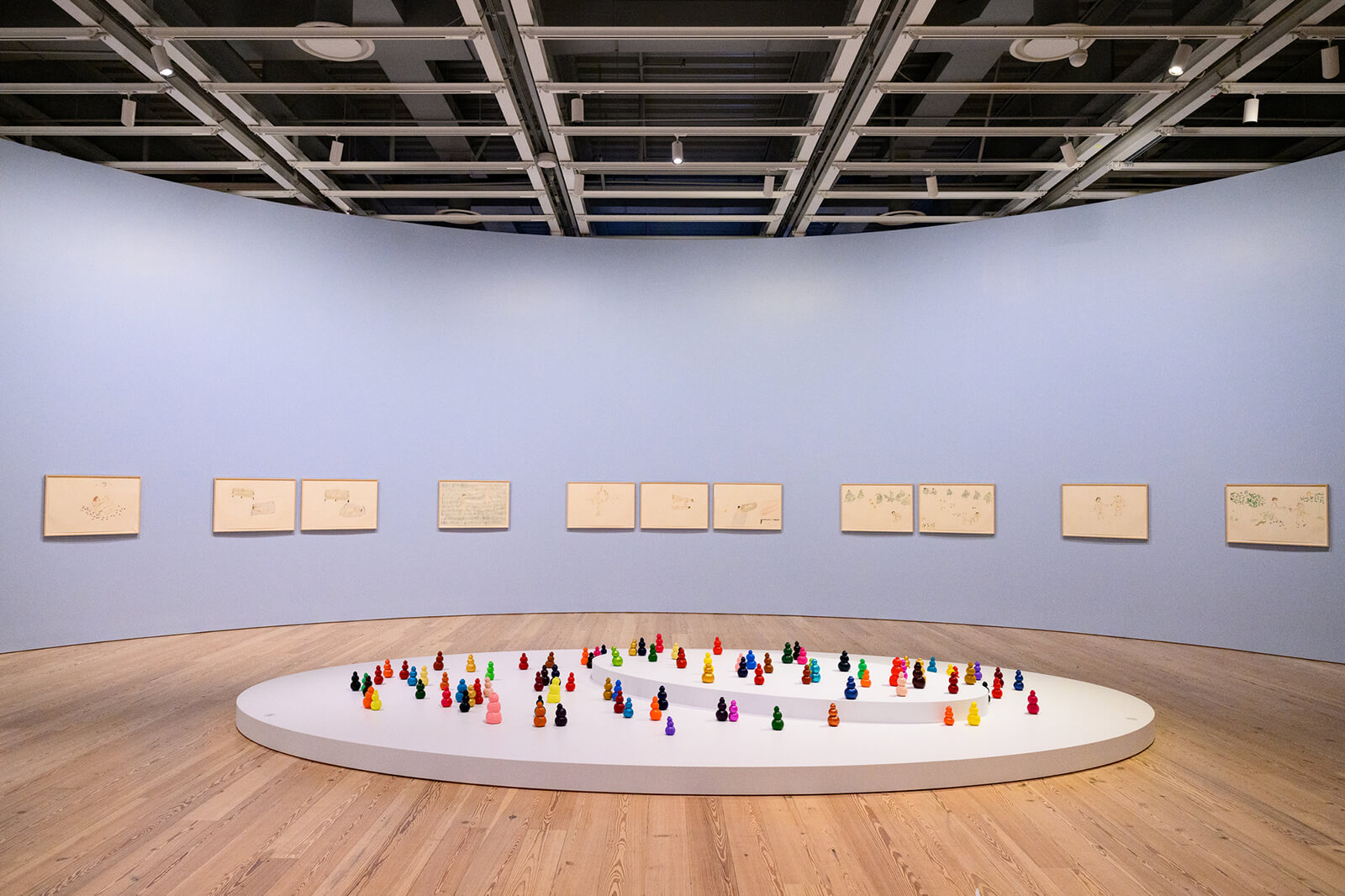
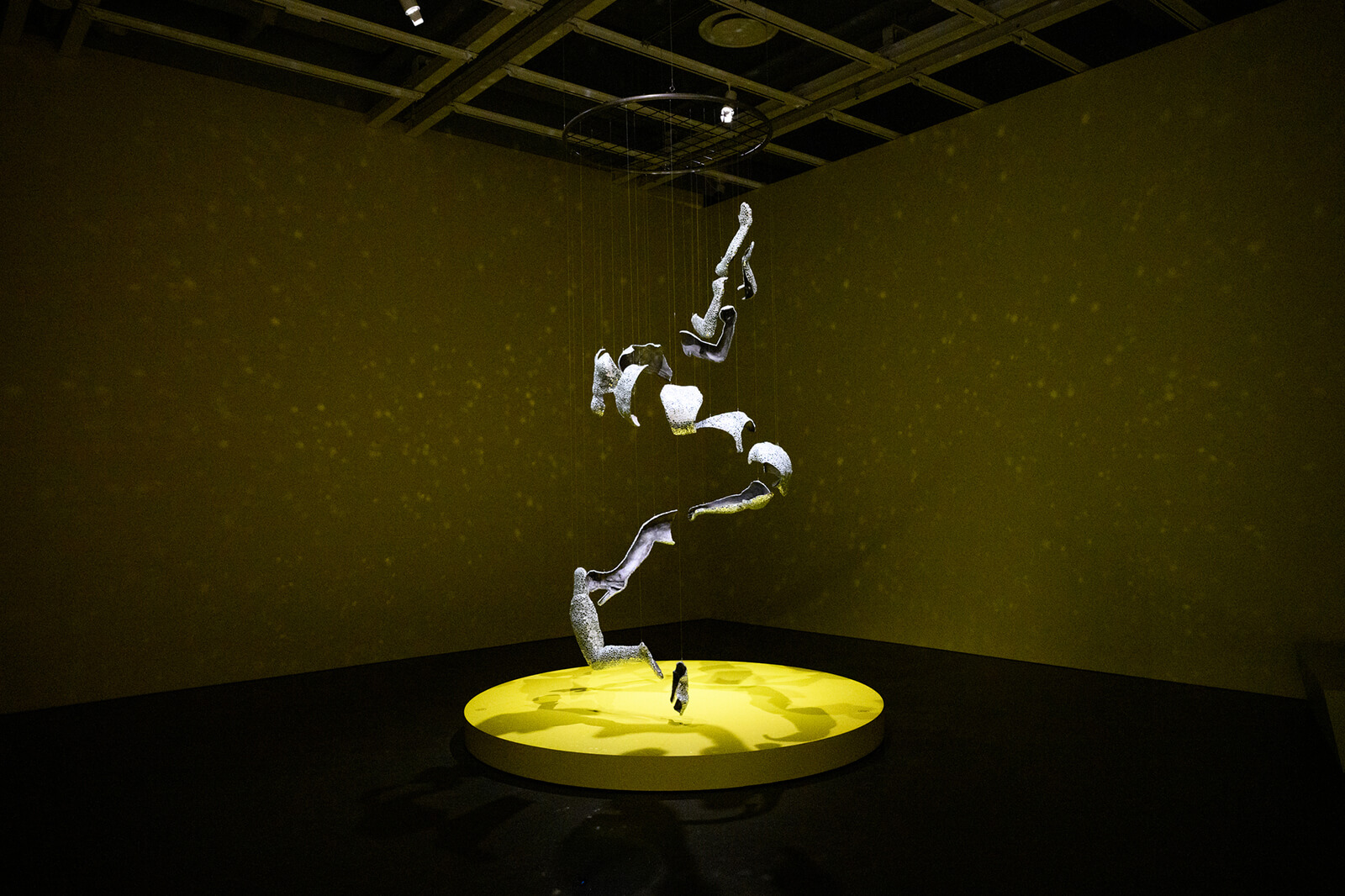
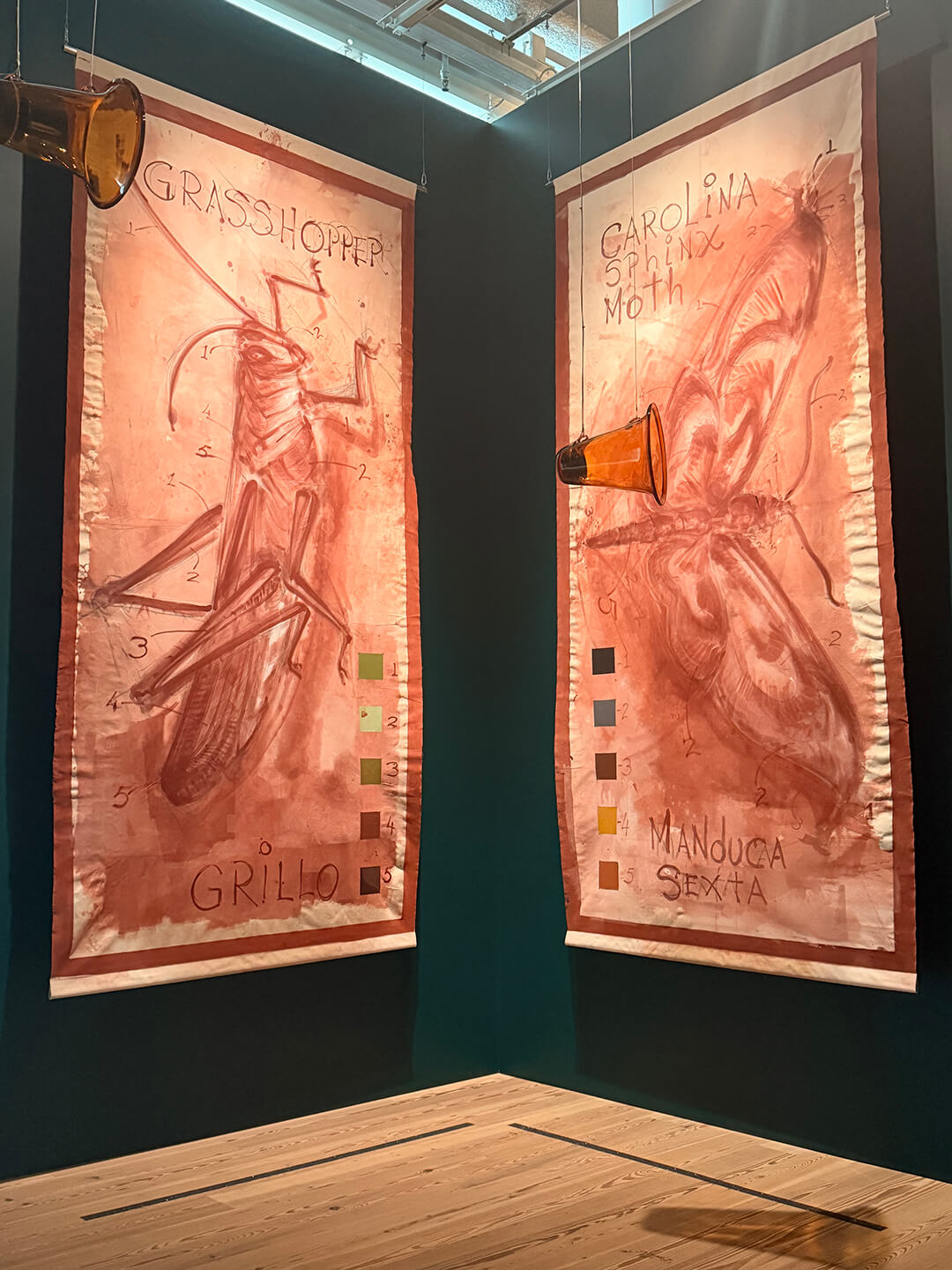
On the 5th floor, the biennial title appears in neon yellow alongside the exhibition text. Emilie Louise Gossiaux’s Kong Play (2024), a colourful arrangement of ceramic sculptures, greets visitors as the Renzo Piano building frames its now-familiar view of the Hudson. This gallery has always felt challenging, as the view of the river and the distant Statue of Liberty competes with whatever occupies the space. Yet, Sula Bermúdez-Silverman’s small but striking sculptures made from blown glass and found objects hold their ground against the view. Nearby, Oswaldo Maciá’s Requiem for the Insects (2026) introduces the first sonic element: a glass megaphone suspended from the ceiling accompanies paintings inspired by eighteenth-century field sketches, while insect sounds and shattering glass evoke ecological disappearance. Young Joon Kwak’s Divine Dance of Soft Revolt (2024) makes for a glamorous pause, with mirrored glass, glitter and suspended forms shimmering against a saturated yellow backdrop. The floor ultimately becomes a constellation of forms and sensibilities, with paintings, sculptures, sound and installations by artists working across national and cultural contexts.
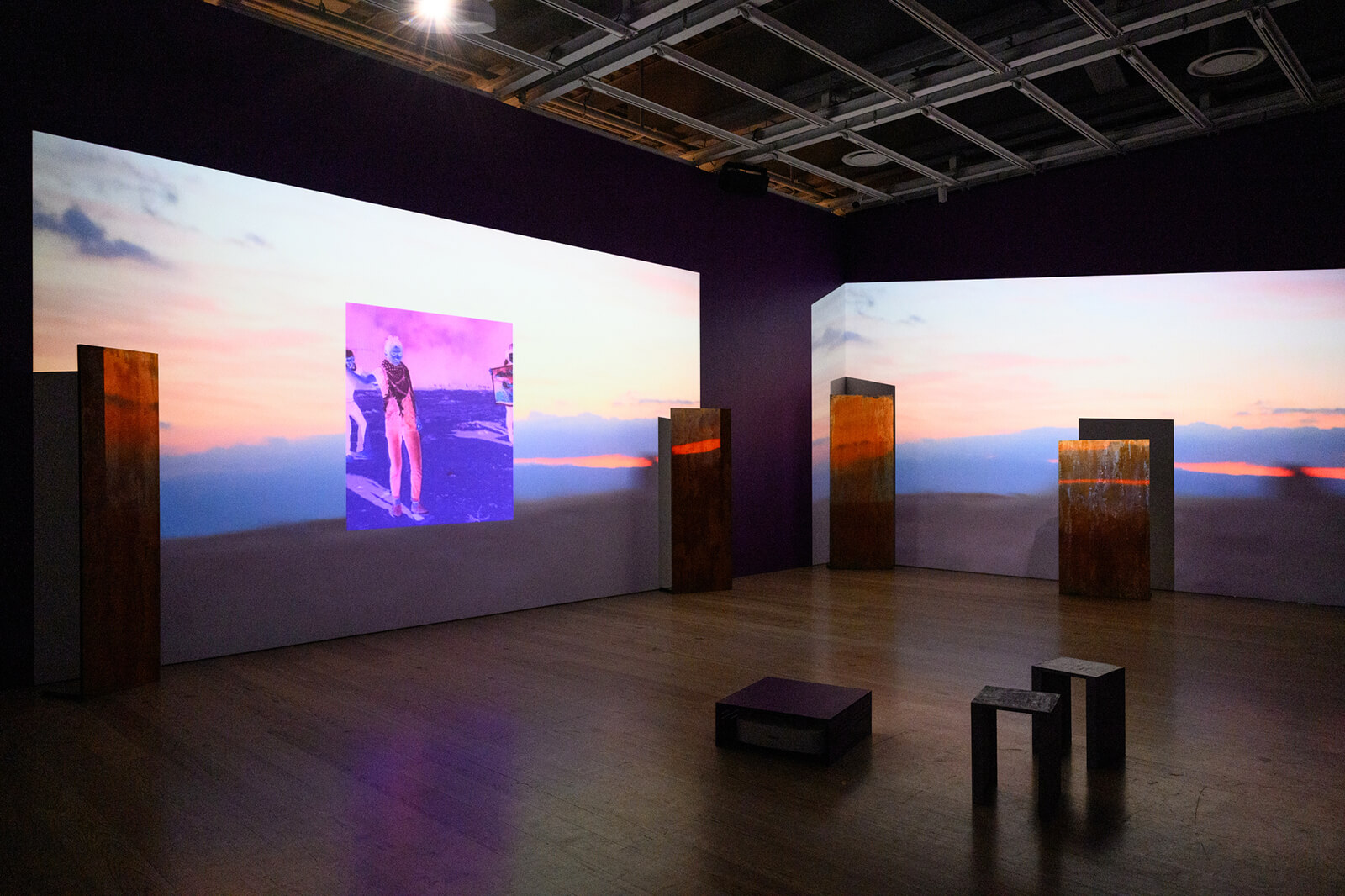
The most arresting moment arrives with Basel Abbas and Ruanne Abou-Rahme’s Until We Became Fire and Fire, Us (2023 – ongoing). The video and sound installation reflects on the collective feeling of love and longing felt by many Palestinians in the wake of the erasure of land and communities in Palestine. In a museum that cancelled a performance about Palestinian mourning last year and suspended its Independent Study Program amid accusations of censorship, the presence of a work addressing Palestinian displacement feels pointed. It reflects the curators’ stated intention to include work shaped by the realities of U.S. intervention, occupation and colonial histories beyond national borders, not only those already comfortably historicised.
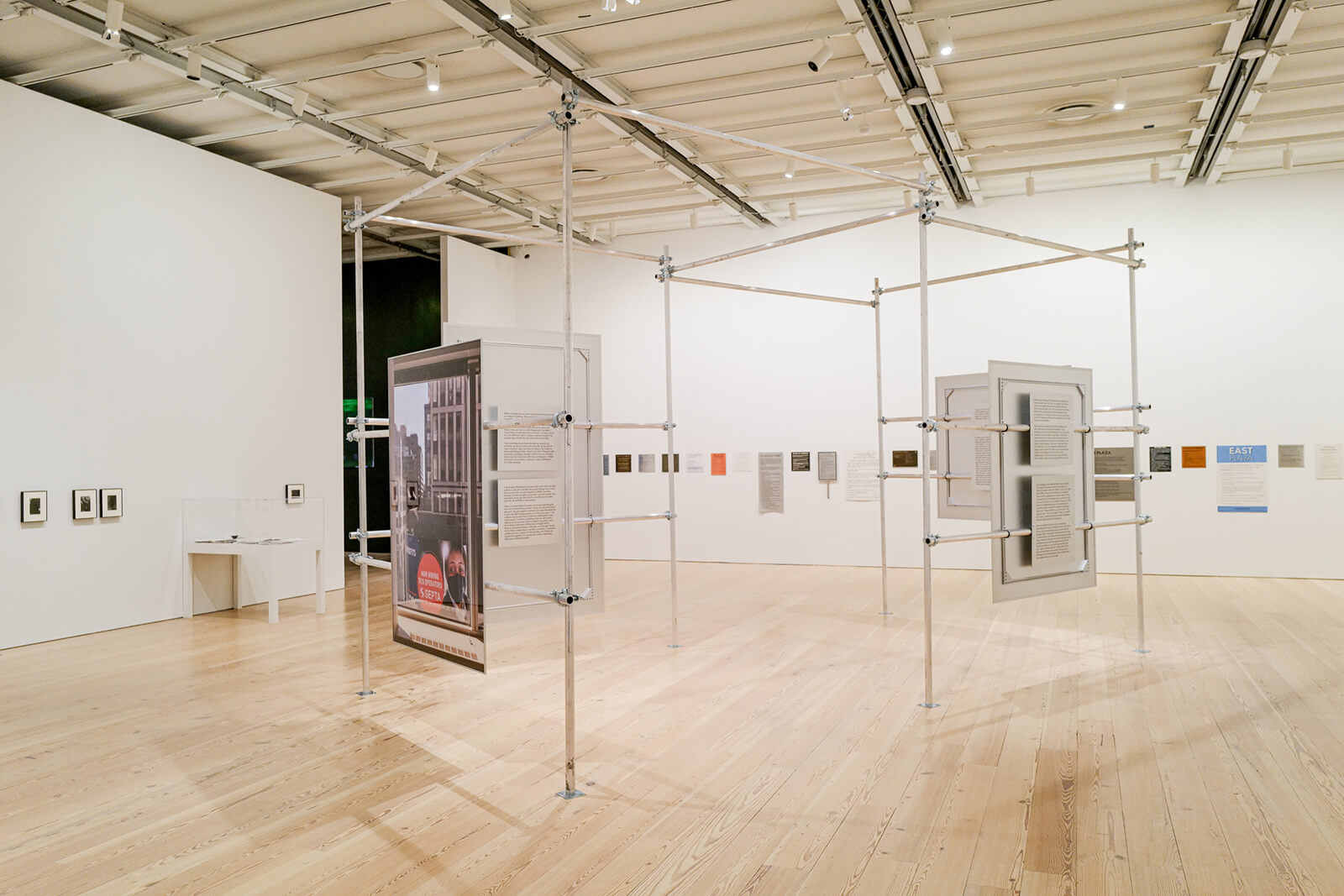
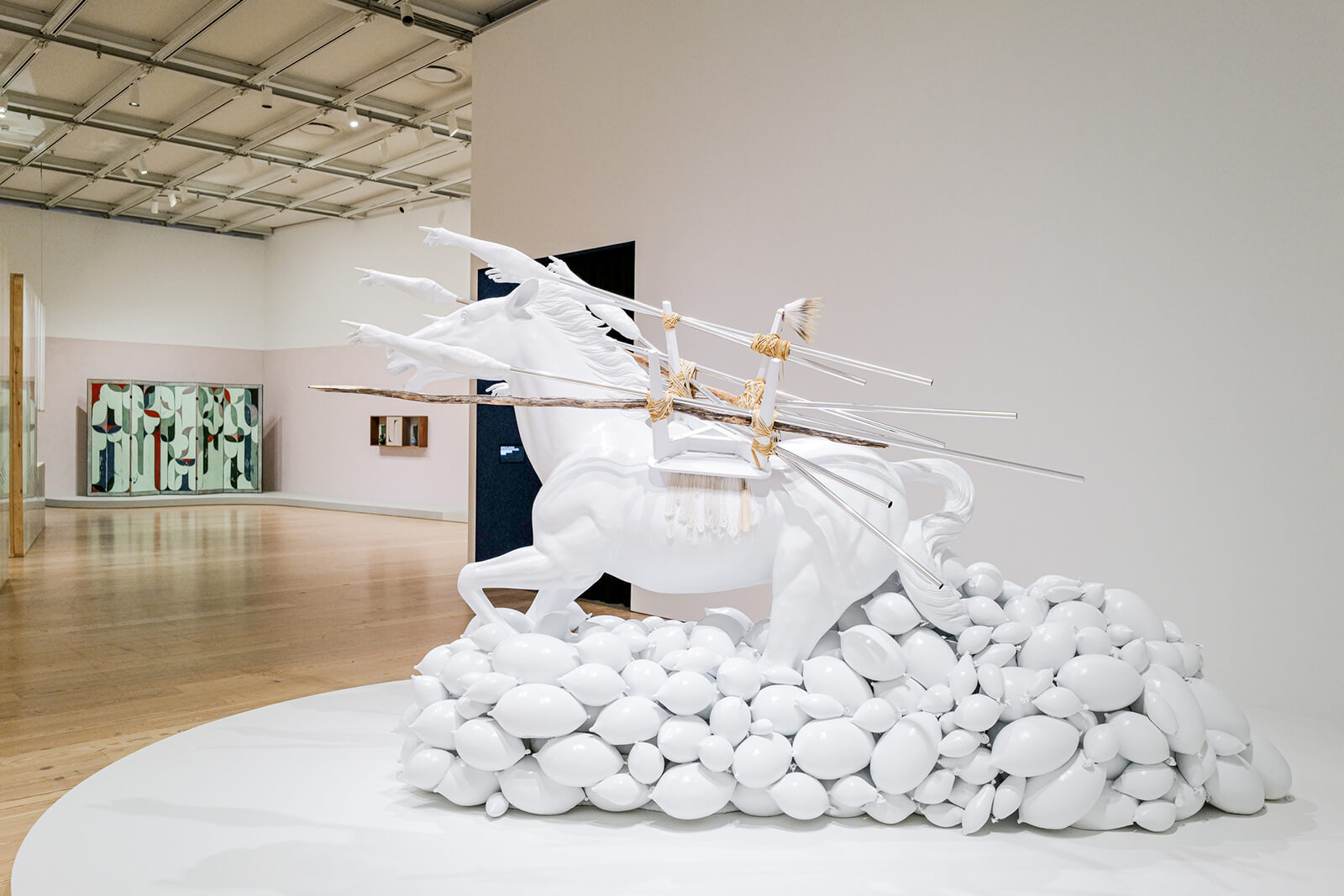
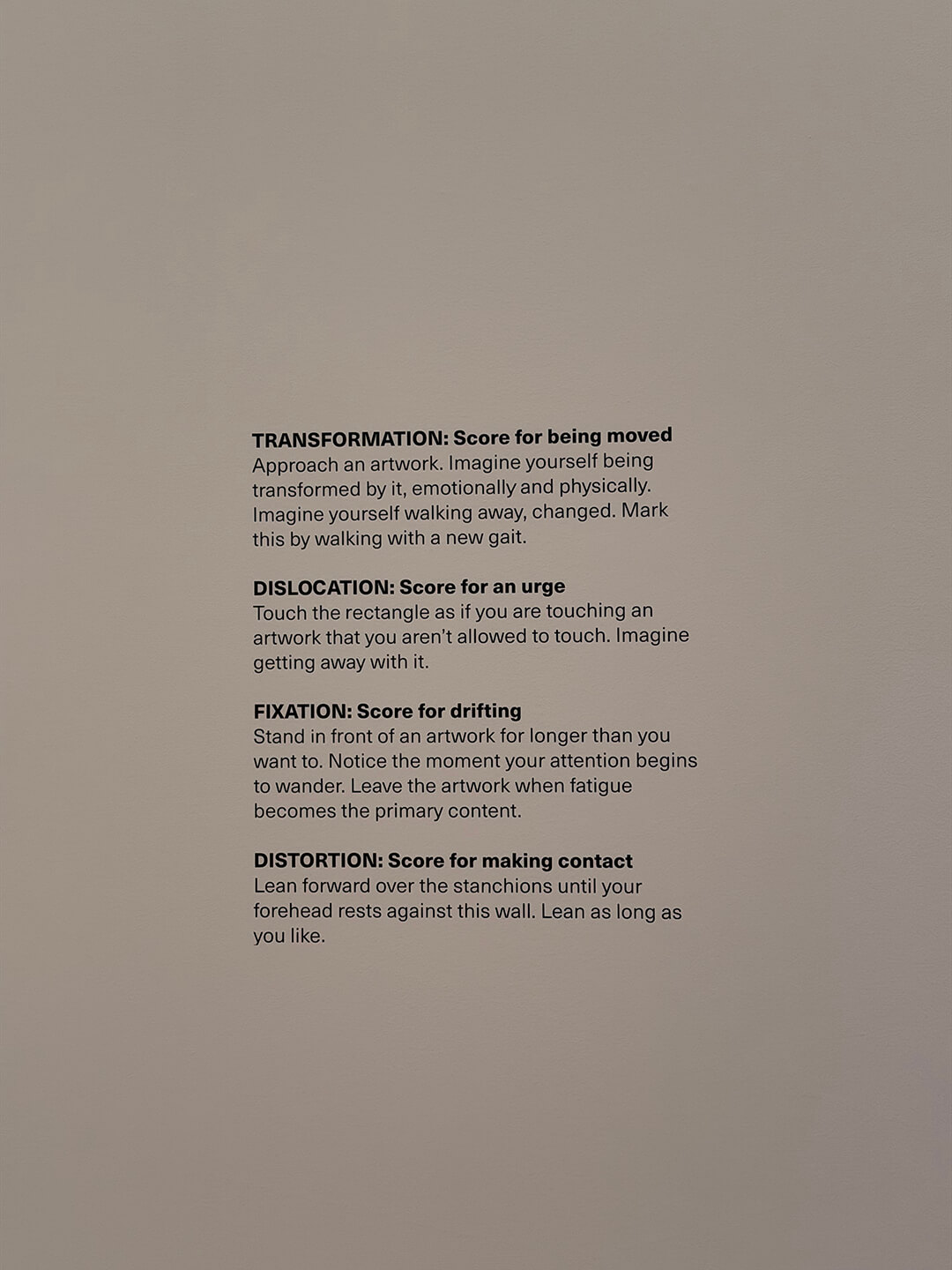
On the 6th floor, Michelle Lopez’s Pandemonium (2025) invites visitors with an immersive planetarium-like setup with a video projection on a circular screen overhead. The video, described as ‘an immersive meditation’, combines imagery of debris, newspaper clippings and archival material swirling in a destructive tornado. Among these fragments, the American flag resurfaces as well, tying the overall reminders of media overload, disinformation and chaos through environmental collapse, almost reminding us of the role the government plays in it. In the adjacent gallery, beyond the scaffolding of Emilio Martínez Poppe’s Civic Views (2025), with photographs taken from city government office windows and anonymous interview excerpts highlighting public sector work, is Maia Chao’s Scores for the Museum Visitor (2026). A blank white vinyl rectangle on the wall with black borders with words, “touch the rectangle as if you are touching an artwork that you aren’t allowed to touch.” The once-blank surface now bears lip prints, fingerprints, stickers and smudges, a quiet accumulation of rule-breaking gestures. Anna Tsouhlarakis’s She Must Be a Matriarch (2023) becomes the floor’s visual anchor: a white monument-like sculpture that blends Indigenous humour with classical monumentality, floating improbably on a cloud of inflated condoms.
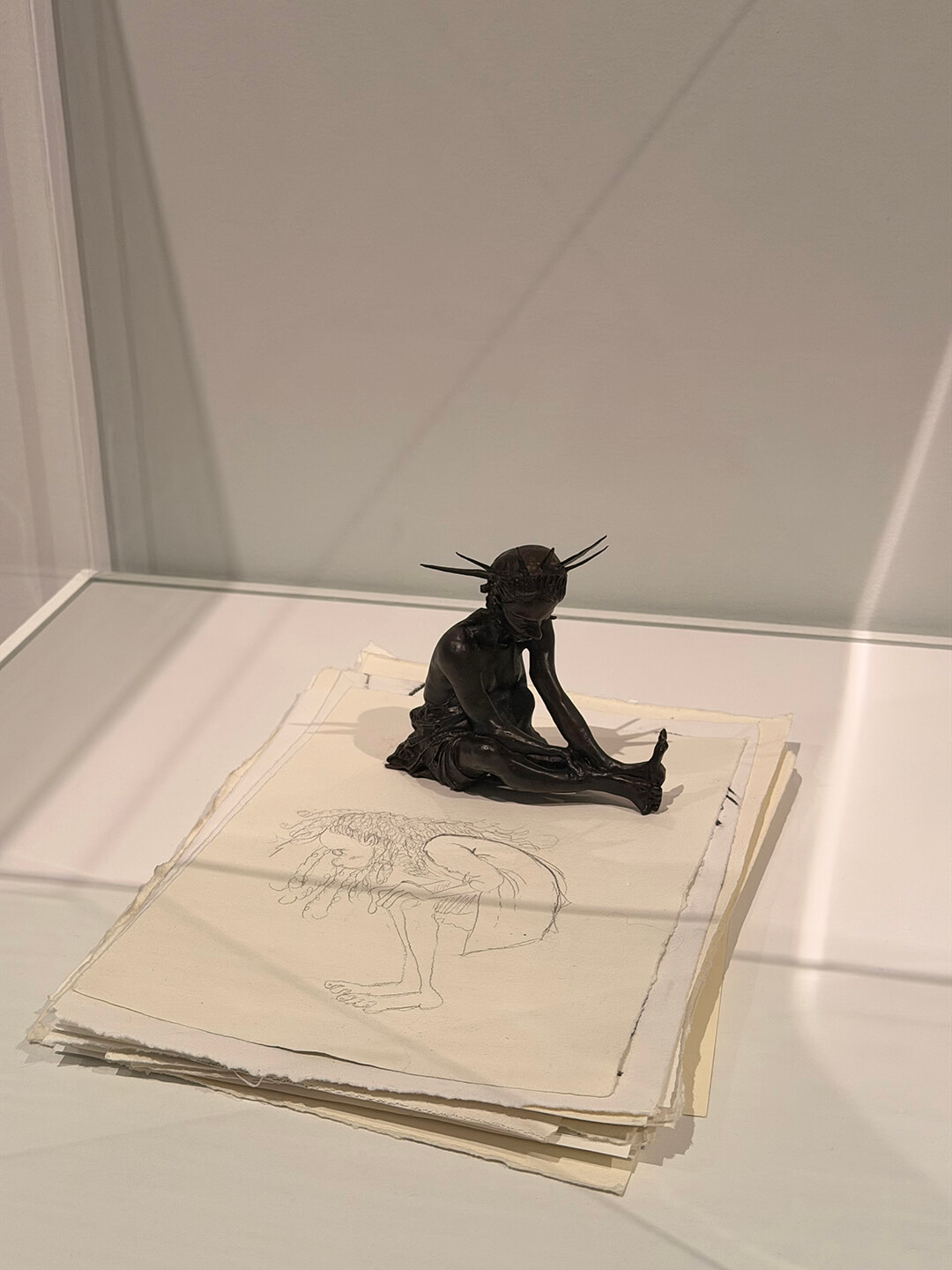
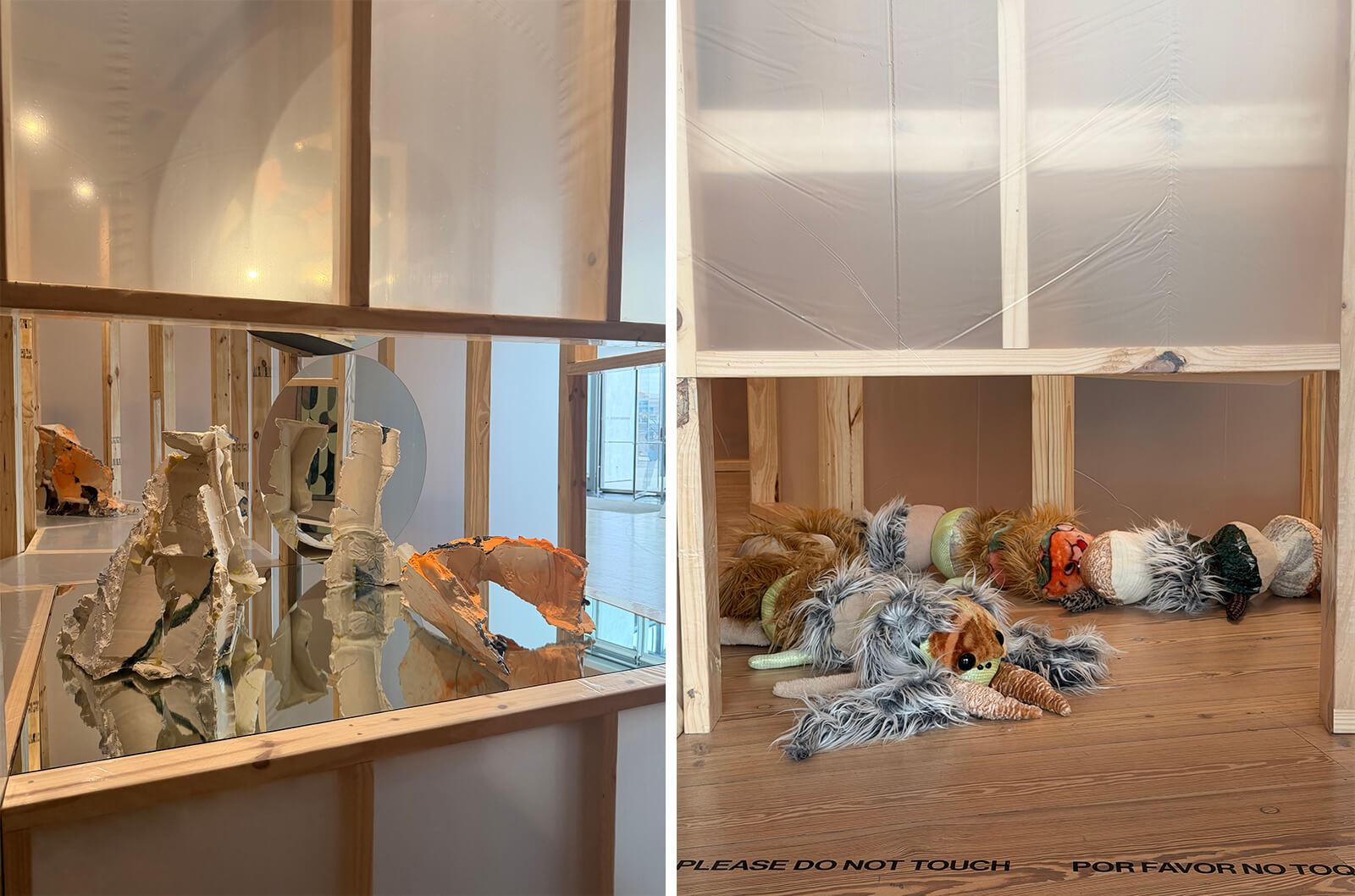
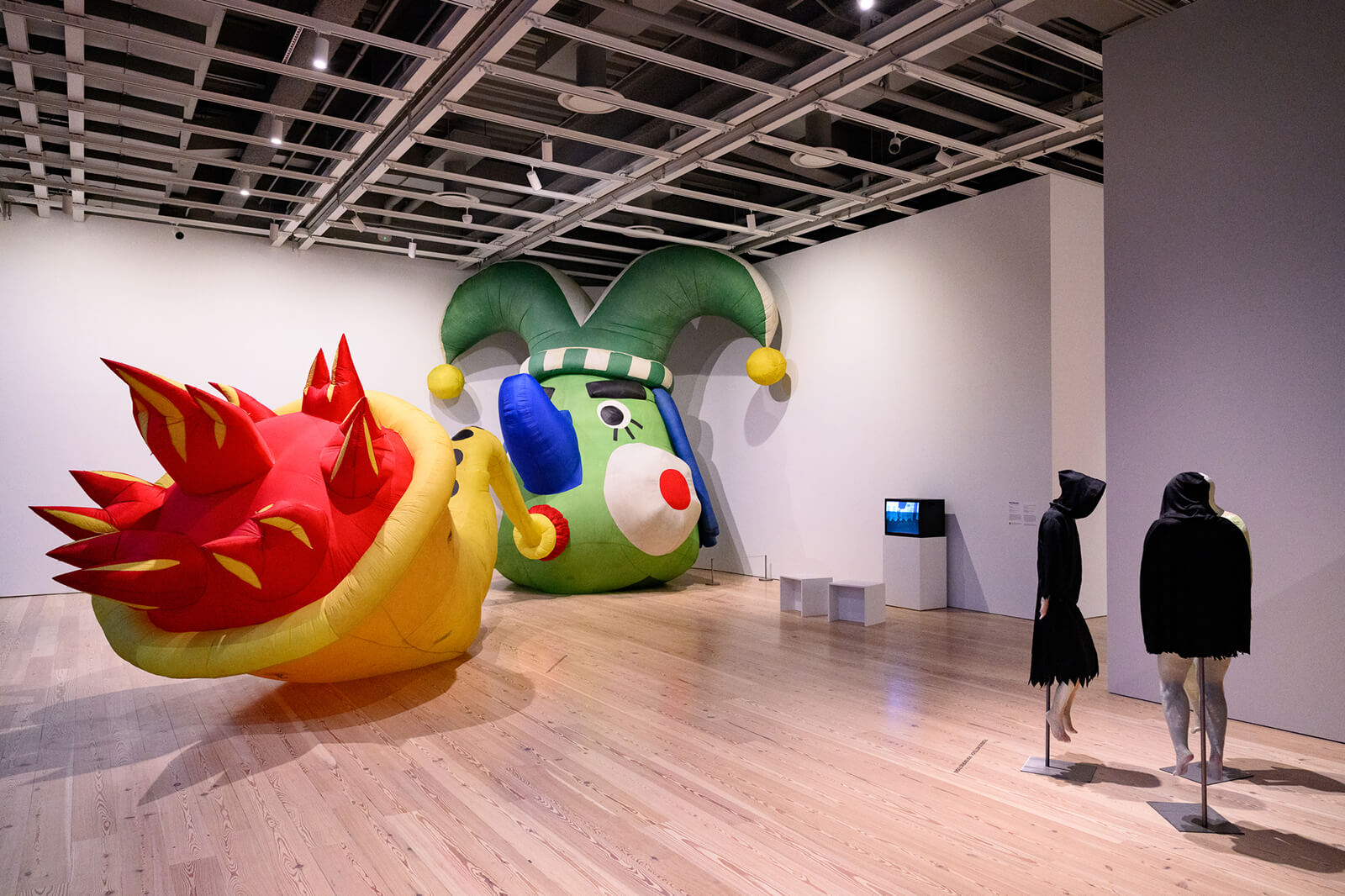
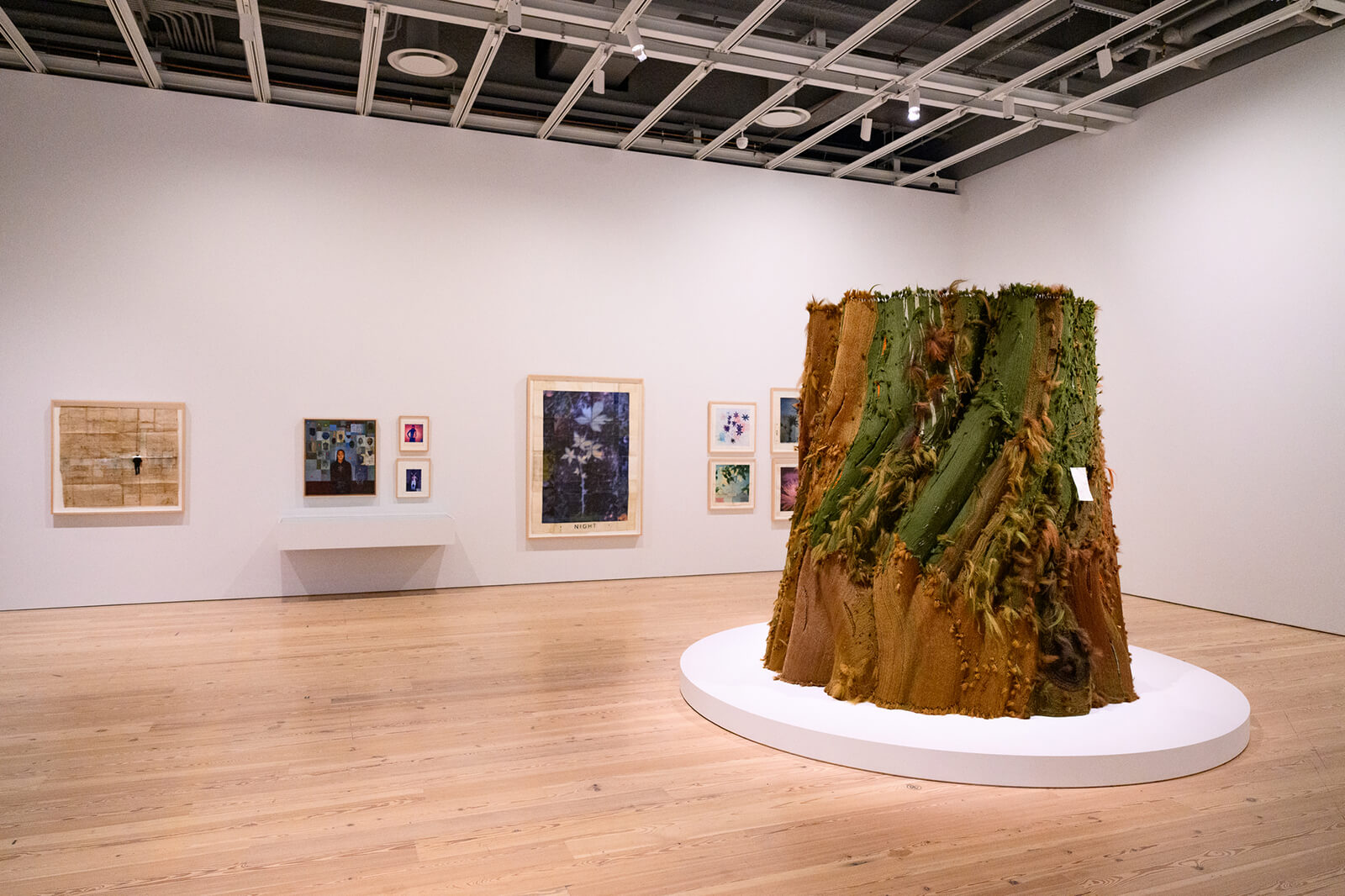
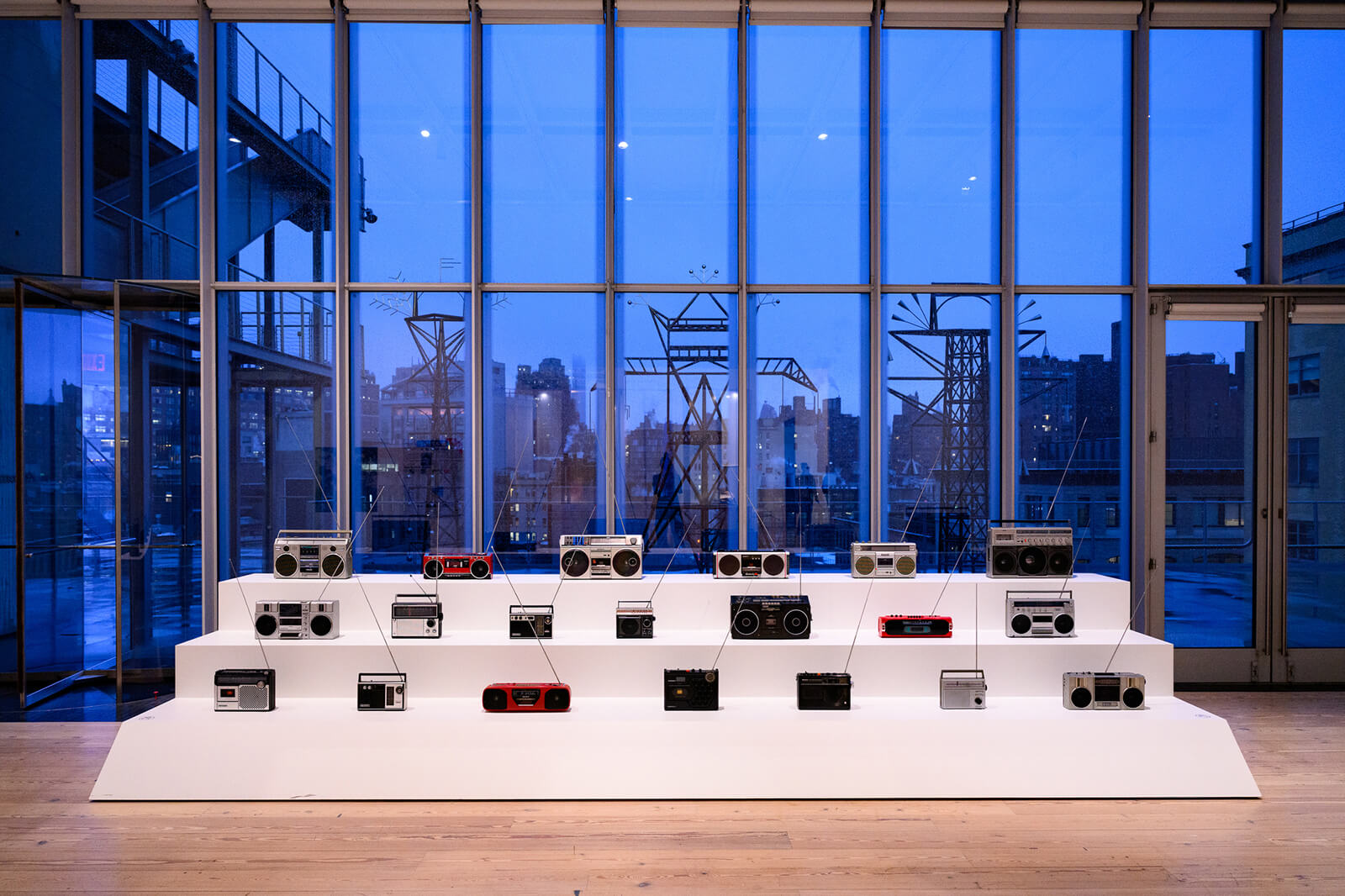
The Whitney Biennial 2026 is, at first glance, an interplay of many emotions—fun, interactive, thoughtful, occasionally unsettling and deeply entertaining. I saw many kids joyfully watching and interacting with Pat Oleszko’s massive inflatable Blowhard (1995), CFGNY’s mix of porcelain sculptures and stuffed animal soft toys, Continuous Fractures Generating new Yields (2025), Leo Castañeda’s Camoflux video game capture and José Maceda and Aki Onda’s sound installation Ugnayan (1974/2026). Beneath the playfulness, each work invites closer observation, prompting viewers to pause, read, reflect and slowly piece together its layers of meaning. The biennial ultimately functions as an expanded version of the Whitney’s educational program, A Closer Look, which encourages visitors to encounter art without prior context. Instead of supplying a single curatorial thesis, it asks viewers to observe, connect and interpret for themselves.
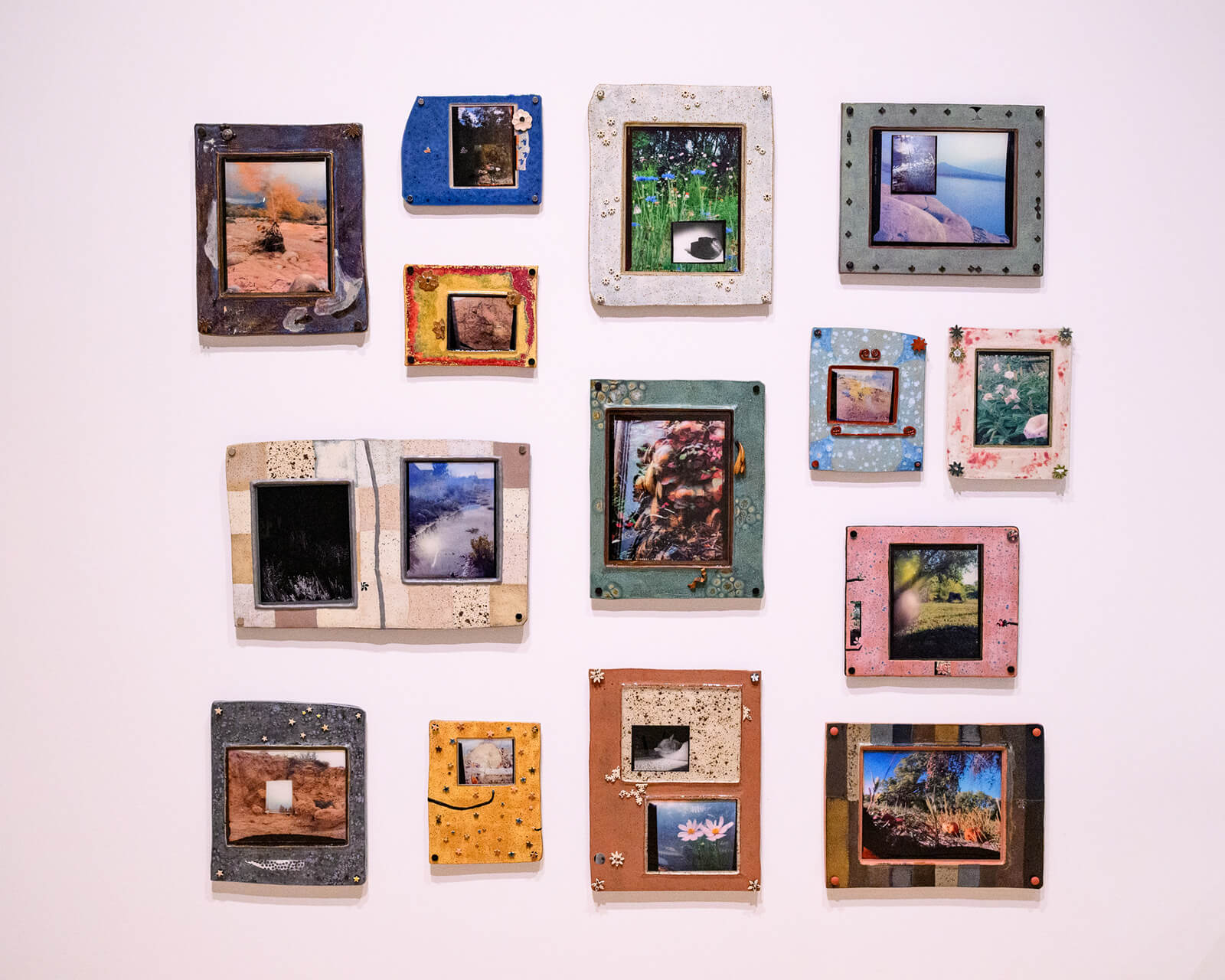
One of my favourite essays ever is Toni Morrison’s The Foreigner’s Home, where she asks: “To what do we owe the greatest allegiance? Family, language, group, culture, country, gender? Religion, race? And if none of these matters, are we urbane, cosmopolitan or simply lonely?” In present times, these are important questions that necessitate a critical re-examination of our systems and beliefs. The Whitney Biennial 2026 quietly extends Morrison’s question; rather than defining what American art is, the exhibition hints at a bigger conundrum: what it means to call anything American at all.
‘The Whitney Biennial 2026’ runs from March 8 – August 23, 2026, at the Whitney Museum of American Art, New York.
The views and opinions expressed here are those of the author(s) and do not necessarily reflect the official position of STIR or its editors.
by Srishti Ojha Oct 21, 2026
Increasingly, artists, filmmakers and activists are turning to VR to create more personal, tangible accounts of the climate emergency and its impact on vulnerable communities.
by Mirra Lynn Oct 20, 2026
The Indian artist paints the old wadas of central Pune, capturing the traces of everyday life that cling to these structures, battered by time but unbowed.
by Anmol Ahuja Oct 15, 2026
How do heaps of souvenirs and relics with racist Aboriginal motifs and features become art? MCA Sydney’s winter showcase—the artist’s largest to date—beckons a possibility.
by Vandana Kalra Oct 14, 2026
With his latest exhibition as a point of departure, the modernist discusses his decades-long practice, the spontaneity of drawing and the social responsibility of artists.

make your fridays matter with a well-read weekend
Enter your details to sign in
Don’t have an account?
Sign upOr you can sign in with
a single account for all
STIR platforms
All your bookmarks will be available across all your devices.
Stay STIRred
Already have an account?
Sign inOr you can sign up with
Verification link sent to check your inbox or spam folder to complete sign up process
Tap on things that interests you.
Select the Conversation Category you would like to watch
Please enter your details and click submit.
Enter the 6-digit code sent at


How the Whitney Biennial 2026 reimagines the new American
by Sunena V Maju | Published on : Mar 11, 2026


 Sign in with Google
 Sign in with email
What do you think?