Design08 mins. read
'Svenskt Tenn: A Philosophy of Home' is a celebration of legacy and craftsmanship
by Aarthi MohanNov 14, 2024



by Bansari PaghdarPublished on : Feb 20, 2026
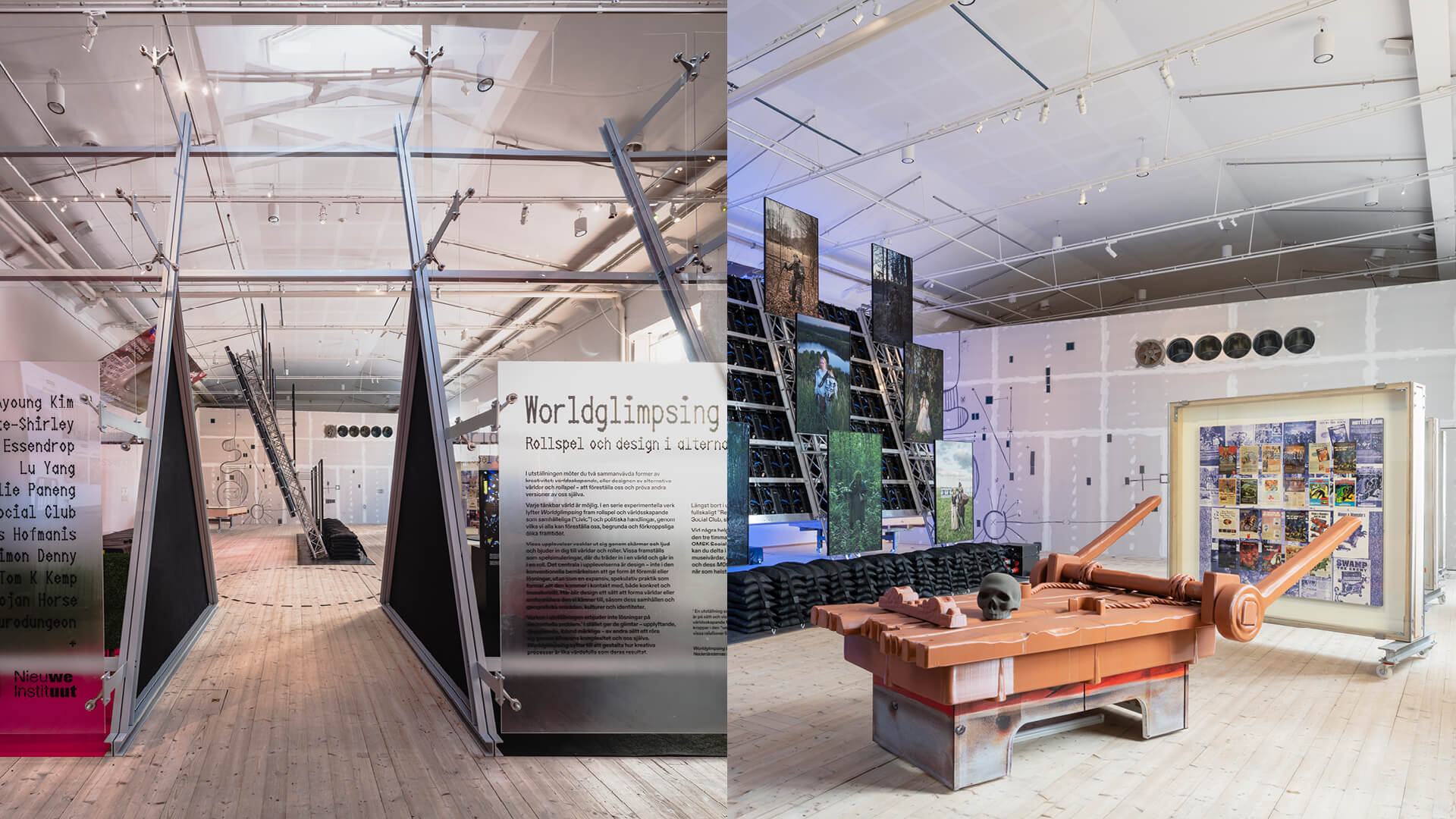
In contemporary architectural rhetoric and conversations, while terms such as ‘worldbuilding’ have become quite commonplace and are often hyperbolic in their negotiations with architectural agency, the term ‘worldglimpsing’ offers a hopeful alternative. Coined for an exhibition of the same name to explore provocations against singular worldbuilding, it suggests a more nuanced worldview in contrast to the ways in which anyone of note is ‘worlding’, nearly all the time.
Staged at ArkDes in Stockholm, Sweden, Worldglimpsing: Roleplay and the Design of Alternate Realities is a collaboration between ArkDes and Nieuwe Instituut, exploring two interwoven forms of creativity—worlding and roleplay. While worlding refers to the design and imagination of alternate worlds, complete or otherwise, roleplay implies the act of imagining, speculating and playing alternate versions of ourselves, shifting the focus from the worldly to the individual and collective body, ultimately extending the possibilities of who we are and who we could be.
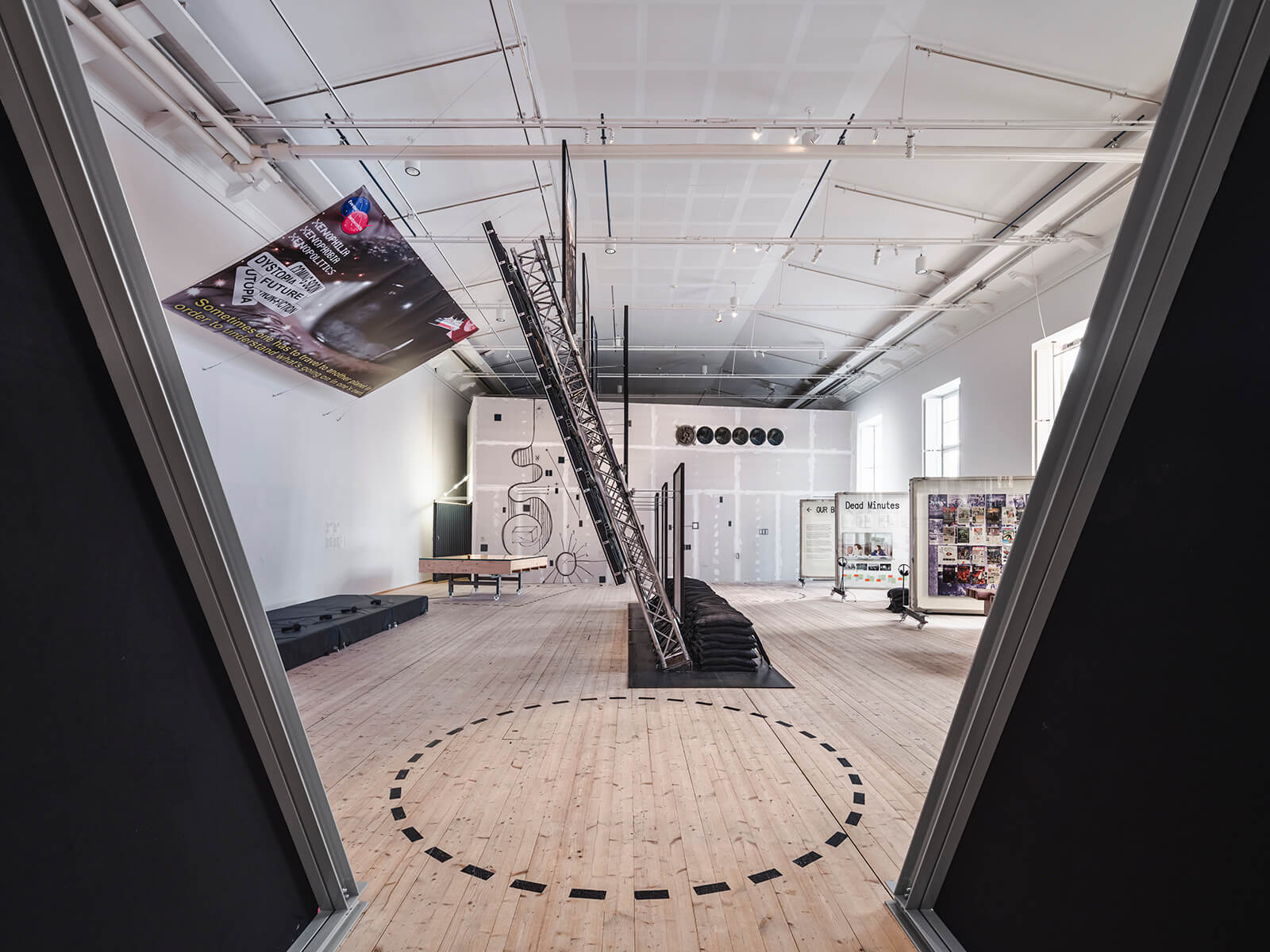
Roleplay, as an active practice, provides opportunities to defy the realities one is bound by and go beyond what is essentially required or often expected of oneself. It is, conversely, also the ability to inhabit the world one imagines. Even when we do not actively weave these alternative realities through the various media at our disposal, we all project fragments of our imagined reality onto our lived one, giving birth to a hybrid worldview that is influenced by both. Our respective realities then overlap to create several intertwined ones; complex, often incomprehensible and ever-expanding, unfolding almost like an elaborate open-world role-playing game (RPG) with infinite choices, plots and possibilities.
In assessing the act of worlding itself, perhaps no one can overlook the impact of the tabletop RPG Dungeons & Dragons (D&D) on the landscape of video games and popular culture at large, especially after the recent successes and popularity of D&D-inspired game Baldur’s Gate 3 and Netflix series Stranger Things. Their prominent cultural currency has once again brought a spotlight onto the already massively popular game, generating curiosity in the minds of gamers and non-gamers alike.
In the absence of notable physical or mental constructs to hold one back, the simultaneous acts of worlding and roleplay can lend shape to improbable scenarios, wishes and even dreams and projections into a strange amalgamation of the physical and digital that exist largely outside of defined convention(s). However, what a game like D&D does, more than anything else, is utilise the individual imaginations and capabilities of the players to shape a shared alternate reality for them to coexist and collaborate, coursing through the game in a manner that is strategic, responsive and yet collective. This is a particularly interesting provocation considering that the players’ imaginations are informed by their ‘real’ world socio-political leanings and constructs as much as the ‘made-up’ ones.
“It [Worldglimpsing] suggests that the idea that anyone can construct a complete world is an illusion—but we can design glimpses of alternate worlds that we can test, that we can invite others into and that can slowly shift our understanding of what's possible,” James Taylor-Foster, curator of Worldglimpsing, tells STIR. Rather than presenting worlding as a grand speculative gesture, Worldglimpsing frames it as something closer to disruptive propositions. The exhibition’s strength thus lies in exposing how fragments of imagined worlds are constantly tested, discarded and reassembled through everyday acts of participation—its merits, however, are in how far these glimpses can travel beyond the exhibition space.
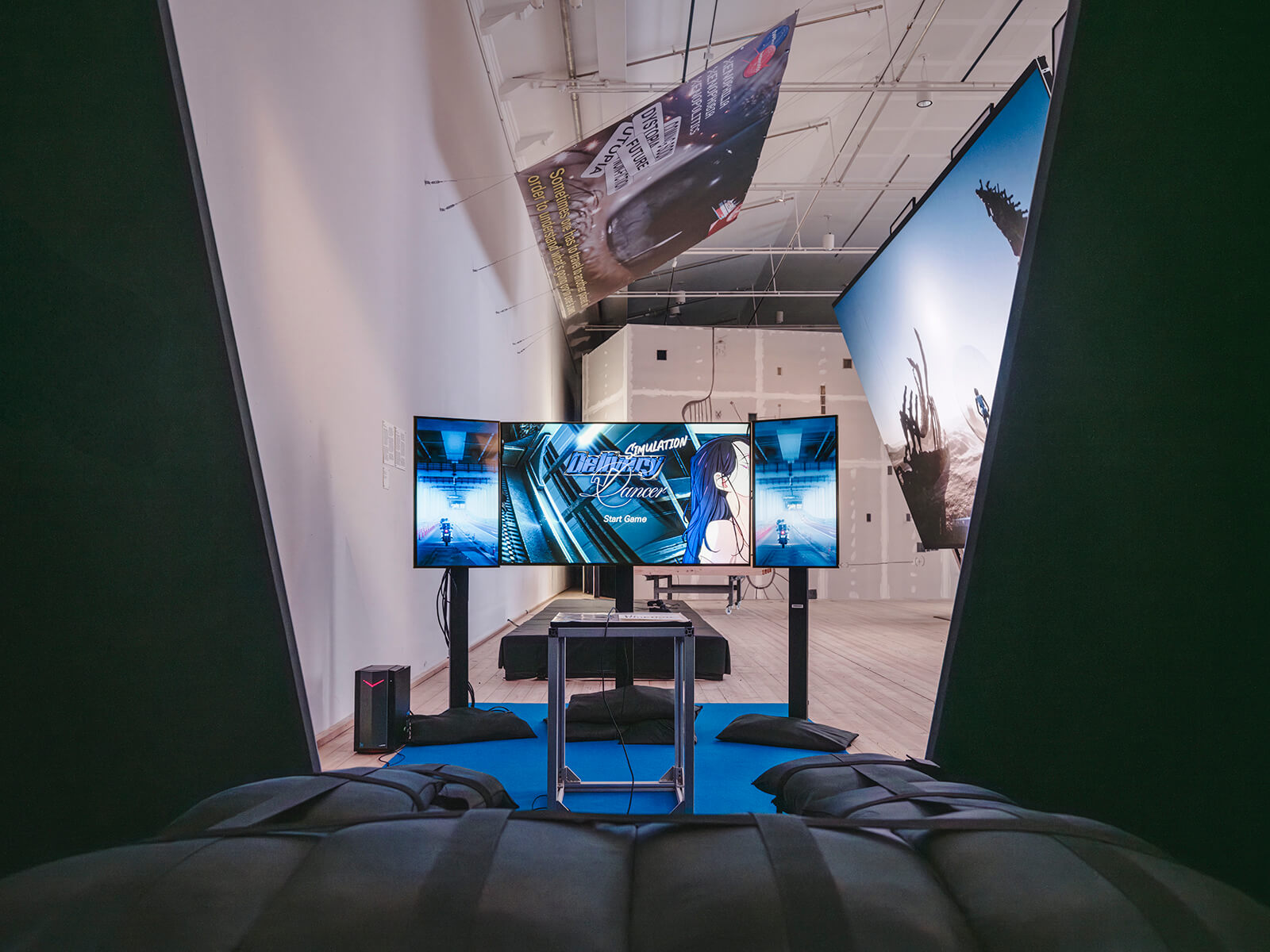
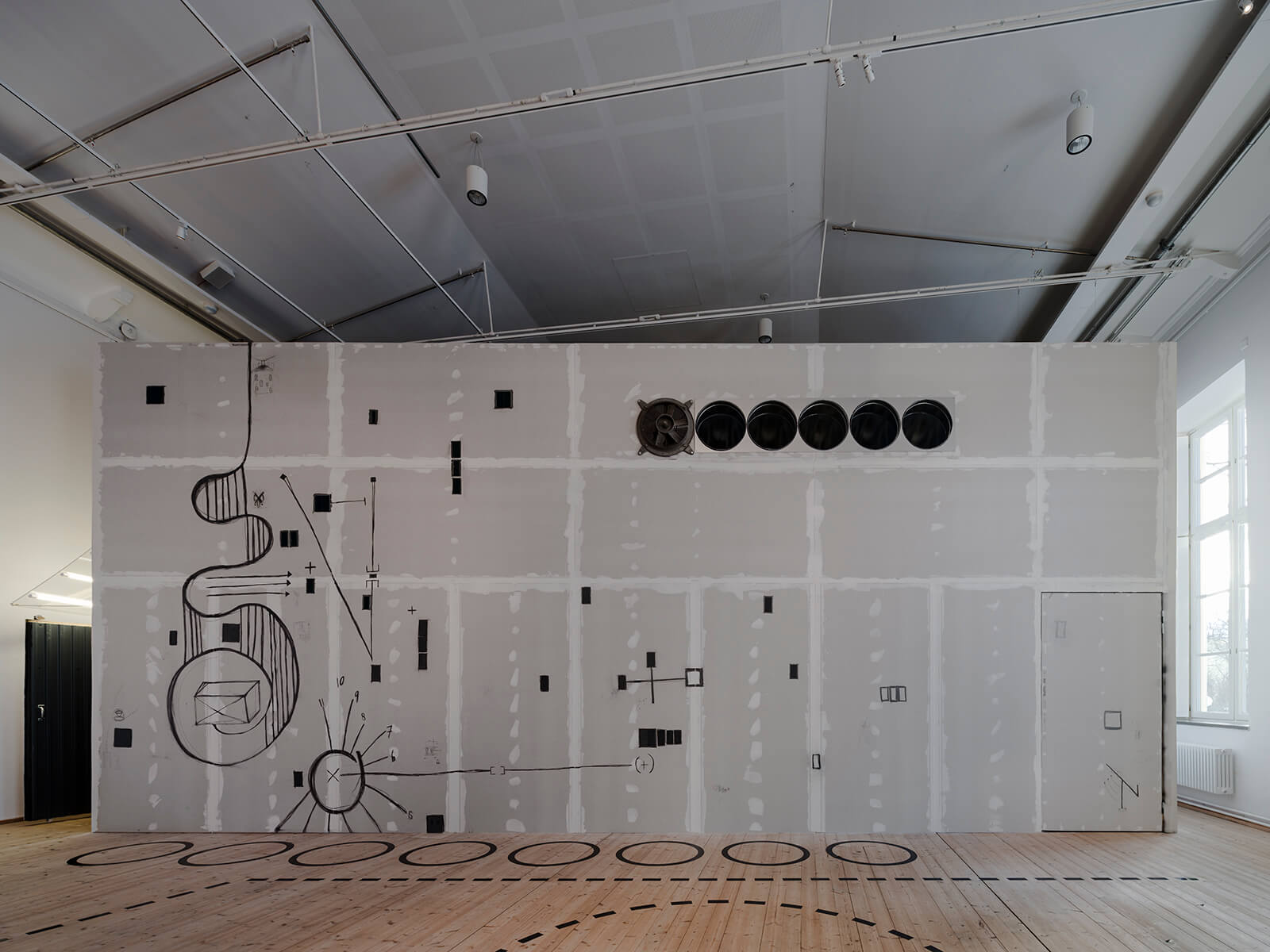
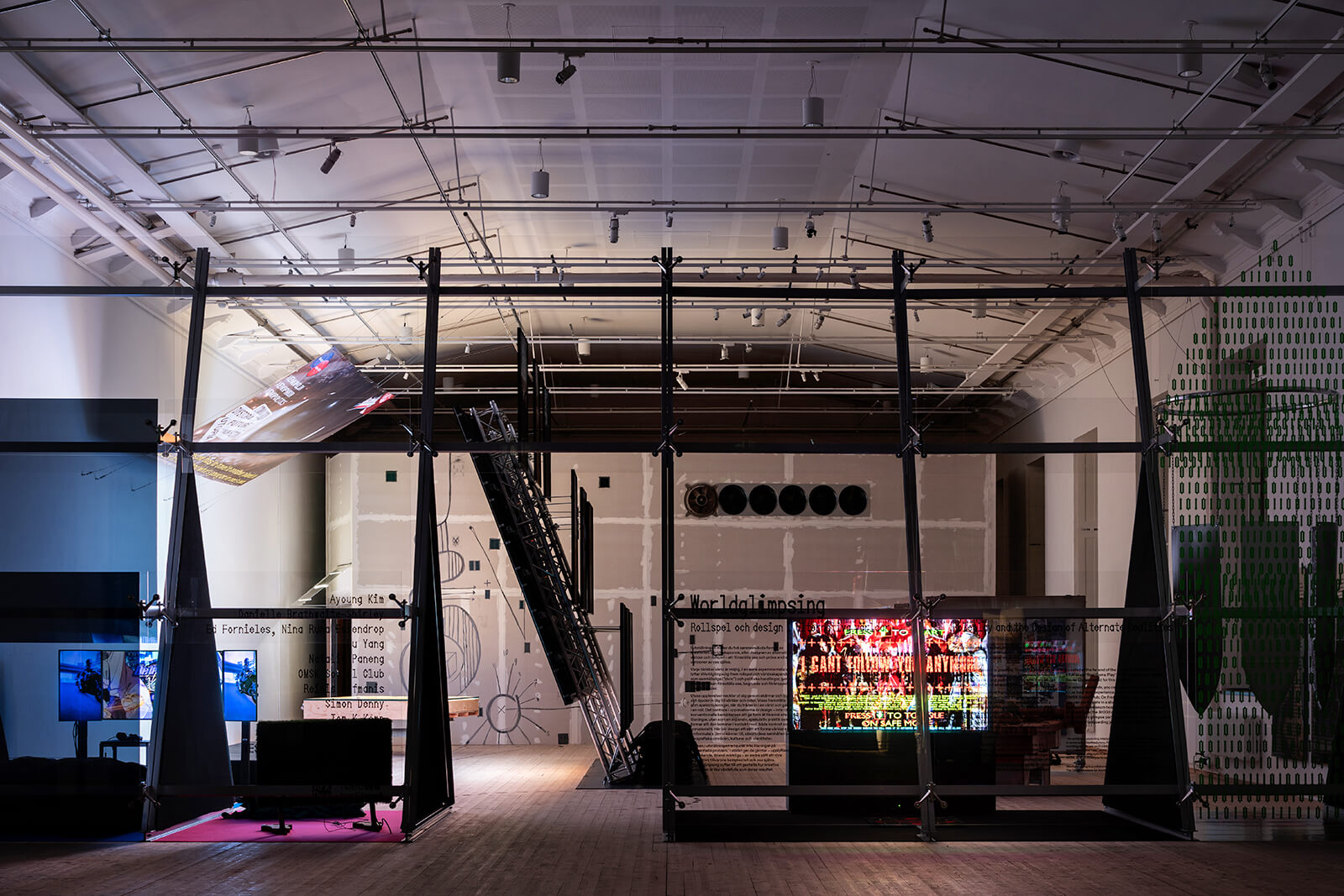
Divided into two chapters, the design exhibition attempts to further highlight the importance of the processes of creativity and how they are just as valuable as the outcomes. The first chapter of Worldglimpsing features exhibition design by Daryan Knoblauch, along with graphic design elements by Jonathan Castro Alejos and curatorial support from Johanna Koljonen. The displays resist rigid categorisation, much like the practices behind them, with the exhibition insisting on inviting the visitors to be inquisitive, responsive and ‘come as they are’ to experience shared worlds, known or unknown, along with imagining the many possibilities of what could be.
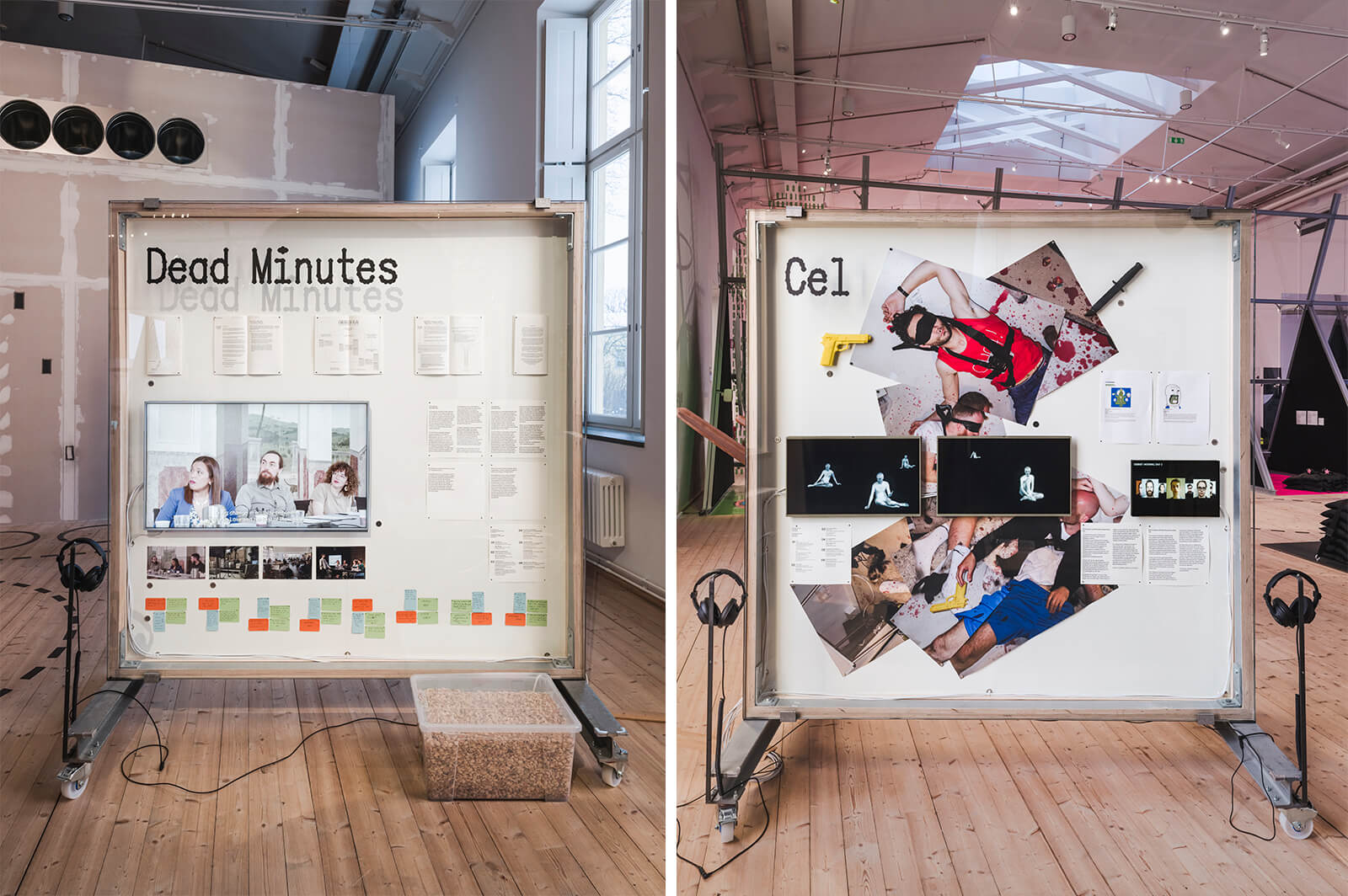
Through a series of photographs, digital game simulations, participatory scripts, sound works, roleplay documentation and immersive films, the exhibition arguably focuses more on narrative than ‘designed’ object, despite featuring works by several groundbreaking artists and creatives. “Worldglimpsing represents an effort to talk about design in novel ways. Here, design is less about producing objects or solutions, framed rather as an expansive, speculative practice that shapes everything it touches—tangible and intangible. Cast in this light, design becomes a way of shaping worlds or reframing the one we know, including its societies, cultural behaviours, and identities,” adds Taylor-Foster.
The experimental works—by artists such as Ayoung Kim, Danielle Brathwaite-Shirley, Ed Fornieles with Nina Runa Essendrop, Lu Yang, Natalie Paneng, OMSK Social Club, Reinis Hofmanis, Simon Denny, Tom K Kemp, Trojan Horse and ¥€$Si PERSE / Neurodungeon—position worlding and roleplay as not just simultaneous but also as civic and political acts by which we collectively ‘imagine, rehearse and embody the present and the futures it sets in motion’, as the press release states.
Worldglimpsing represents an effort to talk about design in novel ways. Here, design is less about producing objects or solutions, framed rather as an expansive, speculative practice that shapes everything it touches. – James Taylor-Foster
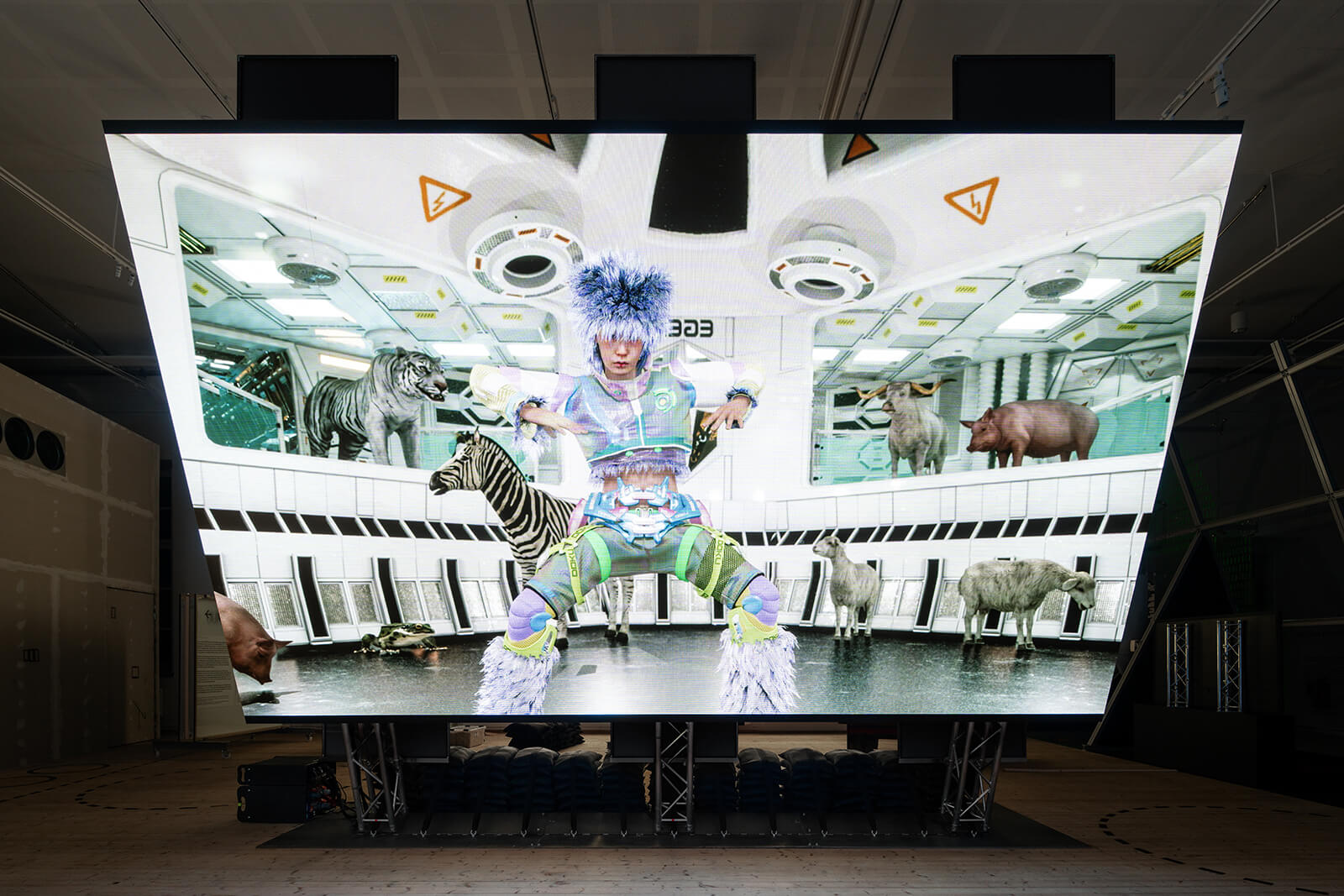
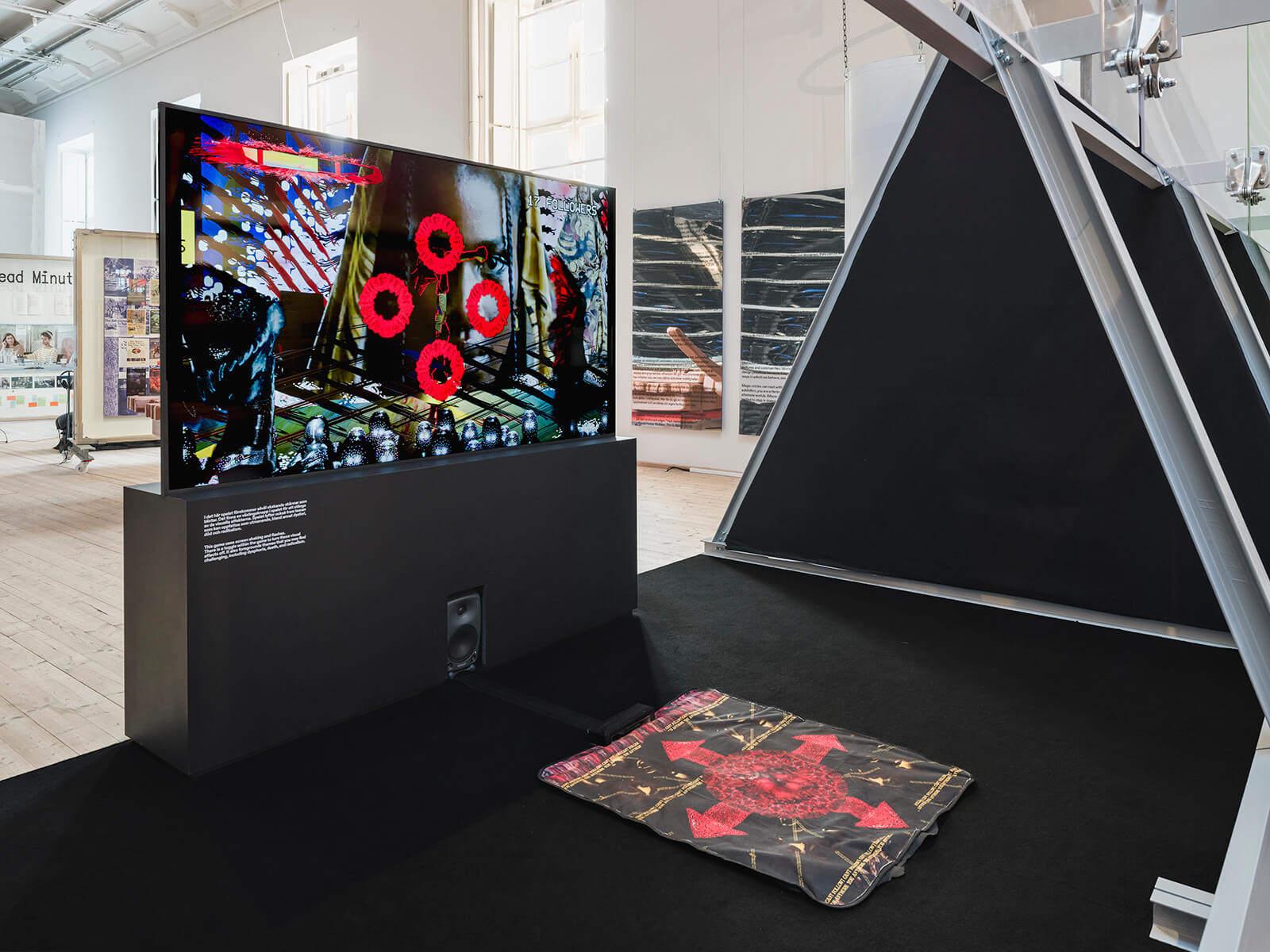
The exhibition has three levels of engagement: the first inculcates passive experiences including vast screens or immersive performative pieces by artists such as Yang and Paneng wherein one is invited to step into the space of someone’s creation and experience it first hand; the next level comprises works by artists like Kim or Brathwaite-Shirley, asking visitors to take on a role through means such as a controller; and the third and final level is the culmination of these instances, OUR BR00D, which allows the viewers to participate in experimental roleplay in groups of six to eight.
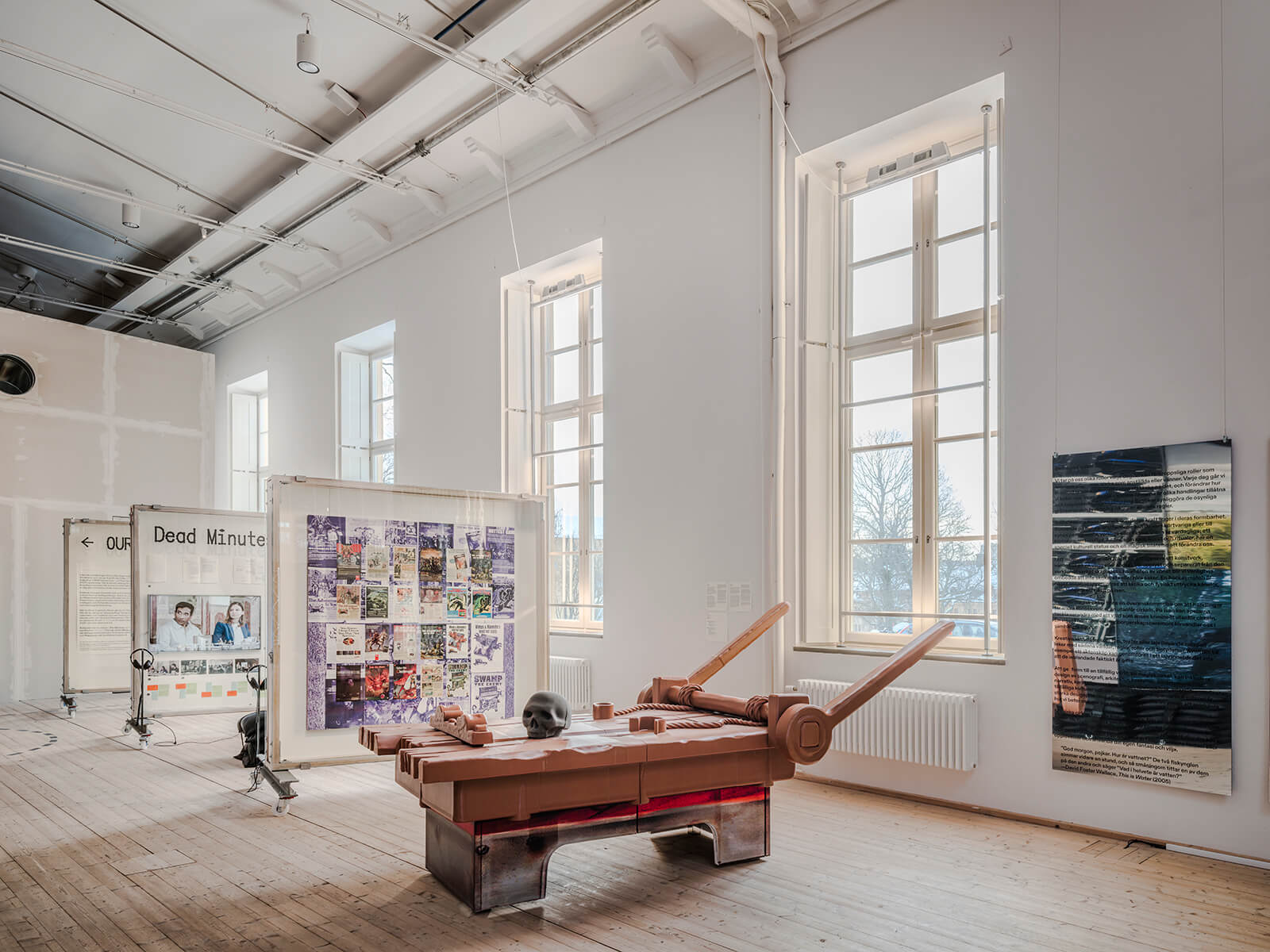
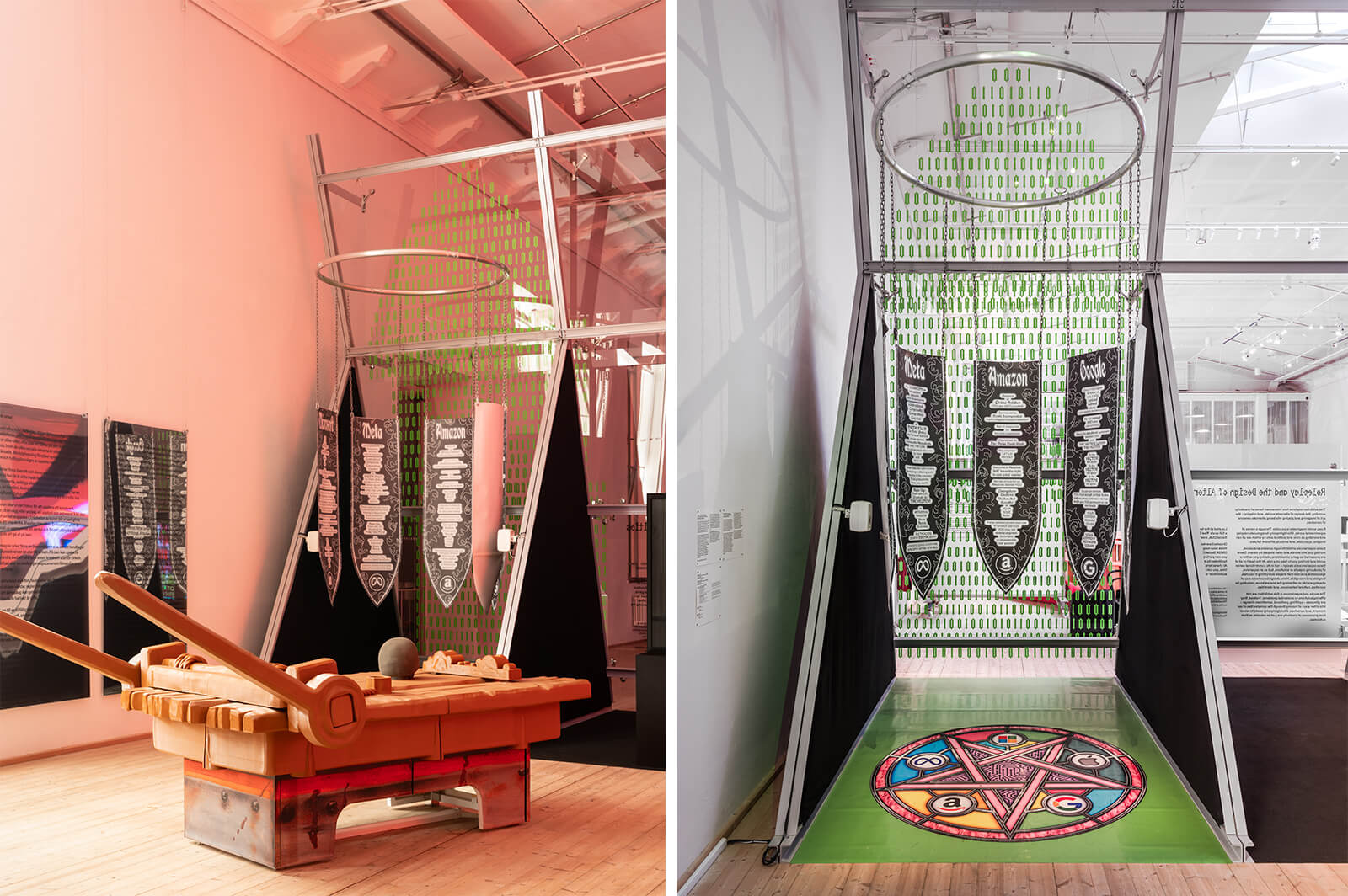
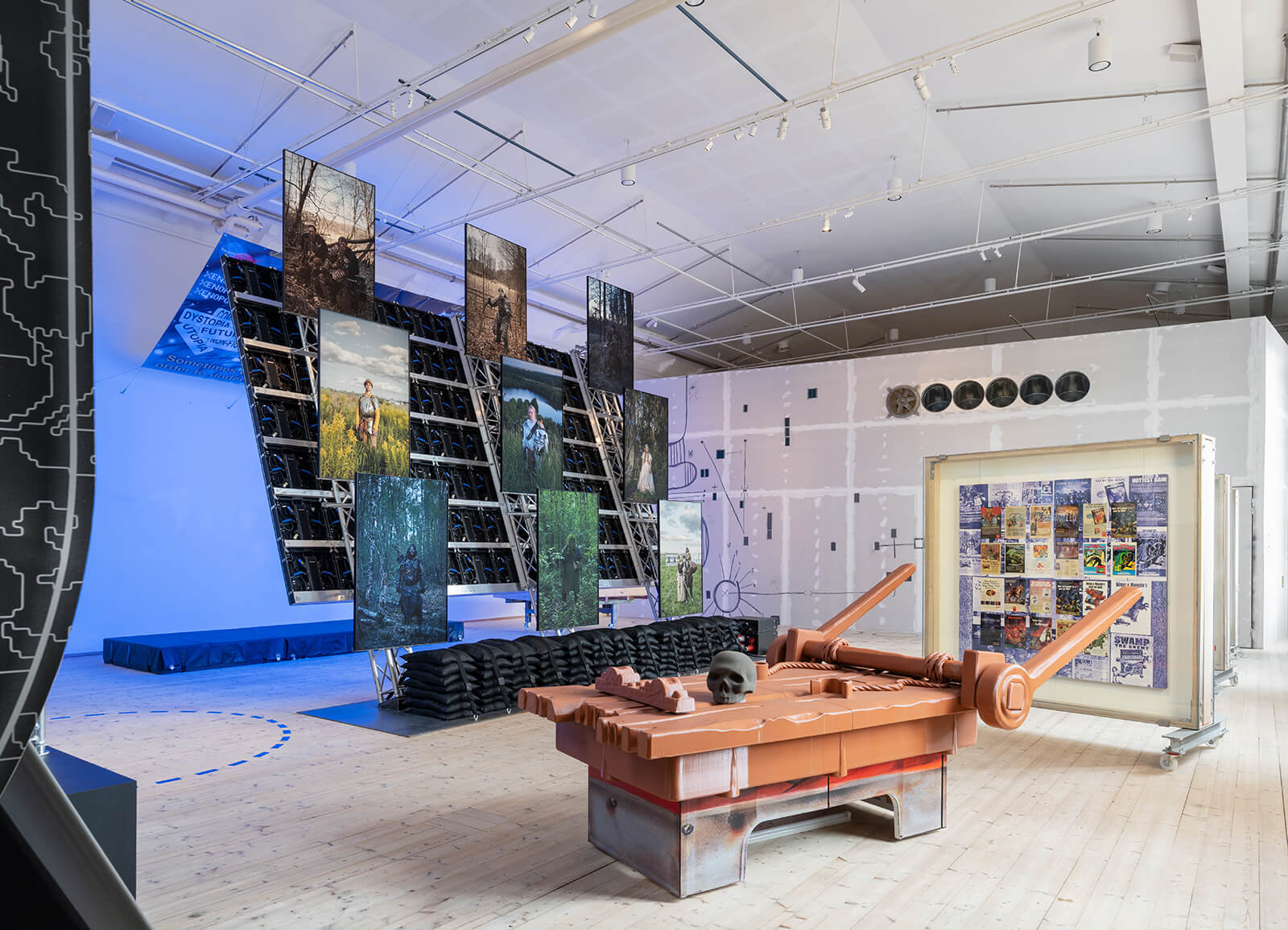
Serving as an example of a passive experience, Berlin-based contemporary artist Simon Denny pays homage to the all-pervasive importance of tabletop RPGs in today’s cultural spheres, presenting a collage, Dungeon map 8: Dungeons & Dragons gaming advertisements 1980s – 2010s (2024) and the fantastical workstation Dungeon artifact 2: Heroquest rack (2024). Similarly, hyperstitional interface ¥€$Si PERSE / Neurodungeon presents TOP 5: FAIRYTALES OF ECONOMIC GROWTH, a dance mat with the theme of a speculative New Dark Age world where big-tech has replaced nation states and rules through the acquisition of data, explored through sound. While dystopian science fiction has remained a popular albeit involuntary means of 'worldglimpsing'—a veritable method of projecting present-day perils into pronounced imaginations of the future—the exhibition’s melding of mediums and formats, along with interactivity, proposes an active, collective partaking in this imagination. To this, Taylor-Foster responds with a willful distilling of distinctions between ‘virtual’, ‘digital’ or ‘physical’. “Every work, in its own way and whether it's a photograph, a sculpture, a game, a film or a roleplay, defies this sort of categorisation. I believe that it's crucial to look again at the categories that have concretised around creativity,” he states.
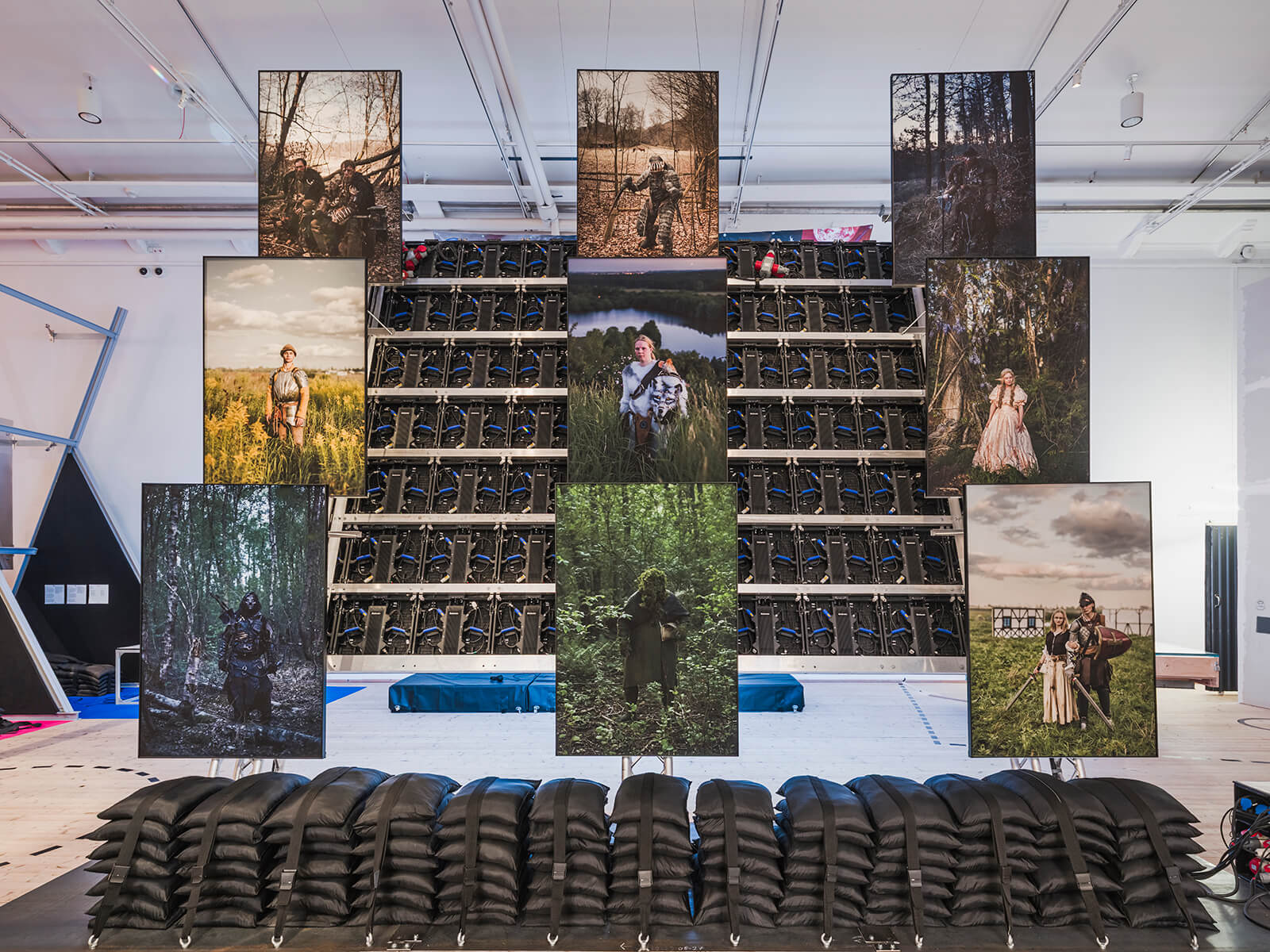
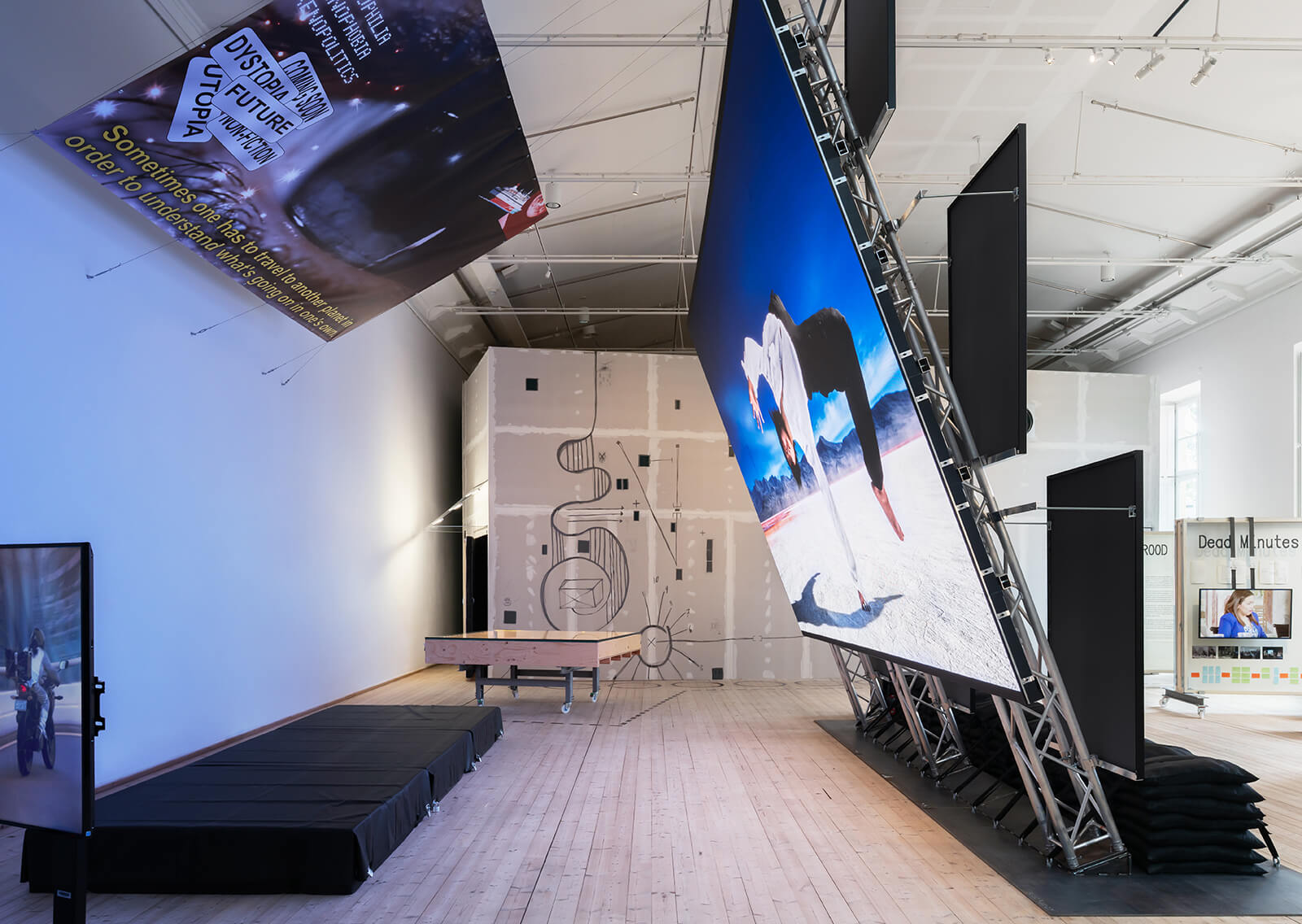
As one of the most accessible mediums, film and photography are the preferred modes of conjuring these imaginations for many exhibits. What might an undesirable afterlife look and feel like—and how might it be fixed? Netherlands and UK-based artist Tom K Kemp asks through his film Dead Minutes (2023). Human Lu Yang presents three complete films from the DOKU series—DOKU – The Self (2022), DOKU – The Flow (2024) and DOKU – The Creator (2024)—that act as portals into expansive alternate realities. Artist and photographer Reinis Hofmanis brings a photography series, LARP (2011), documenting the blurry contours of ‘real life’ and roleplay by positioning game characters in real settings—an uncanny juxtaposition. On Nörttimuotoilusymposium (The Nerdy Design Symposium) (2017), Helsinki-based autonomous educational platform Trojan Horse states, “Sometimes one has to travel to another planet in order to understand what’s going on in one’s own”.
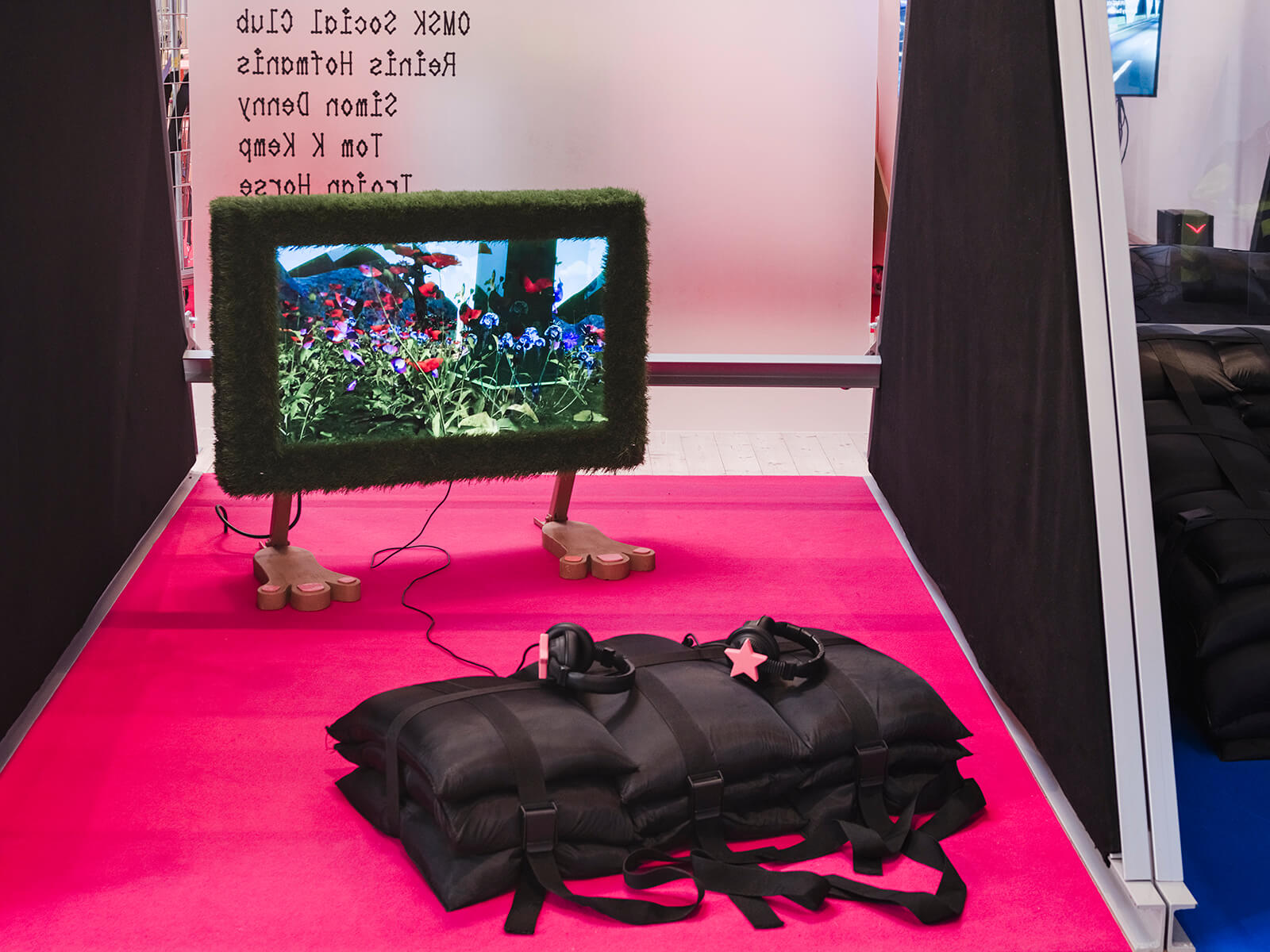
Positioning imagination (and continual reimagination) as a collective practice rather than a private escape, STIR asked Taylor-Foster to expand upon worlding and roleplaying as ‘civic and political acts’, and how they could potentially test and reshape existing power structures, beyond simply reflecting them. “This first chapter of this exhibition arrives in a moment where the consensus reality1 that we have all been performing our parts in is shifting radically. I believe that all creative, artistic, designed endeavours—whether they are reflecting ourselves or society, or imagining alternate pathways forward—are inherently civic acts: they give us the possibility to imagine and speculate on different futures for the responsibilities, rights and institutions that govern our collective life. They are political in the sense that politics is about how we negotiate space with one another, how decisions are made and implemented and who gets what of our finite shared resource. The world we are in now has been designed. As such, it can be redesigned. Not only can it be redesigned, but many worlds can coexist at once. Beyond revolt and revolutions, worlding exercises or practices like roleplay allow us to temporarily disconnect from consensus reality in order to embody any and all possible futures we envision for ourselves and for others. Imagination is not a talent or a rarity; it's something that we all have within us—and it is something that can be so easily empathised with and shared.”
The world we are in now has been designed. As such, it can be redesigned. Not only can it be redesigned, but many worlds can coexist at once. – James Taylor-Foster
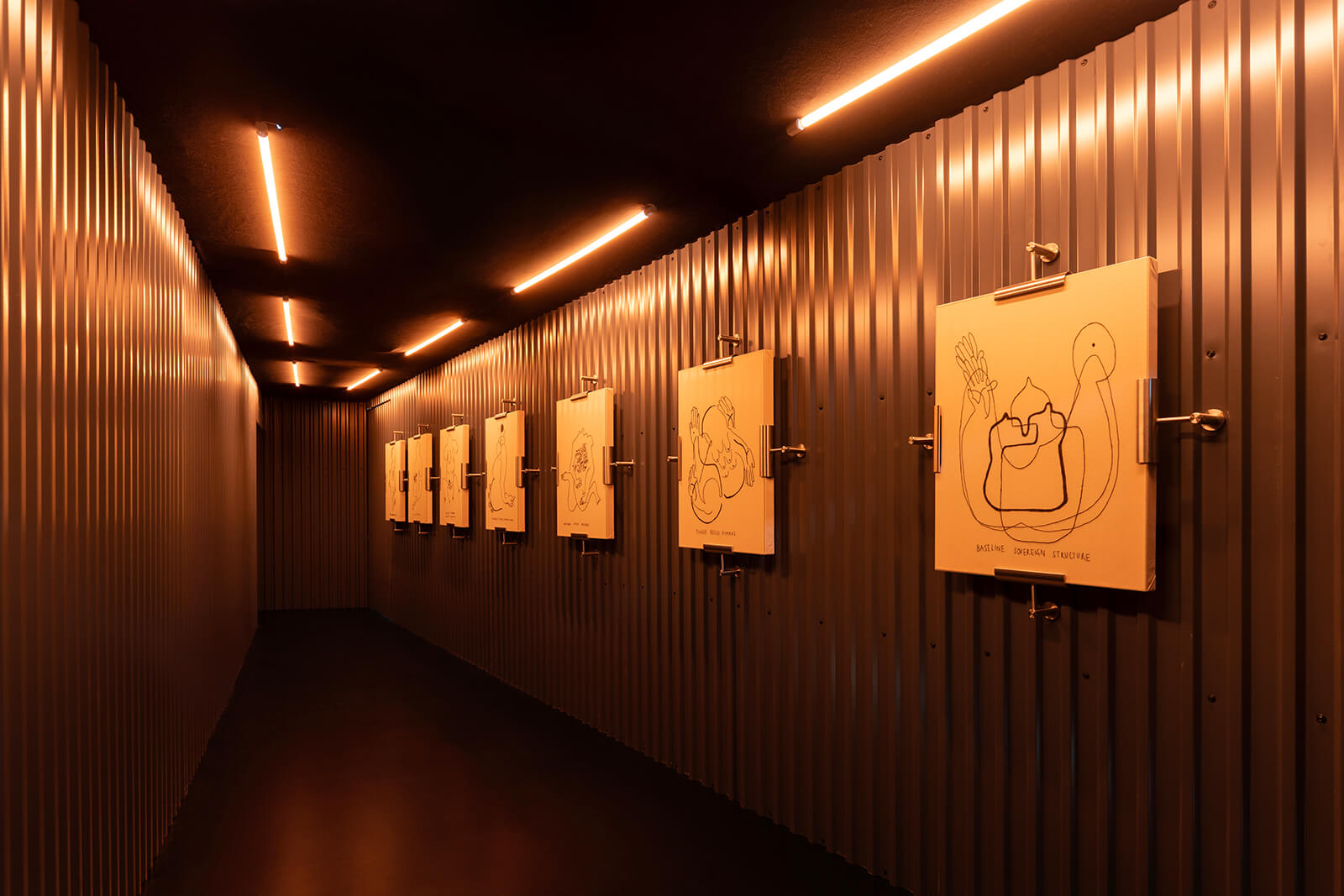
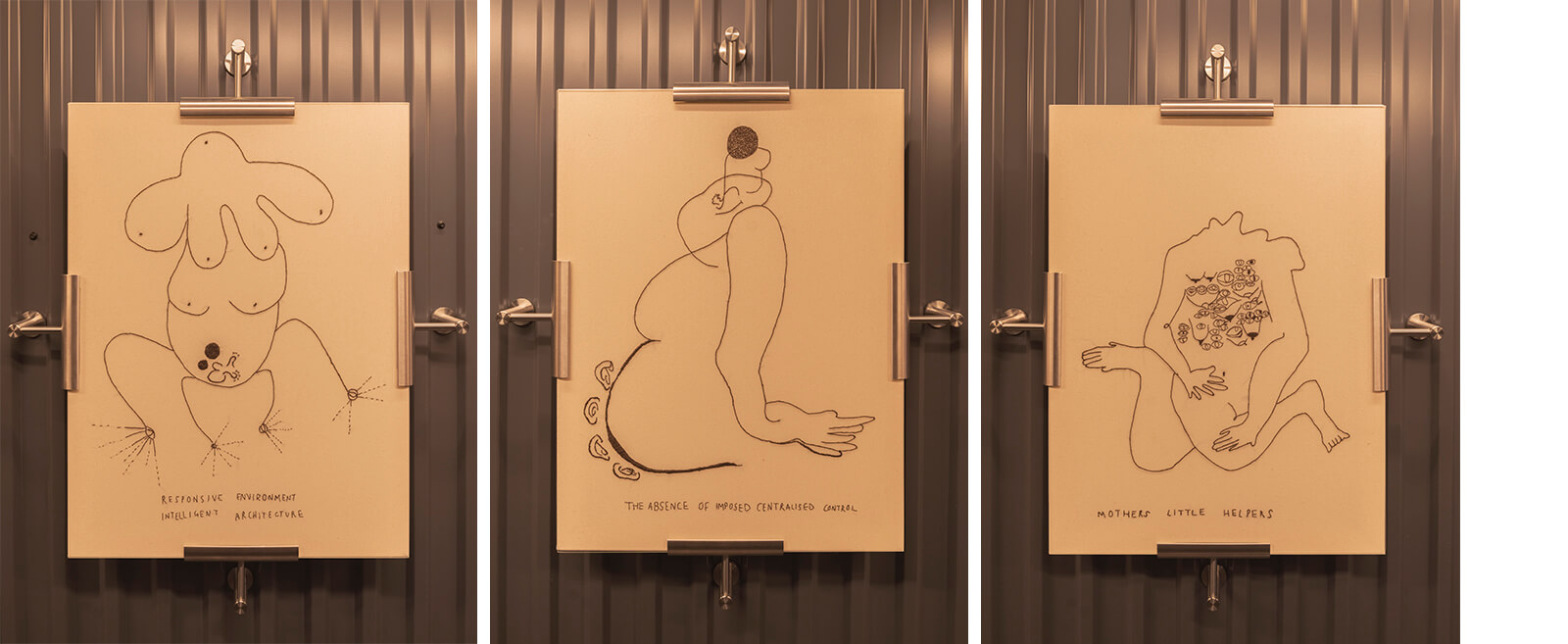
What is particularly striking in Taylor-Foster’s response and provocation is not just the idea of designing one’s own world and its purported freedoms, but the implication that design itself has always been political. A ‘consensus reality’ is what holds us back on several fronts from even imagining an alternative future, let alone attempting to live it. In that, a collective exercise in imagining worlds and selves could potentially show us a way to perceive the possibilities of all that lies beyond.
At the core of it all is OUR BR00D, an interactive experience designed by OMSK Social Club, which is a stewarded practice of collective storytelling involving a specific kind of immersive improvised methodology focusing on collective immersive experience and speculative worlding, coined as Real Game Play (RGP) in 2017. Comprising the exhibition’s third level, the series of works is jointly commissioned by ArkDes and Nieuwe Instituut. OUR BR00D is a full-blown RGP that invites visitors to explore alternate versions of themselves as a form of an expanded participatory design. In a shared space, visitors test how we might co-live and raise human and artificial intelligence together and how we negotiate responsibilities in the face of ecological and technological adversities.
For instance, an exhibit invites visitors to raise children, biological and artificial, in a near speculative future where technological and ecological crises are far more pronounced than today. By offering a chance to rehearse their positions in an alternate world, the exhibit attempts to provide an apparatus to many ends here—to imagine the viability of a future one may actively be headed towards, to perhaps gauge their moral and ethical compass in the ‘real’ world as we know it, or to assess consequences against convention. This is especially unsettling and unnerving, considering our staging of daily lives as rigorous rehearsals anyway.
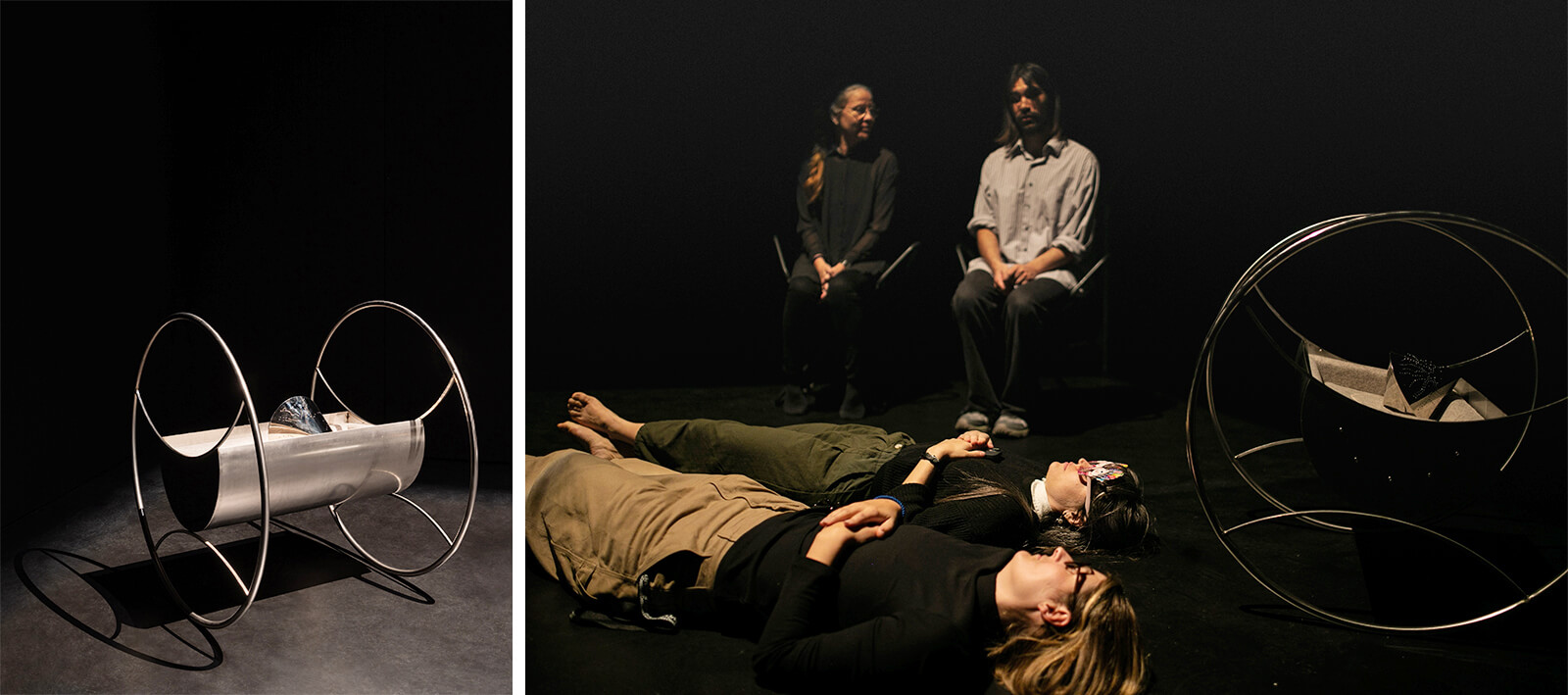
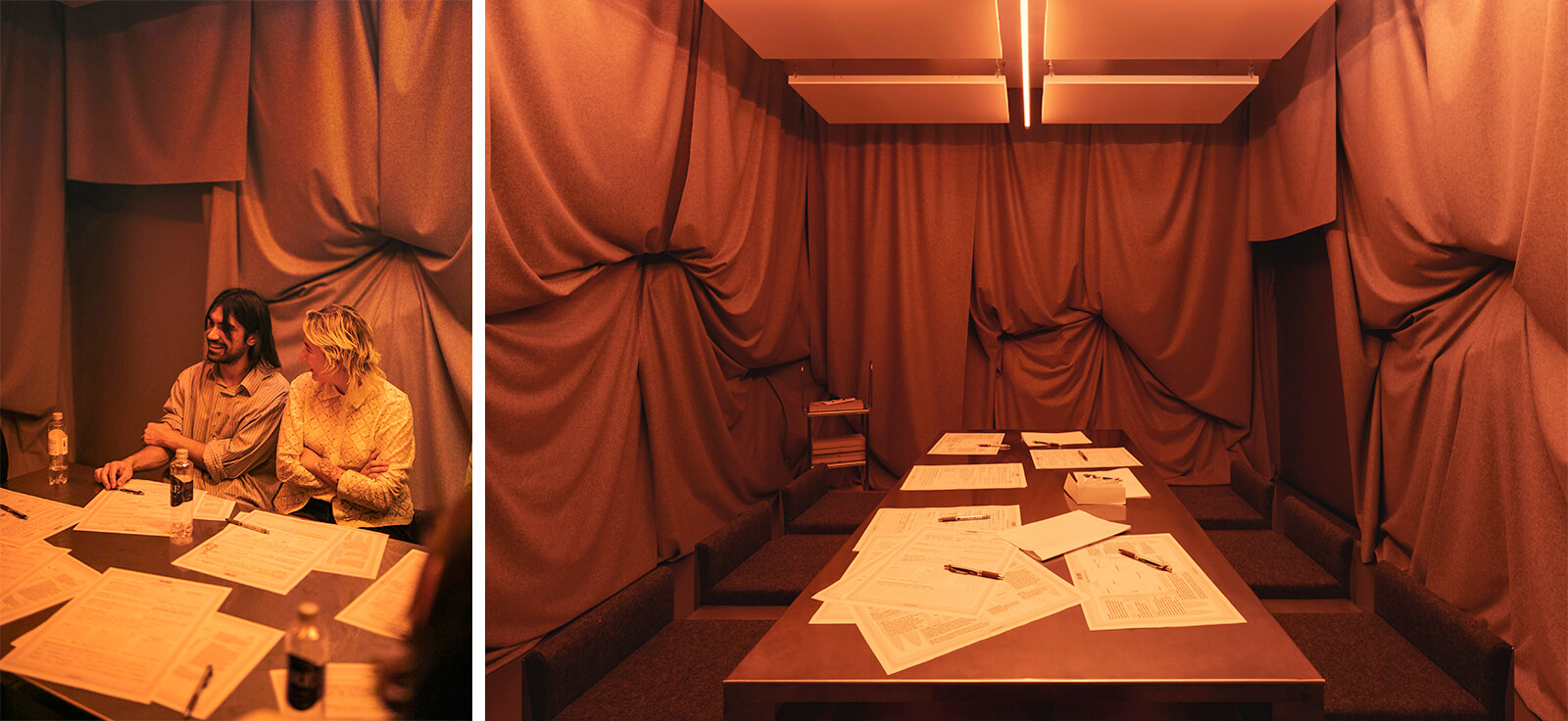
“Often, they [OMSK Social Club] say, we don't make decisions by way of real-time cognition, but through memory—and these memories might not just be our own but embedded in us by society, from systems of governance, and so on. Seen in this light, participating in a roleplay can offer us a contained experience that can, depending on how it's designed and who is playing, be very different to the ‘standard’ reality that we know and accept day to day. Roleplay also allows us to take a step back and question our own actions, which, in OSC's words, “allows us to level up to the futures we want to act out“, Taylor-Foster states, stressing on roleplay as both a toolkit and a methodology of being. In that, OUR BR00D, in all its configurations, shapes and scenarios—along with Worldglimpsing at large, of course—is positioned to project collectively and reflect individually, bringing into question our own identities and behavioural patterns. Interestingly, while design’s agency often oscillates between actively shaping user experiences and behaviours or being shaped by them—the latter, unfortunately, rarer in the design of objects—a toolkit such as this proposes a reclamation of ‘user’ agency in exciting, multimodal ways.
Roleplay can offer us a toolkit— a methodology of being…roleplay also requires us to confront ourselves: our own identities, patterns of behaviour, and so on. – James Taylor-Foster
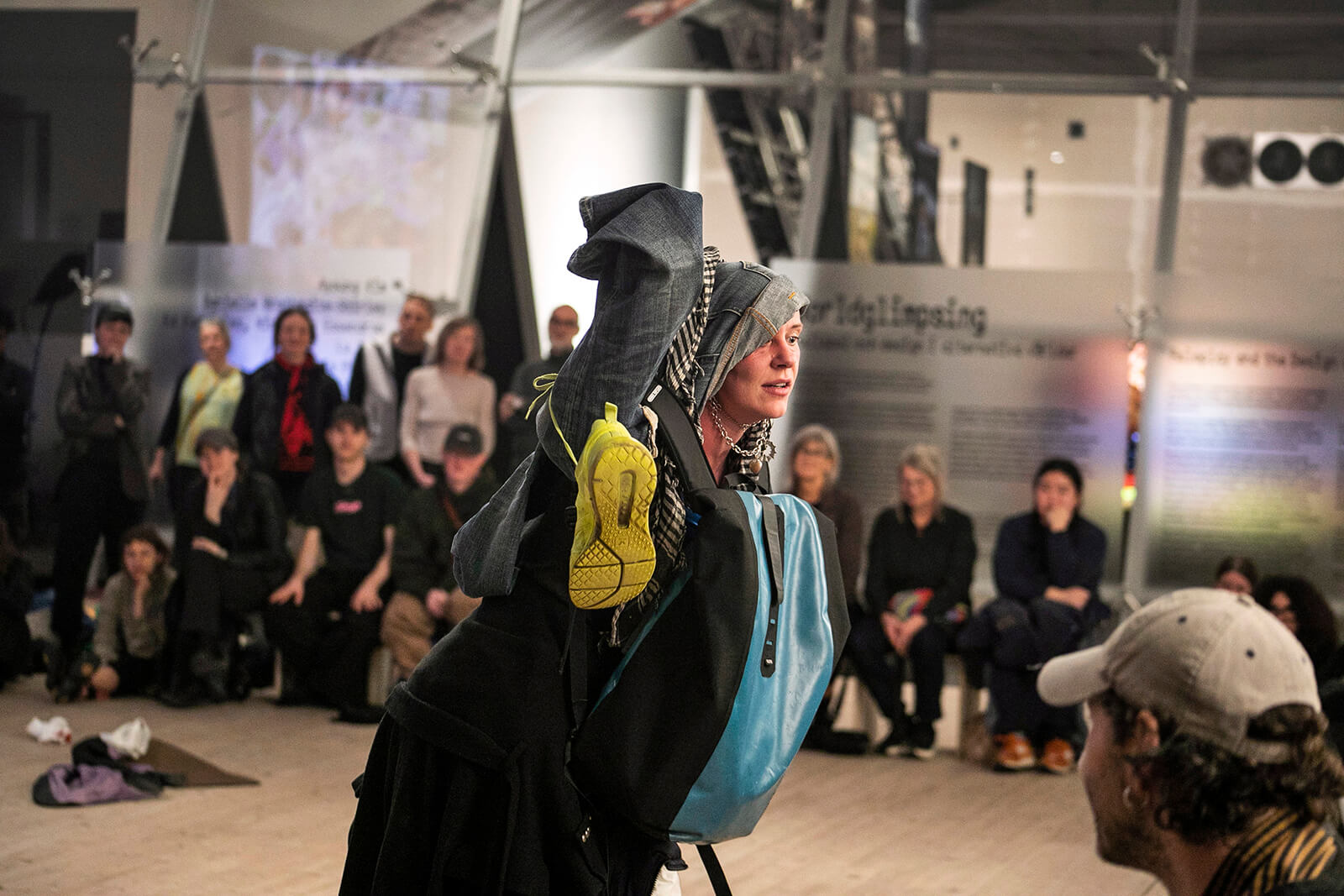
Apart from OUR BR00D, the exhibition also staged Teo Ala-Ruona's PLAY OVERLAY, a solo performance in collaboration with Pauliina Sjöberg, Tuukka Haapakorpi and Ervin Latimer, on November 7, 2025, depicting the act of ‘performing’ prescribed, everyday roles. Stressing on the performative self as an outer body of sorts, it sought to ask ‘what’, or rather ‘who’ one was wearing, and might one’s ‘clothes’ be shaped, fractured and shed. Exploring the friction between the internal experience of the body and the layers one wears on top, the choreography entailed the removal of a garment accompanied by a revelation of a body part, proffering how the viewer could examine the ways these categories are projected upon others by the wearer.
What Worldslimpsing ultimately implies is that the intersectional, contaminant practices of imagining, reimagining, world-’building’, even worlding and roleplaying are not only continual, but also decentralised from singular authority and authorship. All of us are constantly worlding and roleplaying, consciously or otherwise. A perceived refusal to be a part of an act would also amount towards roleplay, precisely because of its shared, non-singular nature. We are still very much a part of this collection of expansive worlds, whether we are willing to admit it or not. This interwoven web of realities—muddled, often exclusionary, but always one with active agents—is something no one can possibly escape from, but our willingness to participate in these acts could perhaps inversely reward us with a renewed sense of control over our own bodies and minds. One is bound to move through the world differently every time the realisation of an active participation, the awareness of the roleplay, dawns. Ultimately, who are we, if not layers of clothing over layers of skin?
The ‘real’ world that we insistently populate and participate in is itself a designed fiction, rehearsed daily through habits, systems and roles that predate us. Worldglimpsing affronts the provocation that if we are already operating within structures we personally did not design, the only meaningful question is whether we are willing to rehearse the alternatives before they eventually become inevitable. Worldglimpsing is a powerful carrier of these ideas and possibilities itself, not least because it potentially offers access to infinite worlds (popular culture has, in a way, exhausted that fantasy) but because it reveals how little agency we routinely exercise in the one we already inhabit, and how easily we mistake participation for choice.
‘Worldglimpsing’ is on view from October 3, 2025 – August 30, 2026, at ArkDes Stockholm, with its second chapter opening in Rotterdam late 2026.
The views and opinions expressed here are those of the author(s) and do not necessarily reflect the official position of STIR or its editors.
Notes:
1.Consensus reality is the term used to describe the shared and socially maintained sense of what’s ‘real’ or ‘normal’ and persists only because enough people agree on it, act as if it's true, and reinforce it through rituals and routines.

by Jincy Iype Oct 15, 2026
STIR explores craft, material intelligence and people shaping Indian design through dialogues with Design Democracy’s co-founders and the curators of its special exhibitions.
by Pranjal Maheshwari Oct 13, 2026
Through furniture, art and films, the showcase at the Ian Potter Centre in Melbourne advocates for biophilic material cultures as an antidote to planetary degradation.
by Pranjal Maheshwari Oct 12, 2026
The exhibition reimagines the 20th-century Scottsville residence of the American sculptor and his partner, ceramicist Nancy Jurs, curated by their daughter Alison Castle.
by Chahna Tank Oct 08, 2026
Javier Guzman Cervantes and Ulises Morin Arzola tell STIR about their ‘open code’ approach to design, working through a process of stockpiling and the idea of ‘queering’ materials.

make your fridays matter with a well-read weekend
Enter your details to sign in
Don’t have an account?
Sign upOr you can sign in with
a single account for all
STIR platforms
All your bookmarks will be available across all your devices.
Stay STIRred
Already have an account?
Sign inOr you can sign up with
Verification link sent to check your inbox or spam folder to complete sign up process
Tap on things that interests you.
Select the Conversation Category you would like to watch
Please enter your details and click submit.
Enter the 6-digit code sent at


Inside Worldglimpsing: worlding and roleplay as rehearsals for the real world
by Bansari Paghdar | Published on : Feb 20, 2026


 Sign in with Google
 Sign in with email
What do you think?