Architecture15 mins. read
Advocates of change: revisiting creatively charged, STIRring events of 2023
by Jincy IypeDec 31, 2023



by Bansari Paghdar, Anmol AhujaPublished on : Jul 31, 2026
In contemporary architectural and mediatic discourse, a neighbourhood is first built in words and images. Press releases thick with promised talks of community, shared culture and well-being, while photorealistic renderings—often eerily devoid of the very people who are supposed to occupy these spaces—sell an elevated dream for public consumption.
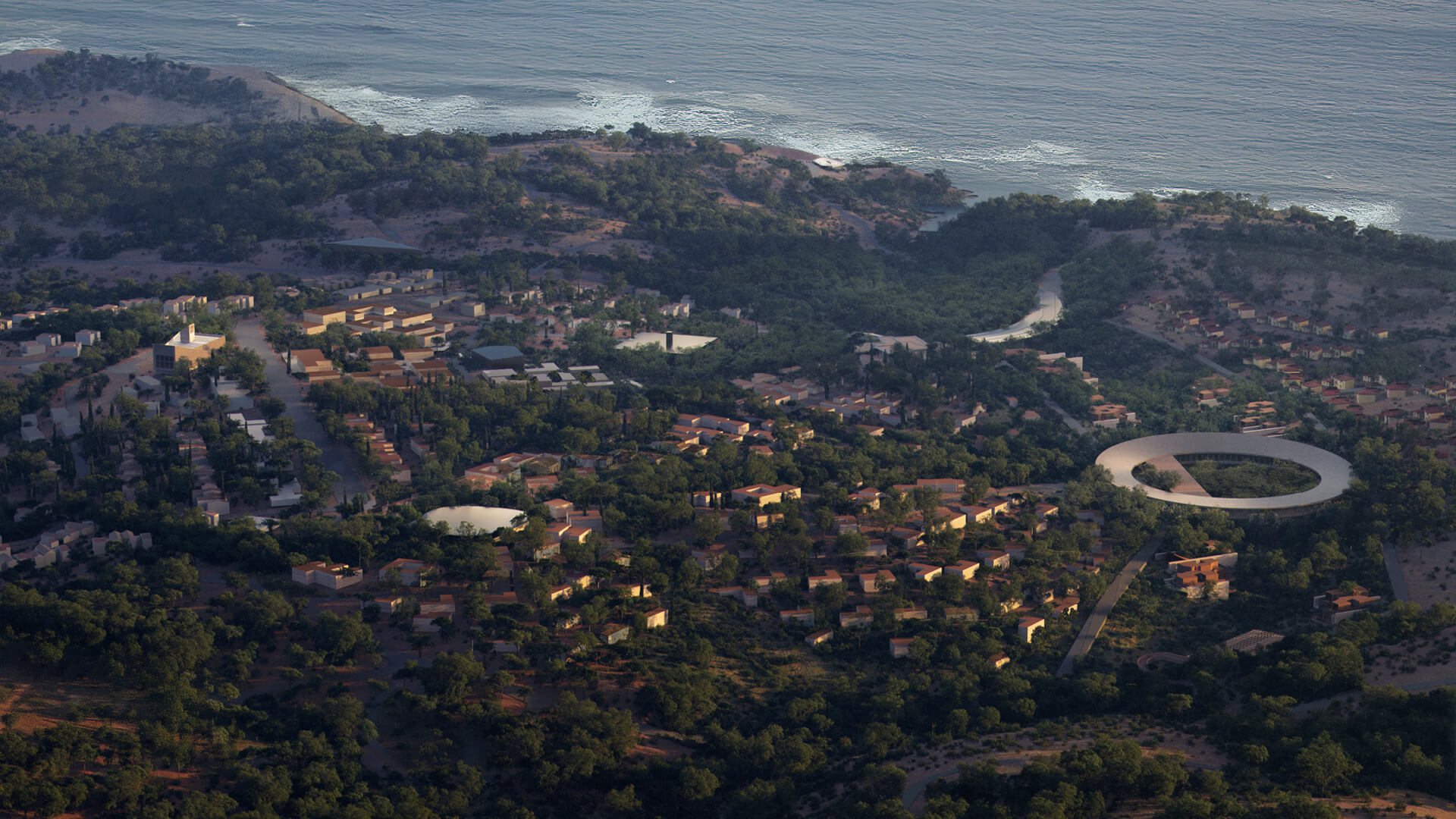
In this sense, Ion Riva, an 84-hectare development project on the Black Sea coast in Istanbul, Turkey—proposed earlier this year and having made the rounds in media circles even beyond conventional architectural and design outlets—already exists, in and beyond public imagination. Lush greenery surrounds both the individual architectural interventions and the broader masterplan, showered with golden-hour lighting. In both photography and visualisation, the lack of any real infrastructure and utilities that might taint the perfection of the neighbourhood’s portrayal is another mainstay. The proposed villas are situated within closed peripheries, and the remarkably few people present in these visuals of community look content as they occupy and navigate this built environment, interacting with nature and one another.
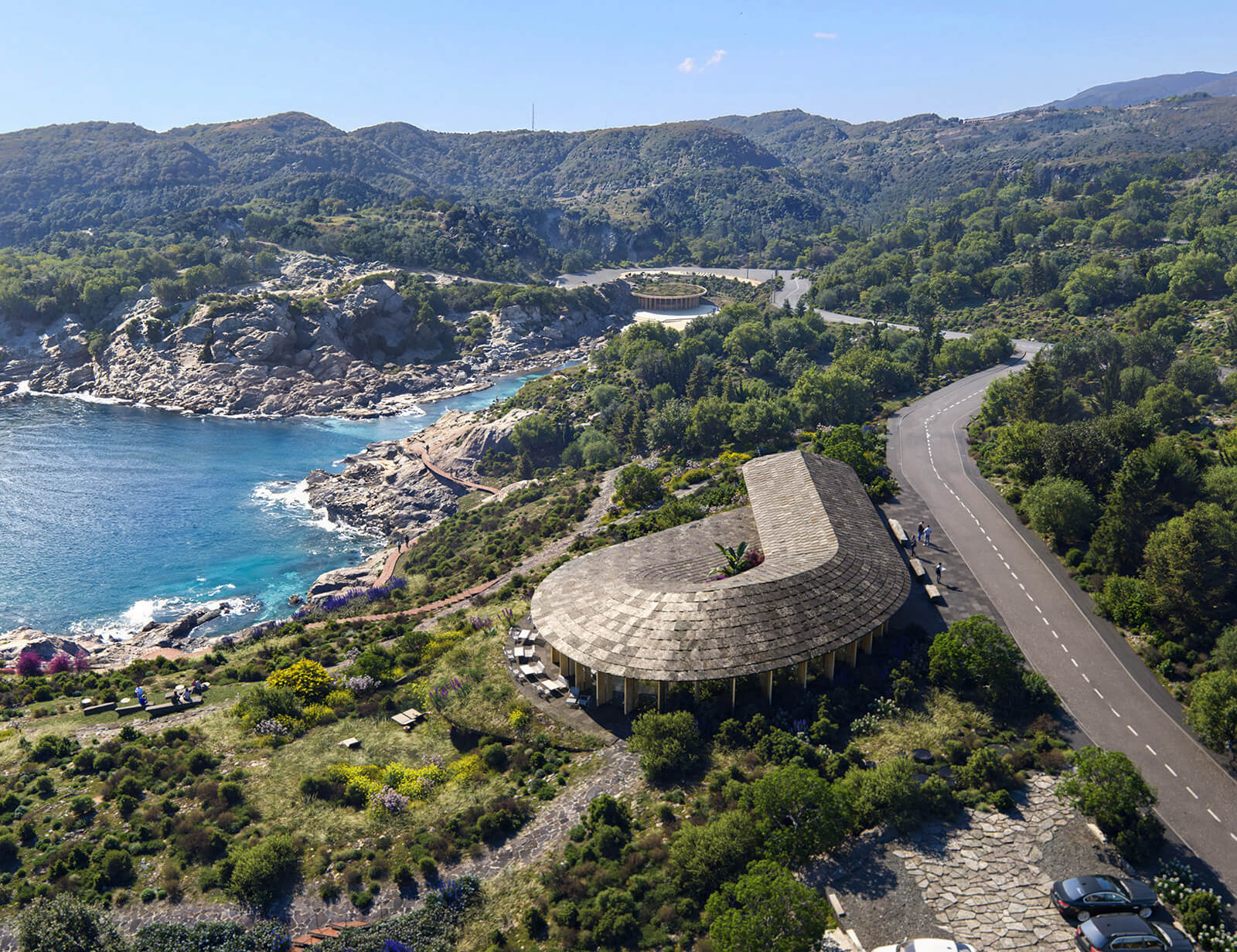
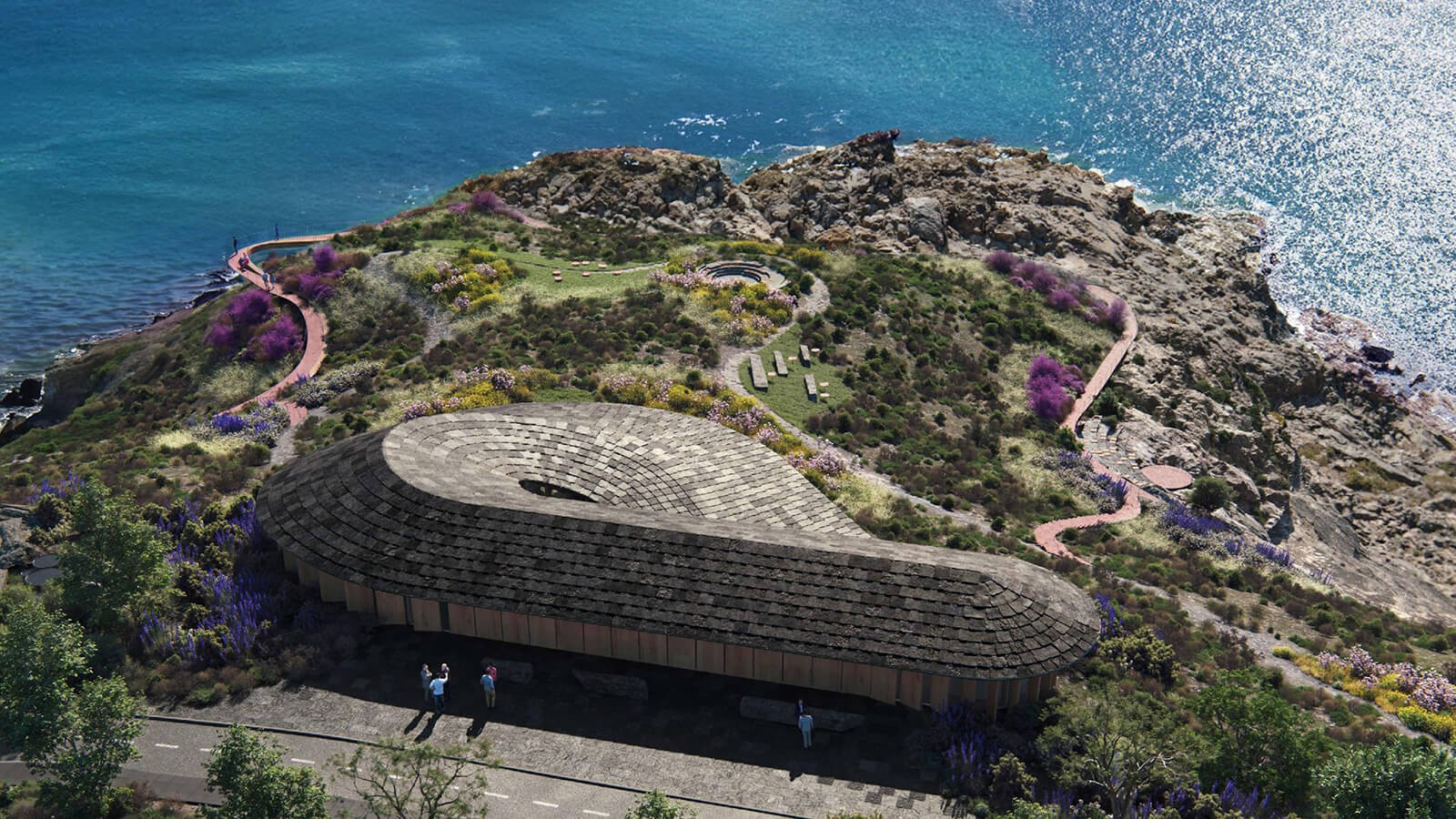
Official releases and announcements boast an internationally renowned consortium of architecture and urban design practices such as Snøhetta, BIG and MVRDV working on individual projects of different scales within the development, already elevating its legibility (and legitimacy). The social ideal is sold through social media before it even appears on sales brochures.
It is worth mentioning that this phenomenology is somewhat removed from architectural historian and theorist Beatriz Colomina’s insistence on architecture as media to be consumed, and eventually critiqued or aspired to. The idea of the image tying architecture and media today relies more on attention than critical engagement. A tabula rasa condition on the ground is then a necessary prerequisite in the production of that image and that ideal. What that often entails on the split side is a flattening and homogenisation of the lived experience of entire communities that may have shaped a particular region; in worse cases, even displacement.
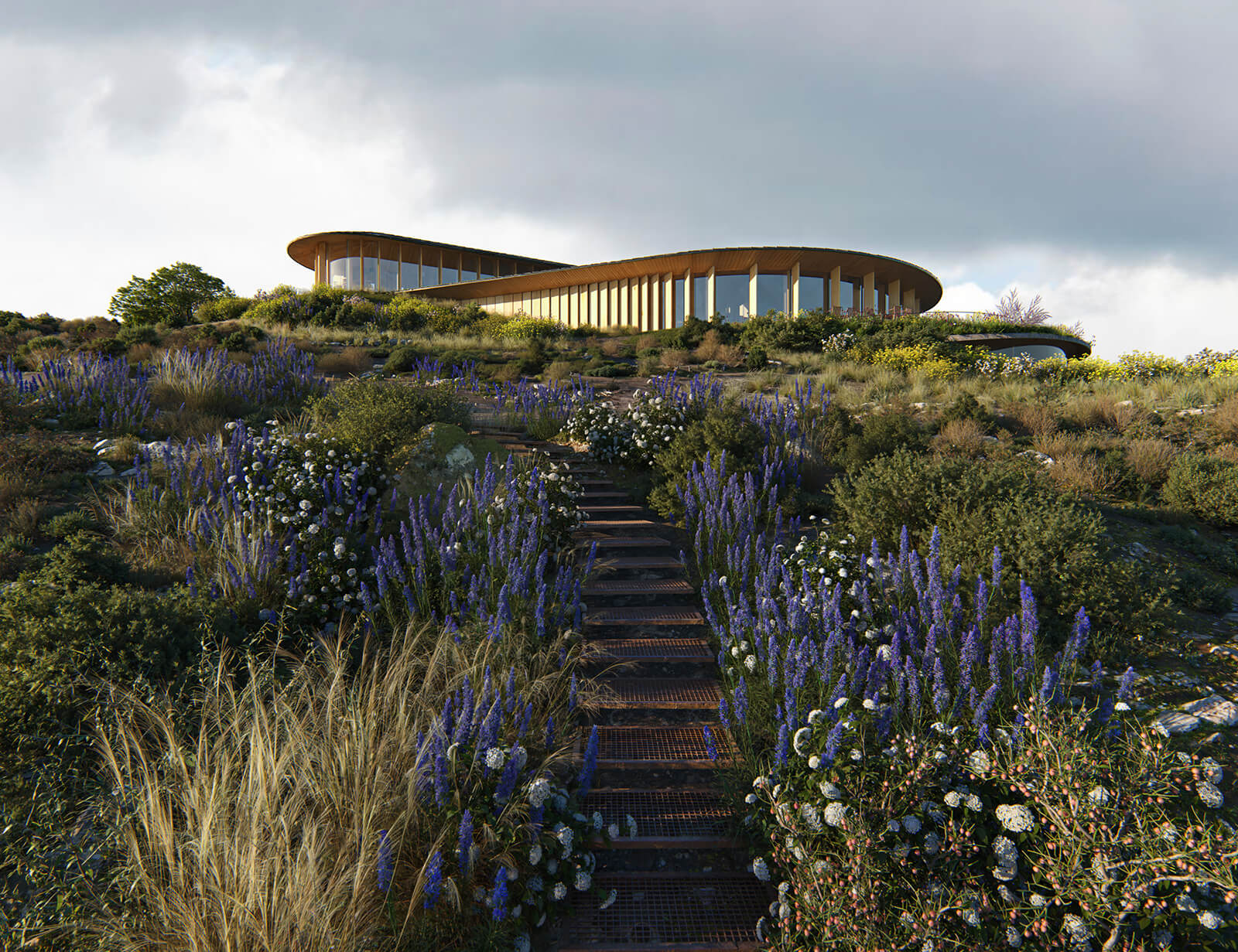
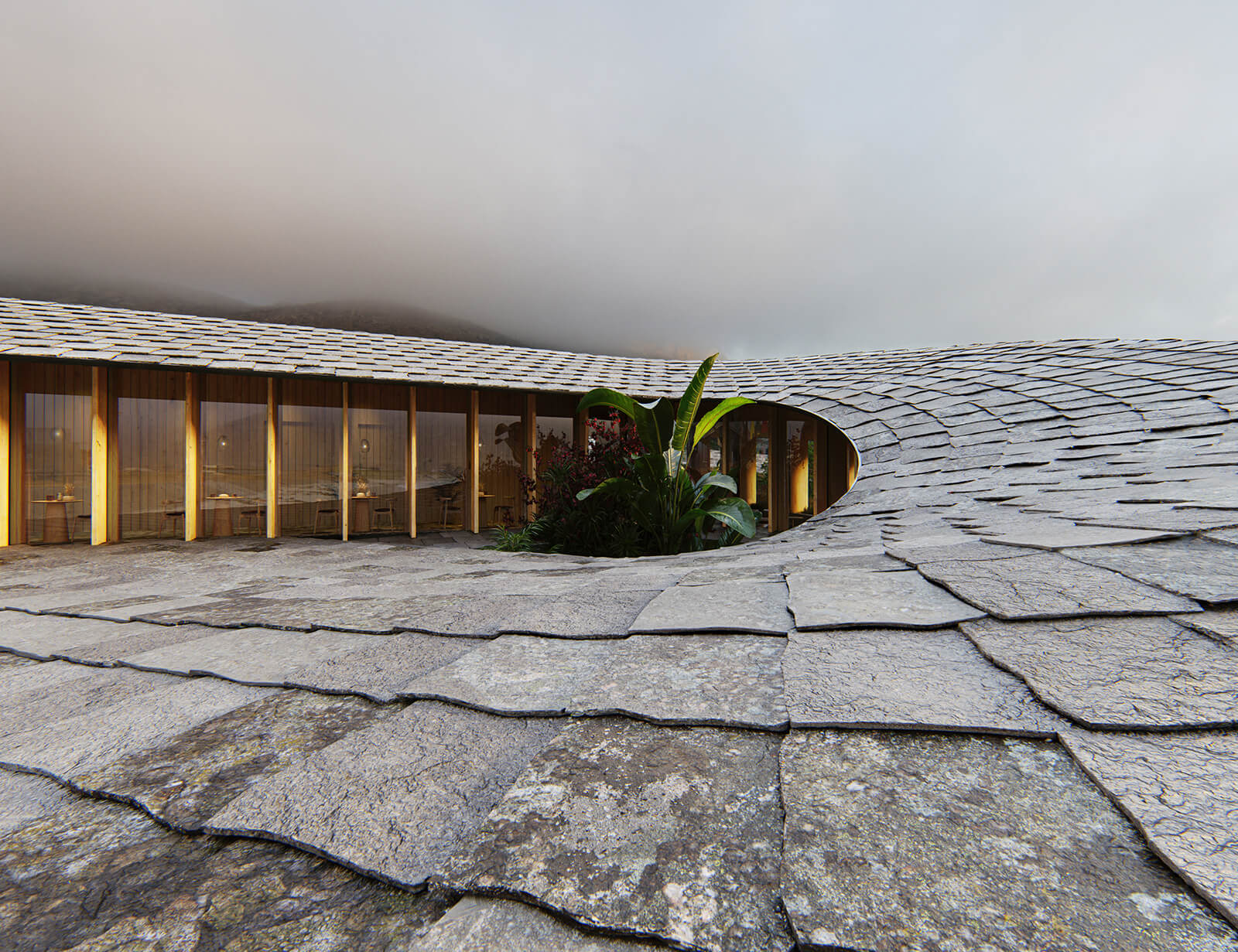
The names involved operate as a kind of cultural currency—the phenomenon itself christened the starchitect syndrome in architecture. This is especially true when seen at the scale of a masterplan, where architecture itself becomes secondary to the idea of shared authorship.
For when the project finally makes it to the stage of realisation and building on the ground, a consort of local architectural practices will be essential in turning this grand artistic vision into concrete, in performing what is often relegated to be ‘invisible’ labour in architecture—coordination with local workers, builders, contractors, authorities, bureaucrats and the like. In broader architectural discourse, the rift between design and construction, envisaged above, remains wider than the one between practice and pedagogy, the latter set capable of working exclusively on occasion. The same privilege isn’t afforded to the former set.
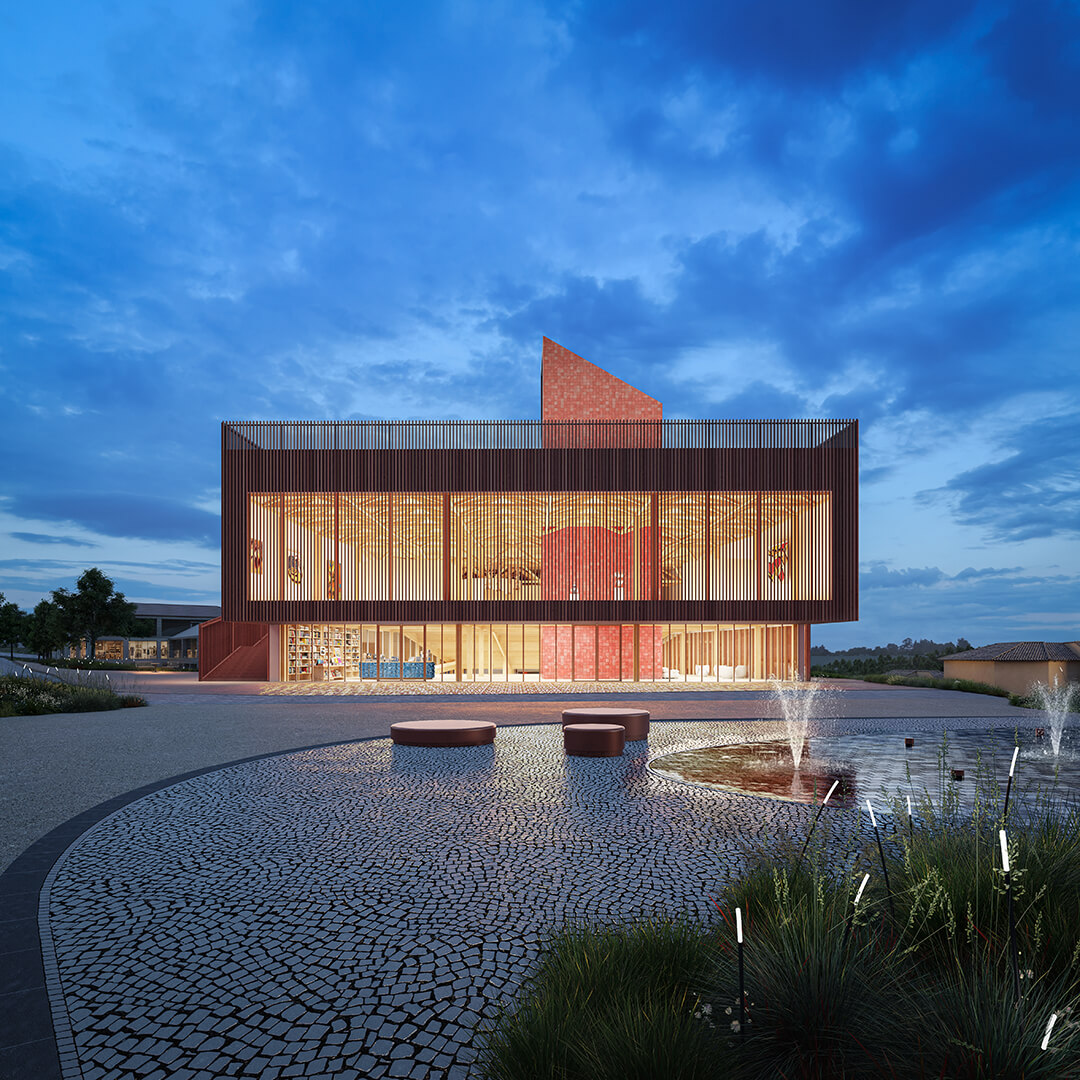
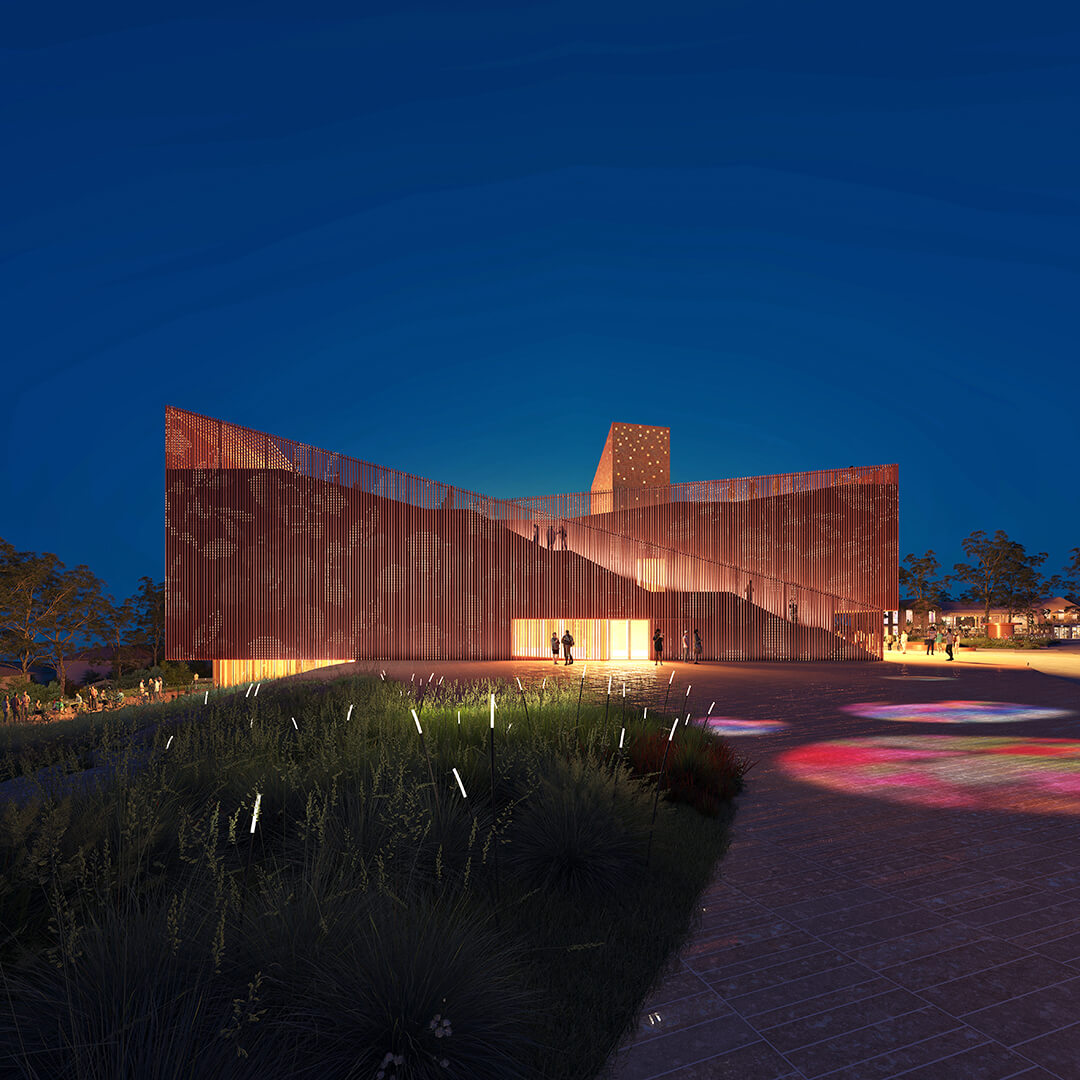
Naturally, the names and the global renown behind them lending legibility to the project’s premise appear to make the headlines in a self-fulfilling cycle perpetuated by the media. On the other hand, local practices—DB Architects and Bilgin Architects in this case—whose role appears fundamental in shaping and realising the project and its relationship to the place are relegated to fine print.
This sequence is consonant with the communicative structure of megaprojects across the MENA Region, most notably the ill-fated NEOM, which relied on the spectacle of architecture to begin with. For years, NEOM existed more vividly through imagery and narrative than through built reality, with frequent reports of scaling back and delays shaping its trajectory. The trajectory Ion Riva follows in this regard is yet uncertain, but the comparative staging foregrounds a more pressing question of its relevance and redressal of issues pertaining to the city it’s supposed to break ground in.
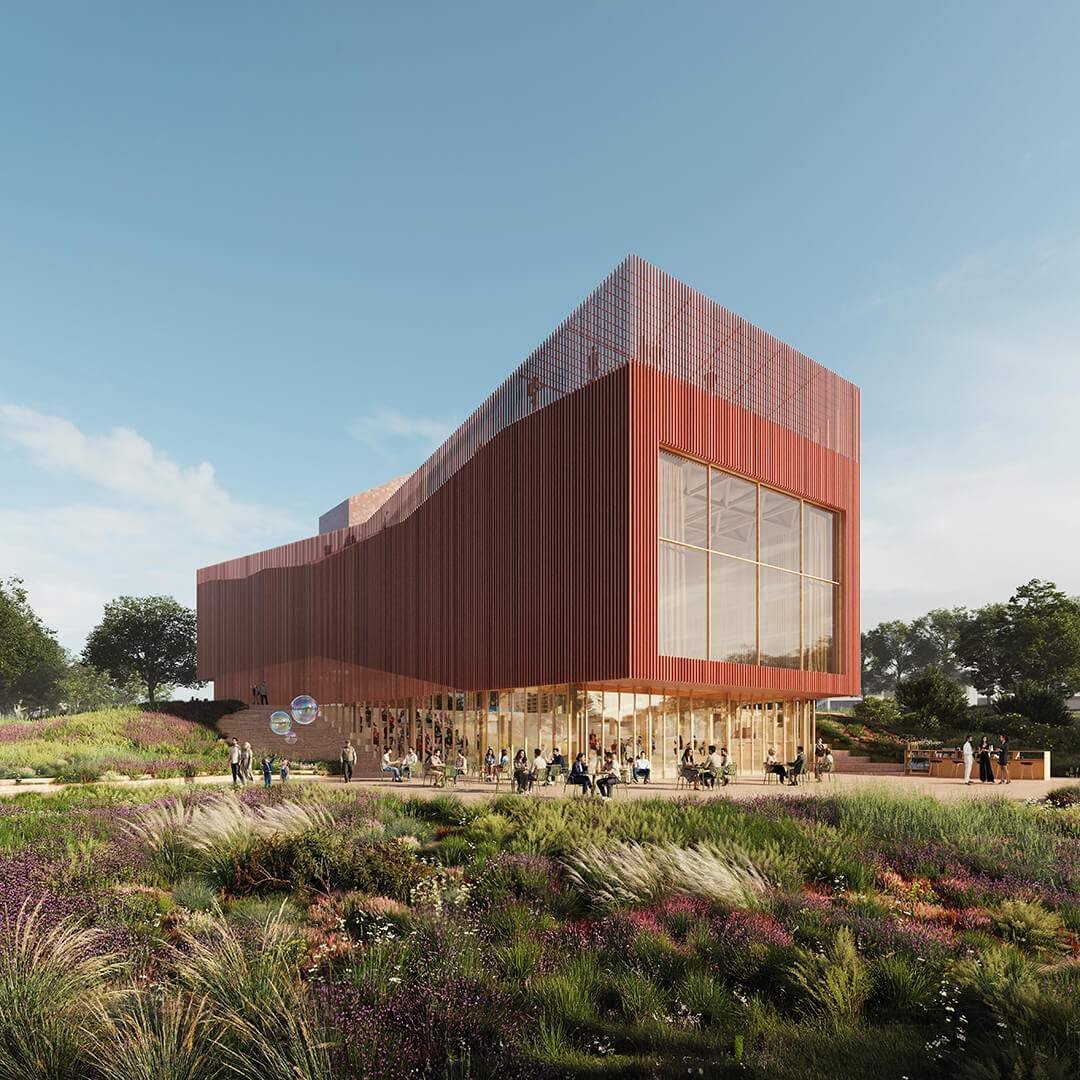
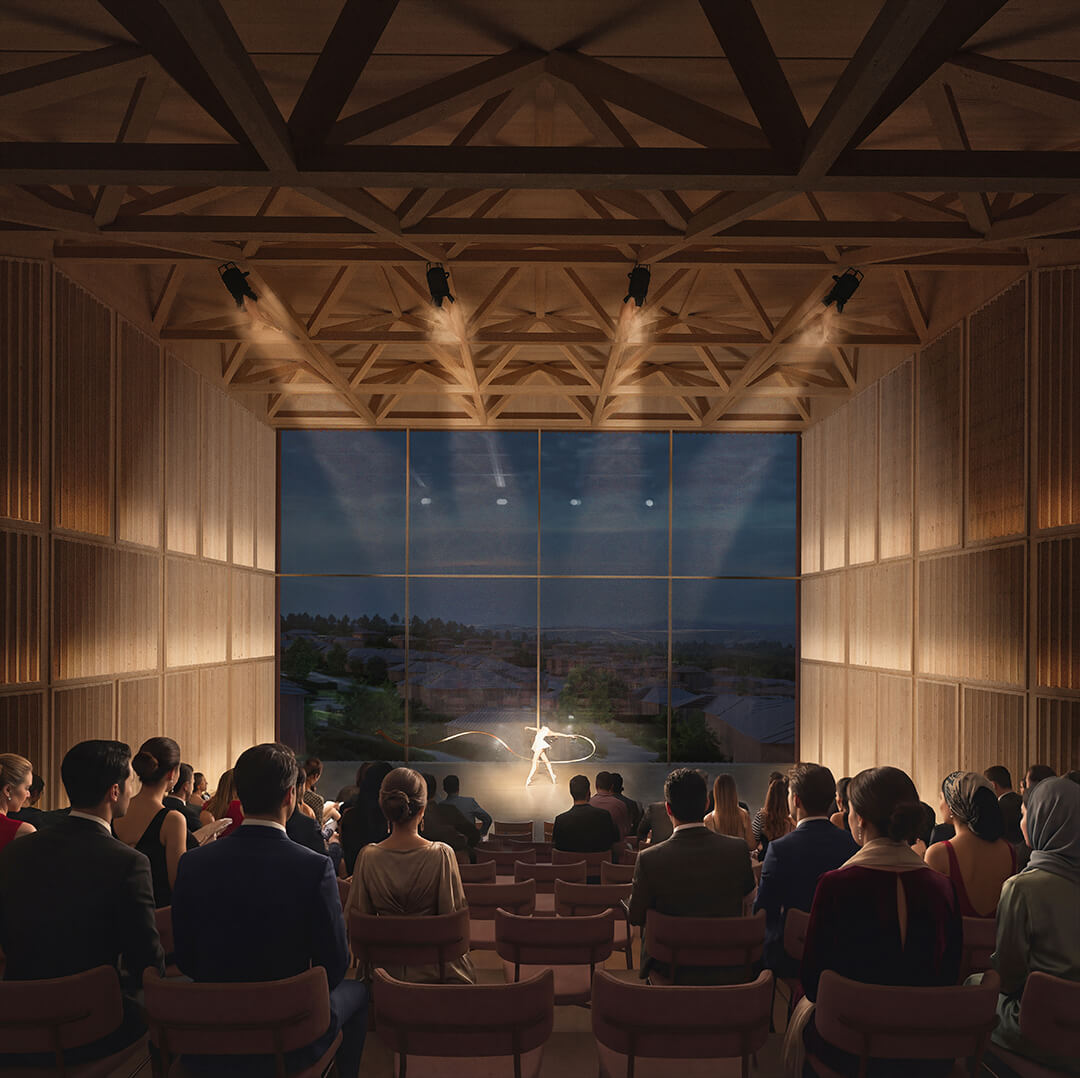
Its first phase, now under construction, promises 969 homes for 3,000 residents, 100,000 sq m of biodiverse green space, renewable energy systems, walkable routes, cultural buildings, wellness spaces and digitally integrated infrastructure. It is a place where, according to Ion founder Mehmet Kalyoncu, “nature, culture and daily life sit in balance”. Both Kalyoncu—who is founder and chairman of the Türkiye Design Council and Bünyamin Derman, founder at DB Architects, are key stakeholders in the redevelopment plans of an earthquake-devastated Hatay, headlined by Foster + Partners.
Four cultural behemoths are at the centre of Ion Riva, boasting dramatic, memorable and ultimately brandable architecture, portraying the buildings as symbols of immediate cultural resonance. The Drop by BIG, a teardrop-shaped timber pavilion along the coastline, The Ring by Snøhetta that acts as ‘a sanctuary to experience nature’ and The Lantern by MVRDV, featuring a performing arts centre, gallery and bookshop, bolster the new development as a destination. Each of the buildings is positioned as a spectacle in its own right, a separate point on a checklist of spots to visit in the city if one were to visit, eventually warranting individual media attention. The phenomenology—a recurrent theme around this text—here is remarkably similar to the developments in the Saadiyat Island Cultural District in Abu Dhabi, home to the Jean Nouvel-designed Louvre Abu Dhabi, teamLab Phenomena Abu Dhabi, Foster + Partners' Zayed National Museum, the Natural History Museum and the upcoming Frank Gehry-designed Guggenheim Abu Dhabi. The district’s case is especially remarkable since a number of projected iconic landmarks here are ‘versions’ of existing architectural landmarks in the global North, for lack of a better conjunctive term.
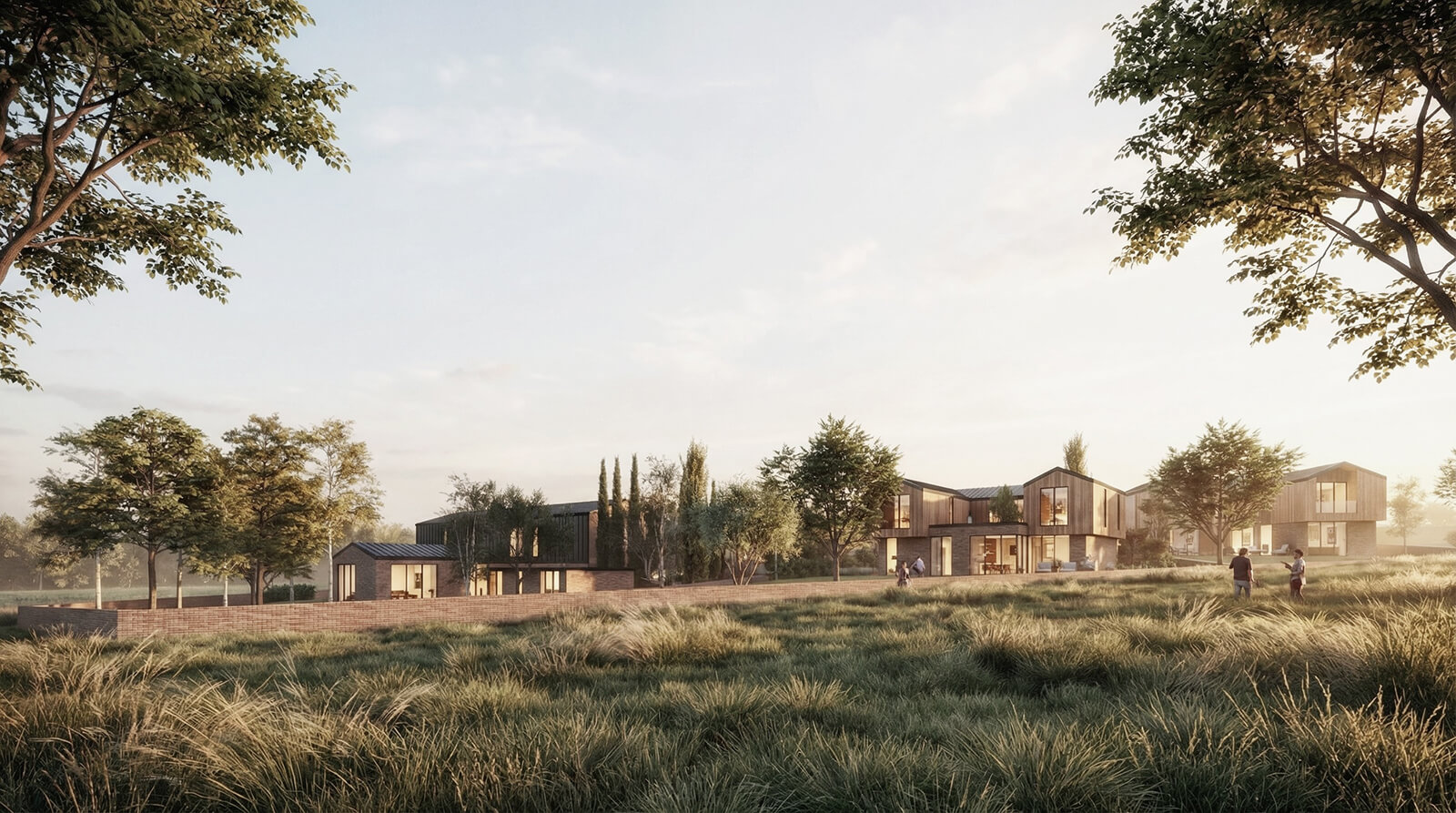
The inclusion of expansive public spaces and institutional buildings also seems to have the effect of softening the optics of the project as a luxury development, which will feature three- to six-bedroom villas with shared pools and other luxury amenities. Culture, in this instance, becomes a way to signal openness while reinforcing exclusivity. At the same time, socio-economic and ecological tensions are revealed when such a project is positioned in context with the city’s persisting housing crisis and recurrent threat of natural and ecological disasters.
According to the Istanbul municipality, approximately 750,000 housing units, many of which are recently constructed, are sitting vacant in the city as investment assets rather than primary residences. This is an occurrence that is all too common in major cities around the world, forming an essential foreground to any conversation around housing, affordable and otherwise. At the same time, affordability pressures persist across large sections of the population.
A rarer, more specific reality for Istanbul is that disaster management authorities have warned about a significant scale of potential damage in the event of a major earthquake. Construction on mega projects risks affecting preparedness for looming disasters, being largely number-oriented in the selection of sites, neglecting lands falling under seismic zones. In such a context, development as a prerogative carries implications for resilience, accessibility and long-term urban stability. To cite Leslie Sklair, Professor Emeritus of Sociology at the London School of Economics, from his book Iconic Architecture and the Rise of Globalising Cities (2017), “These problems [class polarisation and ecological unsustainability] are disguised by what has been termed iconic architecture produced by a new breed of ‘starchitects’ that now spans most regions of the world. The more successfully a building can convey consumer-friendly meanings and designs, ideally combining the comfortable with the spectacular, the more value the building will have in the market”.
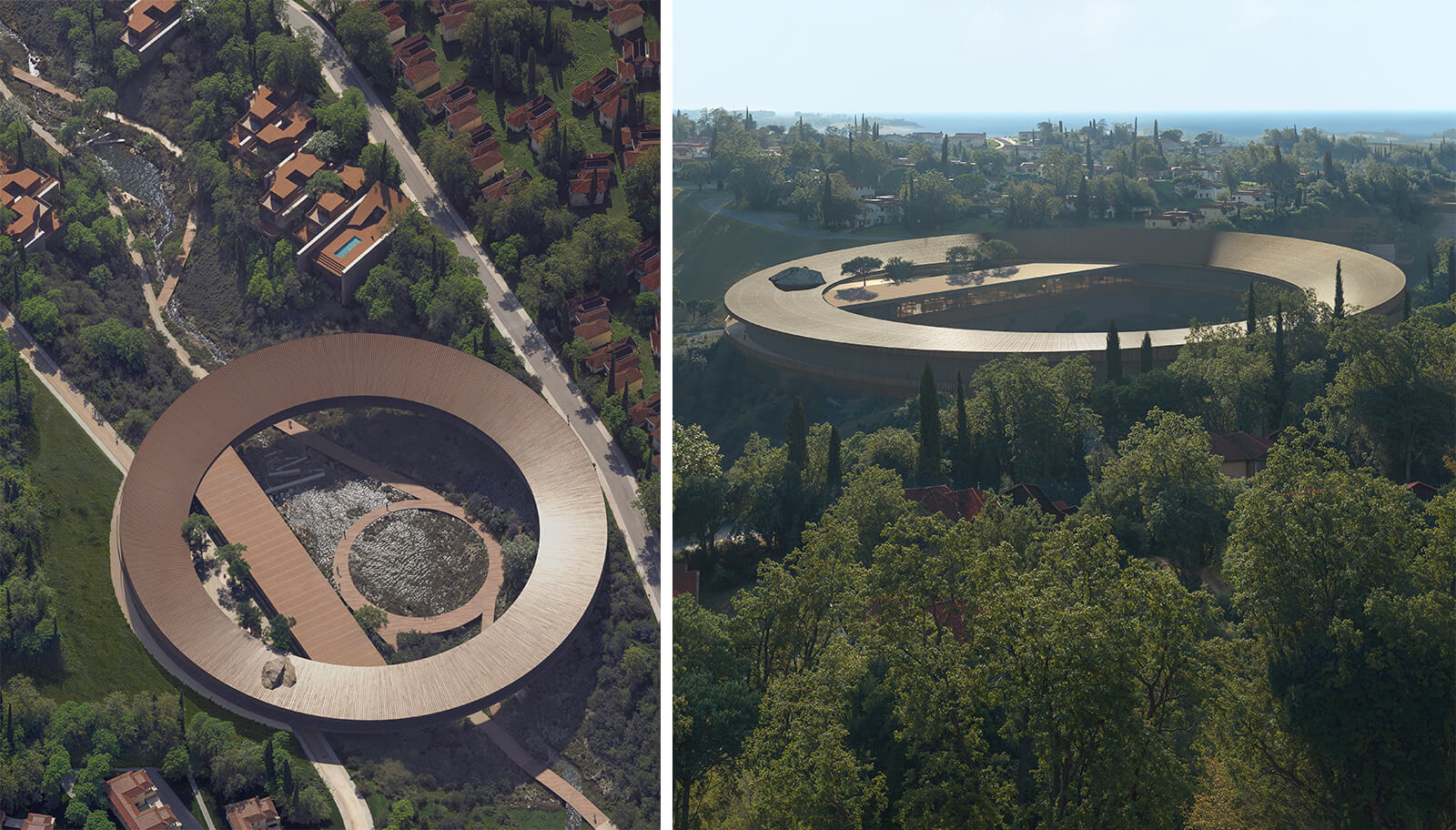
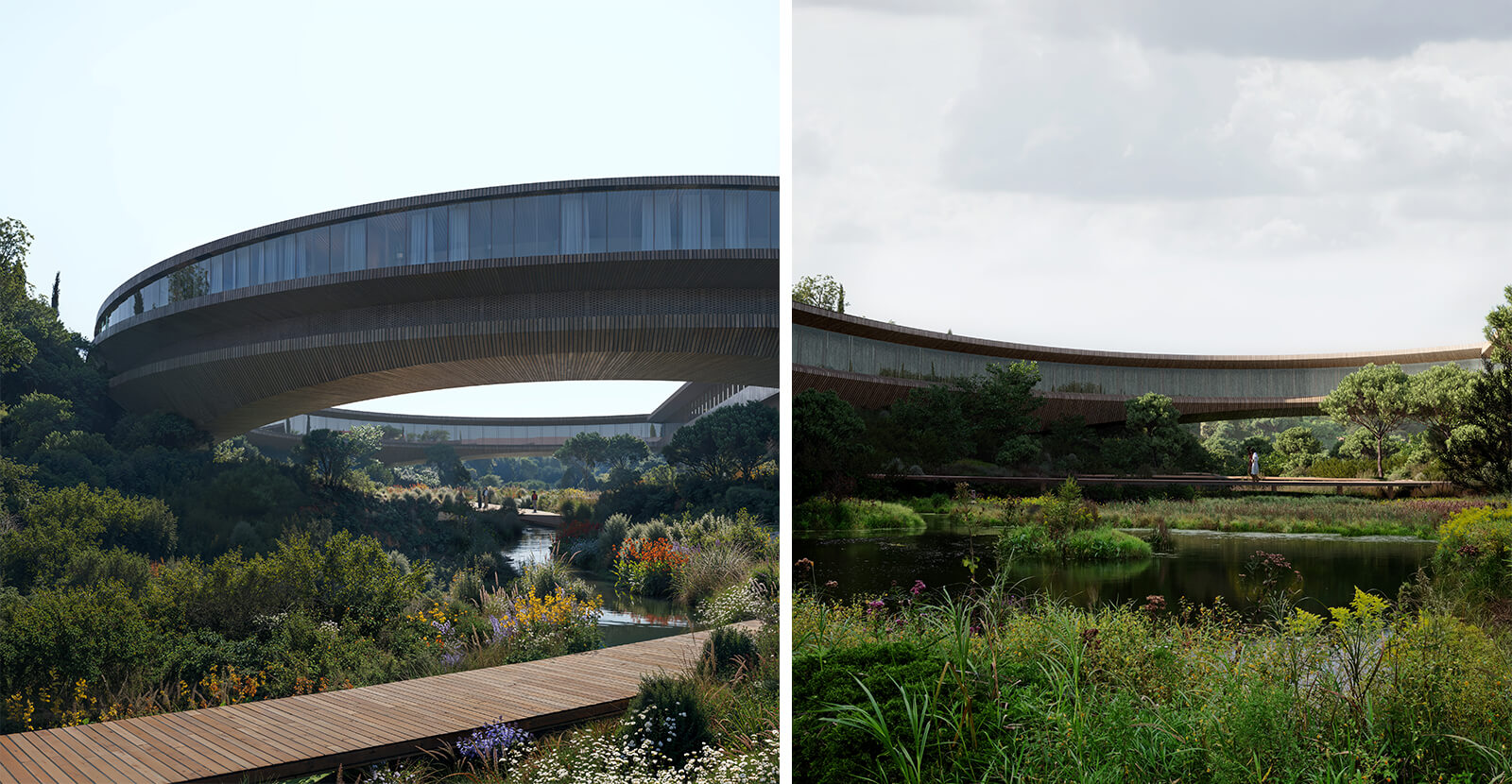
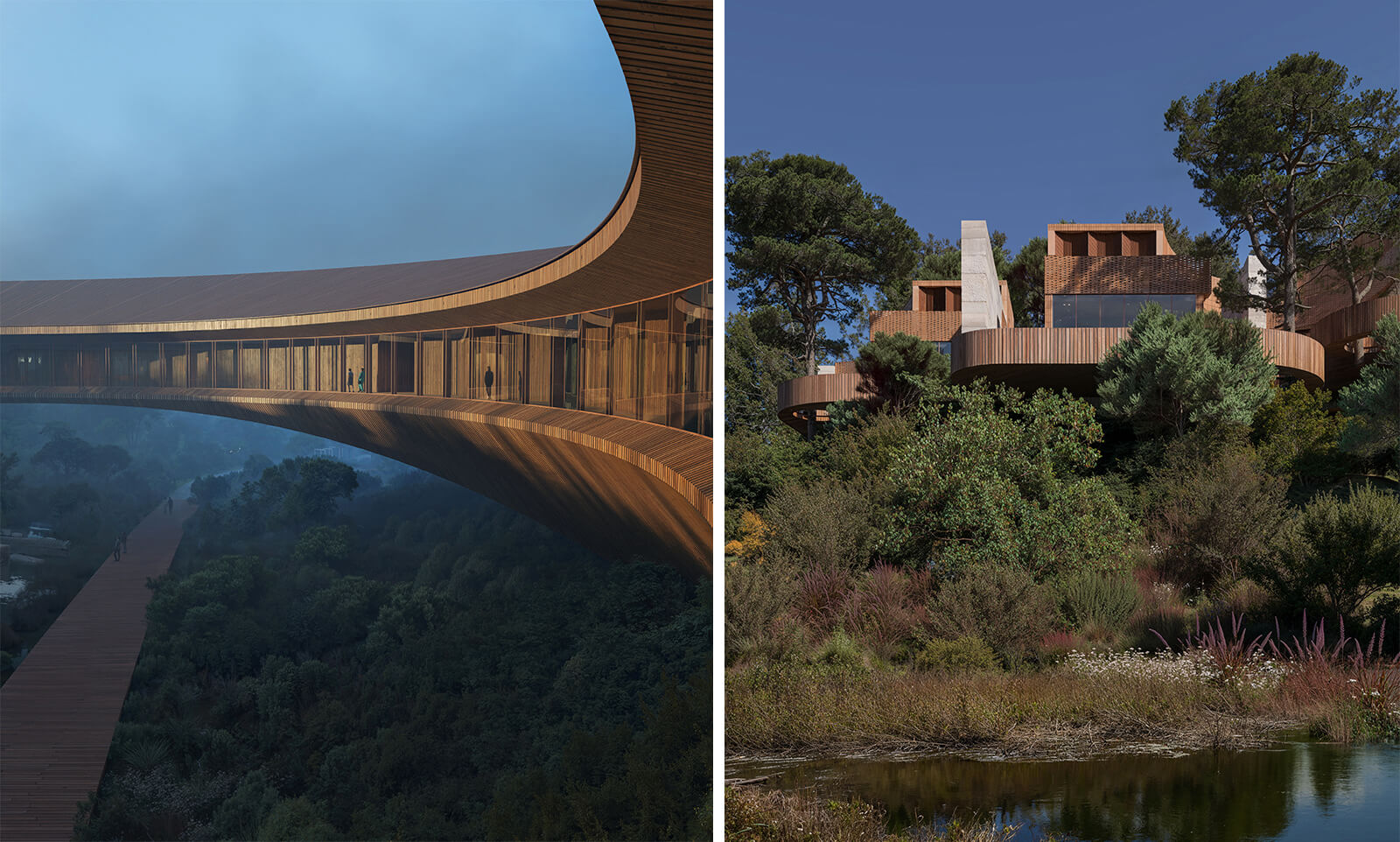
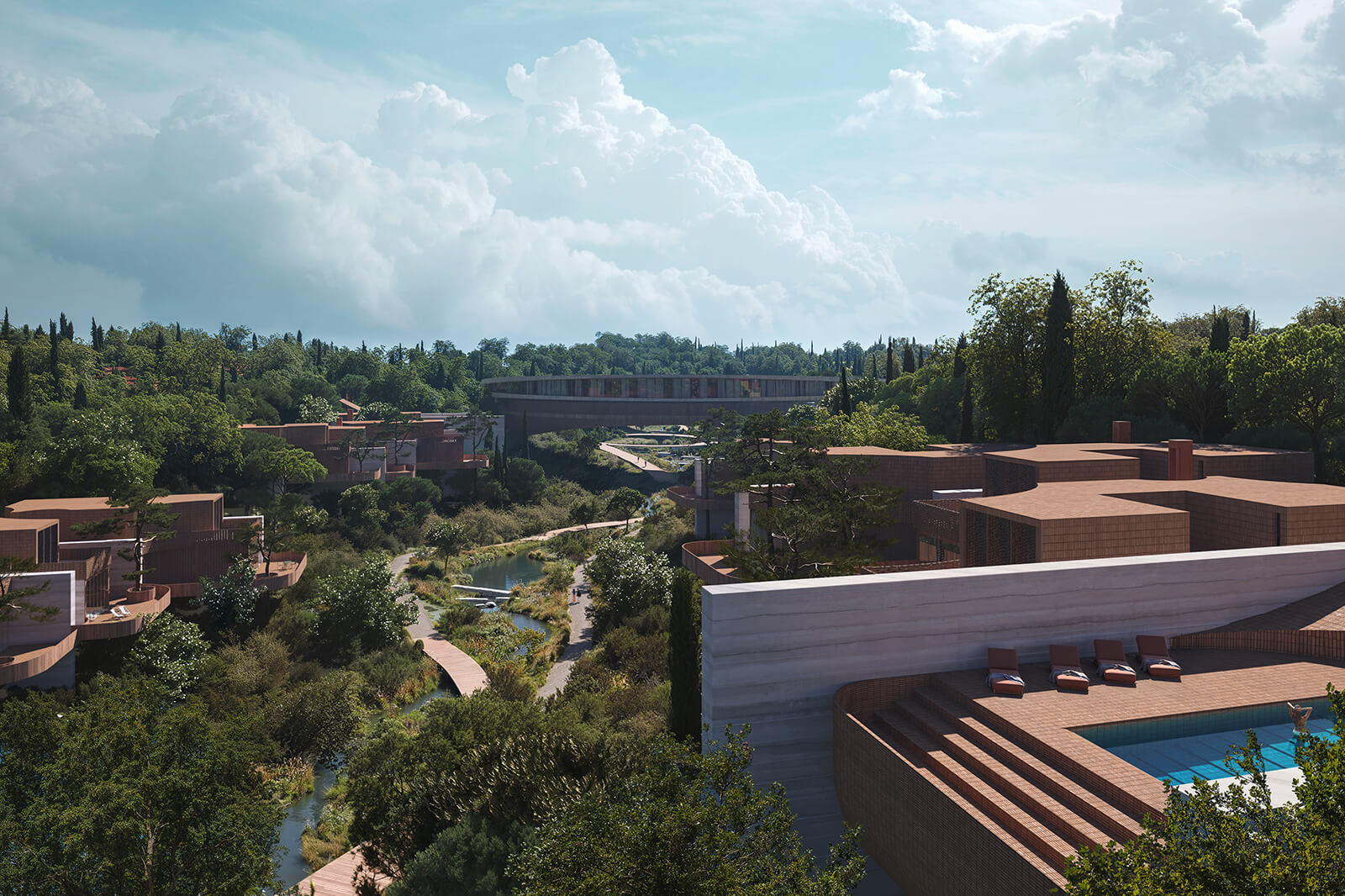
Ion Riva is one of many mega-projects through which northern Istanbul is expanding, straining demand for natural resources, land supply and livability. Large-scale infrastructure and speculative housing have already altered the city’s northern belt, comprising forests and water basins critical to the city’s ecological balance. Research at the Department of Architecture at the Istanbul Bilgi University concludes that this unconstrained growth is ‘socially, ecologically and economically unsustainable1.’ Within these frameworks and the landscape of mediatic architecture, often fixating on the image, Ion Riva’s ‘landscape-led’ approach invites curious examination. While the use of timber construction, water recycling and green corridors may signal an intent of sustainability, the development model fundamentally remains one of low-density expansion into sensitive territory.
Despite the visuals of promised neighbourhoods packed with theatres, galleries, cafés and bookshops—purveyors of contemporary culture and sociality—community and culture may remain independent of design and development intent. They instead emerge through conditions such as conflict, overtime adaptation and collective use across the neighbourhood—processes that resist simulation. The images of Ion Riva’s neighbourhood of the future do not attempt to resolve the issues as much as suspend them, rehearsing an idea of the city where they appear already reconciled.
References
1.Urbanization processes of Northern Istanbul in the 2000s: Yavuz Sultan Selim Bridge and the Northern Marmara Highway by Dr. Evren Aysev, İstanbul Bilgi University, Department of Architecture, 2022.
The views and opinions expressed here are those of the author(s) and do not necessarily reflect the official position of STIR or its editors.

by Pranjal Maheshwari Oct 19, 2026
The Mumbai-based architects integrate courtyards, mesh screens and north light trusses to create a dining space that doubles up as a community hub at SR University, Warangal.
by Mrinmayee Bhoot Oct 17, 2026
The Rotterdam-based institute centres the Indian Ocean as a network for exploring material histories and transnational links shaping coastal cultures, positing them as future models.
by Pranjal Maheshwari Oct 16, 2026
At the 2026 Stirling Prize ceremony, Mary Duggan with RUFF Architects, MAKER Architecten and Nakshabid Architects were felicitated for proffering quality housing and social equity.
by Mrinmayee Bhoot Oct 12, 2026
The new Centre for Contemporary Arts, fostering public engagement with art in Uzbekistan, is housed in a tram depot refurbished by the French studio, emulating local craftsmanship.

make your fridays matter with a well-read weekend
Enter your details to sign in
Don’t have an account?
Sign upOr you can sign in with
a single account for all
STIR platforms
All your bookmarks will be available across all your devices.
Stay STIRred
Already have an account?
Sign inOr you can sign up with
Verification link sent to check your inbox or spam folder to complete sign up process
Tap on things that interests you.
Select the Conversation Category you would like to watch
Please enter your details and click submit.
Enter the 6-digit code sent at


Ion Riva in Istanbul and the idealised image of architecture amid crises
by Bansari Paghdar, Anmol Ahuja | Published on : Jul 31, 2026


 Sign in with Google
 Sign in with email
What do you think?