Art14 mins. read
Gyeonggi Ceramics Biennale 2026 reframes the planet as co-author
by Srishti OjhaJul 30, 2026



by Srishti OjhaPublished on : May 29, 2026
Khaled Sabsabi’s journey to the Venice Biennale has been a difficult one, full of twists and turns. Originally commissioned by Creative Australia as the representing artist for the Australian Pavilion at the Venice Art Biennale 2026, the Australian-Lebanese contemporary artist was dropped in February 2025 amid uproar about his previous works, You (2007) and Thank You Very Much (2006). The former depicted the former leader of Hezbollah giving a speech in Beirut, and the latter stitched together footage of the 9/11 terror attacks with former president George W. Bush saying the words, “Thank you very much,” at an event. Australian politicians took issue with Sabsabi’s depictions of terrorism, claiming the works supported the content and individuals they depicted. This, of course, was untrue to anyone who viewed the video works in the context of Sabsabi’s multimedia practice. The decades-old works, which have previously been exhibited in Australia without issue, critique the media culture surrounding political violence and its perpetrators.
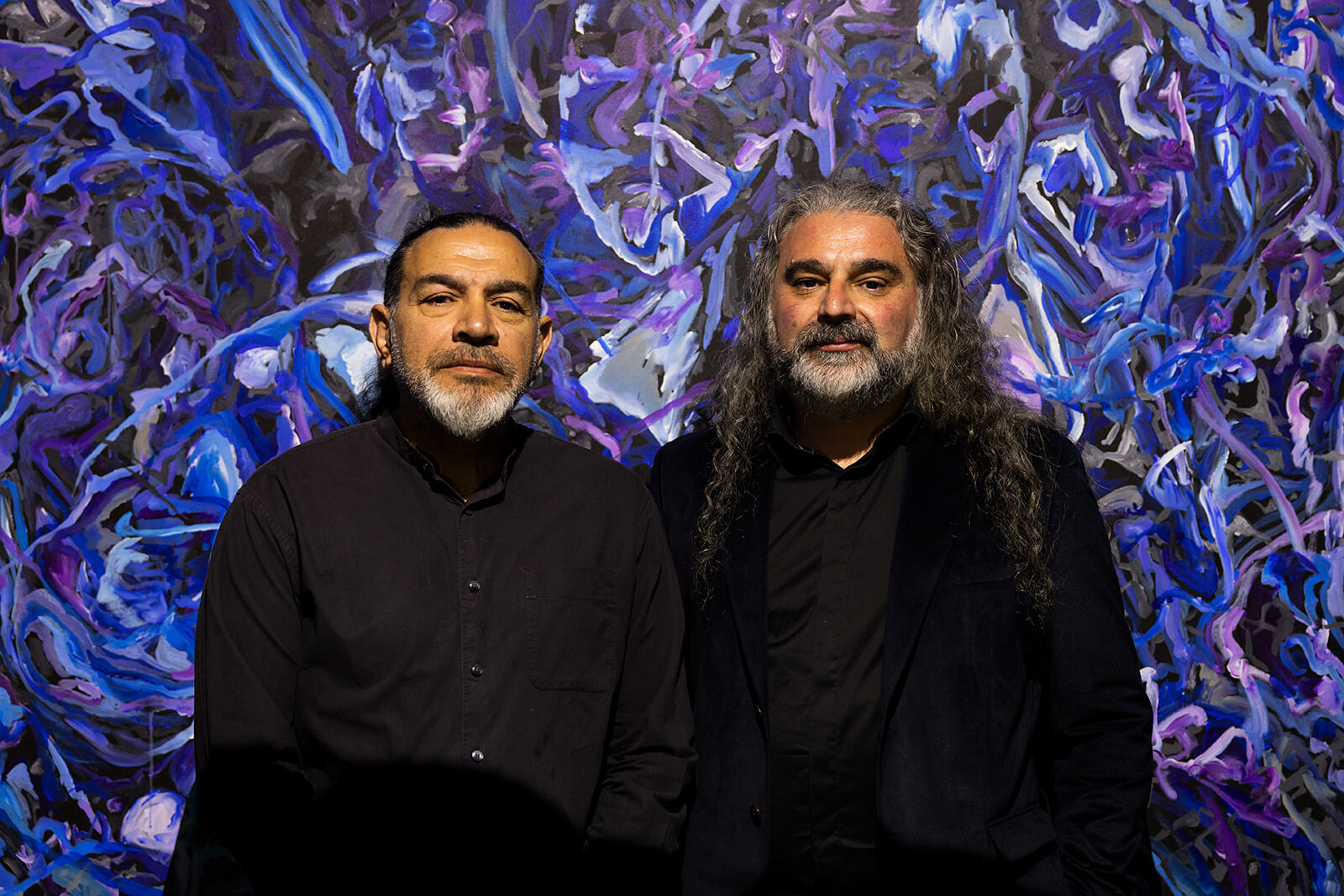
The decision to revoke Sabsabi’s position as Australia’s representative in Venice proved to be unpopular among a global artistic community already galvanised by the many controversies that have plagued this year’s biennale, with many peers calling for Sabsabi’s reinstatement. Perhaps not expecting the outcry, Creative Australia reversed its decision, reconfirming Sabsabi and curator Michael Dagostino’s appointment. During this tense, uncertain period, the late Koyo Kouoh offered Sabsabi a coveted place at the Arsenale, the venue of the biennale’s main exhibition, In Minor Keys. Now, Sabsabi claims the rare honour of exhibiting at both the main exhibition and a National Pavilion in the same year. Speaking about the unusual situation and support from the community in a conversation with STIR, Dagostino says, “The outpouring of support from the artistic community both in Australia and internationally and the subsequent reevaluation by Creative Australia was deeply encouraging. While art is just one component in the mass collectivity required to achieve change, it serves as an essential component for shifting perspectives and insisting on connection in the face of division. The support we received offers real hope, reminding us that art gives us a vital opportunity to imagine and practice a new kind of world.”
There is heavy irony to this situation—as with most instances of censorship, the attempt to ‘cancel’ Sabsabi only reinvigorated interest in his work and oeuvre and the artist steps out of the controversy more popular and respected than ever. Many would have used the opportunity to exhibit at two platforms at the biennale to double down on the themes and subjects that proved controversial, furthering the conversation. Sabsabi, however, moves in a completely different direction with conference of one’s self at the Australian Pavilion and khalil at the Arsenale. Both exhibitions are moving, abstract, sensory experiences that hold universality at their centre. The former exhibition is inspired by the poem The Conference of the Birds, written by the 12th-century Sufi poet Farid ud-Din Attar. The poem begins with an international council of birds discovering a golden feather, theorising that it came from a kind of bird, holy and great, which they had never seen before.
The birds set out in search of this mythical creature, taking it to be a god-like figure who would give them answers that none of them could reach. After a long, dangerous journey through seven valleys (each symbolising tenets of Sufi wisdom such as detachment, unity and the annihilation of the finite self) that sees most of the birds die or turn back, they reach the home of the legendary Simorgh. Upon their arrival, the remaining thirty birds find no one, realising that they themselves are the Simorgh (which in Persian translates to ‘thirty birds’). Attar uses symbolism to illustrate this central value of Sufi philosophy that the beloved and deified exist as a reflection of the seeker’s self. Attar teaches that holiness lies within, and the true search and journey for it must be inward.
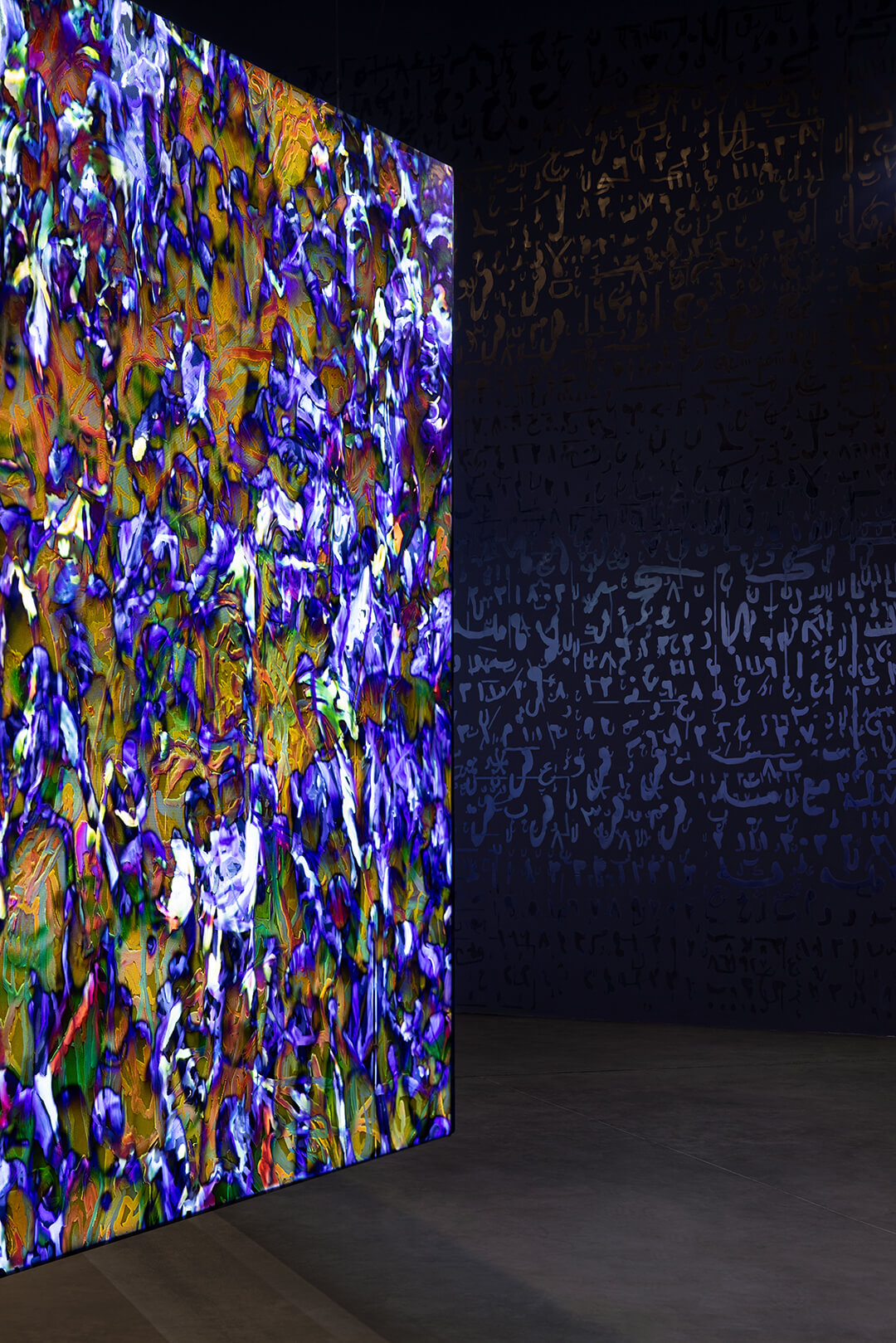
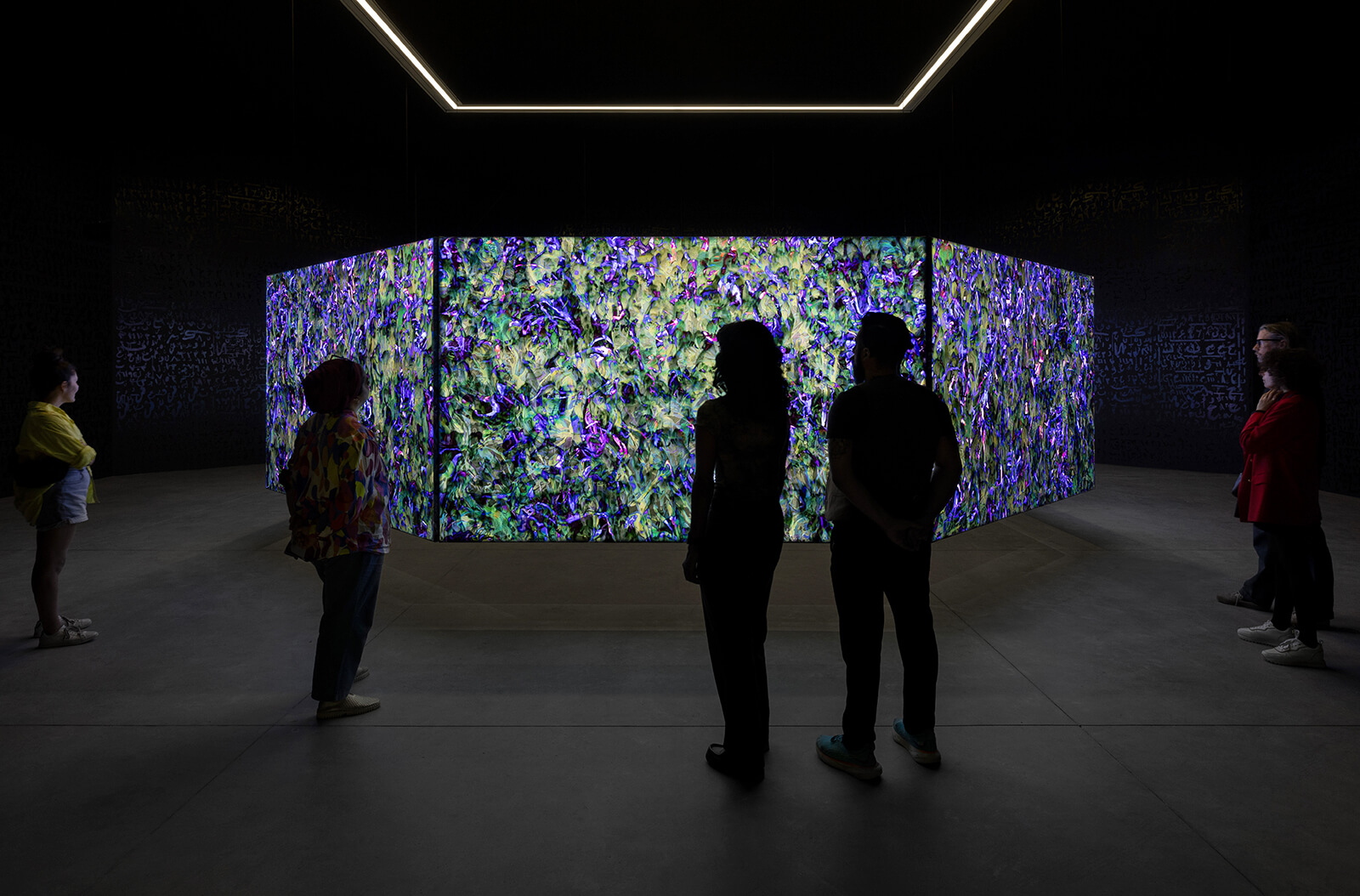
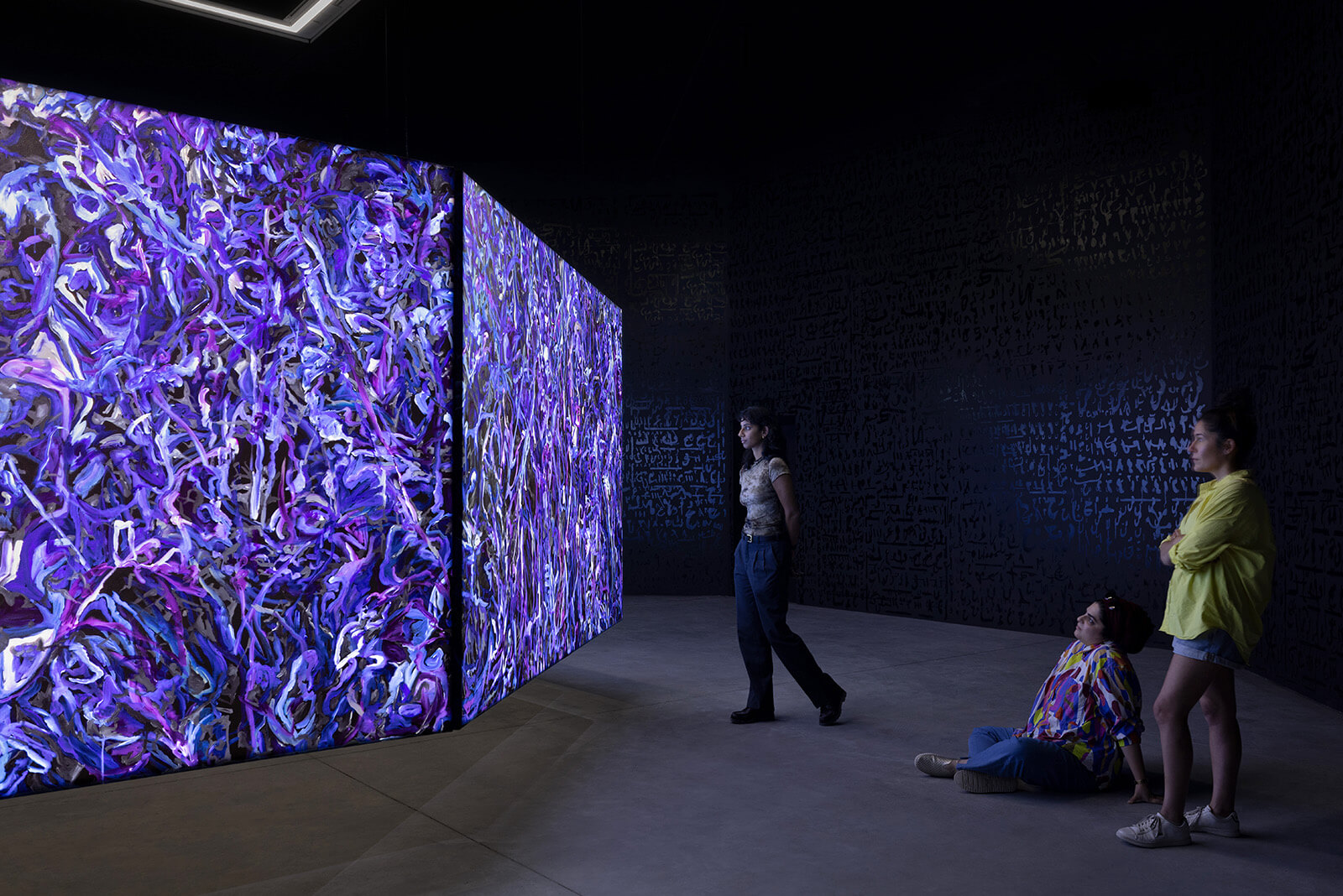
The installation conference of one’s self draws on this allegory and the Sufi mystic tradition it emerges from to immerse viewers in a space to contemplate this collective journey. Eight giant canvases, each measuring three by two metres, are presented in an octagonal formation. Video projectors cast moving images onto the abstract, colourful surfaces of the paintings in a 54-minute loop, creating an atmosphere for reflection and contemplation. The immersive installation includes a soundscape of everyday sounds that loop along with the video, recorded on an analogue tape. The exhibition is a reflection of the tasawwuf (Arabic term for Sufism) spiritual beliefs that Sabsabi holds personally and has channelled over his decades-long career.
Just as the birds in Conference of Birds go on a collective spiritual journey, conference of one’s self encourages visitors to step into spiritual contemplation, to think, imagine and embody the idea of a shared self. The eight paintings mirror the seven valleys of Attar’s work, with Sabsabi adding his own, eighth part to the journey, representing completion and enlightenment. Dagostino speaks about the centrality of Sufi philosophy to the work, saying, “Tasawwuf (Sufism) is at the centre of Khaled’s practice…The work exists within this spiritual dimension, not as doctrine but as an inquiry into the inner and outer, meaning the seen and unseen. This informs how the work operates through rhythm, sound and duration, where meaning unfolds over time rather than being fixed. The work asks us to slow down, shifting us from our everyday hectic lives to a more contemplative state.”
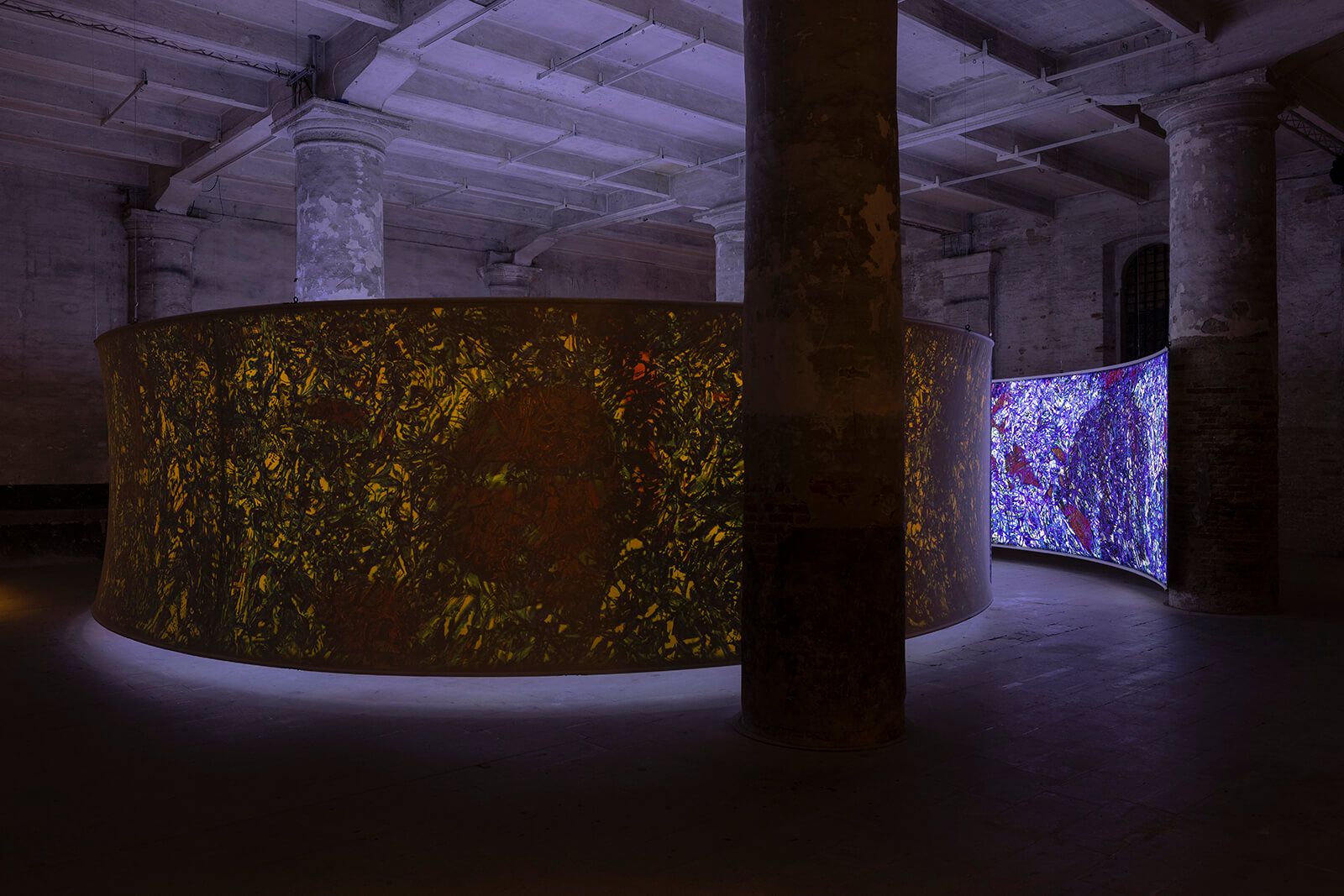
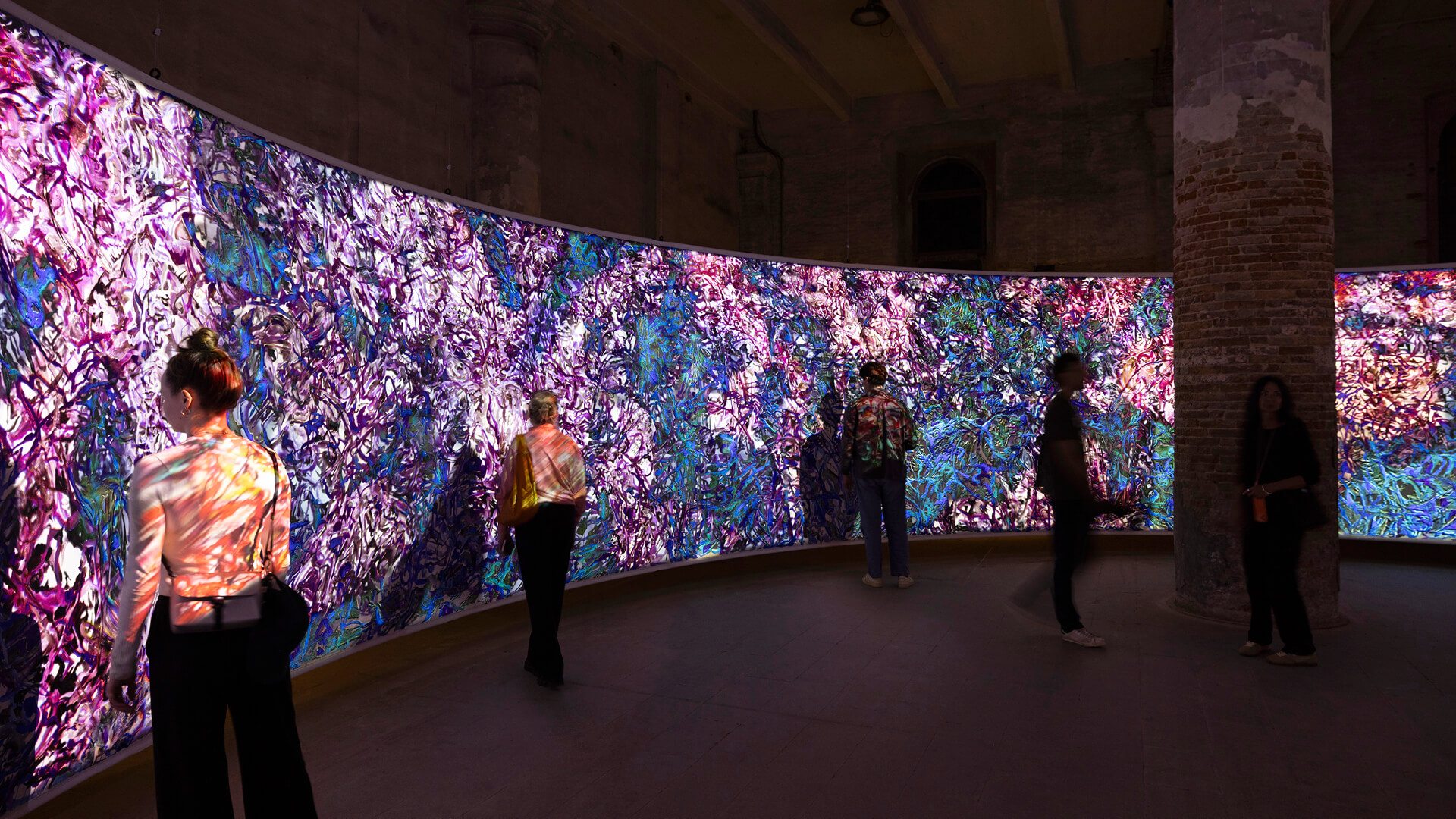
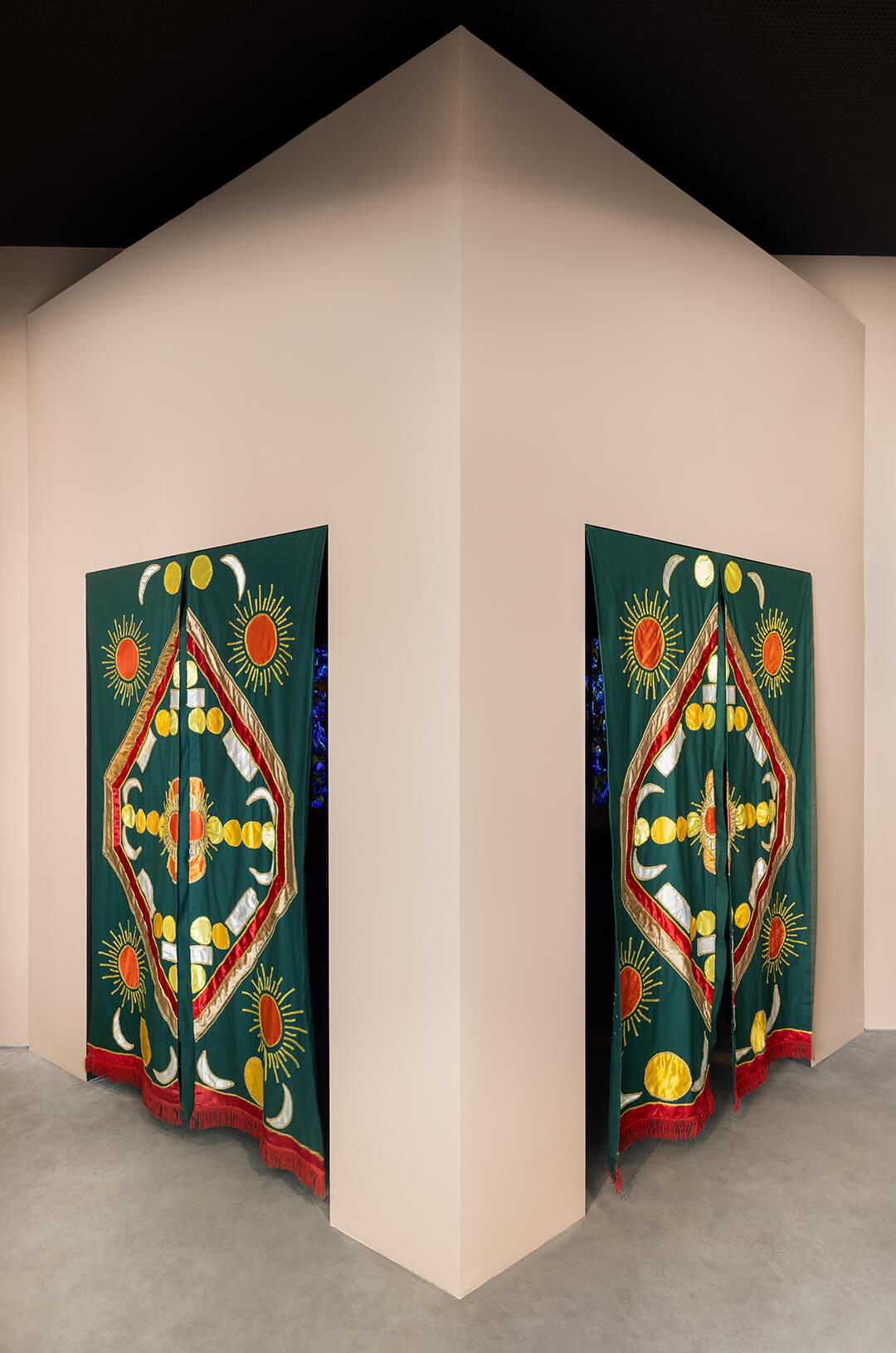
The installation khalil, at the Arsenale, is named after the Arabic word for ‘friend’ and unfolds over three chapters—Khanaydiyak the threshold, El khalil the friend and Khalwa solitude. The site-specific work is another immersive installation with Sabsabi’s paintings projected over 40 metres of painted canvas, accompanied by a soundscape and the fragrance of black oud. Audiences move through the installation in a counterclockwise direction, mirroring the spiralling dance of Whirling Dervishes from the Mevlevi order of Sufism. The 64-minute loop mirrors the contemplative nature of conference of one’s self, this time from the perspective of an individual rather than a collective. “Curating these works required creating the right conditions of space and rhythm, especially since they have their own life force and ask the audience to attune themselves to their slower speed of movement. Both share a spiritual scaffolding rooted in Khaled’s 35-year practice of exploring how people carry memory and how belonging is shaped. This practice is focused on our collective ability to exist and co-exist, moving out of ourselves toward shared experience without reducing people to a one-dimensional character,” adds Dagostino, who helped develop the installation following Sabsabi’s surprise reinstatement to the Australian Pavilion.
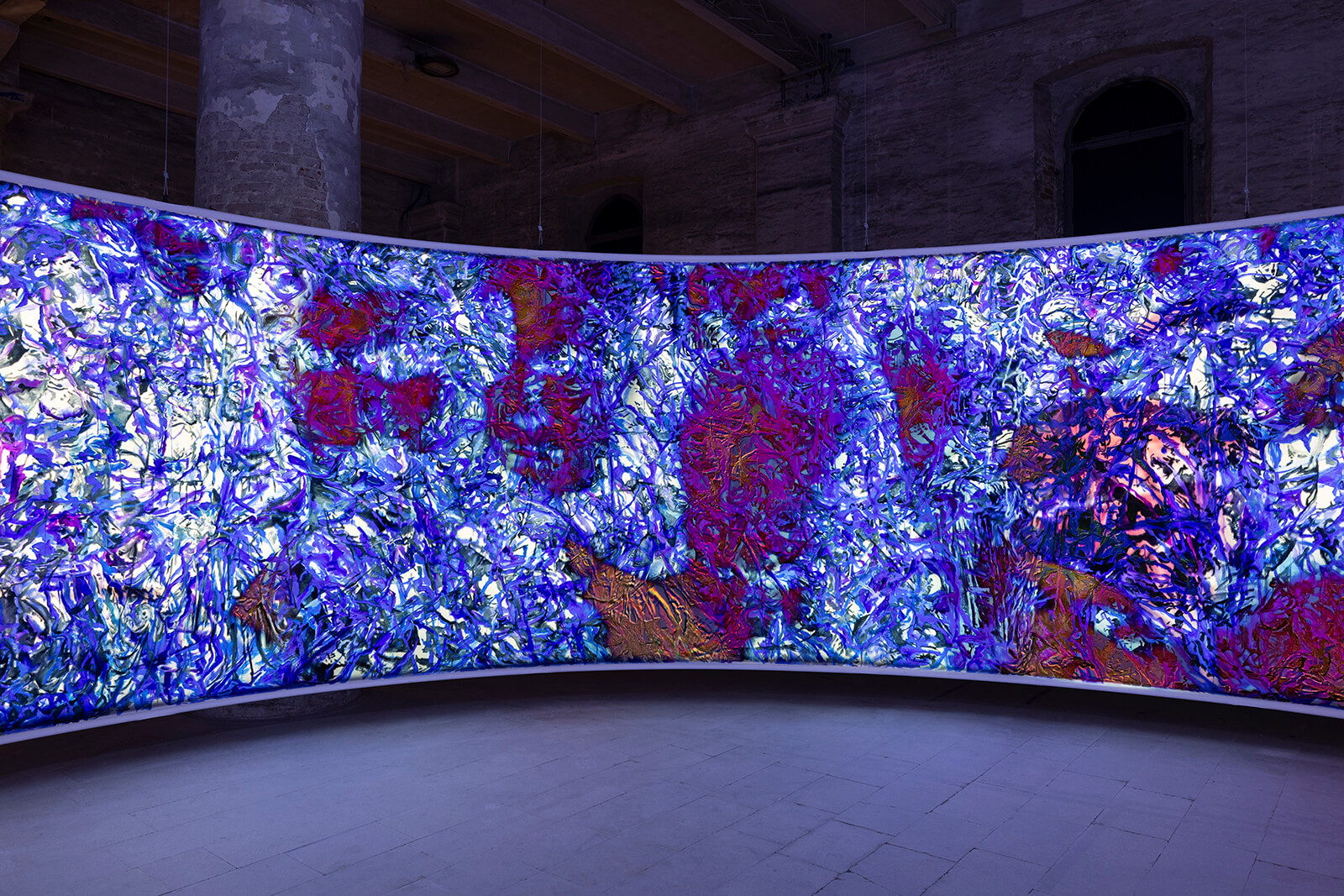
The message, although not directly related to Sabsabi’s fraught journey to Venice or any of the other controversies surrounding the biennale, is an important and timely one. As artists, curators and workers strike over the inclusion of the Israel Pavilion at the biennale, as the event deals with its entire jury resigning over the same issue and artists at other Pavilions like South Africa’s deal with the same censorship Sabsabi himself faced, conference of one’s self brings unity and collectivity into focus. The Venice Biennale is a rare occasion for global togetherness, multiculturalism and celebrating the diversity of cultures and artistic practices under a united banner. While the impulse to not allow a genocidal stage to ‘artwash’ its actions on a global stage is a well-intentioned one, emerging from the desire for justice and peace, censorship is ultimately a tool of fascism. Thinking about a shared spiritual journey and imagining a cooperative, global collective is impossible without considering how to handle difficult, even violent situations, without resorting to actions that undercut values and rights.
This is something on Sabsabi’s mind as well, having been inspired by the multiculturalism made possible by the violence and colonisation of the Roman Empire. Multiculturalism is perhaps one of humanity’s most difficult ideals to maintain, with unimaginable blood being shed whenever cultures encounter each other, their resources and differences. It is, however, invaluable—elevating and widening culture, technology, media and economies the world over. conference of one’s self reminds us that the work of multiculturalism is never done, that the dream of salvation and peace lies within each and every one of us rather than in an imagined future or any one solution. Dagostino echoes this idea of imperfect, continuous action, reorientation and how it emerges from the installation, saying, “You assemble the work yourself by moving through it. What matters is the way the installation keeps reconfiguring itself around the body. Instability is essential, a place of adjustment and readjustment, where perception is built through duration.”
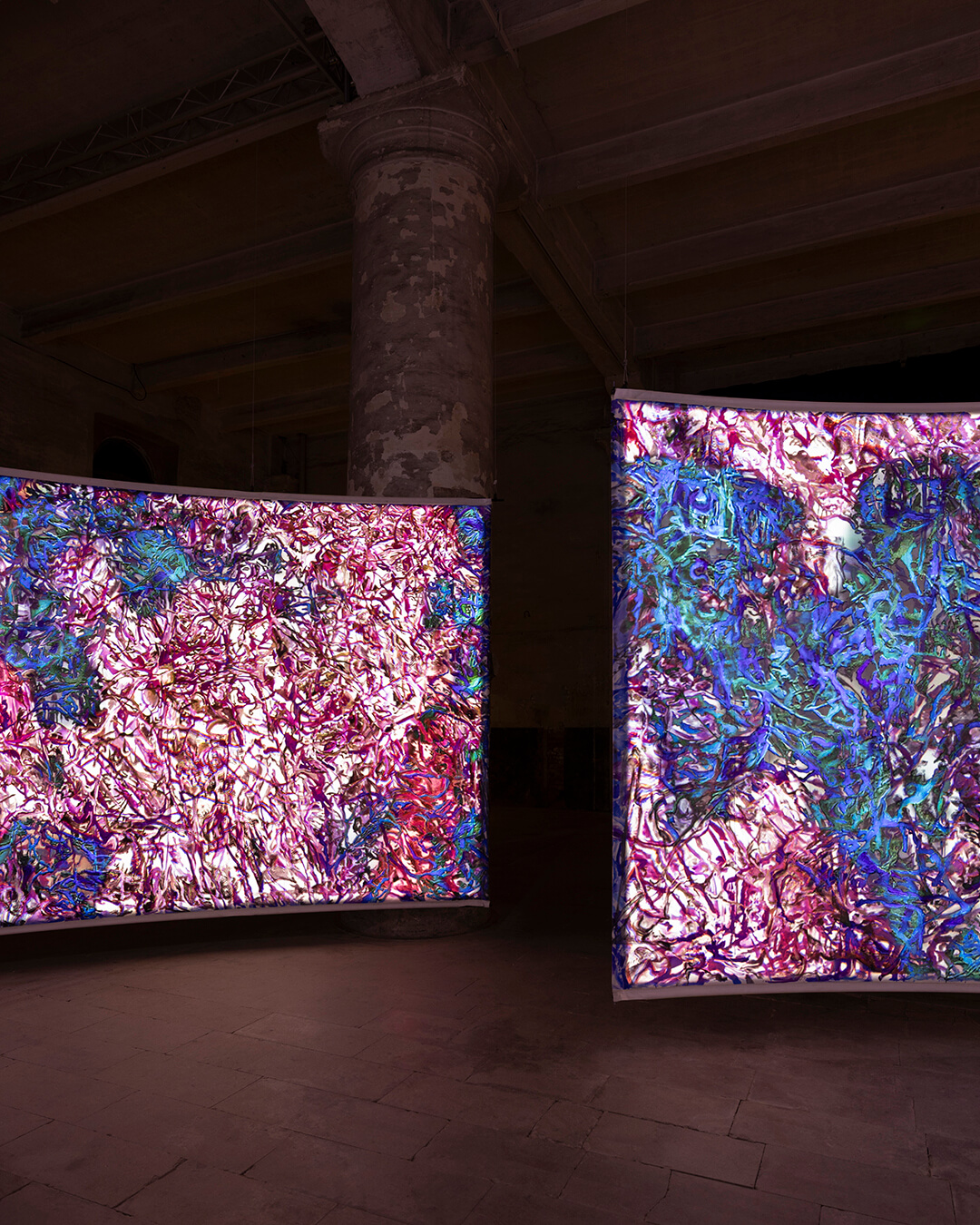
The works perform this instability and celebrate it. The paintings shift and change, in a liminal space between mediums, the soundtrack and installation are insistently non-linear and resist stable meaning and fixed reading. The exhibition as a whole defies boundaries and borders—from its creation by a man born in Lebanon and raised in Australia, its spiritual and universal rather than religious character and even its split location in Venice, where it unfolds. Comfort with instability, differences and misunderstandings is essential to any community, especially a global community. It is this embrace of instability and the use of imagination to understand, tolerate and coexist with others that seems missing from the many conversations about censorship, rising fascism, isolationism and nationalism that plague the world and the Venice Biennale. One imagines how different the world could look if politicians like those who called for Sabsabi’s removal met his art and the world with imagination, conversation and understanding. One imagines how different the world could look if the path to justice were not paved with the tools of fascism—policing, surveillance, censorship. Discussing recent conversations around politics in art and art’s responsibility to politics, Dagostino says, “We engage with this conversation not through rhetoric but through practice. Khaled’s work is grounded in histories of migration and spirituality, and while it continues to reach outwards, it holds space for people who have been marginalised or misrepresented. The practice is not sealed off; it is part of the communities it shares, insisting on connection in the face of division.”
This persistent commitment to connection, a shared self and instability—values at the heart of the Sufi spiritual and mystical tradition—is what conference of one’s self and khalil leaves audiences with. Michel Foucault, the postmodern French philosopher and political activist, said in a preface for another theorist’s book, "The strategic adversary is fascism...the fascism in us all, in our heads and in our everyday behaviour, the fascism that causes us to love power, to desire the very thing that dominates and exploits us." This inward turn—to look for the fascism within ourselves, even as we fight it—is central to Sabsabi’s work and practice. Whether we are looking for multiculturalism, tolerance, fascism or power, we must look within first, for the other is a reflection of the self. With beauty, sensuality and imagination, Sabsabi asks us to look within, to find the self that does not stop at the body, but is expansive enough to hold and care for the world and all its people, without exception.
The 61st International Art Exhibition of La Biennale di Venezia, 'In Minor Keys’, curated by Koyo Kouoh, runs from May 09 – November 22, 2026, at the Giardini and the Arsenale venues, as well as various other locations around Venice. To read STIR’s exclusive coverage, conversations and highlights from the biennale, click here.
The views and opinions expressed here are those of the author(s) and do not necessarily reflect the official position of STIR or its editors.
by Mirra Lynn Oct 20, 2026
The Indian artist paints the old wadas of central Pune, capturing the traces of everyday life that cling to these structures, battered by time but unbowed.
by Anmol Ahuja Oct 15, 2026
How do heaps of souvenirs and relics with racist Aboriginal motifs and features become art? MCA Sydney’s winter showcase—the artist’s largest to date—beckons a possibility.
by Srishti Ojha Oct 14, 2026
The first Dutch publication on the Turkish artist, the eponymous book centres on Refik Anadol: Latent City, his living data sculpture of Bruges, exhibited at BRUSK gallery.
by Vandana Kalra Oct 14, 2026
With his latest exhibition as a point of departure, the modernist discusses his decades-long practice, the spontaneity of drawing and the social responsibility of artists.

make your fridays matter with a well-read weekend
Enter your details to sign in
Don’t have an account?
Sign upOr you can sign in with
a single account for all
STIR platforms
All your bookmarks will be available across all your devices.
Stay STIRred
Already have an account?
Sign inOr you can sign up with
Verification link sent to check your inbox or spam folder to complete sign up process
Tap on things that interests you.
Select the Conversation Category you would like to watch
Please enter your details and click submit.
Enter the 6-digit code sent at


Locating Sufi sensibility amid fascism: Khaled Sabsabi’s Australia Pavilion
by Srishti Ojha | Published on : May 29, 2026


 Sign in with Google
 Sign in with email
What do you think?