Architecture12 mins. read
'Reimagining' the city this June: Must-see events at London Festival of Architecture
by STIRworldMay 31, 2024



by Mrinmayee BhootPublished on : Sep 17, 2026
We are heading for a world where all we might have is an eternal summer. This is not entirely alarmist. August 2026 was the hottest month on record1, with temperatures crossing 1.65°C higher than the estimated pre-industrial baseline. The severity of the climate crisis no longer needs to be quantified—we can all experience it. To put things into perspective, global heat-related deaths specifically due to temperatures (barring fatalities from wildfires around the world) crossed tens of thousands. In India alone, as a study from UC Berkeley estimates, heatwaves could lead to 3,400 excess deaths in one day, while one lasting five consecutive days could lead to around 30,000 additional deaths2. It’s difficult to understand the impact of heat with the naked eye—all we see is an extra-natural brightness. But as thermal imagery has made clear, we are burning up. An article by climate and environmental journalist Aruna Chandrasekhar in Equator3 demonstrates that the temperatures in Mumbai are intense enough (crossing 50°C) to prove uninhabitable by the most basic scientific standards. That is where we are, casting a long shadow over where we go from here.
While in the long term, reducing carbon emissions might be the most effective means of resolving further global warming, the most urgent demand for the burning planet remains adaptation to it. This is crucially also a question for ‘Architecture’. If its rudimentary impetus is ensuring refuge from merciless external elements, how do we adjust to the oppressive heat? Or as Daniel Barber argues4, how do we accept discomfort as a condition of design?
Barber notes how being ‘comfortable’ has become synonymous with the architecture of the well-tempered environment, predominantly through the manipulation of HVAC systems. However, ‘manufactured interior consistency’ elides the instability of the exterior environment. To accept discomfort is also to acknowledge how we might better design open spaces to provide shelter against the sun. On a hot summer day, if one is hapless enough to be outside, the value of shade is undeniable. The design of shaded places makes a difference in how we move through public space, as Sam Bloch notes in his recent book, Shade: The Promise of a Forgotten Natural Resource. Heat experts, environmentalists and the public all want the same thing: a place out of/away from the sun. While shade is not a primary concern for design—green cover, facilities like sitting space, waiting areas are—for Bloch, to be able to live in a permanently altered future climate, shade will make all the difference; an ‘amenity’ that must be the goal of public space design, not simply a byproduct of it.
Modernity positions light and the sun as the epitome of health—with its opposite, or that which lies in the shade or the shadows, commonly understood as being archaic or murky. We have always designed to maximise our solar natures. Contrary to this notion, Indian architect Charles Correa noted in the 1983 Thomas Cubitt Lecture, A Place in the Sun, at The Royal Society of Arts, London, that design principles, specifically in India, were conceived as a negotiation of thresholds, with shade inherently being a consideration of how the relationship between outside and inside was conceived. There is an undercurrent of disparity in how we think of our place in the sun, and how crucial shade becomes to design. Today, those favourably placed in relation to the equator get to call rising temperatures and the shift from temperate climates to tropical weather ‘discomfort’, while that remains the status quo in the Global South.
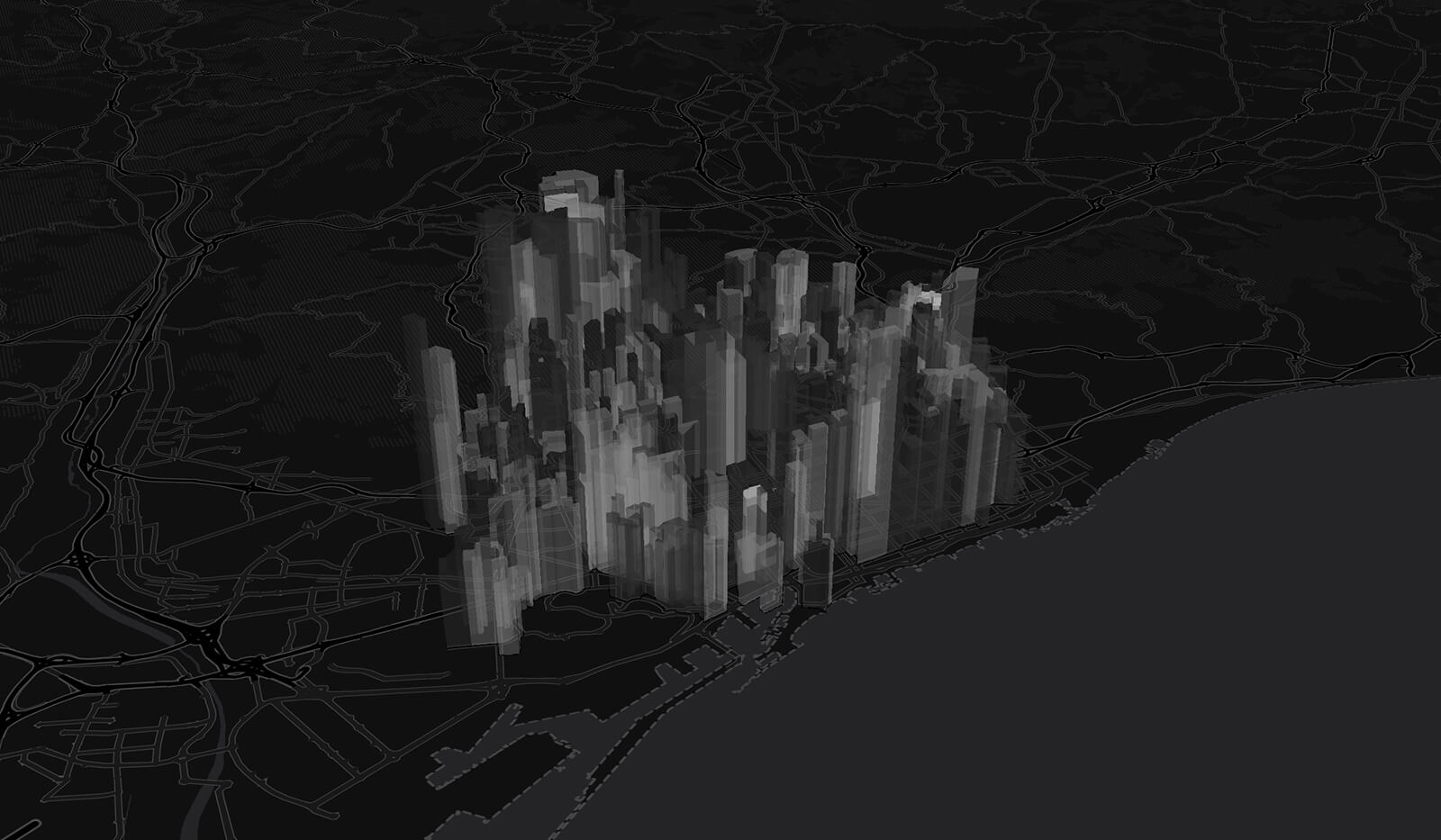
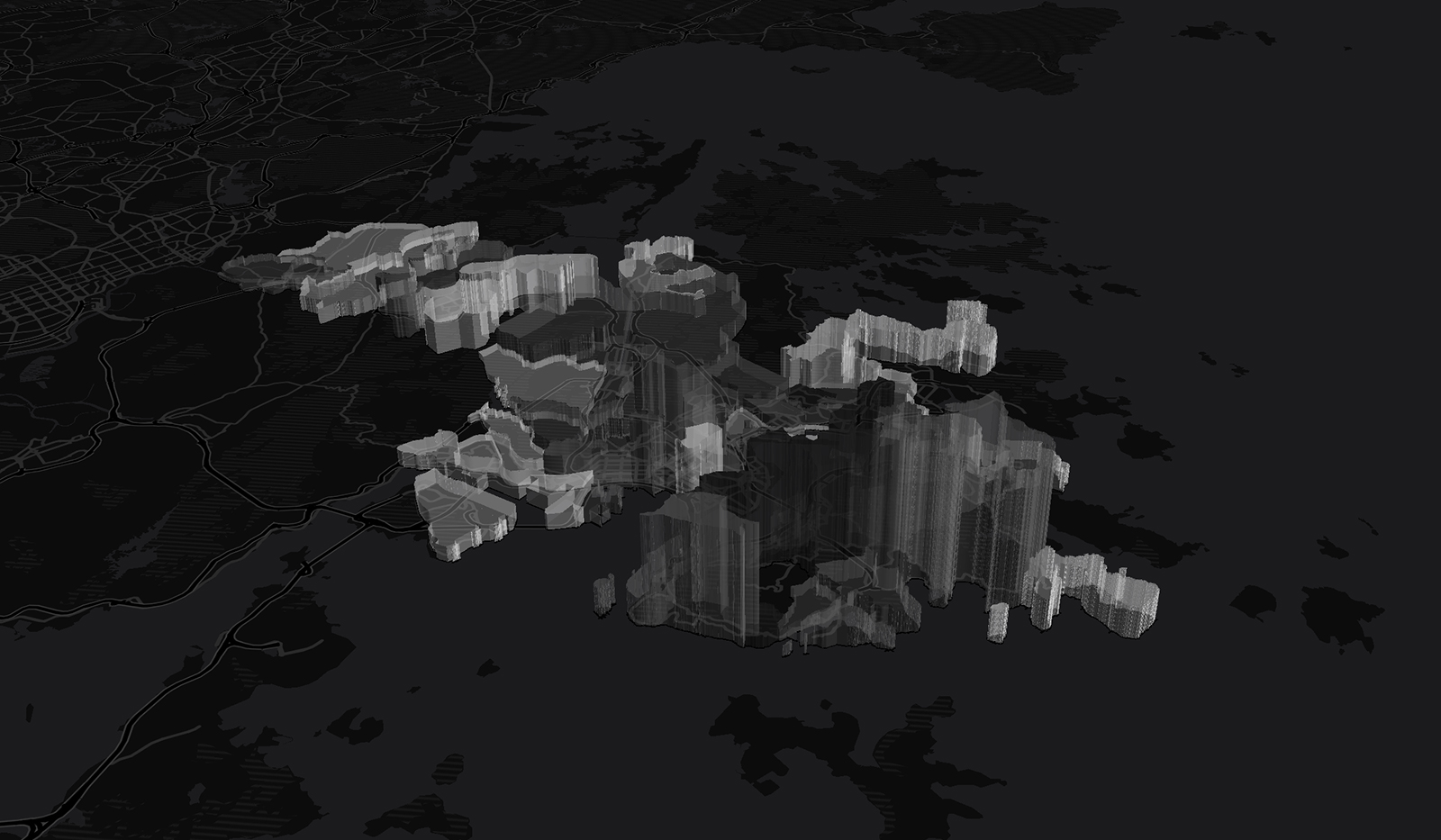
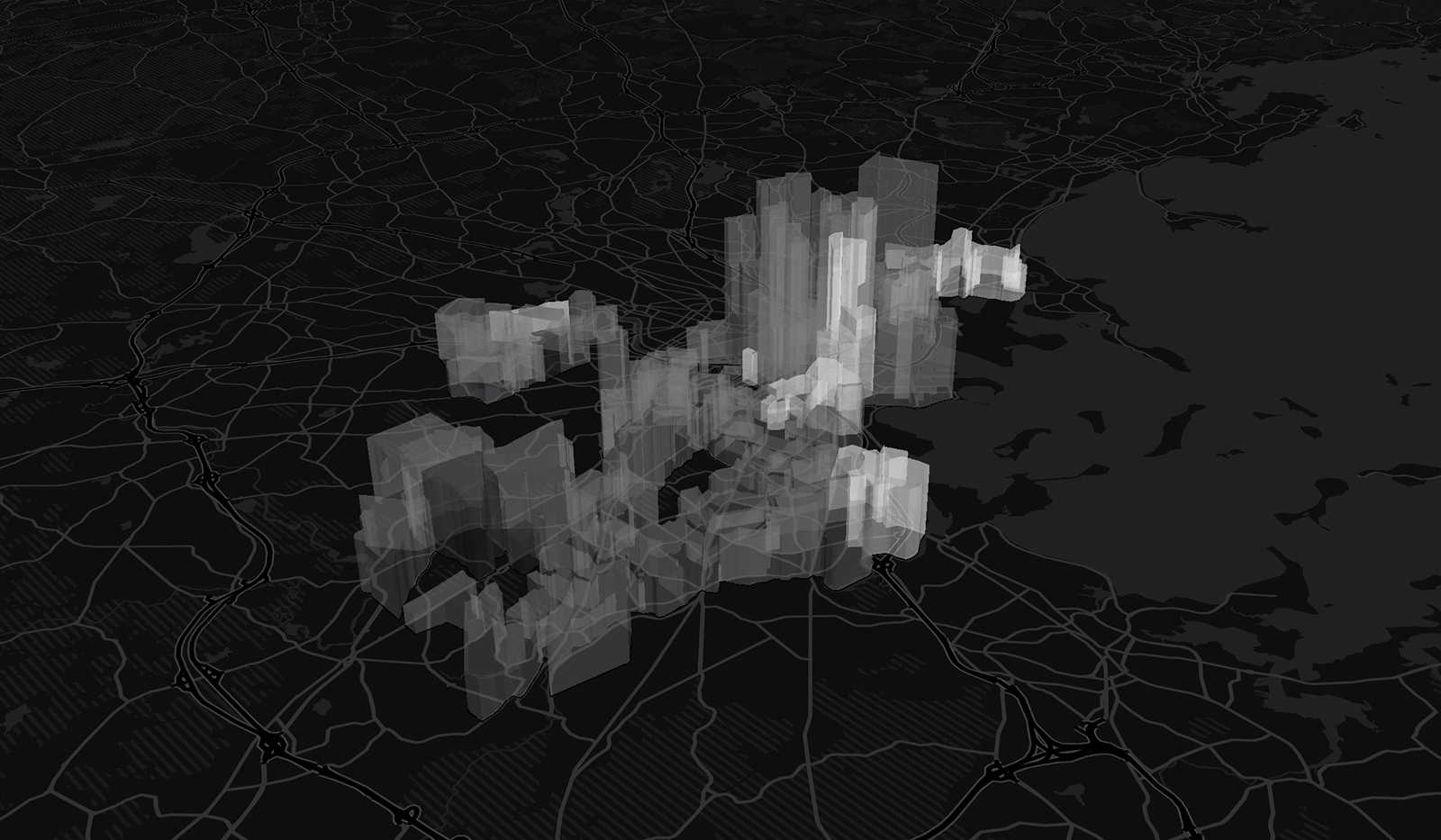
Thinking further on the image of the box as a prototype for design in colder regions as broached by Correa and noted earlier, we have to contend with contemporary spatial design in the aftermath of air-conditioning. The prevalence of air-conditioning and the growing emphasis on car-based urban planning after the Second World War cemented the thought: if humans succeeded in perfecting the idea of shelter against the sun, why bother about the outside at all? Not only does such planning favour social isolation and exacerbate inequality of access to public commons, but to discount public space altogether when thinking of combating the climate crisis by design is to overlook labourers and waged workers who have no choice but to be outside, and ignore the fact that cities ought to be accessible at a human scale. The absence of shade in different parts of the city reflects long-standing decisions about urban form, land use and investment in the built environment, as MIT Senseable City Lab, TU Delft, Hong Kong Polytechnic University and Wageningen University & Research’s project, Shaded Politics,5 illustrates. How we design public spaces, who they are for, where they tend to be located (affluent neighbourhoods, cultural centres) and how they are meant to be used remains a negotiation of the shadows.
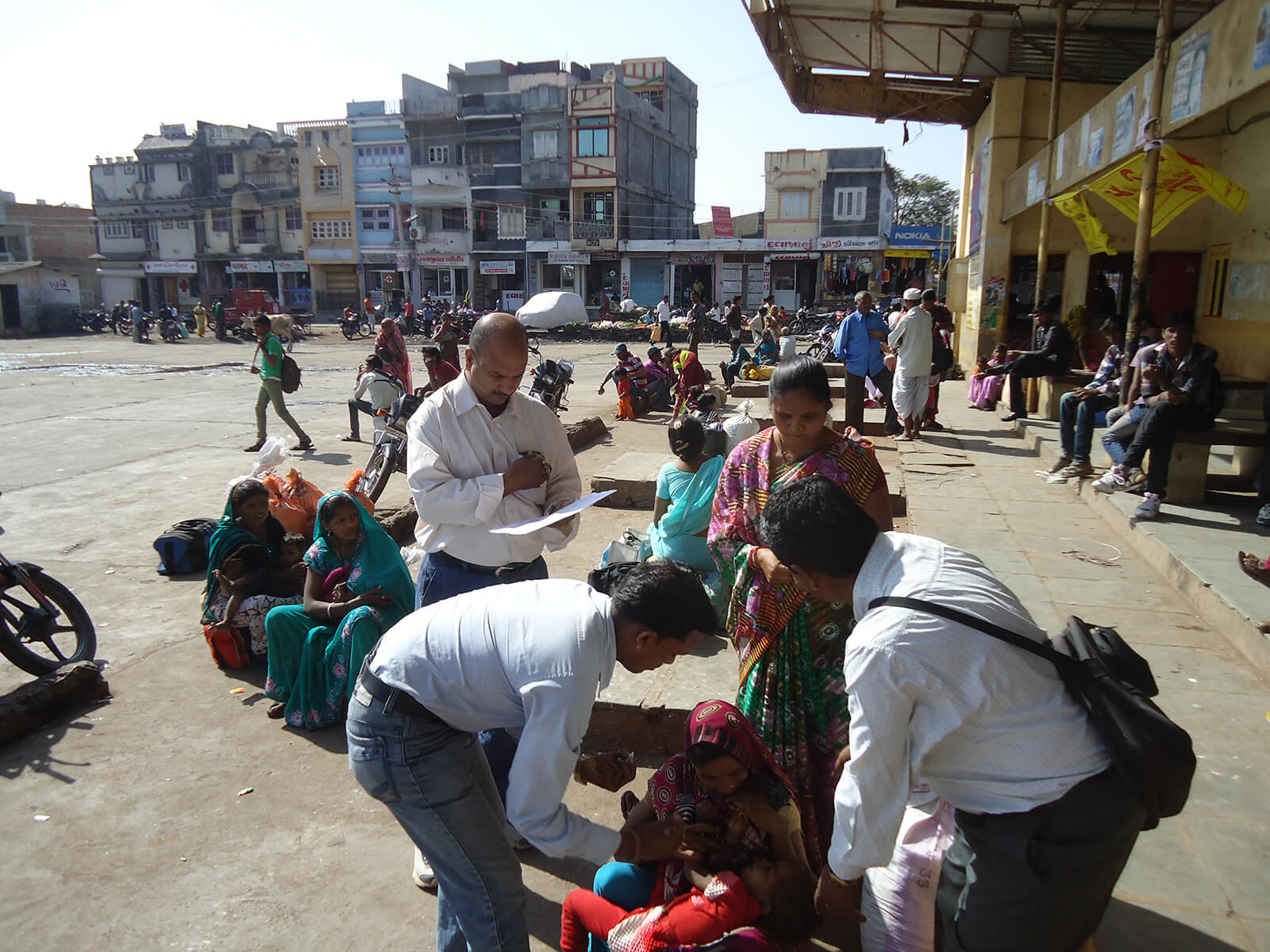
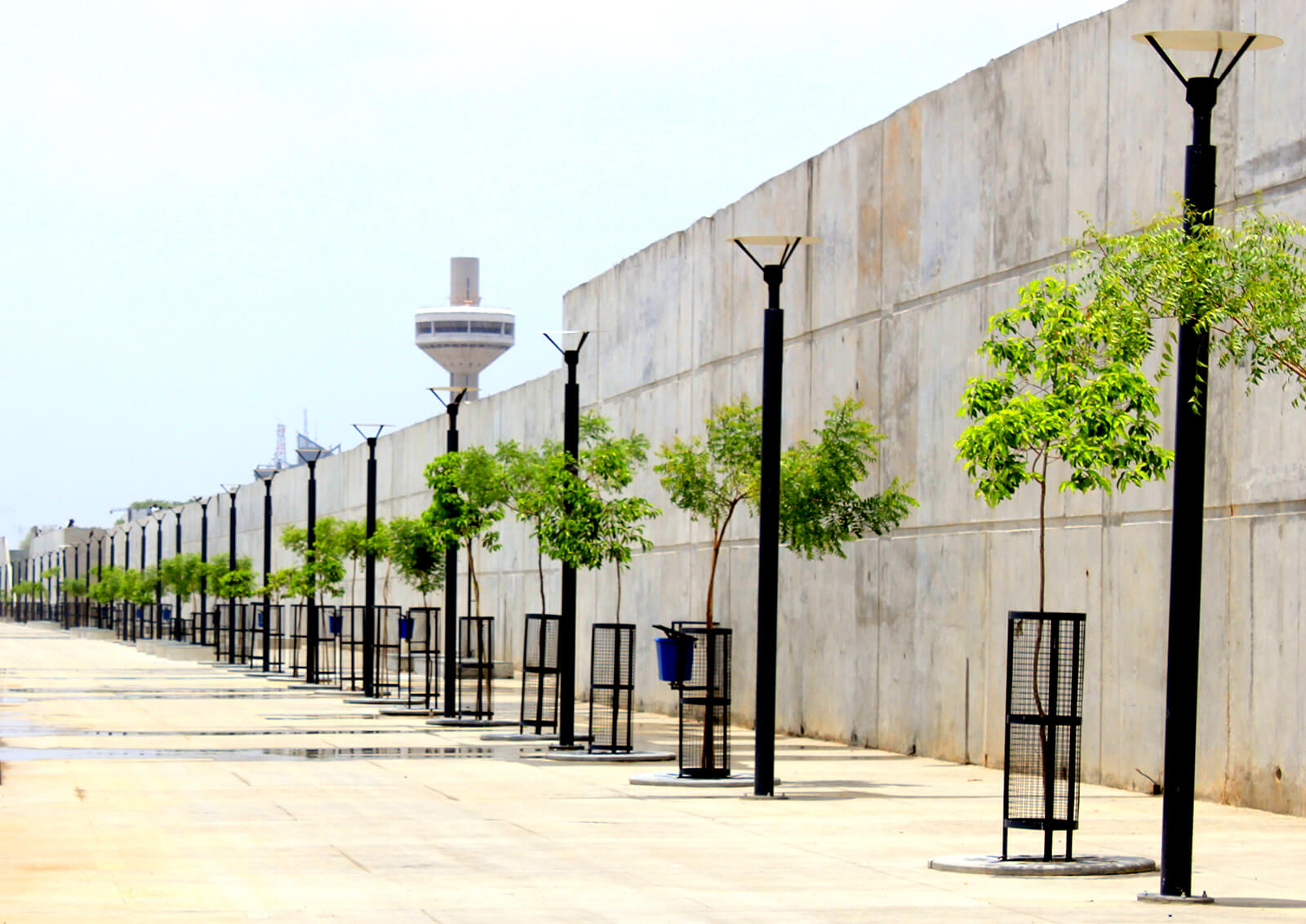
To take a more specific example, if we look at urban development projects in India today, we can discern how shade is often not a consideration when it comes to planning, despite the country’s solar predicament. If we think of relatively recent developments such as the Sabarmati riverfront development, it’s painfully obvious: miles and miles of concrete pavements stretch before the eye with no place to rest in sight. The riverfront is separated from the public and the city fabric by walls in service of ‘modernity’ and ‘cleanliness’. The same mania for ‘cleanliness’ characterises the urban redevelopment proposals in other cities. In the Kashi Vishwanath redevelopment, for instance, density is flattened, and bodies are expected to move through space, not actually rest there. We might also consider the Central Vista project in the country’s capital, which obliterated green cover in the guise of legibility. The very thought of spending time outdoors in the sweltering summers is so unfathomable to designers that it is not even a consideration to begin with. And yet, it’s exactly these spaces that hawkers, gig workers and labourers such as construction workers or domestic help occupy.
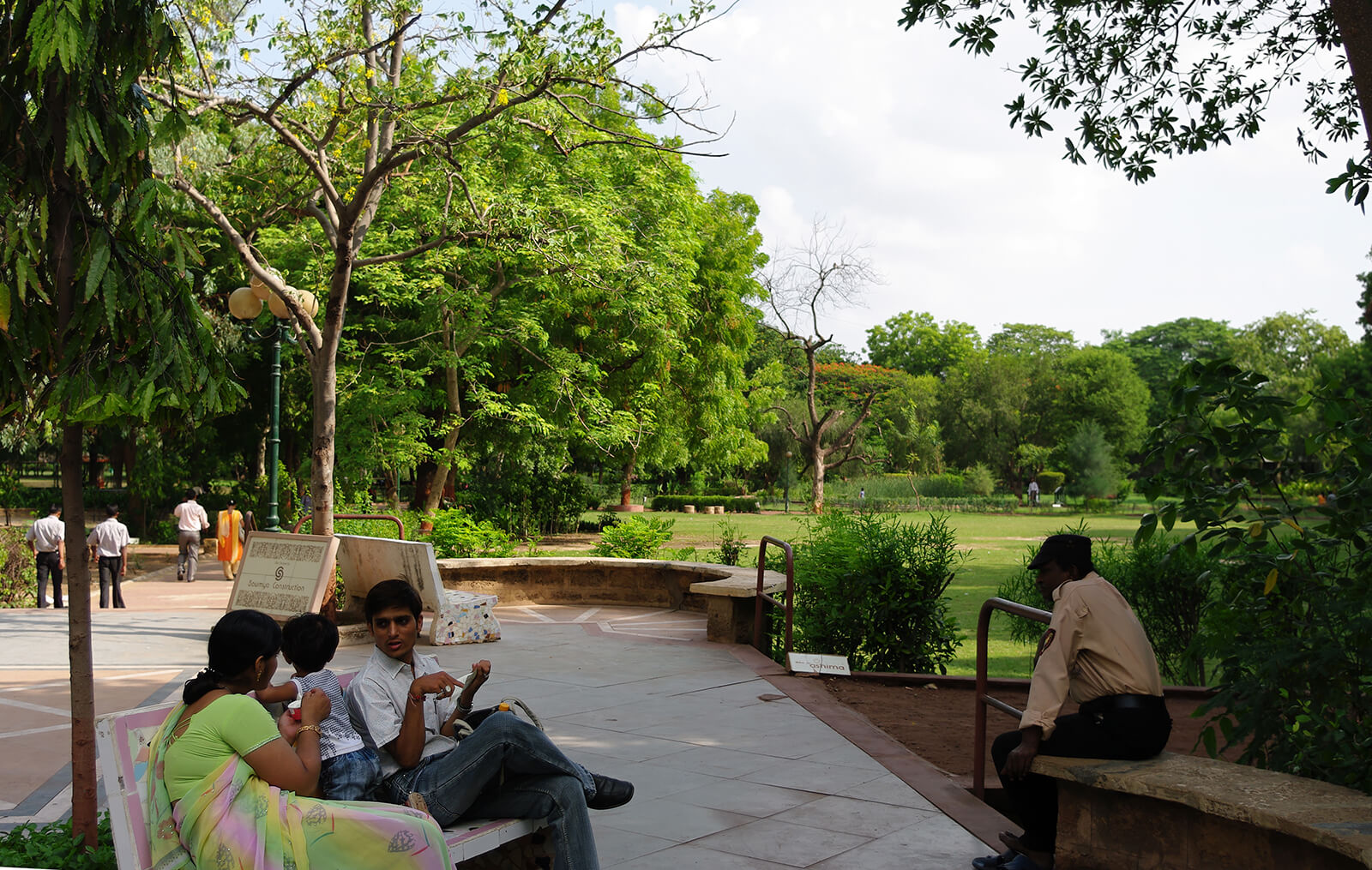
Here, we must also distinguish between different kinds of shade. While green shade refers to the natural shade provided by trees, grey shade is created by public infrastructure: the shadows of buildings, kiosks, bus stands or shaded courtyards. Green shade is more effective in combating the urban heat island effect, with trees also releasing moisture into the air as a way of cooling surroundings. However, grey shade should be equally vital to public design since it determines how effective a public square, court or open space is. Historically, dense urban fabrics, courtyards and plazas have accounted for some degree of comfort; but as amply clear today, architecture has moved away from these considerations.
Thinking about shade distribution to ensure cities and public spaces are more inclusive, accessible and, vitally, comfortable for all is to think architecturally about shade infrastructure, to think of it as a spatial system spread out over the city. Many urban designers today recognise this necessity, making shade an aspect of climate emergency plans. In itself, this denotes a massive shift from considering the design of interior spaces to adapt to the warming climate, to also thinking about how thermal comfort might be extended to the outdoors.
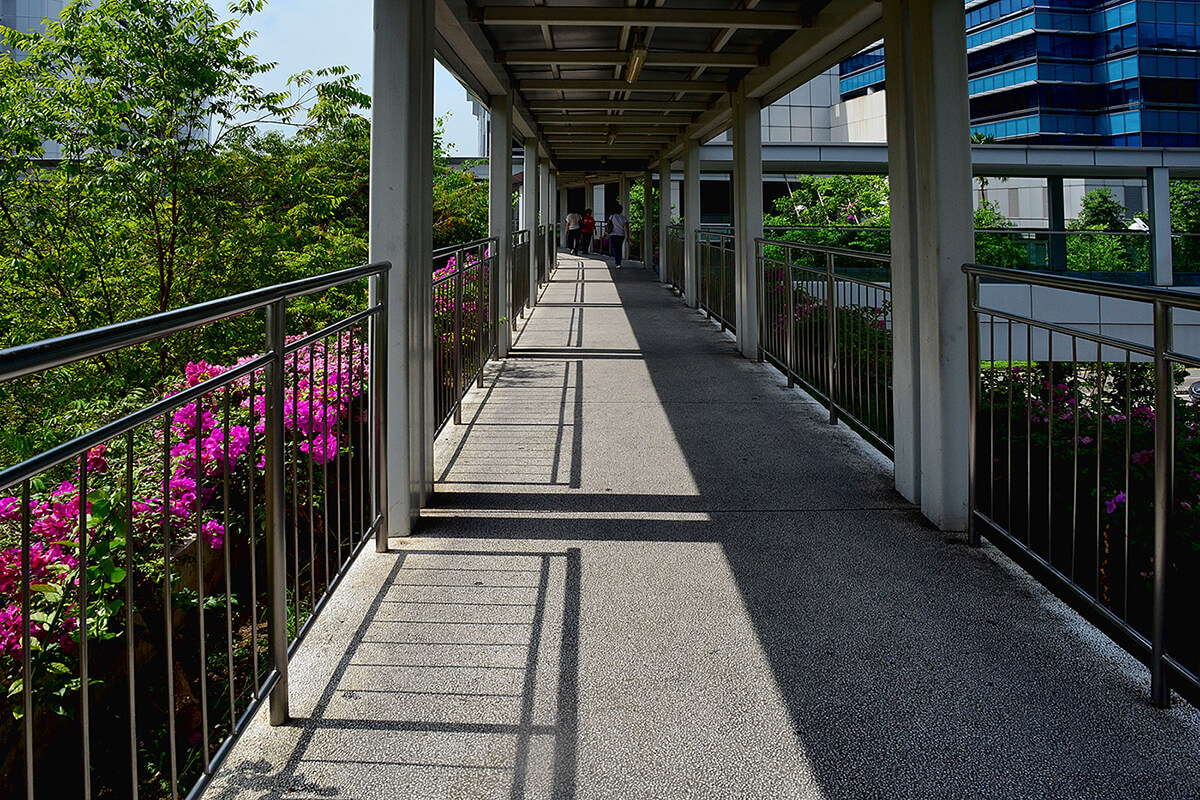

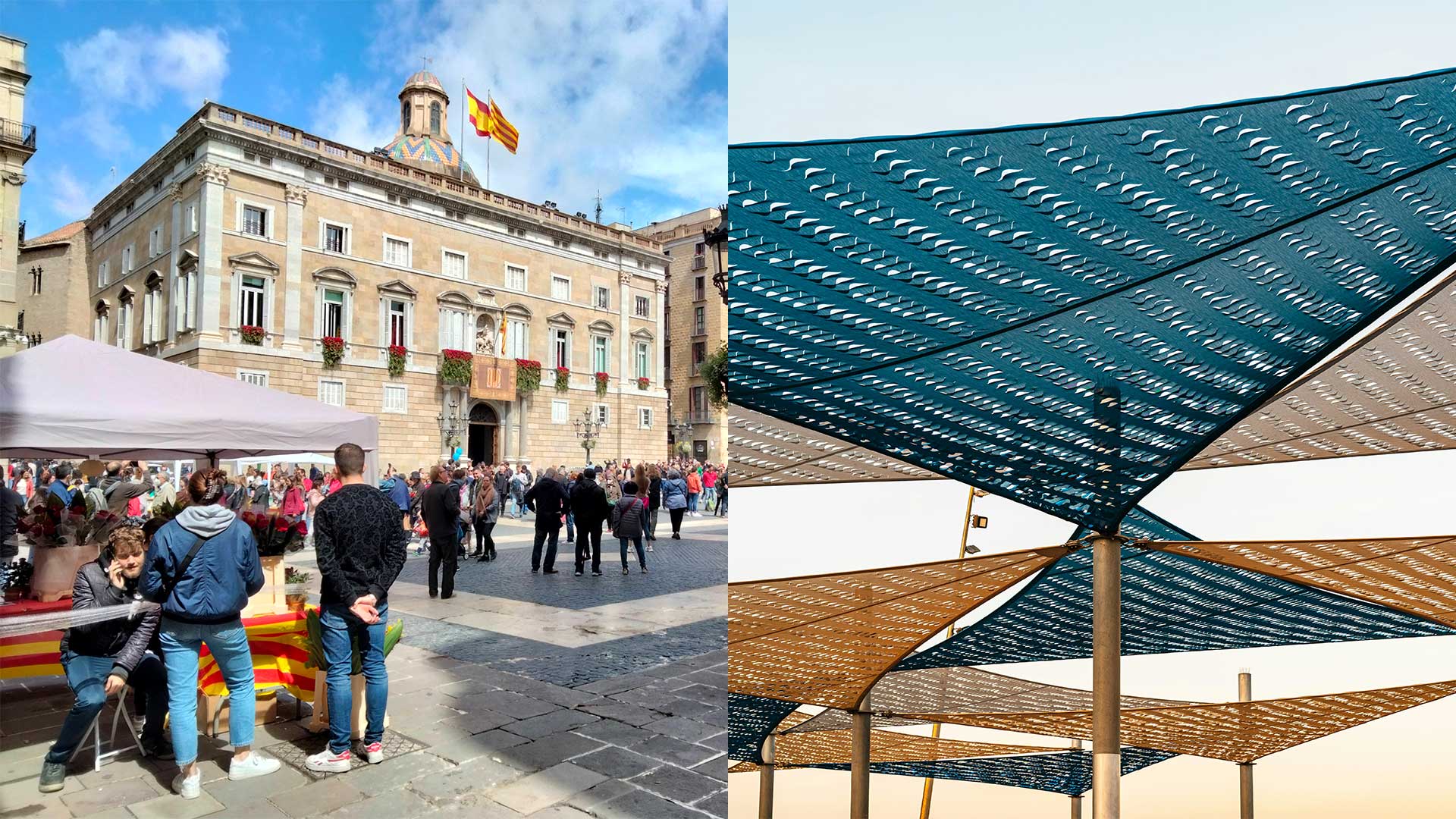
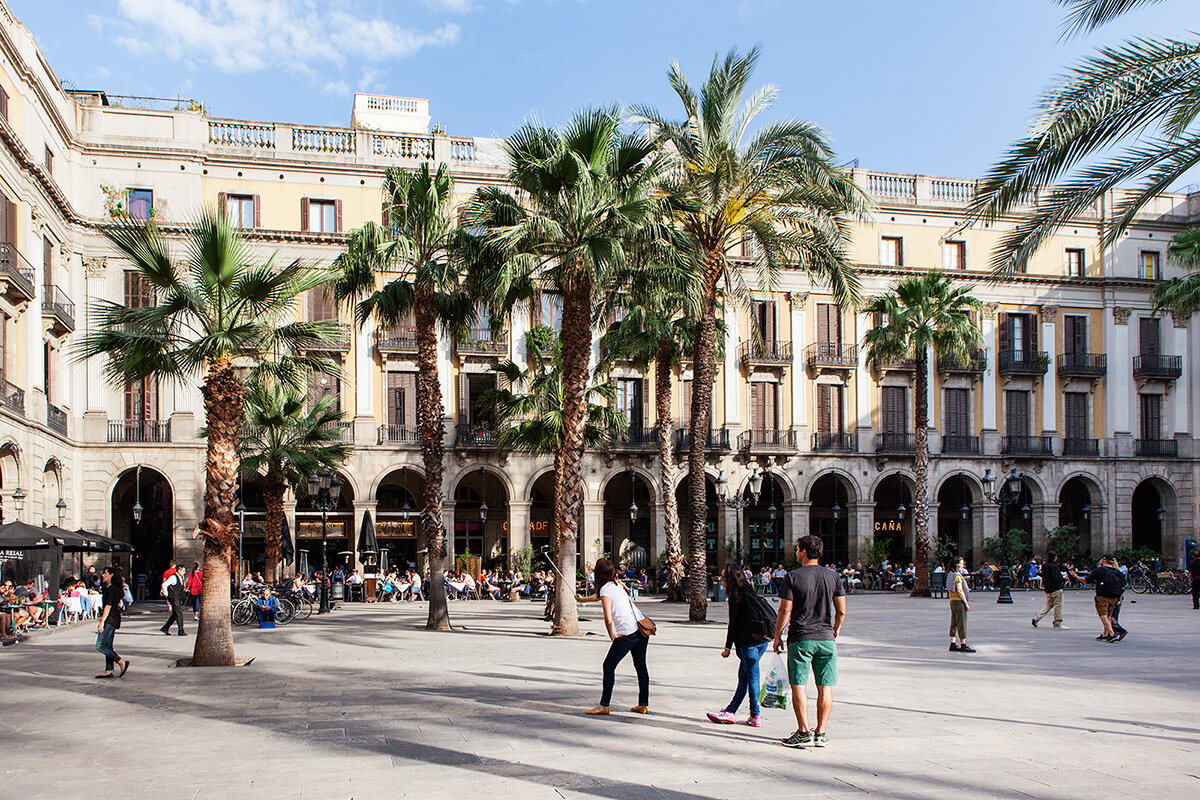
A prime example of orienting design toward shade is Barcelona’s Climate Emergency Action Plan and its ‘Barcelona City of Shade’ initiative, which focuses on public spaces to create more shaded areas and improve thermal comfort. Within this scheme, the Local and Interior Spaces Program (PEPI)6 aims to renovate underutilised spaces in all of the city's neighbourhoods to create green areas and shade systems in the city. Similarly, in Paris, 800 ‘cool island’ spaces have been created across the city to combat rising temperatures. These are listed on an app and include parks, water fountains and public buildings like swimming pools and museums. Paris also plans to plant 170,000 trees by the end of 2026 to ensure shade.
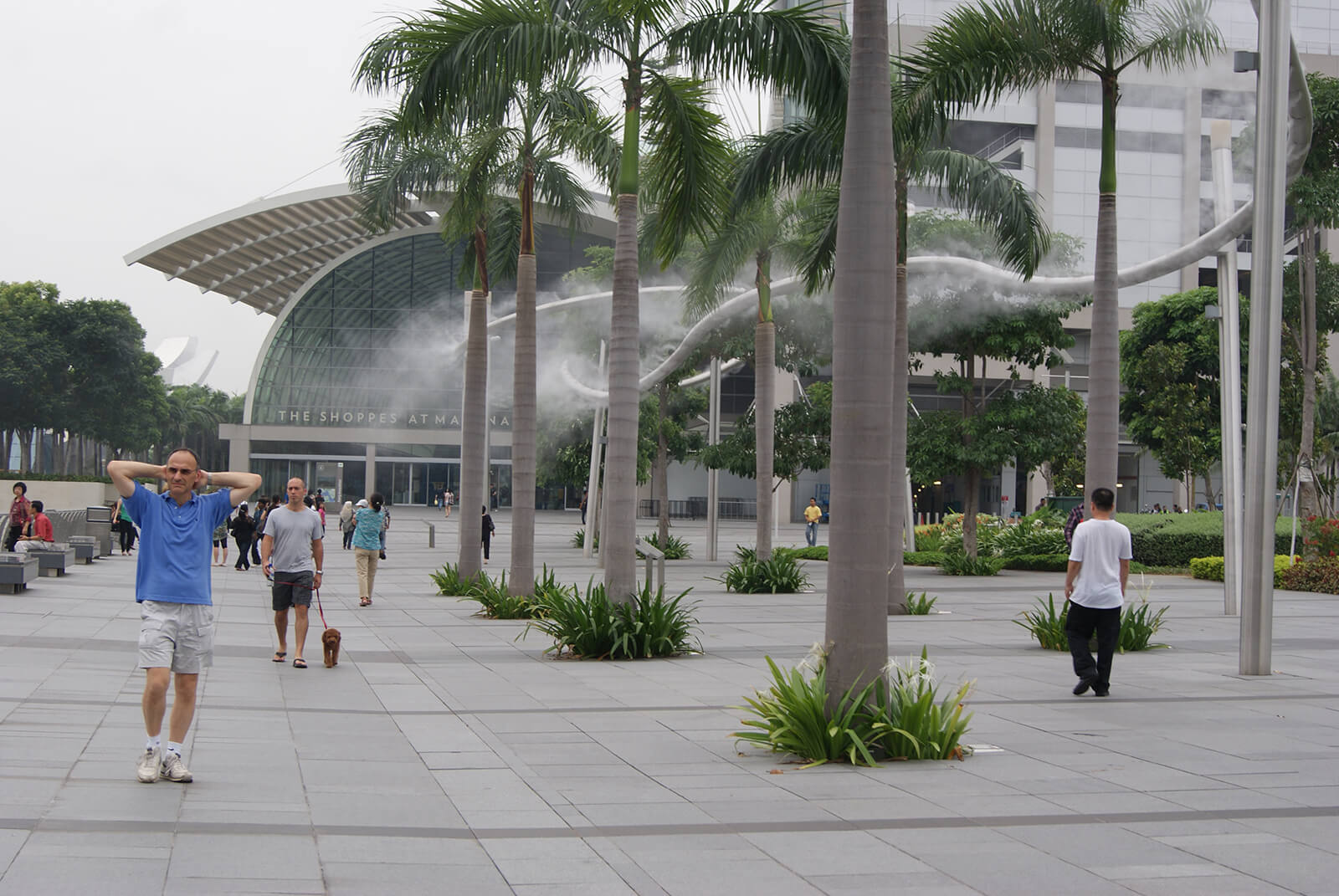
In the Greater Sydney area, there are plans to increase the tree canopy by planting five million more trees by 2030. Meanwhile, cities such as Singapore have always accounted for the sun, with the city’s planning including covered sidewalks since at least as early as 1822. In the 1970s, Prime Minister Lee demanded trees everywhere, and under his command, a newly formed parks and trees unit spruced up the major boulevards, embowering them under the broad canopies of Angsanas, rain trees, mahoganies and acacias.
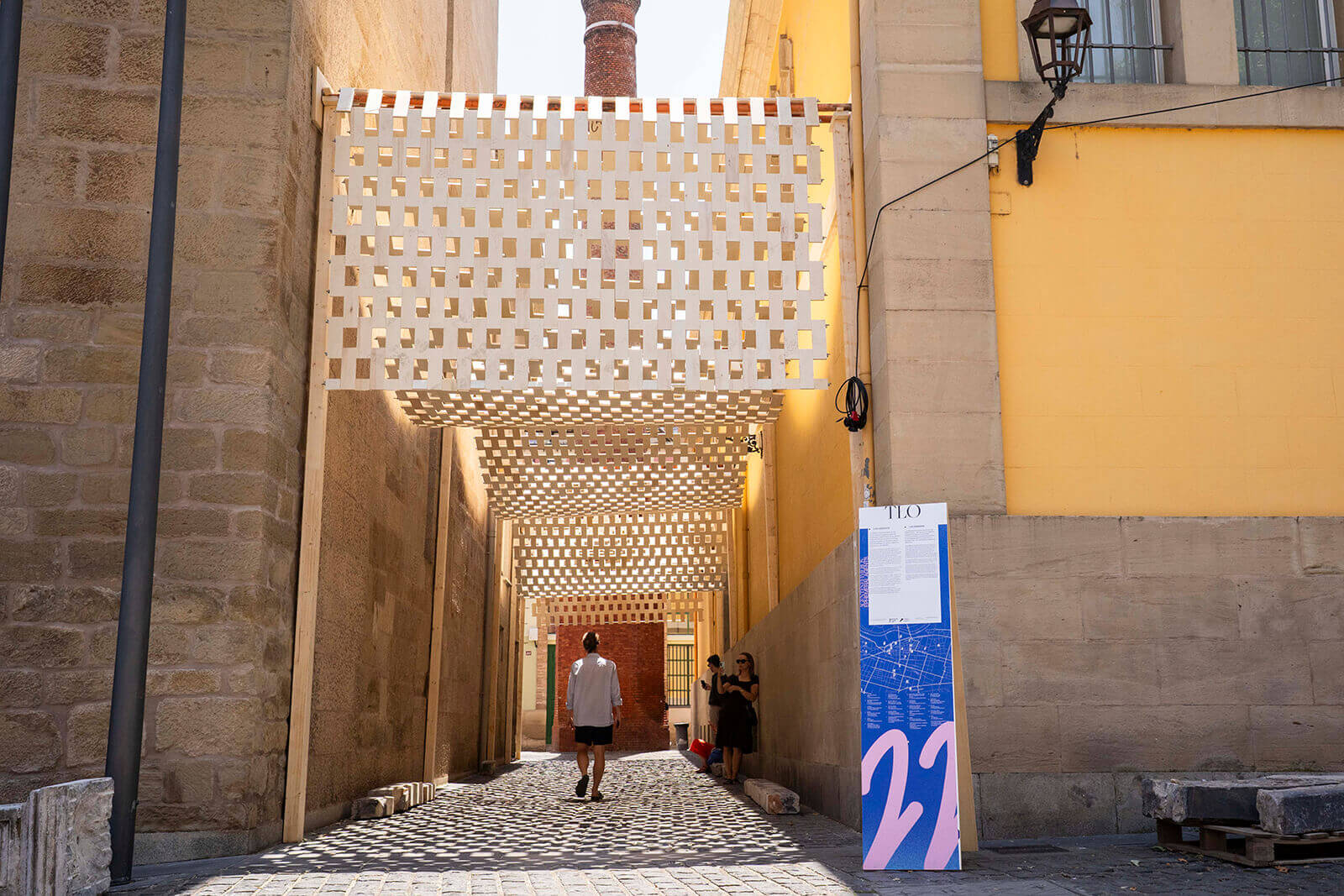
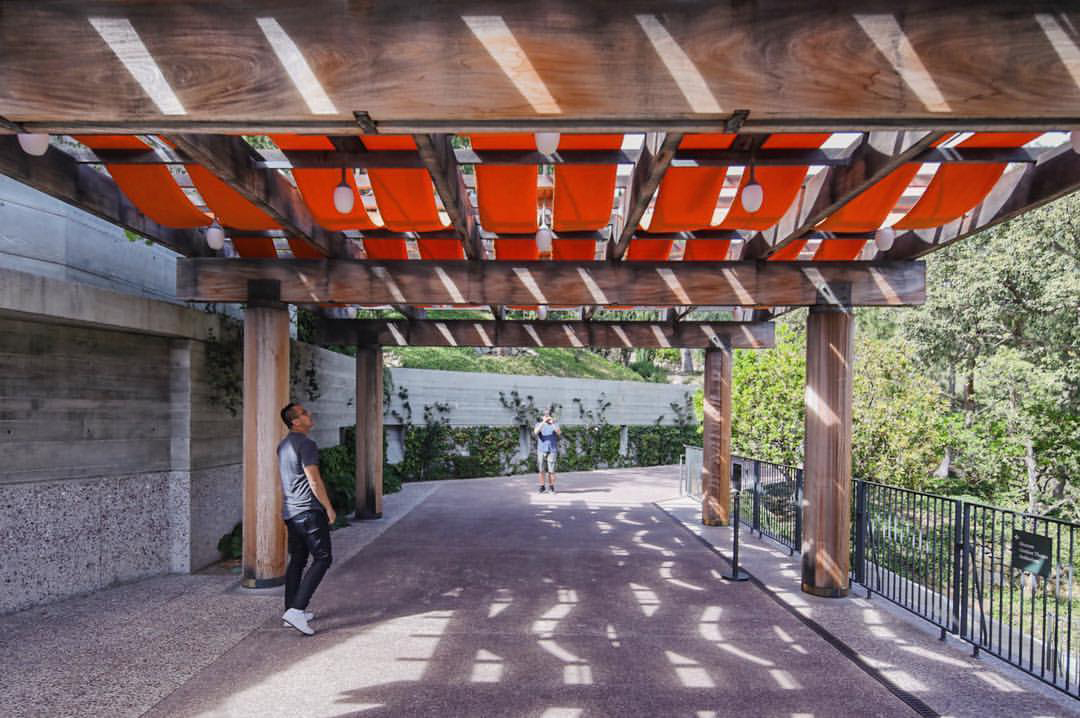
Most of these interventions look to address comfort at the urban scale. But it’s equally crucial to consider how shade can be manipulated with architecture. While generally, architectural by-laws prioritise the influx of natural light in interior space, in the public realm, a growing concern for spaces of gathering and community-building has pushed architects to consider how this might manifest outside of the building. Many architectural interventions, especially commercial, are incorporating shaded colonnades, courtyards or other landscape design strategies to ensure that the threshold between the outside and the inside is indeed more porous, beyond the obvious use of glass. A much-needed consequence of this porosity is exactly what is not named: shade.
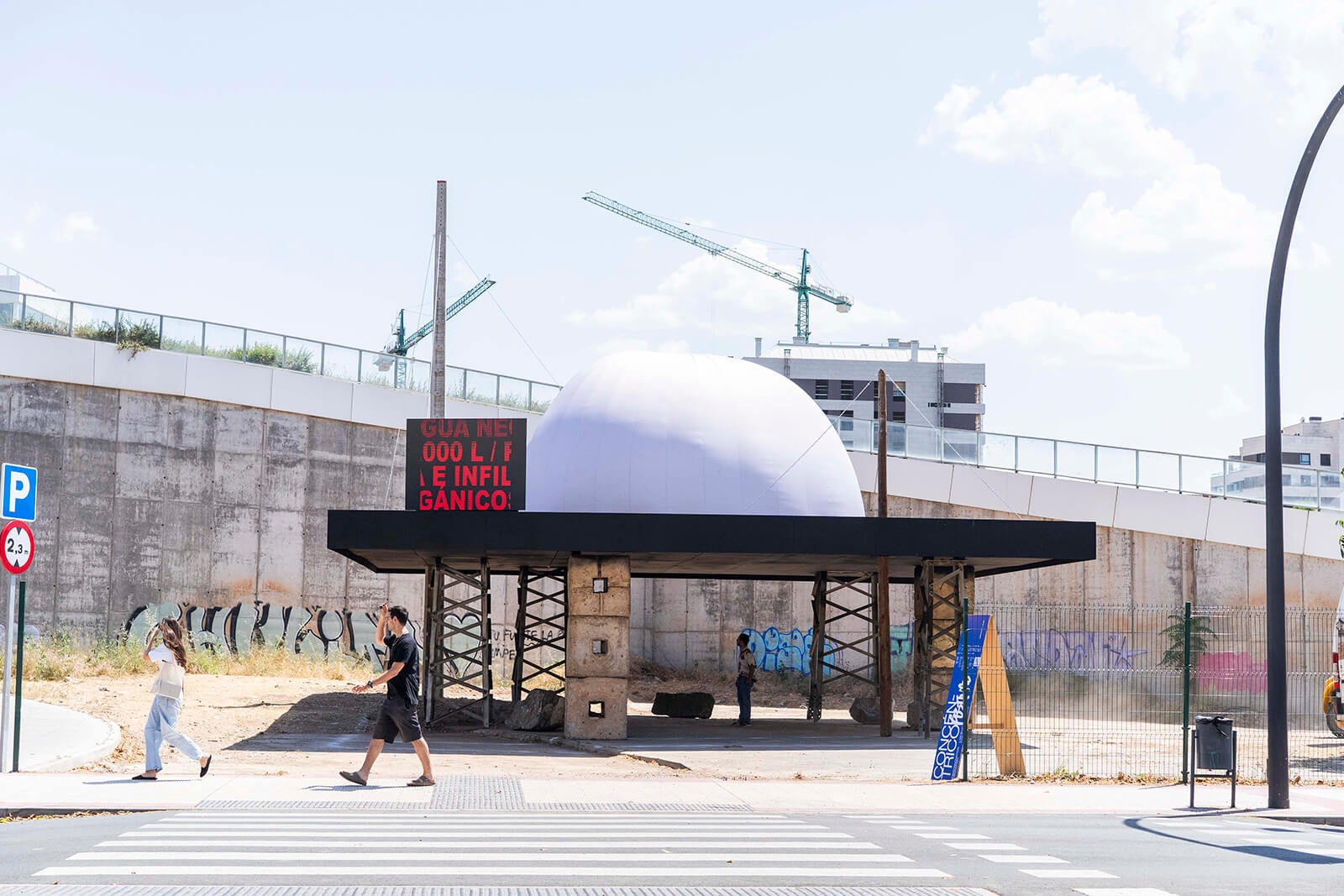
Similarly, it’s interesting to consider design biennales that activate the urban spaces of the chosen city they are a part of. Pavilion designs in these festivals often emphasise respite from the heat in the form of shaded spaces. Take the recently concluded Concéntrico in Logroño as an example; many of the installations for the festival emphasised that they were designed as a means of occupying public space comfortably for citizens, underscoring the shade mechanisms in play. While passive design and community-oriented strategies have created spaces that offer shade, the necessity to consider it as a primary factor for design remains unresolved. It’s this question that ephemeral architectures can serve as prototypes for: beginning from a place in the shadows.

To bask in the sun’s rays today is to live with the consequences of a rapidly heating planet. Mike Davis wrote about the radical politics of shade in 1997, noting that “shade has become an inalienable human right”, following research conducted in the wake of Chicago's infamous heat disaster of July 1995. Davis wrote about the class disparities of shade distribution in cities, the health risks of undue exposure to the warming climate for elderly populations and the false complacency of air-conditioning. If Davis could speak about the effects of what was then a freak climate incident, we are already 30 years too late.
References
1.UNEP press release titled World set to cross 1.5°C global warming, but can still limit, adapt to and return from higher temperatures, published September 2, 2026
2.Estimating heatwave-induced excess mortality in India's districts by Piyush Narang and Ashok Gadgil, published in Frontiers, May 26, 2026
3.City of Sweat by Aruna Chadrshekhar, published in Equator, August 20, 2026
4.After Comfort by Daniel A. Barber, Log, no. 47 (2019): 45–50.
5.Shaded Politics by MIT Senseable City Lab
6.Barcelona Construction Work Information Service Notice, dated March 20, 2026
The views and opinions expressed here are those of the author(s) and do not necessarily reflect the official position of STIR or its editors.

by Pranjal Maheshwari Oct 06, 2026
With a programme focused on biodiversity, accessibility and safety, the Rotterdam-based architects help the neighbourhood reclaim a barren landscape as an integral social node.
by Pia Bhatia Oct 02, 2026
Located in the Al Bridi Reserve in Sharjah, the project didactically projects its purpose of studying African ecosystems through local structures marked as ‘sculptural presences’.
by Pranjal Maheshwari Sep 30, 2026
The new cultural centre by Blight Rayner Architecture and Snøhetta envelopes world-class facilities in a sinuous glass facade, alluding to the theatrical rhythms of the performing arts.
by Pranjal Maheshwari Sep 29, 2026
The one-of-its-kind music centre in Apple’s six-storey Battersea Station space in London houses world-class facilities for live performance and worldwide broadcast.

make your fridays matter with a well-read weekend
Enter your details to sign in
Don’t have an account?
Sign upOr you can sign in with
a single account for all
STIR platforms
All your bookmarks will be available across all your devices.
Stay STIRred
Already have an account?
Sign inOr you can sign up with
Verification link sent to check your inbox or spam folder to complete sign up process
Tap on things that interests you.
Select the Conversation Category you would like to watch
Please enter your details and click submit.
Enter the 6-digit code sent at


Throwing shade: How can design account for comfort in a world boiling under the sun?
by Mrinmayee Bhoot | Published on : Sep 17, 2026


 Sign in with Google
 Sign in with email
What do you think?