Design10 mins. read
NGV’s Plant Life traces the past, present and possible futures of plant-based design
by Pranjal MaheshwariOct 13, 2026



by Pranjal MaheshwariPublished on : May 22, 2026
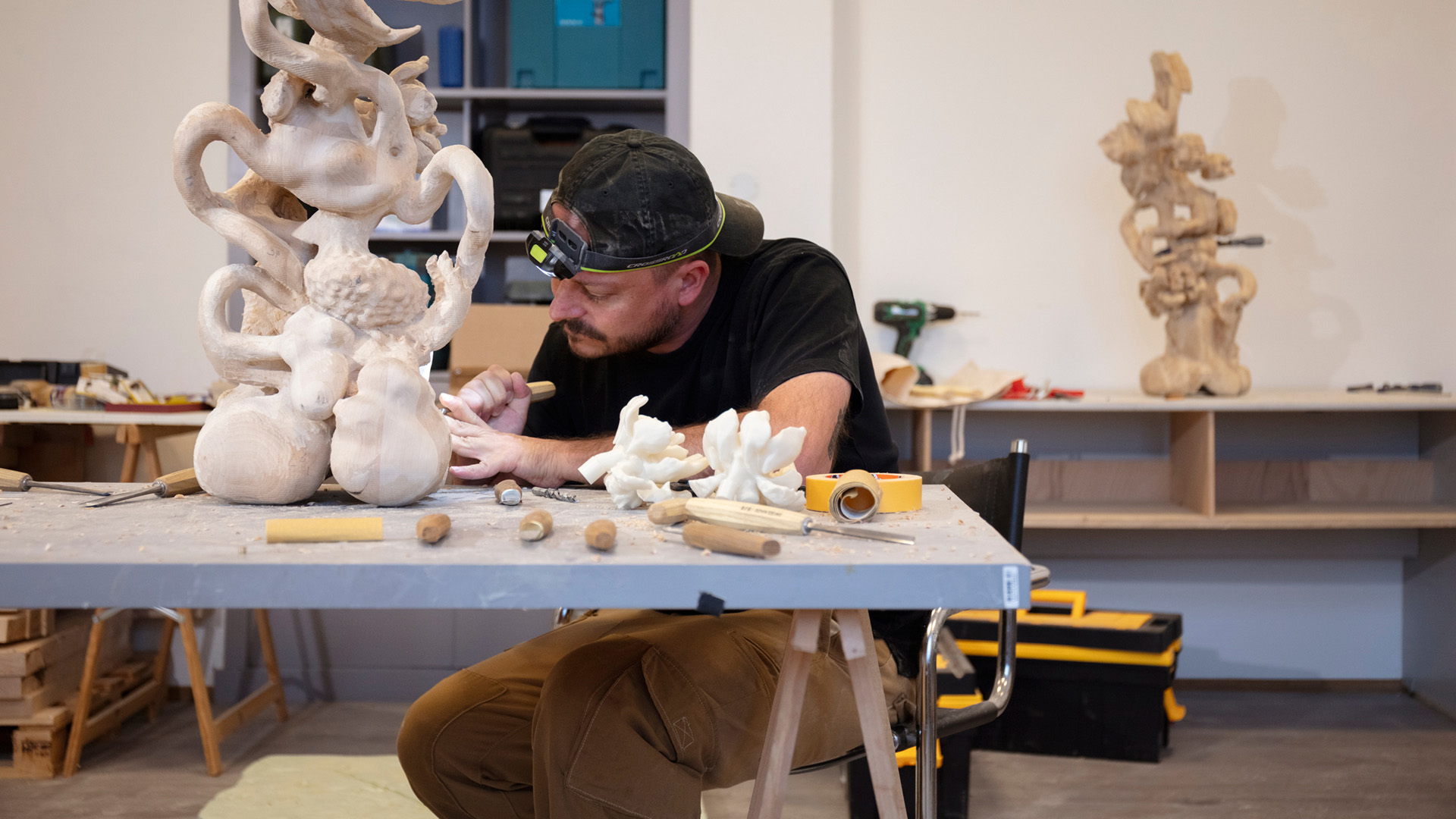
There are ideas and objects that carefully tread the fragile boundary between the subjective expression of art and the objective utility of design. Tadeas Podracky creates objects that don’t just dwell on this boundary but often manage to move across it, freely alternating between the two realms. In his experimental practice, design is perceived as an act of exploration, a gradual, organic process of discovery and refinement by doing. The motivation behind Podracky’s works is not a redefinition of product archetypes, but rather an understanding and evolution of the relationship between a person and the object.
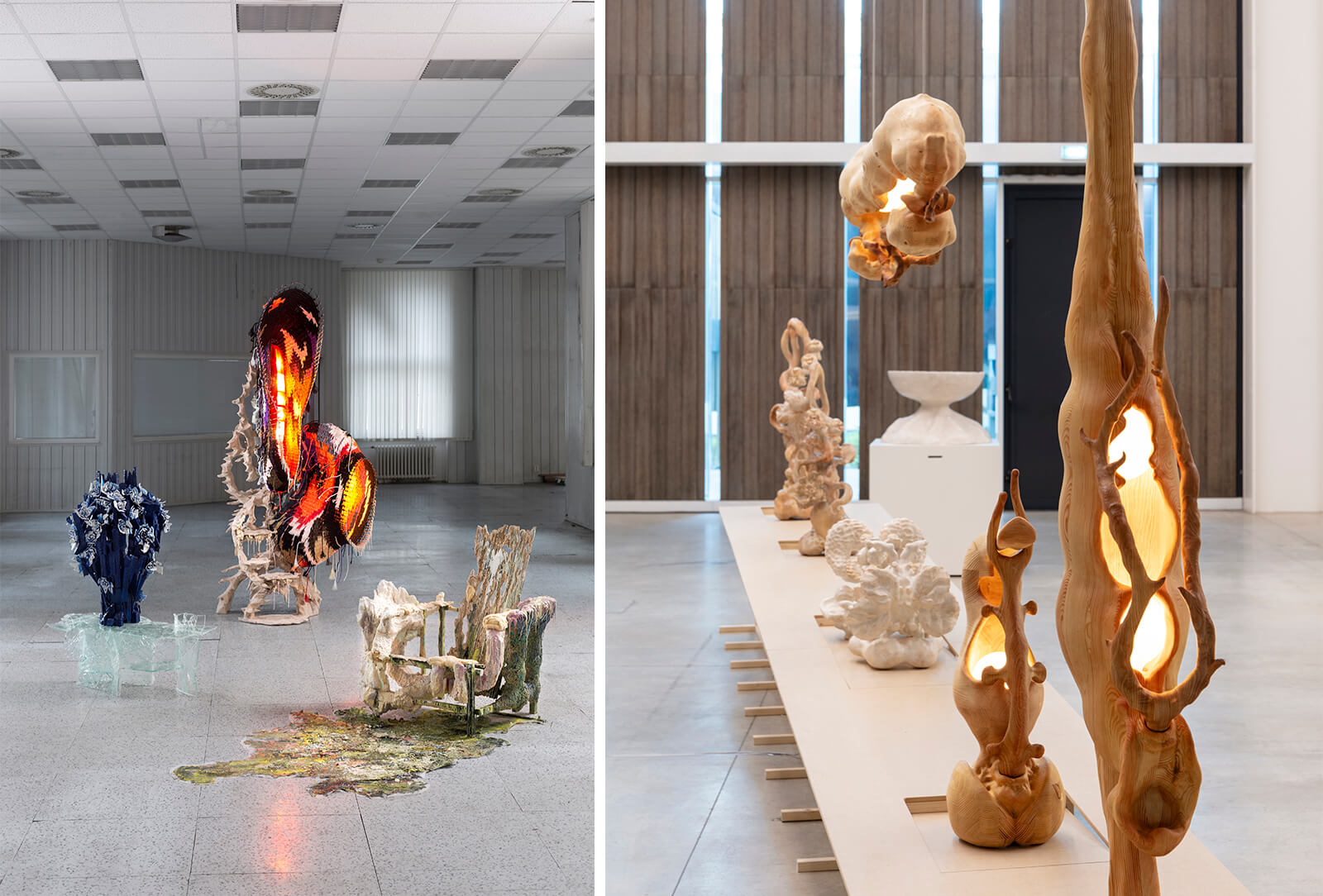
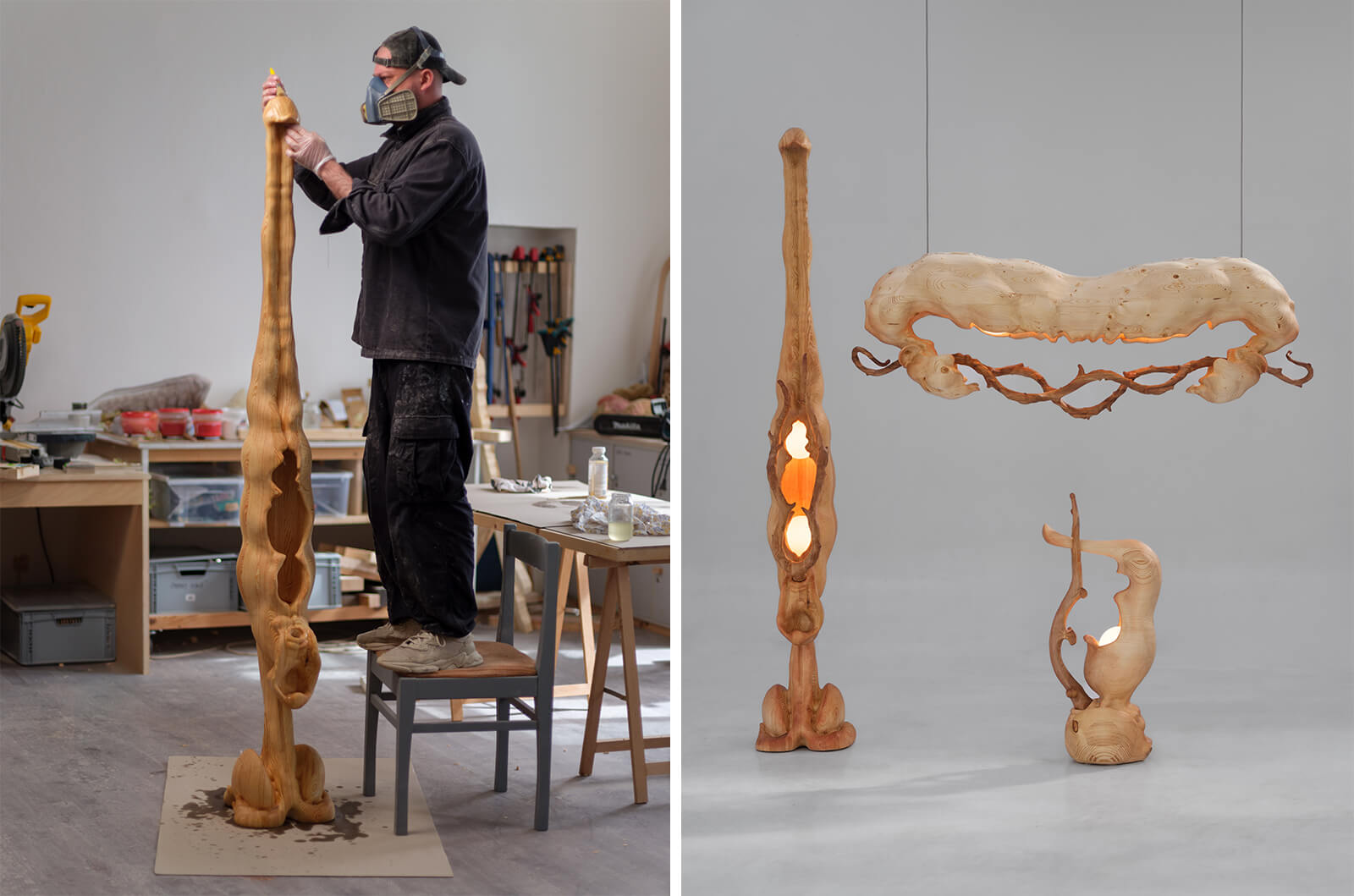
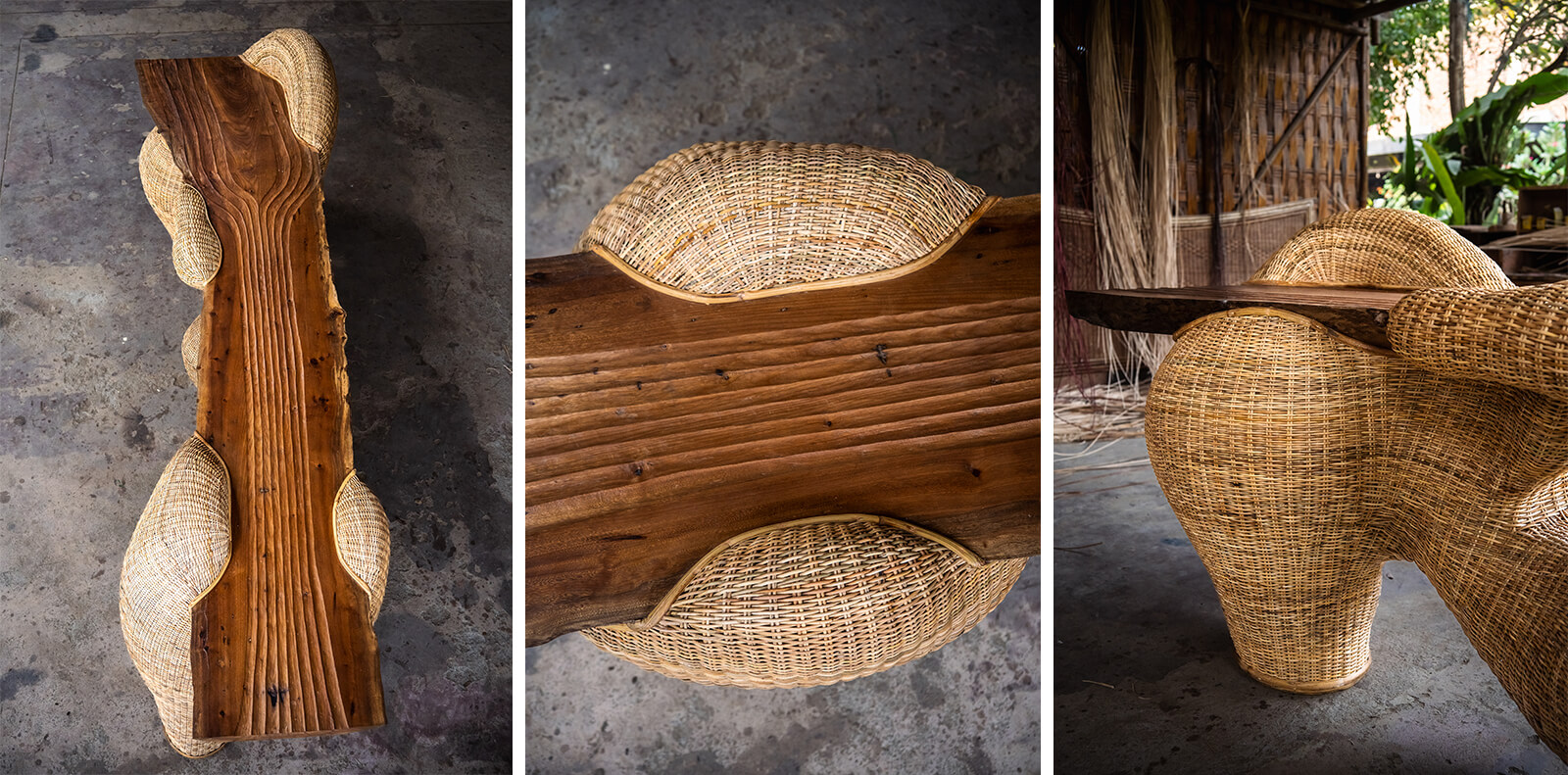
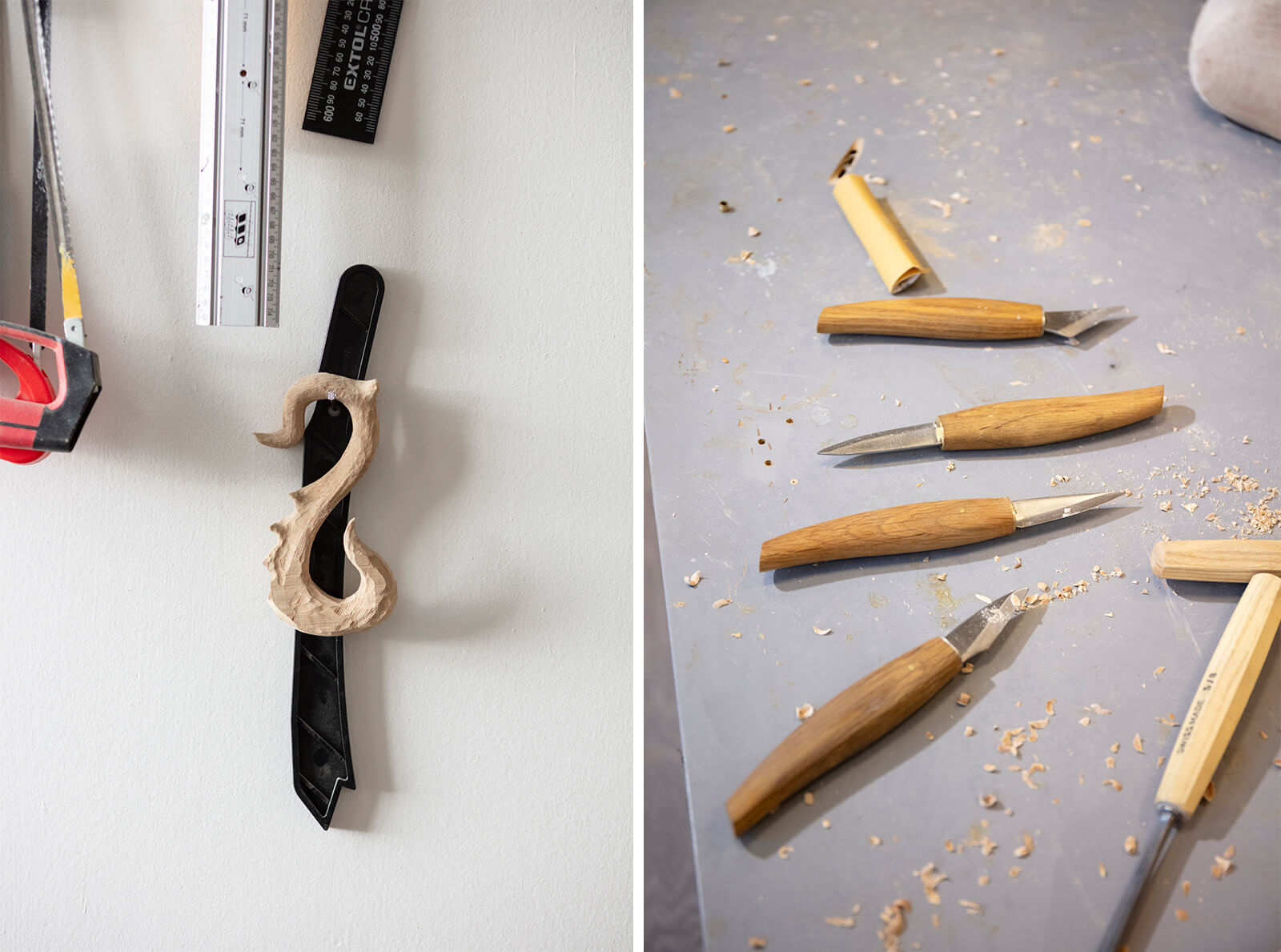
Podracky’s creations appear to be suspended between genesis and completion, emerging somewhere from the space between the germination of a seed into a seedling—as if the cocoon is rendered transparent to reveal the metamorphosis within. His working methodology blends traditional craftsmanship with digital tools and workflows to transform conventional materials such as wood into organic forms that, ironically, appear unnatural. The object gradually takes the form of something still in transformation, yet it is an entity in its own right.
“I am interested in objects that carry a strong physical and psychological presence,” Podracky tells STIR. “Material, gesture and context are more important to me than categories such as art or design.” The Czech-based artist and designer (though he prefers to be addressed as neither) has developed his methodologies into an oeuvre ranging from objects of display to furniture such as chairs, tables, shelves, lamps and mirrors. His practice embodies material honesty while reflecting his perception of traditional folklore as ‘living systems’.
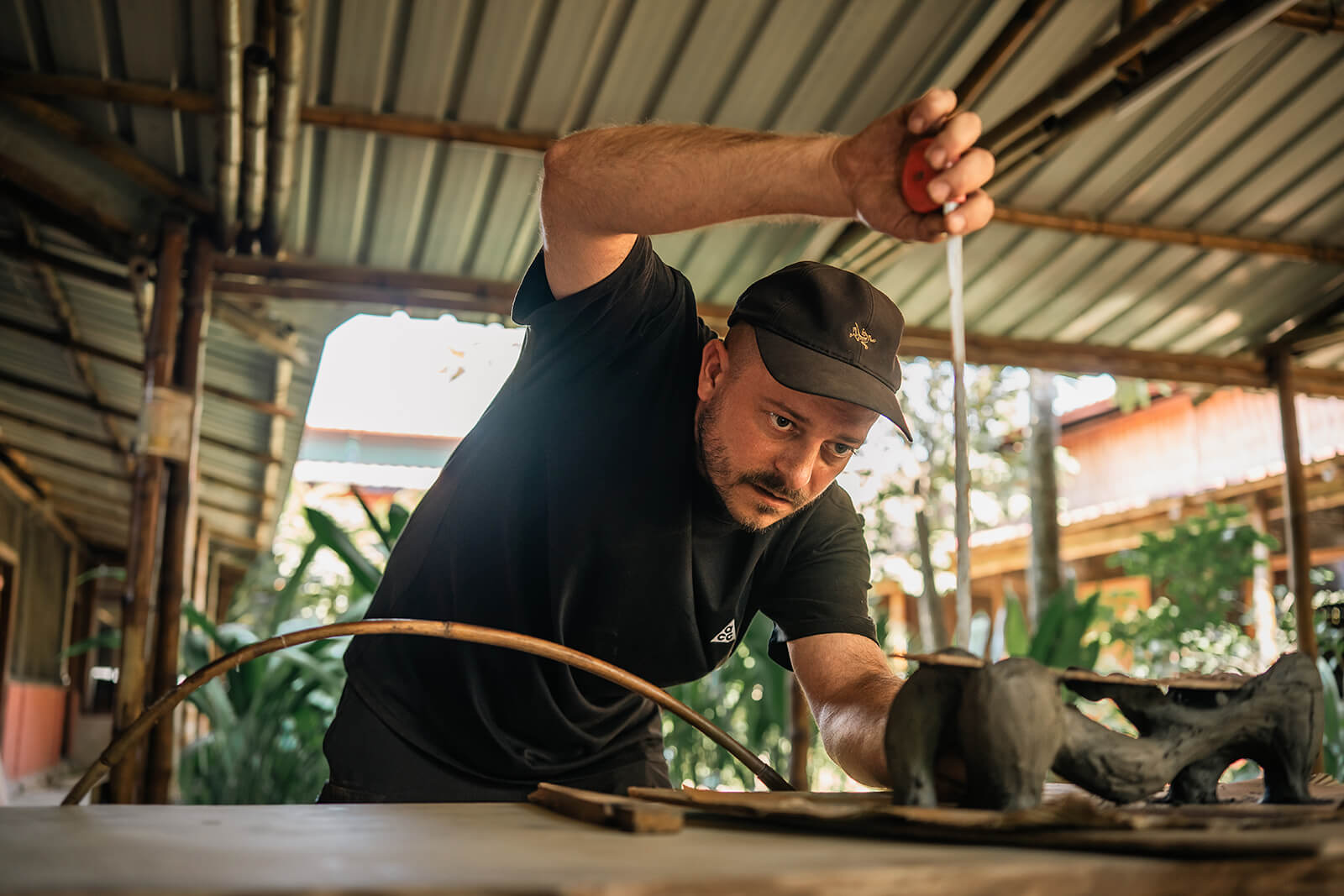
With a master’s in design and fine arts from the Academy of Arts, Architecture and Design in Prague and the Design Academy in Eindhoven, Podracky has furthered his research and learning through a series of internships and residencies—alongside running an independent practice—across different cultures, including Austria, Italy, the USA, China and, more recently, India for the Shakti Design Residency. After his initial explorations in glass, he moved back to Prague in 2020, where his focus shifted from glass to wood owing to the geographic and cultural context of the region and the inherent tactility in working afforded by the material.
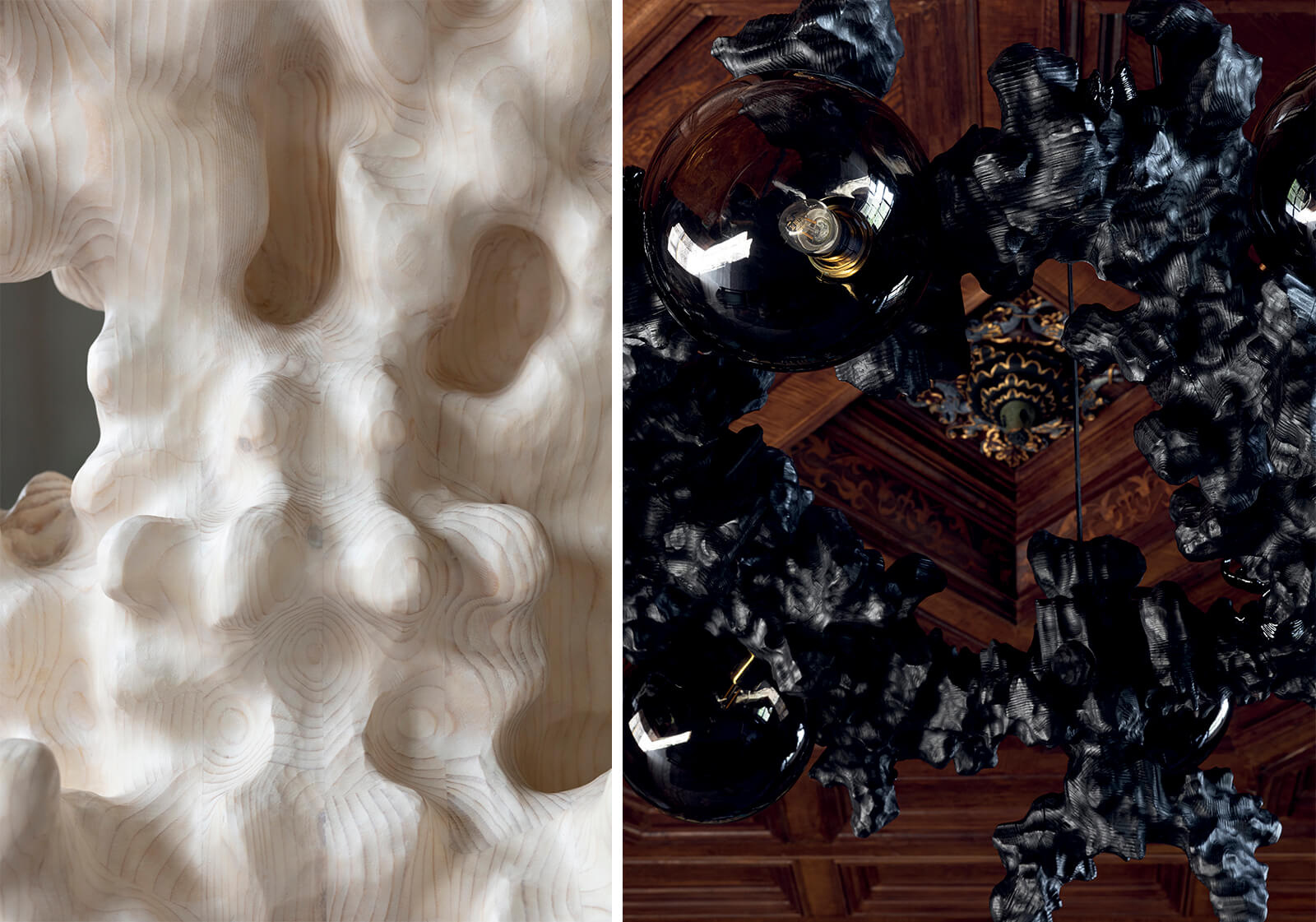
In conversation with STIR, Podracky discusses how he perceives his work, what he values about the process—the tactility of wood as an immediate feedback mechanism, for example—and where he is directed through these explorations.
Pranjal Maheshwari: How do you like to introduce yourself? As an experimental designer, a multi-media sculptor or something else entirely?
Tadeas Podracky: Today, I usually introduce myself simply as a sculptor. I have gone through a relatively long journey in craftsmanship, design and fine arts, and although I still actively work across all of these fields, sculpture feels like the most accurate definition for what I do. It allows me to move freely across disciplines without strict boundaries. My practice combines traditional craftsmanship with more experimental processes, increasingly also involving new technologies, but always through the perspective of sculpture.
Pranjal: You studied visual arts, glass and sculpture, but your recent work, although carrying hints of these previous experiences, is primarily in wood. Was something missing in your early works that wood is able to fulfil as a material?
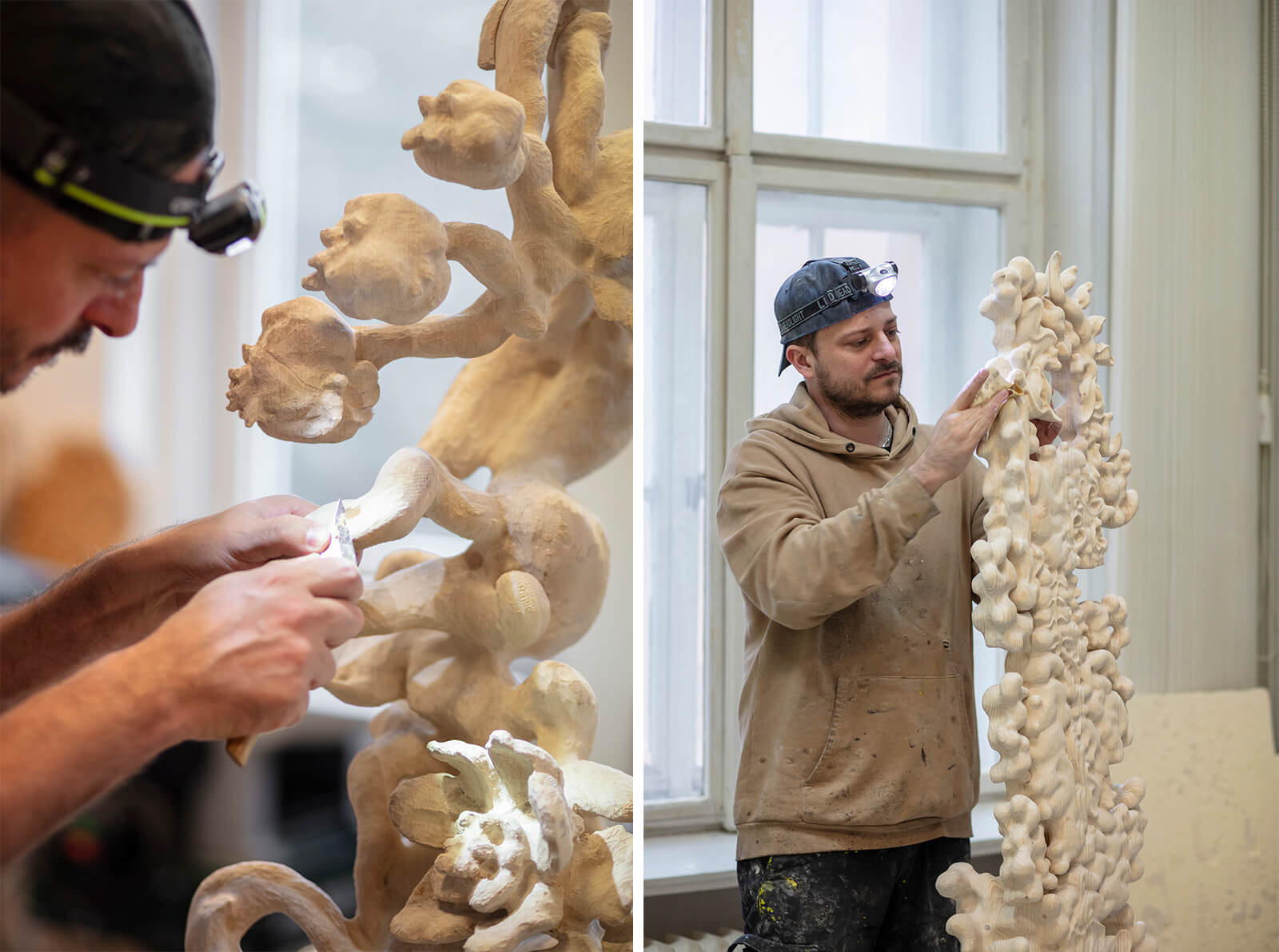
Tadeas: For me, it became essential to work directly with the material itself. When working with glass, unless you have a fully equipped workshop, the production often has to be outsourced to another craftsperson. I never felt comfortable with that distance. I wanted the objects to carry traces of my own hands, gestures and physical process.
For me, sculpture is not purely conceptual. Ideas do not emerge only by sitting down and thinking intellectually. They develop continuously through daily physical contact with material. Through repetition and process, the body begins to react almost instinctively. Making becomes a form of thinking in itself.
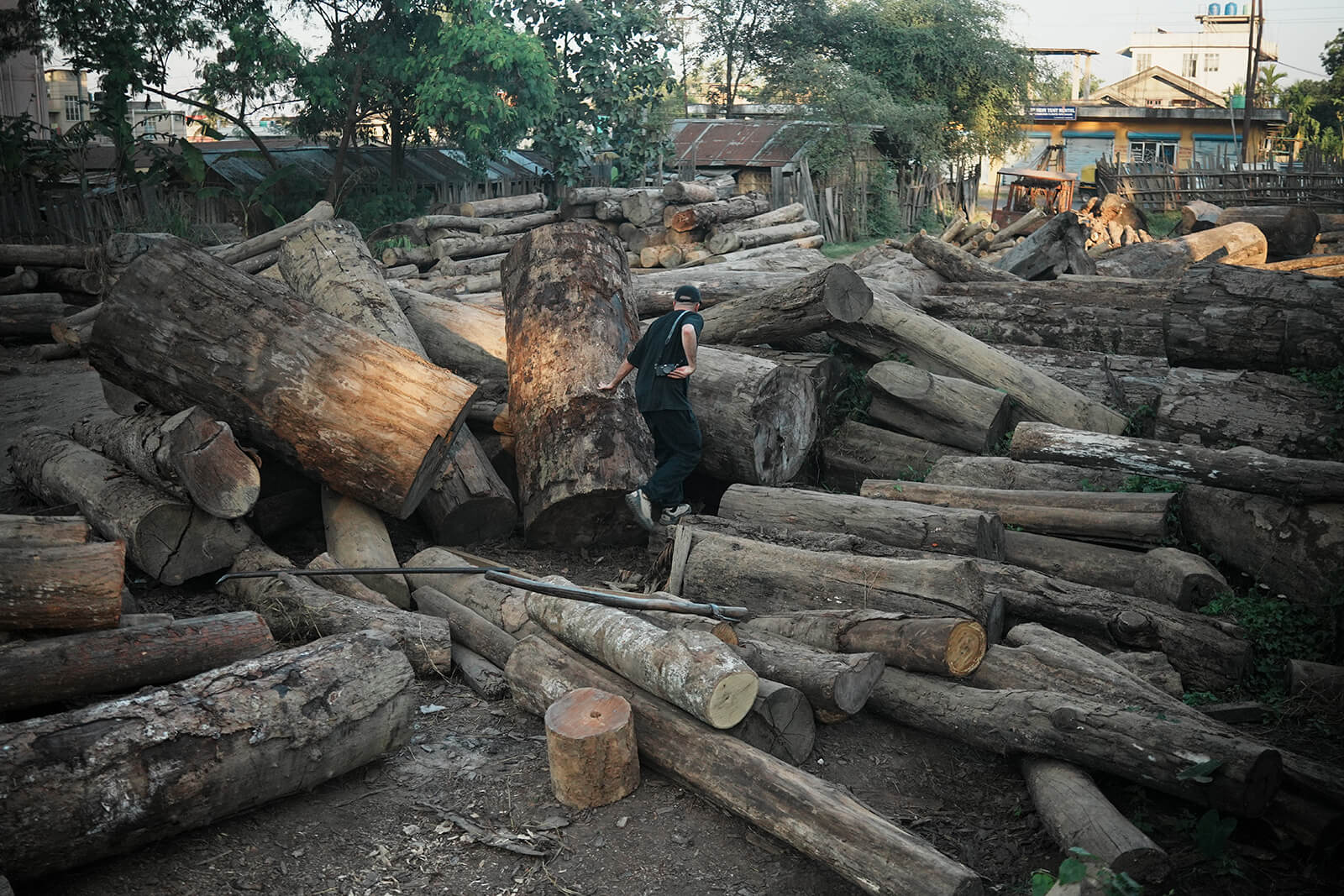
Wood fascinated me because it already carries its own history before you even touch it. It grew under specific environmental conditions, and this directly shapes how it behaves, ages and appears. Working with wood brought me back to landscape, to observing terrain, understanding local histories and spending time with people connected to these environments.
Pranjal: You have participated in multiple residency programs across the world: Italy, the US, China, Prague and, more recently, India, to name a few. How did this vari-cultural exposure shape your ideas and your learning?
Tadeas: Working in different cultural environments changed the way I think about objects and their relationship to people, rituals and landscape. What interested me most was not the aesthetic difference itself, but how different societies project meaning into material, craftsmanship and everyday objects.
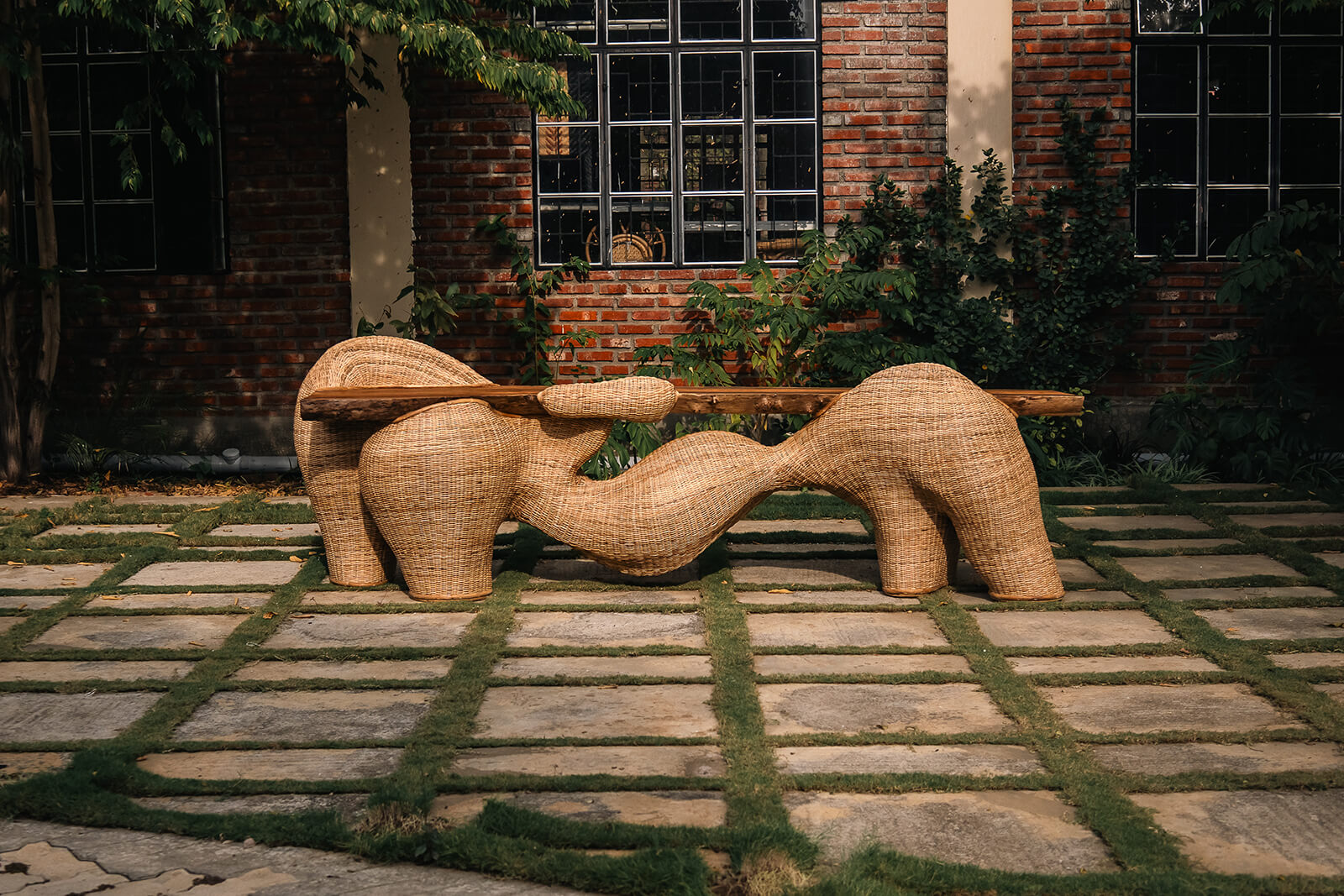
Many of these residencies made me more aware of how strongly local environments shape ways of living and making. In India, for example, I was deeply influenced by the intensity with which craftsmanship, spirituality and everyday life still coexist within the same space. In other places, especially in more industrialised contexts, I became more aware of the growing distance between production, material and lived experience.
These experiences reinforced my interest in folklore and collective memory, not as something nostalgic or fixed in history, but as living systems that continuously mutate and adapt to contemporary conditions. This idea of transformation and hybridisation gradually became one of the central themes in my work.
What I value most about residencies is that every time you arrive somewhere new, you start again from zero. – Tadeas Podracky
Pranjal: Do you think you have learned more about material expression from residencies, your own time at design schools or while teaching others?
Tadeas: I think I learned something important from all of these experiences and gradually combined them into my own way of working. School was important because it gave me space to experiment. As a creator, you first need to find your own voice, interests and position, and I think school is one of the best places for that. It takes a long time to understand what genuinely belongs to you and what kind of work you really want to make.
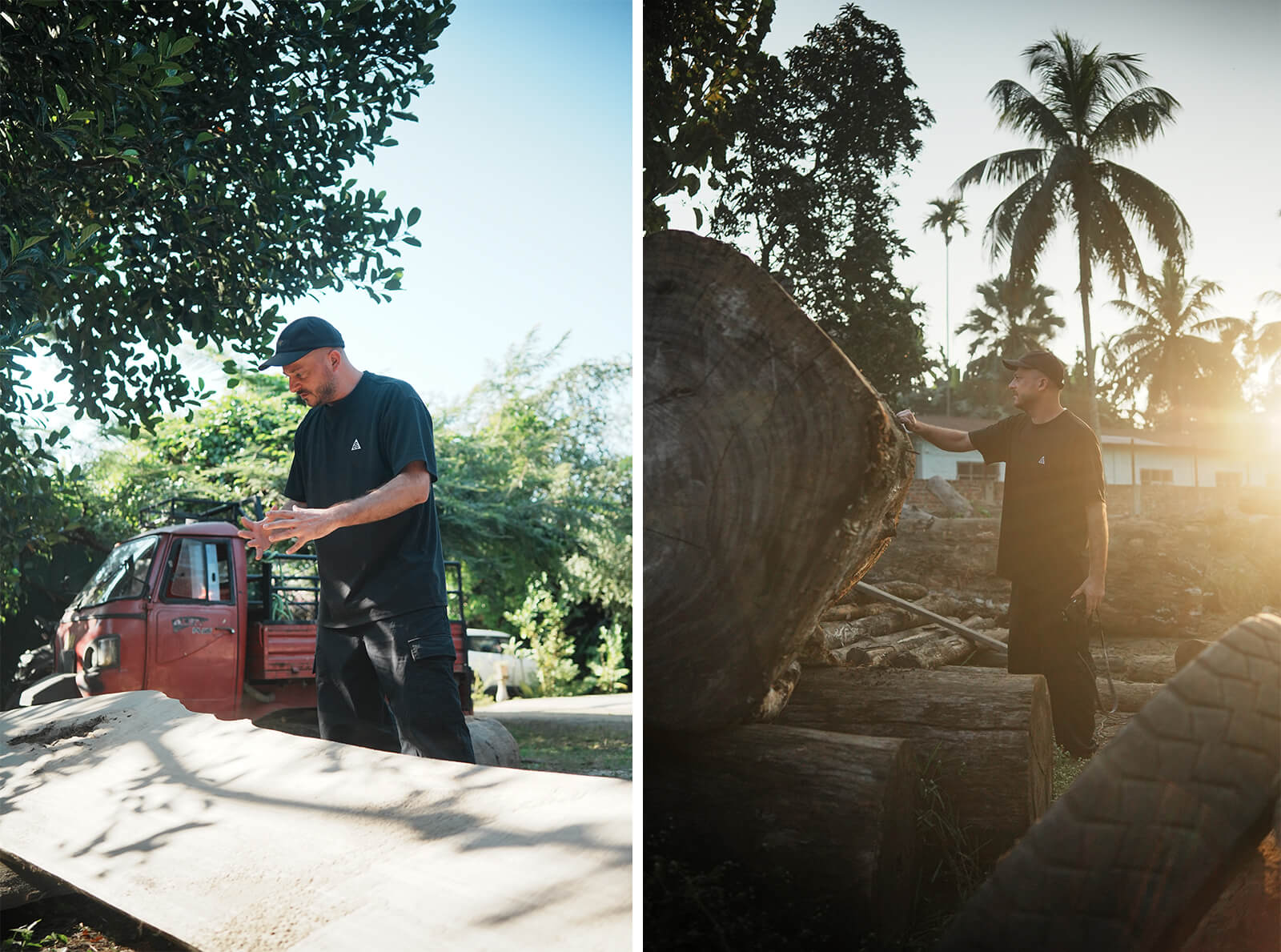
Residencies are a very special kind of experience because they allow you to fully concentrate on making without the distractions of everyday life or other projects. Usually, you are placed in a completely unfamiliar environment, which pulls you out of your routines and habits. You learn to work with whatever surrounds you, materials, people, landscape or atmosphere, and these experiences naturally begin to shape your thinking and work. What I value most about residencies is that every time you arrive somewhere new, you start again from zero. You always learn something, either about yourself or about the environment around you, and you inevitably carry part of that experience back into your practice.
Teaching is again a very different practice, almost a different craft from being an artist. As an artist, many things happen intuitively through making. As a teacher, especially as the head of the Concept–Object–Meaning studio at UMPRUM, I had to learn how to articulate experiences and ideas that are often physical, intuitive or difficult to explain verbally. At the same time, I realised that students often need to arrive at things through their own experiences. Sometimes it is more important to guide them in a certain direction rather than explain everything directly. I see myself more as someone who helps students navigate the beginning of their own creative process.
Pranjal: You have talked about your workflow as non-linear, which also uses a mix of traditional and digital tools and techniques. How do you think this influences your outcome?
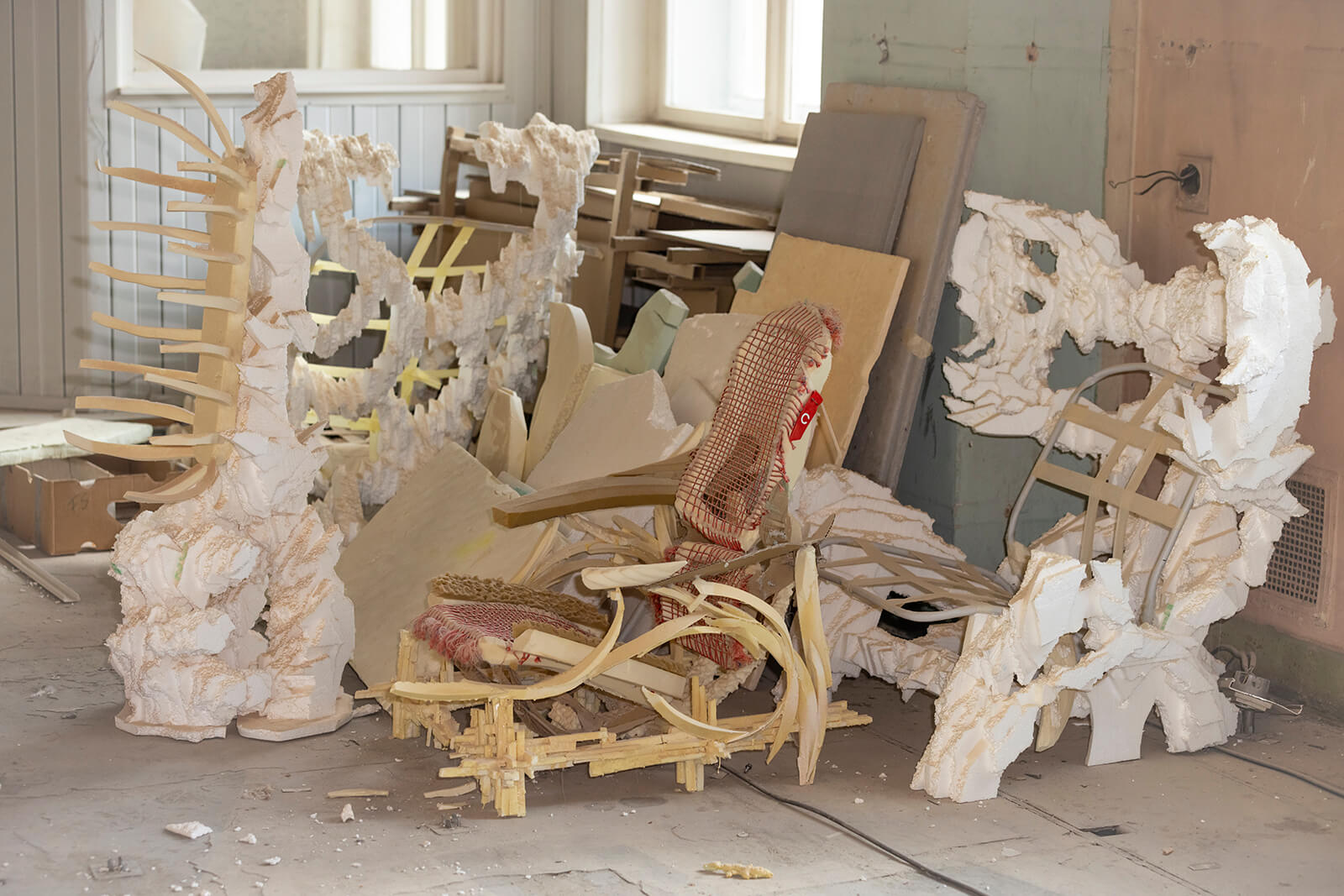
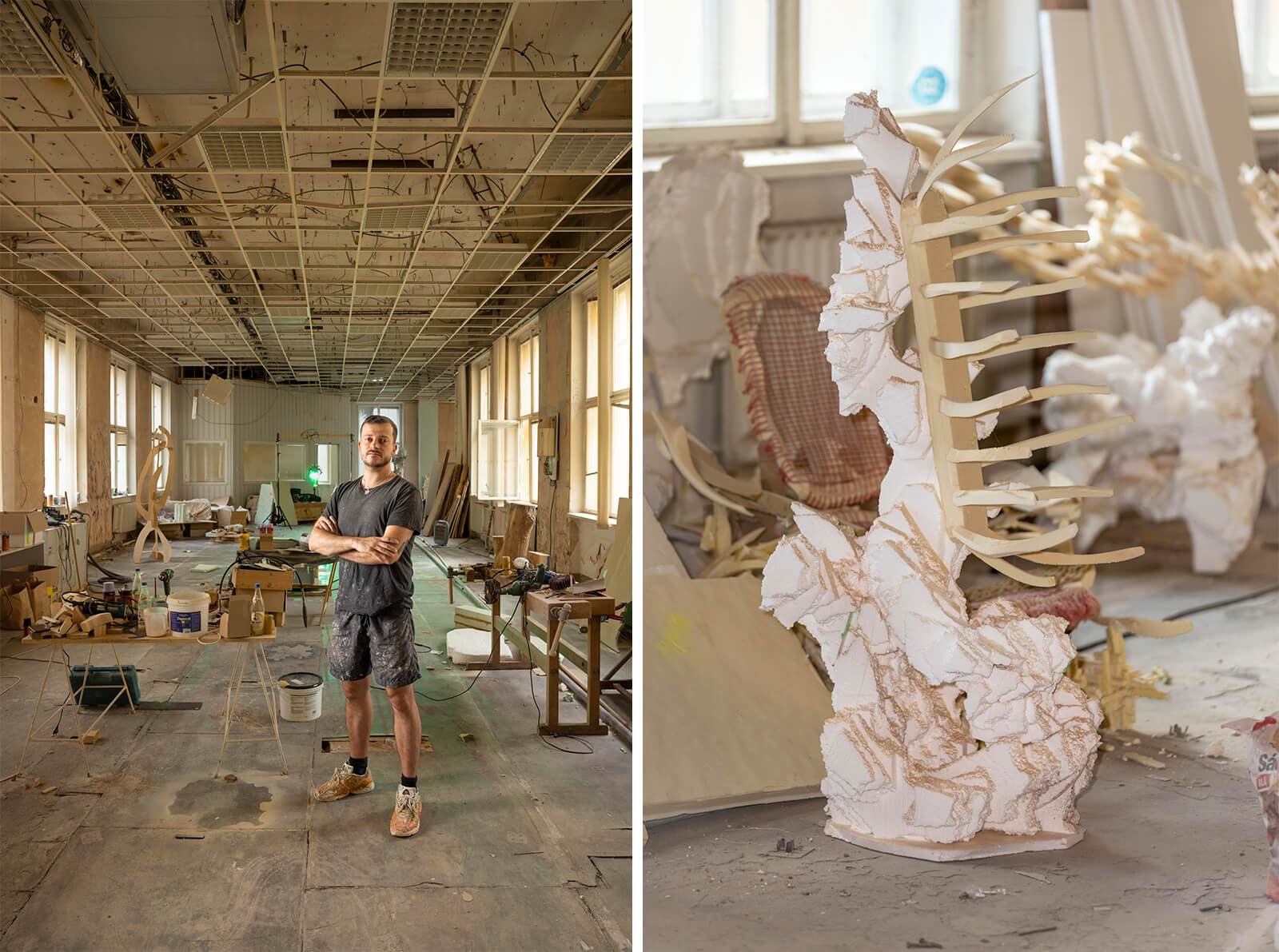
Tadeas: The preparation of my work usually takes a very long time. I often begin with small sketches, then continue with full-scale drawings, small models and later also full-scale models before finally moving into wood and the final material. The process changes depending on what I am working with, but this gradual development of form remains essential to my practice.
Recently, I have been increasingly experimenting with digital media, and what interests me most is the possibility of moving freely between physical and digital sketching. Sometimes I begin by sketching forms by hand and later translate them into digital space; other times, the process starts directly within the computer. What emerges is a kind of hybrid that carries both physical intuition and the freedom of digital space, which is detached from normal physical limitations. It is something I am exploring deeply at the moment, and it has become an exciting new direction in my work.
At the same time, I come from a classical sculptural education with strong academic training in drawing and sculpture. These traditional methods are deeply rooted in the way I think and work, and I probably could not fully separate myself from them. I believe they give my objects a stronger physical and sculptural presence.
I am not interested in folklore as nostalgia. I see it more as a living structure that constantly mutates through contact with contemporary materials, technologies and ways of living. – Tadeas Podracky
Pranjal: Your practice is known for creating objects that embody folklore and cultural values: Fading Reflection reinterprets Venetian Mirrors, and The Bloom of Bones is inspired by Czech folk rituals. Do you think these stories are locked in time once the object is made, or do they continue with the life of the work?
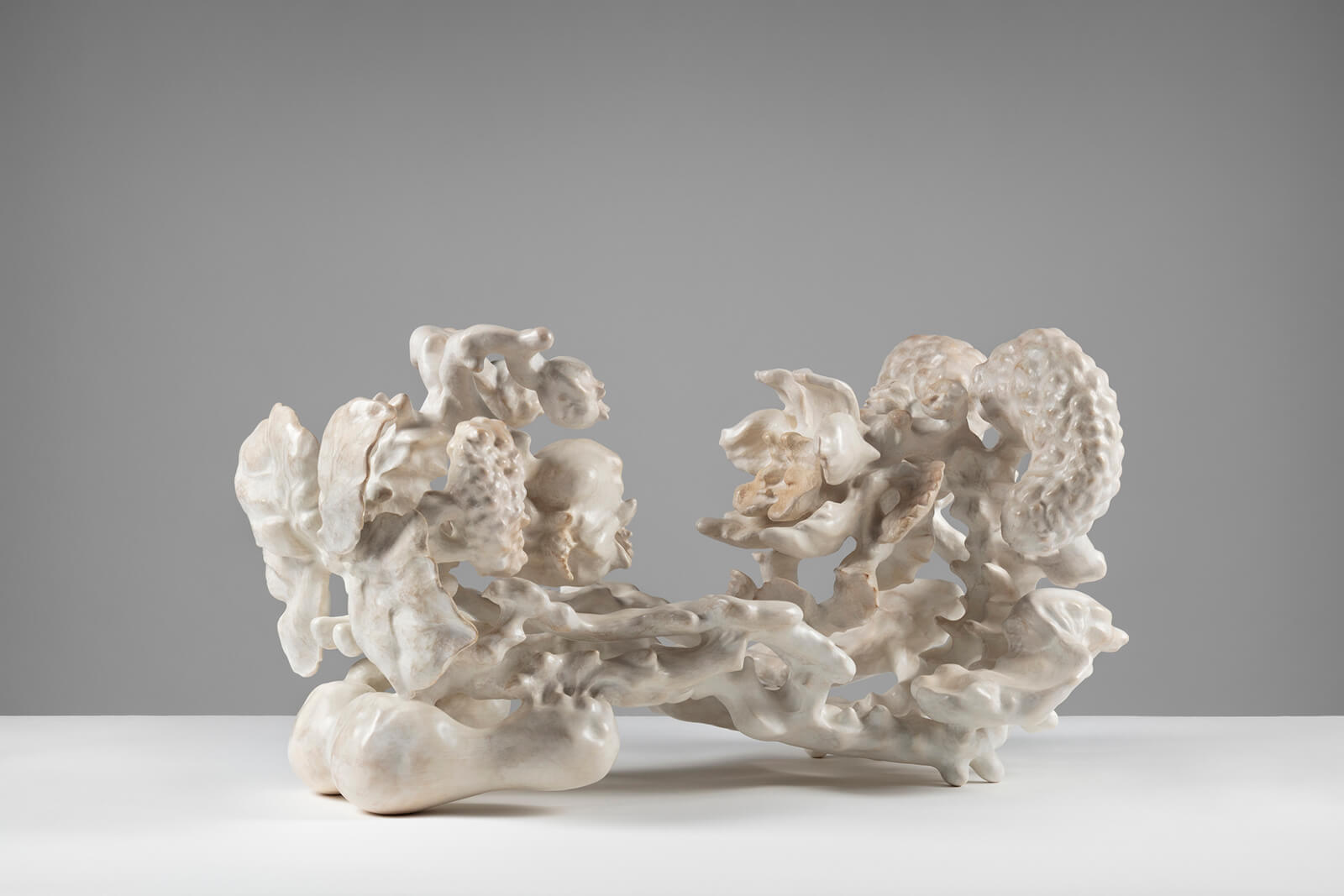
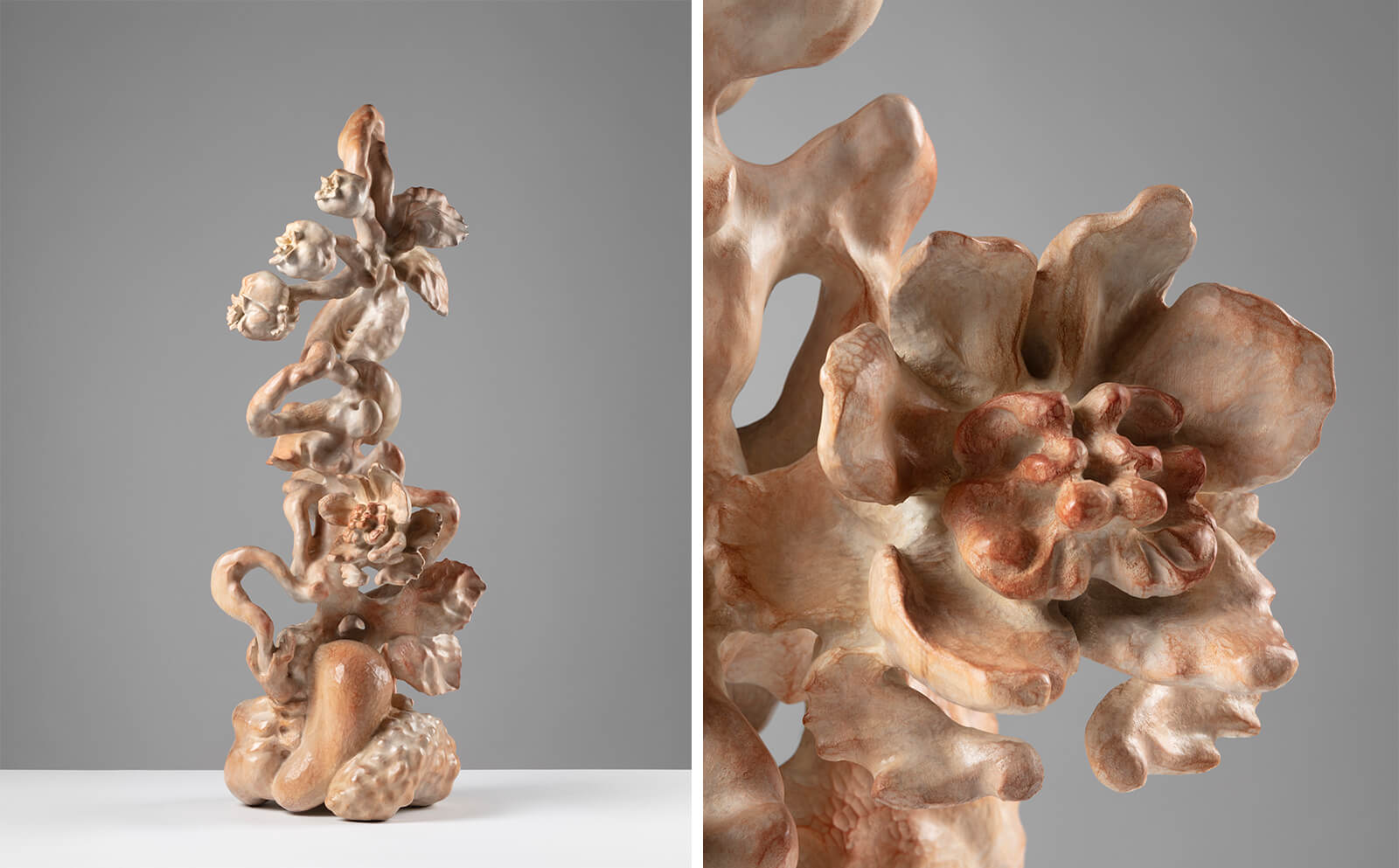
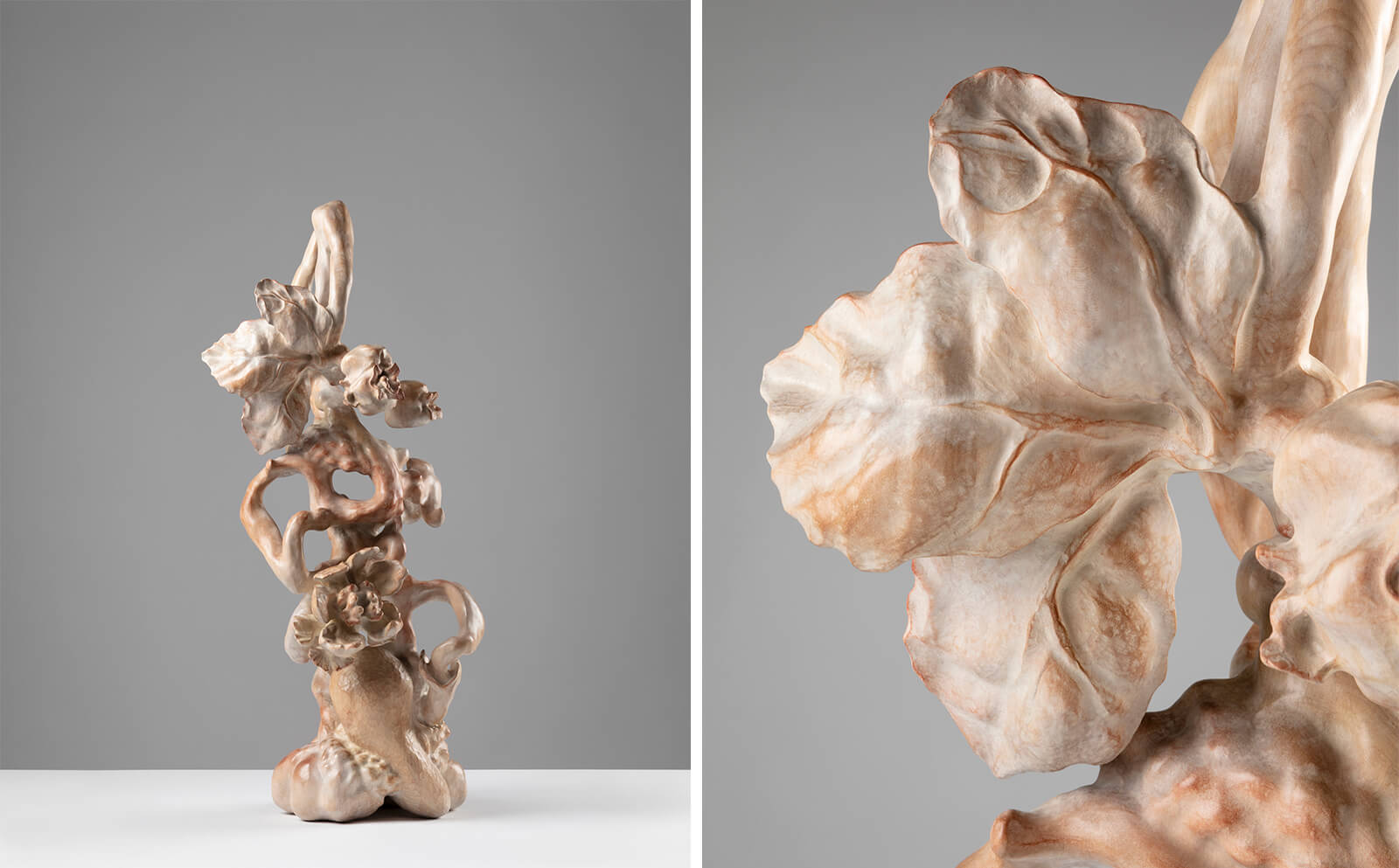
Tadeas: I do not think these stories become locked once an object is finished. The objects continue collecting new meanings through the environments they enter, the people who live with them and the associations projected onto them over time. For example, in The Bloom of Bones, I was interested in how traces of folk rituals and symbolic behaviour still survive beneath contemporary life, even if they appear fragmented or transformed. I think objects can function almost like carriers of these evolving cultural memories. At the same time, I am not interested in folklore as nostalgia. I see it more as a living structure that constantly mutates through contact with contemporary materials, technologies and ways of living.
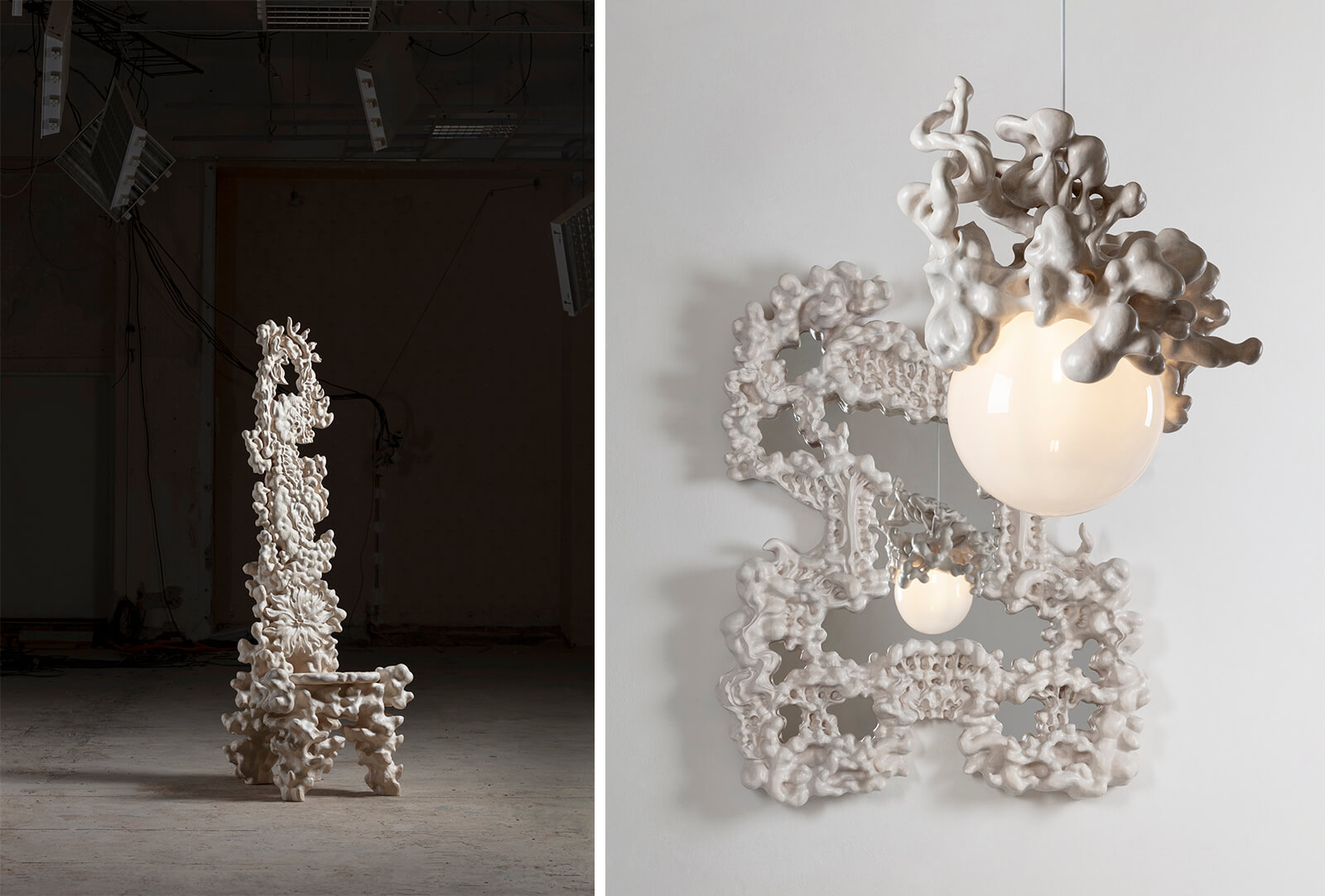
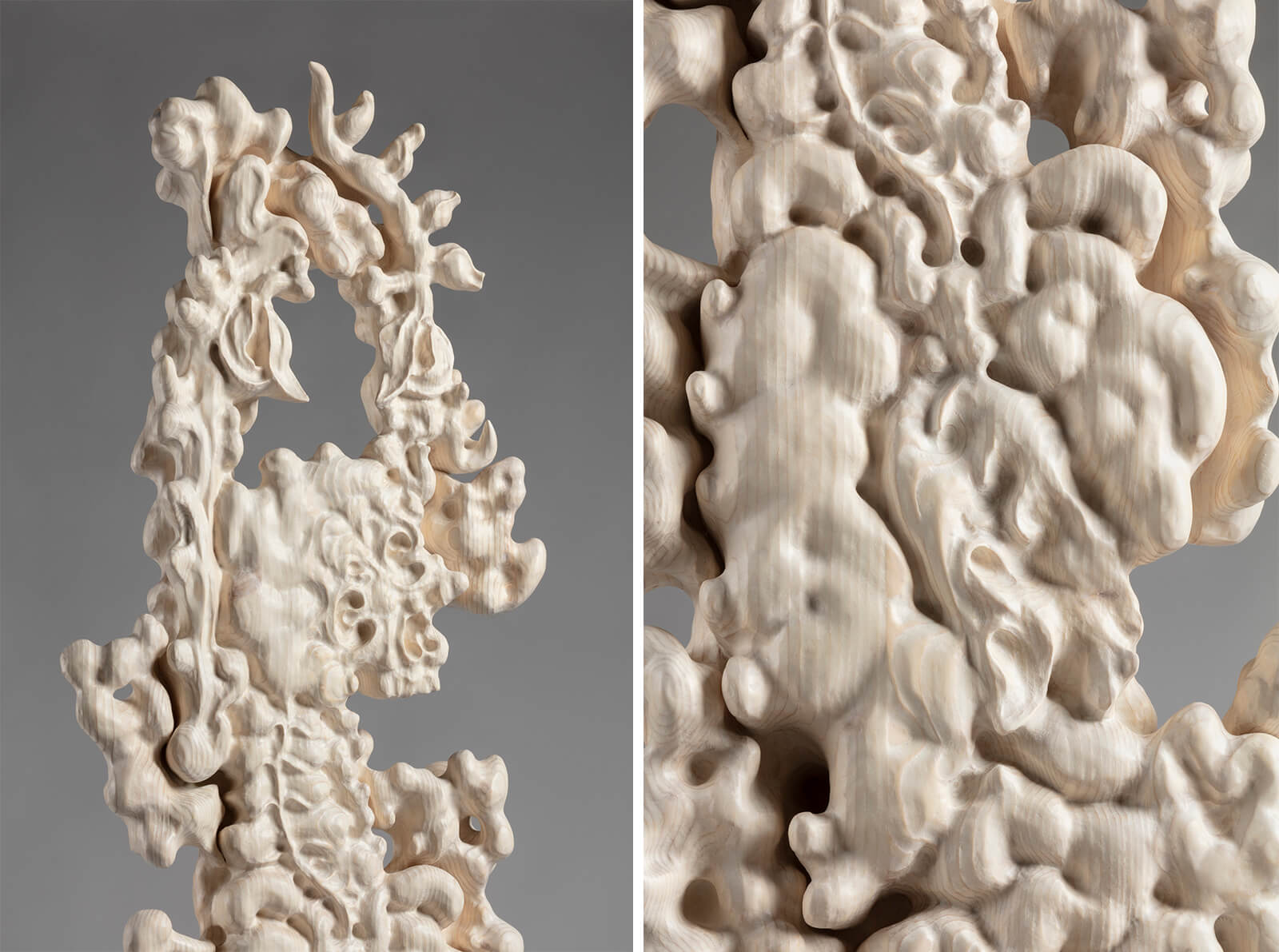
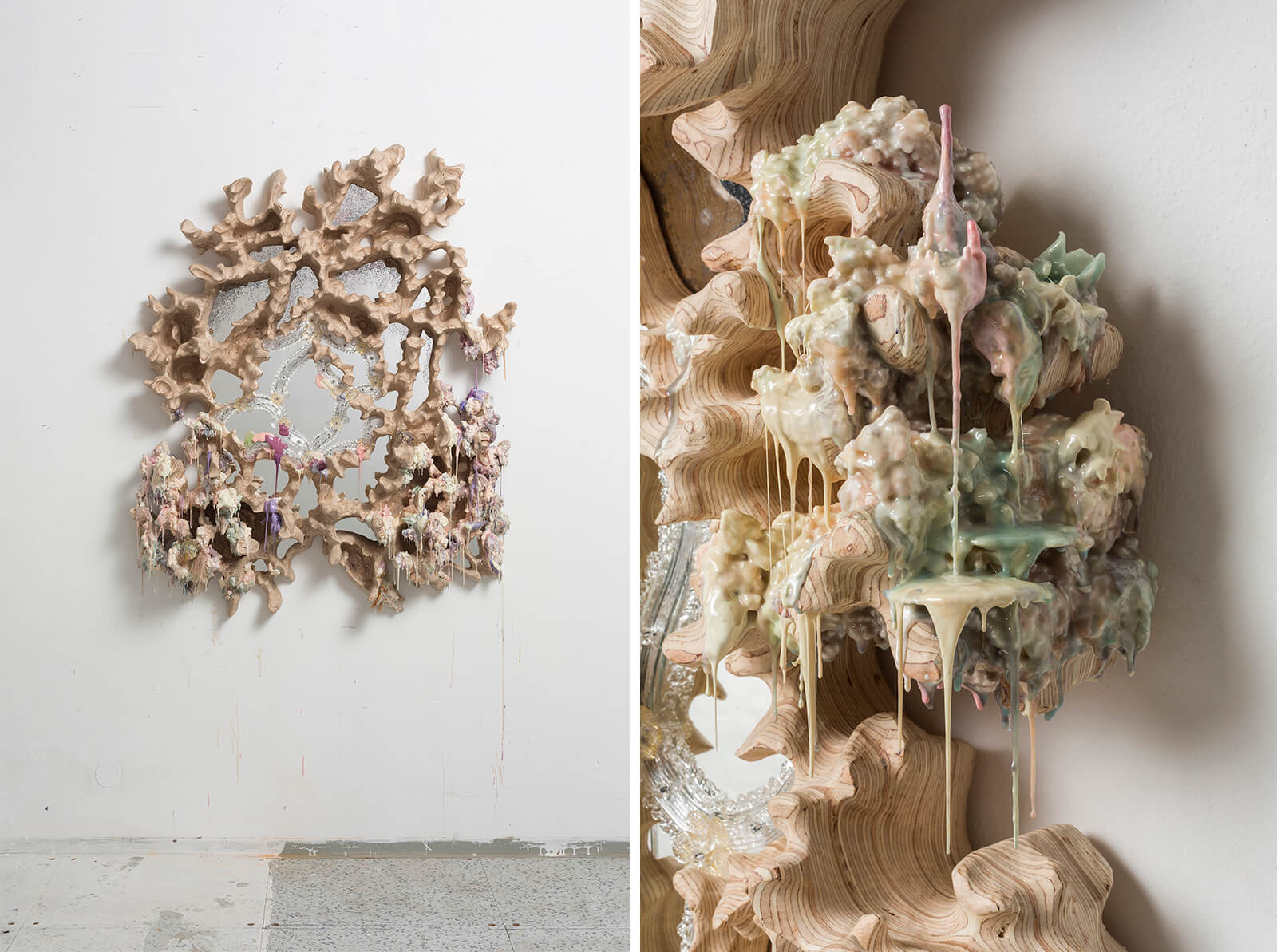
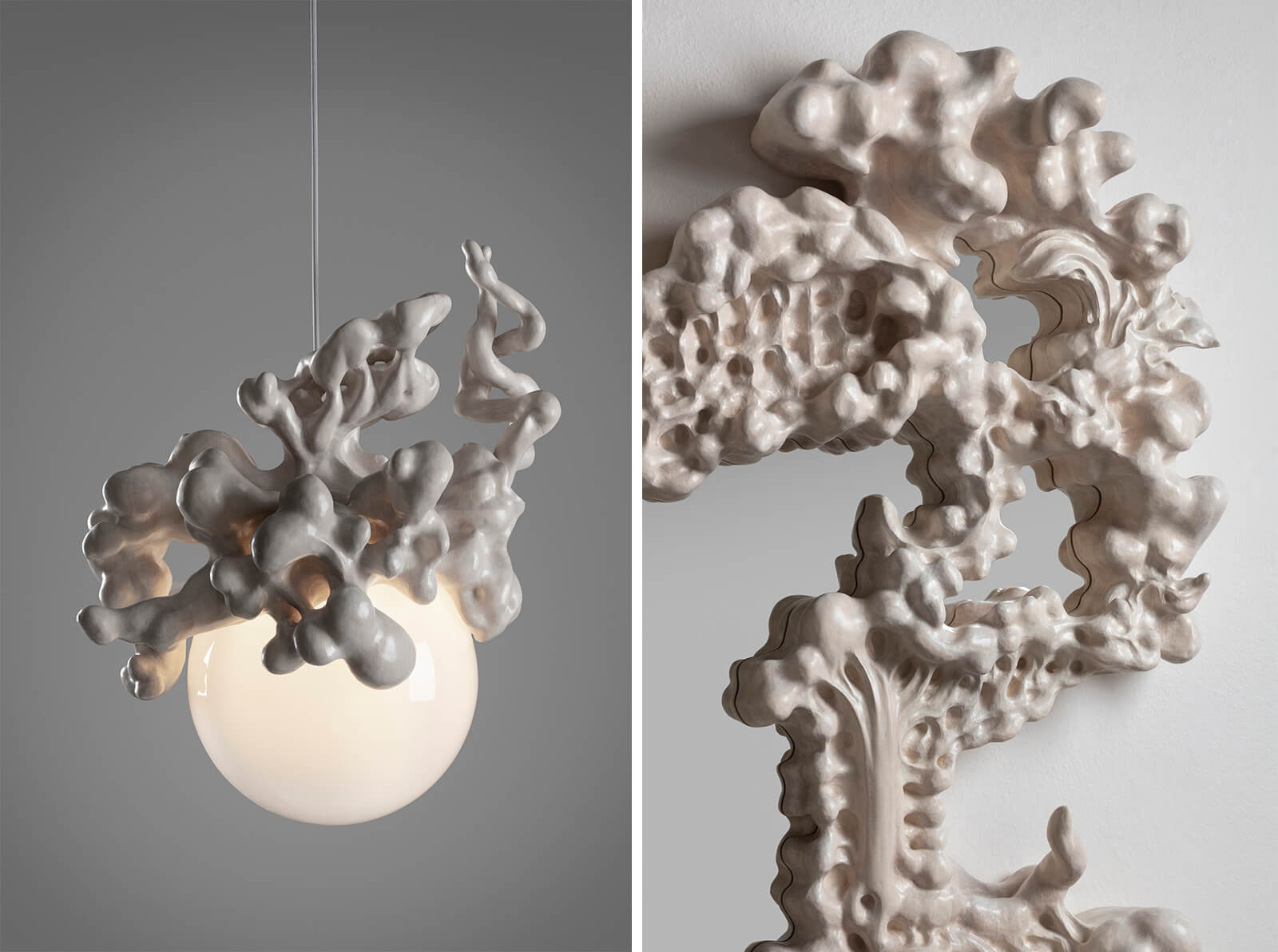
Pranjal: Your forms are highly organic; sometimes described as ‘grown, not made’. How do you comprehend these compositions?
Tadeas: I originally began this body of work with a desire to unlearn many of the traditional ways I had been taught to construct and design objects. I wanted to reach a more instinctive and expressive process while staying in direct physical contact with the material. In a way, I was trying to approach sculpture more like an expressive painter approaches a canvas—allowing forms to emerge through gesture, movement and process rather than through strict control.
In the beginning, I deliberately tried to avoid drawing or fully planning the objects in advance because I did not want to know exactly how they would end up looking. I wanted to reverse many of the classical principles of constructing form and move from detail toward the whole rather than the other way around. This became the starting point of my exploration of organicity.
That is also why I often describe my objects as ‘grown’ rather than ‘made’. For me, they behave more like living structures that gradually appear through process. I often allow my body and physical intuition to make decisions during work. Sometimes it feels as if the hands already know what they are doing before the rational mind fully understands it.
Over time, however, the works also became more layered. I gradually began introducing more representational elements connected to the themes I am exploring. These elements help develop the reading of the object within a certain context. Because of that, the works now operate in two positions simultaneously: one intuitive and process-based, and the other more reflective and conceptual. I am interested in the tension between these two modes of thinking.
Pranjal: What defines the success of a product for you?
Tadeas: I think some of the most powerful works operate somewhere between attraction and discomfort. They create a certain tension that stays with you and continues unfolding over time. In that sense, I would always value a deep and lasting connection with a smaller number of people more than a superficial reaction from a large audience. At the same time, I do not expect people to understand my work in exactly the same way that I do. For me, the ideal situation is when an object continues living in someone’s mind long after the first encounter—when it keeps returning in memory, even without a clear explanation why.
Pranjal: What’s NEXT for you? Any ideas, questions or directions that are beginning to take shape?
Tadeas: What fascinates me is the possibility of combining cutting-edge technologies with methods that are hundreds of years old and deeply connected to locality, tradition and lived experience. Rather than seeing technology and craft as opposites, I see them as two different forms of knowledge that can enrich and challenge each other. At the same time, I am currently researching Sorbus Sudetica, a rare hybrid tree species that naturally exists only within a very small region of the Czech landscape. I became fascinated by the idea of a living organism formed through hybridisation and adaptation. In many ways, it connects themes that already appear throughout my work—transformation, landscape, memory, mutation and survival.
I think I am moving toward work that combines increasingly layered conceptual thinking with a very direct physical relationship to material and process. I still want the objects to feel alive and physically present, even when they emerge through highly hybrid or technologically mediated processes.
by Jincy Iype Oct 15, 2026
STIR explores craft, material intelligence and people shaping Indian design through dialogues with Design Democracy’s co-founders and the curators of its special exhibitions.
by Pranjal Maheshwari Oct 13, 2026
Through furniture, art and films, the showcase at the Ian Potter Centre in Melbourne advocates for biophilic material cultures as an antidote to planetary degradation.
by Pranjal Maheshwari Oct 12, 2026
The exhibition reimagines the 20th-century Scottsville residence of the American sculptor and his partner, ceramicist Nancy Jurs, curated by their daughter Alison Castle.
by Chahna Tank Oct 08, 2026
Javier Guzman Cervantes and Ulises Morin Arzola tell STIR about their ‘open code’ approach to design, working through a process of stockpiling and the idea of ‘queering’ materials.

make your fridays matter with a well-read weekend
Enter your details to sign in
Don’t have an account?
Sign upOr you can sign in with
a single account for all
STIR platforms
All your bookmarks will be available across all your devices.
Stay STIRred
Already have an account?
Sign inOr you can sign up with
Verification link sent to check your inbox or spam folder to complete sign up process
Tap on things that interests you.
Select the Conversation Category you would like to watch
Please enter your details and click submit.
Enter the 6-digit code sent at


Experimental designer Tadeas Podracky on traditional folklore as ‘living systems’
by Pranjal Maheshwari | Published on : May 22, 2026


 Sign in with Google
 Sign in with email
What do you think?