Architecture12 mins. read
Aaron Betsky's clarion call to 'Don't Build, Rebuild' in a recently published book
by Mrinmayee BhootJan 23, 2025



by Zohra KhanPublished on : Dec 18, 2025
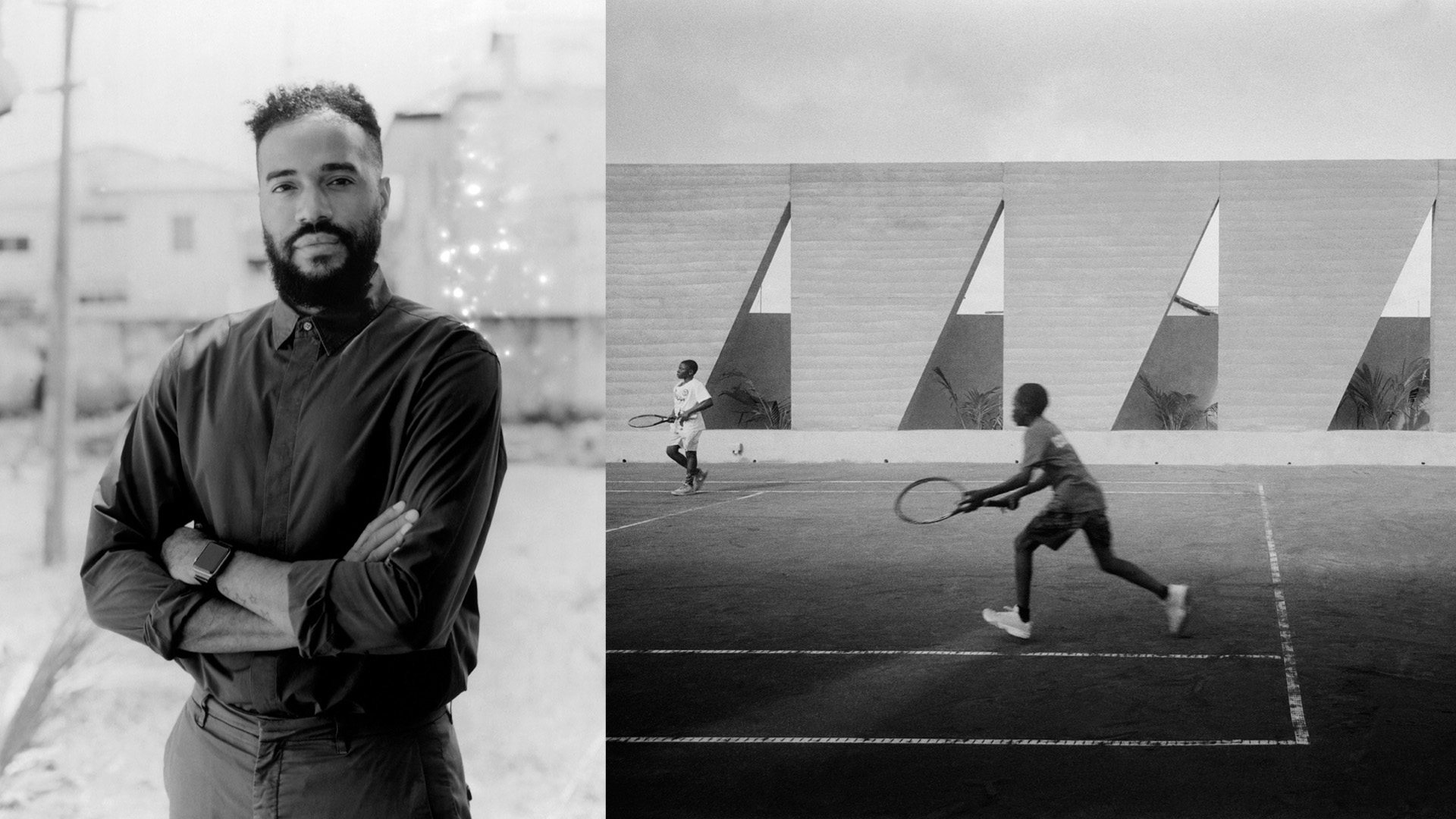
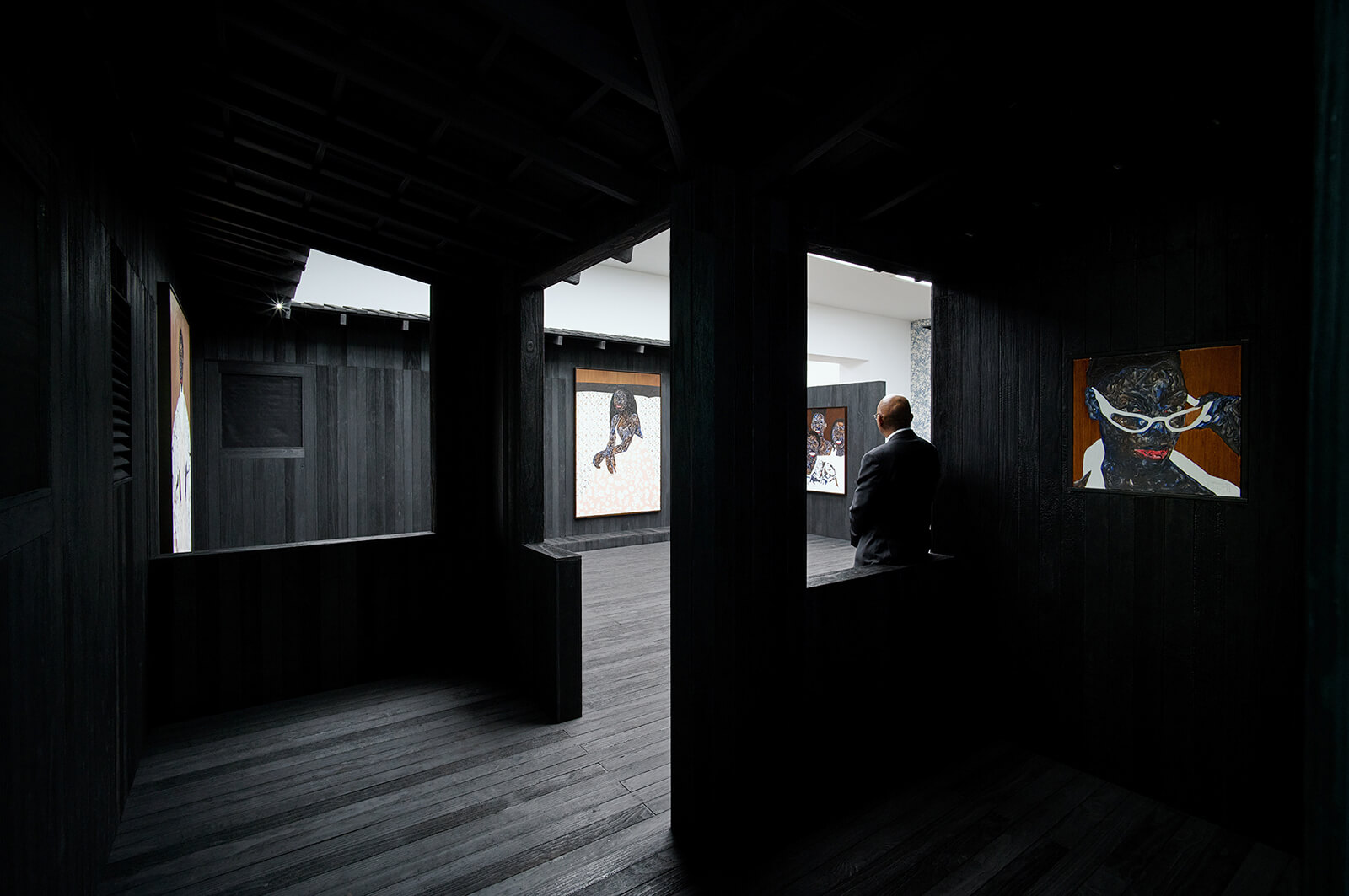
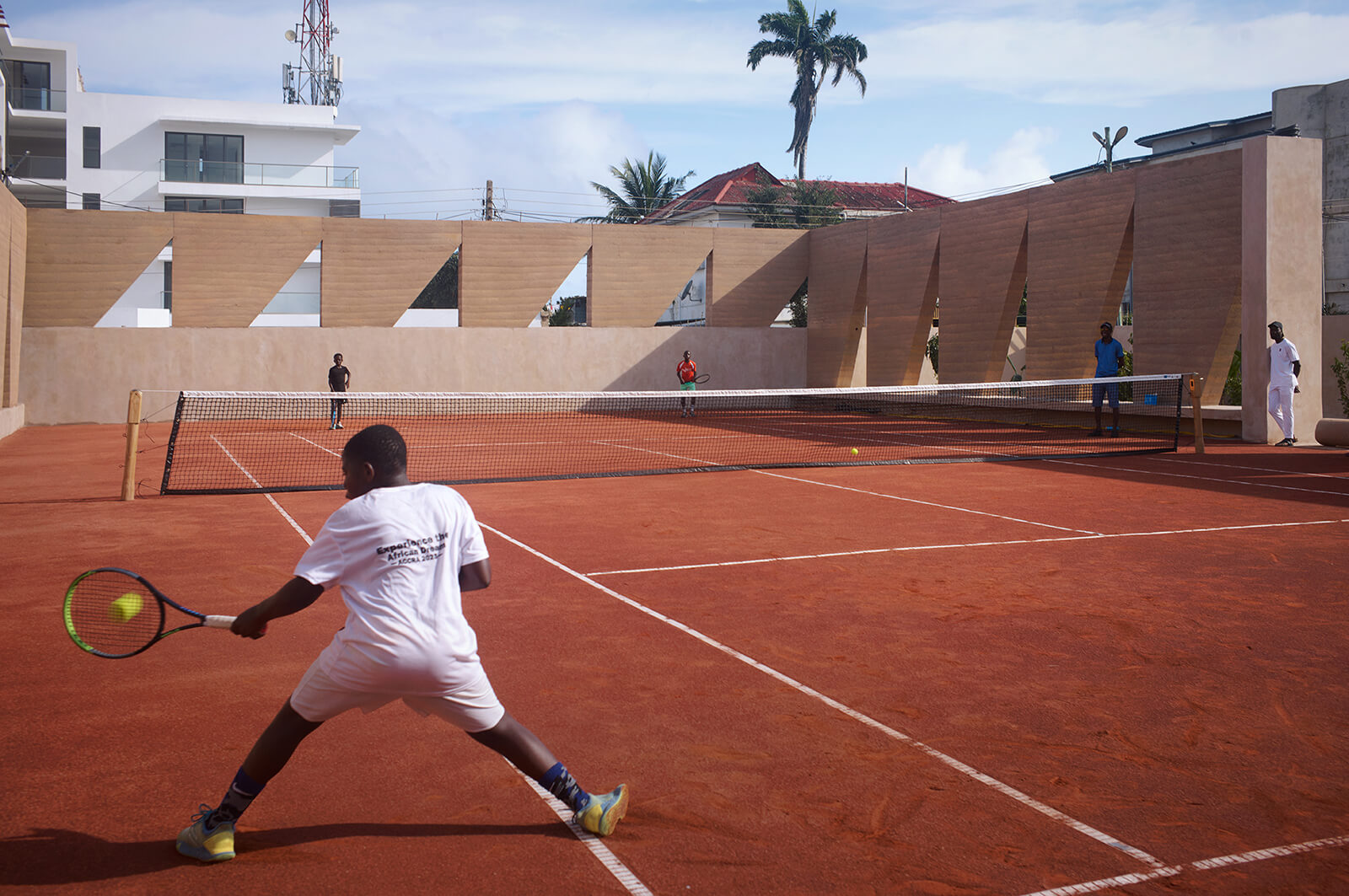
For Glenn DeRoche, living away from his family for over a decade has made the idea of a multi-generational home—what it means now and what it could be—an ongoing pursuit of curiosity and endurance. The Brooklyn-born architect and designer of Caribbean descent was recently in news for the Backyard Community Club in Accra—a tennis training court notable as the first project in Ghana built using a precast rammed earth system. DeRoche’s charred timber pavilion for Amoako Boafo’s exhibition at the Gagosian Mayfair also brought him immense praise for his transformation of a ‘white cube’ gallery space into an architecture of memory, turning personal history into a space that resonates with anyone who enters.
At DeRoche Projects, the architecture studio he founded in 2022, Glenn prioritises climate, culture and resources, continually seeking to create projects where traditional material systems and contemporary building methods coalesce. Speaking with STIR, the architect who divides his time between New York and Ghana, spoke about the idea of abstracting memory in design to invite a more resonant emotional experience for all. He said, “It is about exploring how space can hold shared human conditions such as shelter, connection and continuity. My personal narrative is the lens through which the project begins, but the power of the work comes from how that initial story evolves into a shared experience.”
Read the edited excerpts below from a conversation that traverses home, identity, memory, material, freedom, connection and clarity—an invigorating discussion that illuminates the core of DeRoche Projects.
Zohra Khan: What was growing up like for you? Tell us about your childhood home, your family, the neighbourhood you lived in and the things that made you happiest.
Glenn DeRoche: I grew up in Bed-Stuy, Brooklyn, during a challenging time, but our family’s love and support shaped everything. Our childhood home was a four-storey brownstone, with each branch of the family living on a different floor, creating a strong sense of community across generations. Playing basketball with my cousin on the stoop and listening to my grandfather’s stories are some of my clearest childhood memories.
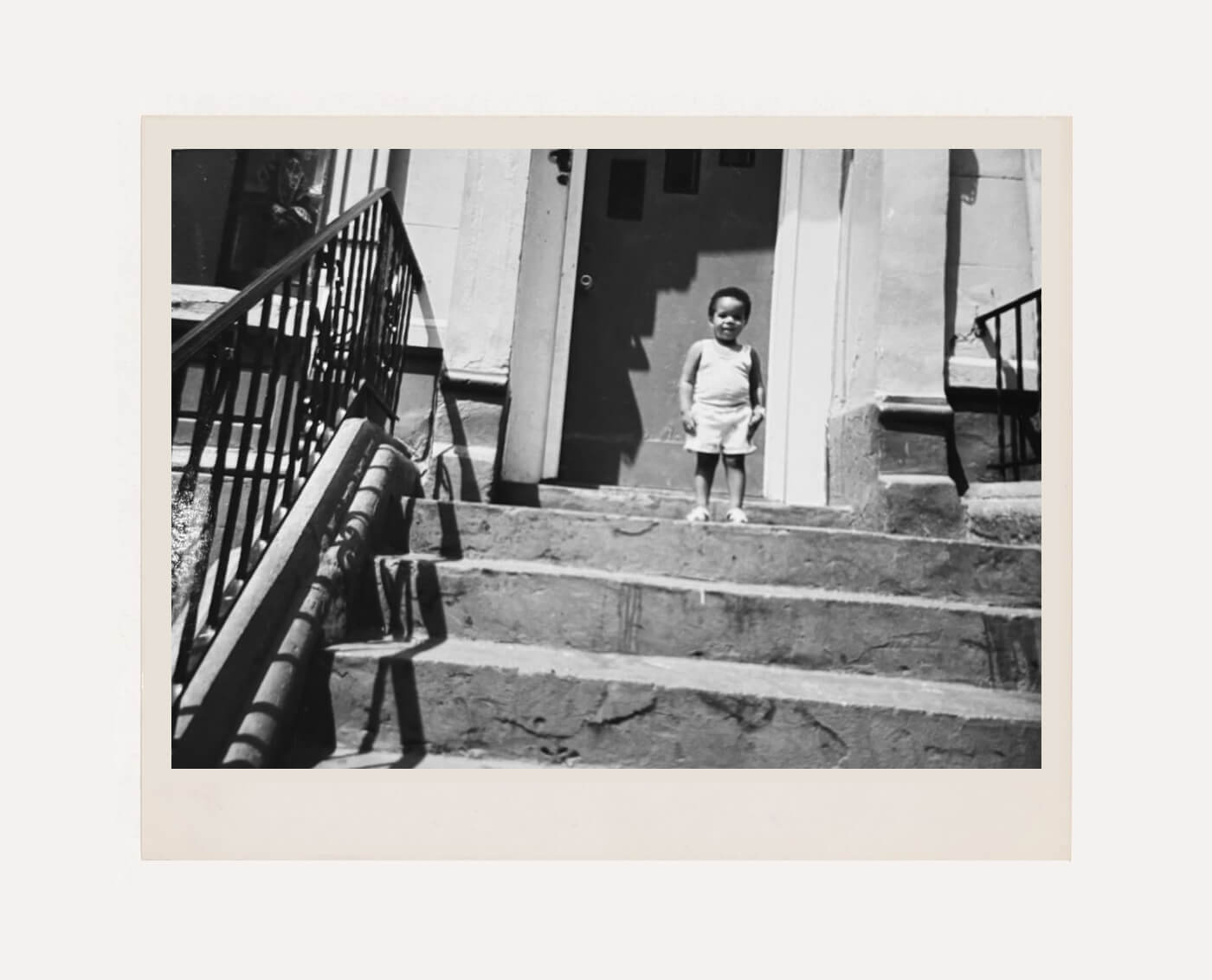
Visiting my grandparents’ village in Guyana during the summers was a formative experience. Seeing where my family came from and the life they built gave me a perspective I couldn’t have had as a child. I had not realised that I had certain privileges until I saw what life looked like for my relatives there. Those experiences grounded me, and they still inform how I move through the world today.
Zohra: In a recent interview, you described how architecture was never truly a choice for you, and how you entered the field at the urging of a guidance counsellor only to resent the first two years of study. What was that experience like? What were you really seeking at the time that the course failed to offer? And when did architecture finally reveal itself to you?
Glenn: Architecture truly clicked for me in Professor Llonch’s studio, where conceptual ideas would meet real-world constraints and design became a dialogue between vision and reality. I realised that architecture is at its most powerful when it balances creativity with context, responding thoughtfully to the needs of people and place. That insight guides my work today—from designing adaptable community spaces to projects like Backyard Community Club in Accra, where we used precast rammed earth walls, flexible gathering areas and a sustenance garden to creatively integrate a tennis court into the local landscape and community life.
Zohra: Setting up your studio in Ghana—you have referred to that memory as one of the most rewarding pursuits of your professional career. Could you elaborate on that?
Glenn: For most of my professional life, I worked for other people, so building something from the ground up and being able to call it my own felt completely different. The shift in my mindset was the most powerful part of the experience. If the studio succeeds, it is on me, and if it fails, it is also on me. Carrying that level of responsibility changed the way I saw the world, my relationships and my own potential. There is no safety net and no backing. What I have is my grit, hard work, perseverance and the support of a remarkable team that believes in the work they are doing. I am deeply grateful for that support and for the trust of a few clients, because no one builds anything meaningful alone.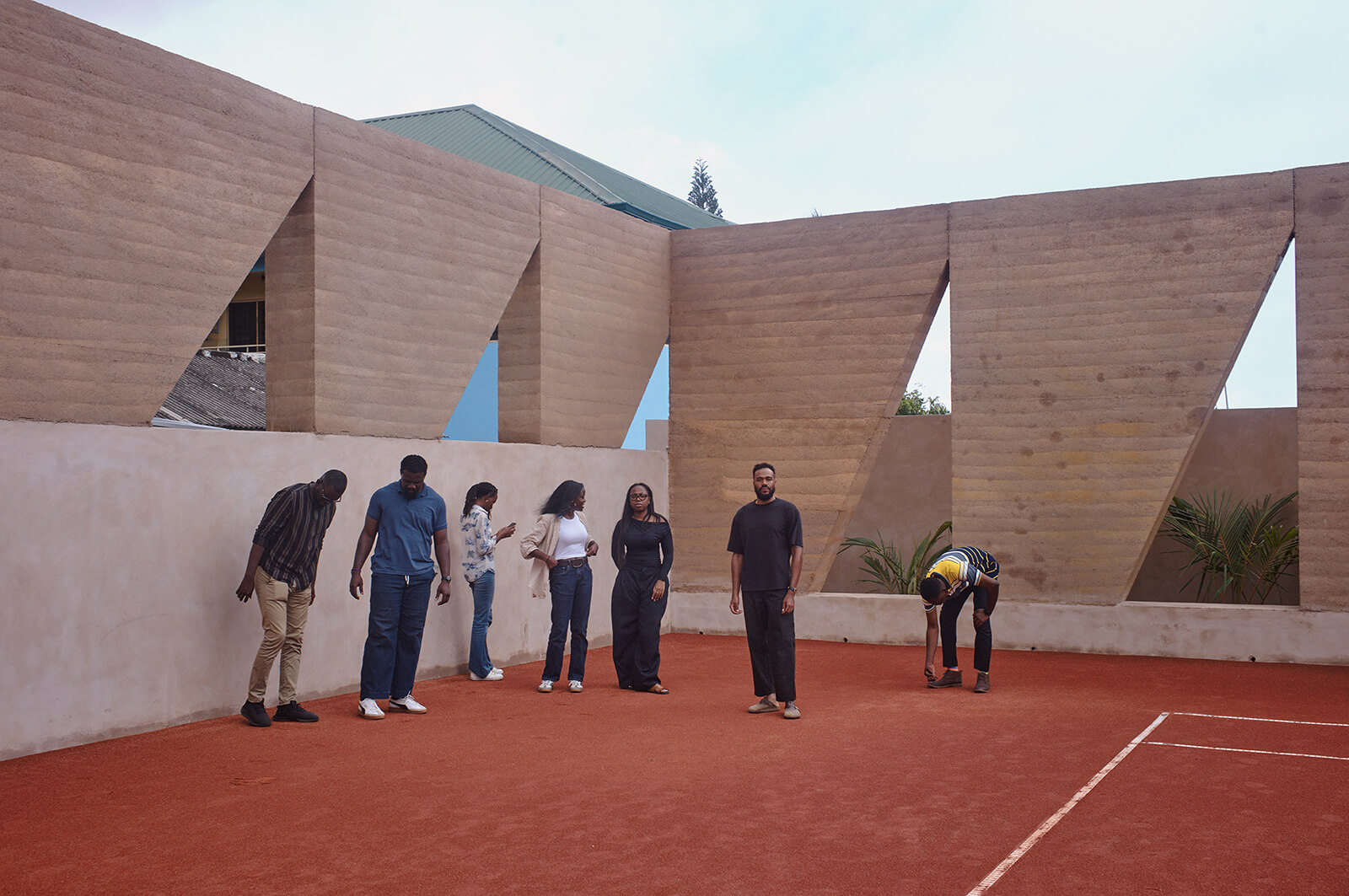
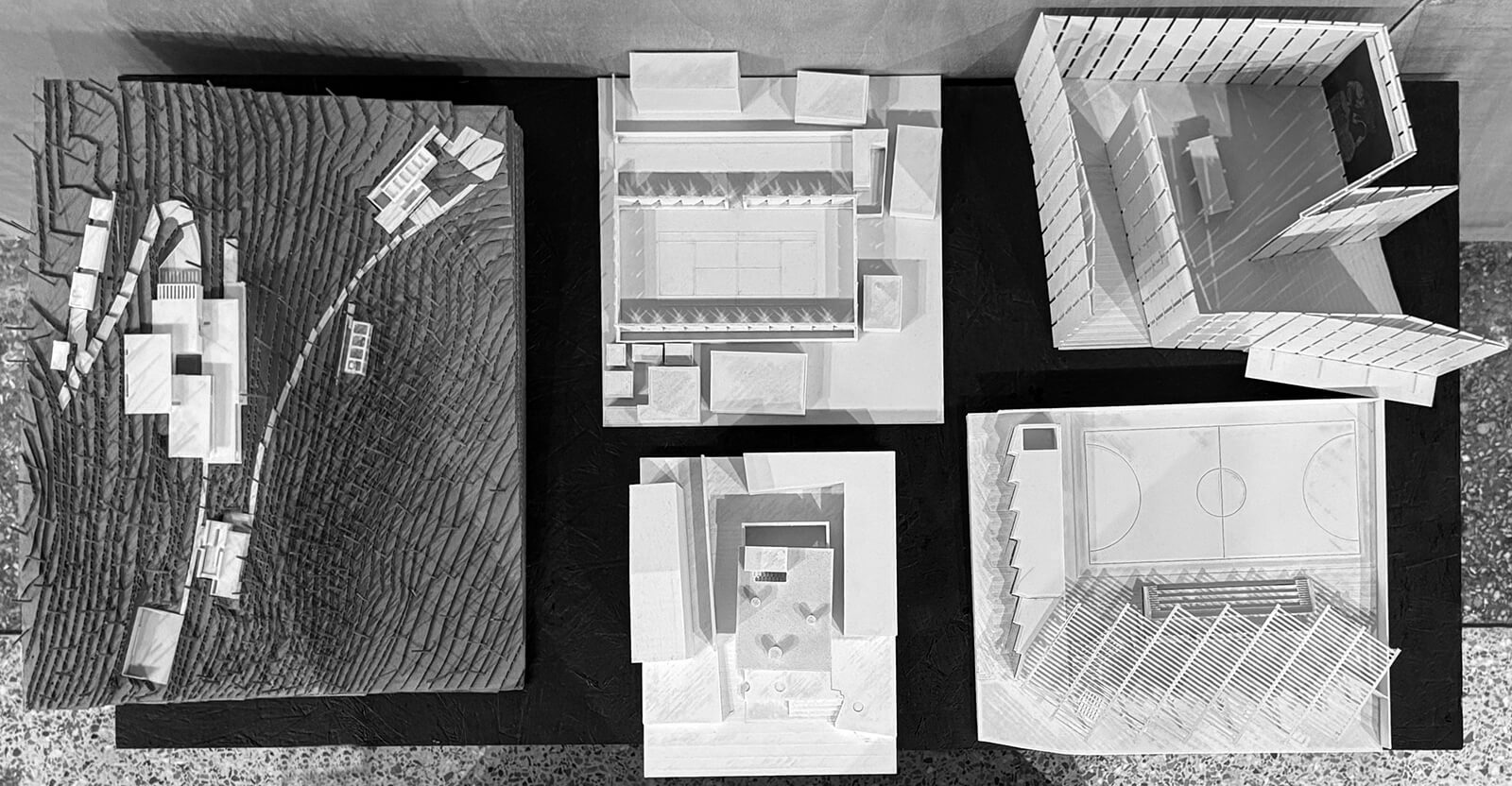
Zohra: In reference to your project, The Surf Ghana Collective, you’ve spoken about your interest in creating meaningful architecture that begins from the constraints of another person’s thinking. What qualities in an existing framework do you find most compelling to build upon?
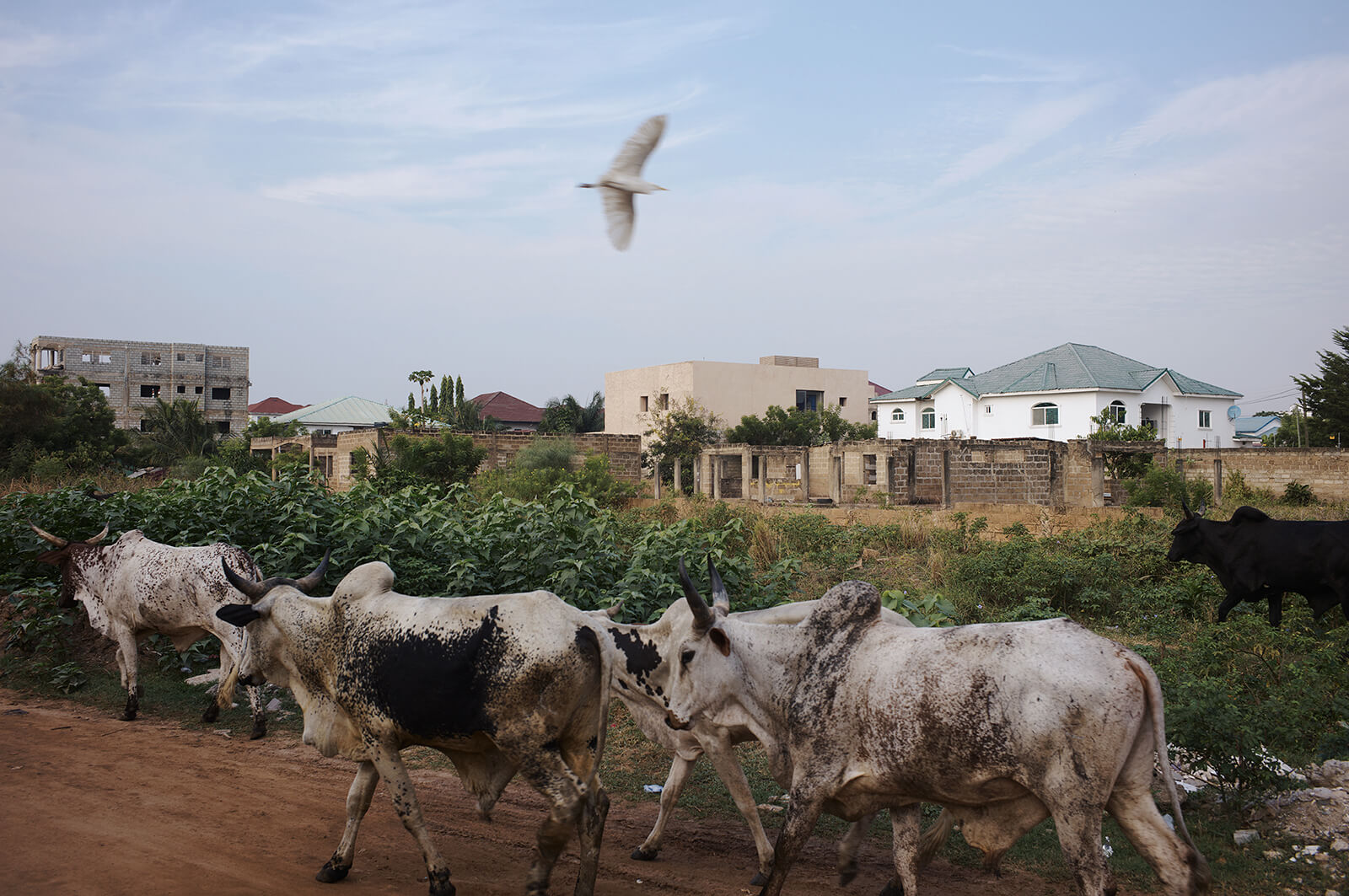
Glenn: Many older structures in Ghana are often dismissed as obsolete, yet they contain qualities that make them incredibly valuable to work with. I am especially drawn to buildings that express a clear structural logic, honest materiality and a spatial organisation that speaks to the time in which they were built. These qualities provide a strong foundation for reimagining how a building can function today.
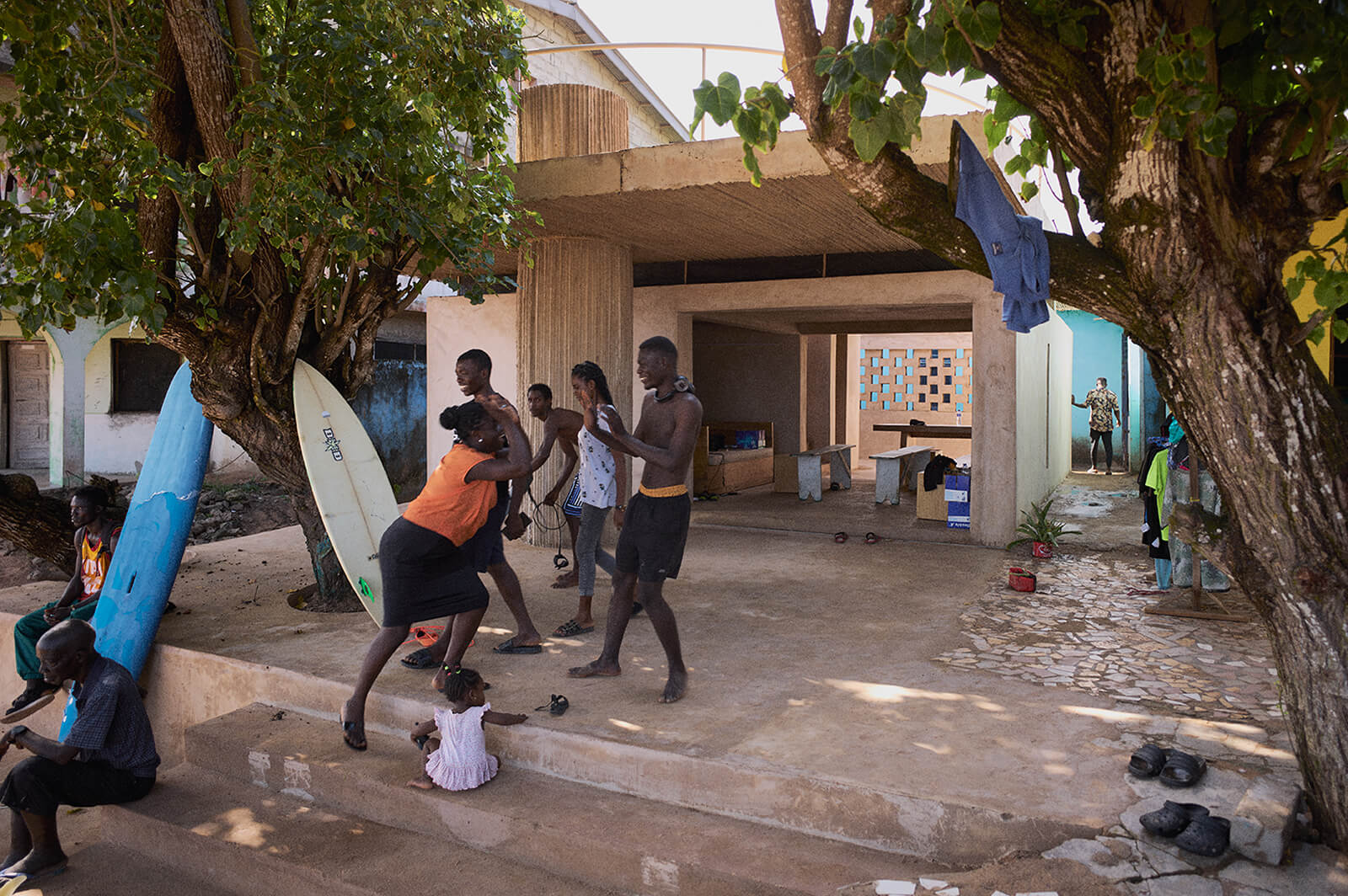
Zohra: What possibilities do you see in working this way, and what challenges does this approach present in the Ghanaian context?
Glenn: In the Ghanaian context, the potential lies in harnessing these existing frameworks to create architecture that is both resource-efficient and culturally grounded, since repurposing is often more sustainable and preserves collective memory. The challenge, however, is that these structures are frequently undervalued or demolished prematurely, and we are often navigating deteriorated conditions, limited documentation and the need to reconcile past construction methods with contemporary standards.
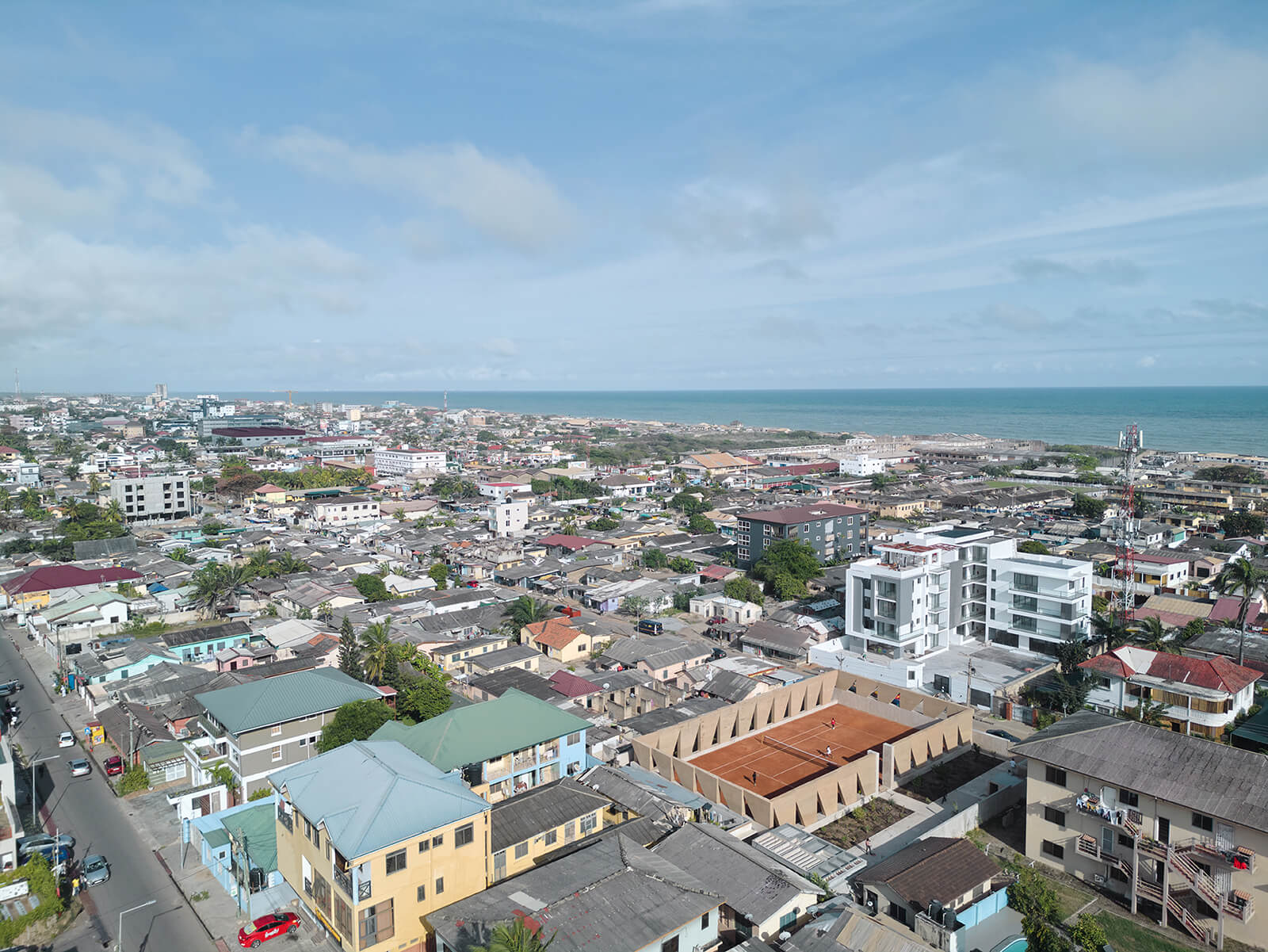
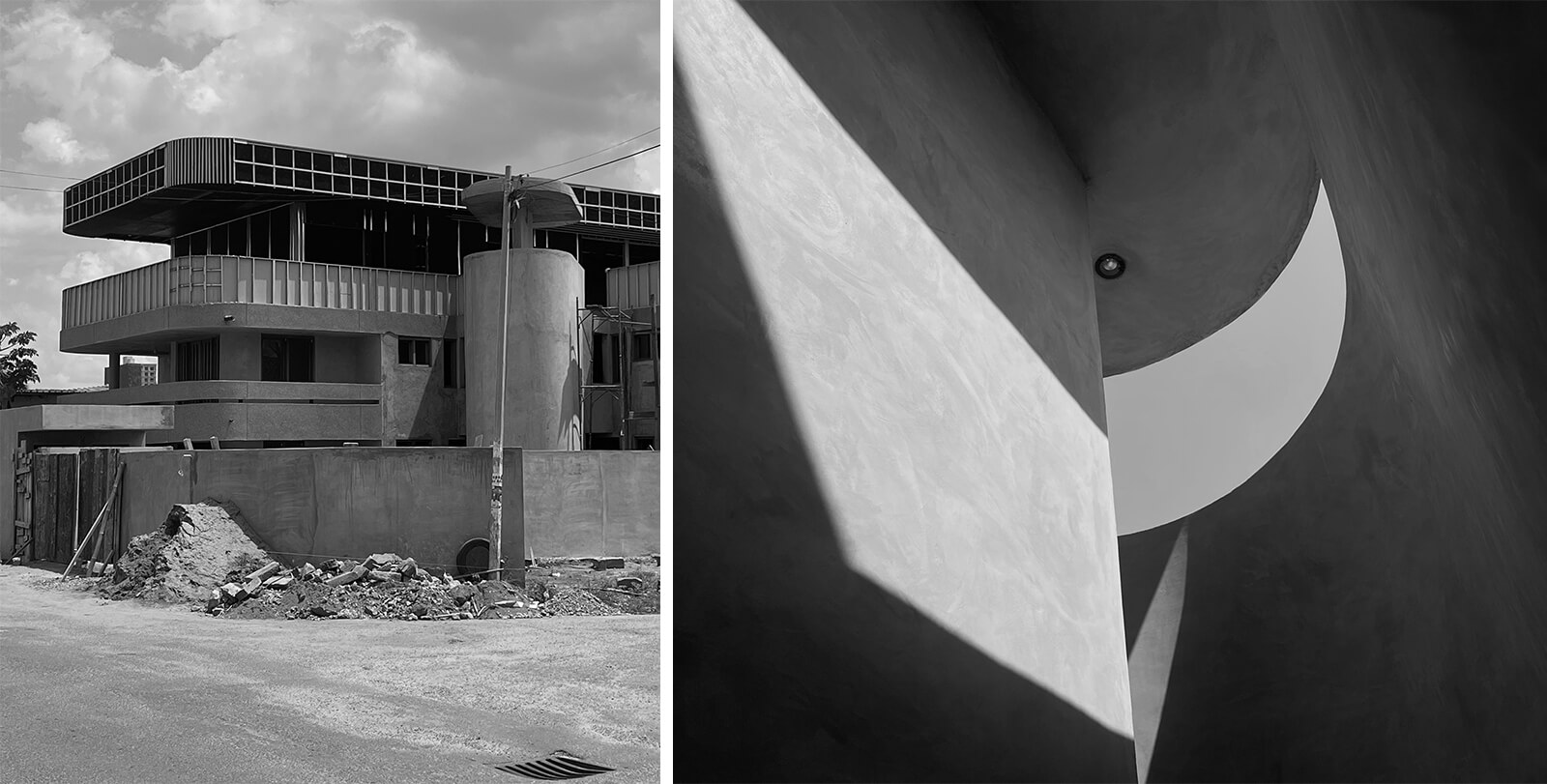
At the moment, the studio is involved in several projects that explore this approach to adaptive reuse. One example is the restoration of a 1970s post-modern apartment block, where we have carefully preserved the defining features of the building, including the in-situ terrazzo floors, the original wooden windows and doors and the washed terrazzo exterior—a quintessential feature of buildings from this era. Alongside this preservation effort, we have reconfigured the interior layout to better align with today’s living norms. Where walls were removed to create more open and flexible spaces, we marked these interventions in the flooring with a black terrazzo inlay that acknowledges the original layout while supporting how people live today. The project also includes a one-storey extension constructed with a timber hybrid system. We are now approaching the final stages of work, and completion is expected in Spring 2026.
These kinds of projects remind us that architecture does not always need to begin from scratch, and that some of the most meaningful design work emerges when we listen closely to what is already present.
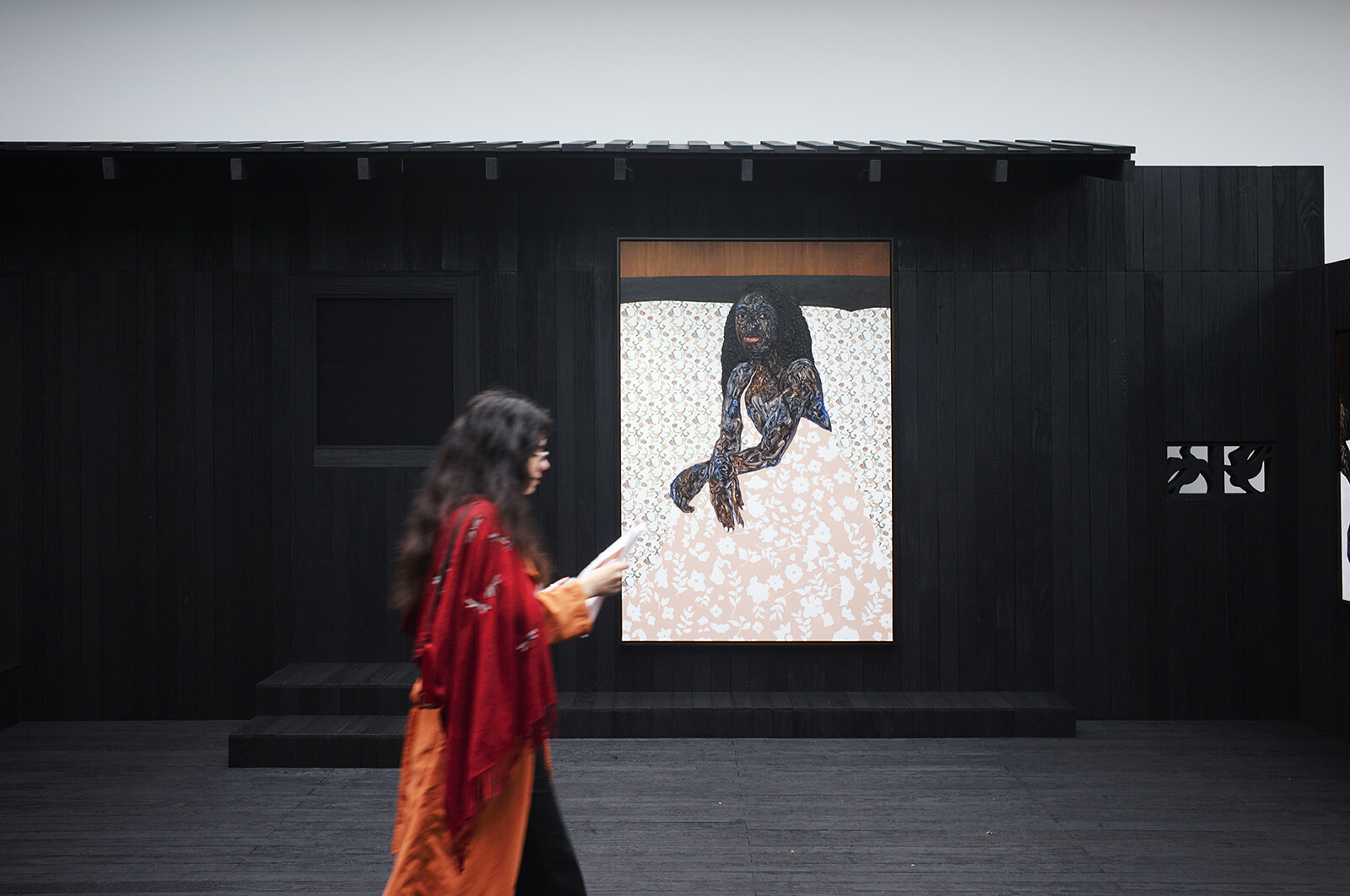
Zohra: The abstraction of memory is central to your practice. In the Gagosian Mayfair exhibition, the charred timber pavilion that you had created captured an impression of artist Amoako Boafo’s childhood home courtyard. How do you translate such a personal reference into something that can stand on its own for audiences with no connection to that memory? Would you say the intention is less about fixing a moment in time and more about enabling continuity?
Glenn: The abstraction of memory is never meant to capture a singular past. The work begins with my own experience, but the abstraction is created for and by everyone who enters the space. Each visitor brings their own memories, their own associations and their own emotional history, and the architecture becomes the tool that activates those private recollections.
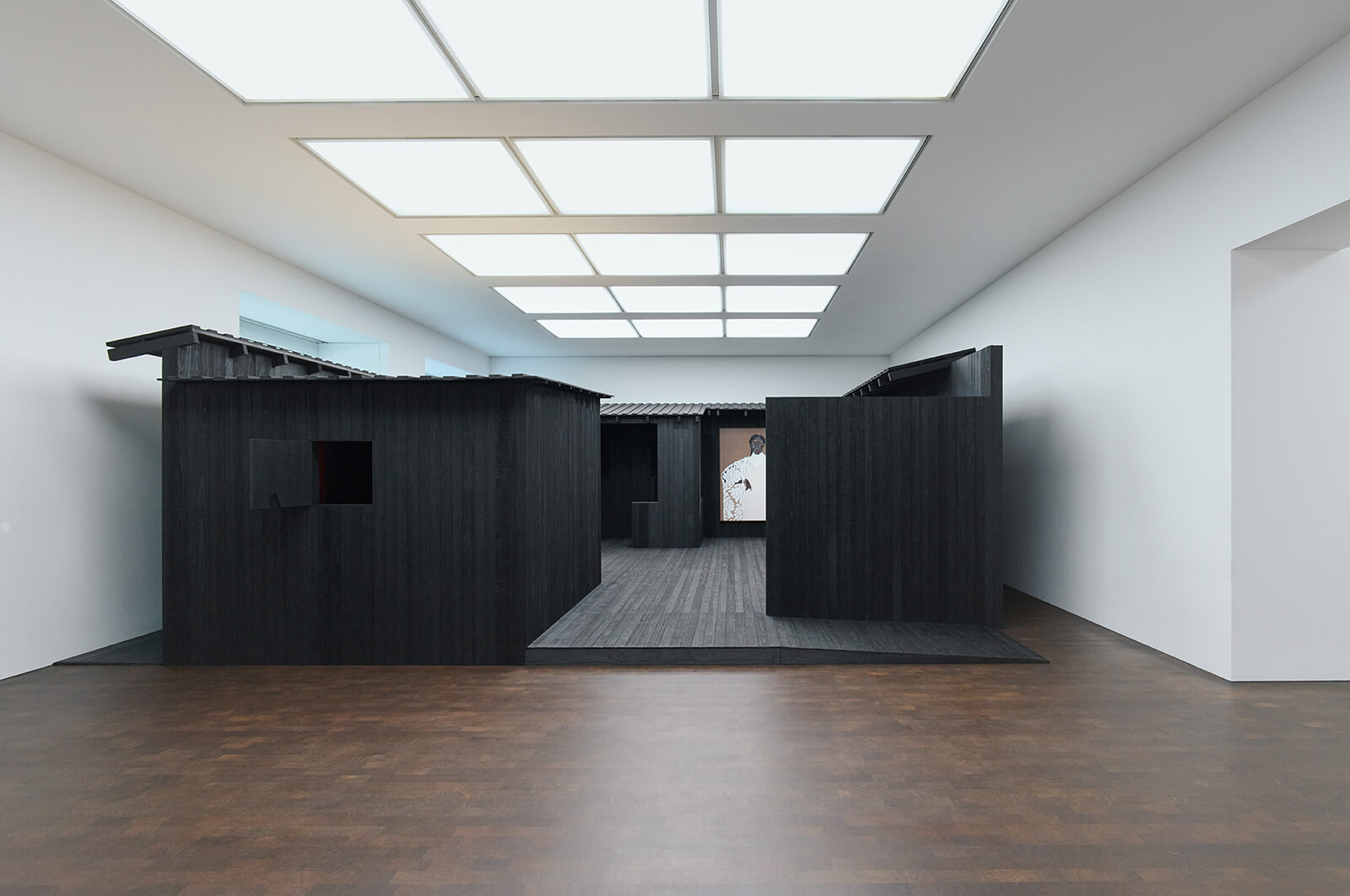
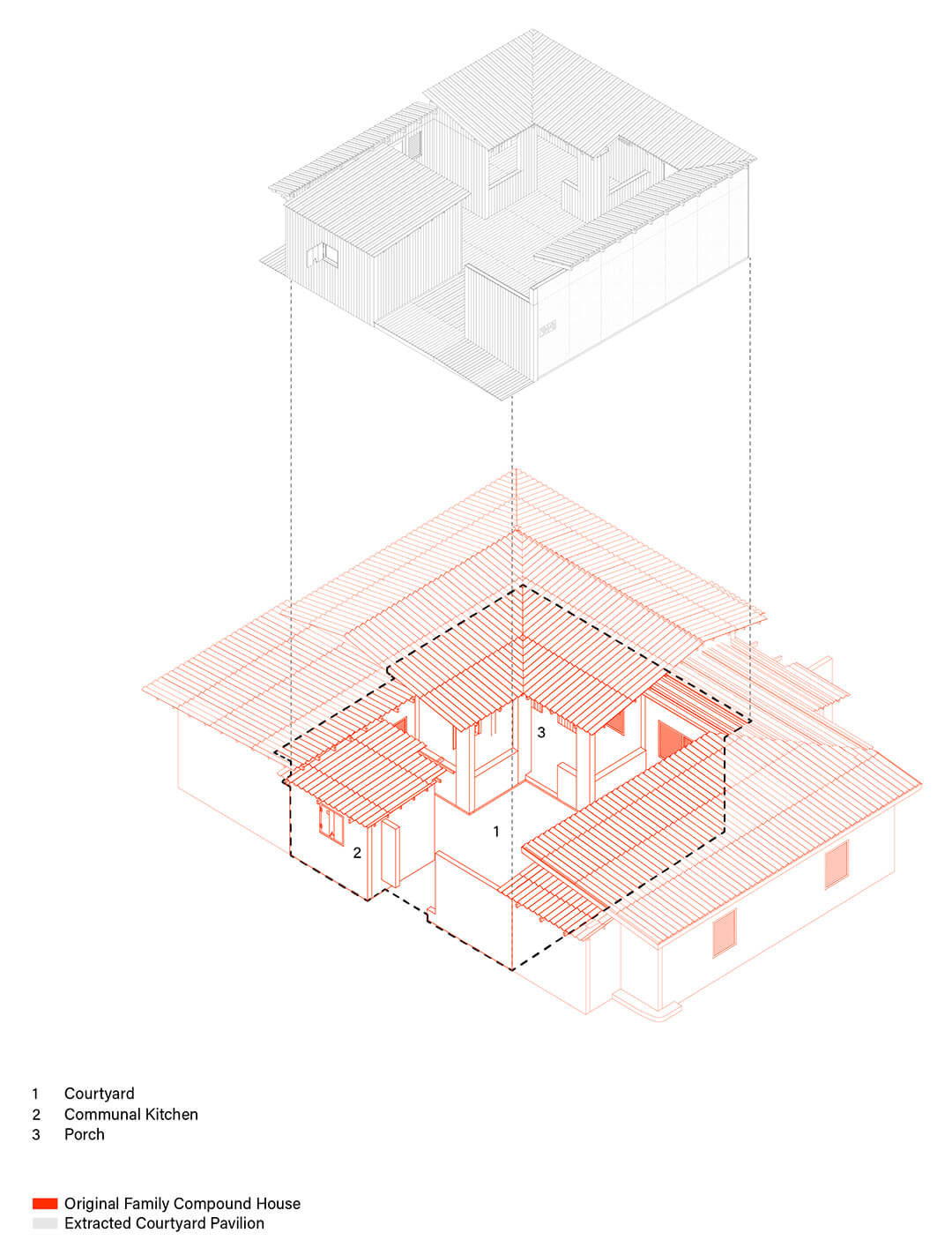
In the pavilion at Gagosian, the point of departure was the artist’s childhood courtyard, but the intention was not to recreate that space literally. The goal was to craft an environment that allowed visitors to revisit their own memories of place, safety and belonging. The deliberate use of a single material removes stylistic specificity, creating openness for the mind to fill in the gaps. By distilling architecture to its essentials, each visitor can project their own story onto the space.
Ultimately, it is about exploring how space can hold shared human conditions such as shelter, connection and continuity. My personal narrative is the lens through which the project begins, but the power of the work comes from how that initial story evolves into a shared experience. That expansion is where the continuity lives.
The abstraction of memory is never meant to capture a singular past. The work begins with my own experience, but the abstraction is created for and by everyone who enters the space.
Zohra: Another recurring thread that I find in your works is porosity—not as a purely physical condition, but as a social one. When you design porous spaces, what kinds of exchanges or encounters are you hoping the architecture will invite?
Glenn: The studio has been privileged to work on a number of civic projects, and those opportunities have allowed us to explore what it means to create architecture that feels genuinely inviting. My instinct to design porous spaces comes from what I experienced in my grandparents’ village in Guyana and in the rural parts of Ghana. In both places, the separation between private and public life felt softer. There was a sense of trust, ease and integration that came from people moving freely across thresholds. That openness created a social fabric that felt natural and communal, and it made a lasting impression on me.
The question that drives our work now is how to translate that quality into urban contexts where hard boundaries are the norm. This is something we navigate in almost every civic project. We often encourage our clients to soften those boundaries and create stronger connections between the program, the architecture and the surrounding community. When the edges dissolve, the architecture becomes part of the community rather than a separate entity.
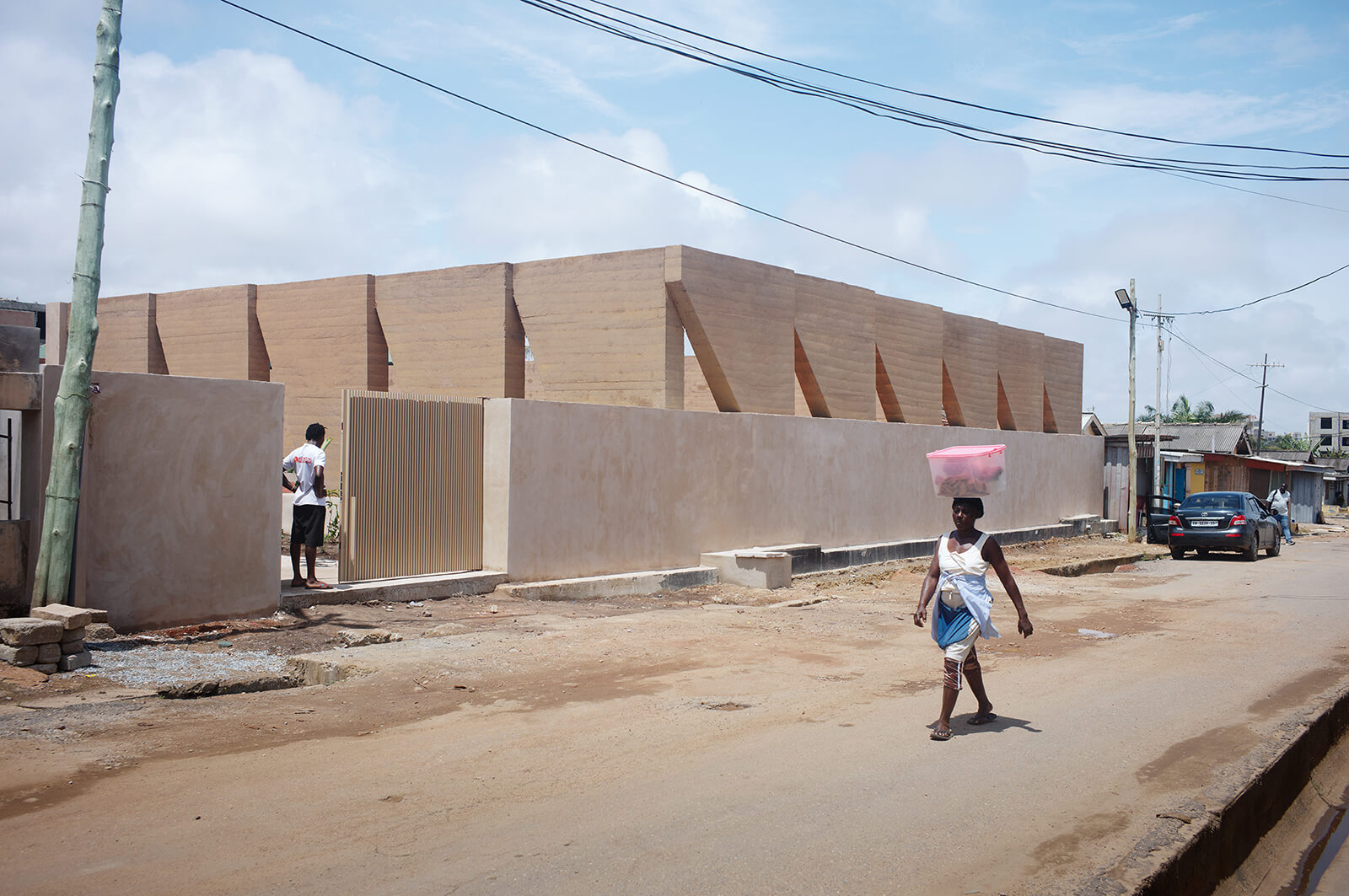
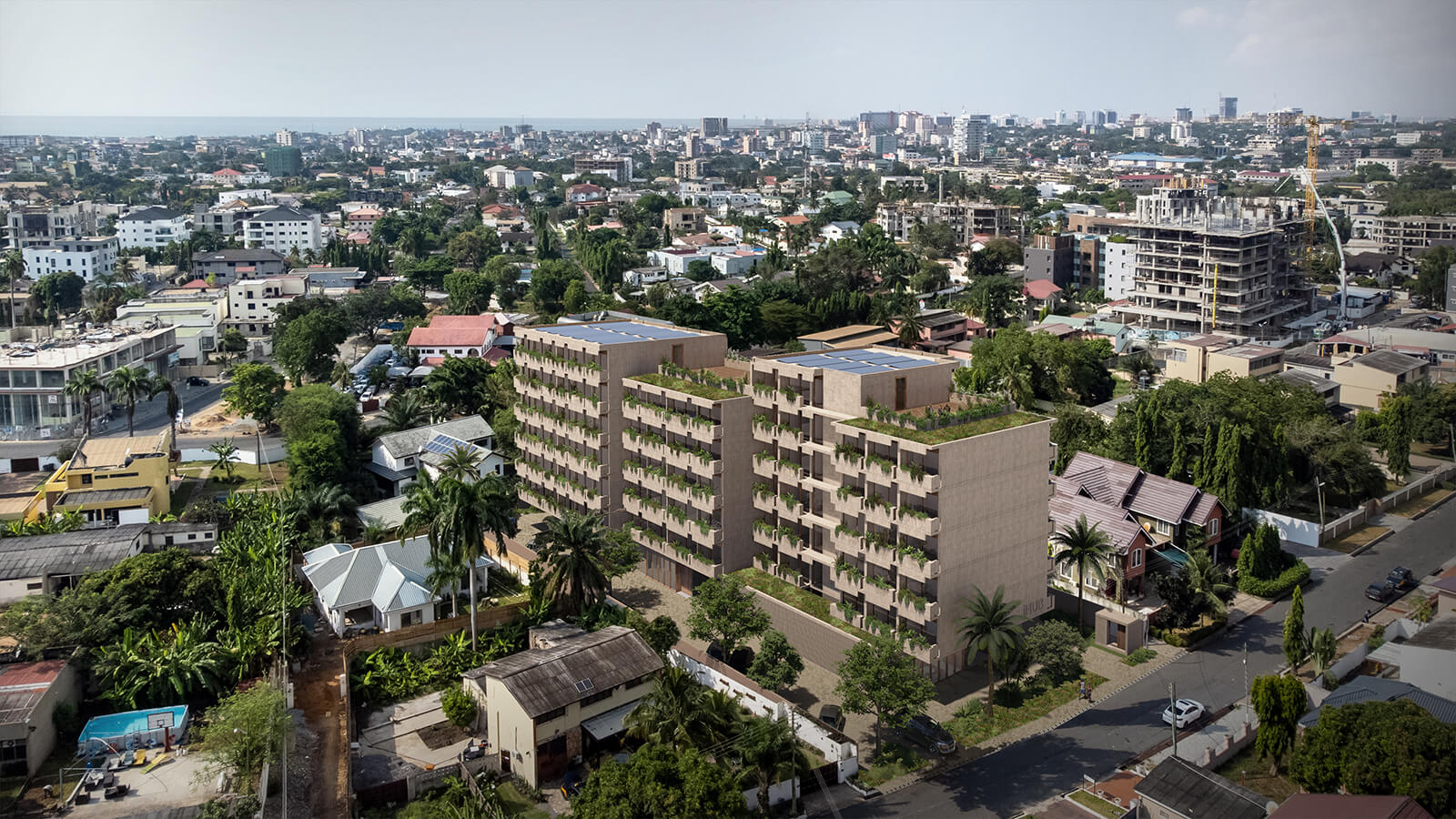
We have two upcoming projects that negotiate this threshold between private and public space. One is a community garden organised around educational landscapes, sited next to the recently completed Backyard Community Club. The other is a mixed-use hospitality development in the Labone neighbourhood of Accra. Both are still in the early design phase, but we are already testing varying degrees of civic porosity and studying how the public might move into, through and around these environments.
For me, the ambition stays the same: to shape environments that allow encounters to emerge naturally and to build a sense of belonging that stems from openness—creating spaces where relationships, both human and spatial, can evolve without constraint.
Zohra: It seems that you prefer working with a singular material while exploring variations in texture, pattern and detail. What draws you to this approach?
Glenn: Working with a singular materiality allows me to abstract space and to focus on the fundamental qualities of architecture, such as scale, form and light. When the palette is reduced, visitors become more aware of these qualities. Texture within that same material can then be overlaid and becomes a tool for marking transitions, distinguishing existing from new in adaptive reuse work, and engaging light in different ways, allowing it to flatten smooth surfaces while deepening shadows across textured ones. Moving between these conditions becomes a kind of spatial choreography that guides perception and shapes a more resonant emotional experience.
This approach guided the design of the Ogbojo Residency for Writers and Curators. There is a story from that project that stayed with me. I was pitching a new mixed-use development, and the client asked to visit a completed building. I took him to Ogbojo and gave him a full tour, excitedly pointing out the subtleties of the material, the light and the transitions. He remained completely silent. By the time we had reached the roof terrace, I was convinced he had not connected with the aesthetic at all.
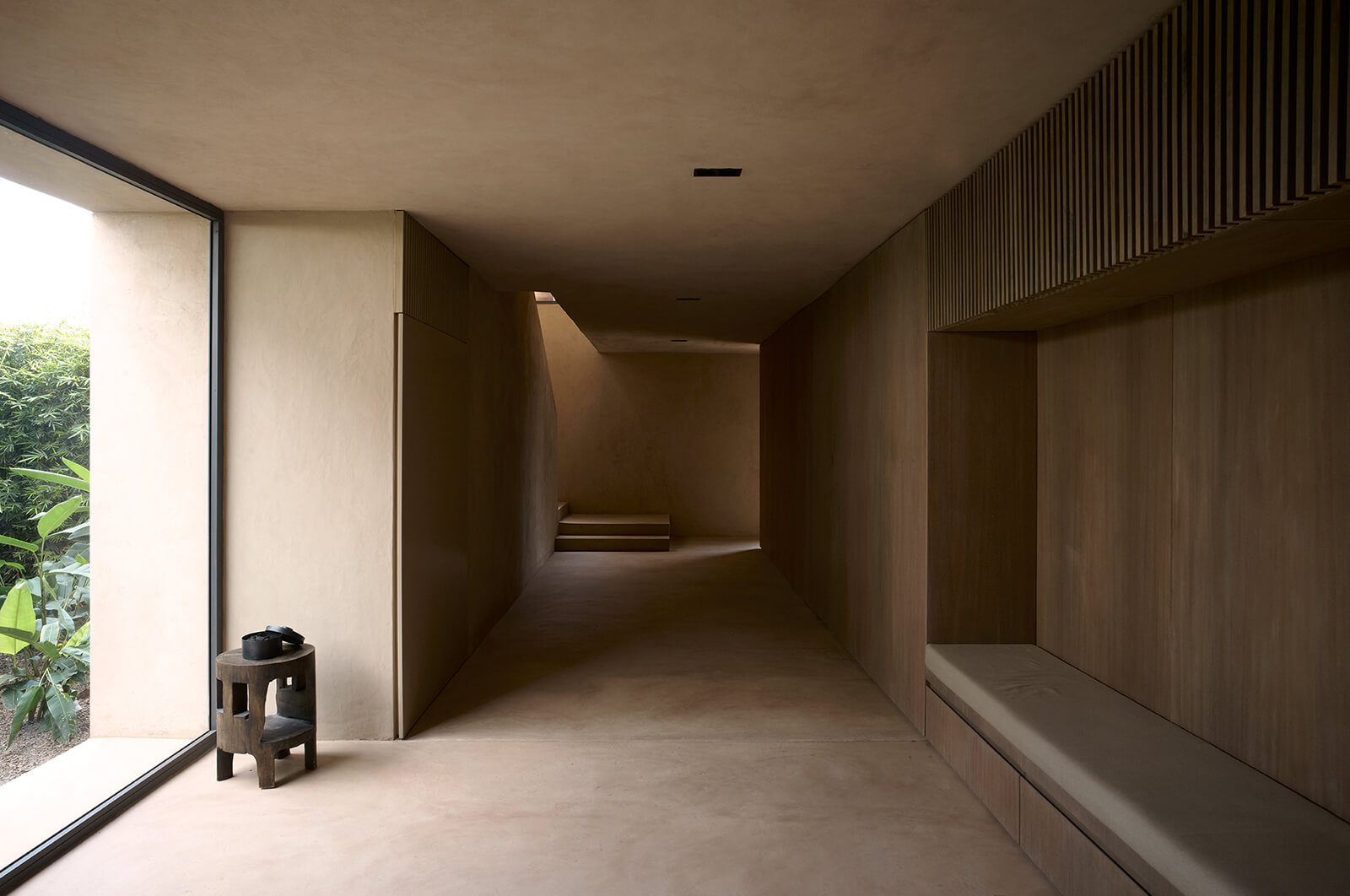
When I finally asked what he thought, he paused and said that he had always appreciated architecture for its beauty, but this was the first time a building had registered with him on an emotional level. I was genuinely taken aback. I never assume that the emotional journey embedded in the work will be immediately felt, and his reaction clarified something I had often sensed. When the material palette is distilled down to a single element, the architecture becomes quieter and more legible. That clarity creates space for people to locate their own emotional entry point into the work.
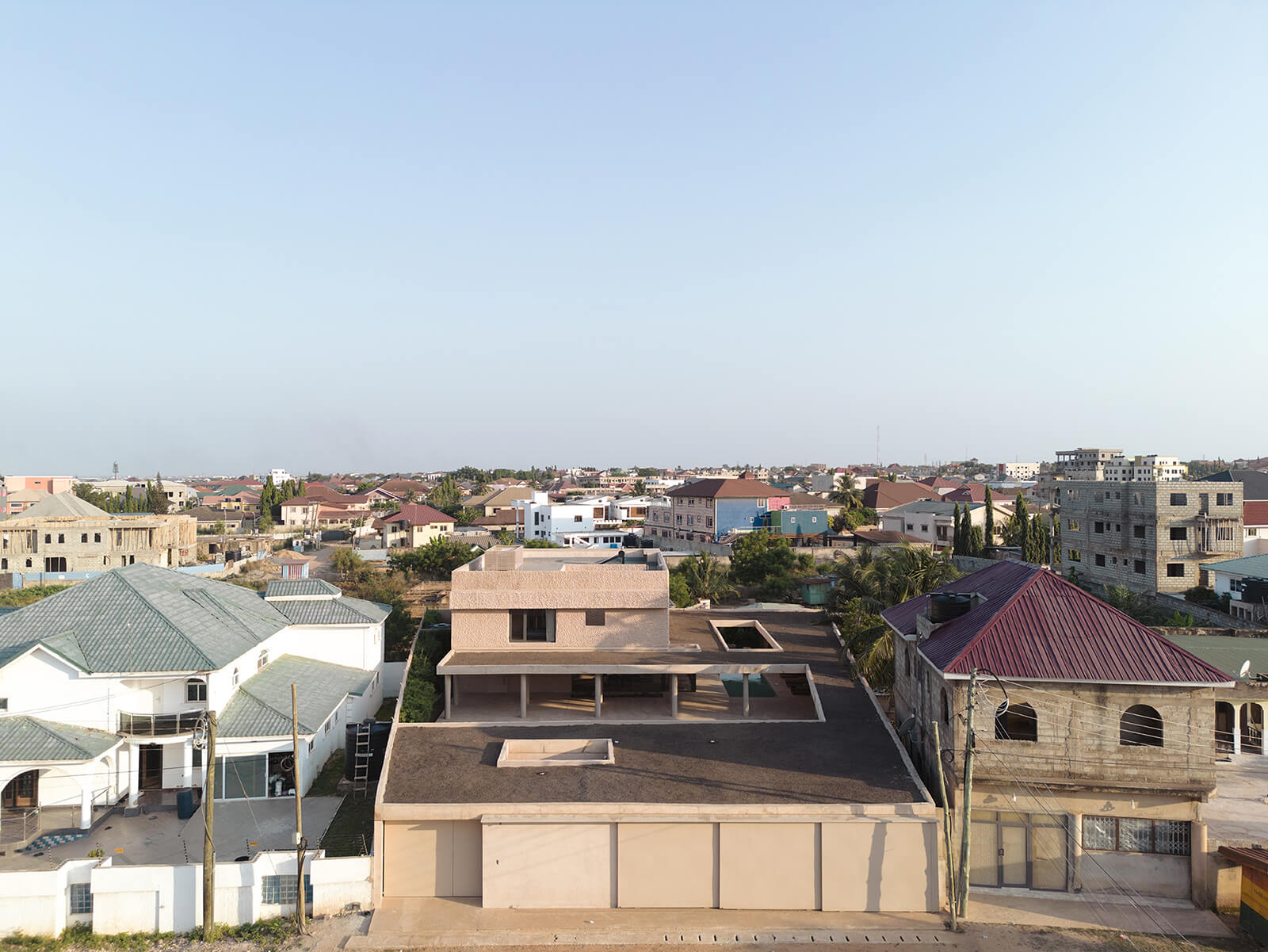
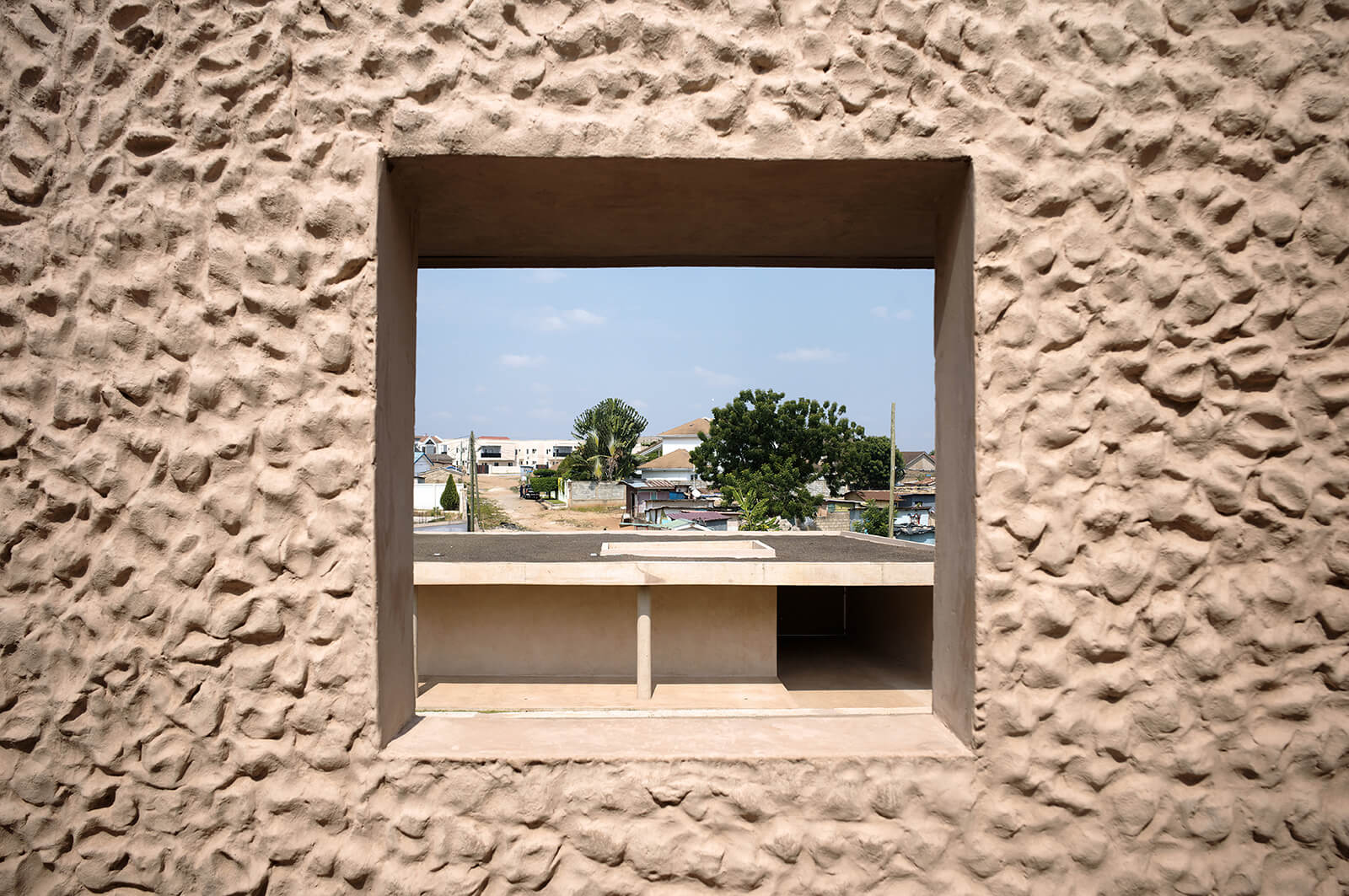
When the material palette is distilled down to a single element, the architecture becomes quieter and more legible. That clarity creates space for people to locate their own emotional entry point into the work.
Zohra: When navigating constraints in the Global South—economic, logistical, climatic—do you see them as limitations, or have they become a source of freedom in your practice?
Glenn: Growing up, we found creative ways to play and innovate with very little, whether it was making a basketball hoop from milk cartons or inventing games using bottle caps. Those moments taught me that scarcity can spark ingenuity. When navigating the economic, logistical or climatic constraints common in the Global South, I don’t see them as limitations. I see them as opportunities to rethink what is possible, to work imaginatively with existing resources, and to create solutions that are both meaningful and impactful.
Zohra: If you could design or build anything with zero limits, what would your moonshot project be?
Glenn: Funnily, it wouldn’t be anything too wild. Having lived away from my nuclear family for over a decade, I’ve been dreaming about what a generational house could be for us, recreating that sense of community I had growing up for the next generation of my family. For me and the practice, it has also become a research pursuit into how a home can transform over time while still holding memory, heritage and culture, offering a model for living that evolves yet remains deeply rooted across generations.
Zohra: What is NEXT for you?
Glenn: This year has been about laying the groundwork for the studio’s future and building a stronger team to explore new ideas. We have some exciting projects coming up across multiple continents, with construction starting on a few early next year. Beyond just buildings, we are thinking about the impact these projects could have on communities and environments. It’s exciting to see ideas take shape, literally and figuratively, and we look forward to sharing what’s next.

by Pranjal Maheshwari Oct 24, 2026
A consortium of Copenhagen’s 3XN, Toronto’s B+H Architects and Shenzhen’s Zhubo Design has designed the museum to mimic the surrounding riverscape, topped with a public park.
by Pranjal Maheshwari Oct 19, 2026
The Mumbai-based architects integrate courtyards, mesh screens and north light trusses to create a dining space that doubles up as a community hub at SR University, Warangal.
by Mrinmayee Bhoot Oct 17, 2026
The Rotterdam-based institute centres the Indian Ocean as a network for exploring material histories and transnational links shaping coastal cultures, positing them as future models.
by Pranjal Maheshwari Oct 16, 2026
At the 2026 Stirling Prize ceremony, Mary Duggan with RUFF Architects, MAKER Architecten and Nakshabid Architects were felicitated for proffering quality housing and social equity.

make your fridays matter with a well-read weekend
Enter your details to sign in
Don’t have an account?
Sign upOr you can sign in with
a single account for all
STIR platforms
All your bookmarks will be available across all your devices.
Stay STIRred
Already have an account?
Sign inOr you can sign up with
Verification link sent to check your inbox or spam folder to complete sign up process
Tap on things that interests you.
Select the Conversation Category you would like to watch
Please enter your details and click submit.
Enter the 6-digit code sent at


Glenn DeRoche on architecture that lets you move freely across thresholds
by Zohra Khan | Published on : Dec 18, 2025


 Sign in with Google
 Sign in with email
What do you think?