Art07 mins. read
Serendipity Arts Festival 2024 highlights the transformative power of the arts
by STIRworldNov 27, 2024




by Srishti OjhaPublished on : Jan 02, 2026
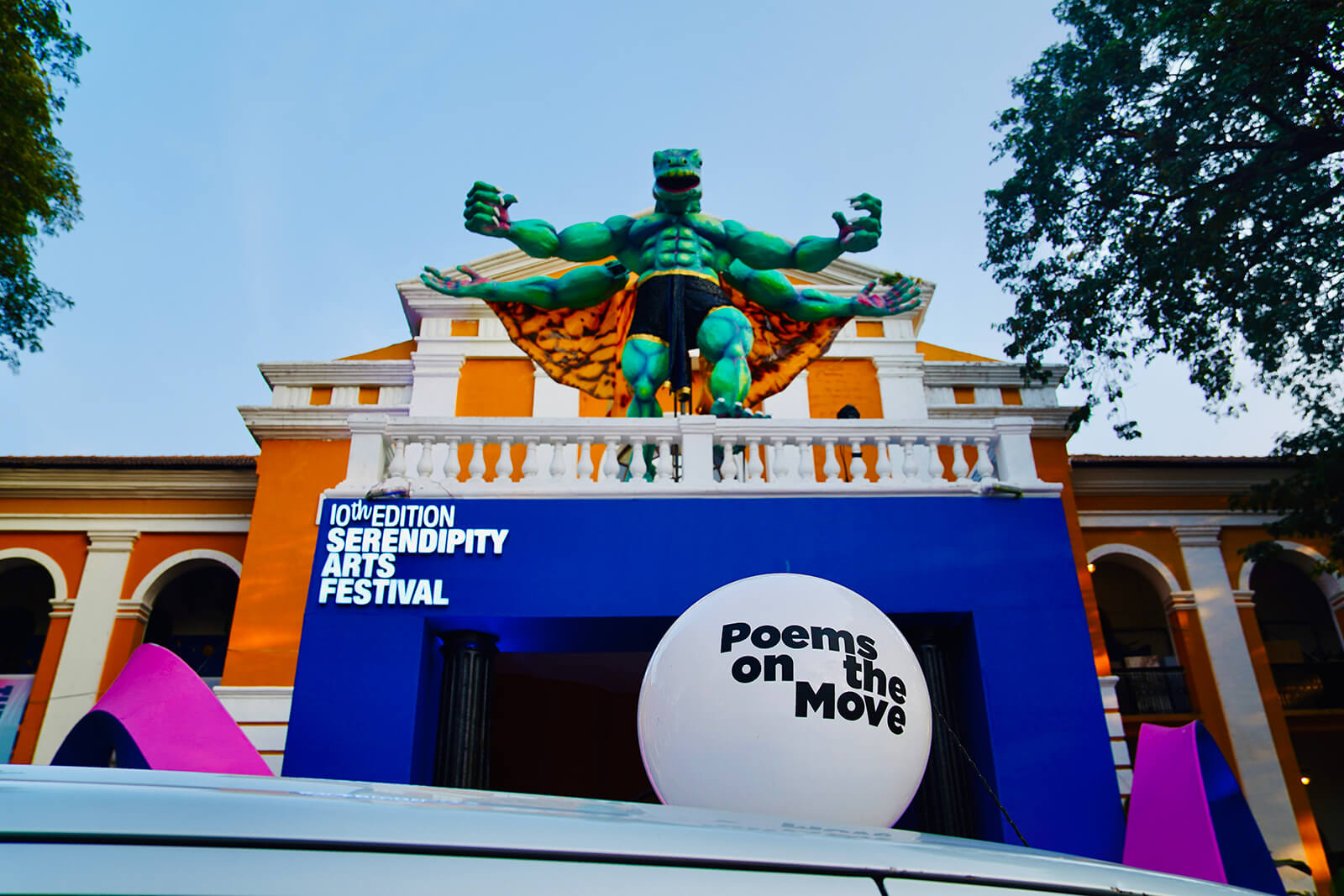
Walking into my first venue at the 10th edition of the Serendipity Arts Festival (SAF) in Goa, the first thing I noticed was an approximately eight-foot-tall, bright green, reptilian-adjacent winged beast towering over a crowd of spectators at the Old GMC Complex in the heart of Panjim. The sculpture, created by Diptej Vernekar as part of his Beasts of Reincarnations: Mythical beings in the city series, reflects the curatorial direction and tone of the festival: it is rooted in Goa’s Narkasur effigy-making tradition, yet is universal and whimsical enough to be appreciated even without this context. The festival, which has become a must-visit on the Indian art circuit, straddles a careful line between celebrating local arts heritage and creating spaces for diverse, experimental contemporary art. This balance sets the festival apart from many of the country’s more market-forward art fairs and white-cube galleries. Spread across 13 venues and featuring over 35 curators in an expansive roster of experiences that showcased diverse viewpoints, mediums and artistic practices spanning photography, performance art, new media art, live music, dance, theatre, vernacular art practices, craft, culinary art, sculpture and immersive art.
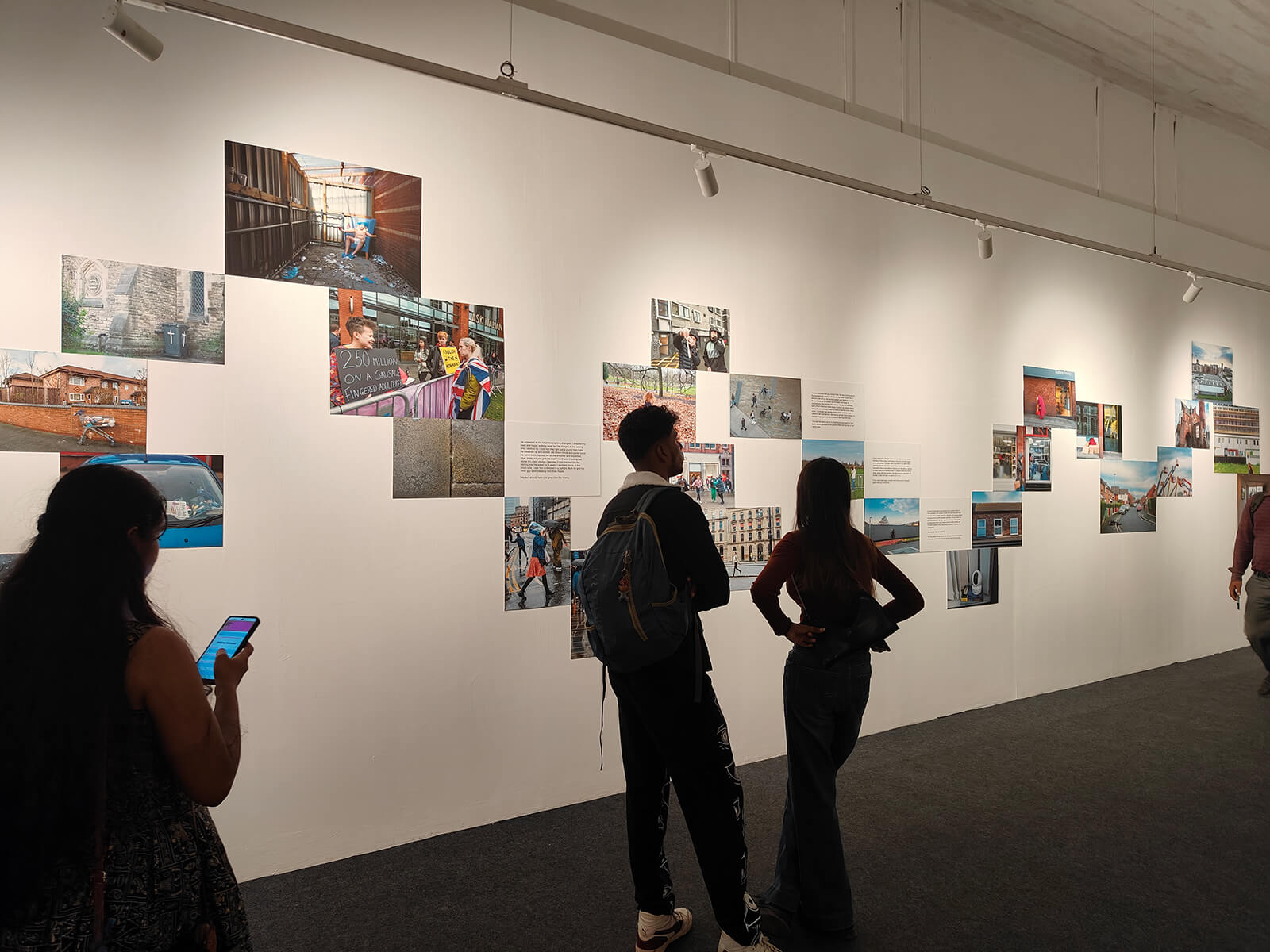
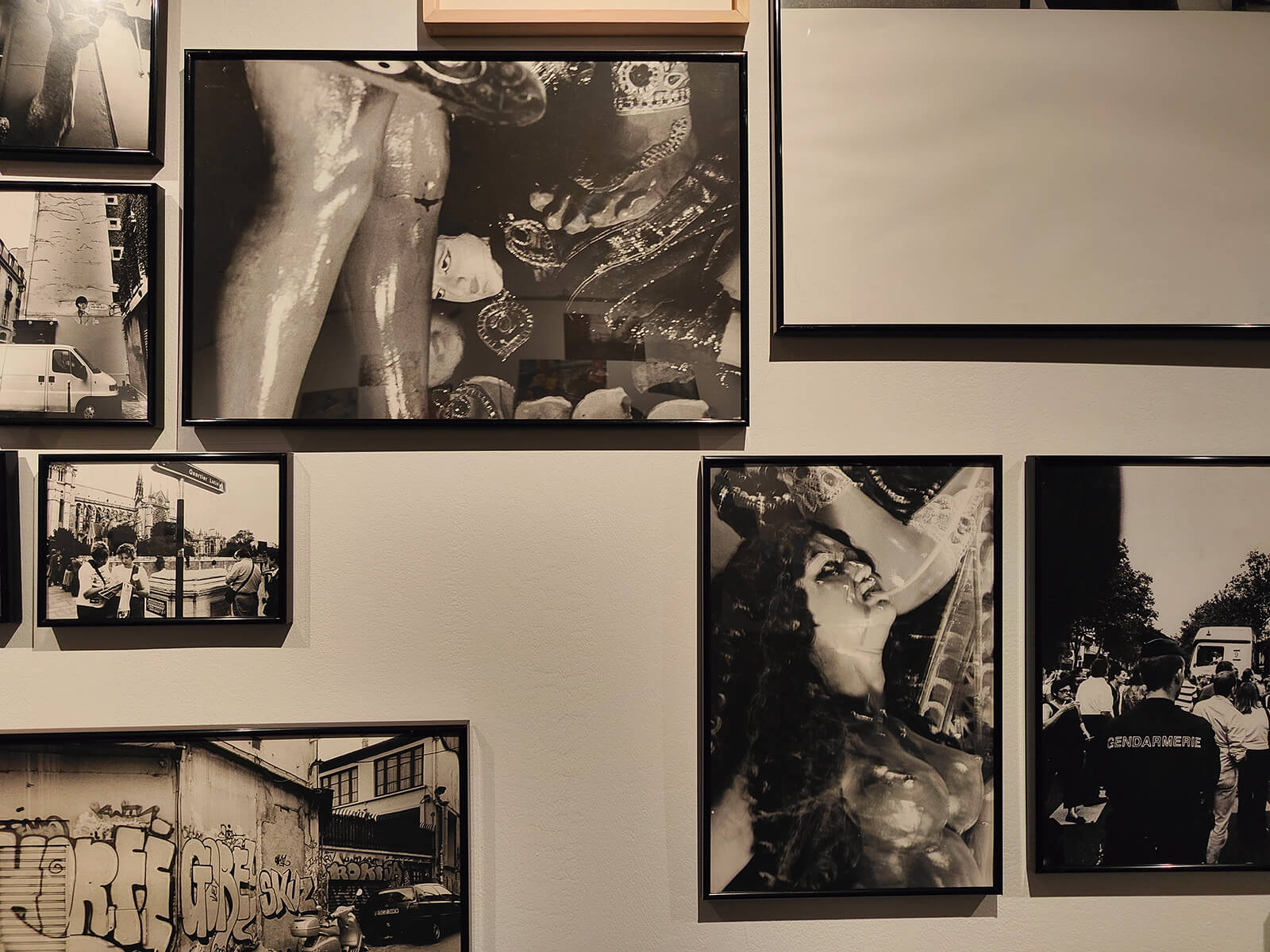
I began at OTHERLAND, a photography exhibition curated by Ranjit Hoskote, spotlighting the work of four Indian photographers, Naveen Kishore, Ram Rahman, Samar Jodha and Ritesh Uttamchandani, whose work responded to the constant tug of war between oppression and resistance and alienation and community that characterises this tenuous historical moment. In a similar vein, Displacements at The Old PWD Complex, curated by Rahaab Allana, interrogated contemporary images and their role in the documentation, perpetration and dismantling of oppressive regimes across India, Africa and the Middle East, including Palestine.
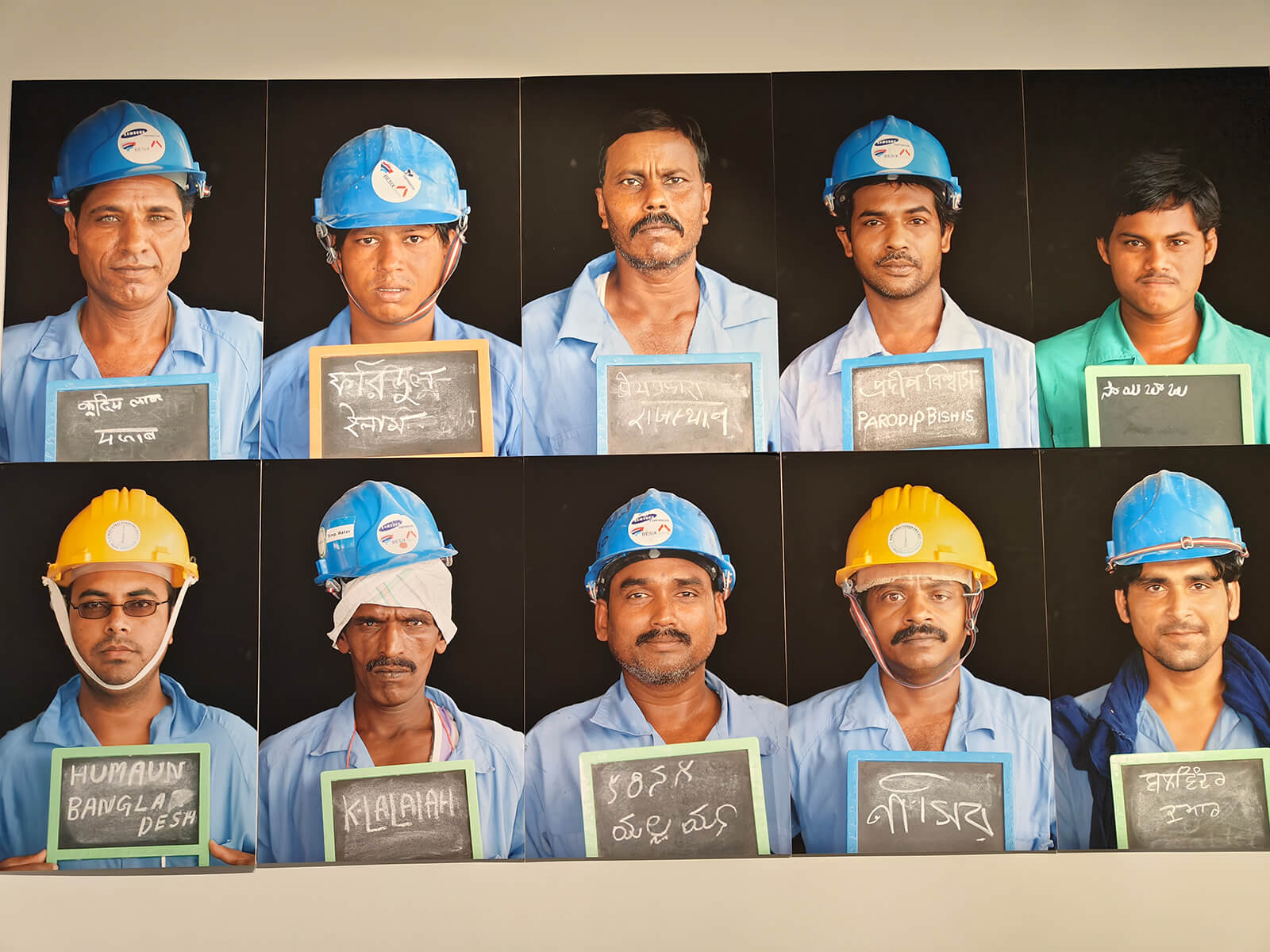
Meanwhile, parallel events focused their attention beyond the visual, with exhibitions and workshops relying on scent, touch, sound and taste. Given the state and country’s rich and distinctive food culture, taste was an important dimension of programming. Food became symbolic of communal experience, political action, regional narratives and the overlap between humans and the natural world. Through a walking tour and theatrical dining experience, Goa Is A Bebinca, curated by Chef Manu Chandra and facilitated by paChaak in Goa’s historical Latin Quarter, unpacked the multifaceted stories of the region and its people. Salt, a visual and experiential exhibition curated by restaurateur Prahlad Sukhtankar, presented a deep dive into India’s salts and the often disenfranchised communities that power the industry.
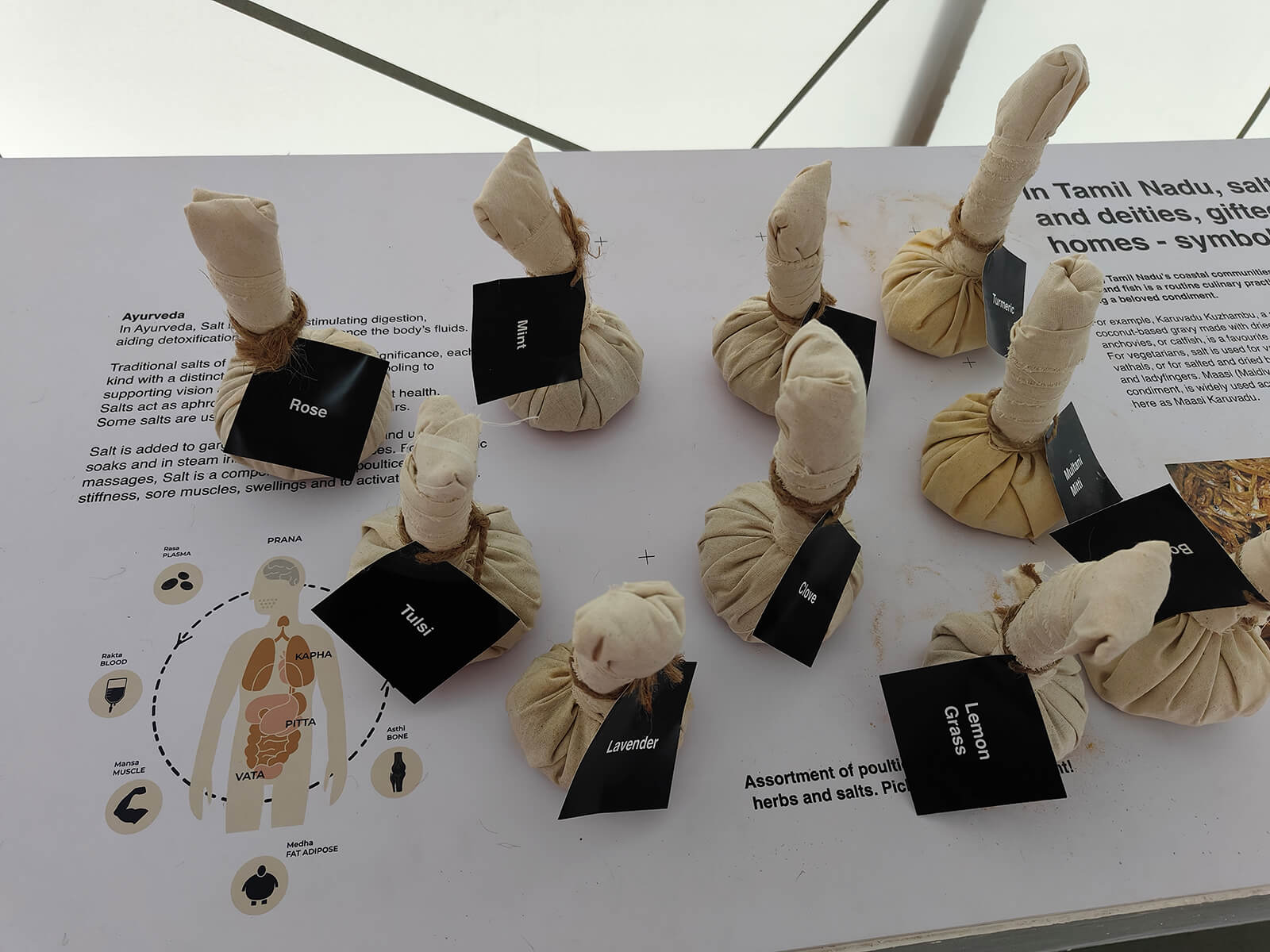
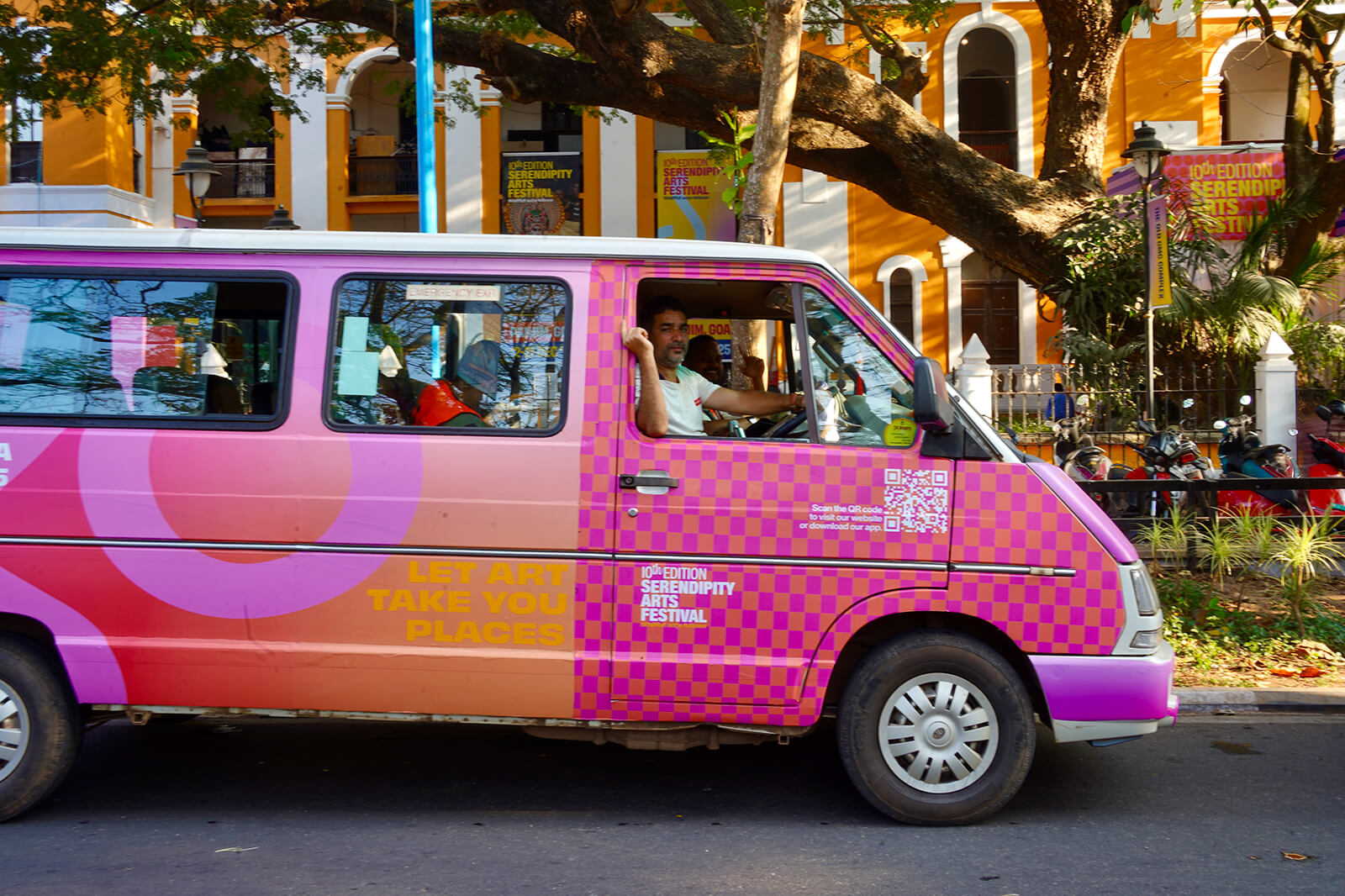
Visitors flitted between never-ending food stalls catered by local restaurants and bars with seemingly infinite speciality cocktails. Among these, in a sunny courtyard of the Old GMC building, was the Access Village, where sensory programming took on a political dimension. Here, exhibitions like Hand/Eye, curated by Indian artist Salil Chaturvedi, expanded on narrow, ableist ways of experiencing the world, encouraging visitors to perceive with touch and become attuned with the haptic. Programmes like Cinema for Every Sense screened classic and contemporary films from Indian cinema with professionally crafted audio descriptions, opening up previously inaccessible media to differently abled visitors. In Therefore I Am, an exhibition representing experiences of disability and powerful works like River Budur’s video art, Instructions on How To Walk Normally, defamiliarised ‘normal’ abilities and the social stigma that disability carries. Accessibility is central to the festival’s ethos, with venues designed with differently-abled, neurodiverse and senior visitors in mind. This consideration about accessibility also extended to cost, with most exhibitions and events being free to attend, and free shuttle services provided between venues. These efforts towards inclusion and easing disruptions for the local community have been integral in the festival being embraced by its host city.
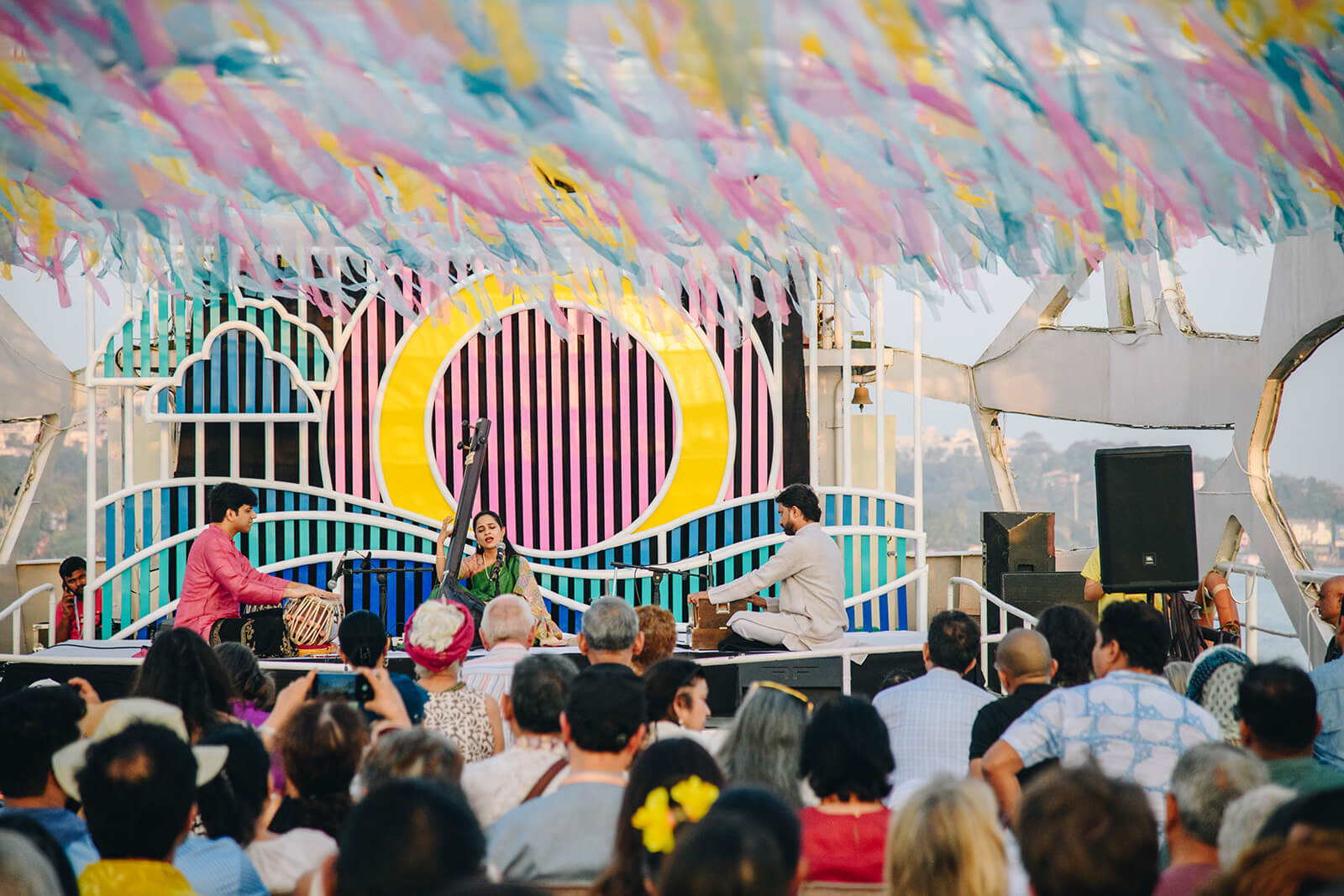
As temperatures dropped, the riverside Art Park’s music stage welcomed those ready to dance, drink and eat while indie musicians and DJs filled the air with pop, jazz, rock and techno. The festival takes advantage of Panjim’s natural vistas with plenty of outdoor programming and events like the annual River Raag, which takes visitors on a sunset cruise on the Mandovi River while Indian classical musicians, riffing on the storied form, serenade them. Terra-grove, a public art installation, made its mark on Miramar beach, using large, curving ribbons of terracotta Guna tiles to create a space for people to take respite from the hot Goan sun, unrelenting even on a December day. The installation was curated by duo Thukral and Tagra as part of their Multiplay project, continuing from 2024.
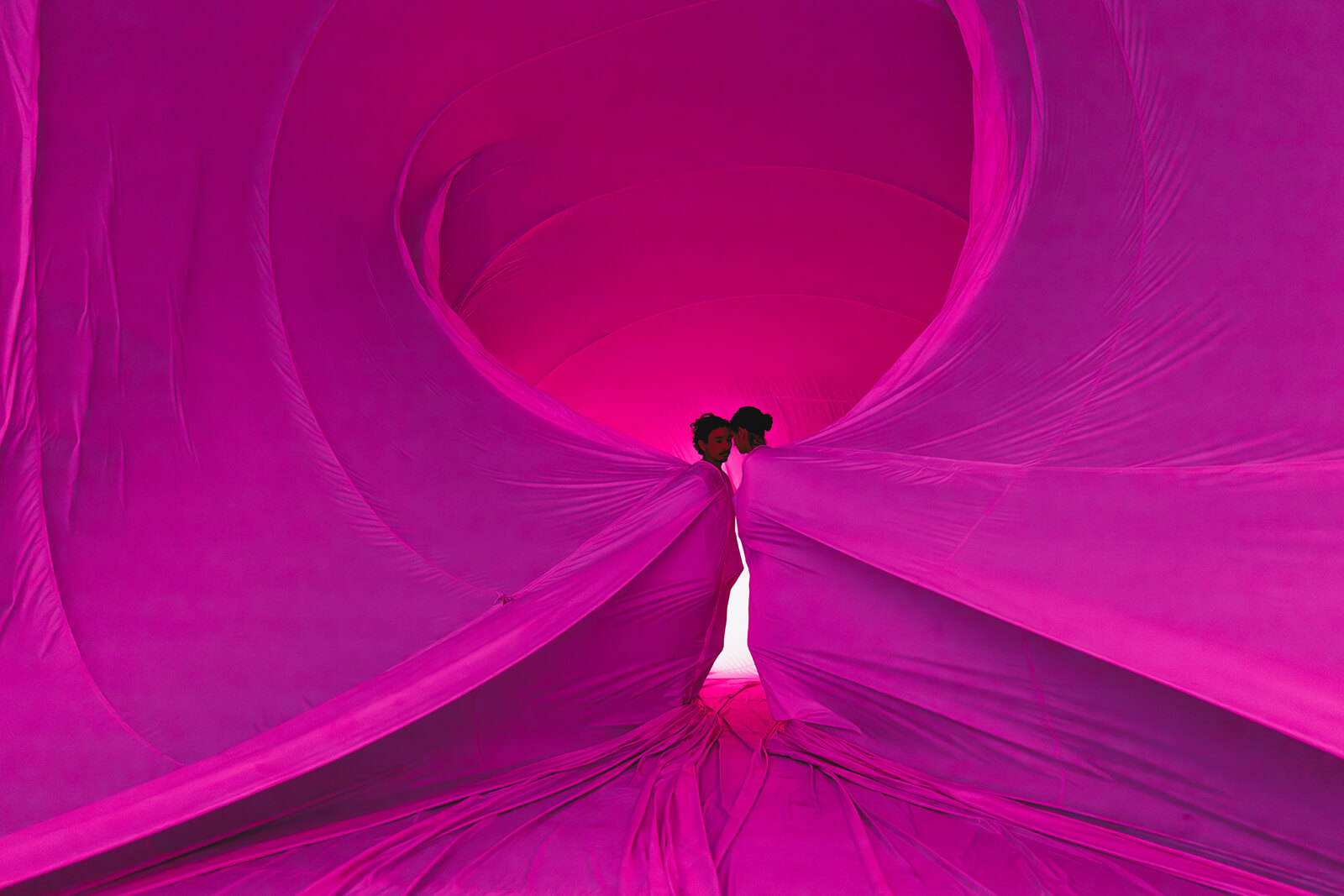
Multiplay 02: Soft Systems extended to the Portuguese-era Directorate of Accounts and was an attempt to create unconventional spaces for play, rest, care and intimacy. Doctor Bwanga, for instance, provided a rare moment of solitude, allowing viewers to enter a thatch-and-wood telephone booth and seek counsel from an AI model trained to serve as the ‘essence’ of Zambian artist Bwanga Kapumpa. Breathe, by Teja Gavankar, offered a meditative respite through a rocking chair connected to a thatched structure that came alive, syncing to the movements of seated visitors and becoming a collaborative lung. Multiplay’s high point was undoubtedly the contemporary dance piece You, Beauty by the Australian dance company Chunky Move, supported by Asia TOPA, Arts Centre Melbourne and Creative Australia. The surreal, dreamlike performance featured two contemporary dancers and a massive, amoebic inflatable that served as both prop and venue. The heaving, breathing and morphing of the structure and dancers modelled the dialogue of intimacy, dependence and manipulation that occurs over the course of a relationship.
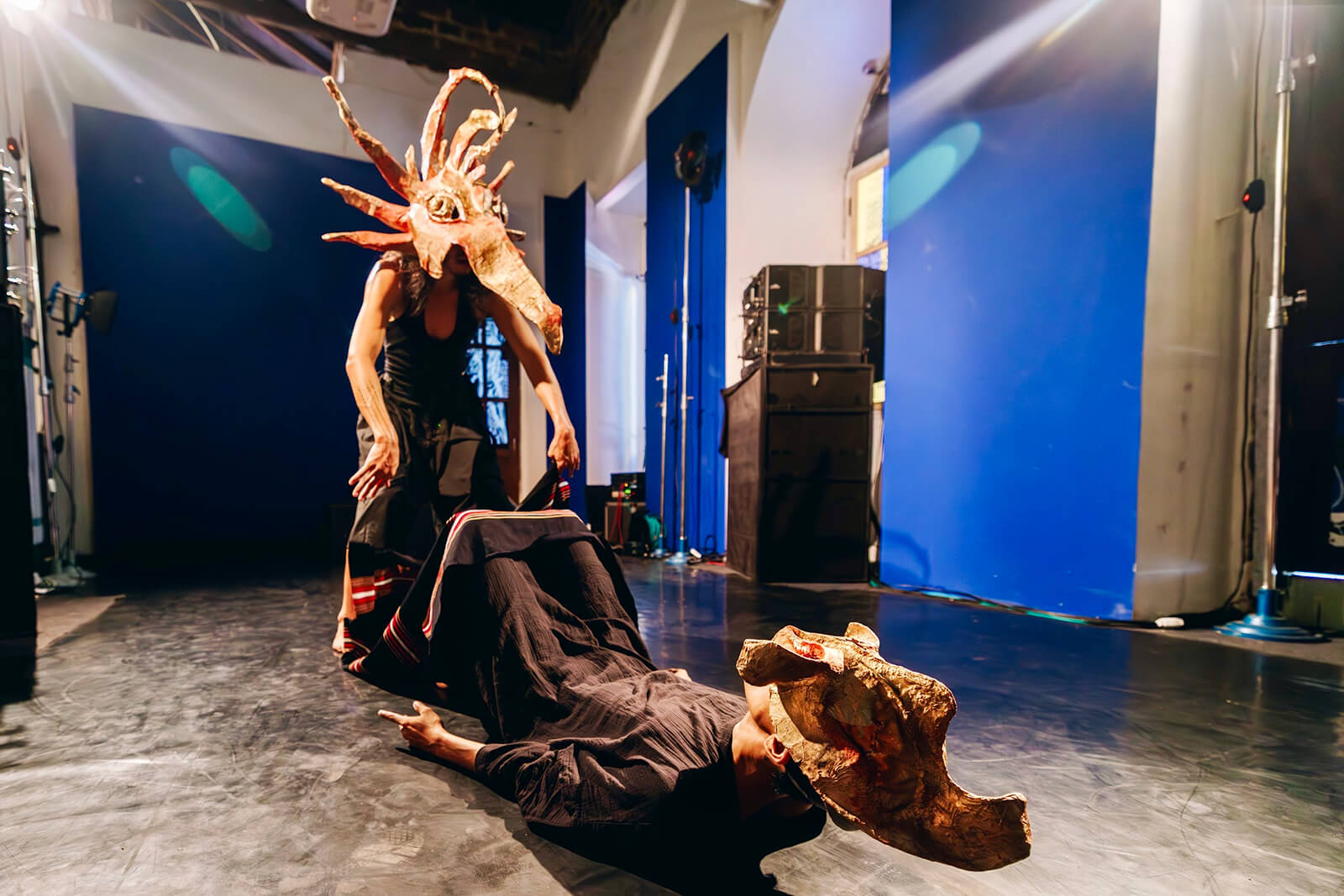
Performance was a cornerstone of the festival, with unconventional, visceral and confrontational programming making a strong argument for the benefits of experiencing art in person. Dread, confusion, happiness, submission, laughter and discomfort—unique performances skilfully drew out these emotions in their most concentrated forms for attendees who often sat only inches away from the performers. One such composition was Duty Free: Paradox of Platypus, performed by Joshua Sailo and Abhaydev Praful and curated by Ranjana Dave. The interactions between two performer-entities and their instruments (a hollow cello and a contorting body) heightened, before one dancer assumed the form of a creature, donning a long, gilded, insectlike mask. The animalic movements were mesmerising, and when accompanied by the audience’s guided vocalisations, they became an invitation to rethink movement, sound and their overly polite boundaries.
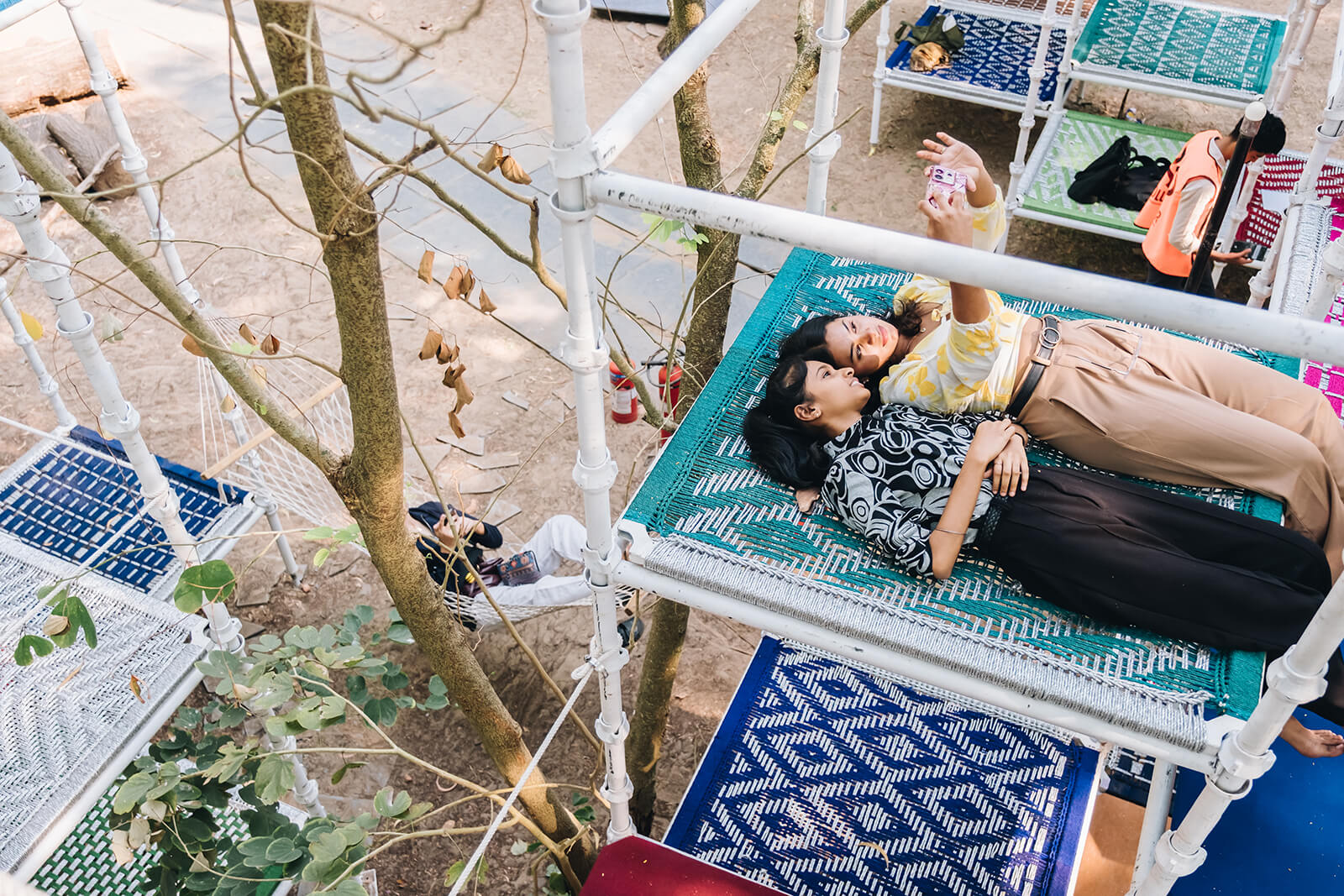
The Art Park also hosted a series of interactive installations, such as Monsoon Breeze, a functional bamboo and terracotta work that modelled sustainable traditional cooling techniques. Polish sculptor Tomasz Koclęga’s work, Suspensio Spiritualis, supported by the Polish Institute in India, featured a series of large, amorphous humanoid shapes, curling in on themselves in an expression of human fragility. During the day, children took rein, joining workshops that encouraged them to tell stories, craft, birdwatch, read and even slackline. A favourite, clearly, was the modular installation, The Changing Charpai, which saw visitors of all ages clambering, relaxing and navigating through a jungle-gym-esque structure constructed of charpais, resurrecting the communal spirit they once represented.
This communal spirit permeated the festival, spilling out into the streets of Panjim. I noticed locals going about their day, passing venues like the Art Park via nearby promenades. They paused more often than not, with some abandoning their plans entirely to venture in. Serendipity's ever-increasing roster of locations, mediums, curators and artists means there’s something for everyone, with more always on the way.
STIR is an art partner with Serendipity Arts Festival 2025.
by Srishti Ojha Oct 09, 2026
In his ongoing exhibition, the South African artist creates two post-apocalyptic futures to explore society’s relationship with textiles, patterns and technology.
by Srishti Ojha Oct 07, 2026
The Kolkata-based film festival shone a spotlight on local and international filmmakers and artists who are pushing the boundaries of what a film can encapsulate.
by Samar Jodha Oct 05, 2026
Looking at Ahmed Ali’s photographs of workers and industry within the wider history of industrial photography, from Soviet state imagery and Sunil Janah to Lewis Hine.
by Srishti Ojha Oct 02, 2026
The Indian artist’s exhibition at the Bruce Museum in the US thinks through fundamental questions of humanity by focusing on the Sun and the cosmological timescale.

make your fridays matter with a well-read weekend
Enter your details to sign in
Don’t have an account?
Sign upOr you can sign in with
a single account for all
STIR platforms
All your bookmarks will be available across all your devices.
Stay STIRred
Already have an account?
Sign inOr you can sign up with
Verification link sent to check your inbox or spam folder to complete sign up process
Tap on things that interests you.
Select the Conversation Category you would like to watch
Please enter your details and click submit.
Enter the 6-digit code sent at


Many voices, many routes: Serendipity Arts Festival 2025
by Srishti Ojha | Published on : Jan 02, 2026


 Sign in with Google
 Sign in with email
What do you think?