Art09 mins. read
Artist Pierre Fouché is constructing and dismantling binaries with bobbin lace
by Srishti OjhaOct 09, 2026



by Srishti OjhaPublished on : Apr 22, 2026
Walking into the Dr. Bhau Daji Lad Museum in Mumbai, in contrast to the city’s many other galleries, seems like stepping into a bygone era, evoked by the High Victorian architecture befitting the city’s first ever museum. The grounds are part of the city’s only botanical garden, while the restored 19th-century interiors with vaulted ceilings, spiral staircases and a gold, celadon and terracotta colour scheme hold an air of history and grandeur. The public museum’s latest exhibition of contemporary art, however, could not be more different from its surroundings. Landscape Plays by Heiner Goebbels, hosted by the Goethe-Institut / Max Mueller Bhavan, is a spare, dark, video-based exhibition that is undeniably contemporary—subjective, slow to reveal itself, and to certain audiences, incomprehensible. The German composer—lauded for his work in art music, theatre and orchestral composition and who has been making sound and video installations since the 1990s—brings six works to Mumbai as part of his first solo exhibition in India.
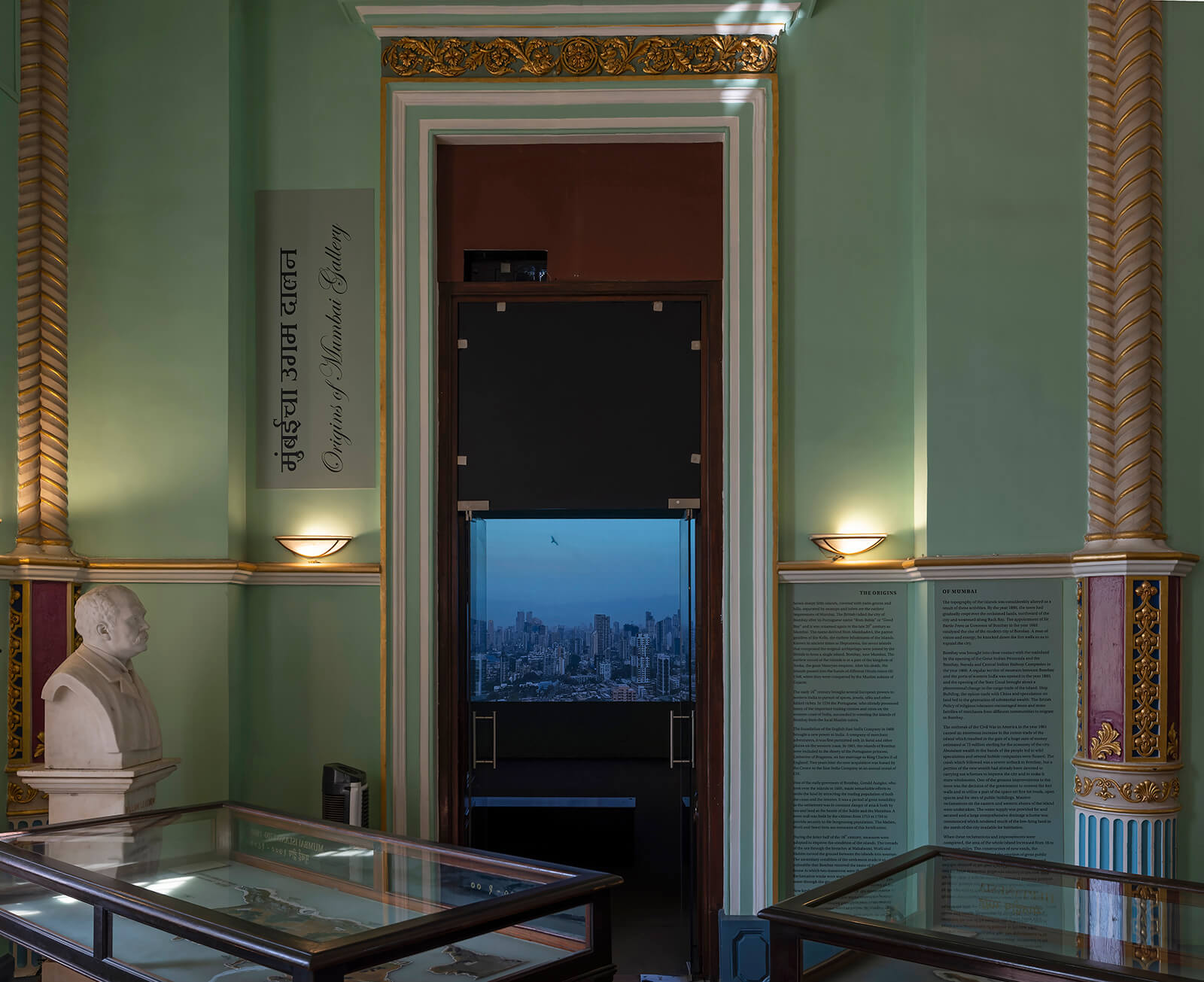
The show’s title borrows a phrase by Jewish American writer and playwright Gertrude Stein. A pioneer of modernist theatre, she spoke about her theatrical works as ‘landscape plays’—compositions where narrative (for once) takes a backseat while the elements on stage and their existence in relation to each other are foregrounded. Part of Stein’s interest in this non-narrative form of theatre was to create a meditative reverie that would allow both audience members and onstage performers to think, feel and experience the work freely, without being led by a plot. This philosophy runs through the exhibition’s long video works, each featuring tableaus that evolve and transform gradually, with performers creating movement, arrangement and sound rather than acting as emotive or dramatic figures. Tasneem Mehta, managing trustee & director of Dr. Bhau Daji Lad Museum, and curator for the exhibition, said, “Through this exhibition, Heiner orchestrates a compelling symphony, dissolving the boundaries between theatre and visual art.”
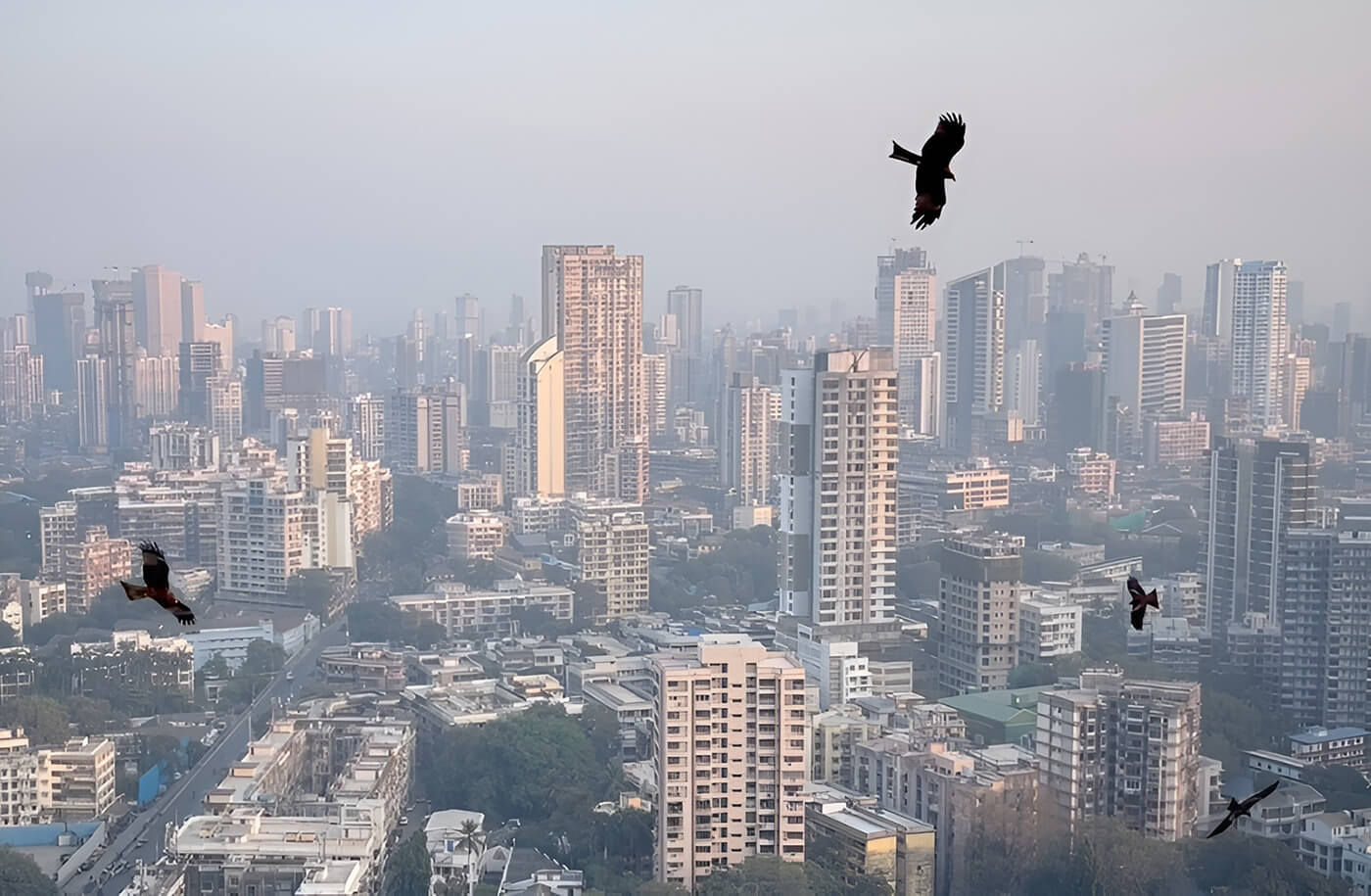
The first work created by Goebbels in Mumbai, Eagles (2026), features a view of the city’s dense skyline, façades of glass, steel and dull paint rising hundreds of metres into the sky. Numerous black birds glide through the crowded sky, perch on buildings and flock in and out of what otherwise could be a landscape ‘painting’, echoing Mehta’s words and existing in a space between durational and static mediums. The video is backed by a chorus of bells, sometimes enchanting and other times eerie, with a French voiceover fading in and out. This live landscape is surrounded by historical photographs of the city from the museum’s collection, contextualising the video as part of the continuum of urbanisation and offering a quotidian contrast to the grand landmarks featured in the photographs. This everydayness, while it may hold charm for a foreign visitor, pales in significance for many of the viewers frequenting the museum, who see similar views and birds from their windows, offices and highway commutes. The video asks for quiet, focused attention, but the lack of action and the untranslated voiceover challenge even patient viewers, few of whom make it through the entire work.
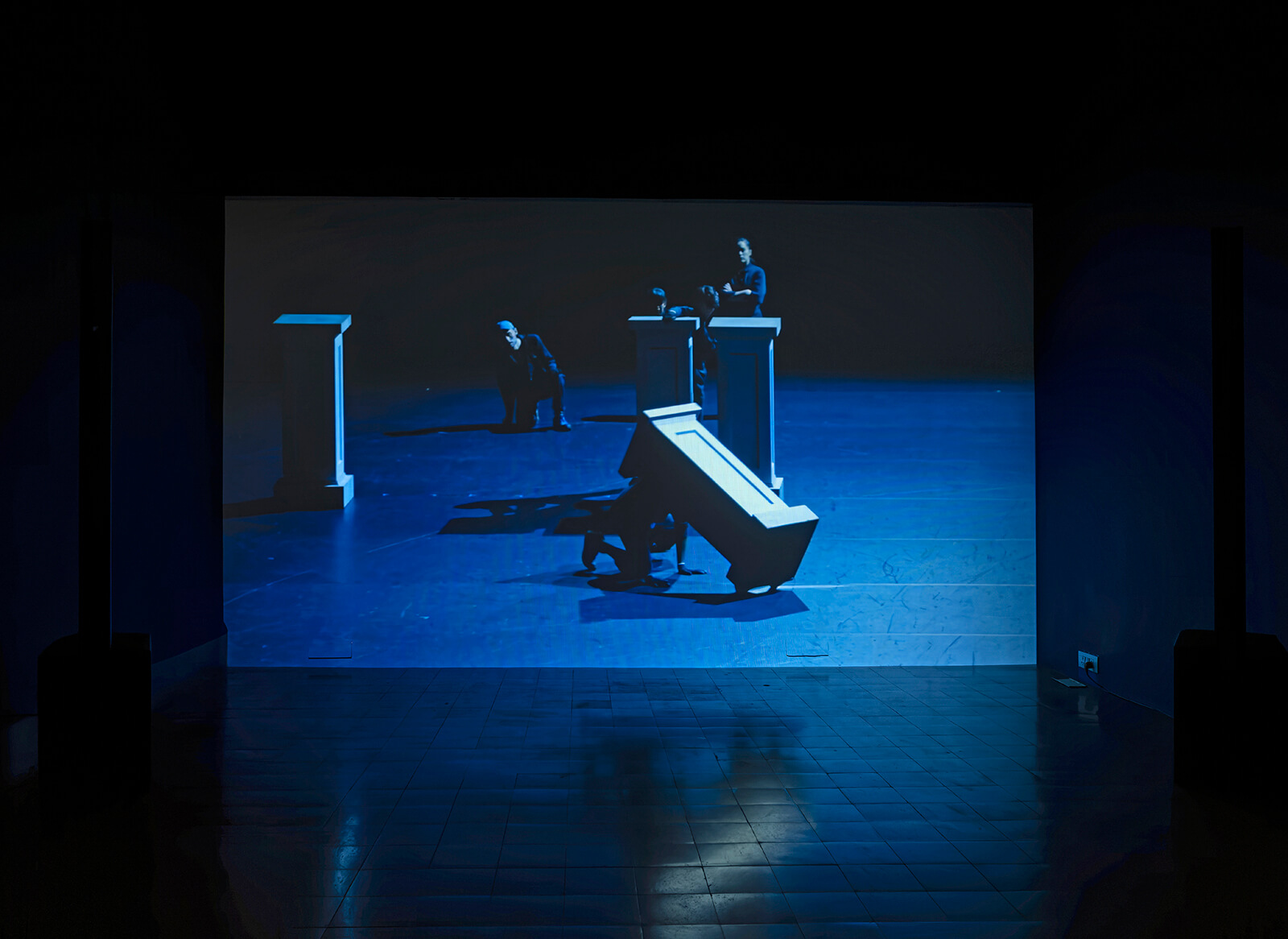
The next gallery, across the first-floor hall of the museum, envelops the viewer in darkness, confronting them with a screen ringed by black backdrops and surround-sound speakers. 7 Columns (2023)and The Last Painting (2023) play on a loop, creating a non-narrative meditation on collective effort, memory and the weight of the difference between classical history and post-industrial life. Performers drag columns from the wings of a stage, moving with slow, deliberate movements, resembling contemporary dancers and worker ants in equal parts as they drag symbols of the European canon ‘onstage’. Some begin to tilt or crumble beneath the weight of their charge, some congregate and others separate. This continues for some time until the ‘performers’ drag the columns into a line, subverting the vertical hierarchy of classical times that remains an ideal even in the present. In the score, Goebbels sets a dark but dynamic atmosphere, blending unfamiliar instruments with distant Greek voices, collected by ethnomusicologist Samuel Baud-Bovy in the mid-20th century. The scene then transitions to a composition in which women create rhythmic vocalisations and move unconventionally across the stage with chairs in hand. Later, we see a group of young people sitting in a circle, harmonising with the cadence of classical Indian music scales.
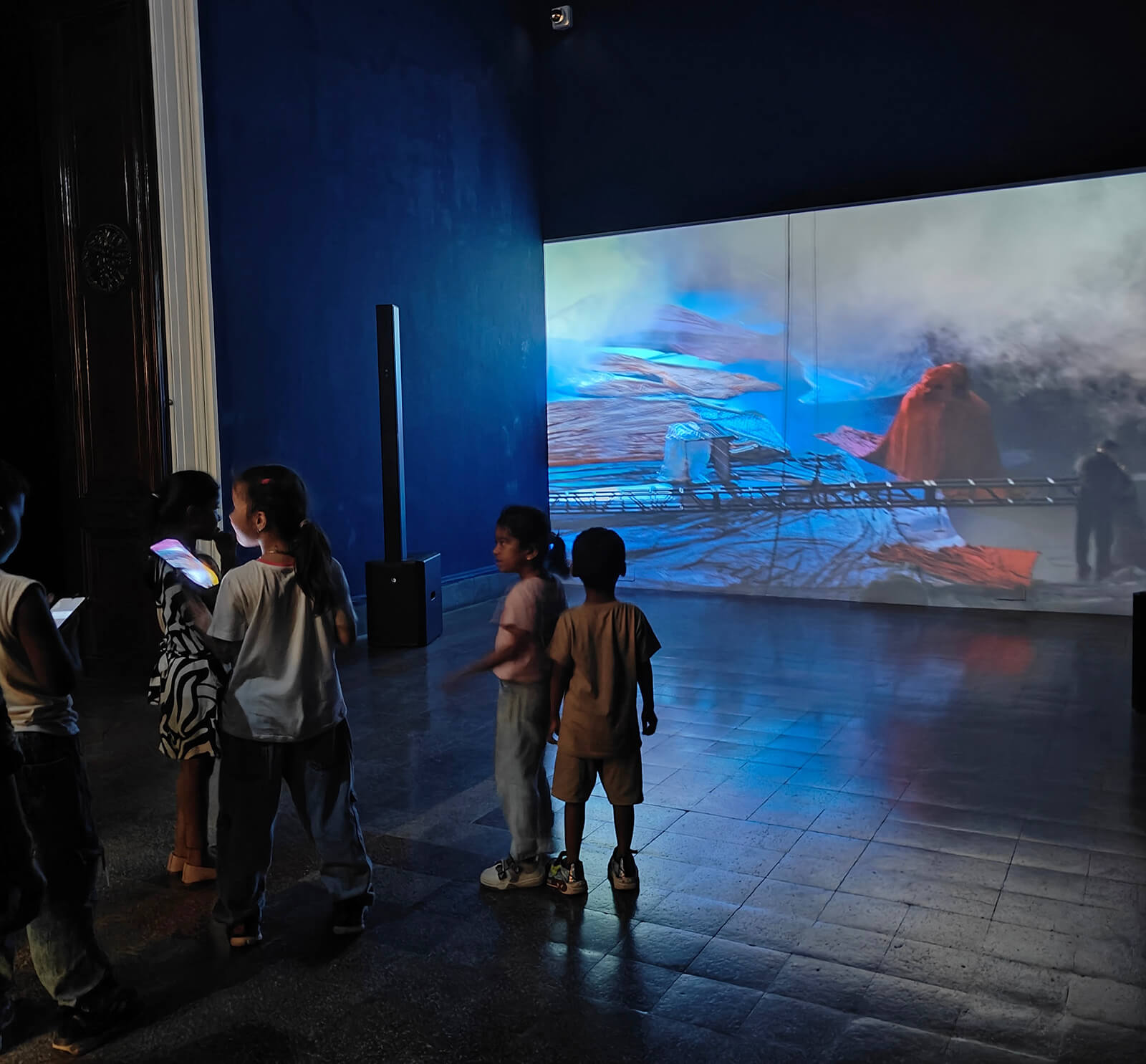
In the space between the viewer and the screen, families, young couples, groups of friends and throngs of school-aged children watch and pass through. It is difficult to imagine the significance of this installation for this varied audience visiting the museum in the middle of their Saturday. The video work is presented without contextualising information, ostensibly encouraging viewers to form independent relationships with the work, but, as a group of three teenage girls reported, “It’s very confusing. We don’t really know or understand what’s going on, but it’s kind of creepy.” This group, like many others, sits for a few minutes on the benches, awaiting the beginning of the ‘real action’, before moving on. While Goebbels is effective in creating an immersive, often eerie atmosphere through sound, the video’s pace proves too testing for most.
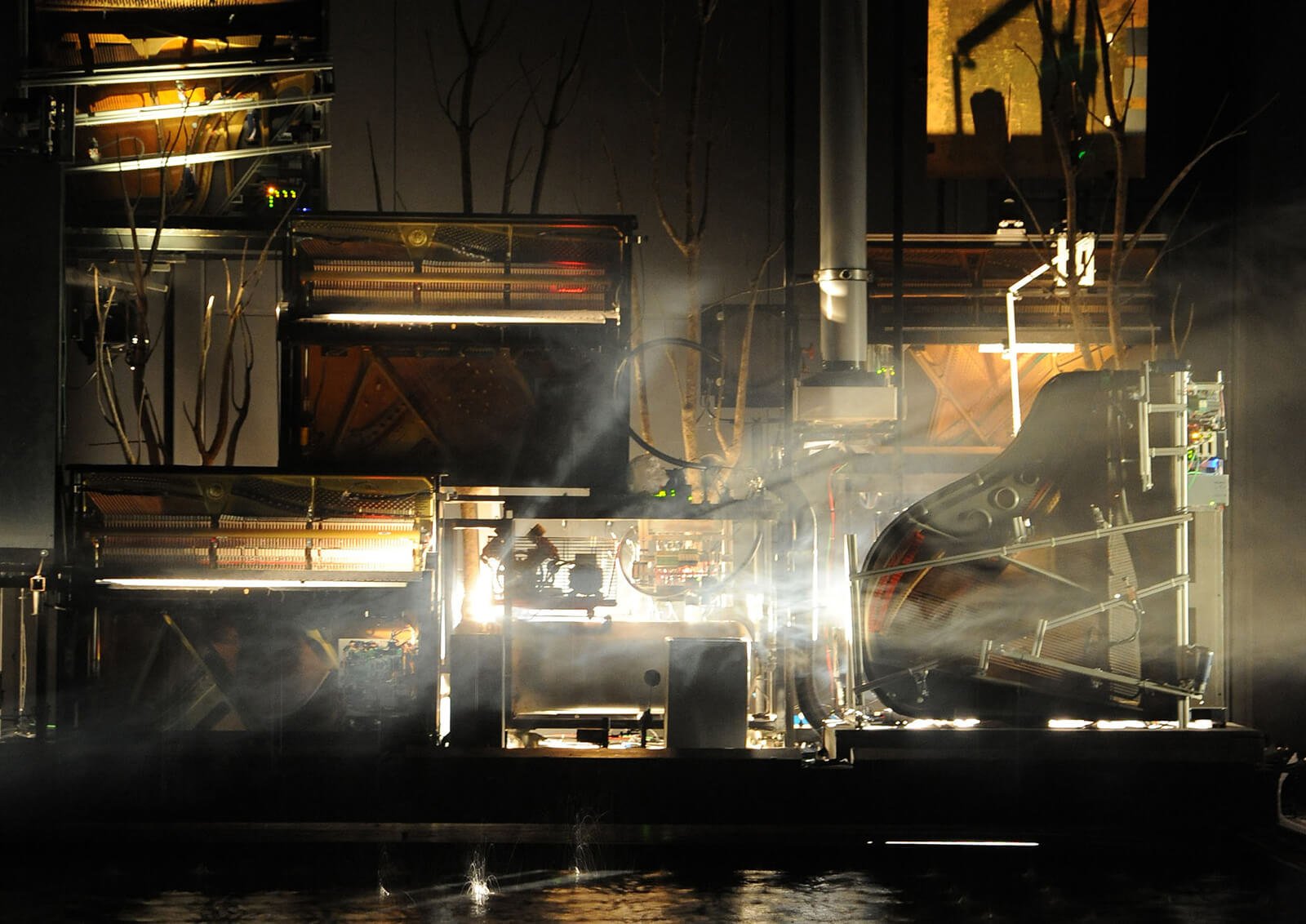
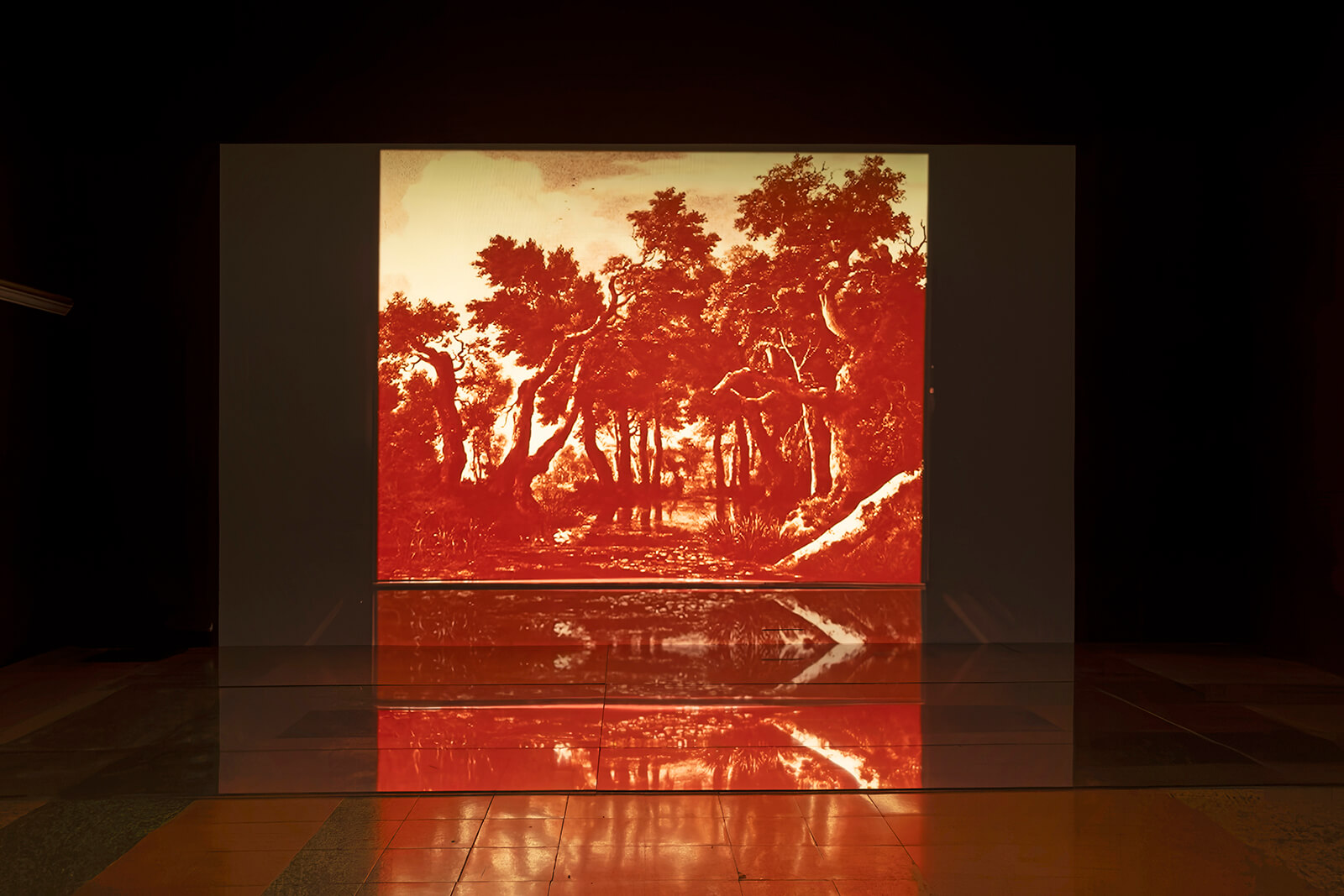
The Last Painting (2023) resonates most clearly with the exhibition’s title, featuring actors/workers unravelling large bolts of fabric on a stage, machinery and movement coordinating to erect a background, which here, is the subject of the artwork. The next room screens Stifters Dinge (2009), which, inspired by rhizomatic, postmodern theories, features machines stacked atop one another, their insides visible, moving seemingly of their own accord and independently of each other. This disembodied, disconnected orchestra, with exposed wires, hammers and strings, with smoke occasionally billowing out of and around them, decentres people and makes soundtrack and instrumentation the face of the artwork, performing the tense and changing relationship between humanity and technology. The work feels particularly poignant at a time when questions of authorship and human creativity grow more urgent following the injunction of ‘AI art’ (here meaning art made ‘by’ AI).
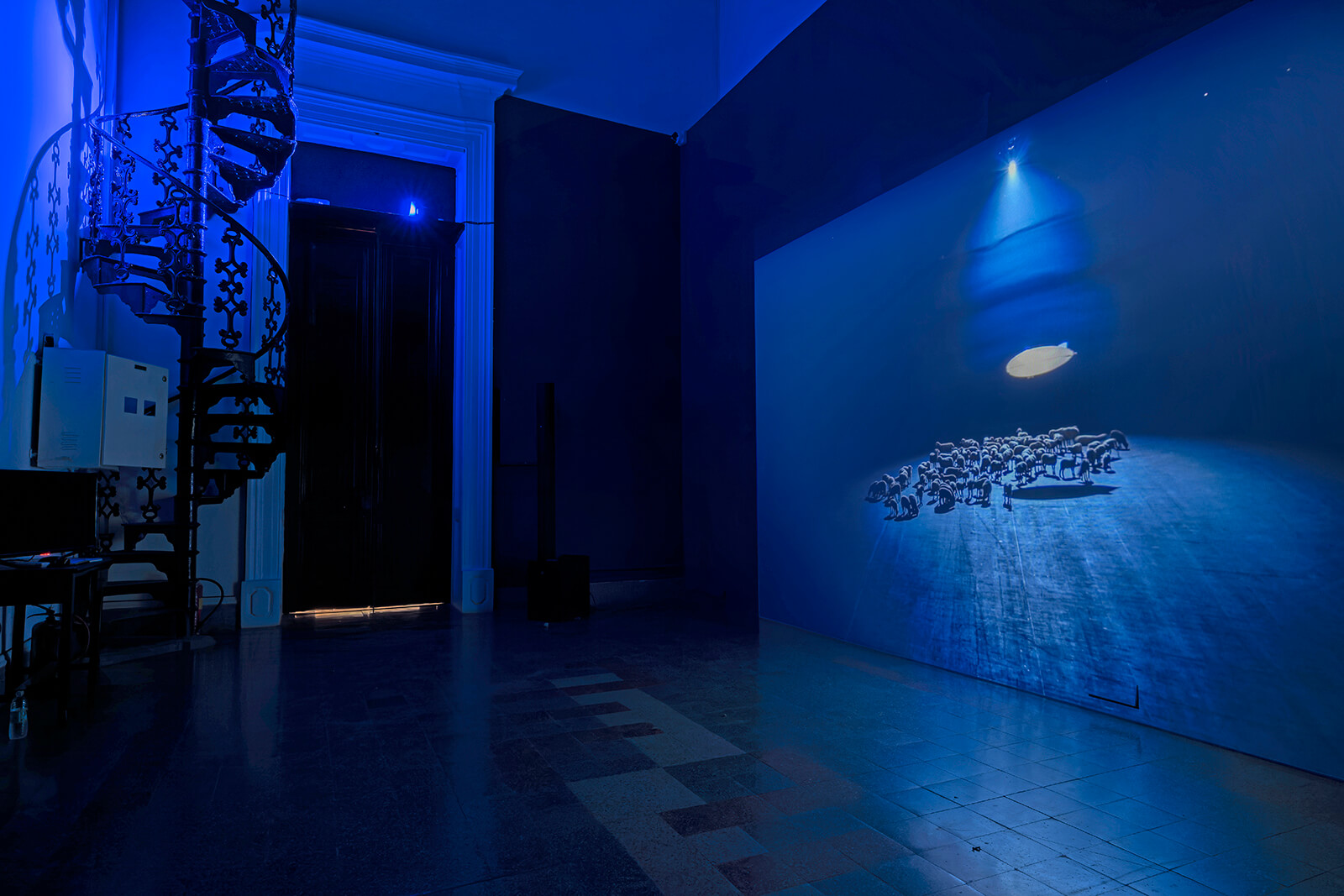
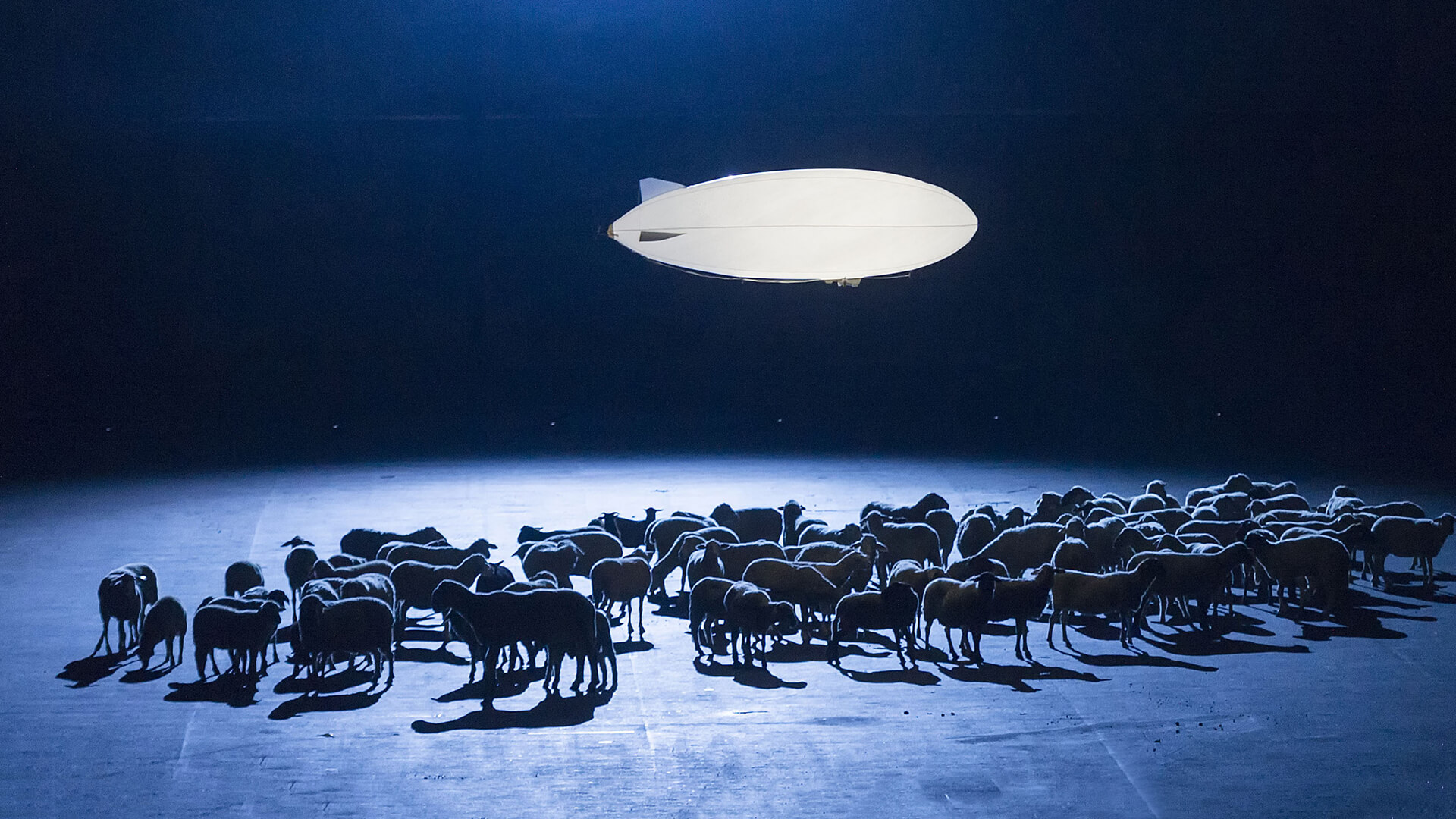
The final video, Landscape 3 (2016), is probably one of the more difficult works to justify to someone with little prior knowledge of, and contact with, contemporary art, especially Goebbel’s particular brand of surreal, minimal, performerless performances. A flock of sheep roam the stage while a zeppelin floats above them, the interactions between the sheep and their contrast with the glowing craft forming a kind of absurd choreography. While the use of ‘sheep’ to symbolise the collective and the zeppelin symbolising authority, surveillance and control is legible to those versed in certain cultural circles, it may be too subtle for others. A visitor seated on the benches at the back of the room said, (translated from Hindi) “We can see sheep gathering like this in our villages every day. I don’t really know why they are in [the work].”
Much of the context and background in this article is pulled from Goebbel’s website; the exhibition reveals little information about the motivations, themes and contexts behind the works, which are already challenging in their length and rejection of narrative. While Goebbel’s works and masterful soundscapes are incredibly effective at creating an atmosphere and immersing the viewer in their rhythm, much of the significance is unable to reach its audience at the Dr. Bhau Daji Lad Museum. It is easier to imagine the works in one of the city’s many white-cube galleries or dark screening studios, which attract crowds already familiar with contemporary art and the acceptance and patience it sometimes requires. The exhibition marks a shift in the museum’s curatorial approach from presenting mostly historical artefacts and artworks to including more contemporary, multimedia exhibitions. However, contemporary art often lacks the easy explicability and historical weight of the museum’s other exhibitions, needing more personal engagement and patience from audiences, which, otherwise, may not know what to make of it. Landscape Plays heralds a question and challenge for public museums worldwide looking to make the same shift—how can contemporary art be made enjoyable and legible to an uninitiated public?
‘Landscape Plays’ is on view from March 15 – May 31, 2026, at Dr. Bhau Daji Lad Museum, Mumbai.

by Srishti Ojha Oct 21, 2026
Increasingly, artists, filmmakers and activists are turning to VR to create more personal, tangible accounts of the climate emergency and its impact on vulnerable communities.
by Mirra Lynn Oct 20, 2026
The Indian artist paints the old wadas of central Pune, capturing the traces of everyday life that cling to these structures, battered by time but unbowed.
by Anmol Ahuja Oct 15, 2026
How do heaps of souvenirs and relics with racist Aboriginal motifs and features become art? MCA Sydney’s winter showcase—the artist’s largest to date—beckons a possibility.
by Vandana Kalra Oct 14, 2026
With his latest exhibition as a point of departure, the modernist discusses his decades-long practice, the spontaneity of drawing and the social responsibility of artists.

make your fridays matter with a well-read weekend
Enter your details to sign in
Don’t have an account?
Sign upOr you can sign in with
a single account for all
STIR platforms
All your bookmarks will be available across all your devices.
Stay STIRred
Already have an account?
Sign inOr you can sign up with
Verification link sent to check your inbox or spam folder to complete sign up process
Tap on things that interests you.
Select the Conversation Category you would like to watch
Please enter your details and click submit.
Enter the 6-digit code sent at


Heiner Goebbels’ Landscape Plays faces an uphill battle to appeal to the public
by Srishti Ojha | Published on : Apr 22, 2026


 Sign in with Google
 Sign in with email
What do you think?