Architecture06 mins. read
KCAP revamps the derelict Sibeliuspark in Oss into a bustling hub to skate and socialise
by Pranjal MaheshwariOct 06, 2026



by Sunena V MajuPublished on : Dec 04, 2025
Not everyone may know the name Calder, but almost everyone has felt the quiet spell of his ‘mobiles,’ the suspended constellations that drift, pivot and tilt with the faintest breath of air. Alexander Calder’s work made movement a material and air a visible collaborator for art. It feels fitting, then, that the new cultural destination dedicated to his legacy is not referred to as a museum. It is called Calder Gardens, a place where art, architecture and landscape behave as equal protagonists.
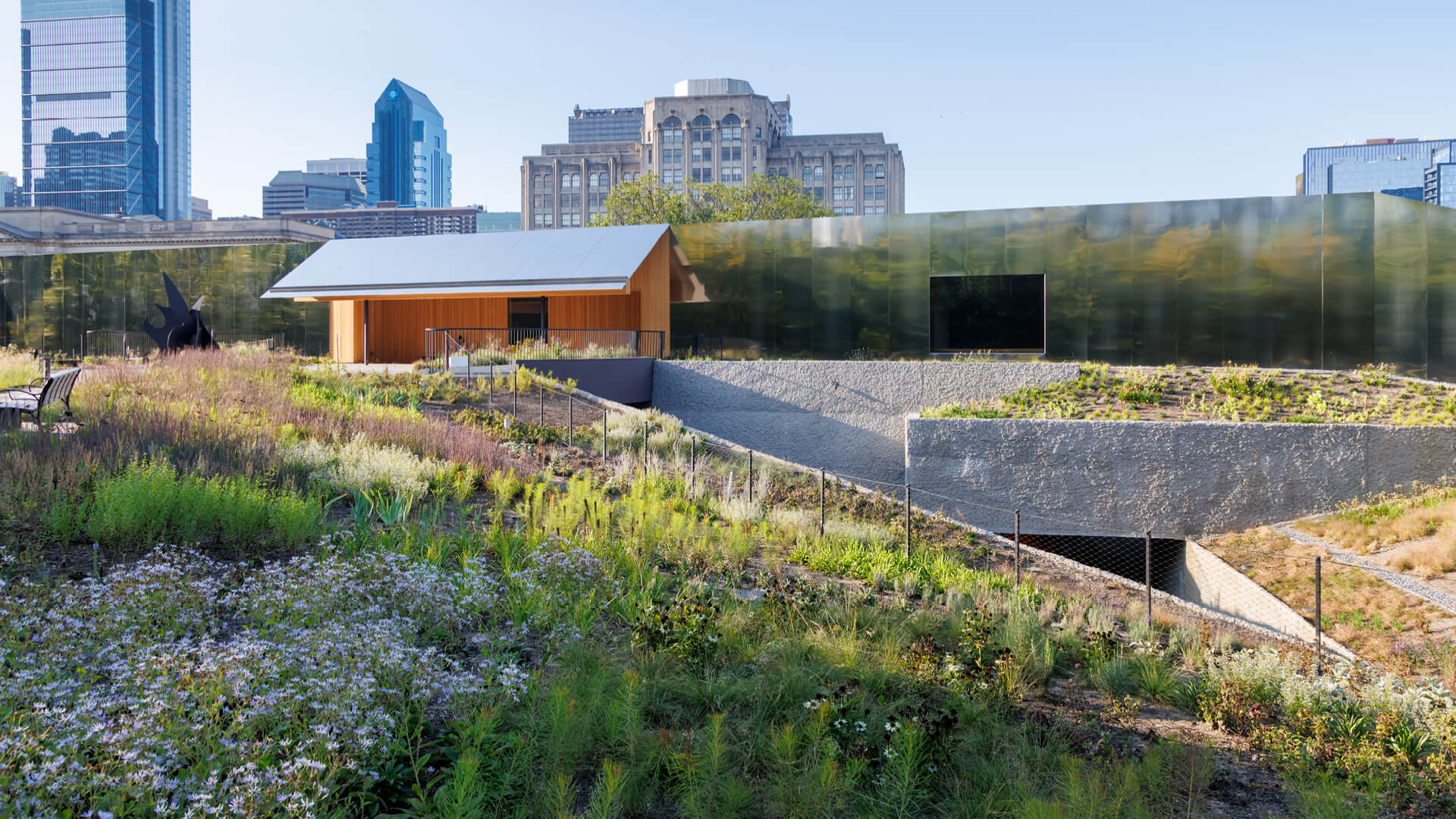
Designed by Herzog & de Meuron, with a landscape by Piet Oudolf, Calder Gardens sits along Philadelphia’s Benjamin Franklin Parkway—a corridor dense with museums and civic landmarks. Yet the site itself was once an overlooked sliver of land: a flat, tapered parcel edged by a highway off-ramp, a steady hum of traffic and little reason for pedestrians to wander through. Herzog & de Meuron’s first move was counterintuitive: instead of placing a monumental building on this highly visible stretch, they let the building withdraw. The garden would come first.
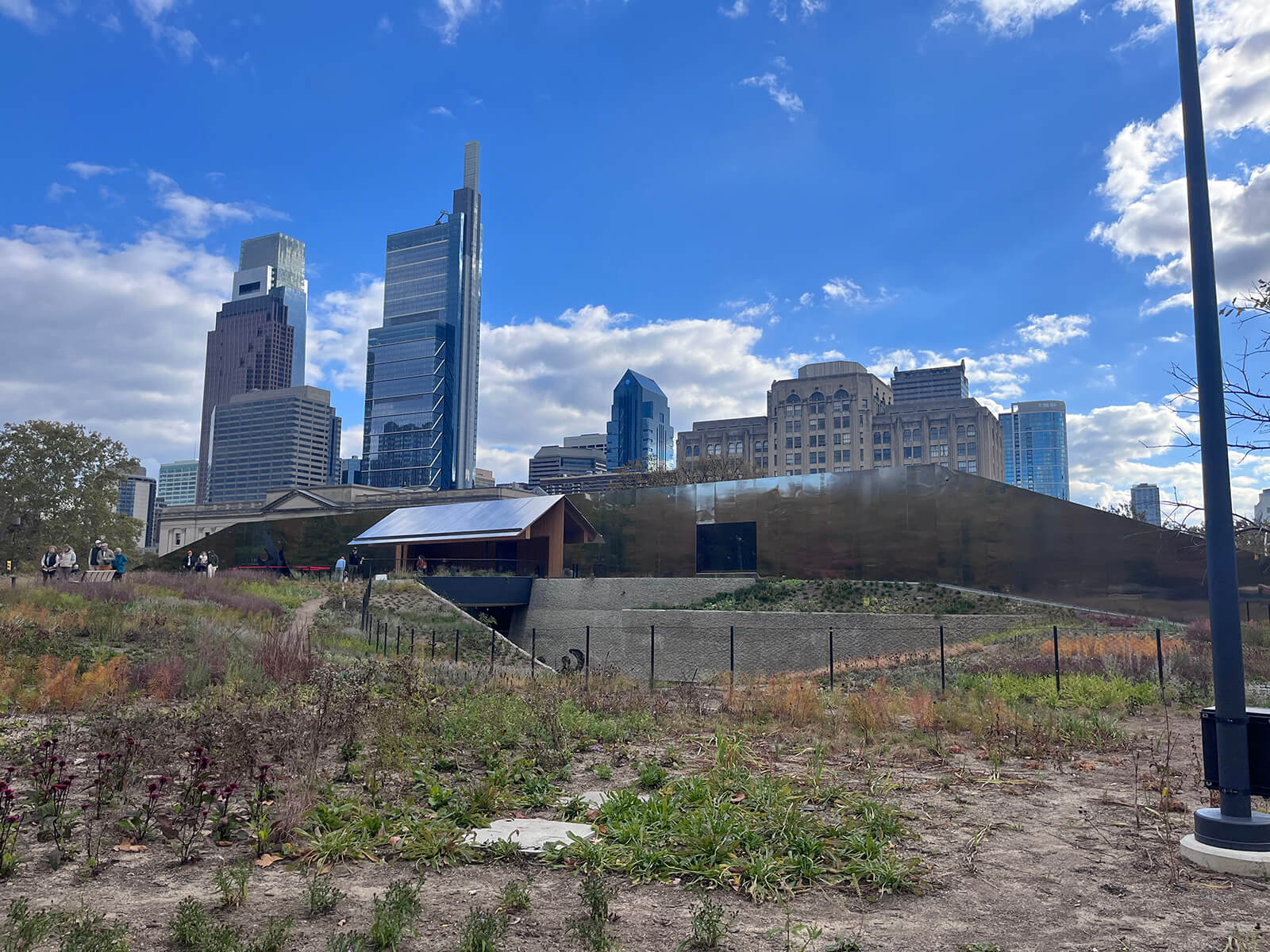
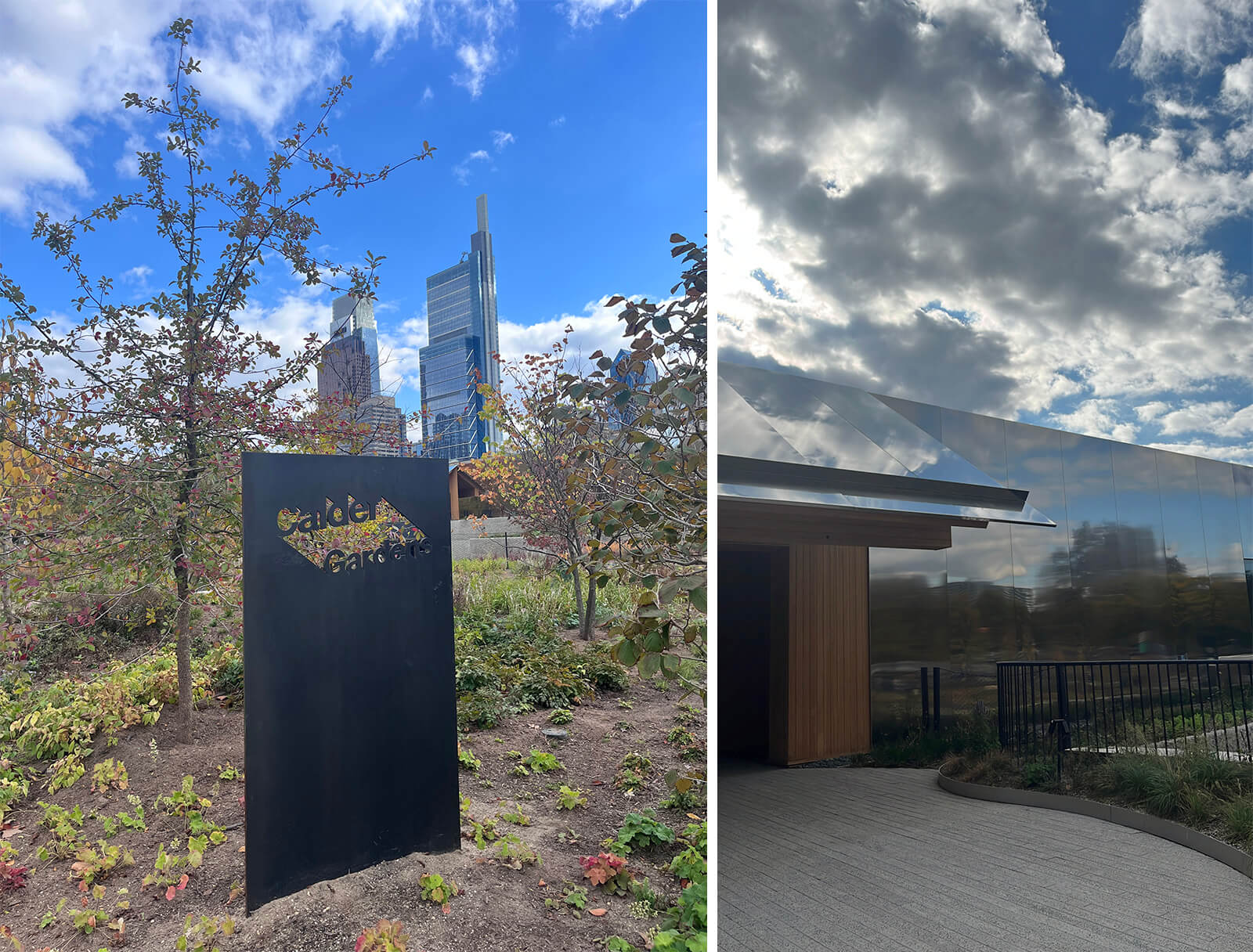
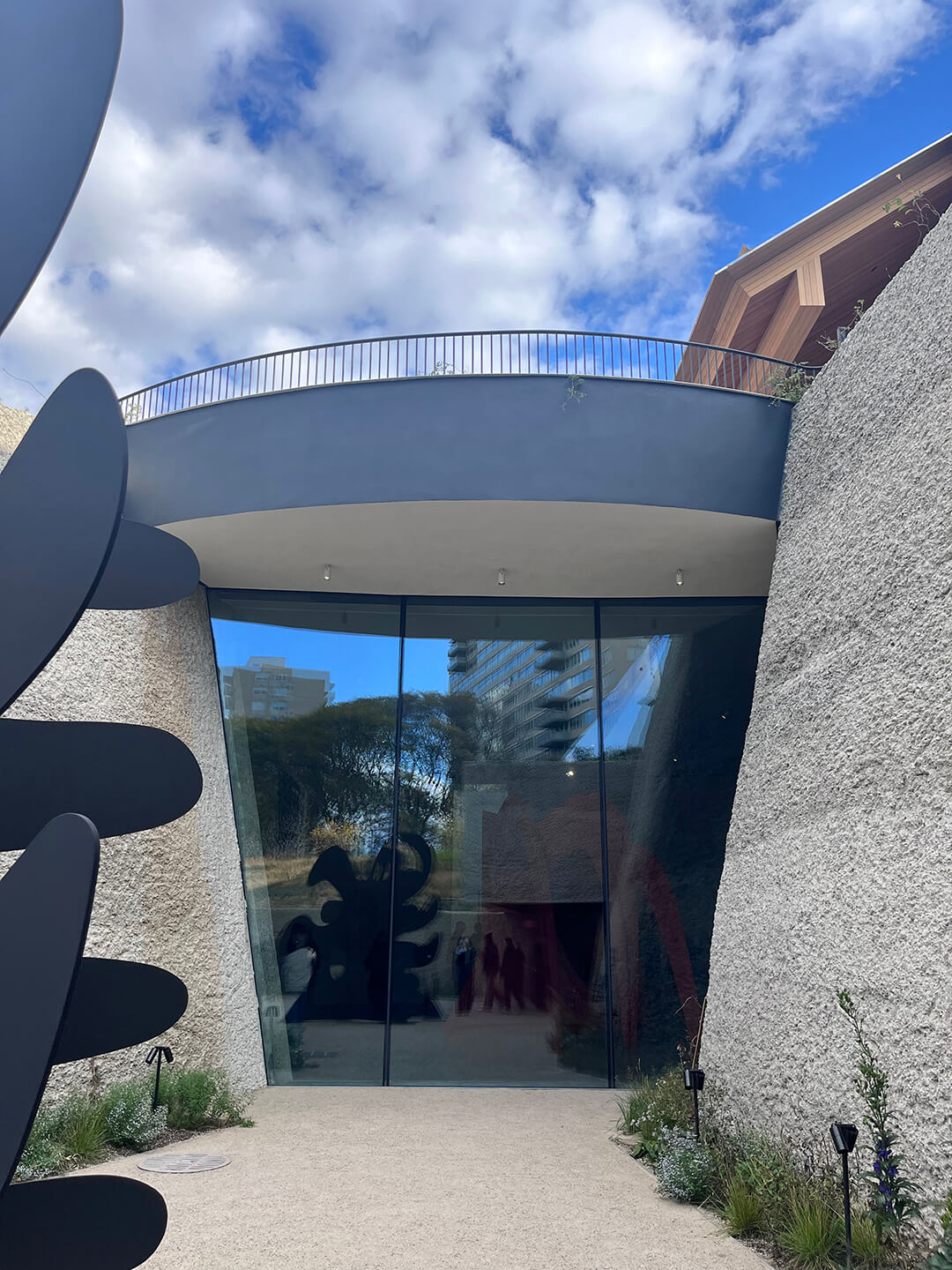
A long, reflective metal wall forms the project’s only architectural face from the Parkway, reducing the drone of the highway while creating a backdrop for a public meadow. The structure behind it—domestic in scale and quietly clad in blackened wood—resists the heroic gesture typical of museum entrances. Instead, the architecture reveals itself slowly. Below the surface lies an intricate sequence of galleries shaped around two sunken gardens: one is a circular pool of planted earth to the east, and the other is an angular Vestige Garden to the west—both bringing daylight deep into the building. From the mezzanine of the Highway Gallery, visitors catch glimpses of passing cars outside before descending through concrete-lined passages toward the open-plan galleries, where Calder’s mobiles and other sculptures unfold in shifting light and shadow. The building is not a container but a mediator between inside and outside, and between planted forms and metallic structures.
However, the living spirit of Calder Gardens exists above ground—in Oudolf’s landscape—an environment shaped not only with plants, but with time. During my conversation with Oudolf about his first impression of the site, he recalled that the land was ‘just bare’, only partially imagined through architectural models. What drew him into the project was not the site, but the opportunity to create a garden that would stand in dialogue with an artist he had admired for decades. “I knew Calder’s work for fifty years,” he said. “To show my work in the context of a great American artist was meaningful.”
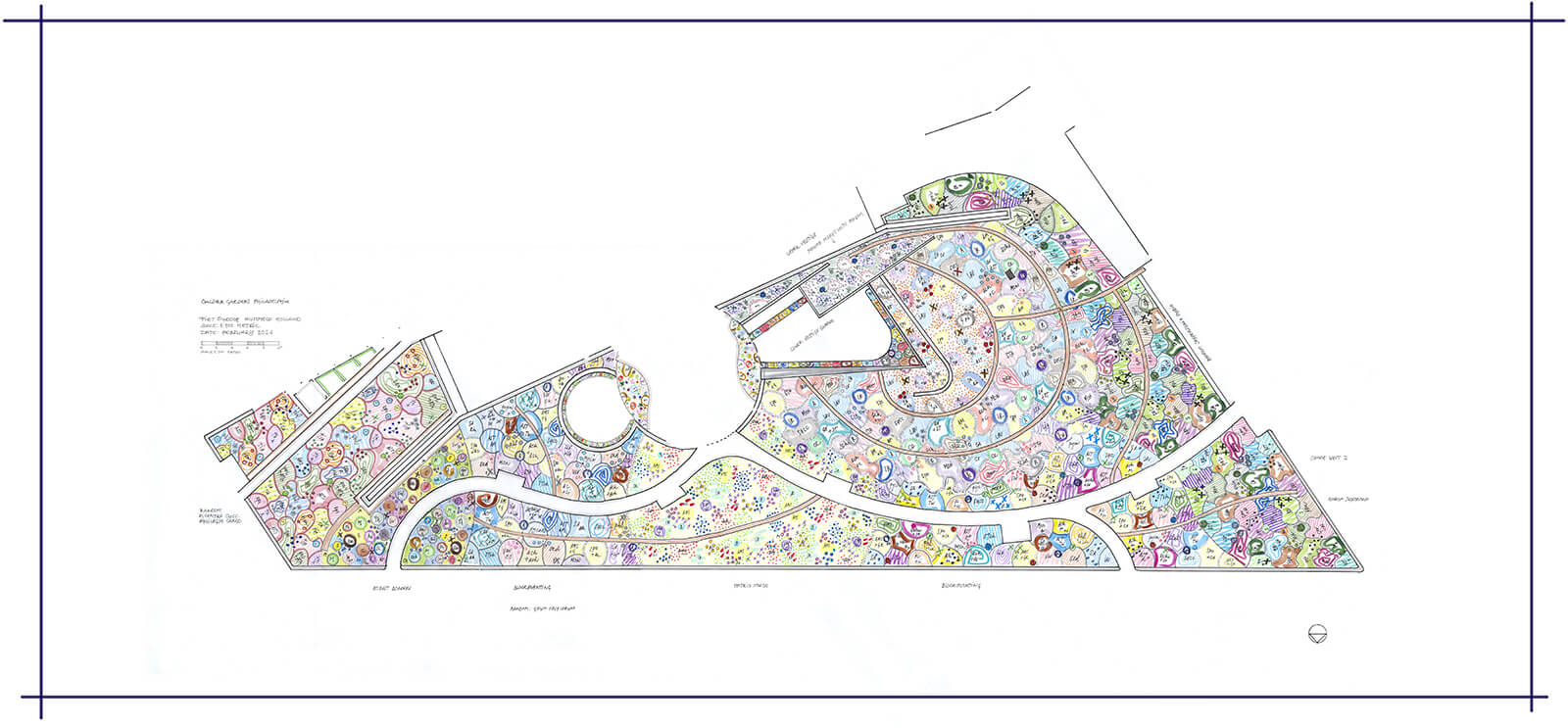
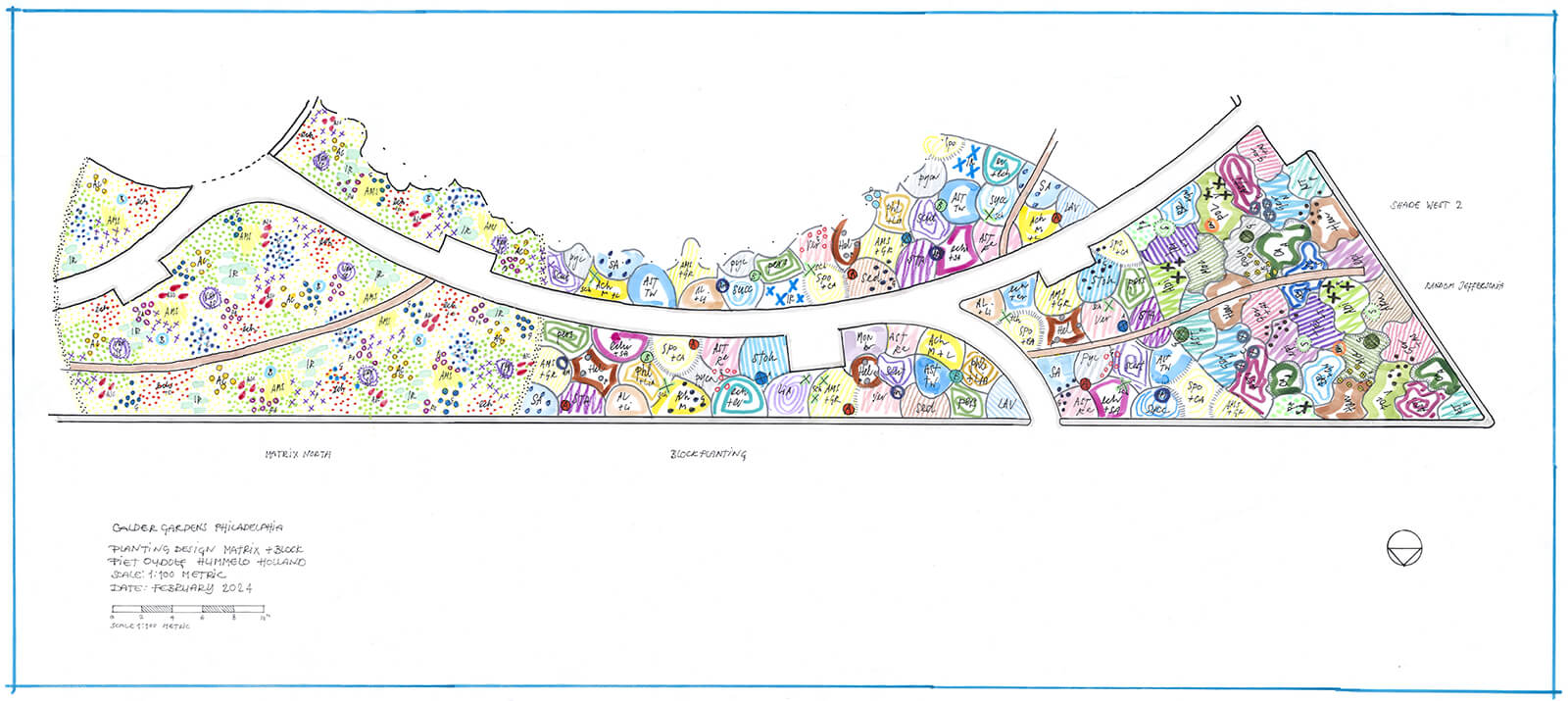
Across the 1.8-acre campus, Oudolf designed seven distinct planting identities, each offering visitors a different emotional encounter. From the West Woodland Garden, shaded by young Oaks and Nyssa, to the generous Perennial Meadow that opens like clearings, to the Prairie Matrix of grasses and coneflowers rippling in late summer winds, the landscape unfolds as a series of rhythmic transitions. “People enter from different sides, and every entrance gives a different feeling. You could come through Woodland, or you could come through Meadow; each time, you experience a different garden,” Oudolf said.
The gardens are designed not as ornamental foregrounds, but as living environments that evolve daily. Seasonal shifts are not interruptions but essential expressions of the landscape: winter brings skeletal textures; spring, an emergence of bulbs; summer, height and abundance; autumn, a palette of seed heads and grasses. “The garden is a slow-motion job,” he shared with STIR, describing the years it will take for the woodland canopy to mature and for the vertical walls of vines to cascade fully along the building’s edges. “You need to know not just what the plants are now, but what they will become.”
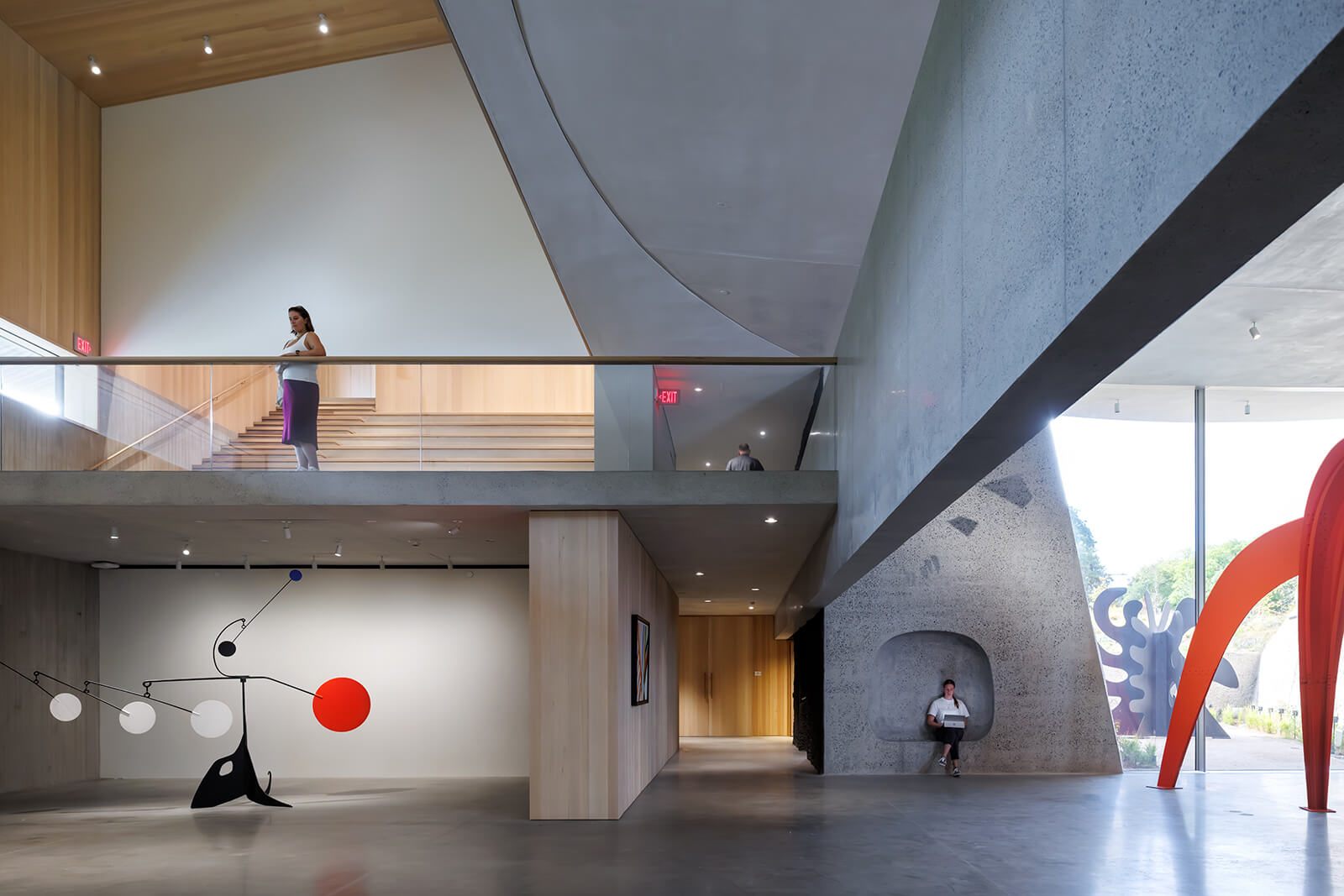
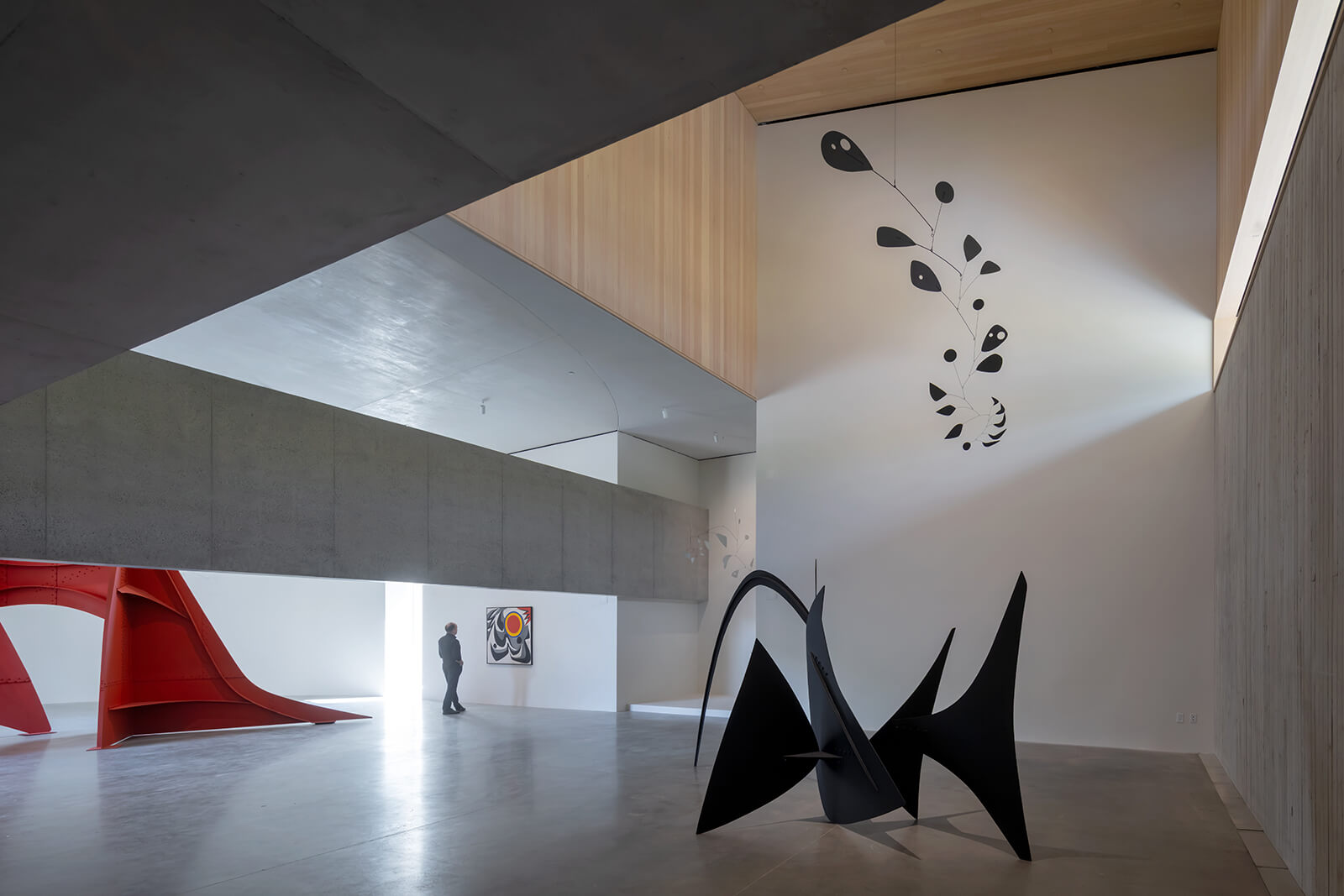
This understanding of time echoes Calder’s own sensibilities. Just as his mobiles never hold one pose for more than a breath, Oudolf’s planting composition is never fixed. Growth, dieback, succession and surprise are part of the aesthetic. In the Vestige Garden, Boston ivy and climbing hydrangea inch up the warm concrete walls; above, honeysuckle and wisteria spill down, softening the architecture with orchestrated wildness. In the circular Sunken Garden, a dense backdrop of clematis and Virginia creeper creates an intimate encounter framed by the earth itself.
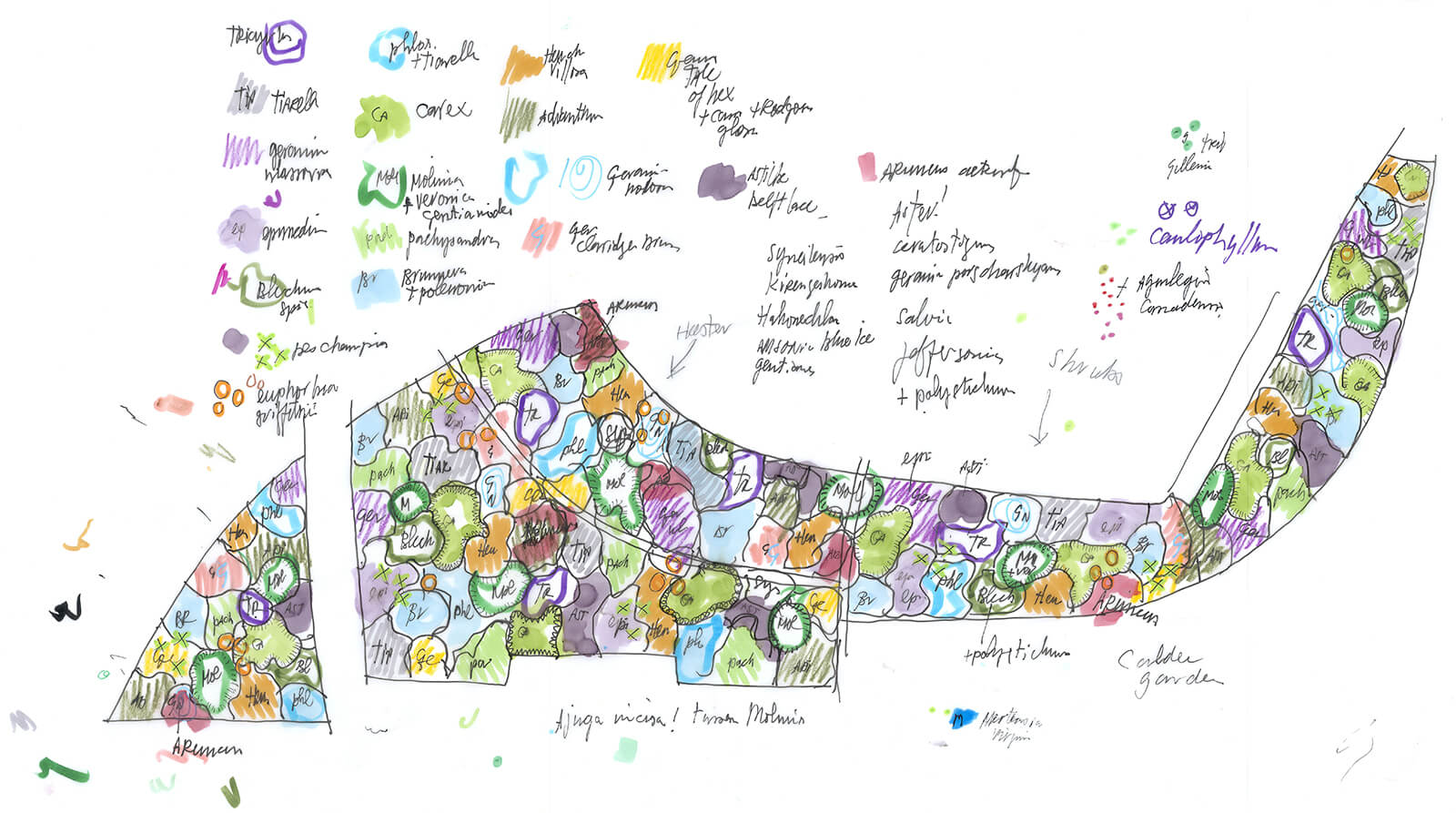
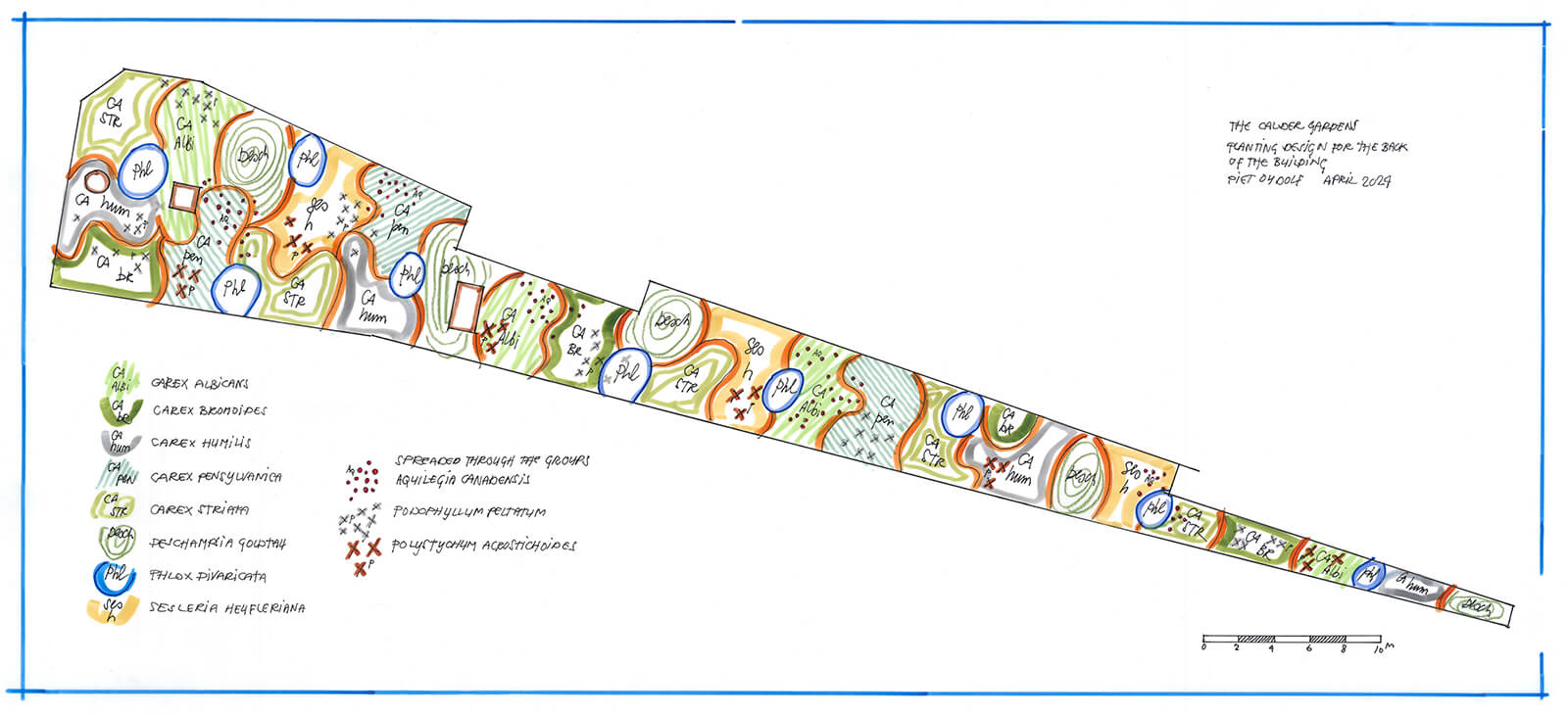
Oudolf hopes the space speaks to visitors who know plants intimately and to those who rarely encounter them. He imagines school children exploring the pollinator-rich meadows, city residents pausing on their commute to notice the wind moving through little bluestem and volunteers finding companionship in tending the beds. “Gardens are for everyone,” he said simply. “People see something they have never seen before, and they come back.”
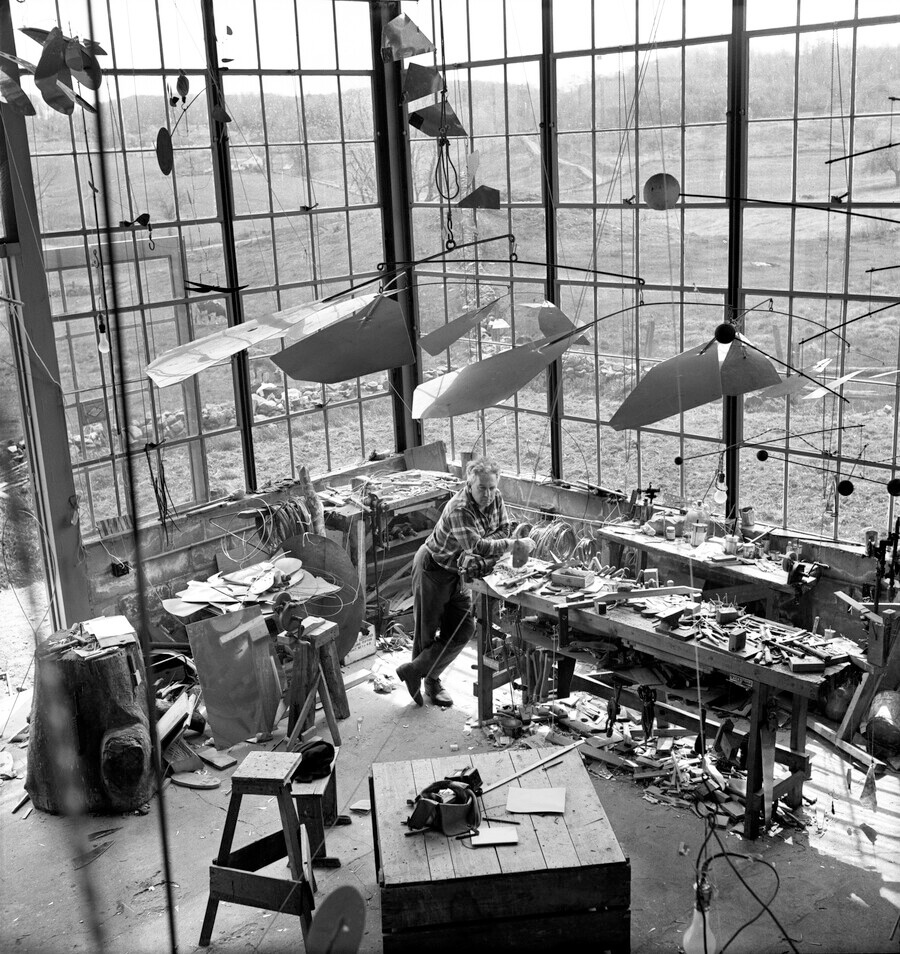
What emerges in Calder Gardens is not just a new venue for experiencing Calder’s work but a new model for considering how art, architecture and landscape can share equal footing. While Herzog & de Meuron’s building acts as a frame and a rhythm, Oudolf’s garden doubles as a living collaborator, shaping perception every hour of the day. Calder’s sculptures—kinetic, balanced and perpetually shifting—sit at the intersection of both. In the end, as Oudolf reflected, the most meaningful moment of the entire process was not the design work, nor the meetings, nor even the opening, but the time spent on-site as thousands of plants were set out in the earth. “You see what you have done on paper translates to the ground. That is the most exciting moment,” he shared.
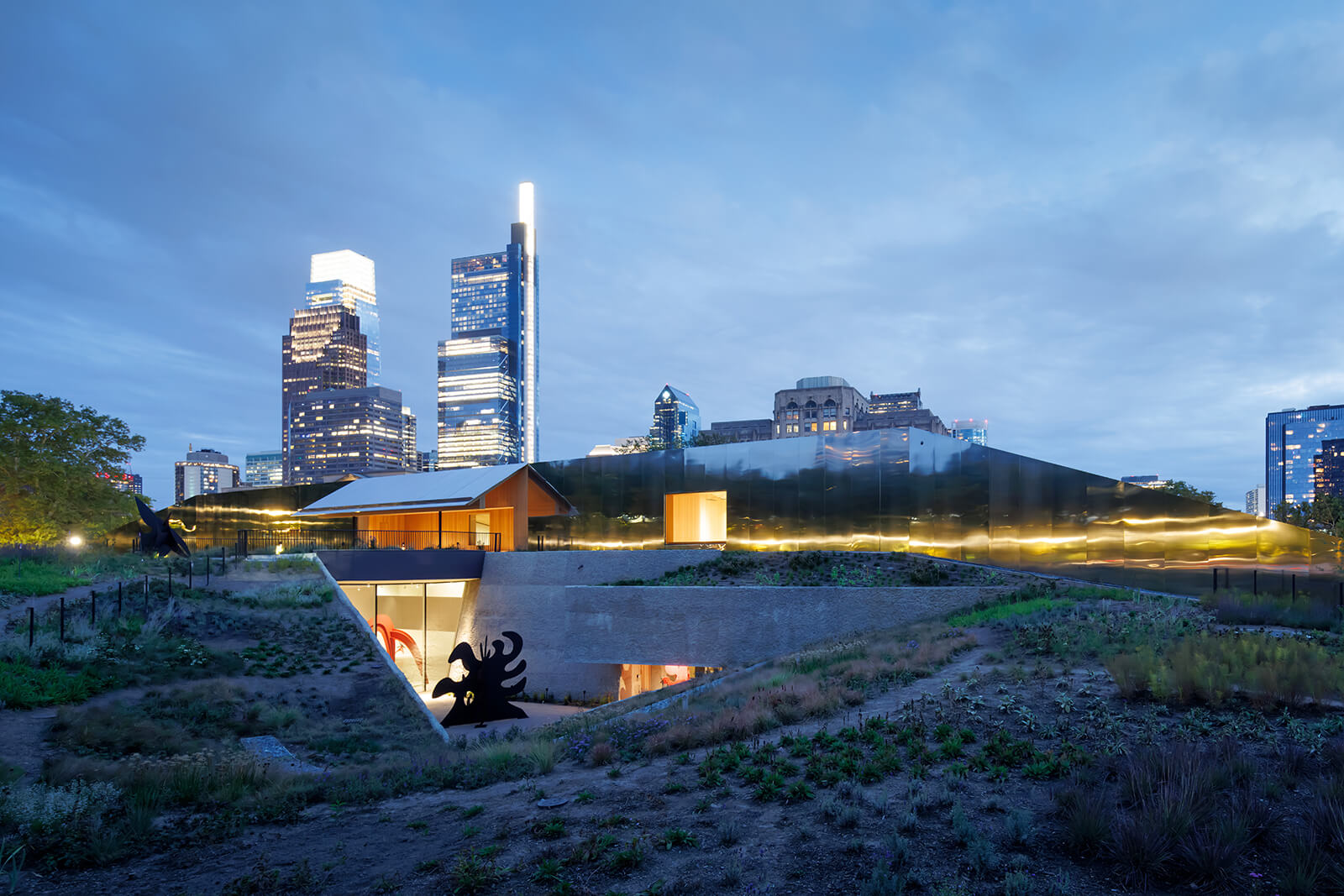
Calder Gardens carries that energy forward as a place that deepens with every season. During my October Visit Philly trip, stepping into the garden felt like stepping out of the familiar grid of Philadelphia and into a space made for slowness and attention. In a city defined by monumental architecture, civic history and the echoes of American beginnings, this site offers a different kind of presence: one rooted in art, time and movement. It is a reminder that cities can have cultural spaces that don't need to be monumental. Calder Garden asks us to reconsider how we engage with built form and how architecture might hold space for quiet rather than command it.

by Pranjal Maheshwari Oct 19, 2026
The Mumbai-based architects integrate courtyards, mesh screens and north light trusses to create a dining space that doubles up as a community hub at SR University, Warangal.
by Mrinmayee Bhoot Oct 17, 2026
The Rotterdam-based institute centres the Indian Ocean as a network for exploring material histories and transnational links shaping coastal cultures, positing them as future models.
by Pranjal Maheshwari Oct 16, 2026
At the 2026 Stirling Prize ceremony, Mary Duggan with RUFF Architects, MAKER Architecten and Nakshabid Architects were felicitated for proffering quality housing and social equity.
by Mrinmayee Bhoot Oct 12, 2026
The new Centre for Contemporary Arts, fostering public engagement with art in Uzbekistan, is housed in a tram depot refurbished by the French studio, emulating local craftsmanship.

make your fridays matter with a well-read weekend
Enter your details to sign in
Don’t have an account?
Sign upOr you can sign in with
a single account for all
STIR platforms
All your bookmarks will be available across all your devices.
Stay STIRred
Already have an account?
Sign inOr you can sign up with
Verification link sent to check your inbox or spam folder to complete sign up process
Tap on things that interests you.
Select the Conversation Category you would like to watch
Please enter your details and click submit.
Enter the 6-digit code sent at


Calder Gardens and the quiet power of landscape-driven design
by Sunena V Maju | Published on : Dec 04, 2025


 Sign in with Google
 Sign in with email
What do you think?