Architecture06 mins. read
KCAP revamps the derelict Sibeliuspark in Oss into a bustling hub to skate and socialise
by Pranjal MaheshwariOct 06, 2026




by Pranjal MaheshwariPublished on : Feb 27, 2026
The restless bird gently sits on a delicate branch of the powder puff shrub, its neck twisting with excitement as a rhythmic chirrup from its kin fills the air. In one smooth movement, it swishes away, the sudden thrust bringing the whole shrub to life.
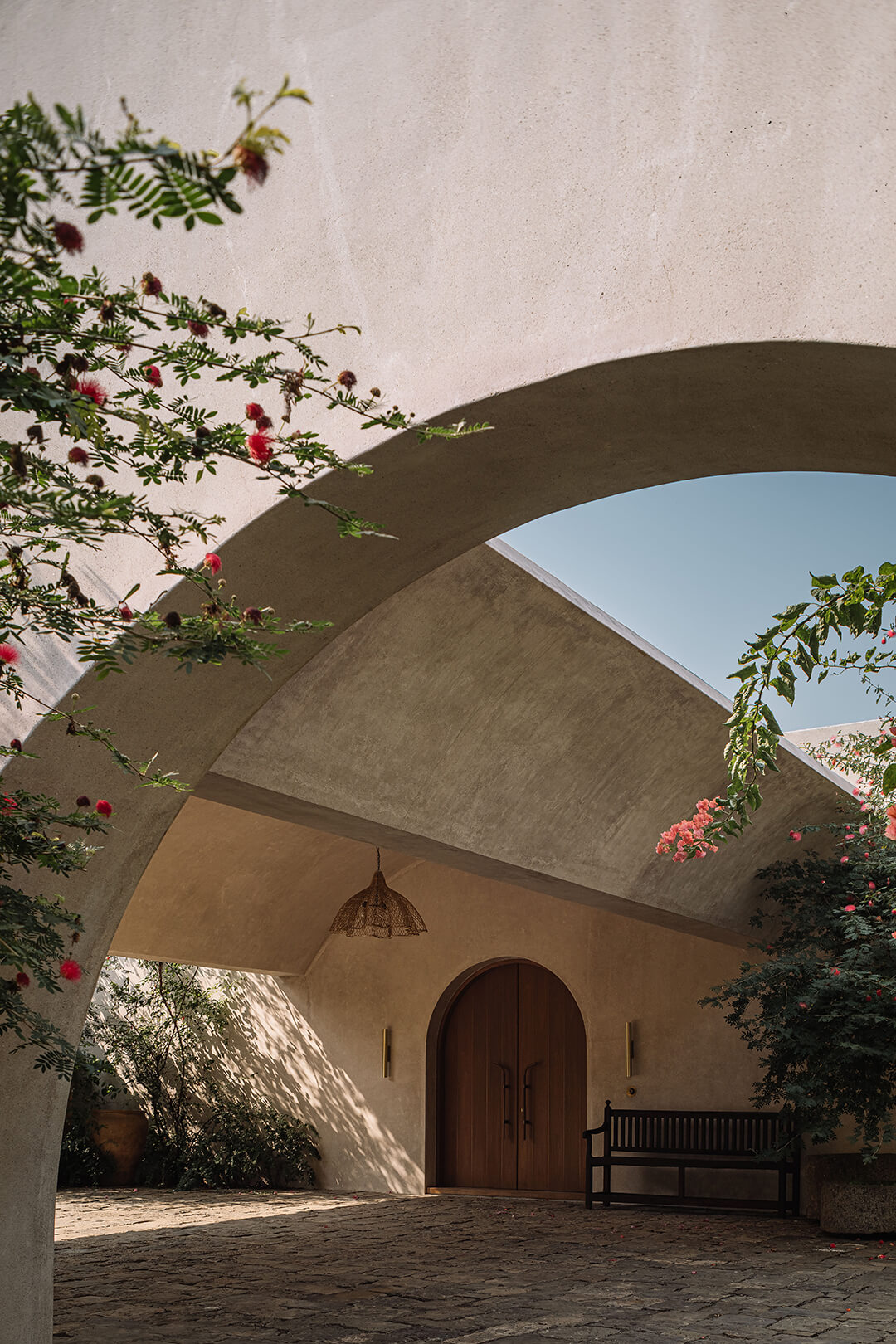
Whenever we come across a serene landscape, be it in pictures or in person, the mind wanders off to the feeling of warm sun on the skin, the echoes of chirping birds and a cool breeze whistling through the leaves. There is a sense of calm and stability we seek from the natural world, despite it being in a constant state of motion. Can this feeling of emotional resonance that inspires reflection and reverence ever be evoked, or can it only be discovered?
Rendering an experience that perhaps attempt to address this speculation is the landscape design for Dua Villa, conceived by Mumbai-based Kunal Maniar and Associates. The five-acre land is a composition of multiple interstitial layers—passages, nooks, recesses, garden-view verandahs, orchards, courtyards—carved into a labyrinth of caves and open spaces.
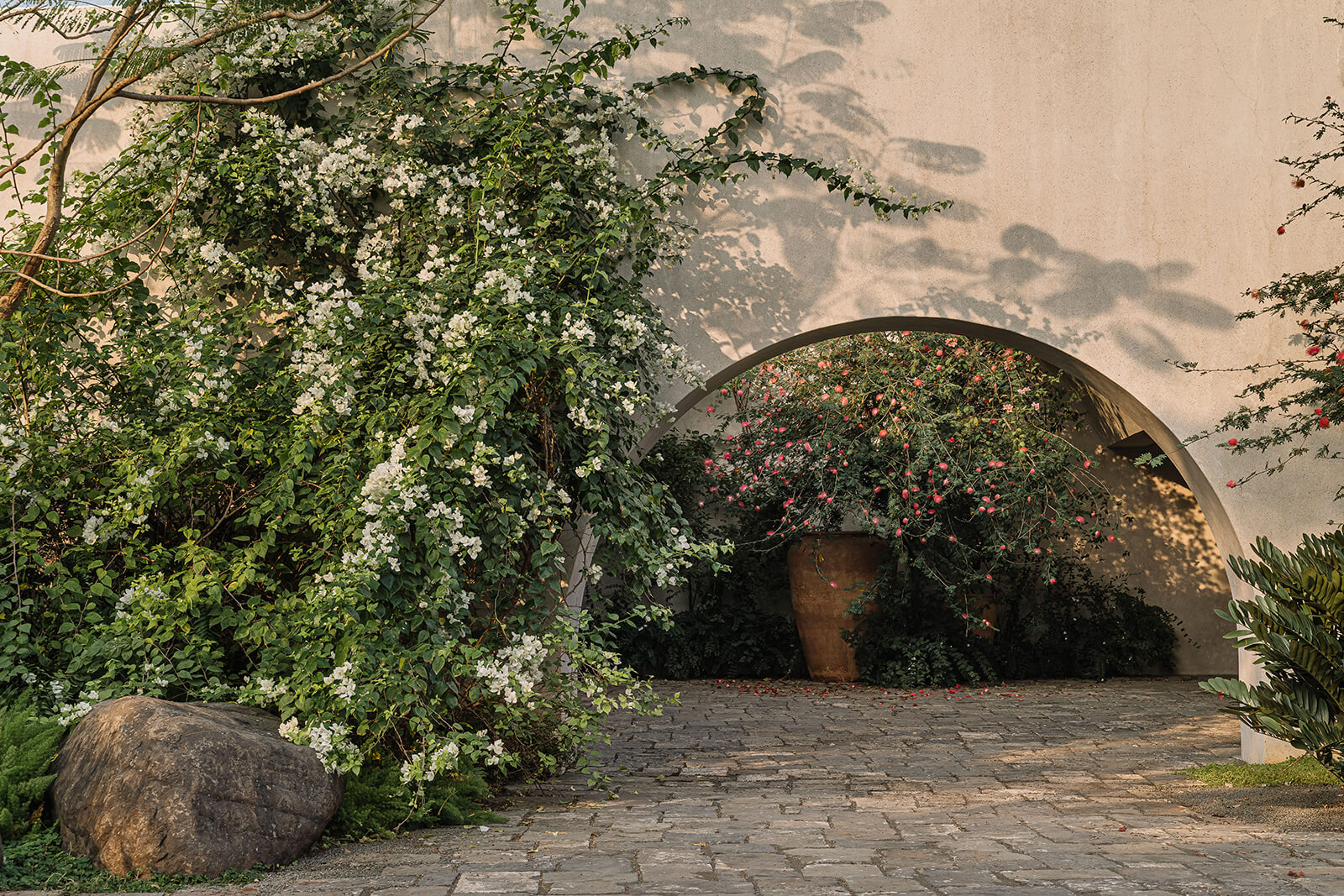
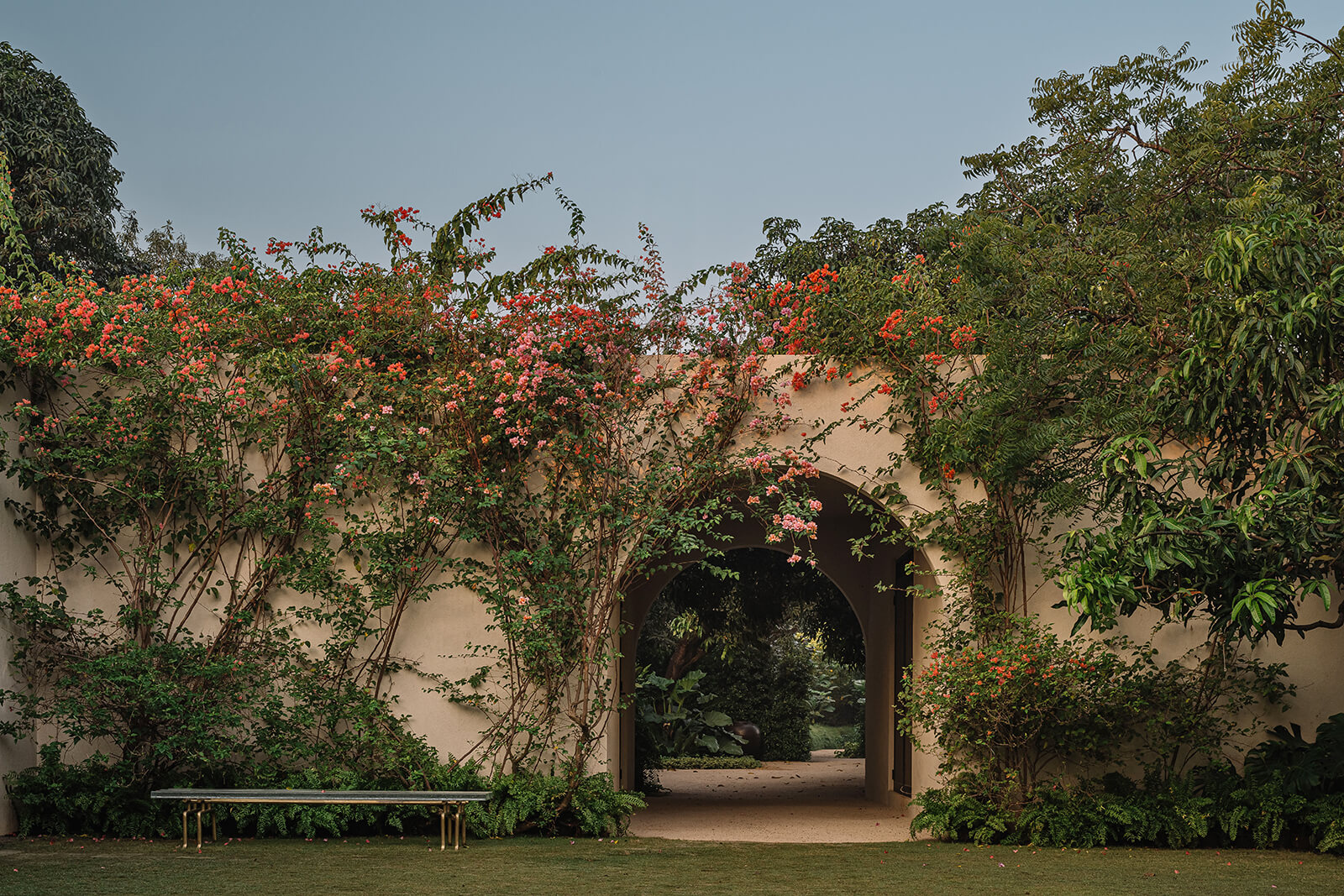
The peristyle overlooks the archway, shimmering with sunlight reflected from the pool. A distant gaze travels from the shaded corridor into the open sky, until it is released, at the horizon, into the vast serenity of the orchard.
It is astounding to imagine the vast bareness that once occupied this land at the Awas village near Alibaug, now transformed into Dua Villa. “The clients were homeowners seeking a sanctuary rooted in ecology rather than ostentation. Their aspiration was to equate luxury with sustainability—to create a space that felt emotionally resonant, ecologically sensitive and quietly bold,” describes Kunaal Maniar, the landscape architect for the project. Through his eponymous practice, Maniar approaches landscape as a multidisciplinary canvas—drawing from fine arts, product design and even fashion—to empower nature to articulate its own design language rather than merely serve as a backdrop.
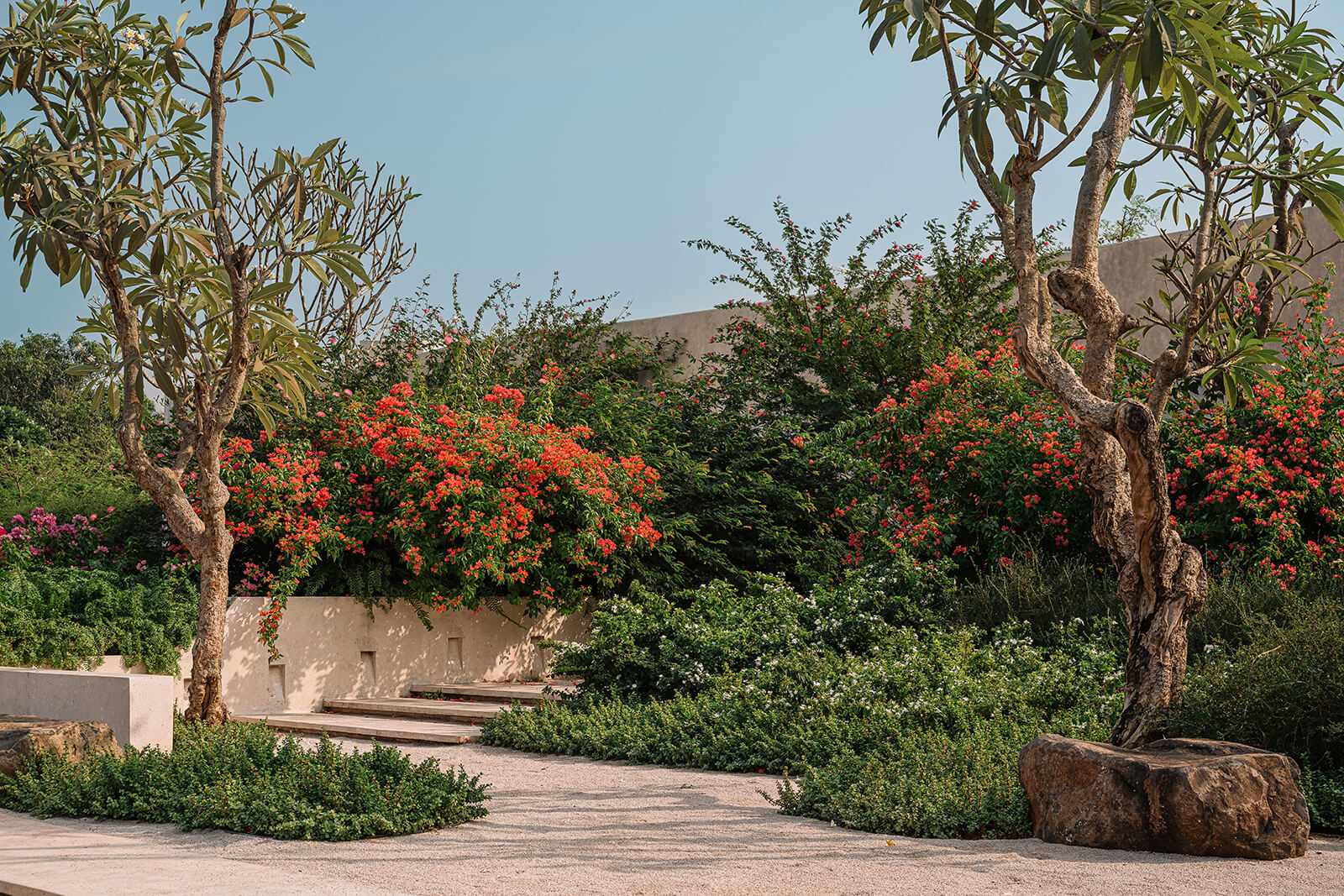
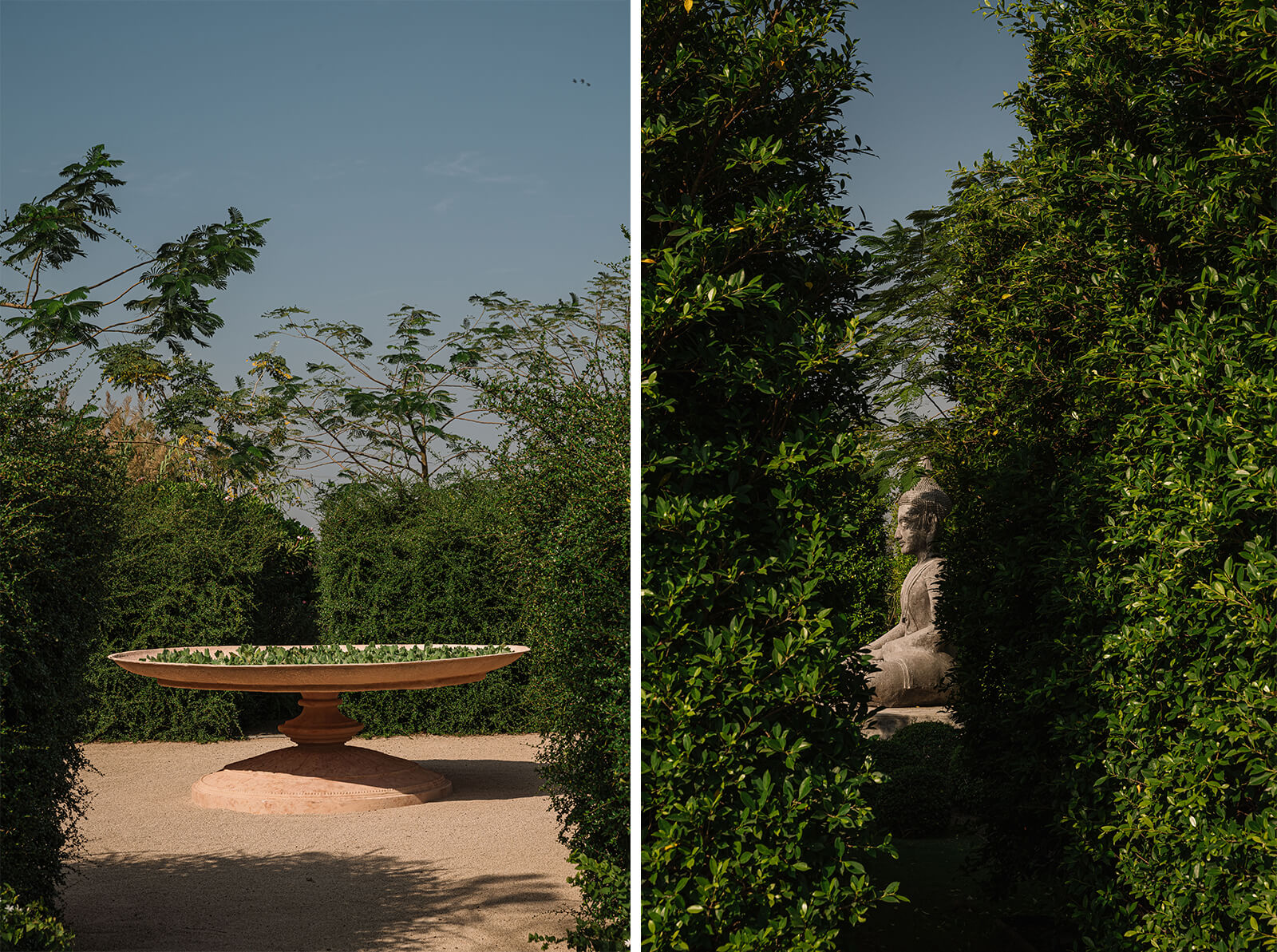
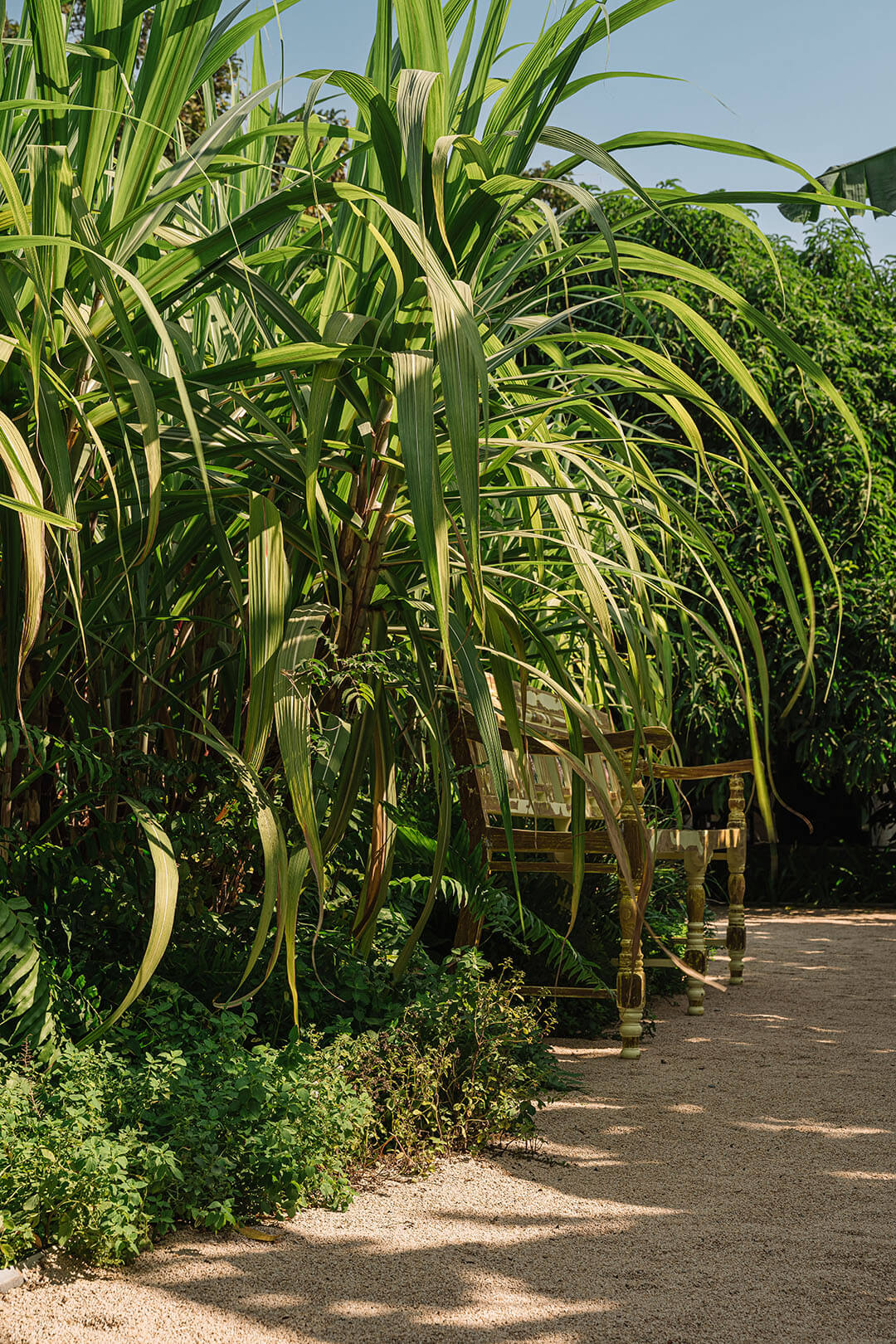
The design scheme focused on forming an independent ecological system through interventions rooted in circular design. “The landscape favours native and fruit-bearing trees over ornamental excess, and permeable surfaces are employed to reduce runoff,” Maniar shares with STIR. On the western edge of the site lies an orchard dotted with indigenous fruit-bearing trees, such as mango, coconut, chikoo, jamun and lemon, while the eastern side hosts a grove of sugarcane and other tall native grasses.
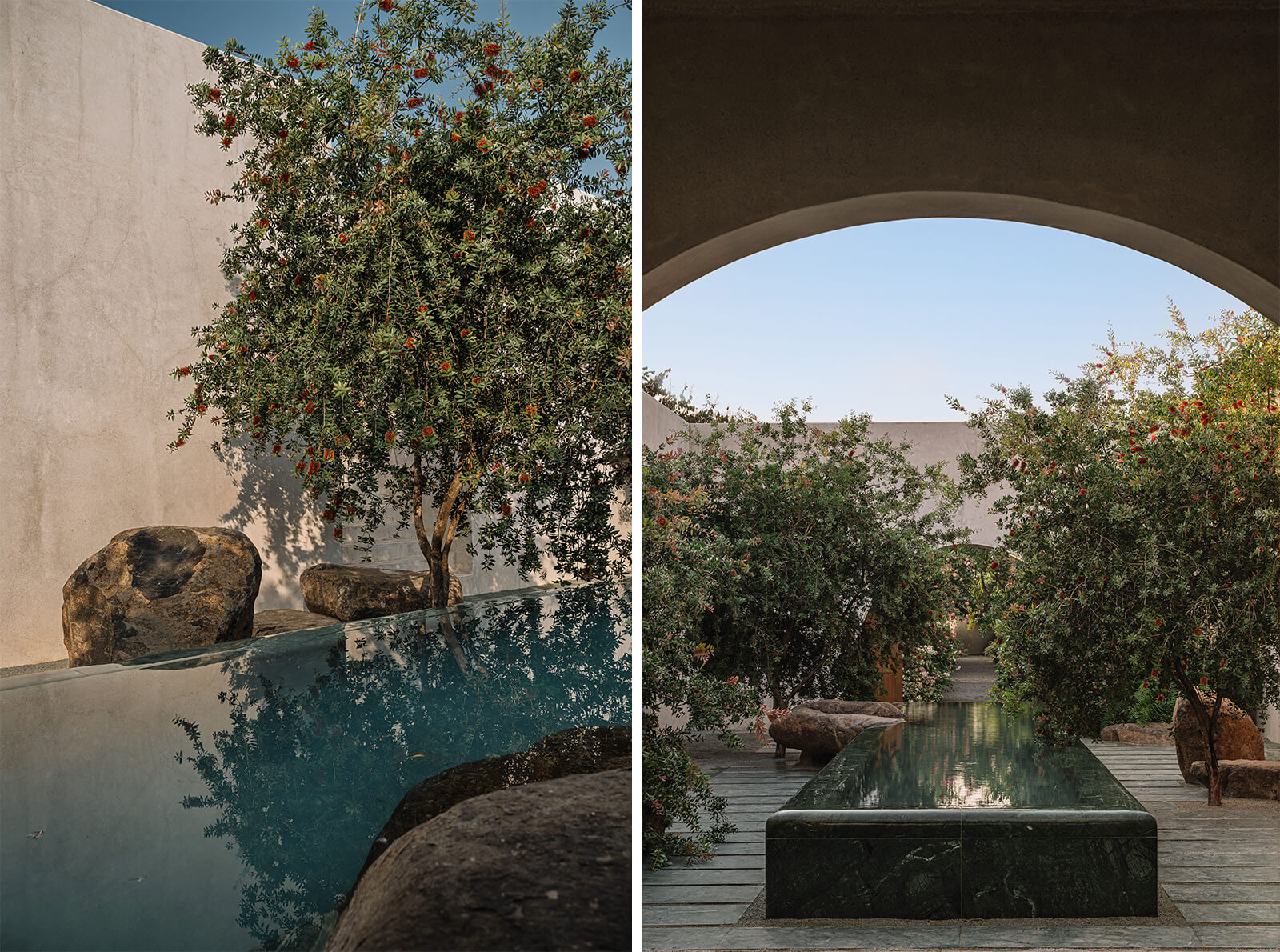
To the left of the peristyle, a solid arched door opens into a secluded private court—a quadrangle enclosed by sand-faced, lime-plastered arched facades and complemented by beautiful Bottlebrush trees. At the heart of the court rests a rectilinear vessel carved from thick Baroda green Indian marble. The water it holds appears still, gently touching the sturdy stone edges. Subtle ripples travel across its surface, momentarily lending fluidity to the hard stone.
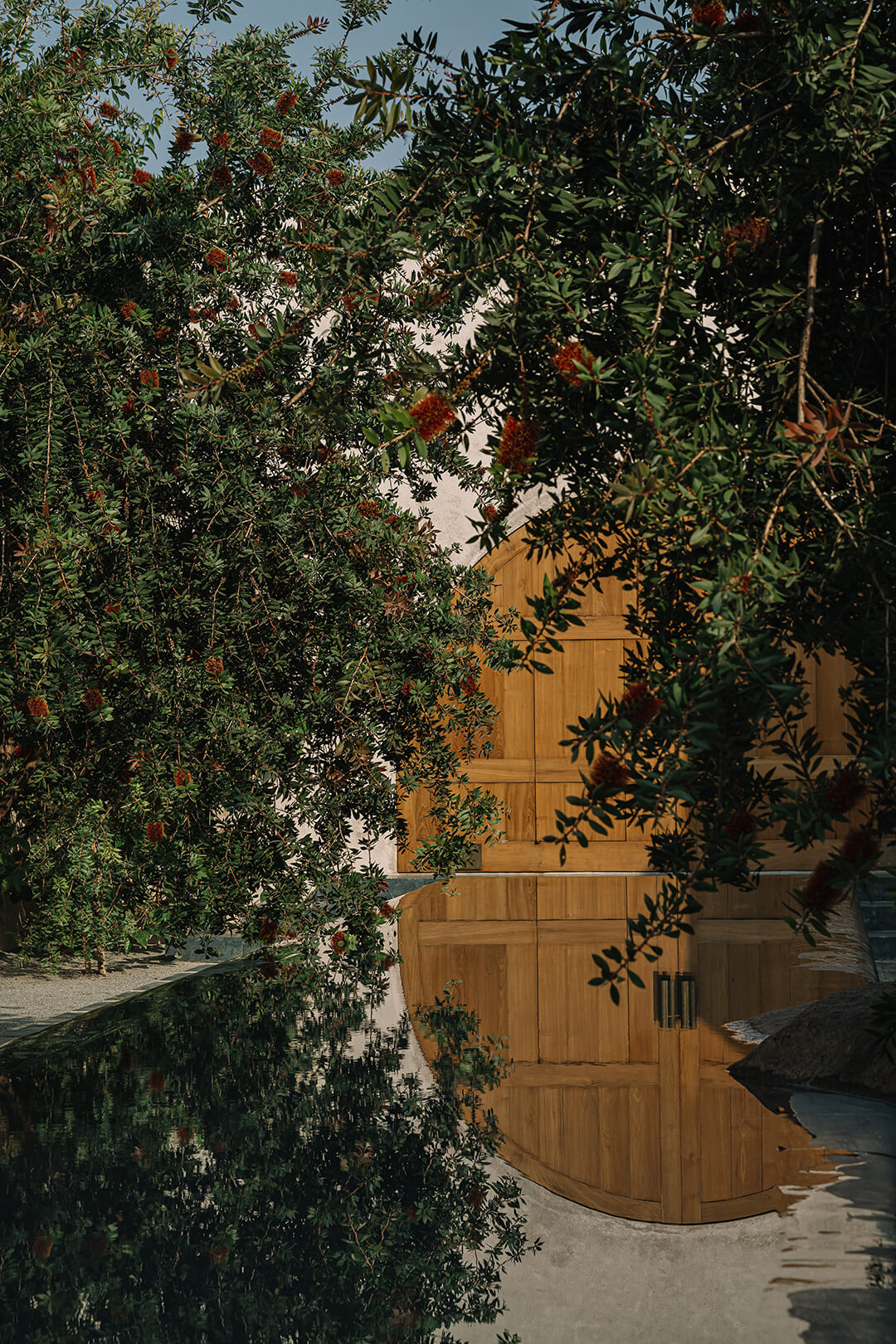
The flora weaves into the built form, engaging with the verandahs, courts and arched openings, the entire expanse breathing with an unassuming subtlety. “You don’t need to shout to be heard,” recalls Maniar, reminiscing over the words he heard from his tutor in design school and how they translated into his vision for the project. “Rather than filling five acres with spectacle, the design relies on atmosphere—light, rustling leaves, rippling water and seasonal change,” he notes.
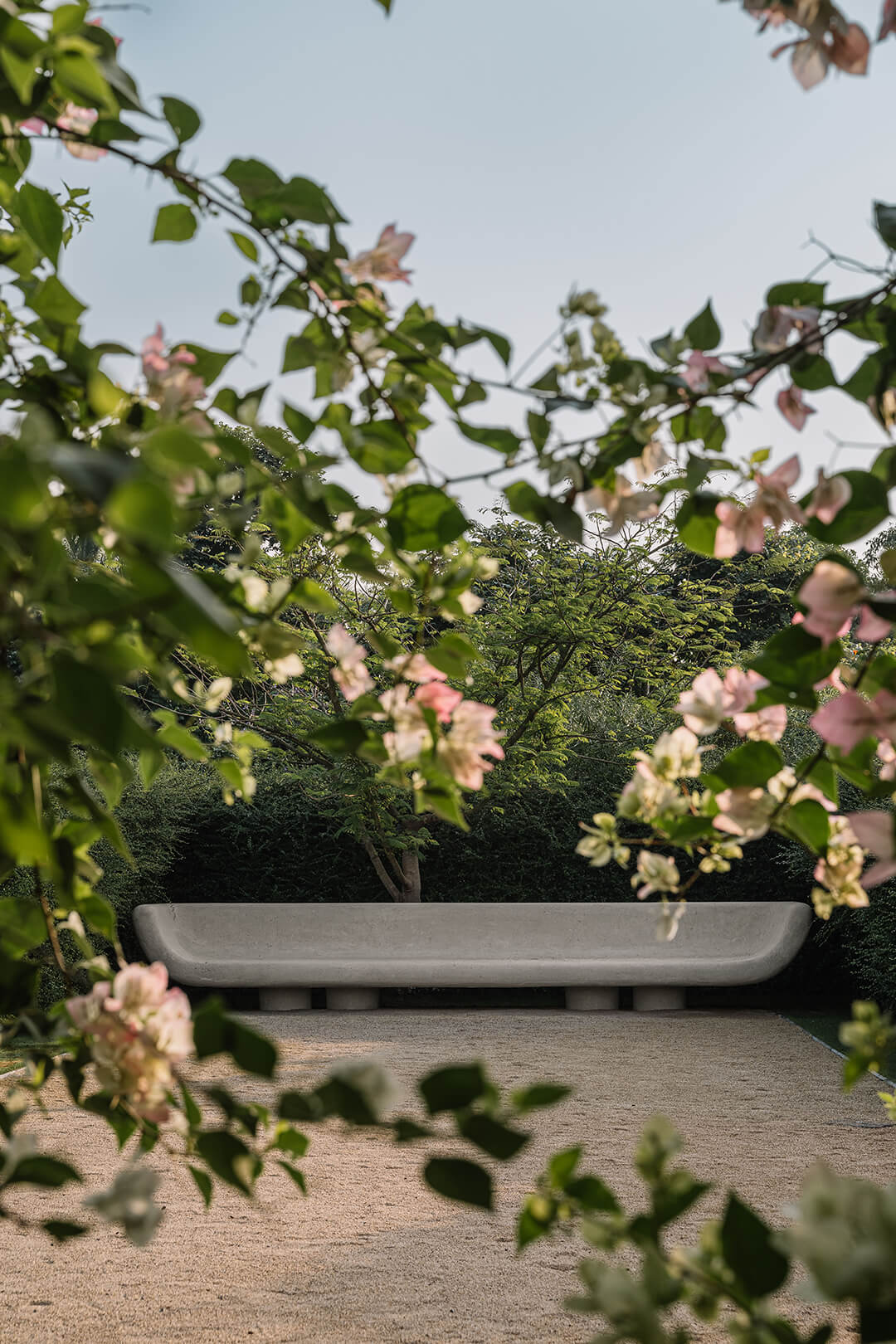
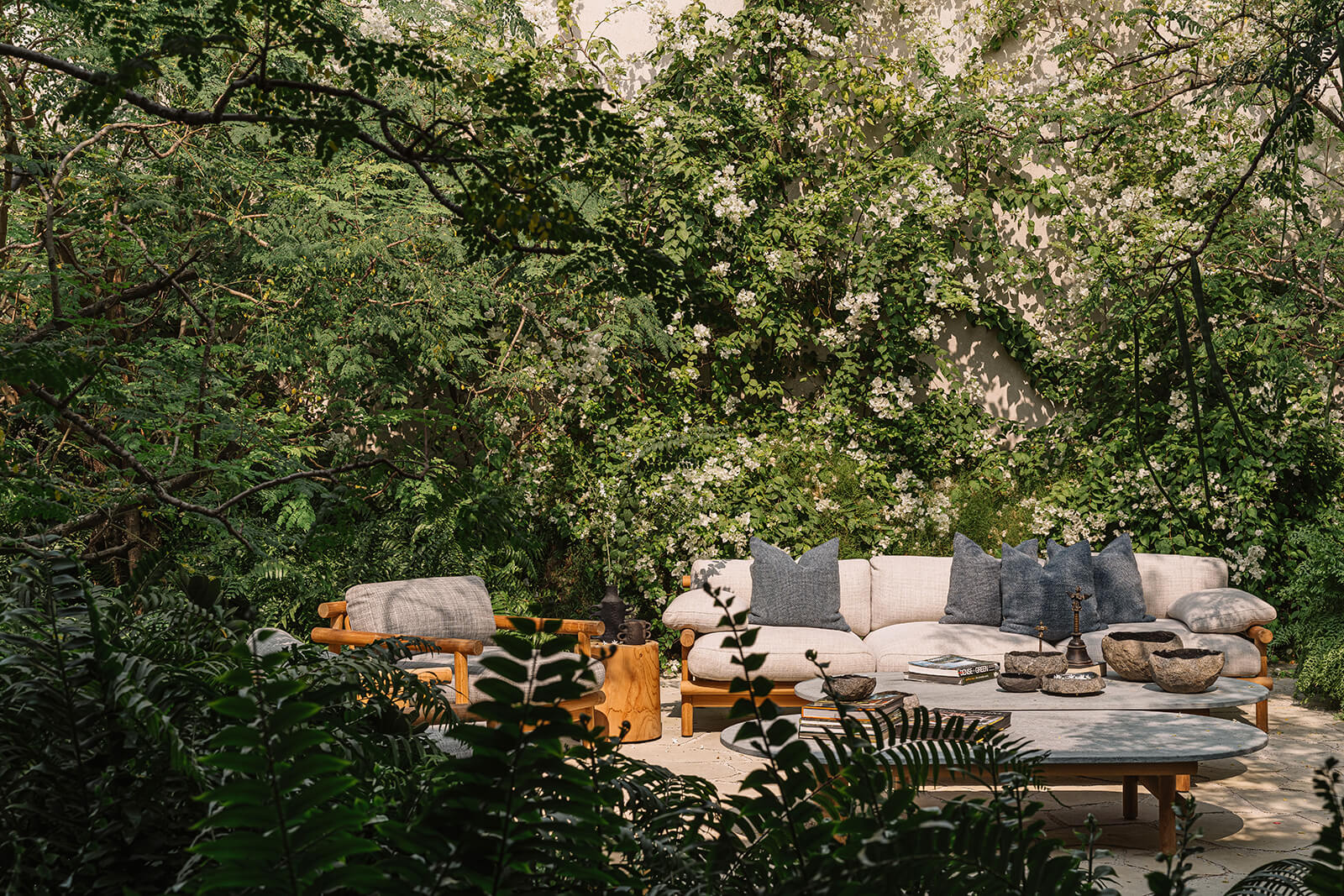
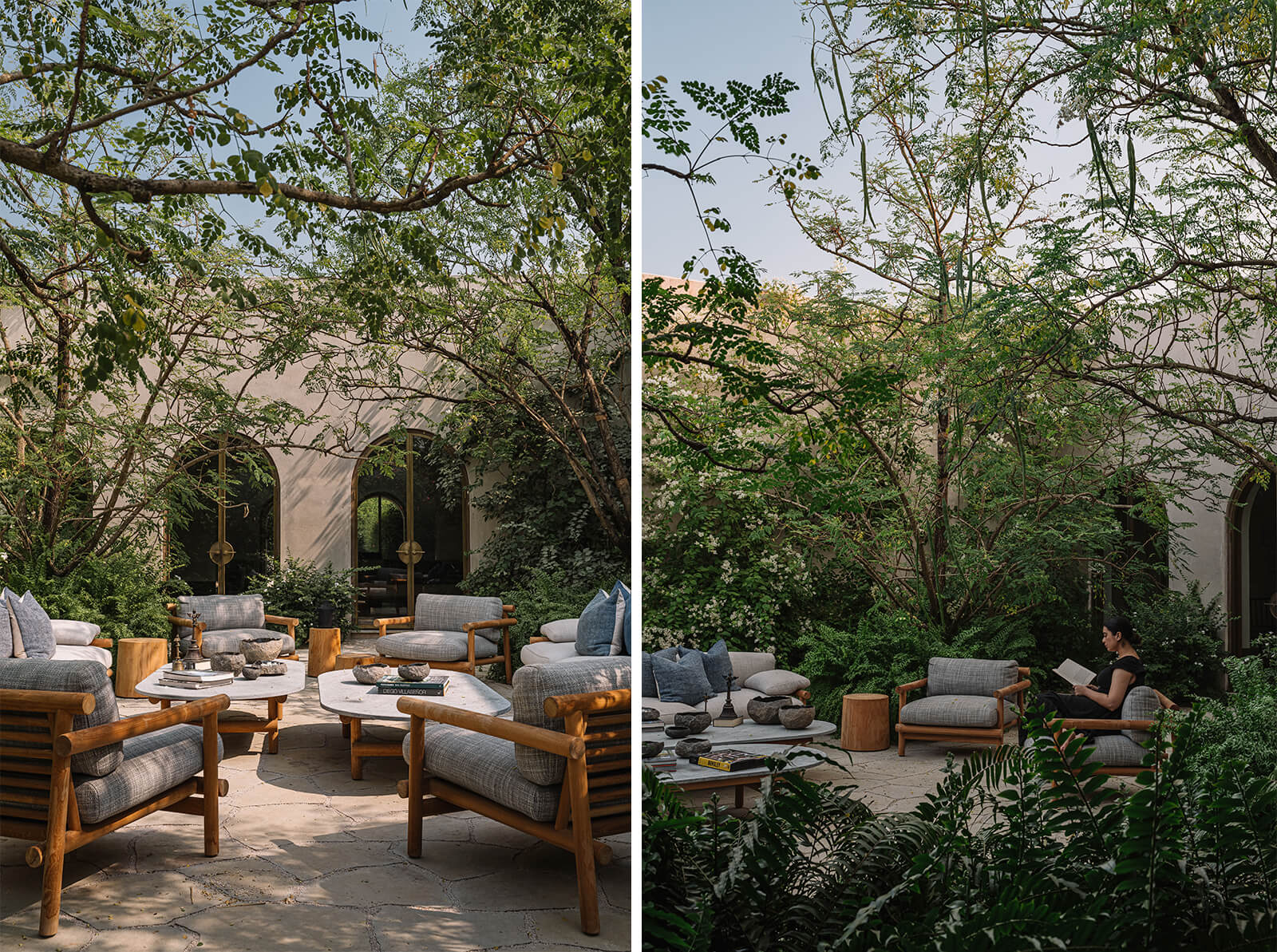
The peristyle overlooks flocks of Moringa trees on its right, native Jasmine and Powder Puff plants dance around the Shahbad floor, made both of hand-cut slabs and crushed gravel. It hosts a rare indulgence in the scheme—a cosy Italian seating—while an unused boulder, found originally at the site, lies quietly at the patio.
To engage the emotional and sensory—beyond architecture and landscape—Maniar invited seven Indian artists to explore the sanctuary: to observe, reflect and to respond to it through their own work. “Their perspectives can reveal unseen dimensions—light shifts, acoustic subtleties, transience, spatial tension—that even the designers might overlook,” he says. “In a project centred on mood and discovery, artistic dialogue deepens meaning.”
Much like the garden itself, the outcome of this exercise yielded results across a diverse range: from works in paint and ink referencing elements from Maniar’s landscape scheme, carvings in stone, bespoke jewellery inspired by geometric shapes of the leaves, a daybed covered with hand-quilted linen alongside a sheer featuring brightly coloured bird motifs, to a Passion fruit and Hibiscus cake. Each artwork reflected the conversation between natural forces—light, colour, texture, sound and emotion—witnessed through the landscape.
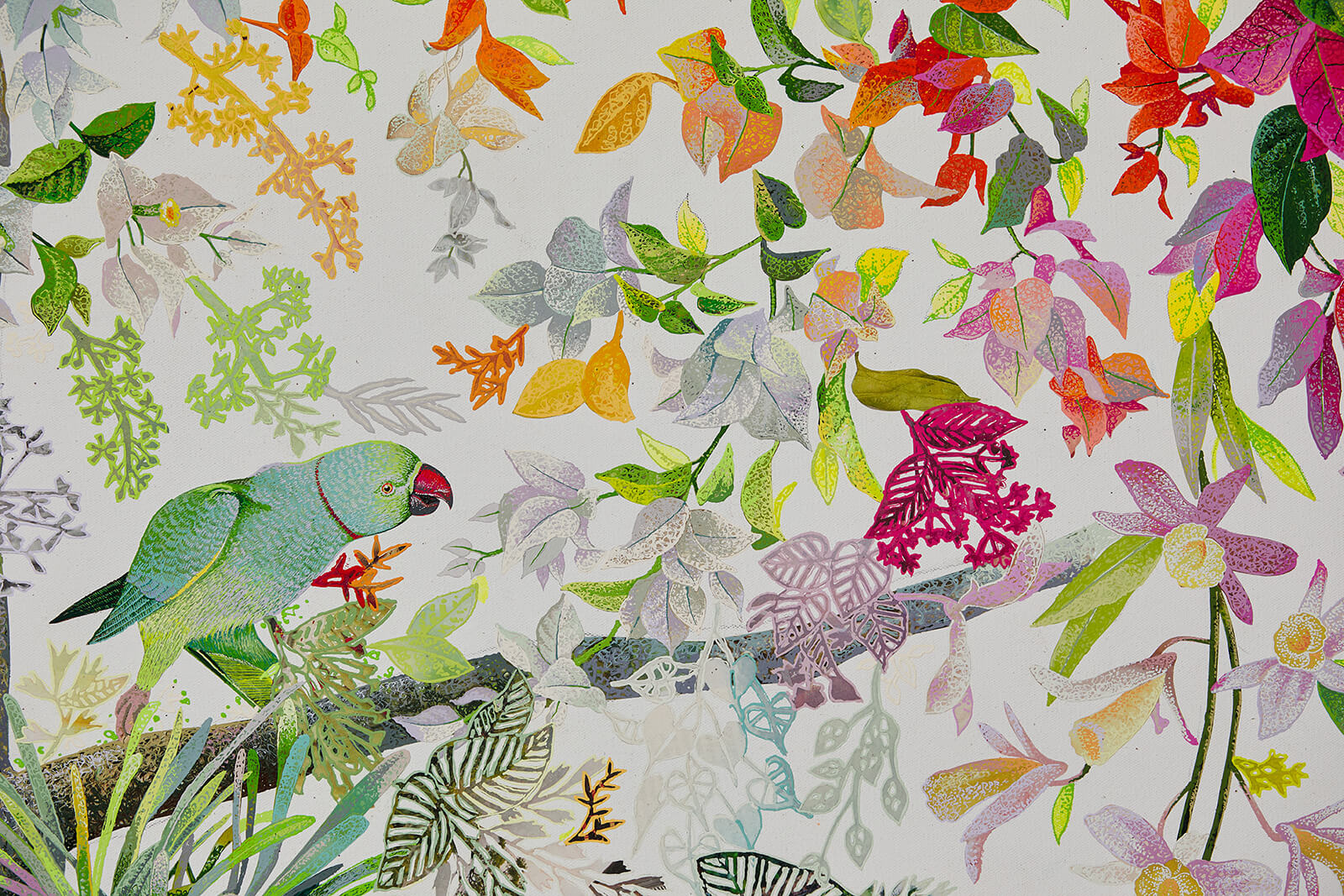
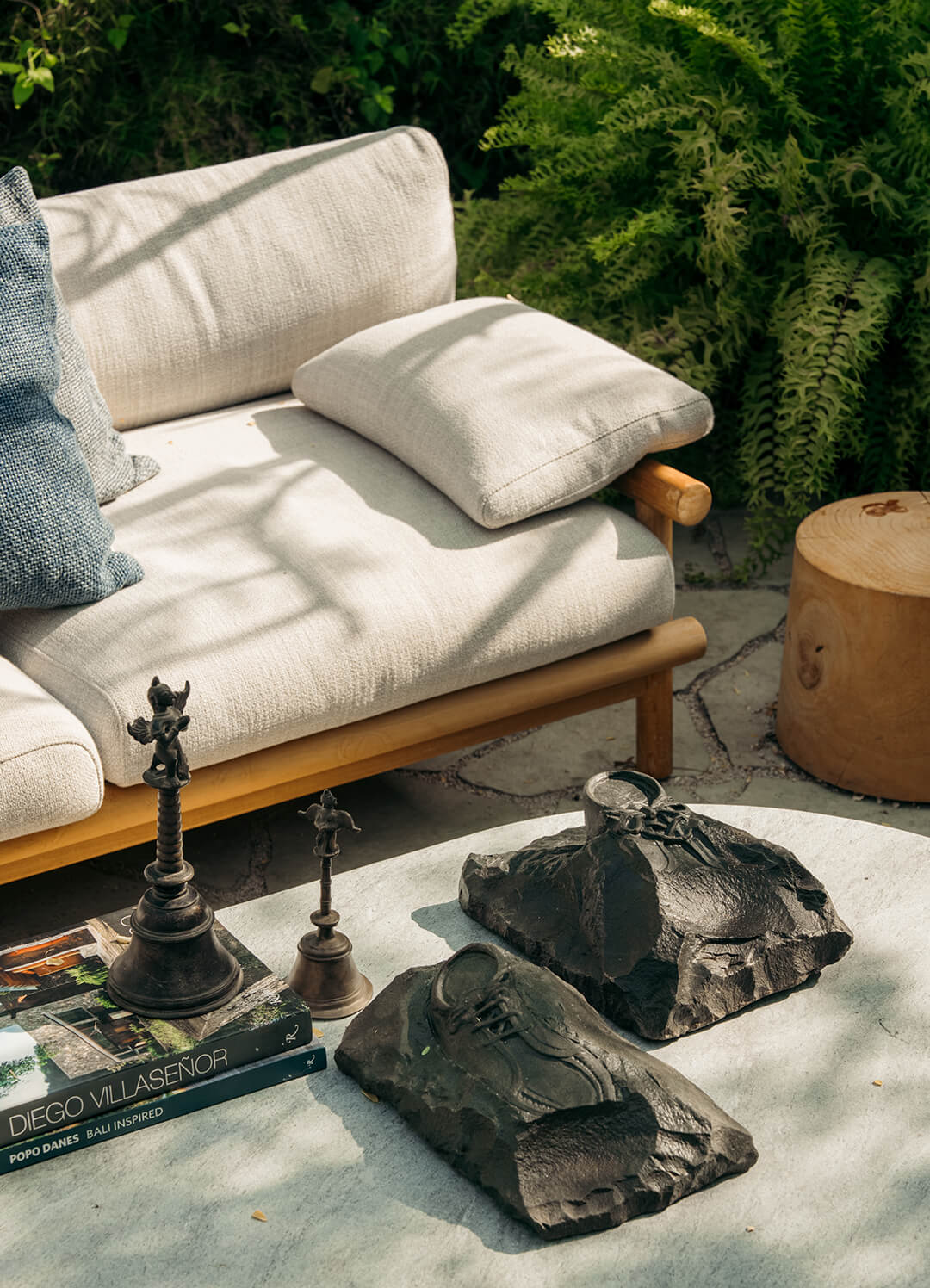
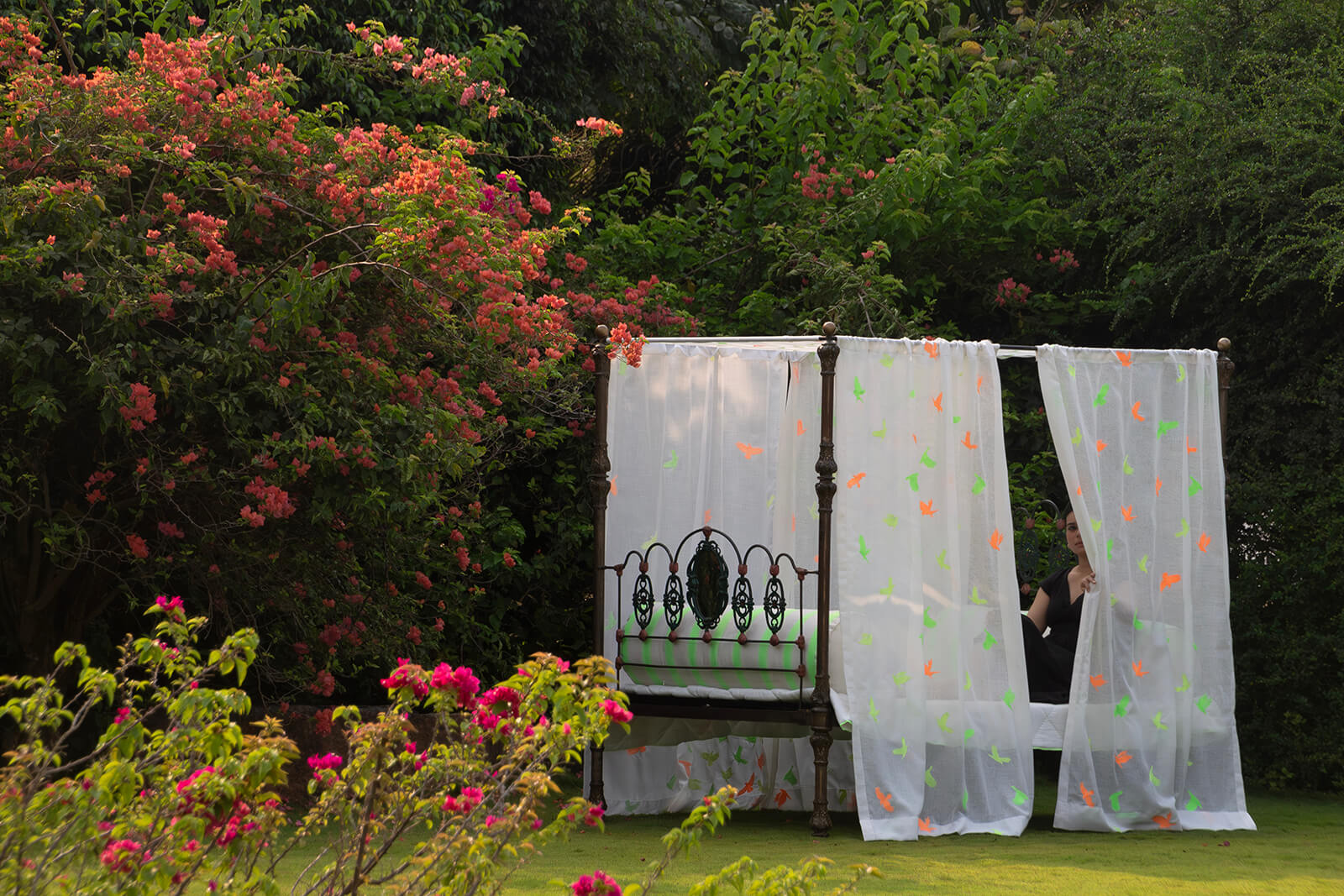

Through perpetually transient moods, the fragrance of Jasmine and Frangipani and the generosity of fruit-bearing trees bespeckled with natural light, the Dua Villa is a sensory experience, an intentionally immersive journey between the lost and found. For all their time at the residence, the family is lured to the outdoors, to view, pause and reflect in a mixed sense of wonder and contemplation. In fact, nurturing the native trees and shrubs has invited a variety of birds to frequent the site, prompting the homeowner into the quiet ritual of birdwatching.
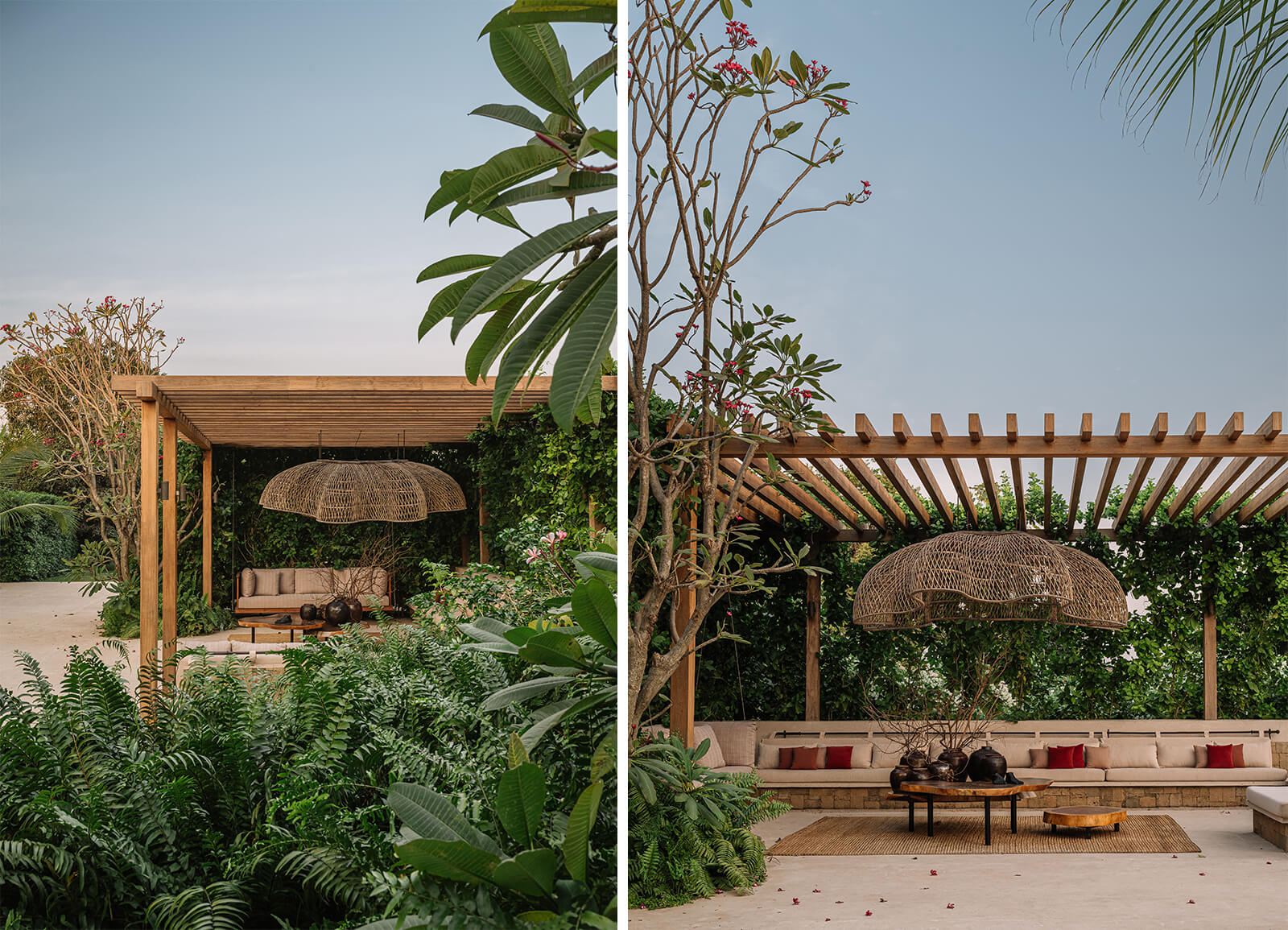
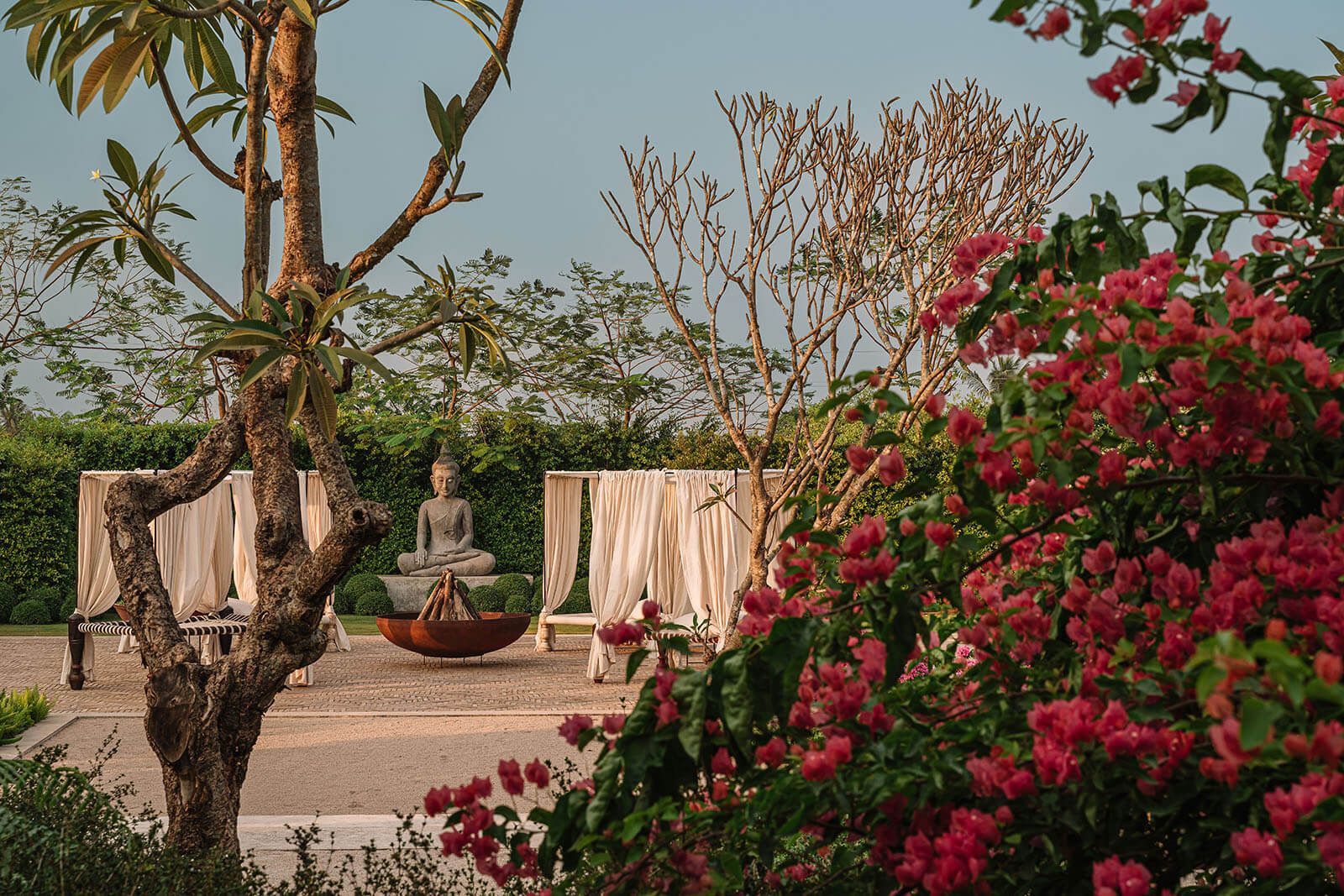
Amidst the sprawling paddy fields in Alibaug, the Dua Villa imparts a slow rhythm to life. “What stands out most is the emotional quality of the space,” Maniar says, reflecting on the journey of the project and what he cherishes most about it. “The ever-changing moods, the interplay of still stone and moving water, the fragrance of jasmine, the dappling of light, and the quiet generosity of fruit-bearing trees make it deeply personal.”
With locally adapted planting that perpetuates climate resilience and biodiversity, the landscape architecture draws hues of earthy browns, tranquil greens and muted blues from nature. Although the ‘natural’ here is consciously curated, it is carefully spread across the vast expanse, growing with passing days and changing seasons, invoking a perpetual sense of surprise and wonder.
Name: Dua Villa
Location: Alibaug, Maharashtra, India
Typology: Residential Landscape
Landscape Design: Kunal Maniar & Associates
Collaborators: Architecture BRIO (Architecture & Interior Design)
Area: 5 Acres
Year of Completion: 2025

by Pranjal Maheshwari Oct 16, 2026
At the 2026 Stirling Prize ceremony, Mary Duggan with RUFF Architects, MAKER Architecten and Nakshabid Architects were felicitated for proffering quality housing and social equity.
by Mrinmayee Bhoot Oct 12, 2026
The new Centre for Contemporary Arts, fostering public engagement with art in Uzbekistan, is housed in a tram depot refurbished by the French studio, emulating local craftsmanship.
by Mirra Lynn Oct 10, 2026
The Shanghai-based architecture practice’s intervention in Suzhou transforms three abandoned houses into a bookstore, café, library and homestay.
by Pranjal Maheshwari Oct 09, 2026
The eighth edition of the international architecture and urban design showcase, themed How Much?, explores diverse implications of social, ecological and economic ‘cheapness’.

make your fridays matter with a well-read weekend
Enter your details to sign in
Don’t have an account?
Sign upOr you can sign in with
a single account for all
STIR platforms
All your bookmarks will be available across all your devices.
Stay STIRred
Already have an account?
Sign inOr you can sign up with
Verification link sent to check your inbox or spam folder to complete sign up process
Tap on things that interests you.
Select the Conversation Category you would like to watch
Please enter your details and click submit.
Enter the 6-digit code sent at


Kunaal Maniar invokes quiet luxury through an ecological sanctuary at Dua Villa
by Pranjal Maheshwari | Published on : Feb 27, 2026


 Sign in with Google
 Sign in with email
What do you think?