Architecture10 mins. read
Concéntrico 2026 in Logroño: A festival the city has made its own
by Samta NadeemJul 07, 2026




by Mrinmayee BhootPublished on : Jun 18, 2026
When Frank Gehry first conceived of his design for the Guggenheim in Spain, he couldn't perhaps have foreseen the waves it would create in the cultural landscape. Since the showy, spaceship-like behemoth landed in Bilbao, cultural institutions have tried to emulate its influence on the local economy in different cities to varying results. If the news cycle of the past few months—overloaded with announcements of new museums opening—is any indication, organisations and institutions are still trying to recreate the same heady combination of ambitious, aesthetic and typically popular architecture. It’s perhaps no coincidence that Gehry’s design was conceived for a country which also boasts the Barcelona Pavilion, a project that remains the paragon of modernist architectural rhetoric.
In their skewed conception of architecture’s relationship with identity, both edifices espouse the same philosophy: of a permanence ascribed to the image of architecture. Ironically enough, much of the attention to aspiring centres of design today draws on temporary interventions: biennales, design weeks, festivals. The increasing popularity—and hence proliferation—of such showcases dedicated to probing the issues of our precarious world through the lens of design and the built environment has meant that seasonally, cities transform into living museums: activating urban contexts, engaging local communities and institutions alike, fostering a sense of belonging and identity that often supersedes residents.
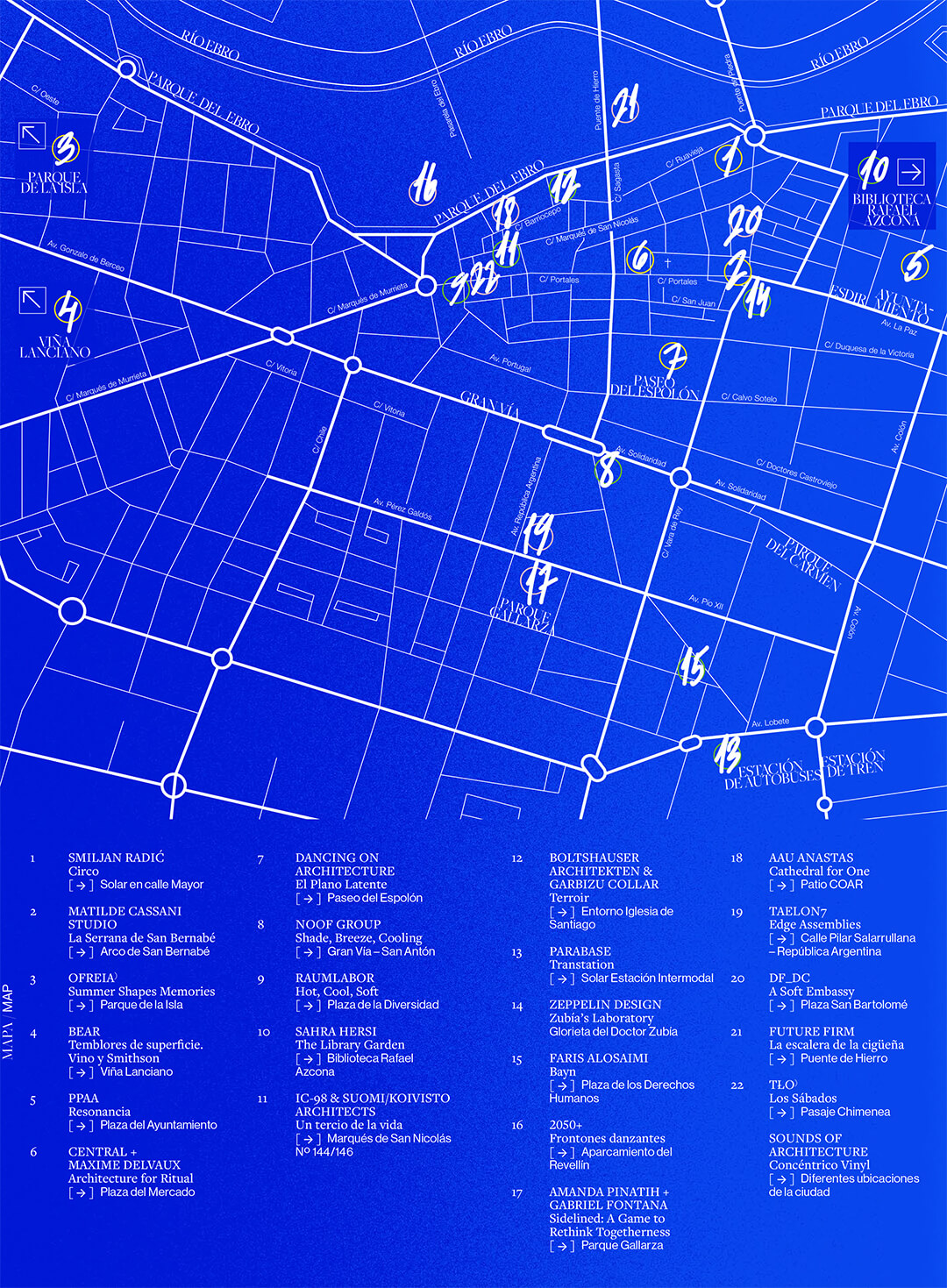
It’s these deceptively simple objectives that Concéntrico hopes to engage with. Conceived as ‘a large-scale laboratory for architecture, design and urban experimentation’, the 2026 edition of the Logroño-based festival is focused on the performative and inherently collective nature of existence in public space. The festival unfolds from June 18 – 23, 2026, with the programme structured around three thematic axes: Identity and Fiction, Urban Ecologies and Ephemeral Agents. Bringing together a diversity of voices from all over the world, the projects by renowned studios as well as emerging voices explore questions of public space as ritual, the significance of celebration in design, along with alternative material possibilities, circular design and temporality as methodologies to champion.
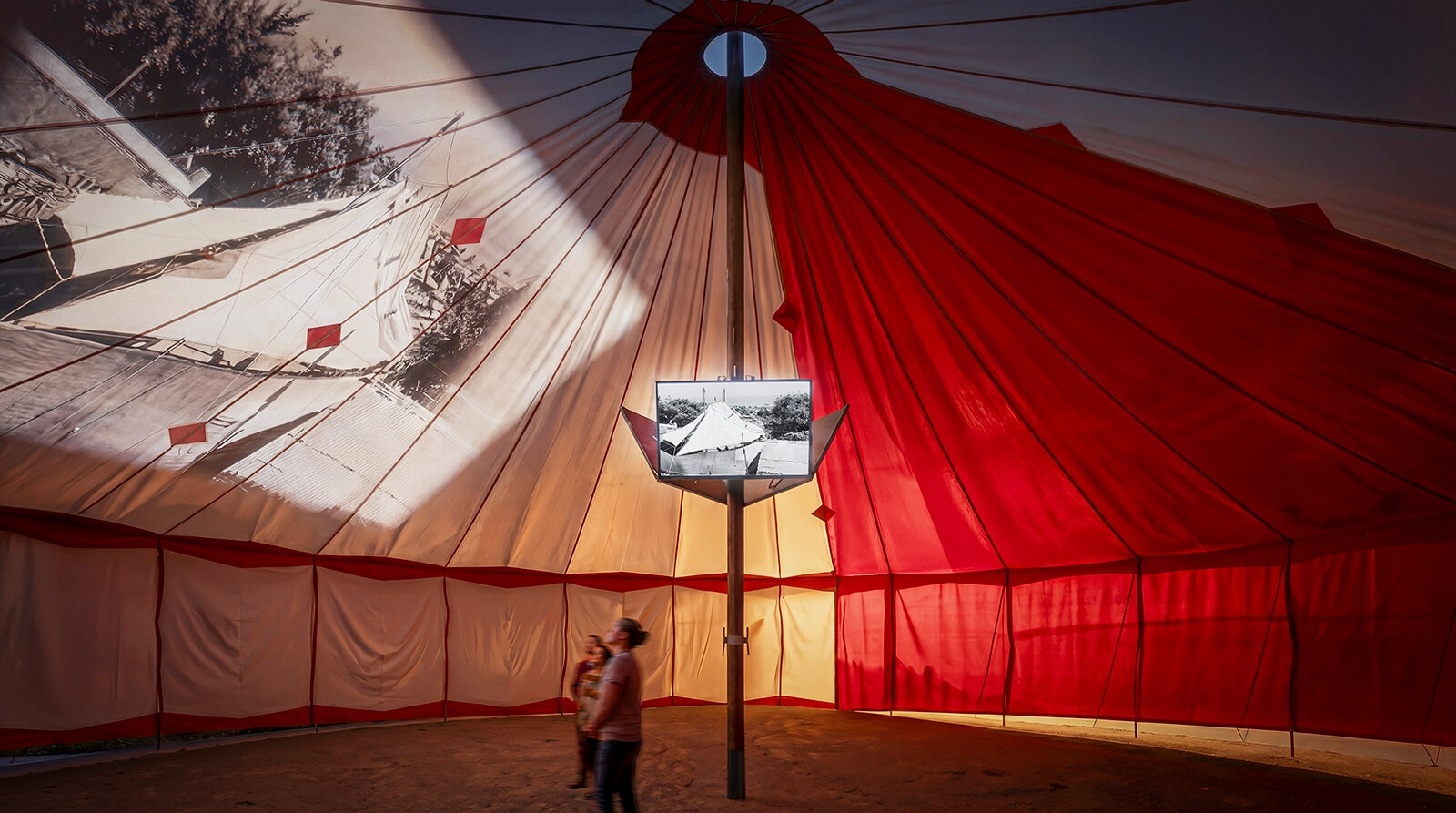
Under the thread Identity and Fiction, proposals contend with the age-old notion that architecture is the shaper of our shared narratives; container of the myths that make up our collective identities. Foregrounding rituals, celebrations, symbolic gestures and our implicit negotiations of space, the proposals ask what other ways of being we can imagine. In this, they also counter the false idea of permanence in architecture with installation designs that emphasise transience, utilising textiles and mesh-like elements. For instance, Pritzker laureate Smiljan Radić’s design Circo draws on Eugenio Dittborn's Aeropostal paintings and the travelling circuses that move along the coasts of Chile, spotlighting the temporary architecture as a space for collective, surreal and playful encounters.
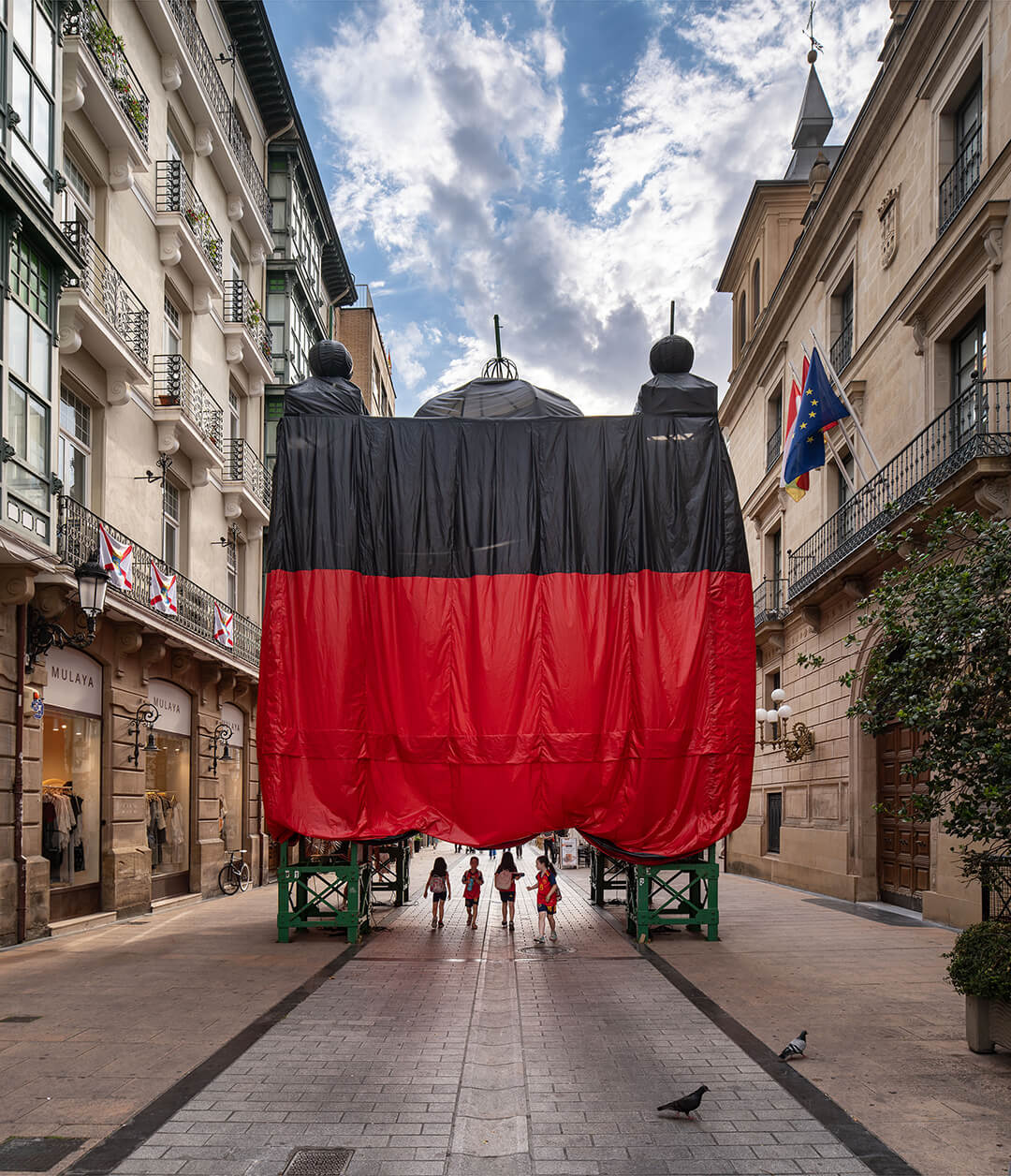
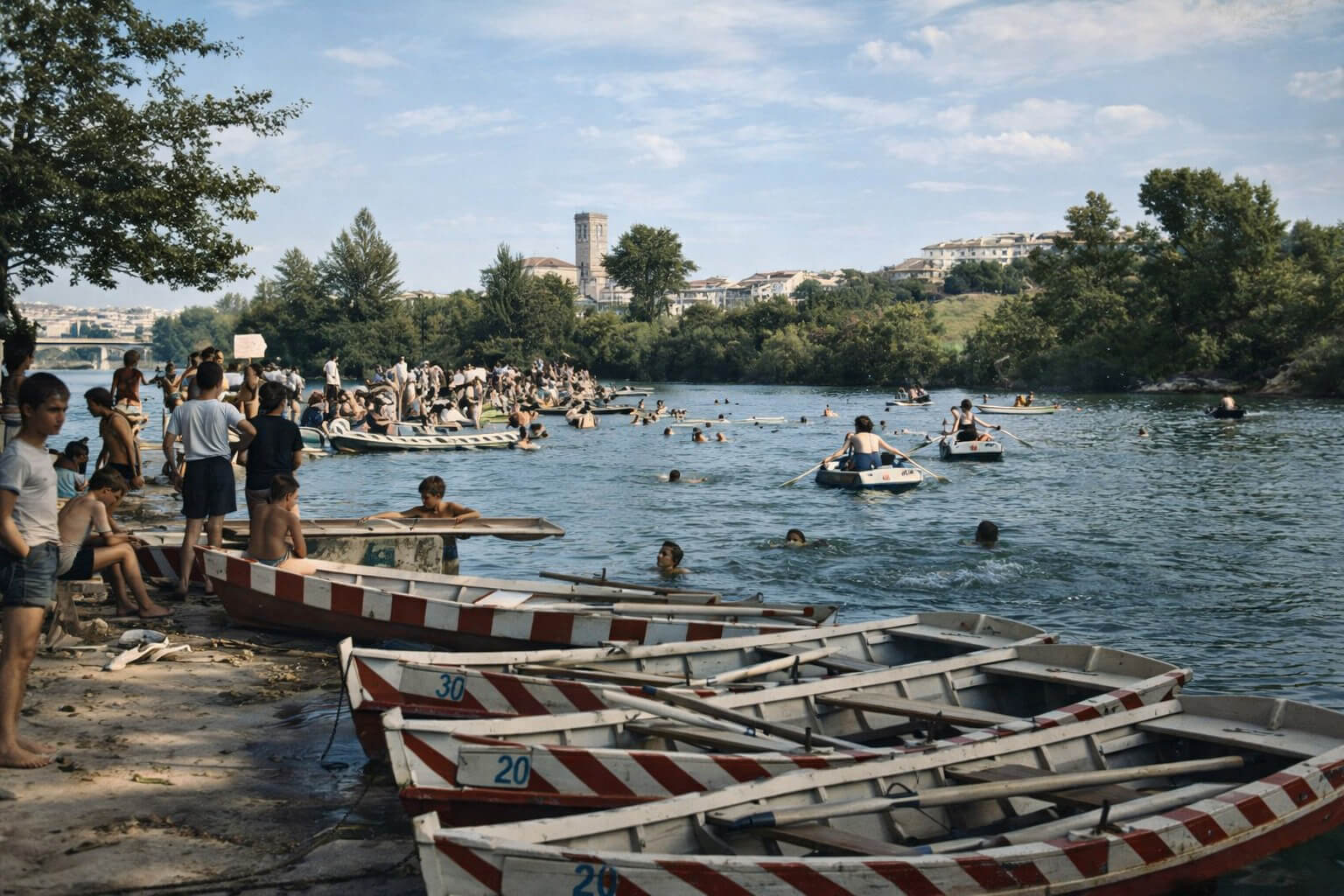
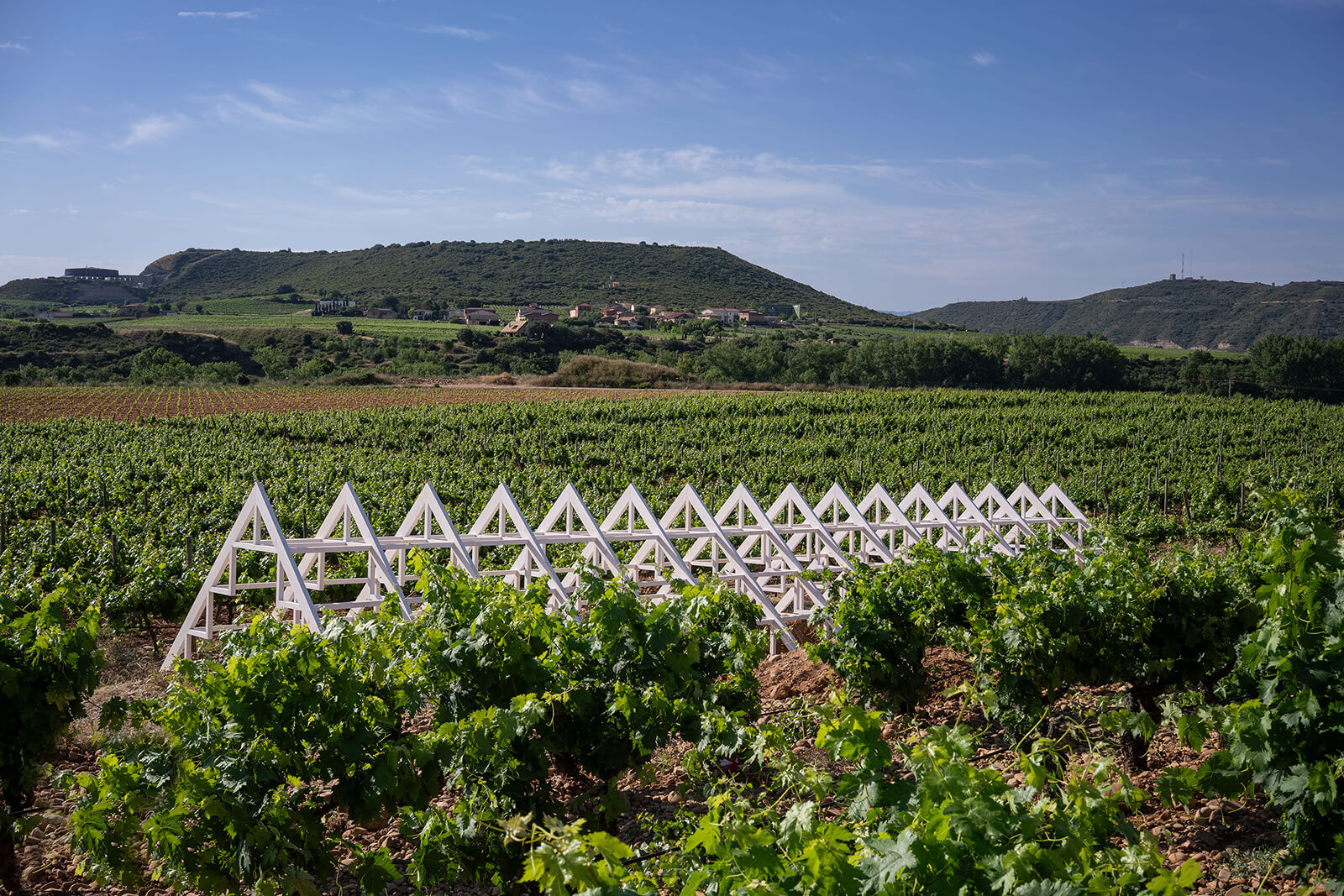
In their pavilion, Bilbao-based BEar constructs a mesh-like structure, Temblores de superficie, within the Viña Lanciano vineyard to draw attention to the living history of the terrain, inviting visitors to step into the earth, to walk through it and smell it, with the path leading to the river Ebro. The fluvial landscape is the focus of Switzerland-based Ofreia’s intervention titled Summer Shapes Memories. The firm draws on the collective memories of summers spent along the riverside with a temporary pavilion that turns a concrete court into an artificial water landscape.
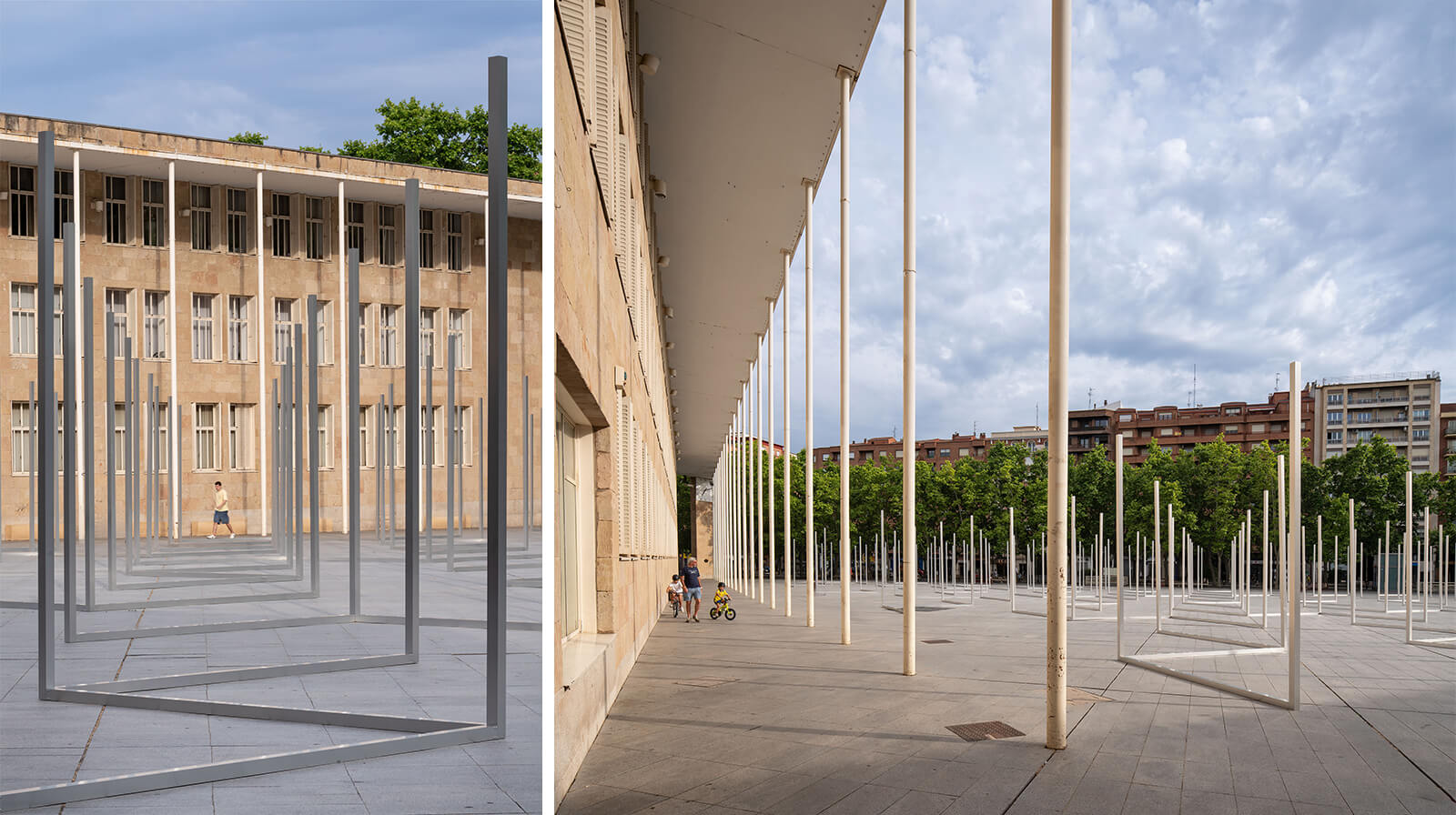
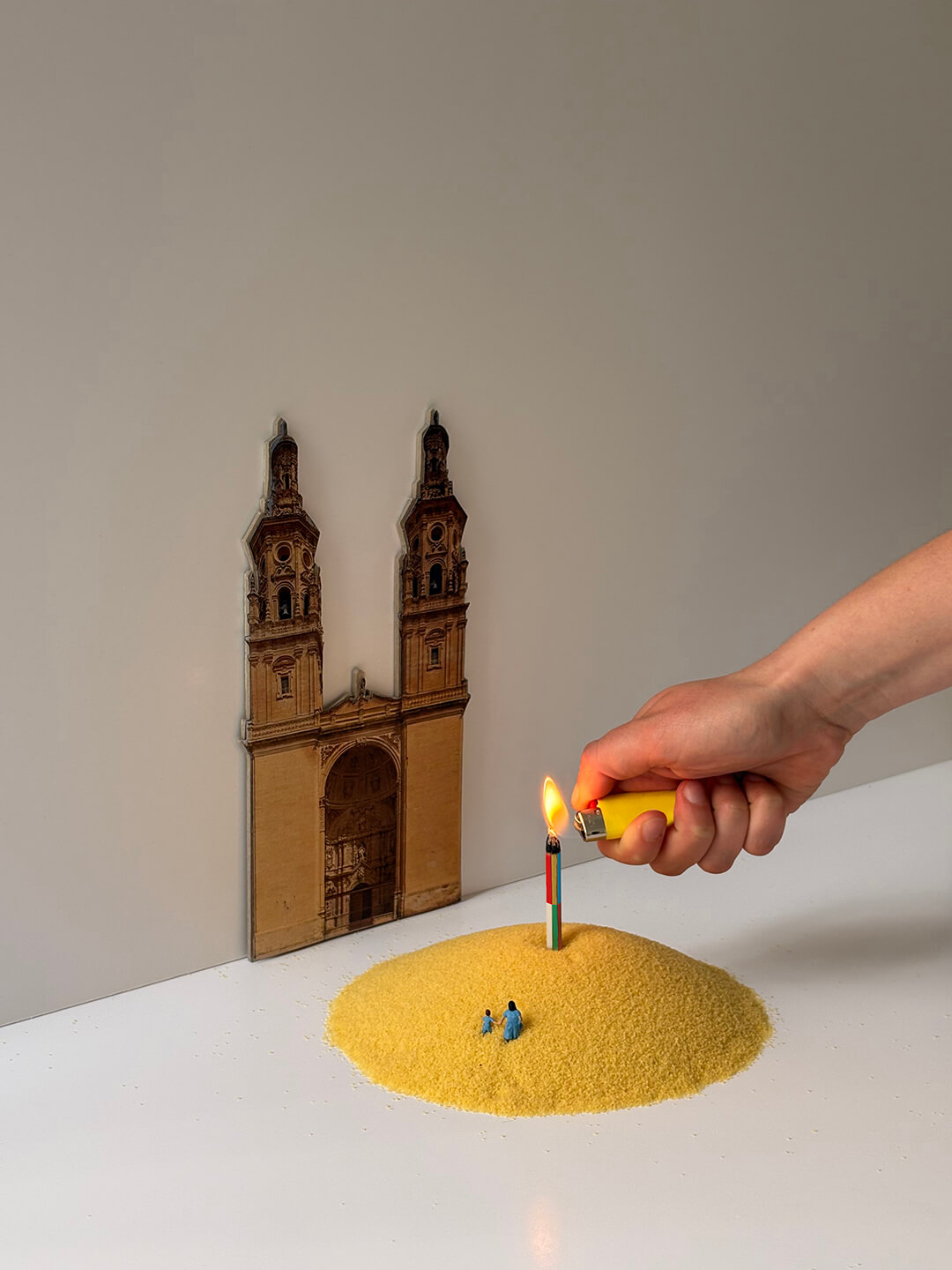
Hoping to engage with the built environment of the Spanish city, interventions by Mexico-based PPAA and Belgian designers CENTRAL, in collaboration with architectural photographer Maxime Delvaux, probe how architecture can influence how we move through space. Explicitly referencing the ritualistic, CENTRAL and Delvaux's project, Architecture for Ritual is deliberately transient. A sand dune in front of the Co-Cathedral of Santa María de la Redonda transforms the square into a playground, while each day a mast hidden in the design is revealed, only for it to be burned at the end of the six-day festival.
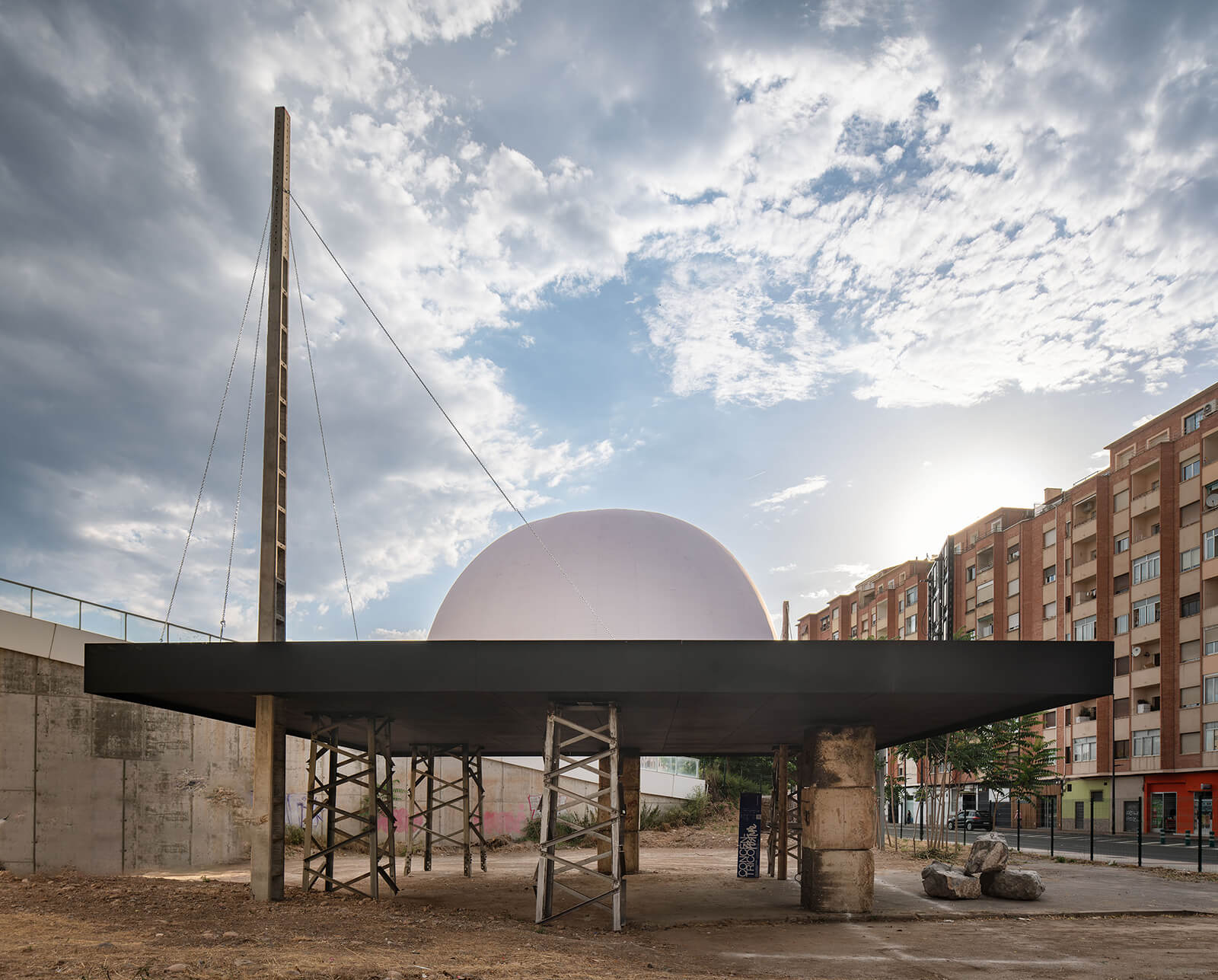
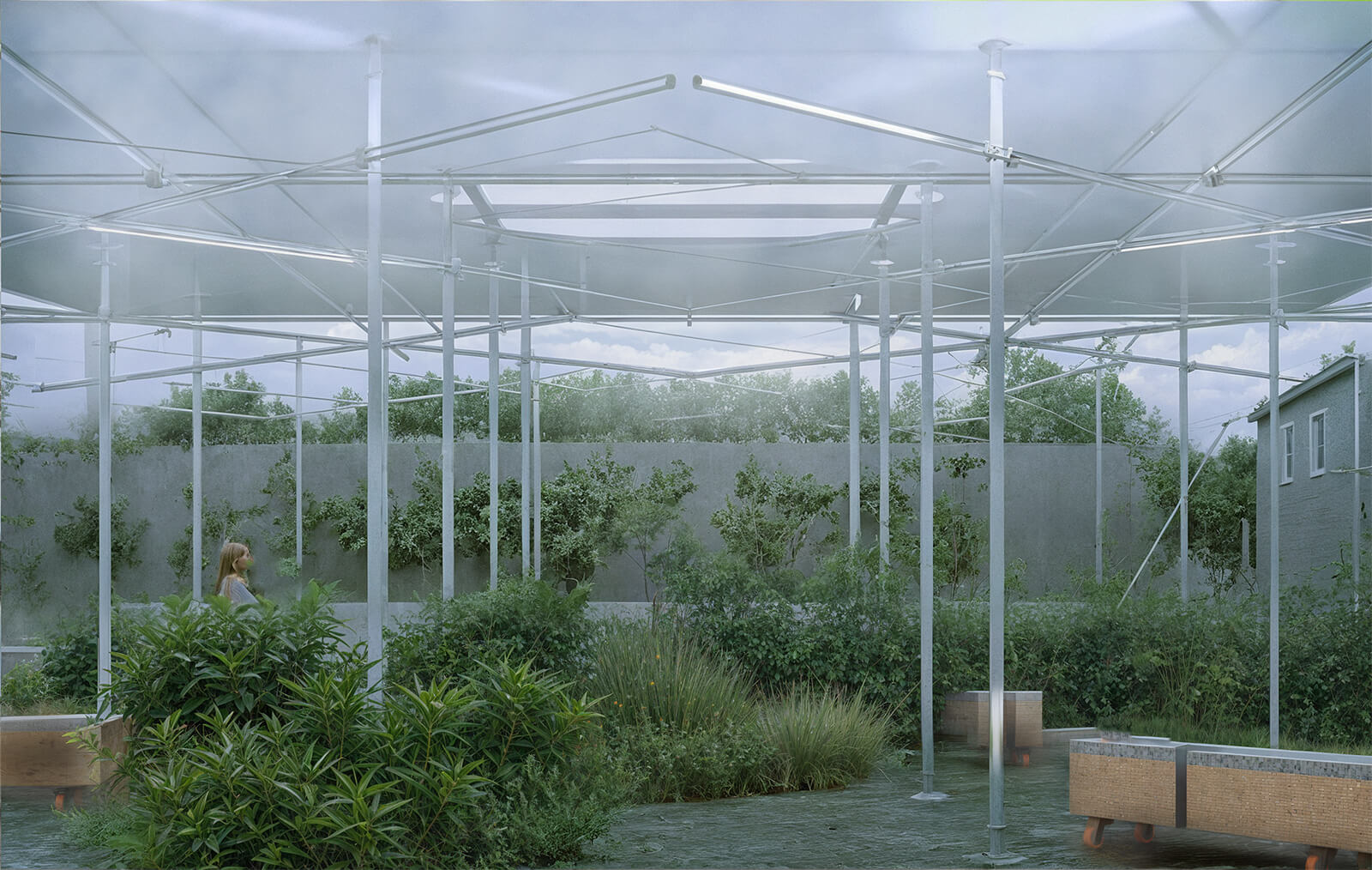
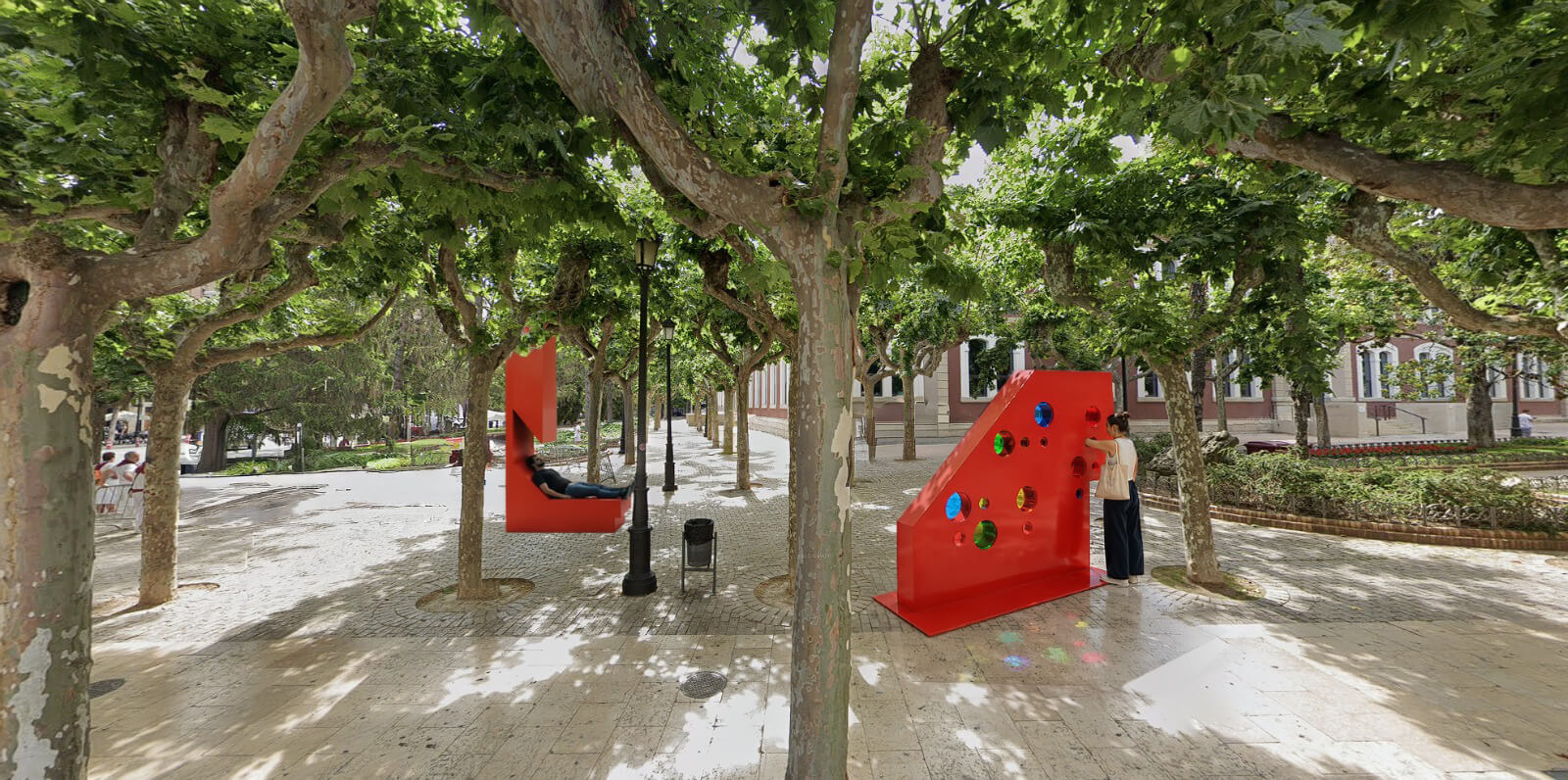
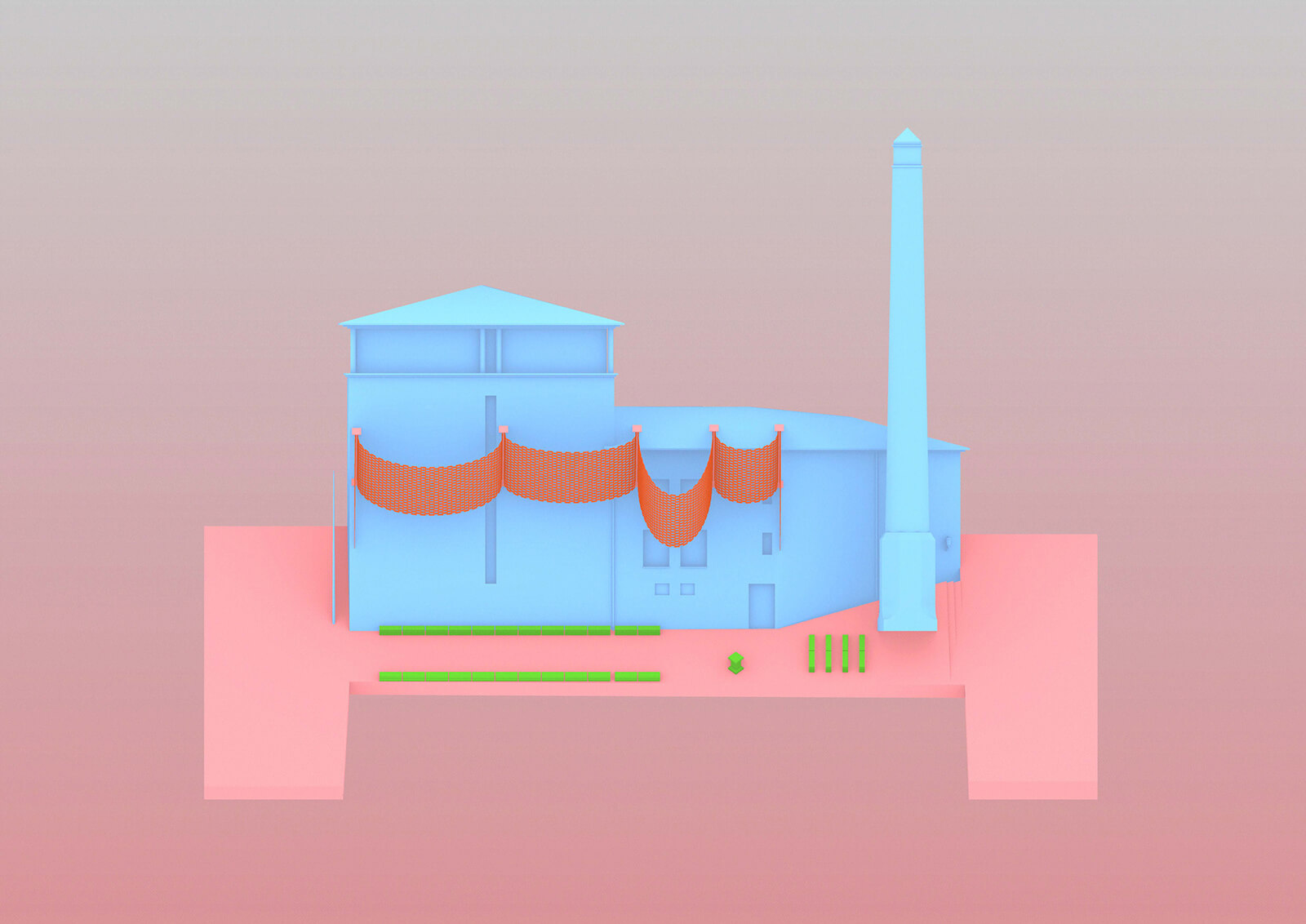
With Identity and Fiction drawing on the communal aspects of space, it is crucial to underscore that these ideas of collectivity, enmeshed with the more-than-human, are equally affected by climate, terrain and other ecological conditions. It’s this notion that the designers grouped under Urban Ecologies bring to the fore with projects proposing prototypes that showcase how our public spaces can adapt to the cataclysmically changing climate, or ones that use locally sourced, ecologically considerate or reusable materials from previous editions of the festival. For instance, Swiss architects Parabase’s Transtation is constructed from the obsolete equipment of a former electrical substation. The installation is meant to generate energy from the organic waste of train and bus passengers through a biodigestion system.
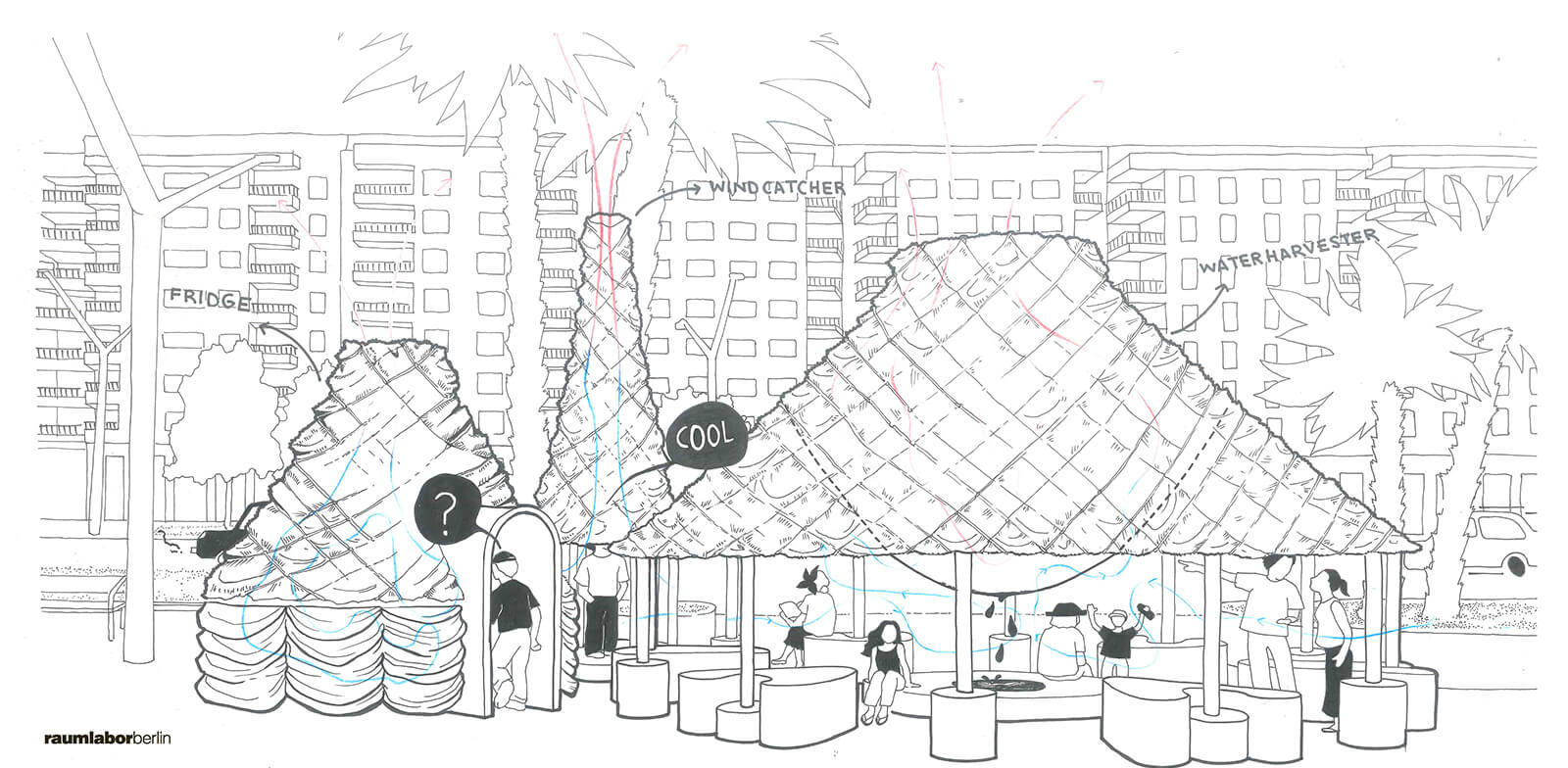
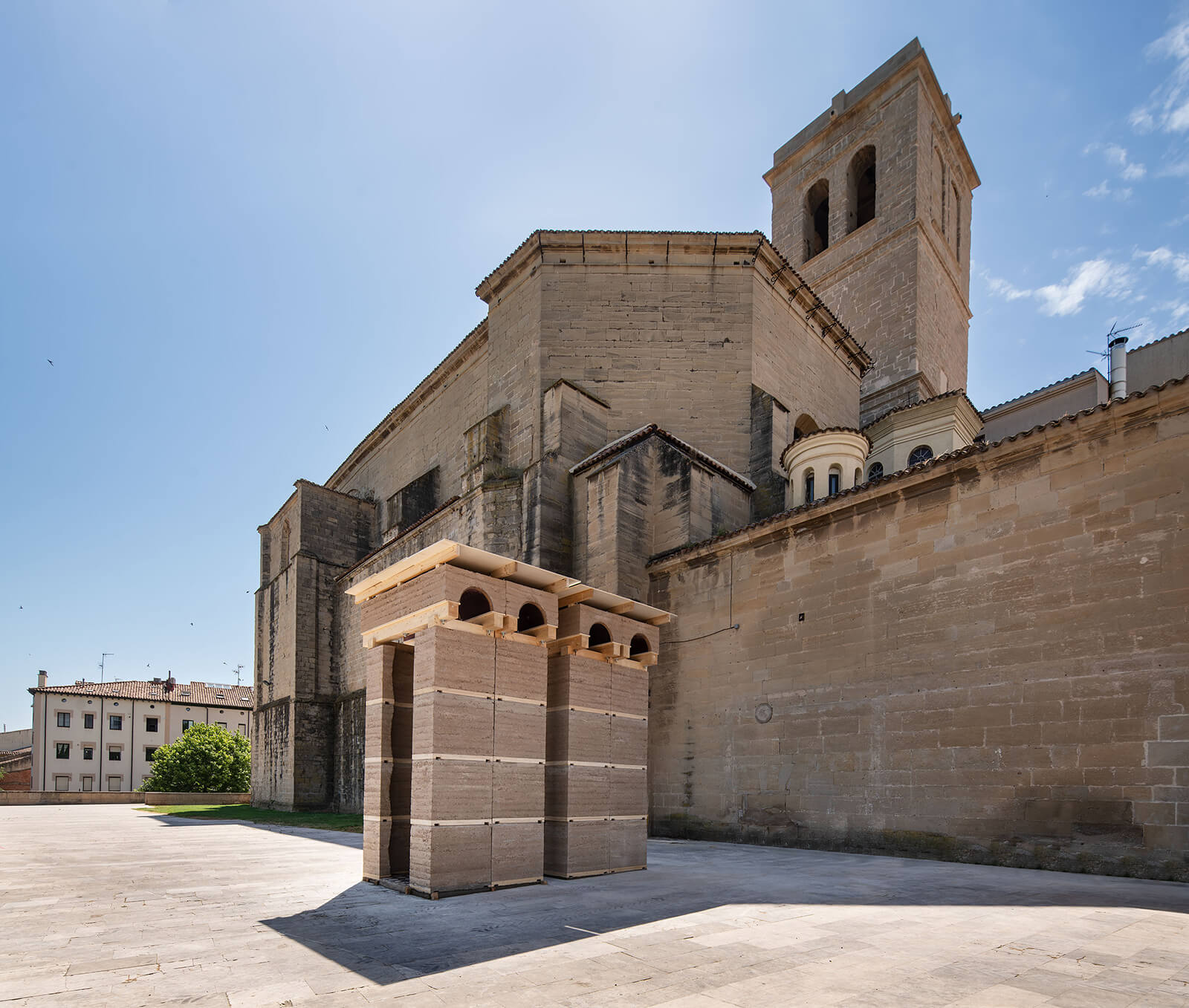
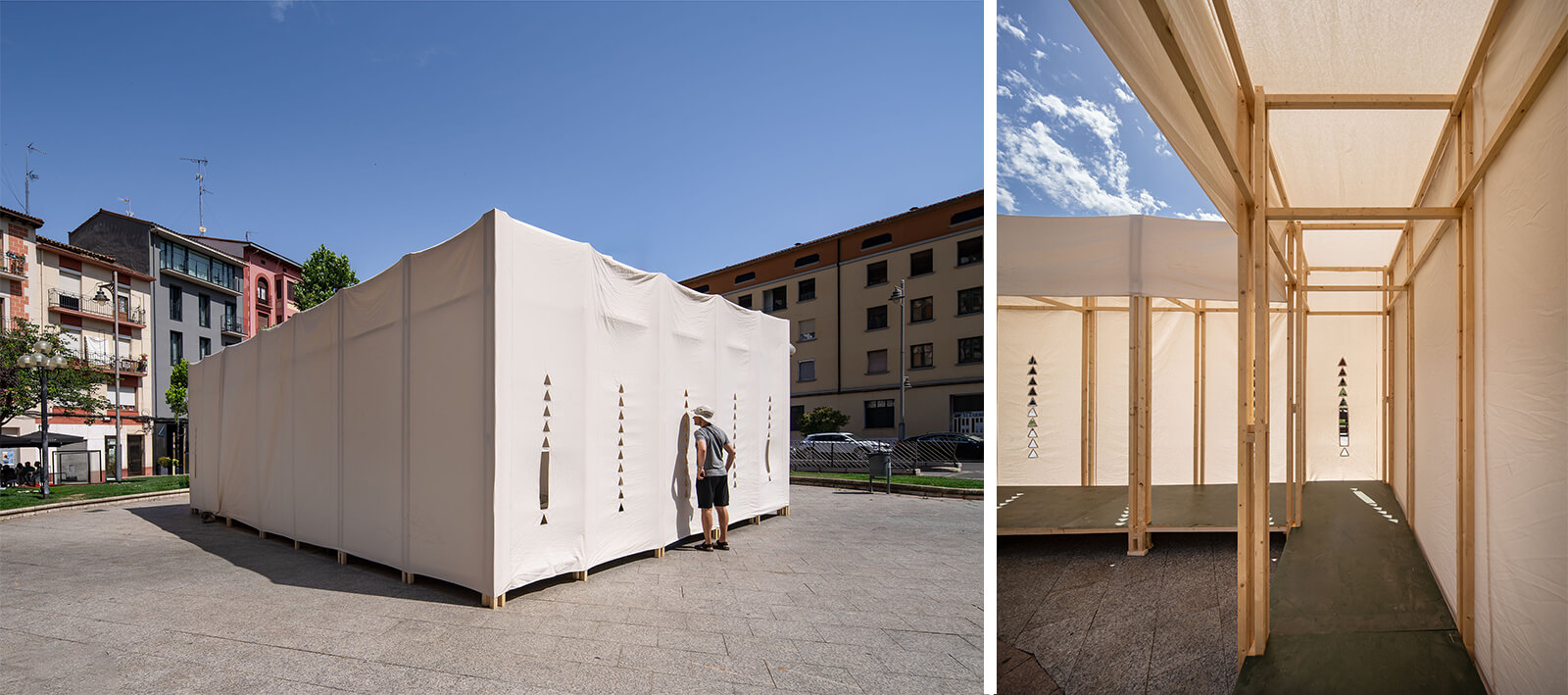
Demonstrating the vitality of alternative, eco-conscious materials for the future of architecture, Switzerland-based Boltshauser × Garbizu Collar creates a pavilion from compacted earth and reused barrels, highlighting the vitality of situated knowledges in achieving climatic comfort. Conversely, proposals by Chile-based noof group and German architecture studio Raumlabor seek to manipulate their context’s microclimate, with each studio creating prototypes that offer shade and a cool environment through material design strategies.
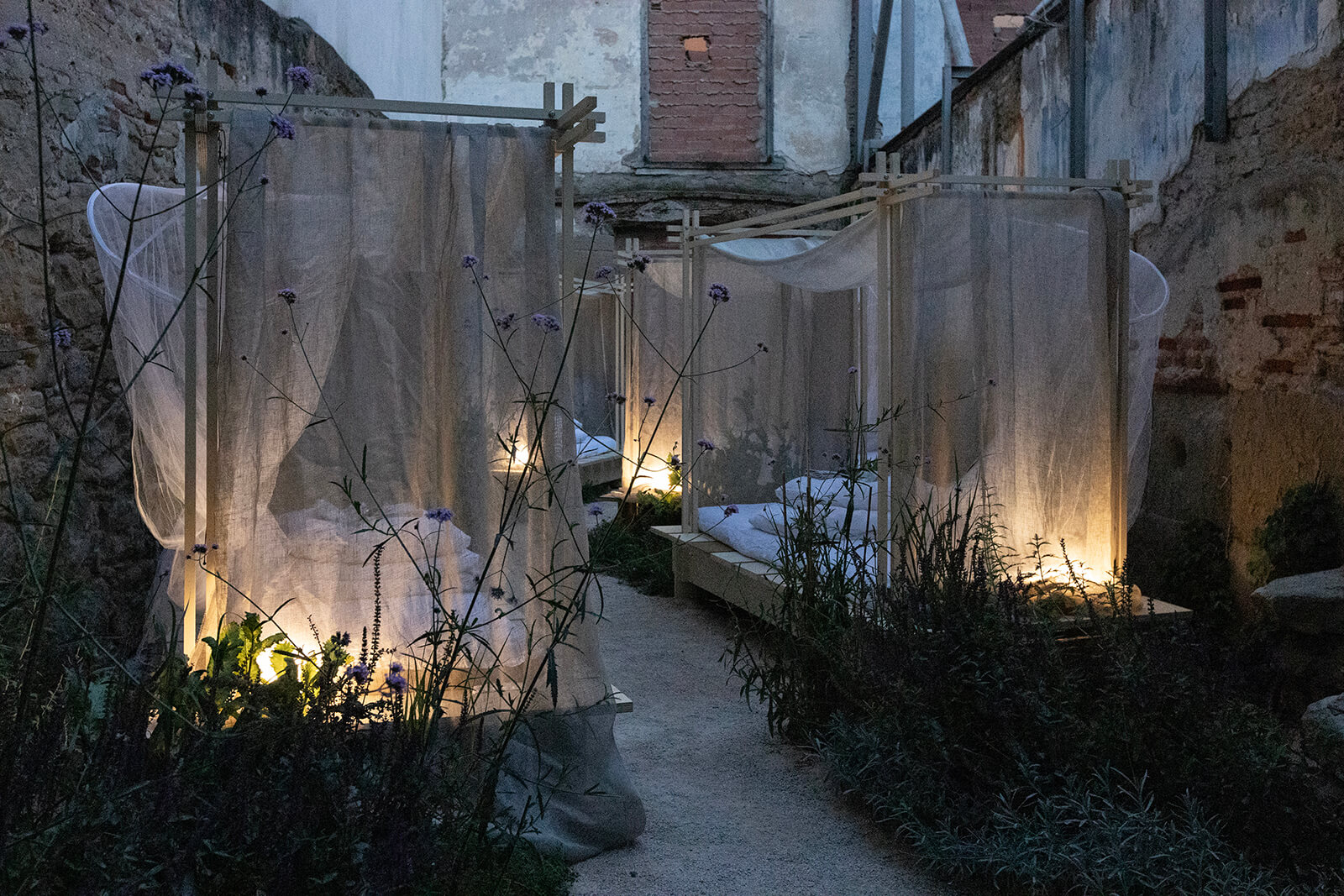
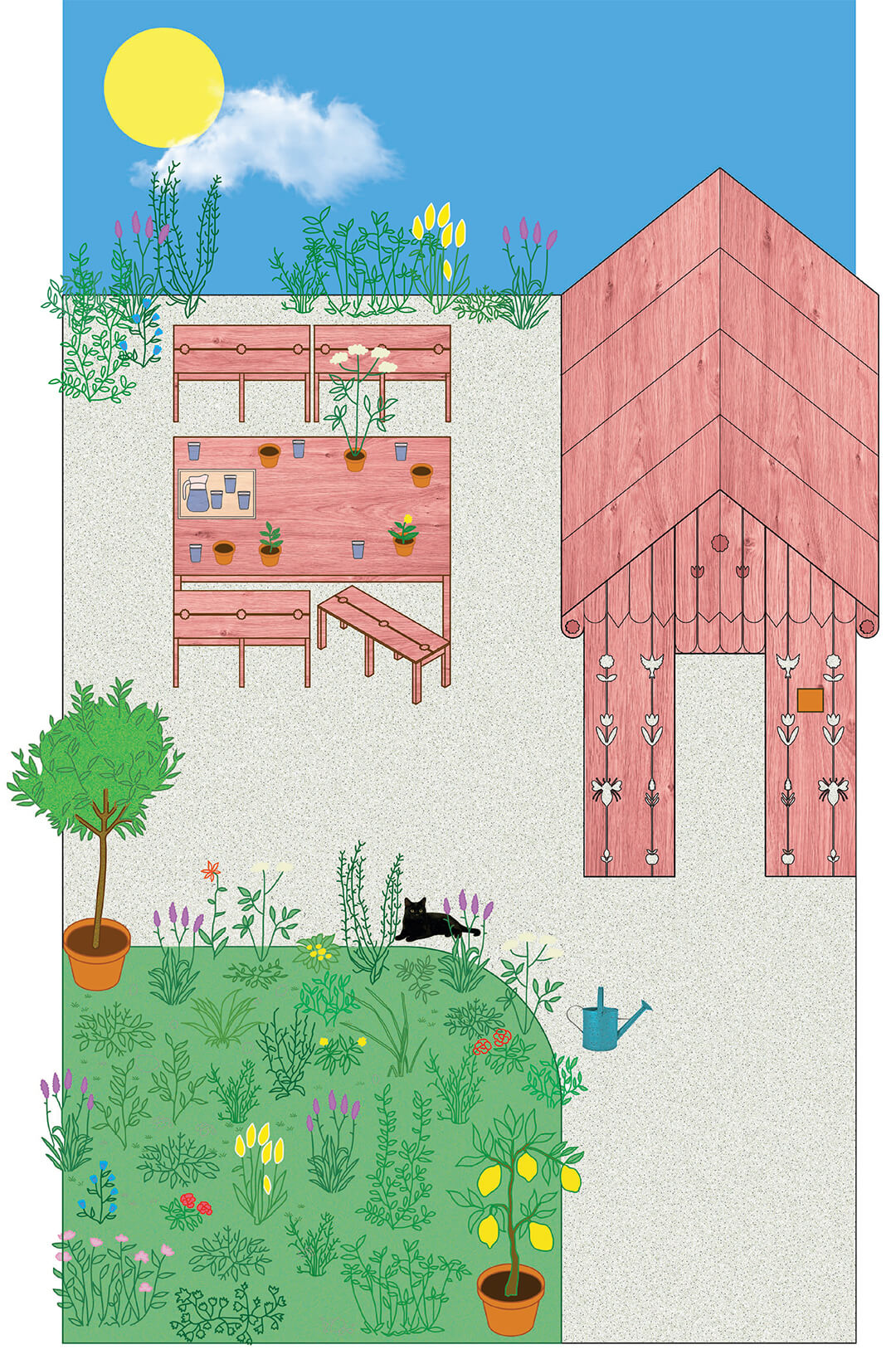
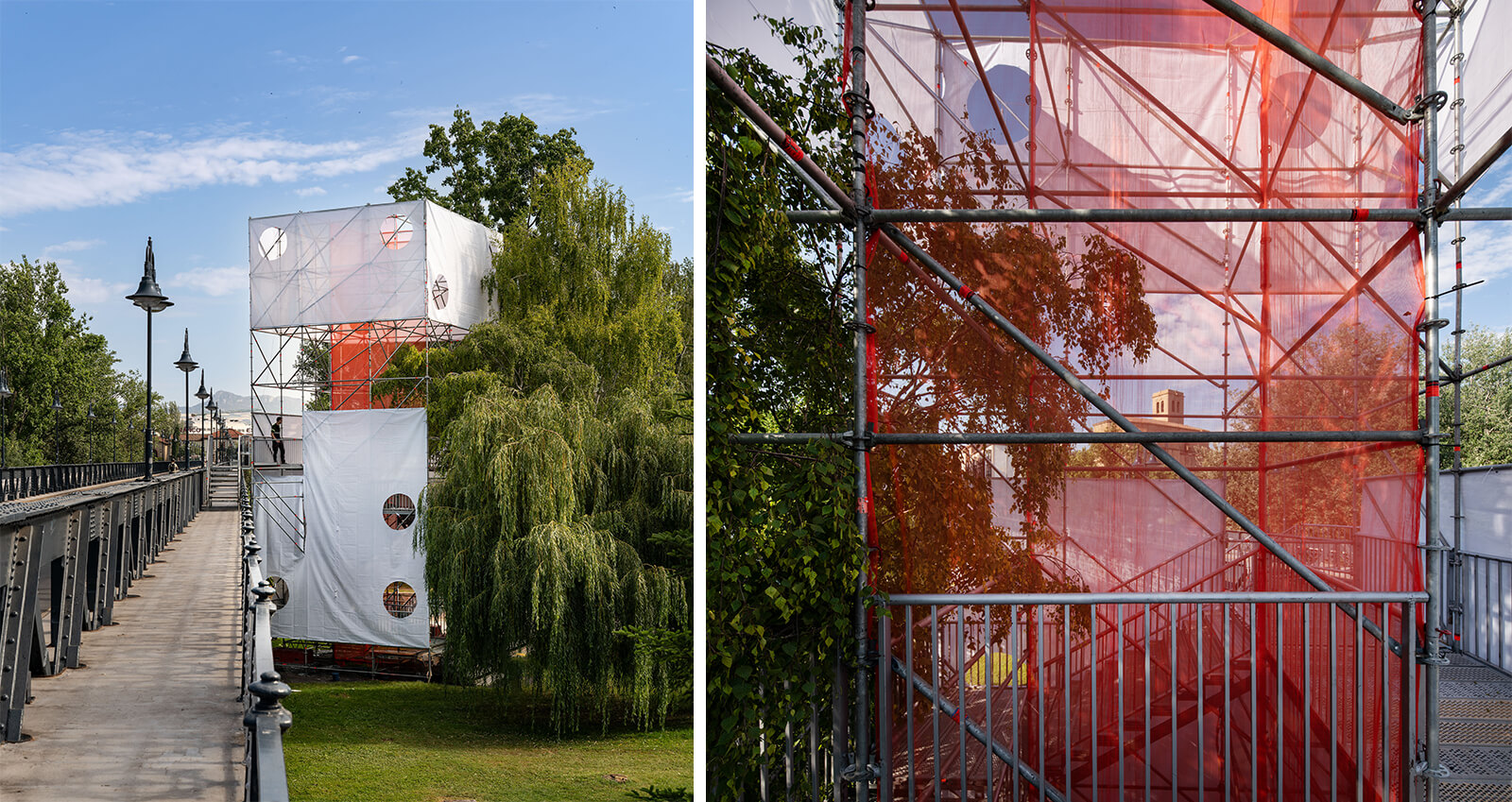
While these proposals rely on architectural materiality to rethink how public space could be made more accessible in a world that is only growing hotter, proposals by UK-based designer Sahra Hersi and Finland-based Suomi-Koivisto & IC-98 consider the role of flora in the city. The Library Garden by Hersi is conceived as a small civic garden planted with drought-resistant species organised around a garden shed in the Biblioteca Rafael Azcona, while A Third of Life by the Finnish architects creates a drought-resistant garden on the Calle Marqués de San Nicolás to counter the urban heat island phenomenon. Highlighting rituals as part of collective life, the project is conceived not only as a place of respite but also a gathering location. On one of the nights of the festival, it is set to become a space devoted to a guided sleeping and dreaming session.
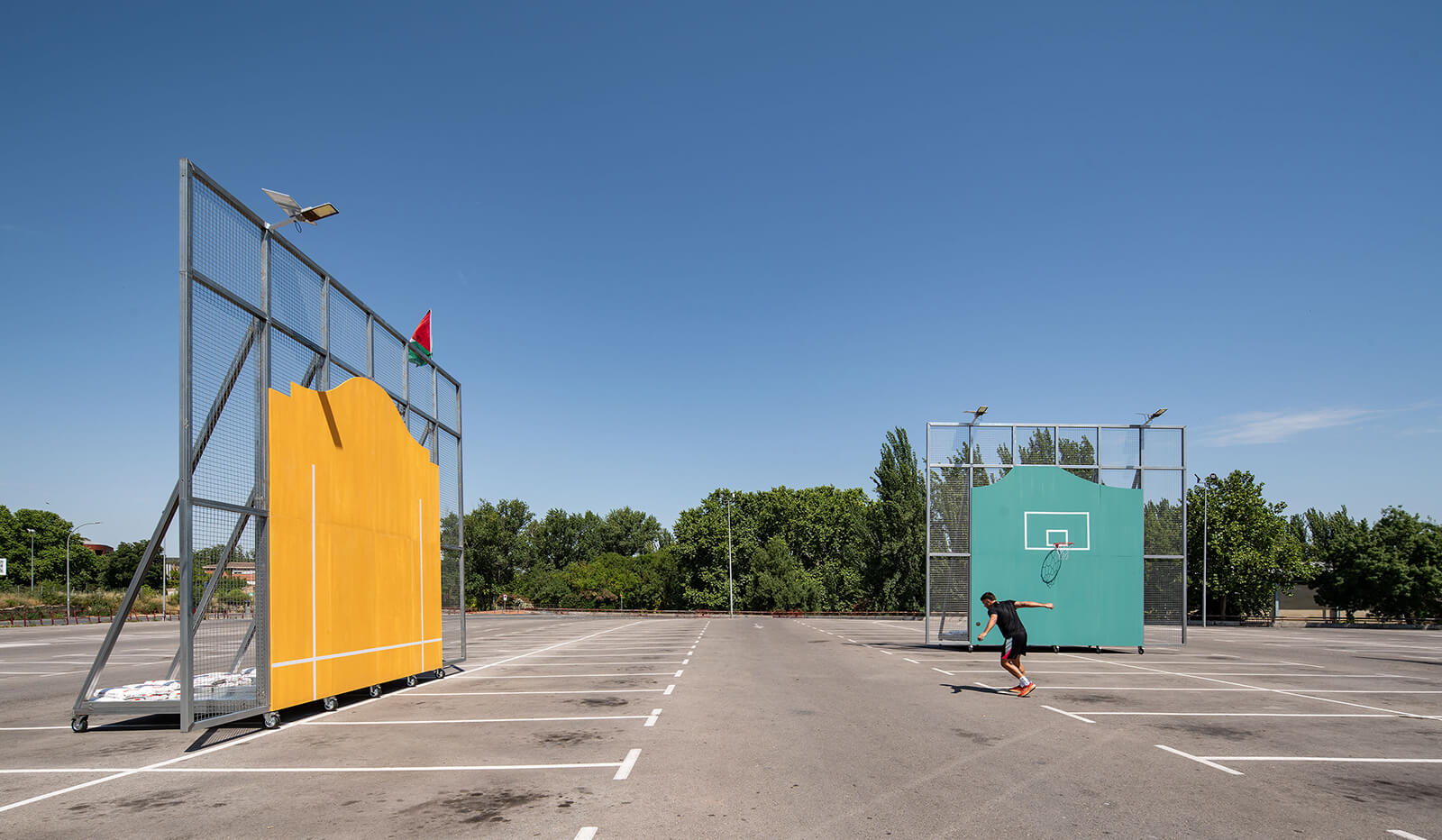
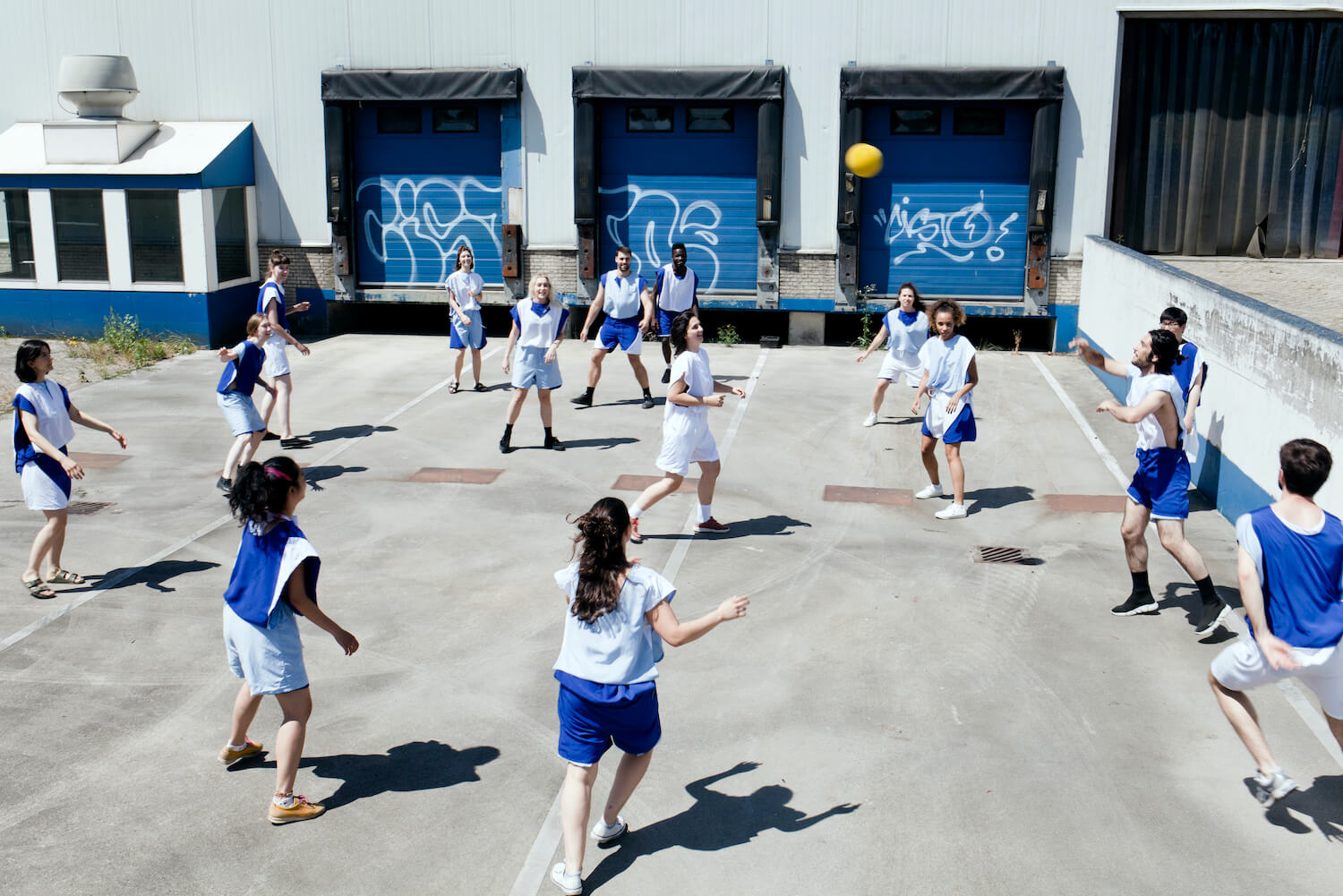
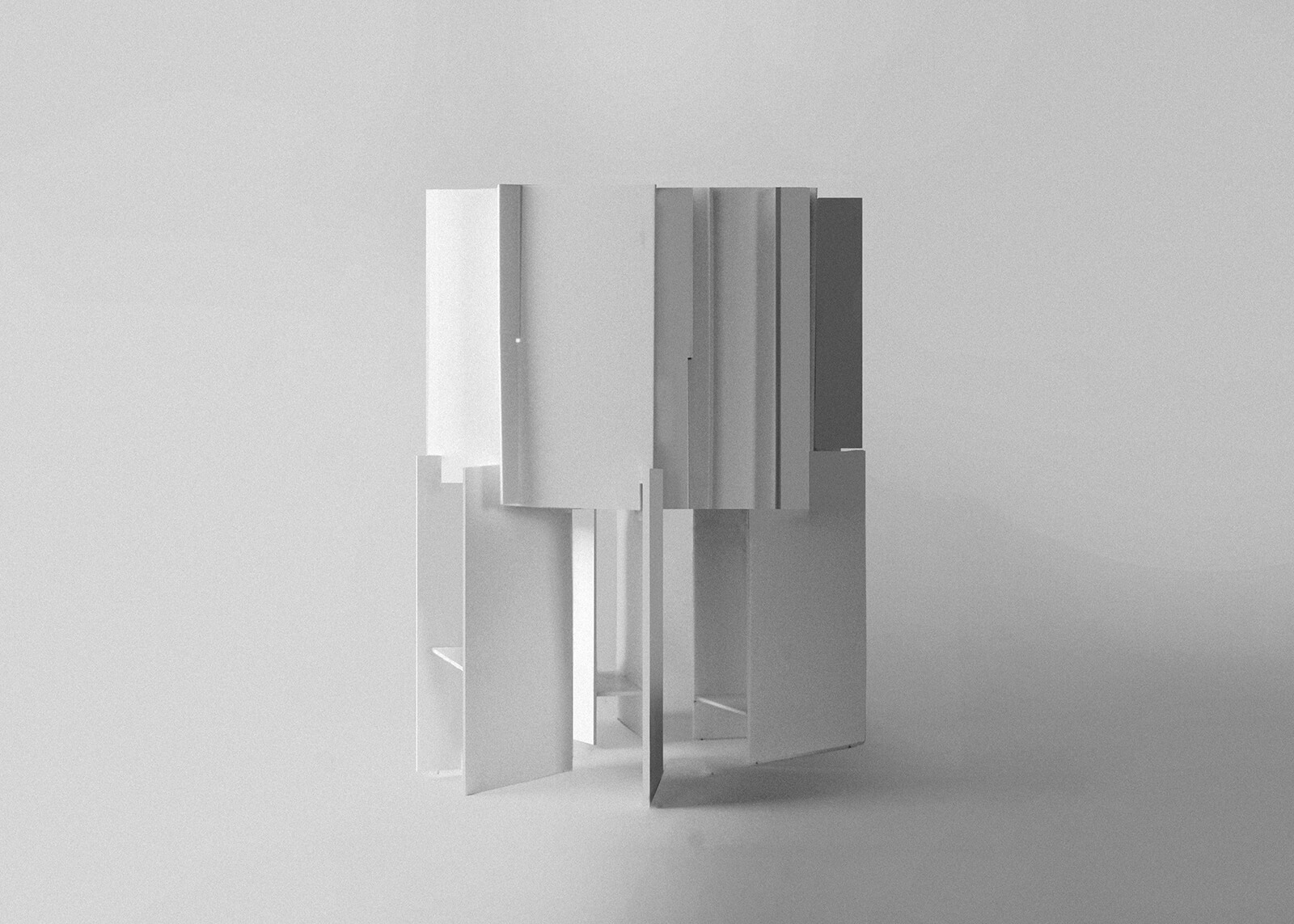
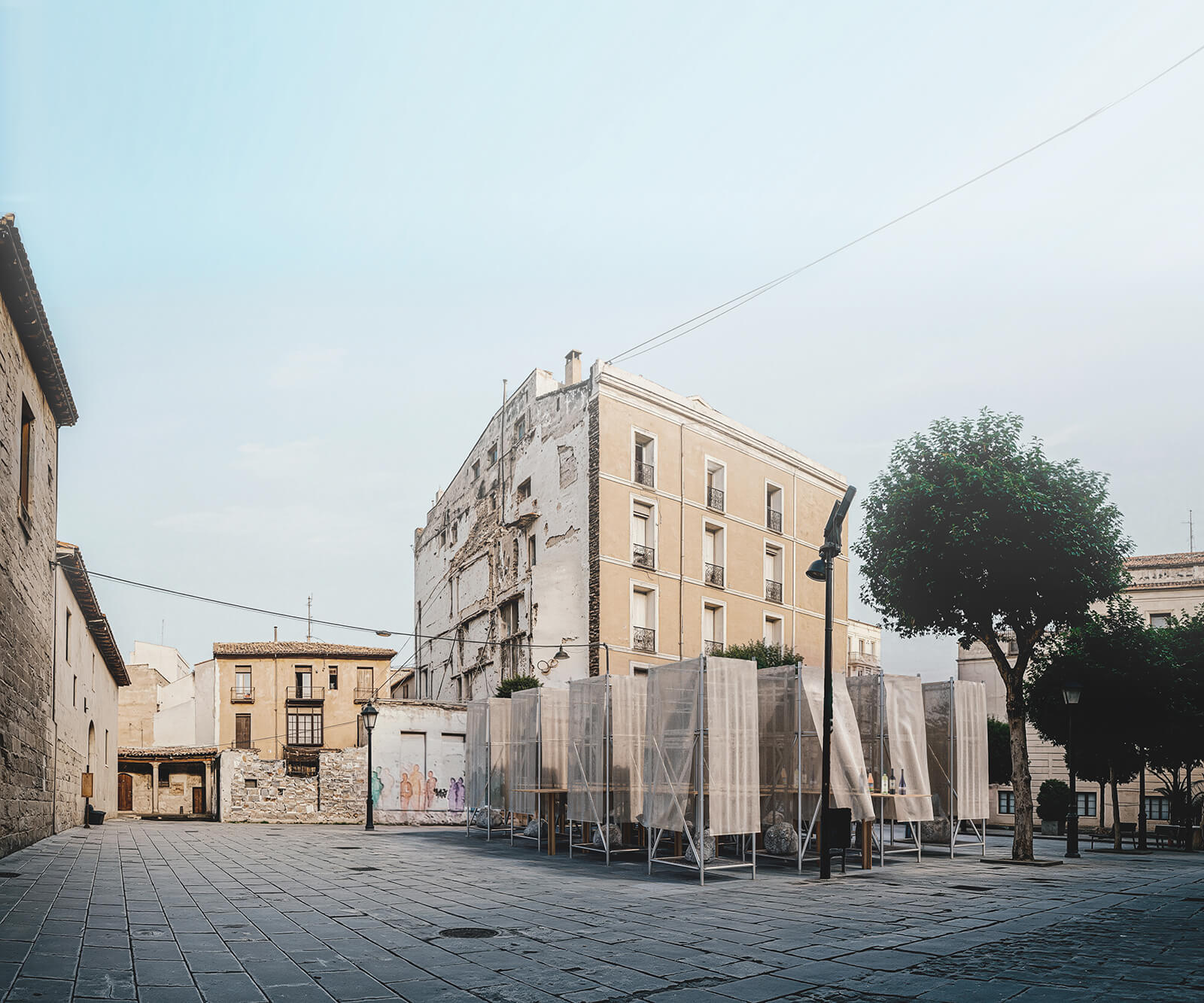
By the very nature of the programme, the structures constructed for Concéntrico are conceived to be light on the earth, leaving no trace behind. The third thematic thread of this year’s edition, Ephemeral Agents, probes how such structures can become tools to activate the social dynamics of their immediate contexts, opening up new possibilities for the use of public space. In Dancing Pelota Walls, Italian design studio 2050+ employs three mobile pelota walls, positioning them in the Revellín car park, turning a liminal and oft-neglected space into a place of play and community. Amanda Pinatih + Gabriel Fontana’s proposal Sidelined similarly highlights the vital nature of play in rethinking coexistence and activating urban spaces in a project that builds on their work for the Venice Architecture Biennale 2025. Similarly, interventions by United States-based Future Firm and Ghana-based TAELON 7 utilise the temporality of their interventions to draw new relationships between public spaces in the city, highlighting novel uses for existing infrastructures.
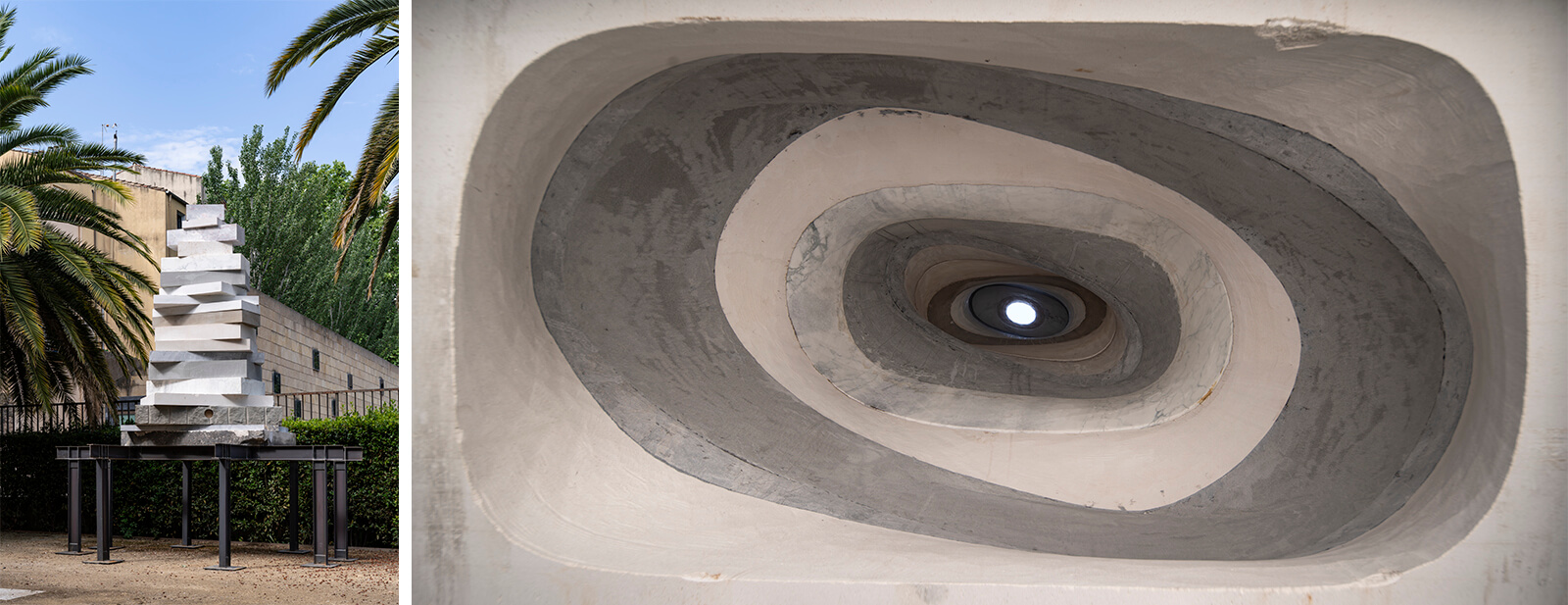
In a world marked by conflict, ephemerality can be a tool to rethink the conceited view of architecture as eternal. But that very notion is political, as we watch entire communities being razed to the ground every day. In that, the act of building itself is a form of resistance as probed by Palestine-based AAU Anastas. For their intervention Cathedral for One, the designers utilise discarded stone slabs to create a space where one can momentarily withdraw from their surroundings. The use of stone is a means for them to reposition it as a material that carries cultural meaning—that is inseparable from questions of presence, continuity and belonging, especially pertinent when thinking about (re)building in Gaza today. In a similar light, we could also consider Poland-based Tło’s intervention, Los Sábados. Influenced by soboty, a form of Polish traditional architecture, the pavilion is meant to be a shelter open to whoever needs it. In its conception, the wooden architecture built from salvaged materials offers a space where an ‘Other’ does not exist.
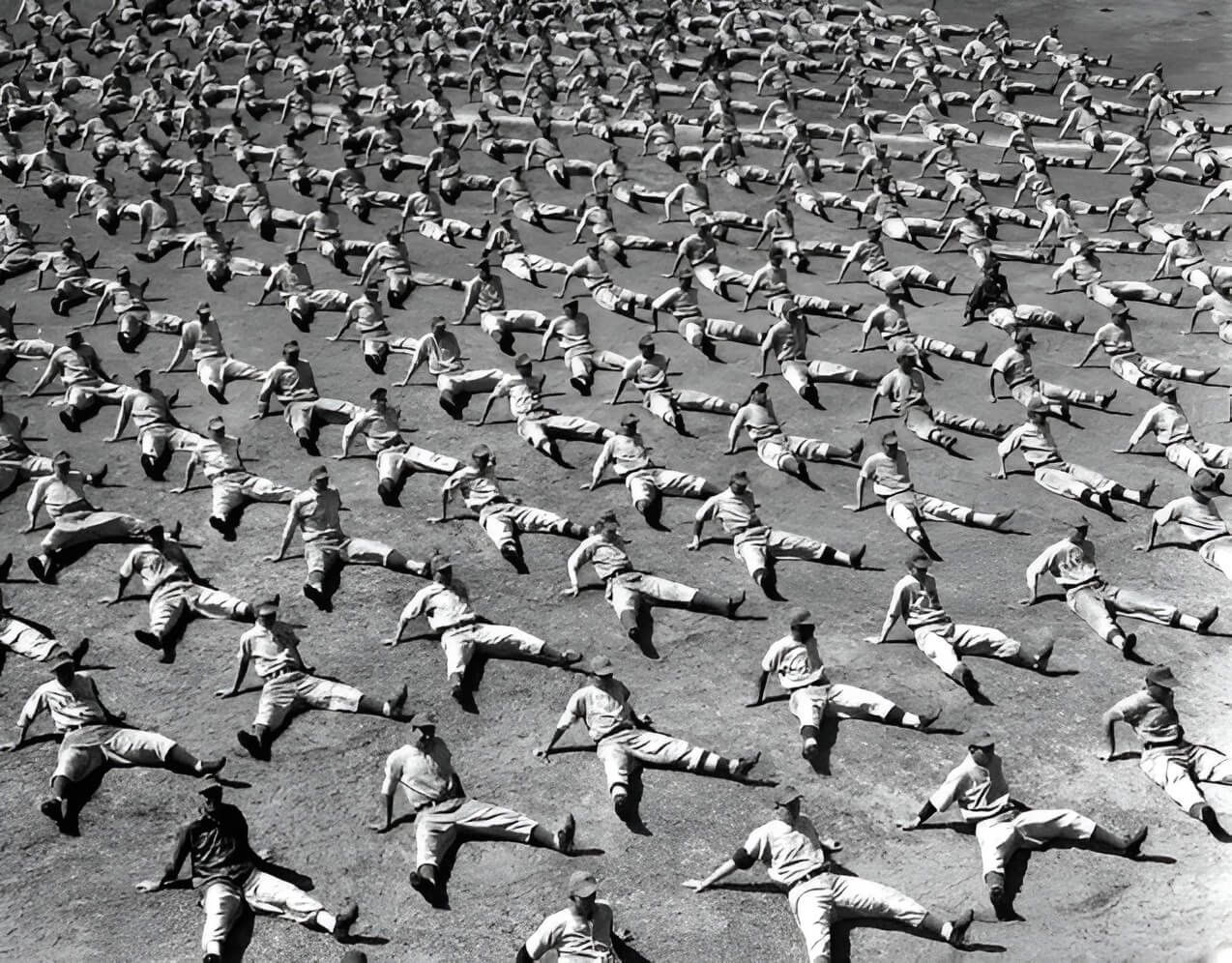
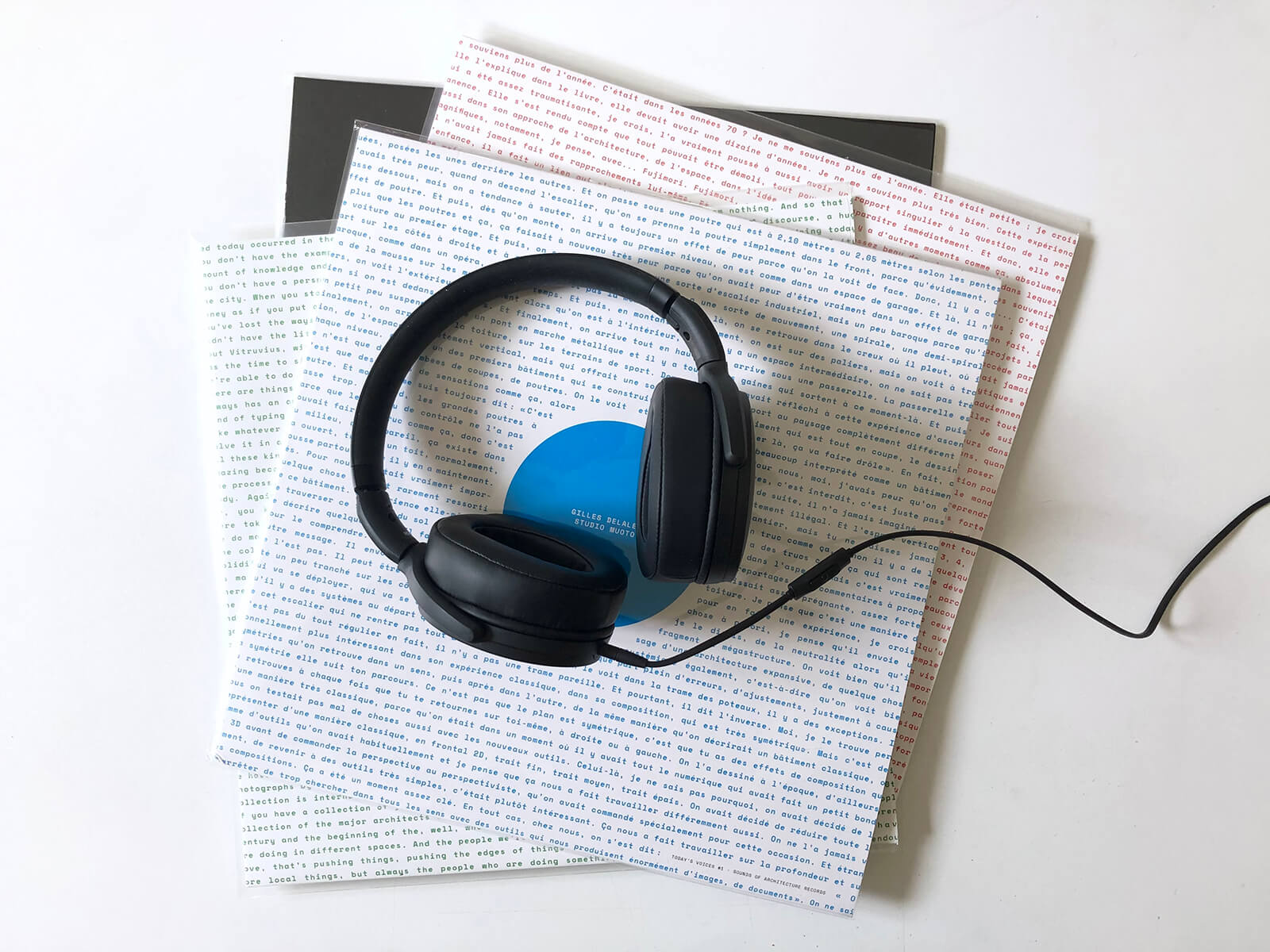
In one of the only projects that explicitly considers unconventional bodies, Ignacio G. Galán + Ozaeta Fidalgo Architects + Jordan Whitewood-Neal’s project is devised as an open workshop probing the relationship between architecture, disability and public space. Other workshops during the six-day festival draw attention to the unconsidered senses in architecture. While record label Sounds of Architecture aims to produce a vinyl record dedicated to Logroño and to the context of the festival, highlighting how sound is a crucial layer to our experience of a city, Dancing on Architecture’s El Plano Latente proposes a collective performance on the day of the summer solstice. Through a synchronised walking exercise, the ritual nature of our peregrinations is laid bare.
Our negotiations with the city are not arbitrary. They are manipulated by the material—walls, terrains, borders—and the immaterial—institutional regulations, surveillance systems, hierarchical divisions such as class and caste—alike. In rethinking how we can engage with the city through layers of identity, memory, material possibilities and the intrinsic ephemerality of these encounters, the question Concéntrico 2026 sets out becomes: What identities do we associate with the city? What are the comforts our cities are primed to afford to residents and who are these ultimately afforded to? How do we meaningfully engage with the city despite these? Vitally, can these relationships be sustained once the circus tent is dismantled?

by Pranjal Maheshwari Oct 19, 2026
The Mumbai-based architects integrate courtyards, mesh screens and north light trusses to create a dining space that doubles up as a community hub at SR University, Warangal.
by Mrinmayee Bhoot Oct 17, 2026
The Rotterdam-based institute centres the Indian Ocean as a network for exploring material histories and transnational links shaping coastal cultures, positing them as future models.
by Pranjal Maheshwari Oct 16, 2026
At the 2026 Stirling Prize ceremony, Mary Duggan with RUFF Architects, MAKER Architecten and Nakshabid Architects were felicitated for proffering quality housing and social equity.
by Mrinmayee Bhoot Oct 12, 2026
The new Centre for Contemporary Arts, fostering public engagement with art in Uzbekistan, is housed in a tram depot refurbished by the French studio, emulating local craftsmanship.

make your fridays matter with a well-read weekend
Enter your details to sign in
Don’t have an account?
Sign upOr you can sign in with
a single account for all
STIR platforms
All your bookmarks will be available across all your devices.
Stay STIRred
Already have an account?
Sign inOr you can sign up with
Verification link sent to check your inbox or spam folder to complete sign up process
Tap on things that interests you.
Select the Conversation Category you would like to watch
Please enter your details and click submit.
Enter the 6-digit code sent at


Concéntrico 2026 dissects urban fictions, temporalities and ecologies
by Mrinmayee Bhoot | Published on : Jun 18, 2026


 Sign in with Google
 Sign in with email
What do you think?