Art07 mins. read
Lithuanian contemporary art claims its spotlight across Centre Pompidou
by Giulia ZappaDec 12, 2024



by Anne FeenstraPublished on : Aug 05, 2026
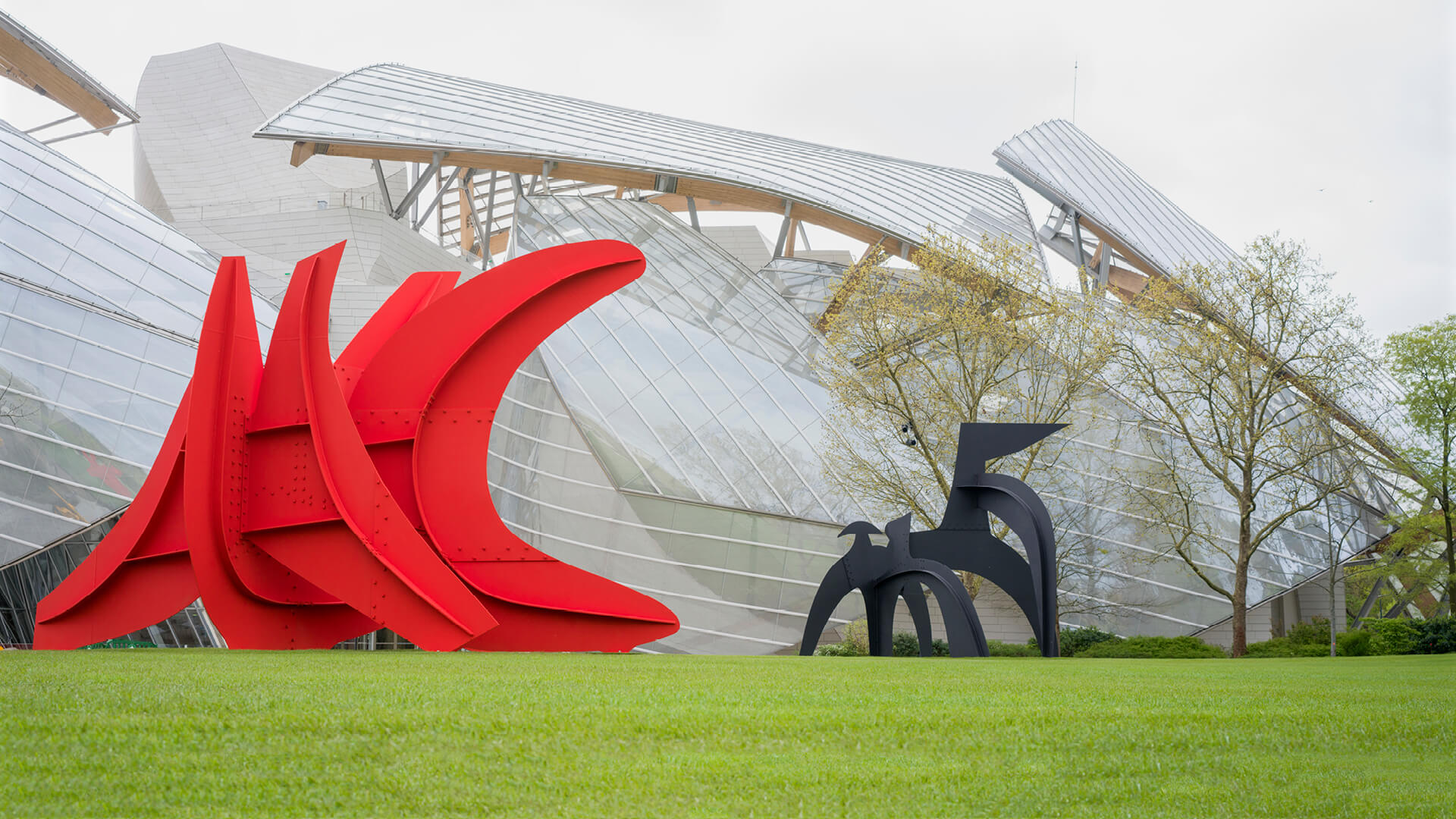
One of the recent online messages to the Calder Foundation was a “thank you for making those Crazy Dangly Thangs”, followed by several emojis. Walking through Alexander Calder’s most recent exhibition in Paris, titled CALDER–Rêver en équilibre (Calder: Dreaming in Equilibrium), I could not agree more. The curators, Anna Karina Hofbauer and Dieter Buchhart, fully embraced the challenge to put the American sculptor’s almost 300 works inside a crazy building. Experiencing the entire spectrum of ‘Sandy’s’ oeuvre has been intense and moving, but equally joyous and frisky. He is unique in that his art is fully charged. The energy is infectious.
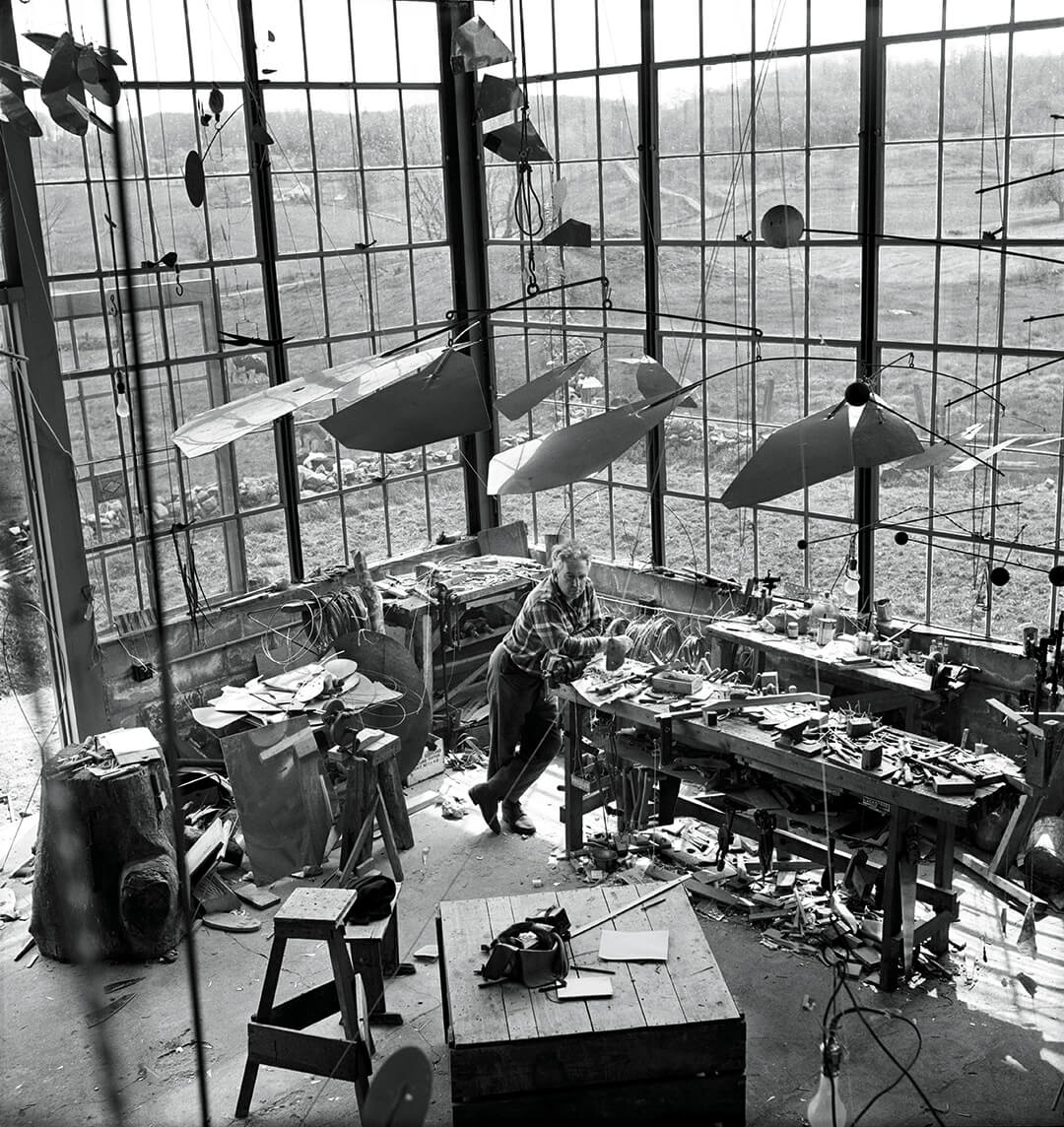
Growing up in Philadelphia, Calder was surrounded by artists. His mother, Nanette, had studied painting at the Sorbonne, Paris, from 1888-1893, and both his father and paternal grandfather were sculptors. Travelling extensively from 1912-15 between the West and the East Coast, as his dad had a job in California, as a child he also made jewellery from iron wire for the dolls of his older sister Peggy. He studied Mechanical Engineering in New Jersey, learned how to make technical drawings and the strength of materials. After completing his studies in 1922, he travelled by boat from California to New York via the Panama Canal. This journey left a lasting impression on him as he experienced several harbours, cranes, ships, sailing, the force of the wind, the movement of currents and how light influences this all. Another very direct influence on his early work was one of the odd jobs he did in 1925 at the National Police Gazette. The influential American tabloid required him to make illustrative sketches of the Ringling Bros., Barnum and Bailey circus, which performed at Madison Square Garden. Completely fascinated, he continued his drawings for two weeks while travelling to Florida with the circus.
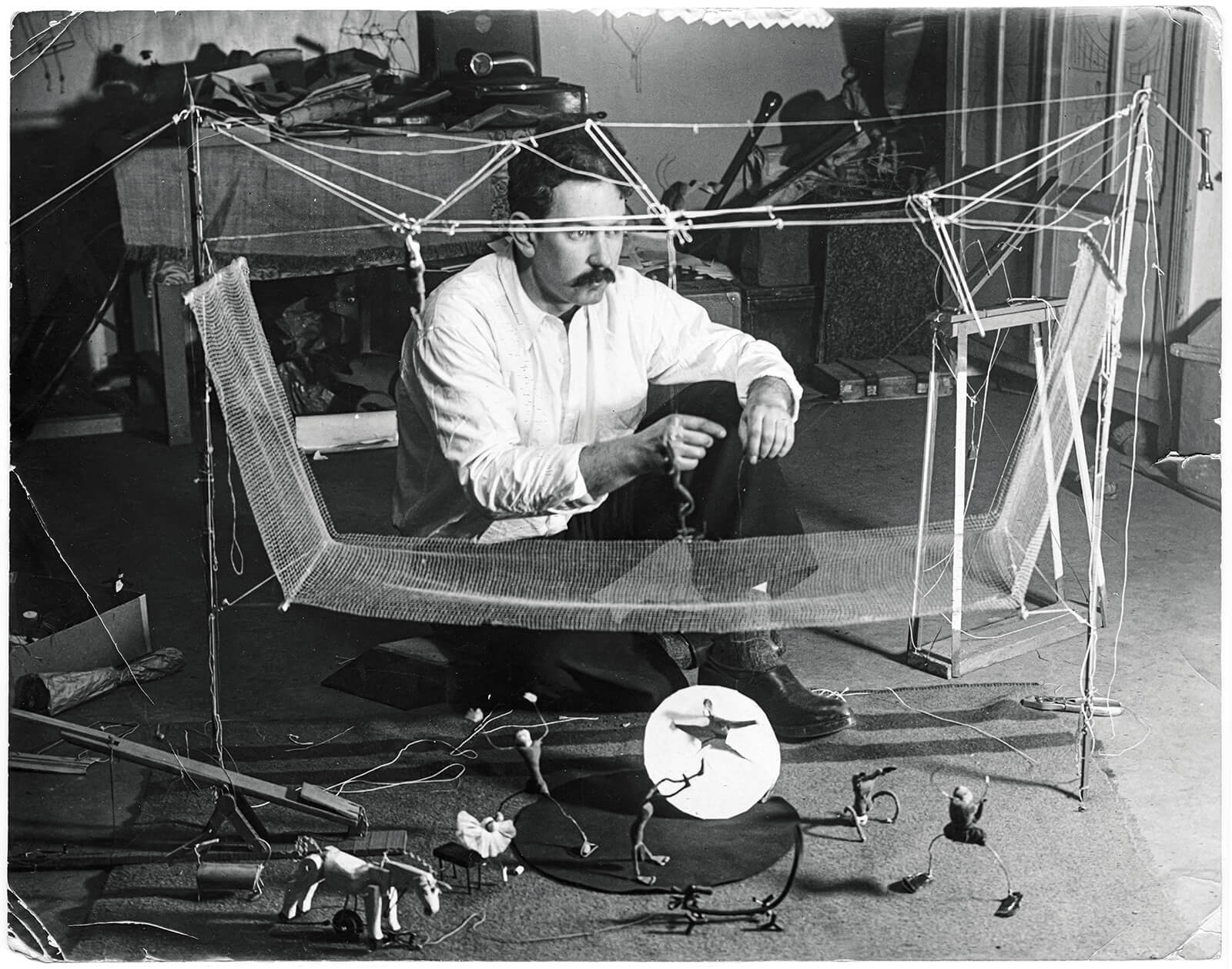
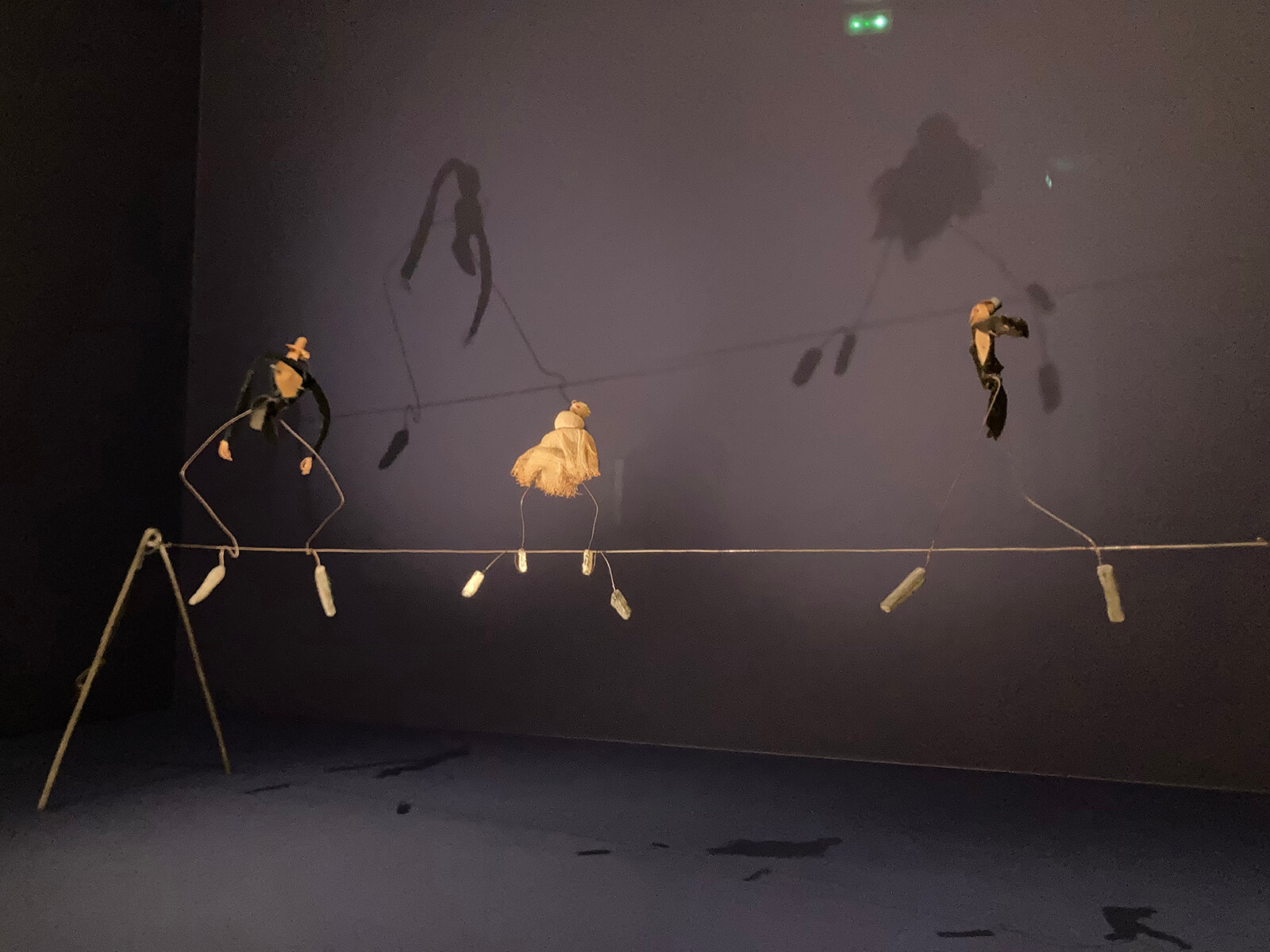
The exhibition at the Fondation Louis Vuitton, Paris, kicks off with the fully restored Calder Circus (1926-1931). It celebrates a century since Alexander Calder arrived in France. In 1926, he made his first voyage to Europe as part of the technical crew of the British steam freighter SS Galileo. Once on the high seas, it was not so much the engineering skills of Calder that were used. During the fortnightly transatlantic crossing, he painted the ship's exterior before arriving in Hull (UK) and continuing en route to Montparnasse, Paris.
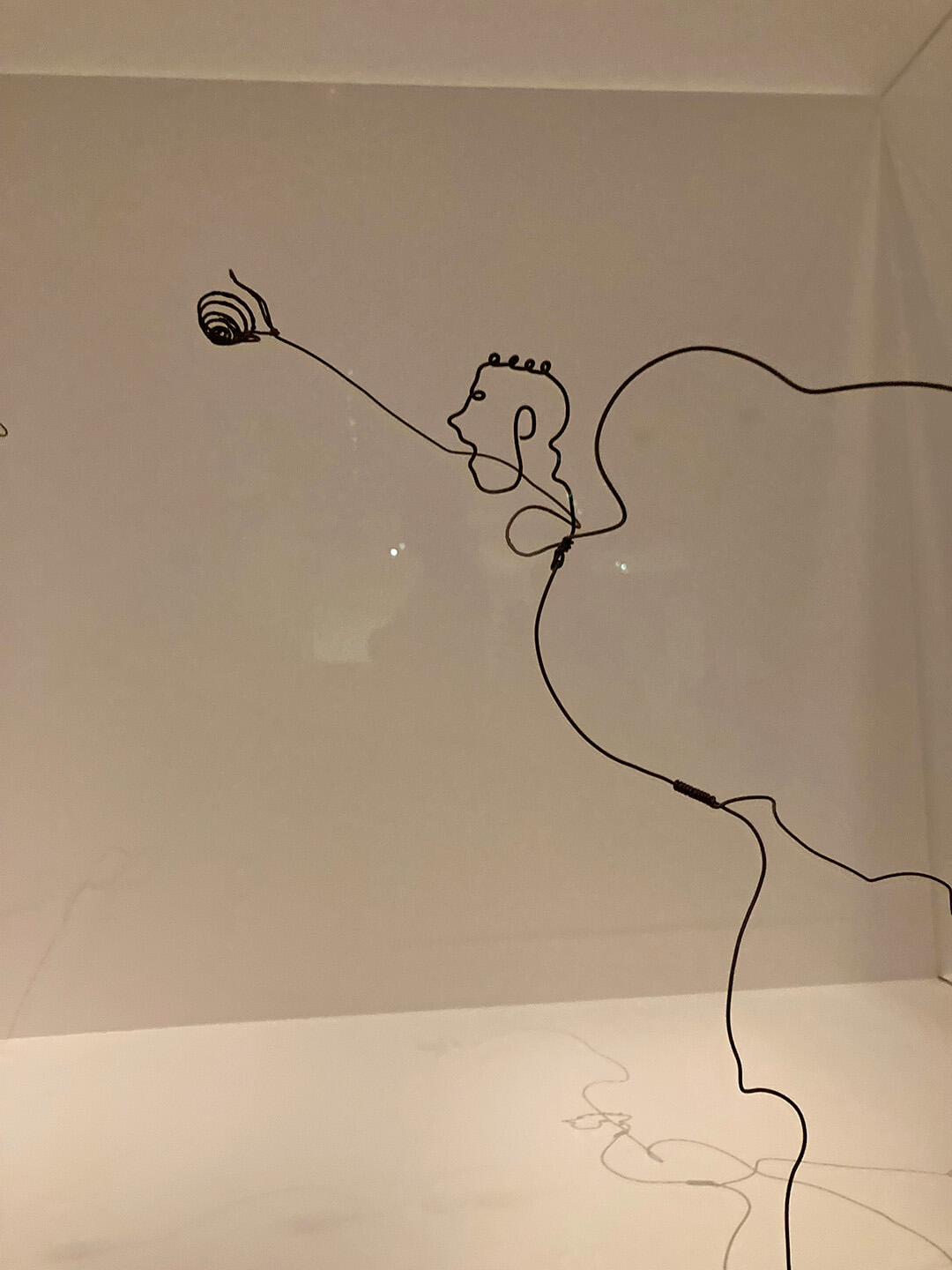
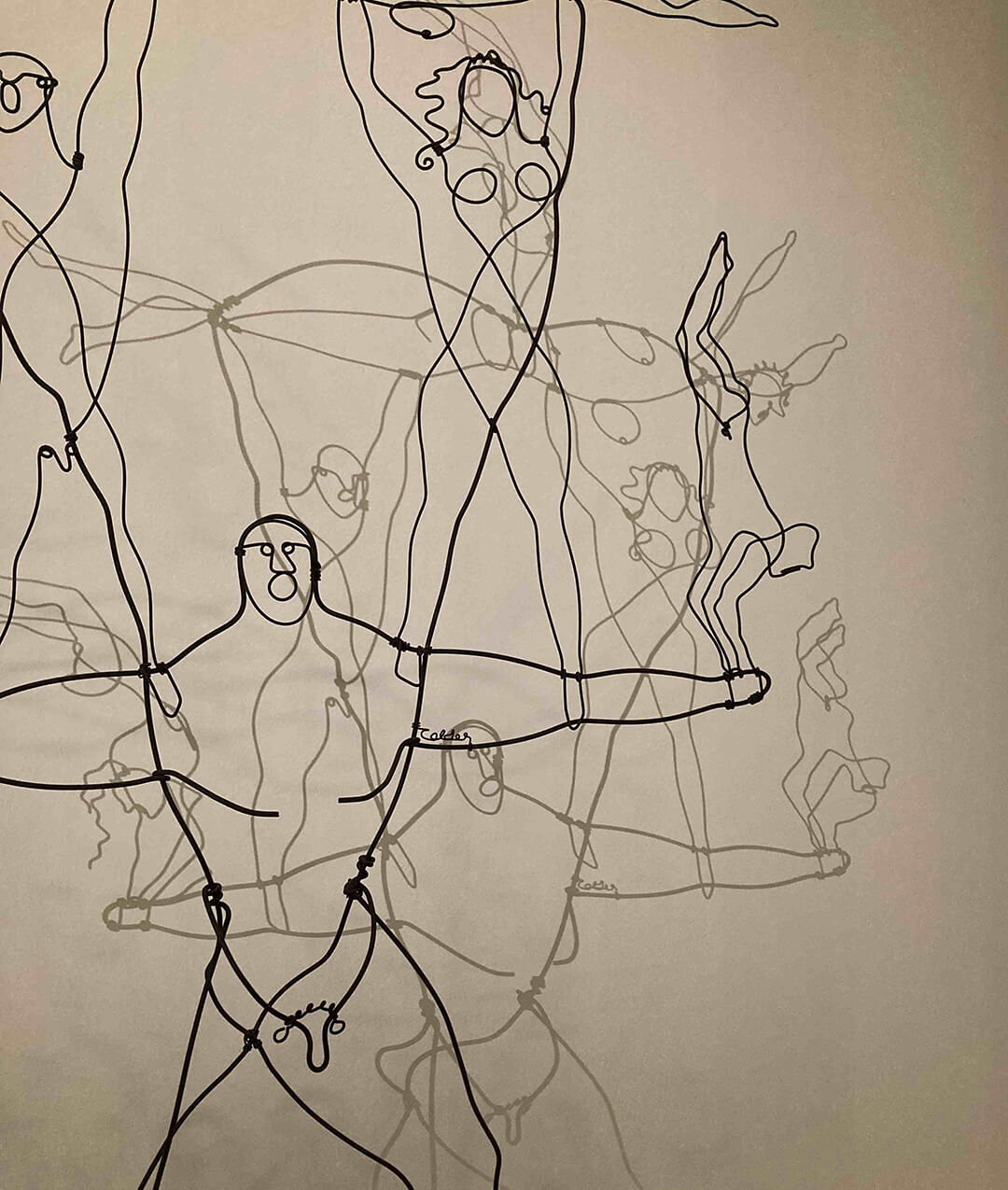
There is nothing parochial about the kinetics of Cirque Calder; it is pure playfulness, excellently executed materiality, all packed in one suitcase. The magic lies in keeping one's balance on a tightrope, a muscle man lifting weights and a revolving belly danseuse. Calder was able to put performance art and life into petite animals and acrobats. Captivated audiences enjoyed his beguiling shows, while the joyful artist continued working in iron wire sculptures. The displays at FLV are fantastic as carefully placed spotlights create wire shadows on the wall, doubling the fascinating play of lines. The minimalist Ball Player, who seems to be playing ‘jeu de boules’, or the dance-ready Josephine Baker; the wires are full of incubated energy. After a few years, the ever-expanding Cirque needed five suitcases.
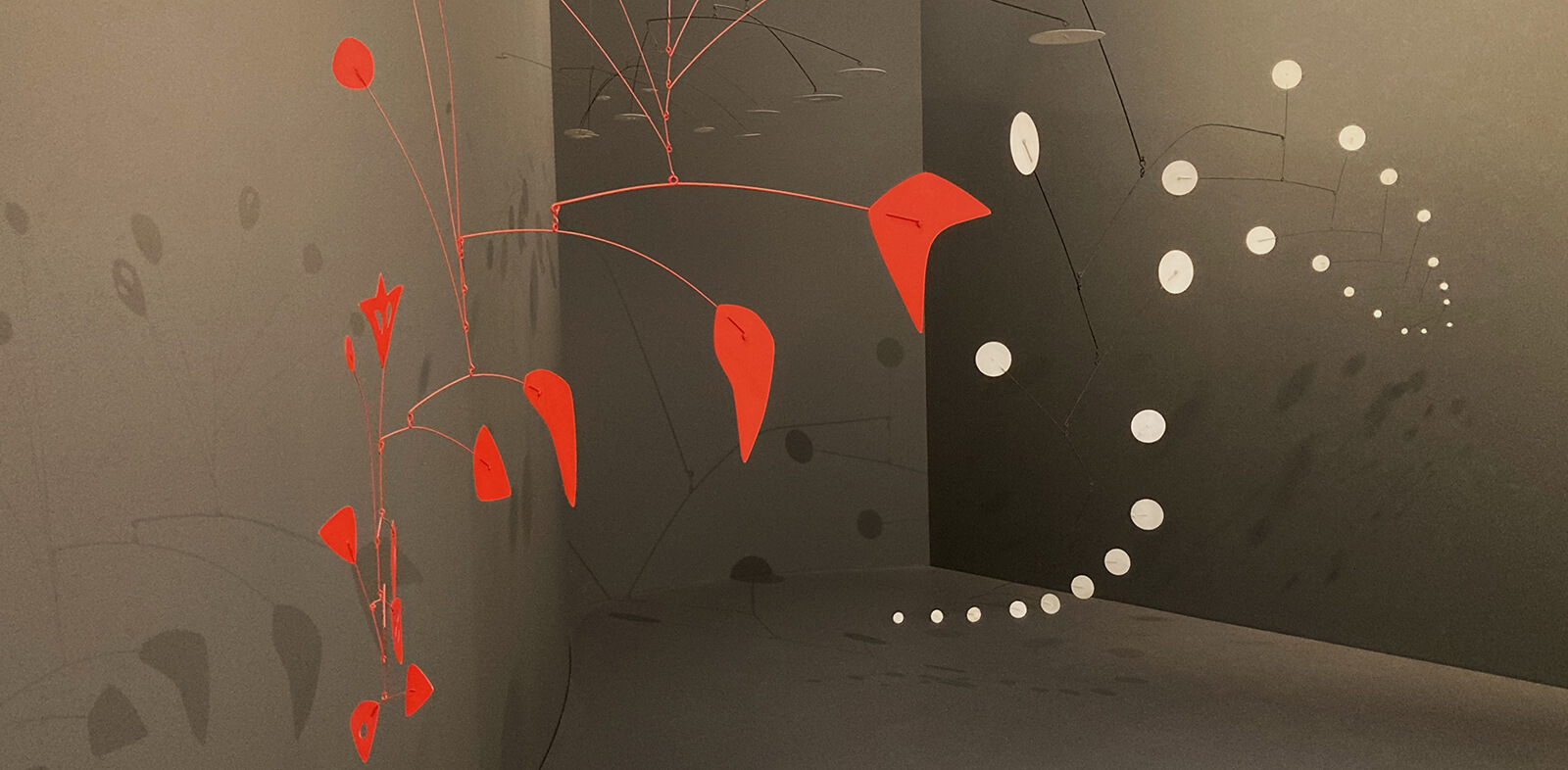
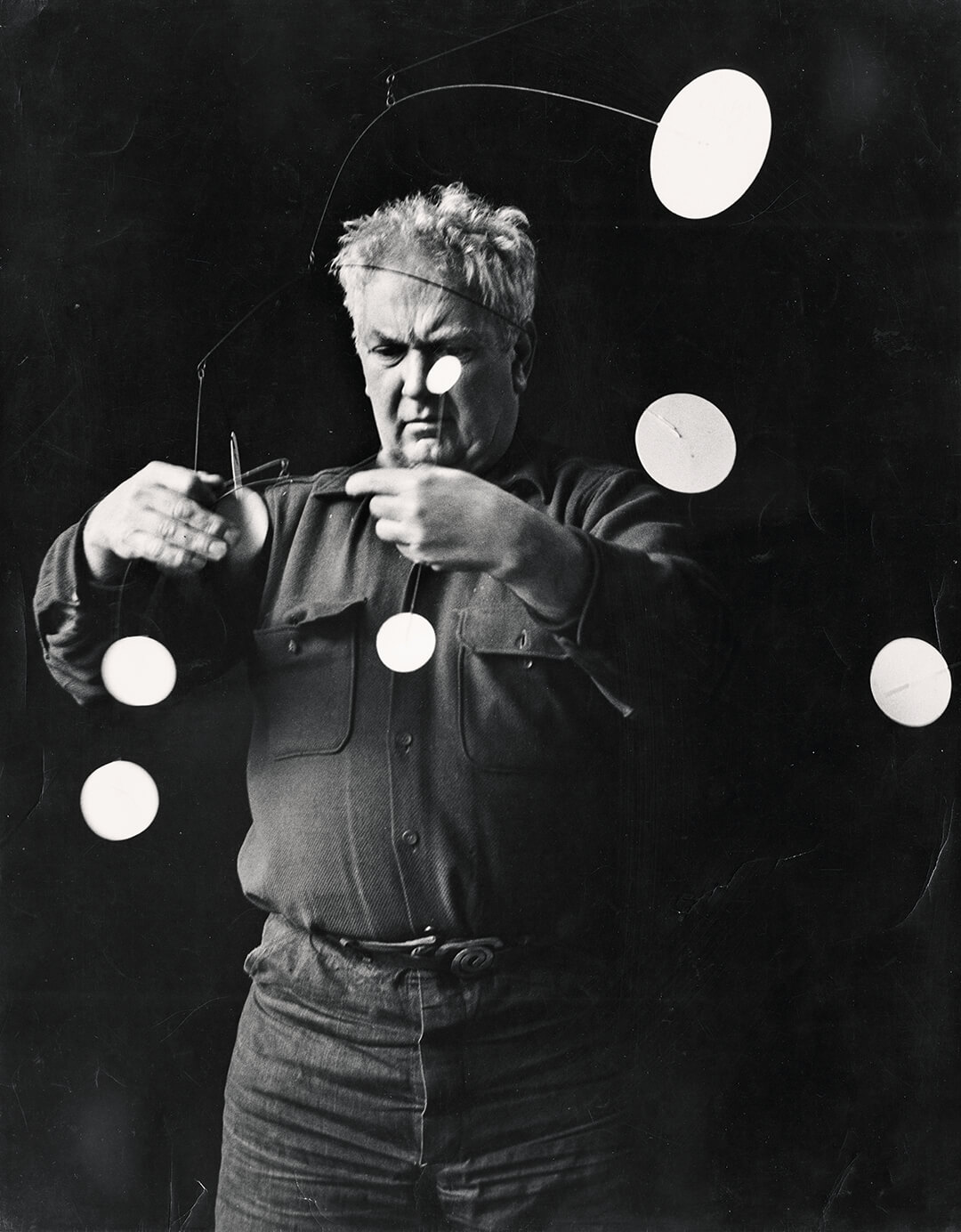
So far, all his work is figurative. This dramatically changed in 1930, after a visit to Piet Mondrian’s atelier at 26 Rue du Depart, Montparnasse. Calder is shocked and shaken. In his own words: ‘That visit was like the baby being slapped to make his lungs start working!’. He immediately limits himself to the colour palette of the Dutch artist and goes on to create a series of abstract paintings. After a few weeks, he starts making abstracts in the material he had mastered—iron wire. Straight lines, circles, metal leaves and counterweights. These elements become the ingredients of his first ‘mobiles’. This very word for sculptures moving by air, hand or motor was suggested by Marcel Duchamp to Calder in 1932. Although highly productive and excited, Calder at the time reflected: “How can art be realised?”
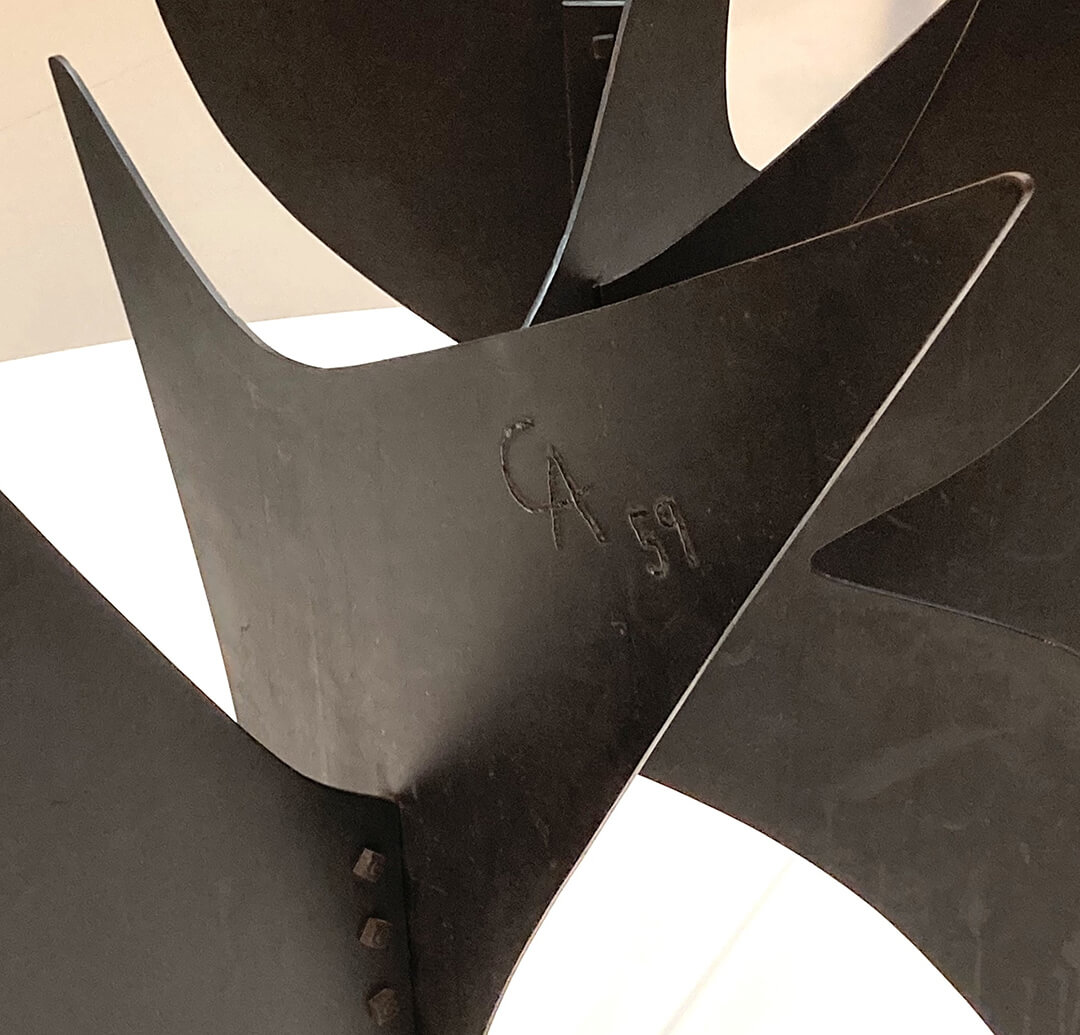
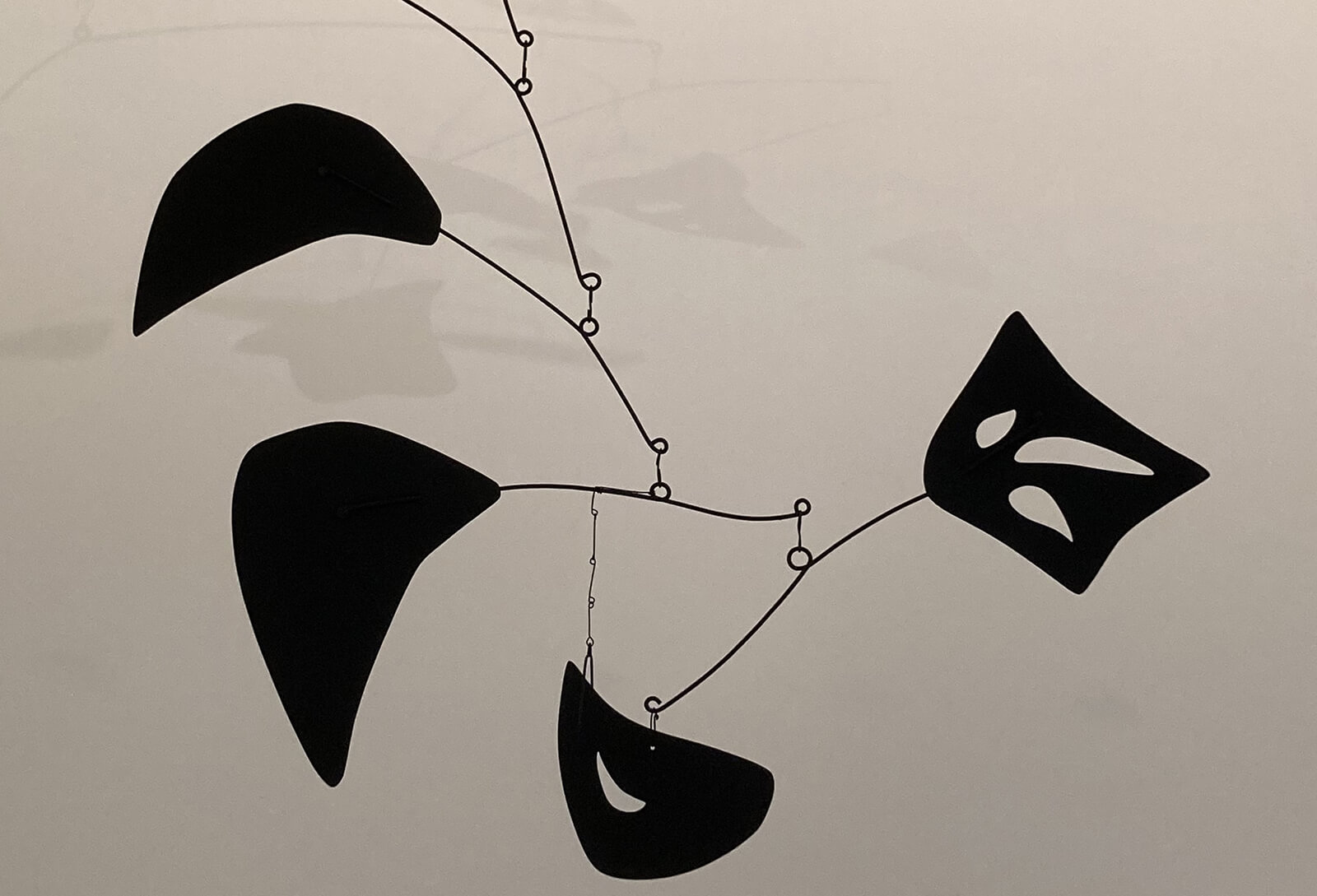
Pondering the question, he wrote: “Each element is able to move, to stir, to oscillate, to come and go in its relationships with the other elements in its universe.”
In his thirties, two more events turned his life around. First, he met his wife-to-be Louisa on a boat in 1929 as they were both traversing the Atlantic Ocean. He was again working as a crew member, and she was brought back to Boston by her well-to-do father from her European travels. They married in 1931 with the idea of settling down in Paris. And the second event happened on the European political stage as Von Hindenburg appointed Hitler as the Chancellor of Germany in 1933. This rattled France and the artistic circles in Paris recognised the looming fascist threat against openness and artistic expression.
Sandy and Louisa left France, crossed the Atlantic once more and settled down in Roxbury, Connecticut.
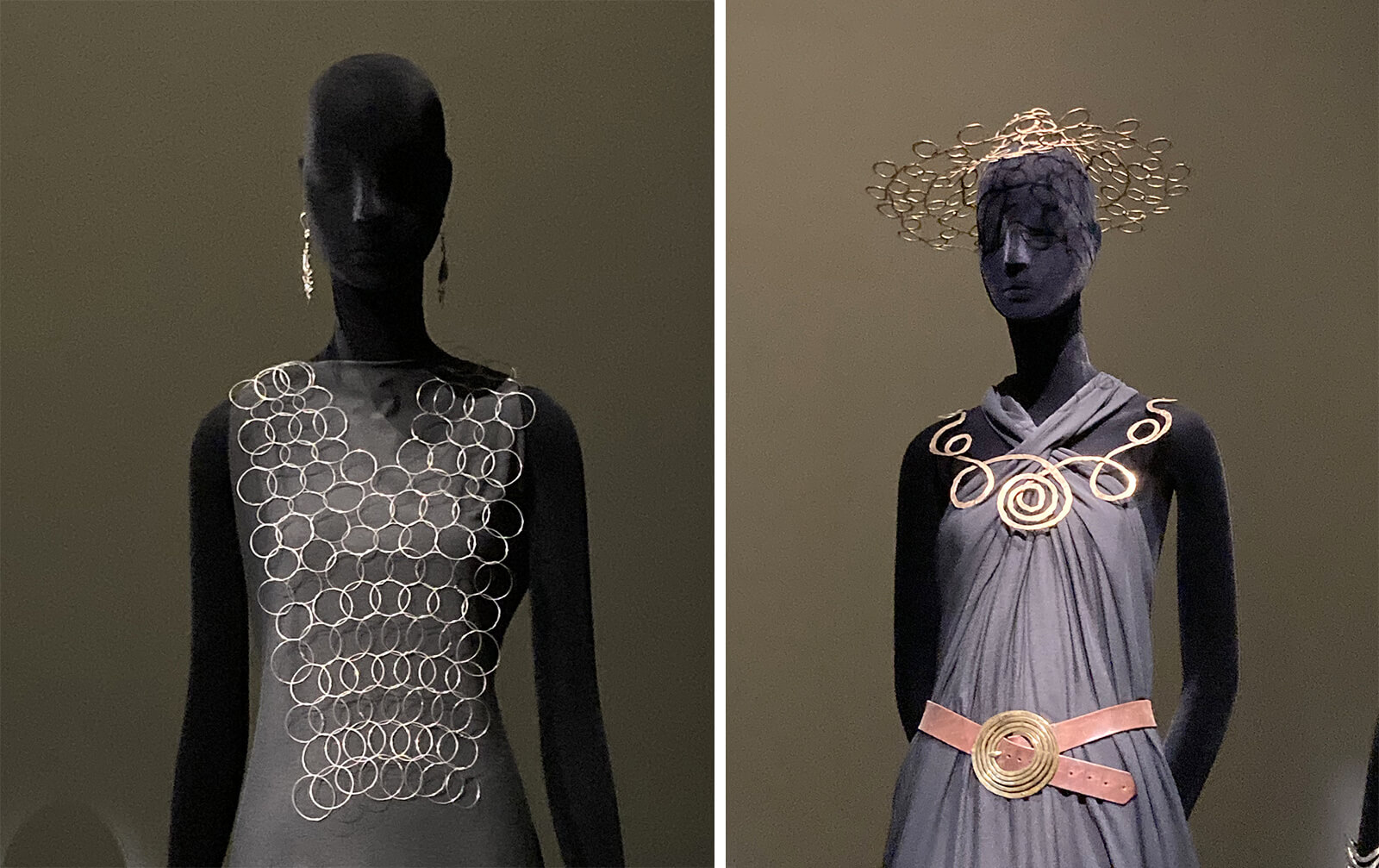
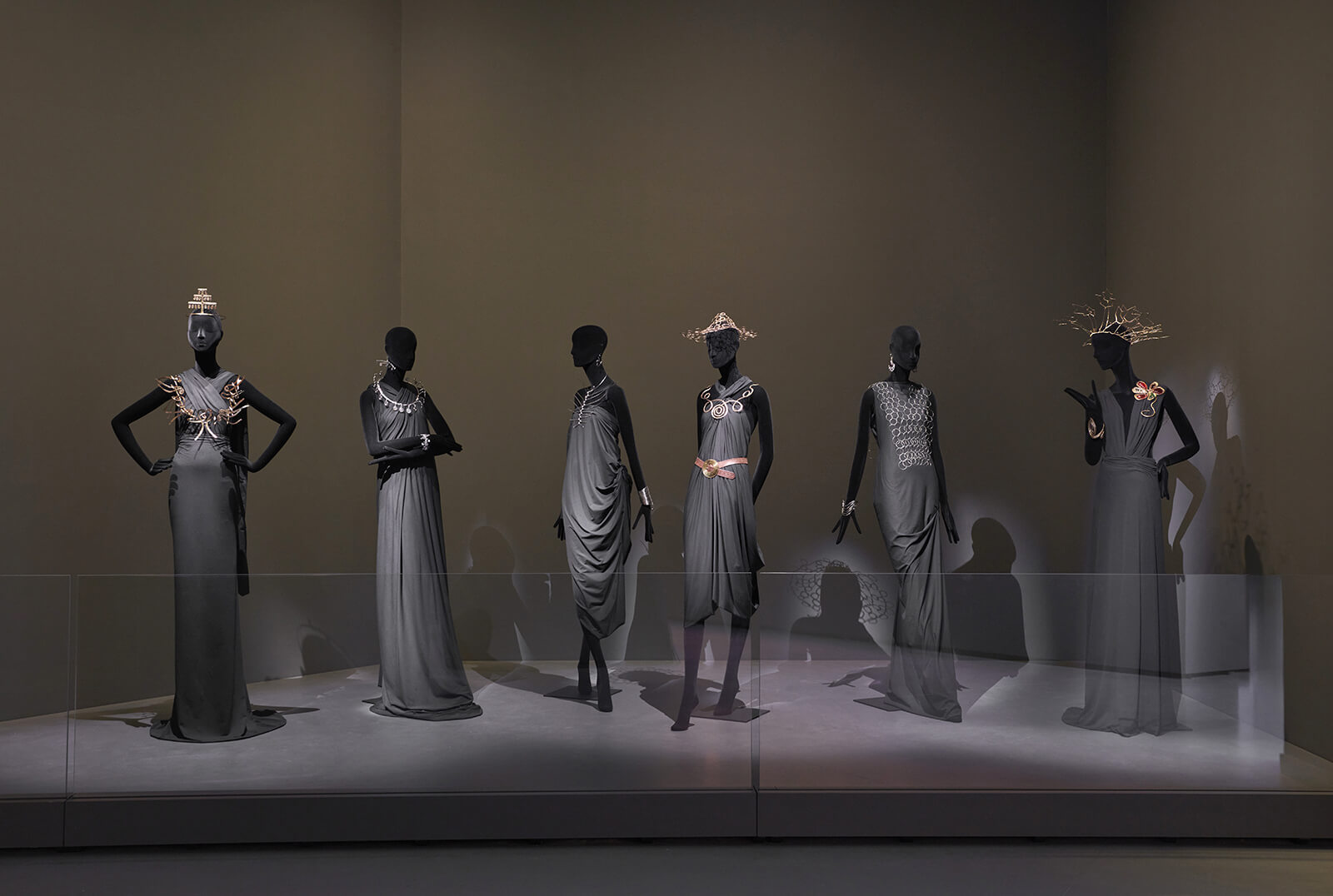
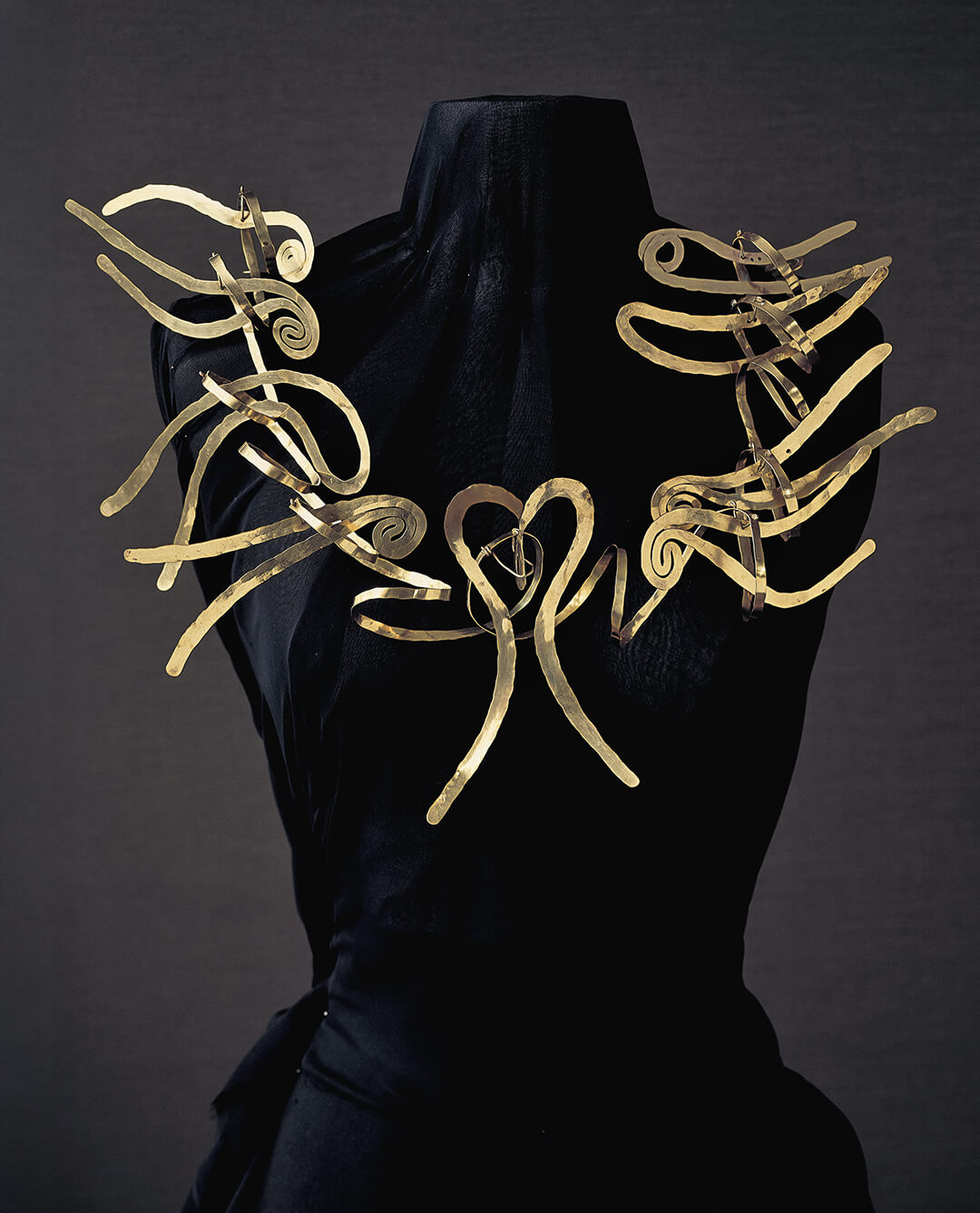
The better financial position, post-marriage, allows Sandy to try his adept hands and artistic mind at jewellery. Initially, most of the jewellery was made for his wife, but gradually family members and friends were also gifted unique handcrafted portable sculptures. In later years, Peggy Guggenheim and Alexina Matisse Duchamp too became recipients of Sandy’s jewellery. In the FLV exhibition, the gorgeous display of Sandy’s jewellery benefits from the fashion capital of the world. Carefully displayed on dark mannequins draped in dark blue dresses, the silver, brass and gold pieces stand out beautifully, thanks to the excellent lighting. Sandy also knew how to put his works together. All joints show a solid elegance.
The pieces are, in a way, completely different from his mobile sculptures, yet the man is the same skilled crafter, whose eye for detail, lightness and mastery of materiality results in convincing creations.
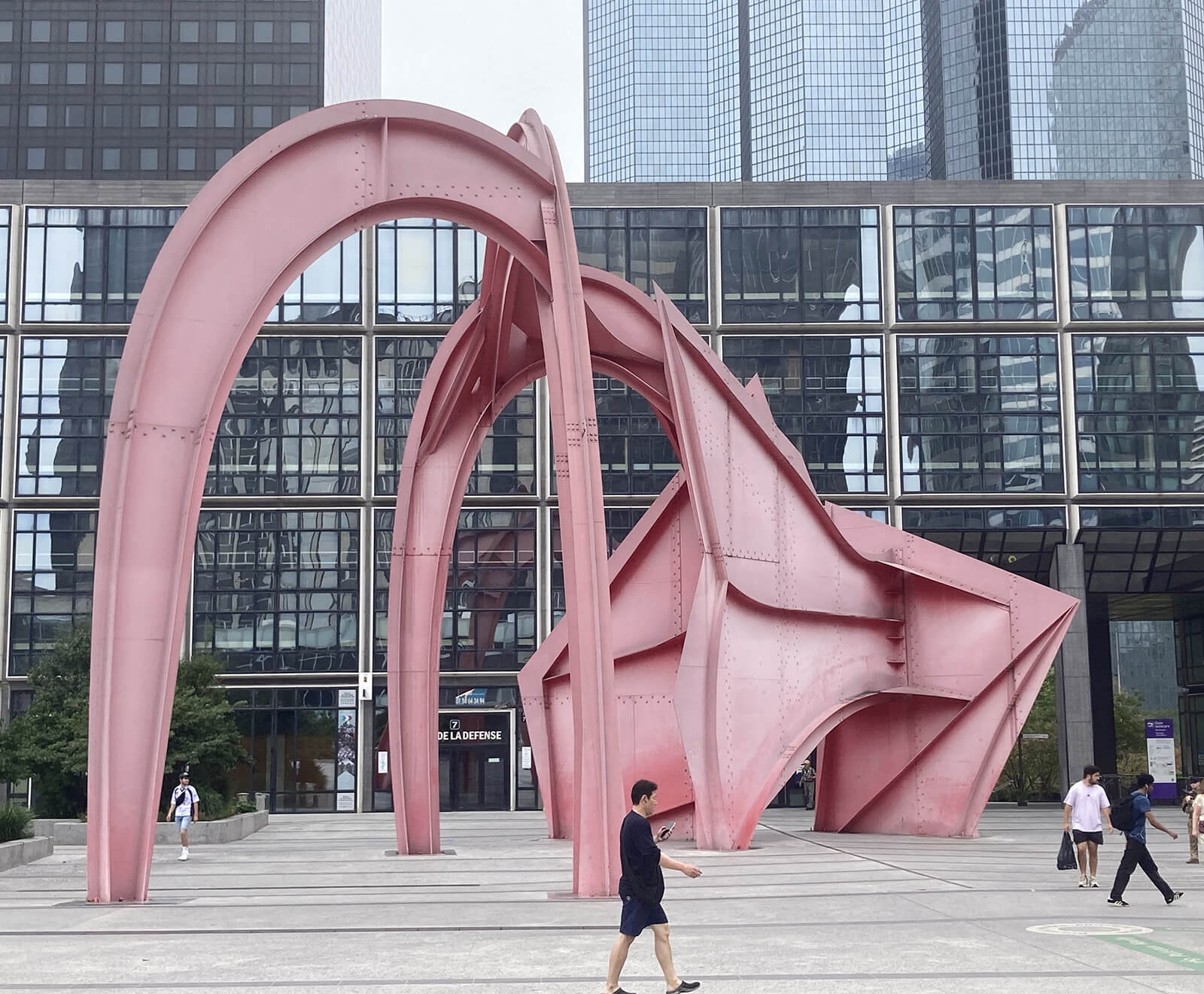
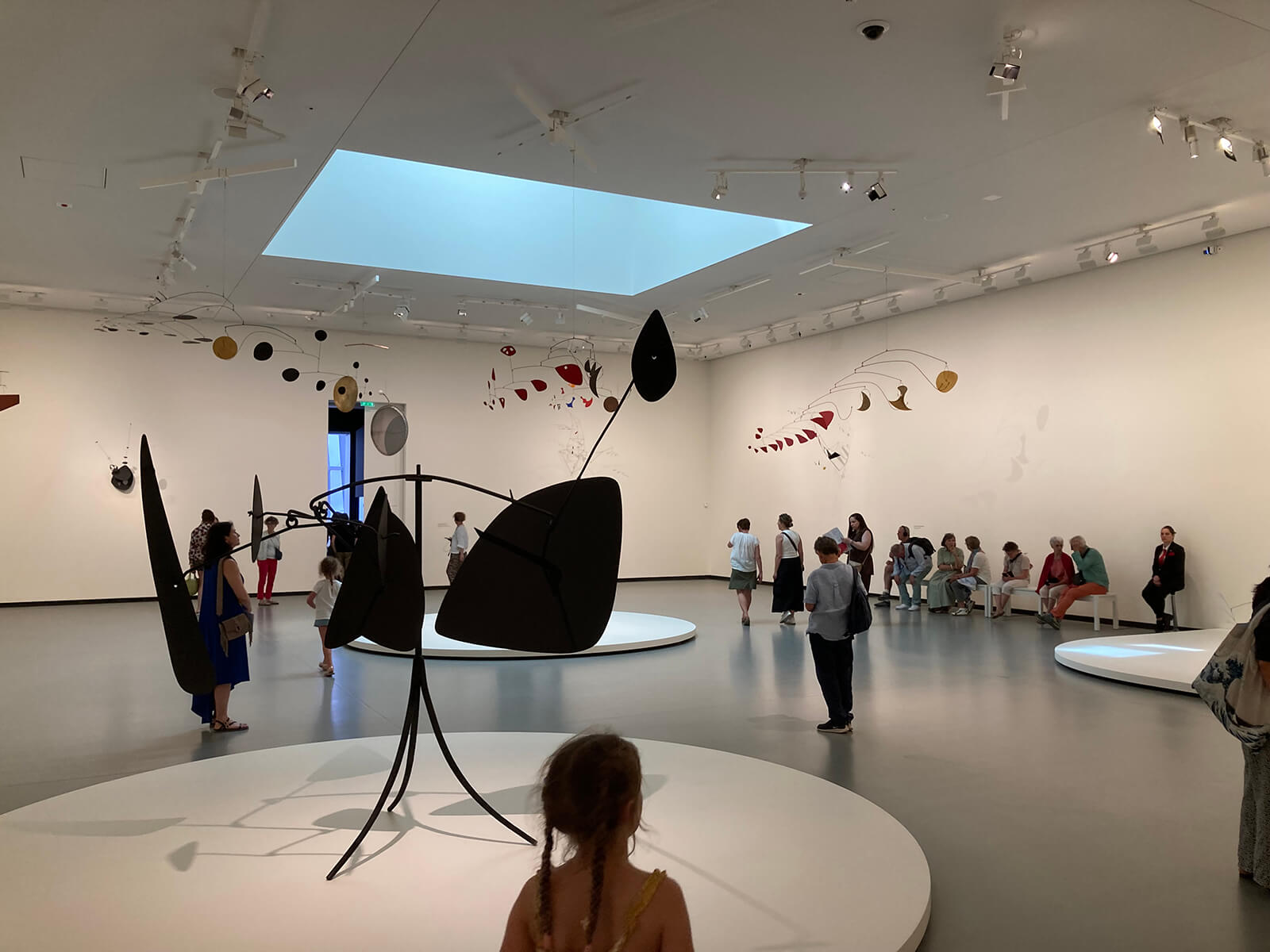
Consistently, throughout the exhibition, the setting takes the shape, colour and lighting that the objects in space require. The Cirque setting is intimate and spotlit, while the ‘mobiles’ and ‘stabiles’ bathe in the fabulous bright spaces co-created by Frank Gehry and exhibition curators Anna Karina Hofbauer and Dieter Buchhart. Apart from his two temporary sculptures in the FLV garden, a permanent beguiling sculpture can be seen at the UNESCO headquarters. The city of Paris displays one ‘stabile’ by Calder in the business district of La Defense. The sculpture Red Spider, installed in 1976, unfortunately has completely faded its bright red hue in the sun. It seems to beg the French, ‘Please repaint me!’
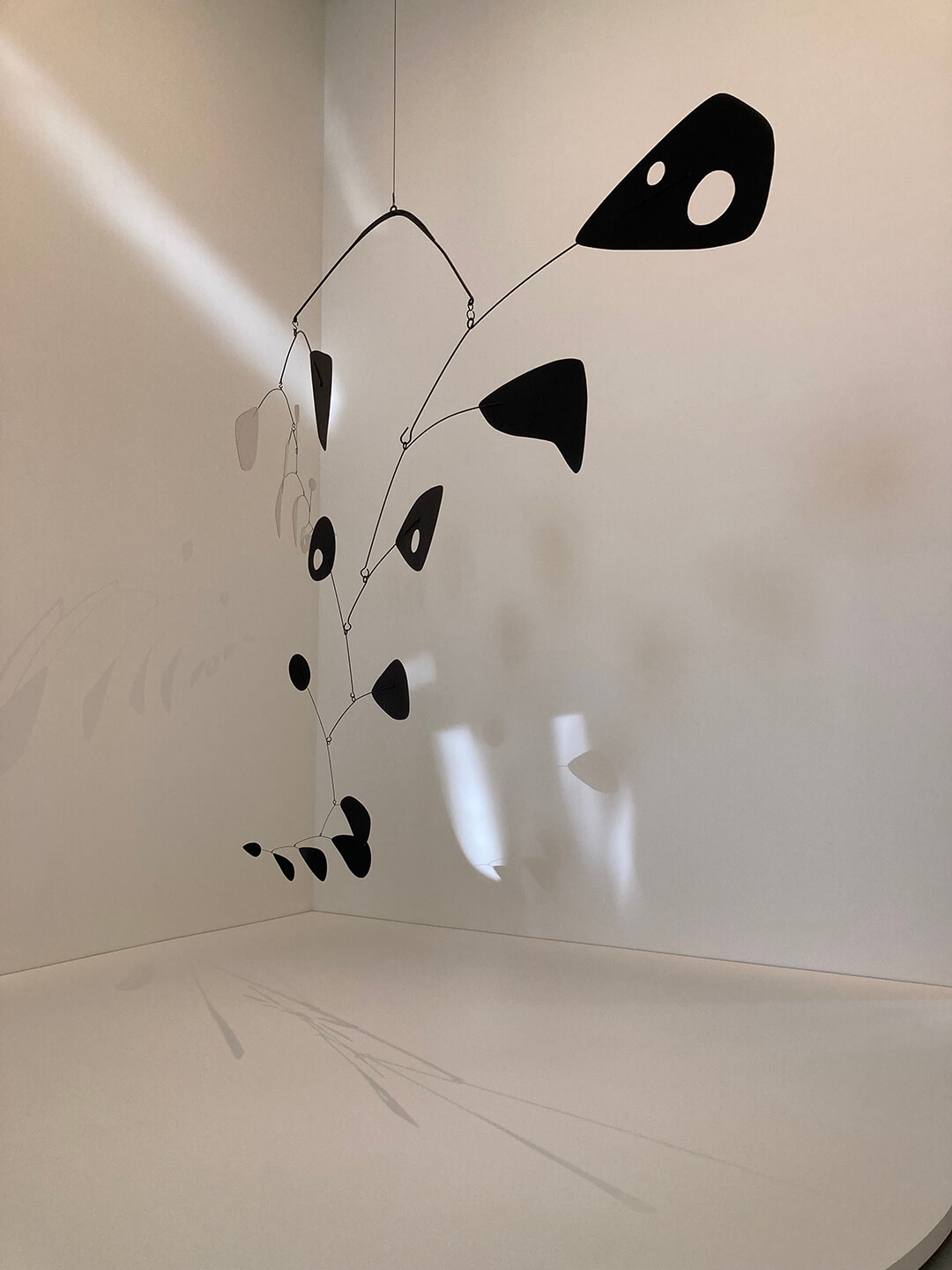
Commercial success has continued to accompany his legacy. If in 2025 a 1943 work from his celebrated Constellation series sold for $20.4 million, in 2014 his Flying Fish mobile fetched $26 million.
When Alexander Calder died of a heart attack in 1976, at the age of 78, his old friend, artist/architect Saul Steinberg (he escaped Italy to the US in 1941 and became an artist in his own right, famous for his New Yorker covers and illustrations) saluted him as “a dancing man.”
The exhibition explores Calder's pioneering approach to movement, balance and abstraction, bringing together a significant selection of his mobiles, stabiles and works on paper.
Sandy loved to improvise while dancing to jazz, samba or other music. His comical dancing also allowed him to share the pleasure of life with others. While poetically moving about, he invited everybody, including children, chairs and even a Roxbury Labrador. Like his Cirque, like his dancing sculptures, he wanted people to move their bodies through space, express themselves, get carried away and embrace the joy of lightness. A compassionate Sandy wanted to find a way of embracing that movement. He did that in his own way, through the complete reimagining of sculpture.
Calder. Rêver en équilibre is on view from April 15 to August 16, 2026 at the Fondation Louis Vuitton, Paris.

by Srishti Ojha Aug 03, 2026
The Indian artist’s exhibition, Cartography of the Grounded Sky, at Gladwell Projects in Jersey City weaves together the sacred and earthly through materiality and Sikh thought.
by Srishti Ojha Jul 31, 2026
The Blue Book: An Anti-Caste Graphic Novel is a surreal portrait of South Asia’s ongoing anti-caste struggle and its history seen through conversations with its icons.
by Srishti Ojha Jul 30, 2026
Speaking with Daehyung Lee, artistic director of the biennale's 13th edition, STIR explores the platform's focus on the future of ceramics and the human-nature-technology triad.
by Vandana Kalra Jul 27, 2026
In its 15th edition, the Hub in Kolkata turned the spotlight on the curator's evolving role amid changing political and cultural realities.

make your fridays matter with a well-read weekend
Enter your details to sign in
Don’t have an account?
Sign upOr you can sign in with
a single account for all
STIR platforms
All your bookmarks will be available across all your devices.
Stay STIRred
Already have an account?
Sign inOr you can sign up with
Verification link sent to check your inbox or spam folder to complete sign up process
Tap on things that interests you.
Select the Conversation Category you would like to watch
Please enter your details and click submit.
Enter the 6-digit code sent at


Crazy Dangly Thangs: Inside FLW’s landmark exhibition in Paris on Alexander Calder
by Anne Feenstra | Published on : Aug 05, 2026


 Sign in with Google
 Sign in with email
What do you think?