Art08 mins. read
A London exhibition reflects on shared South Asian histories and splintered maps
by Samta NadeemJun 19, 2025




by Ranjana DavePublished on : Oct 17, 2025
Waiting to board a flight to Almaty in early September, I was surrounded by Indian medical students returning to Central Asia for the school year, their bags stuffed with winterwear, spices and textbooks. Thousands of Indian students study medicine in Kazakhstan, drawn there by the prospect of an English-language education at an affordable price. Travelling in search of opportunity and learning, in many ways, they are present-day qonaqtar, Kazakh for ‘guests’ – and the title of a collection-based exhibition at the new Almaty Museum of Arts in Almaty, Kazakhstan. Put together by the museum’s chief curator, Inga Lāce, it surveys how hospitality, community, nomadism and migration shape society in Central Asia (and particularly Kazakhstan).
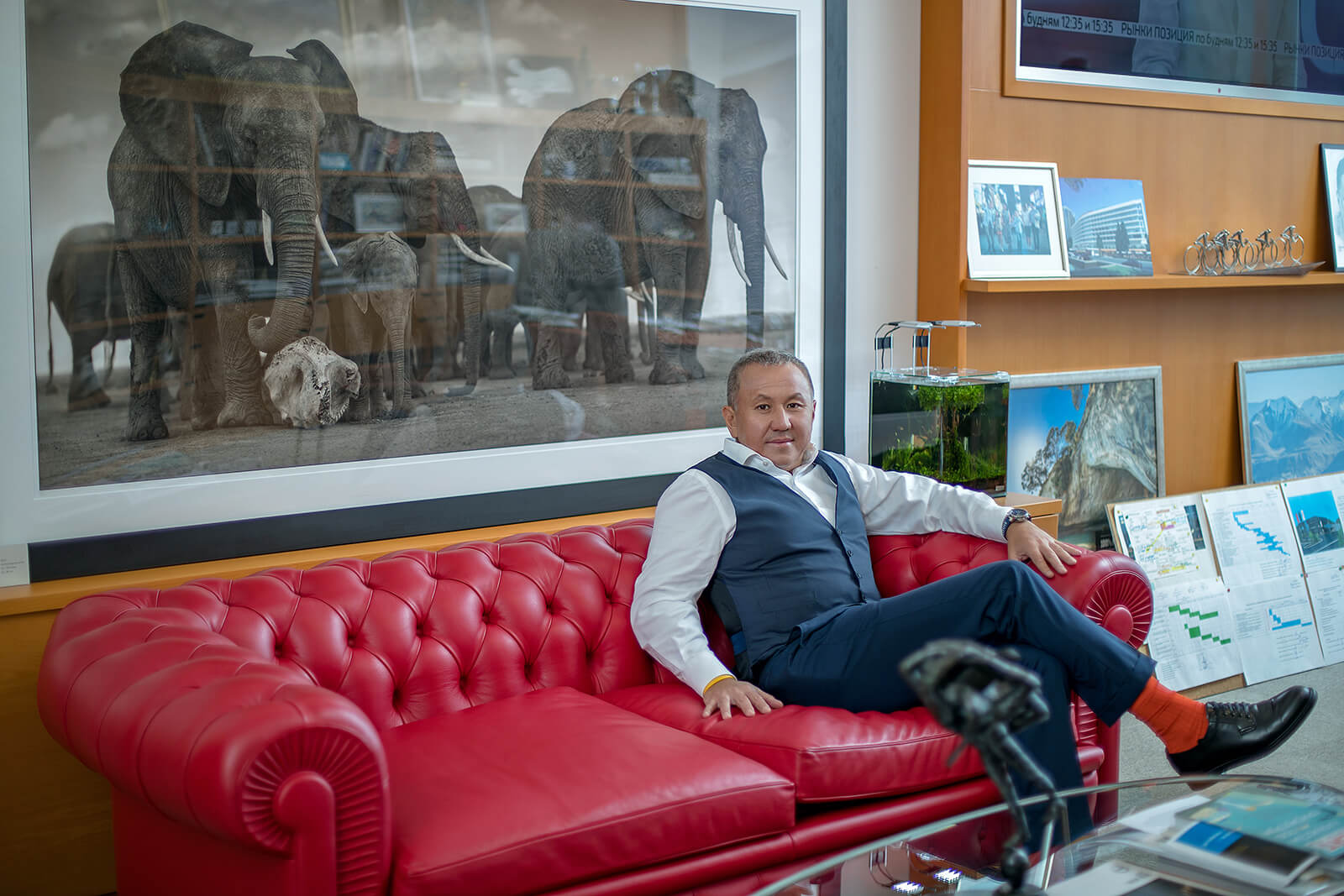
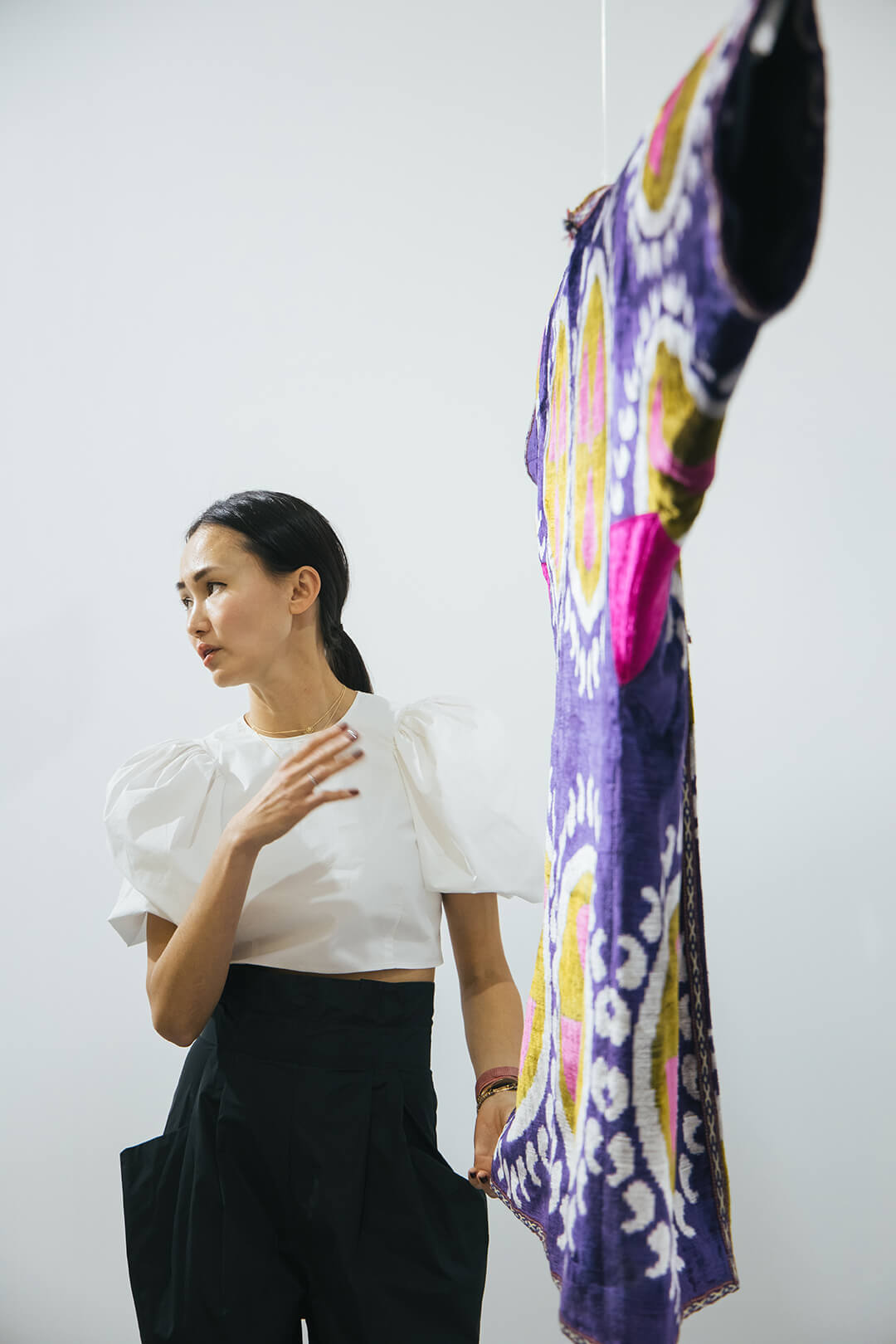
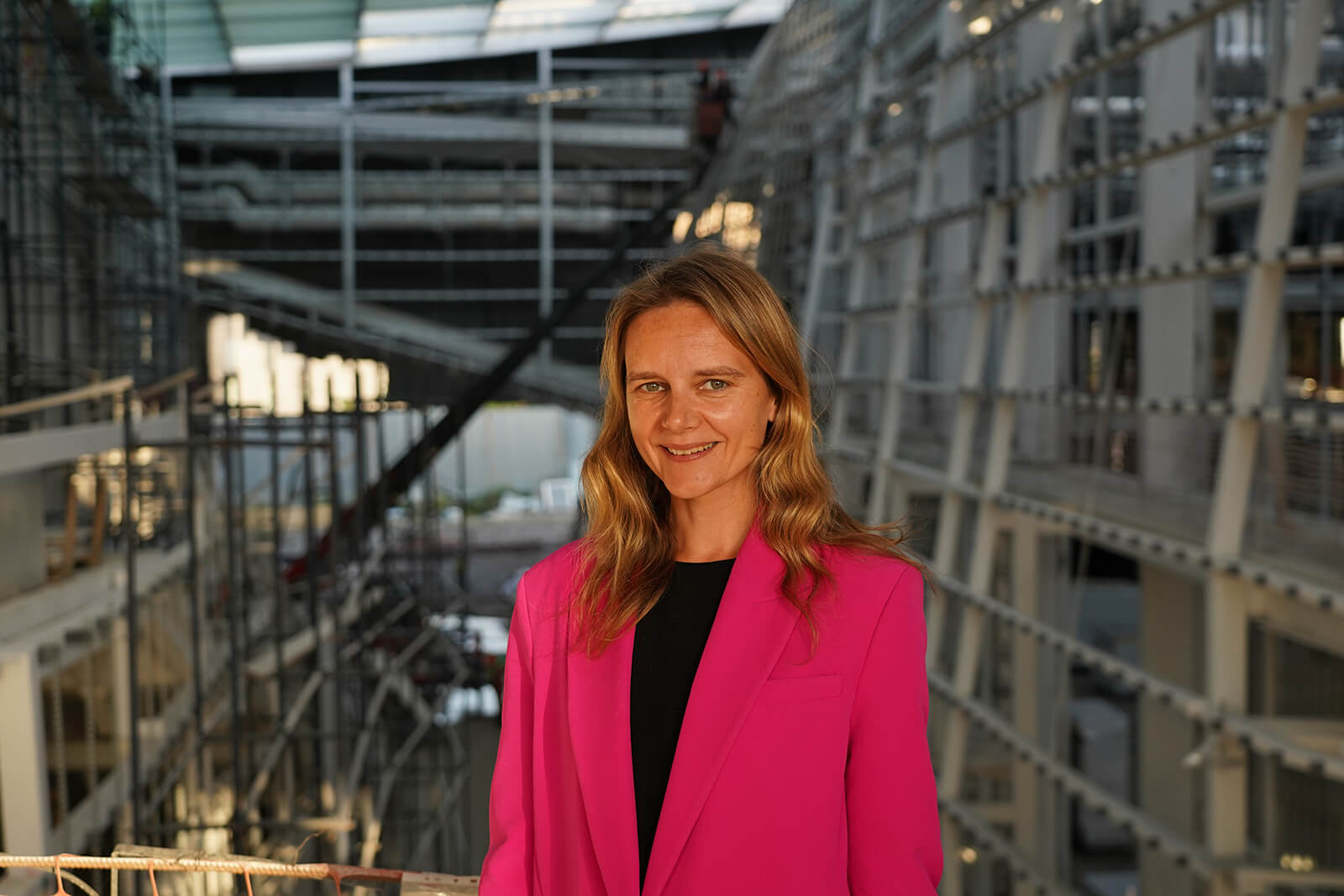
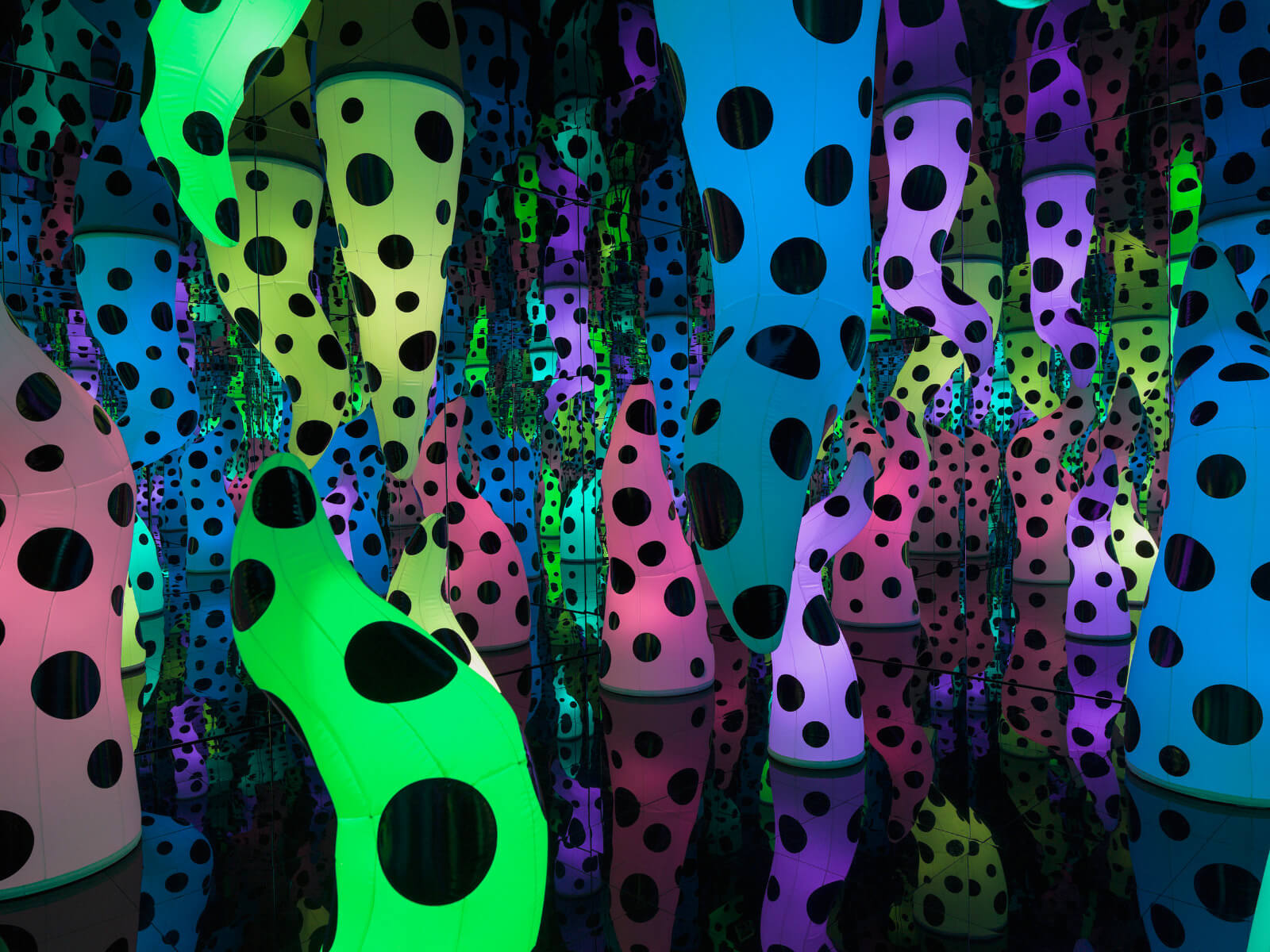
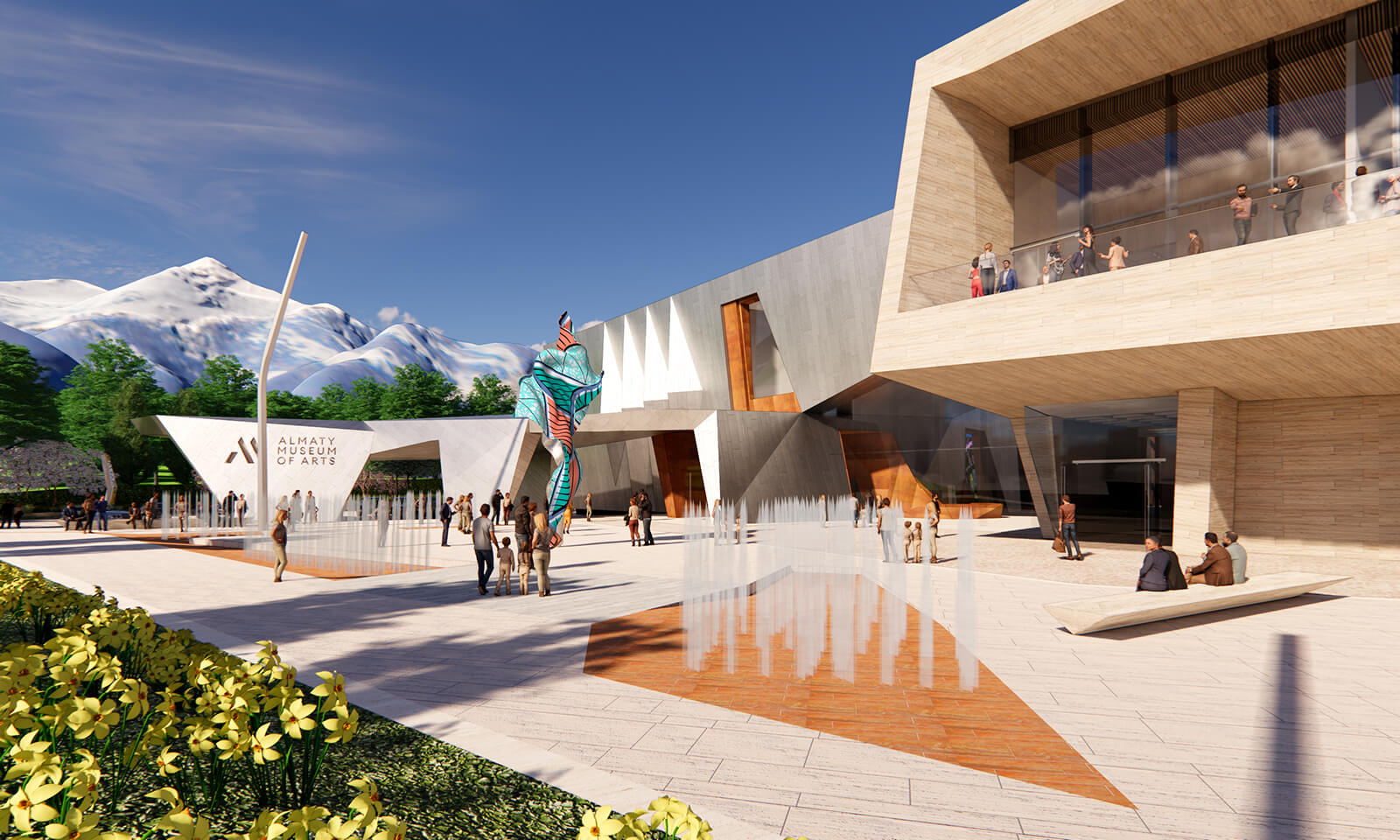
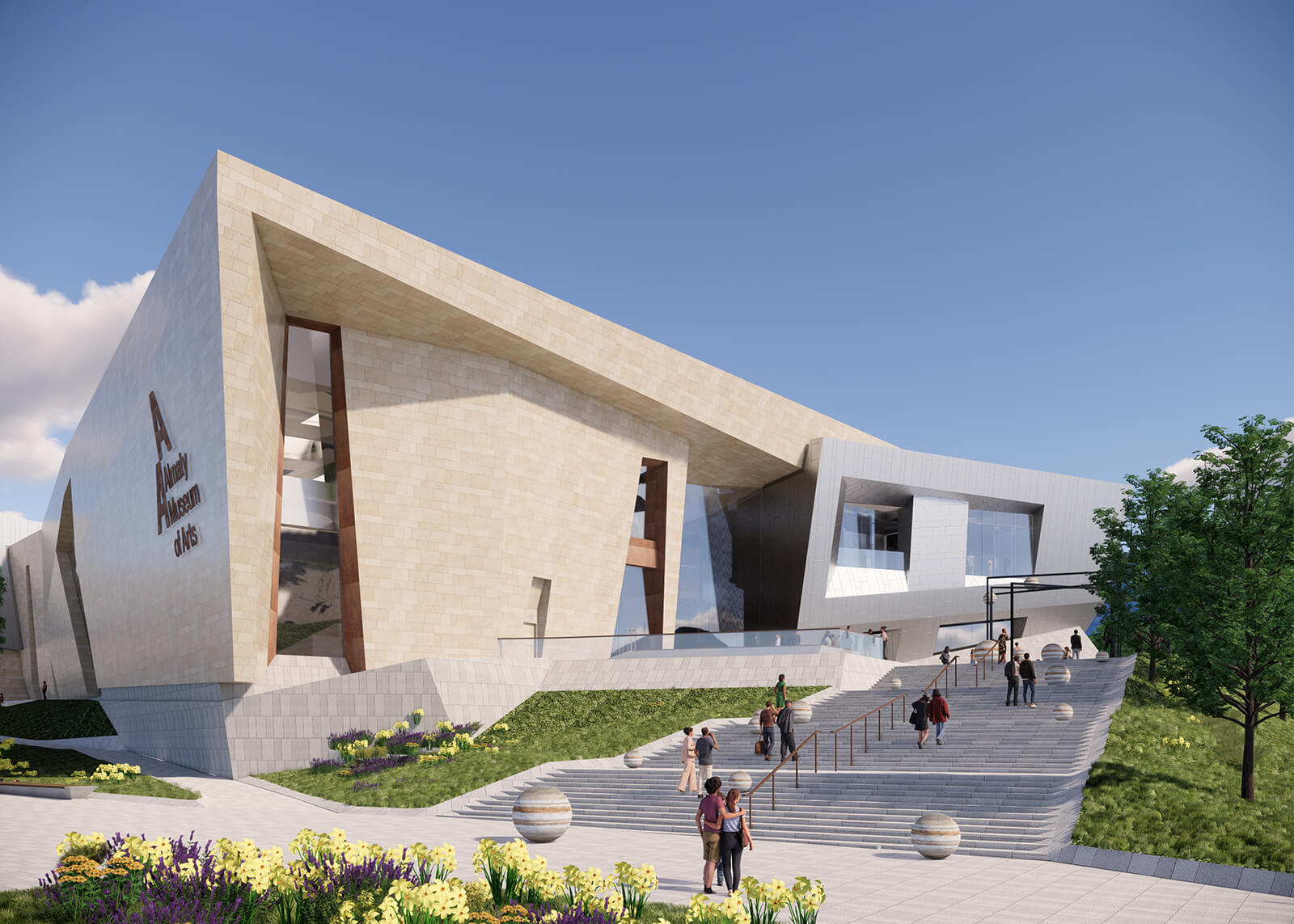
The museum is built around the collection of its founder, Nurlan Smagulov, focused on modern and contemporary art from Kazakhstan and Central Asia, with Meruyert Kaliyeva, founder of the city’s Aspan Gallery, as its artistic director. “Art transformed my life. With the Almaty Museum of Arts, I hope to create a space that uplifts, connects and celebrates the many stories of this region—past, present and future,” Smagulov said of his intentions in a press release. Designed by British architects Chapman Taylor, the museum’s structure, with two interlocking L-shaped wings, reflects Almaty’s location at the foothills of the Tien Shan mountain ranges. Located along a busy intersection, large-scale works by Yinka Shonibare, Alicja Kwade and Jaume Plensa populate the museum’s outdoor areas. Qonaqtar sits alongside a retrospective of Kazakh artist Almagul Menlibayeva, I Understand Everything, by Thai curator Gridthiya Gaweewong. A smattering of works by big-ticket artists occupy entire spaces in one section of the building – including a maze-like sculpture by Richard Serra, which one can walk through, its rust-covered steel solidly looming over you. In LOVE IS CALLING (2013), one of Japanese artist Yayoi Kusama’s Infinity Mirror Rooms, multicoloured polka-dotted tentacles spring from the earth and sky, the disorienting presence of so many mirrors luring visitors into a selfie or three.
Russian is spoken and understood everywhere in Almaty; many of the press conferences we attended unfolded in a mix of Russian and English. During a tour of Soviet-era architectural hotspots in central Almaty, our tour guide from the group Walking Almaty pointed out traces of the state’s efforts to transition written Kazakh from its Soviet-era Cyrillic alphabet to the Roman script, this endeavour tempered by the phonetic complexity of spoken Kazakh.
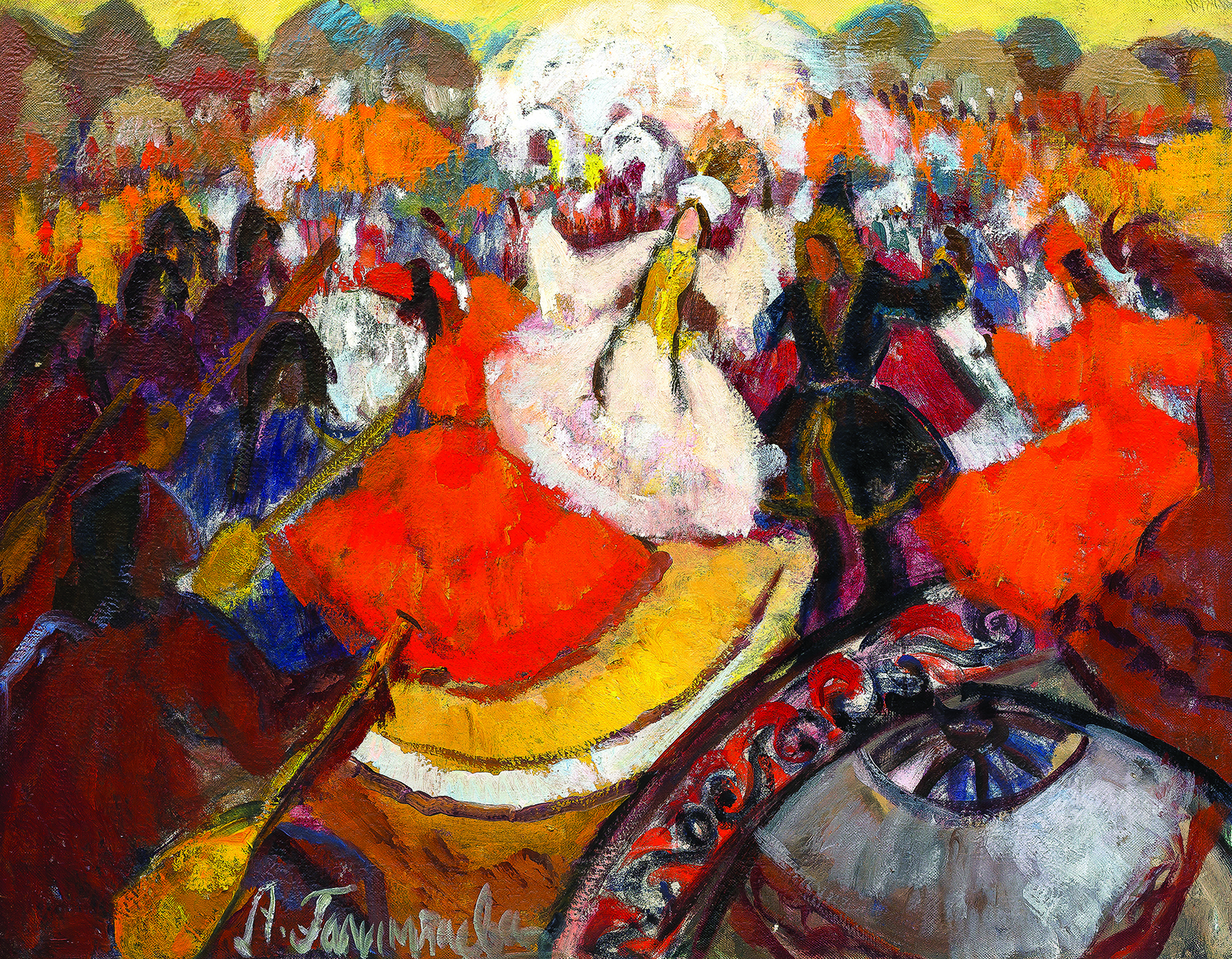
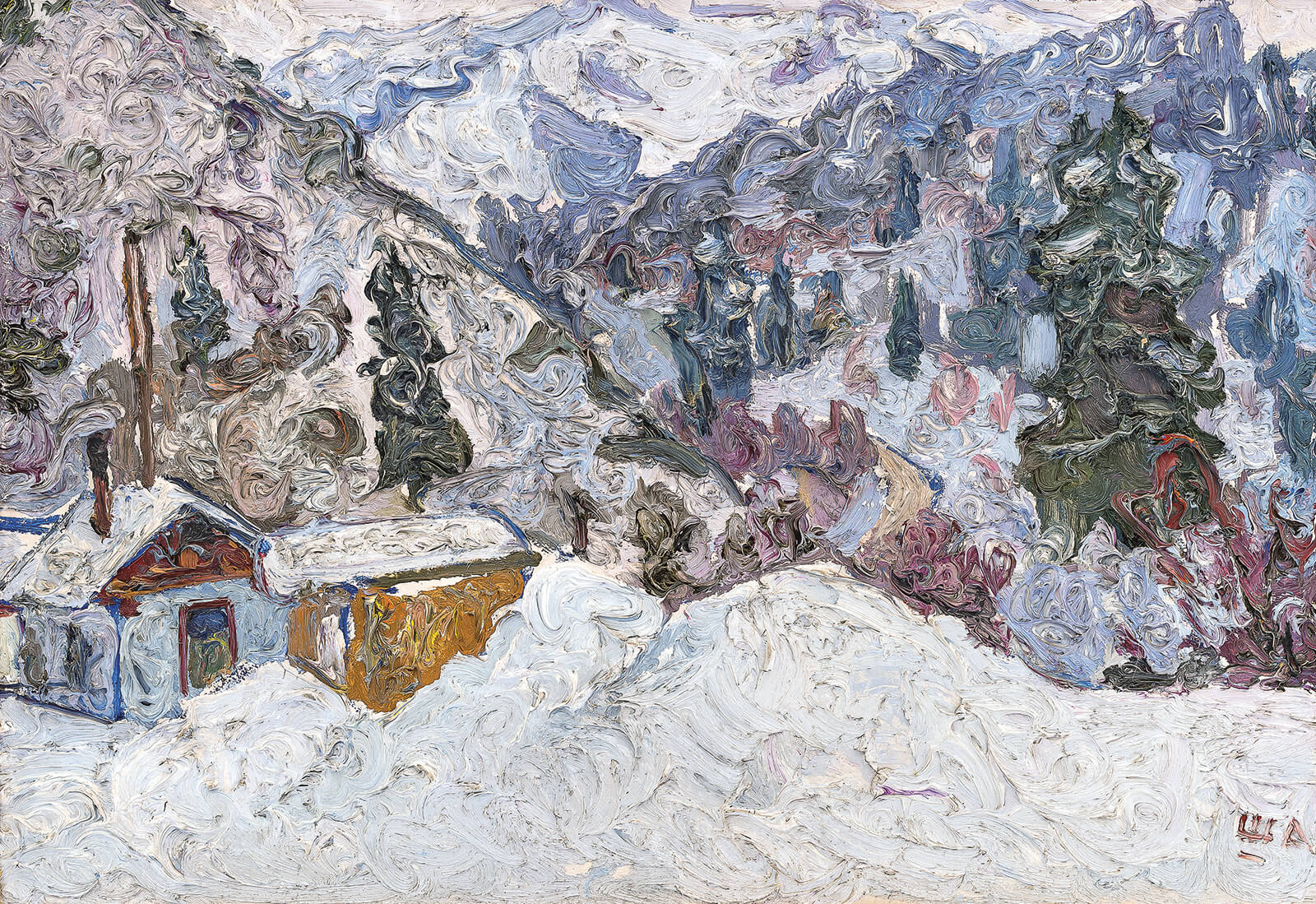
As a term, qonaqtar may well be a cipher for the region’s rising visibility in the arts landscape, as it comes to terms with its post-Soviet reality and burgeoning formulations of national identity. How does one belong to a place or claim ownership of it? Qonaqtar explores these tensions along the faultlines of Kazakhstan’s nomadic origins and waves of forced and voluntary settlement or migration during the Soviet era, all of which inform an artistic language that emerges most particularly in the mid-20th century. The exhibition was inspired by two works, one of them Aisha Galymbayeva’s Shepherd’s Feast (1965), which shows a group of women caught mid-celebration, with musicians on string instruments encircling a group of dancers. The women crowd the canvas, all the way into its upper reaches, where they appear as brightly costumed specks, sporting orange headpieces.
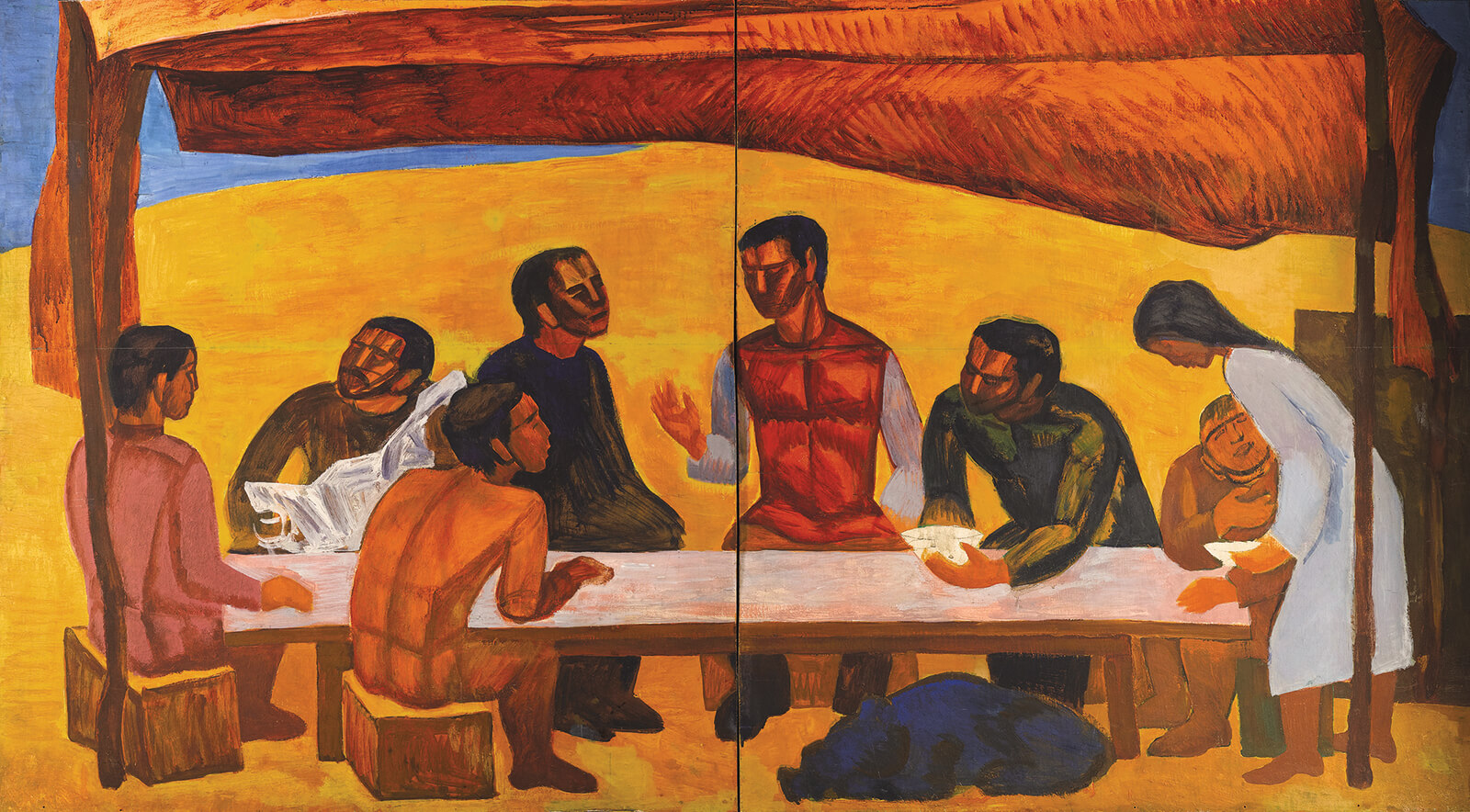
The gathering, both as mandated Communist-era collectivity and a reassertion of Kazakh cultural identity, features extensively in Qonaqtar. If socialist realism and its idealised portrayals of labour and community were prescriptive, religion and mythology become exhilarating points of departure. Salikhitdin Aitbayev’s pastoralist On Virgin Soil. Lunchtime (1960s) is a last supper-esque composition, where migrant farmers gather under a temporary shelter, immersed in mealtime banter, as a woman attends to them. The central figure is a man in a red puffer jacket, one fist curled into a pocket for warmth. The Soviet leader Nikita Khrushchev's Virgin Lands campaign saw hundreds of thousands of worker volunteers relocate to northern Kazakhstan and western Siberia to boost the Soviet Union’s agricultural production in the 1950s and 1960s. Artists were deputed by the state to document such campaigns, Lace explained to STIR, and Aitbayev’s work could have been the outcome of one such assignment. Dated two decades after, Sergey Maslov’s The Last Supper (1981-88) could be a biblical throwback or a late Soviet gathering – possibly even a group of artists at the Voyager Gallery in Almaty, where Maslov worked as a night guard in the ‘90s. In his painting, a group of people form loose clusters along a rectangular table. Despite the brown haze creeping in from the edges of the work, the liveliness of the group comes through, contained in animated gestures and open mouths as they have passionate conversations with each other.
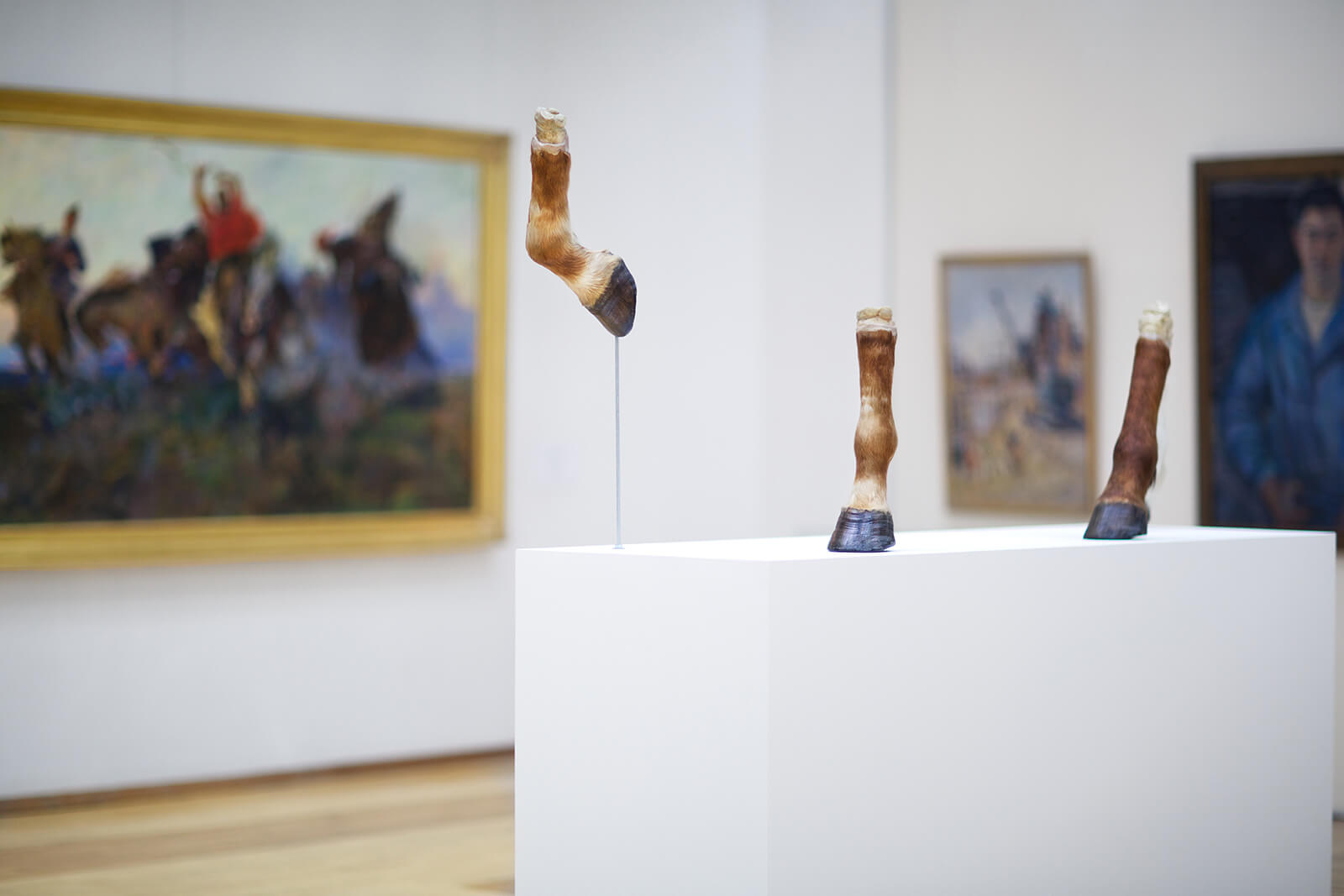
“For our entire history, we’d been surviving instead of living. Today, there’s no longer any use for our experience in war; in fact, it’d be best to forget it. There are thousands of newly available feelings, moods, and responses,” the Belarusian author Svetlana Alexievich wrote in her 2013 book Secondhand Time: The Last of the Soviets. For artists in the erstwhile Soviet Union, its dissolution brought societal breakdown and limitless quantities of new information. “Everything comes at different times…[but] it’s all being thrown at you,” Lace said, “You learn about Joseph Beuys and Bill Viola and Cindy Sherman [all at once].”
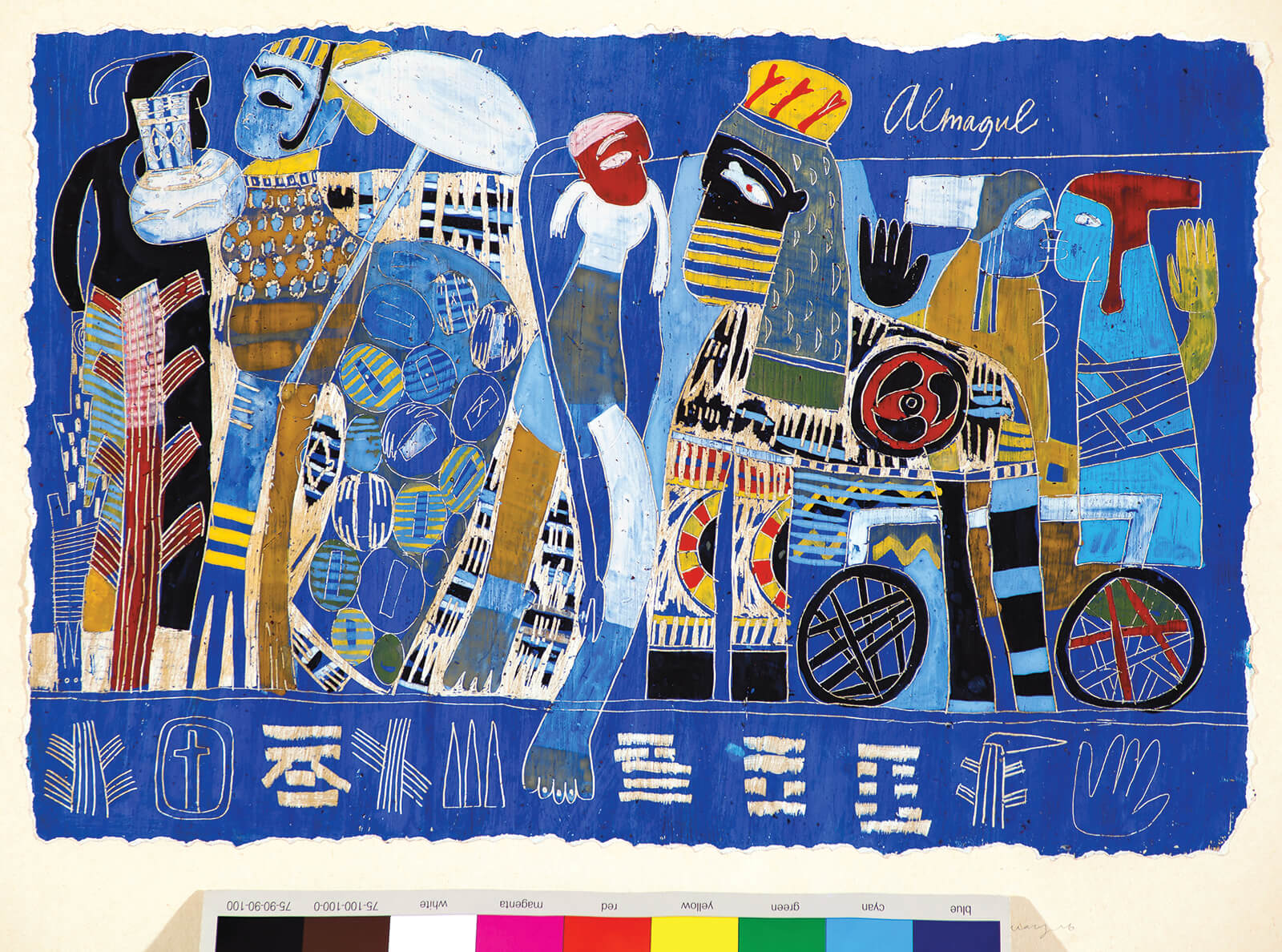
From Qonaqtar’s body of work, largely rooted in the mid to late 20th century, Menlibayeva’s solo exhibition offers chronological continuity. Since the 1990s, the Smagulovs have acquired over 40 of her works, all of which are in the museum’s collection. Trained as a textile artist, Menlibayeva works with felt, painting, printmaking, photography and video. Gaweewong, the curator, divides the exhibition into 16 sections, some focused around a single work, grounding the show's title in a shared Soviet embodiment of resilience and endurance. Early canvases, clustered in tight formations, evince minimalist abstraction and patterned accumulations of dots, arrows, objects and animals. In one work, a row of Orwellian four-legged creatures with distinctly human facial characteristics defiantly trot across the breadth of the canvas. Below them, arithmetical calculations make an incongruous appearance, the numbers never adding up (except 13-13, which the artist calculates as “00”). “During the day, I witnessed the collapse of an empire and at night, I painted as a refuge from misunderstanding,” Menlibayeva said about her work during this period in an exhibition brochure.
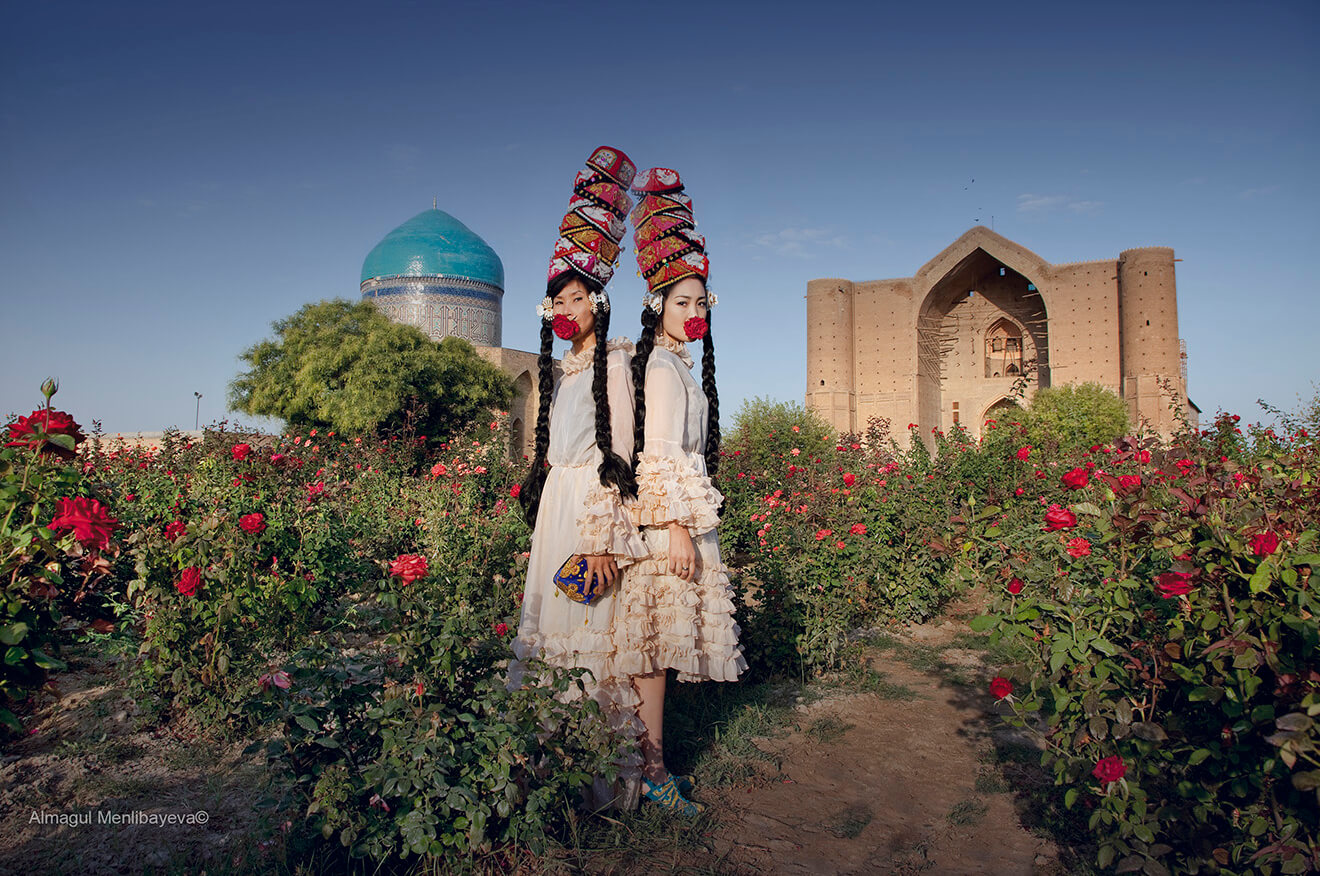
The exhibition also documents Menlibayeva’s presence in the local arts landscape, including her collaborations with Maslov (her partner and one of her teachers), alongside images of her producing artistic projects behind the scenes as her international career grew. She seems truly medium-agnostic, working with new forms as the opportunity arose. In Eternal Bride (2002), Menlibayeva is an ebullient onscreen presence, walking through the streets and markets of Almaty in a wedding gown she buys off a friend. She tries to hail a car, casually explaining to two men where she wants to go. One of them asks her, “Did your groom leave you?” She traipses along a cold, rainy sidewalk, hoisting her dress up; she dances with strangers on the street and gets told off by an old woman who says, “What a dirty wedding dress!” The video work is as much a challenge to social conventions as it is a 2000s chronicle of Almaty’s public spaces.
Menlibayeva’s video work Kurchatov - 22 surveys the impact of the Semipalatinsk nuclear testing site in eastern Kazakhstan on the local ecology and community, using oral testimonies, archival material and performative insertions. While authorities claimed that the 18000 square metre steppe was uninhabited, it was actually a centre of Kazakh culture. Prolonged radiation exposure increased the prevalence of genetic mutations and tumours among the local population. Residents often encountered nuclear detonations at close range. In Menlibayeva’s film, an old man describes one such experience, “...I was blinded by such a bright light it seemed like fire went through me.” The men and women blithely recount witnessing large-scale nuclear explosions; filmed in domestic settings, their annuities of trauma and catastrophe manifest as daily decrepitude.
On my last day in Almaty, Alima Kairat, the artistic director of the Tselinny Center of Contemporary Culture, took me on a tour of the 1960s cinema hall turned cultural space. She highlighted its strategic location; seen from the street, it obscures the Russian Orthodox church tucked behind it – the socialist popular swallowing religion whole. “Tselinny is a place of memory and for many people who come here, they would say, ‘my Tselinny is this...’ - and it feels like it’s their place,” Kairat said about the space’s long history. While the Almaty Museum of Arts originates from Smagulov’s collection, with Tselinny, the archive is a primary source, and the space becomes a container for practice, pedagogy and publishing projects. “Our main mission is to enhance the local and intellectual communities, artistic communities, by building a dialogue within Kazakhstan, Central Asia and [beyond] with countries or communities which have similar experiences,” Kairat said.
For a rank outsider to Kazakhstan and Central Asia, Sovietness is a looming presence, emanating from art, architecture and the rhythms of daily life. It is very firmly situated in the past, almost stubbornly severed from present-day geosocial configurations or tensions, and thus from postcolonial responsibility. Who can we hold accountable for the injustices of the past? As Alexievich writes in Secondhand Time, “I recently saw some young men in T-shirts with hammers and sickles and portraits of Lenin on them. Do they know what communism is?”
by Srishti Ojha Oct 21, 2026
Increasingly, artists, filmmakers and activists are turning to VR to create more personal, tangible accounts of the climate emergency and its impact on vulnerable communities.
by Mirra Lynn Oct 20, 2026
The Indian artist paints the old wadas of central Pune, capturing the traces of everyday life that cling to these structures, battered by time but unbowed.
by Anmol Ahuja Oct 15, 2026
How do heaps of souvenirs and relics with racist Aboriginal motifs and features become art? MCA Sydney’s winter showcase—the artist’s largest to date—beckons a possibility.
by Srishti Ojha Oct 14, 2026
The first Dutch publication on the Turkish artist, the eponymous book centres on Refik Anadol: Latent City, his living data sculpture of Bruges, exhibited at BRUSK gallery.

make your fridays matter with a well-read weekend
Enter your details to sign in
Don’t have an account?
Sign upOr you can sign in with
a single account for all
STIR platforms
All your bookmarks will be available across all your devices.
Stay STIRred
Already have an account?
Sign inOr you can sign up with
Verification link sent to check your inbox or spam folder to complete sign up process
Tap on things that interests you.
Select the Conversation Category you would like to watch
Please enter your details and click submit.
Enter the 6-digit code sent at


Open house: The Almaty Museum of Arts welcomes the world as its guest
by Ranjana Dave | Published on : Oct 17, 2025


 Sign in with Google
 Sign in with email
What do you think?