Design09 mins. read
On the money: Assessing the cultural value of currency with the Euro redesign
by Mrinmayee BhootOct 01, 2026



by Chahna TankPublished on : Jul 16, 2026
Irish political scientist Benedict Anderson described nations as 'imagined communities' in his 1983 book of the same name. Not because nations are fictitious, but because millions of strangers who will never know one another nevertheless imagine themselves as belonging to the same collective. This sense of belonging is sustained by shared stories, beliefs and rituals as much as by symbols that give them a tangible form. Only a few objects or images do that as effectively as a flag. Mere pieces of fabric as they may be, flags are indicators of affiliation—to nations, sure, but also to other factions or movements.
Think about how many flags you identify with. There is, of course, your country's flag. You might know the pride colours that represent you. There must be sports, religious or political flags that aid your sense of collective belonging. They even permeate fictional worlds: for if you were a pirate, you would sail under a Jolly Roger; if you belonged to a fantasy kingdom or a rebel faction, you would likely have one of your own. However, if at its best, a flag is a symbol of belonging, at its worst, it can become a way to justify exclusion, hostility or even violence in its name. The same flag that can gather a community around shared ideals can just as easily become a means of ostracising others. A flag can legitimise the status quo as readily as it can challenge it; serve as a banner of the establishment as much as of resistance.
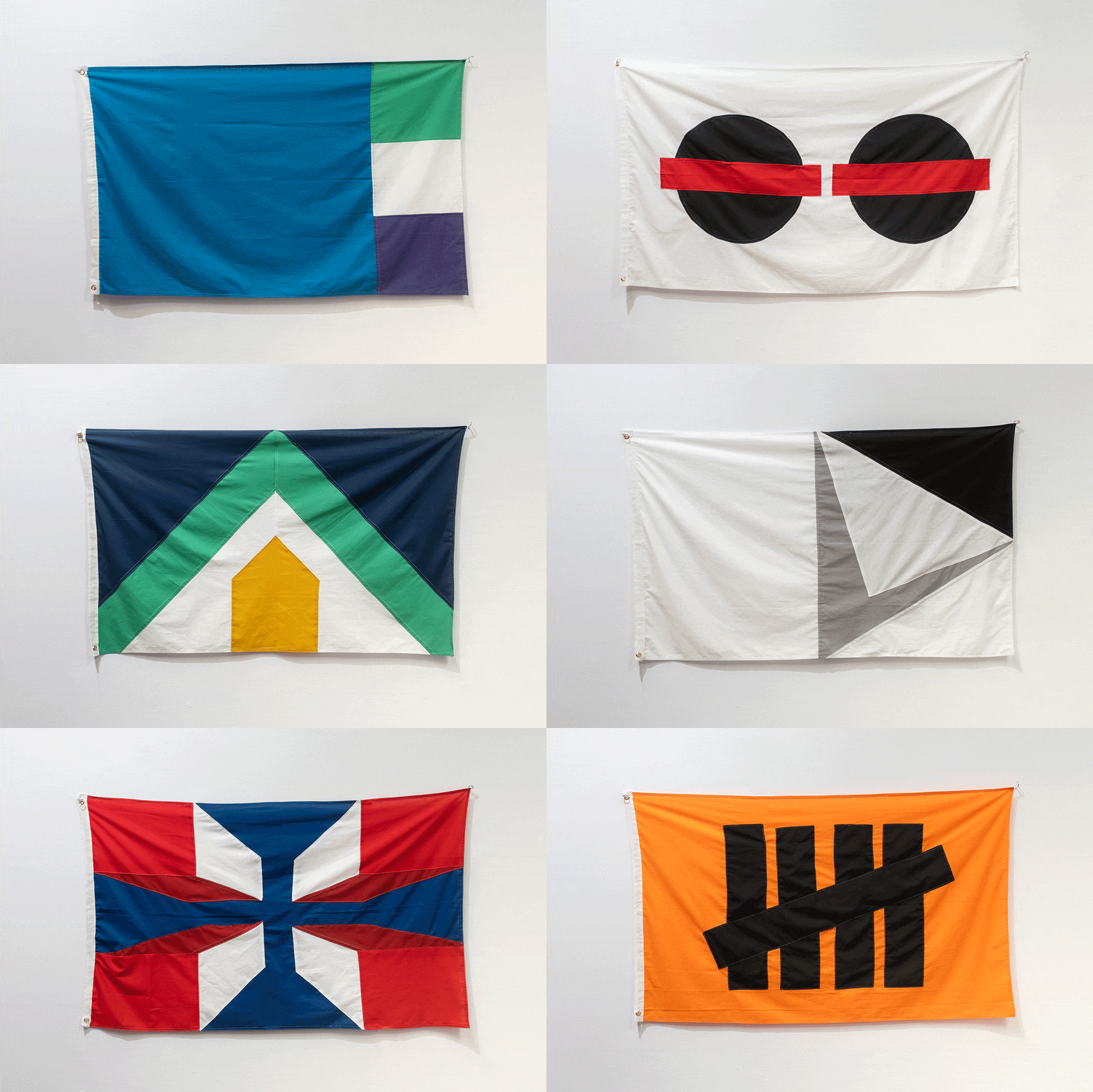
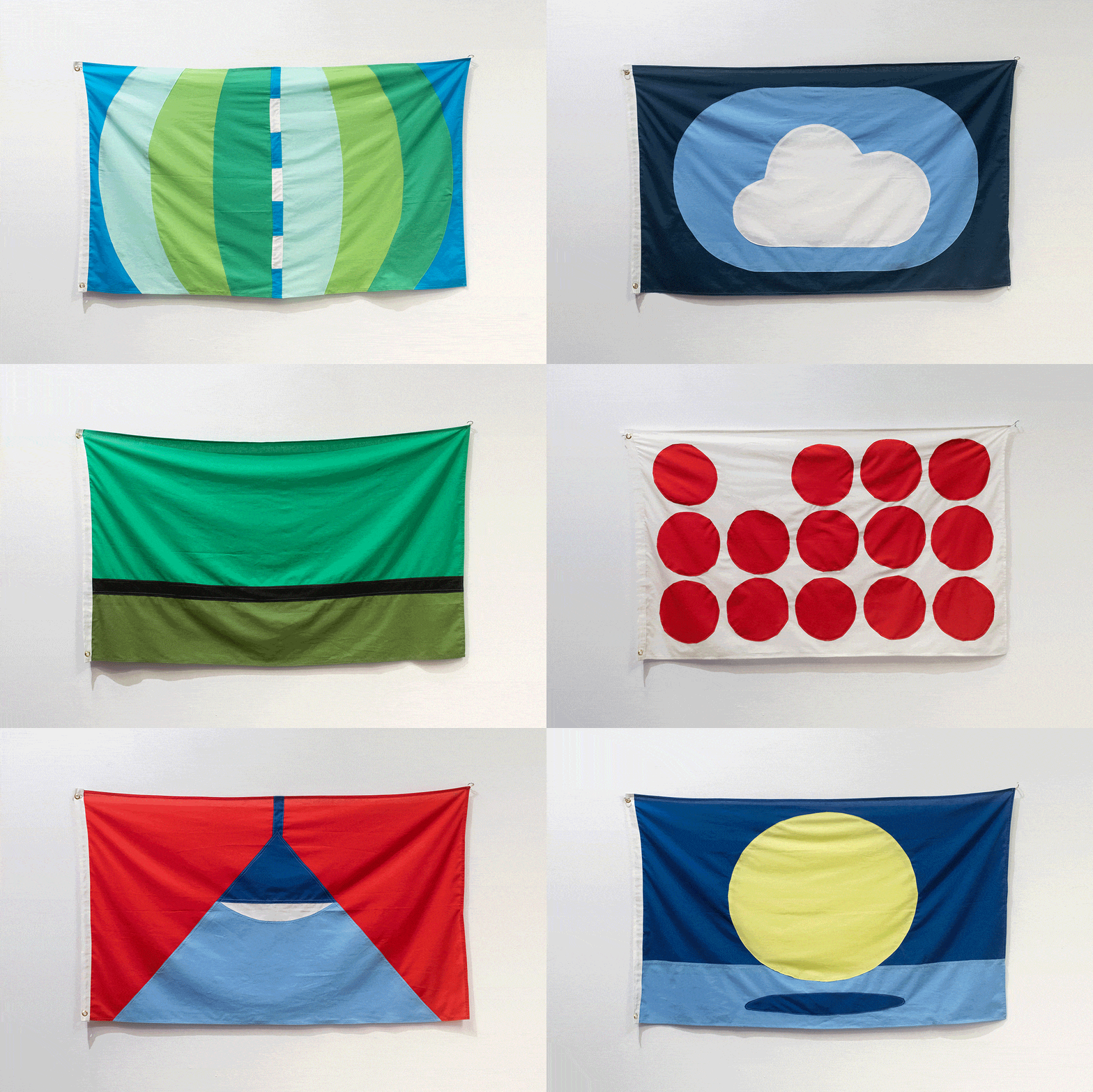
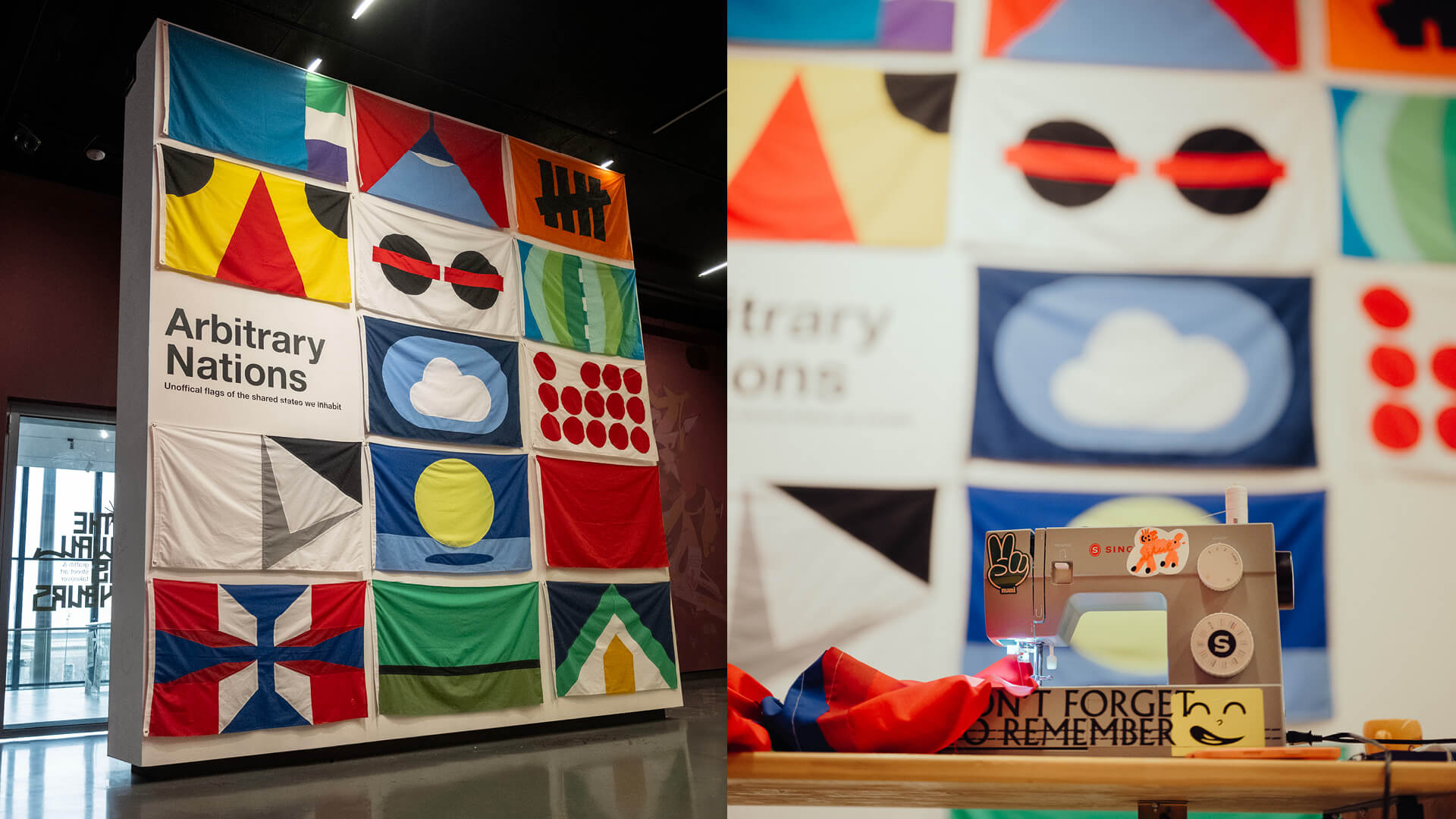
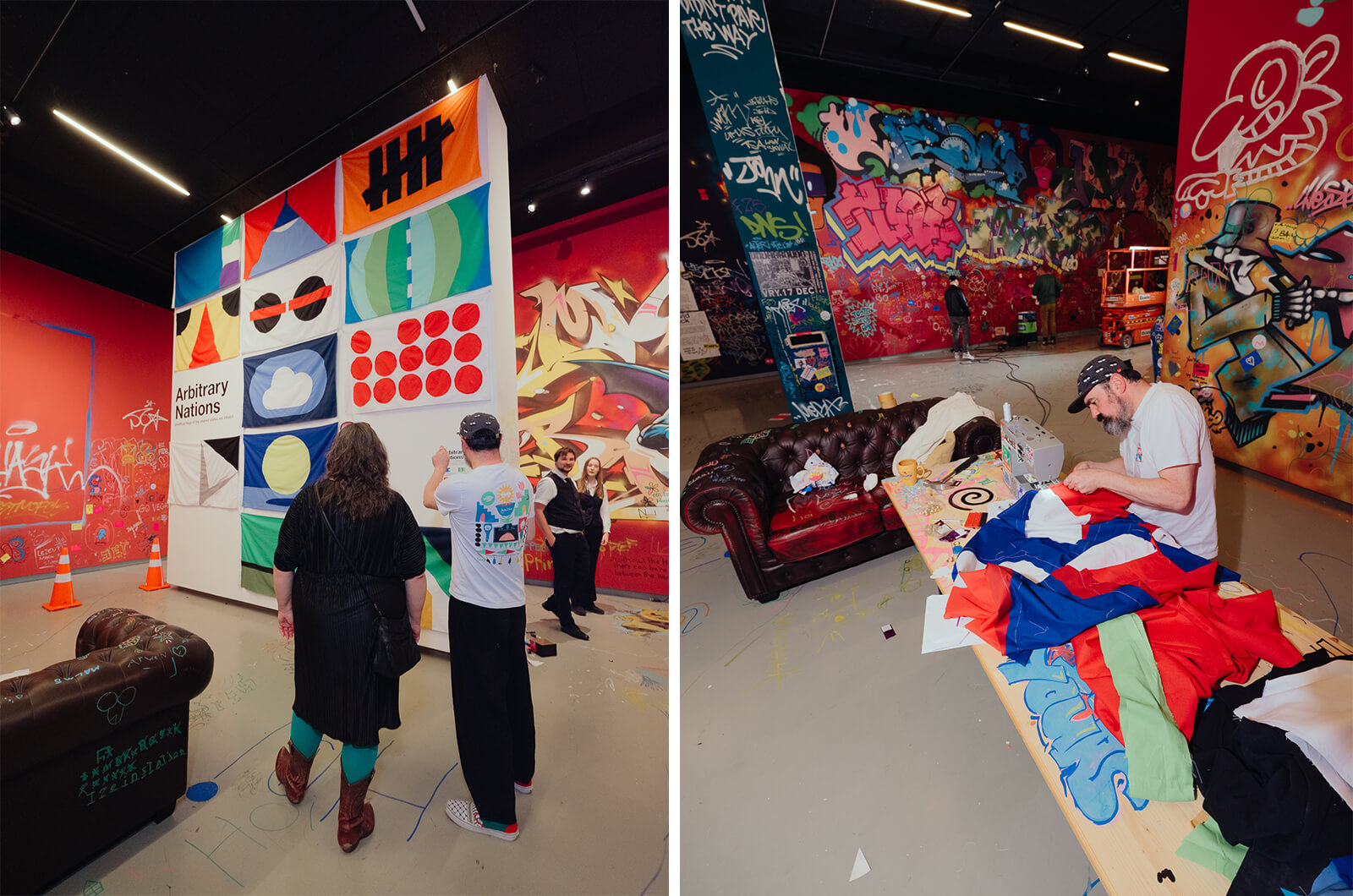
It is but a human impulse: of creating communities and then clothing them in symbols. That is what forms the basis of the Irish artist and designer Asbestos's ongoing project of flag designs, Arbitrary Nations. In April this year, 14 of the multidisciplinary artist’s imagined flags were presented at the Fries Museum in Leeuwarden, Netherlands, as part of The Wall is Yours exhibition, where graffiti and street artists selected by the street art collective Writer's Block showcased their work on the museum’s walls on a rotating basis.
For Asbestos, Arbitrary Nations began with a question about the nature of identity itself. "I’m fascinated by our basic human need to create shared identities. These are often seen as immovable, sacrosanct and revered, often without question. National identities are defined by where a border is drawn, race, language spoken, accents, bizarre traditions, music, shared rituals and many other arbitrary filters," the artist tells STIR in a conversation, echoing Anderson. Rather than accepting nations as the most obvious way of organising people, Asbestos asks a different question with his project: "Why don't we categorise ourselves with less obvious overlaps?"
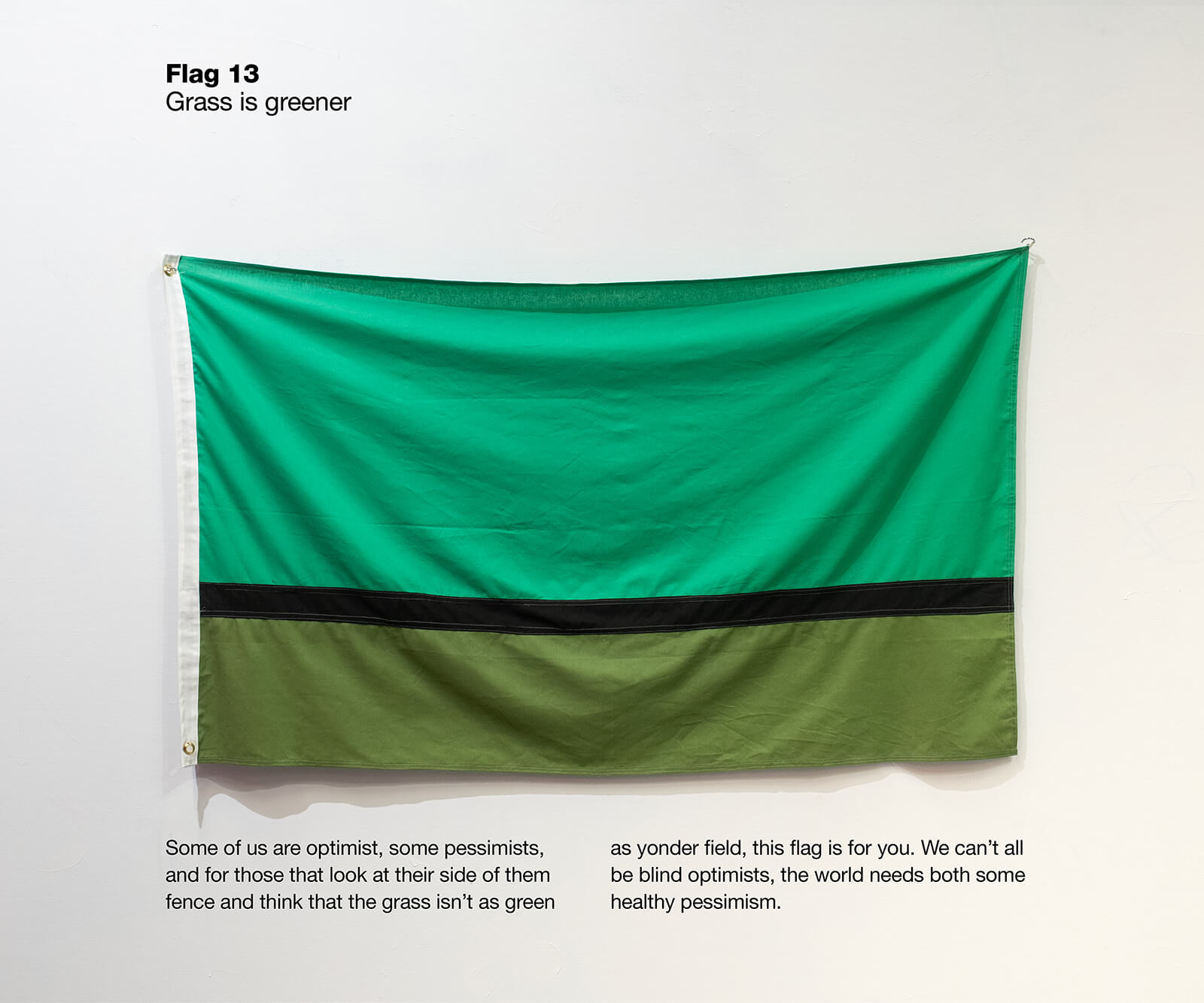
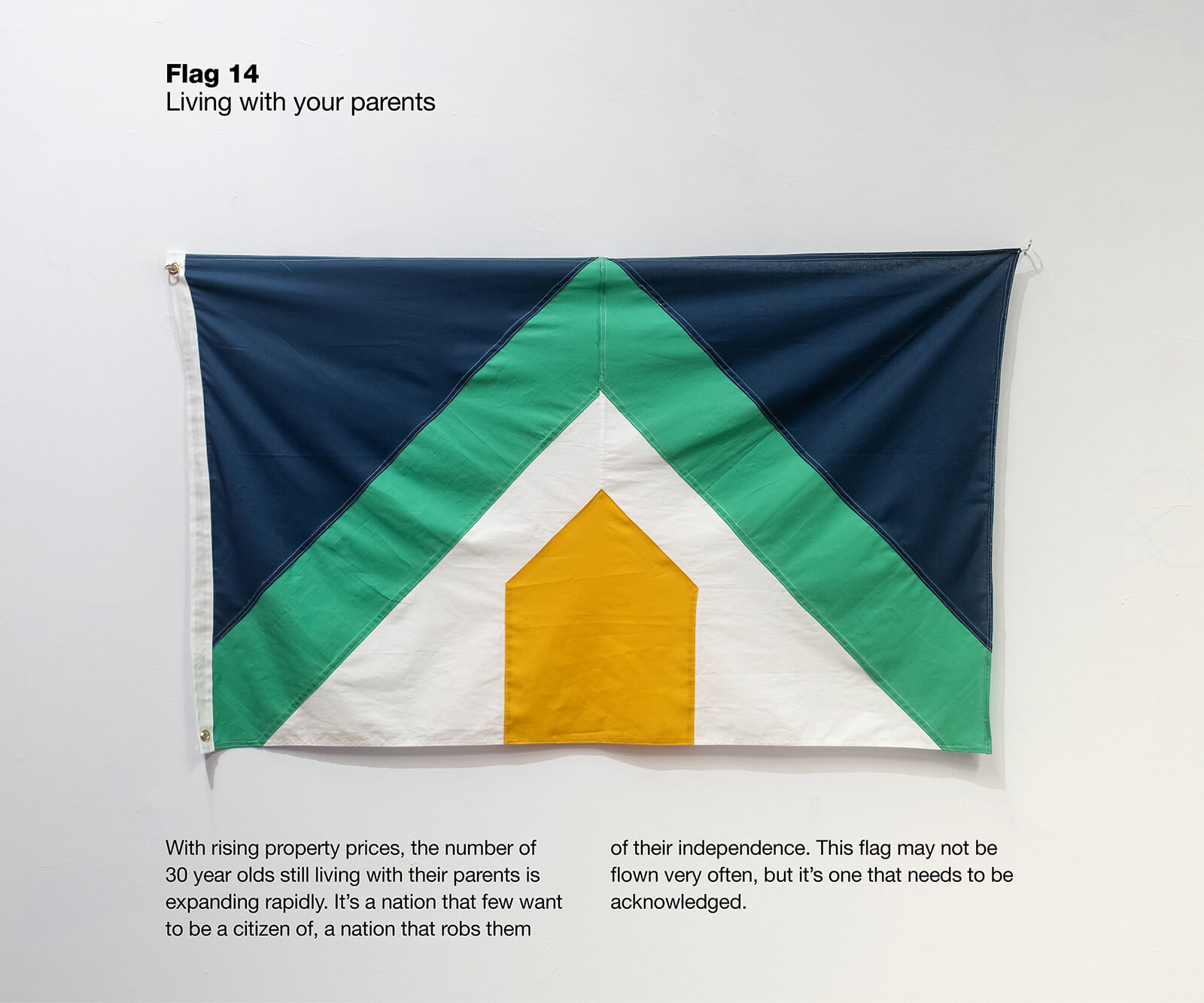
The 14 flags he's designed—among many more he plans to add to the series in the future—try to answer that question with as much sincerity as wit and whimsy. Whether it be a flag for artists who have only sold one work, people who live with their parents owing to exorbitant costs of living or those who dog-ear their books instead of using a bookmark—the Irish creative has designed a flag for all, and many more, of these arbitrary markers of belonging. "The flags serve as a prompt for people to question what’s important in their own national identity," Asbestos shares.
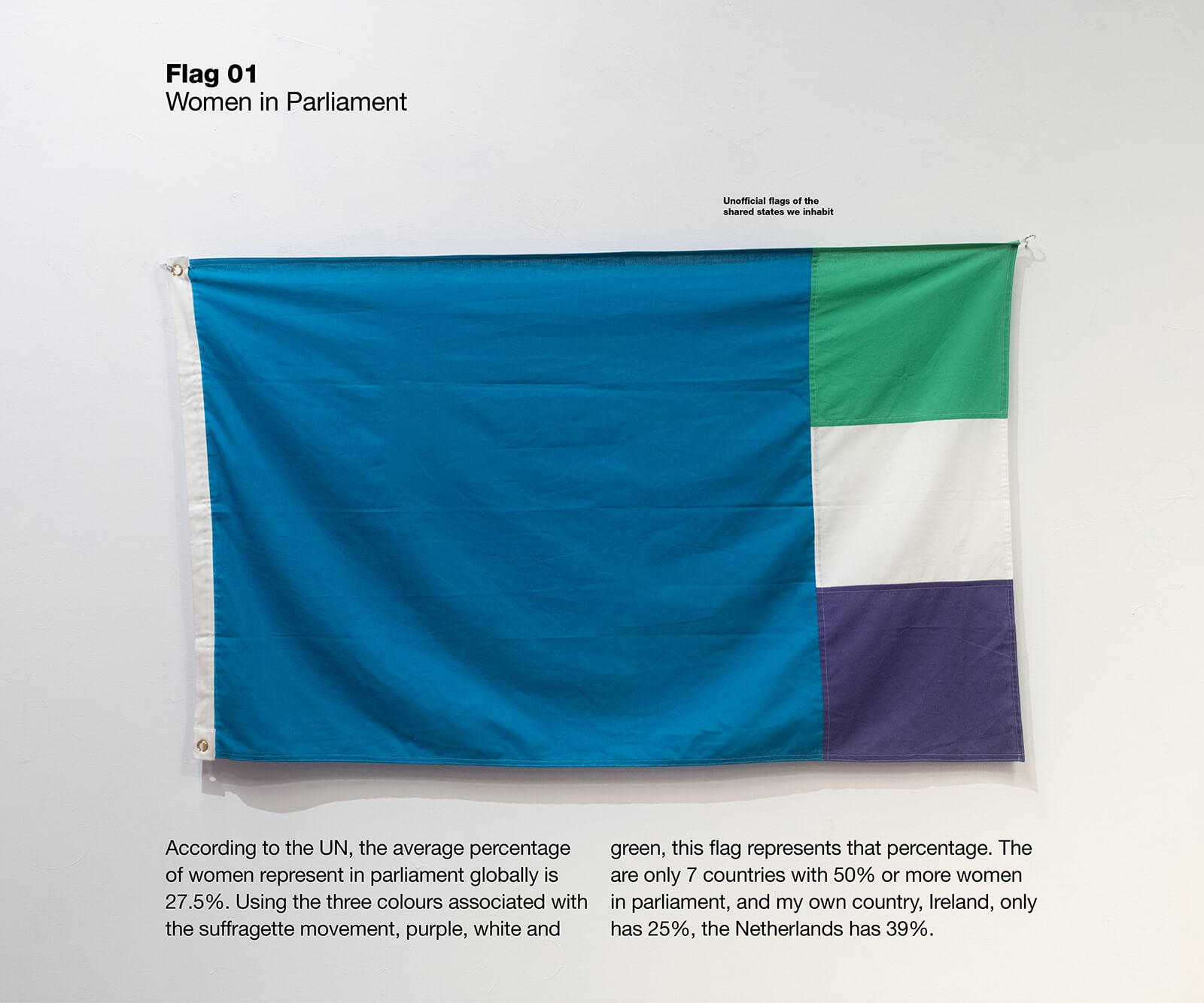
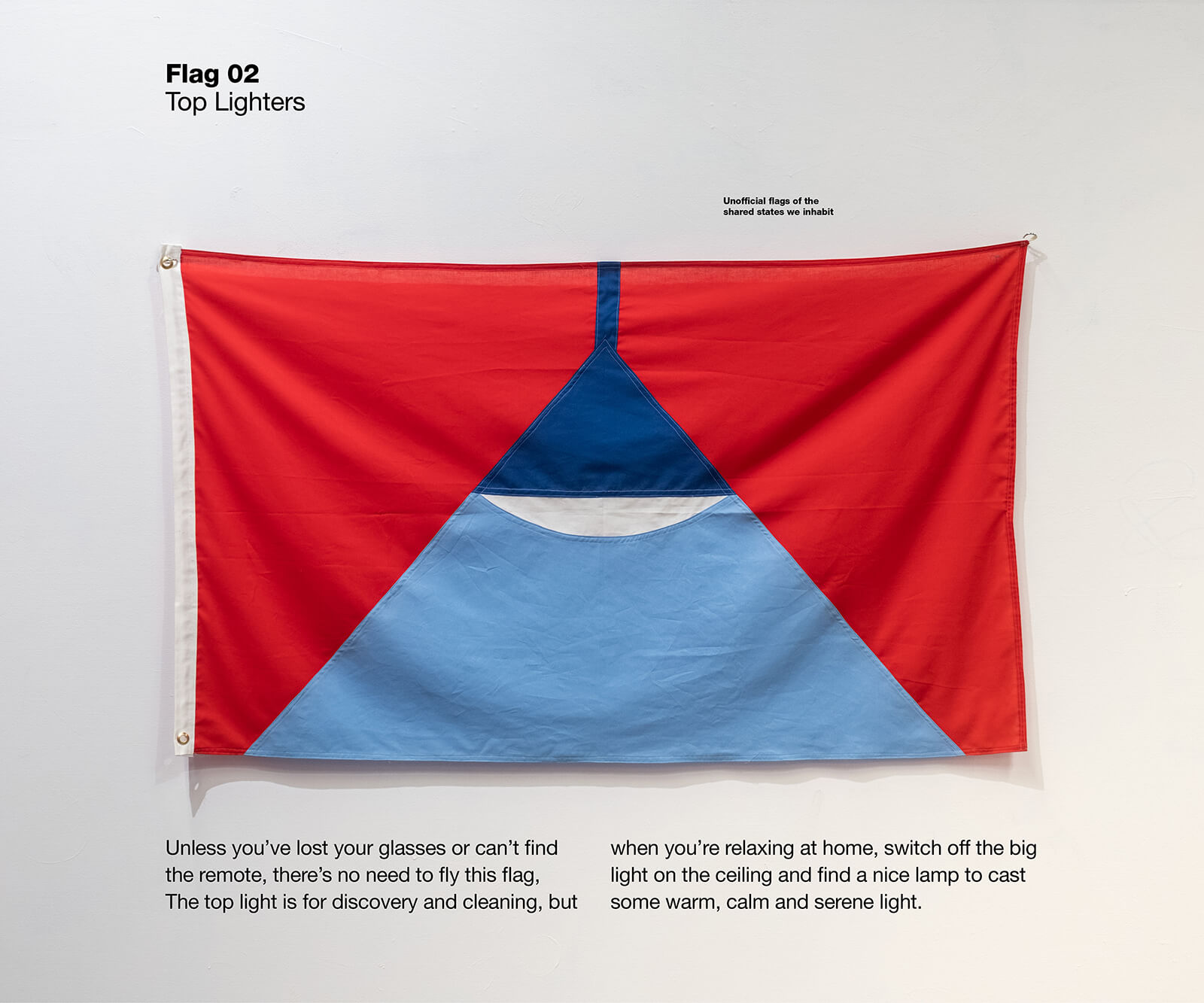
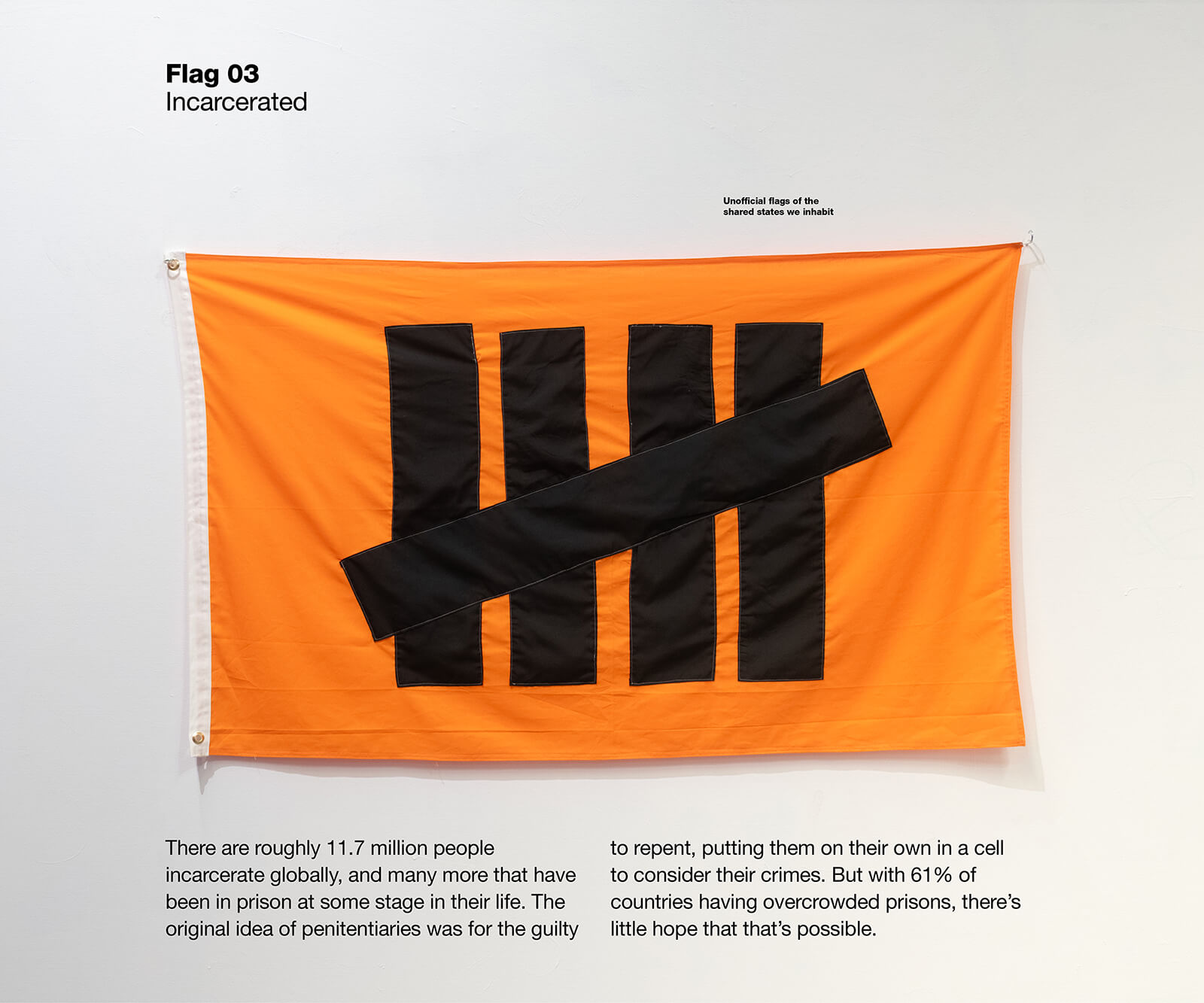
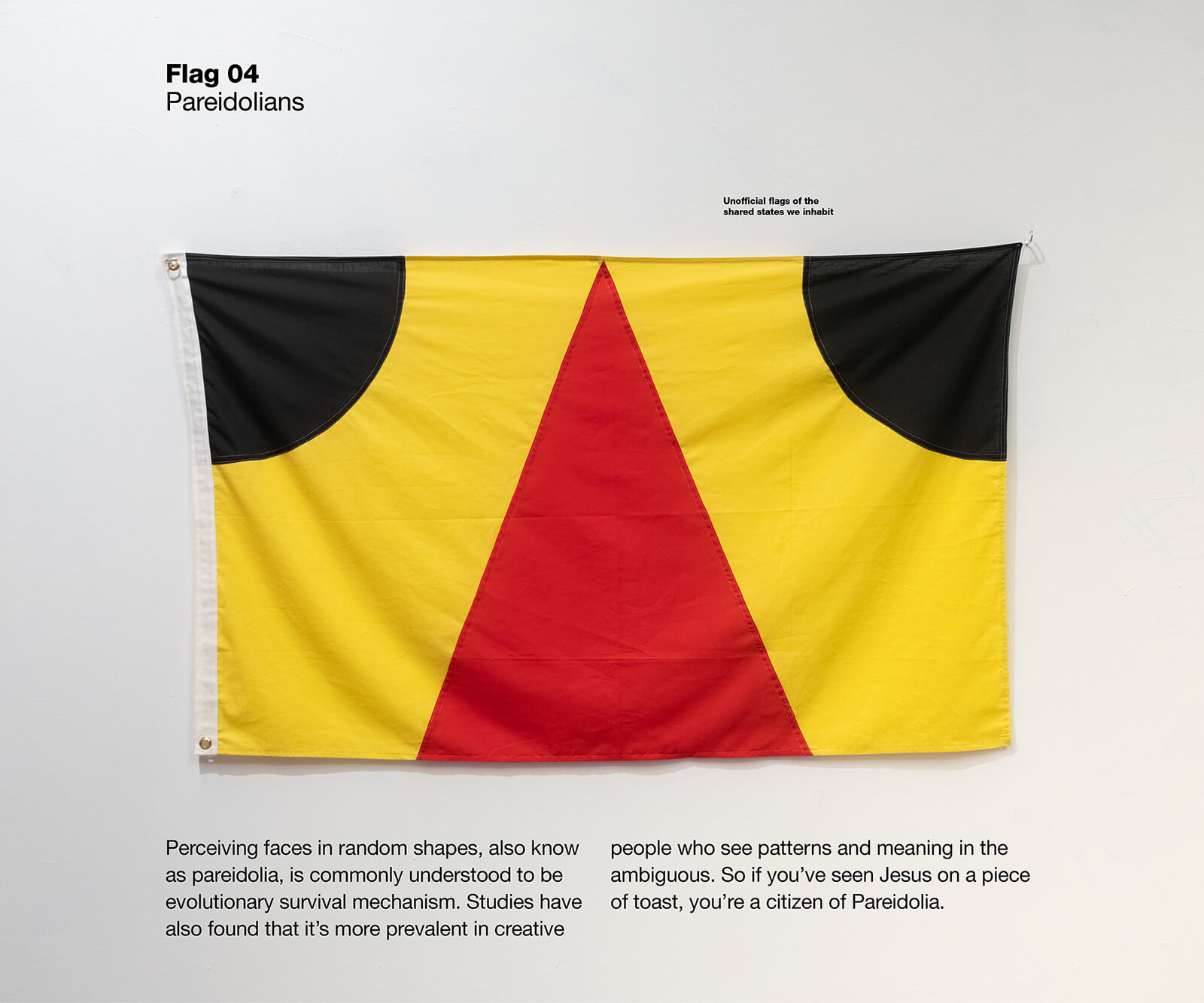
Visually, his flags are minimal in their design; sparse and simple. Composed of bold colours and simple geometric forms, they borrow the visual language of national flags so convincingly that they seem almost official. That familiarity is intentional. Asbestos explains that their structure is based on ‘traditional flags’, so they seem more authentic. "I’ve tried to avoid any obvious representation in them, too, so there’s a sense of discovery when you read the meaning behind them. I think each flag should be able to be redrawn from memory, so that anyone who identifies with a tribe can redraw it easily," the contemporary designer explains.
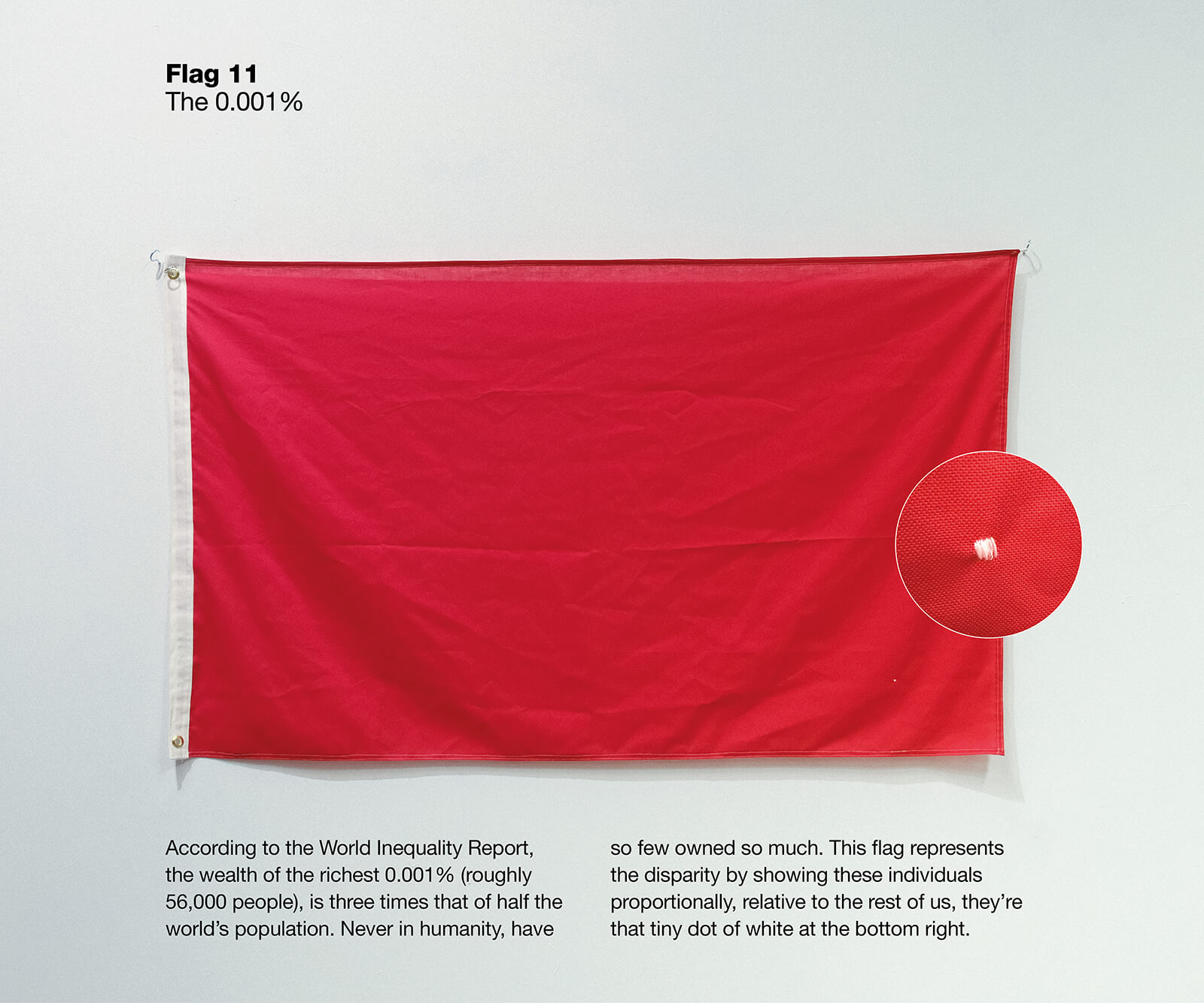
Some of the flags are humorous, while others are sharply political. One visualises the proportion of women represented in parliaments around the world by representing the suffragette colours on just 27.5 per cent—the approximate proportion of women represented in legislatures globally—of the flag's surface. Another represents the world's wealthiest 0.001 per cent with a tiny white stitch on a flag that is otherwise a sea of red—scarcely visible. Others celebrate overlooked communities—like Anosmics, people with an impaired sense of smell, or Pareidolians who can spot faces in random shapes—with the same graphic seriousness reserved for national flags, granting shared conditions and idiosyncrasies the same importance. "They’re flags for things not important enough to deserve a flag, overlooked, ignored or discriminated against," Asbestos says.
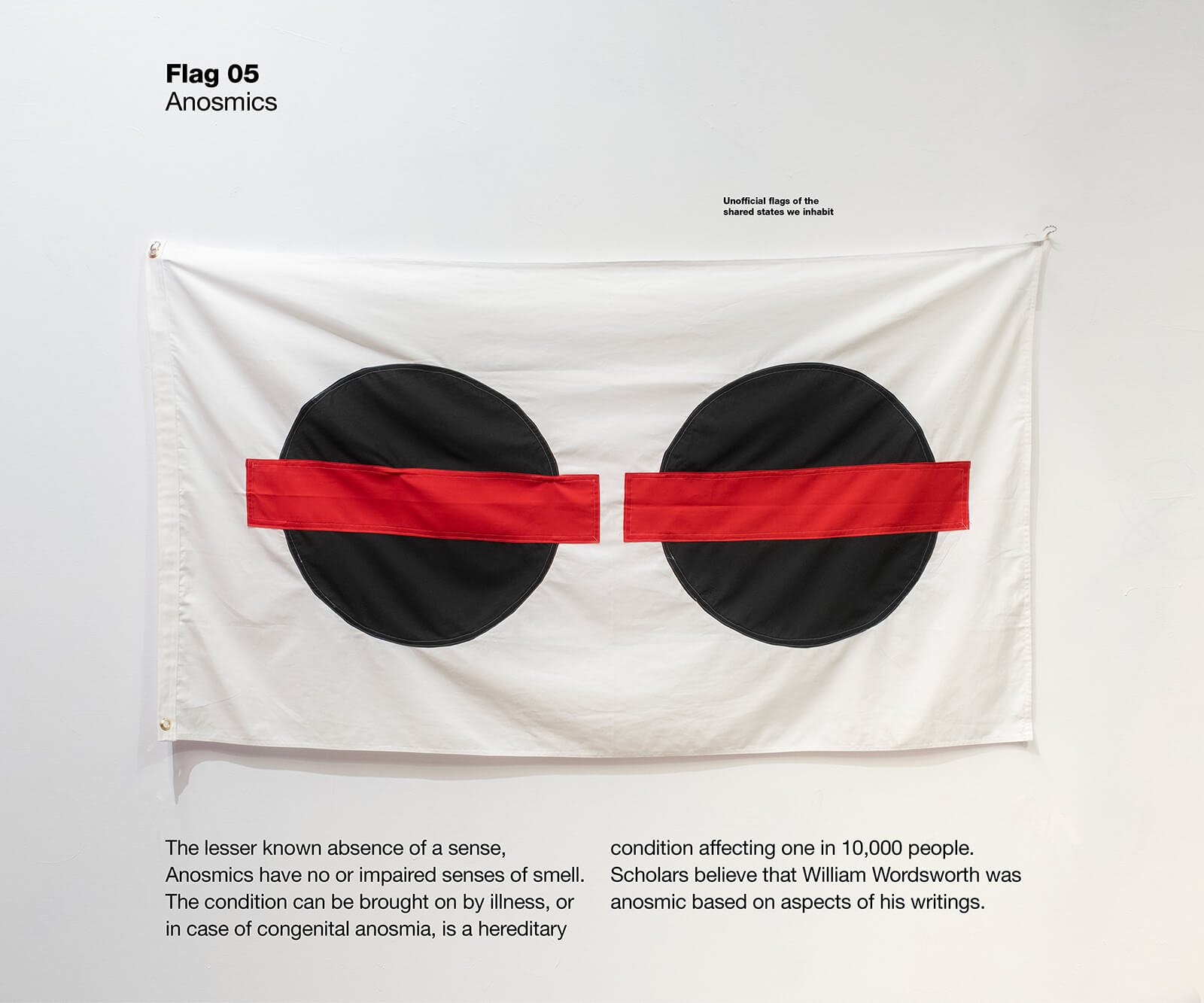
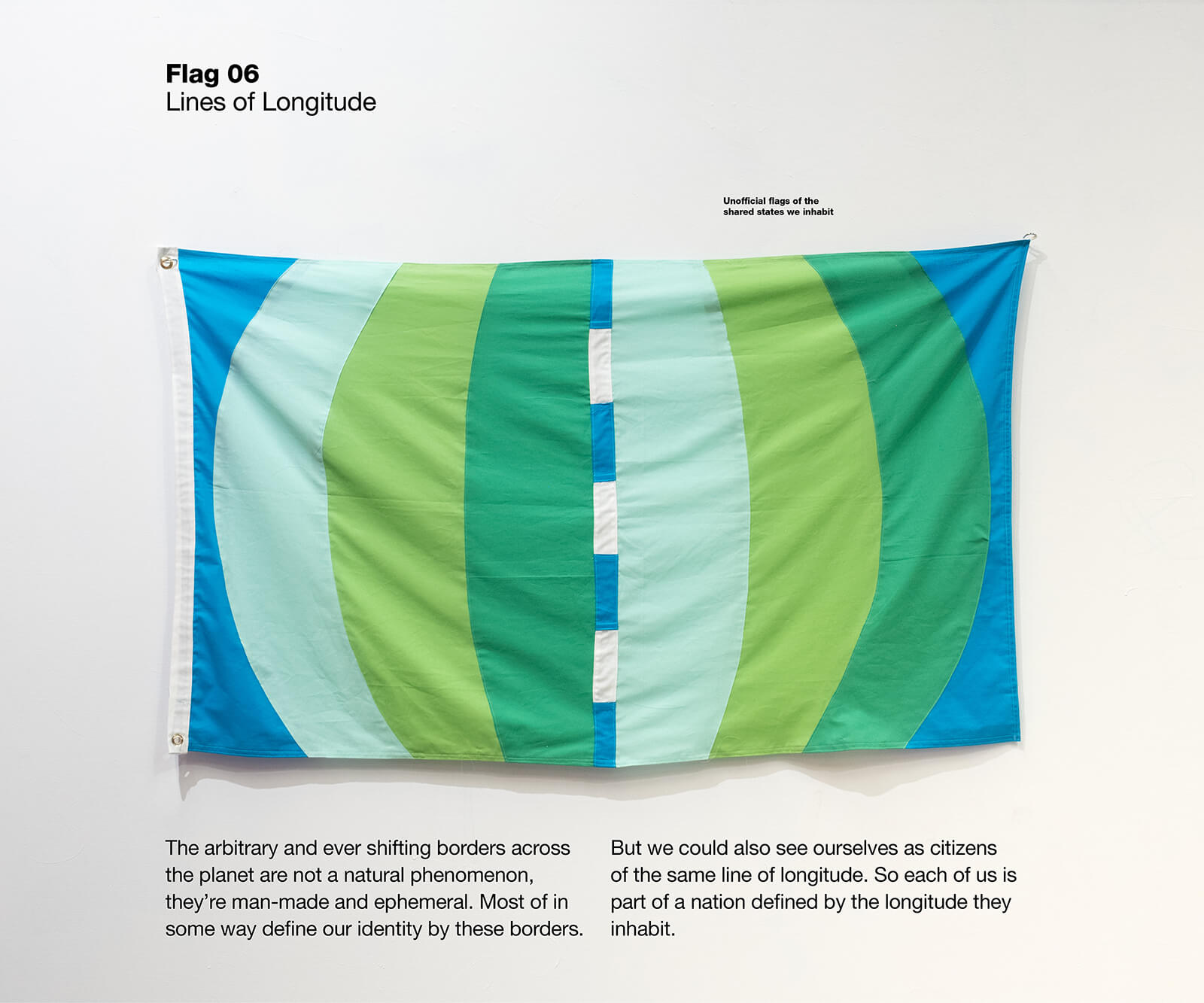
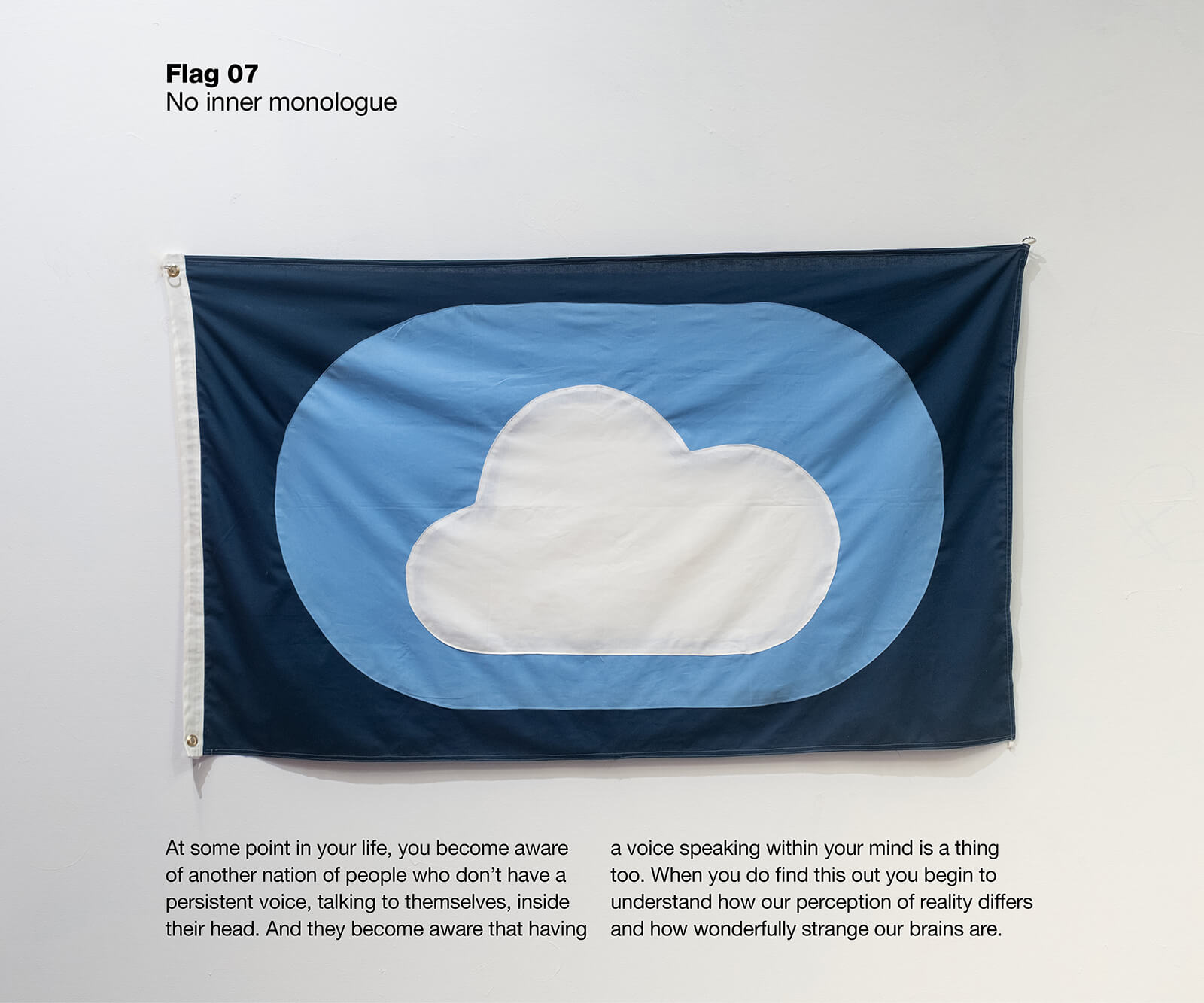
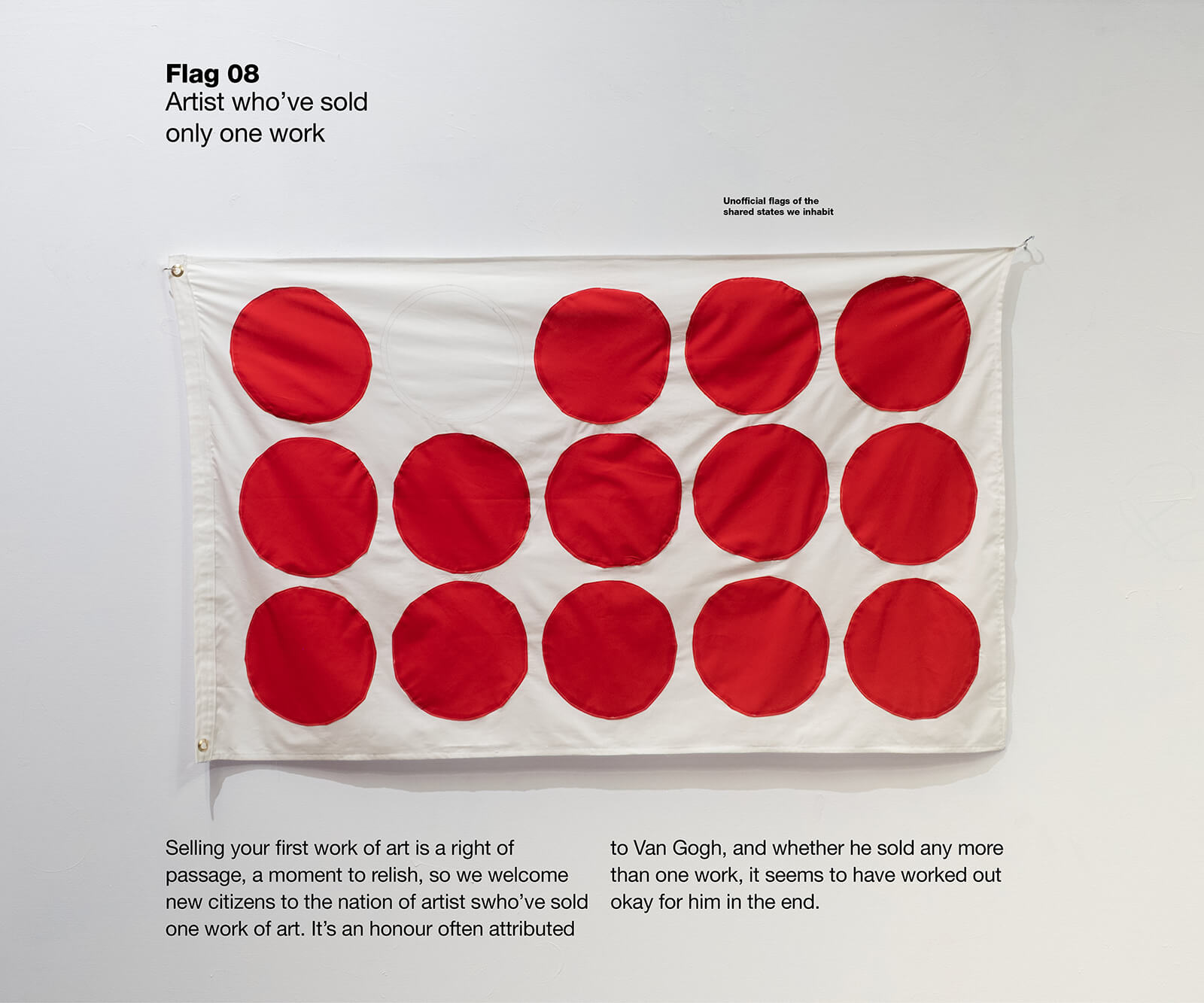
For a creator whose practice emerged from street art but has since evolved towards sculpture and performance-based art, Arbitrary Nations feels like a natural progression. "I don't really see myself as a street artist anymore; it feels too restrictive, especially when the scene is mostly large-scale murals," Asbestos tells STIR. For Writer's Block—a collective best known for murals and large-scale public art—the decision to commission Asbestos for his suite of flags rather than for wall art, however, is a welcome surprise. "When Writers' Block asked me to take part, it was in the context of showing my work in the Fries Museum, not out in the street. It provided a perfect space for the flags, one where people could stop and read about them," the artist says.
In a museum setting, the flags could assume an altogether different presence. Removed from civic buildings, public squares and streets where flags ordinarily flutter unnoticed, they are made newly visible—something to be looked at, read and considered rather than looked past. As Asbestos explains, "By putting the flags in a space where they're not seen very often, it prompts the viewer to start questioning what flags mean and who they represent."
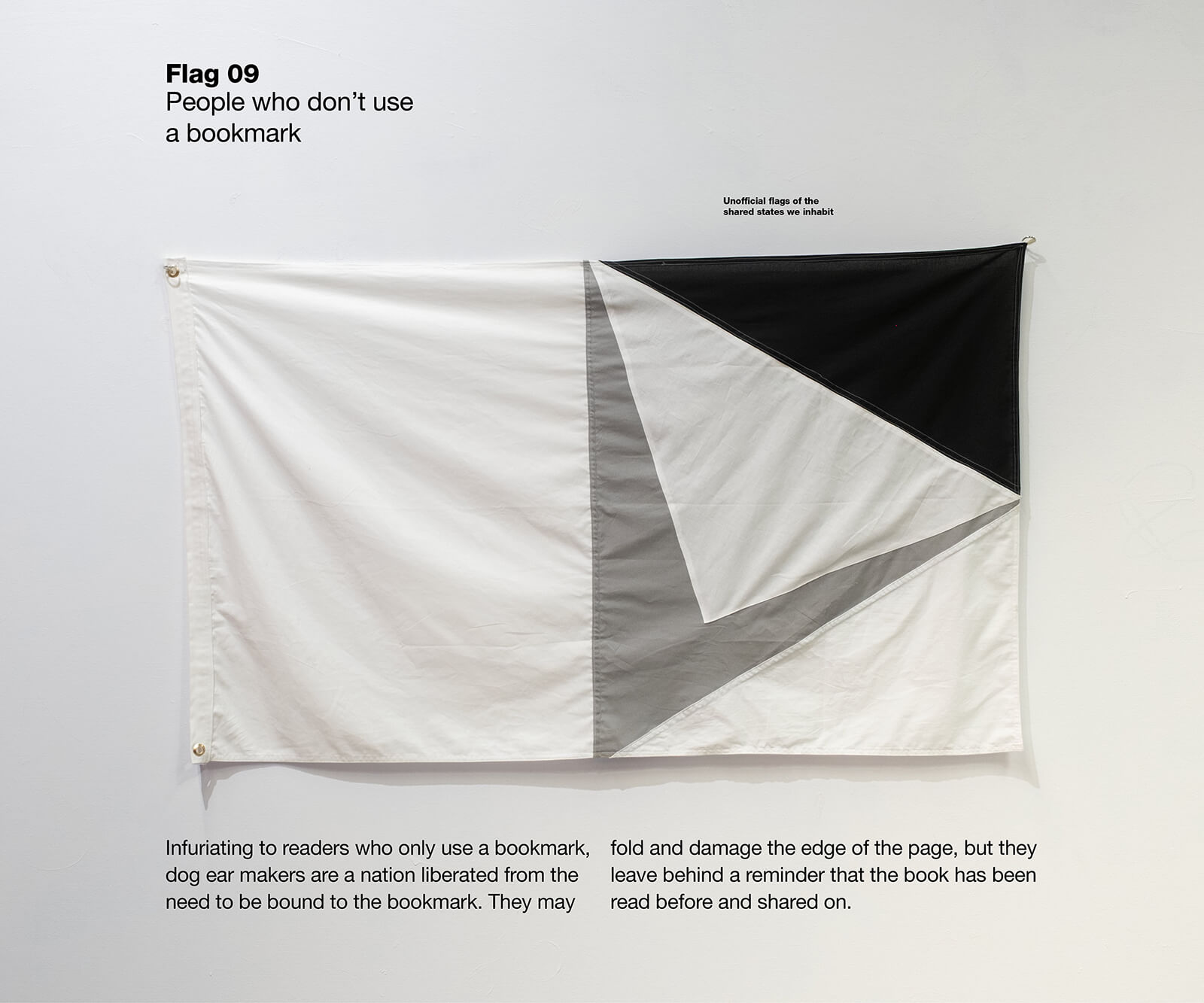
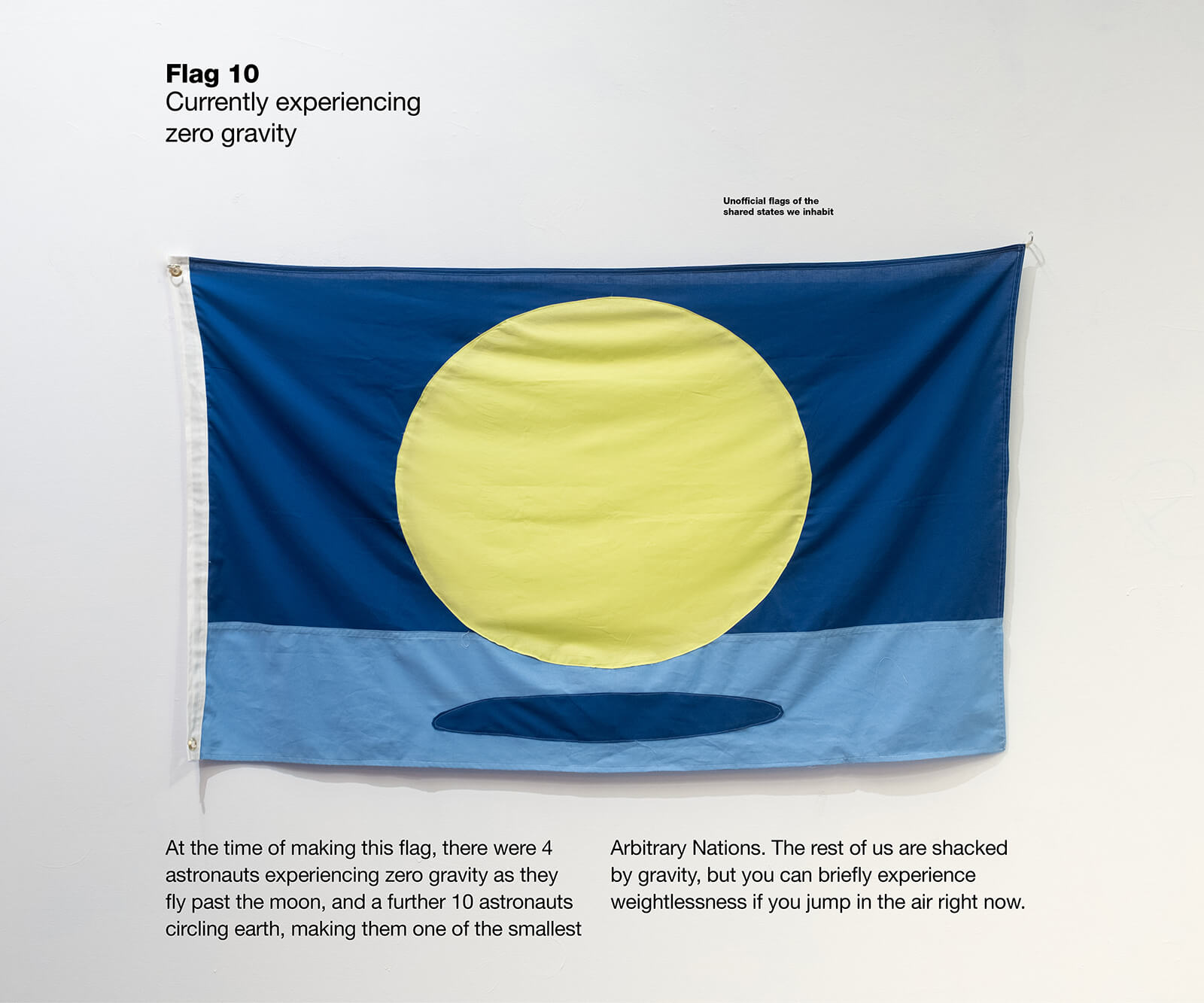
Flags, despite technically just being arbitrary arrangements of colours and shapes, command—nay, even demand—a kind of reverence not many other objects do; especially national flags. People stand for them, salute them, drape them over coffins and, in times of conflict, fight and die beneath them. It is precisely for this reason that nationalism invests so heavily in symbols, demanding unquestioned allegiance, beyond criticism, beyond questioning. To challenge it is akin to betraying an entire people. It is this blindness that street artist and political activist Banksy appears to caution against in his latest statue that appeared in London's Waterloo Place earlier this year. A suited man striding confidently forward, blinded by a billowing flag, oblivious to the edge he's about to fall over. It appeared as a timely indictment of what happens when fealty to unchecked authority becomes so absolute that it obscures where we are heading.
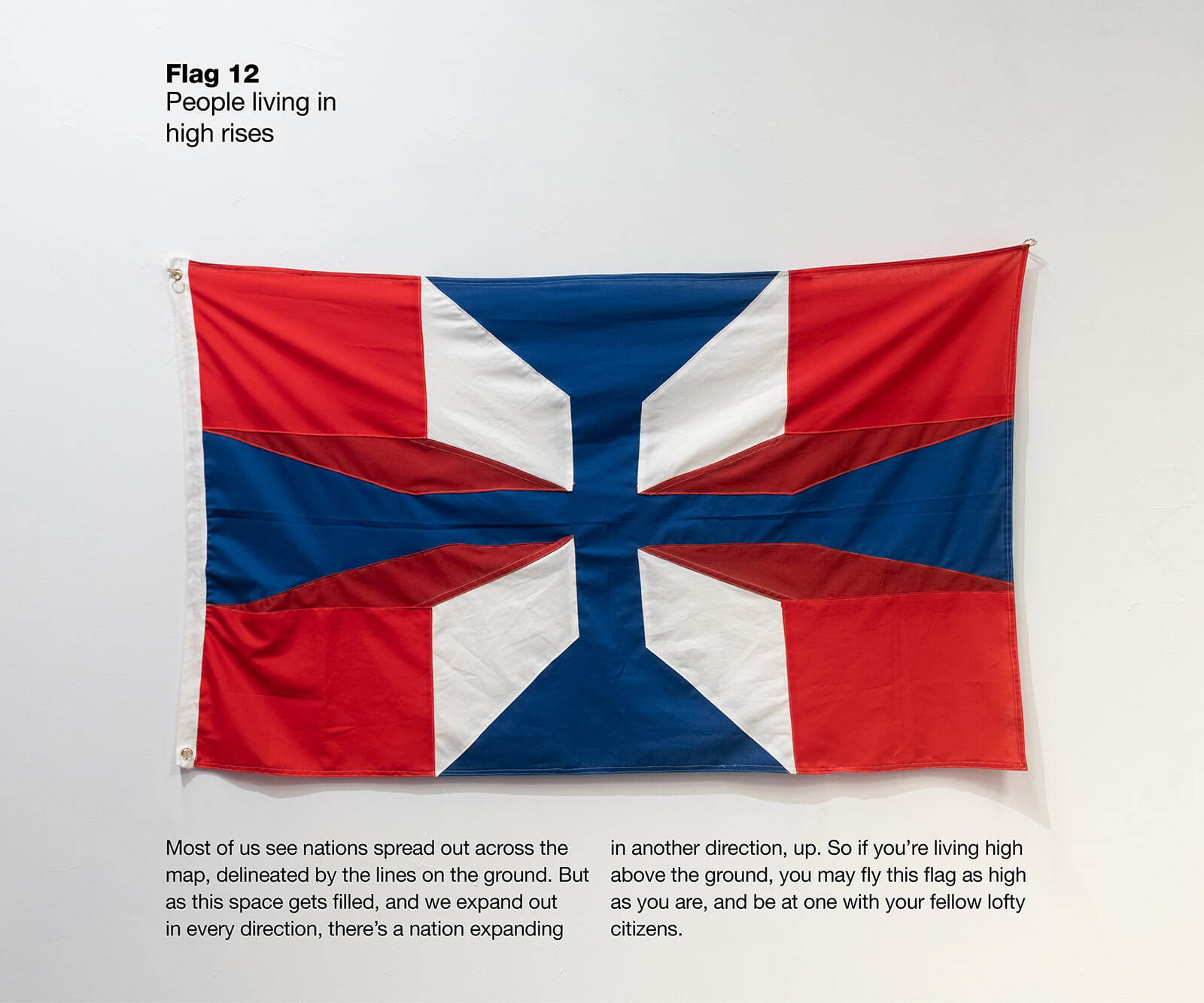
Flags, however, can also become instruments against power. In Eiichiro Oda's manga One Piece, when Luffy orders the World Government's flag shot down, it is immediately understood as a declaration of war against the authoritarian regime. His own Jolly Roger becomes a symbol of freedom, chosen family and resistance against oppression. Is it any surprise, then, that the fictional Straw Hat flag has escaped the pages of a manga and now regularly appears at pro-democracy demonstrations and anti-government protests across the world, adopted by protesters as a banner of defiance? Whether carried by fictional pirates or real-world protesters, a flag acquires its power not from the cloth itself but from the meanings people collectively invest in it. And, so, for those living through war, occupation and displacement, a flag remains one of the few tangible expressions of identity that remains. Homes can be razed. Borders can be redrawn. The flag remains—an insistence that a people still exist. That they will continue to exist.

by Pranjal Maheshwari Oct 23, 2026
Co-authored by Jareh Das, Chairman traces the British designer’s fixation on chairs as symbols of power and identity and as mediums of expression and community building.
by Chahna Tank Oct 22, 2026
STIR speaks with the Mumbai-based type designer about her practice, type walks and why she wants more people to have stronger opinions about Indian-script fonts.
by Mirra Lynn Oct 22, 2026
The curators behind Palestine Design Week 2026 reflect on its intent, considering how design holds memory, makes space for loss and imagines a future in Palestine.
by Jincy Iype Oct 15, 2026
STIR explores craft, material intelligence and people shaping Indian design through dialogues with Design Democracy’s co-founders and the curators of its special exhibitions.

make your fridays matter with a well-read weekend
Enter your details to sign in
Don’t have an account?
Sign upOr you can sign in with
a single account for all
STIR platforms
All your bookmarks will be available across all your devices.
Stay STIRred
Already have an account?
Sign inOr you can sign up with
Verification link sent to check your inbox or spam folder to complete sign up process
Tap on things that interests you.
Select the Conversation Category you would like to watch
Please enter your details and click submit.
Enter the 6-digit code sent at


Arbitrary Nations by Asbestos invents new collectives through imagined flag designs
by Chahna Tank | Published on : Jul 16, 2026


 Sign in with Google
 Sign in with email
What do you think?